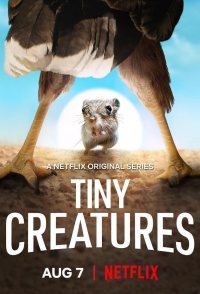
Tiny Creatures Deconstruction Part II

And we’re back with Part II of Tiny Creatures deconstruction. In Part I, we looked at characterization, plotting, pacing, and the importance of raising story questions. In this segment, let’s narrow in on story structure, scene development, character arc, word choices, and story rhythm.

First, a quick review of Tiny Creatures Deconstruction Part I to allow you to see the full character arc. Within a four-part story structure, each Part of the character arc equals 25%.

Part I: The Setup

  • introduce the protagonist
  • hook the reader
  • setup 1st Plot Point through foreshadowing and establishing stakes
  • establish empathy for the hero

In the first quartile, Tiny Creatures introduced the viewer to our tiny hero in an empathetic way and we bonded with her right away. We also learned about Raven, who we believed was the villain. And the writer setup the 1st Plot Point — a life or death chase which defined the stakes.

Part II: The Response

  • protagonist reacts to new goals/stakes/obstacles revealed by the 1st Plot Point
  • hero doesn’t need to act heroic yet
  • she retreats, regroups, experiences doomed attempts
  • remind the reader/viewer of the antagonistic forces at play

Tiny Creatures excelled in this area as well. Remember when Raven chased our tiny hero around the cabin? That scene established the life or death stakes, and Miss Rat reacted by fleeing. She also feared the human. Which is exactly how she should act in the second quartile of the character arc.

Part III: The Attack

  • Midpoint information/awareness causes the protagonist(s) to change course
  • hero is now empowered with information on how to proceed
  • not merely reacting anymore
  • hero also ramps up battle with inner demons

A perfect example of this occurred in Tiny Creatures when our tiny hero summoned the courage to face her fears and freed the raven from the fisherman’s trap.

Now, let’s return to the deconstruction. Keep in mind, we’re still in Part III of the character arc.

Tiny Creatures, Episode 6 Deconstruction Part II

Once released from the trap, Raven cocks his head at the rat. Their gazes lock, linger. “The raven is puzzled by the rat’s action, but grateful nonetheless.” He leaps into the sky.

The fisherman returns from an early morning outing, and the raven calls out to warn Miss Rat to get out of sight (Remember all those intriguing characteristics of the raven we learned in The Setup? Now they take on new meaning. Raven’s intellect actually compliments Miss Rat’s strengths, and together they morph into a winning team). Our tiny hero scurries back into the shack as the fisherman examines his busted trap on the front porch.

As our tiny hero curls into her boot home, the camera pans out to the surrounding area. “The Everglades are home to many animals.” Camera closes in on an alligator. “The American alligator is a keystone species crucial to the health and wellbeing of the ecosystem.” (red herring to get our blood pumping—more tension builds + story questions. Will our heroes face this beast?)

Camera pans out to a body of water in the Everglades, cleverly disguised, and we’re not sure why. (We’ll keep watching to find out. Which expertly demonstrates why it’s important to withhold information.) “But some animals aren’t always welcome. An exotic species introduced by humans, the Burmese python doesn’t naturally belong in the Everglades. Despite this fact, it has everything it requires to multiply and dominate these delicate waterways.” (Notice the harsh “dominate” paired with “delicate.” Perfect word choices send subtle clues of emanate danger.)

The slow and agonizing action of the Burmese python sliding into our tiny hero’s drainpipe would tremble even the steeliest heart. (That image alone proves my point about the Tiny Creatures Netflix series — the writer has mastered the art of suspense. Showing a murder or attack is far less suspenseful than the moments leading up to it. Examples: A lone pinecone crunches under the weight of a stranger’s boot behind you on the hiking trail. The flick of a butane lighter amidst the darkened forest around your property while you sip an evening cocktail at the picnic table. You get the picture. ?)

Sampling the air, the python flicks its tongue. “An intense odor is coming through the pipes.” <dramatic pause> “It can smell a rat.” (Raising the stakes even higher — our heroes don’t stand a chance against this formidable villain.) The python slithers through the drainpipe. “Although the Burmese python is one of the largest snakes in the world, they’re surprisingly agile climbers. To shift their heavy, elongated frame, specialized muscles under their belly propel them forward.” (This smattering of backstory shows how skillful and deadly this predator is AND drives the plot. Lesson: Any and all backstory should be employed with purpose. If it doesn’t benefit the plot, don’t include it.)

<cue dangerous music as the python flows through the dark pipe>

“Continuously flicking its forked tongue, it analyzes its surroundings.” The python emerges from the toilet in the shack (paying off an earlier scene that showed our tiny hero traversing the same route). “The snake can taste (“taste” is another perfect word choice) chemical trails in the air left behind by passing prey.” (Gulp. He referred to our tiny hero as prey! This scene conjures images of the snake swallowing our tiny hero, and our fear mounts with anticipation.)

<cue music that evokes urgency> Camera focuses on the sweet rat munching on a crumb, unaware of the dangerous intruder.

“Instead of adopting an ambush attack, it likes to stalk its unsuspecting prey slowly and silently. Able to open its mouth five times wider than its own head, the rat is an easy meal for the python.” (Can you feel the stakes raising more and more?)

The camera flashes between the snake and our sweet little hero.

“Using heat-sensitive pits lined along its upper lip, the python possesses infrared vision. This allows it to detect warm things.” (setup of 2nd Pinch Point)

The python slithers across the floor as Miss Rat climbs up to a workbench. The close-up of a fly adds to the chilling scene. (We’re glued to that screen as a gazillion questions race through our mind — the epitome of nail-biting suspense.)

Camera gives us a quick peek of outside the shack. “The fisherman has grown up on the Everglades, and he still honors the good ol’ days.” Near the window of the shack, a transparent plastic bag holds water and five coins. “Sunlight passing through the bag acts like a prism, scattering light in all directions. The idea is that it dazzles and confuses flies, keeping them away.” (We think this is just an interesting tidbit of backstory . . . until the camera zooms in on our tiny hero near the bag.) The camera narrows on the python. “But it might not be just the flies that get confused (python’s character flaw).” The snake approaches the bench. “The python has the advantage of not only seeing the rat but also feeling it.” (The writer could’ve used “senses” instead of “feeling,” but the later invokes more terror.)

The python slithers up the wooden leg of an upholstered chair—painfully slow—and we chew our cuticles raw. “Detecting the heat signature as far as three feet away, the rodent appears illuminated.” (Another perfect word choice. “Rodent” ratchets up the tension. Mean ol’ snake doesn’t know our tiny hero like we do!)

Unaware of the danger, Miss Rat munches on another tasty morsel.

“The python slithers ever closer. Its target lies dead ahead.” (2nd Pinch Point, perfectly placed at 62.5%)

Raven lands on the outside windowsill above the bench, but the window is closed. “The raven notices the snake (MRU motivation) and calls out to warn the rat (MRU reaction). But it’s no use. Our tiny hero’s loud munching overpowers the raven’s call (MRU motivation). Time for more drastic action (Scene Goal = Get inside the shack).”

Raven bangs on the glass pane with his strong beak (MRU reaction) to no avail (Scene Conflict = Glass won’t shatter).

“The snake’s hearing is sensitive only to low frequency sounds (villain’s character flaw). And so, it remains unperturbed the raven’s tapping.” With the Burmese python on the cushion of the chair near the workbench, the writer delivers the final blow. “Fixating on its victim, it retracts its body to strike position.” (Tension reaches a boiling point — we cannot look away! + MRU motivation)

Still frantically trying to get inside, Raven slides his beak around the edges of the windowpanes, hammers at the glass, and screeches at high decibels (MRU reaction).

Nothing works. (Suffocating suspense; we’re paralyzed by fear.)

Camera zooms in on the bag suspended next to our tiny hero. “The hanging water bag has gradually heated in the sun (MRU motivation). Now the snake senses two warm targets (MRU reaction + Scene Disaster). Any small movement from either will trigger the snake’s predatory instinct to strike.”

With his bill Raven hammers the crevice between the doors of a shudder-style window (Sequel Reaction).

Helpless, our hero’s furry back faces the python (Sequel Dilemma). Murder is afoot! But right when things look their bleakest (All-is-Lost Moment perfectly placed between 2nd Pinch Point & 2nd Plot Point), the raven busts through the window.

“The raven’s sudden appearance has foiled the python’s ambush.” The snake slithers down the chair leg (MRU motivation). From the safety of the workbench Raven scolds the python as it flees across the floor (MRU reaction + this scene pays off the earlier scene where we learned about the snake’s stomach muscles + Sequel Decision doubles as the next Scene Goal: keep his little buddy safe).

With our tiny hero safe from the python (MRU motivation), Raven hops back on the windowsill (MRU reaction) just as the fisherman enters the shack. The Burmese python in his shack (MRU motivation) causes him to snatch a grabber tool off the wall (MRU reaction).

“Usually the cryptic nature of these snakes makes them hard to detect in the grass. But in the shack, there’s nowhere to hide.”

With the mechanical grabber, the fisherman grips the snake by its head and bundles it up in a long pillowcase. “Expertly catching the snake, the fisherman plans to take it far away.” He loads the python-filled-sack on the boat (MRU motivation). “The rat retreats to the safety and protection of her home (MRU reaction).”

<cue peaceful music as we roam the Everglades> The narrator adds a few lines about the rich landscape (weaving in backstory and allowing the viewer a well-needed break = expert pacing) as the fisherman returns home. “The waters and banks of the Everglades provide humans with endless opportunities.” Inside the shack, the fisherman turns on a gas burner and sets the tea kettle on top. (A close-up of the flame forewarns a potential hazard.)

“After an exhaustingly long day on the water, the fisherman’s work isn’t done yet. He sets about preparing and maintaining his much-loved equipment, working late into the early hours of the morning.” (2nd Plot Point, perfectly placed at 75%)

Our tiny hero curls up in her boot and falls asleep.

The fisherman makes and repairs lures at the workbench. “Such delicate work requires a lot of focus.” He scrubs a hand across his weary eyes. “But, as the saying goes, you shouldn’t burn the candle at both ends.” (forewarns danger + further sets up Climax.)

Our tiny hero peeks out from the boot at the fisherman, who leans back in his chair. Light snoring fills the room (MRU motivation). “A rat never passes on an opportunity to fuel up, and she quickly collects crumbs dropped by the fisherman.” (MRU reaction)

Wicked cute close-up of our tiny hero munching away on a snack (just sayin’). “The noise of the whistling kettle draws the attention of the rat, who anxiously watches as a gust of wind through the opened window ignites a disaster.”

The tail end of a paper towel roll catches fire — <cue dramatic music> — and a flaming sheet falls to the floor. (Climax begins)

Character Arc Part IV: The Resolution

  • hero summons courage and growth to come up with a solution
  • overcomes inner obstacles
  • conquers the antagonistic force
  • all new information must be referenced, foreshadowed, or already in play by this point to avoid deus ex machina.

“Unaware of the catastrophe spreading around him, the fisherman slips into a deeper sleep.” Music from his ear buds lulls him into tranquility.  

Smaller fires break out everywhere (MRU motivation).

“The rat realizes she must act fast if she is to save her home (Scene Goal).” She scans the room. But she’s so tiny (Scene conflict). She scampers up to a wooden rack of pots and pans suspended from the ceiling, and chews through the rope (using the same behavior she learned at the Midpoint when she freed the raven from the trap; thus, this scene also pays off that earlier scene + MRU reaction). Pots and pans crash on the floor.

“The rat’s actions fall on deaf ears.” (Scene Disaster)

Like a black beacon of hope, Raven emerges through the smoke-fueled haze (Sequel Reaction). He lands on the fisherman’s crossed leg, but he doesn’t wake. <cue dramatic music> He screeches and squawks. The fisherman is out cold (Sequel Dilemma).

“The raven calls loudly. It appears to be trying to help the fisherman (nice role reversal, right? Which also illuminates Raven’s true character—3rd Dimension of Character). The raven is not giving up. This situation calls for more drastic measures.” (Sequel Decision doubles as the next Scene Goal = save his little buddy and the fishing shack)

Fire dances dangerously close to the fisherman’s leg as our two heroes communicate, as if forming a plan. But Miss Rat has done all she can. It’s up to Raven now.

While the rat looks on in horror, Raven’s gaze follows the wire from the ear buds to the human’s chest. Flames grow higher around the fisherman (MRU motivation + Scene Conflict).

<cue louder dramatic music> “Time to get physical.” Grabbing the wire in his beak, he tugs and pulls, but it’s no use. Those ear buds won’t budge (Scene Disaster). Nonetheless, he preserves. With all his might Raven muscles one last jerk (Sequel Reaction) and the ear buds pop loose.

“The fisherman’s woken to an alarming spectacle (Sequel Dilemma).” Raven escapes to the windowsill (Sequel Decision = survival) as the fisherman jolts to his feet. Our tiny hero ducks out of sight. “Fires are common in the Everglades. And luckily, he is well-prepared for such an emergency.” The human extinguishes the blaze.

“The heroic efforts of both the rat and the raven meant the fire didn’t get the chance to cause too much damage. The human has cheated death. And he has the rat and the raven to thank.” (Nice twist, right?)

The camera narrows in on both these amazing animals. Raven takes to the sky as our sweet rat climbs down to the floor (Scene Goal = to rest after a job well done).

“But the rat is left without a home.” Camera zooms in on her charred boot (Scene Conflict + setup of the ending). “She must find a new place to rest her weary head.” Our tiny hero climbs into a duffle bag, and her tail slips beneath the partially opened zipper.

Come morning, the sun rises to a new day.

“Troubled by the fire, the fisherman seeks solace on the water.” He collects his equipment, including the duffle bag (Scene Disaster), and sets off on his boat to clear his mind.

Our tiny hero’s nose twitches out a small opening in the bag. As the raven’s gaze follows his buddy being swept away by the human, his lower bill slacks. “Concerned by where the fisherman is taking the rat, the raven follows closely behind from the air.” (Sequel Reaction)

Camera pans out to show the vastness of the Everglades (indicates danger + story questions. Where will our tiny hero end up?). The boat putts through an open channel.

“The fisherman has an unexpected stowaway. But luckily for the rat, she comes from a long line of seafaring ancestors.” (This fact comforts the viewer and begins the setup of the denouement.)

Camera narrows on our tiny hero’s innocent face, shadowed by the duffle bag (Sequel Dilemma).

“As the boat engine stops, he sets up his fishing equipment.” The fisherman unzips the duffle bag but doesn’t spot the rat. “The rat owes a lot to the fisherman. The shack has provided a shelter to her and any future offspring.” (Perhaps the human isn’t all bad after all.)

Our tiny hero crawls out of the bag and into unfamiliar surroundings. Still, she remains quite perky (3rd dimension of character — her true character. And we love her even more.)

He casts. Casts again and again.

“All over the Everglades animals do what they must to survive.”

Camera flashes to the alligator, the python, the iguana, the fly, and then a wide pan from above showing the raven soaring toward the boat with his majestic outstretched wings. (Fantastic cinematography! Which novelists can also create by etching a vivid mental picture in the reader’s mind.)

“In a delicate ecosystem such as this, a balance between predator and prey is critical.”

Raven lands on the boat (Sequel Decision = ensure his little buddy’s safety).

“Through their trials and tribulations, the rat and the raven have developed a mutual respect and understanding for one another. These two lonely souls have formed an unlikely bond, proving that no matter where you’re from or who you are, it’s your actions that truly define you.” Silhouettes of our two heroes perched on the side of the boat.

“The once great rivalry that existed between them has transformed into an even greater friendship.”

Raven and Miss Rat turn to face each other as the sun sets in the background, brilliant orange and blue hues splashed across the horizon.

“Now with the support of one another, anything is possible.” (What a great last line! We leave the story with our hearts overflowing with love for these two incredible animals.) And the denouement is complete.

Highlights of the Writer’s Skill


The writer locked us in a stranglehold from the very beginning by raising the Central Dramatic Story Question (shown in Part I). Which became the jumping off point for more and more story questions. Each scene written with a purpose, to either setup a future scene or pay off an earlier one. The proper stringing of scenes ensures the viewer’s attention would never waver.

Also notice how the writer never loosened the death-grip around our throats for more than a brief moment (perfectly placed respites). And through characterization (shown in Part I), the writer periodically forced the viewer to change our perception of the hero, anti-hero, and almost every villain we encountered. Most importantly, perfect plotting kept us engaged from the first sentence to the last.

What’s not to love about Tiny Creatures?
 

Have Your Characters Say What You Wish You’d Said

by James Scott Bell
@jamesscottbell

We’ve all been there. We’re driving home from a party where we were engaged in robust conversation. Someone said something boneheaded and we thought, That was a boneheaded thing to say. But not wishing to hammer that very obvious nail, we did not reply.

Now, halfway home, it comes to us. The perfect comeback! Witty, wise, pithy. If only we could go back in time! We’d be like the legendary members of the Algonquin round table. (“He and I had an office so tiny, that an inch smaller and it would have been adultery.” – Dorothy Parker.)

There’s an entire Seinfeld episode based on this premise. George is at a Yankees’ board meeting where a platter of shrimp is served. He over-enthusiastically consumes the crustaceans, prompting another board member, Reilly, to remark, “Hey, George. The ocean called. They’re running out of shrimp.” The other members laugh. George can think of nothing to say in return.

Only later does he come up with what he thinks is the perfect comeback. “Oh, yeah? Well, the Jerk Store called, and they’re running out of you!” George’s friends are not impressed and offer alternatives. “No!” George insists. “It’s Jerk Store!”

Now George has to elaborately recreate the encounter. Reilly has since moved to Akron, Ohio to work for Firestone. George sets up an entire meeting there to discuss a Snow Tire Day at Yankee Stadium. He also arranges for a platter of shrimp to be served. He starts stuffing his face, and sure enough, Reilly makes the same crack. George stands and fires his comeback, but is unprepared for the comeback to the comeback.

George: Oh yeah, Reilly? The Jerk Store called, and they’re running out of you!

Reilly: So what? You’re their all-time bestseller!

Leaving George hung out to dry once again.

This fate does not have to befall your characters, for you have the luxury of time and reflection to give them wit on the spot.

Now, let me state up front that wit does not always mean funny. Many times it is, but the real basis of wit is sharpness. It gets the point across crisply, memorably.

For example, in Casablanca Rick (Humphrey Bogart) is talking to Ugarte (Peter Lorre), a low-level schemer. At one point Ugarte says, “You despise me, don’t you?”

Rick says, “If I gave you any thought I probably would.”

That’s sharp, memorable, and perfectly in keeping with Rick’s character.

Which is the key. You don’t want to force wit where it doesn’t belong. It needs to sound like smoothing the character would really say.

Curving the Language

I took a comedy writing class years ago taught by the late Danny Simon. Danny was Neil’s older brother and a veteran of the early days of television. Both Neil and Woody Allen credit Danny Simon with teaching them how to write narrative comedy.

One of Simon’s primary lessons was never to write “joke jokes.” The comedy had to be something the characters would actually say in the moment. So to make a line funny and memorable, he advised “curving the language.”

To do this, you write a line as it comes to you, which is usually in a plain-vanilla sort of way. Then you play with it—you curve it—until it takes on a wittier shape.

I’ll demonstrate with a line from a Lawrence Block short story. Two cops are talking about a suspect who is not exactly lovely to look at. One cop asks the other how ugly is this guy?

Now, the plain-vanilla line could have been, “Really ugly.”

Not very snappy, is it? How about, “God made him really ugly.”

Keep curving. “God made him as ugly as he could.”

Getting there, but not quite. The actual line in the story is:

“God made him as ugly as he could, then hit him in the face with a shovel.”

That’s golden.

As a rule of thumb, try to put one gem of a line in each of the four quadrants of your novel: Act 1, Act 2a, Act 2b, and Act 3. Each time it happens, the character will jump off the page.

So try this in your novel:

  • In each act identify several lines of dialogue where your character conveys strong emotion or opinion.
  • Curve the language of each line, making them snap and sparkle.
  • Check to make sure it doesn’t feel forced, but is in keeping with the character you’ve created. Choose and use the best ones!

Characters who “jump off the page,” who are full and rounded and, at times, unpredictable in what they both say and do, make for a truly memorable reading experience. That’s what makes fans out of readers!


This post is adapted from my new craft book, Writing Unforgettable Characters: How to Create Story People Who Jump Off the Page. It is available in PRINT, as well as KINDLE, KOBO, and NOOK.

Fun with Phones

Good morning! Author Lisa Black is joining us today. Lisa is a latent print examiner and CSI for a police department in Florida.  Every Kind of Wicked, the sixth installment in her series featuring forensic scientist Maggie Gardiner and homicide detective Jack Renner, involves the duo tracking down a nest of scammers and will be available beginning August 25. Today Lisa is going to discuss — what else? — scamming! Lisa, the floor is yours. Joe Hartlaub

We all get them, every day. You answer with ‘hello’ and there’s that telltale dead air before either a recording starts or someone comes on to tell you that your computer is sending out error messages/your grandson is in jail/you owe the IRS back taxes and the marshals are on their way to your house/we can sell you pain meds or medical equipment over the phone via our doctors on staff or you need an extended car repair warranty.

Most of you are smart and immediately hang up. I dial ‘1’ to speak to a customer service representative.

If I’m in a hurry, I wait until they say ‘hi this is Shteve from Credit Card Services/Microsoft/DirecTV, how are you today?” and then I say in firm, bright tones, “You are a thief and a liar and should be ashamed of yourself.” For the record, those are the harshest words I have ever uttered to someone I wasn’t married to. But I figure if it can be the one straw that breaks the shell of one call center worker who still has some shred of conscience, then I’ve done the world, and maybe that person, a service.

If I’m feeling more empathetic that day, I might say, “I know it’s hard to get a good job where you are, but that doesn’t make it okay to steal money from vulnerable people.”

Where they are could be anywhere in the world (and they will never tell you) due to the ability to spoof numbers and local area codes. In 2006 American and Canadian expats were arrested while running a call center in Costa Rica. In 2018 Floridian Adrian Abramovich was fined $120 million for robocalling, funneling victims to a call center in Mexico for travel discounts from Hilton and Marriott—except those companies knew nothing of it. India seems to lead the world in phone scams specifically (whereas mid-Africa works in social media friending scams and Russia/Ukraine/China simply hacks what they want) and probably for a simple reason: they speak English. The language is a required school subject in Pakistan and Bangladesh and the second most common language in India. In actually the only pleasant conversation I’ve ever had with a scam caller, I asked one how he felt about the disputed region of Kashmir. After a moment’s thought he said they ought to be granted independence. I thanked him for sharing, but still wasn’t going to give him my credit-card number. He said “okay” and hung up.

But if I have plenty of time and I’m sitting in front of a computer, then I Google ‘fake credit card numbers.I feed those to the ‘customer service representative’ until they either give up and disconnect, or turn nasty. Be warned, bare-knuckled obscenity is not a taboo in call center culture. Male and female alike will use language that would make shock jocks blush. That was made clear to me the time I kept some IRS scammers on the line for 45 minutes while I worked at my desk, pretending to drive to the bank that minute to withdraw $7,000 and then proceed to a Walgreens to convert it to iTunes cards. The sudden affinity the U.S. government has shown for iTunes and ApplePay cards is never explained…but at any rate, I had to insist that Walgreens didn’t have $7000 iTunes cards. Communications broke down, and I got an earful.

Sometimes—very rarely—they might call back to deliver a few more choice insults. Usually they won’t. Time is money and they aren’t going to waste a second of it on someone who’s not going to pay off.

What can be done? First of all, and I speak from personal experience, you can get free NoMoRoBo on your landline and inexpensive apps for your cells, which will weed out most of the automated calls. I have Robokiller on my cell. It responds with prerecorded schticks meant to provide hilarious recordings of spam callers getting punked…but in my experience, the spam callers never fall for it. I don’t know if they can electronically detect the app, or if they’ve just heard the responses enough to recognize them from the first word.

Prosecuting the call centers is a more complicated matter. Since the numbers are spoofed, reporting them to the Do Not Call List does not help. Authorities have had better success tracking some of the $10 billion Americans lost to scam phone callers just last year. They don’t publicize their methods but in recent years, arrests have skyrocketed. Indian cyber crime detectives, working with the U.S. and other countries, arrested over two hundred people in one area of their country for running call centers which raked in over $50K a day, mostly from Americans and Canadians. In another case, 24 people in the U.S. are currently sitting in jail for running an IRS scam in which they would launder the money an Indian call center wrung out, one prepaid gift card or wire transfer at a time. So there is hope.

But in the meantime, of course, never give your credit card number (or any other number) to someone who called you. Don’t friend the Ukrainian supermodel or silver fox military contractor looking for love. And never click on the link.

But if you have the time to waste their time, by all means, waste away.

If you’d like to read some true cases:

https://money.cnn.com/2018/05/11/news/fcc-robocall-fine/index.html

https://securityboulevard.com/2018/12/126-arrests-the-emergence-of-indias-cyber-crime-detectives-fighting-call-center-scams/

https://www.justice.gov/opa/pr/24-defendants-sentenced-multimillion-dollar-india-based-call-center-scam-targeting-us-victims

https://www.bbc.com/news/technology-46357007


Reader Friday: Name an Activity You’ve Never Tried

What’s one activity you’ve always wanted to try but haven’t?


This activity might include writing in a different genre, bungee jumping, paragliding, skydiving, public speaking, writing from a new perspective, or scaling the side of a mountain.

What prevented you from doing this activity?

Age should never be a deterrent, but let’s face it, older bones may be more brittle, eyesight may not be as sharp . . . blah, blah, blah. You know the drill.

With that in mind, if you were twenty years younger, would you try this activity? What is it about this activity that appeals to you?

How To Speak Cop — Version 2.0

Code 3 to a 10-72. See a scrote in PSP jackrabbit, wall-it, turn a shiv, take the electric slide and a blast of Jesus Juice, then hagged-up and scrogged-out before jewelried, bunwagoned, shipped through the Sally Port, nutted & butted, then inked and blinked before bowing to the turn key and clinked in the cooler.

Huh? Say what? This time in plain-speak, please.

Okay. To someone who doesn’t speak cop, this jargon, lingo, acronym and code sounds foreign. It’s not necessarily a secret language, though. It’s just the way cop-talk has evolved over time. Let’s dissect the opening paragraph so it’s understandable to the GP (General Public).

Code 3 (responding with emergency equipment activated) to a 10-72 (serious crime in progress). See a scrote (criminal element) in PSP (Possession of Stolen Property) jackrabbit (make a run for it), wall-it (no place to go), turn a shiv (knife), take the electric slide (get Tasered) and a blast of Jesus Juice (OC pepper spray), then hagged-up (chewed by a police dog) and scrogged-out (physically controlled) before jewelried (handcuffed), bunwagoned (put in the prisoner van), shipped through the Sally Port (secure vehicle bay between the outside and the cell block), nutted & butted (strip searched), then inked and blinked (fingerprinted and photographed) before bowing to the turn key (received by the jail guard) and clinked in the cooler (locked in a cell).

See? That makes perfect sense once it’s explained. However, there’s a lot more to cop-speak than this snippet.

Several weeks ago, I wrote a Kill Zone post titled How To Speak Cop — Version 1.0. It was basic with stuff like 10-Codes, the phonetic alphabet and typical rank structures within police departments. It went over well (if you can believe the comments), and there seemed to be an appetite for a deeper drill into how LE (Law Enforcement) officers communicate. So here’s Version 2.0 on How To Speak Cop.

Inter and Intra Departmental Dysfunction

The biggest misconception the GP has of LE and other FR (First Responders) is they all get along. One big happy red, white & blue family. Right? Wrong.

Cops feud amongst themselves and with other ERs (Emergency Responders)—particularly the hydrant humpers or basement savers (firefighters). (Not that the hose draggers don’t have terms for the pigs). Internally, within the police structure, it starts with a disconnect between labor and management. The grunts and the carpet cops.

The white shirts (commissioned officers like the Chief Cumquat and his Brasshole commanders) are office bitches. They’re comma commies who push paper, not pursue pukes. Sure, the odd time a dinosaur rides-along and some geardo volunteers to Drive Miss Daisy but, for the most part, house mouses stay in their Ivory Tower  or Puzzle Palace and respond to Dear Chiefs.

Disconnect? It’s no wonder a PFL (Patrolman For Life) would pull an Upper Decker (sneak into the Chief’s executive washroom and drop a deuce [#2] in the toilet tank).

You’re probably wondering what a Dear Chief is. Every cop, at some point in their service, F’s up and has to write an account of their F-up. It’s usually a self-serving explanation for a momentary lapse in judgment. I found this Dear Chief letter online, and it’s too good not to share:

“Dear Chief, I recently purchased a Smith and Wesson Model 642 .38 caliber airweight subcompact revolver as a backup weapon. Last night before roll call I accidently shot a hole in the squad room’s avocado-colored Kenmore 20.9 cu. Ft. refrigerator while showing my weapon to a few officers. The ice maker sustained a kill shot to its motor, rendering it DRT. The energy star rating was a 3.5 and even though I placed a band aide over the .38 caliber perforation, it’s probably a lot less now. I went online and tried to order new parts but apparently they stopped making this model in 1973. In the meantime, I put a 60 quart ice chest with wheels and telescoping handle next to the fridge with four bags of ice in it.”

The problem with carpet cops is they have to get their breeding stock somewhere. It starts with cheese dicks in the trenches. You get guys like Lick Larry, the Milk Man, Gary The Gash and Pillow Face who are dump trucks. They’re hall monitors and eventually it’s a MUPPET who makes chief. MUPPET, by the way, is the acronym for Most Useless Police Person Ever Trained.

It’s not just the ladder rungs who dumpster fight. The rift extends to operational units like the goofs-in-suits (detectives) with the odd Dickless Tracy in the mix, the harness bulls (patrol division) and the traffic monkeys who are also known as road apes, boulevard baboons and the simians of speed.

On The Street

There are more cop terms for street people than I can count. Some are fair. Some are not. But there’s a zero sum game going on. Cops keep these low-lives from killing themselves and each other while the dirt bags keep cops employed. Here’s a random sample of names cops give to bottom feeders:

  • Scrote (Derivative of scrotum)
  • Puke
  • Gutter Snipe
  • Lurch
  • Hairbag
  • JAFA — Just Another F’n A-hole
  • Maggot
  • Scumbag
  • Oxygen Thief or Sucking Air Syndrome
  • Mumbzee
  • Jackleg Ratchet Ass
  • Golf Foxtrot Zulu (Giant F’n Zit)
  • Banjo Pickers, Mouth Breathers and Trailer Trash who live in a Cat Piss Palace

It can get dangerous on the street. Cops have all sorts of defensive and offensive terminology like their Sam Browne with Basket Weave, Tupperwear (Glock pistol), Hot Stick (loaded weapon), Bang Switch (trigger) and Booger Hook (trigger finger), Booya (shotgun), In The Pipe (chambered round), New York Reload (backup piece), and “Eat Some Lead, Barrel Sucker”.

Cops need vehicles on the street, and they give them lots of different names. We covered Bunwagon which is universal. So is PC which stands for police car, patrol car, police cruiser or something like that. Here are a few more vehicles according to cop-speak:

  • Ghost Car (unmarked patrol car)
  • Slick (marked car without Berries and Cherries or roof lights)
  • Ghetto Bird (police helicopter)
  • UC Unit (undercover car) with Ghost Plates (untraceable Markers)
  • Organ Donors (motorcycles)

A police specialty on the street is surveillance. Bigger departments have dedicated surveillance units that do nothing but follow crooks around. They get pretty good at it, and they’ve developed their own special lingo. Here’s a sample:

  • The Target (person being surveilled)
  • The Eye (person who has the Target in visual contact)
  • The Wheel (surveillance vehicle driver)
  • The Foot (passenger who can get out and follow at any time)
  • R-Bender (right turn)
  • L-Bender (left turn)
  • Fresh Ruby (new red light)
  • Stale Emerald (old green light)
  • Crowing (target is standing and looking around)
  • Rubbernecking (target keeps looking over their shoulder)
  • Taking Heat (target is being suspicious of a surveillance unit)
  • Burned (target has made the surveillance team)
  • Call Off The Dogs (surveillance is shut down)

Behind The Badge

Cop-speak has hundreds, if not thousands, of specific terms and labels. Some of it is quite derogatory and vulgar, so I’m not going to post that stuff here. Some is extremely racist… like me being called a peckerwood. That’s nowhere near as bad as some of the skin slurs, though.

There’s a great resource to check out if you really want an immersion into real cop-speak. It’s called policemag.com with a section on cop slang. Here’s a bit of what I found on their site:

  • Duck — An obvious criminal. Like, if it looks, walks and talks like one…
  • Kit Whore — An officer who is adorned with the latest gadgets
  • Form 1 — Toilet paper
  • Lieutenant’s Exam — One of those paper toilet seat covers
  • Ham Sandwich — Unregistered firearm used to plant on suspect
  • Lawn Ornament — Drunk passed out face-down on the grass
  • Loser Juice — Hand sanitizer used to clean up after arresting a scrote
  • Scrote Soap — Same thing. Usually brand name Purell
  • Mayflower Equipment — Old and outdated supplies like the shot fridge
  • Polyester Pig Pile — Three or more uniformed officers making an arrest
  • Blue Rooster — Police equivalent of military “Green Weenie” (Google it)
  • Sergeant-In-The-Trunk — GPS fleet monitoring system
  • Rubber Gun Squad — On administration leave during an internal investigation
  • Street Degree — Hitting the 10-year service mark in operational policing

I love this cop-speak definition from PoliceMag.com:

Methamphibians are in their own class. They may resemble humans in some way, shape or form, but they cold-blooded creatures with nocturnal habits. Their most common mode of transportation is a bicycle (usually stolen), pulling a homemade makeshift trailer fashioned from other stolen bike parts, shopping cart parts, baby strollers, and the like. Methamphibians normally stay awake for 3 to 5 days at a time, coming outside only at night to steal from humans, ingest (via snorting, slamming via a needle, eating, drinking or smoking) methamphetamine. After the 3-5 day cycle, they sleep for 2-3 days.”

I also love the Aqua Pig Award. It’s given to an officer who falls in the water while wearing a uniform with full gear attached including a force-issued IPhone 10 and a two thousand dollar encrypted radio. The award is usually handed out at Choir Practice.

So that’s the end of this shift. I’m going sign the form, pull the pin and head out to pasture with a rusty gun. What about you Kill Zoners? What cool cop-speaking terms can you add?

*   *   *

Garry Rodgers is a retired homicide detective from the Royal Canadian Mounted Police (RCMP) who went on to a second career as “Doctor Death” doing forensic investigations with the British Columbia Coroners Service. Now, Garry is a crime writer and a successful indie author with a popular blog at DyingWords.net.

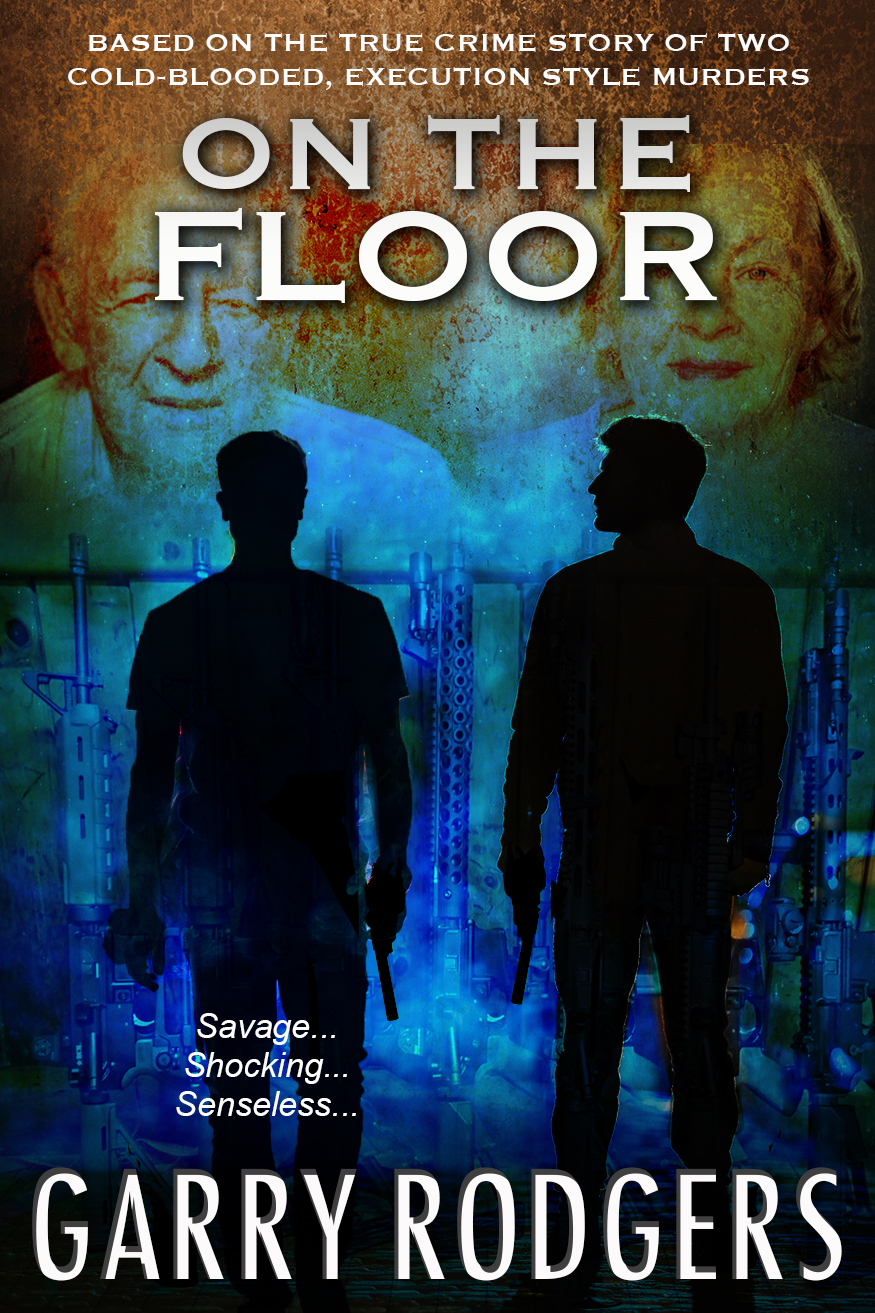
Check out On The Floor — a new release as Book 5 in the Based-On-True-Crime Series by Garry Rodgers. “Savage… Shocking… Senseless… Who would order two seniors to lie on the floor of their gun store, then cold-bloodedly execute these defenseless people with gunshots to the back of their heads?”

On The Floor is available on Amazon, Nook and Kobo as EBooks. Print and audio forthcoming when the budget allows them.

Men Are Not Women With Chest Hair (part 1)

Men Are Not Women With Chest Hair
Terry Odell

Men are not women with chest hairLast week’s post by Elaine Viets reminded me that the different ways (clichés or not) we describe men and women might have some basis in how we’re hard wired. The following post  is based on workshop presentations by Eileen Dreyer and Tracy Montoya.

As a writer of romantic suspense, one genre expectation is that stories are told from both the hero and heroine’s points of view. Writing characters outside one’s gender—and this isn’t restricted to the romance genre, or to major characters—is a challenge. As the title of this blog points out, men aren’t women with chest hair. There are some hard-wired differences, and understanding them can make characters ring true for readers.

Although we know that someone with the XX chromosome set is female, and the males are XY, it’s not ‘either-or’. During gestation, at about the 6-8 week point, the fetus undergoes a ‘hormone wash’, which may be highly loaded with estrogen or testosterone. This overlays brain development and influences brain function. So, there’s really a continuum of sexuality.

And – all of these points are generalizations. There will always be exceptions. Don’t shoot the messenger. I’m sharing my workshop notes here.

There are definite differences in brain structure in males and females. Differences are noted at 26 weeks of pregnancy. The brain develops differently in males before sex hormones are produced, so part of the sex differences in the brain is genetic.

Now, cutting to the chase: Humans started out a long, long time ago. Changes in the brain are nowhere near catching up. So, we’re basically hard-wired to survive, but not in this century. Traveling back to the days of early man…

Males are hard-wired as hunters. They have better long range directional skills. They’ve got a better spatial sense. They focus on single tasks, on procreation, they focus on things.

Females are hard-wired as protectors of the nest. They’re communal, have more finely tuned sensory skills, are multi-taskers. They’re non-verbal communicators. They can process and integrate input faster.

Some differences (and remember, these are generalizations)

  • The male resting brain is 30% active.
  • The female resting brain is 90% active. (So, yeah, it’s hard for us to ‘shut down’)
  • The male brain is logical.
  • The female brain is emotive.
  • The male brain is left hemisphere dominant, with the exception of the spatial area.
  • The female brain is more multi-hemisphere, with a thicker Corpus Callosum.
  • When men speak, only one site is active. (Right—they talk OR listen.)
  • When women speak, both the hearing and speech centers are active.

The hard wiring is evidenced at a very early age. Little girls want to fit in. Little boys like to be the boss. As women, we grow up wanting to be part of the group and don’t like to make waves, whereas for men, it’s about the hierarchy. Girls share secrets, like to connect. Boys want to be higher up the ladder and use language to one-up each other. If that doesn’t work, they may resort to physical means.

Which is why men don’t ask for directions — it puts them ‘one step under’ the person they’re asking for help. And it helps explain why men don’t apologize. That also puts them in a subservient role. Or if they do, it’s more like, “I’m sorry if you feel that way…”

These observations are built around our culture and our language, and are broad generalizations. Patterns, not rules. Regional background, age, and birth order also play a part.

Here’s a real life example of how little boys play the game. Three little boys in a car. One says, “We’re going to Disneyland for four days.” Boy #2 says, “We’re going to Disneyland for FIVE days.” Boy #3 says, “We’re MOVING to Disneyland.” The driver was the father of Boy #3. He was about to step in and admonish his son for lying, but his passenger, Deborah Tannen, a professor of linguistics, stopped him. She explained that they’d just established the pecking order, and his son came out on top. The boys all knew it was a verbal battle, and they knew nobody was moving to Disneyland.

And, on a lighter note (with apologies for the poor video quality):


Heather's ChaseI’m pleased to announce that my upcoming Mystery Romance, Heather’s Chase, is now available for preorder at most e-book channels. Note: in honor of my daughter, I’m sharing royalties with the National Multiple Sclerosis Society.

(If you’d like to see some of the pictures I took on my trip, many of which appear as settings in the book, click on the book title above and scroll down to “Special Features.”)


Terry Odell is an award-winning author of Mystery and Romantic Suspense, although she prefers to think of them all as “Mysteries with Relationships.” Follow her on Facebook and Twitter.

Happy Public Domain Day

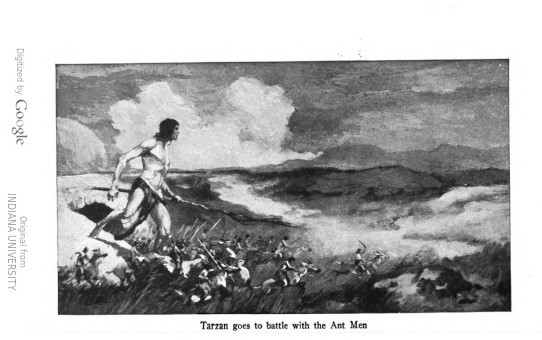
Illustration from Tarzan and the Ant Men – public domain

By Debbie Burke

@burke_writer

Back in January, I tucked this idea in a folder and promptly forgot about it. Just found it. Unlike my memory, however, this information hasn’t expired.

If you’re not familiar with Public Domain Day, January 1 of each year marks the expiration of 95-year-old copyrights of films, songs, and books. As of January 1, 2020, creative works copyrighted in 1924 became free to use by anyone, hence the term “public domain.”

What does that mean?

We the public can now watch Harold Lloyd’s classic silent films like Girl Shy and Hot Water for free.

https://youtu.be/eFHdRkeEnpM
A composer, musician, dancer, or songwriter can now freely use George Gershwin’s classic “Rhapsody in Blue” and incorporate the tune into a new pop song, rap interpretation, music video, reggae routine, or any other variation they please.

Once the copyright expires on books, plays, or movies, anyone is legally allowed to adapt those stories into prequels, sequels, or offshoots; or take characters derived from the original work and feature them in completely new tales. Authors don’t need to pay a fee or obtain permission from a copyright holder to use them.

The Divine Comedy is an epic poem completed in 1320 by Dante Alighieri. The poem was not protected by copyright. Film maker William Fox adapted a portion of that work into Dante’s Inferno, a silent film that was copyrighted in 1924 and is now in the public domain.The story cards at the beginning explain why Fox made the film:

“In presenting in screen form the more striking scenes of “Dante’s Inferno” we are realizing a cherished ambition. After a long period of careful preparation and thought, we decided to interpret reverently this classic masterpiece in its undisguised truth—weaving into its vivid realism the thread of a simple modern story. Thus the warning of Dante is more definitely emphasized—that by our daily thoughts and acts we may be unconsciously building up for our own future—A VERITABLE HELL ON EARTH.

“In the human brain a thin wall divides a heaven and a hell. Are we hewing down that wall? Are we leaving love and sunshine for the crimson realms of agony and remorse?”

The theme of The Inferno clearly resonated with Fox, inspiring him to update the story to his then-contemporary world. In the same way that Fox took an old poem without a copyright and adapted it to a different era, today’s movie makers might use his 1924 film as the basis and inspiration for new creations.

What can writers do with works in the public domain?

We can re-imagine a timeless theme in a new form.

We can take a classic story and play it out in a different setting. Christopher Robin in space? Peter Pan in a post-apocalyptic world?

We can resurrect a beloved or fascinating character to live again in further adventures.

In the 1924 film, Sherlock Jr., Buster Keaton aspires to be a great detective like Sherlock Holmes and embarks on a series of comic, crime-solving adventures. This silent classic showcases Keaton’s incredible versatility as a director, actor, comedian, and super stunt man. Click on this link for 45 minutes of fun.

Other works that came into the public domain last January include:

Tarzan and the Ant Men by Edgar Rice Burroughs


When We Were Very Young by A.A. Milne

The Magic Mountain by Thomas Mann

The Man in the Brown Suit by Agatha Christie

The first film adaptation of J.M. Barrie’s play, Peter Pan.

Here’s a link to other works that are now in the public domain.


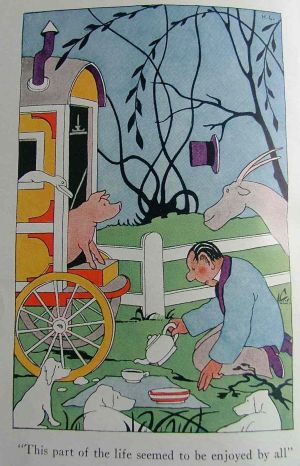
Project Gutenburg makes an extensive collection of public domain works (under Australian copyright laws) available to read for free. As a kid, I was a huge fan of Dr. Doolittle books by Hugh Lofting.  After finding the site, I spent an hour happily touring with Dr. Doolittle’s Circus and remembering illustrations I hadn’t seen in 60 years.

Today, if I wanted to write a book starring Dr. Doolittle’s sidekick, Matthew Muggs, AKA the Cat’s-Meat-Man, and Mrs. Theodosia Muggs, that is allowable.

Illustration from Dr. Doolittle’s Circus where Mrs. Muggs dispatches two villains


It’s not necessary to wait until a work goes into the public domain to use it but you must obtain permission from the copyright holder and/or pay a fee (often hefty). For instance, Desire Under the Elms, the 1924 play by Eugene O’Neill, was adapted into a 1958 movie. At least a portion of the film’s budget went to lawyers negotiating the rights under which O’Neill’s play could become a movie. If producers had waited until 2020, they could have had free, unfettered use of the play. But they’d no longer have the stellar cast from 1958:  Sophia Loren, Burl Ives, and Anthony Perkins.

Under earlier copyright law, the term of the copyright for a creative work was 75 years. In 1998, Congress extended the term to 95 years, due in large part to the lobbying of The Walt Disney Company. They wanted longer protection for the ginormous income stream generated by a certain mouse. Under current law, unless another extension is granted, Mickey will enter the public domain in 2024. After that, theoretically, anyone may be able to use Mickey’s image and earn money from it.

Want to bet on that happening?

Nah, me neither.

Works in the public domain can be a source of inspiration for writers to freshen a timeless theme, to create new stories that happen before or after the original work, or to breathe new life into memorable characters.

When Casablanca goes into the public domain in 2037, I’ll write the sequel I’ve had in mind for years…if I’m still around.

Not betting on that either!

~~~

TKZers: Do you ever hanker to write a new episode or sequel to a favorite book or series? Please give examples.

What books or movies do you look forward to being in the public domain?

~~~


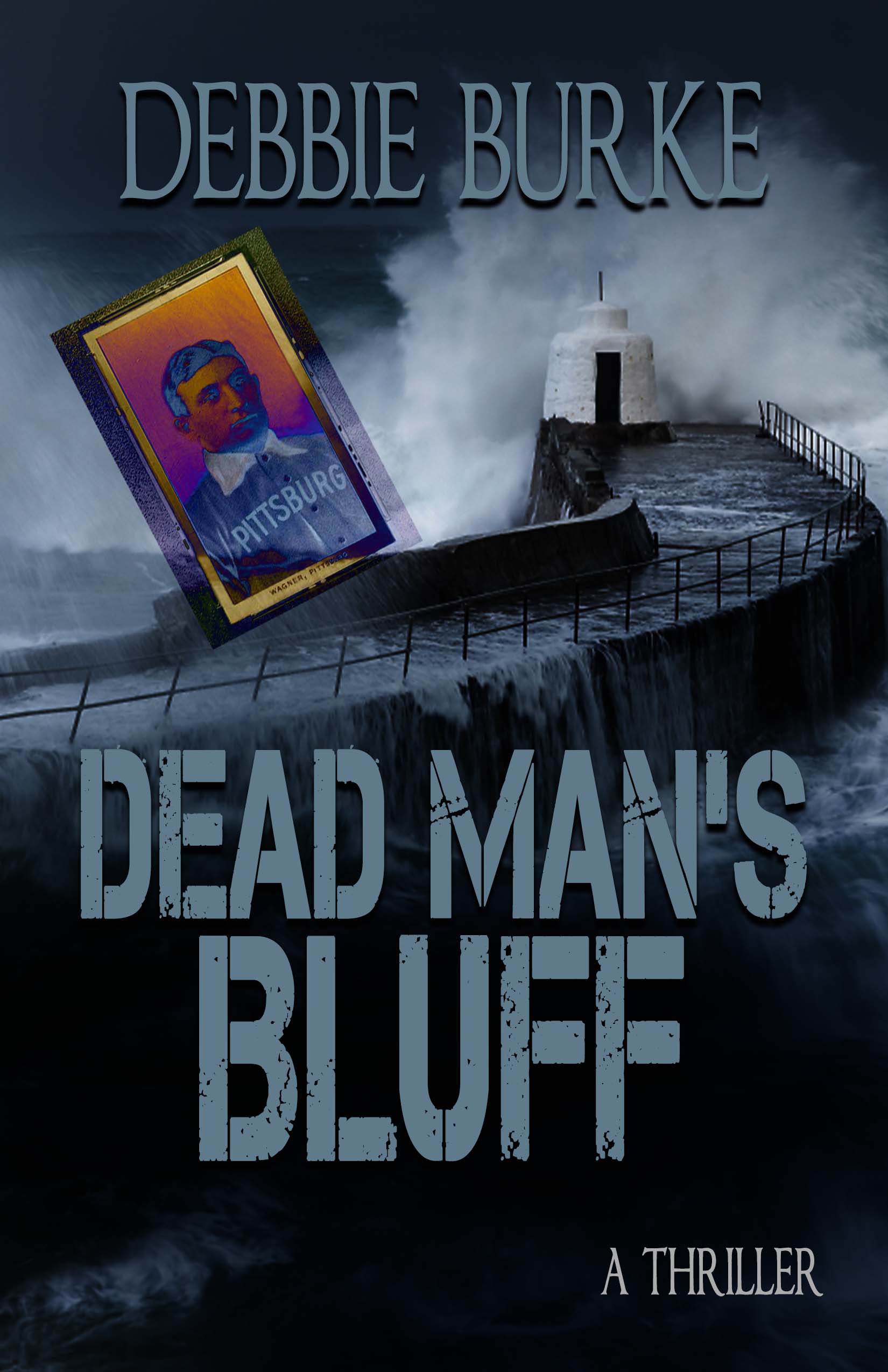
Debbie Burke’s latest thriller, Dead Man’s Bluff, will enter the public domain in the year 2115. Or you can buy it now for only $.99.

A Writer’s Learning Curve

I’m pleased to welcome TKZ alumna Nancy Cohen today, as she talks about the Writer’s Learning Curve. That’s Nancy in the hot pink suit. — Elaine Viets

By Nancy J. Cohen

As we go through our journey as writers, we move from one set of learning goals to another. These may evolve over time but there’s never a lack of new things to conquer. Always needing to stay ahead in this game, we must keep up with trends in the marketplace, writing styles and marketing strategies.

When you’re starting out, you’ll devour articles on character, plot, setting and other basic elements of a novel. Once you hone your skills, you’ll narrow down your focus to a particular genre. This can take years, along with many unpublished books, notes from critique partners and rejections from editors. Eventually, if you persist, you’ll get published. With professional editorial input, your skills will keep improving until you look back on those earlier books with dismay. Now that you’re a seasoned author, what’s next?

Writing styles change as pressures from the real world influence our tastes as readers. Before technology infused recreational pursuits, people had plenty of time to read for pleasure. Long, descriptive passages and poetic prose were common. Remember those long tomes by authors such as James Michener? How many of us would pick up one to read now?

These days, readers lack the patience for long expository passages. They want white space, short paragraphs and even shorter chapters. Fast-paced stories with lots of dialogue and action will win readers over sooner than lengthy descriptions that make your eyes glaze. What was that famous line about cutting out the parts readers tend to skim past?

The advent of e-book readers has reinforced this shorter, breezy writing style. So has the “Look Inside” feature at Amazon. You need to grab a reader’s attention within the first few pages. Never mind spending several paragraphs describing the luscious sunrise and seguing into backstory about how the heroine came to be there. Cut to the heart of the story and get things moving from the start. Listen to what readers want and adapt your style if you want to attract more fans.

This also applies to the marketplace. Are cozies popular because the outside world is scary and rife with tension these days? Or are darker tales and thrillers in vogue? Do we need to steer clear of certain topics? Or can we address these issues in a timely manner in our work? Supposedly our books reflect what’s going on in society. In a pandemic, does this mean writing our lifestyle changes into our stories or carrying on as though things are normal? That would depend upon your readers’ expectations, so again, consider your audience.

By now, you’ve produced a number of published books and have learned how to manage your promotional efforts. Back in the day, this meant booksignings inside malls at B. Dalton and Waldenbooks. Then it became independent bookstores. Now it’s online events and ZOOM presentations. You have to keep up with the times in terms of marketing efforts. And when you think you have it down pat, you decide to go hybrid or indie and have to learn a whole new skill set. Nor does it ever end. Audiobook production, box sets, sales promotions, social media campaigns…the opportunities to try new things can be overwhelming. It helps to focus on one item at a time. What is it you want to learn next?

As authors, we’re on a journey that will keep taking us to new places. We always have more to learn and to achieve. Be grateful, because it keeps our minds sharp and gives us a sense of purpose each day. In this, we share a unique mindset that connects us to each other.

Writers I’ve Learned From: Erle Stanley Gardner

by James Scott Bell
@jamesscottbell

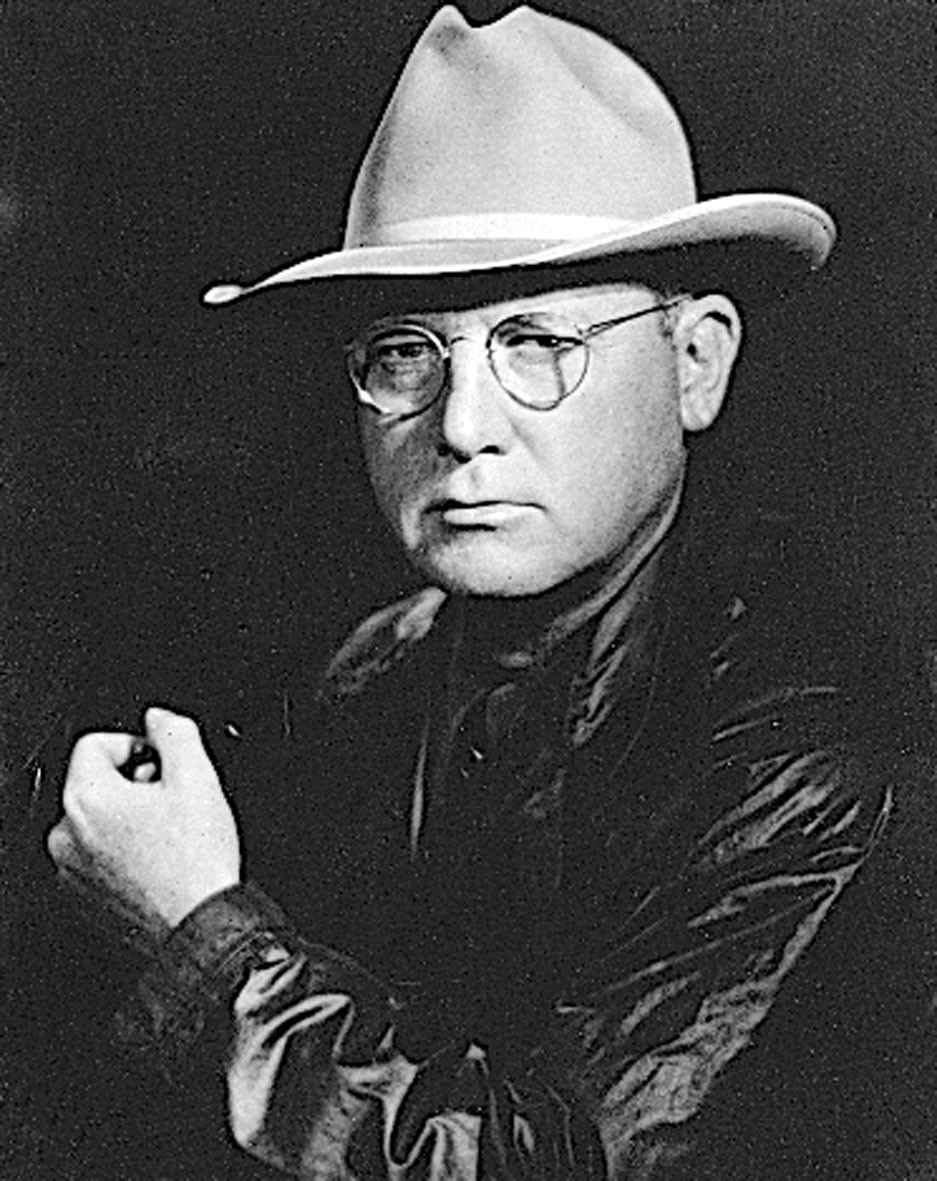
Erle Stanley Gardner

A friend of mine sent me an article about the great pulp writer Erle Stanley Gardner. Since he has been an influence on my own work, I thought I’d do a little reflecting on the man and his method.

Let’s start with work ethic. All the great pulp writers had to relentlessly hammer the keys in order to put food on the table. Get a load of this:

When he died, in 1970, Erle Stanley Gardner was the best-selling American fiction author of the century. He wrote 100,000 words a month for some fifty years. His New York Times obituary cited sales of more than 170 million books in the US alone, and reported his paperback publisher saying that in the mid 1960s they sold 2,000 Gardner books an hour, eight hours a day, 365 days a year.

From the 1920s on, Gardner produced an avalanche of pulp stories, novellas, cowboy yarns, science fiction, travelogues and several mystery series, on top of the 80 Perry Mason novels that cemented his fame and fortune, and won him fans such as Einstein (reported to be reading a Perry Mason novel on his deathbed), Harry S. Truman, and Pope John XXIII.

Early on, Gardner pounded manual typewriters. Sometimes his fingers would bleed and he’d tape them up and keep typing. Later he made copious use of the Dictaphone and a team of secretaries. This, I will note, did not result in deathless prose. But Gardner knew what buttered his bread:

“I write to make money, and I write to give the reader sheer fun. People derive moral satisfaction from reading a story in which the innocent victim of fate triumphs over evil. They enjoy the stimulation of an exciting detective story. Most readers are beset with a lot of problems they can’t solve. When they try to relax, their minds keep gnawing over these problems and there is no solution. They pick up a mystery story, become completely absorbed in the problem, see the problem worked out to final and just conclusion, turn out the light and go to sleep.”

Some years ago I decided to read several Perry Mason novels in order. What was it about Mason that caught on in such a big way? The first Mason is The Case of the Velvet Claws (1933). It didn’t take me long to see the appeal. It wasn’t just smarts Mason possessed. All series detectives have that (e.g., Holmes, Poirot, Marple). No, it was his dogged loyalty to his clients and his determination to fight for them to the bitter end. In a letter to William Morrow about the series he was contemplating, Gardner wrote:

I want to make my hero a fighter, not by having him be ruthless with women and underlings, but by having him wade into the opposition and battle his way through to victory. . . . the character I am trying to create for him is that of a fighter who is possessed of infinite patience. He tries to jockey his enemies into a position where he can deliver one good knockout punch.

Even more, Mason was a modern knight, with a code. As the article states:

Central to these novels is the idea of loyalty—Mason’s loyalty to clients and to the truth; Drake and Street’s loyalty to Mason. Such loyalty is integral to the code of King Arthur’s round table, and the Three Musketeers, whose motto is “All for one and one for all.”

Perry Mason—incorruptible, clever, dedicated, dogged—slots nicely into the Arthurian mould. His “grail quest” is the pursuit of justice on behalf of innocents unable to defend themselves; his jousting field is a courtroom. He is never unseated.

My series character Mike Romeo is, like Mason, a knight. When I was a wee lad I used to watch Perry Mason (starring Raymond Burr) with my lawyer father. The other influence from that time was Have Gun, Will Travel which starred Richard Boone as Paladin (paladin, n., a knight, a champion, a legendary hero). I wrote about that influence here.

So thanks to Mr. Erle Stanley Gardner for his example. Now all I have to do is write 100,000 words in the next four weeks…

Is there an author whose work ethic or professionalism has made in impression on you? How is your own writing practice during these challenging days?