Reader Friday: Best and Worst Advice

What’s the worst writing/publishing advice anyone ever gave you?  Best?

The worst advice I got was from an early critique group leader, when I was writing my first attempt at a novel, who said, “Don’t let anything bad happen to Sarah.” Happy people in happy land, anyone?

Best advice? “Do what you’re good at. Do what you love. Hire out the rest.”

Top Ten Tips for Amazon eBook Publishing Success

It doesn’t matter if you’re traditional or indie published—if you want to make money in the eBook business you’ll have to deal with Amazon. Amazon is the biggest eBook distributor out there—the top dog, by far. So, if you want to run with the big dog, you’ll have to learn how to pee in the tall grass.

I think most Kill Zone followers are writers. Many KZrs might already enjoy great publishing success with whatever book type they write or publishing platform they use. However, Amazon dominates book distribution and sales. To compete in the book field’s tall grass, you must be comfortable with publishing on Amazon. These ten tips will help.

To start—I’m no Amazon publishing or marketing expert. Many resource folks and guides are out there that teach Amazonese, and I’ll provide links to the ones I find credible. What I’m doing in this post is offering what’s worked for me in my journey paddling up the Amazon eBook river.

I self-published my first eBook in 2012. It took me a year to research, write, and produce a 115K word crime novel which did pretty well on the Amazon charts. Eight years later, I have twenty publications up on Amazon that includes true crime, crime fiction, historical non-fiction, craft guides, and self-help eBooks. I didn’t publish anything for two of those years while I wrote web content for my daughter’s agency. This year, however, I’ve indie-published five eBooks with the plans for two more in a series before 2020 is done.

Enough about me. You want to know what’s in this for you, and I’m happy to share my experience by giving you ten tips for Amazon eBook publishing success. I’m also going to give you some meaningful stats about what’s producing a positive return on eBook publishing investment.

Tip #1 — Understand the Amazon System

This might sound basic and it is. To use Amazon successfully (success, by definition, is different things to different people), you need to understand that Amazon is a unique distribution system that produces most of its orders online through impersonal ’bots. There are humans employed somewhere in the Amazon jungle, I’m told, but they’re rarely seen. More to come later about contacting a live elf…

There’s an excellent Amazon course put on by Tracy Atkins and delivered as the Amazon Success Tool Kit through Joel Friedlander at The Book Designer. Here’s a page from their playbook.

There are four key concepts you must understand to successfully use Amazon as an online bookseller. They include:

Concept One: Amazon is first and foremost a search engine, and you must make your book an easy-to-find product. You need to think about Amazon as a search engine instead of a retail store. Amazon is more like Google than Walmart. When you look for a book on Amazon, you’re accessing a huge database that finds the most relevant matches based on the metadata provided for the product. (More about what “metadata” really means coming up.)

Concept Two: Amazon is a data gathering and filtering tool. It employs a sophisticated and intelligent software system that stores a large product catalog as well as masses of information on sales history and buyer preferences. Amazon uses this information to build customer profiles and make the most relevant product recommendations. When you use Amazon, it’s always taking notes and trying to figure you out in a logical way.

Concept Three: Amazon is highly visual and so are people when they shop so make your cover count. This thing about people judging books by their covers is 100% right when it comes to online book buying and selling. The brains at Amazon know this and give preference to visually enticing covers that work to draw customer attention at the thumbnail size. A great cover is paramount to success on Amazon.

Concept Four: Amazon is big and highly connected. You can use its integrated ecosystem to build your brand and sell more books if you thoroughly understand how Amazon works as an online business model. There are many components in the Amazon composition that range from eBook production to support sections like Author Central, Popularity and BestSeller lists, as well as Goodreads, Kindle Unlimited, Kindle Owners Lending Library, Audible, and even good ole paperbacks shipped through print on demand.

Tip #2 — Work With Amazon’s Algorithms

“What, really, is an algorithm?” you might ask. Good question, because having a basic grip on what Amazon’s algorithm(s) is/are puts you into a headspace where the whole eBook publishing platform kind of makes sense. They’re nothing to be afraid of because Amazon does all the algorythiming for you.

Amazon currently (2020) uses a software system called the A9 Algorithm. How it works at the molecular level is a closely-guarded system. If they tell you, they gotta kill you. But, Amazon freely encourages you as a publisher, to make full use of their billion-dollar A9 Algorithm system.

Algorithms are computerized, step-by-step instructions or formulas for solving problems or completing tasks. The A9 version takes customer interests and matches them relevantly to what you have for sale. I’m told the name algorithm comes from a Persian mathematician named Al Ghorwarizimi, not from a dance move choreographed by an ex-Vice President of the United States.

Google is one giant algorithm as well. Google searches query inputs and matches them to relevant information or metadata that display in relevant order on SERPS (Search Engine Response Pages). There’s a key difference in how Google and Amazon algorithms respond to user requests, though.

Google likes to direct information for free. The A9 at Amazon is a business tool that puts strong emphasis on sales conversions. Amazon has a vested financial interest in using your inputted metadata to promote product listings that will likely result in sales. Amazon moves listings to the top of their equivalent SERPs based on recent strong sales history and high conversion rates.

It’s your job to provide Amazon with the best information or metadata you can. What you put into Amazon’s algorithm system is what you get out. It’s called optimizing metadata, and this is where a lot of publishers fail when they post products (eBooks) on the ’Zon.

Tip #3 — Optimize your Metadata

Don’t let this phrase intimidate you. If you’ve studied how the internet works or how you can best sell eBooks online, you’ll see “optimize” and “metadata” popping up everywhere. It’s as common as SEO (Search Engine Optimization).

“Optimize” means making the most of. “Metadata” is geek-speak for information, but it’s not just hidden html code, stuffed long and short tail keywords, or fold placement of ledes. Optimizing your metadata on Amazon starts with your dashboard and pretty much ends there. It’s a matter of entering relevant information (metadata) and making sure that all the boxes are filled in (maximized).

This sounds like a commonsense thing, and it is. But, you’d be surprised how so many publishers don’t know what to put into Amazon and how to trigger the A9 algorithm to hear “pick me!” That goes for the Big-5 publishers who promote Big-Names **ahem – King, Patterson, Rowling, Steele, and Cornwell**. Some of the prominent paper-pushers eat dust left by metadata-optimizing indies. **ahem – Howie, Green, Croft, Hawking, and Andre**.

Here are the main metadata spots to optimize on your Amazon dashboard:

Title — This sounds like a no-brainer, a done-deal, but the title has to be relative to the book’s content, genre, or product placement. That goes for the sub-title as well.

Series — Without a doubt, the best way to make money with Amazon eBooks is to write in a series and profit by read-through. Make sure the series number is part of the metadata.

Description — This might be the second most important chunk of metadata to optimize. Your product description or blurb (jacket copy) is what a prospective buyer first sees after clicking on your cover image. Whole books are out there on optimizing product descriptions or sales copy and I won’t get further into it here. But… make your lede (hook) counts in the first few lines which is all a clicker first sees and triggers them to Look Inside and hit the Buy Now button.

Keywords and Categories — These are the third and fourth most important metadata pieces to optimize. In fact, they’re so important that I’ve included categories and keyword optimizing as a tip of their own.

Manuscript — Yes, your manuscript is metadata. It’s also your product’s core and it has to be professional. You do need an editor regardless of your budget. Your opening has to be strong as it’s the hook that gets the Buy Now pressure once your metadata has done its job to get the Amazon customer to Look Inside.

Cover — This is the number one metadata set-piece to get right. It’s not just for getting a click into reading your optimized metadata. Your cover haunts or halos your product all the way through the promotion cycle. Did you know your cover image is the only thing Amazon Marketing Services allows when you pay-to-play their system? Same thing with pay-to-play email list sites like Booksy, ENT, Robin, and Librarian. The only cover ad-slack you get is from BookBub, but they also want your cover to be a big part of the image (or creative, as they call it).

ISBN (International Book Standards Number) — You don’t need an ISBN to publish your eBook on Amazon. However, they do add to the professionalism offered by the product, and you’ll need one if you want your book to show up in libraries.

KDP (Kindle Direct Publishing) Select Enrollment – (Exclusive or Wide) — Big decision here. Do you want to stay exclusively published on Amazon and enjoy their perks? Or do you want to widely publish on other eBook platforms like Kobo, Nook, Apple, and Google? This is such an important deal that I’ve done a separate tip on Exclusive vs Wide.

Royalty and Pricing — Again, this is so important for eBook publishing success on Amazon that it gets its own tip.

Tip # 4 — Categories and Keywords

Although Amazon is an online, algorithmic-driven supermart for books, it’s laid out similar to a bricks & mortar bookstore. Categories are the departments where your eBook sits and Keywords are the metadata directions showing a shopper how to find your book in the massive Amazon store. It’s really not that difficult to optimize your keyword and category metadata even though the eBook gurus tend to make a big deal about it.

The trick to optimizing Amazon eBook metadata is to make sure you use as much space as allowed with RELEVANT information. Having said that, your book description doesn’t have to be as long as allowed (4,000 characters), because few people will ever read that much in a blurb. But, keywords and categories are the place to be a pig at the smorgasbord.

You’re allowed two primary categories when you first publish your eBook on Amazon. That’s pretty tight when you consider that Amazon has hundreds of primary and sub-categories on everything from Alchemy to Zen. You need to pick the best two, get the product activated, and then email Amazon from your dashboard to boost that up to ten categories.

They’ll do it. There are humanoid bottic-elves behind that dashboard, and I’ve communicated with them. You just have to provide the category paths and they’ll set you up with five times the exposure you’re initially offered.

Keywords are another metadata area where people pull their hair out and cut their arms trying for perfection. Tip? Don’t spend hours working the search bar or spending megadollars on keyword optimizing tools because the truth is… keywords don’t really matter unless you’ve already triggered the A9 algorithm to know you’re there. That’s from priming the pump through pay-to-play promotions. More on this in another Tip.

But, you do need keywords and you’re best to stuff them into keyphrases where the string of words gives you far more exposure than a single word can carry. Here’s an example of keyphrases from one of my based-on-true-crime series:

True Crime Homicide Investigation, Detective Police Procedural Procedure, Psychological Crime Thriller, Robbery and Murder, Suspense Murder Mystery, Stolen Guns Gun Store Robbery Murder, Canadian North American Crime Fiction

Amazon only allows you 50 characters per keyphrase so make the most of them. Above all, make them relevant to your book and something that a prospective reader would realistically search for. Oh, make absolutely sure that you don’t violate Amazon’s terms and conditions by entering misleading promotional stuff in your keywords like “bestseller”, “book of the year”, or ‘Better than Stephen King”. You might get your account terminated.

Tip #5 — Proper Pricing

Amazon lets you price your eBook anywhere above 0.99 cents. That has some qualifiers. Between 0.99 and $2.98 you’ll get 35% royalty. Between $2.99 and $9.99 you get 70% which is a pretty sweet deal. Anywhere above ten bucks gets you 35 on the dollar.

Amazon doesn’t want you pricing too low or too high. After all, they’re in this to make money and I don’t hold that against them. This is all about a balance of pricing right for the best return and all kinds of authors have all kinds of ideas on price points. Here’s what’s working for me… at least right now.

I’m producing a series based on true crime stories that I was involved in. Investigating them, that is. Not committing them. I’m up to number five in a planned twelve-book run and I’m starting to hit the “tipping point” where read-through is returning a positive return on investment.

I have book one listed as perma-free on Amazon. You can’t do this yourself except for the five free days per ninety-day cycle they allow you on exclusive KDP Select. Instead, I “went wide” with the series and published on Kobo and Nook. These guys (Kobo and Nook) let you do pretty much anything you want with price structure, so I set the series-one book at free on Amazon’s competitors.

Then, I emailed the bottish-elves from the dashboard and asked them to price match. They did, and now I have the first book as perma-free to offer as a loss-leader on the pay-to-play promo sites. I have a break down on promos in an upcoming tip.

The other big pricing point is making sure your Amazon dashboard is synced to international pricing. For me, $2.99 is the sweet spot for my eBooks and I set the US price at Amazon.com to $2.99. Behind the scenes, the price elf automatically sets the international prices on Amazon.ca, Amazon.uk, Amazon.au, etc according to the current exchange rate so you’ll see weird numbers like $3.34, £4.21, €4.04, or figures like that.

There’s something in marketing magic about the .99 price. Once you set your Amazon.com price to $2.99, take the few minutes to go into the international sites on your dashboard on the royalty and pricing section and manually change the Amazon suggested conversions to a smooth-reading .99 version. Trust me. It’s optimizing metadata like this that works the Amazon big picture.

Tip # 6 — Exclusive or Wide

This is the big debate, especially in the indie community. I was exclusive on Amazon for a long time before a few of my much more successful indie friends said, “Garry. WTF are you doing staying exclusive in KDPS? You’re leaving a lot of money on the table by not going wide.”

So, I bit the bullet this April and published my new series on Nook and Kobo. I haven’t left Amazon by any stretch, and I still make the most money there. It’s just that Amazon no longer lets me play in KU (Kindle Unlimited), KOLL (Kindle Owner Lenders Library), Kindle Countdown, and the Kindle Freebie 5-Day promos. Well, that’s the price you have to pay to go wide.

However, my sales on Kobo and Nook have far exceeded the pittance I made on KU and KOLL. By far. I only have my series books wide so far and I’ll move my backlist over some day. I also plan to publish on Apple and Google, but there’s only so much time in a day when I’m trying to crank out a new book in a two-month sequence as well as writing Kill Zone and DyingWords blogs.

Tip #7 — eBook Layouts

I do my own eBook formatting. I write on a PC Word.doc and then convert the file on Calibre to a Kindle/Mobi file. Yes, I know the MAC people love Vellum for file conversion, but I’m comfortable with my Windows 8. I can take a Word.docx and run it through Calibre (free download) in two minutes and it comes out clean. Then, I upload the Mobi metadata file to the Amazon dashboard and Bob’s your uncle.

Amazon allows you to directly upload a Word.doc and their system is supposed to convert it to Mobi. My experience is a direct Word upload to Amazon comes out like Uncle Bob’s breakfast and if you knew my Uncle Bob you wouldn’t like it. Do it right and your metadata eBook file will read like a professional submission.

Front matter and back matter are two hot topics. I’m a firm believer in minimizing your front matter and maximizing your backside. There are good reasons for this.

Nobody cares if you dedicate your book to Uncle Bob who, in my case, died of cirrhosis of the liver because of what he had for breakfast every day. Nobody cares about your poetic quote and nobody cares about your copyright and nobody cares about your table of contents. Get all this crap out of the front and out of sight of the potential reader who clicks Look Inside and wants to get right to your hook. That causes a Buy Now With One Click and that sells books.

Back matter is REALLY important for book sales, though—especially in a series. This is where you create read-through. It takes a bit of tedious work, but if you carefully link the other books in your series with one-click buy buttons to your Amazon and other eBook retail sites, it’ll pay back big time.

It also works to link your newest release at the opening of the front matter right after the title and before the story starts. This one little move has given me amazing results in compounded sales through that tempting click-bait. Do it. Do it. Do it.

*  *  *

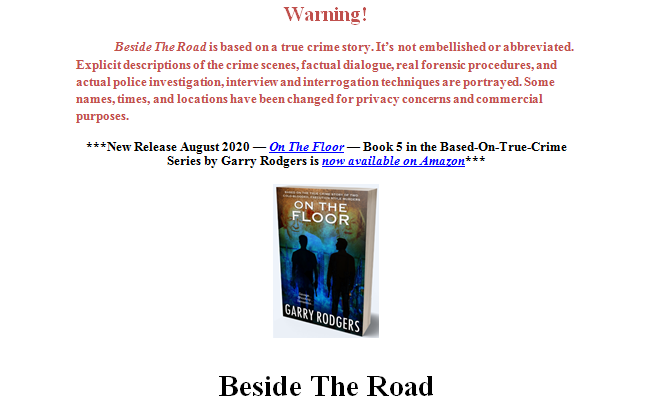
Screenshot of what an Amazon browser first sees when they Look Inside or buy Beside The Road which is book 4 in my Based-On-True-Crime Series. It immediately links the viewer to my latest release, On The Floor, and has an amazing conversion factor.
Tip #8 — Use Amazon Resources

From reading the boards and the blogs, I get the impression that some authors seriously mistrust Amazon as a bookseller. They suggest Amazon is out to game or cheat the little guy and eventually plan to take over the world. That’s not my experience.

It’s quite the opposite. From what I’ve seen, Amazon has a massive amount of information on its site to help publishers and other product promoters. Same with many internet sites. If you’re serious about making eBook publishing on Amazon a success, it’s necessary to read the instructions. Here are links to the best Amazon publishing resources:

Amazon Website KDP JumpStart

Amazon Website KDP Terms Conditions

Amazon Website KDP University

Amazon Success Toolkit — The Book Designer with Tracy Atkins

How To Sell Books by Truckload on Amazon 2020 Edition — Penny Sanserveri

Amazon Decoded — David Gaughran

Tip #9 — Prime the Amazon System

Publishing one eBook on Amazon won’t cut it. Not if you want to be a commercial success, that is. You have to have a catalog of new releases and a solid backlist. This gives what’s called “churn” in ‘Zonspeak. Amazon will churn (sell) your books as long as you have saleable products on your catalog that are metadata optimized. There’s a caveat, though. You have to prime Amazon’s system.

What do I mean by priming the system? That’s my own analogy. What it means is you have to do something to make Amazon responsive to your eBook (yes, a product) and make it worth Amazon’s while to elevate it through their algorithms and show it to prospective readers (paying customers).

Right now, in the Amazon sphere, that comes from paying-to-play. You have to spend money to make money and you have two main options. One is advertising your product(s) on big discount email sites like Booksy, EReader News Today (ENT), Fussy Librarian, and Robin Reads, as well as smaller sites like Book Gorilla, Rune, and Many Books. Your other option is the paid click sites like BookBub, Facebook, and Amazon’s own Marketing Services (AMS).

This is where the series perma-free and read-through strategy shines. What works to sell eBooks on Amazon is to advertise your perma-free on paid sites like Booksy and ENT. You’ll get hundreds or thousands of downloads (ie – new readers) who will read-through to buy the rest of your series. What also works (although I’m just starting to experiment) is to run paid ads on the click-sites.

Tip #10 — Real Examples of Amazon eBook Publishing Success

I primed the Amazon system on a recent book launch with a stacked promotion. “Stacked” means I did a strategic series of sequential paid ads to promote my newest book in my based-on-true-crime series. I did this by pushing my Book One perma-free on the paid discount sites with Book Five highlighted and linked in the front matter like you saw in the previous screenshot. Here are the download stats:

Day 1 Promotion: EReader News Today — 2,794 free / 228 sales

Day 2 Promotion: Free Booksy — 1,578 free / 123 sales

Day 3 Promotion: Fussy Librarian — 1,402 free / 312 sales

Day 4 Promotion: Robin Reads — 1,034 free / 103 sales

Day 5 Promotion: Many Books — 162 free / 50 sales

Day 6 Promotion: Book Gorilla — 51 free / 64 sales

Day 7 Promotion: Book Runes — 296 free / 41 sales

My pay-to-play promotions on the discount email list sites cost $565. Gross revenue on paid sales (based on a $2.00 royalty) was $1,842. So, deducting the ad costs, the net was $1,277. That’s an excellent seven-day return on investment by anyone’s standards. It also led to a big organic sale increase as people in post-promotion bought read-throughs.

“Wait! Garry — You gave away 7,317 free eBooks on Amazon? Like… WTF were you thinking?”

No, I just gained 7,317 new potential readers by paying to advertise a perma-free and let the read-through, paid-sale, miracle materialize. My organic purchases significantly increased since I primed the Amazon pump. So did my email list. The traffic also pushed my perma-free to the #1 Bestseller spot in the Crime Thriller (Free) category. Now, I’m experimenting with a BookBub Ad promotion before trying FB and AZ clicks. Wish me luck.

Kill Zoners — What’s your experience with Amazon eBook publishing? Any tips for us?

Garry Rodgers is a retired homicide detective and forensic coroner. Now, Garry has reinvented himself as a somewhat successful self publisher who’s trying to figure out what works to sell books.

Besides crime writing, Garry Rodgers spends time putting around the saltwater near his home on Vancouver Island in British Columbia on Canada’s west coast.


Men Are Not Women With Chest Hair, Part 2

Men Are Not Women With Chest Hair, Part 2

Men are not women with chest hairIn Part 1, I talked about physiological differences in the way males and females are hard wired.

Note: Much of the information in these posts comes from workshops by Eileen Dreyer from a RWA conference, and Tracy Montoya’s presentation at a Southern Lights Conference.

This time, I’ll discuss some of the social differences between men and women. Again, these differences are based on physiological differences in the brain, but there are always going to be individual differences. There’s a basic framework, but there are also individual modifications to the finished product. Think of all those apartment complexes, or housing developments with virtually identical houses. Eventually, the owners put their own touches into their homes giving them some individuality. However, some of the broad, sweeping generalizations we make about men and women does have a basis in the differences in the way their brains work.

In Social Situations:

Men are goal oriented.
Women are community builders.

Men are the lone hunters.
Women are communal.

Men are problem solvers.
Women are problem sharers.

A woman will come home from a day at work and complain about something that happened. To a women, sharing troubles is a friendship ritual. To a man, talking about a problem is asking for advice. Thus, the man will offer suggestions as to how to fix it. The woman really doesn’t want his help, she just wants to vent. Men consider talking about a problem a step down in the hierarchy.

Men are likely to explore an idea through argument. Women will shut down, because they want to keep connections open.

Montoya mentioned a study where two men were brought into a room with two chairs facing the front, and told to wait until they were called for an interview. The men sat and talked. When the subjects were two women, the first thing they did was move the chairs so they faced each other.

This ingrained wiring leads to frequent “discussions” where the woman accuses the man of not listening to her when she’s talking to him because he’s not looking at her.

Men define themselves by achievements.
Woman define themselves by relationships.

In the workplace, our hard-wired brains still see the differences between male and female behaviors. Perhaps the reason men don’t see women as “equals” in the workplace is because they simply can’t. They’re perceived as too emotional to be authority figures. Their wiring does make them emotional. But that doesn’t mean they can’t make the necessary decisions. But a woman is more likely to say, “We’re going to talk about “the” rules,” which is ingrained in the nurturing wiring, whereas a man would say, “We’re going to talk about “my” rules,” which fits his hierarchical wiring. Women soften statements, men give orders.

Men and women have different approaches to problem solving.

Men are linear thinkers.
Women think in clusters.

Men compartmentalize.
Women churn things over until the problem is solved

Men are emotionally divorced from problem solving.
Women are emotionally involved in the process.

Men are solitary.
Women are communal.

Men give space.
Women wants a hug.

Men want answers.
Women want support.

For men, help means failure.
Women want to help.

I hope these posts have provided a little insight you can apply when writing characters outside the familiarity of your own gender. If they shed a little light on your own personal relationships, consider that a bonus.

All right, TKZers. The floor is open for discussion.


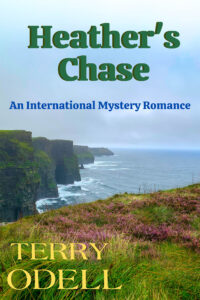
Heather's ChaseI’m pleased to announce that my Mystery Romance, Heather’s Chase, is now available at most e-book channels. and in print from Amazon. Note: in honor of my daughter, I’m sharing royalties with the National Multiple Sclerosis Society.

(If you’d like to see some of the pictures I took on my trip, many of which appear as settings in the book, click on the book cover and scroll down to “Special Features.”)


Terry Odell is an award-winning author of Mystery and Romantic Suspense, although she prefers to think of them all as “Mysteries with Relationships.” Follow her on Facebook and Twitter.

A Feel-Good Story


By Debbie Burke

@burke_writer

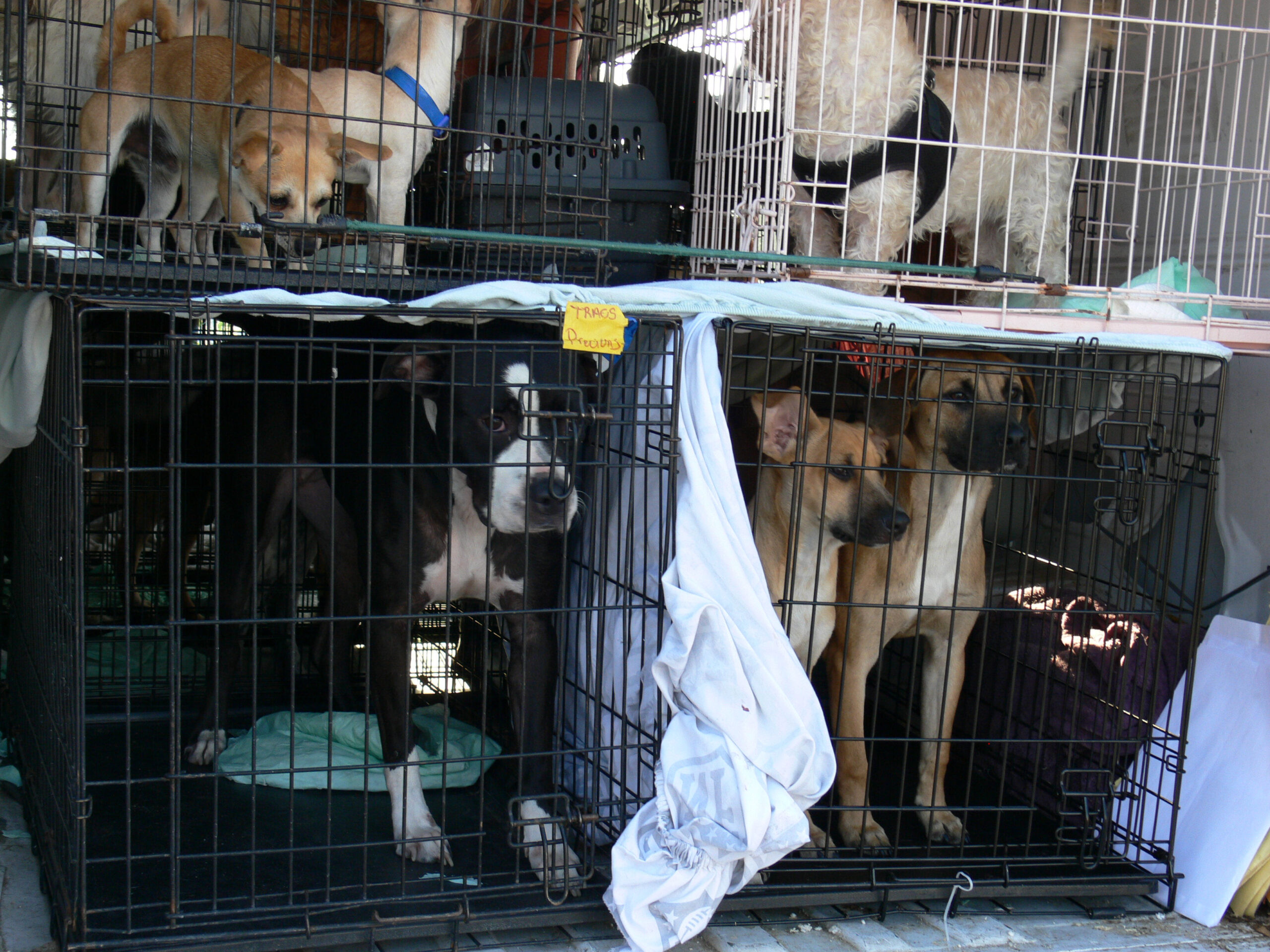
Pretty Girl (black and white dog) in transit


After the past six months, raise your hand if you’re ready for a feel-good story.

Yeah, me too.

The following is a true story—the journey of one stray dog from certain death to happily-ever-after with plenty of bumps along her odyssey. It encompasses important elements of story structure that are necessary in both fiction and nonfiction. It includes many heroes who embody a never-say-die spirit of determination. The inciting incident introduces a daunting mission with high stakes. The antagonists take the form of plot reversals and seemingly insurmountable hurdles. All these elements eventually lead to a satisfying climax and conclusion.

Recently, I was privileged to participate in this story as an assignment for Montana Senior News.

The protagonist is Pretty Girl. No one knows her origins. Her age is estimated at three years. A guess at her lineage is pit bull-boxer cross. Pregnant and starving, Pretty Girl is abandoned on a Beaumont, Texas road by a villain who is never identified.

Enter hero Gary Pelt.

Like Pretty Girl, Gary’s life has not been easy. Born with congenital developmental disabilities, he nevertheless works hard and supports himself with city and county jobs including maintenance of school buses as well as a lawn service business on the side. When his wife of 39 years dies in 2015, Gary is adrift and lonely, even with his large extended family nearby.

He takes in the skinny, sickly stray and calls her Pretty Girl. Two thousand dollars in vet bills later, she is cured of heartworm, puts on weight, gives birth to her puppies then is spayed. All pups find homes except for one, which Gary keeps and names “Remy.” Mother and daughter become Gary’s steadfast, loyal companions.

Tropical Storm Imelda flooded Beaumont, TX. Photo credit: Jill Carlson, CC license

In 2019, they undergo a plot reversal when their safety is threatened by Tropical Storm Imelda that drenches Beaumont. Gary’s home is flooded. Rescue workers find him, Pretty Girl, and Remy atop his bed, surrounded by nearly three feet of water.

They survive, recover, and rebuild. But Gary’s health declines and relatives urge him to move into assisted living. He refuses out of loyalty to his dogs. If Pretty Girl and Remy can’t go with him, he isn’t going.

Then a catastrophic plot reversal upends Pretty Girl’s life. Gary dies this past July at age 70.  Pretty Girl and Remy lose the only home they’ve ever known. Remy is adopted but, despite Pretty Girl’s sweet, loving temperament, she remains a homeless orphan who misses not only her human but also her daughter.

Enter two heroes in the characters of Gary’s sister, author Debbie Epperson (my longtime friend and critique partner), and her husband Nathan who agree to adopt Pretty Girl. But that introduces a whole new obstacle: how to transport a 63-pound dog from Beaumont, Texas to Kalispell, Montana more than 2100 miles away.

They face daunting hurdles: Airlines won’t fly pets during the summer. With COVID-19, Debbie’s health doesn’t allow a road trip.

Enter more new heroes, strangers who don’t know Pretty Girl or the Eppersons but are united in a commitment to help animals in trouble.

Dozens of emails fly over the Milk Bone Grapevine, reaching out to volunteers and rescue groups, asking for transportation help.

Meanwhile Pretty Girl is temporarily boarded. Every ride in a car means a trip to an unknown, unfamiliar destination: sometimes a vet’s office, other times to foster care. Strange people, strange dogs, and uncertainty surround her. Yet she retains her sweet personality. Her only flaw is food aggression toward other dogs, not surprising given her rough beginnings.

After several weeks of planning and coordination among different groups, Pretty Girl’s itinerary is finally set. Family friend Sissie Breaux drives her 85 miles from Beaumont to Houston.

In Houston, she is handed off to Rescued Pets Movement (RPM). The nonprofit group founded by Cindy Perini has saved the lives of more than 55,000 homeless and abandoned animals that face euthanasia in city pounds and shelters. In addition to providing medical care and rehabilitation, RPM transports animals to reputable rescue groups in far-flung areas where there is a demand for pets.

Pretty Girl joins 126 dogs and seven cats for the 1000-mile trip from Houston to Denver that takes 24 hours.

In Denver, Pretty Girl meets another hero, Edie Messick, founder of The Animal Debt Project (ADP), a nonprofit no-kill shelter located in Wellington, Colorado that also focuses on transporting animals. Every other week, Edie drops off and picks up dogs throughout Colorado, Nebraska, Wyoming, Montana, and Idaho.

Pretty Girl spends eight days at Edie’s shelter waiting for the arrival of rescued strays from the streets of Tijuana, Mexico. They will be her traveling companions on the next leg of her trip.

Thursday morning, Pretty Girl and 27 other dogs, including a diabetic requiring shots and a three-legged pup, are loaded into Edie’s van, turning the vehicle into a combination day care and nursing home on wheels. They travel on I-25 and I-90 for another 1000-mile journey from Denver to Missoula, Montana.

Early Friday morning, Nathan Epperson and I drive 120 miles from Kalispell to Missoula where we rendezvous with Edie to pick up Pretty Girl.

Pretty Girl is panting and understandably anxious since she just spent a day and a night with two barking Chihuahuas in a crate above hers. But her tail wags as she licks our hands, excited and happy.

She doesn’t yet know this is the final leg of her long journey and the climax of her story. But we humans know she’s destined for a new home with a loving family.

In Nathan’s truck, she tries to climb on his lap, making driving impossible. So I sit in the back seat with her, holding her leash. She leans against me and, soon, her panting stops. She’s calm and affectionate. Unlike many dogs under stress, she’s not afraid to make direct eye contact.

When she looks in my eyes, I think she must be wondering: “Are you the one I finally get to stay with?” After weeks of loss, upheaval, strange surroundings, and strange people, I tell her she’s on the way to her forever home. I hope she understands.

Taken with my cell phone cam while holding onto a struggling 63 pound dog in a moving truck. Action photography is not my specialty.

She also quickly bonds with Nathan and continues to try to climb in the front with him. I pull back on her leash until she finally settles for resting her head on his shoulder as he drives.

We arrive at the Epperson’s rural property west of Kalispell where Pretty Girl checks out unfamiliar smells of deer and wild turkeys. She meets Debbie (Gary’s sister), two Golden Retrievers, and a cat with whom she’ll share a home.

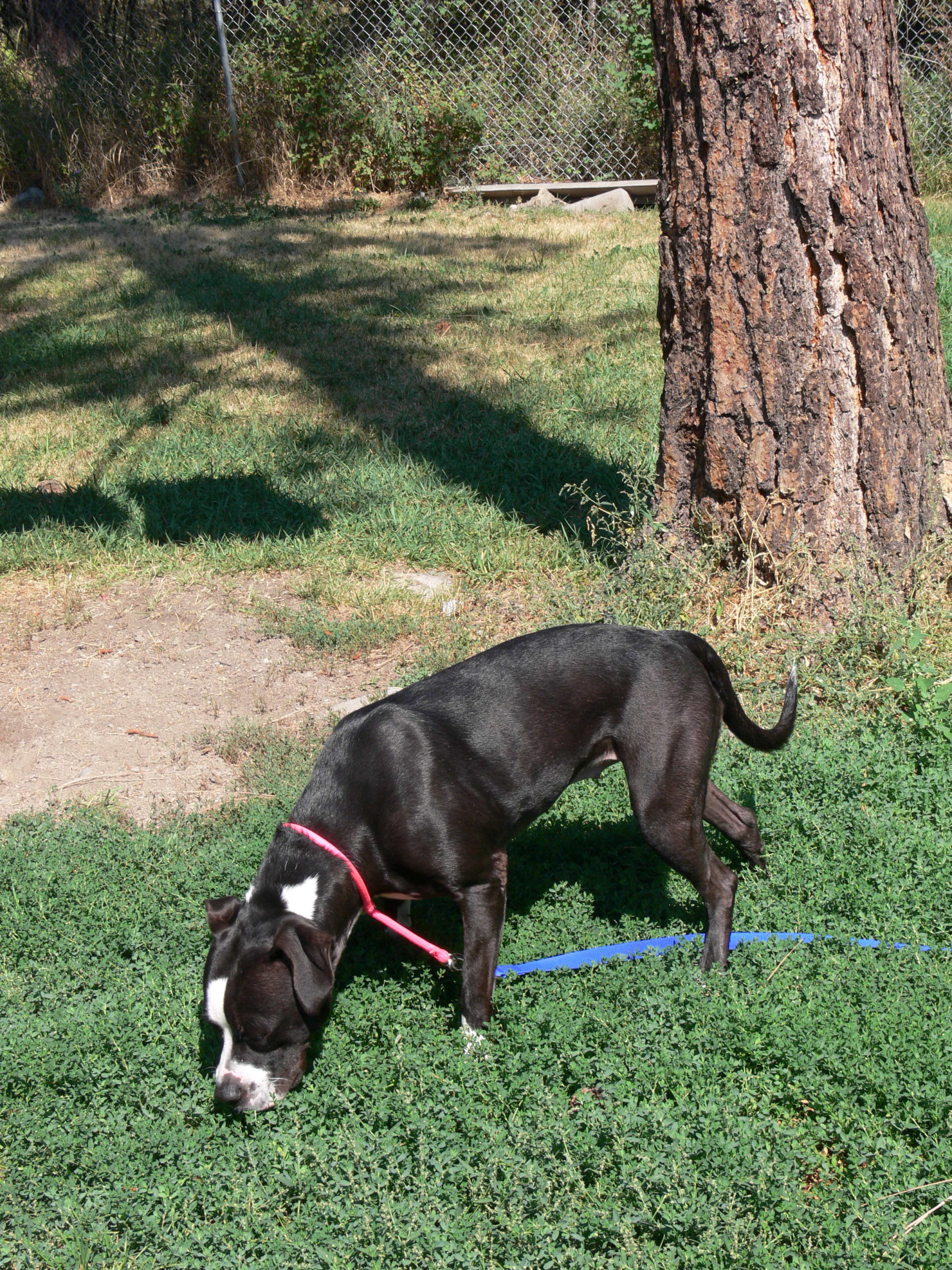
Pretty Girl explores her new yard.

But there’s one last hurdle to conquer: Kemah, the two-year-old Golden is rambunctious and overwhelms Pretty Girl, who growls but doesn’t snap.

Fortunately, Debbie and Nathan have experience wrangling multiple dogs. They know how to ease the adjustment between Pretty Girl and Kemah.

Now it’s time for the denouement of the story. When I start to leave, Pretty Girl looks distressed, as if to say, “Oh, no, another human is abandoning me.”

My heart wrenches.

But I’m consoled later that evening when Debbie emails to say she and Pretty Girl are curled up together on the love seat, watching “Murder She Wrote.”

A new crime dog in training.

And they live happily ever after.

On a hot summer day, Pretty Girl relaxes on cool rocks in the shade of her new home.

Let Your Fingers Do the Walking

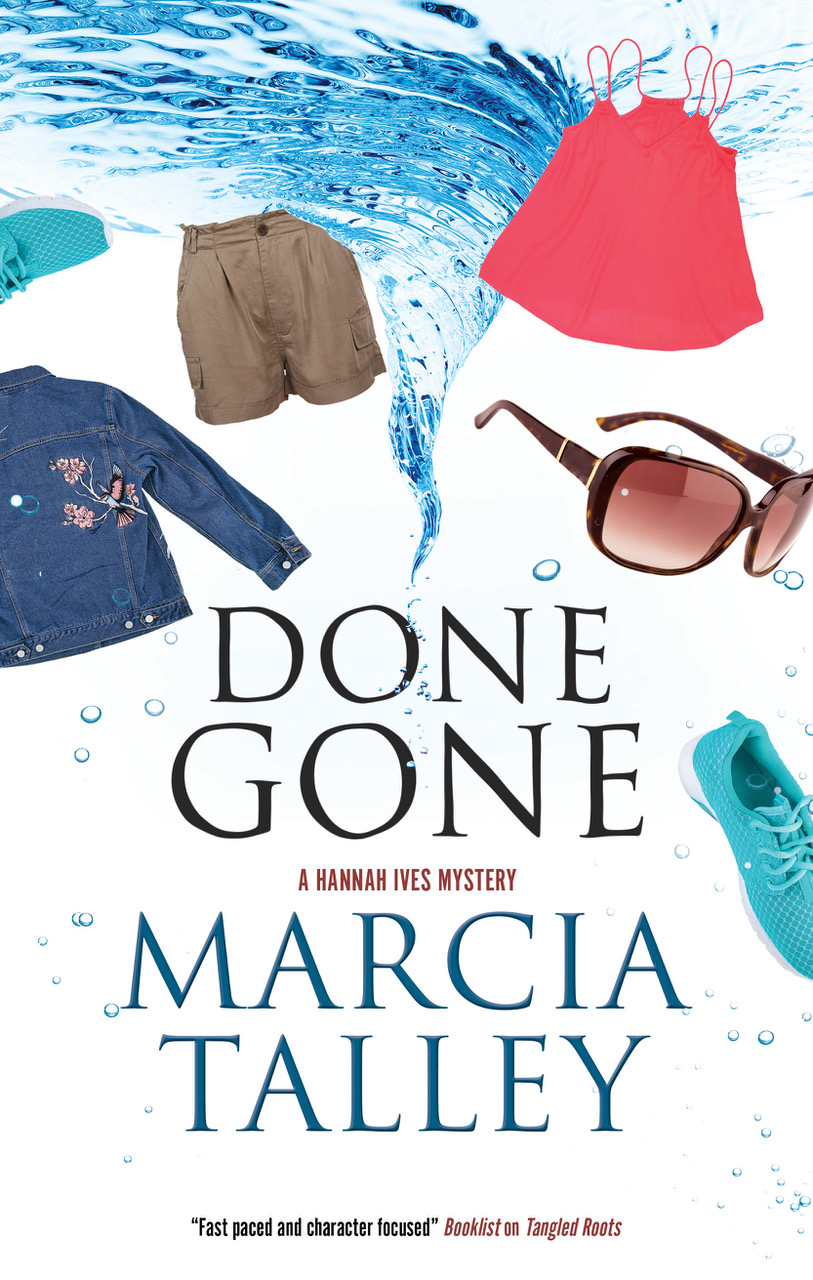
TKZ is delighted to welcome Marcia Talley, the Agatha and Anthony award-winning author of eighteen mystery novels featuring sleuth Hannah Ives. Her short stories appear in more than a dozen collections and have been reprinted in several of The Year’s Finest Crime and Mystery Stories anthologies. She is a past president of Sisters in Crime, Inc. Marcia lives in Annapolis, Maryland, but spends the winter months in a quaint Loyalist cottage in the Bahamas. Previous titles in the popular Hannah Ives series include Footprints to Murder, Mile High Murder and Tangled Roots. www.marciatalley.com

March, 2020. The pandemic caught up with me at Cocoa Village Marina in central Florida, locked down with my husband on a forty-two foot sailboat where we shared a space about the size of your average American bathroom suite.

The first half of my eighteenth Hannah Ives mystery, DONE GONE, had been written in a quiet corner of the marina’s spacious lounge—bottomless coffee pot! ice machine! microwave! restrooms! — but that luxury abruptly ended with the virus. Forced by stay-at-home orders to retreat to the boat, I set up office in the V-berth which was as far away as I could get from the computer where my husband was fighting off boredom by alternating between playing Civilization and binge watching Versailles.

At that stage of my writing, it’s usually time for a road trip to gather first-hand details on my locations.

Ha ha ha. Good luck with that.

Fortunately, the marina had a robust wireless connection, so I fired up my laptop and began to explore its possibilities by tapping keys.

Browsing through my bookmarks just now, I see that I Googled:

A Fleetwood Mac concert on October 24, 1997 at the Hollywood Bowl
Sending encrypted emails to the New York Times
The private company responsible for security at Hancock Airport in Syracuse, NY
Floor plans of the Cowley Shock-Trauma hospital center in Baltimore
Creole sayings popular in St Kitts
High end gas ranges
Suspension bridges in Ithaca, NY
Folk art galleries in Santa Fe, New Mexico
and
How to repossess an airplane
to name but a few.

This time, however, my Internet research needed to go way beyond Googling what kinds of flowers would still be blooming in a Maryland garden in late November. Or, determining whether it would still be light enough at 5:45 for Hannah to see someone skulking about outside her window, or would I have to position that person under a street lamp?
Google Street View turned out to be a lifesaver. It allowed me to “drive” from the Hampton Inn near the Syracuse airport to the house where Mary lives on Snowshoe Trail and be able to write with confidence that if I got to the overhead power lines, I’d gone too far. It helped find a town house on Clinton Street in Brooklyn in need of rehab, and after rehab was done, Zillow gave me a look inside that house, all the way from the ultra-modern penthouse bedroom suite down to the wine cellar.

Vacationers posting 5-star reviews to Travelocity assured me that the Carrier Circle Hampton Inn still had bathtubs in their guest rooms and, yes, you could make your own waffles at the complimentary breakfast bar.

To meet Dicey for the first time, Hannah needed a friendly coffee shop. Yelp obliged, and I found myself taking a virtual drive down College Avenue in Ithaca, past the bike shop and the 7-Eleven and parking in front of Collegetown Bagels where I could see from the street view images that I’d have to use the Park-and-Pay machine to do it.

A local newspaper database informed me that if I planned to have someone leap off a suspension bridge at nearby Ithaca College, it had better be before 2013 when the town suicide-proofed all the bridges with high-tensile steel mesh netting. ‘The students called the suicides “gorging-out” Dicey is able to lament.

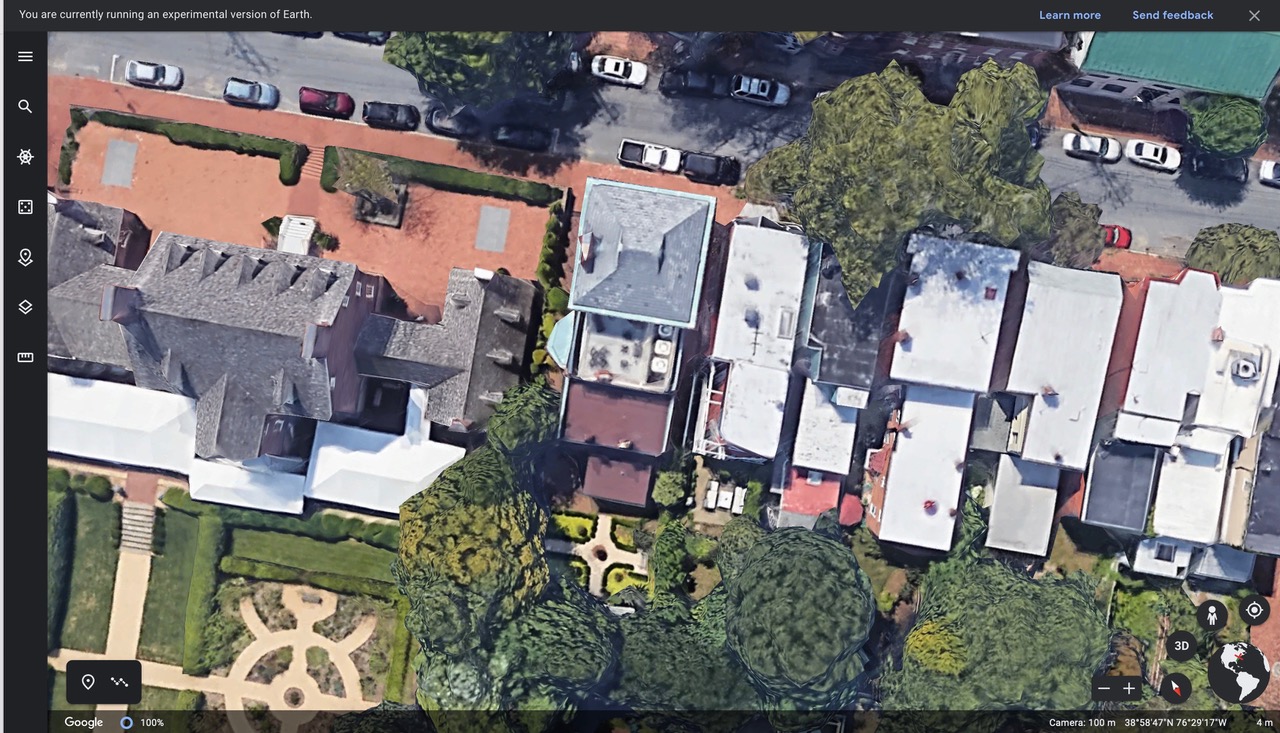
While Google Street View offers just that, views from the street, switching to Google Earth gave me a super power I didn’t know I had: zooming in over Prince George Street in Annapolis from outer space. Is there enough room in Trish’s back yard to plant a colonial garden? Yes, indeed, but mind the wall at Cumberland Court.

I’m particularly grateful to the passenger who posted to You-Tube a video of her flight on a small, private plane out of Martin Airport near Baltimore, soaring over the magnificent twin spans of the Chesapeake Bay Bridge. And to the poster of another video of a perfect winter landing on the runway at Hancock Airport in Syracuse. The executive terminals at those two airports are run by Signature Flight Services whose helpful website photos of their passenger lounges allowed Hannah and her sister, Georgina, to relax in comfortable loungers and know exactly where the coffee machine was located. And, bonus! In Syracuse, they even have a gas fireplace!

But most of all, I have to thank Mr Pegman from Google Street View, who, unencumbered by stay-at-home orders, was able to do a lot of the legwork for me.

The Creative Energy of Crowds

by James Scott Bell
@jamesscottbell

I miss crowds.

I miss a packed Dodger Stadium in the bottom of the ninth, the fans on their feet, stomping and screaming and willing a hit.

Or the Hollywood Bowl on a summer evening, be it jazz or Beethoven, as long as I’m there with my wife, a bottle of wine, and lots of people.

How about a Broadway theater? Nothing like being front row, center, for a hit like Chicago with the legendary Gwen Verdon (as I was one night long ago.)

Heck, give me Langer’s Deli at lunchtime as I munch their famous #19 pastrami on rye, with the chatter of random conversation all around me.

I miss the bustle of the streets in downtown L.A. and midtown Manhattan. Now those places look like something out of I Am Legend.

Will crowds ever come back? Will people ever rub shoulders again without masks or hypochondria?

Will big cities recover their beating hearts?

There’s a split of opinion on this. In a post that went viral, investor James Altucher says the New York he loved is dead, and will not rise from the grave:

Now [NYC] is completely dead. “But NYC always, always bounces back.” No. Not this time. “But NYC is the center of the financial universe. Opportunities will flourish here again.” Not this time.

“NYC has experienced worse”. No it hasn’t.

A Facebook group formed a few weeks ago that was for people who were planning a move and wanted others to talk to and ask advice from. Within two or three days it had about 10,000 members.

Every day I see more and more posts, “I’ve been in NYC forever but I guess this time I have to say goodbye.” Every single day I see those posts. I’ve been screenshotting them for my scrapbook.

This sentiment rubbed one Jerry Seinfeld the wrong way:

There’s some other stupid thing in the article about “bandwidth” and how New York is over because everybody will “remote everything.” Guess what: Everyone hates to do this. Everyone. Hates.

You know why? There’s no energy.

Energy, attitude and personality cannot be “remoted” through even the best fiber optic lines. That’s the whole reason many of us moved to New York in the first place.

You ever wonder why Silicon Valley even exists? I have always wondered, why do these people all live and work in that location? They have all this insane technology; why don’t they all just spread out wherever they want to be and connect with their devices? Because it doesn’t work, that’s why.

Real, live, inspiring human energy exists when we coagulate together in crazy places like New York City. Feeling sorry for yourself because you can’t go to the theater for a while is not the essential element of character that made New York the brilliant diamond of activity it will one day be again.

I get the part about energy. As a writer who spends quite enough time alone at the keyboard, I love the electric current of crowds. Sometimes I want people around me—people I don’t even know, people who are just there at the coffee house, the park, the restaurant, the beach. There’s scientific proof (“The science!”) that such activity is an aid to creativity.

Yeah, I can fake it a bit with Coffitivity. But that’s no substitute for the vibe of a crowded ITW bar (especially when Gilstrap is present). I want to be able to sit in NY’s Bryant Park at twilight, and people watch. I want to nosh chop suey in L.A.’s Central Market at noon as the life of the city churns around me.

It would be nice to someday see faces again, too.

Alas, even when large halls and stadiums finally open up, they’re sure to be tightly regulated. (The power to tightly regulate is a drug not easily kicked.) In anticipation of this, I’ve composed a new song to sing at Dodger Stadium during the seventh inning stretch:

Take me out to the ball game,
Take me out with the few.
Buy me some peanuts and Handi Wipes,
Keep me away from the talkative types
As I root, root, root in my face mask.
To sneeze or cough is a shame.
So stay six, eight, ten feet away
As I watch the game!

Do you miss crowds? Think they’ll ever come back?

Reader Friday: Where Will You Hide the Body?

You’ve just committed the perfect murder (all that research finally pays off!), but to be successful the cops can’t find the corpse. Your DNA, a stray hair, fibers, or fingerprints might lead them back to you.
Where will you hide the body?

Hint: it’s the location of the book you’re reading. Get those creative juices flowing! Where in that location will you stash the evidence?

Are you dumping the evidence (latex gloves, murder weapon, etc.) with the body?

If no, what’s the distance between the evidence and the corpse?


True Crime Thursday – Poor Choice for a Getaway Vehicle

by Debbie Burke

@burke_writer

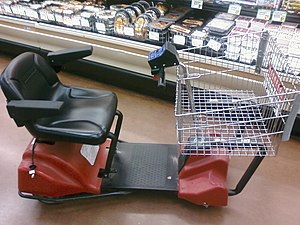
Photo from Wikipedia


Not enough evidence exists to declare a new crime trend but, from time to time, thefts of motorized shopping carts make the news.

Battery-powered carts are intended for customers with physical disabilities. Yet some thieves—often under the influence—use them as getaway vehicles.

Since the top speed of the typical cart is two miles per hour, none has been involved in high-speed pursuits. So far, the success rate of clean getaways is zero.

But hope springs eternal.

In May, 2009, thefts of motorized shopping carts occurred in two separate incidents. A Florida man was caught riding a stolen cart not far from the store. Two South Carolina men attempted a similar caper. Because the carts were valued at $2500, all were arrested for felonies. If they had stolen regular, non-motorized carts instead, the charges would have been misdemeanors.

In September 2014, a 46-year-old woman from Fruitport Township, Michigan, couldn’t get a ride and didn’t want to walk. So, she put six bags of allegedly stolen clothes, worth $600, in a Walmart motorized cart and took off. She was apprehended two miles away by police who ran her through the Law Enforcement Information Network (LEIN), along with the man accompanying her. Both had outstanding warrants.

In January 2015, a Eunice, Louisiana man, age 45, who claimed to have a broken foot loaded up a Walmart cart with a half-gallon of vodka, Mardi Gras cups, and other items and headed across the street to a truck stop parking lot. Surveillance video confirmed he had not paid for the items. When police arrested him, the party was cancelled.

In November 2019, a different Louisiana man, age 32, realized he was too drunk to drive his car and worried he might get a DWI. His solution: drive a Walmart motorized shopping cart instead. A Terrebonne Parish sheriff deputy spotted the scooter parked between two cars at a bar a half mile away. After further investigation, he arrested the suspect. The man was charged, not for DWI, but “unauthorized use of a moveable”, a felony.

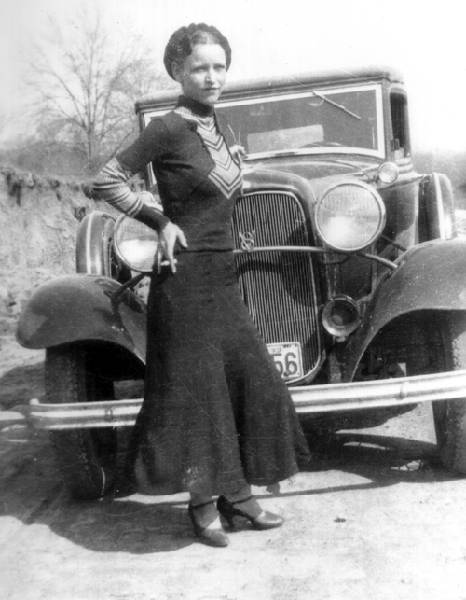
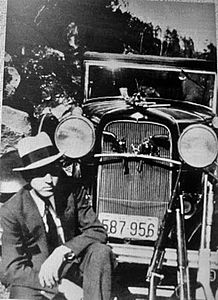
The above cases might have had better success if they’d chosen a vehicle like Bonnie and Clyde’s V8 Ford for their getaways.

Bonnie Parker – public domain

Clyde Barrow – wikipedia


TKZers: What’s the most unusual getaway vehicle you’ve heard of? Was it successful?

Take A Long View on Research

By John Gilstrap

Some of the most common questions I encounter about the writing process involve research: Some version of “How do I find out about . . . ?”

We’ve talked in this space about ride-along programs for police agencies and other emergency response groups. There are some great conferences (when conferences are allowed to happen again) like Writer’s Police Academy, and many writer’s conferences feature tracks where technical professionals share details with the assembled group. But let’s be honest. The programs that have been cleared by the public affairs office are probably not going to give you the real scoop that you’re looking for.

Most people are afraid to speak on the record these days, especially to a writer. The fact that I’m not a journalist–people are never on the record with me–doesn’t necessarily loosen tongues, especially because the kinds of things I usually want to know are the things that public affairs offices specifically don’t want me to know. Still, I have a Rolodex filled with the names of Special Forces operators, federal agents, cops, intelligence officers, ex-cons, doctors, politicians and a host of other interesting people who will answer their phones when I call.

I thought I’d share my strategy for collecting sources.

Be 100% Trustworthy. I cannot emphasize this enough. In fact, I list it first because it is the only element of my research rules that is inviolable. These folks take a risk when they share inside scoop, and trust is as fragile as one misplaced word. I never drop names among my friends, and the Acknowledgements pages in my books never include sources who helped me unless I have received specific permission. More than a few of the names provided for those acknowledgements are are different than the ones I know them to be, and I never ask which is the pseudonym.

Try to meet everyone. True confession time. My personality meets the clinical definition of an extrovert. I enjoy meeting people and getting to know them. So, this bit of advice comes more easily for me than it will for many writers who exhibit the more typical introverted tendencies of an artist. But it’s doable.

Here’s the secret: Everyone is the hero of their own story in their minds, but most folks get few opportunities to talk about their jobs and their hobbies. And in my experience, most people are delighted to be asked. Just recently, I needed to get a document notarized on a Sunday evening in Martinsburg, West Virginia. The only notary we could find was one of the local bail bondsmen. I realized that I knew nothing about that business, so I started chatting him up. Given the hour and the day of the week–he left an evening with his family to help us out–I took a business card, gave him a challenge coin, and got permission to call him later if I had any questions. Two weeks later, he spent a half hour on the phone with me, explaining the ins and outs of being a bondsman. Fascinating.

When I chat with folks, I always tell them that they should free to push back if I ask a question that makes them uncomfortable, and I make it clear that we are never on any record–I’m just interested in what they do. With the exception of a couple steps too close to national security issues, no one has ever pushed back. (And there are ways around the national security push back, too.)

Avoid the cliches. Say you’re meeting a mortician. If you start with, “Eew, how do you work with dead people all day?” the conversation will likely be short and shallow. When I shared a hotel bar with a mortician a few years ago, I asked him why, at the last funeral I’d attended, the decedent’s fingertips had started to turn blue. He explained that there were several possible reasons, and that led to a broader discussion of embalming best practices. I’ve never had occasion to use any of that, but I still have his card, and I send him an email every time a new book comes out. I presume that if I call him sometime in the future, he’ll remember our chat and he’ll talk with me.

Hang out at the bar. When life returns to normal, find an excuse to hang out at a local hotel bar. Not the local watering hole where you know everyone and everyone knows you, but a bar where transients bide their time between the work day and bedtime. Sit at the bar–not at a table–and start a casual conversation. Something like, “Where are you from?” or “Stay away from the fried shrimp.” Sooner or later, if the spark of a conversation turns to something real, you’ll get around to “What do you do?” Bingo. You’re in.

They might not have a job that’s earth-shattering, but there’s something interesting to glean from everyone. Years ago, I was at a bar with a nurse who was attending a conference, and I asked, “What’s you’re most disgusting bedpan story?” It caught her off guard, she laughed and she shared an unprintable tale that involved geriatric incontinence and a slippery floor. I doubt I’ll ever put in a book, but at least I was more entertained than if I had sat there by myself.

Listen more than you talk. Back when I had my Big Boy Job, and more recently as I tour, I’m usually alone. Many others in a hotel bar are not. They are either part of a crowd, or they’re waiting for someone to go somewhere else. When two or more people are talking, there’s nothing wrong with eavesdropping. If what they’re talking about is interesting, don’t hesitate to say, “I’m sorry, but I couldn’t help but overhear. Do you all really work for Space X?” They’ll either shut you down or be complimented. In my experience, there’s not much middle ground.

On the other hand, if the people having the conversation are very engaged with each other, and telling interesting stories, become invisible. A few years ago, I attended a week-long class in Arizona on pistols and carbines. The sessions were all taught by former Special Forces operators from various agencies, and after they got a few drinks down their gullets, they started reminiscing about past operations they’d been on. They were aware of my presence, I suppose (I was sitting in plain sight, after all), but they’d either forgotten or they didn’t care. The stories themselves were interesting in their own right, but those weren’t my big take-away. I absorbed the banter among these guys, and how much they adored what they did–and some still do as private security contractors.

Never take notes. Unless you’re a journalist, there’s no reason to take notes on a casual conversation. The presence of a tape recorder or a note pad is a quick way to get vectored back to the public affairs officer. You can always make notes to yourself after the fact.

Take the long view. The main point I’m trying to make here is that the best research is often passive. You don’t have to limit your efforts to the project you’re working on. Rather, always be in data collection mode. Never be afraid to learn more about people and what they do–who they are. Use your accidental audience with interesting people to talk about things you would never find on Wikipedia or from the public affairs folks.

Hand out and collect business cards. Back in the days of my Big Boy Job, I carried two sets of cards. If I was doing association business, I only handed out that card–even if the inquiry was about my books. I’d tell them to visit my website for more information. In every other event when a card exchange seemed appropriate, I exclusively handed out my I’m-a-writer business cards.

Lock in the contact with a friendly email. At my first opportunity after meeting an interesting person and collecting their card, I write them an email telling them how much I enjoyed learning from them, and I double down on my intent to maybe one day call them.

What say you TKZ family? Any research tricks you’d like to share?


Five Easy Fixes For Your Novel

By PJ Parrish

Back in my newspaper days, I applied for a job at the Miami Herald. I was working at the rival Fort Lauderdale Sun-Sentinel, but was flattered to be courted, so down I-95 I went. My portfolio was filled with sample clips. Great honking investigative stories. Profiles of the rich and famous. Thoughtful think pieces. Sitting in a big office overlooking Biscayne Bay, I watched the two big cheese editors as they flipped through the pages. Then they stopped and read. One guy looked up:

“I love this story. Was it your idea?”

I craned my neck to read the headline: TEN PLANTS EVEN YOU CAN’T KILL.

I nodded. “I’ve got a brown thumb.”

“We need more of this kind of stuff in our features section,” big editor said. “We’ll definitely be in touch.”

I didn’t get the job. But the experience did teach me that when it comes to getting someone’s attention, keep it short and sweet. Or as Jeff Goldblum says in The Big Chill about his job as a writer for People Magazine: “We only have one editorial rule. You can’t write anything longer than it takes your average person to take an average crap.”

So today, for a change, I’m going to write a short post. But I hope you find something useful in it. You don’t have to read it in your bathroom.

FIVE EASY THINGS THAT WILL IMPROVE YOUR MANUSCRIPT

1. Use More Paragraphs. Many of us, when we write, let the words just flow and flow onto the page. It’s emotional, that first draft. But slow down and take a hard look at what your sentences look like on the physical page. A page that is full of big similar-looking blocks of type looks old-fashioned and well, intimidating. That’s okay if you’re Dickens or Donna Tartt. The rest of us should keep things more eye-appealing. On the other hand, a page of one-sentence paragraphs can look contrived, like you’re trying too hard to be neo-noir or the next James Patterson. (But please don’t ask me to explain what compelled William Faulkner to include a chapter in As I Lay Dying that consisted entirely of one line: My Mother is a Fish.) Be in charge of your readers’ emotional reactions to your prose. Use the occasional longer contemplative graph but break it up with short ones. Writing is like music — one note, either long or short, is boring. I wrote about this subject in length a while back. Click here. 

2. Don’t Use Stock Character Descriptions. Getting readers to picture characters the way you do in your head is important. And it’s hard. Heck, all good description is doubly hard because it comes from your own consciousness AND it has to be filtered through the prism of your characters’ consciousness. Whenever I read something like this: “She looked like a young Elizabeth Taylor” my teeth ache. That’s lazy and obvious. Plus, you can get in trouble if you use culture or age-specific references. ie: He was as hunky looking as Ansel Elgort (That’s Ansel above. Who knew?). You must find a fresh and point-of-view-specific way to describe your people. And if you ever EVER use “handsome,” “sexy” “gorgeous” or, God forbid, “green-eyed vixen” I will hunt you down and confiscate your Acer.


3. Get Rid of Useless Dialogue. The exact words you put in your characters’ mouths is precious. But it’s hard to write because great dialogue is essentially a sleight of hand. (or ear?) You have to convey the FEELING of real conversation but without all the dumb and dull stuff we say in normal life. So to that end, never waste space on mundane stuff that is best conveyed in simple narrative. Don’t write:

“Haven’t seen you in a while, Joe.”

“Yeah, I know,” Joe answered. “It’s been a while since I felt like coming back to the station.”

I nodded. “Things been tough?”

“Yeah,” Joe answered. “Had some family issues and been a little under the weather.”

{{{Yawn}}} Sometimes, narrative works better, especially if you can convey some backstory via a character’s thoughts (and illuminate your narrator!).

Word around the station was that Joe had some problems at home. I knew his wife Clara. We had dated years ago and I knew that when it came to men, she had the attention span of a five-year-old in a McDonald’s ball pit.  I knew Joe, too, and in the red of his eyes I could see the bottom of too many glasses of Jim Beam.

4. Ferret Out the Weasel Words. We all have them — awful crutch filler words that seem to come unbidden from our fingers as we type that first draft. They take up space, make our narrative wishy-washy. Here’s a quick list: Just. Some. Most. But. Very. And my personal favorite — Suddenly! Take the word out, and if the sentence still makes sense, well, you’ve killed a weasel. (Caveat: Sometimes a weasel word is needed in dialogue). Watch, too, for wasted action phrases or words i.e. She raised a hand and slapped him across the face. No, she slapped him. Also, look out for weasel words in description or feelings.

Don’t write this:

He saw the car coming toward him down the dark alleyway. He realized there was no room to move, maybe only ten feet wide, and there was no time for thought. He could only react.

Write this:

Headlights coming fast toward him, blinding him. A screech of tires, the crash of the fender as it hit the trash cans. Two second at most, that was all he had.  He jumped for the fire escape above.


5. Don’t Overstate The Obvious. This is a common problem I see in many of our First Page Critique submissions. The scene is full of tension; something dire is going on. Good! But you have to then trust the reader to GET IT the first time. The more emotional or action-packed the scene is, the more you need to keep things under control. Sure, you can write this:

The sailboat was being tossed by the churning green waves like a bottle lost at sea. Maggie gripped the tiller harder, her heart racing. She squinted into the driving hard rain, trying to make out what Chuck was doing up at the bow, but she could barely make out his form in the darkness. She thought he might be trying to pull the jib down, but she couldn’t be sure. She shivered and was afraid for a second she was going to be sick. She was so afraid, and she thought again that they never should have ventured out two hours ago when the sky had been so dark and threatening.

First, note how this looks on the page: one long paragraph composed of equal-length sentences. But this is an action scene! Time for short and choppier rhythm, right? (See No. 1) And don’t gild the emotional lily. Maybe something like this:

Maggie couldn’t see a thing through the knife-slashing pelt of the rain. Two hands on the tiler now, too afraid to risk even a quick wipe across the face. She squinted toward the bow but Chuck was just a blur of gray against the mad-flap white of the jib. The sailboat groaned and pitched to starboard and she choked down another rise of nausea. Why the hell had they been so stupid? She had seen the low black clouds as they set out two hours ago. She had been stupid. Stupid to trust Chuck.   

Remember: The more emotional or tense the scene, the more controlled the writing should be. Don’t let your writerly emotions swamp your story boat.

And after that awful last sentence, I should probably add a Number 6 tip here about straining for metaphors, but I promised I’d be short and sweet today.