New Outlets for Creativity

New Outlets for Creativity
Terry Odell

Decades ago, I was a photography hobbyist. Long enough ago so I was shooting black-and-white film and processing in my home darkroom.

Fast forward a slew of decades, and I’m getting back into it. Still at a hobbyist level, but as I said on my own blog last week, having more than one creative outlet can help deal with any frustrations in your primary field. People come to TKZ to talk about writing, so we all have that in common, but many of us have other channels we can turn to as well.

Given my books often include some aspect of photography, be it the kind of camera my covert ops agent is using for surveillance, or a character looking to become a professional photographer, I’ve enjoyed expanding on simple research and moving more into the hands-on. The more I know, the more my characters know. If the research satisfies an underlying need, so much the better. Right now, I’d say my skills lie somewhere between Kiera in In the Crosshairs and Belinda in Cruising Undercover.

I might know something about photography but it’s new all over again. Cameras bear only a vague resemblance to the ones I learned on, just as word processors or writing software bear only a vague resemblance to the Underwood and Remington uprights I learned to type on.

My son’s business includes photo trips where he takes clients to a variety of locations, both domestic and international, and leads them in picture-taking. I’ve been on several with him (as a paying client, no “mom” favors), including Alaska, the Caribbean, the Galapagos, and Croatia, and most recently, Santa Fe and Taos, New Mexico. Getting away from home, seeing new sights can add depth to characters and settings.

I’m the newbie in the workshop group on this trip. My little camera might have felt inferior next to all the big fancy ones with multiple lenses. (Okay, I own other lenses, but the advice I got was that a 14-150 zoom would cover virtually every shooting situation, so that’s the only one I carried.)

Listening to the others on this tour is like hearing a new language. Everyone else is fluent, yet they’re all here to expand their “vocabularies”. For one—not a newbie by far—it was simply pointing out a better way to hold his camera. Nobody had ever told him that before. Another learned about long exposures for clouds. And one member is interested in mystery writing, so we were able to compare places we lacked significant knowledge, but had significant interest.

For me, it’s almost all new. They’re talking about swipes, zoom blurs, multiple exposures, blue hour shots—and I’m hoping my settings are close to correct, period. Histograms? I’m supposed to look at them? What are they supposed to look like? All I see is something interfering with the image.

But that’s the point of the workshop. To have people show you (often more than once) better or different ways to do things. We were shooting in areas that almost always required moving in close for detail shots. The overwhelming amount of “stuff” made it impossible to capture everything in a single shot, so zooming in on details was the way to get better pictures. As it compares to writing–we’re always learning new skills, improving the craft.

How many times have we read passages from books and said, “Damn, I wish I could do that?” With my photography, I don’t compare my work to that of the experts, but I can look at what I create and try to make it better. Just as everyone’s voice in writing means 7 people can be given the same story prompt and no two will be alike, 7 photographers can shoot the same subject, and every image will be different.

On Monday, Kay talked about words and pictures. As the final activity in our workshop, each of us was to share three images for discussion. Photographers notice things non-photographers don’t. They point out little details that add or detract to the picture–things most of us wouldn’t notice. Kind of the way writers notice things like POV issues, descriptions, overused words, etc. One group member talked (and talked) about the emotions he was trying to convey in each of his shots. Did I get the same feelings? Not really.

Several in the group chose pictures of a very old cemetery taken at the Taos Pueblo. Each had a different approach. Different angles, and different renderings–one in black and white. Instructors made comments about things like leading lines, rule of thirds, toning down or playing up shadows.

One group member was from the east coast and had never experienced anything like what she was seeing in New Mexico, and she focused on details that spoke to her. She liked the shapes and colors of things.

No matter where you are, looking at everything around you as a writer provides story and character fodder as well as a photographic image. Driving down the highway and seeing articles of clothing strewn about triggers story ideas. Is there a body somewhere?

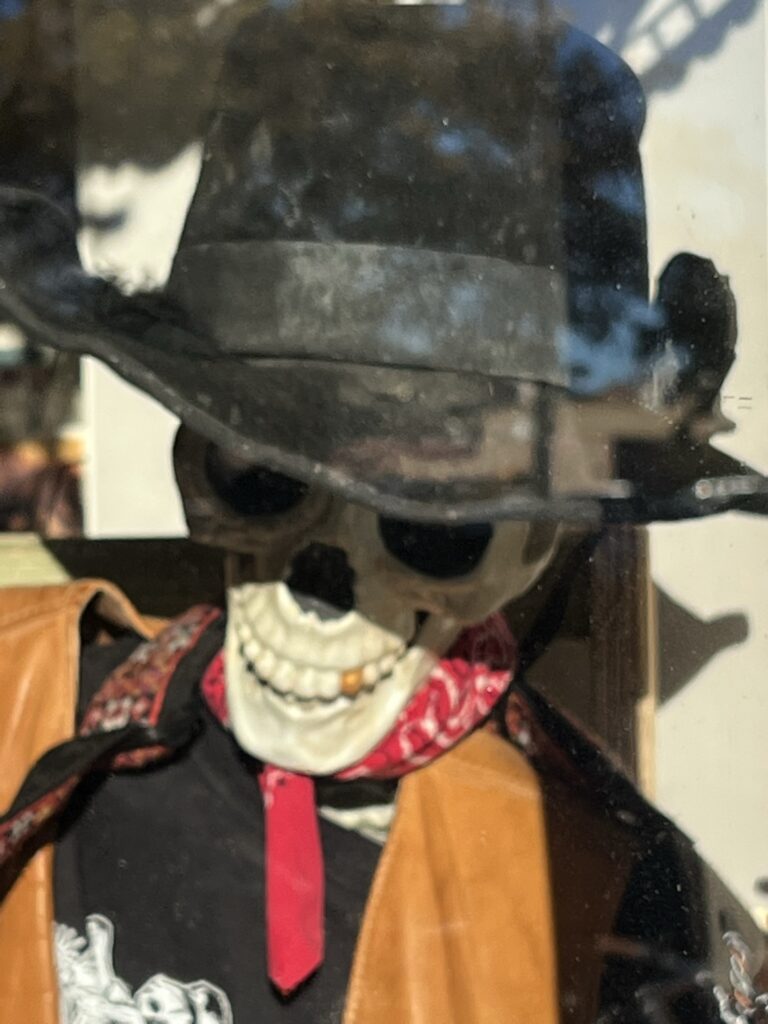
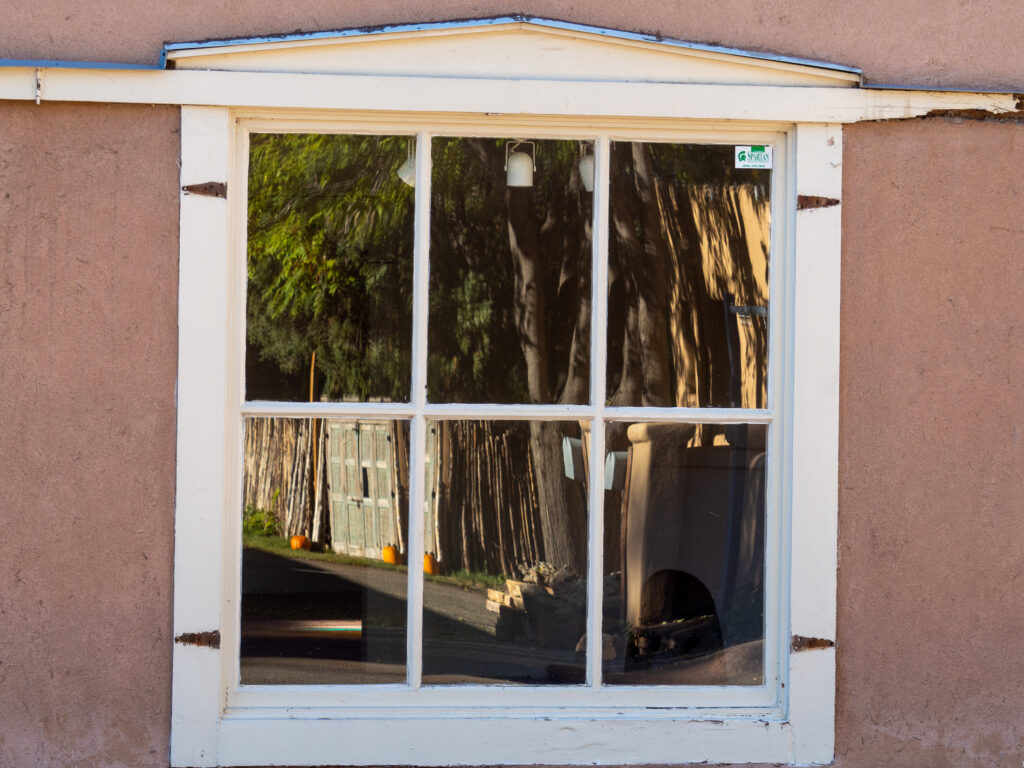
If you’ve stayed with me this long, here are some of the pictures I took. Consider them first drafts, as I’m still learning how to spot those details that will make them better images. Normally, I wouldn’t talk about ‘before’ and ‘after’ pictures, the same way you don’t share first drafts with the general public, but this is The Kill Zone, after all.


(Mis)Adventures at the Montana Book Festival

By Debbie Burke

@burke_writer


In September, my friend Cathy Raven was a featured speaker at the four-day Montana Book Festival in Missoula. Her first book is a nature memoir entitled Fox and I, about her friendship with a wild fox. It won the PEN award, among other honors.

Cathy and I met more than 20 years ago when we took a workshop from Tim Cahill, travel writer and founder of Outside Magazine.

After Cathy moved across the state, we lost touch but recently reconnected via Twitter. On Sunday morning, I drove 120 miles to Missoula for her festival talks and to congratulate her in person.

I’m somewhat acquainted with Missoula so I had an inkling about what was in store.

The streets of Missoula were originally laid out in the 1880s by feuding landowners who each wanted their own hunk of real estate to dominate. Diagonal “Slant Streets” were created for a proposed new town called South Missoula. But political maneuvering stymied the new town and slant streets were surrounded by parallel and perpendicular byways, as shown in this photo.

When drivers try to navigate the off-kilter convergence of Brooks Street, Russell Street, and South Avenue, they can thank (or curse) the early citizens who created the notorious Malfunction Junction.

As if diagonal streets and triangle-shaped blocks weren’t confusing enough, routes in Missoula are required to have more than one name—preferably three or four. Brooks Street is also Highway 93 and Highway 12, at least part of the time…until it changes.

Then there’s East and West Broadway. East Alder Street merges with East Spruce Street, which crosses North Second Street East, then eventually runs into West Greenough Drive. Throw in boulevards that are one-way part of the time and two-way other times. Add thoroughfares that dead-end in the Clark Fork River, or at the railroad tracks.

And there you have the mishmash of Missoula.

If Siri had accompanied me, I suspect she would have jumped off the Higgins Street Bridge and drowned herself in the river.

I had printed out several pages of Google maps and have a reasonably good sense of direction. Plus my rearview mirror has a nifty little built-in compass.

I rolled into town about 1 p.m. and missed the motel on Brooks Street because I stayed on 93 which is supposed to be the same as Brooks Street…except when it isn’t.

The Book Festival was at the four-story Missoula Public Library—a skyscraper by Montana standards. While cruising blindly along East Broadway, I happened to spot the towering glass library on the next street over. East Main is a one-way street that amazingly was going the right way.

Success!

Cathy’s phone went to voicemail so I had time to poke around. After the two-plus hour drive, I was glad to climb four flights of stairs to stretch out a bit.

On the top floor, an outside deck around the building featured 360-degree views of the city, rolling hills, and mountains. A volunteer at the book sales table gave me the schedule and, surprisingly, didn’t charge an admission fee, perhaps because it was the afternoon of the festival’s last day.

I peeked into several rooms where presentations were going on but didn’t see Cathy. Back down at street level, I happened to glance over at several people reading at a table.

There was Cathy, deep in her book and writing on a notepad, preparing for her talk.

We hugged like long-lost sisters and visited until she needed to get back to work on her talk.

Her panel was more than an hour later so I figured I’d try again to find my motel.

Missoula is home of the University of Montana. It has winding river walks, bike trails, beautiful historic buildings, and lovely old homes. I know because I saw all of those as I spent the next half-hour totally lost. 

The motel was to the south west but, Missoula streets being the way they are, you can’t get there from here.

My mirror compass said I was going the right direction but the street names (aliases, actually) didn’t jibe with Google maps. At last, I found the motel, hiding on a slant street not far from Malfunction Junction.

As I pulled into the parking lot, a woman was getting out of her car, putting a hardback book in her bag.

Turned out she was “Parker,” the evening desk clerk at the motel. We had talked the day before when she made my reservation over the phone.

She said she was an avid reader who spent lots of time at Barnes & Noble.

I told her I was a writer.

That admission is always a bit embarrassing because people’s eyes widen, they smile broadly, and shake your hand as if they’re in the presence of someone important.

We writers know better—the unglamorous reality is we wear sweat pants, sit hunched over computers all day long, play with imaginary friends, and make up stuff. Sane, normal people don’t do that.

Parker took my card, said she loved thrillers, and would look up my books. Cool!

After I checked in, she gave me clear, easy-to-follow directions how to get back to the library. Thanks to Parker, I arrived there in under 10 minutes. 

Cathy was on the so-called critter panel—authors who’d written books about wildlife including kingfishers, grizzlies, golden eagles, and Cathy’s Fox and I.
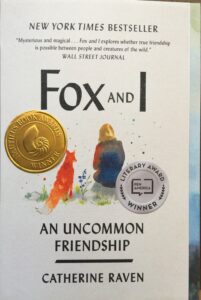
Despite many awards, stellar reviews, and glowing mentions in Time and People magazines, she’s suffering first-book jitters.

Cathy is Mensa-brilliant with a PhD in biology but also shy. She’s much more at home in nature than around people, even though she’s a professor who’s taught hundreds of students over many years.

Her wry, quirky humor quickly won over the audience. Without trying to be funny, she’s very funny.

After the panel, a lot of books by other authors remained on the table but Cathy’s sold out. She fretted about that until I reminded her that selling books was the whole point. Running out meant success.

People mentioned they had ordered multiple copies of her book as gifts.

Her solo talk was an even bigger hit, especially considering it was Sunday evening at 6 p.m. when most festival attendees had already left.

She described her solitary life in the Yellowstone Valley where she’d hand-built her home. As she did research on the area’s botany, weather patterns, and animal behavior, weeks would pass without speaking to another person.

However, a sociable red fox started showing up every day to visit the introverted, reclusive human. They forged an unconventional but close friendship. Trust developed to the point where Fox brought his four kits for Cathy to babysit while he went a distance away to take a nap.

At the end of Cathy’s talk, a woman in the audience presented her with a dazzling sunflower that looked too perfect to be real. But it was.

Dr. Catherine Raven

We headed out for dinner, assured by locals that Missoula has many great restaurants.

Few, however, are open on Sunday night.

For a college town, they roll the streets up early. After a half-hour quest, we found a place, enjoyed a good meal, and had a great catch-up visit.

But, following dinner, we lost our bearings roaming through the dark, deserted downtown and didn’t know how to get back to Cathy’s motel. We drove around looking for a familiar landmark or street name but found none.

Then we spotted a Missoula police cruiser parked alone on a street. I pulled to the curb in front of him and Cathy and I jumped out of the car to ask him directions.

In hindsight, that wasn’t a smart move. But, as a child, I’d always been told if you get lost, ask a policeman.

A young cop jumped out of his rig, talking rapidly into his lapel mic, wearing a wide-eyed deer-in-the-headlights expression. I’m not sure if he had his hand on his weapon because he was standing behind his open car door for cover.

Two women—old enough to be dangerous, from out of town, lost in Missoula, asking directions to a motel whose name we couldn’t remember but was near a McDonald’s—utterly befuddled this poor young cop. I’m sure he thought we were impaired even though we hadn’t had a drop or a toke.

He finally collected his wits (and probably heard back from the dispatcher that there was NOT an APB out on an old white Toyota Highlander with two female occupants). Still looking flummoxed, he managed to direct us to Broadway where we found Mickey D’s and the motel.

Cathy and I said goodbye, resolving not to let another 20 years go by without seeing each other. I headed for my motel on the other side of town.

By this time, I’d driven enough of the mysterious streets of Missoula to be fairly confident of finding my way back until…the southwest section of town went black.

A power outage shut down street lights, buildings, traffic signals, and the sign for the motel. For several blocks, I drove in total darkness except for my headlights. By luck, I spotted the motel just in time to turn into the shadowy parking lot.

In the office, two lanterns glowed. I had a flashlight but, rather than enter a completely black, unfamiliar room, I opted to hang out in the dim lobby with my new friend Parker. A couple of motel workers wearing headlamps checked the property and muttered about buying a generator.

The electric company’s text updates estimated the power would be restored by 9:30 p.m. It was now 9:45. The power had been off long enough that the computer battery backups in the office had run out of juice.

Parker said, before the power went off, she’d looked up my books. She wanted to read them but didn’t have cash with her and I can’t take credit cards.

We spent the next hour, shooting the breeze and solving the world’s problems. She gave me directions to Barnes & Noble, where I planned to go the next morning before heading home.

Finally the lights popped back on.

Whew.

The motel is independently owned, not a chain. Its tagline is “Nice rooms for nice people.”

I went to my room and thought about how nice Parker had been, giving me directions that carried me safely through Malfunction Junction. She’d kept me company during what could have been a nervous hour in an unfamiliar dark place.

I grabbed a copy of Instrument of the Devil (which, fittingly, is about a terrorist targeting the power grid), signed it, and gave it to her.

The next morning, I visited Barnes & Noble. The manager is very supportive of Montana authors, even independently published ones. She ordered a few copies and we talked about my doing a signing there next spring (they’re scheduled months ahead with author appearances).

Despite getting lost repeatedly, inadvertently scaring a cop, and surviving a power outage, the trip to Missoula was a success.

I reconnected with an old friend and watched her bloom as she talked to audiences about her book. I met a lady who gives better directions than Siri and Google Maps combined, whom I hope will become a fan. And I have a future book event to look forward to.

Not a bad day’s work for a writer.

~~~

TKZers: Have you ever gotten hopelessly lost but found a better reward than what you were originally looking for? Please share your wanderings in the comments.


 

Words and Pictures

“Words – so innocent and powerless as they are, as standing in a dictionary, how potent for good and evil they become in the hands of one who knows how to combine them.” –Nathaniel Hawthorne

* * *

Here at the Kill Zone Blog, we’re all about words. Combining those innocent words into sentences, paragraphs, and finally stories is the thing that drives us.

We’ve also heard it said, “A picture is worth a thousand words.” But is it?

* * *

The movie Words and Pictures was released in 2013, but I saw it for the first time a year or so ago. The movie features a “war” between its two protagonists, both teachers at an elite New England prep school.

Jack Marcus (Clive Owen) teaches Honors English. He is brash and sarcastic and annoys his colleagues by trying to lure them into word games which he is sure to win. But Mr. Mark, as his students call him, is thoroughly in love with the English language, and the best scenes in the movie take place in his classroom where he challenges, inspires, and even berates his students, all in an attempt to engage their social media-deadened brains to appreciate the power of language. In one scene, he even gives them an assignment to invent a new word to add to the English language. The results are fun and appealing.

Actress Juliette Binoche has a harder task holding her own as the Honors Art teacher, Dina Delsanto, an educator who is less charismatic than the feisty Marcus. Delsanto suffers from rheumatoid arthritis which has robbed her of her independence and some of her ability to create. As a new addition to the faculty, she is immediately put into conflict with Marcus.

Of course, these two characters have to become involved with each other, and their verbal sparring sets in motion a “war” of words versus pictures that culminates in a school assembly where students will evaluate the power of each of the creative methods.

As the movie’s primary complication, Jack Marcus is an alcoholic. Although he’s managed to hide his problem from the school administrators, he fears “the fire has gone out.” When his sloppy behavior at a local restaurant and his lack of creative output threaten his position at the school, he’s forced to take extreme steps to keep his job. One of the best lines in the movie is uttered by Marcus when the headmaster bemoans his lack of output.

Headmaster: “You were a published author.”

Marcus: “I’m still a published author. It doesn’t go away like the mumps.”

There are minor characters and subplots that swirl around the main story, but the essence of the film is the comparison of the value of words vs. pictures. I know which I would vote for.

* * *

Incidentally, I was doing a little reading about how words and pictures affect brain function when I came across an article at thinkonyourfeet.com. The article states that right-brained people are more likely to think in images whereas those of us who are left-brained are more likely to think in words. One of the conclusions in the article is that writing demands a whole-brain approach. I like that.

So TKZers: Which is more powerful: Words or Pictures? Do you think in words or in pictures? Have you seen the movie Words and Pictures? What’s your opinion? What movie about writing and / or authors would you recommend?

Writing Lessons From Sidney Sheldon

by James Scott Bell
@jamesscottbell

Before there was James Patterson there was Sidney Sheldon.

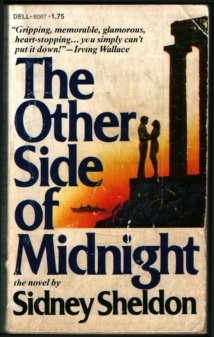
His second novel, The Other Side of Midnight (1973) was a monster bestseller. A string of #1 NYT bestsellers followed. Sheldon sold an estimated 400 million books before he died.

And he didn’t start writing fiction until he was in his early 50s!

Before that Sidney Sheldon led, if you’ll pardon the expression, a storied life.

He was born in Chicago in 1917, to Russian-Jewish parents. He almost committed suicide at age 17 (it wasn’t until decades later that he was diagnosed as bipolar). What pulled him back from the brink was writing. He pursued it with passion, and the results were astounding.

He had two hit shows on Broadway at the age of twenty-seven.

After World War II, he became a studio writer in Hollywood. His screenplay for the Cary Grant comedy The Bachelor and the Bobby-Soxer won the Academy Award for best screenplay of 1947. Sheldon was 30 years old.

Not that all this was a smooth trajectory toward the top. Far from it. Sheldon suffered as many setbacks as he had triumphs. He described the writer’s life (especially in Hollywood) as being on an elevator. Sometimes it’s up. Sometimes it’d down. And if it stays down, you need to get off.

Sheldon continued to ride that elevator in the 1950s. Up and down. He even had a great idea for a Broadway show ripped off from him.

In the early 60s he decided to take a crack at television. He created the hit series The Patty Duke Show, and get this: Sidney Sheldon himself wrote virtually every episode himself. Over 100 in all!

Do you know how absolutely amazing that is? To be that sharp and funny week after week? And all this while suffering from what at the time was called manic-depression.

But even more amazing was the personal strength and courage he and his wife showed through two highly emotional tragedies.

They had a baby girl born with spina bifida and, despite all the best medical care, she died in infancy. After a long period of mourning they decided to adopt a child. An unwed mother whose boyfriend had left her gave the baby up. They brought her home and for six months loved her and bonded with her.

But under California law at that time, the biological mother could change her mind within six months. This mother did, and one day the authorities came and took the Sheldon’s baby daughter away.

Sheldon and his wife turned to religion for solace. Sidney (now being treated with Lithium) continued to work. He started developing a new television show from an idea he’d had for a long time. It was about an astronaut who finds a bottle on the beach and frees a genie. But this genie would not be the big, lumbering, male giant of tradition. Oh no. This one would be a babe. That’s how I Dream of Jeannie was born.

During this time, the 1960s, Sheldon kept noodling on a thriller idea about a psychiatrist who is marked for murder though he has no enemies. He must use his professional skill to figure out who is stalking him. That became Sheldon’s first novel, The Naked Face. It was published in 1970 and won the Edgar Award from the Mystery Writers of America.

Sheldon caught the novel-writing bug, big time. Here he could create whatever world he wanted, without regard to budgets, sets, actors, or restrictions of any kind—especially the story-by-committee nonsense of Hollywood.

He had an unsold screenplay in his drawer and turned it into The Other Side of Midnight. Sheldon was 56 when this novel rocketed him into the literary stratosphere.

His last thriller, Are You Afraid of the Dark, was published in 2004, when Sheldon was 87.

Sidney Sheldon is the only writer ever to have won a Tony, an Oscar, and an Edgar Award. Let’s see if anybody ever does that again!

In The Writer’s Handbook 1989, Sheldon talked about his method. Here’s some of what he said.

The Secret

Sheldon was asked, What are some of the devices you have found most successful in getting your readers to ask breathlessly, “What’s next?”

The secret is simple: Take a group of interesting characters and put them in harrowing situations. I try to end each chapter with a cliffhanger, so that the reader must turn just one more page to find out what happens next. Another thing I do is to cut out everything that is extraneous to the story I am telling.

Simple to understand, yes. To put into practice book after book, well, that’s something else again. But you can learn how to write more interesting characters, how to make a form of death (physical, professional, psychological) hang over every scene (“harrowing situations”), and ways to end a scene or chapter with what I call a “Read On Prompt.” This is all to be filed under Craft Study.

Process

Sheldon was a “discovery writer” or “pantser.” But let’s hear what that actually meant.

When he began a book, all he had in mind was a character. He then dictated to his secretary, developing the character, bringing others in, letting them interact. “I have no idea where the story is going to lead me.”

But that is only for the first draft. Then came the work.

The first rewrite will be very extensive. I will discard a hundred or two hundred pages at a time, tightening the book and clarifying the characters.

A hundred to two hundred pages? Yikes! There’s more: “I usually do up to a dozen rewrites of a manuscript.” Yikes and gulp!

He would spend a year or year-and-a-half rewriting and polishing a book. This paid off, of course. Big time.

He did have a caveat:

I want to emphasize that I do not recommend this way of working for any but the most experienced writers, since writing without an outline can lead to a lot of blind alleys. For a beginning writer, I think an outline is very important…It is a good idea to have a road map to tell you where you are going.

The Leave-Off Trick

Like Hemingway, Sheldon would end his day’s work after beginning a new scene. Sometimes he’d quit mid-sentence. “In the morning, when you are ready to go to work, you have already begun the new scene.”

Also, he would begin his writing sessions by lightly going over the previous day’s work.

The Mid-Plot Blues

Sheldon said he usually wanted to give up in the middle of his novels. I experienced this early in my career and came to call it the 30k Brick Wall. I found that several successful writers reported the same thing.

Why should this be? Maybe because by 30k you’ve got the engine revved up and are now staring at that long middle, wondering if you’ve got the right foundation and enough plot to make it to the end. The writing willies, if you will.

Formerly, my solution was simply to take a day to brood and imagine and jot notes, maybe adding a new character or two. Then, once I started up again, one scene at a time, I would get back into the flow. That works.

Now I find that if I have my signpost scenes in place, especially the mirror moment, I don’t hit the wall anymore.

The Emotion Quotient

You get your readers emotionally involved in your characters by being emotionally involved yourself. Your characters must come alive for you. When you are writing about them, you have to feel all the emotions they are going through—hunger, pain, joy, despair. If you suffer along with them and care what happens to them, so will the reader.

Wise words with which we all should agree.

Minor Characters

I refer to minor characters as “spice.” They are an opportunity to delight readers, so don’t waste them by making them clichés.

Sheldon:

Every character should be as distinctive and colorful as possible. Make that character physically unusual, or give him an exotic background or philosophy. The reader should remember the minor characters as well as the protagonists.

I’ll close by recommending Sheldon’s memoir The Other Side of Me. I love reading bios of authors. This one is entertaining, instructive, and inspirational.

What do you think of Mr. Sheldon’s advice?

Homegrown Thrill Rides

Homegrown Thrill Rides: A checklist for suspense, what is the domestic thriller,  and tips on writing one.

As a now retired librarian turned full-time fiction writer, diving into the vast Kill Zone archives for three nuggets of wisdom is the perfect role for me here at KZB. It gives me the opportunity to share so many insightful posts on craft, publishing, and much more. For today’s post, I want to take a look on creating “homegrown thrill rides.” It begins with a sampling from a checklist on how to create suspense and tension for the reader, a necessary ingredient in any thrill ride. We then turn to excerpts from a pair of posts on the domestic thriller: defining it, and a few of the key factors to consider in writing one.

Please weigh in with your own thoughts. I have included a few questions as prompts for comments after the excerpts. Date links are provided to the full posts which can provide further fuel for thought and discussion.

Experiment with these devices to increase suspense and intrigue:

__ Sprinkle in some foreshadowing – drop subtle advance hints and innuendos about critical plot points or events.

__ Withhold information – use delay tactics, interruptions at critical points.

__ Stretch out critical scenes – milk them for all they’re worth.

Surprise or shock your readers:

__ Add in a few unexpected twists. Put a big one in the middle and another big one at the end.

__ Use surprise revelations from time to time – reveal character secrets and other critical information the reader has been dying to know.

__ Have your main character experience at least one epiphany – a sudden significant realization that changes everything for them. Try putting one in the middle and one near the end.

__ Write in some reversals of feelings, attitudes, expectations, and outcomes.

Keep adding more tension. Increase the troubles of your protagonist by using these plot devices:

__ Ticking clocks – every second counts.

__ Obstacles, hindrances – keep challenging your hero or heroine.

__ Chases – your protagonist is chasing or being chased.

__ Threats or hints of more possible danger ahead.

__ Traps and restrictions – your character becomes somehow trapped and must use all their resources to get out of the situation.

Create a memorable, satisfying ending.

Design a big showdown scene, an extremely close battle between the hero/heroine and the villain.

__ Write in a surprise twist at the end.

__ Leave your readers satisfied – the hero wins by a hair, the main story question/conflict is resolved.

–Jodie Renner, June 12, 2013 


I wanted to talk about a sub-genre known as the “domestic thriller.” I’m not sure when this was coined, but it’s quite popular now, especially after Gillian Flynn’s runaway bestseller, Gone Girl. More recently, A. J. Finn’s The Woman in the Window has kept readers flipping the pages.

My research didn’t uncover a hard-and-fast definition of the domestic thriller. It seems to be a cousin of the psychological thriller, but with a home setting and (usually) a woman as protagonist and (usually) a male as the villain. A title like It’s Always The Husband (Michele Campbell) will clue you into the vibe.

I don’t, however, consider this a new genre. It’s at least as old as Gaslight, the 1938 play by Patrick Hamilton. You’ve probably seen the 1944 movie version for which Ingrid Bergman won the Academy Award as Best Actress. (I actually like the British version better. Released in 1940, it stars Anton Walbrook and the absolutely amazing Diana Wynyard. Catch it if you can!)

Hitchcock’s Shadow of a Doubt (1943) may rightly be deemed a domestic thriller.

I would classify many of Harlan Coben’s books as domestic thrillers. Suburban setting, ordinary person, crazily extraordinary circumstances.

Which is my favorite kind of thriller. I’ve always loved Hitchcock, and he was the master at the ordinary man or woman theme. My favorite example is the 1956 version of The Man Who Knew Too Much starring James Stewart and Doris Day. The idea, Hitchcock once explained, came from a scene he pictured in his mind. A foreign, dark-skinned man, with a knife in his back, is being chased, and falls dead in front of some strangers. When someone tries to help him, heavy makeup comes off the man’s face leaving finger streaks on his cheeks.

So Hitchcock did that very thing. He had Stewart and Day as tourists in Morocco, and in the marketplace one morning a man with a knife in his back falls at Stewart’s feet. Stewart gets the face makeup on his hands.

Of course, right before he kicks the bucket the dying man whispers a secret of international importance into Jimmy’s ear, and we’re off and running. The bad guys want to know what Jimmy knows and they’re willing to kidnap his son to find out.

–James Scott Bell, May 6, 2018


Keys Factors for Writing Domestic/Psychological Thrillers

1.) Set your domestic thriller in familiar settings. Give the reader comfort until they realize your novel doesn’t take place in Mayberry. Set your story in a small town, on a commuter train, in a home with a family who could live next door to you, or create a situation that seems harmless at first until it escalates into a terrifying tale. Much like Stephen King is partial to turning everyday objects into nightmares–I’ll never use a turkey carving knife again–it’s important to think through an effective setting that lulls the reader into a false sense of security until you pull the rug out.

2.) Make your story hinge on familiar subjects. I’ve suggested a few below, but I’m sure you could come up with more that could be turned on its ear with escalating tension. Use your own personal experiences to discover what might touch your readers.

  • A marriage that doesn’t need much to send it over a cliff
  • Sibling rivalry
  • Neighbors from Satan
  • A clandestine love affair
  • School rivalry/Helicopter moms competing against each other
  • Parenting – Lots of possibilities
  • Family relationships
  • Boyfriends/Girlfriends/Jealousy

3.) Now ask yourself the critical question of “what if…” What are the worst plot twists that could happen in the world you’ve created? Think WAY out of the box. Use a dartboard to add some unpredictability to your brainstorming.

4.) Make your character(s) real. Imagine people you have known, but elevate them into a major player’s role in your story. It helps to start with the familiar to make it real, but then your character would take on his/her own journey. Remember, your characters need to be real and not supersized into movie star status. Take “every man or every woman” and force them to step into an horrendous plot. Make your starring character(s) believable.

5.) Give your characters flaws that could prove to be fatal. It’s a balancing act to pick vulnerability that doesn’t make them appear too weak. Give them insecurities they can overcome in a believable way, without making them whiners. Force them to face their insecurities. Are they capable of overcoming their worst fears? Give them a chance to do it. Will they? Dig deep with a journey for your character to survive through your plot. They must struggle to gain ground or appear that they never will. Nothing trite will work here. It must seem insurmountable. I found a great resource for character flaws – 123 Ideas for Character Flaws

–Jordan Dane, January 3, 2019

***

  1. How do you go about creating suspense in your fiction?
  2. Do you read domestic thrillers? Write them?
  3. What tips or advice do you have?


Reader Friday: Contact Sport

Irwin Shaw


I once told a class I was teaching that writing is an intellectual contact sport, similar in some respects to football. The effort required can be exhausting…and you are hurt on almost every play; but that doesn’t deprive you from getting peculiar pleasures from the game. — Irwin Shaw

Discuss!

Your Runway of Life

Your life runs by in a hurry. In three acts, you were born, you mature, and you’ll die. Beginning, middle, and end. Classic story structure, and what really counts is what you do on your runway of life. Especially with the time you have left.

A few things brought on this post.

One—my brother recently passed away. He was sixty-nine, and there was no warning. It was a brain aneurysm which is a pre-existing condition that’s nearly impossible to detect or intervene with.

Two—I turned sixty-six yesterday. That milestone, along with my brother’s sudden death, made me reflect on what time I have left. The events put into perspective an urgency I have in continuing important tasks.

Three—I received a newsletter from Dr. Peter Legge where he outlined the Runway of Life. In a three-minute video, Dr. Legge gave me an “ah-ha” moment. I’d like to pass it along to my friends at the Kill Zone.

Peter Legge is a well-known force in Vancouver. He’s a highly accomplished entrepreneur, author, speaker, publicist, and community leader. Dr. Legge is also a motivator and personal mentor to many folks, regulars and high achievers.

The Runway of Life is a concept. It’s an abstract, yet crystal clear, look at where you’ve come from, where you are, and where you’ll end. Not when you’ll end—that’s something we don’t know so, for this exercise, we’ll make up a number.

In the video, Dr. Legge draws a horizontal line in black ink on a white background. The line represents your runway of life—your life’s timeline. On the left, he draws a zero. This represents the day you were born.

Somewhere along, he draws a figure for his age. Dr. Legge is currently eighty, so he dots an 8-0. This shows since birth to today he’s gone 80 points on his runway of life.

His final figure is hypothetical because there’s no way he, or anyone else, can know the age he’ll die at. Dr. Legge qualifies that and says for this exercise the death number doesn’t matter. “It could be eighty. It could be a hundred. But for this demonstration I’ll put down ninety.”

So, Dr. Legge jots 9-0 at the right side of his runway. Clearly, he’s used up 80 years of his life’s runway, and he expects to have 10 years left.

“Zero to eighty are gone. They’re history and they’re past.” Not so with the remaining ten still on the runway. It’s what you do with the remaining time on your runway of life that now matters.

I drew a runway of life for myself. I started at zero like everyone else. I have sixty-six around three-quarters to the right. And I picked ninety as my cash-out number. I base that life expectancy on my genealogy which has had some pretty old birds in the family tree.

I realize my brother’s last number was only sixty-nine. However, there’s a big medical difference between my brother and me. He was a heavy smoker, and I’ve never touched the stuff. Cigarette smoke is the most significant modifiable risk for cerebral aneurysm. Heart attack / myocardial infarct as well.

My runway of life looks like this:

I’ve used 66 years which is 792 months, 23,760 days, and 570,240 hours. If my calculator is right, I have 24 years left on my runway of life—288 months, 8,640 days, and 207,360 hours.

It’s what I do with those remaining years, months, days, and hours that count going forward. I have no idea what the right, right number is on my runway of life. It could be a lot lower. So, I’m moving ahead making every day matter.

I’m doing two primary things. One is keep creating content, and keep learning how to do it, for the entertainment industry (aka being a writer). The other is enjoying time with my family and friends, especially out on our boat.

And if I blend the best of both worlds, like I’m doing right now, I’ll write and learn from the chart table in my wheelhouse till I’m buried at sea by my family and friends, hopefully well past one hundred.

Kill Zoners — Have you given any thought to your runway of life? Care to share an urgency?

Doing Good Radio

By John Gilstrap

A couple of weeks ago, I posted here about my great fortune to score an ongoing talk radio gig on WRNR Radio/TV 10 in Martinsburg, West Virginia. It’s strictly a talk format, with Rob Mario as host, and then two co-hosts, of which I am one a couple of times per week.

It’s interesting sitting on the other side of an interview. Having done more than a few of them over the years as the interviewee, being the interviewer has changed my perspective a bit. In recent weeks, we’ve interviewed a few authors. I thought I’d share some lessons I’ve learned that you might find helpful if you find yourself in the position to promote your book–or to promote anything for that matter.

Know ahead of time what the format will be.

On our show on Eastern Panhandle Talk Radio, all interviews are 22-25 minutes long, free from commercial interruption. That’s unusual in my experience for broadcast radio and television. Normally, the broadcast format runs 7-10 minutes, which requires an entirely different approach.

In shorter interviews, be prepared to deliver the vaunted elevator pitch, where you get right down the details of the book. There likely won’t be a lot of give-and take between you and the host. If there is, that’s great. Just don’t anticipate it.

Longer interviews, on the other hand, are much more conversational. If you launch right into the elevator pitch and stay with it, there won’t be much interaction with the hosts, and you run the risk of leaving little to talk about during the rest of the spot.

Anticipate the common questions and have stories to tell.

You know the low-hanging fruit: Where did the idea come from? What kind of research did you do? Which of your books is your favorite? What authors do you read? Tell us about the story.

The best interviews are with people who tell the stories behind the stories. Keep it light-hearted and entertaining. If you can make your book resonate with current events or current times, that’s always a good thing.

Another trait of great interviews is that they are conversational. Try to forget that YOU’RE ON THE RADIO!!! and concentrate more on having a casual conversation with the person across from you in the studio or on the other end of the phone call.

There’s a good chance that “radio” means TV, too.

In these days of video streaming, many (most?) radios stations also have a live feed to Facebook or other social media sites. Plan accordingly to avoid that awkward jammies and bed-head television exposure.

Send promotional materials ahead of time.

Remember that your interview is but one tiny slot inserted into a busy broadcast. People will not have had time to read your book, certainly on short notice. Be sure to send along a synopsis of the story, along with a short bio.

Suggested questions are always welcome because they give the interviewer a clue about what topics you are most prepared to cover.

In your promotional materials, be sure to include a headshot of you and the cover of your book. If there is a TV/Facebook live element, this is essential. One of the most recent interviews sent along a single image that is a combined cover and author photo. I’m going to steal that idea.

Avoid qualitative assessments of your own work.

This might just be my own bugaboo, but I find it vastly unprofessional for an author to tell the world how funny, inspirational or exciting his own work is.  Just as on the page, show, don’t tell. Let your enthusiasm for the project sell the book for you.

Mention the title. A Lot.

In a standard interview, you’ll be introduced as the author of [Your Book Title], and then again as such at the end of the interview. Remember that every time you refer to your baby as “my book” or “it” you’re missing an opportunity to burn the title into listeners’ and viewers’ brains.

Always close with your contact and social media information.

Rudeness is never okay, but don’t be afraid to be a little aggressive, especially at the end of an interview. Consider:

” . . . Thanks for coming on the show, John.”

“Real quick, please visit my website, John Gilstrap dot com for anything you want to know about me or my books.”

You’re on the show to market a book, so don’t be shy about marketing your book.

What say you, TKZ family? Have I missed anything?

Transitions: Building Bridges
Between Your Plot Islands

(I am still out of the country, folks, so here’s another old post, one of my favorites about making smooth transitions between chapters. I am wandering the countryside in Provence today but will try to check in via iPhone. No computers on this trip, on purpose!)

By PJ Parrish

Put on your waders because we’re going deep into the craft bulrushes today. I want to talk about one of my favorite micro-topics — transitions. Actually, maybe it’s quicksand we’re wading into, because if your book doesn’t have good transitions, it can sink faster than Janet Leigh’s ’57 Ford in Psycho.

We talk a lot here at TKZ about how important pacing is, and transitions go along way to creating that seamless narrative flow you need as your story shifts in time, location, or point-of view. Transitions look easy but they can be tricky to get right.

I dwell on transitions so much because I work with a co-author. Kelly and I write our books by talking out the plot then writing alternating chapters. So we don’t have the normal one-brain flow of a unified writing procedure. We always know the purpose of each chapter but often we write with no clear idea of what the links between the chapters will be. Sometimes we just leave red-ink pleas like this for each other —INSERT BETTER ENDING HERE — then we deal with links in rewrites.

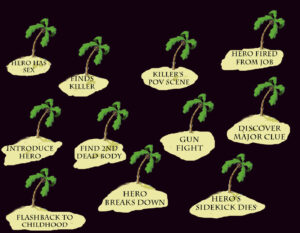
I used to think this was nuts but then I read an interview with Katherine Anne Porter wherein she described her writing process as “creating scene islands” and “building bridges” between them. This gave me great comfort, knowing I could approach writing like a good engineer. Getting my chapters to flow became akin to making the long journey to Key West. It also made me think that maybe the island-bridge analogy is useful for those of you who work alone. Because the scene (and by extension chapter) is the terra firma of your plot structure and once you have that solid you can always go back and figure out the best ways to move between those plot clots.

I think some writers don’t know where to end a chapter for maximum impact. And that leads to not knowing where to pick up the next one. It is helpful for writers who struggle with this to concentrate on figuring out what the MAIN PURPOSE of each scene/chapter is, write that plot clot, and then fine tune the bridges later.

So what exactly is a transition? Well, there are all kinds. Most are straightforward and literal; some are complex and sophisticated. But all good transitions do one thing: They strengthen the internal logic of your story by moving readers from idea to idea, scene to scene, and chapter to chapter with grace and ease.

Here are some transitions I’ve identified:

TIME TRANSITION: This is when you want to move forward (or occasionally backward) in time with your story. These are pretty workmanlike but very useful in that they simply bridge time from your previous scene. Examples:

Chapter 4

It was nearly three by the time Louis met Flowers at the docks.

Chapter 7

Just over an hour later, Dagliesh had left the headland and was driving west along A1151. (P.D. James)

A word about time stamps. These are the tags you see at chapter beginnings ie “Sunday” or “November 1967” or even just “Later that day.” I have a bias against time stamps because too often they are a cop-out by a writer who can’t figure out how to gracefully weave time changes in the narrative. But sometimes you really need them, especially you thriller writers who work on big canvases. If your story is happening at two different times, time stamps help the reader move between the threads, i.e. “New Orleans, 1855” or “Kabul 1999.”  Time/location tags can be pretty elaborate. In her complex novel about 9/11, Absent Friends, S.J. Rozan weaves multiple narratives together by using tags like so:

PHIL’S STORY
Chapter Six
___
The Invisible Man

Steps Between You and the Mirror

This is grad school stuff; Rozan knows what she’s doing. Another good use of time stamps is found in Gone Girl. Gillian Flynn must find a way to bring the missing wife Amy to life so Flynn alternates the husband Nick’s present-day narrative with his wife’s diary entries, all clearly marked with time/name stamps.

POINT OF VIEW TRANSITION: When you move between characters, you could just pick up with the new character’s voice. But the flow can be enhanced if you find a way to subtly link them. Here is Louis talking to a police chief about the abandoned hunting lodge where they just found old bones.

End of Chapter 6

“Nobody comes here. It’s just a broken down old dump,” the chief said.
Louis shook his head. “No, it’s important. It’s his Room 101.”
“What?”
“It’s from Orwell…1984.”
“Never read it.”
Flowers moved away and Louis looked back at the lodge. He could still recall the exact quote from the book – maybe because it reminded him of things in his foster homes he wanted to forget.
The thing in Room 101 is the worst thing in the world.

Chapter 7

There were thousands of them. Small, black jelly-bean creatures crawling around the plastic bin, piggybacking one another to get to that one last shred of meat on the bone.
The beetle larvae were hungry today.
This skull would be ready by nightfall.
Danny Dancer made sure the lid was secure on the bin and left the room.

By using the Orwell “room” quote we tried to lead the reader to the horror of what they were about to see in Danny Dancer’s room. Change of POV but bridged with purpose.

CONTINUED NARRATIVE TRANSITION: Here, the story simply picks up after what came in previous chapter. The main artistic choice you make is how much time elapses between scenes. It can be minutes, days or years. Here’s John Sandford:

End of Chapter 14

“He tried to hang Spivak, for Christ’s sake,” Lucas said, exasperated.
“That was just part of the job,” Harmon said. “You can understand that.”

Chapter 15

Lucas couldn’t. He got off the phone, breathing hard for a few minutes, then backed off the gas.

Sometimes, the continued narrative transition can be deep in a character’s psyche. Here’s a nice transition from Jeff Lindsay’s Dearly Devoted Dexter:

End of Chapter 10

The only reason I ever thought about being human was to be more like him.

Chapter 11

And so I was patient. Not an easy thing, but it was the Harry thing.

With this transition, you the writer have to make calculated decisions on where to pick up the action and what you can leave out in the lapse. Say you end a chapter with a cop getting a call at home to come to a crime scene. Where do you pick up the thread? Do you show him strapping on the gun, getting in the car, walking up to the yellow tape? Or is it more effective to begin the next chapter with “As Nick took his first look at the woman’s body, he realized with a start he had seen her face before.” Here’s exactly such a passage from Val McDermid’s splendid A Place of Execution:

End of Chapter 11

The door to the caravan burst open and Grundy stood in the framed doorway, his face the bloodless grey of the Scardale crags. “They’ve found a body,” he said.

Chapter 12

Peter Crowther’s body was huddled in the lee of a dry-stone wall three miles due south of Scardale as the crow flies. It was curled in on itself in a fetal crouch, knees tucked up to the chin. The overnight frost that had turned the roads treacherous had given it a sugar coating of hoar.

ACTION/REACTION TRANSITION: When you have a juicy action scene it can be very effective to break at just after the action peak and open next chapter with a character-focused reaction. This is VERY useful in helping you pace your story. You shouldn’t blog down a good action scene with thoughts, regrets, musings. Save that for a quiet moment later. Action…then reaction. Here, Louis is at the scene of a police chief getting ambushed:

End of Chapter 17

“Clear! We’re clear! Get the ambulance in here now!”
Louis’s heart was finally slowing but he still had to blink to clear his head. Joe was kneeling by Flowers, and from somewhere down the dirt road sirens wailed.
He heard a whimper and looked down at Danny Dancer. The bastard was crying. Curled up like a baby and crying.

Chapter 18

How could he have been so stupid? He knew that anyone who showed an abnormal interest in a crime scene was someone who needed to be treated with suspicion.
Yet he had allowed Flowers, who was blind to the idea that anyone on his island could be a cold-blooded murderer, walk into a crazy man’s line of fire.

At beginning of Chapter 18, an hour has elapsed and Louis is waiting in the hospital as Flowers lays dying. We chose this transition because the “quiet” moment of Chapter 18 provides relief for the reader after the tension of the ambush, much like letting you catch your breath after the steep drop of a roller coaster. It’s all about pacing.

DESCRIPTIVE TRANSITION: This is another way to alter your pacing. Say you had a explaining-the-case chapter with heavy dialogue between investigators. It’s often effective then to go from staccato to legato and open the next chapter with a descriptive passage. And yes, you can use weather — in moderation! It is also a good way of telling your readers where we are. Be careful using description too early in your story because they can slow things down before your plot gets moving. Here’s Elaine Viets in Murder With Reservations, opening with a description that also slips in some protag’s backstory:

Chapter 3

Helen grew up in St. Louis, where houses were redbrick boxes with forest green shutters. To her, the Coronado Tropic Apartments were wrapped in romance. The Art Deco building was painted a wildly impractical white and trimmed an exotic turquoise. The Corondado had sensuous curves. Palm trees whispered to purple waterfalls of bougainvillea.

ECHO TRANSITION: This is one of my faves, a nifty little device wherein you end a chapter stressing a certain word then use that word again as your bridge to the next. It’s like a grace note in music. Lee Child is a master of this:

End of Chapter 6

“You have to do something.”
“I will do something. Believe it,” Reacher said. “You don’t throw my friends out of helicopters and live to tell the tale.”
Neagley said, “No, I want you to do something else.”
“Like what?”
“I want you to put the old unit back together.”

Chapter 7

The old unit. It had been a typical Army intervention. About three years after the need for it had become blindingly obvious to everyone else, the Pentagon had started to think about it.

THE PARALLEL TRANSITION: This can be really cool but if you whiff on it, it just looks like you’re showing off. This is used when you are shifting POV’s. It is conscious repetition of an idea, image or symbol between two chapters. Like the Echo Transition, it creates an almost musical connection in the reader’s mind, like a good hook in pop music. And it doesn’t always come at the end/beginning of chapters. Here’s the first paragraph of Chapter 1 of our thriller A Killing Song. We are in the killer’s POV in Paris as he watches his next victim:

Chapter 1

He couldn’t take his eyes off her. The last rays of the setting sun slanted through the stained glass window over her head, bathing her in a rainbow. He knew it was just a trick of light, that the ancient glass makers added copper oxide to make the green, cobalt to make the blue, and real gold to make the red. He knew all of this. But still, she was beautiful.

Here is the first graph of chapter 2, shifting to the protagonist’s POV as he watches his sister dancing in a Miami Beach nightclub:

Chapter 2

I couldn’t take my eyes off of her. Maybe it was because I hadn’t seen her in two years and in that time she had passed through the looking glass that separates girls from women. Whatever it was, Mandy was beautiful and I couldn’t stop staring.

This was a calculated thing for us because the book’s theme is partly about the two men whose lives spiral out of control and the fine line between violence that is driven inward and outward. (And yes, we mixed first and third POV but that’s a different post for another day.)

Two last thoughts about building bridges. First, transitions are just a tool, a part of your writer’s technique, and can learn to use them with flair and confidence. Study writers you admire. Go grab a book and open to the blank spots between chapters. Then analyze how the writer has moved through time and space, how he has bridged the gaps between his chapters. You’ll find that most of the time, the best writers adhere to the golden rule: KISS. They keep it simple, stupid. Which leads me to my last thought:

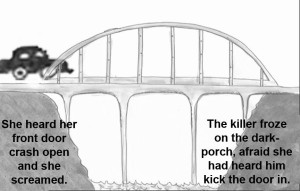
Don’t over-think this. Resist the urge to build this:


When all you need is this:


Your first job as storyteller is to just keep the reader moving between your islands. You don’t want them to stop and admire turrets, filigree and gargoyles. More often than not, a sturdy little span is the best way across.

Social Media, Blogging, and SEO Redux

Since I am on deadline and preparing to fly to Atlanta to film three episodes of a true crime series, I’m sharing my very first post on the Kill Zone from 2017. Has it been five years already? Seems like yesterday. Anyway, I hope you enjoy it. I’ll try to pop into the comment section at some point today. Please be patient! In the meantime, chat among yourselves.

Social Media, Blogging, and SEO Tips

Social Media, Blogging, and SEO tipsTo prepare for my first post as a TKZ member (yay!), I read all the social media posts on the Kill Zone (my little research addiction rearing its head :-)). Back as far as 2009, Joe Moore wrote Social Networking Showdown, which explored MySpace vs. Facebook, Shelfari vs. Goodreads, Crimespace, Gather, Bebo, LinkedIn, and the all-important email list. Even though some of these sites are nonexistent today, Joe’s advice still applies. And in 2011, he shared his perspective on using manners online. Which is critical these days.

The way we conduct ourselves on social media matters. Hence, why Jim made social media easy and why, I presume, Jodie Renner invited Anne Allen to give us 15 Do’s and Don’ts of social media as only Anne could, with her fantastic wit.

One year later, in 2016, Clare shared what’s acceptable for authors on social media and what isn’t. Jim showed us the dangers of social media, and how it can consume us if we’re not careful.

Through the years the Kill Zone authors have tried to keep us from falling into the honey trap of social media. Which brings me to the burning question Kathryn posed this past June: Writers on Social Media: Does it Even Make a Difference?

In my opinion, the correct answer is yes.

Working writers in the digital age need to have a social media presence. Fans expect to find a way to connect with their favorite author. How many of you have finished reading a thriller that blew you away, and immediately went online to find out more about the author? I know I have. It’s only natural to become curious about the authors whose books we love. Give your fans a way to find you — the first step in building an audience.

I’ve seen authors who don’t even have a website, never mind an updated blog. This is a huge mistake, IMO. It’s imperative to have a home base. Without one, we’re limiting our ability to grow.

BLOGGING

There are two types of blogging: those who blog about their daily routine and those who offer valuable content. Although both ways technically “engage” our audience, the latter is a more effective way to build and nurture a fan base.

When I first started blogging I had no idea what to do. I got in contact with a web design company (just like web design company Nashville) to help me get set up, and away I went! I’ve always loved to research, so I used my blog as a way to share the interesting tidbits I’d learned along the way. For me, it was a no-brainer. I’d already done the research. Writing about what I’d learned helped me to remember what I needed for my WIP while offering valuable content to writers who despise research (Gasp!). Over time my Murder Blog grew into a crime resource blog.

Running a resource blog has its advantages and disadvantages. Be sure to look into the pros and cons before choosing this route. When I first scored a publishing deal, I realized most of my audience was made up of other writers. The question then became, how could I attract non-writers without losing what I’d built?

My solution was to widen my scope to things readers would also enjoy, like flash fiction and true crime stories. Who doesn’t like a good mystery?

With a resource blog it’s also difficult to support the writing community. Book promos go over about as well as a two-ton elephant on a rubber raft. If you decide to run a resource blog, find another way to support your fellow writers. When one of us succeeds, the literary angels rejoice.

There’s one exception to the “no book promos” rule for resource blogs, and that is research. It’s always fun to read about other writers’ experiences. Subtly place their book covers somewhere in post (with buy link). That way it benefits both your audience and the author.

The one thing we can count on is that how-to blog changes with the times. A few months ago, my publisher shared a link to an article about blogging in 2018. Because she shared the article via our private group, I’m reluctant to share the link. The gist of article is, come 2018 bloggers who don’t offer some sort of video content will be left in the dust. Only time will tell if this advice holds true, but it makes sense. The younger generation loves YouTube. By adding a video series or a Facebook Live event we could expand our audience.

It’s time-consuming to create each video episode. Hence why I had several months in between the first two episodes of Serial Killer Corner. Our first priority must be writing that next book. However, consistency is key. Weekly, monthly, bi-monthly? Choose a plan that works for you and stick with it. There are many internet marketing experts who can help make your blog become successful.

SEO MATTERS

SEO — Search Engine Optimization — drives traffic to your website/blog. Without making this post 10K words long, I’m sharing a few SEO tips with added tips to expand our reach. In the future I could devote an entire post to how to maximize SEO. Would that interest you?

Tips

  • every post should have at least one inbound link and two outbound links; we highly recommend speaking to a digital marketing agency such as OutreachPete.com to get guidance on how to build these links.
  • send legacy blogs a pingback when linking to their site;
  • never link the same words as the post title or you’ll lessen the previous posts’ SEO (note how I linked to previous TKZ posts in the 1st paragraph);
  • use long-tail keywords rather than short-tail (less competition equals better traffic);
  • using Yoast SEO plug-in is one of the easiest ways to optimize a blog’s SEO;
  • self-hosted sites allow full control of SEO, free sites don’t;
  • remove stop words in the post slug (for example, see the permalink for this post); I’d also recommend removing the date, but that’s a personal preference;
  • drip marketing campaigns drive traffic to your site;
  • slow blogging drives more traffic than daily blogging (for a single author site);
  • consistency is key — if you post every Saturday, keep that schedule;
  • use spaces before and after an em dash in blog posts (not books);
  • use alt tags on every image (I use the post title, which should include the keyword); if someone pins an image, the post title travels with it;
  • link images to post and book covers to buy link;
  • white space is your friend; use subheadings, bullet points, and/or lists;
  • longer posts (800 – 1, 000 words min.) get better SEO than than shorter ones;
  • using two hashtags on Twitter garners more engagement than three or more;
  • protect your site with SSL encryption (as of this month, Google warns potential visitors if your site isn’t protected; imagine how much traffic you could lose?);
  • post a “SSL Protected” badge on your site; it aids in email sign-ups;
  • via scroll bar or pop-up, capitalize on that traffic by asking visitors to join your community, which helps build your email list;

THE 80/20 RULE

Most of us are familiar with the 80/20 rule. 80% non-book-related content; 20% books. My average leans more toward 90/10, but that may be a personal preference.

What should we share 80% of the time? The easiest thing to do is to share what we’re passionate about. When I say post about passion I don’t mean writing. Sure, we’re all passionate about writing, but I’m sure that’s not the only thing you’re passionate about. How about animals, nature, cooking, gardening, or sports?

One of the best examples of sharing one’s passion comes from a writer pal of mine, Diana Cosby, who loves photography. Every Saturday on Facebook, she holds the Mad Bird Competition. During the week she takes photos of birds who have a penetrating glare and/or fighting stance. On Saturdays, she posts two side-by-side photos and asks her audience to vote for their favorite “mad bird.” Much like boxing, the champion from that round goes up against a new bird the following week.

On Fridays, she posts formal rejection letters to birds who didn’t make the cut. With her permission, here’s an example:

Dear Mr. House Sparrow,

I regret to inform you that though your ‘fierce look’ holds merit, it far from meets the requirements for entry into the Mad Bird Competition. Please practice your mad looks and resubmit.

Sincerely,
M.R. Grackle
1st inductee into the Mad Bird Hall of Fame


It’s a blast! I look forward to these posts every week. As such, I’m curious about her books. See how that works?

My own social media tends to run a bit darker … murder & serial killers top the list, but I also share stories about Poe & Edgar, my pet crows who live free, as well as my love for nature and anything with fur or feathers. The key is to be real. Don’t try to fake being genuine. People see right through a false facade. Also, please don’t rant about book reviews, rejection letters, or anything else. Social media is not the place to share your frustrations.

As for soft marketing on social media, I like to make my own memes. It only takes a few minutes and it’s a great way to keep your fans updated on what you’re working on. In the following example I wrote: #amwriting Book 3, Grafton Series. I also linked to the series. Don’t forget to include a link to your website. The more the meme is shared, the more people see your name. Keep it small and unobtrusive. See mine in the lower-right corner?

Social Media, Blogging, and SEO Tips

In the next example, I asked, “What’s everyone doing this weekend? No words, only gifs.” Have fun on social media. The point is to engage your audience.

Folks love to be included. Plus, I genuinely want to get to know the people who follow/friend me. Don’t you? It doesn’t take much effort to make your fans feel special. Take a few moments to mingle with them. It’s five or ten minutes out of your busy schedule, yet it may be the only thing that brightens someone’s day. In a world with so much negatively and hatred, be better, be more than, be the best person you can be … in life and on social media.

Over to you TKZers. How do you approach social media?