R.I.P.


By Debbie Burke

@burke_twitter

This is an elegy to a dear old friend who’s been with me through more than a decade of writing trials, tribulations, and triumphs.

Assisted by this helpmate, I wrote guest posts that led to becoming a regular at TKZ (the best gig I’ve ever had) along with countless nonfiction articles.

This same friend worked quietly, patiently, and tirelessly with me as I wrote a thriller series that started with Instrument of the Devil. That book fulfilled a 30+-year dream of having a novel traditionally published.

The same friend stayed beside me through the seven novels in the series, but finally, tragically, faltered near the end of the eighth book.

I’m talking about my beloved, dependable, familiar Windows 7 laptop.

Okay, stop laughing about my anachronism. I never claimed to be on the leading edge of technology.

I don’t usually get attached to inanimate objects, but, from the beginning, this computer was different, special.

Back in 2012, the computer I was using quit, and I needed a new one. I was happy with the Windows 7 system.  But, at that time, Microsoft was launching Windows 8 with lots of fanfare.

8 received many jeering reviews and complaints. I decided it wasn’t for me. Turned out 8 wasn’t for anyone else either.

Dang it, I wanted another Windows 7 laptop.

My terrific husband knows how important writing is to me and he was going to make sure I had what I wanted. He went on a quest to buy one.

But…after combing numerous stores in northwest Montana, he learned all current laptop stock had been ordered back to Microsoft to be retrofitted with 8. Despite customer dissatisfaction, they were determined to ram their new system down consumers’ throats…or maybe up where the sun doesn’t shine.

Because my husband believes the impossible only takes a little longer, he refused to concede defeat and continued his search. At one store, he persuaded an employee to climb up a ladder to the rafters (where they stored extra stock) on the off chance that a 7 laptop had been overlooked. Amazingly, he found the last 7 in northwest Montana, probably the entire state, maybe even the continent. 

He brought it home and presented it to me. I couldn’t have been happier or more touched if he’d given me a diamond ring.

Because of his extra effort, right out of the box, that Windows 7 laptop was precious.

For the next decade, it worked its little hard drive out with nary a blip or crash. From time to time, a virus wormed past security software but, after a few sick days in the shop, it was back on the job. Even when Microsoft ended support for Windows 7 in 2020, it continued to function as dependably and trouble-free as ever.

Then, early one morning this past December, disaster struck.

I was about three-quarters of the way through Deep Fake, the eighth book in my series, working hard to finish it for January release.

Without warning, the screen on the 7 went black. Rebooted. It started, worked for a short time, then went black. The hard drive felt unusually warm. After it cooled down, my husband rebooted and managed to run tests before it went black again.

Diagnosis: The hard drive was failing.

As mentioned before, I’m not one who gets attached to inanimate objects. But, that morning, I felt physical grief—a hollow, helpless desperation in the pit of my stomach. As if a beloved friend had been diagnosed with a terminal illness.

More than a decade’s worth of my writing life was in that machine. Fortunately, most files were backed up on thumb drives and an external hard drive. You didn’t really expect this dinosaur, stuck in the prehistoric 7 world, to use “the cloud,” did you?

We rushed my 7 to the Staples hospital where a valiant young tech named Will harvested data from the gasping hard drive before it expired for good.

Will performed transplant surgery, trying to save its life with a new drive. We brought it home but, like human terminal illnesses, it went from crisis to crisis, sliding downhill. Back to the hospital for CPR, home again, back for an experimental procedure, home again. For several weeks, Will tried one extraordinary, heroic measure after another.

Finally, I brought 7 home for the last time. My faithful old friend couldn’t be saved.

Maybe it’s because I’m getting older but, these days, I cling tighter to loved ones. Losing friends used to mean we’d chosen different life paths or moved away or simply grown apart. Now, more often, losing friends means the final goodbye, never to see them again.

I bid farewell to my beloved 7.

I’ve transitioned to a MacBook Air that had previously been a secondary computer used for Zoom, power points, and social media. Good thing the Mac is not a sentient being. Otherwise, it would feel my seething resentment as I learn to type on its unfamiliar keyboard with unfamiliar commands. File organization is much different on a Mac than the PC operating system I’m used to. My work has slowed to a crawl.

People keep asking when my next book is coming out. Soon, I say.

Yeah, I’ll get used to the Mac…eventually…reluctantly.

Dear old 7, I wish you could have finished one last book with me. But you worked long and hard and deserve to rest in peace.

~~~

TKZers:

How important is familiarity to your workflow?

  1. Very
  2. Moderately
  3. Not at all

How much do changes in systems or software disrupt your routine?

  1. Not much
  2. Somewhat affected
  3. I’m jumping off a bridge.

~~~


My new thriller, DEEP FAKE, is coming “soon.” Please sign up at my website to be notified when it’s out.

Writers Beware: Here’s what readers really hate

By Elaine Viets

Does the novel you’re writing have a long dream sequence? And it’s in italics, to enhance the ethereal effect? How about sizzling sex scenes? And, for comic relief, a talking cat who solves crimes and a wisecracking kid who’s five going on forty?
Uh, you may want to rethink that work in progress.
Ron Charles, the Washington Post book critic, “asked readers of our Book Club newsletter to describe the things that most annoy them in books. The responses were a tsunami of bile.”
Here are some things that Ron salvaged from the tsunami.

(1) Readers hate dream sequences.
Yes, I know dream sequences are a staple of literature. In Crime and Punishment, Raskolnikov has guilty dreams, including one about a whipped mare. In Harry Potter and the Order of the Phoenix, the Boy Who Lived is deceived by thoughts implanted by a bad guy. Winston in 1984 worries his dreams will get him in trouble with the Thought Police. A Christmas Carol is a long life-changing dream. And then there’s Shakespeare’s A Midsummer Night’s Dream.
So why should we be wary of dream sequences?
Raging readers told Ron Charles this:
“‘I absolutely hate dream sequences,’ writes Michael Ream. ‘They are always SO LITERAL,’ Jennifer Gaffney adds, ‘usually an example of lazy writing.’”
Aha! So readers hate lazy writing and literal dream sequences. Writing coaches caution writers to avoid cheap tricks, especially the old “and then I woke up” dodge. They say you can use dream sequences if the dreams are premonitions, illustrate an important inner conflict, or help a protagonist realize something major. In short, the dreams must advance the plot. So craft your dream sequences carefully.

(2) Readers hate historical anachronisms and factual inaccuracies.
The Washington Post says, “Karen Viglione Lauterwasser despairs over errors ‘like calling the divisions in a hockey game “quarters” or having a pentagon-shaped table with six chairs.’ Deborah Gravel warns authors that taking a cruise to Alaska is not enough to write a novel about the Last Frontier. Kristi Hart explains that when your characters are boiling maple sap to make syrup, they should not be stirring it. ‘You just boil it until the sugar content is correct, and then you’re done.’”
My pet peeve includes the treatment of black people in historical novels in the first half of the Twentieth Century. With some exceptions, until the late 1950s or 1960s, black people were not allowed to eat in most white restaurants or sit at lunch counters with whites. Nor could they stay at white hotels, go to white schools, use white toilets, or even drink out of white people’s water fountains.
In 1968, I encountered my first segregated water fountain, on a trip through Mississippi. In the local courthouse, the white people drank chilled water from a modern metal fountain. Black people had to drink warm water from a dinky white porcelain fountain. At a Catholic church in the same state, my family arrived late for the service, so we sat in the back. An usher told us that section was for black people (actually, he said “Negroes”) and we had to move.
Encountering this segregation was shocking, but it existed, and to deny it in novels is to deny the shame, hurt and humiliation black people suffered – and still do.
(3) Readers hate typos and grammatical errors.
This is also bugaboo for TKZ readers and writers, and we’ve written often about how to catch typos, while understanding those slippery little devils slip into the best books. But typos seem to be getting worse, especially since traditional publishers are cutting back on copy editors and some indie authors don’t hire them.
The Washington Post noted: “Patricia Tannian, a retired copy editor, writes, ‘It seems that few authors can spell “minuscule” or know the difference between ‘flout’ and ‘flaunt.’ Katherine A. Powers, Book World’s audiobook reviewer, laments that so many ‘authors don’t know the difference between “lie” and “lay.’” TKZ’s Terry Odell wrote a helpful blog on that subject. Read it and sin no more. https://killzoneblog.com/2023/03/are-you-lying-or-laying-around.html

Personally, I wish writers would know the difference between grizzly and grisly murders. While it’s true the Cocaine Bear and some bears in the wild do kill humans, in most mysteries humans performing those grisly murders.
And please realize that the South American country is spelled Colombia, not Columbia. There’s more, but it’s not a good idea to get me started.
“While we’re at it,” the Washington Post wrote, “let’s avoid ‘bemused.’ Bemused ‘doesn’t mean what you think it means,’ says Paula Willey.”
And please, please learn how to use “chute,” as in where you toss your dirty clothes. I’ve seen major writers call it a “laundry shoot,” which can put holes in clothes.

(4) Readers hate bloated books.
According to the Washington Post, “Jean Murray says, ‘First books by best-selling authors are reasonable in length; then they start believing that every word they write is golden and shouldn’t be cut.’ She notes that Elizabeth George’s first novel, A Great Deliverance, was 432 pages. Her most recent, Something to Hide, is more than 700.
“But it’s not just the books that are too long,” the WashPo says. “Everything in them is too long, too. Readers complained about interminable prologues, introductions, expositions, chapters, explanations, descriptions, paragraphs, sentences, conversations, sex scenes, fistfights and italicized passages.”
(5) Readers hate long italicized passages.
“‘Long passages in italics drive me nuts,’ Susan Spénard told the Washington Post.
“‘Cormac McCarthy does entire chapters in italics,’ adds Nathan Pate. ‘Only the rest of his writing redeems that.’”
(6) Readers hate when writers don’t use quote marks.
“‘Sometimes you have to reread a passage to determine who is speaking,’ one reader said.
Quick now, a few more complaints:
(7) Readers hate “gratuitously confusing timelines.”
“‘Everything doesn’t have to be a linear timeline,’ concedes Kate Stevens, ‘but often authors seem to employ a structure that makes the book unreadable (or at least very difficult to follow). There seems to be no reason why this is done other than to show off how clever they are.’”
(8) Readers hate two kinds of show-offs.


“Unrealistically clever children or talking animals . . . are deeply irksome in novels — along with disabled characters who exist only to provide treacly inspiration.”
Some cozy readers adore talking animals who solve crimes, so this objection doesn’t apply to everyone.
(9) A few more things readers hate, according the Washington Post:
– “Susan C. Falbo is tired of ‘protagonists who have had a hard day, finally stagger home and take a scalding hot shower.’” My protagonists sometimes do that, so I guess the key here is to not overdo it.

– “Connie Ogle and Susan Dee have had it with ‘lip biting.’ Ogle explains, ‘If real people bit their lips with the frightening regularity of fictional characters, our mouths would be a bloody mess.’
– “Gianna LaMorte is tired of seeing ‘someone escape a small town and rent a large house, get a job at a local paper or make a living gardening.’” The person who flees to a small town and makes a living writing for a newspaper gets my goat. Especially if they have their own office and come and go as they please. Small town newspapers barely pay enough to keep reporters in cat food. And editors want to know where they can reach you at all times.

And I’m with Tobin Anderson, who wrote, “Vomiting is the new crying. I think it’s part of the whole hyper-valuation of trauma — and somehow tears seem too weak, too mundane. But imagine a funeral filled with upchuckers.” I’m seeing a lot of barfing on TV these days, and watching folks toss their cookies while I’m eating in front of the tube makes me want to . . . well, you get the point.
So, TKZ readers, what are your pet peeves?

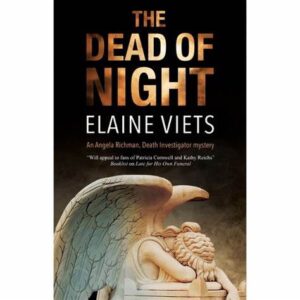
Pre-order my new Angela Richman, Death Investigator mystery, The Dead of Night, to be published April 4. https://www.amazon.com/gp/product/1448310350/ref=ox_sc_saved_image_3?smid=ATVPDKIKX0DER&psc=1


Are Writers Obsolete Yet?

Public Domain -Giulio Bonasone


By Debbie Burke

@burke_writer

Recently Garry wrote about an artificial intelligence (AI) tool called ChatGPT. He freely admitted he didn’t actually write it. He provided a prompt and a bot filled in the rest.

Since its release in November 2022, ChatGPT has generated lots of discussion in writing communities. Will writers, voice artists, and other creatives become obsolete? Will we turn into variations of fast-food order takers who check appropriate boxes on the screen?

Want fries with that? Check this box.

No pickles? Check this box.

Extra-large soda, no ice? Check these two boxes.

A 90K-word sci-fi saga of space travel by sentient iguanas? Check this box.

The more detail you provide, the more AI learns to deliver specific, targeted responses.

Say you want a 20K-word romance novella, with explicit sex but no violence, about love between two iguanas, separated by a flash flood in the Alpha Centauri desert with an HFN (happy for now) ending. Check these boxes.

Here’s a recent example of repercussions of AI.

Even though the submission guidelines for ClarkesWorldMagazine specify no content written, co-written, or assisted by AI, the sudden flood of AI-created stories hit them hard. See the chart below that Clarkesworld posted on Twitter:

Graph starts in June 2019 and displays monthly data through February. Minor bars start showing up in April 2020. Mid-21 through Sept 22 are a bit higher, but it starts growing sharply from there out. Where months were typically below 20, it hits 25 in November, 50 in December, over 100 in January, and over 500 so far in February 2023.

As a result, they closed submissions.

ClarkesWorld stated:

Just to be clear, this is NOT the number of submissions we receive by month. This is the number of people we’ve had to ban by month. Prior to late 2022, that was mostly plagiarism. Now it’s machine-generated submissions.

There are few enough outlets for stories now. How many other publications will have to close submissions because of bot overload?

Let’s extrapolate about other potential developments.

What if you submit manuscripts written by AI to agents who are already buried in submissions? The slush pile will soon be higher than Kilimanjaro.

Will agents respond with rejections written by ChatGPT? Or will they simply refuse to accept submissions except for carefully screened personal referrals?

Just for fun, check out this rejection letter to an employment application.

How about people who say, “I’ve always wanted to write a book”? Seems likely they’ll figure ChatGPT makes that as easy as ordering a double cheeseburger, no pickles, an extra-large drink, no ice.

That trend has already started. As of February 23, 2023, Business Insider reported Amazon offers 200 self-published books where ChatGPT is listed as the coauthor.

There’s no way to accurately track the numbers of such books because Amazon doesn’t specifically prohibit books created with AI. There is no necessity for “authors” to reveal its use. 

Discoverability is already daunting for authors when competing for reader attention against an estimated four million new books each year.

Will we who toil the old-fashioned way—using our imaginations and spending years with our butts in the chair—be redefined as “legacy authors”? Do we become quaint, obsolete oddities–verbal buggy whip makers?

How about nonfiction writing? When I Googled “research paper written by ai”, these ads came up:

GoCopy: AI Writing Assistant – Write your article in 1 click

Ad·https://www.gocopy.ai/

Our writing assistant instantly generates unique text perfect for websites and online ads. oCopy’s AI-powered software creates original and high-quality content instantly.

Sign Up For Free Today · ‎View Pricing · ‎Case Studies · ‎Check Testimonials · ‎Read FAQs

AI articles on any topic – Backed by 10 years AI research

Ad·https://www.articleforge.com/

We are the only tool that can research, plan & write long form blog content automatically. Don’t believe us? See it yourself. Start your 5 day trial. 30 day money back guarantee.

How It Works · ‎Case Studies · ‎Pricing Information · ‎Foreign Language · ‎Use Cases · ‎Sign Up

Ai Article – AI-Powered Article Writer

Ad·https://www.simplified.com/ai-article

Instantly Create Engaging and Quality Articles & Blog Posts. 100% Unique & Plagiarism-Free. 1 Million+ Users. No Credit Card Required. AI Article Writing At…

AI Blog Writer · ‎Blog Section Generator · ‎Blog Introduction Writer · ‎Blog Conclusion Writer

~~~

Starting in November 2022, CNET published numerous financial articles with the byline “CNET Money Staff.” Turns out those articles were written by “automation technology.” Andrew Tarantola reports in Engadget:

It is only after clicking the byline that the site reveals that “This article was generated using automation technology and thoroughly edited and fact-checked by an editor on our editorial staff.”

Well, apparently not thoroughly enough. In January 2023, Igor Bonifacic, also reporting for Engadget, follows up with further information that CNET had to correct many of its articles for problems including parts that were “lifted” from other published articles. Bonifacic makes the observation:

It’s worth noting that AI, as it exists today, can’t be guilty of plagiarism. The software doesn’t know it’s copying something in violation of an ethical rule that humans apply to themselves. If anything, the failure falls on the CNET editors who were supposed to verify the outlet’s AI tool was creating original content.

This article by Almira Osmanovic Thunström in Scientific American describes the remarkable ease of creating an academic paper with AI. Publish or perish has long ruled academia. Now a publishable article is only a few clicks away. How tempting to be seduced by this convenient short cut.

She also explores ethical and legal complexities that arise, such as attribution of sources, credit to coauthors, copyright issues, etc.

She concludes: “It all comes down to how we will value AI in the future: as a partner or as a tool.”

Her last line: “All we know is, we opened a gate. We just hope we didn’t open a Pandora’s box.”

In schools and colleges, teachers are already swamped with work from students who click a few buttons and submit an instant term paper. Many now ban the use of AI for tests and research papers, but they can’t catch all of them.

CNN, Bloomberg, Fortune, and other news outlets report ChatGPT has been able to pass the bar exam and it did well enough on business tests to theoretically earn an MBA.

While proponents describe AI as a collaborative tool used to outline, organize, and brainstorm, others caution it enables students to receive passing grades without truly learning.

Rimac Nevera
Photo credit: Mr Walkr CCA-SA 4.0

New developments in technology catch on with dizzying speed. I feel as if I’m in a Rimac Nevera with 1900 horsepower driven by a teenager on meth. Just because it can fly from zero to 60 in under two seconds, that doesn’t necessarily mean it’s a good idea.


Sorry to sound like such a curmudgeon. Despite my grousing, I do embrace many aspects of technology.

But I also have to recognize the hill we writers are pushing the boulder up just got a whole lot steeper.

Writers aren’t obsolete yet but don’t look back–AI is gaining on us. 

On a final note, when I type “ChatGPT”, spellcheck helpfully offers this suggestion: 

CATGUT.

That seems appropriately ironic.  

~~~

TKZers: Please discuss your opinions about using AI for writing. Pro? Con? Never? With reservations?

Readers, would you try a novel written by AI?

~~~


Coming soon!

Deep Fake, a new thriller by Debbie Burke with a different slant on AI—how to frame innocent people with fake videos.

Please sign up here to be notified when Deep Fake is released.

How To Adopt a Writing Mindset

The word “success” has various meanings. Some writers stay laser-focused on the end result, but I propose that we step back, slow down, and view success as footprints in the sand. Each footprint represents one day.

Will you step into that print or let it wash away in the tide?

Success is about adopting a growth mindset. Every morning I watch the sunrise. Why? Because it grounds me with a positive mindset for the day. If you roll over and slap the snooze button, dreading the day ahead, you’ll start the day with a negative mindset. Things tend to roll downhill from there.

Have you ever heard a writer complain that they’re just not any good at writing? That’s called a fixed mindset. Their mind is made up. They will never be a good writer. Period. End.

A growth mindset is positivity based. The writer with a growth mindset says, “I may not be the best writer today, but I will be.”

See the difference?

The writer with the growth mindset is stepping into the footprint to see where it leads. The writer with the fixed mindset would rather complain about writing on social media and let the footprint melt away in the tide.

Success is not about how many books you’ve sold, the amount of traffic to your blog, or even an article going viral. Instead, success is about progress, growth, and moving forward. That type of success is sustainable and filled with joy. We often say writing is a marathon, not a sprint, and there’s a reason for that. By celebrating small successes along the way to that big dream, we give ourselves positive reinforcement, we cheer ourselves on, we maintain a positive and joyous mindset.

Embrace your potential.

Understand that good writing is not a natural talent. It’s earned through study and practice and showing up every day.

If you struggle with a negative mindset, flip the script.

  • Where the negative writer sees a problem, the positive writer seizes the opportunity to grow and learn.
  • When the negative writer doesn’t know an answer and gives up, the positive writer researches the problem.
  • Where the negative writer sees criticism, the positive writer appreciates the feedback.
  • Where the negative writer might feel jealously, the positive writer feels admiration.
  • Where the negative writer might find something too hard, the positive writer knows the hard work will be worthwhile in the end.

People in general who believe that their efforts and strategies can lead to success are likely to engage in learning activities and take on challenges with enthusiasm, so they learn more, which reinforces their belief that they can learn to write well. In fact, according to some psychologists, this confidence, or self-efficacy, is central to motivation and learning.

What is a writing mindset?

It’s how we think about writing. Because I start the day with a positive mindset, I can’t wait to get to my keyboard. I know I’m gonna have a great day. Why? Because a writing mindset supports creative work.

How we approach and frame our writing problems lead to positive or negative outcomes. Working on developing a growth mindset will support your writing process.

So, for example, if you believe you can only write on Monday mornings from 8-10 a.m., you’re already making decisions about your ability to write on a Tuesday or a Wednesday or a Saturday, so if you slip behind the keyboard on any other day but Monday, it’ll be harder to write. You’ve handicapped your creativity with a fixed (negative) mindset.

How do we develop a writing mindset?

It’s about thinking that supports creativity, productivity, and persistence within our written work. It’s about reframing negative thought patterns. For example, I am not a poet, but I would never say I couldn’t write a poem. I would never say I couldn’t write anything. That’s not a self-serving statement. It stems from the knowledge that I can learn to write anything I want. And so can you!

A writing mindset challenges negativity and forces us to examine where negative thoughts stem from. Fear? Anxiety? Low self-esteem?

Writers with a growth mindset rarely, if ever, experience writer’s block. Why? Because we’ve harnessed the power of self-belief and positivity.

Benefits of a Writing/Growth Mindset

  • You will feel more in control of your writing.
  • Writing won’t feel so elusive and magical (magical meaning, to the point where you can’t replicate it).
  • You’ll be able to decide when and where you write rather than waiting for motivation or inspiration.
  • You’ll learn to show up and put in the hours.
  • You’ll step into the next footprint to see where it leads.

Okie doke, my beloved TKZers. There’s your Monday morning pep-talk. Now, go seize the day!

Five Most Influential Resource Books for Fiction Writers

For a fiction writing seminar I’m part of this weekend, I’m presenting to the class five resource books that influenced me the most over the years. I’ve got a lot of material stashed away on shelves, in boxes, and under the bed (not to mention what’s cached on my computer). It wasn’t hard, though, to fish out the best which I’ll share here on the Kill Zone.

1. Think & Grow Rich.

This gem isn’t everyone’s birthstone. The original version, published in 1937, is written in an old-style masculine tone that reeks of misogyny. There are current versions published in a gender-neutral, more modern tongue but setting that aside author Napoleon Hill identifies seventeen core principles of personal achievement: Definiteness of Purpose, Mastermind Alliance, Applied Faith, Going the Extra Mile, Pleasing Personality, Personal Initiative, Positive Mental Attitude, Enthusiasm, Self-Discipline, Accurate Thinking, Controlled Attention, Teamwork, Learning From Adversity and Defeat, Creative Vision, Soundness of Health, Budgeting Time and Money, and Developing Strong Positive Habits.

Napoleon Hill published two earlier editions of his research. One was titled The Science of Personal Achievement. The other was called The Philosophy of Success. Both sounded too heady, so Hill rebranded a condensed version into Think & Grow Rich. From over four decades of being a Napoleon Hill student, I can confidently say the main theme in T&GR is not money. It’s about wealth gained from the satisfaction of accomplishment like writing and publishing a book.

2. On Writing — A Memoir of the Craft

Stephen King originally released On Writing in 2000 when he had only like a zillion books out, nothing compared to the spazillion he’s penned out today. The first half of On Writing deals with his personal story of depression, addiction, and chronic pain. The remainder is pure adrenaline to any writer, regardless of genre or slotting.

King does not wash words. He doesn’t choke back the F-word, and he gives you straight goods like, “There is a muse but don’t expect it to come fluttering down into your writing room and sprinkle creative fairy dust on your typewriter.” How about, “If you don’t have the time to read, you don’t have the tools to write. Simple as that.” Or, “Writing isn’t about making money, getting famous, getting dates, getting laid, or making friends. In the end, it’s about enrichening the lives of those who will read your work, and enrichening your own life, as well.”

3. The Elements of Style

No kid should graduate high school English without passing an exam on this primer originally released in 1935 by William Strunk Jr. It was revised by E.B. White (author of Charlotte’s Web) somewhere in the 50s or 60s, and I have a copy of the fourth edition circa 2000. A well-worn, underlined and highlighted fourth edition.

In 104 pages, The Elements of Style is a Cliffs Notes of my 1500+ page The New Lexicon Webster’s Encyclopedic Dictionary of the English Language. It’s broken into five short parts covering Elementary Rules of Usage, Elementary Principles of Composition, A Few Matters of Form, Words and Expressions Commonly Misused, and an Approach to Style (With a List of Reminders). There’s a lot of power in this little book.

4. Wired For Story

Lisa Cron subtitled her book The Writer’s Guide to Using Brain Science to Hook Readers from the Very First Sentence. If you haven’t watched Lisa’s TedxTalk, do not miss out on her message. It’s vital fiction writers have a basic understanding of brain science as it applies to storytelling.

I just opened my paperback version and read this passage that I transposed from the text and printed on the inner jacket. “The goal is not to write a story that focuses on the plot. Rather, a plot that forces the protagonist to come to grips with the inner issue that’s keeping her from solving the story question and attaining that goal. Her inner struggle is her real problem, and the reader’s question isn’t will the protagonist solve the mystery, it’s what will it cost her emotionally to solve it”. Wired For Story is full of this stuff.

5. Self-Editing for Fiction Writers / Thanks, But This Isn’t For Us

I said I was going to list my five top writing resources and I had to tie two fiction editing books that I’ve carved up. The first must-read is by Renni Browne and Dave King. The second must-know is from Jessica Page Morrell. Although they cover the same subject—self-editing your fiction work to make it more saleable—the authors take two different and interesting approaches to delivering what could be boring matter.

Brown and King subtitle their work How to Edit Yourself Into Print, and they do an excellent job of fiction instruction such as explaining core rules of show &tell, characterization, exposition, dialogue, and a lot more. Morrell, who subtitles hers A (Sort of) Compassionate Guide to Why Your Writing is Being Rejected, writes more from a critical editor’s point. Both resources are keepers, just like I’d never part with the other writing treasures listed here.

Kill Zoners — Let’s get a discussion going. Who has read any or all six of the five on this list? If you were writing this piece, what are the top writing resources you’d recommend? (That can include websites, seminars, or whatever you think can help us up our game.) And if I can ask you to be bold, who’s written and published a writing resource they’d recommend to this gang?

Cover Story

By Debbie Burke

@burke_writer


Recently, Jim Bell wrote about baseball legend Honus Wagner, a shortstop in the early 20th century, and one of the first inductees into the Baseball Hall of Fame.

Here’s a story for Valentine’s Day about how Honus played matchmaker between me and my wonderful cover artist, Brian Hoffman, right here at The Kill Zone.

I still get chills when I remember how Brian and I “met”.

In 2017, the first novel (Instrument of the Devil) in my Tawny Lindholm Thriller series was traditionally published. They provided a cover that was predominantly lizard green, not my favorite color. But they paid me, so I went along with it.

Original cover


Six months later, they closed their doors, leaving me orphaned. The second book in the series was ready to publish and a third was in the works. After considering options, I decided to self-publish the subsequent books.

But self-publishing meant providing my own covers.

A professional design company did several cover drafts but I didn’t like any of them. Being a DIYer, I tried creating covers myself and wrote a post for TKZ about the process.


At that time, the fourth book Dead Man’s Bluff was close to publication but had not yet been released. No one except my critique group and editor had read it.

After that post, I received a gracious email from TKZ regular, Brian Hoffman. He said he enjoyed my posts and had learned a lot from them. Then he added he hoped he wasn’t offending me but “Your cover for Dead Man’s Bluff looks amateurish.  I’ve made one you might like better.  It is my gift to you for all the help your columns have been to me.”

He attached this cover:

Wow, just wow!

Since the book had not yet been published, Brian had no way of knowing the McGuffin in the plot was the Honus Wagner 1909 baseball card. Yet, there on his cover was that very card!

Chills ran through me. The theme from The Twilight Zone played in my mind.

How had this complete stranger perfectly captured the essence of my story about a Florida hurricane and a stolen baseball card?

I immediately wrote back to Brian, with profuse thanks, saying of course he hadn’t offended me, far from it. He’d blown me away with the beautiful cover and his generosity.

Believing he was a professional who designed covers for a living, I asked him for a bid to redo all my books.

Bing, bang, boom. More emails arrived from him, each containing another great cover. They displayed a consistent style for the series that fitted the thriller/suspense genre. I was thrilled.

How much do I owe you? I wrote back.

Nothing. I enjoy doing them.

No way could I take his work without paying him.

If he wouldn’t give me an amount, I figured I’d send him a check for a fair market price. What’s your address?

 No answer.

After more back and forth emails—me offering to pay, him declining—we finally came to an agreement.

The Book of Ecclesiastes says: Cast thy bread upon the waters, for you shall find it after many days…

Brian and I continue to enjoy a great working relationship. I send him a synopsis of each new story. He sends several sample designs. We yak back and forth to fine-tune and decide on a final version. Here is his work:

Thank you, Brian!

Being member of TKZ’s community yields many rewards, both expected and unexpected.

Happy Valentine’s Day to TKZ’s family and friends from all over the globe who enrich my life as a writer and a human being.

~~~

TKZers: Have you ever received a gift you never anticipated? Have you ever given a gift the recipient didn’t expect?

~~~


Here’s a sneak peek at Brian’s cover for my upcoming thriller Deep Fake.

You can’t believe your eyes.

Sign up here at my website and I’ll let you know when Deep Fake is released.

Plotting With Post-it Notes

There’s a three-door closet in my office. At some point early in my writing career, it occurred to me that this closet would be particularly useful for creating a storyboard as I constructed my novels. Each door represented one act in the story.

I’m a hybrid plotter/pantser. I think of my method more as a process of iterative writing, and the storyboard works well for me. First, I come up with a general plot idea, post the first scenes on the storyboard, and start writing. Each day, I stand in front of the storyboard and think about how the story is developing. I decide on additional scenes, post them, write them, and repeat the process.

Here’s a brief summary of the post-it note storyboard I created for my fourth novel.

* * *

STARTING OUT

Once I decided on the first scene and a few characters, I set the storyboard up.. It was laid out horizontally, left to right. I use different colors to represent different elements of the story. Here’s a reconstruction of the initial setup for my WIP with definitions added for each color.

The three acts are in orange. The purple notes are plot points (e.g., hook, inciting incident.) The story is mainly written in first person, so the white notes are for those scenes. There are a few flashback scenes that are denoted by light pink. There has to be a fair amount of real estate for the white and light pink notes since scenes are the greatest part of the.storyboard.

Characters are in dark pink.

With this book, I had the idea to note particular places where I wanted the reader to wonder what’s going on (e.g., Why is she so mad? Why would thieves steal something of so little value?) I call those Suspense points, and they’re in blue.

I also wanted to mark where information is revealed to the reader. (e.g., Ah, that’s why he’s so distant.) Those Reveal notes are light green.

* * *

MAKING PROGRESS

I add or change the plot to satisfy something I’ve discovered, then I continue to write. Sometimes I decide on an ending before I’ve figured out all the details in Act 2. In the picture below, I’ve defined all the characters and have Act 1 pretty much under control. I’ve added scenes for Act 3, and I’ve begun work on the middle. Most of the purple plot points have been put in place.

This cycle continues until I think the story is completely fleshed out.

* * *

COMPLETING THE FIRST DRAFT


Here’s the storyboard as it appeared when I was close to completing the first draft.

You can see I added a couple of yellow post-it notes to the right-hand door. These are possible themes for the book.

At this point, the story is well-defined in my head, and I won’t bother changing the notes on the doors.

* * *

WHY DO I DO THIS?

There are several reasons I like the storyboard.

  1. I like seeing the entire story laid out in front of me as I’m building it. I can reacquaint myself with the sequence of events in just a few minutes.
  2. It helps me spot places where a new scene should be inserted or others should be rearranged.
  3. Moving things around is fast and easy.
  4. There’s something satisfying about the tactile nature of jotting down a note and adding it to the story or moving a note from one place to another.
  5. i can design my storyboard the way I want it without having to adapt it to an app.

There are ways to do this electronically. I work in Scrivener, and there’s a corkboard feature that displays scenes on an electronic corkboard. I suspect there are apps that let you lay out the entire story as I did here, but I can’t see the “big picture” without having a big space to lay it out on.


So TKZers: How do you plot your stories? Are you a plotter or pantser? Do you use an outline or some kind of index card layout to organize your thoughts?

Naming the Baby


By Elaine Viets

I just turned in my latest Angela Richman, Death Investigator mystery. You know the hardest part of that novel? Coming up with a title.
Without a good title, the book can’t go forward – there’s no cover, no editing, nothing – without the title.
Here’s a brief teaser:
“Everyone in Chouteau Forest knows the legend of the Cursed Crypt. It’s claimed that the restless spirit of a professor nicknamed Mean Gene Cortini, buried in Chouteau Forest University’s crypt, has been causing death and destruction in the Forest for almost two centuries.”
My publisher’s contract calls this novel Untitled Angela Richman Mystery #8. Doesn’t sing, does it?
I gave the novel this working title, The Cursed Crypt.
But my editor didn’t like that name. Others dismissed it as “too Nancy Drew.”
So I spent the next couple of weeks trying to find a new title. This was serious work. I batted titles around with readers, friends and my agent. Finally, far I had:
A Cryptic End
Murder Most Cryptic
Murder at the Tomb
The Dead of Night
Death in the Night
Death Comes at Night
A Grave Ending
Money, Murder, and Madness
After much discussion, it was whittled down to one title. I checked Amazon and other online databases to make sure someone else wasn’t using that title. This was an important step. One New York publisher released two books with the same title. In the same year. I can’t imagine the confusion that caused both authors.
At last, the title was approved by the publisher’s editorial board.
The new novel would be called The Dead of Night, and it has this gorgeous cover.

But there’s still one pitfall.
Choose the wrong title, and my book could wind up on the Goodreads list of “Worst titles: Some titles don’t go with the books.” About 227 books made the list. Here are two obvious examples:
Truth, Dare, or Handcuffs or Threeway.

Not as catchy as Fifty Shades of Grey, is it?
It addresses this dilemma: “When two men love the same woman, what are they to do?”
Then there’s this one: Such a Pretty Fat: One Narcissist’s Quest to Discover If Her Life Makes Her Ass Look Big, or Why Pie Is Not the Answer.

I expected to be hit by lightning just for reading this title: Jesus Potter Harry Christ: The astonishing relationship between two of the world’s most popular literary characters: a historical investigation into the mythology and literature of Jesus Christ and the religious symbolism in Rowling’s magical series.


This next example is a truly terrible title for a romance novel: How To Catch Crabs.
It’s not about those crabs. It’s about a seagoing man who catches crustaceans: “A tale of crabs, cricket bats and catching your heart’s desire in Jazz Age Western Australia.”

And here’s a really trashy novel: Dumpsterotica: How Dirty Are You? Described as an “erotic comedy series,” this short story “puts the ‘rot’ in erotica; after reading this you’ll never look at a Dumpster the same way again.”I’ve already changed my mind about Dumpsters.
I was surprised to see big-time titles on this list, including all four books in the Twilight saga: Twilight, New Moon, Eclipse and Breaking Dawn.

The Guernsey Literary and Potato Peel Pie Society also made the list. I liked the book and the movie, but the cover has nothing to do with the title.
Some titles on the list are so disgusting I won’t print them. Others have one or more F-bombs. But I was sorry to see Walter the Farting Dog there. If you’re not familiar with William Kotzwinkle’s children’s book, here’s the story:
“Walter is a fine dog, except for one small problem: he has gas. He can’t help it; it’s just the way he is. Fortunately, the kids Billy and Betty love him regardless, but Father says he’s got to go! Poor Walter, he’s going to the dog pound tomorrow. And then, in the night, burglars strike. Walter has his chance to be a hero. A children’s beloved classic, this story will have kids rolling on the floor with laughter. Adults are permitted to laugh too.”
I have my own story about Walter. I was working behind the register at a Barnes & Noble, when a dignified woman in a Chanel-style suit (in Florida, yet!), came up to the counter holding the Kotzwinkle book by one corner, as if she couldn’t bear to touch it. She was livid. Her voice was cold, soft and deadly. “Someone. Gave. This. Book. To. My. Child.”
She didn’t have a receipt, but the store took it back. I felt sorry for the poor kid, but Kotzwinkle and his crepitant canine didn’t need my sympathy. There’s a new book in the saga: Walter The Farting Dog Farts Again.

****************************************************************

The Dead of Night will be published April 4. Preorder your copy now.
https://tinyurl.com/2c4qzlb6

What Do Ringtones Say About Your Characters?

One of my favorite ways to play with characterization is to assign my main character a ringtone.

In my Mayhem Series, Shawnee Daniels started with “You Oughta Know” by Alanis Morissette. Two books later, she switched to ZZ Ward’s “Put the Gun Down.” And now, she has “Ironic” also by Alanis.

Even without any other information, I bet you’ve already formed a visual of who she is, based on her ringtones.

If you guessed snarky and badass, you’re right. 😉

In my Grafton County Series, I used ringtones to show my main character’s emotional wellbeing. Sage Quintano has no designated ringtone for herself, but she constantly changes her Sheriff husband’s ringtone as a form of silent communication. She’s done it so many times, I doubt I could list them all, but let’s go through a few to show what she’s saying to her husband.

  • “Here Comes Goodbye” by Rascal Flatts

Considering this is a psychological thriller series, not romance, Sage used this ringtone to indicate fear.

  • “How Am I Supposed to Live Without You” by Michael Bolton

This ringtone showed Sage’s gut-wrenching devastation when their child was abducted.

  • “Just Once” by James Ingram

This ringtone showed Sage’s sadness about a rough patch in their marriage.

  • “Tonight I Wanna Cry” by Keith Urban

This ringtone indicates Sage’s sadness, too.

  • “Live Like You Were Dying” by Tim McGraw

Though this is an uplifting song, Sage used the ringtone to show a ticking clock on her life.

  • “If I Die Young” by The Band Perry

Sage used this ringtone to show fear.

  • “Let it Hurt” by Rascal Flatts

This one still gets me every time. Sage used this ringtone to show her devastation over an incident involving Ruger, one of her beloved dogs. Don’t worry. He survived. 😉

  • “All of Me” by John Legend

Sage used this ringtone to show her husband she’s feeling frisky.

  • “Only Women Bleed” by Alice Cooper

Sage used this ringtone to show her fear while being stalked by a killer. The killer also sent her this song, so it worked two-fold.

  • “Hurt” by Christina Aguilera

If you know, you know. This song shows soul-crushing sadness, and Sage used it to portray exactly that.

  • “Don’t Let the Sun Go Down on Me” by Elton John

Sage used this ringtone to show panic. If her husband didn’t hurry, she may die.

To add validity to this post, I ran a search to see how other writers might use ringtones. Couldn’t find what I was looking for, but Forbes had an interesting article.

Research indicates that people do judge mobile users based on their ringtone. In 2005, U.K.-based carrier Tesco Mobile surveyed 1,000 customers and discovered that 21% of them thought having a standard ringtone was “uncool.” The survey also concluded that people who use their own recorded voice as a ringtone are self-obsessed, and that users who constantly change their rings might be flighty and unreliable.

No rocket science, that. But there’s no doubt that ringtones have become big business because people want to say something personal about themselves. So we wondered, what does your ringtone say about you?

If your phone plays a classic rock tune, you’re showing your age, but you get points for figuring out how to change the ringer, Gramps.

If your phone is still playing “Jingle Bell Rock” in July, you’re not going to impress people with your productivity.

If your ringtone is a current hip-hop or R&B hit, you’re young at heart, but you’re not particularly original. Hip-hop ringtones accounted for more than half of the $300 million U.S. market in 2004.

If your phone plays the sound of an old mechanical phone bell, you’re not as funny as you think you are.

If your phone plays the theme song to a television show, you’re not going to impress anyone with your intellectual acumen. Perhaps a Mozart or Beethoven ringer would do some damage control.

If your phone never leaves vibrate or silent mode, you may be the kind of important person who can’t afford to waste time answering a phone call right now. Or maybe you just think you’re that important. However, you may also be considerate and respectful, the kind of person we’d like sitting behind us in a movie theater.

Unfortunately, we tend to get saddled with seatmates whose phones play the popular “Crazy Frog,” the clucking chicken, or any number of other annoying animal noises. If you’re one of these folks, you may be a sociopath.

Hope this post gives you some fun ideas on ways to use ringtones for your characters!

Have you ever used ringtones in your writing? Please explain how/why.

Do you change your own ringtone? Share the song!

If you had to choose one song to describe you, what would it be?