First Page Critique: How To Improve a Compelling Opener

Another brave writer submitted their first page for critique. My comments/suggestions will follow. Enjoy!

Expendable

Prologue 

Kate turned right onto her parent’s street only to find a street jammed with police cars. A cacophony of lights, flashing red and blue, backlighting people hurriedly moving against the night sky. My parents will certainly be outside watching, she thought. As she drew closer, she was alarmed to see her parent’s house isolated by swags of yellow police tape. 

She jerked her car to the curb and ran toward the chaos.

“I’m sorry, miss. You can’t go up there.” A policeman seemed to appear out of nowhere.

“But, I live here,” she lied.

“This is your house, miss?”

“It’s my parents’ house. I live with them. Please let me through.”

“I’m sorry, ma’am. You can’t go up there.” The officer blocked her path and motioned to a man in an overcoat, standing near the garage. The man closed his notepad as he walked over. The two men had a brief exchange before the one in the overcoat spoke.

“Miss, my name is Detective Montoya.” A badge swung on a ball-chain around his neck. “You live here?” he said, opening the notepad again. She nodded. He put his hand on her shoulder, guiding her to a place on the lawn, away from the activity. He began writing as soon as she answered. Asked her name along with a few other questions. She gave terse answers, anxious to get inside. He asked whereabouts that evening requiring a lengthy explanation about her late class on Wednesdays. Each answer seemed to beget another question.

“Miss, what we’re looking at here is a double homocide. We’re still investigating.” Twenty-seven years as a cop told him it was likely her parents but kept it to himself. 

“No,” she said, covering her mouth with both hands. She battled her mind to keep from considering the obvious. “That’s impossible. No, it can’t be. Let me see,” she tried to force her way past him.

“I can’t let you in. It’s pretty gruesome. I don’t know that you could handle it.”

“I need to go inside.”

“I’m afraid you can’t, miss. Right now, it’s a crime scene and we can’t take the chance of you contaminating it.” 

“Look,” She said. “You owe me something. You can’t ask me to endure the entire night wondering if I’m still part of a family or not.” Instinct told him to say no but she had a point.

The writer did so many things right. We’re dropped in the middle of a disturbance, s/he raised story questions, added relatability for the heroine, and I could (somewhat) feel her frustration, fear, and anxiety. Great job, Brave Writer! As written, I’d turn the page to find out what happens next.

Let’s see if we can improve this opener even more. Brave Writer included a note about using a prologue. I hope s/he doesn’t mind if I include it here.

I have never considered doing a prologue before but this allows me to describe a major event that will be referred to various times during the story as well as give some backstory about the protagonist and tell the reader what kind of story to expect.

Prologues

The correct reasons to use a prologue are:

  • the incident occurs at a different time and/or place from the main storyline
  • to inform the reader of something they can’t glean from the plot
  • to foreshadow future events (called a jump cut, where we use the prologue to setup an important milestone in the plot)
  • to provide a quick-and-dirty glimpse of important background information without the need of flashbacks, dialogue, or memories that interrupt the action later on (no info dumps!).
  • Hook the reader into the action right away while raising story questions relevant to the main plot, so the reader’s eager to learn the answers.

It sounds like you’re using a prologue for the right reasons. Keep in mind, if you plan to go the traditional route, many agents and editors cringe when they see the word “prologue” because so many new writers don’t use them correctly. If you can change it to Chapter One, you’d have an easier time.

Point of View 

For most of the opener you stayed inside the MC’s head.

Two little slips:

“Miss, what we’re looking at here is a double homocide homicide. We’re still investigating.” Twenty-seven years as a cop told him it was likely her parents but kept it to himself.

See how you jumped inside the cop’s head?

Same thing happened here:

Instinct told him to say no but she had a point.

Stay inside the MC’s head. One scene = one point of view.

Dialogue

The dialogue is a bit stiff. I’ll show you what I mean in the “fine tuning” section. For now, I highly recommend How To Write Dazzling Dialogue by our very own James Scott Bell.

First Lines

There’s nothing particularly wrong with the first line, but I think you’ve got the writing chops to do even better. Let the first line slap the reader into paying attention.

To quote Kris (PJ Parrish):

  • Your opening line gives you an intellectual line of credit from the reader. The reader unconsciously commits: “That line was so damn good, I’m in for the next 50 pages.”
  • A good opening line is lean and mean and assertive. No junk language or words.
  • A good opening line is a promise, or a question, or an unproven idea. It says something interesting. It is a stone in our shoe that we cannot shake.
  • BUT: if it feels contrived or overly cute, you will lose the reader. Especially if what follows does not measure up. It is a teaser, not an end to itself.

“The cat sat on the mat is not the opening of a plot. The cat sat on the dog’s mat is.”  – John LeCarre

To read the entire post, The Dos and Don’ts of a Great First Chapter, go here.

Fine Tuning

I dislike rewriting another writer’s work, but it’s the easiest way to learn. I’ve included quick examples of how to tighten your writing and make the scene more visceral. Keep what resonates with you. After all, I don’t know where the story is headed.  

Kate turned right onto her parent’s street only to find a street jammed with police cars. A cacophony of lights, flashing red and blue, backlighting people hurriedly moving against the night sky. My parents will certainly be outside watching, she thought. “Thought” is a telling word. The italics tell the reader it’s inner dialogue. As she drew closer, she was alarmed to see her parent’s house isolated by swags of yellow police tape. “Alarmed” and “see” are also telling words. Remember, if we wouldn’t think it, our POV character shouldn’t either. Some writers have a difficult time with deep POV, which we’ve discussed before on TKZ. It’s one element of craft that we learn at our own pace. For more on Deep POV, read this 1st page critique. In the meantime, here’s a quick example to show you what I mean.

The swags of yellow police tape surrounding her parent’s house quickened her heartbeat. What happened? She’d spoken to Mom and Dad last night. Granted, the call didn’t last long. Mom said she had to go because someone knocked at the door. Endless questions whirled through her mind. Were they robbed? Are they hurt? Did Dad fall again?

She jerked her car to the curb, threw the shifter into Park, and ran sprinted toward the chaos, the soles of sneakers slapping the pavement. Use strong action verbs to paint a clearer mental image. Plus, I slipped in sound. With important scenes, tickle the senses—sight, sound, touch, smell, taste—for a more visceral experience.

A policeman seemed to appeared out of nowhere. Moved to the beginning to show who’s speaking. Here, too, you can paint a stronger picture: A meaty-chested cop blocked her path.I’m Sorry, miss, but you can’t go past the police tape.”

“But, I live here,” she lied. Not bad but think about this: She’s just happened upon a chaotic scene at her parents’ house. Would she be calm or hysterical? “Get the hell outta my way.” She swerved around him, but he hooked her arm. “I live here.”

His head jerked back. “This is your house, miss?”

“It’s my parents’ house. What’s the difference? I live with them. Please Let me through!

I’m sorry, ma’am. Sorry, but you can’t go up there.” Is the house on a hill? If so, you need to tell us sooner so “up there” makes sense. The officer hollered over his shoulder to blocked her path and motioned to a man in an overcoat (trench coat?), standing near the garage. “She’s the daughter.” The man closed his notepad as he walked over. The two men had a brief exchange before the one in the overcoat spoke.

Mr. Trench Coat hustled over, a badge bouncing on the chain around his neck. As he neared, he extended his hand, but she couldn’t shake it. Not yet. Not without knowing what happened. Miss, My name is Detective Montoya. And you are?

“[Insert her name]” Now the reader knows who she is.

Okay, [name]. Let’s talk in private.” He put clamped a his hand on her shoulder and guided, guiding her to a place on to the lawn, away from the activity. Describe the activity. Example: away from photographers snapping pictures, from uniformed officers guarding the front door, from men and women in white coveralls strolling in and out with evidence bags.

A badge swung on a ball-chain around his neck. “Do you live here?” he said, opening the notepad again.

Tears rose in her throat, and she could only nod.

He began writing as soon as she answered. Asked her name along with a few other questions. The detective would hold her gaze. She’s the daughter of two murder victims and he needs as much information as possible before he breaks the news.

She gave terse answers, anxious to get inside. Don’t tell us. Show us!

He asked whereabouts that evening requiring a lengthy explanation about her late class on Wednesdays. Each answer seemed to beget another question. Don’t tell us. Show us!

“Miss (since he knows her name, he wouldn’t call her miss), what we’re looking at here is a double homicide homicide. We’re still investigating.” Twenty-seven years as a cop told him it was likely her parents but kept it to himself.  This dialogue doesn’t ring true. A detective would try to avoid telling her about her parents until she forces him to, which gives you the perfect opportunity to add more conflict through dialogue.

Example:

“When’s the last time you spoke to your parents?”

“I dunno. Before I went to class, around eight. Why?”

“Did they mention anything unusual? A strange car or someone they didn’t recognize hanging around the neighborhood?”

“What? Why? Are my parents okay?”

“Did they meet anyone new recently?”

“Are they in the ambulance?” She peeked around him, but he stepped to the side to block her view. “Look. I’m done answering questions. Get outta my way.”

“[Name], I’m sorry to inform you, your parents…” His words trailed off, his voice muffled by the ringing in her ears.

“No.” Head wagging, she slapped her hands over covering her mouth with both hands. She battled her mind to keep from considering the obvious. What’s the obvious? Do you mean, the truth? Also, “considering” is a telling word. “No. What you’re saying isn’t That’s impossible. I just spoke to them. I’ll prove it to you. it can’t be. Let me see,” She tried to force her way past him. Don’t tell us. Show us! Example: She shoved him away, but he wrangled her flailing arms, pinned her wrists to her side.

“I can’t let you in. It’s an active crime scene now. pretty gruesome. I don’t know that you could handle it.” A detective would never tell the daughter of two murder victims that “it’s pretty gruesome,” nor would he even consider allowing her into an active crime scene whether “she could handle it” or not.

Instead, show us what’s happening around her. Example: The coroner’s van sped into the driveway. Two men dragged a stretcher from the back.

Our heroine entered a chaotic scene. She’d be on information overload, with sights, sounds, smells all around her, almost too much to process.

“Please.” She waved praying hands, her chest heaving with each hard breath, tears streaming over her cheekbones. “Please let me see them. Please.. go inside.

“C’mon, let’s get you out of here.”

“I’m afraid you can’t, miss. Right now, it’s a crime scene and we can’t take the chance of you contaminating it.” 

“Look.” she said. Remove tag. We know who’s speaking. She stomped the grass. “You owe me something kind of explanation. What happened to my mom and dad? Who did this?You can’t ask me to endure the entire night wondering if I’m still part of a family or not.” Instinct told him to say no but she had a point.

Wrap it up soon. Prologues should be short. Unless, of course, you decide to make this Chapter One. 🙂 

Brave Writer, I nitpick the most promising first pages because I know you can write and write well. If I thought otherwise, you’d see a lot less red. 😉 You’ve given us a compelling opener and plenty of reasons to turn the page. Take a few moments to see the forest for the trees. The elements I’ve focused on are meant to enhance your storytelling abilities. So, yell, scream, curse me, then get back to work. You’ve got this. Great job!

Over to you, TKZers. How might you improve this first page?

Side note: I won’t be around today. What I’m doing is super exciting (!!!), but I’m not at liberty to speak publicly about it yet. Fill you in later…
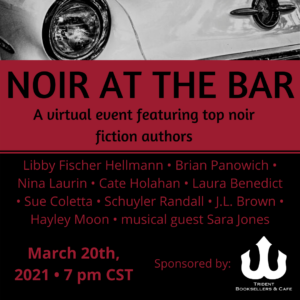
Join me, Laura Benedict, and many others on Zoom for Noir at the Bar. Win a signed paperback in the giveaway!

When: Sat., March 20, 2021

Time: 7 pm CST/8pm EDT

Tickets are FREE (limited to the 1st 100 fans)

Where: Comfort of home

Register: noiratthebar.online
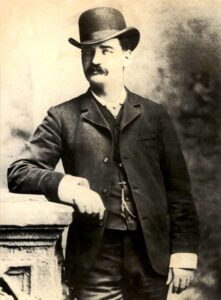
Bat Masterson, Writer

by James Scott Bell
@jamesscottbell

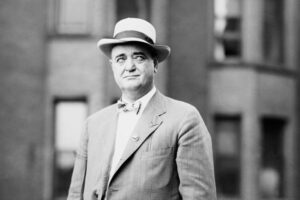
Bat Masterson, c. 1880

Back when the West was very young
There lived a man named Masterson.
He wore a cane and derby hat,
They called him Bat, Bat Masterson!

During the “golden age of television,” the 1950s and early 60s, the Western was the dominant genre. You had The Lone Ranger, Gunsmoke, Roy Rogers, Maverick, Rawhide, Bonanza, Sugarfoot, Have Gun Will Travel, Wyatt Earp, Tombstone Territory, Death Valley Days, Cheyenne…and on and on. Among them was a series starring Gene Barry as Bat Masterson. The lyrics at the top of this post are from the song that accompanied the series.

Interesting historical item: Bartholomew “Bat” Masterson should be better known to us as a writer!

It is true he was an Old West lawman and friend of Wyatt Earp. But his legend as a gunslinger was the result of a practical joke played upon a naïve young newspaperman.

In the 1880s readers in the East were enamored of tales of derring-do out West. Savvy writers were quick to exploit that fascination. Ned Buntline, for example, created the legend of Buffalo Bill Cody. Cody himself would ride that publicity into a nice income from his Wild West Show.

In 1881 a reporter named Young, who wrote for the New York Sun, came out to the Colorado mining town of Gunnison, looking for a “shoot-’em-up” story for the paper. He asked one of the locals, a man named Cockrell, where he might start looking for such a story. Cockrell decided to have some fun with the dude. He spun a tale of a lawman he knew from Dodge City, a twenty-seven-year old named Bat Masterson. Why, he’d already killed twenty-six men! And seven of those were to avenge the murder of his brother! Another time he hunted down two Mexican outlaws and brought their heads back to prove it and collect the bounty! And so on. Young lapped it all up and filed the story. The Masterson legend took off, never to be ameliorated. (In fact, Masterson the lawman killed only two men. One of them was, indeed, the murderer of his brother.)

Times changed. The era of the gunslinger came to an end. Bat Masterson, who was more a gambler and “sport” than anything else, ended up in Denver as a promoter of the sport of boxing. This was in the bare-knuckles era, and Masterson would be intimately involved with every heavyweight championship fight until his death in 1921.

His time in Denver did not prove profitable, so in 1902 he and his wife headed for the more promising venue of New York City.

His arrival was not propitious. The second day he was there he was getting his shoes shined at a stand when the cops, led by an officer named Gargan, arrested him. Why? Because he was nicely dressed and happened to be near a West Coast gambler by the name of Sullivan. It was Sullivan and some others who were part of a bunco scheme to fleece a Mormon elder named Snow out of $16,000. Masterson did not take his arrest well. His loud protestations at the station were muted somewhat when police removed a concealed revolver from their famous arrestee. Snow failed to identify Masterson, and the bunco charge was dropped. Masterson, however, had to pay a fine of $10 for the concealed weapon.

Never one to take it on the chin, Masterson filed suit against Snow for injury to his good name, to the tune of $10,000. Snow settled with him out of court. Masterson never forgot Gargan, either. Eleven years later he would seek a charge against Gargan for perjury in his testimony about the 1902 arrest.

Masterson in NYC, c. 1920

Did I mention that Masterson was pugnacious? That was one of the qualities that made his column in the New York Morning Telegraph so popular. From 1903 to 1921 the former lawman wrote three columns a week and gained a huge following all over America. He didn’t cheat on the verbiage, either. His pieces averaged 1700 words. Mostly he wrote about boxing, but he was not averse to sharing his opinions on other matters of the day.

Masterson was frontier educated and never went to college. So how did he master the art of writing? Three ways. First, he was a voracious reader. Second, he made it a goal to expand his style by adding to his vocabulary on a regular basis. And last, but not least, he let his passion for his subject bleed onto the page. For example, in 1911 he covered a fight between a boxer named Burke and an Irishman named Maher. Burke, he wrote, found Maher “a fine bit of cheese” who threw wild punches. But after a Maher haymaker “put a crack in the air,” Burke “planted a left into the Irishman’s potato pit … and it was curtains for Erin’s representative.”

So the writing lesson for today we’ll call the Masterson Triad:

  1. Read widely
  2. Expand your style
  3. Make sure your passion is evident on the page

One last bit of trivia. Have you seen the musical Guys and Dolls? Most probably you have. It was a big Broadway hit, and then a hit movie. Based on characters created by Damon Runyon, it is the fanciful story of Broadway touts and gamblers with names like Harry the Horse, Nicely-Nicely Johnson, Society Max, and Benny Southstreet. The leading figures are Nathan Detroit (Frank Sinatra in the movie version) and Sky Masterson (Marlon Brando). The plot is based on a bet between Nathan and Sky. The two are sitting in a restaurant on Broadway when Nathan bets Sky that he will not be able to take a “doll” of Nathan’s choosing out to dinner in Havana, Cuba, the following night. Sky, who believes all dolls are the same, takes the bet.

At which point Nathan points outside to Sergeant Sarah Brown of the Salvation Army!

Here is the interesting backstory. Damon Runyon was a young reporter whom Bat Masterson took under his wing. The two remained close until Masterson’s death in 1921. One day they were sitting in a bar, and Masterson was spinning tales about gambling and guns, when they heard a loud thumping out in the street. It was the bass drum of a Salvation Army band, summoning sinners to a meeting. The band was led by a fetching young woman. And Runyon immediately got a story spark: what if a pristine Salvation Army sergeant fell in love with a sport like Bat Masterson?

The idea stuck, and years later Runyon wrote “The Idyll of Miss Sarah Brown.” The sport he named Sky Masterson, in honor of his old friend. The story became the basis for Guys and Dolls.

Let’s ask the Bat Masterson questions today.

  1. Do you read widely?
  2. Are you purposeful in expanding your style? 
  3. How do you get passion onto your pages?

Note: Most of the research for this post is taken from Robert K. DeArment, Gunfighter in Gotham: Bat Masterson’s New York City Years, University of Oklahoma Press, 2013.

Making a Movie With Spider-Man


(Note: Thanks and a tip of the fedora to TKZ’s Terry Odell, who noted that for some reason comments (as of 8:20A EST) cannot be posted. I am working on fixing that but having problems doing so. I’m sorry!)

(Update 12:28P EST: It appears to be a system problem as opposed to a PICNIC (Problem In Chair Not In Computer) problem. It will hopefully be fixed in time for Jim Bell’s post tomorrow. Thanks to everyone who is stopping by today. SJ)

(Update 12:46P EST: Comments are working. Thanks and a tip of the fedora to Lynne Reynolds, the Wizard behind the curtain! SJ)

The following occurred about a year and a half ago. I have had to remain uncharacteristically quiet about it until now due to an NDA (non-disclosure agreement) which blessedly expired on February 26. I left my home in central Ohio at 2:30A on November 27, 2019, and headed north toward Cleveland, a place where I misspent several of my formative years. I was to report, showered, shaved, and tap dancin’, at 6:00A to an address near Cleveland’s east side. 

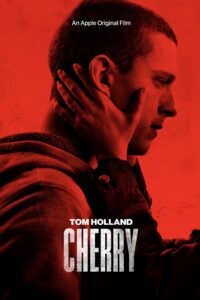
I had been notified a few days previously that I had been selected for a (very, very small) part in a movie named Cherry. There was plenty of buzz about the project before it began, due to the presence of Tom Holland in the lead role and the involvement of Joe and Anthony Russo as directors and producers. Holland and the Russo Brothers had worked together before on such obscure cinematic projects as Avengers: Endgame and Avengers: Infinity War, with Holland appearing as Spider-Man and the Russos directing those films. Expectations for Cherry were high, my presence in the film notwithstanding. 

Shaker Heights, a somewhat tony Cleveland suburb, was my ultimate destination.  I misspent a good portion of my formative years in Cleveland. I had been to Shaker Heights only once, close to sixty years before, with my parents on a Sunday to go to a retail area named, by amazing coincidence, Shaker Square. I planned to take a look at the area while I was up there. Did I get to? Read on. 

I arrived on time at the appointed place. Despite being a little later in the morning it was somehow even darker and colder on Cleveland’s east side than Columbus had been three hours earlier. I parked and started following some hand-lettered signs through a parking lot, heading toward an unmarked building. A limousine pulled up next to me. Tom Holland got out, smiling, and yelled, “Joe! Joe Hartlaub! My man!” as he embraced me. Not really. Actually, a guy with an Eddie Murphy vibe exited the limo and asked me if this was the right place to be for Cherry. We had some introductory chit-chat during which he told me that he also had a very small part and lived about ten blocks away. I glanced at the limo. He said, “I was gonna ride my bike, but, like, how many times ya gonna be in a movie? Y’know?” I shrugged. He asked me how I had gotten there. “I coptered in from Columbus,” I answered, whirling my index finger around. I had him going for just a minute as he looked around us, perhaps hoping to see Jan-Michael Vincent lean out of a hovering whirlybird and wave. He was disappointed.

We walked into the building together and followed some more hand-lettered signs through a warren of what turned out to be dance rehearsal rooms that had been temporarily repurposed for storing movie equipment. We ultimately found a nice lady, complete with piercings, tattoos, and a clipboard, who checked us in and then directed us to a large room that had been set up like a cafeteria. Breakfast. It was a surprise. We were cautioned to use the serving line on the left and to sit in a specific area since the right line and the other tables were for the crew. Same food, no mingling. My fellow cast member looked at me and kind of smirked at the ironic separate but equal arrangement. We ate some breakfast, ate some more, and drank coffee. An hour passed before my new friend, a few other folks, and I were ushered through a different labyrinth of rooms to suddenly find ourselves outside and on Shaker Square, which looked both different and the same from how I remembered it.  We were given our assignments as the wind and sleet started up, and admonished that we were absolutely not to talk to Tom Holland if we encountered him since he would be working.  My acting assignment was to stand on the street in the wind while being peppered with ice pellets while reading a newspaper, all the while acting as if I were cold,  wet, and old. It stretched my abilities to the limit, let me tell you, but I am a true professional and got the job done, take after take. I was truly humbled by the applause I received every time I turned a page of the newspaper and the director yelled “Cut!”

We were all released at around 12:15 PM. I went into the diner to get some more coffee and saw my fellow actor. He was standing with a small group of folks and head-bopped me over. Tom Holland was standing next to him. Holland started talking to us after a couple of minutes about this and that.  Directives notwithstanding, it would have been rude not to have answered him. It turned out that he was/is a very personable guy. His younger brother was with him. Holland was much nicer to his brother than I would have been to mine under similar circumstances, but, then again, Holland’s brother wasn’t as irritating as mine was at that age. 

Photo by Joe Burdick. All rights reserved.

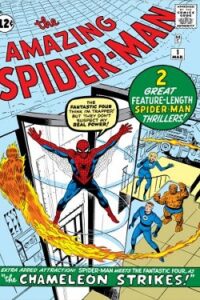
Things then became weird. I looked back across Shaker Square and recalled that, when I had been there on that long-ago Sunday, a drugstore had filled a storefront where a clothing boutique presently occupied. I had gone in there (probably to get away from my younger brother) and purchased some comic books with a dollar that I had saved from a week before (something I wrote about a few months ago). One of those comics was The Amazing Spider-Man #1.  My adult self kind of felt the earth and everything else shift for just a moment.  I didn’t have to wonder how eleven-year-old me would have reacted if he had been told that, in another sixty years or so, he would be standing across the street talking to the actor who played Spider-Man in a couple of movies while appearing in another movie “with” that actor. I would not have believed any of it.

Holland was called away to do more acting. I got my coffee and gave my new friend a ride home (a real come-down for him, I am sure, after his limo ride of the morning) and made the three-hour drive back home, thinking about life and how the choices we make and the chances we take often bring things back to where we start. 

Cherry was supposed to be released in July 2020 but…you know. That was changed to November 2020 and was delayed a second time. There was a limited (meaning not in Columbus) theatrical release on February 26, 2021, with a full release on Apple TV+ scheduled for March 12. I still don’t know if my scene made the final cut. I did, however, meet Spider-Man. If I could I would tell my eleven-year-old self, “Hang in there, Joey. It’ll be okay. Just don’t get involved with ________, __________, ____________, ______________, or __________. Oh, and you’ll get to hang with Spider-Man. Lastly, hang on to your comics.”

I don’t really believe in coincidence. Life stretched over many years just has too many moving parts. To paraphrase J.B.S. Haldane (and many have), life is not stranger than we imagine. It’s stranger than we can imagine. But we still try, don’t we? 

That is all I have today. I hope that I’ve been able to entertain you while you are waiting for your Coming 2 America feed to stop buffering. In the meanwhile, do you care to share a strange thing that has happened to you lately? 

Locard’s Exchange Principle for Mystery & Thriller Writers

If you’re a mystery & thriller writer, at some point in your story you’ll have to deal with the evidence. I once heard a judge say, “There’s nothing more unreliable than eyewitness evidence.” There’s a whack of truth in that statement, and that’s why detectives and crime scene investigators always look for the best evidence—hard and indisputable physical evidence, especially trace or fragmentary evidence. They’re well aware of Locard’s Exchange Principle, and you should be too if you’re going to write convincing mysteries & thrillers.

What’s Locard’s Exchange Principle, you ask? Well, it’s fundamental to crime scene investigation or physical evidence processing. Locard’s, as it’s called in the biz, is the cornerstone of all forensic science; the basis as we know forensic science today.

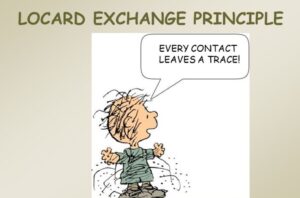
Locard’s Exchange Principle states that in the physical world, whenever criminal perpetrators enter or leave a crime scene they leave something behind (trace evidence) that links them to the scene, and they take something away with them that also connects them to the crime. Trace evidence is the linkage of persons or objects to the scene. Locard’s is best put as, “Whenever two objects come into contact, a mutual exchange of matter will take place between them. The transfer may be tenuous, but it certainly will occur.”

I learned about Locard’s Exchange Principle in the police academy. It’s that elementary—Crime Scene 101. You can take it to the bank that in every crime, digital online offenses included, there will be some form of physical evidence no matter how microscopic.

Dr. Edmund Locard was a French scientist from the early 1900s. He pioneered modern crime scene processing and was known as the real Sherlock Homes of scientific sleuthing. Locard’s mantra was, “Every contact leaves a trace.” This simple phrase was so profound that famed criminalist Dr. Paul. L. Kirk of the National Academy of Forensic Sciences put Locard’s this way:
Wherever he steps, whatever he touches, whatever he leaves, even unconsciously, will serve as a silent witness against him. Not only his fingerprints or his footprints, but his hair, the fibers from his clothes, the glass he breaks, the tool mark he leaves, the paint he scratches, the blood or semen he deposits or collects. All of these, and more, bear mute witness against him. This is evidence that does not forget. It is not confused by the excitement of the moment. It is not absent because human witnesses are. It is factual evidence. Physical evidence cannot be wrong, it cannot perjure itself, it cannot be wholly absent. Only human failure to find it, study and understand it, can diminish its value.”

Trace evidence is also called fragmentary evidence. Trace evidence takes many forms. Sometimes it will be outstandingly unique to a specific scene such as metal filings from a knife sharpener that put a criminal I knew in jail for a long, long time. Common trace evidence examples are hairs, fibers, body fluids, organic compounds, glass shards, mineral deposits, paint chips and smears, sawdust, and fire debris like charcoal, soot, and chemical accelerants.

Writers should know fragmentary or trace evidence generally falls into the circumstantial department rather than direct proof. Individual evidence like DNA matches and fingerprint identifications are hard, solid, and indisputable facts that directly link a perpetrator to the crime. Trace evidence, on the other hand, is part of what’s called corroboration which backs up other factors, adding probative weight to the overall case.

A good example of individual evidence is an accused’s fingerprint in the victim’s blood found at a crime scene. It would be impossible for the accused to deny this or really tough to give an alternative explanation of innocence. Trace evidence such as glass fragments in the suspect’s shoe treads that were consistent with broken glass from the crime scene’s point of entry would be circumstantial and deserve an expert’s opinion or conclusion of the evidence’s value.

Crime scene examination and trace evidence conclusion categories are uniform in the western criminal investigation field. Trace evidence probative value is rated on a conclusion scale set forth by the American Society of Crime Laboratory Directors Laboratory Accreditation Board and ANSI-ASQ National Accreditation Board / FQS. The Scientific Working Group for Material Analysis (SWGMAT) supplies a conclusion scale definition which forensic evidence specialists use to assert their trace evidence findings. The Trace Evidence Conclusion Scale is this:
Identified (Type I Association) – A positive identification; an association in which items share individual characteristics that show with reasonable scientific certainty that the items were once from the same source.

Very Strong Support – An association in which items are consistent in all measured physical properties or chemical properties and share highly unusual characteristic(s) that are unexpected in the population of this evidence type.

Strong Support (Type II Association) – An association in which items are consistent in all measured physical properties or chemical properties and share unusual characteristic(s) that are unexpected in the population of this evidence type.

Moderately Strong Support (Type III Association) – An association in which items are consistent in all measured physical properties or chemical properties and could have originated from the same source. Because similar items have been manufactured or could exist in nature and could be indistinguishable from the submitted evidence, an individual source cannot be determined.

Moderate Support (Type IV Association) – An association in which items are consistent in all measured physical properties and chemical properties so could have originated from the same source. This sample type is commonly encountered in our environment and may have limited associative value.

Limited Support (Type V Association) – An association in which some minor variation exists between the known and questioned items that could be due to factors such as sample heterogeneity, contamination of the sample(s), or the quality of the sample. The items may be associated, but other sources exist with the same level of association.

Inconclusive – No conclusion can be reached regarding the association between the items.

Elimination – The items are dissimilar in physical properties or chemical composition and did not originate from the same source.

There’s a common misconception in trace evidence evaluation that every, and any, tiny piece can always be “matched” directly to an individual object. This is what’s sometimes called The CSI Effect where crime shows set unrealistic parameters and expectations from trace evidence probative value. This effect can be dangerous in court cases where jurors expect forensic science to be completely conclusive, and smart defense lawyers plant the seed of doubt in twelve panelists’ minds.

“What do you mean his DNA wasn’t found at the crime scene? Then he couldn’t possibly have been there and done it. Acquit!”

Something writers should also know about trace evidence is how it’s collected. There’s no exact right or wrong way, as variables at the crime scene and what type of trace evidence investigators are dealing with have strong bearings on the collection and examination process. The best scenario is to collect evidence at the scene, package it to prevent loss and cross-contamination, and take it to the lab where examination occurs under controlled and clean conditions.

That’s in the perfect world. Often, crime scenes are cold, wet, dirty, and bloody places. You deal with what you got as a CSI technician. But, for the most part, trace evidence processing is done with these methods:

Visual Inspection — There’s nothing like the human eye to spot something and make a judgment as to its evidentiary and probative value.

Light Amplification — High intensity and alternative scales are amazing amplification tools for spotting fragments like hairs and fibers.

Manual Collection — This involves good old tweezers to pick up something like a cigarette butt and place it in an evidentiary bag.

Vacuum Collection — High-tech shop vacs (with clean bags) are exceptionally efficient at sucking up fines like sand, pollen, and splinters of glass.

Taping — Fussy trace materials like drug residue, cosmetic powders, and costume glitter are easy to lift by using common adhesive tape.

Microscopic Examination — This is where the real CSI science kicks of when the examiner puts trace evidence through a comparison or scanning electron microscope.

Chemical Evaluation — There’s a decades-old process called Gas Chromatography—Mass Spectrometry (GC-MS) that analyzes trace evidence and produces its molecular signature.

Forensic science’s ultimate goal in collecting, analyzing, and reporting trace evidence (obtained through Locard’s Exchange Principle) is to have it accepted or admitted into criminal trial proceedings. To start with, trace evidence has to be legally obtained. The CSI team must have a legal right to search for and seize whatever the evidence is. This usually is covered by a court-ordered search warrant as opposed to common-law grounds.

The evidentiary test at trial is then threefold. Trace or fragmentary evidence has to be relevant, have probative value, and not be prejudicial to the accused person or to the proceeding itself. Relevancy is a straightforward concept. The trace evidence has to someway connect the accused to the crime. There has to be a nexus that’s relevant.


Probative and prejudicial are a bit more complicated. For the best explanation of these legal concepts, I turned to the best explainer. This material is sourced from a trial lawyer’s blogsite:

PROBATIVE VALUE

The probative value of evidence is the degree to which it proves fact(s). The more a piece of evidence proves a fact, the greater it’s probative value. Greater value means a greater potential impact on the outcome of the case.

Probative value considers four main factors:

Inference: What inference can be reasonably drawn from the evidence. Circumstantial evidence such as DNA, forensics, and expert witnesses can infer that a person is linked to specific criminal activity.

Weight: The weight of the evidence measures how persuasive or believable it is. The greater the weight, the more impact it may have on proving facts and/or contributing to the final verdict.

Reliability: The more reliable the evidence, the greater its value. Testimony from a police officer who witnessed a crime, for example, would be more reliable than witness testimony from an untrained civilian.

Other Evidence: Whether other evidence is available to prove the same fact(s). While more supporting evidence can be beneficial in proving a fact, if there is other evidence available, low probative value evidence could be dismissed.

PREJUDICIAL

While both probative and prejudicial evidence can affect the outcome of a trial, they significantly different. Prejudicial evidence is that which negatively impacts the fairness and integrity of the case. This can include evidence that is misused, confuses issues, wastes time, or simply takes up too much time.

Just because a piece of evidence is damaging to the defendant’s case does not necessarily qualify it as prejudicial. The factors that determine it are based on three grounds— Moral, Logical & Time.

Where these factors may create an unfairly prejudicial effect, it is possible to have them excluded. Examples of when this may occur include:

  • Where prejudicial evidence threatens the fairness of the trial.
  • The evidence lacks adequate testing, or cannot be challenged properly
  • There is a significant risk of misuse by the jury, or the use of the evidence may lead to an inability to properly assess the evidence. This can occur where the evidence in question is too misleading, confusing, or distracting.

BALANCING PROBATIVE VS PREJUDICIAL

In determining whether or not to allow evidence its probative value is measured against the potential prejudicial effect. To be admitted, the evidence must have greater probative value. The probative vs prejudicial analysis is constantly occurring during criminal trials.

That does not mean it is difficult for evidence to be admitted. Judges and courts typically weigh more favorably on the side of admission of evidence. The prejudicial effect must be significant to be dismissed, and even then is sometimes allowed with certain restrictions.

The balance is not always consistent across the board. Some evidence is more probative on one count and more prejudicial on another. Where this occurs the court may limit the jury’s use of the evidence rather than exclude it outright.

There’s a lot more to Locard’s Exchange Principle than meets the common eye. In criminal investigation and crime scene examination, Locard’s is as certain as gravity, death, and taxes. For the crime writer—mystery & thrillers—there’s a lot to be learned from understanding how Locard’s applies and the ramification in storytelling from using Locard’s correctly. The takeaway? Every contact leaves a trace.

Kill Zoners — Were you aware of Locard’s Exchange Principle? Have you referred to it in a story? And what creative trace or fragmentary evidence have you cooked up? Real or imagined.

——

Garry Rodgers is a retired homicide detective with a second career as a coroner processing forensic evidence in death investigations. Now, Garry is a crime writer and indie publisher with sixteen books to his credit. His latest in the Based-On-True-Crime Series by Garry Rodgers is Beyond The Limits where Locard’s Exchange Principle led to a first-degree murder conviction.

Be sure to check out www.DyingWords.net which is Garry Rodgers’s popular blog with over 400 posts that provoke thoughts on life, death, and writing. Garry lives on Vancouver Island in British Columbia at the Canadian west coast. He frequently opens his Twitter account at @GarryRodgers1. Be sure to follow.

Doublespeak: A Look at Voice

Doublespeak: A Look at Voice
Terry Odell

Doublespeak

Image by No-longer-here from Pixabay

I’m looking at two aspects of voice today: Character and Author.

Part A. Character Voices, or “Give Them Their Own.”

I recall reading my first book by a best-selling author. A male character discovered a young girl, about 5 years old, who had been left to die in the woods. He brings her to his cabin and finds she cannot or will not speak. I was impressed with the way the character spoke to the child—it seemed exactly how someone should deal with that situation. However, as more characters entered the story, I discovered that he spoke that way to all of them. Not only that, almost every character in the book spoke with that same “Talking to a Child” voice. Obviously, it doesn’t bother the millions who buy her books, but it bugged the heck out of me. And it’s consistent with all her books in that series. It wasn’t just a one-time deal.

It’s important in a book that characters not only sound like themselves, but don’t sound like each other. That means knowing their history, their age, education, as well as occupation, nationality—the list goes on. Ideally, a reader should be able to know who’s speaking from the dialogue on the page without beats, tags, or narrative.

Cowboys don’t talk like artists, who don’t talk like sailors, who don’t talk like politicians. And men don’t talk like women. They’re hard-wired differently. I’m a woman, and in my first drafts the dialogue will lean in that direction. After I’ve written my male characters’ dialogue, I go back and cut it down by at least 25%.

A few tips to make your characters sound like themselves.

Don’t rely on the “clever.” Dialect is a pitfall—more like the Grand Canyon. If you’re relying on phonetic spelling to show dialect, you’ll stop your readers cold. Nobody wants to stop to sound out words. You can show dialects or accents with one or two word choices, or better yet, have another character notice. “She heard the Texas in his voice” will let the reader know.

Give your characters a few simple “go to” words or phrases. For me, this is often deciding what words my character will use when he or she swears (since I write a lot of cops and covert ops teams, swearing is a given). In a recent book, I’d fixated on characters “rocking” this, and “rocking” that. I went back and adjusted things so only one character used that expression.

Keep the narrative “in character” as well. This especially includes internal monologue, and even extends to narrative. Keep your metaphors and similes in character. If your character’s a mechanic, he’s not likely to think of things in terms of ballet metaphors.

What your character says and does reveals a lot to your readers. Workshops I’ve attended have given out the standard character worksheets (which have me screaming and running for the hills), but it’s the “other” questions that reveal your character. What’s in her purse? What’s in his garbage? What does he/she order at Starbucks? Would he/she even be caught dead in a Starbucks? James Scott Bell’s workshops include excellent examples.

How do you keep your characters distinct? How do you get to know them? Do you need to know a lot before you start, or are you (like I am) someone who learns about them as you go?

Which brings me to Part B: Authorial Voice, or “Stay the Hell off the Page.”

After  a presentation I gave for a local book club, one member said she’d read one of my books. Her comment was, “You write the same way you talk.” And, after I sent a chapter to my critique partners, one said, “This sounds very Terry.” That, I think, sums up “voice.”

Any author starting out tries to write what she thinks a writer should sound like. She might work hard to make her characters sound unique, and true to their backgrounds, but all the other stuff—the narrative parts where the character isn’t speaking—sounds stilted. It sounds “writerly.”

But what the characters say isn’t the same as “Authorial Voice.” It’s all the other words, the way the sentences are put together, how the paragraphs break. Can anyone confuse Harlan Coben with Lee Child? Janet Evanovich with Michael Connelly? Even Nora Roberts has a distinctive voice that is recognizable whether she’s writing a romance as Roberts, or one of her “In Death” futuristics as JD Robb.

Your authorial voice will develop over time and (one hopes) will become recognizable. It’s important to learn the ‘rules’ of writing before trying to be distinctive. In the art world, we recognize artists by their style. The Star Spangled Banner opens countless events, yet even though the notes are the same, they presentations vary. Immensely.

Before artists of any format—music, poetry, prose, acting, create their own recognizable style, they learn the basics. Before your voice will develop, you have to write. And write. And write some more.

Try looking at your manuscript, or the book you’re reading. Find a passage that’s filled with narrative. How do you, or the author in question deal with it? Is it in the same vein as the dialogue, or do you get jolted out of the story because all of a sudden there’s an outsider taking over? If it’s a funny book, the narrative needs to reflect that sense of humor. If it’s serious, the author shouldn’t be cracking wise in narrative. If your character speaks in short, choppy sentences, then he’s likely to think that way, too. Again, the narrative should continue in that same style.

You want your voice to be recognized, but not intrude on the story. If you want the reader caught up in the story and the characters, you, the author have no business being on the page. Every word on the page should seem to come from the characters, whether it’s dialogue or narrative. You’re the conduit for the story and the characters. You’re there so they shine, not the reverse.

It takes practice—and courage, because you have to put “you” on the page, and not the “writer.” But when you finish, you should have your own special work. You won’t be a cookie-cutter clone. Rule of thumb—if it sounds “writerly”, cut it. When the words flow from the fingertips, that’s probably your own voice coming through. Let it sing. In the workshops I’ve given on Voice, I hand out pictures and ask the participants to write something the picture invokes. Then, they swap pictures and have another go at it. When the pairs read their works, despite the trigger being the same picture, their stories and voices are never anything alike.

What about you, TKZers? Any distinctive authorial voices you’d like to share? Any authors who have mastered the characterization voices?


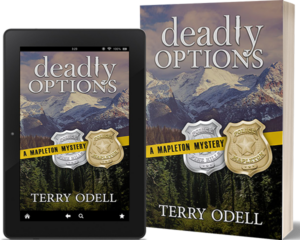
Deadly Options Terry Odell

I’m thrilled that Deadly Options, my 10th Mapleton mystery is now available for immediate sale in both digital and trade paperback formats.


Navigating Rough Waters

Photo courtesy of Jim Coffey, Esprit Whitewater

By Debbie Burke

@burke_writer


What does whitewater rafting have to do with writing?

For one thing, rafters and writers often endure blasts of icy water in the face. For authors, the cold, wet shock is metaphoric—a stinging rejection, a hideous review, a kiss-off from a publisher.

Today’s story begins when my pal, former river ranger Susan Purvis recently sent me a link to a podcast about whitewater rafting. Susan often leads me into adventures that always pay off in unexpected rewards so when she recommends something, I listen.

That day, with a crammed to-do list, I didn’t have a spare hour for a podcast. Yet once I started to listen, I couldn’t stop.

The interviewer is Barry Kruse, entrepreneurial coach of Leading Steep, and his subject is Jim Coffey, founder and owner of Esprit Whitewater, a Canadian rafting company.

Jim’s rafting business began in 1992 and survives nearly three decades later, a rarity in the field. A seasonal operation is especially tough because he has to earn enough income in four, maybe five, months to last the entire year. Plus, recreation-oriented businesses are hit hard during recessions when people can’t afford vacation trips.

Jim believes entrepreneurs who succeed have “a high tolerance for adversity and uncertainty.” He proves his point when he relates the setbacks he’s experienced that would tank most businesses— a fire that destroyed part of his facilities, a couple of floods, the Covid shutdown, and, last summer, his own diagnosis of throat cancer.

His attitudes and coping tools struck me as helpful advice for authors. The following are a few gold nuggets from his podcast.

Jim: “You never know where that first step is going to lead.”

When you’re stuck in your writing, take a step.

Inertia is not healthy for writers, in body, mind, or word production. If you’re bogged down, take a step in a new direction.

Write a public service announcement for a charity you admire. Write ad copy for a fundraiser for a worthwhile cause.

If your own ads don’t pan out, analyze what authors with similar books do for promotion. Try new avenues.

Learn a new skill—make a video, add fresh features to your website, try a different software writing tool, create an audiobook.

First steps sometimes lead to dead ends. But they can also lead to new universes.


Jim: “You never know who that [most] important customer is going to be. Treat every customer as if they are that person.”

Readers are the author’s customers. Building their loyalty and trust is key to selling books.

A major breakthrough opportunity for Jim’s company occurred when a particular customer was impressed with the fledgling operation. That man turned out to be an influencer who booked more trips for large groups and retreats, as well as recommending Esprit Whitewater to colleagues. A single customer hugely expanded Jim’s business.

For authors, treat every reader as your most important customer. They might place your book in Stephen King’s hands for a blurb. Or convince Oprah to feature it in her book club. Or catch Reese Witherspoon’s attention for a new movie production.

Not likely? Okay, but how about these possibilities?

A reader invites you to speak to their book club. That results in more sales and more readers.

A reader from that book club works for a major media outlet and wants to interview you.

The leader of a civic or professional organization hears/reads your interview and invites you to talk to their 500 members.

And so it can go.

When you treat each reader as that most important customer, their reach and recommendations carry you and your books into markets you never imagined.


Jim: “We manufacture our own luck. Preparation collides with opportunity.”

The harder you work, the luckier you get.

Preparation can mean: take a class; read a new craft book; attend a conference; research new marketing angles.

When you’re doing the work, opportunities pop up in unexpected ways in unexpected places.


Jim: “Be unselfish and generous with your skills and pass them on.”

Help other writers.

The writing community is a continuum of authors at different levels of accomplishment, from beginners to multi-published bestsellers. We have all been helped by authors more experienced than ourselves and, in turn, we can help others less experienced than ourselves.

Freely share what you’ve learned. Teach a workshop. Write a guest blog post. Produce a newsletter for a charitable organization. Mentor a struggling writer.

You might think you’re too new at the craft to offer anything. Not so. You can beta-read. Judge a writing contest. Offer to talk to schoolchildren—most teachers are delighted to host writers and kids are eager to learn.


Jim: “It’s easier to train a great person to be a great whitewater guide than to take a great whitewater guide and turn them into a great person.”

For authors, attitude is more important than skill. Approach learning as a humble student.

I’ve known many talented authors who were positive they were destined to knock Michael Connelly off bestseller lists. They were usually so busy talking about how much they knew and how great they were that, not surprisingly, I haven’t noticed any of their names in USA Today.

C.S. Lewis said: “Shut your mouth; open your eyes and ears.”

That advice spans to entrepreneurs, military, industry, and, of course, writing. Nobody knows everything.

Before you become a great writer, you must first be a great student.


Jim: “You never know when people you’ve contributed to will come back and contribute to you.”

At the beginning of the podcast, interviewer Barry said Jim had recently undergone chemotherapy and radiation for throat cancer. While Jim was laid low during the busy summer season, his team kept the business going and took care of hundreds of happy whitewater rafting customers. He’d earned the loyalty of his staff who came through when he needed them the most.

At the very end of the podcast, Jim mentions he gave the interview while lying in bed… with a feeding tube.

Wow. Just wow.

That left no doubt Jim Coffey is off the scale in his tolerance of adversity and uncertainty.

 Perhaps the most important lesson can be found in Jim’s actions:

Help others and never give up.

Works for authors, too.

~~~

Many thanks to Jim Coffey and Barry Kruse for their permission to quote and reference the interview which can be heard here: https://www.leadingsteep.com/podcast

~~~

TKZers: What is your favorite advice, touchstone, or belief that helps you over treacherous rapids and shoals encountered in your writing career?

~~~


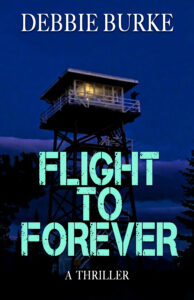
In Debbie Burke’s new thriller Flight to Forever, her main character persists in spite of lots of cold water thrown in her face. Please check it out here.

First Page Critique: Jane Unknown

Happy Monday! Today’s first page critique is for a dystopian YA novel entitled JANE UNKNOWN. This page provides a very atmospheric start to a novel that I’m hoping contains lots of witchcraft! My comments follow. Enjoy!

February 24, 1692

On top of the hill was the stake, not yet aflame. An upright log dark against the grey sky. Beams of light cut through the clouds, slanting down onto the fields, turning some of the tall grass golden. And so how, in this heavenly light, did the stake still look so foreboding? Send a chill to the bone?

The Bachelors of Divinities walked me up the hill. One on each side: Ely and Jonas. I’d known them since I arrived in Salem Village, orphaned, eleven years ago, but they did not act as if they knew me now. I suppose they felt as if they didn’t. They held my elbows roughly—my wrists were already secured with rope behind my back—although they did not need to. There was nowhere to go. We’d all been taught the witches had the woods. Not the other way around: Not the woods had witches. Perhaps that’s why they suspected me? As an orphan, I came from those woods.

My ankle wobbled on a clump of grass, causing me to near fall. Ely sighed loudly and yanked me up by the elbow. Pain shot through my shoulder. It felt as if the muscle had been ripped in half. He muttered under his breath, lip twitching.

The stake loomed taller and taller. We were close, only a few wagon-lengths away. Sweat crept along my cold skin, and I found it hard to take a deep breath.

As we reached the top of the hill, the wind whipped against us, pushing my grey dress against my legs. I wore no apron today. The wind caused hope to blossom within, especially as Ely and Jonas exchanged expressions. It had rained the night before, but this could only prolong my agony—but the wind, the wind it might help me yet. But hope could be dangerous. Disappointment fell all the further when hope lifted one high.

The stake was now in clean sight. A stool, where I would stand, against the log, where they would tie me. They’d arrange the branches and twigs at my feet, and perhaps, if I was lucky, I’d die by smoke first.

I tried to prepare myself: This will hurt, but then it will be over. You’ll be with mother. This will hurt, but then it will be over. You’ll be with mother. Over and over.

It did help, I suppose. The grass blowing, as if in slow motion. Our walk forward inevitable.

Overall Comments:

I love how the author has woven together the sense of foreboding with the landscape and the weather in the moments leading up to what appears to be a witch burning outside Salem. The author definitely draws the reader in and creates a sense of empathy as well as fear for the main protagonist. Initially, I wasn’t too sure whether this was historical or dystopian YA (as this had been described) but I’d be happy to keep reading whatever direction the novel ultimately takes. I thought the stream of consciousness writing style also worked really well, helping keep the POV close to the protagonist while also feeling very much YA. At times the sentence structure did get a little confusing, but I thought it did feel like we were directly hearing the protagonist’s thoughts as they unfolded.

My only real comment would be that ‘less is more’ – while there’s plenty of atmosphere, there’s less in terms of action, and I think paring down some of this scene could help it flow a little easier. Sometimes the protagonist’s thoughts slowed down the dramatic tension. I’ve copied this first page below to highlight the areas which I think could be edited/cut and yet still retain the terrific atmosphere of this first page. The words in bold are the ones I think should be deleted and I have placed some extra notes in bold and italic. These are obviously just my thoughts (and TKZers may have other advice!). Overall though, tightening up a first page is always a good idea:)

Specific Edit/Cut Options:

February 24, 1692

On top of the hill was the stake, not yet aflame. An upright log dark against the grey sky. Beams of light cut through the clouds, slanting down onto the fields, turning some of the tall grass golden. And so how, in this heavenly light, did the stake still look so foreboding? Send a chill to the bone?

The Bachelors of Divinities walked me up the hill. One on each side: Ely and Jonas. I’d known them since I arrived in Salem Village, orphaned, eleven years ago, but they did not act as if they knew me now. I suppose they felt as if they didn’t. They held my elbows roughly—my wrists were already secured with rope behind my back—although they did not need to. There was nowhere to go. We’d all been taught the witches had the woods. Not the other way around: Not the woods had witches. Perhaps that’s why they suspected me? As an orphan (already said she’s an orphan so delete one of the references), I came from those woods.(note – I actually think these thoughts on the woods and witches could probably be moved to a later scene as it slows down the action)

My ankle wobbled on a clump of grass, causing me to near (do you mean nearly?) fall. Ely sighed loudly and yanked me up by the elbow. Pain shot through my shoulder. It felt as if the muscle had been ripped in half. He muttered under his breath, lip twitching. (Note: this whole paragraph could actually be deleted unless the injury to her shoulder is relevant later)

The stake loomed taller and taller. We were close, only a few wagon-lengths away. Sweat crept along my cold skin, and I found it hard to take a deep breath.

As we reached the top of the hill, the wind whipped against us, pushing my grey dress against my legs. I wore no apron today. The wind caused hope to blossom within, especially as Ely and Jonas exchanged expressions. It had rained the night before, but this could only prolong my agony—but the wind, the wind it might help me yet. But hope could be dangerous. Disappointment fell all the further when hope lifted one high.

The stake was now in clean sight. A stool, where I would stand, against the log, where they would tie me. They’d arrange the branches and twigs at my feet, and perhaps, if I was lucky, I’d die by smoke first.

I tried to prepare myself: This will hurt, but then it will be over. You’ll be with mother. This will hurt, but then it will be over. You’ll be with mother. (maybe only need to state once?) Over and over.

It did help, I suppose. The grass blowing, as if in slow motion. Our walk forward inevitable.

Final Comment:

Bravo to our brave submitter!  I hope my comments are helpful. TKZers, what advice or feedback do you have? Looking forward to seeing your comments.

Writing to Escape

by James Scott Bell
@jamesscottbell

Some weeks ago we talked about reading for escapism.

What about writing to escape?

In 2020 we had a slew of blog posts about how hard it was to write in 2020. With political, cultural, and pandemic bedlam hitting us all like an unending Oklahoma dust storm, that was no surprise. I added to that conversation here.

Welp, the dust storm is still blowing, and writers need escape just like everyone else. That’s where the magic of story comes to our aid.

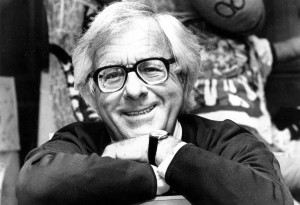
Ray Bradbury

Ray Bradbury famously said, “You must stay drunk on writing so reality cannot destroy you.”

Yet for those of us who write for a living, and those who hope to make some decent dough from writing (which is 99.76% of all writers) there is the sober part of us that keeps one eye on the market. That’s a necessity. We have to try to figure out what readers out there might spend their discretionary income on. In the traditional world of publishing, that calculus is filtered through agents and editors and the sales department.

Indies fly solo, but still must figure all these things out, too. Writing for money is a business. And business can often be frustrating, heartbreaking, even downright depressing.

But through it all, the writer who is a real writer keeps tapping that keyboard. Sometimes just to escape.

That’s why I love writing short stories and flash fiction. Flash fiction is 1k words or less; short stories are usually tagged at 1k – 7.5k. After that you get into the realm of the novelette (up to 20k words) and the novella (up to 49k words).

The beauty of short stories and flash fiction is that you can write them in a beautiful state called “The Zone.” When they’re finished, maybe they work, maybe they don’t. But that is beside the point. First, you have escaped in those hours. And second, nothing is wasted, for you have flexed your writing muscles, always a good thing.

You are not bound by conventions when you flash (er, maybe I should rephrase that). And you can try out different genres with your shorts (maybe I should rephrase that, too).

I’ll even throw in a bonus escape: poetry. Yes, poetry, which Bradbury also read each day and sometimes wrote himself. My personal preference is the whimsical, as in the poetry of Ogden Nash. He didn’t restrict himself to strict meter or schemes, and even made up words to suit his purposes. Thus I give you my Nash-inspired poem “Love in the Age of the Virus.”

This virus, we are told, is unlike anything that came before it—

Not the flu or a cold or pneumonia or a bad headache, so different it is that you darn well better not ignore it.

The answer, they say, is a mask and social distancing,

And should you shirk those things be sure of this: you’ll get plenty of angry insistancing.

Adjust, they say, for this is the normal that is new,

No matter how badly you wish it to be the abnormal that is through.

The way you socialize and eat and even worship in church, or mosque, or synagogue,

Is overseen and shadowed by a huge, regulatory fog.

Thus, they tell us, the best answer to the gloom

Is Zoom.

Ah, methinks, however, that the greatest challenge of all is in the dance of the sexes,

Be it with dates, or schoolmates, or husbands, wives or exes.

And speaking as I must, as a man, I can only say it adds immeasurably to our romantic task

To have to lean over and whisper, deep-voiced and confident, “Hey baby, how about taking off your mask?”

Now, that took me about half an hour to write, and for that half hour I was fully into the joy of creation.

So I work on my full-length fiction—which butters my bread—writing to a quota each day. But when I need pure escape, which is often these days, I’ll give myself fully to a short story or a flash. And when I write something that works the way I want it to, I’ll publish it for my Patreon community, so they can enjoy some escapism, too.

I always come out of these sessions feeling like a better writer. I’ve gained strength. I do believe it shows up in my full-length fiction.

So try this, writing friend, the next time you’re feeling the burdens of the day crushing your creative spirit. Write something short. Take a prompt from Gabriela Pereira’s Writer Igniter and start a flash story. Maybe it will expand into a short story. It might even sow the seeds of a novel. But write it just for yourself. Tell your inner editor to go sit in the corner with your market analyst, and tell them both “No talking.”

I went to Writer Igniter a couple of days ago, and this came up:

I immediately started a story called “Lucky Penny” and wrote the first 800 words. It was pure joy. For half an hour I had escaped. I now have the ending in mind, and a complete story to finish.

I can’t wait.

Do you ever write just to escape?

Hobbies, Activities, and Creative Pursuits

How do you recharge your battery?

The TKZ textbook on creativity

For today’s post, I wanted to explore activities that writers use to ramp up creativity, refill the well of creativity, or “recharge our batteries.” I wanted to look specifically at the use of creative pursuits, hobbies, or interests, outside of writing, to accomplish that goal.

I had my rough draft done before I searched for previous posts on creativity done here at TKZ. I was amazed at how much had already been written.

If you click on the two links below, you will find a treasure trove of articles on creativity, a TKZ textbook on the subject.

https://killzoneblog.com/category/creativity

https://killzoneblog.com/tag/creativity

And here are the chapters:

  1. The Creative Energy of Crowds, JSB
  2. Evolution of a Book Title and Cover, Debbie Burke
  3. Don’t be Afraid to Go There in Your Writing, JSB
  4. The Importance of Creativity Time (mental calisthenics), JSB
  5. Use NaNoWriMo to Repo Your Mojo, JSB
  6. Less Focus for Better Writing (positive constructive daydreaming), JSB
  7. Chasing a New Idea, JSB
  8. Permission to Make a Mess, Laura Benedict
  9. It Came From…, Joe Hartlaub
  10. When Your Brainstorming Hits a Drought, JSB
  11. Inspiring Quotes from Inspiring Crime Thriller Writers, Garry Rodgers
  12. The World Needs Creatives More Than Ever, Sue Coletta
  13. When a Writing Break Turns into a New Novel, J.T. Ellison
  14. Are Only Humans Creative? 6 Ways Creativity Improves Health, Sue Coletta
  15. Writers and Dreaming, Sue Coletta
  16. Can Creativity Pass Through Generations via DNA, Sue Coletta
  17. Our Brain and Creativity, Sue Coletta
  18. Write that Caption! New Yorker Cartoon Contest, Kathryn Lilley
  19. The Power of the Shadow Story, JSB

I enjoyed reviewing the posts. I learned a lot. I considered changing my post to another topic, but I think we can sneak in a discussion on the topic under the guise of “activities, hobbies, and creative pursuits outside the realm of writing that increase our creativity for writing.”

Writing fiction is inherently an intense and consuming activity that requires a never-ending flow of creativity. It is the rare writer who can work for long periods of time without stopping to rekindle the fire, or refill the well from which that creativity flows.

In the posts listed above, there are many ways listed to improve creativity. A few of them include creative activities outside of writing. I know from reading responses to previous posts that many of you have such outside interests. We want to hear about them.

It is my opinion, that having and pursuing other creative interests is healthy, can give our brains a chance to shift gears, and can even inspire ideas for our writing.


So, Dear Writer, what do you think?


  • Do you believe that other creative activities can benefit your writing?
  • Do you need creative pursuits beyond writing to recharge your battery?
  • What hobbies, activities, or creative pursuits do you use and enjoy?
  • In what way does this hobby or activity improve your writing?
  • How passionate (crazy) are you about this hobby? Give us a little taste of your passion.