Mentoring For Writers

“Good ole Fred,” I say.

“Who?” you ask.

“Fred. Fred Mahle. My mentor.”

“Okay,” you go.

“Fred was my police mentor. He was a Detective Sergeant on the homicide squad who must have seen something in me as a rookie and thought I was worthwhile mentoring. Because of Fred, I learned the criminal investigation ropes and managed to make a somewhat successful career out of being a murder cop.”

“Nice,” you say.

“Sadly, Fred’s long gone now. But what he taught me stuck. Fred fed me wisps of wisdom like, ‘God gave you two ears and one mouth for a reason’ and ‘You get more bees with honey than you do with vinegar.’ Fred was a Columbo character with a Da Vinci brain. He was the one who caught child serial killer Clifford Olson and struck the deal to pay Olson ten grand a piece to turn over the bodies. In the end, Olson got a hundred thousand and a life sentence. Ten families got closure.”

Impressive. “What brought this on for a Kill Zone post?”

“I’m doing a bit of mentoring now myself. Not as a detective, but as a writer. I’m a writer who’s mentoring a detective.”

(Laughs) “Say what?”

“Yeah. It’s come full circle. When I retired from being Doctor Death in the police and coroner business, I reinvented myself as a crime writer. Not necessarily a good crime writer, but I’ve learned a few tricks, and I’m in the position to share them with a real detective who’s just retired and wants to take up this crazy wordsmithing game. Get this. She’s silly enough to turn to me for advice, so now I’m mentoring her.”

“Go figger.”

——

I think all of us have been mentored to some degree throughout our lives—careers if you like. And I’d like to think that as we get older and more experienced in our lines, we mentor others. That may be a formal mentorship as in an apprenticing role or an informal one like touring the new hire around the book factory floor.

And I think you learn a lot on both ends—mentor and mentoree (master/protégé). I’ve been commercially writing for a while now and when I put together a “mentorship” program for the poor sucker nice lady I’m helping out, I was surprised to find just how much I’ve learned about the writing craft and biz. I look forward to this journey with her.

Ever wonder where the word “mentor” came from? No, neither did I until I sat down to rabbit-hole a bit of research for this piece. Here’s the scoop.

Homer, the Greek writer, had a character called Ulysses in his epic work The Odyssey. Ulysses was prepping for the Trojan war and knew he’d be away for a while. (Turned out it was ten years.) So Ulysses entrusted his only son and heir, Telemachus, with being scholared by his wise and learned friend, Mentor. There, you’re welcome.

History shows that people like us—like young trees in an old forest—thrive best when we grow in the presence of those who’ve gone before us. This isn’t new ground. Even the greats like Plato and Aristotle were mentored. Same with Michelangelo and Van Gogh. I’m sure great writers like Hemmingway had some sort of mentor other than a whiskey flask.

I Googled around for mentoring’s best definition and to find some sort of accepted format for a mentorship program. Wikipedia (a mentor of sorts) says: Mentorship is the influence, guidance, or direction given by a mentor to a mentee. A mentor influences the personal and professional growth of a mentee and offers psychological support, career guidance, and role modeling. Mentoring is a process that always involves cross-communication. It’s relationship-based, but its precise definition is elusive.

I found an interesting paper by a mentoring guru. It’s called Skills For Successful Mentoring: Competencies of Outstanding Mentors and Mentorees, and it’s written by Linda Phillips-Jones, Ph.D. She also wrote the book The New Mentors and Protégés.
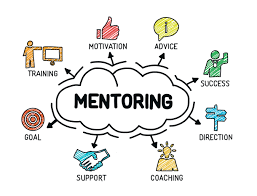
Dr. Phillips-Jones says that effective mentoring requires more than common sense. Her research indicates that mentors and mentorees who develop and manage successful mentoring partnerships demonstrate specific and identifiable skills that enable learning and positive change to take place. She notes that unless a fairly structured process and specific skills are applied, mediocre relationships occur.

The paper offers a mentoring skills model that’s widely used in many businesses, large and small. It’s as close to a mentorship blueprint that’s out there. Here are the four primary or core mentor skills:

Listening Actively — A mentor must know their protégé’s interests and needs. Active listening is the most basic mentoring skill. When an understudy feels they are being heard and understood, they develop trust and this allows the relationship to grow.

Building Trust — The more the student and teacher trust each other, the more committed they’ll be to building their relationship and mutually benefiting from it. Trust develops over time if partners respect confidentiality, spend time together, cooperate constructively, and the mentor offers encouragement.

Determining Goals and Building Capacity — The mentor acts as a role model. They already have the experience required to lead which is done by setting goals and building competencies. Mentors act as resources or find them for their charge, impart knowledge, help with broader perspectives, and inspire the mentoree.

Encouragement — Dr. Phillips-Jones says giving encouragement is the mentoring skill most valued by protégés. She gives encouraging examples like favorably commenting on a mentoree’s accomplishments, communicating belief in the protégé’s growth capacity, and positively responding to inevitable frustrations.

The paper goes on to give practical advice on building a mentorship program. It states like most relationships, mentoring progresses in stages with each stage forming an inherent part of the next. Here are the four stages that frame a modern mentorship program:

Stage I — Building the Relationship
Stage II — Exchanging Information and Setting Goals
Stage III — Working Toward Goals / Deepening the Engagement
Stage IV — Ending the Formal Mentoring Relationship and Planning the Future

Dr. Phillip-Jones’s paper drills deep into developing each stage. It’s far more than a blog post can handle. If you’re interested, the Center for Health and Leadership has another paper titled Mentoring Guide — A Guide for Mentors which you can download for bedtime reading.

My Google trip took me to a place called Masterclass. You might have heard of it. I found a short but sweet post called How to Find and Choose a Writing Mentor. It opens with a cool definition: A writing mentor is an experienced writer who shares their wisdom with a new writer as they begin their career. The mentor provides support through regular meetings, either in person, on the phone, or online. A mentor will help a new author develop their voice and improve their writing skills by reviewing and critiquing their work. The mentor acts as a resource for ongoing support and creative growth.

How to Find and Choose a Writing Mentor itemizes six benefits of having a writing mentor. They are:

A mentor holds you accountable.
A mentor inspires you.
A mentor improves your writing skills.
A mentor supports your career path.
A mentor helps develop your voice.
A mentor helps you make decisions about publishing.

Besides the benefits, the post lists four things to look for in a writing mentor. These are:

Experience
Commonality
Accomplishments
Availability

And the article ends with four tips for finding a writing mentor. Here you go:

Find a writing community.
Become a member of a writing organization.
Take classes in person
Find a mentor online.

Do, or did I, have a writing mentor? Of course, I have. My number one inspiration has, is, and always will be Napoleon Hill’s classic works Think and Grow Rich. Some say Napoleon Hill was one big con-job, but say what you like—Think and Grow Rich is magic mentorship at its finest. There’s stuff in there that’ll change your life. Believe me, I know.

Stephen King is also my mentor. Now, I don’t pretend to know Stephen King personally, just as I never knew Napoleon Hill. What I’ve got from Stephen King’s works and his classic On Writing is a lifelong course in the craft. Here’s a post I recently wrote on my personal blog at DyingWords.net which is titled Stephen King’s Surprisingly Simple Secret to Success.

The Kill Zone is a mentorship in progress. I think that’s the ultimate goal of the Kill Zone — writers sharing their skillsets with other writers. That’s what I try to do around this place. I find it rewarding to help other writers help themselves, and I’m sure most writers feel the same thing. Especially Kill Zone writers.

I want to call out two Kill Zone contributors who act as mentors. One is James Scott Bell, or JSB, who has a lifetime with his butt in the chair and his fingers on the keys. Jim has a wealth of knowledge in his craft books, and his posts always lift me up. That’s mentorship.

The other is Sue Coletta. This totally unselfish gem is somewhat at the same writing career stage as me, and we act as peer mentors. My wife, Rita, calls Sue my “other wife”.

What about you Kill Zoners? Do you have mentors? Have you worked with mentors? Are you now mentoring someone else? And would you mentor someone if given the opportunity? Don’t be shy with your comments!

——
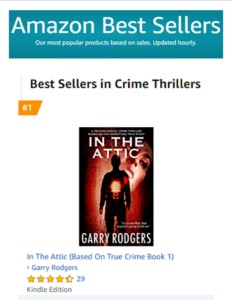
Garry Rodgers is a retired homicide detective with a second career as a coroner. Now, Garry’s a crime writer and indie publisher of sixteen books including an international bestselling based-on-true-crime series.

Outside of writing, Garry Rodgers is a certified marine captain and enjoys time putting around the saltwater near his home on Vancouver Island in Canada’s Pacific Northwest. Follow Garry on Twitter and check out his popular blog at www.DyingWords.net. BTW, In The Attic is FREE on Amazon, Kobo, and Nook.
Fun Hunting A Killer

Fun Hunting A Killer
Terry Odell

Hunt a Killer

(No, I haven’t forgotten that it’s St. Patrick’s Day. More about that at the end of this post).

Thanks to stumbling across a friend’s post on Facebook, the Hubster and I discovered a new project. We’d gone the jigsaw puzzle route, but this was something different.

What are we doing? Solving a murder. It’s called Hunt A Killer. What is it? A detective game. You can play alone or with others.

Here’s the setup:

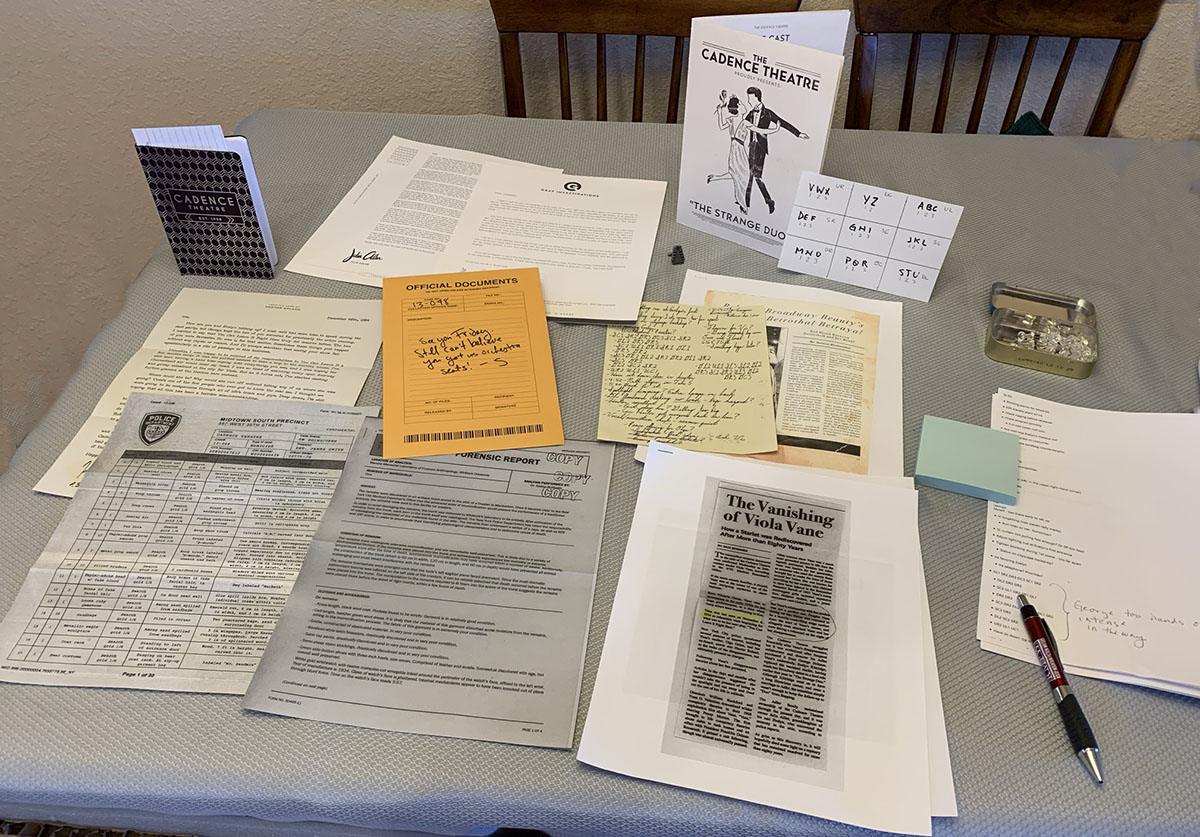
Private investigator Michelle Gray needs your help with yet another perplexing mystery. A woman named Julia Adler has recently found a mummified corpse in the attic of her family-owned theater. The remains belong to the famed actress Viola Vane, who notoriously disappeared in 1934. Now that Vane’s body has been unearthed after decades, you can finally investigate the million-dollar question: Who orchestrated the vanishing of Viola Vane?

Here’s how it works:

Each episode ends with your action to piece together another aspect of the overall mystery. In Curtain Call, this isn’t just about finding evidence and eliminating suspects. You’ll be called upon to uncover all aspects of the case – including the suspects’ secrets and their relationships to Viola, as well as to one another. Follow your contact’s assignments to advance the investigation, but examine every document closely to reveal the full story of the Cadence Theatre.

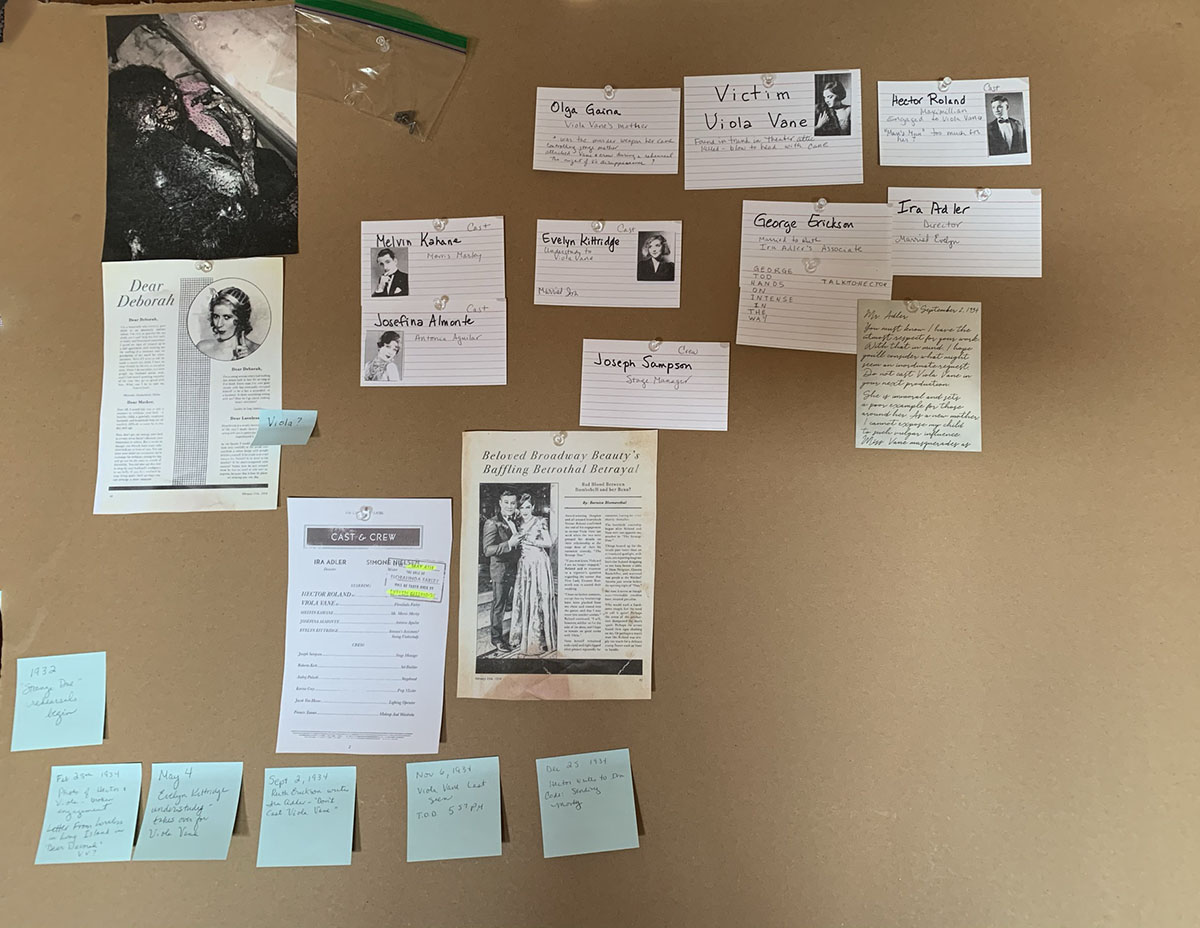
Hunt A KillerOnce a month, for six months, we get a box of evidence and clues. Of course, some will be red herrings. Each box comes with an objective. For box one, it was to determine the murder weapon. We sifted through forensics reports, newspaper clippings, theater programs, stage notes. There are more clues on the website dedicated to each crime. Of course, finding the monthly objective isn’t enough, because each month’s evidence will build on the previous months’.

Hunt A KillerWe’ve set up a murder board (honestly, I think this is what convinced the Hubster this could be fun), solved different kinds of ciphers, started a timeline, come up with potential suspects, worked on the relationships between everyone…and there’s more.

Since this is an 80-year-old case (created for the game), there are no survivors who can answer questions. We have to rely on what’s in our evidence boxes, or on the website where some more transcripts and pictures might be hiding more clues. Oh, and there are Facebook groups for each episode where people can ask questions if they’re stumped. It’s moderated to avoid spoilers.

Did the forensic anthropologist leave out relevant information? Who wrote the rehearsal notes? Is the shopping list jotted in the middle of those notes a clue? Do the dog roses refer to an incident in the play as an inside joke for the cast and crew, or will they be important? What about the letters to “Dear Dorothy” in the newspaper clipping? Why did the understudy take over Viola’s role? There’s a ton of information to sift through, and this is only box 1!

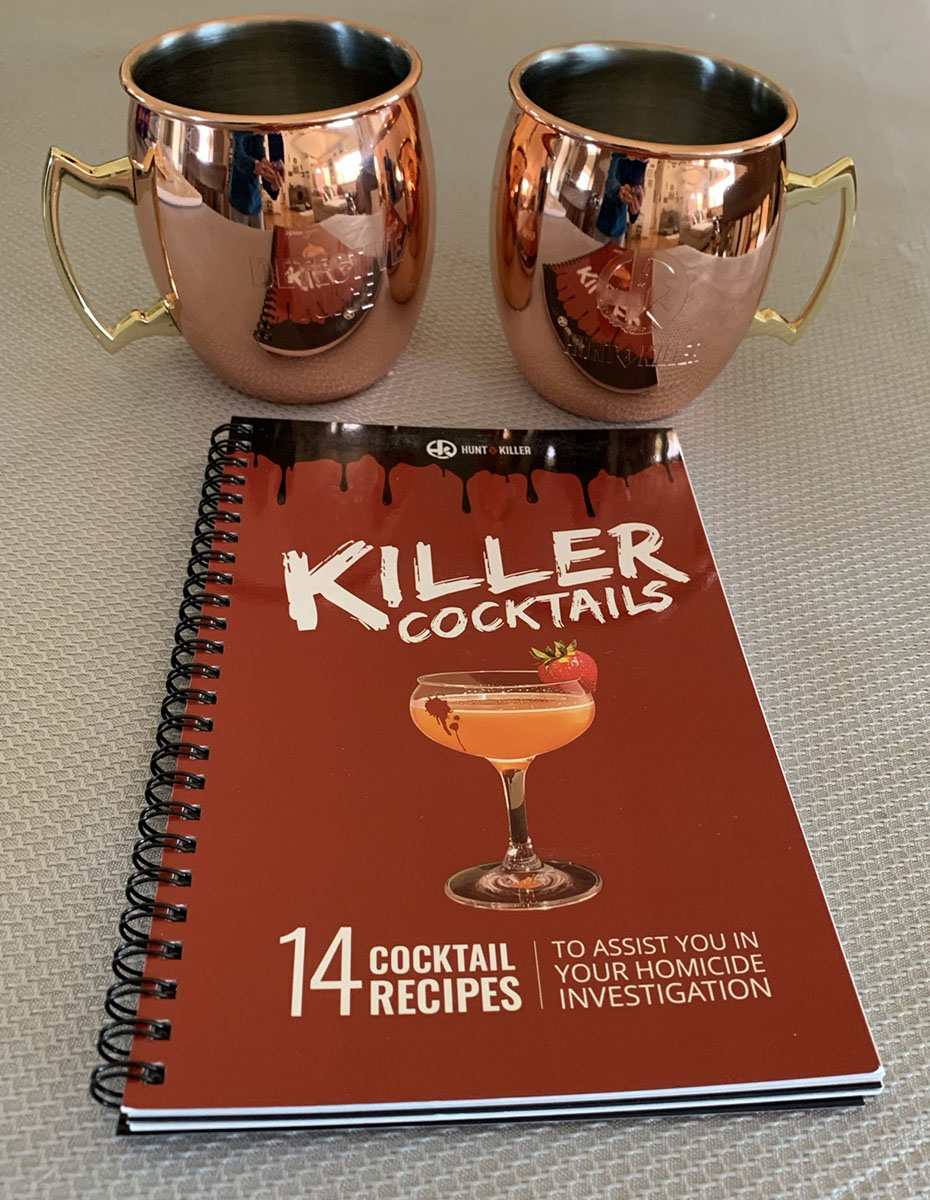
In addition to the game itself, they give you drink recipes and a Spotify playlist to get you in the mood. And gifts. We got a cocktail recipe book and two copper mugs.

Hunt A KillerWe’ve been having as much fun testing the libations as we have trying to interpret evidence.

We’ve only completed the first box so I can’t go into much more detail. If you want to move faster, there’s the option to expedite the next box once you’ve met the objective, but we’re letting things play out on the monthly schedule because there’s so much more to ferret out. I’m not going to go into specifics about what we’ve discovered in case anyone here at TKZ wants to give this a try. If you’re writing mysteries, you should already have the mindset for crime solving, and it’s a great way to keep those deductive processes honed.

Disclaimer: I’m sharing this because the Hubster and I have been having so much fun, and I thought some TKZers might like to know about it. (Of course, there are probably a bunch of you out there who wonder why I’m so late to the party.) I get nothing from the company for talking about their program.

St. Patrick's Day

As promised: Since it’s St. Patrick’s Day, I thought you might be interested in how it’s celebrated in Northern Ireland, where my daughter lives. Hint: There’s no green beer.


Terry Odell is an award-winning author of Mystery and Romantic Suspense, although she prefers to think of them all as “Mysteries with Relationships.” Follow her on Facebook and Twitter.

Deadly Options

Are Gordon’s Days in Mapleton Numbered?

Deadly Options, a Mapleton Mystery/Pine Hills Police crossover.

First Page Critique – They Call it Street Justice


San Quentin
Photo credit: wikimedia

by Debbie Burke

@burke_writer

Today, let’s welcome another Brave Author who submitted a first page for feedback and suggestions. The genre is Private Eye Mystery. Please enjoy reading then we’ll discuss.

They Call it Street Justice

I parked at the curb in front of San Quentin even though it was a No Parking zone.  I leaned against the front fender of my Ford and lit up a Camel.   Several people came and went.  Most looked like lawyers.  Big briefcases, fedoras, and shiny shoes.  Each time someone came out, I compared them to the photograph Walton Finesse Smith, Lawyer had given me of  Harold Darby.  Good old Harold  probably look different now.

No matches so far.

I smiled at the guard stationed outside the front door.  I could tell he was pissed because I told him that Governor Gordon Knight had given me special permission to park at the curb.  I’d given him the Governor’s business card with ’Special Permission” handwritten on the back.  He still didn’t believe me, but couldn’t figure how to prove I was fibbing to him.

Ten minutes and two Camels later, a gray-haired geezer who could have been my man stepped out into the sunshine.  He sighed.  I crushed out my cigarette out the bottom of my loafer.

“Are you Harold Darby?”

“Yeah.  Who the hell are you?”

“My name is Jack Rhodes.  I work for your lawyer.  He asked me to meet you and bring you to his office.”

“Doing what?”

“I don’t understand.”

“What do you do for my lawyer.  I’m not getting into a car, no matter how sharp it is, until I know who’s doing the driving.”

Tough guy.  “Usually, I do investigations for him.  Today, I’m your chauffeur.”

“Why didn’t he come?”

“Hell if I know. Lawyers. What can I say?”

He shrugged.

“Anyone else plan to meet you?”

A half-hearted laugh slipped out. “No.  No one else gives a damn.”

“Your wife?”

“I doubt it.”

We piled into the Ford.

“Beautiful day,” he said.

I put the convertible top down.  Darby didn’t say anything, but he seemed to enjoy to wind in his hair.

“You hungry?  There’s a good place for burgers and shakes in Richmond.”

“I didn’t kill him.”

“Yeah?  Why did they lock you up in the big Q?  Practical joke?’

“I don’t like you.”

I get that a lot.”  I stopped at the stop sign. Then turned toward the highway to Richmond.  “Look pal, it’s going to be a long drive back to Los Angeles and I don’t need you ragging on my ass all the way.  You want the burger?

~~~

I always enjoy retro hard-boiled noir. We meet Jack Rhodes, a wise-cracking, smartass detective on a mission to pick up a newly-released convict at San Quentin prison. Rhodes’s employer is a lawyer with the nifty name of Walton Finesse Smith who wants to meet with his client, Harold Darby.

The Brave Author has done a good job of avoiding the dreaded info dump that bogs down many first pages. Details are slipped in seamlessly but a little too sparingly. The reader could use more information, like when the story is happening.

Except for the mention of former California Governor Knight (BTW, the correct first name is Goodwin, not Gordon), the time is not specified. Knight’s term ran from 1953-59 but few readers will know that w/o looking it up. I suggest pinning down the era with a year. For instance, you might identify Rhodes’s car as, say, a 1956 Ford Fairlane Sunliner.

Instead of saying “Darby had been in San Quentin for XX years,” the author uses a barely-recognizable photo to show how Darby has changed during a long prison sentence. Well done.

The author might further use the photo to describe what Darby looked like in his younger days, then contrast that appearance with how he looks now.

The “special privileges” card from the governor is another hint that’s smoothly inserted, implying either Rhodes or his boss enjoys political influence. That establishes the detective as higher on the food chain than the stereotypical hard-luck gumshoe. The reader’s curiosity is tickled—why did the governor grant that status? What’s the backstory?

More intriguing questions are raised when Darby claims “I didn’t kill him.” Murder usually earns a life sentence so why is Darby being released? Why does Walton Finesse Smith want to see his client now? Was a deal cut with the governor? Who is the victim?

Generally, the Brave Author has achieved a good balance between raising curiosity and avoiding confusion. This page intrigues but doesn’t overwhelm. With too little information, the reader becomes mystified and frustrated. With too much, the story bogs down. Enrich this page with a bit more detail and it will be even more effective.

Although not a great deal of action happens on this first page, there is still a good sense of forward momentum in the story.


I color-coded suggested edits.

Blue is the original text.

Red demonstrates ways to combine sentences and rearrange the order to convey information more concisely.

Green indicates possible ways to go deeper into Rhodes’s POV, revealing more of his thoughts and reactions to give the reader more insight into his personality.

I parked at the curb in front of San Quentin even though it was a No Parking zone.  I leaned against the front fender of my Ford and lit up a Camel.   [suggest you move the following passage to later] Several people came and went.  Most looked like lawyers.  Big briefcases, fedoras, and shiny shoes.  Each time someone came out, I compared them to the photograph Walton Finesse Smith, Lawyer had given me of  Harold Darby.  Good old Harold  probably look different now.

To quickly establish that Rhodes flouts rules and has political influence, the author could rearrange the order as shown below:

I parked in the No Parking zone at the curb in front of San Quentin, got out, leaned against the front fender, and lit up. Before I finished my first Camel, the guard glared at me and approached. I flicked Governor Goodwin Knight’s business card at him. “The governor sends his greetings,” I said then indicated the handwritten notation on the back. It read: Special Permission.

The guard’s sneer said he didn’t believe me but he couldn’t figure out how to prove I was fibbing to him. He returned to his post at the gate, still casting suspicious glances at me. I smiled. He didn’t smile back. 

Several people came and went.  Most looked like lawyers.  Big briefcases, fedoras, and shiny shoes.  Each time someone came out, I compared them to the photograph [that] Walton Finesse Smith, Lawyer had given me of  Harold Darby.  Good old Harold  probably look[ed] different now.

            No matches so far.

The above paragraph could be tightened like this:

I smoked another Camel while I compared a black-and-white photo with the few men who walked out of the gate. Most looked like lawyers—big valises, fedoras, and shiny wingtips. No matches so far. 

Walton Finesse Smith, Attorney at Law, had given me the snapshot to identify Harold Darby. Good old Harold probably had a few more miles on him since the shot was taken. San Quentin did that to a guy.


            Ten minutes and two Camels later, a gray-haired geezer who could have been my man stepped out into the sunshine.  He sighed.  I crushed out my cigarette on out the bottom of my loafer. 

            “Are you Harold Darby?”

Make clear that Darby came through the prison gate. Also give Rhodes’s reaction to the man.

A gray-haired geezer who might be my man stepped through the prison gate into the sunshine. Looked like 80 but was probably 60. He sighed.

I crushed out my cigarette on the sole of my loafer and walked toward him. “Are you Harold Darby?”

            “Yeah.  Who the hell are you?”

            “My name is Jack Rhodes.  I work for your lawyer.  He asked me to meet you and bring you to his office.”

            “Doing what?”

            “I don’t understand.”

            “What do you do for my lawyer?  I’m not getting into a car, no matter how sharp it is, until I know who’s doing the driving.”

Use this opportunity to set the time period with a short description of Rhodes’s car.

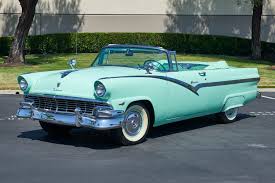
“What do you do for my lawyer?” He eyed my aquamarine ’56 Ford Fairlane Sunliner. “I’m not getting in a strange car, no matter how sharp it is, until I know who’s doing the driving.”

            Tough guy.  “Usually, I do investigations for him.  Today, I’m your chauffeur.”

            “Why didn’t he come?”

            “Hell if I know. Lawyers. What can I say?”

Describe Darby through Rhodes’s eyes.

I scanned Darby’s features, deeply-lined forehead, gray eyes sunken in dark hollows. “Anyone else plan to meet you?”

A halfhearted laugh, more like a gag. “No one else gives a damn.”

“Your wife?”

“Especially not her.”

We piled into the Ford.

“Beautiful day,” he said. Delete dialogue that doesn’t move the story forward.

            I put the convertible top down.  Darby didn’t say anything, but he seemed to enjoy to wind in his hair.

[Needs attribution] “You hungry?  There’s a good place for burgers and shakes in Richmond.”


Combine sentences to condense action. Add more of Rhodes’s thoughts about Darby.

We piled into the car and I lowered the convertible top. As I drove, he raised his face to the bright sun. How long since Darby had felt a breeze blowing his hair?

“I didn’t kill him.”

What is Darby’s tone? Defensive, bitter, defeated? Does he spit out the words? Or is he weary after repeating the denial a thousand times?

The statement signals what is likely the main plot problem—the wrongly-convicted, innocent man. Because that is a common trope in PI fiction, look for ways to give it a fresh angle.  

What is Rhodes’s internal reaction to Darby’s denial? Is there an unusual hint in Darby’s manner or tone that raises Rhodes’s interest?

“Yeah?  Why did they lock you up in the big Q?  Practical joke?”

Make Rhodes’s retort sharper. “Yeah, damn shame about you and all those other innocent guys in the big Q.”

            “I don’t like you.” Show Darby’s reaction with facial expression or gesture.

            [Missing quote] “I get that a lot.”  I stopped at the stop sign. Then turned toward the highway to Richmond.  “Look, [missing comma] pal, it’s going to be a long drive back to Los Angeles and I don’t need you ragging on my ass all the way.  You want the burger?” [Missing quote]

Suggest you cut the phrase ragging on my ass all the way. It doesn’t fit since Darby has mostly been neutral or quiet until Rhodes challenges his profession of innocence.

“I get that a lot.”  I braked at a stop sign then turned toward the highway to Richmond.  “Look, pal, it’s a long drive back to Los Angeles. You want the burger?”

General suggestions:

The title They Call it Street Justice sounds weak because “They” and “It” are vague pronouns. Who are They? What is it?

Street Justice is a stronger title but has already been used for books, TV shows, and movies. Maybe someone can suggest better title ideas in the comments.

Ending a name with an “S” adds unnecessary complication in the possessive form and makes editing consistency tough—hard to remember if you used Rhodes’ or Rhodes’s. Also, in audiobook form, Rhodes’s sounds awkward. For those reasons, I try to avoid names that end with “S”.

Rhodes seems a bit flat as a character. Try to add more of his thoughts, feelings, and reactions. He doesn’t necessarily have to be likable but give the reader a reason to follow him through the story.

When setting a story in the past, carefully check historical references (like Governor Goodwin Knight’s name). Factual errors undermine the reader’s trust.

There are several places with extra spaces after words or missing punctuation. Also, use only one space after a period, rather than two. Those of us who learned to type on a typewriter have trouble breaking that old habit. However, two spaces after a period in an ebook causes formatting to go wonky.

The author withholds information but offers enough details that the reader can follow what’s going on without becoming confused and frustrated. That’s a tough balance to achieve but this page succeeds. Well done!

This is a promising start with a strong sense of forward momentum. Thank you for sharing, Brave Author!

~~~

TKZers: Does this first page draw you in? Do you have suggestions for today’s Brave Author?

Many years’ worth of First Page Critiques are available in TKZ’s library in the top main menu bar. Writers often say reading critiques of others’ work helps them spot problem areas in their own. Check out the free, useful resource at this link

~~~

Side note: I recently interviewed Tillman Rosenbaum, the brilliant, cynical attorney in my Tawny Lindholm Thriller series. Over Tillman’s vigorous protests, the interview was published on The Protagonist Speaks and you can read it here. Thanks again to Assaph Mehr!


First Page Critique – The Trouble with Vivian

Happy snowy Monday!

Today’s first page critique is for a submission entitled The Trouble with Vivian and it’s a hard boiled mystery – a quick disclaimer, I am by no means a hard-boiled mystery aficionado, so I will be looking to my TKZ colleagues and community to provide more input in terms of the genre. As with any first page, however, there are a number of key factors that contribute to its success (irrespective of genre) so I hope my comments prove useful to our brave submitter. My feedback follows the submission – enjoy!

The Trouble with Vivian

I stab the red icon on my smart phone.

“Miserly witch.” This month’s rent is only five days late and already she’s talking eviction. I resist the urge to throw the phone across the room, instead slamming it on a pile of unfiled dead case folders. Of course, I still owe her for last month and she has little tolerance for the rain or drought nature of a private investigator’s business. She threatens eviction with more regularity than pigeons shitting on park benches. This time, though, the old biddy claims to have someone interested in my office—as if anyone would want to climb six flights of stairs every day for this rat-hole.

A sigh escapes me. Five days or fifty, what difference does it make? I haven’t landed so much as a missing tabby in months and my bank account is more shriveled than a year-old prune.

I pace.

Wind rattles the only window and I use two nail-bitten, decidedly unladylike fingers to separate a pair of horizontal blinds. Typical Buffalo—leaves swirling on heavy gusts offer the only color on an otherwise dreary grey fall morning.

Five floors below a uniformed man, dark hat obscuring his features, closes the back door of a black Lincoln parked in front of the building’s main entrance. Even alley cats avoid this neighborhood, so I can’t imagine what a chauffer-driven car is doing here.

Surely nothing to do with me.

I return to pacing.

Until the click of heels catches my attention. Frosted glass offers the silhouette of a woman standing right outside my door. She hesitates. A delicate hand lifts and pauses, dangling like the proverbial participle.

While she fights with herself, dollar signs and desperation kick me into gear. I quickly straighten my desk, assembling scattered files into one neat stack atop my in-basket, and then drop into my chair. A spring poking through cracked leather digs into my ass and I bite back a curse. I grab my cell and press its dead, black face to my ear.

“Yeah, yeah. Sure. No worries.” I hope the woman hears—anticipation has my heart pounding and stomach doing the Superman coaster. At last the shadowy hand hesitantly taps on the glass “It’s open.” The knob rattles and hinges squeak. Without looking, I hold up one finger toward whoever enters.

“Hey, Eddie. Gotta run. Don’t worry. I got this.”

Overall Comments

I enjoyed this first page and felt it had the requisite cynical voice and tone that fits the hard-boiled genre. There were some great one-liners that definitely helped reel me in. I particularly liked: “She threatens eviction with more regularity than pigeons shitting on park benches” and “A delicate hand lifts and pauses, dangling like the proverbial participle.”Overall, I think the author did a good job setting the scene for the case to come and demonstrating how desperately the protagonist needs it to make ends meet. I also liked that this hard-boiled PI is a woman:)

That being said, I did feel there was an element of predicability to this first page and some repetition in terms of the protagonist’s financial predicament. I think the ‘less is more’ adage applies here and some judicious editing in the first few paragraphs could help streamline this first page and make it stronger. In terms of the scene, I guess I was just a little concerned (and this is where I’ll need TKZers to help weigh in) that it sounded very much like the start of any number of hard boiled mysteries – a deadbeat PI desperate for a break receives a mysterious client who will change everything…so I wonder if the author is starting the story in the right place (?) as this beginning could seem a bit cliched.

One nit pick – what is the red icon on the phone? I kept looking at mine and wasn’t quite sure what this meant (I have red ‘bubbles’ indicating  when I have a new email or text message but none of those icons themselves are red). For me (and it might be that I’m just a bit dense!) this diminished the strength of the first line as I was puzzling what it meant.

Overall, this first page displayed some good writing chops and I liked the crisp and observant way the scene was laid out. For me, this page definitely has the ‘noirish’ feel of the genre and the protagonist is already compelling. I would definitely keep turning the page to read more!

So TKZers what feedback would you give our brave submitter?

The Period is Your Friend

by James Scott Bell
@jamesscottbell

Image by David Frampton from Pixabay

It’s a First-Page Critique bonanza here at TKZ. This one was submitted as a thriller. See you on the other side of the waters.

Turbulent Waters

In fluid dynamics, turbulent flow is motion
Characterized by chaotic changes in pressure.

Jake Burton knew next-to-nothing about diesel maintenance, but he knew about the marine mechanic’s thirst for Canadian whiskey, and he knew even more about the fine art of negotiation with thirsty men. 

“I dunno, Jake. State law says every boat’s gotta have a certified captain and a licensed and bonded mechanic aboard. Fines are high if the Coast Guard catches you.”

“Nobody’s going to catch me—you said it yourself, the engine in that boat is running smooth, and the trip only lasts four hours. You’ll be back on board for the afternoon tour.” Jake pressed the knuckle of his thumb against his upper lip to stop an itch, then pulled a fifty from his wallet, slapped the worn leather shut, and handed the bill to the other man. “Take the morning off. Go get yourself a big breakfast.” 

The mechanic took the bill and stuffed it into the pocket of his oil-stained coveralls. He scratched his head. “I’m just not sure. I could lose my job—”

“Okay, look, here’s another twenty. Honest, that’s all I’ve got. You’ve officially cleaned me out.” He pulled a lone bill and stood for a moment holding the empty wallet wide in illustration. “But, I do have a little something else you might like.” 

The man took the bill, pushed it into his pocket with the fifty. “What’s that?”

Jake pointed his thumb over his shoulder. “See that blue Ford pickup in the lot? Well, there’s a brand-new bottle of Crown Royal still in the box under the passenger’s seat. I could toss that in to sweeten the pie.” 

The mechanic shielded his eyes against the bright morning sunlight and looked across the marina parking lot. “You mean that old beater?”

Jake nodded and tilted his head. “Deal?”

The mechanic shifted from one foot to the other, pulled the lobe of his left ear, and sighed. “Yeah, okay, deal. Just make sure you bring my box back the minute you get off the boat. And don’t lose any of my tools overboard.” Without another word, shuffled off to the blue truck, the purple box, purple bag, and golden liquid.

Jake dug through the contents of the borrowed toolbox, but was interrupted by the threatening notes of Mussorgsky’s “Night on Bald Mountain”—the ring tone he’d chosen for his ex-wife’s number.

***

JSB: On a macro level, I like this scene. It’s active (dialogue is always an action) and there’s a disturbance—a criminal enterprise is afoot and an angry ex-wife is calling! I certainly would turn the page to find out what she has to say, and what Jake’s boat trip is all about. I get a Florida-noir vibe from this, which is John D. MacDonald territory. I’m interested.

Now let’s see if we can’t do some editing which will ratchet up that interest for the reader. Beginning with your epigraph.

You probably know that an epigraph normally goes on its own page. That’s what I’d advise here, as it gets in the way of the active opening. Also, the way you have it makes it look like lines from a poem (the capital C in Characterized). Surely it’s not, unless it’s the worst poem ever written. So why is it broken up that way? It should be: In fluid dynamics, turbulent flow is motion, characterized by chaotic changes in pressure.

Further, an epigraph always requires a source. Thus:

In fluid dynamics, turbulent flow is motion, characterized by chaotic changes in pressure. — Diesel Maintenance For Dummies

A good epigraph should entice the reader, raising the question What does this have to do with the plot? and somehow preview the tone of the story.

Thus, I actually like this quote because it does those things, especially the last part, chaotic changes in pressure. Two good things in a thriller. Just put it on a stand-alone page and tell us where the quote comes from.

On to the first line.

Jake Burton knew next-to-nothing about diesel maintenance, but he knew about the marine mechanic’s thirst for Canadian whiskey, and he knew even more about the fine art of negotiation with thirsty men. 

An often overlooked aspect of the craft of fiction is the shaping of sentences for greater effect. I’ll start off with this tip: The period is your friend! Use it like voting in Chicago: early and often.

This is especially important in thrillers, because you want the prose to pack a punch. One sharp jab or left hook is better than three glancing blows. I feel you opening line  is like the latter—it’s three sentences strung together. That’s a lot of work for the reader. Yes, there will be times when you want to use a more complex sentence structure, but I’d advise you not to do it off the bat.

And consider another aspect of the effective sentence: the right word to end with. You should always end with the most potent word or phrase, for the obvious reason that it will more forcefully compel the reader to keep reading.

Here’s a suggested edit:

Jake Burton knew next to nothing about diesel maintenance, but he knew about the marine mechanic’s thirst for Canadian whiskey. 

Whiskey is a strong word to end on. It’s got a good sound. It also raises a mystery in the reader’s mind: How is Jake going to entice this mechanic, and why? Leave it there. Lose the part about negotiation. That’s telling us what we’re about to see. Let the action of the scene do the work.

Notice also that I removed the hyphens from next to nothing. You don’t use hyphens to connect words unless they are being used as an adjective, e.g., Florida-noir vibe; minority-owned business.

So get in the habit of looking for alternative sentence endings. I wouldn’t do this while you’re actually writing, because you want to be in flow. That’s why I like to edit my previous day’s work before I start in again. It’s the best time for me to look at my sentences.

Now, after that first line, which is in Jake’s POV, the next action (and remember, dialogue is action) should be from Jake. Having the mechanic talk first is a slight jolt to our expectations. Not fatal, but it does require a bit of readjustment as we read. Instead, you can simply reshuffle some of the dialogue. I’ll do a little of it to show you what I mean:

Jake Burton knew next to nothing about diesel maintenance, but he knew about the marine mechanic’s thirst for Canadian whiskey. 

“See that blue Ford pickup in the lot?” Jake said. “There’s a brand-new bottle of Crown Royal still in the box under the passenger’s seat. I could toss that in to sweeten the pie.”

The mechanic shielded his eyes against the bright morning sunlight and looked across the marina parking lot. “You mean that old beater?”

“Deal?”

“I dunno, Jake. State law says every boat’s gotta have a certified captain and a licensed and bonded mechanic aboard. Fines are high if the Coast Guard catches you.”

“Nobody’s going to catch me. You said it yourself, the engine in that boat is running smooth, and the trip only lasts four hours. You’ll be back on board for the afternoon tour.”

Notice a few edits. I put in said as a dialogue attribution. You don’t have any in this entire page. I fear you may be falling for the It’s more skillful and literary never to use any dialogue attributions at all trap. It’s a trap because you end up using a lot of innocuous action beats to indicate who’s speaking. Like Jake nodded and tilted his head (which is something I have trouble picturing). Every time you do that the reader has to do a little “work” to form a picture. They’re also subconsciously wanting to know the significance of it. If it’s only to clue us in to who’s talking, that creates an unneeded burden for the reader.

I once read a novel by a friend who had boasted to me about not using a single said. About halfway through the book, I kept wondering why I felt tired reading it. Like it was a bit of a slog (not a good thing for a thriller). That’s when it hit me. Instead of said I was getting a lot of pulled his earlobe and tapped the desk with a pencil and crossed his legs. None of those things had any significance to the story. They were just substitutes for said. The pictures were wearing me out.

The beauty of said is that it does its job almost invisibly and then politely gets out of the way. It doesn’t require any reader effort. Use action beats on occasion for variety, yes. But make sure they reveal something relevant, like the character’s emotion:

Danny spit out his coffee. “You did what?”

Here’s another sentence that takes some effort: Jake pressed the knuckle of his thumb against his upper lip to stop an itch, then pulled a fifty from his wallet, slapped the worn leather shut, and handed the bill to the other man.

Yeesh, that’s four actions in a single, run-on sentence. Is it really crucial for us to know that Jake suppressed an itch? Or that he slapped his wallet shut? Maybe this pays off later, but if not I don’t see any point. Call in your friend, the period, once again:

Jake pulled a fifty from his wallet. “Take the morning off. Go get yourself a big breakfast.”

The mechanic looked at Ulysses S. Grant. “I could lose my job—”

I took out the bit where the mechanic stuffs the bill in his pocket, because if he’s thinking he could lose his job, he wouldn’t accept the deal yet. I do, however, I like the detail of the oil-stained coveralls, as it adds to characterization. How about this:

Jake pulled a fifty from his wallet. “Take the morning off. Go get yourself a big breakfast.”

The mechanic looked at Ulysses S. Grant. “I could lose my job.”

Jake stuffed the bill in the pocket of the mechanic’s oil-stained coveralls. He pulled a last bill from his wallet. “Here’s another twenty.” [Etc.]

I hope you see the value of the period, and punchier sentences. Which doesn’t mean you shouldn’t use variety. There’s no rule. Just listen to the sound and see if you can’t break up a longer sentence into two shorter ones. And end with a strong word or phrase.

Speaking of that variety, I like the last line, for it uses my beloved em dash. But I think there’s a stronger way to end it: 

Jake dug through the contents of the borrowed toolbox, but was interrupted by the threatening notes of Mussorgsky’s “Night on Bald Mountain”—the ring tone he’d chosen for his ex-wife.

Since you tell us it’s a “ring tone” we don’t need the added bit about this being her number. And ex-wife is a snappier way to end the sentence. You might even experiment with simply ex, which everyone understands. How to choose? Say it out loud a few times, and also (this is the key): how would your character say it? You want your narrative sentences to sound as much like the POV character as possible.

The difference your re-worked sentences make will be the difference between a good read and a great one—and it’s great reads that make a career.

Again, I like this setup. I’m interested in hearing what Jake’s ex-wife has to say, and what sort of caper he has in mind with the boat. With some editing, you can turn my interest into page-turning compulsion.

And now for a snappy way to end my critique: The End.

Comments welcome.

Cleaning up the Story Trail for Beta Readers

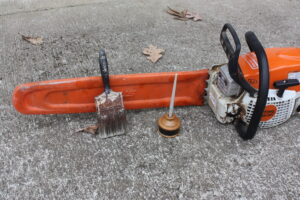
The Pen is Mightier than the Chain Saw

or

Offering the Paint Brush

Our discussion today is about clean-up editing and preparing for beta reading. We’ll start with an analogy, then go off on a tangent.

Our brains are wired to think in terms of analogies, at least mine is. Analogy is defined as a “comparison between two things for purposes of explanation or clarification.” Whenever I come across a new concept, I compare it to something I already know, looking for similarities and differences. I add that concept to my knowledge as another layer, and hope that my knowledge will continue to grow.

Recently two things hit my brain at the same time, and the boys in the basement went to work. When I woke at my typical 2:00 am hypomanic insomniac moment, the time the boys usually let me know what they’ve come up with, I discovered they had been working on something I had not assigned to them—cleaning up the forest trail and preparing my rough draft for beta reading. Two wildly different things, right? I was surprised, but I listened.

I had just finished the rough draft of my WIP, and was hurrying to get it ready for beta readers, so they could work on it during spring break. I had also just surveyed the mess in the forest trail behind our house. The February snow had finally melted, and I could see what I had to clean up.

The boys argued that cleaning up the trail was a good analogy to pre-beta editing. The small branches that could be tossed to the side were similar to easy fixes, spelling and punctuation. Larger branches that needed a cut or two with the chainsaw so they could be moved were similar to larger fixes such as sentence structure and better word choices.

The big branches that needed to be cut up and stacked for firewood were like scenes and paragraphs that needed to be reworked. And finally, the entire trees that had fallen on the trail during the winter, and would require a tractor and chain, lots of cutting, and then splitting, were like whole scenes and chapters that needed to be removed.

On the addition (vs. removal) side, “washouts,” where heavy rain had removed dirt and part of the trail, requiring front-end loader work with the tractor to borrow dirt from elsewhere, were like plot holes in the story that needed new scenes or chapters.

Well, I agreed with them, and thought maybe this could be a subject for a blog post, looking for analogies for our editing. But something told me it wasn’t significant enough. There wasn’t enough meat on that bone.

As I was finishing the preparation for beta reading, I had some new thoughts, even without help from the boys. And this is the tangent we’ll explore today.

But, before we depart on our tangent, I want to reference a great article on beta reading, “15 Questions for Your Beta Readers.” This article can be found in the archives of this blog site, but here’s a link. The author, Jodie Renner, is an editor and former blogger here at TKZ. Other great posts on beta reading can be found by using the search box at the top right.

So, now for the tangent. In my final preparations for uploading my manuscript to the beta reading site (https://betabooks.co) I realized that I didn’t have to work so hard. I could ask the beta readers to do some of the work for me. Actually, I came up with some ideas to motivate the beta readers to read and comment. We’ll call them “Tom Sawyer Paint Brush Techniques.”

  1. Chapter Titles. I know thrillers don’t usually have chapter names, but in middle-grade fantasy the readers expect some imaginative and creative titles. I usually don’t name chapters until my rough draft is finished, using the chapter name prior to that only as a reminder to me of what is in that chapter. On previous books, where I thought I had chosen good titles, some of the beta readers had better ideas, and let me know. So, this time, as I began to brain storm, I suddenly realized, why name the chapters? Let the beta readers come up with some name suggestions.
  2. Dangling Plot Threads – the gun above the mantle that has been shown, but not fired. I discovered a thread I had placed but never used, a broken necklace left behind by a victim when she was sucked into an alternate world. I was preparing to remove all evidence of my dementia, when I realized, why not challenge the betas to find a way to use that broken amulet?
  3. Secondary Characters of Borderline Significance. I was about to remove all traces of a secondary character, a dog, that had emotional value, but questionable plot significance. By now, the lights were coming on in this old brain, and I asked, why don’t we give the betas a vote? To stay or not to stay.

I realize I will receive some advice I don’t agree with. That’s always the case with beta reading, but with a few simple questions, I might get more options, and will learn what is popular with potential readers. And most importantly, can we make the beta reading experience more interesting by engaging the reader in helping create the story, enough that the reader will agree to read the next book. (Or even read previous books.)

So now, Dear Reader and Dear Writer, it’s your turn:


  1. Do you use beta readers in your editing process?
  2. How do you pick the readers, and how many is the ideal number?
  3. What questions, beyond what Jodie proposed in her article, do you ask of your readers?
  4. What ideas have you discovered (or even thought of today) for motivating beta readers (beyond the thank-you and rewards at the end of the process)?
  5. And if you want to share some better analogies for the editing process, comparisons better than my lame “cleaning up the trail” analogy, I’m sure my boys in the basement won’t be offended. They may even refer it up to the “girls in the attic.”

Are a Ghost’s Feelings Dead? A First Page Critique

Critiqued by Elaine Viets


Gather ’round, readers, and make sure the lights are on. Today, we’re critiquing a “murder ghost story,” a first page critique by a brave anonymous author. Read it first, and then I’ll discuss it. Here goes:


Continuing Adventures of Laurel Palmer: Murder Ghost Story

When I was a child I was afraid of ghosts.
As I grew up I realized people are more scary.

When I woke up, I was dead. It took a minute to sink in.
When it did, I sat up abruptly, immediately shooting up to the ceiling twenty feet above the first-floor landing. In a cloud of confusion, I looked down and saw myself, or what used to be myself, sprawled at the foot of the stairs. I waved my arms, wondering if that’s how I would need to propel myself in my current insubstantial form.
Actually, it only took thinking to be able to float down, where I hovered a few feet above the empty shell that used to be me. I examined the form critically. I had been beautiful, hadn’t I?
I was lying there picturesquely, almost gracefully, face up, large brown eyes wide in shock, long sable hair spread around my head like a dark halo. Or I could have pulled that off if my arms and legs weren’t bent at strange angles, and a crimson liquid wasn’t pooling on the hardwood floor, with strands of that sable hair soaking in it, and my normal olive complexion wasn’t unusually pasty, with maybe a little gray creeping in.
Nice legs, I thought, noticing that the filmy silk dress I had been wearing was halfway up my thigh, fortunately not exposing anything I…she…might be embarrassed to have on display when the appropriate authorities arrived on the scene. I tried to pull the dress lower to cover more of her exposed legs, but my hand passed right through.
Floating, both physically and emotionally, I felt only mild curiosity as I scrutinized the body on the floor. Having no lingering connection to it, I could watch it dispassionately, waiting to see if it did anything. Like breathe. I gave a soft laugh. Not likely, since I was here, and I would have been there if any life remained in the corpse.
I settled onto a step a few up from the recently deceased person, rested my elbows on my knees, and pondered the meaning of life. Or what it all means. Being dead and still here, I mean.

*****************************************************

Death is the ultimate mystery, and we all wonder what will happen when we meet our end. Our Brave Author gave us an imaginative look at the other side. This first page is readable and well-written, but I’d like to suggest some changes.
(1) Drop the italics line.
When I was a child I was afraid of ghosts.
As I grew up I realized people are more scary.

Consider using it elsewhere as an observation in your story. It takes away from the impact of your first two lines: “When I woke up, I was dead. It took a minute to sink in.”
Those lines are grabbers, and so is the next one. “When it did, I sat up abruptly, immediately shooting up to the ceiling twenty feet above the first-floor landing.”
So far, so good. This beginning shows imagination. But now the tone changes. It becomes distant.
(2) The woman is dead, and we need to know how she feels about it. At first, she seems confused, which might be the expected response – I hope I won’t know for sure for a long time.
“In a cloud of confusion, I looked down and saw myself, or what used to be myself, sprawled at the foot of the stairs.”
That “in a cloud of confusion” is a bit confusing. Consider making it something like: “Confused, I looked down and saw myself, or what used to be myself, sprawled at the foot of the stairs.”
Confusion is to be expected, especially since our new ghost is learning that she is incorporeal and has to navigate in a new world. “I waved my arms, wondering if that’s how I would need to propel myself in my current insubstantial form. Actually, it only took thinking to be able to float down, where I hovered a few feet above the empty shell that used to be me.”
That’s good.
(3) But by now, she should be feeling something – or wondering why she feels so numb.
Instead, she admires her dead body, as if it were a work of art. We need some emotion here.
Is she upset that she’s lost this beautiful body? Is she unhappy? Did she like her life? Will she be sorry to leave it? Are there any relatives, friends or lovers she will miss?
(4) Also, this is billed as a “murder ghost story.”
Was our ghost murdered? Tell us. Does she know who pushed her down the stairs to her untimely death? Let us know. Is she angry? Frightened? Vengeful?
(5) And last, but not least, our ghost is suffering from Ectoplasmic Anonymity.
Tell us her name. Right away. Maybe here in this sentence would be a good place: “Actually, it only took thinking to be able to float down, where I hovered a few feet above the empty shell that used to be me, Laurel Palmer.” Or whoever the ghost is.
Don’t let these criticisms scare you, Brave Author. If you want another good critique of a paranormal story, check out PJ Parrish’s paranormal critique: https://tinyurl.com/8f5jmbut
Your ghost story is off to a good start. Your ghost is just a little . . . insubstantial.
******************************************************************************************


Save the Date! Wednesday, March 17 at 6 PM ET
Charlaine Harris and Elaine Viets: A Zoom Event at Murder on the Beach
You know Charlaine from her Southern Vampire “True Blood” mysteries. Now she has a new series, featuring Gunnie Rose. The gunslinger for hire lives in a fractured US. I’ll have a new book, too: “Death Grip,” my fifth Angela Richman, Death Investigator mystery.
Admission? Just buy either book. For reservations, call Murder on the Beach Bookstore at 561-279-7790 or email murdermb@gate.net.

A Lot of Research Still Might Not Be Enough

By John Gilstrap

Happy Wednesday, everyone. Today, we take on the work of a brave writer who submitted his first few hundred words for some input. First, I’ll present the piece as I received it, and then my comments will be on the flip side, after the asterisks.

The Mirage 

Chapter One

Mexican State of Zacatecas

Chihuahuan Desert

The caravan of seven black SUVs drove through the empty desert. The road they followed was little more than a ribbon of heat-cracked asphalt winding through the barren, rolling hills.

Captain Jaime Barrios stood half-way through the open sunroof of the lead vehicle, a pair of binoculars pressed against his aviator sunglasses. His dark mustache hugged lips made puffy through hours of gun chewing. Scorching sun made the letters ATF gleam yellow against the back of his navy blue jacket.

A voice squawked from the radio bud he’d jammed into his ear.

“Captain Barrios. This holding mode is holding a little long, no?”

Barrios thumbed the mike button at his lapel before giving a curt reply.

“We’ll be going kinetic in another minute. Just sit tight.”

He looked to the three other cars in the front of the caravan. Two of them had Special Response agents also standing out of their car sunroofs. Each wore a bullet proof vest and carried an M4 assault rifle slung. The other agents inside the SUVs were similarly armed and armored.

The radio crackled in his ear again.

“Captain,” one of the agents complained, “No one said this raid came with a side of skin cancer.”

Barrios smiled mirthlessly as he continued to scan the desert. “Ha. The Chihuahuan desert welcomes your Boston ass, McKinney.”

“Shit. Who needs a fuckin’ border wall when you have this sun?”

A gleam from far behind caught Barrios’ attention. Dark dots appeared against the bright yellow landscape, growing larger with each second. His pulse quickened as he realized that their waiting was over.

“They’re coming up at six o’clock. Everyone, get ready. It’s game time.”

Barrios stamped his foot twice. At the signal, his driver accelerated. The force of the wind grew as he tucked away the binoculars and readied his assault rifle.

“Fuck,” he swore. “This looks like a lot more than eight bikes!”

“No kidding,” McKinney put in. “I count seventeen crotch rockets.”

The Hayabusa 950 motorcycles ate up the distance between them and the SUVs. Fourteen of the cyclists wore all black from head to toe. Three others had brown, yellow, or gray helmets.

Power windows rolled down on each SUV. Men poked their heads out or leaned out the windows, rifles or pistols at the ready. Barrios waited until the motorcycles were within range.

“Open fire!” he yelled into his radio.

*****

Gilstrap again. Okay, there’s a lot to like in this piece. I think the author chose an interesting place to start the story–certainly none of the throat clearing that I talked about in a piece I critiqued a few weeks ago. The prose is reasonably crisp, and the descriptions of the desert mostly work for me.

That said, I think are serious plot issues. This reads to me a bit like a reimagination of the 1960s television show, “The Rat Patrol,” where a tiny squad of six (?) guys, all in different (but very cool) uniforms drive aimlessly through the North African desert looking for fights with Nazi tanks. I loved it as a kid. I’ve since watched it as an adult. Lots of WTFing in every episode.

I’m kind of in that same place with these first pages of THE MIRAGE. I’ll stipulate that ATF agents are trolling the deserts of Mexico (though my ATF buddies tell me that such would rarely if ever be done). What bothers me most is the lack of planning and the lack of discipline. Federal agents of all ilk are buttoned down tight in these kinds of operations. The chit-chat on the radio would be a huge no-no. Even in the fire service, that was a no-no. The whole world listens in on radio traffic.

We don’t yet know what this mission is, but it is inconceivable to me that they would not have some sort of air assets in place to know what was coming at them. The SRT is one hell of a polished team. Like all such teams, they pride themselves in denying their opposition forces anything that remotely resembles a fair fight.

Then there’s the whole notion of firing without being fired upon. That’s just not done. And if it were done, shooting moving targets from a moving platform is a recipe for disaster, especially given the lack of clear firing lanes.

If this is the beginning of a serious book that the author wants to be taken seriously, lots of research remains to be done. A good place to start is to embrace the fact that anything you’ve seen in any movie in the “Fast ‘n’ Furious” franchise ranks high on the wouldn’t-ever-happen scale.

Now, let’s get down to some line-level stuff . . .

The caravan of seven black SUVs drove through the empty desert. The road they followed was little more than a ribbon of heat-cracked asphalt winding through the barren, rolling hills.

Details matter. Seven black BMW X5s paints a different picture and leaves a different impression than seven black Suburbans or seven black Escalades. Also, is there a way to combine these two sentences into one? Something like, “The seven-Suburban motorcade sped through the barren, rolling desert hills on a ribbon of road that was little more than crumbled asphalt.”

Captain Jaime Barrios stood half-way through the open sunroof of the lead vehicle, a pair of binoculars pressed against his aviator sunglasses.

This is pure “Rat Patrol.” Why would he do this? It’s hot and windy and car windows are clear. Also, the current tacti-cool look is Oakley shades. The aviators remain popular mostly among older generations. That said, it’s really hard to get a good image through binoculars while wearing any form of glasses.

Also, how far out the hatch is he? He’s standing on the center console, right?

Finally, how certain are you that the ATF has captains within their rank structure? As far as I know, they’re all variants of the rank of “special agent.”

His dark mustache hugged lips made puffy through hours of gun chewing. Scorching sun made the letters ATF gleam yellow against the back of his navy blue jacket.

For the sake of argument, I will assume that the author really meant “gum chewing” because gun chewing leads to explosions of brain pizza. That said, I’m not familiar with gum chewing causing swollen lips. Assuming that Barrios is wearing the ubiquitous G-man windbreaker, I believe the letters are yellow whether seen in the sun or by candlelight.

A voice squawked from the radio bud he’d jammed into his ear.

“Jammed” is the wrong verb here. That would hurt.

“Captain Barrios. This holding mode is holding a little long, no?”

Note the comment above about the captain thing. This bit of dialogue is exclusively for the reader. Everyone in the scene knows exactly how long they’ve been there, so what is the motivation in asking this? Also, it’s chit-chat. Finally, I don’t get the “holding mode” here. Seems to me they’re on the way to somewhere.

Barrios thumbed the mike button at his lapel before giving a curt reply.

The appropriate spelling is “mic” when you mean microphone. I’m getting conflicting information throughout this piece about their wardrobe. Assuming they’re wearing ballistic armor, “lapels” don’t really exist.

“We’ll be going kinetic in another minute. Just sit tight.”

So, now the bad guys know the good guys’ plan–because they transmitted it over the radio. I’m confused as to how Barrios knows this already. If what we’re reading here is a mission to murder the folks on the crotch rockets, you’d do well to set it up in some narrative.

He looked to the three other cars in the front of the caravan. 

There’s a lot here. From one paragraph to another, the SUVs became cars. How?

Two of them had Special Response agents also standing out of their car sunroofs.

This paints a picture of two sedans, each with multiple agents standing out to the sunroof. I’m think clown car.

When you write “Special Response agents” I presume you mean agents assigned to the Special Response Team, the elite of the elite within ATF. If so, I would point that out.

Each wore a bullet proof vest and carried an M4 assault rifle slung. The other agents inside the SUVs were similarly armed and armored.

“Bullet proof vests” do exist in the real world, but I’m certain that’s not what your guys are wearing. Your team is probably wearing “ballistic armor.”

Let’s talk about those slung M4s. Question One: Why are they slung? When you’re driving into a gunfight, you want to enter it with your weapon fully prepared for deployment. “Slung” generally means “at ease.” Question Two: Since slung rifles are carried with muzzles facing down (remember, our guys are doing the prairie dog peek out of their vehicles), I see the muzzle pointing at the driver’s ear. That would be disconcerting.

The radio crackled in his ear again.

This could be merely stylistic, but to my ear, radios haven’t “crackled” in decades. To my ear, they “pop” or “break squelch.”

“Captain,” one of the agents complained, “No one said this raid came with a side of skin cancer.”

I think the author is going for lighthearted banter here, but it comes off as whining.

Barrios smiled mirthlessly as he continued to scan the desert. “Ha. The Chihuahuan desert welcomes your Boston ass, McKinney.”

Now I see the source of the lack of discipline. It starts at the top. For the world to hear. And surely there’s a better word than mirthlessly.

“Shit. Who needs a fuckin’ border wall when you have this sun?”

Got it. Maybe they’d be cooler if they took off those jackets.

Most importantly: Beware the F-bombs. I did a whole video for my YouTube channel on the perils of using high-end profanity in popular fiction. It turns off an astonishing number of readers. I used to be an offender, but after literally hundreds of letters and emails from readers, I stopped. I haven’t written an F-bomb in probably my latest 15 books. These are hard-edged thrillers, and no one has ever complained that the bad language isn’t there.

A gleam from far behind caught Barrios’ attention.

Be specific. “Far behind” means nothing.

Dark dots appeared against the bright yellow landscape, growing larger with each second. His pulse quickened as he realized that their waiting was over.

I get that the author is playing coy here, but for me it’s too coy by half. I’d like to know who these people are–if not by specific identity, then by a throw-away reference to why it’s important to engage them.

“They’re coming up at six o’clock. Everyone, get ready. It’s game time.”

Barrios stamped his foot twice. At the signal, his driver accelerated.

So, everything else can go out on the air, but he has to stomp his foot to say “go faster”?

The force of the wind grew as he tucked away the binoculars and readied his assault rifle.

I have no idea what this means. Where did he tuck the binoculars? No one thinks of their weapon as an “assault rifle” and what readying does he need to do? He’s going to war here, so it seems a little late to oil the action. He’d probably think of the weapon as his M4 or his Colt (the manufacturer that supplies ATF with their M4s). By the time Barrios peeked his noggin out of the hole, he’d have the puppy chambered and ready to go. One quick move of his thumb against the safety lever, and he’d he ready to rock.

“Fuck,” he swore. “This looks like a lot more than eight bikes!”

“No kidding,” McKinney put in. “I count seventeen crotch rockets.”

The Hayabusa 950 motorcycles ate up the distance between them and the SUVs. Fourteen of the cyclists wore all black from head to toe. Three others had brown, yellow, or gray helmets.

Here again, the author is presenting information through dialogue that is really for the benefit of the reader. They’ve come a long way from seeing barely discernable black dots to a specific count of precisely 17 Hayabusa 950 motorcycles, plus a breakdown of their wardrobe.

But wait! As we’ll see below, McKinney got all of these details BEFORE they were in range of the M4s. That would put them at at least 200 yards. I want McKinney’s ophthalmologist!

Power windows rolled down on each SUV. Men poked their heads out or leaned out the windows, rifles or pistols at the ready. Barrios waited until the motorcycles were within range.

The clown car image has returned. Brave author, I urge you to go to your car and act this image out. The bad guys are screaming up from behind (from “six o’clock”). Imagine being packed into your vehicle with all the gear. Some people are “leaning out” of windows, others are only showing their heads. And they all want to shoot the same direction.

“Open fire!” he yelled into his radio.

Yelling into the radio does not extend the range of the signal, but it does garble the transmission. Yelling into radios is unprofessional.

Okay, Brave Author, I’ve been hard on you, but know that it comes from a helpful place. I’m on the record here and elsewhere stating that “write what you know” is perhaps the worst advice ever given, but this is an example of when the advice spot-on.

When a writer enters the world of weapons and tactics (or technology or space flight or any one of thousands of topics that people think they know but probably don’t), little mistakes add up quickly.

Okay, TKZers. Your turn.

First Page Critique:
She Sees Dead People But We Need To See Them, Too

By PJ Parrish

Thanks to my dad, I was really into woo-woo stuff as a kid. But back then, we didn’t have a whole genre to ourselves like they do today — YA vampires, urban fantasy, speculative fiction, you name it. So I had to cadge my dad’s Dell paperbacks — I remember one in particular called The Witching Night — before I graduated to Shirley Jackson. My dad loved the old TV show One Step Beyond and of course, The Twilight Zone. So for today’s submission, in the paranormal genre, we’ll let Rod Serling guide us in: “You unlock this door with the key of imagination. Beyond it is another dimension – a dimension of sound, a dimension of sight, a dimension of mind. You’re moving into a land of both shadow and substance, of things and ideas. You’ve just crossed over into the Twilight Zone!”

Catch you on the flip side, fiends.

Dark Things 

She’d come in off the street. My last patient of the day had just left, followed out the door by Dorinda, my receptionist. I was standing at Dorinda’s desk flipping through messages when I looked up to see a woman watching me. I jumped. I hadn’t heard her enter.

“Dr. Gilder, I presume?”

“Yes. I’m Carrie Gilder.

“I need to talk to you.”

“Office hours are over for today. You should call in the morning and make an appointment.” I started around the desk. “Now, if you don’t mind—”

“I won’t be able to come back in the morning. Please. It’s important.”

I narrowed my eyes, appraising. She was striking. Tall, well dressed, elegant. Her bearing radiated power and confidence. I was irritated at her presumption that I would take a walk-in. I had no desire to stay later and intended to encourage her to go back out the door she’d come in through, but something stopped me. I’m used to usually being the one controlling the situation, and I was aware of the control slipping out of my hands. I felt drawn in by her eyes, somehow, unable to look away. Maybe that’s why I relented, as if I had no choice. “Step into my office.”

She glanced around the room. What a contrast, I thought. My office is warm and comfortable, with its quaint country decor and fresh flowers gracing the credenza along one wall. And she’s so sleek and…what? Cold comes to mind. She bent to smell the late summer flowers, touching a petal with one long finger. My eyes widened when the petal she touched fluttered to the floor.

She sat in the overstuffed chair opposite mine. I jotted down a few quick notes. Young woman. Attractive. Blonde hair, dark eyes, almost black.

“You’re very lovely, Dr. Gilder.”

I frowned. Not something I usually hear from my patients.

“Okay,” I said with a shrug. “First, why don’t you tell me who you are?”

The young woman leaned forward in the chair and extended her hand, which I found surprisingly cold. “I am Pica. Pica Sharp.” She settled back in the chair.

I studied her. “Do you mind if I ask how old you are?”

“I was 27,” she replied.

“Was?” Odd, I thought, making a note. Is she trying to be funny? My patience wasn’t increasing with this woman, and I found myself wondering how I’d gotten sucked into letting her in.

___________________

Some good creepy stuff going on here. I like that it’s a twist on the old dectective cliche — beautiful dame walks in the door and messes up the protag’s life. But the protag’s a doc not a dick and it’s a she not a he. So far, so good.

I like the voice and writing style — clean, crisp with spare but insinuating dialogue. For instance: It’s intriguing that the femme fatale here comments on another woman’s looks. I like the casually tossed out line “I won’t be able to come back in the morning.” It makes me think we’re in Vampireville here, but the writer is too sly to just come out and say that. It reminds me of that great moment in the Frank Langella Dracula when at the dinner table he is offered wine and Langella says, “I don’t drink (pause a half beat) wine.”

And then there is that zinger line: “I was 27.”  Very very nice. That one line makes me want to read on because it tells me the stranger is either crazy…or dead.

I would definitely turn the page here. So kudos, writer, you’re off to a great start. But there are a couple things I might offer for you to chew on.

Your style is so spare that I think you can afford to stitch in some description. Yes, your dialogue is muscular and is working hard for you, but what you’re lacking here is mood. Can we have some telling details about the setting? What does Carrie’s office feel like as it nods off to sleep? What is the light like? It’s just past quitting time, around 6 pm and where are we in the world? It would be dark in Chicago in winter but still light in Miami in summer. You can use description here to slip in some missing details like that. Your style is so tight you can risk slowing down a tad. We need feeling here. We need mood and tone. Especially in paranormal.

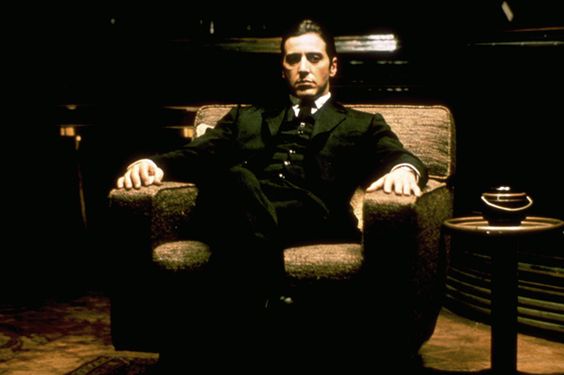
Michael Corleone, a portrait in dark and light

Here’s an exercise: Imagine this scene as a movie and you are the cinematographer. What colors are you filming in? Is everything shadowed with the gold pooled light of a lone desk lamp? Is a bloody setting sun seeping through the blinds? Remember how Francis Ford Coppola used chiaroscuro lighting (the interplay of light and dark) for drama and suspense in The Godfather? Sometimes he lit only half a subject’s face. It was a metaphor for the protagonist’s inner conflict, Michael Corleone’s own struggle between light and dark—good and bad.  You have to think of your book in those same terms — description is your cinematography. Exploit it to create mood and maybe metaphor.

Another point about description: Don’t let an opportunity slip by to use it to illuminate character. You TELL us this: “She was striking. Tall, well dressed, elegant. Her bearing radiated power and confidence.”  SHOW us this in details. At risk of sounding sexist here, women appraise women differently than men might. What specifically would Carrie notice? Is Pica wearing a close-cut Italian suit a la Prada? A flowing red caftan a la vintage Pucci? How is her hair styled? A severe chignon? Botticelli curls? See what I am asking for here? TELLING DETAILS.

And remember: Every detail you put in tells us two things: How the strange woman thinks of herself via her style and how Carrie perceives her via her prism of experience and taste. With details, you begin layering in character.

One last thing before I go to line edits. I really like this submission. I am not so crazy about its opening line — “She’d come in off the street.” I can’t think of a better one, but I feel it doesn’t do justice to the great set-up you’ve got going. It lacks punch, mystery and feels too matter-of-fact.  Maybe our commenters can help out here?

Let’s do some quick line edits:

She’d come in off the street. My last patient of the day had just left, followed out the door by Dorinda, my receptionist. I was standing at Dorinda’s desk flipping through messages when I looked up to see a woman watching me. I jumped. I hadn’t heard her enter.

“Dr. Gilder, I presume?”

“Yes. I’m Carrie Gilder. Slipped in the protag’s name up high! Bravo.

“I need to talk to you.”

“Office hours are over for today. You should call in the morning and make an appointment.” I started around the desk. “Now, if you don’t mind—”

“I won’t be able to come back in the morning. Again, this feels flat on first read but then we find out later she’s dead! So it works. Please. It’s important.”

I narrowed my eyes, appraising. She was striking. Tall, well dressed, elegant. Her bearing radiated power and confidence. This is a classic example of telling instead of showing. There’s nothing wrong with it on its face but this writer is better than this! I was irritated at her presumption that I would take a walk-in. I had no desire to stay later and intended to encourage her to go back out the door she’d come in through, but something stopped me. I’m used to usually being the one controlling the situation, and I was aware of the control slipping out of my hands. Not sure this works because we are not far enough into the scene for Carrie to feel threatened of losing control. I felt drawn in by her eyes, somehow, unable to look away. This is borderline cliche. If you can show somehow what is so seductive about Pica’s eyes it might feel more fresh. Depending on the lighting and the MOOD YOU ARE GOING FOR! Also, this is where you tell us what her eyes look like, not later as you do. It belongs here when it is part of the action. Maybe that’s why I relented, as if I had no choice.

“Step into my office.” need new graph.

She glanced around the room. Get them in the room first then filter this through Carrie’s POV. Something along the lines of: She didn’t automatically head for the plush wing chair near the fireplace as most my patients did. She paused in the doorway then came in warily, like a stray cat assessing whether it wanted to move in or take its chances out on the street. I watched as she slowly took in my office. I wondered what she was seeing in my country decor with its braided rug, old white-washed desk and the wood bookcase crammed with wicker baskets and the antique teapots I had collected from my foraging in New England estate sales.  Well, that’s not great but see what I am trying to do? USE DETAILS TO ILLUMINATE CHARACTER. What a contrast, I thought. Again, this is TELLING when if you SHOW, you can trust the reader to pick up on the contrast via details. My office is warm and comfortable, with its quaint country decor and fresh flowers gracing the credenza along one wall. And she’s so sleek and…what? Cold comes to mind.

She bent to smell the late summer flowers, touching a petal with one long finger. My eyes widened when the petal she touched fluttered to the floor. A nice telling moment here but again, make it mean something. What KIND of flowers. Always be specific if you can. Later summer flowers (good way to tell us it’s summer btw) Are they from her own garden? Don’t miss any chance to tell me something about this woman. And why did her eyes widen when the pedal dropped? It’s natural for flowers to drop petals. Unless you can give me a good reason to think otherwise. 

She sat in the overstuffed chair opposite mine. I jotted down a few quick notes. Young woman. Attractive. Blonde hair, dark eyes, almost black. You’ve already mentioned her looks so it’s filler here. Have her do something else if you need a physical motion break. And the eyes, which are so important, belong way up above when Carrie first notes them. 

“You’re very lovely, Dr. Gilder.” This, of course, is predatory. 

I frowned. Not something I usually hear from my patients. She might think, even the male ones.

“Okay,” I said with a shrug. “First, why don’t you tell me who you are?”

The young woman leaned forward in the chair and extended her hand, which I found surprisingly cold. Did they shake hands? Don’t skimp on simple details of physical choreography. In fact, make the gesture MEAN something. ie: She held out her hand. I hesitated then took it. She didn’t shake my hand so much as hold it tenderly. Her hand was soft but ice cold. I pulled my hand away.

“I am Pica. Pica Sharp.” She settled back in the chair. I’d flip these to: She settled back in the chair. “I am Pica Sharp.”  Which is a cool name if a tad too on-point given the severe portrait you’ve painted. Unless you’re going for the Full Vampire Monty here because Pica is an eating disorder where a person craves or eats nonfood items, such as paint chips or sand. Or other people…

I studied her. She’s a doctor. She would know what pica is. No reaction? “Do you mind if I ask how old you are?”

“I was 27,” she replied. Boom, there it is! Really good line. 

“Was?” Odd, I thought, making a note. What did she write down? Odd is putting it mildly.Is she trying to be funny?

Pica was asked a question. She needs to answer. Or gesture or something. You can’t just leave that hanging there.

My patience wasn’t increasing with this woman, and I found myself wondering how I’d gotten sucked into letting her in. She didn’t let Pica in; she materialized out of thin air you said. Which is why we need to return and re-examine your opening line. Which is why I don’t think it works. Because given all the cool stuff you’ve now revealed in this scene, Carrie cannot have known “She’d come in off the street.” 

One more thing about your opening line. To paraphrase Joyce Carol Oates, you sometimes can’t know your book’s opening line until you’ve written the book’s last line. At its best, an opening line foretells your whole story or its theme. Like this from Jean Rhys’s Wide Sargasso Sea: “They say when trouble comes close ranks, and so the white people did.” As I read through your first 400 words, I began to get pulled into your story, especially when I hit the line that Pica WAS 27. But I’d like to see you come up with an opening that pulls me in from the get-go. You’ve got it in you, dear writer!