Amazon Printing Cost Increase

Amazon Printing Cost Increase

If you have print books on Amazon.com, you have probably already received an email explaining that printing costs are going up on June 20th at 12:00 AM UTC (June 19th at 8:00 PM EDT). I received the email May 23rd.

The letter explains that, depending on the current price of your books, and if you do nothing, your royalties will either decrease or could become zero.

The choices of action include:

  • Running a one-time bulk list price update on all of your live paperback or hardcover list prices to increase your prices so they will continue to earn the same royalty
  • Visit the price tab for each of your live print books and make changes individually

Here is a link to frequently asked questions with printing cost tables at the bottom of the list of questions:

FAQs and Printing Cost Tables

Printing cost = “fixed cost” plus (“per page cost” x “page count”)

In the Amazon.com market (the U.S.):

From my reading of the tables it appears that for a paperback that is no larger than 6”x9”, has 110 – 828 pages, and black ink, the only price increase is the fixed cost (going from $0.85 to $1.00 per book), with the per page cost remaining the same. So, basically a $0.15 increase in printing cost.

I chose to use the one-time bulk list price update. It didn’t show me what the new prices would be immediately. That could take “several weeks,” they said. My thought was that I could look at prices individually after the update had taken effect. Thirty minutes later, I got an email with the updated prices. All my paperbacks were priced low. The increase was $0.25 for each of them, so apparently there was a $0.19 increase for printing costs and a $0.06 increase to keep the royalty the same. I’m not sure I understand that.

For comparison with IngramSpark printing costs, I used a 6”x9” paperback with black ink, cream paper, and 300 pages. IngramSpark’s cost was $5.48. Amazon cost was $4.60.

I would add the following to choices of action:

  • Order any supply of books you will need for in-person events in the near future before the cost goes up.
  • Consider using the coming increase in costs in your marketing, encouraging readers to buy before the prices goes up.

Okay, for discussion today, let’s share our knowledge and advice.

Questions for discussion:

  • Do you have any questions you would like to post for the discussion today?
  • What additional information would be helpful in making a decision on new prices?
  • What advice would you give?
  • What do you plan to do?

Time Billionaires

Time is our most precious commodity. Regardless of inequities in life, each day we have equality—exactly the same amount of time allotted to all. 24 hours. 1,440 minutes. 86,400 seconds.

In many ways, it’s not about the amount of time we have. It’s how we use our time. Time being the ultimate tool; a finite and non-renewable resource.

I’m short of time today (so to speak). I have little time to deliver a meaningful piece, and by meaningful, I mean something of value that folks following The Kill Zone can take away. So, I’m writing a short, meaningful piece about time value.

I’m short of time because I’ve created a writing monster that’s frothed like a sack of Mentos dunked into a Diet Coke vat. I’m enjoying the fizz but, man, is it ever sucking time. There’s no foreseeable end in sight.

So, I’m tapping an article I recently read on The Free Press (Bari Weiss—hate her or love her). It was titled The Time Billionaires and went like this:

A million seconds is 11 and 1/2 days. A billion seconds is slightly over 31 years. In our western culture, we’re so, so obsessed with money. We deify dollar billionaires when we really should be fan girls and fan boys of time billionaires. For instance, most 20-year-olds have two billion or better seconds left in their lives. But few look at it that way and don’t relate to themselves as being time billionaires. Many people fail to realize this asset’s value until it’s gone.

The piece had a nice quote from Stoic philosopher Seneca that read, “We are not given a short life, but we make it short, and we are not ill-supplied but wasteful of it.”

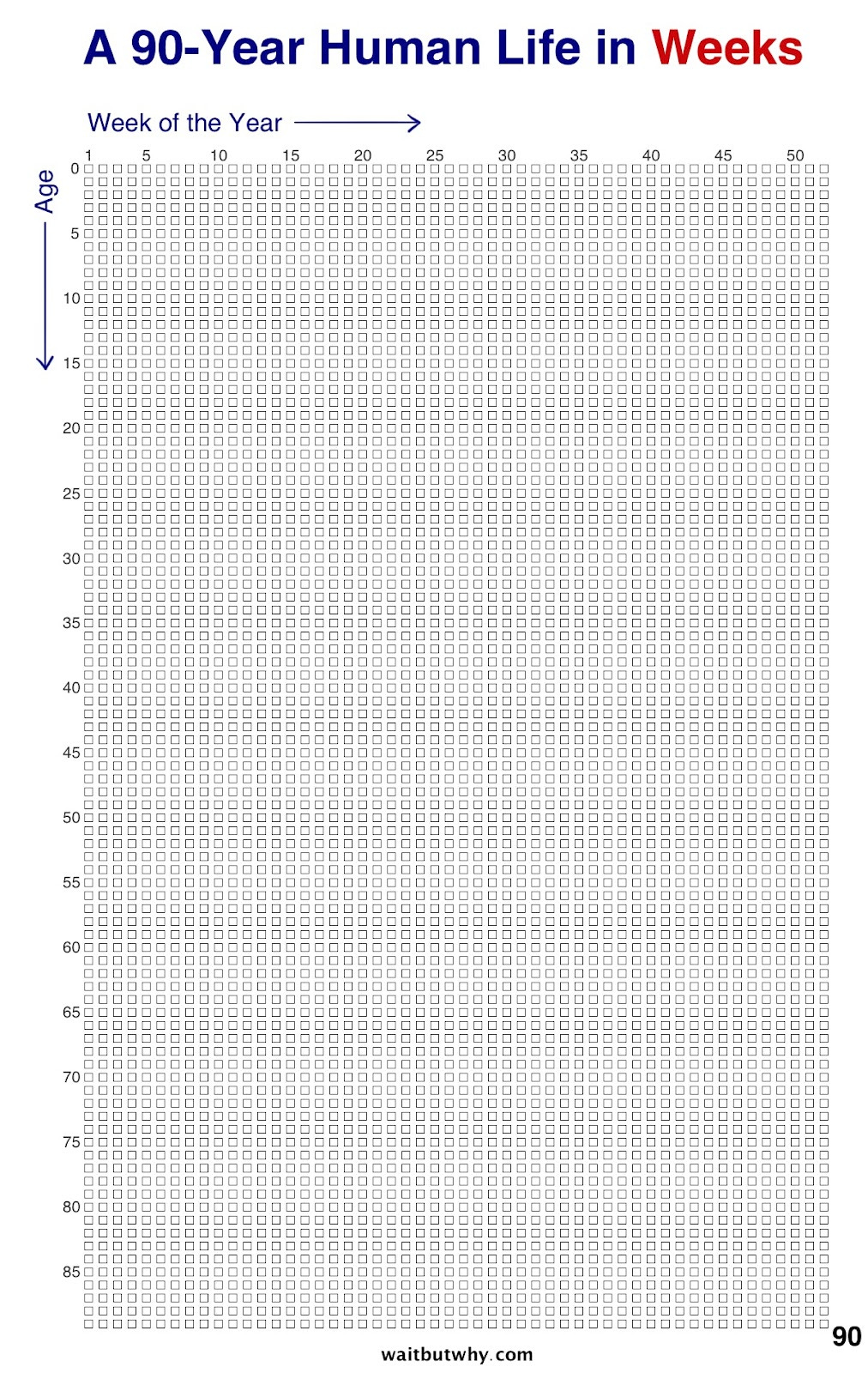
The article also linked a “Life Calendar”. It exposes a blank 90-year lifespan by each year listed vertically with 52 squares across the horizontal representing weeks in a year. It’s downloadable, and you can print it as an 8 ½ x 11 worksheet. See the pic below.

I drew out, or charted, my life calendar. It was an interesting exercise that made me reflect on where I’d spent the last 2 billion seconds of my life and where I’m going. I’m 66 now and, if my genes are predictive, I might have a billion seconds remaining.

Yes, still time to be a time billionaire. It’s what I do with forthcoming seconds that count. But if it goes like my Coke & Mento project is going, I might never get done.

How about you, Kill Zoners? Have you looked at your Life Calendar and worked on it? Also, if anyone has time management tips, I’d love to hear them. God knows, I need some.

I Can’t Do Two Books Per Year Anymore

By John Gilstrap

From 2019 to 2022, I wrote two books per year–one Jonathan Grave thriller and one Victoria Emerson thriller. That’s six books in three years. Or, 200,000 words per year. During Covid. While building a house. And selling a house. And moving twice. It was exhausting.

Worse, it wasn’t fun. Don’t get me wrong–I’m proud of the stories and the characters and all the moving parts of the books, but as I age, sitting and writing for long periods of time has become uncomfortable. Thanks to a reckless youth and too many years of catching heavy burning stuff with my fire helmet have left my neck and back pretty creaky. When I stay active–say through gardening and yard work and playing with the dog–everything works fine. But after five or six hours at the keyboard, I feel like it takes an hour just to stand upright again.

And there was a mental strain to that writing schedule, as well. Taking all the unique life-stuff out of the equation, a two-a-year contract means that I was always writing one story while editing or proof reading another. It’s just more work than I wanted to do.

But I still want to explore new ideas.

If all goes as expected, I will soon sign a contract with Kensington Publishing that will advance my Jonathan Grave series to 18 volumes. I never dreamed that the momentum of those books would continue to build as it has, and while I’m very much in love with the characters and their mission to bring justice to bad guys, it’s fun to explore different characters and different plots.

Another new series.

I had just finished the page proof edits for White Smoke, the third book of the Victoria Emerson series, when my agent called to tell me that she and my editor had been talking about me over lunch. They think I should do another new series, this one a spin-off from Jonathan that would take a regular character from the series and spin her off in a new direction while at the same time knocking Jonathan’s world a few degrees off its axis.

The idea had occurred to me before, and I find the idea exciting, but see above. I don’t want to do two books a year anymore. I want to have a life outside of my office. It’s the nature of a popular series (and one that I hope will also become popular) that people want to see new books on a regular basis. I hear all the time from people who count on the new Grave book to entertain them at the beach every year.

So, we reached a compromise: One book every 9 months, each new volume in each series dropping every 18 months. That feels doable to me. I guess we’ll find out.

I’m being deliberately obtuse about the new series because no contracts have been signed. I’ll come clean when that happens, I promise.

So, TKZ family, do you find the act of writing to be physically tiring? Inquiring minds want to know . . .

Starting Over.
It Never Gets Easier

By PJ Parrish

Today is Monday. As good a day as any to die. Well, die figuratively. I started a new book today. The curtain has gone up. My stomach hurts. It isn’t my diverticulitis flaring up. I’m sweating. And it’s way past menopause.

Man, this never gets easier, does it. Staring at that field of white. Watching that damn  curser blinking like a heart monitor. Ka-thump. Ka-thump. Ka-thump…

Writing is painful for me. Not just psychically painful. Physically painful. Although I have been noodling around with this new book idea for weeks now, I have been putting off actually starting it. I have good excuses. First there was the Edgar banquet. Then there’s this conference first novel contest I’m judging. Then the dogs needed their dental cleanings. Then there was the Heat and Panthers semi-finals. Then friends came up for Memorial Day and I had to take them on a winery tour. And man, look at that load of laundry over there waiting to be folded,

But you know, don’t you. The longer you wait, the worse it gets. Because writing is like exercising, or practicing the piano or learning a language. If you stop, your energy flags, your muscles atrophy, your mind grows cobwebs.  You get fat and lazy. Then get you depressed because you’ve gotten fat and lazy.

It’s a confidence thing. Every time I start a new project, I am scared. Scared that I’ve run out of gas, scared that I will become one of those pathetic writers who phone it in. I’m worried that, because I’m not a pup anymore, I don’t have the energy to go the distance and the new kids coming up are so damn clever. I’m thinking that this plot is pallid, that this story is shapeless. I will be revealed as the fraud that I am,

But…

Then I remember. I remember that once things get going — oh, around chapter 20 or so — it will start to gel. It will become fun again. I remember that I have been here before and have come out the other end okay. I remember that every book feels like you are pushing a mammoth boulder up a hill until that beautiful moment when you crest and then you race downhill in an exhilarating rush. And I remember that I am so damn lucky to get paid (well maybe) to think stuff up, to have readers who buy still our books and write us emails of thanks. I remember all of this and try to stop whining and do my job.

The good thing is, there is redemption even for scofflaws. There is always another day, a new chance. Another Monday.

Today is Monday. Today, I took a detour and wrote this blog instead. I know this is  procrastination of sorts. But this blog has also been like a quick set of jumping jacks. See, I figure just the fact that I have to come here and move my fingers over the keyboard might get my lard ass in gear again for the heavy lifting of fiction.

And I looked this up: I’ve been hanging around here now since 2012. You guys are my peeps.

So, thanks for letting me vent today. You’re cheaper than therapy and a lot more fun. Now, if you’ll excuse me, it’s back to work. That page is still blank. That curser is still blinking. I’m not getting younger. Every journey starts with one keystroke.


How Time Off Benefits Writers

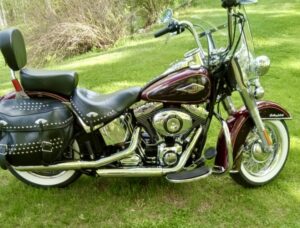
The last part of Tips to Improve Newsletters series will continue next time. Two reasons for skipping this week. First and foremost, I’ve been glued to the keyboard for months with very little time-off, and I need a break. Two, it’s Memorial Day. Yesterday, the hubby and I cruised around the lakes and through tree-lined backroads on our new HD Heritage Softail Classic—a well needed respite among nature. We plan to continue that ride today.

Here’s a pic of our new baby…

HD Heritage Softail Classic

©2023 Sue Coletta

Time off benefits us for many reasons. When we break from our usual routine, we can no longer operate on autopilot. That decreased familiarity flips a switch in our brain to be more fully present, to really wake up. Meditation has a similar effect. Thus, taking time off increases mindfulness and produces a higher level of wellbeing.

Heart Health

Time away from the keyboard also improves heart health. It can help reduce the risk for metabolic syndrome—a cluster of health issues including high blood pressure, high blood sugar, excess belly fat, and abnormal cholesterol levels—which raises the risk for heart disease, stroke, and type 2 diabetes, according to Forbes. In fact, researchers found that in those who vacationed and/or took time off on a regular basis were less likely to die from heart attacks and other cardiovascular problems.

Stress

Time off reduces stress. When we’re stressed, our bodies release hormones like cortisol and adrenaline. Over time, chronic stress increases our risk for health issues.

Another scientific study found that spending at least two hours per week in natural environments—parks, forests, beaches, lakes—is not only great for our soul, it’s also good for our health.

Brainpower

Taking time off improves the capacity to learn. When the brain is fully relaxed, it consolidates knowledge and brainpower.

“Neuroscience is so clear, through PET scans and MRIs, that the ‘aha’ moments comes when you’re in a relaxed state of mind.”

—Brigid Schulte, author of Overwhelmed: Work, Love and Play When No One Has the Time

Hence why some of our best ideas come while we’re in the shower, on a walk, or as we’re falling asleep. In fact, a professor at Columbia Business School has conducted numerous studies, drawing a link between travel and creativity.

“Foreign experiences increase both cognitive flexibility and depth and integrativeness of thought, the ability to make deep connections…”

—Adam Galinsky, Columbia Business School

Sleep

Sleep is a commodity many of us struggle with, evident in the comments of Steve’s recent post. Stress lowers sleep quality—wake up groggy and/or suffers from a lack of energy. But taking time off to read, take a walk, or other activities can lower your stress levels. Thus, induces a better night’s sleep.

If you’re overwhelmed or cognizant that your body needs rest, take what Psychological Therapist Kate Chartres calls a “duvet day.”

“Having a duvet day replenishes your stocks. Finding the time to switch off the mind…and stop that internal chatter allows your anxious mind to repair… You’ve all heard about how our muscles need to rest. We don’t work the same ones every day, so they have time to repair. The mind needs time too, to rest and repair. This enables you to be better, more responsive, and focus on your return to work.

So, if you are feeling frazzled and in need of that duvet day, but you keep going, the chances are you’ll get more and more frazzled, less and less focused, less able to do your job. When we have too much going on, our concentration and ability to use initiative, judgement etc., are all affected. So, can you afford to pull a sickie? I think the question is to look after your mental health, can you afford not to?”

Happy Memorial Day, TKZers!

Be kind to yourself today. I’ll be around in the morning, then we’re off on another adventure. But don’t let that stop you from having fun in the comments.

What’s your favorite form of R&R? Any plans today?

To our military men and women: Thank you for your service. <3 

Let’s Chat About ChatGPT

by James Scott Bell
@jamesscottbell

Recently, I received the following email: “As a fiction writer, I’m intrigued by the potential of ChatGPT in my writing process. I’d love to hear your advice on effectively using it. Your insights would be invaluable.”

I’d love to be invaluable, but I don’t know yet what my advice would be. I’m still working it out. So I thought I’d open things up here at TKZ to help process the various issues. Which are many.

At the time of this writing, the bestselling writing book on Amazon is not Power Up Your Fiction (it’s #3), but a book on how to use ChatGPT for fiction. #2, by the same author, is a book of 500 prompts to feed the bot

Clearly, the concept of using AI as a fiction-writing tool is catching on, big time. I just saw a fancy, $300 video course being offered purporting to teach not the craft of writing, but the skill of prompting, with the promise of producing “amazing books” in “record time.” It warns that not fully embracing the world of AI means you’ll be “left behind” in the competitive marketplace.

Now, if you’ve played around with ChatGPT (and most of you have), you know it’s pretty amazing. And so, so fast. It’s like a personal, creative genie, with you at Aladdin’s keyboard. It can generate ideas, suggest plotlines, scenes, characters, even dialogue. It can offer you style suggestions and metaphors. It can even run over to Coffee Bean and pick you up a latté. (No, wait on that last one. I got carried away. But it will be here in time. Drones, anyone?) And it can produce the actual text you use in your actual book (the ethics of which are discussed below).

But as with any disruptive technology, there are potential problems.

As in the “tsunami of crap” that was once feared when self publishing became viable back in 2008. Imagine it now, when a bot can write a book in a matter of minutes, and uploaded to Amazon with the touch of a few keys. People are also touting AI’s ability to write book description and other marketing copy for you.

Then there is the plagiarism issue. What a bot comes up with may contain actual lines lifted from actual writers.

What about research? AI is certainly impressive, but it can also be wrong. And “opinionated.” What if what it reports as fact is really a mangling and shaping? What are the sources? Who fact checks the bot?

And then there’s copyright. As posed by the Congressional Research Service:

Assuming some AI-created works may be eligible for copyright protection, who owns that copyright? In general, the Copyright Act vests ownership “initially in the author or authors of the work.” Given the lack of judicial or Copyright Office decisions recognizing copyright in AI-created works to date, however, no clear rule has emerged identifying who the “author or authors” of these works could be.

And what about the humanity, oh, the humanity! If a bot writes all or the most of the book for you, are you still an author in the traditional sense of the word? Does that even matter?

The always prescient Joanna Penn has some observations:

The goal is to make every book resonate with your humanity even as you use AI tools as part of your creative and business processes.

***

AI tools can generate unlimited words in very little time, and never tire, never stop. But that doesn’t matter.

Your books are your ideas. Your prompts. Your curation. Your editing.

Your creative direction.

However you create — with or without AI tools — it’s more important than ever to find your voice and reach readers as one human connecting with another.

I do, however, see a personal cost. If I overuse AI for imaginative, generative work, I am not working my own brain cells on the same tasks. I believe imagination and cognition are “muscles” that slope toward atrophy when not being utilized. Atrophy, in advanced age, can become dementia. One reason to keep exercising the writing brain is to stay sharp and “rage, rage against the dying of the light” (h/t Dylan Thomas).

The art of writing is, in essence, your brain working to answer innumerable questions, such as:

  • What if?
  • Shall my Lead be a man or a woman? What are the advantages, disadvantages of either choice?
  • What setting shall I use? Real? Made up?
  • How should I end this scene so readers turn the page?
  • What does the voice of my Lead sound like?

Let’s take the last one as an example. You can prompt ChatGPT to provide text in a voice with a certain background, or you can produce a Voice Journal to find it on your own. In the latter case, you’re working your own muscles. When you let AI do it for you, you’re not. And if your practice becomes prompt, prompt, prompt, prompt…with every choice and nuance…well, it’s the difference between training for, then running a 5k, and being driven around the track in a golf cart. What shape will you be in then? I’d be fearful of getting addicted. I mean, I’d love to sit and just watch movies with a never-ending cache of peanut M&Ms. But I don’t.

A major part of the reason I write is to keep my noggin working. If I make it to 100, I want to be healthy, sharp and outputting like Herman Wouk.

Now, I can see the value in using AI to suggest ways to go when your brain hits a cul-de-sac. Or coming up with ideas for a project. I kick around ideas with Mrs. B all the time, and there’s nothing artificial about her. I just wouldn’t want to get dependent on the ease of AI. I don’t want to meld with machine to the point where I’m like Keanu Reeves at the beginning of The Matrix.

What seems out of bounds is asking AI to generate actual text that you use on a page. Especially egregious would be to ask it to write “in the voice of” a favorite author, then passing it off as your own work.

Would it be any better if you made it clear on the cover and title page that you were assisted by AI? Like a James Patterson co-author? That’s an ethical question, but ethics is self-regulatory and there doesn’t seem to be a way to enforce that in the age of rampant mendacity in which we live.

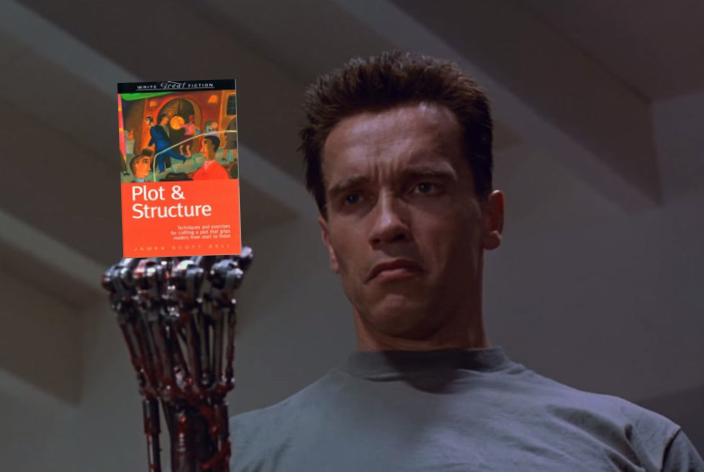
Unless, of course, we get a visit from a Skynet terminator from the future.

So lots of questions without firm answers. That’s why I wanted to have this chat. How do you feel about these issues? How heavily are you using AI in your fiction writing? Any plans to do so? Are there any lines you won’t cross?

Them Flies

“A metaphor is a figure of speech that, for rhetorical effect, directly refers to one thing by mentioning another. It may provide clarity or identify hidden similarities between two different ideas.”

Way back in college, I had to take a speech class. Never figuring I’d need it since I was pursuing a degree in architecture, I staggered in and out of each class without much caring what my grade would be. In fact, I took a D and was glad to get it, but one interesting assignment was to write and present a persuasive speech.

As I recall, the idea caused much consternation among some of the other students, but I didn’t care, because all I wanted to do was complete the assignment and get out of there.

One of my fellow students wrote a gut-wrenching plea to end war, because he’d just lost his brother in Viet Nam. But he didn’t write about war, he wrote a metaphor about something entirely different that we absorbed in wonder. We knew what he was talking about, but the idea hit us from a different angle.

My professor ended the day by saying, “When writing, there are times we need to make people think, instead of slamming them with the facts as we, the author, see them. A writer or speaker is charged with making people think, and to elicit an emotional response.”

Way back when I was first published, I’d use what my old man called “three-dollar-words,” designed to force readers to a thesaurus. What a stupid idea. It wasn’t my job to expand my reader’s vocabulary. It was to inform, but mostly to entertain.

However, there were times I couldn’t write what I wanted, so I found an alternate way to make a point through the use of a metaphor…

There’s a wonderful children’s book titled, A Fly Went By, by Michael McClintock and edited by the one and only Dr. Seuss. I read the story to both of my girls when they were very young. Now my grandchildren love the rhyming story that focuses on misplaced perception and unknown fears that continues to build throughout the story until the source of all that fear is rooted out.

In a nutshell, a small boy is relaxing in a rowboat one find day, loving the outdoors and watching clouds pass overhead when a fearful fly buzzes past. It’s being chased by a frog, who is in turn being chased by a cat, who is chased by a dog, who is followed by a pig. By the end of the little book, an entire frightened menagerie passes, all trailed by a man who is frightened by a sheep who starts the whole thing by getting its hoof tangled in a bucket.

This cumulative tale is great for a variety of reasons, one of which is that we too often get caught up in whatever the Fear of the Day might be. In this book, the kids learn that instead of taking other people’s word for how bad something is, they should investigate and make informed decisions before the Boogy Man turns out to be their own fears.

It’s odd that I like the story, because it starts with a fly and I hate flies with an absurd passion. I have flyswatters in every room of the house, just in case one sneaks in and threatens my peaceful world. In the pantry, three more swatters wait for a killing.

A Bug-A-Salt gun on a shelf in the pantry. It’s a bright yellow plastic pump-action shotgun that blasts flies with table salt. We’ve salted a number of them, and plan to buy even more to eliminate the pests.

We do our best to keep the filthy insects out, with closed doors and screens, but as in many things in life, it isn’t if one gets in, but when.

For some reason they’re attracted to a great glass brick wall in our shower, and to keep from being defenseless there, I have a slightly rusted swatter within reach.

Sometimes you can’t enjoy the outdoors because of invasive flies. The first time we had a cookout here at the new house was on a late spring day, one perfect for eating out. We cooked burgers on the grill, and I noticed more than a few flies around the patties protected by plastic wrap.

There are always flies around, and we should be attentive at all times lest they contaminate our food with their filthy feet and repulsive mouthparts called the labellum and pseudotrachea.

Urk!

As our delicious burgers patties sizzled, those nasty insects brought their kinfolk, until by the time we gathered the family and settled around the patio table to enjoy lunch, we were engulfed in a swam. Hundreds landed on everything so fast the kids couldn’t eat.

Waving them off was impossible, and with shrieks, gesticulations, and lots of adult curses (properly curbed for little ears), we gathered everything and retreated to the kitchen, only to be followed by bombing patrols that continued inside until we armed ourselves and launched a counter attack.

One flew into the Redhead’s mouth, (my oldest daughter) and a string of words that would have impressed a merchant seaman emerged. She spat it out and stomped the soft, tiny corpse until it was nothing but a stain.

As we all know, flies are sourced from some of the most revolting environments we can imagine. They come from the filth that attracts and breeds them, and bring their contamination to the rest of us who do everything we can to protect ourselves, and enjoy a maintained, well-ordered existance.

I’m convinced our neighbors who have seven big dogs were a significant source of the infestation, and I wondered if those good, well-intentioned folks ever cleaned up their own back yard. You shouldn’t foul your own nest, and that goes for letting feces remain in your yard for long periods of time, even though a soaking rain can melt it into the ground where it allegedly becomes beneficial fertilizer.

We keep our yard clean, despite deposits from Willie the Wonder-dog (read Shih Tzu here), and I patrol the yard with whatever utensils are necessary to keep our property clean and safe in all way.

We’re required to protect our houses from pests, and prevention works when done properly, but there are times we have to stop them before they get in. I have a pest control man who comes by a couple of times a year. His theory is, “keep them out of the house, before you have to kill ‘em inside.”

Some sympathetic individuals surely like flies and feel sorry for them in some bizarre way, but that’s not how my mind works.

I despise flies, but love A Fly Went By, and I bet you will, too. Read it to your little ones and enjoy this metaphor.

The Scent of a Story

The Olfactory Nerve and Mood

We are instructed to use all five senses when writing descriptions. I must admit I often forget to use the sense of smell.

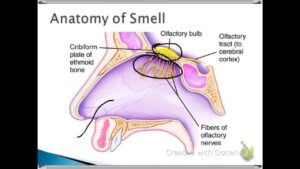
We smell with the olfactory nerve, the first cranial nerve. Cranial nerves are paired nerves that connect to the back or bottom of the brain, exit the cranium (skull and facial bones), and help us taste, smell, hear, feel sensations, and move our facial muscles and tongue. The olfactory nerve is also involved in autonomic function (automatic function) – affecting salivation, gastrointestinal function, appetite, nausea, interest or lack of interest, and sexual arousal.

Much of our sense of taste is actually from smell and the olfactory nerve.

The olfactory nerve endings are in the upper nasal cavity, near the opening to the frontal sinuses. The nerves connect to the bottom of the frontal lobe. And, because the olfactory nerve tract is connected to the limbic system, it affects emotions and memory, and thus mood.

That’s why a smell can quickly set off a memory or mood, and use of smell/scent in our descriptions may help to establish mood in our stories, ex. smell of our favorite meal, our old baseball mitt from Little League, corsage flower from prom, the scent of a tree that bloomed in our backyard, or the scent of our favorite cologne/perfume, etc.

Thus, olfactory nerve function—smell/scent—may help establish emotion and mood in our stories. But, how exactly does that happen? The bottom line is that we don’t really know. Here are a couple paragraphs from an article in GoodTherapy in 2019.

“The brain makes new neurons from stem cells in the hippocampus (part of the limbic system), suggesting the hippocampus and the feelings and memories it supports can change with new experiences…

“The limbic system is dynamic, changing with input from a person’s environment. Experience changes this important brain region, and that may help explain why people’s psychological and physiological experiences change over time…”

Though it may be fuzzy logic we’re using here (fuzzy can be good in fiction), let’s train our backsides, each time we sit in our writing chairs, to send our brains a memo to spray some smells/scents into our descriptions and plot.

Questions:

  • What examples have your read or written with smell/scent as source of mood?
  • What is your favorite scent/smell? What smell do you hate?
  • What smells/scents (in your opinion) are most powerful for creating mood?
  • Bonus points: What are the two most powerful smells on Mackinac Island?

True Crime Thursday – John Bozeman’s Unsolved Homicide from 1867


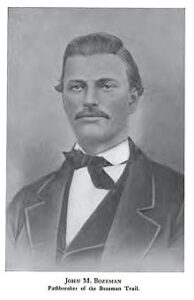
John Bozeman

By Debbie Burke

@burke_writer

Bozeman, Montana is known for Montana State University, world-class outdoor recreation, expensive homes (median price is $845,000), and the unsolved homicide of the city’s founder more than 150 years ago.

John Bozeman was a pioneer who blazed the Bozeman Trail as a shortcut from Wyoming to the Montana Territory gold fields, although he was unsuccessful at gold prospecting.

In 1867, he became a murder victim.

In the Montana Territory, tension existed between white settlers moving west and Native tribes who, despite treaties, were displaced.

In April, 1867, Bozeman and mill owner Thomas Cover were on their way to Fort C.F. Smith to secure a flour contract for Cover. They spent a night at a cattle ranch belonging to wealthy Nelson Story, Sr.

For unknown reasons, Bozeman was concerned for his safety and expressed his worry in a letter. That night, he shared a room with W.S. McKenzie and “begged” McKenzie to take his place on the journey, even offering his clothes and boots.

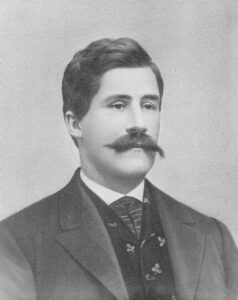
Thomas Cover

One possible reason for Bozeman’s fear is that he evidently had made advances on Cover’s wife, Mary, according to this article from The Sherman Room. 

However, the next day, Bozeman and Cover resumed their journey together. According to Cover, when they stopped for a meal near the Yellowstone River, five Native men approached.

A shootout ensued in which Bozeman was struck twice in the chest, killing him. Cover claimed he had been shot once in the shoulder from the rear. He also said Blackfeet men stole their horses. He escaped and returned to the ranch for help.

The next day, Nelson Story arrived at the ranch and sent a trusted guide to study the murder scene. Story examined Cover’s wound, noticed powder burns indicating a shot from close range, and was suspicious that the bullet had entered from the front, contrary to Cover’s claim.

The guide returned and said he’d found Bozeman’s body, along with his valuables, undermining Cover’s claim that theft was the motive for the murder. He found tracks of only Bozeman’s and Cover’s horses, with no indication of five Native men Cover claimed had shot them.

However, soldiers from Fort C.F. Smith later encountered a camp where five outcast Natives bragged that they had killed Bozeman and had his horse.

Shortly after Bozeman’s murder, Cover moved to California and, for a time, successfully raised navel oranges in San Bernardino. In 1884, while searching for gold in the desert between Los Angeles and Yuma, Cover disappeared and was never found.

Years later, Nelson Story’s son said his father told him Cover had killed Bozeman then shot himself in the shoulder to disguise his guilt.

Another version of the murder surfaced when a man named Thomas Kent claimed Nelson Story, Sr. hired him to kill Bozeman.

Hearsay, rumors, and gossip promoted various theories but none of the possible scenarios could be proven with evidence.

John Bozeman’s murder remains a fabled but unsolved mystery.

Renee Carlson’s well-researched article about the homicide was published in Distinctly Montana magazine. Here’s a link to her story.

 ~~~

TKZers: Any theories about this very cold case?

~~~


A young Native inmate shouldn’t have gone to prison. Now he’s dead and video evidence is overwhelming against a female guard who swears she’s innocent. Investigator Tawny Lindholm plunges into the sinister world of deep fakes where “proof” isn’t truth.

Available at Amazon and major online booksellers. 

Tips for Distant Settings Redux

Tips for Distant Settings Redux
Terry Odell

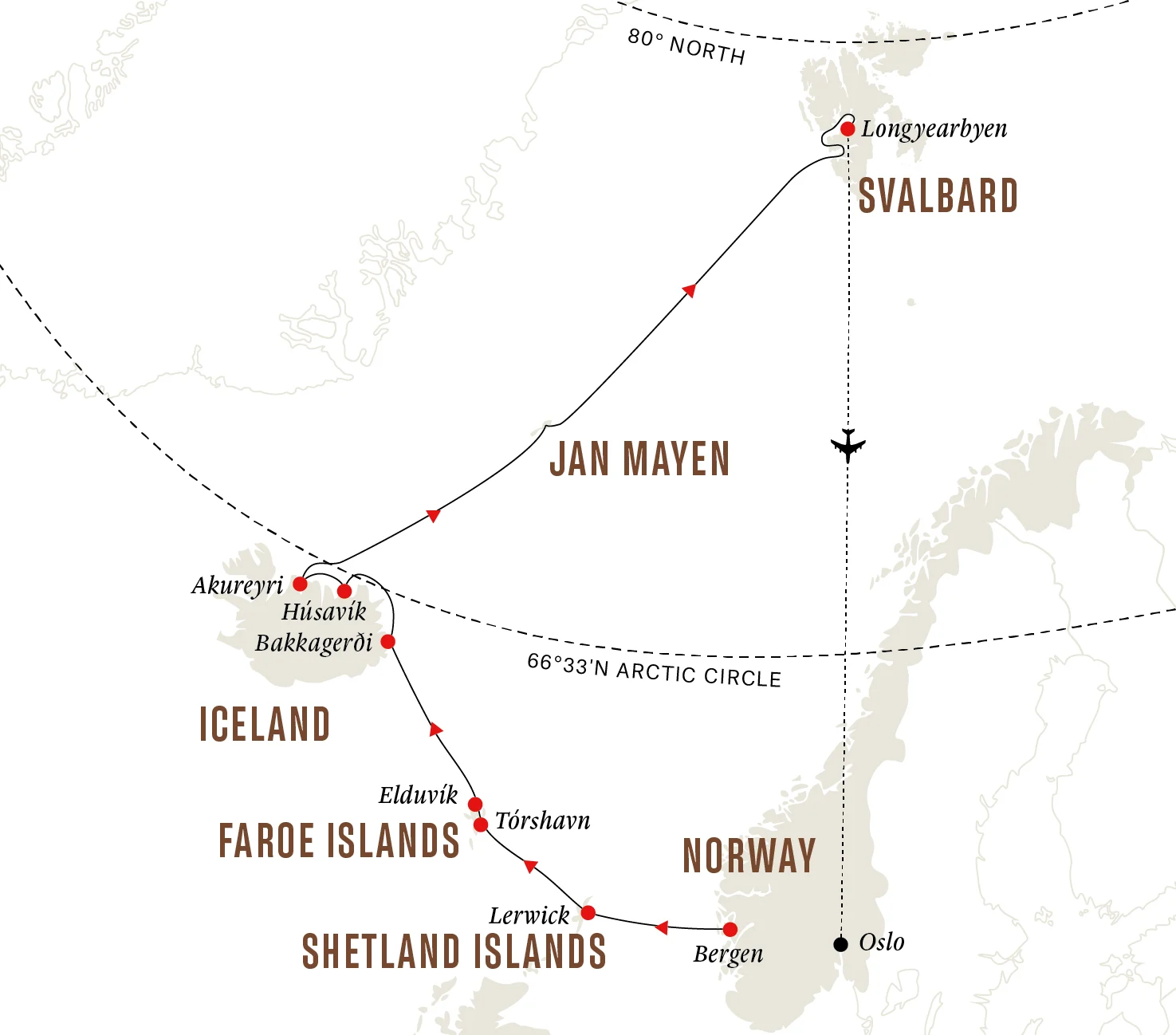
Map showing a Norway Cruise RouteIf all goes as planned this time, when you’re reading this, I should be somewhere in the skies between Frankfurt and Oslo. Or Bergen, where our cruise begins. Therefore, I won’t be able to respond to comments, but I trust you’ll play nice and keep things going.

One of my retirement goals is to travel, and even though Antarctica didn’t (and probably never will) happen, I’ve been fortunate enough to see parts of the world I’d never thought I’d be visiting. A lot of this is because our son is a photographer and his “specialty” is leading photo safaris all over the world. This current trip is to Norway and beyond. I’m revisiting a post I did some time ago, with my tips for writing about distant settings, based on a trip to the British Isles.

When the Hubster and I decided to celebrate our 50th anniversary with a trip to the British Isles, of course I had “book” in the back of my mind. However, an international setting wouldn’t have worked with any of my existing series, and since I never plot in advance, I decided to enjoy our tour, taking pictures and notes of what we were seeing and doing and just wait and see what might bubble to the surface.

When we got home, I decided I’d write a short and sweet romance. Write it quickly, understanding that it’s not my true “brand” but that I had to publish something to justify writing off at least part of the trip.

Well, I soon discovered I’m not a short and sweet romance author, and mystery elements insisted on working their way into the story. What I ended up with is Heather’s Chase: an International Mystery Romance which is closer to my brand, although it’s a stand alone and still a bit of a one off. Nevertheless, it was an educational experience. Since then, I had another major trip, this one to Croatia, which led to the book Cruising Undercover.

Things I’ve learned about setting a book in real places, especially distant ones.

Less is more. My first drafts went into phenomenal detail about absolutely everything. Airports. Train stations. Hotels. Food. All the places we stopped, what we saw on the drives. Given we were traveling for well over two weeks, that would have been a LONG book. A sense of place is good. Overwhelming readers is not. I had to keep reminding myself to make sure everything related to the plot and characters. I wasn’t writing a travelogue.

Stay true to time. Readers familiar with the area will know that you can’t get from A to B in two hours, or that when you’ve had your characters on their bus for five hours, it’s really a twenty-minute drive.

You’ll always miss something. Unless you’ve got your plot mapped out before your trip, once  you start writing, you’ll have a scene to write and—lo and behold—you missed taking a picture, or didn’t take the right notes. I spent a LOT of time on the internet rechecking facts, looking at maps, and refamiliarizing myself with some of the attractions we visited. If I couldn’t find exactly what I needed, I reminded myself I was writing fiction—another reason not to name real places. On the occasions where my characters were eating in real, named places, I made sure I had pictures and menus. Same for attractions.

Don’t make up real stuff. One of the reasons I made this book a stand alone was because our trip didn’t include visits to police departments (although I snapped a picture of a vehicle in Ireland, “just in case”). Also, it would be unrealistic for my American characters to have any access to law enforcement in several different countries.

Be nice. I also opted not to name the specific hotels or restaurants (mostly). For one thing, it gave me the freedom to change the décor, layout, amenities, or the restaurant menus. And, if something “bad” happened, I wasn’t going to incur the wrath of those establishments.

It’s about flavor. Although my characters didn’t visit Northern Ireland, I did include a character from the same town we’d visited when we stayed with my daughter. I made sure she vetted all his dialogue. For example, people in Northern Ireland use the word “wee” as a meaningless adjective. I was asked for my wee credit card, given a wee receipt, offered a wee bag for my purchases. My British critique partner was very helpful with vocabulary as well.

All in all, I had a great time ‘revisiting’ my trip to the British Isles while I was writing the book, and being able to incorporate my experiences into Heather’s Chase. I did a little better with the Croatia trip, although there were lapses in my note-taking. At least, since it was a photography trip, I had plenty of pictures to nudge my memories.

Any tips to share, TKZers?


And a little BSP. I’m going to be teaching some writing craft classes via Zoom, hosted by my editor.
12 Steps to Intimacy on June 17th

Creating Armchair Adventures on July 15th

Into the Heads of Your Characters, on July 29th.

The links will provide more details.

Please spread the word. Friends, writing groups, libraries … wherever you think there might be people interested in learning more about the craft.


Cover image of Deadly Relations by Terry OdellAvailable Now
Deadly Relations.
Nothing Ever Happens in Mapleton … Until it Does
Gordon Hepler, Mapleton, Colorado’s Police Chief, is called away from a quiet Sunday with his wife to an emergency situation at the home he’s planning to sell. A man has chained himself to the front porch, threatening to set off an explosive.


Terry Odell is an award-winning author of Mystery and Romantic Suspense, although she prefers to think of them all as “Mysteries with Relationships.”