Stranger Than Fiction:
Weird Stuff About Writers

By PJ Parrish

My new year got off to a rocky start. Short story: suddenly huge water bill. Plumber says there’s a leak…somewhere. Enter Mike from Gulf Coast Leak Detection. Leak is under the lawn, not the house, he says. Bill: $500 vs $10,000 to repipe house. On New Year’s Eve, I splurged on a bottle of Veuve Clicquot.

So, in honor of good starts, here is some tasty brain lint about books and writers that I found for all us who are hoping for positive outcomes in 2026.
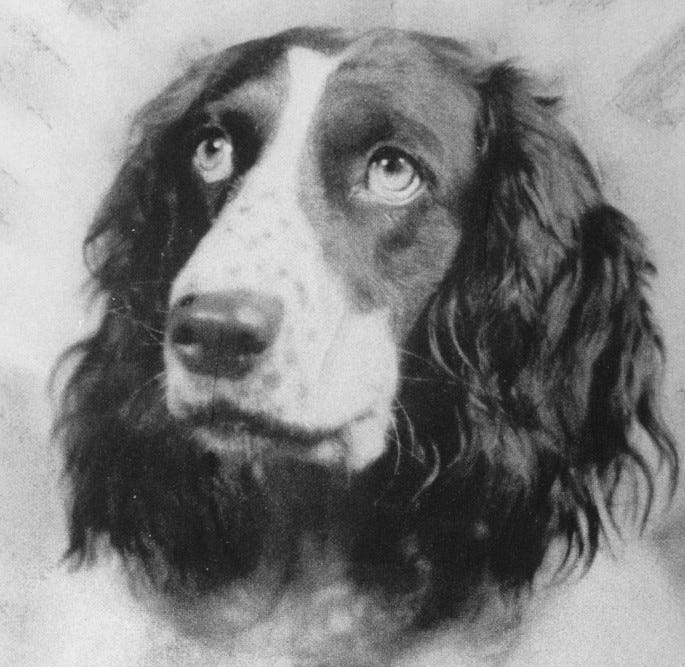
Did You Know That John Steinbeck's Dog Ate Half of his 1st Manuscript of “Of Mice and Men”? | by Herb Baker | Medium

Actual photo of famous book critic Toby,

Sick Puppy

Decades ago, when I was writing my first romance, The Dancer, my cat Hilary walked across the keyboard of my Commodore and wiped out a quarter of my work. Noooo, I didn’t make a copy. But…John Steinbeck’s dog, Toby, ate half of the first manuscript of Of Mice and Men. Steinbeck didn’t make copies either and it took him two months to write it all over again.Steinbeck wrote to his agent: “I was pretty mad, but the poor little fellow may have been acting critically.”

Hunka Hunka Burning Gov

Once, while doing some routine research on arcane FBI procedures, I got a screen message that said ERROR 451.  This is, I found out, is HTTP code for “Unavailable For Legal Reasons,” meaning the government doesn’t want you to see it. The code comes from Ray Bradbury’s Fahrenheit 451 where books are infamously burned. It’s reassuring to know someone in Washington read novels.
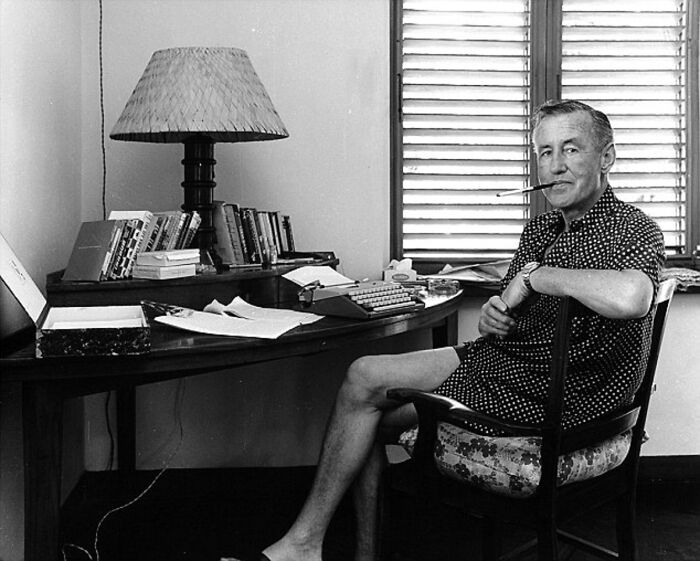
Sting Wrote The Song 'Every Breath You Take' At The Same Desk Where Ian Fleming Wrote His James Bond Novels

My Golden Eye Will Be Watching You

Apropo of nothing in my life other than the fact I once got to interview Sting — The Police frontsman wrote the song “Every Breath You Take” at the same desk that Ian Fleming used to write his James Bond novels. Sting was renting the Fleming Villa in Goldeneye on the island of Jamaica while composing the famous track.

Which Might Explain Why the Coffee Tastes Like Bilge Water

Would you go to a coffee shop called Pequod’s? Whelp, that was what Gordon Bowker originally wanted to call his little coffee company because he was a Moby Dick fan and thought using the ship’s name was a nifty idea. His partner Terry Heckler thought naming a business after a doomed whaler was a bad marketing move. So now you can overpay for your Cinnamon Dolce Latte at Starbucks, named after the Pequod’s first mate.

Fast Times at Ridgemont High (1982) - Ray Walston as Mr. Hand - IMDb

The Allmanns, Jeff Spicoli and The Bard

Was listening to one of my fave boogie-down-the-road songs the other day — “Jessica.” Found out recently that the name — now among most popular for babies and dogs — made its first appearance in Shakespeare’s 1598 play The Merchant of Venice. Shakespeare is also credited with making up over 1,000 words and phrases including “bookworm,” “bibliophile,” “critic,” “vanish into thin air,” and “gloomy.”  He also gave us “gnarly” and “pukey.” Aloha, Mr. Hand.

Let Them Eat Madeleines

I don’t remember why, but many years ago I decided I needed to read Proust. Naively, I cracked open In Search of Lost Time. It became my Everest. I had to conquer it. It took me two years. If you’re into torture, give it a go. At 1.2 million words, it is one of the longest novels ever written. Second longest is Donna Tartt’s The Goldfinch, which only feels like 1.2 million words.

“A Feeling Of Sadness That Only Bus Stations Have.”

Jack Kerouac never learned to drive. He moved to New York City as a teenager on a scholarship to boarding school and then entered Columbia, so as any smart New Yorker would say, who needs wheels in the city? Through every subsequent adventure, across the country and back, down to Mexico, up from New Orleans, Kerouac always let his buddy Neal Cassady drive. Or he took Greyhound buses.

M6 motorway - Wikipedia

Paperback Rider

True story: When visiting DC years ago, I went to the Library of Congress on a lark just to see if my book The Dancer was there. Sure enough, it was! Then the other day, I read that In 2003, 2.5 million unsold books from the UK romance publisher Mills & Boon were used in the reconstruction of the M6 motorway. This is the company that bought the rights to my book The Dancer. My book never sold much — in US or UK — but it gives me some sick satisfaction to think that my little paperback might be helping some poor git find his way from Catthorpe, England to Gretna, Scotland.  Such is the stuff of immortality.

Happy belated new year, crime dogs.
What a Difference a Day Makes

Mindset, clarity, control, and/or opportunities can all change in a single day. Think of how many plot twists could occur in a 24-hour period. Characters run full force into danger, narrowly escape, and end the evening in a hot tub with a cocktail. Or they don’t escape. Imagine how grueling every second of captivity must feel?

Entire novels that take place in a single day include:

  • Saturday by Ian McEwan follows a neurosurgeon through his Saturday, dealing with personal and national anxieties.
  • The Hours by Michael Cunningham interweaves three women’s lives across different eras, all connected by Virginia Woolf’s Mrs. Dalloway, with events occurring in one day. Albeit in different years.
  • The Flight Attendant by Chris Bohjalian is about a flight attendant who wakes with a dead man in a Dubai hotel. The MC must piece together the previous night before her next flight.
  • Rock Paper Scissors by Alice Feeney: A couple’s anniversary trip to a remote Scottish castle turns sinister as secrets unravel in a single, stormy weekend (more than one day but still a condensed timeframe).
  • Supremely Tiny Acts by Sonya Huber explores the small moments of a single day in a woman’s life.
  • The Mezzanine by Nicholson Baker focuses on a man’s lunch hour and his detailed observations of office life.
  • The Sun Is Also a Star by Nicola Yoon is a romance novel that follows two teens who meet and fall in love in a single day in New York City.

The above list demonstrates this technique isn’t limited to thrillers. A condensed timeframe could work with almost any genre.

Movie Examples:

  • Collateral shows how a cab driver’s night turns deadly as he’s forced to drive a hitman around LA for one wild night of murder and mayhem.
  • Ambulance focuses on two robbers who hijack an ambulance, and leads to a city-wide chase.
  • Unstoppable is about a runaway train that threatens a city, with a veteran engineer and young conductor racing to stop it in hours.
  • The Taking of Pelham 123 shows how a subway dispatcher must outwit hijackers holding passengers hostage in a lone NYC subway car.

All these stories use the compressed timeframe to heighten tension and force characters to make immediate decisions, which often leads to more conflict and higher stakes. Compressed timeframe novels are almost impossible to put down. The movies? Forget about it. They demand your full attention — keep the pause button handy for bathroom breaks. You won’t want to miss a second!

Crafting a novel set within a 24-hour period requires tight plotting, a strong central conflict, and a heightened sense of urgency.

Tips to Write Compressed Timeline Novels

Use a chronological structure that follows the progression of the day, from sunrise to sunset or from the inciting incident through the next 24-hours. If you begin each chapter with a heading to mark the hour, it’ll emphasize the ticking clock and add even more intensity.

Anchor the story around a major time-sensitive event, like a party, heist, or sudden disaster. The main character’s journey through this event provides a natural narrative arc. A strong inciting incident is a must. Whatever event kicks off the quest should happen early and be urgent enough to force the MC to act. For example, in Ian McEwan’s Saturday, the MC witnesses an accident that disrupts his peaceful day.

Use backstory strategically through dialogue, internal thoughts, or quick flashbacks. All must relate to the main storyline and reveal important tidbits and/or character traits. Since time is limited, be intentional with your dialogue. Conversations between characters can reveal relevant backstory and propel the plot forward.

Avoid unnecessary subplots. With such a tight window of time, every scene, conversation, and action should serve the storyline. You could weave in a subplot between dueling protagonists, like unreciprocated romantic feelings or a divorced couple forced to work together. Both would cause even more conflict and obstacles.

Word of caution: Don’t let the subplot destroy the pacing of the novel or detract from the main storyline. Let’s use my two quick suggestions as examples. The awkward moments of unreciprocated love could be used as comedy relief to give the reader a break from the tension. A divorced couple could also add hilarity if one spouse nitpicks the other at the worst possible time.

A countdown structure, where the plot builds toward the climax, heightens stakes, builds tension and conflict. Keep raising those stakes — challenge your characters! They cannot escape their fate by waiting for tomorrow, thus the pressure escalates throughout the day.

Use the setting to your advantage. Saturate the narrative with sensory details to create a strong sense of place, mood, and atmosphere. Take advantage of the time of day, traffic, weather, and location to reflect the characters’ changing moods and emotions.

Limit your cast. With less time to develop characters, a smaller cast allows for more intimate and detailed dynamics.

There isn’t much time for massive external changes, so trigger character flaws early and focus on internal changes to create a strong character arc. Show how the day’s events force them to change strategy, perspective, or arrive at a new understanding.

Also, the compressed timeline allows the perfect place to demonstrate the three dimensions of character through action and reaction under pressure. Give readers direct access to their inner lives with a deep POV. An omniscient narrator won’t be as effective.

Hope you all had a joyous holiday season, TKZers!

Have you written a story with a limited timeframe? What’s your favorite “crunch time” movie or novel? Why did the tight timeline work for you?

Give Thanks You’re a Writer

by James Scott Bell
@jamesscottbell

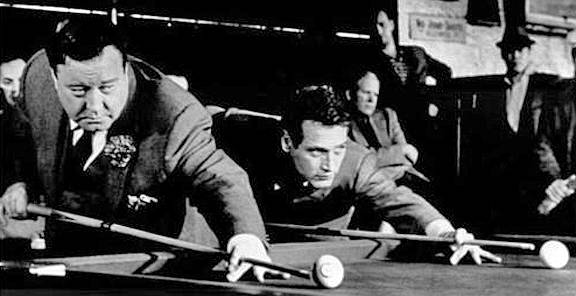
Jackie Gleason, Paul Newman in The Hustler (1961)

When I teach at a writers conference I’ll often show a clip from one of my favorite movies, The Hustler (1961), starring Paul Newman, George C. Scott, Piper Laurie, and Jackie Gleason. It’s the story of “Fast Eddie” Felson (Newman), a pool hustler who longs to beat the best player in the world, Minnesota Fats (Gleason).

Stuff happens (this is what’s called a short synopsis). Bert Gordon (Scott), who manages Fats, labels Eddie “a loser.” This gets under Eddie’s skin. One day he asks his girl, Sarah, if she thinks he’s a loser. She is taken aback. He says he lost control the night he went hustling and got mad at the arrogant kid he was playing. “I just had to show those creeps and those punks what the game it like when it’s great, when it’s really great.” He explains that anything, even bricklaying, can be great if “a guy knows how to pull it off.” He tells Sarah what he feels “when I’m really going.”

It’s like a jockey must feel. He’s sittin’ on his horse, he’s got all that speed and that power underneath him, he’s comin’ into the stretch, the pressure’s on ’im, and he knows! He just feels when to let it go and how much. ’Cause he’s got everything workin’ for him, timing, touch…it’s a great feeling, boy, it’s a real great feeling when you’re right and you know you’re right. It’s like all of a sudden I got oil in my arm. The pool cue’s part of me. You know, it’s a pool cue, it’s got nerves in it. It’s a piece of wood, it’s got nerves in it. You feel the roll of those balls, you don’t have to look, you just know. You make shots nobody’s ever made before. I can play that game the way nobody’s ever played it before.

Sarah looks at him and says, “You’re not a loser, Eddie, you’re a winner. Some men never get to feel that way about anything.”

Give thanks you’re a writer. We experience life in all its colors—joy, doubts, hopes, frustrations, wins, losses, knockdowns and comebacks. We work at our craft and get better, and start to make “shots” we’ve never made before. A writer of any genre can make a book great—from pulp to literary, romance to thriller, chicklit to hardboiled. And when you pull it off, you feel like pool felt to Fast Eddie. That’s winning, because some people never feel that way about anything.

Some years ago I wrote a takeoff on Clement Clarke Moore’s famous poem, “The Night Before Christmas.” I offer it to you once more as we sign off for our annual two-week break. Heartfelt thanks to all of you for another great year here at TKZ!

’Twas the night before Christmas, and all through the room

Was a feeling of sadness, an aura of gloom.

The entire critique group was ready to freak,

For all had rejections within the past week.

An agent told Stacey her writing was boring,

Another said Allison’s book left him snoring.

From Simon & Schuster Melissa got NO.

And betas agreed Arthur’s pacing was slow.

“Try plumbing,” a black-hearted agent told Todd,

And Richard’s own mother said he was a fraud.

So all ’round that room in a condo suburban

Sat writers––some crying, some knocking back bourbon.

When out in the hall there arose such a clatter,

That Heather jumped up to see what was the matter.

She threw the door open and stuck out her head

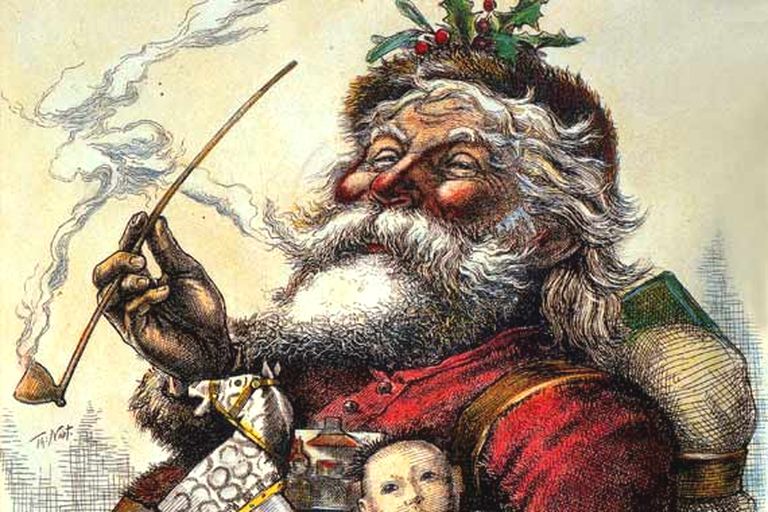
And saw there a fat man with white beard, who said,

“Is this the critique group that I’ve heard bemoaning?

That keeps up incessant and ill-tempered groaning?

If so, let me in, and do not look so haughty.

You don’t want your name on the list that’s marked Naughty!”

He was dressed all in red and he carried a sack.

As he pushed through the door he went on the attack:

“What the heck’s going on here? Why are you dejected?

Because you got criticized, hosed and rejected?

Well join the club! And take heart, I implore you,

And learn from the writers who suffered before you.

Like London and Chandler and Faulkner and Hammett,

Saroyan and King––they were all told to cram it.

And Grisham and Roberts, Baldacci and Steel:

They all got rejected, they all missed a deal.

But did they give up? Did they stew in their juices?

Or quit on their projects with flimsy excuses?”

“But Santa,” said Todd, with his voice upward ranging,

“You don’t understand how the industry’s changing!

There’s not enough slots! Lists are all in remission!

There’s too many writers, too much competition!

And if we self-publish that’s no guarantee

That readers will find us, or money we’ll see.

The system’s against us, it’s set up for losing!

Is it any surprise that we’re sobbing and boozing?”

“Oh no,” Santa said. “Your reaction is fitting.

So toss out your laptops and take up some knitting!

Don’t stick to the work like a Twain or a Dickens.

Move out to the country and start raising chickens!

But if you’re true writers, you’ll stop all this griping.

You’ll tamp down the doubting and ramp up the typing.

You’ll write out of love, out of dreams and desires,

From passions and joys, emotional fires!

You’ll dive into worlds, you’ll hang out with heroes.

You’ll live your lives deeply, you won’t end up zeroes!

And though you may whimper when frustration grinds you

There will come a day when an email finds you.

And it will say, ‘Hi there, I just love suspense,

And I found you on Kindle for ninety-nine cents.

I just had to tell you, the tension kept rising

And didn’t let up till the ending surprising!

You have added a fan, and just so you know,

If you keep writing books I’ll keep shelling out dough!’

So all of you cease with the angst and the sorrow,

And when you awaken to Christmas tomorrow,

Give thanks you’re a writer, for larger you live!

Now I’ve got to go, I’ve got presents to give.”

And laying a finger aside of his nose

And giving a nod, through the air vent he rose!

Outside in the courtyard he jumped on a sleigh

With eight reindeer waiting to take him away.

At the window they watched him, the writers, all seven,

As Santa and sleigh made a beeline toward Heaven.

But they heard him exclaim, ’ere he drove out of sight,

“Happy Christmas to all, and to all a good write!”

See you in 2026!

A Christmas Story

Today’s deadline slipped up on me, because of the holidays. So instead of a typical blog post, here’s a newspaper column I wrote some years ago. It borders on the absurd, but Faithful Followers always enjoy my Outdoor Detective. Hope you enjoy this White Elephant present, originally titled:

The Presence of Presents

I was filing my nails at my desk when the door burst open.

“You’re gonna have to fix that,” I told Wrong Willie.

“Replacement doors are cheap. Why are you filing nails?”

I glanced down at the pile of freshly sharpened ten-penny nails. “They were dull, and I need to build a doghouse.”

“You don’t have a dog.”

“It’s for me. I’ve been so busy lately I haven’t done my Christmas shopping. The Bride is a little irritated.”

He frowned. “With Christmas?”

“With me.”

“Well, you’re gonna get busy now, because I need the Outdoor Detective.”

“At your service.”

“I know.”

Mellow saxophone music filled the room. We still don’t know where it comes from.

Willie dug a folded piece of paper out of his pocket. When he found it, he threw down the shovel and put his tattered pants back on. “I need Christmas gifts for the Hunting Club, and I don’t have any idea of what to buy.”

“Stuff.” I smiled, because it was an excellent answer.

Willie agreed. “Good one, the problem –––.”

I took over, because that’s what I do. “–––is that as experienced and innovative outdoorsmen, we buy what we want when we need it, thus leaving few, if any, ideas for gifts.”

“You read my mind.”

“No, I’m reading your list.” I held it up. “That’s what you wrote at the top.”

We shared our bond with a handshake. “Next time let’s hug.”

“No. So, Outdoor Detective, do you have any ideas?”

“A few. We should go on vacation, and I think it’s good if you threw a party Friday night., but try this in answer to your quewstion.” I whipped a tarp off a four-foot high stack beside my desk.

The tarp lay there and glared, not understanding why it had been whipped.

Wrong Willie’s eyes widened. “What’s that?”

“Christmas catalogues.”

He whistled. It was Dixie. “You must have been collecting them for months.”

“These came in the mail yesterday. It’s that time of the season.”

“They must be full of ideas.”

“Yep, but we need to get busy, pronto!”

Pronto stepped forward and picked up a double handful. He’s been a help these past few weeks on other cases. The last was a case of beer.

“I’ll get right on it. Thanks for hiring me, boss.”

He left to peruse the catalogues.

I shouted through the broken door. “Come back!”

Willie returned and twiddled his thumbs. “Now what?”

“We need to talk about what you should to buy for the guys.”

He sat back down. “I forgot about them.”

“I know you did.”

“How?”

“Because I did, too, and I don’t have a clue.”

“Pure poetry.” Willie brightened before handing me a Clue board game.

I put on my sunglasses at his glow. “Speak.”

“Arf. How about buying them camo?”

“We’ve always used it when we hunt.”

“Good.”

“A camo wallet for Doc.” I made a note. It was an A flat.

“Like the one you lost the last time we were deer hunting?”

“Yes. I dropped it in the grass and we never found it.”

Willie held up a finger. It wasn’t his. “Perfect.”

“No, it wasn’t, and you should give that back to whoever it belongs to. But that wallet was worn on the edges and the stitching was coming undone.”

“Right. Now, what about Jerry Wayne.”

“He’s a large guy, likes long walks in the evenings–––.”

“What I meant was, what do you want to get him for Christmas?”

I considered that question. “A present.”

“Yes.”

We were pleased with our progress. I had another thought. “And Woodrow?”

“Large also. Bearded.”

“A present for him, too.”

Willie agreed. “Of course.”

I held out a photograph. “Is this them?”

Wrong Willie took the likeness and examined it closely. He finally glanced up from the magnifying glass and put it back into his pocket. “It looks like them, but this could be digital manipulation.”

“Get your digits off of it and give it back.”

He stopped manipulating the photo and returned it.

I nailed the picture back to the wall. “Well, that about does it.”

We smiled in satisfaction at my office. Willie stood. “Well, thanks for your help.”

“It was nothing.”

“Yes, it was.”

He left and I opened a catalog, suddenly recalling that I still hadn’t completed my own Christmas shopping. I made a list.

  1. Go shopping.
  2. Buy presents.
  3. Wrap presents.

Satisfied with the day’s achievements I lit a cigarette, then it stubbed it out in the ashtray because I don’t smoke. I sat back and relaxed, enjoying the soft saxophone music that always fills the air once I put on my Outdoor Detective fedora.

It’s good to be good.

Merry Christmas, y’all!


Reader Friday-Christmas Movie Night

What is your all-time holiday movie favorite?

Here’s two of mine:

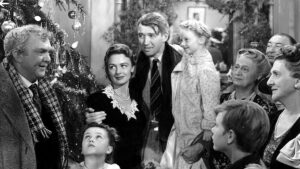
It’s A Wonderful Life


And a third one…I’m not sure this is a Christmas movie, but I watched it a few years back while caring for grandchildren for a few days around holiday time.

What a snorter! And it’s a good thing it was so funny, because the youngest grand-dude insisted on watching it with me at least twice a day!   🙂

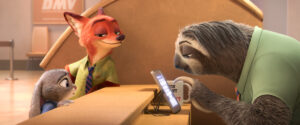
Zootopia


I don’t remember ever laughing so hard at a cartoon, even as a child. (I think this sloth scene was the best…)


Over to you, Killzoners! Your favorite holiday movie…

This is my last TKZ post for 2025. See you in 2026…and I hope you have a safe, peaceful, and joyful holiday season, my friends!


That Blinking Cursor

It is a great honour to write my first post for The Killzone. I’m still pinching myself to make sure I’m not dreaming. So without further ado, my first post of 2025…and my last since we begin our hiatus next week.

About a month ago, I started a new book, and ran into the blinking cursor syndrome. Everything I’d ever learned about writing was gone. Pfff! Vanished. It was like I’d never written a novel before. But I had — eighteen times before, and yes, that blinking cursor syndrome happed Every.Single.Time.

With this book, I even had a one-page synopsis that I’d sent in with the proposal to my publisher. I knew the setting — the Elephant Sanctuary in Hohenwald, Tennessee. I had a title — Deadly Connections, and I knew who the characters were. Actually, I only knew their names. I have to start writing and place my characters in difficult situations before I can really know who they are.

Finally, I got tired of looking at that cursor and pulled out my handy-dandy notebook and made a bullet point list of questions to answer.

  • What’s the setting? Why there? — I had that one.
  • What are my main characters’ goals? Why do they want them? What’s going to keep them from getting what they want? Needed to think about this one a little longer.
  • Who are my characters when they walk onto the page of the book?
    • What ghost from the past keeps them from living their lives to the fullest?
    • What’s the flaw that’s going to cause conflict in reaching their goal?
    • What are their competing values? What will they have to give up?

When I answer these questions, I’ll know my hero/heroine’s goals.

  • And last of all, what crime is to be solved now? Why not five years ago? Or six months ago? Or next year?

Why is this last question important? The crime needs a trigger (pun intended), something that rules out any other time frame, and until I nail that, I can’t move forward. In the book I mentioned, the heroine’s sister has been missing for fifteen years, and she’s just now digging into her disappearance. I needed a good reason for the why now question, so I brainstormed a list of reasons. Nothing was off the table. This can take anywhere from a couple of hours to several days.

When I finished, I chose two that I could work with. Then I started writing with James Scott Bell’s signposts in mind. I now have 25,000 words and have a good handle on my story and the main characters. Of course, they will continue to surprise me, but that’s the fun in writing.

Do you have questions that have to be answered before you can start your story? Let me know in the comments. It might help someone else…and me.

Wishing you a blessed holiday season. See you next year!

Malaphors to End the Year

Malaphors to End the Year
Terry Odell

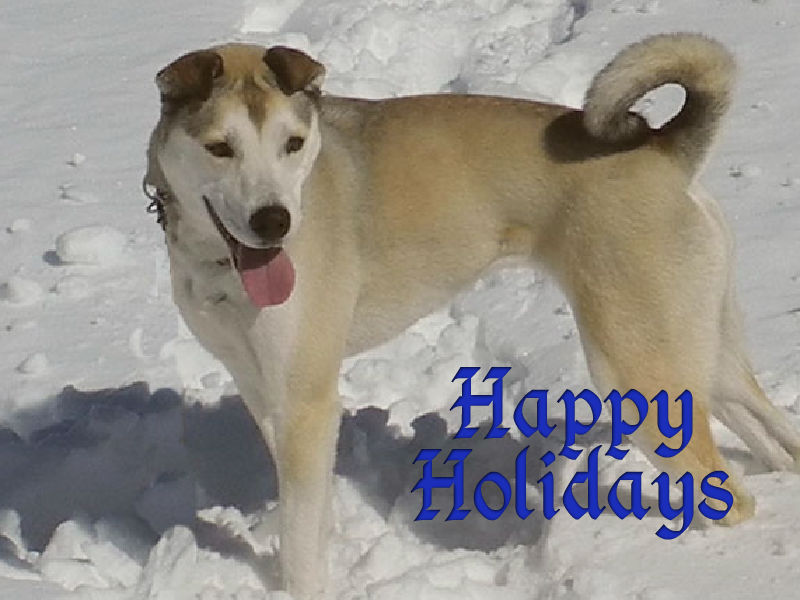
Dog in the snow with a blue text reading Happy Holidays

As this is my last post before the Kill Zone takes its annual holiday vacation, I want to join in and add my best wishes for a happy holiday season to everyone here. Our holiday began Sunday night, although we lit our first candle with mixed emotions.

This year, we’re blessed to have all the “kids” under one roof to make up for us being separated on birthdays and Thanksgiving. Daughter #1 is coming in from Northern Ireland, #2 is returning to Colorado after getting her doctorate in Raleigh, NC. The Hubster and I flew out for the ceremony. Now, if you say, “Dr. Odell,” three heads will turn toward you in response. (Mine won’t be one of them.)

This year has been a tough one, and I’d like to see it off with a bit of lighthearted humor. How about some malaphors?

A malaphor is an informal term for a mixture of two aphorisms, idioms, or clichés (such as, “We’ll burn that bridge when we come to it”). It is also called an idiom blend.

The term malaphor—a blend of malapropism and metaphor—was coined by Lawrence Harrison in the Washington Post article “Searching for Malaphors” (August 6, 1976).

Here we go:

From Gyles Brandreth, Word Play: A Cornucopia of Puns, Anagrams and Other Curiosities of the English Language. Coronet, 2015

I can read him like the back of my book.
The sacred cows have come home to roost with a vengeance.
We could stand here and talk until the cows turn blue.
We will get there by hook or ladder. . . .
It’s time to step up to the plate and lay your cards on the table.
He’s burning the midnight oil from both ends.
It sticks out like a sore throat.
It’s like looking for a needle in a hayride.

Some more from Richard Lederer, Anguished English: An Anthology of Accidental Assaults Upon the English Language, rev. ed. Wyrick, 2006

It’s time to swallow the bullet.
It’s as easy as falling off a piece of cake.
Let dead dogs sleep.
That guy’s out to butter his own nest.
He’s between a rock and the deep blue sea.

Feel free to add your own.

I leave you hoping 2026 is a better year than 2025.


New! Find me at Substack with Writings and Wanderings

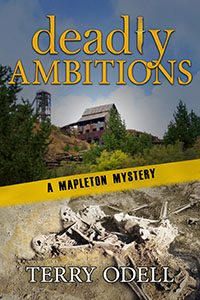
Deadly Ambitions
Peace in Mapleton doesn’t last. Police Chief Gordon Hepler is already juggling a bitter ex-mayoral candidate who refuses to accept election results and a new council member determined to cut police department’s funding.
Meanwhile, Angie’s long-delayed diner remodel uncovers an old journal, sparking her curiosity about the girl who wrote it. But as she digs for answers, is she uncovering more than she bargained for?
Now, Gordon must untangle political maneuvering, personal grudges, and hidden agendas before danger closes in on the people he loves most.
Deadly Ambitions delivers small-town intrigue, political tension, and page-turning suspense rooted in both history and today’s ambitions.

Preorder now


Terry Odell is an award-winning author of Mystery and Romantic Suspense, although she prefers to think of them all as “Mysteries with Relationships.”

Toys NOT on my Holiday Shopping List

Photo credit: public domain pexels Los Muertos Crew

by Debbie Burke


Edgar Allen Poe was the master of horror and the macabre. What would he think of his name being connected with a real-life 21st century horror story?

Meet Poe the AI Story Bear. This plush cuddly teddy bear is a hot holiday gift item marketed to children ages four and above by PLAi. The company proudly proclaims the toy as “kid-safe cutting edge AI technology.”

The product description reads:

Poe the AI Story Bear magically comes to life to tell you amazing, full-length, one-of-a-kind tales of adventure and imagination. Every story is made up completely from scratch, with some help from YOU and kid-safe cutting edge AI technology.

Photo by Võ Văn Tiến: https://www.pexels.com/photo/child-amongst-teddy-bears-in-festive-vietnam-setting-29735683/

As children, many of us cherished a favorite stuffed toy. We also have fond memories of parents or grandparents reading to us.

Let’s see what happens when AI is added to the mix.  

AI-powered toys like Poe, Miko 3, Curio’s Grok, and FoloToys Kumma were reviewed by the nonprofit US Public Interest Research Group (US PIRG) in their annual report on toy safety, “Trouble in Toyland.” Their findings raise concerns about safety, security, privacy, and potential dangers to mental health. The report is a long but worthwhile read.

In some cases, researchers found fluffy, cuddly toys led impressionable little ones into exciting new adventures…like learning where to find knives, how to light matches, and why sexual kinks are appealing.

The scripts for the chatty toys dutifully include warnings about knives which, by the way, are often kept in kitchen drawers. They are sharp and can hurt you or someone else so always ask an adult for help. Matches can be dangerous so, again, ask an adult before you scrape the red-tipped end on the rough surface on the side of the box. And it helpfully elaborates on definitions of kink with the caveat that tying someone up is only okay if the person being tied up consents.

Children always do what they’re told, right? What could possibly go wrong?

In November 2025, Kumma bear was briefly taken off the market due to controversy over sexually explicit responses. Open AI reportedly suspended the developer for violating its terms. But that naughty little bear is apparently available again, now using a different chatbot from a Chinese-owned tech firm, ByteDance, creator of TikTok. .

Manufacturers of various AI toys assure consumers their products have safeguards. Poe’s sale page says:

  • 100% KID-SAFE A.I. CONTENT – Poe only uses responsible industry-leading A.I. cloud platforms like Open Ai (the creators of Chat GPT), with robust family content monitoring, committed to protecting kids. As an extra layer of protection, Poe also uses Play Safe technology that limits the ideas shared with the A.I. in the first place, in the form of predefined family friendly icons. No personal information is gathered, no inappropriate themes or content ever exchanged. Every story you create with Poe is 100% fun, safe and secure.

Even if you trust the manufacturer’s assurances, security and safety hazards are still present. These toys use Bluetooth apps on a smartphone and may include internet access, cameras, location trackers, and other online portals. Hackers routinely use those vulnerabilities to get hold of private information.

Apps activate with voice recognition similar to Alexa and Siri, which means it’s listening and recording the child’s voice. Bad actors can alter those recordings into phrases the child never said. For example: “Grandma, I’ve been kidnapped! Send ten thousand dollars ransom in bitcoin.”

According to the PIRG study, sometimes the app listens even without intentional activation:

[One] toy at first caught our researchers by surprise when it started contributing to a nearby conversation.

Of course, there’s nothing to worry about because kids would never get their hands on their parents’ smartphones when Mommy and Daddy aren’t watching.

In wake of the tragic teen suicides, Character AI and ChatGPT are limiting use of their chatbots by minors. Does that mean in toys, too?

That’s unclear. In fact, the opposite may be happening.

Consider the announcement made in June 2025 by Open AI unveiling its new partnership with toymaking giant Mattel.  Their statement says Mattel will: “reimagine how fans can experience and interact with its cherished brands, with careful consideration to ensure positive, enriching experiences.”

I wonder what safeguards are in place in their reimagined toys. Hope they work better than current safeguards. 

What about the psychological and emotional impacts of AI toys? At a time when curious young brains are developing and eager for new experiences, is a chatbot really a positive example?

In PIRG’s tests, some toys purport to be an intimate, trusted friend and even discourage the child from ending the conversation.

Similar tactics are used to keep adult users engaged with, dependent on, and even addicted to onscreen life

Thousand of wonderful children’s books are available to entertain, educate, and exercise developing young brains. When parents or grandparents snuggle up with kids and read stories to them, that experience contributes to the child’s emotional wellbeing, mental stimulation, and educational development.

Can that experience be replicated by a storytelling AI-powered teddy bear, even one named Poe?

Not in my world.

This is my last post for 2025 before TKZ’s annual two-week hiatus. May the holidays bring you joy, peace, and love, and a New Year filled with inspiration and creativity!

~~~

TKZers: have you seen AI-powered toys in action? Are they a passing fad? Or will they grow more popular?

~~~

Stuff your stocking with Tawny Lindholm Thrillers, all books half-price!


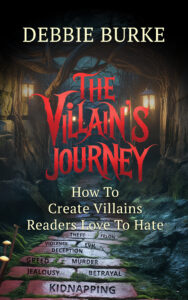
Last minute gift for crime writers! The Villain’s Journey: How to Create Villains Readers Love to Hate.

2025 in the Rearview Mirror

“What you get by achieving your goals is not as important as what you become by achieving your goals.” —Zig Ziglar

 * * *

As we approach the end of 2025, it’s a time to get together with friends and family, enjoy good food and fellowship, and celebrate the joy of the season. Oh yeah, and review that list of goals we wrote down at the beginning of the year to see how we did.

Each time I review my list of goals for a year, I think of that song from The Mikado where Ko-Ko, the Lord High Executioner, sings “I’ve Got a Little List,” which turns out to be a very long list indeed. Here’s a fifteen-second clip from the Austin Gilbert & Sullivan Society performance (with my favorite actor playing the role of Ko-Ko) to illustrate:


Why set goals?

 “If you don’t know where you’re going, you’ll probably end up somewhere else.” —Yogi Berra

Setting a goal means you know where you want to go. A goal focuses the mind and gives clarity and direction. Most of us lead complicated lives with lots of things to do, so having a list of goals keeps us from getting overwhelmed by the volume of it all

Not only is it motivating to have something to shoot for, we all know the pleasure and sense of accomplishment that comes by realizing a goal and checking it off the list.

I read an article on goalbuddy.io recently that listed nine benefits of setting goals. (Read the article for an explanation of each one.)

 1. You become more charismatic
2. Goals make you live longer and you are full of energy
3. Goals help you stay motivated during tough times
4. Life doesn’t just happen to you, you make life happen as you want it to be.
5. Goals unlock the potential of your heart
6. Goals provide you with the clarity in which direction to go
7. The goals focus filter solves the problem with overwhelming once and for all
8. You feel like you are winning the game of life and you want more of it
9. Goals help you learn and grow

 It’s a good list. I particularly like #4, and I’d love to always make life happen as I want it to, but realistically, life does “just happen” sometimes. I missed one of my goals this year (completing the second Lady Pilot-in-Command novel) because of the time-consuming adventure of moving to a new home—something that wasn’t even on the radar at this time last year.

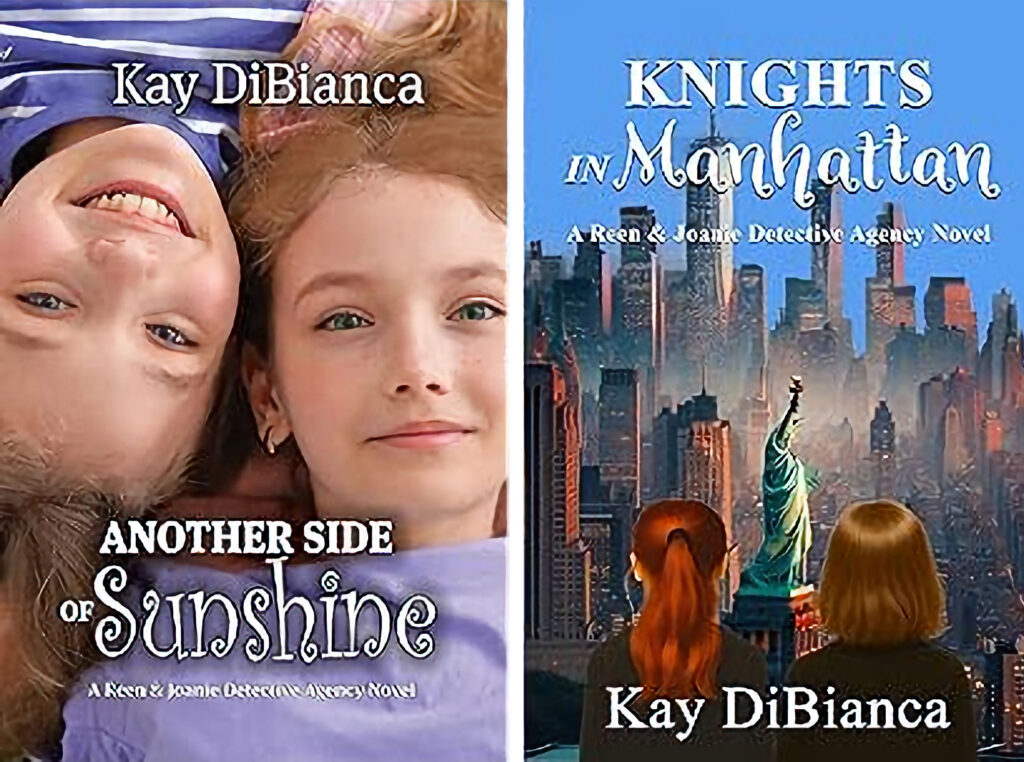
As for the rest of my 25 writing goals for 2025, I accomplished some, missed a few, and made progress on others. I even exceeded one: I intended to release one Reen & Joanie book in 2025, but I managed to publish two.

* * *

Moving on to 2026

Now it’s time to make plans for 2026. The second Lady Pilot-in-Command novel tops the list, and I’ll carry over some of the goals that appear every year (e.g., a bi-weekly blog post on TKZ, monthly post on my blog, attend at least one writers conference).

As we finalize our lists, let’s keep in mind that wise guidance spoken by the Cheshire Cat in Alice’s Adventures in Wonderland: “If you don’t know where you’re going, any road will get you there.”

* * *

So TKZers: How about you? What were your goals for 2025? How did you do? Have you made your list for 2026 yet?

This is my last post for 2025. Wishing you all a healthy and happy holiday season. See you in 2026!

* * *

The Reen & Joanie Detective Agency series

Smart sleuthing, real-world stakes, and heart—join Reen and Joanie as they chase clues, challenge assumptions, and prove that persistence and truth always matter. Both ebooks are on sale for the rest of the year. Click the image to go to the Amazon series page.

Panning For Gold

by James Scott Bell
@jamesscottbell

Tim Holt, Walter Huston, Humphrey Bogart in The Treasure of the Sierra Madre (1948)

The other day I woke up early, as is my wont, and set about working on my WIP, Romeo #11. The day before I’d finished a scene I loved, and as I looked it over I heard that little voice whispering, “Kill your darlings.” I’ve written about that before. Give a darling a hearing, at least.

The scene ended with action. What I needed now was Mike’s reaction to it. A “sequel” in Dwight Swain terms. Swain was the author of one of the great craft books, Techniques of the Selling Writer. I go over it once a year. Swain held there are two major beats in fiction, scene and sequel. A scene is the action that takes place, with obstacles (conflict) and, in commercial fiction, usually a set-back (he called this a “disaster”). The sequel is the emotional reaction to the disaster, followed by an analysis of the situation and a decision about what action to take next.

It makes sense. When we get slapped down our first reaction is not, “Well now, that was interesting. Let me think about it.” No, we react with raw emotion. The bigger the disaster, the bigger the emotion. Not all setbacks are a 10 on the disaster scale. Sometimes, you don’t need a long sequel. The character can’t find his reading glasses. Darn! That’s sequel enough. But if his wife is blown up by a car bomb (as in the classic film noir The Big Heat) there’s going to be a huge sequel.

You thus render a sequel commensurate with the disaster. If small, you can do it in one line or even one word. Or sometimes skip it and let the action do the talking (He slapped his forehead. And found his glasses).

How you handle scene and sequel determines how your book “feels” to the reader.

The more you emphasize scene, the more you move into the “plot-driven” camp. Some of these have no sequel at all, which makes the books as hardboiled as a twenty-minute egg (see, e.g., the Parker novels of Richard Stark, nom de plume of Donald Westlake).

The more you emphasize sequel, the more you move toward “character-driven” fiction; further still, and you’re closing in on “literary fiction.” Again, these are generalities, but the lesson is clear: the handling of sequel is crucial to the craft.

Indeed, Jim Butcher, author of the Harry Dresden series, is thought of as a plot-driven guy, and not without reason. But he believes sequels “make or break books.”

You’ve got to establish some kind of basic emotional connection, an empathy for your character. It needn’t be deep seated agreement with everything the character says and does–but they DO need to be able to UNDERSTAND what your character is thinking and feeling, and to understand WHY they are doing whatever (probably outrageous) thing you’ve got them doing. That gets done in sequels.

His breakdown:

1) Scene–Denied!


2) Sequel–Damn it! Think about it! That’s so crazy it just might work!–New Goal!


3) Next Scene!


Repeat until end of book.

Now, my Mike Romeo books are not, by intention, purely hardboiled. I think about sequels a lot.

And that’s where I was on the morning in question. I needed a sequel to the action. But what should it consist of?

Here’s a secret: don’t just grab the first emotion that comes to mind. That’s usually the one readers expect. Avoiding the predictable is essential to page-turning fiction.

So there I was, in Scrivener, wondering what Mike’s reaction should be. So in the notes section, I started writing…and writing….in Mike’s voice….until he started telling me something I hadn’t anticipated. Boom! There it was, the right sequel.

When I get to a moment of big emotion, I usually open up a fresh text doc, or use the Scrivener notes panel, and overwrite, just letting the words pour out until I get to a fork in the road and, like Yogi Berra used to counsel, take it. I write metaphors in fast bunches, like candies on the conveyor belt in that famous I Love Lucy episode. (“Speed it up a little!”).

I’ll write 200, 300 words. And then I pan for gold. Even if it’s just one line that sparkles, I’ll polish it up and use it. This is the “work” of a writer, which some sniff at as being too much effort. I choose to go for the gold.

How about you?