Give Thanks You’re a Writer

by James Scott Bell
@jamesscottbell
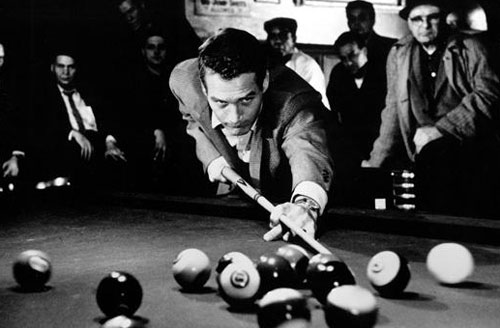
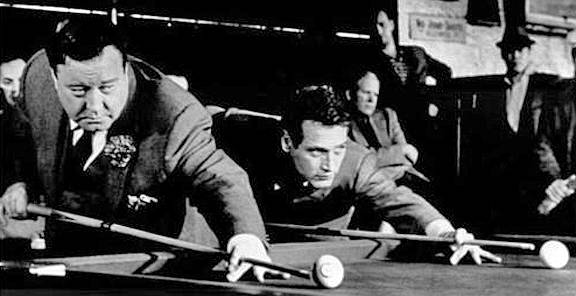
Jackie Gleason, Paul Newman in The Hustler (1961)

When I teach at a writers conference I’ll often show a clip from one of my favorite movies, The Hustler (1961), starring Paul Newman, George C. Scott, Piper Laurie, and Jackie Gleason. It’s the story of “Fast Eddie” Felson (Newman), a pool hustler who longs to beat the best player in the world, Minnesota Fats (Gleason).

Stuff happens (this is what’s called a short synopsis). Bert Gordon (Scott), who manages Fats, labels Eddie “a loser.” This gets under Eddie’s skin. One day he asks his girl, Sarah, if she thinks he’s a loser. She is taken aback. He says he lost control the night he went hustling and got mad at the arrogant kid he was playing. “I just had to show those creeps and those punks what the game it like when it’s great, when it’s really great.” He explains that anything, even bricklaying, can be great if “a guy knows how to pull it off.” He tells Sarah what he feels “when I’m really going.”

It’s like a jockey must feel. He’s sittin’ on his horse, he’s got all that speed and that power underneath him, he’s comin’ into the stretch, the pressure’s on ’im, and he knows! He just feels when to let it go and how much. ’Cause he’s got everything workin’ for him, timing, touch…it’s a great feeling, boy, it’s a real great feeling when you’re right and you know you’re right. It’s like all of a sudden I got oil in my arm. The pool cue’s part of me. You know, it’s a pool cue, it’s got nerves in it. It’s a piece of wood, it’s got nerves in it. You feel the roll of those balls, you don’t have to look, you just know. You make shots nobody’s ever made before. I can play that game the way nobody’s ever played it before.

Sarah looks at him and says, “You’re not a loser, Eddie, you’re a winner. Some men never get to feel that way about anything.”

Give thanks you’re a writer. We experience life in all its colors—joy, doubts, hopes, frustrations, wins, losses, knockdowns and comebacks. We work at our craft and get better, and start to make “shots” we’ve never made before. A writer of any genre can make a book great—from pulp to literary, romance to thriller, chicklit to hardboiled. And when you pull it off, you feel like pool felt to Fast Eddie. That’s winning, because some people never feel that way about anything.

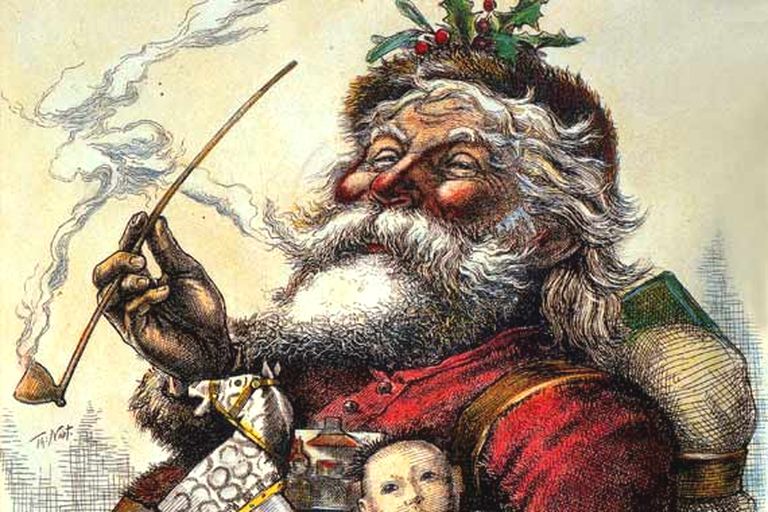
Some years ago I wrote a takeoff on Clement Clarke Moore’s famous poem, “The Night Before Christmas.” I offer it to you once more as we sign off for our annual two-week break. Heartfelt thanks to all of you for another great year here at TKZ!

’Twas the night before Christmas, and all through the room

Was a feeling of sadness, an aura of gloom.

The entire critique group was ready to freak,

For all had rejections within the past week.

An agent told Stacey her writing was boring,

Another said Allison’s book left him snoring.

From Simon & Schuster Melissa got NO.

And betas agreed Arthur’s pacing was slow.

“Try plumbing,” a black-hearted agent told Todd,

And Richard’s own mother said he was a fraud.

So all ’round that room in a condo suburban

Sat writers––some crying, some knocking back bourbon.

When out in the hall there arose such a clatter,

That Heather jumped up to see what was the matter.

She threw the door open and stuck out her head

And saw there a fat man with white beard, who said,

“Is this the critique group that I’ve heard bemoaning?

That keeps up incessant and ill-tempered groaning?

If so, let me in, and do not look so haughty.

You don’t want your name on the list that’s marked Naughty!”

He was dressed all in red and he carried a sack.

As he pushed through the door he went on the attack:

“What the heck’s going on here? Why are you dejected?

Because you got criticized, hosed and rejected?

Well join the club! And take heart, I implore you,

And learn from the writers who suffered before you.

Like London and Chandler and Faulkner and Hammett,

Saroyan and King––they were all told to cram it.

And Grisham and Roberts, Baldacci and Steel:

They all got rejected, they all missed a deal.

But did they give up? Did they stew in their juices?

Or quit on their projects with flimsy excuses?”

“But Santa,” said Todd, with his voice upward ranging,

“You don’t understand how the industry’s changing!

There’s not enough slots! Lists are all in remission!

There’s too many writers, too much competition!

And if we self-publish that’s no guarantee

That readers will find us, or money we’ll see.

The system’s against us, it’s set up for losing!

Is it any surprise that we’re sobbing and boozing?”

“Oh no,” Santa said. “Your reaction is fitting.

So toss out your laptops and take up some knitting!

Don’t stick to the work like a Twain or a Dickens.

Move out to the country and start raising chickens!

But if you’re true writers, you’ll stop all this griping.

You’ll tamp down the doubting and ramp up the typing.

You’ll write out of love, out of dreams and desires,

From passions and joys, emotional fires!

You’ll dive into worlds, you’ll hang out with heroes.

You’ll live your lives deeply, you won’t end up zeroes!

And though you may whimper when frustration grinds you

There will come a day when an email finds you.

And it will say, ‘Hi there, I just love suspense,

And I found you on Kindle for ninety-nine cents.

I just had to tell you, the tension kept rising

And didn’t let up till the ending surprising!

You have added a fan, and just so you know,

If you keep writing books I’ll keep shelling out dough!’

So all of you cease with the angst and the sorrow,

And when you awaken to Christmas tomorrow,

Give thanks you’re a writer, for larger you live!

Now I’ve got to go, I’ve got presents to give.”

And laying a finger aside of his nose

And giving a nod, through the air vent he rose!

Outside in the courtyard he jumped on a sleigh

With eight reindeer waiting to take him away.

At the window they watched him, the writers, all seven,

As Santa and sleigh made a beeline toward Heaven.

But they heard him exclaim, ’ere he drove out of sight,

“Happy Christmas to all, and to all a good write!”

See you in 2026!

Put Your Lead Between Opposite Characters

by James Scott Bell
@jamesscottbell

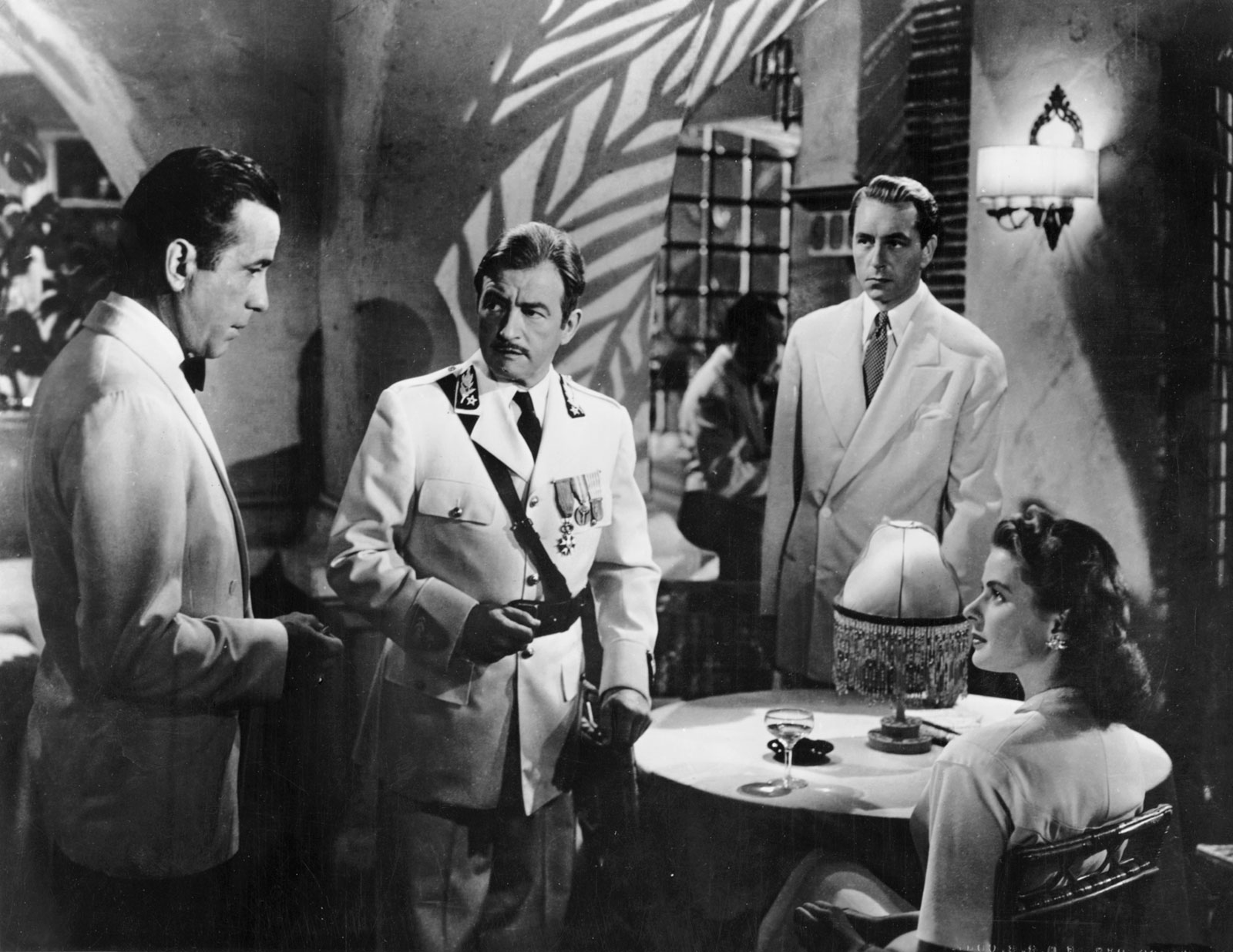
Humphrey Bogart, Claude Rains, Paul Henreid, Ingrid Bergman in Casablanca

In Write Your Novel From the Middle, I explain a crucial moment in a plot where the lead character must make a choice. It usually involves a moral dilemma, with the character’s realization of who he is and how his flaws affect the characters around him. He then has to make a decision about what kind of person he is going to be: Stay the same and continue to hurt people? Or find his way to redemption?

In the middle of Casablanca, for example, we see Rick being a mean drunk toward Ilsa, who has just poured her heart out to him explaining why she had to leave him in Paris. As soon as she tearfully exits the scene, Rick drops his head into his hands, and we know he’s looking with disgust at himself, as if in a mirror. That’s why I call this the “mirror moment” which usually happens smack dab in the middle of a novel or film. Indeed, it is the moment that tells us what the story is really all about.

Casablanca does something else to magnify Rick’s dilemma—it places Rick between two characters who represent opposite moral poles. On one side is Louis Renault, the corrupt French police captain whose sole purpose in life is holding on to his cushy job and bedding desperate women trying to get out of Casablanca. He isn’t loyal to the French or the Germans; he’s loyal to Louis, and does what he can to keep from rocking the boat.

On the other side of Rick is Victor Laszlo, the heroic resistance fighter. Rick admires him, but isn’t going to help him, even though Louis has announced his impending arrest in Rick’s café. In addition to his avowed detachment, Rick has another reason not to help Laszlo—turns out he’s married to Ilsa, the woman Rick believes betrayed him.

What Casablanca is really about, then, is how Rick gets to the decision not just to help Laszlo and Ilsa, but even to sacrifice his life (potentially) to do it. And in the famous ending twist, Rick’s moral reformation inspires Louis to make a similar choice. It’s “the beginning of a beautiful friendship.”

Hold that thought.

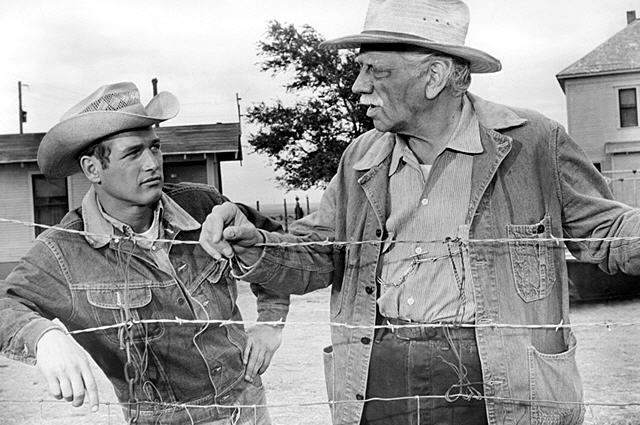
The other night I watched the Paul Newman film, Hud (1963). This superb movie (based on Larry McMurtry’s novel Horseman, Pass By) won three well-deserved Academy Awards: Best Actress (Patricia Neal); Best Supporting Actor (Melvyn Douglas); and Best Cinematography (James Wong Howe). The protagonist is Lon Bannon. He lives on a modest cattle ranch with his Granddad and uncle, Hud, and Alma, their housekeeper.

Paul Newman and Melvyn Douglas in Hud

Lon has just turned seventeen. He’s on the cusp of adulthood. And he’s offered two paths. The first is from his beloved Granddad, who has built his entire life on working hard and doing what’s right and honest. The other is from Hud, whom Lon admires for his way with women and ease at being a “good ol’ boy.” As Hud explains to Lon, “When I was your age, I couldn’t get enough of anything.” Lon is increasingly leaning in Hud’s direction.

Then tragedy strikes the ranch. A herd of cattle Granddad recently brought in from Mexico has foot-and-mouth disease. All of the cows have to socially distance be exterminated. Hud tries to convince his father to sell off the bad cows to unsuspecting neighbors. Granddad, of course, will have none of it. “You’re an unprincipled man, Hud,” he says.

“Don’t let that fuss you,” Hud snaps back. “You’ve got enough for both of us.” Indeed, deep down, Hud would like nothing better than for Granddad to kick the bucket so Hud can take his half of the ranch and do what he pleases with it.

Once again, the mirror moment happens in the middle of the film. Lon and Granddad have gone to a movie together and are having a bite to eat at a diner. Hud comes stumbling in with a woman—another man’s wife. There’s a tense exchange between Hud and Granddad, who clasps his chest and keels over. Hud and Lon get him into a pickup truck and drive him back to the ranch. As Granddad sleeps between them, Lon says:

LON: He’s beginning to look kind of worn out, isn’t he? Sometimes I forget how old he is. Guess I just don’t want to think about it.

HUD: It’s time you started.

LON: I know he’s gonna die someday. I know that much.

HUD: He is.

LON: Makes me feel like somebody dumped me into a cold river.

HUD: Happens to everybody. Horses, dogs, men.  Nobody gets out of life alive.

That “dumped into a cold river” is Lon’s awakening to the stakes. He’s going to have to make a decision on how to live life once Granddad is gone.

Two plot points happen that turn Lon away from Hud. First is Hud’s attempted rape of Alma, which Lon breaks up. Alma has been through the grinder of life, and Lon considers her good and kind. Seeing what Hud tries to do to her disgusts him.

The second point is when Lon and Hud are driving back to the ranch from a carouse in town and find Garnddad crawling on the road. He’d fallen off his horse, and is in bad shape. Lon cradles his head, tells him to hang on, that everything will be all right. Granddad says, “I don’t know if I want it to be.” He looks over at Hud. “Hud’s here waitin’ on me. And he ain’t a patient man.” With that he gives up the ghost.

Hud’s ill treatment of Granddad is the final straw for Lon. He decides to pack up and leave, not quite sure where he’ll end up. Hud makes one last pitch for Lon to stay on.

HUD: I guess you’ve come to be of your granddaddy’s opinion that I ain’t fit to live with. That’s too bad. We might’ve whooped it up some. That’s the way you used to want it.

LON: I used to. So long, Hud.

Lon walks away. Hud goes into the ranch house and grabs a beer from the icebox. He returns to the door to look at his departing nephew. Then, with a dismissive wave, he shuts the door.

That’s the end. Hud is all alone. No one to love him, no one for him to love. In this instance, contrary to Casablanca, the immoral character does not change, and we are shown the tragedy of that choice.

So consider setting your Lead between two characters who represent opposites on the moral scale. This will deepen the Lead’s dilemma and the story as a whole.

Comments welcome.