Titles and Comp Titles — How To Find the Best Ones For Your Book

I asked my dear friend Ruth Harris to dazzle us with her experience of choosing titles and comps, and she delivered. Big time.

Ruth is a New York Times, award-winning bestselling author whose novels have sold millions of copies in hardcover and paperback editions. Translated into 19 languages and sold in hardcover and paperback editions in more than 30 countries, her books were Literary Guild, Book-of-the-Month Club and book club selections around the world. Ruth is also a former Editor, Editor-in-Chief and Publisher at Big Six and independent NY publishers who knows the publishing business from both sides of the desk.

And so, she’s an author who knows what works and what doesn’t. Enjoy!

A Prince by any other name would still be a Prince. (I hope.)

Meghan by any other name would still be a princess.

Ditto Diana.

Lord or Lady. Peasant or serf.

Professor or student.

Beginner or expert.

Titles orient us to where we are and what we should expect next.

Doesn’t just apply to people, either. Also applies to books, because time-pressed readers/editors/agents take only a few seconds to make their buy decision, and authors have the same few seconds to make their sale.

If you’re aiming for a traditional publishing deal including relevant comp titles in your query letter is a must, because comp titles define the expectations and positioning of your book. Well-chosen comp titles provide a target in a crowded marketplace, and will affect your cover, blurb and sales pitch.

Agents and publishers ask for comp titles because they need a quick shorthand way to establish the basis for sales expectations and marketing. The agent/editor/potential reader needs a reference point, and, if your book will appeal to readers who enjoy legal thrillers, steamy romance or epic fantasy, you’re providing a valuable selling tool by providing appropriate comp titles that give a solid clue about which market you’re aiming at.

Meaning before details.

According to John Medina of the University of Washington, the human brain requires meaning before details. When listeners doesn’t understand the basic concept right at the beginning, they have a hard time processing the rest of the information.

Bottom line for writers: The title and the cover—image plus title—have to work as a unit to explain the hook or basic concept first. Wrong image and/or misfit title confuse the would-be buyer and you lose the sale. On-target image plus genre-relevant title and the reader/agent/editor will look closer.

Your cover indicates visually by color, design and image what the reader can expect inside—a puzzling mystery, a swoony romance, futuristic scifi, or scary horror—but the first words the prospective reader/agent/editor sees are the ones in the title.

Your title tells readers what to expect.

You’re unpublished but your title is awfully close to Nora Roberts’ newest or…ahem…a clone of James Patterson’s most recent? Come on. Get real. Please. For your own sake.

Your book is about a modest governess in 19th Century London who falls in love with the maddeningly handsome Prince who lives in the castle next door, but your title promises hotter-than-hot, through-the-roof sales like, oh, maybe, 50 Shades Of Grey? Really? 51 Shades of Grey is the best you can come up with? Seriously?

If you’re in a quandary about choosing a title for your book here are Anne’s 10 Tips for Choosing the Right Title for Your Book.

You can also research successful titles in your genre for inspiration. Whether your genre is romance or suspense, you will find that certain words recur. Just be aware that most publishing contracts give the publisher the right to change the title. Sometimes the author is pleased.

Other times? Not so much. (Don’t ask me how I know, but horror stories abound.)

If the title you’ve chosen for your book is your idea of the one and only, check your contract to make sure you have the last word on title. The reality, though, is that few author have this right and, if you’re just starting out, you won’t. Sorry about that, but it’s the reality.

If you’re self-pubbing, you control the decision about titles. And, if you think of a better title in the future, you can easily change a title later.

All about comp titles.

The writer’s version of GPS, your comps tell readers/agents/editors where they are and what they can expect if they go further. That’s why a poorly chosen title or the wrong comp titles are an invitation to nowheresville for you and your book.

A sweet romance compared to a horror epic called Tarantula Invasion? I don’t think so.

Scifi comped to something titled A Duke For The Duchess? Nope.

Serial killer police procedural titled Miss Emily’s Quaint Cupcake Cafe? You’re joking, right?

Comp titles are books that are similar to yours. Comps help agents/editors/readers figure out who your book will appeal to and how big the potential audience might be. Comps give the Art Department or your cover artist a starting point and help them understand what is required.

Comps are indispensable to the sales department at a publisher and serve the same purpose in your blurb. Sales reps have only a few second to interest a buyer or bookstore owner. Being able to tell them that New Book X is like Old Book Y is useful shorthand telling the prospective buyers something about the likely audience and sales potential.

  • “If you like X, you’ll love Y”
  • “If you like action-adventure with strong female leads, you’ll like Y”
  • “If you like Regency romance, you’ll like Y”
  • “Readers who like Dean Koontz will love Y”

Another approach is X is like Y—with a twist.

  • “Cozy mystery with dragons”
  • “Historical mystery with space ships”
  • “Romantic suspense in a gay retirement home”

A third example is X meets Y—with a twist.

  • “Jack Reacher meets Jane Austen”
  • “Fan fiction meets literary memoir”
  • “Leo Tolstoi meets K-pop.”

Do’s and don’ts of choosing comp titles.

  • Do stay within your own genre (or genres if you write mash ups).
  • Do keep it realistic. Choose comps with the same likely sales pattern: out of the gate with a burst or a long, slow and steady sales arc, front list star vs backlist stalwart.
  • Do keep it recent: choose titles published within the last two or three years so that they are still fresh in the minds of reader/agents/editors/sales staff/store buyers. Pointless to choose a comp from a decade ago that no one remembers.
  • Don’t abandon common sense and compare your book to a #1 NYT bestseller or the latest gee-whiz phenom.
  • Don’t mix formats. If your book will be offered in a digital edition, don’t compare it to a hardcover title and vice versa.
  • Don’t jump genres. Compare apples to apples, oranges to oranges. That is, compare scifi to scifi, thriller to thriller, epic fantasy to epic fantasy, literary fiction to literary fiction.
  • Don’t ignore demographics. If your book will appeal to women, be sure to choose comps that will appeal to that same reader. Don’t choose a comp that will appeal to young adult readers or males looking for hairy-chested adventure in the remote jungles of Borneo.

Where to find good comp titles.

Amazon, Barnes & Noble, Kobo and the gang.

Because readers of romance tend to buy more romance and readers of action-adventure tend to buy more action-adventure, type the title of a book similar to yours into the search window of any book seller to find recommendations under headers like:

  • “Customers who bought this also bought”
  • “What customers bought after viewing this”
  • “Trending now”
  • “Pageturners”
  • “Monthly picks”
  • “Frequently bought together”
  • “Favorite authors”

Goodreads

Tell Goodreads what genre you’re interested in and they will provide a list of titles.

Or you can enter comp titles you’re already considering to ask for more suggestions.

You can also describe the kind of book you’re looking for—“thriller set in Iceland,” “mystery in Uruguay,” “cozy mystery in Nantucket,” or “scifi in a crippled space capsule”—for suggestions.

Goodreads Choice Awards lists their annual picks by category if you’re looking for even more inspiration.

Bestseller lists.

The middle or lower down titles in the NYTimes and the USA Today lists are good starting points, but don’t overlook your town or city. Your local bookstore will know what books are selling well in your area.

If your book is of regional interest—New England, Florida, the Far West—local bestseller info will be valuable and all you have to do is ask.

Librarians can help you ID relevant books that float just below the top bestsellers. We not talking mega authors and books, but titles just below the top ten or twenty that have reliable sales records and are known by buyers/agents/editors/retailers.

BookBub.

Sign up—it’s free—and ask for recs in genres similar to yours or by authors who appeal to the same readers you are looking for.

BookBub also has extensive genre lists that can be helpful as well as real-time updates from authors who write books similar to yours.

More help.

You’ll find more ideas for finding comp titles in this marketing-oriented post by Penny Sansevieri about Finding and Using Competing Book Titles in Your Book Marketing

Dave Chesson’s Publisher’s Rocket uses up-to-date market research data to quickly identify relevant comp titles, categories and keywords.

NerdyBookGirl offers a helpful FREE Book Category Hunter.

★★★★★“WOW! WHAT A STORY!”★★★★★

“A master storyteller coaxed me through a maze of fascinating, brilliant, tragic, and heartwarming twists and turns, and left me feeling uplifted and satisfied. ZURI slides to the top of my favorite books of 2020!”

—Sue Coletta, award-winning, bestselling author


99c Sale. Ends soon.

Amazon

Barnes & Noble 

Google Play

Kobo

Apple iBooks

Writing Wisdom from Gary Provost

Jim’s Reader Friday question got me thinking. What is the special sauce that ignites a writer’s brain? Would a new writer know when to run with an idea and when to let it go? Maybe. Maybe not.

With that in mind, I’ll share the following tips from critically acclaimed author and beloved writing instructor, Gary Provost. Incidentally, these tips can be used for fiction and nonfiction, if your nonfiction falls into the “story” category (i.e. true crime, historical, narrative nonfiction, etc).

Gary Provost created a simple paragraph to encapsulate the dramatic arc in a story.

Once upon a time… something happened to someone, and he decided that he would pursue a goal. So he devised a plan of action, and even though there were forces trying to stop him, he moved forward because there was a lot at stake. And just as things seemed as bad as they could get, he learned an important lesson, and when offered the prize he had sought so strenuously he had to decide whether or not to take it, and in making that decision he satisfied a need that had been created by something in his past.

This works because of its classic dramatic structure, which is the most satisfying type of story for the reader. It’s brilliant, if you take the time to dissect it. For now, I’d like to concentrate on a quick and dirty shortcut to test a story idea.

Gary Provost thought of stories in terms of a series of “buts.”

Joyce is a poor secretary, but she meets a millionaire and marries him.

She’s married to a millionaire, but the marriage goes sour.

She wants to end the marriage, but she (allegedly) thinks she’ll be left penniless.

She perhaps has a motive for murdering her husband, but so do other people.

After the murder, police suspect her, but she passes two polygraph exams at two different times and places. One, a highly regarded expert.

She passes the polygraphs, but the court rules they will not be allowed. But a federal court rules in a different case that the polygraphs can be allowed.

She goes back to court to get the polygraph tests allowed, but Judge Smith still will not allow them.

Someone claims to have heard shots at 3:30 A.M., but the medical examiner says that Stanley died around 5:30 A.M., consistent with Joyce’s story. She seems to be telling the truth, but it was five minutes from the time of the Colorado phone call to the call to 911.

Joyce allegedly says to Officer Catherine Parker, “I shouldn’t have done it,”but Parker never reports this.

Three days after the murder a cop tells the medical examiner that he saw signs of lividity, indicating that the body had been dead for a few hours.

But Wetli, the medical examiner, reviews his material, still comes to the same conclusion. Stays with that conclusion for three years.

No charges against Joyce, but the Miami Herald starts an anti-Joyce campaign, demanding that she be brought to justice.

Newscaster Gerri Helfman is about to get married, but her father is murdered.

No charges are brought against Joyce, but Stanley’s family pressures the state’s attorney’s office to come up with something.

And on and on it goes.

The above series of “buts” Provost used in a book proposal for a true crime book entitled Rich Blood. The proposal started a bidding war between publishers.

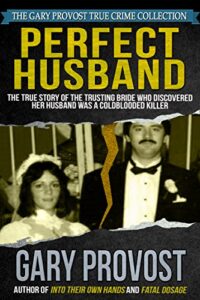
In the end, he decided to write Deadly Secrets instead. Turned out to be the right move because Deadly Secrets became the mega-hit Perfect Husband: True Story of the Trusting Bride Who Discovered Her Husband was a Coldblooded Killer.

Use a series of “buts” to test your story idea. Obviously, a “but” won’t fit every sentence. When it doesn’t, try “and then.” But a “but” should follow “and then” soon. Why? Because “buts” are complications. Complications = conflict. And conflict drives the story.

Example:

Husband kills wife, and then stuffs her body into a 3ml bag, and then drives to a secluded area to bury her, but his foldable spade isn’t in the backseat. Did the neighbor borrow it again?

When you write don’t keep all the “buts” and “and thens.” Think in those terms, but you don’t want all of them in the final draft. Over time your story sensibilities will automatically search for (nonfiction) and/or apply (fiction) this rhythm.

The point is, whether we write fiction or nonfiction, we need to find the story beneath the headline or first spark of an idea. Without a narrative driven by conflict, the story will fall flat.

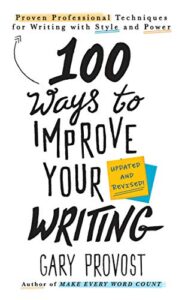
Five pieces of wisdom from Gary Provost’s 100 Ways to Improve Your Writing.

  1. A writer’s most important vocabulary is the one he or she already has. 

Learning new words is much less important than learning to use the words you already know. Think about your ideal reader. If he or she wouldn’t understand your word choice, you might as well be writing in a foreign language. Over time finding the right word becomes easier, almost a subconscious act. Until then, be intentional with every word.

  1. A lead should have energy, excitement, an implicit promise that something is going to happen or that some interesting information will be revealed.

Whether a lead is the first sentence, the first paragraph, or even the first several paragraphs of your story, it should pique a reader’s interest by raising story questions and give readers someone (or something) to care about before delving into the backstory.

Act first, explain later.
—James Scott Bell

A strong lead delivers on the promise it makes.

  1. When writing a beginning, remove every sentence until you come to one you cannot do without. 

Meaning, make your point by answering “who, what, when, where” in the first paragraph. Make the reader wait for “why.” Unless, of course, the why is the character’s goal.

A topic sentence contains the thought that is developed throughout the rest of the paragraph. The topic sentence is commonly the first sentence in a paragraph. For each paragraph ask, “What do I want to say here? What point do I want to make? What question do I want to present?” Answer with a single general sentence.

When you edit, ask how each sentence works for the paragraph. Ask why it’s there. Does it have a purpose? Great! Then keep it. If you can’t pinpoint why you included that sentence, hit DELETE.

  1. Style is form, not content.

In writing, the word style means how an idea is expressed, not the idea itself.

A reader usually picks up a story because of content but too often puts it down because of style.


  1. To write is to create music.

The words you write make sounds, and when those sounds are in harmony, the writing will work.


Gary Provost was highly regarded as an author, sought-after speaker, consultant, and celebrity biographer.

“The writers’ writer” authored thousands of articles, columns, and dozens of books covering most every genre. His highly acclaimed Writers Retreat Workshop, and video and audio courses remain available through writersretreatworkshop.com.

What’s your favorite piece of advice here? Care to add a tip?

Out With Them!


By Elaine Viets

I was listening to a talk radio show when I heard something like this:

“You’ve given us a lot to unpack here, Bill,” the host said. “Destructive weather events are becoming the new normal in these uncertain times.”
The guest blathered, “Yes, we’re all in this –

No! I switched off the radio before he finished saying, “We’re all in this together.
I’ve learned to live with many of the old cliches and misused words. I no longer cringe when someone says, “Irregardless.”
But these uh, uncertain times have spawned a new and even more annoying crop of cliches. They’re infesting our language like termites. My husband Don is tired of listening to me gripe. But I can tell you, can’t I, dear reader?

Here is my list of words and phrases I’d like to see banned. I hope they don’t creep into our conversation – or worse, our writing.

UNPACK. Usually suitcases are unpacked – we remove the contents and put them away. But lately unpack has been used in another way: to consider, to analyze, to reveal. Webster says that use is legit, but it rubs me the wrong way. Never mind that Shakespeare himself used it, during Hamlet’s rant (uh, soliloquy):

Why, what an ass am I! This is most brave,
That I, the son of a dear father murder’d,
Prompted to my revenge by heaven and hell,
Must, like a whore, unpack my heart with words,
And fall a-cursing, like a very drab

PROCESS. After you unpack something, you need time to process it. “After my mother died, it took a long time to process her death.” What the heck? Are you a computer?

EVENT. Here’s another one that gets me. A tornado trashes an entire town, killing innocent people and destroying their homes. And what does the media call it? “A weather event.”
Why? Do you sell tickets to a tornado?


LIGHT AT THE END OF THE TUNNEL. Something we’re not seeing these days, but the media keeps saying it’s there. This phrase has been around for maybe two hundred years. Some sources say it goes back to the 1800s and was used “in a letter by English novelist George Eliot.” John F. Kennedy made it popular in the mid-1960s when he talked about Vietnam. The phrase can be either one of hope – or despair.


GIVE 110 PERCENT. Mostly said by corporate types. Can you folks even add?

BAD OPTICS. PR speak for “this looks bad.” For instance, “Widgets Inc. cut ties with their foreign supplier when they found out the supplier used child labor.” Did Widgets care about those toiling tots? Heck no. But they were worried what their customers would think.

EVERYTHING HAPPENS FOR A REASON. Usually said after some especially senseless tragedy. Often followed by another favorite phrase: “thoughts and prayers.”

Covid has spawned a crop of cliches:

IN THESE UNCERTAIN TIMES. A euphemism for “in these hopelessly screwed-up times.” And unless we’re fortune tellers, almost all times are uncertain. We can’t see the future.

IT IS WHAT IT IS. A mental shrug. An annoying way of saying, “I don’t want to do anything about it.” Politicians as far back as George Bush have used it and it’s the favorite excuse in sports. Your Dictionary says, one famous example was when the coach of the US hockey team at the 2006 Winter Olympics excused his team’s “lack of rest by saying, ‘We’re going to do the best that we can. It is what it is.’”
If it will make you feel any better, other languages also have versions of this, according to Your Dictionary: “In Persian, ‘Fihi Ma Fihi’ means the same thing and was the title of a famous work by Rumi, a 13th century writer. In Spanish, the phrase ‘Que será, será’ means ‘what will be, will be.’ This is a somewhat more optimistic twist on the idea.” Doris Day made that phrase into a song.

LESS THAN. In mathematics it means smaller. Four is less than six. But the term is less than satisfactory when it strays in to everyday language. It’s wrong to make people feel “less than.” Less than what?
LIVING MY BEST LIFE. Oh? You get more than one? Lucky you. Like it or not, I’m already living my best life – now.

NEW NORMAL. The new normal not only isn’t normal, it’s not even new. Wikipedia, for heaven’s sake, points out that every time we have a major crisis, we dig up that term and dust it off. It seems to have appeared the first time in 1918, right after World War I. Henry A. Wise Wood spelled it out for us: “How shall we pass from war to the new normal with the least jar, in the shortest time? In that respect should the new normal be shaped to differ from the old?”
Pundits have been working variations on that theme after the 1990s Dot-Com Bubble, the financial crisis of 2007-2008, September 11 attacks, the aftermath of the 2008–2012 global recession, and now – the COVID-19 pandemic.
“The New Normal” was a TV show and country singer Cooper Alan even has a love song called “New Normal.” https://www.youtube.com/watch?v=poBwXChcvCY

So which words or phrases are driving you nuts in these . . .um . . .difficult times? Go ahead. You can tell us.

**********************************************************************
Now out! DEATH GRIP, my new Angela Richman, Death Investigator mystery. Kirkus magazine says, “Viets produces chills with a murder hunt turned on its head.” Buy it here: https://tinyurl.com/ya9q9tfm

Learning from The Maltese Falcon

by James Scott Bell
@jamesscottbell

Read on to the end of this post, for you will get one of the greatest trivia questions of all time. Use it to flummox your film snob friends (and isn’t that what life is all about?)

The Maltese Falcon by Dashiell Hammett is one of the great American novels. In fact, I think it should replace The Great Gatsby on high school reading lists (that is, if they still have high school reading lists that look at quality fiction for no other reason than that it has quality). The book is more exciting and true to human life than Gatsby, and has all sorts of characters and themes running through it.

I mean, come on! Greed, sex, money, murder, mystery, and the hero’s code. Gatsby teaches kids (who can get through the book) that you don’t always get what you want. The Maltese Falcon teaches a much better lesson: don’t trust somebody just because you think they’re hot like Brigid O’Shaughnessy.

And do the right thing, even if it tears your heart out.

The novel has been made into a movie three times. The first version starred Ricardo Cortez, an actor with a handsome smile and all the acting range from A to B. He had “Latin features” which was a big deal at the time (late 20s, early 30s) because of Rudolph Valentino’s popularity. But Ricardo Cortez was no more Latin than a plate of gefilte fish. He was born Jacob Krantz, son of Morris and Sarah Lefkovitz Krantz, in the Bronx. But the studio heads saw a chance to turn him into a talkies version of Valentino. Thus, the new name.

In this 1931 film, Cortez plays Sam Spade as a kind of laughing Lothario, always giving ladies’ legs a creepy once over. A strange choice, given the tone of the novel, which was captured most brilliantly by the John Huston version starring Humphrey Bogart, made in 1941. (The other version was a loose one, Satan Met a Lady (1936) starring Bette Davis and Warren William. This “light-hearted” rendition was not met with critical acclaim. The leading film critic of the day, Bosley Crowther of the New York Times, said of it, “So disconnected and lunatic are the picture’s incidents, so irrelevant and monstrous its people, that one lives through it in constant expectation of seeing a group of uniformed individuals appear suddenly from behind the furniture and take the entire cast into protective custody.”)

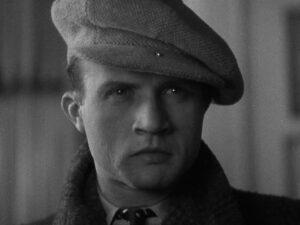
Dwight Frye as Wilmer in The Maltese Falcon (1931)

But I will give the Cortez Falcon props for one great casting decision. In the book there’s a “gunsel” named Wilmer Cook. He’s the henchman and catamite for the fat man, Casper Gutman. While nicely played by Elisha Cook, Jr. in the Bogart film, Dwight Frye makes an unforgettable Wilmer in the 1931 version.

Frye is best known for his portrayal of Renfield in the Bela Lugosi Dracula. Man, you can’t forget his crazy laugh and his desire to eat flies. And those eyes! He was dubbed “the man with the thousand-watt stare,” and that’s what he brings to Wilmer.

More interesting things you should know about The Maltese Falcon:

  • There are three prop falcon statuettes still in existence from the 1941 movie. Each is valued at around $1 million.
  • In the novel, the fat man is Casper Gutman. In the shooting script for the 1941 version, for some unknown reason, he is listed as “Kasper Gutman.”
  • In the Bogart version, the fat man was famously played by English actor Sydney Greenstreet, in his film debut. At 357 pounds, he certainly embodied the character. The Warner Bros. wardrobe department had to make special clothes to fit Greenstreet. Interestingly, Bogart wore his own clothes for the part of Sam Spade.
  • Mary Astor, who plays Brigid O’Shaughnessy, won an Oscar that same year for her role in The Great Lie. She wasn’t pleased. Why? Because she thought she should have been put up for Brigid! She is brilliant in both movies.
  • Bogart, of course, was a noted onscreen smoker (only Bette Davis rivaled him). But the studio didn’t want him to! Why not? Because they thought that audience members seeing Bogie light up might be tempted to step into the lobby for a quick smoke during the movie. In fact, the studio almost fired John Huston over this issue. But Huston convinced them that Sam Spade’s cig was an indelible part of his character, and the cancer nails remained. (Bogart died of cancer at the age of 57. His widow, Lauren Bacall, later admitted, “Cigarettes killed Bogie.”)

Tips for writers from The Maltese Falcon:

  • It may be the greatest “show, don’t tell” novel ever written. It is in what is called Cinematic-Omniscient POV. That’s because there is no dipping into the thoughts or feelings of any of the characters. It’s like watching a movie on the screen. You see the scene and hear the dialogue.
  • The orchestration of characters is brilliant. You should always create your cast to not only be different from one another, but also in such a way that conflict may arise between any of them at any time. Spade, Brigid, Joel Cairo, Gutman, Wilmer, Effie (Spade’s secretary), Iva (Spade’s mistress), and Detective Tom Polhaus are all unique and have various mini-conflicts with each other throughout the book.
  • Hammett was a master of dialogue, too. The characters all speak with unique voices. One of my favorite examples, from both book and movie, is this exchange between Spade and Joel Cairo, coming some time after Spade knocked Cairo out in Spade’s office.

Spade said: “Let’s go some place where we can talk.”

Cairo raised his chin. “Please excuse me,” he said. “Our conversations in private have not been such that I am anxious to continue them.”

Or this between Gutman and Spade:

“Now, sir, we’ll talk if you like. And I’ll tell you right out that I’m a man who likes talking to a man that likes to talk.”

“Swell. Will we talk about the black bird?”

The fat man laughed and his bulbs rode up and down on his laughter. “Will we? We will,” he replied. His pink face was shiny with delight. “You’re the man for me, sir, a man cut along my own lines. No beating about the bush, but right to the point. ‘Will we talk about the black bird?’ We will. I like that, sir. I like that way of doing business. Let us talk about the black bird by all means, but first, sir, answer me a question, please, though maybe it’s an unnecessary one, so we’ll understand each other from the beginning. You’re here as Miss O’Shaughnessy’s representative?”

And now, friends, the great trivia question. Keep this in your back pocket for the next time you get into a film discussion with a know-it-all.

What is the final line in the 1941 movie version of The Maltese Falcon?

You’ll no doubt get the answer that it’s from Bogart: “The stuff that dreams are made of.”

Ah, but there is one more line after that! It’s from Ward Bond, playing Spades’ cop friend Tom Polhaus. He responds, “Huh?”

Have a look!

 You are now the most interesting person in the room. Congrats!

Have you seen or read The Maltese Falcon? (If your answer is no to either, correct that gross mistake ASAP!) What’s your favorite classic detective novel or movie? What can we learn from it?

Bat Masterson, Writer

by James Scott Bell
@jamesscottbell

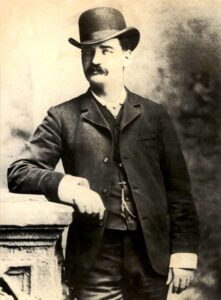
Bat Masterson, c. 1880

Back when the West was very young
There lived a man named Masterson.
He wore a cane and derby hat,
They called him Bat, Bat Masterson!

During the “golden age of television,” the 1950s and early 60s, the Western was the dominant genre. You had The Lone Ranger, Gunsmoke, Roy Rogers, Maverick, Rawhide, Bonanza, Sugarfoot, Have Gun Will Travel, Wyatt Earp, Tombstone Territory, Death Valley Days, Cheyenne…and on and on. Among them was a series starring Gene Barry as Bat Masterson. The lyrics at the top of this post are from the song that accompanied the series.

Interesting historical item: Bartholomew “Bat” Masterson should be better known to us as a writer!

It is true he was an Old West lawman and friend of Wyatt Earp. But his legend as a gunslinger was the result of a practical joke played upon a naïve young newspaperman.

In the 1880s readers in the East were enamored of tales of derring-do out West. Savvy writers were quick to exploit that fascination. Ned Buntline, for example, created the legend of Buffalo Bill Cody. Cody himself would ride that publicity into a nice income from his Wild West Show.

In 1881 a reporter named Young, who wrote for the New York Sun, came out to the Colorado mining town of Gunnison, looking for a “shoot-’em-up” story for the paper. He asked one of the locals, a man named Cockrell, where he might start looking for such a story. Cockrell decided to have some fun with the dude. He spun a tale of a lawman he knew from Dodge City, a twenty-seven-year old named Bat Masterson. Why, he’d already killed twenty-six men! And seven of those were to avenge the murder of his brother! Another time he hunted down two Mexican outlaws and brought their heads back to prove it and collect the bounty! And so on. Young lapped it all up and filed the story. The Masterson legend took off, never to be ameliorated. (In fact, Masterson the lawman killed only two men. One of them was, indeed, the murderer of his brother.)

Times changed. The era of the gunslinger came to an end. Bat Masterson, who was more a gambler and “sport” than anything else, ended up in Denver as a promoter of the sport of boxing. This was in the bare-knuckles era, and Masterson would be intimately involved with every heavyweight championship fight until his death in 1921.

His time in Denver did not prove profitable, so in 1902 he and his wife headed for the more promising venue of New York City.

His arrival was not propitious. The second day he was there he was getting his shoes shined at a stand when the cops, led by an officer named Gargan, arrested him. Why? Because he was nicely dressed and happened to be near a West Coast gambler by the name of Sullivan. It was Sullivan and some others who were part of a bunco scheme to fleece a Mormon elder named Snow out of $16,000. Masterson did not take his arrest well. His loud protestations at the station were muted somewhat when police removed a concealed revolver from their famous arrestee. Snow failed to identify Masterson, and the bunco charge was dropped. Masterson, however, had to pay a fine of $10 for the concealed weapon.

Never one to take it on the chin, Masterson filed suit against Snow for injury to his good name, to the tune of $10,000. Snow settled with him out of court. Masterson never forgot Gargan, either. Eleven years later he would seek a charge against Gargan for perjury in his testimony about the 1902 arrest.

Masterson in NYC, c. 1920

Did I mention that Masterson was pugnacious? That was one of the qualities that made his column in the New York Morning Telegraph so popular. From 1903 to 1921 the former lawman wrote three columns a week and gained a huge following all over America. He didn’t cheat on the verbiage, either. His pieces averaged 1700 words. Mostly he wrote about boxing, but he was not averse to sharing his opinions on other matters of the day.

Masterson was frontier educated and never went to college. So how did he master the art of writing? Three ways. First, he was a voracious reader. Second, he made it a goal to expand his style by adding to his vocabulary on a regular basis. And last, but not least, he let his passion for his subject bleed onto the page. For example, in 1911 he covered a fight between a boxer named Burke and an Irishman named Maher. Burke, he wrote, found Maher “a fine bit of cheese” who threw wild punches. But after a Maher haymaker “put a crack in the air,” Burke “planted a left into the Irishman’s potato pit … and it was curtains for Erin’s representative.”

So the writing lesson for today we’ll call the Masterson Triad:

  1. Read widely
  2. Expand your style
  3. Make sure your passion is evident on the page

One last bit of trivia. Have you seen the musical Guys and Dolls? Most probably you have. It was a big Broadway hit, and then a hit movie. Based on characters created by Damon Runyon, it is the fanciful story of Broadway touts and gamblers with names like Harry the Horse, Nicely-Nicely Johnson, Society Max, and Benny Southstreet. The leading figures are Nathan Detroit (Frank Sinatra in the movie version) and Sky Masterson (Marlon Brando). The plot is based on a bet between Nathan and Sky. The two are sitting in a restaurant on Broadway when Nathan bets Sky that he will not be able to take a “doll” of Nathan’s choosing out to dinner in Havana, Cuba, the following night. Sky, who believes all dolls are the same, takes the bet.

At which point Nathan points outside to Sergeant Sarah Brown of the Salvation Army!

Here is the interesting backstory. Damon Runyon was a young reporter whom Bat Masterson took under his wing. The two remained close until Masterson’s death in 1921. One day they were sitting in a bar, and Masterson was spinning tales about gambling and guns, when they heard a loud thumping out in the street. It was the bass drum of a Salvation Army band, summoning sinners to a meeting. The band was led by a fetching young woman. And Runyon immediately got a story spark: what if a pristine Salvation Army sergeant fell in love with a sport like Bat Masterson?

The idea stuck, and years later Runyon wrote “The Idyll of Miss Sarah Brown.” The sport he named Sky Masterson, in honor of his old friend. The story became the basis for Guys and Dolls.

Let’s ask the Bat Masterson questions today.

  1. Do you read widely?
  2. Are you purposeful in expanding your style? 
  3. How do you get passion onto your pages?

Note: Most of the research for this post is taken from Robert K. DeArment, Gunfighter in Gotham: Bat Masterson’s New York City Years, University of Oklahoma Press, 2013.

Navigating Rough Waters

Photo courtesy of Jim Coffey, Esprit Whitewater

By Debbie Burke

@burke_writer


What does whitewater rafting have to do with writing?

For one thing, rafters and writers often endure blasts of icy water in the face. For authors, the cold, wet shock is metaphoric—a stinging rejection, a hideous review, a kiss-off from a publisher.

Today’s story begins when my pal, former river ranger Susan Purvis recently sent me a link to a podcast about whitewater rafting. Susan often leads me into adventures that always pay off in unexpected rewards so when she recommends something, I listen.

That day, with a crammed to-do list, I didn’t have a spare hour for a podcast. Yet once I started to listen, I couldn’t stop.

The interviewer is Barry Kruse, entrepreneurial coach of Leading Steep, and his subject is Jim Coffey, founder and owner of Esprit Whitewater, a Canadian rafting company.

Jim’s rafting business began in 1992 and survives nearly three decades later, a rarity in the field. A seasonal operation is especially tough because he has to earn enough income in four, maybe five, months to last the entire year. Plus, recreation-oriented businesses are hit hard during recessions when people can’t afford vacation trips.

Jim believes entrepreneurs who succeed have “a high tolerance for adversity and uncertainty.” He proves his point when he relates the setbacks he’s experienced that would tank most businesses— a fire that destroyed part of his facilities, a couple of floods, the Covid shutdown, and, last summer, his own diagnosis of throat cancer.

His attitudes and coping tools struck me as helpful advice for authors. The following are a few gold nuggets from his podcast.

Jim: “You never know where that first step is going to lead.”

When you’re stuck in your writing, take a step.

Inertia is not healthy for writers, in body, mind, or word production. If you’re bogged down, take a step in a new direction.

Write a public service announcement for a charity you admire. Write ad copy for a fundraiser for a worthwhile cause.

If your own ads don’t pan out, analyze what authors with similar books do for promotion. Try new avenues.

Learn a new skill—make a video, add fresh features to your website, try a different software writing tool, create an audiobook.

First steps sometimes lead to dead ends. But they can also lead to new universes.


Jim: “You never know who that [most] important customer is going to be. Treat every customer as if they are that person.”

Readers are the author’s customers. Building their loyalty and trust is key to selling books.

A major breakthrough opportunity for Jim’s company occurred when a particular customer was impressed with the fledgling operation. That man turned out to be an influencer who booked more trips for large groups and retreats, as well as recommending Esprit Whitewater to colleagues. A single customer hugely expanded Jim’s business.

For authors, treat every reader as your most important customer. They might place your book in Stephen King’s hands for a blurb. Or convince Oprah to feature it in her book club. Or catch Reese Witherspoon’s attention for a new movie production.

Not likely? Okay, but how about these possibilities?

A reader invites you to speak to their book club. That results in more sales and more readers.

A reader from that book club works for a major media outlet and wants to interview you.

The leader of a civic or professional organization hears/reads your interview and invites you to talk to their 500 members.

And so it can go.

When you treat each reader as that most important customer, their reach and recommendations carry you and your books into markets you never imagined.


Jim: “We manufacture our own luck. Preparation collides with opportunity.”

The harder you work, the luckier you get.

Preparation can mean: take a class; read a new craft book; attend a conference; research new marketing angles.

When you’re doing the work, opportunities pop up in unexpected ways in unexpected places.


Jim: “Be unselfish and generous with your skills and pass them on.”

Help other writers.

The writing community is a continuum of authors at different levels of accomplishment, from beginners to multi-published bestsellers. We have all been helped by authors more experienced than ourselves and, in turn, we can help others less experienced than ourselves.

Freely share what you’ve learned. Teach a workshop. Write a guest blog post. Produce a newsletter for a charitable organization. Mentor a struggling writer.

You might think you’re too new at the craft to offer anything. Not so. You can beta-read. Judge a writing contest. Offer to talk to schoolchildren—most teachers are delighted to host writers and kids are eager to learn.


Jim: “It’s easier to train a great person to be a great whitewater guide than to take a great whitewater guide and turn them into a great person.”

For authors, attitude is more important than skill. Approach learning as a humble student.

I’ve known many talented authors who were positive they were destined to knock Michael Connelly off bestseller lists. They were usually so busy talking about how much they knew and how great they were that, not surprisingly, I haven’t noticed any of their names in USA Today.

C.S. Lewis said: “Shut your mouth; open your eyes and ears.”

That advice spans to entrepreneurs, military, industry, and, of course, writing. Nobody knows everything.

Before you become a great writer, you must first be a great student.


Jim: “You never know when people you’ve contributed to will come back and contribute to you.”

At the beginning of the podcast, interviewer Barry said Jim had recently undergone chemotherapy and radiation for throat cancer. While Jim was laid low during the busy summer season, his team kept the business going and took care of hundreds of happy whitewater rafting customers. He’d earned the loyalty of his staff who came through when he needed them the most.

At the very end of the podcast, Jim mentions he gave the interview while lying in bed… with a feeding tube.

Wow. Just wow.

That left no doubt Jim Coffey is off the scale in his tolerance of adversity and uncertainty.

 Perhaps the most important lesson can be found in Jim’s actions:

Help others and never give up.

Works for authors, too.

~~~

Many thanks to Jim Coffey and Barry Kruse for their permission to quote and reference the interview which can be heard here: https://www.leadingsteep.com/podcast

~~~

TKZers: What is your favorite advice, touchstone, or belief that helps you over treacherous rapids and shoals encountered in your writing career?

~~~


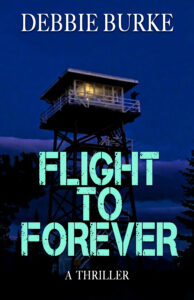
In Debbie Burke’s new thriller Flight to Forever, her main character persists in spite of lots of cold water thrown in her face. Please check it out here.

Writing to Escape

by James Scott Bell
@jamesscottbell

Some weeks ago we talked about reading for escapism.

What about writing to escape?

In 2020 we had a slew of blog posts about how hard it was to write in 2020. With political, cultural, and pandemic bedlam hitting us all like an unending Oklahoma dust storm, that was no surprise. I added to that conversation here.

Welp, the dust storm is still blowing, and writers need escape just like everyone else. That’s where the magic of story comes to our aid.

Ray Bradbury

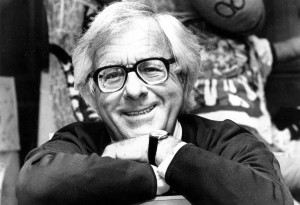
Ray Bradbury famously said, “You must stay drunk on writing so reality cannot destroy you.”

Yet for those of us who write for a living, and those who hope to make some decent dough from writing (which is 99.76% of all writers) there is the sober part of us that keeps one eye on the market. That’s a necessity. We have to try to figure out what readers out there might spend their discretionary income on. In the traditional world of publishing, that calculus is filtered through agents and editors and the sales department.

Indies fly solo, but still must figure all these things out, too. Writing for money is a business. And business can often be frustrating, heartbreaking, even downright depressing.

But through it all, the writer who is a real writer keeps tapping that keyboard. Sometimes just to escape.

That’s why I love writing short stories and flash fiction. Flash fiction is 1k words or less; short stories are usually tagged at 1k – 7.5k. After that you get into the realm of the novelette (up to 20k words) and the novella (up to 49k words).

The beauty of short stories and flash fiction is that you can write them in a beautiful state called “The Zone.” When they’re finished, maybe they work, maybe they don’t. But that is beside the point. First, you have escaped in those hours. And second, nothing is wasted, for you have flexed your writing muscles, always a good thing.

You are not bound by conventions when you flash (er, maybe I should rephrase that). And you can try out different genres with your shorts (maybe I should rephrase that, too).

I’ll even throw in a bonus escape: poetry. Yes, poetry, which Bradbury also read each day and sometimes wrote himself. My personal preference is the whimsical, as in the poetry of Ogden Nash. He didn’t restrict himself to strict meter or schemes, and even made up words to suit his purposes. Thus I give you my Nash-inspired poem “Love in the Age of the Virus.”

This virus, we are told, is unlike anything that came before it—

Not the flu or a cold or pneumonia or a bad headache, so different it is that you darn well better not ignore it.

The answer, they say, is a mask and social distancing,

And should you shirk those things be sure of this: you’ll get plenty of angry insistancing.

Adjust, they say, for this is the normal that is new,

No matter how badly you wish it to be the abnormal that is through.

The way you socialize and eat and even worship in church, or mosque, or synagogue,

Is overseen and shadowed by a huge, regulatory fog.

Thus, they tell us, the best answer to the gloom

Is Zoom.

Ah, methinks, however, that the greatest challenge of all is in the dance of the sexes,

Be it with dates, or schoolmates, or husbands, wives or exes.

And speaking as I must, as a man, I can only say it adds immeasurably to our romantic task

To have to lean over and whisper, deep-voiced and confident, “Hey baby, how about taking off your mask?”

Now, that took me about half an hour to write, and for that half hour I was fully into the joy of creation.

So I work on my full-length fiction—which butters my bread—writing to a quota each day. But when I need pure escape, which is often these days, I’ll give myself fully to a short story or a flash. And when I write something that works the way I want it to, I’ll publish it for my Patreon community, so they can enjoy some escapism, too.

I always come out of these sessions feeling like a better writer. I’ve gained strength. I do believe it shows up in my full-length fiction.

So try this, writing friend, the next time you’re feeling the burdens of the day crushing your creative spirit. Write something short. Take a prompt from Gabriela Pereira’s Writer Igniter and start a flash story. Maybe it will expand into a short story. It might even sow the seeds of a novel. But write it just for yourself. Tell your inner editor to go sit in the corner with your market analyst, and tell them both “No talking.”

I went to Writer Igniter a couple of days ago, and this came up:

I immediately started a story called “Lucky Penny” and wrote the first 800 words. It was pure joy. For half an hour I had escaped. I now have the ending in mind, and a complete story to finish.

I can’t wait.

Do you ever write just to escape?

Public Domain Day 2021 and Writing Advice from 1925

By Debbie Burke

@burke_writer


Public Domain Day was January 1, 2020. Although today is February 22, a tad late, it’s still a newsworthy event for writers and readers because books like The Great Gatsby (F. Scott Fitzgerald), Mrs. Dalloway (Virginia Woolf), Manhattan Transfer (John DosPassos), In Our Time (Ernest Hemingway), and An American Tragedy (Theodore Dreiser), among many others, came into the public domain.

Same with films like Buster Keaton’s Go West and songs like “Yes, Sir, That’s My Baby.”

Here is the link to Duke University Law School’s announcement and listing of many other artistic works whose copyrights expired as of January 1: https://web.law.duke.edu/cspd/publicdomainday/2021/

One book in the bunch caught my attention: The Writing of Fiction by Edith Wharton, the first woman to win a Pulitzer Prize for her 1920 novel The Age of Innocence.

Has fiction writing changed much since 1925? Are 95-year-old insights from the first female Pulitzer winner relevant to writers in 2021?

The Writing of Fiction is short, fewer than 150 pages, originally published by Scribner in 1925. Much of the beginning section is literary criticism, comparing Proust, Austen, Dostoyevsky, Tolstoy, and other greats of the era, contrasting them with the new “stream-of-consciousness” trend that shook up readers at that time. I confess I skimmed those parts.

But elsewhere Wharton reveals her views on the art and craft of storytelling.

I found several passages I thought might provoke interesting discussion among TKZers.

Wharton calls the “modern” novel “that strange chameleon-creature which changes its shape and colour with every subject on which it rests.”

In the following paragraph, she describes what writers often call being in the zone:

“To the artist his world is as solidly real as the world of experience, or even more so, but in a way entirely different; it is a world to and from he passes without any sense of effort, but always with an uninterrupted awareness of the passing.”

Here at TKZ, we often work on point-of-view problems.

Wharton is critical of “the slovenly habit of some novelists of tumbling in and out their characters’ minds, and then suddenly drawing back to scrutinize them from the outside as the avowed Showman holding his puppets’ strings.”

About character development, she writes: “[they are] the creatures of [the author’s] imagination, more living to him than his own flesh-and-blood…”

Further, she studies the tightrope that writers must walk while creating characters. On one hand, she cautions against the “author [who] is slave to characters” while, on the other hand, who risks becoming a “puppeteer manipulating marionette strings…”

Conflict is another topic that she addresses:

“The conflict, the shock of forces, is latent in every attempt to detach a fragment of human experience and transpose it in terms of art, that is, of completion.”

This is what she has to say about an artist’s sensitivity:

“One good heart-break will furnish the poet with many songs, the novelist with a considerable number of novels. But they must have hearts that can break.”

On the focus of a story, she writes:

“…the only remedy is resolutely to abandon the larger for the smaller field, to narrow one’s vision to one’s pencil, and do the small thing closely and deeply rather than the big thing loosely and superficially.”

The topic of inspiration:

“Many people assume that the artist receives, at the onset of his career, the mysterious sealed orders known as ‘Inspiration,’ and has only to let that sovereign influence carry him where it will. Inspiration indeed comes at the outset to every creator but it comes most often as an infant, helpless, stumbling, inarticulate, to be taught and guided, and the beginner, during this time of training his gift, is as likely to misuse it as a young parent to make mistakes in teaching his first child.”

Writers often ponder if their concept, plot, or characters are original enough to capture readers’ tastes. Wharton’s answer:

“True originality consists not in a new manner but in a new vision. That new, that personal vision is attained only by looking long enough at the object represented to make it the writer’s own; and the mind which would bring this secret germ to fruition must be able to nourish it with an accumulated wealth of knowledge and experience.”

~~~

TKZers: Did any of Edith Wharton’s thoughts particularly strike you?

Are they out of date, no longer relevant?

Or does she express timeless truths about the art of writing fiction?

~~~


Debbie Burke is one of Montana’s Women of Mystery, along with Leslie Budewitz and Christine Carbo. Three crime novelists will reveal writing secrets and talk about their books during a Zoom appearance on Wednesday, February 24, at 3 p.m. mountain time. Email debbieburkewriter@gmail.com for the Zoom invitation.

Tips to Create a Series Bible

By Sue Coletta

Lately, I’ve been consumed with creating a series bible for my Grafton County Series. So, I thought I’d share some tips to help you avoid making the same mistakes. Mistakes like thinking highlighted notes on my Kindle were enough to jog the ol’ memory bank. Mistakes like scribbling notes on scrap paper or a whiteboard. Mistakes like tabbing umpteen pages in the previous paperbacks.

Yep. I’ve done all of the above and more. Hence why I’ve had to reread every book in the series. It’s been months since I’ve written in the Grafton County Series. When I set out to plan my WIP, I’d forgotten a lot of details. In my defense, I did write a true crime book, another Mayhem Series thriller, and new true crime proposal in between.

Though it’s fun to spend time with my characters, it’s also a ton of added work, work that could’ve been avoided if I had a series bible in place. Don’t be like me. Even if you’re writing book one, start your series bible now.

Format

We first need to decide on a format for our series bible. Some writers use Scrivener. Others prefer Evernote or a Word.doc. The most popular choice is to print the series bible and organize in a three-ring binder. Pick the format that works best for you.

Organize by Color

Choose one color for each book in the series. Every detail you list in the series bible should correspond to the book’s color.

Example…

Book 1: Blue

Book 2: Red

Book 3: Purple

Book 4: Green

By color-coding, if you need a detail from the series bible while writing, one glance will tell you when the fact occurred.

Details to Include

  • Description of main characters
  • Description of secondary characters
  • Description of villains, including monikers (if applicable)
  • Victims
  • Characters’ profession
  • Killers MO (if applicable)
  • Pets, including deceased pets (if applicable)
  • Tattoos/piercings (if applicable)
  • Scars, emotional and physical
  • Jewelry
  • Marital status/relationships
  • Important dates
  • Family ties
  • Themes
  • Setting
  • Backstory
  • Housing
  • Accent (if any)
  • Décor
  • Cherished treasures
  • Timelines
  • Future scene ideas

Most of the above list is self-explanatory, but I do want to point out a few things.

Character Description

An important part of the series bible is character description. Savvy readers will notice if your MC has a small ankle tattoo from her college days in book one, then claims s/he’d never be stupid enough to get one in book five or six.

In this section be sure to include the basics: hair & eye color, height & weight (approximate, if you’ve never detailed this attribute), style of dress, skin tone/complexion, tattoos & piercings (if applicable), favorite perfume/cologne, injuries and physical scars.

When I listed Sage’s injuries/physical scars, I couldn’t believe what I’d done to this poor woman. Here’s a small sample from my story bible.

  • thick neck scar that tugs at the skin
  • white lines zigzagging across her right forearm
  • lost unborn child from rape
  • scar from incised wound on right wrist
  • orbital floor fracture (broken eye socket)
  • fractured cheekbone
  • broken nose
  • faint scar from stitches on left wrist
  • faint scar from stitches on upper lip
  • faint scar from stitches on right cheek
  • faint scar from stitches on forehead

And that’s only the first two books!

Emotional Turmoil

Since I write psychological thrillers, it’s vitally important for me to track each character’s emotional toll. Past experiences define and shape our characters into the people they are today. An emotional sketch of each character allows us to find triggers and/or weaknesses to exploit in future books. *evil grin*

Incidentally, I do the same for pets. For example, Sage and Niko have two dogs, Colt and Ruger. These dogs have lived through harrowing experiences, and they’ve developed certain habits that stem from those experiences. Animals feel things as deeply as we do. If the pets emerge unscathed, the characterization won’t ring true.

Details

Tiny details matter. For example: When Sage gets nervous, she plays with a Gemini pendant, sliding it back and forth across the necklace. Now, the pendant is turquoise and silver, but for some reason, I wrote “gold” chain in book one. Because this necklace holds sentimental value, Sage would never switch the pendant to a different chain. This minor detail has never been a problem for me. Rarely, if ever, do I mention the color of the chain. Too much description slows the pace.

But what if I decide to kill her some day? Or fake her death? That necklace could become a key piece of evidence. See what I’m sayin’? Even if we never intend to use the minor detail when we list it, we still should include it in the series bible in case we change our mind.

Smell

The nose knows! In my Grafton County Series, the medical examiner practically bathes in Aramis cologne. Anyone within fifteen feet knows he’s entered the crime scene before they ever spot him. It’s become a running joke. I could never forget that detail, but I still include it in the series bible under his name just in case.

What did slip my mind was Sage’s perfume. This might not sound like a big deal, but for this series, it’s an important detail. During tender moments, Sage’s husband Niko breathes her in. The soft aroma of Shalimar mushrooms across his face, with notes of lemon, iris, jasmine, rose, patchouli, sandalwood, and vanilla. He loves that about her. If I didn’t include this detail in the series bible, future books wouldn’t ring true.

Side tip: If you’re struggling for a scent, ask your husband/wife or significant other. We all have a scent that’s uniquely ours. Maybe they love your shampoo, skin cream, body wash, after-shave, or scented deodorant. Once you find the answer, transfer that scent to your lead or secondary character. Or show your character cooking, baking, or eating. Food is an easy way to include one of the most under-appreciated senses in fiction: smell. If the character is eating, be sure to include taste, too. Bonus!

Décor

Does your character have a favorite chair? List it in the series bible.

Does your character hate the hard sofa? Jot down why in the series bible.

Did you focus in on an antique timepiece or cuckoo clock in a past book? Describe it in the series bible.

What about a wall safe or gun cabinet? Be sure to include the combination in the series bible.

Example: After a hard day at work, Niko collapses in his Lay-Z-Boy. I’ve never described the recliner in detail. Never had a reason to. Instead, I simply wrote “Lay-Z-Boy” under Niko’s name in the series bible.

He also has a favorite coffee mug, with #1 Dad inscribed on a gold shield. If Sage poured his coffee into a different mug, fans of the series would wonder where it went.

Minor details can impact series characters in an emotional, conflict-driven way.

What if Sage came home to find Niko’s mug shattered on the kitchen floor? Better yet, what if she found it on the bedroom floor? I’ve made it a point to mention this mug in every book. It’s a Grafton County series staple. One glimpse of the shattered mug, and Sage would leap to the conclusion that someone’s been in the house. In reality Colt or Ruger might have knocked it off the counter or bureau. How it wound up on the floor isn’t important (yet). What is important is that I’ve created conflict just by showing the shattered mug.

Future Scenes

A funny thing happens while creating a story bible. Scene ideas flood the creative mind. While working on my series bible, not only have I finished planning my next Grafton County Series thriller, but I gained at least one new premise for a future book, as well. I even stormed through writing the first few chapters of my WIP. And that may be the best reason of all to create a series bible—to get the creative juices pumping in the right direction.

Can’t think of a plot for your next WIP? Review the story bible. It’s a lot easier than re-reading the entire series. Trust me on that. 🙂

Need tips for writing a series? Check out the group TKZ post.

Do you use a series bible? If you do, any tips to share? If not, what’s your process to ensure consistency throughout the series?

His name is Paradox and he poses his victims in RED cocktail dresses, RED roses in place of eyes. He will kill again if his riddles aren’t solved within 24 hours.

Can Niko and Sage stop him before the clock runs out?

Look Inside SCATHED: https://books2read.com/SCATHED


Use Color to Test Your Story

It’s been months since I shared the saga of the injured raven vs. my beloved “pet” crows, but there’s a good reason for that. I didn’t have an ending till last Thursday. For a while I thought I did, but I needed to verify my suspicions. Ignore the colors as you read. I’ll show you cool writing trick at the end. 🙂

When the story left off, I was trying to figure out how to feed “Rave” without angering my beloved Poe and her murder. While I weighed my options, the crows scolded the raven from all directions.

I have a strict “no fighting” policy in my yard. When anyone breaks this rule, I reinforce my disappointment by withholding food till they smarten up. A wise crow doesn’t anger the human who controls a never-ending supply of tantalizing treats. Needless to say, the attacks stopped as long as Rave stayed within the property lines. If she crossed the dirt road to the woods, my rules were no longer in play, and they divebombed her.

Brilliant birds.

Two weeks later, Poe signaled for me to use her summer rock. I’d created two separate feeding areas so Dad (my husband) didn’t have to shovel the lower yard — affectionally named Animal Planet for its greenery, flowers, and throngs of wildlife who visit — and Mumma didn’t have to schlep through thigh-high snow all winter.

The change in feeding area reset Poe’s murderous hatred toward Rave. By feeding Poe and family on Animal Planet and Rave on the winter rock in the upper yard, I’d restored a modicum of peace.

Until about a week later when Rave thought Poe’s rock looked tastier than hers. Or perhaps, she remembered switching rocks in the warm weather with her dad, Odin. Hard to say for sure what prompted her to move to the woods near the summer rock when our new arrangement worked so beautifully.

Poe was NOT pleased about Rave’s decision.

For the umpteenth time I tried to capture Rave to bring her to a rehabber. And once again, she outmaneuvered me. Maybe she’d be okay on her own? The question replayed on an endless loop, followed by the grave reality of a fox, Great Horned Owl, Fischer cat, raccoon, or black bear crossing her path during the night.

Sleepless nights wore me down.

For two-plus-weeks I wrestled with what to do. Then one day I stopped looking at the situation through my eyes — human eyes — and viewed it from Poe and Rave’s perspective. Once I did, all the years of researching corvids flooded my mind with ideas.

One of crows’ amazing abilities is delayed gratification. Meaning, crows will wait for food if the food they’re waiting for is tastier than the scraps that await them now (Ravens can do this, too, but don’t when they’re injured).

With this theory in mind, I offered Poe a deal.  As the alpha, she’s the only crow I needed to convince. The others would fall in line behind her.

“Poe, if you let Rave eat, I’ll bring out your favorite treats after she’s safely out of sight.”

Now, I’d love to tell you Poe agreed right away, but the truth is, she wasn’t thrilled with the idea at first. Every time I served breakfast, lunch, or dinner, the crows emptied the rock within seconds. Just once I needed Rave to beat Poe to the rock.

It took about three days before Rave worked up enough courage to race Poe to the rock. Afterward, when Rave hopped back into her new wooded digs, I offered Poe raw chicken breast, her favorite kibble, and of course, I replenished the peanut pile.

Success!

Rave on her own special rock.

Day after day, Poe waited for Rave to eat and I made good on my promise. But then, Rave would climb up on this new rock at the tree-line to check out the menu before proceeding toward the summer rock.

The proverbial lightbulb blazed on. If I used both rocks — one for Poe and family and one for Rave — I could potentially decrease the animosity between them. And it worked. For the next few weeks, Poe never ventured near Rave’s rock at feeding time, and vice versa.

What happened next stunned me into submission.

Toward the end of nesting season, Poe sent the fledglings and elder siblings on patrol with Edgar. Shakespeare, known fondly as “Shaky” (Poe’s mini me), stayed with Mumma. Breath trapped in my lungs as Poe swaggered into the woods in search of Rave. Uh-oh. This can’t be good.

Moments later, “low-talking” indicated Poe and Rave were hashing out a few things. Shrubbery obscured my view. There’s nothing I could do but wait. Watch. Pray Poe wouldn’t morph into Hannibal Lecter or Buffalo Bill.

Seconds felt like years.

After several heart-stopping minutes, Poe sauntered out of the woods for a little worm-hunting while Shaky played lookout (since birds are most vulnerable on the ground, crows post a sentinel in the trees). To my surprise Rave lumbered right past Poe, so close the feathers on their wingtips almost touched. Rave climbed up the rock to the feast on chicken thighs, peanuts, sunflower seeds, and kibble. Poe even allowed Rave to eat the dead mouse!

That’s when it dawned on me — these two majestic animals had struck a deal.

Poe watching Rave’s six from the grass below.

With this new arrangement, Rave waited for the crows to tell her if it was safe to step into the open.

Many sharp-shinned hawks flooded our area, and an injured raven equaled easy prey.

In return for Poe’s service, Rave only ate half the food. She even tore off a piece of chicken and tossed it to Poe on the grass below. 

The good times didn’t last long.

Each year when the new fledglings leave the nest, Poe escorts the crowlettes to my yard to practice landing on branches and learn how to slalom through the maze of trees. Normally, it’s a special occasion filled with hilarity and awe.

Not this year.

When Poe brought the fledglings, trepidation surfed their wake. Rave still asked for permission to approach the rock, but Poe’s cutting glare indicated an emphatic, “Don’t you dare come near my babes.”

What could I do? I couldn’t scold Poe for protecting her young. I also couldn’t let Rave starve. A niggling sensation burrowed bone-deep for the next three weeks. Every time Poe, Edgar, and the elder siblings left to teach the fledglings crucial life lessons, I jogged down to the rock to feed Rave.

The situation wasn’t ideal for any of us, but we dealt with it. Until we couldn’t any longer.

Animal Planet turned menacing — dangerous — as a rebellious fledgling ventured past the rock into the woods, in line with Rave’s hiding spot, her home-away-from-home doubling as a hollowed bush.

Poe scolded the fledgling to back away, but he refused to obey. That tiny crow acted like he’d been sworn in as the new sheriff in town, a LEO hellbent on destroying the interloper in their midst.

The situation spiraled toward disaster.

One sultry July morning he’d had about enough of Poe’s “rules” and swooped down in full attack-mode. Ear-piercing caws tornadoed through the trees. I raced toward the woods to intervene before the others joined their brethren.

Whether this incident had anything to do with Rave’s future plan, I couldn’t tell, but she disappeared for three days. Upon her return, she stocked up on food and rested for two days. Vanished for another three days, returned for two. She seemed to have a set route to a precise location. Two days on, three days off. The routine never wavered. Two days on, three days off.

Could Rave be a mother? What if the scuffle with Poe’s fledgling convinced her to find her own? Crows and ravens have similar nesting patterns. If Rave had chicks in the nest when she got hurt, they’d be fledging, too.

More and more I became convinced that she was searching for her family during those three days away. Though this theory filled me with warmth, I still panicked every time she left. Until the day Rave soldiered into the yard with more confidence than she’d had in months, and her shiny black plumage had regained its luster.

For hours she perched on a rock near the house and exercised the injured wing. She even attempted short, low flights, about two feet off the ground for ten feet at a time. Day after day for a solid week, she waited for Poe to soar out of sight before practicing her flying, each day gaining more lift.

When I bustled down the hill to Animal Planet the following day, one flawless raven feather laid on the rock — a thank you from Rave — and I wept, keening over my loss. I’d prayed for Rave to heal, to thrive, but I never got the chance to say goodbye.

Would I ever see her again?

All summer I searched the sky for Rave. Every now and then my husband said he heard gronking in the woods, which brought me some solace. Still, I longed to see her one last time.

Two weeks ago, I had an early appointment that forced me out of the house early on a Friday morning. As I hustled up the walkway, gronk, gronk, gronk emanated from the woods across from the driveway.

I darted across the dirt road. “Rave?”

“Gronk, gronk, gronk.”

“Rave! I missed you so much!”

A black silhouette peeked out from behind a tree trunk. “Gronk, gronk.”

“I wish I could stay, but I can’t. Please come back, baby. I need to make sure you’re okay.”

A week rolled by with no word from Rave. Last Thursday, she strutted across Animal Planet with her bill held high, chest out, confidence and pride oozing off every feather. When she stepped on to Poe’s rock, disappointment crossed her face. The crows had devoured every morsel.

Rave stared up at the window. “Gronk, gronk?”

“Rave,” I called back. “One sec, honey. Be right out.”

That’s all the reassurance she needed. With her spectacular black wings spread wide, Rave leaped into the air and flew to the branch overlooking the rock. I bustled down to Animal Planet, my gaze locked with hers, my emotions rising over the rims of my eyes, joyous tears spilling down my cheeks. Rave’s healthy, happy, and loved.

Now, pull the screen away and look at the colors. It’s a rose garden. Brown = soil (exposition/narration). Red = roses (action/dialogue). Green = leaves (emotion, inner dialogue, and foreshadowing). Too much soil, you’ll have gaps in your garden, wasted space. Too many leaves will overshadow your roses. With too many roses, you can’t see the beauty of each blossom.

This technique is easy to do in Word. I wouldn’t recommend it for a blog, as it’s labor-intensive to manually input colored highlights via CSS. You’re worth it, though. 🙂

One last note: If you come across sentences that contain emotion, exposition, and/or action, it’s fine to highlight it with one color. No need to nitpick. You’re looking at the story as more than the sum of its parts.


In other news, Pretty Evil New England released yesterday!  Congratulations to Priscilla Bettis for winning the giveaway!