Kobo — A Truly International Indie Publishing Platform

Eight years ago, if I told you I was an internationally-published indie author with a global scale you’d go, “Right. You can’t find an agent or traditional publisher to peddle your pages so you’re forced to self-pub through a vanity press and you mailed five copies to your Scottish-bred mother.” I’d lower my eyes and mumble, “…. …” Today, that’s no longer my self-conscious indie state—thanks to Kobo.

Kobo (an anagram for Book) is a godsend for indie authors like me who operate a growing online publishing business. I avoid the word “self-publishing” because no one in this business truly publishes by themselves. It takes a team to produce a book, whether that’s in print, eBook, or audio form. That includes a cover designer, editor, proofreader, formatter, narrator, writer, and of course, the folks at Kobo who distribute the final product to a worldwide reading audience.

Before going into how Kobo operates and what Kobo has done for me, let me tell you a bit about this leading-edge publishing company. Kobo started in 2009. It was a Toronto, Canada-based online start-up promoting ShortCovers as a cloud e-reading service for Indigo/Chapters. In 2012, Kobo merged with the Japanese e-commerce conglomerate Rakuten, and the e-publishing company is now officially listed as Kobo-Rakuten Inc. Most call it Kobo for short.

Kobo has grown enormously in the past eight years. It’s absorbed brand-names like Waterstones, Borders, Sony Books, and W.H. Smith. In 2018, Kobo partnered with Walmart intending to make Amazon nervous. After all, Rakuten is the Asian version of the American ’Zon.

Today, Kobo-Rakuten has well over 5 million titles in their store. They’re available online in 190 countries and 97 different languages. If that isn’t a truly international indie-publishing platform, then I don’t know what is.

How Kobo is Structured

Kobo-Rakuten focuses on its core products. That’s electronic publication. Their business model, or structure, has three parts. One is digital printing or eBooks. Two is electronic audio books. Three is electronic reading devices like Kobo e-readers and Kobo tablets. At this time, Kobo does not do print-on-demand like Amazon and Ingram. That may happen through Walmart’s Espresso machines.

Kobo’s corporate statement says it’s a “company built by booklovers for booklovers through talented and passionate people taking the top of their game to the next level”. Kobo’s primary management team is in Toronto, and it has a prominent software development division in Dublin, Ireland. International sub-teams work in the US, UK, France, Germany, The Netherlands, Spain, Japan, Brazil, and Australia.

Besides corporate white-shirts and hipster geeks, Kobo has a down-to-earth bunch of ladies in their reader and writer service department. It’s these with-it women that an indie like me communicates with. And by communicate, I mean I can send them an email or arrange a phone call and I’ll get prompt human contact with someone whose accent I understand.

Publishing on Kobo

I have indie-publishing experience in three electronic platforms—Amazon, Barnes & Noble, and Kobo. I’m here to tell you that Kobo is far superior to the other two when it comes to diminished operator frustration. I think the Kobo techs must indie-publish themselves because they’ve built a dashboard that doesn’t suck.

Kobo’s user-friendly dashboard has five distinct parts laid-out in this easy-to-follow order:

Part 1  Describe Your Book — This is where you enter “metadata” into the boxes. It’s basic information like title, series number, author name, publisher, ISBN, etc. You’re allowed up to three placement categories to check off from a comprehensive drop-down list. You also copy & paste your synopsis (product description/blurb) into an html-friendly format. It’s far better than Amazon’s product description block that makes you write html by letter-code.

Part 2  Add Your eBook Content — Here is where you upload your manuscript e-file. Kobo is so easy to add content to. Unlike Amazon that dictates a proprietary e-file called Mobi or AZW, Kobo lets you upload a Microsoft document directly, and it uses its own e-Pub conversion program to convert your document into an e-Pub file. Kobo will convert .doc, .docX, .mobi, and .ode files automatically. They also have a pay-to-convert affiliate called Aptara.

Note: If there’s one secret to successful Word-to-e-file conversion, it’s making sure your Word.doc is properly formatted to start with. This is crucial! I covered the steps in a previous Kill Zone post titled Top Ten Tips on Formatting eBooks From MS Word. Once your file is uploaded to Kobo, they have a one-click preview feature.

Part 3  Determine Your Rights and Distribution — This is straightforward but necessary metadata. Leave your Digital Rights Management (DRM) slide off. Activate your slide for Geographic – Own All Territories. Allow Kobo Plus Subscription. (This is akin to Amazon’s Kindle Unlimited (KU). It’s only available in a few countries but will probably go worldwide.) Also, allow library purchases through Overdrive. Just make sure to increase your price from your regular retail listing. If libraries want your works, they’ll gladly pay $4.99 instead of $2.99. (It’s called a profit center.)

Part 4  Set Your Price — Setting your price point is entirely up to you. It depends on what you think you can charge to get the maximum return from sales. I’ve found my sweet spot is $2.99 per e-Book. If I bump up the price to $3.99 or $4.99, I find my sale numbers drop considerably so I actually make less net income by charging more.

I’ve refined my eBook prices to $2.99 everywhere. That includes all publications on Amazon (20 eBooks), Kobo (8 eBooks), and Barnes and Noble (7 eBooks). I have one perma-free on all platforms, and I could write another entire post on how beneficial perma-frees can be.

Kobo pays 70% royalty on $2.99 and over which is the same as Amazon. Drop below $2.99 and Kobo pays 45% where Amazon squeezes you to 30%. Them’s the rules… and so you must play.
A distinct advantage of publishing “Wide” with Kobo is they won’t penalize you if you’re not exclusive the way Amazon enslaves you under the Kindle Direct Publishing Select (KDPS) program. Trust me. The advantages you lose by moving off exclusive KDPS are far exceeded by publishing perks on Kobo. The only issue might be if you have a large KU page reading and you’ll stop this income stream if you go wide. I didn’t, and I have absolutely no regrets going Wide and hooking up with Kobo.

I’ve been told that using the “.99” trick is important when pricing eBooks, and I believe it. This is a tried & true marketing technique that’s been around forever. That’s because it works. Kobo is truly an international publishing platform that allows you to set individual prices per country and in its currency. Kobo also has an automatic currency converter built-in to the dashboard. However, don’t let Kobo automatically convert and post a $2.99 USD equivalent in a foreign currency or it’ll look like doggy-doo with ugly-weird figures, ie 2.31, 8.47, 28.01, etc.

To get the 70% royalty at $2.99 USD and keep with the “.99” strategy, here’s how I manually set pricing on my Kobo international dashboard:

United States Dollar – 2.99
Canadian Dollar – 2.99
United Kingdom Pound – 2.99
Australian Dollar – 2.99
New Zealand Dollar – 2.99
Brazilian Real – 9.99
European Euro – 2,99
Hong Kong Dollar – 19.99
Indian Rupee – 99.99
Japanese Yen – 299.00
Mexican Peso – 99.99
New Taiwan Dollar – 79.99
Philippine Peso – 99.99
South African Rand – 29.99
Swiss Franc – 2.99

By the way, Kobo pays in half the time Amazon does. You’ll receive your Kobo direct deposit 45 days after the last day of the month. This becomes a monthly cycle and is disbursed provided you make at least $50.00 in sales during that period. Otherwise, Kobo will defer payment until you have a $50.00 payable account. Don’t worry about not getting paid if you have a slow month. It’s like money in the bank, and it motivates you to promote sales and get regular checks.

Kobo Promotions

Kobo has a unique promotion program built into your dashboard. When you first open a Kobo account, the promo tab won’t appear. You have to send Kobo a quick email request and… presto! It’s there and really easy to understand, never mind use.

Kobo’s internal e-Book promotion system is entirely pay-to-play. You have to apply for a particular Kobo promotion feature and you get declined more times than accepted. Looking at my Kobo dashboard, I have 2 active promos running, 1 forthcoming, 7 completed, and I was declined 19 times. Don’t get hurt feelings over being declined for a Kobo promotion. You have to apply quite a bit in advance (2-4 weeks) and they’ll overlook you if they think you’re trying to game or monopolize the system by hogging spots. It didn’t take me long before I got that memo.

Kobo has two promotion packages. One is a flat rate where you pay a fixed-fee (up-front) for a particular exposure. Two is a shared percentage based on sales volume that’s deducted from your pay. Here’s a sample of Kobo promotions and costs:

Daily Deal Homepage – $100.00 flat rate
Free Page – Fiction and Non-fiction – $5.00 or $10.00 flat rate
Double Daily Deal – 10% share
First in Series – $10.00 or $30.00 flat rate
Editor’s Pick – $30.00 flat rate

Kobo has no restrictions about you running independent ads on the email list discount sites. You just have to make sure you adjust your Kobo price to match your privately-advertised promo price. If you don’t, they’ll cut your Kobo promo in a flash. The algorithm-powered bots have a way of knowing this… so be diligent here.

Be aware that “FREE” is the most-searched word in Kobo’s engine. Kobo readers love their free stuff, and it’s a wise move to offer a freebie from time to time… or a .99 cent discount. I only have one free book on Kobo. That’s the first in a multi-book series, and it’s a very profitable loss-leader. The read-through sales rate triggered by a free offering is significant.

Kobo Resources

Kobo-Rakuten is here to help indie authors and publishers. The Kobo dashboard has great links to all sorts of practical assistance. The “live voice” is also only a click or call away. Value-added author/publisher services on the dashboard include:

ISBN issuance
Review sources
Cover designs
Editor referrals
Language translation
Rights management
Audio book recording

Kobo has another excellent writer/publishing portal. It’s called Kobo Writing Life (KWL) which is a blog about writing and self-publishing. Besides the dozens and dozens of helpful posts, KWL has an excellent podcast series featuring their help-ladies, inspiring success stories, and featured events.

So, how is Garry Rodgers Doing on Kobo?

Very well, thank you. That’s considering the short time I’ve been indie-publishing there. I was told by other Kobo indies to be patient and promote. They said it takes a while to gain Kobo traction… give it six months before assessing Kobo’s worth, they said.

It’s been six months now. I put out my shingle at Kobo on April 24, 2020. The first bit… crickets… nuthin’… zilch. Then, I ran some strategic promotions and Kobo took right off for me. I originally started with 5 Kobo publications. I added 3 more eBooks in the summer and, by August 2020, it was all worthwhile.
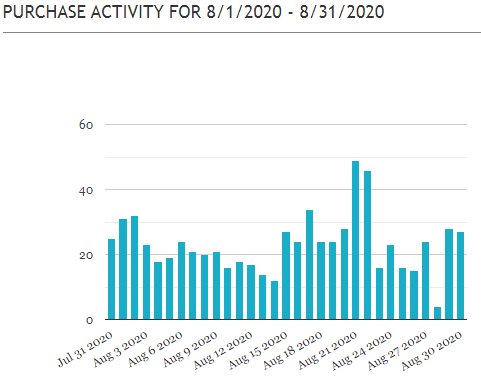
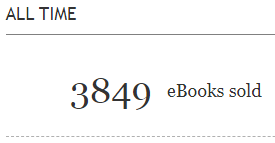
In July and August, I ran “stacked promotions” on Kobo along with paid ads on sites like Booksy, EReader News Today, and Robin Reads. My Kobo sales jumped to an average of around 20 downloads per day or 600 for the month. Now, in mid-October, I’ve had 3,849 all-time Kobo downloads in 68 international markets. This is growing exponentially, and it’s key to eBook sales success. It’s the same principle as compound interest.

Here are stats on where Kobo sold books for me in the last 6 months. Note: These figures include all regular priced sales and discounted promotions.

Canada – 1817
United States – 510
United Kingdom – 466
Australia – 290
South Africa – 160
New Zealand – 106
India – 69
Netherlands – 45
Nigeria – 33
Ireland – 30

The remaining 58 countries range from 1 to 30 downloads each. In no particular order, they are:

Mexico, Jamaica, Dominican Republic, St. Vincent & Grenadines, Trinidad & Tobago, Colombia, Ecuador, Argentina, Brazil, Tonga, Belgium, Germany, Andorra, France, Denmark, Portugal, Spain, Switzerland, Greece, Romania, Italy, Croatia, Slovenia, Austria, Hungary, Turkey, Morocco, Algeria, Tunisia, Malta, Libya, Israel, Lebanon, Egypt, Saudi Arabia, Qatar, United Arab Emirates, Oman, Ghana, Uganda, Zambia, Namibia, Zimbabwe, Mauritius, Cocos Islands, Turkmenistan, Pakistan, Nepal, Bangladesh, Thailand, Vietnam, Hong Kong, Japan, Philippines, Malaysia, Singapore, and Indonesia.

Kobo is a Truly International Indie-Publishing Platform

A marvelous feature built into Kobo is their deep-analytics distribution map of the world. It shows your total sales volume per country represented in blue circles. The bigger the circle, the more books you’ve sold in that country. The more circles you have on the world map, the wider your global distribution is. You can custom-adjust your stats review by the day, the week, the month, or all-time.

Seeing my Kobo sales growth is encouraging and rewarding. I still have limited experience in Kobo publishing, but what I’ve found is consistent with what more experienced (and much more successful) indies have told me about working with Kobo. These are the factors that’ll make Kobo work for you on an international scale… not possible with any other publisher:

Multiple Products — This includes eBooks and audio books (which I haven’t tried yet). It’s unrealistic to expect decent and expanding sales figures from one stand-alone product. Indie writing and publishing is a “numbers game”. The more products you offer for sale, and the more platforms you offer them on, the more you stand to sell.

Series Production — Most of my Kobo downloads are in a series. I have 6 books in a Based-On-True Crime Series and 2 stand-alone products offered on Kobo. The series beats the stand-alones ten-fold. I see a read-through sales pattern, and it’s growing with more readers recognizing my brand and being confident enough to buy into it.

Pay-To-Play — You have to spend money to make money in the indie writing and publishing business. Paid promotions work. That includes Kobo’s in-house program (which isn’t expensive) and boosting the Kobo promos with “stacked” independent ads. Those include the discount email sites and click-through ads on BookBub. I haven’t tried FaceBook yet, and Amazon won’t allow you to say “Kobo” in their presence.

A Positive Indie Author/Publisher Mindset — This is the most important factor of all. Once I made the decision (February 17, 2020) to treat my indie writing and publishing as a business, things really changed. It takes time and persistence, but it’s worth it. It fits with this quote I have on my writing space wall:

Until one is committed, there is hesitancy, the chance to drawback. Concerning all acts of initiative (and creation), there is one elementary truth that ignorance of which kills countless ideas and splendid plans: that the moment one definitely commits oneself, then Providence moves, too. All sorts of things occur to help one that never otherwise have occurred. A whole stream of events issues from the decision, raising in ones favor all manner of unforeseen incidents and meetings and material assistance, which no one could have dreamed would have come their way. ~ Johan Wolfgang von Goethe

How about you Kill Zoners? Do you have any words to share about Kobo or writing and publishing in general? Let us know in the comments!

——

Garry Rodgers is a retired homicide detective with a second run as a forensic coroner investigating unexpected and unexplained human deaths. Now, Garry has reinvented himself in a third career as an indie author/publisher and admits at struggling to make sense of it all.

When not being indie, Garry Rodgers spends his of time putting around the Pacific saltwater near his home on Vancouver Island in British Columbia at Canada’s west coast. Follow Garry’s regular blog at DyingWords.net and connect with him on Twitter and Facebook.
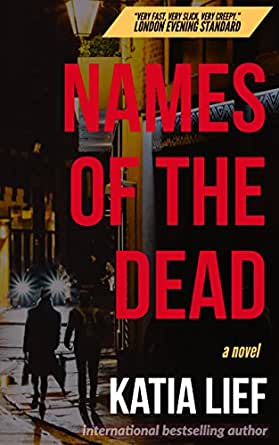
Crafting Your Narrative

This year I’ve been exploring the world of art through painting as well as writing – partly as a result of the pandemic lockdown, partly as a culmination of years of ‘dabbling’ in acrylics. A few weekends ago I decided to take the first step to taking my art to the next level and enrolled in a class about turning your creativity into a business. I was pretty nervous as my painting still feels very new and fragile, but came away feeling inspired and, perhaps more importantly, with the realization that this new approach to painting could also inform my writing career as well. The first exercise in the class was entitled ‘crafting your narrative’ and it became such an important exercise (for me at least) that I wanted to blog about it!

So what is ‘crafting your narrative’? Well, basically it is an initial exercise designed to make you think about your own creative narrative – what makes you and what you craft unique. Honestly, I can’t say I’d ever thought of looking at myself this way. All my elevator pitches and synopses have been focused on a particular book I’ve written and what makes it ‘unique’, rather than focusing on myself as a writer. When it came to my painting, the class prompts examined not only the media and mode of expression I use, but also what inspired me and how I thought my work made other people feel. In the end the (rough draft) that I came up with for myself as a painter was “I create abstract acrylic paintings that explore color, symmetries, shapes, and the relationship between the natural world and our interior selves…” Not bad I thought for a first attempt, but then I immediately began to think about how I would craft a similar narrative about myself as a writer…and soon realized just how much harder that would be!

Crafting your own narrative is, I discovered, much more challenging than summarizing a book for an elevator pitch – yet it makes perfect sense. As we discussed in class, when you are trying to differentiate yourself as any kind of creative, it’s vital to know who you are and what makes your work unique. So I set about trying to craft a narrative the same way I had for myself as a painter…and so far I’ve really only come up with a very rough statement that I am a fiction writer ‘who writes about bold, intriguing women against a backdrop of real and re-imagined histories’. Of course this doesn’t sound like most of my books at all – or me – so crafting my own narrative is definitely still a work in progress:)

So TKZers, how would you craft your own narrative as a writer? How (in one sentence of two) would you describe yourself as a writer and what makes your work unique? Do you find this exercise as challenging as I do?

Quick note: It’s fall break this week and we’re embarking on a driving trip round our beautiful home state of Colorado, so my internet access will be a little bit more limited today than usual – but I will be checking in!


Inspiring Quotes From Inspiring Crime Thriller Writers

If you’re a writer—crime thriller or otherwise—sometimes you need a break… then a kick in the butt to get back in the chair and your fingers on the keys. I’m going through this after taking a two-week writing hiatus. Rita (my wife of 37 years) and I took a vacation, and Rita forbid (forbade?) me to write during our time away.

So, I’m back home and started to type a new manuscript that’s book 6 in my based-on-true-crime series. Although I know the story inside out, I confess I had a hard time getting in the chair and placing my fingers on the keyboard. Knowing I also had a Kill Zone post due this week, I decided to do a two-birds-with-one stone thing and get something stirring.

I spent an evening surfing the net and searching for motivation and creativity support. It worked. In the past three days, I’ve written 8991 words in my Between The Bikers manuscript. My renewed energy and creative juice is partly thanks to taking a writing break and finding inspiring quotes from inspiring crime thriller writers. I’d like to share some of them with you.

——

The way to write a thriller is to ask a question at the beginning, and answer it at the end. ~Lee Child

Place the body near the beginning of your book—preferably on the first page, perhaps the first sentence. ~Louise Penny

I’m interested in starting stories at the moment of some crisis to see how the character deals with it. ~Paul Auster

Figure out what exactly is at stake, and how to establish it quickly. That’s your conflict. ~Katia Lief

I’m always pretending that I’m sitting across from somebody. I’m telling a story, and I don’t want them to get up until I’m finished. ~James Patterson

Life is about working out who the bad guy is. ~Sophie Hannah

An initial crisis may produce a question, one that takes the form of a challenge to the reader: Can they solve the puzzle before the answer is revealed? In its simplest form the crisis is a murder and the question is whodunit? ~Unknown

I can’t start writing until I have a closing line. ~Joseph Heller

Often know how the book will end and have imagined a number of major scenes throughout, but not always how I will get there. When I’m about two-thirds done I re-outline the whole book so I know that I’m delivering on all I promised. ~Jeff Abbott

Crime stories are rarely about crime. They’re a study of its aftermath. ~Unknown

The only writers who survive the ages are those who understand the need for action in a novel. ~Dean Koontz

People don’t read books to get to the middle. They read to get to the end. ~Mickey Spillane

I do extensive outlines before I write a single word. ~Jeffrey Deaver

Plot develops from the initial setup of the characters, their conflicts and the location. This development is fueled by the characters’ decisions. These choices should be tough and compromising with high risks of failure. ~Unknown

I like to come up with a massive scale concept and throw in very ordinary characters because I think if you have a massive scale concept with massive scale characters they tend to cancel each other out. People have more fun if they can imagine how either themselves or the type of people they know would react in a bizarre situation. It’s a bit boring if you know how some highly trained soldier is going to react to a situation. It’s not very interesting compared to how someone who is an electrician or a schoolteacher might react to a situation. ~Christopher Brookmyre

The first chapter sells the book; the last chapter sells the next book. ~Mickey Spillane

Readers have to feel you know what you’re talking about. ~Margaret Murphy

Keep asking ‘Who wants something?’ ‘Why do they need it?’ and ‘What’ll happen if they don’t get it? ~Unknown

A man’s grammar, like Caesar’s wife, should not only be pure, but above suspicion of impurity. ~Edgar Allan Poe

Chapters are shorter than they used to be, and I have to be creative about ways to keep the pace moving: varying my sentence length, making sure each chapter ends on a note of suspense, keeping excess narration to a minimum. ~Joseph Finder

My ideas? Headlines. The human heart. My deepest fears. The inner voice that says: if it scares you, it’ll scare readers too. ~Meg Gardiner

Surprise is when a leader is unexpectedly shot whilst giving a speech. Suspense is when the leader is delivering a speech while an assassin waits in the audience. ~Unknown

I’d have to say that most of my ideas originate with everyday anxieties. What if I forgot to lock the door? What if a horrific crime happened next door? What if my daughter didn’t show up at work? What if I woke up one day and the house was empty? ~Linwood Barclay

Ideas are not the hard part of writing. I have ideas all the time. The challenge is understanding which ideas are the most interesting and powerful and dramatic, and then finding the best way to bring them to life. It’s all in the execution, because the idea is where the work begins, not where it ends. ~Jeff Abbott

If you don’t understand that story is character and not just idea, you will not be able to breathe life into even the most intriguing flash of inspiration. ~Elizabeth George

 The character that lasts is an ordinary guy with some extraordinary qualities. ~Raymond Chandler

You’re looking for your character who’s got the absolute most at stake, and that’s the person who you want your story to be about. ~Daniel Palmer

Keep a plate spinning until the final paragraph. Then let it fall. ~Unknown

Books aren’t written, they’re rewritten. Including your own. It is one of the hardest things to accept, especially after the seventh rewrite hasn’t quite done it… ~Michael Crichton 

You can always edit a bad page. You can’t edit a blank page. ~Jodi Picoult

When you’re editing write the following words onto a Post-it note in big red letters and stick it on your monitor: ‘Who Cares?’. If something has no bearing on the story, leave it out. ~Stuart MacBride

If I waited for perfection, I would never write a word. ~Margaret Atwood 

The best advice is the simplest. Write what you love. And do it everyday. There’s only one way to learn how to write, and that’s to write. ~Steve Berry

Don’t go into great detail describing places and things… You don’t want descriptions that bring the action, the flow of the story, to a standstill. ~Elmore Leonard

Read aloud. And not just your own work. Read good writing aloud.

Listen to the sound the words make. ~Unknown

A good novel tells us the truth about its hero; but a bad novel tells us the truth about its author. ~G K Chesterton

Write about what you never want to know. ~Michael Connelly 

I always refer to style as sound. The sound of the writing. ~Elmore Leonard

Before you can be a writer you have to experience some things, see some of the world, go through things – love, heartbreak, and so on -, because you need to have something to say. ~John  Grisham

Writing is work. It’s also gambling. You don’t get a pension plan. Other people can help you a bit, but ­essentially you’re on your own. ­Nobody is making you do this: you chose it, so don’t whine. ~Margaret Atwood

The words characters use and the gestures they make should be enough for the reader to know who is talking and how they’re feeling. ~Unknown

I try to leave out the parts that people skip. ~Elmore Leonard

Writing is the flip side of sex – it’s good only when it’s over. ~Hunter S Thompson

My task, which I am trying to achieve, is, by the power of the written word, to make you hear, to make you feel – it is, before all, to make you see. ~Joseph Conrad

Write every day even if it is just a paragraph. ~Michael Connelly

All the information you need can be given in dialogue. ~Elmore Leonard

Have something you want to say. ~Ian Rankin

Any author, like their protagonist, must endure sacrifice, or be willing to do so, ~Unknown

There are only two pieces of advice any would-be writer needs. The first is Give up. Those who heed that don’t need to hear the second, which is Don’t give up. ~Mick Herron

My purpose is to entertain myself first and other people secondly. ~John D MacDonald

I never read a review of my own work. Either it was going to depress me or puff me up in ways that are useless. ~Paul Auster

I owe my success to having listened respectfully to the best advice, and then going away and doing the exact opposite. ~G K Chesterton

I abhor crime novels in which the main character can behave however he or she pleases, or do things that normal people do not do, without those actions having social consequences. ~Steig Larsson

The best crime novels are all based on people keeping secrets. All lying – you may think a lie is harmless, but you put them all together and there’s a calamity. ~Alafair Burke

With the crime novels, it’s delightful to have protagonists I can revisit in book after book. It’s like having a fictitious family. ~John Banville

I think the “crime novel” has replaced the sociological novel of the 1930s. I think the progenitor of that tradition is James M. Cain, who in my view is the most neglected writer in American literature. ~James Lee Burke

The most difficult part of any crime novel is the plotting. It all begins simply enough, but soon you’re dealing with a multitude of linked characters, strands, themes and red herrings – and you need to try to control these unruly elements and weave them into a pattern. ~Ian Rankin

Crime fiction makes money. It may be harder for writers to get published, but crime is doing better than most of what we like to call CanLit. It’s elementary, plot-driven, character-rich story-telling at its best. ~Linwood Barclay

Crime fiction confirms our belief, despite some evidence to the contrary, that we live in a rational, comprehensible, and moral universe. ~P.D. James

Most crime fiction, no matter how ‘hard-boiled’ or bloodily forensic, is essentially sentimental, for most crime writers are disappointed romantics. ~John Banveiile

And there are rules for crime fiction. Or if not rules, at least expectations and you have to give the audience what it wants. ~Tod Goldberg

Crime fiction is the fiction of social history. Societies get the crimes they deserve. ~Denise Mina

One of the surprising things I hadn’t expected when I decided to write crime fiction is how much you are expected to be out in front of the public. Some writers aren’t comfortable with that. I don’t have a problem with that. ~Kathy Reichs

The mainstream has lost its way. Crime fiction is an objective, realistic genre because it’s about the real world, real bodies really being killed by somebody. And this involves the investigator in trying to understand the society that the person lived in. ~Michael Dibin

Anyone who says, ‘Books don’t change anything,’ or – more commonly – that crime fiction is the wrong genre for promoting social change – should take a closer look. ~Andrew Vachss

The danger that may really threaten (crime fiction) is that soon there will be more writers than readers. ~Jacques Barzun

I’ll bet you $10 right now that there are an awful lot of literary writers who started a long time ago and now they find themselves in this place where secretly they feel trapped. And you know what they really read for fun? They read crime fiction. ~Robert Crais

There is sometimes a feeling in crime fiction that good writing gets in the way of story. I have never felt that way. All you have is language. Why write beneath yourself? It’s an act of respect for the reader as much as yourself. ~John Connolly

It wasn’t a decision to become a writer. I wanted to become a writer of crime fiction. I was very specific. ~Michael Connelly

Crime fiction, especially noir and hardboiled, is the literature of the proletariat. ~Adrian McKinty

There are a number of writers who believe it is their duty to throw as many curve balls at the reader as possible. To twist and twist again. These are the Chubby Checkers of crime fiction and, while I admire the craft, I think that it can actually work against genuine suspense. ~Mark Billingham

I had done 12 little romance books, and I decided I wanted to move into crime fiction. ~Janet Evanovich

I respond very well to rules. If there are certain parameters it’s much easier to do something really good. Especially when readers know what those are. They know what to expect and then you have to wrong-foot them. That is the trick of crime fiction. And readers come to crime and graphic novels wanting to be entertained, or disgusted. ~Denise Mina

Most crime fiction plots are not ambitious enough for me. I want something really labyrinthine with clues and puzzles that will reward careful attention. ~Sophie Hannah

I’ve always been drawn to the extremes of human behavior, and crime fiction is a great way to explore the lives and stories of fascinating people. ~Nick Petrie

The best crime stories are not about how cops work on cases. It’s about how cases work on cops. ~Joseph Wambaugh

If you don’t have the time to read, you simply don’t have the tools to write. ~Stephen King

What about you, Kill Zoners? What great writing quotes do you have? What would you like to share?

——

Garry Rodgers is a retired homicide detective and forensic coroner, now a struggling crime writer and indie publisher. Garry has twenty pieces up on Amazon, Kobo, and Nook including his Based-On-True-Crime Series featuring investigations he was involved in while attached to the RCMP’s Serious Crimes Section.

Garry Rodgers also has a popular website and regular blog at www.DyingWords.net. When not writing, Garry spends time putting around the saltwater near his home on Vancouver Island in British Columbia at Canada’s southwest coast.

Concrete Tips for Adding Tension, Suspense, & Intrigue to Any Story

by Jodie Renner, fiction editor & author of writing guides

Are you in the process of writing a novel? Maybe a thriller or other popular fiction that you hope will grab readers and really sell? Besides a great character and a fascinating plot, you’ll also need some tried-and-true fiction-writing techniques to take your story up a level or three.

To keep readers engaged and eagerly turning the pages, all genres of fiction, not just thrillers, need tension and intrigue – and a certain amount of suspense. And of course, you’ll need to ratchet up the tension, intrigue, and suspense a lot more if you’re writing a fast-paced, nail-biting, page-turner.

Here are some techniques for engaging your readers and keeping them riveted: 

~ First, create a protagonist that readers will care about, and give him some worries and secrets. Make your hero or heroine intriguing and complex, clever and resourceful. But not perfect – make them vulnerable too, with an Achilles heel and some inner conflict, regrets, and secrets. In most cases, you want your protagonist to be likeable too, or at least have some endearing traits to make readers worry about her and root for her. If readers can’t identify with or bond with your character, it’s pretty hard to make them care what happens to her. Essential Characteristics of a Thriller Hero

~ Get up close and personal. Use deep point of view (first-person or close third person) to get us into the head and body of your main character right from the opening paragraph. Show his thoughts, fears, hopes, frustrations, worries, and physical and sensory reactions in every scene. Engage Your Readers with Deep Point of View.

~ Show your hero or heroine in action in the first paragraphs. Rather than opening with description, background info, or your character alone musing, it’s best to jumpstart your story with your lead interacting with someone else who matters to them, preferably with a bit of discord and tension. And show his/her inner thoughts and emotional reactions, maybe some frustration or anxiety.  Act First, Explain Later.

~ Give your character a problem to solve right from the get-go. It can be minor, but creating an early conflict that throws your lead off-balance will make your readers worry about him. A worried reader is an engaged reader.

~ Withhold information. Don’t tell your readers too much too soon. This is so important and a common weakness for new fiction writers. Hold off on critical information. Hint at a traumatic or life-changing event early on, then reveal fragments of info about it little by little, through dialogue, thoughts, and brief flashbacks, to tantalize readers and keep them wondering and worrying.

~ Keep the story momentum moving forward. Don’t get bogged down in lengthy descriptions, backstory, or exposition. Keep the action and interactions moving ahead, especially in the first chapter. Work in background details and other info little by little, on an “as-needed” basis, through dialogue or flashbacks – not as the author/narrator interrupting the scene to explain things to the readers. See my blog post Don’t Stop the Story to Introduce Each Character! 

~ Introduce a significant, meaningful story problem. Now that your readers care about your main character, insert a major challenge, dilemma, goal, or threat within the first ten chapters, a big one that won’t be resolved until the end. Create an overarching sentence about this to keep in mind as you’re writing your story:

“Will (name) survive/stop/find/overcome (ordeal/person/difficulty/threat) on time?”

~ Show, don’t tell. Show all your critical scenes in real time as they’re happening, with action, reaction, and dialogue. Show your main character’s inner feelings and physical and emotional reactions. Don’t explain as the author or narrator – stay in the character’s viewpoint. And don’t have one character tell another about an important event or scene after it happened. Instead, show that scene as it’s unfolding or as a flashback. Of course, briefly narrate or “tell” transition scenes. Tips for showing instead of telling.

~ Make use of compelling, vivid sensory imagery to take us right there, with the protagonist, vividly experiencing and reacting to whoever/whatever is challenging or threatening him. Show his reactions to his environment, including what he’s seeing, hearing, smelling, touching, even tasting, and also any discomfort – is he hot, cold, tired, stressed, hungry, thirsty, afraid? Is sweat pouring down his back? Are his feet sore? These details bring him to life for the readers, who feel that hunger, thirst, fatigue, or discomfort too. 

~ Use brief flashbacks at key moments to reveal your viewpoint character’s childhood traumas, unpleasant events, secrets, emotional baggage, hangups, dysfunctional family, etc. Show these in real time for greater impact.

~ Insert some conflict/tension and a change into every scene. There should be something unresolved in every scene. Your character enters the scene with an objective or goal (agenda), but she encounters obstacles in the scene, so she is thwarted in her efforts to reach her goal. By the end of the chapter or scene, she or circumstances have changed.

~ Put tension on every page. Every page needs some tension, even if it’s just doubt, questioning, disbelief, disagreement, suspicion, or resentment simmering below the surface.

~ Add in tough choices and moral dilemmas. Devise ongoing difficult decisions and inner conflict for your lead character. Besides making your plot more suspenseful, this will also make your protagonist more complex, vulnerable, and intriguing.

~ Delay answers to critical plot questions. Look for places in your story where you’ve answered readers’ questions too soon, so have missed a prime spot to increase tension and suspense. Draw out the time before answering that question. In the meantime, hint at it from time to time to remind readers of its importance.

~ Plan a few plot twists. Readers are surprised and delighted when the events take a turn they never expected. Don’t let your readers become complacent, thinking it’s easy to figure out the ending, or they may stop reading.

If you’re writing a thriller or other suspense fiction, ratchet up the tension and conflict even more with these techniques: 

~ Create a cunning antagonist. Your villain needs to be as clever, determined and resourceful as your protagonist – or even more so. Make him or her a serious force to be reckoned with! See my post here on TKZ, Create a Fascinating, Believable Antagonist.

~ Ratchet up the problem to a serious threat, and make it personal. Your hero or someone he cares about is personally threatened. It’s a life-or-death situation.

~ Establish a sense of urgency, a tense mood, and generally fast pacing. Do this by your choice of words and tight writing.

~ Use the setting to establish the mood and create suspense. This is the equivalent of ominous music, harsh lighting, strange camera angles, or nasty weather in a scary movie.

~ Create a mood of unease by showing the main character feeling apprehensive about something or someone or by showing some of the villain’s thoughts and intentions.

~ Keep hampering your hero or heroine throughout the novel to increase worry, tension, and suspense. Stir in some of these ingredients: a ticking clock, obstacles, chases, traps, restrictions, handicaps, injuries, bad luck, etc.

~ Keep raising the stakes. Keep asking yourself, “How can I make things worse for the protagonist?” As the challenges get more difficult and the obstacles more insurmountable, readers worry more and suspense grows.

~ Get us into the head of the villain too. For increased anxiety and suspense, show us the thoughts and intentions of your antagonist from time to time. This way the readers find out critical information the hero or heroine doesn’t know, things we desperately want to warn her about!

~ Use foreshadowing to incite curiosity. Tease the readers with innuendos. Drop subtle hints of troubles to come. Hint at the main character’s past secrets. What is the character worried about or afraid might happen? Capitalize on this. For more specific tips on this technique, see my TKZ article, Fire up Your Fiction with Foreshadowing.

~ Add in some revelations and epiphanies to put a twist on things and reward readers for their interest and involvement.

~ Use cliff-hangers. Put your hero or heroine in hot water at the end of some chapters to incite reader curiosity and questions and compel them to go to the next chapter. Then maybe use a jump cut to go to a different scene, so they have to read more to find out what happened in the previous chapter.

For a list of techniques to consider when writing suspense fiction, see my Checklist for Adding Suspense & Intrigue here on TKZ.

Then, in the Revision Stage: 

~ Amp up, condense, or delete any scenes that lag, and tighten up your writing.  Are some of your sentences and paragraphs too long? Are you inadvertently repeating words, ideas, actions, or imagery in close proximity? Go back and make sure every scene, paragraph, sentence, and word enhance the story and drive the plot forward. Critical Scenes Need Nail-Biting Details.

Use short paragraphs and mix it up with brief narration and snappy dialogue. Vary the sentence structure and length. Use shorter sentences at tense times. More tips: Pick up the Pace for a Real Page-Turner.

~ Word choice is critical too. Vary your words. Use specific, evocative nouns, and verbs that really capture the action and add tension, rather than overused ones like “walked” and “ran.” For examples and more, see Nail it with Just the Right Word.

Have some of these techniques worked for you? Which ones do you find the most helpful in your own writing? Do you have any other tips to help new suspense fiction writers create a novel that will captivate readers, sell lots of copies, and garner great reviews? Or examples from your own work or a bestselling novel you’ve read? Let us know in the comments below.

Jodie Renner is a freelance fiction editor and the author of three writing guides in her series An Editor’s Guide to Writing Compelling Fiction: Captivate Your Readers, Fire up Your Fiction, and Writing a Killer Thriller. You can find Jodie at www.JodieRenner.com, at her Amazon Author Page, her blog Resources for Writers, and on Facebook. 

Beta Readers

I’m back from a summer hiatus and would like to say that I used the opportunity to jet set around the world in glamorous style but…well, you know…I did get a chance to visit the mountains a few times but we’ve had so much smoke from the recent wildfires that even that experience felt very much on-brand for 2020…

In the meantime, I have been writing and painting – but I’ve also been broadening my beta-reader opportunities, which got me thinking about the whole notion and value of beta-readers. In the past my beta-reader pool has pretty much been confined to friends and family, and, if I’m lucky, co-bloggers here at TKZ:)

By now most of my friends and family have read (and re-read!) many of my manuscripts, but only recently have I begun to look further afield to see if I can get critical input from potential readers. This interest was sparked by a UK historical fiction editorial group who began offering a beta-reader service – which (serendipitously for me) came just after I finished revisions to an old manuscript of mine. What I liked was that these beta-readers will be complete strangers with a love for historical fiction (so they can be as blunt and honest as they like – something I’m never totally sure friends/family are!) and they also must answer a series of very specific questions to help a writer hone in on issues with the book. I haven’t got feedback as yet so the jury is still out on the benefits of the program but I’m excited to broaden my beta-reader reach nonetheless.

So TKZers how do you focus on the beta reader question…Who do you get to be a beta-reader (?) and at what stage in your process do you get them involved? I usually have much earlier input but I’m thinking fresh eyes in this final, just about to submit stage, will be very helpful. What’s your experience been with beta-readers? Mine’s been as mixed as my experience with writer’s groups, some input has been terrific, some not so much…

Glad to be back and looking forward to your feedback on what has worked/hasn’t worked for you all when it comes to beta-readers!


Turning Real Terror into Fiction

Years ago, I experienced a terrifying hell ride when the gas pedal on my Ford Explorer stuck wide-open while driving Rte. 125 during rush hour traffic. Two days later, I received a recall notice in the mail. Little good it did me then. The experience remains as fresh in my mind today as it did then.

I’d just left Khols parking lot and stopped at a red light. When the light turned green my foot shifted to the gas pedal, and the SUV took off like a bullet fired from an automatic pistol. Here’s the strange thing. When something like this happens, you try to reason it away. Never do you think anything dangerous could be happening. Our self-protection mode kicks in and we waver in and out of denial.

Until we can’t any longer.

Until we need to face the truth — this day could be our last. And it’s terrifying!

The SUV kept gaining more and more momentum till the speedometer read 40 mph, 50 mph, 60 mph, and climbing. Rte. 125 is a main drag. Traffic lights stood every mile or so, and most of them turned red. But I couldn’t stop. With both feet on the brake, I screamed out the window for someone to help me.

No one did.

Other drivers honked their horns. They didn’t know what was happening inside my Explorer. All they saw was a crazed woman swerving in and out of traffic, barely missing numerous vehicles, black smoke trailing behind from the brake pads tearing clean off. Next, smoke poured out the back. Not sure why. If I had to guess, I’d say it was the rotors or something else brake-related. All I knew was I couldn’t stop the damn SUV.

As the speedometer climbed toward 70mph, a gazillion things raced through my mind in the span of a few seconds, including how to crash the vehicle without killing myself or others. After five sets of lights and miles and miles of the most harrowing journey I’d ever had the displeasure of experiencing, I came to a stretch of road with a field on the right. My plan was to veer in to the field and crash into a tree, where hopefully I could jump out the driver’s door. Obviously, I wasn’t thinking clearly. My complete focus was on avoiding obstacle after obstacle so I didn’t kill anyone.

If it weren’t for two college students who pulled alongside me, I might not be alive today.

They hollered at me to throw the SUV into neutral, which I did. But the car kept accelerating. Then they told me to turn off the ignition. Finally, I rolled to a stop. When they hustled to my door, I could barely speak, nerves zinging through my system, tears streaming down my twitching cheeks.

Horrible memories make great fodder for books. Wouldn’t you agree?

Fast forward to 2017.

In May, my neighbor asked to borrow my vehicle because his wouldn’t turn over. Thing is, it was a fairly new vehicle. What we soon discovered was he’d missed a loan payment. The lender blocked access to the car by using what’s called a starter interrupter device to make the vehicle un-driveable till he brought his payments up-to-date.

My crime writer antennae dinged.

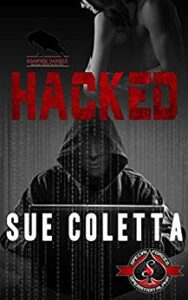
If they could prevent him from starting his SUV, could someone hack in and take control? What I discovered chilled me to the bone . . . and breathed life into HACKED.

Have you used a terrifying experience in your writing? Do tell.


“HACKED is a meaty novella packed with great characters, unexpected humor, intriguing plot twists & page turning pace. This comes from good writing and an author who delivers every time.” ~ Jordan Dane

“Witty, exciting and perfectly paced! Normally, novellas leave me wishing for more but Sue Coletta’s ‘Hacked’ was absolutely perfect!” ~ Amazon Reviewer

Look Inside: https://amzn.to/321QDqM 

True Crime Thursday – Poor Choice for a Getaway Vehicle

by Debbie Burke

@burke_writer

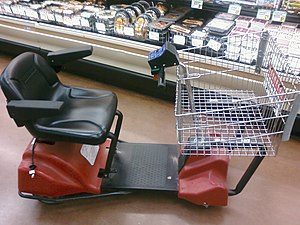
Photo from Wikipedia


Not enough evidence exists to declare a new crime trend but, from time to time, thefts of motorized shopping carts make the news.

Battery-powered carts are intended for customers with physical disabilities. Yet some thieves—often under the influence—use them as getaway vehicles.

Since the top speed of the typical cart is two miles per hour, none has been involved in high-speed pursuits. So far, the success rate of clean getaways is zero.

But hope springs eternal.

In May, 2009, thefts of motorized shopping carts occurred in two separate incidents. A Florida man was caught riding a stolen cart not far from the store. Two South Carolina men attempted a similar caper. Because the carts were valued at $2500, all were arrested for felonies. If they had stolen regular, non-motorized carts instead, the charges would have been misdemeanors.

In September 2014, a 46-year-old woman from Fruitport Township, Michigan, couldn’t get a ride and didn’t want to walk. So, she put six bags of allegedly stolen clothes, worth $600, in a Walmart motorized cart and took off. She was apprehended two miles away by police who ran her through the Law Enforcement Information Network (LEIN), along with the man accompanying her. Both had outstanding warrants.

In January 2015, a Eunice, Louisiana man, age 45, who claimed to have a broken foot loaded up a Walmart cart with a half-gallon of vodka, Mardi Gras cups, and other items and headed across the street to a truck stop parking lot. Surveillance video confirmed he had not paid for the items. When police arrested him, the party was cancelled.

In November 2019, a different Louisiana man, age 32, realized he was too drunk to drive his car and worried he might get a DWI. His solution: drive a Walmart motorized shopping cart instead. A Terrebonne Parish sheriff deputy spotted the scooter parked between two cars at a bar a half mile away. After further investigation, he arrested the suspect. The man was charged, not for DWI, but “unauthorized use of a moveable”, a felony.

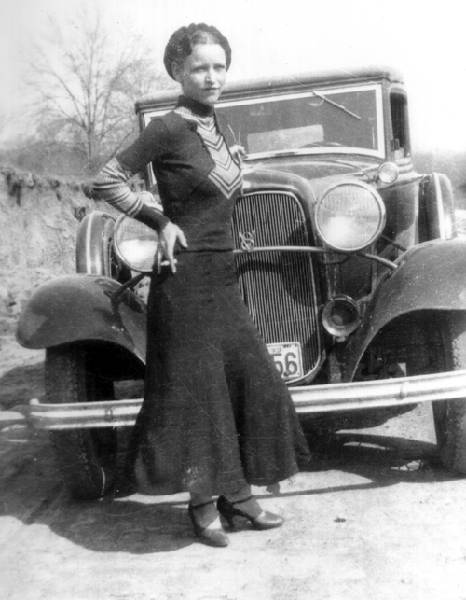
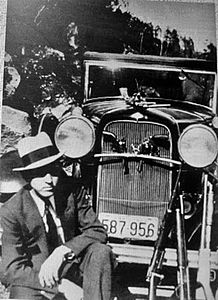
The above cases might have had better success if they’d chosen a vehicle like Bonnie and Clyde’s V8 Ford for their getaways.

Bonnie Parker – public domain

Clyde Barrow – wikipedia


TKZers: What’s the most unusual getaway vehicle you’ve heard of? Was it successful?

Deconstruction of Netflix’s Tiny Creatures – Part I

By SUE COLETTA

Tiny Creatures is a new docuseries on Netflix that’s adorable, suspenseful, and masterfully plotted and paced. To check it out I skipped ahead to Episode 6, which features a raven and a rat. And the storytelling craft blew me away. This episode, along with all the others in the series, provide a detailed roadmap driven by obstacles, misdirection, and conflict. Let’s pull back the curtain and peek behind the scenes.

Even with the “Spoiler Alerts” I still recommend watching the episode. I’ve only concentrated on a few areas of craft, and I don’t point out every instance of where it occurs. The full post still landed at 4564 words. Hence why I’ve broken the post into two parts. See what can happen when you’re high on craft? 😉

Before we get to the deconstruction, check out the trailer.

Deconstruction Part I

“Florida, home to the Everglades. A wild expanse of almost two million acres of wetlands.” (We know where we are, but there’s also a hint of mystery and intrigue. What creatures lurk in the Everglades? And that, is the Central Dramatic Story Question—the cornerstone question at the heart of every story that directly relates to the hero’s conflict. Boom! The writer raised the most important question in the first two lines of the script. Notice s/he never outright poses the question. Rather, s/he implants it in the viewer’s mind.) “Isolated among the Everglades stands a fishing shack, the backdrop of two very different animals whose stories are destined to cross.” (There’s the hook. We need to continue to find out where this leads.)

In flies an impressive raven. (Is he our villain or hero? We’ll keep watching to find out.)

“A raven, a sleek bird with glossy black feathers. Behind this polished appearance, the raven possesses intellect as well as beauty.” The camera zooms in on his size and power (hints that he must be the bad guy). “Lately, the raven’s been keeping an eye on this fishing shack, tracking the movements of the human owner, their habits and routine. He knows when the coast will be clear.”

The raven struts into the fishing shack.

“Ravens are quirky characters and this one is keen to explore. (quirky = surface trait = 1st Dimension of Character) His eyesight, however, isn’t as sharp as his mind (character flaw). He can’t see well in the dark. (obstacle) But this bird is a problem-solver and he has the perfect solution.”

The raven tugs on the wooden knob of the shade, and the shade rolls up. Cascading sunlight bathes the fishing shack in brightness.

“As smart as a chimpanzee, ravens frequently use their brains to exploit the riches of others. Especially humans. (Notice the word choices; the harsh “exploit” and staccato “especially humans” indicates he’s the villain) And this person has many treasures hidden away, safely out of reach.”

The raven flies over to a tackle box.

“But for the raven this is a test of his wits.” (Tension builds) Raven struggles to break into the tackle box (conflict). “And he does what ravens do best—he improvises.” (problem-solver = psychological trait stemming from past experience, upbringing, emotional scars, memories, etc. = 2nd Dimension of Character. We’re beginning to better understand the raven.)

Using a hook-shaped tool, the raven breaks into the tackle box to get at some sort of bait scattered across the bottom of the middle drawer. Clearly, the raven is burglarizing this shack to suit he needs. (Burglar = antagonist. Or could he be an anti-hero? We’re still not sure, which forces us to keep watching.)

Camera pans out to the Everglades and the narrator offers more details about the area. “The water is also home to an assortment of wildlife. Unlike the raven, some animals strive for a simple existence.” (A sprinkle of backstory. More importantly, this is the setup to introduce our tiny hero).

Enter stage left: an adorable rat doggy paddles across the water. (cuteness = surface trait = 1st Dimension of Character)

(Side note: If you’re not a lover of rats, I get it. I wasn’t either. But by the end of this story, you will fall in love with this little rat. And that, ladies and gents, is what characterization is all about.)

“After a busy night exploring, this drowned rat is traveling home to rest (relatable + we empathize with our tiny hero). Each night she swims from bank to bank to see what she can forage. Just like humans, not all rats are natural swimmers (our hero has a superpower). Those rats who have mastered the art can swim over a mile in one go. With her small frame and streamlined body, she’s a natural, moving effortlessly through the water.” (What other superpowers might she possess? Curiosity and empathy keeps us watching.)

Our tiny hero reaches a drainpipe and climbs inside.

“This is a familiar and safe route. Not many predators can follow her through these narrow tunnels. It was her swimming agility which brought her to this hidden route to her home.” (backstory dribbled in to drive the plot) Our tiny hero crawls farther through the drainpipe. “A light at the end of the tunnel signifies her final hurdle.” <cue dramatic music> She plunges into a U-shaped drain (tension builds). “One that relies on her ability to hold her breath and stay submerged for up to three minutes.” (determination = psychological trait = 2nd Dimension of Character) “A rather unconventional way of entering her home in the fishing shack.” (setup of 2nd Pinch Point)

Up pops our tiny hero from the toilet.

“Now soaked to the bone, she carries an extra 5% of her body weight in water. If her fur stays wet for too long, she’s at risk for hyperthermia. (more conflict + character flaw) Using the equivalent of nature’s hairdryer to dry off, she adopts an alternative approach.”

<cue dramatic music and slow-motion camera> Our tiny hero twists and shakes her body 18 times per second, loose water spraying in all directions.

“It’s an efficient if not slightly messy approach. Within just four seconds, she’s removed 70% of the water droplets.” She climbs down off the toilet seat and into the main room of the fishing shack. “Unbeknown to the rat, however, there’s a trespasser inside her home.” (First hint of trouble.) <cue dangerous music as the camera narrows on the raven> “And the normal serenity of the shack is swiftly broken.” (Inciting Incident)

Wings outstretched, the raven squawks.

“The presence of the rat irritates the raven. He could easily kill this rodent. But he has other ideas.” (Because we’ve bonded with our hero — the under-rat, if you will — we fear for her safety. There’s no way we’ll stop watching.) Loud screeches from the raven combined with a penetrating glare startle our tiny hero. “Ravens are one of the few bird species that like to play. And the rat is the unfortunate victim of its game . . . and her tale is a tempting target.”

Raven swan-dives off a nearby table—straight at our hero. The chase is on! (1st Plot Point lands at 20-25% — perfect)

<dramatic music enhances the terror> “Fleeing this terrifying predator, the rat seeks sanctuary where she can.” Each time the raven misses our hero by mere millimeters. Camera closes in on the raven’s opened beak, massive black wings, and powerful physique. “This game is a little one-sided.” (And now, we’re certain Raven is the formidable villain.)

Our tiny hero scampers into a hole in the side of a cardboard box. “The raven uses its sharp beak to poke and probe.” (Notice the hard-sounding word choices “poke” & “probe” which only solidifies our theory about the raven) Raven leaps on top of the box, tears at the old packing tape. (Stakes are raised. If our hero doesn’t escape, she could die!)

“But the rat’s size and agility gives her the edge into some unusual terrain. She ceases her opportunity and makes a dash for it. She squeezes through a one-inch gap, leaving the raven still pecking.”

When our tiny hero races across the floor, Raven is right on her heels. But in the mad dash he knocks over a bottle. Liquid leaks out its spout (foreshadows danger + setup of climax).

“Distracted by the chase, the raven loses track of time.”

Outside the shack, a boat docks at the pier. “The fisherman arrives back at the shack, seeking shelter from the midday sun. But for some, the heat of the sun’s rays are welcome to warm, cold blood.” A menacing-looking iguana sunbathes atop a large rock on the porch, and we learn more about him, including his voracious appetite. (This spattering of backstory raises the stakes even higher while conjuring more story questions: Will our hero need to fight the iguana, too?)

Camera cuts back to the raven whose sharp talons pin down a burlap sack. Underneath, our tiny hero struggles to break free.

“The fisherman returns from a long but successful day on the water.” He unloads his gear and clomps toward the front door. “He is unaware of the raven’s game that is still taking place in the shack.”

Cameras cuts back to inside, where our hero whimpers as she tries to flee from the massive raven. (Conflict, tension, action, and rising stakes, combined with rotating motivation/reaction units, along with solid characterization and story questions—questions that must be answered—and the viewer’s breathless with anticipation. We cannot look away.)

“The noise of the fisherman alerts the raven. Realizing the human has returned, the game with the rat is no longer of interest to him”—he soars toward the window— “as the raven spots a more appealing opportunity outside.”

Camera zooms in on bait in a three-gallon bucket.

“Luckily, the pause in the chase allows the rat to escape to her bed.” Our tiny hero careens into an old boot (allowing viewers a moment to catch their breath = smart pacing).

“For the raven, it seems there are bigger fish to fry.”

Camera captures the raven lickin’ his chops as he stares out the window at the bucket (menacing appearance = surface trait = 1st Dimension of Character). Raven climbs out the window and stalks the ledge to the front corner of the fishing shack. When the fisherman enters the shack, he seizes the opportunity to raid the bait.

While we watch the raven feast, the narrator offers us a few more fascinating details. “With no teeth, the raven pecks at the food, swallowing whole the more manageable pieces.” (These tidbits allow us to better understand the raven, and to envision what he might do to our sweet hero.)

Little Miss Rat emerges from the boot. The camera flashes outside to the iguana, increasing the tension of the scene. Our tiny hero could be up against two villains! (raises the stakes even higher)

“Capable of smelling food from a mile away, the scent of fish entices the rat to leave her hiding place. Similar to ravens, rats are not choosy to what they eat (similar character flaws). There’s more than enough food here for both of them.”

Our innocent hero totters up to the bait bucket. Glowering, Raven towers the rat, his talons latched onto the rim.

“Though still leery of the raven, she hopes this distraction will allow her to break cover and grab a quick bite, unnoticed. But the beady-eyed raven hasn’t learned the art of sharing.”

Raven squawks (motivation), which wakes the sleeping iguana (reaction). Our tiny hero runs and hides, leaving the two bad guys to square off. (tension mounts)

“Woken by the commotion from the raven, this sensitive lizard doesn’t hesitate. Its instinctive reaction is to run.” But when the iguana charges (motivation), the raven leaps off the bucket (reaction) and the bait splatters across the porch. The iguana escapes into the surrounding landscape. “In a flash, it’s gone.”

But the fisherman hears the crash from inside and peers out the window. Raven makes a mad dash to gobble up as much bait as he can swallow.

The narrator hits us with this as a clever misdirect: “Ravens can learn to either like or dislike a person, depending on how they’re treated. And they never forget a face.”

Da, nah, nah. <cue dangerous music>

The fisherman storms outside with a broom. (Now it looks like the human might be the real antagonist of the story. Is the raven an anti-hero? But if that’s true, then why does he keep tormenting an innocent rat? Raising story questions forces us to keep watching.)

Broom in hand, the fisherman chases the raven across the porch, screaming and yelling, and we watch this play out in silhouette through the window (1st Pinch Point, perfectly placed at 37.5%).

With the raven gone, our tiny hero can finally rest. <cue sweet music>

“Both the rat and the raven are blissfully unaware of the danger being constructed outside (This line subtly signals that they are, in fact, dual protagonists). Humans also hold grudges. And the raven’s actions have consequences.” (The fisherman sure looks like the real villain now, doesn’t he? Just when one answer is revealed, the writer raises another story question. How will the human punish the raven?)

On the porch sits a wired trap baited with fish. Our tiny hero is sleeping soundly in her boot when she’s awakened by the raven screeching outside.

“Trapped and outsmarted by the fisherman, the raven calls for help.” Poor Raven is caught in the trap (gaining empathy for our anti-hero).

The camera pans over to our sweet rat emerging from the safety of her bed.

“A social animal, the rat can sense the raven’s distress. Unnerved by the calls for help, her instinct draws her to the raven. (instinct = inner trait = 2nd Dimension of Character) Arriving to see the trapped bird, a sense of empathy washes over the rat. (compassion = inner trait = 2nd Dimension of Character) She approaches cautiously. She has not forgotten the raven’s torment yesterday.”

The raven and the rat gaze into each other’s eyes (this Mirror Moment bonds the two heroes).

Camera closes in on our tiny hero’s sweet face. “Her sense of compassion overrides her concern.” In a bold move, she climbs up on the door of the trap and gnaws on the rope securing the top of the door to the metal bars (the act of facing her fears = 3rd Dimension of character, her true character). “Equipped with super strong teeth, rats are capable of chewing through concrete, glass, and even metal. Although not quite as a clever as the raven, rats are super smart. (yes, the repetition is a writing tic, but it’s invisible to the viewer due to the high tension & action. See what good plotting and three-dimensional characters can mask?) Unsure of when the fisherman will return, the rat works as quickly as she can to gnaw through the rope.”

The rope falls to the deck boards and our tiny hero drags open the door, freeing the raven. <cue dramatic music> (Midpoint Shift, perfectly placed at 50%.)

Raven cocks his head and stares at the rat. “The raven is puzzled by the rat’s action, but grateful nonetheless.” He leaps into the sky. (story question: will they meet again?)

The fisherman returns from an early morning outing, and the raven calls out to warn the rat to get out of sight (his actions/behavior = 3rd Dimension of Character, his true character). Our tiny hero scurries back into the shack as the fisherman examines his busted trap on the front porch.

As our tiny hero curls into her boot home, the camera pans out to the surrounding area. “The Everglades are home to many animals.” Camera closes in on an alligator. “The American alligator is a keystone species crucial to the health and wellbeing of the ecosystem.” (red herring to get our blood pumping—more tension builds + more story questions. Will our heroes soon face this beast?)

Of special note for Part I: Through characterization, did you notice how the writer periodically forced the viewer (reader) to change their perception of the hero, anti-hero, and almost every villain we’ve encountered so far? Storytelling at its finest, folks.

Stay tuned for Part II on Monday, Aug. 24.

Have you watched Tiny Creatures on Netflix?

TKZ Celebrates 12 Years!

The Kill Zone blog makes its debut on 08/08/08. We’re an exciting group of thriller and mystery authors. Stay tuned!

By Joe Moore

That announcement was made 12 years ago by a small group of professional writers with the mission to share our knowledge and talents with others. The goal was to help make everyone that visited TKZ a better storyteller and reader. The original group included its founder Kathryn Lilley along with Michelle Gagnon, John Gilstrap, John Ramsey Miller, Clare Langley-Hawthorne, and myself. Not bad for a starting team!

Twelve years is a long time for a niche blog to exist on the Internet. Twelve months is a bit more like it. Group-writer blogs have been formed by many authors; most eventually running out of things to say and falling by the wayside. But TKZ is alive and well, garnishing numerous awards including the coveted Writer’s Digest 101 Best Websites for Writers 6 times.

How has TKZ prevailed? Of course, great writing tips and advice from successful authors are givens. Lots of blogs to that. We took it a step further by offering original ideas.

In 2012, we came up with the concept of First Page Critiques. Anyone can submit the first page of their manuscript anonymously. In return, they get an in-depth critique by a top-shelf author and additional feedback in the comments section of the post. And unlike other critique services, our First Page Critiques are free. You can review all the FPC at First Page Critiques.

We featured “Killer Sunday”, hosting some of the best mystery and thriller guest authors to be found including Alafair Burke, David Hewson, Cara Black, Michael Palmer, Tosca Lee, Hallie Ephron, Robin Burcell, Steve Berry, Sandra Brown, and so many other generous writers who shared their talent with our visitors.

If you’re looking for help with a particular issue, there’s TKZ Library covering topics such as Indie Publishing, Revision & Editing, and Developing Author Voice among many others.

Our list of emeritus bloggers that have been a part of TKZ team over the years is beyond impressive: John Ramsey Miller, Kathleen Pickering, Michelle Gagnon, Boyd Morrison, Jodie Renner, Nancy Cohen, Larry Brooks, Robert Gregory Browne, and Jordan Dane.

Bottom line: TKZ is the Fort Knox of writer’s information. No matter where you are in your career as a novelist, you’ll always come away with a little more knowledge than before. TKZ is a value-added resource that has been here for 12 years. Take advantage of it. And raise a toast to at least 12 more years of sharing the art of writing.

The Power of Poignancy

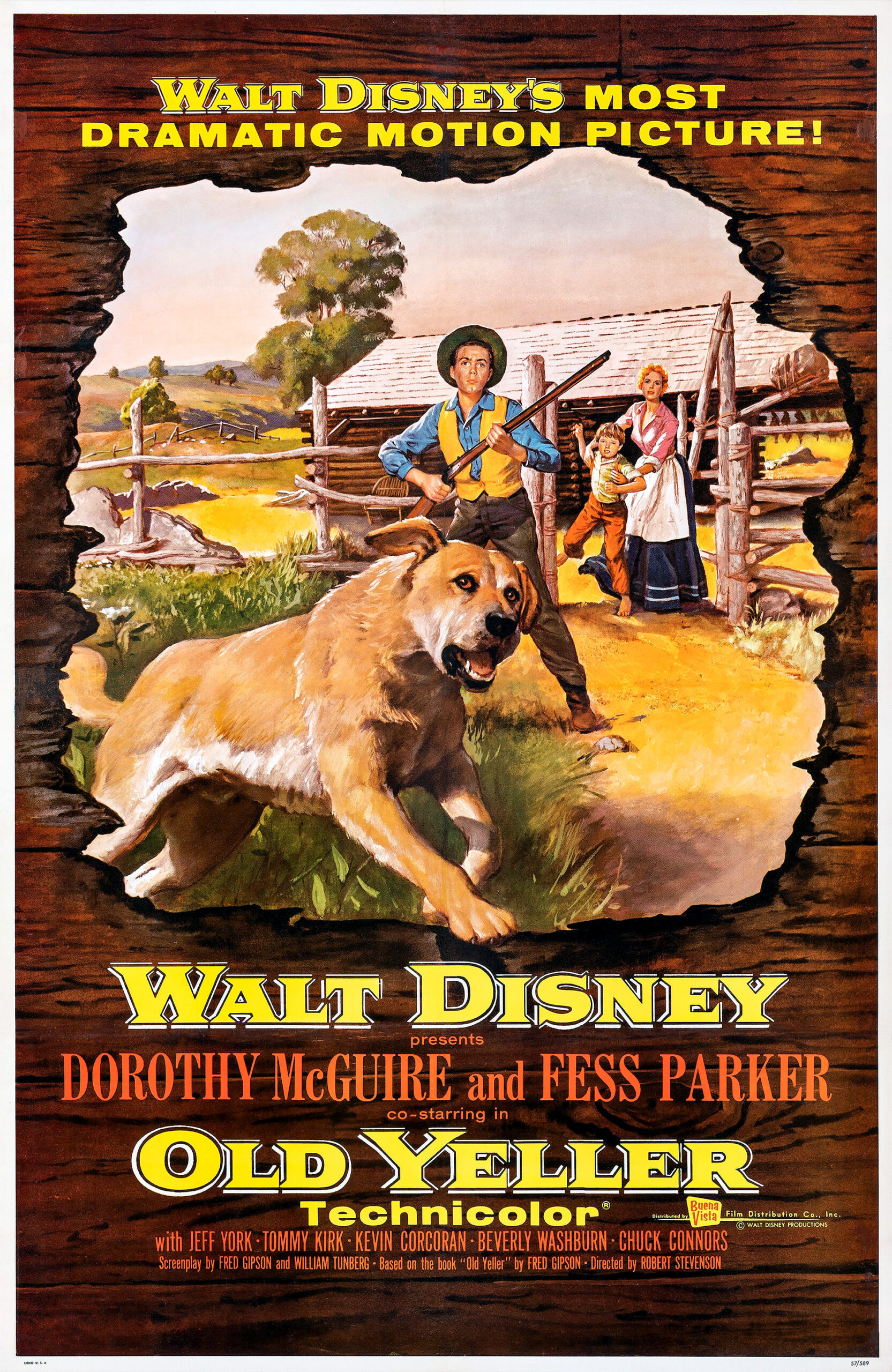
Old Yeller movie poster, public domain

By Debbie Burke

@burke_writer

Recently I read an article by Daniel Pink in the Saturday Evening Post extracted from his bestselling book WHEN—The Scientific Secrets of Perfect Timing. According to various studies he cited, people like happy endings in books and films. No surprise there, especially in the current troubling times. Happily Ever After (HEA) in fiction fulfills a deep human longing because most of us wish for that in our real lives.

But the main point of Dan’s article was, while happy endings are good, the most resonant, memorable endings have sadness connected to them. The addition of bittersweet adds an important layer of emotional complexity beyond mere joy. He writes:

“The most powerful endings deliver poignancy because poignancy delivers significance. Adding a small component of sadness to an otherwise happy moment elevates that moment rather than diminishes it.”

The power of poignancy is why the endings of some stories stick with us for years, while other HEAs disappear from mind as soon as we close the book.

Dan’s article started me thinking about which books and movies still resonate in my memory years later.

Warning: spoiler alerts ahead.

I saw Old Yeller when the movie came out in 1957. A couple of times since then, I watched it but stopped before the climax (warning: grab a box of tissues before clicking this link). That scene remained seared in my mind. I didn’t want to start weeping again.

A boy, Travis, and his dog share an unbreakable bond until Old Yeller is bitten by a rabid wolf while saving the boy’s life. When Old Yeller is infected, Travis must shoot his dearest friend to keep him from suffering. It’s the hardest thing he’s ever done and may well be the hardest thing he’ll ever face in his entire life.

To soften the blow, the movie wraps up when Travis bonds with a new puppy from a litter sired by Old Yeller.

Consider this alternate ending: What if Old Yeller still saved Travis from the rabid wolf but walked away unscathed? Travis and Old Yeller trot off into the sunset, trailed by Yeller’s adorable puppies? Pure HEA, right?

Would the story still evoke the strong feelings it does more than six decades after I first saw it and bawled my eyes out? Probably not.

Charlotte’s Web had the same emotional power. Additionally, the first line is one of the greats in literature:

“Where’s Papa going with that axe?” Fern said.

Charlotte the spider dies after saving Wilbur the pig’s life and making him famous. The blow of her death is tempered because she left behind generations of children and grandchildren to keep Wilbur company for the rest of his days.

Alternate ending: What if Charlotte didn’t die but continued her friendship with Wilbur until, one peaceful night, they both passed away from old age? Would the ending be as memorable? Nah.

Witness (1985) with Harrison Ford and Kelly McGillis is not only a cracking good thriller but also a love story. Philadelphia detective John Book must protect Samuel, a young Amish boy who witnesses a cop’s murder.  In the process, Book falls in love with the boy’s mother, Rachel. In the climax, the villains are thwarted and Samuel is safe. Mission accomplished. But Book must leave Rachel because, despite their love, he could never fit in her world and she could never fit in his.

Alternate ending: Book stays with Rachel in the idyllic Amish community and they share a blissful, if improbable, life together.

If screenwriter Earl Wallace had opted for the HEA above, would he have won the Oscar for Best Original Screenplay? I doubt it.

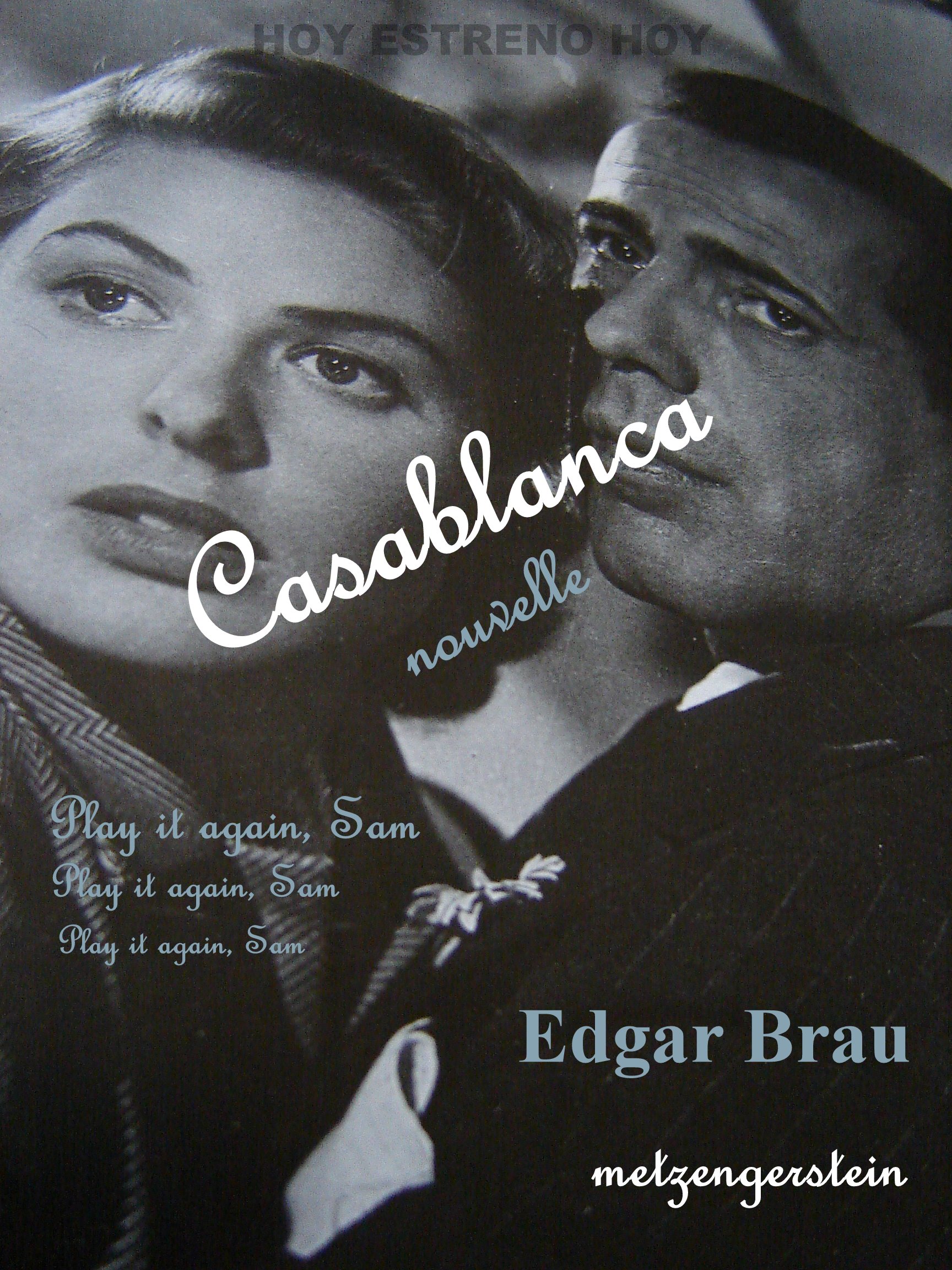
Photo Credit: Edgar Brau, Creative Commons

Perhaps the most famous bittersweet ending in film is Casablanca. Rick gives up the woman he loves and watches Ilsa walk away with her husband, not because Rick wants to, but because it’s the right thing to do.

Alternate ending: Ilsa tells Victor Laszlo to go back his resistance work without her and she and Rick share a passionate kiss in his saloon while Dooley Wilson reprises “As Time Goes By.” 

With that HEA, would Casablanca have become an icon in movie history? Unlikely.

The examples cited above are all legendary. As authors, we can aspire to that status but most of us are happy if readers enjoy our stories, remember them, and want to buy more.

Mickey Spillane, who sold 225 million books in his career, famously said,

“Your first line sells the book. Your last line sells the next book.”

How does an author make endings satisfying and memorable enough to convert a reader into an avid fan who wants more? One way is to inject poignancy.

Here are several tools to help you add the bittersweet component.

The Wound: The hero ends up damaged. The wound doesn’t have to be physical; it can also be emotional, psychological, or spiritual.

During the journey, the hero suffers greatly. By the end, she is triumphant in achieving her goal, vanquishing the foe, solving the mystery, or righting the wrong. That’s the HEA part.

But her success comes with a cost.

She may have lasting effects from a bullet wound, PTSD from emotional and psychological wounds, or undergo a spiritual crisis when the belief or value system she’s always depended on collapses.

The wound can happen to another character, someone she cares deeply for. That loved one’s pain or death causes her to question if her success was worth it.

Disappointment: The hero may have worked his butt off to attain his desire but, once reached, he learns it’s not what he really wanted after all. Wiser after his journey, he must let go of his dream. The HEA can spring from his epiphany that there is a different, sometimes better, reward than the one he originally sought.

Sacrifice: The hero prevails but must give up someone she cherishes. She does the right thing at great personal loss to herself. The HEA stems from her satisfaction that her loved one is happy or safe.

Can you think of other tools to achieve poignancy? Please share them in the comments.

When an author successfully balances bitter and sweet, the reader feels the resonance to their core. In fiction and in life, there is no sweet without the bitter. 

By tempering a happy ending with sorrow, joy may emerge as the dominant emotion but the complex feelings you evoke in a reader make the story more memorable and lasting than one that only taps into happiness.

Dan Pink concludes by saying:

“Endings can help us elevate—not through the simple pursuit of happiness but through the more complex power of poignancy. Closings, conclusions, and culminations reveal something essential about the human condition: In the end, we seek meaning.”

~~~

TKZers: Please share examples of your favorite endings in books or films and why they stuck with you.

What techniques do you use to inject poignancy into your work?

~~~


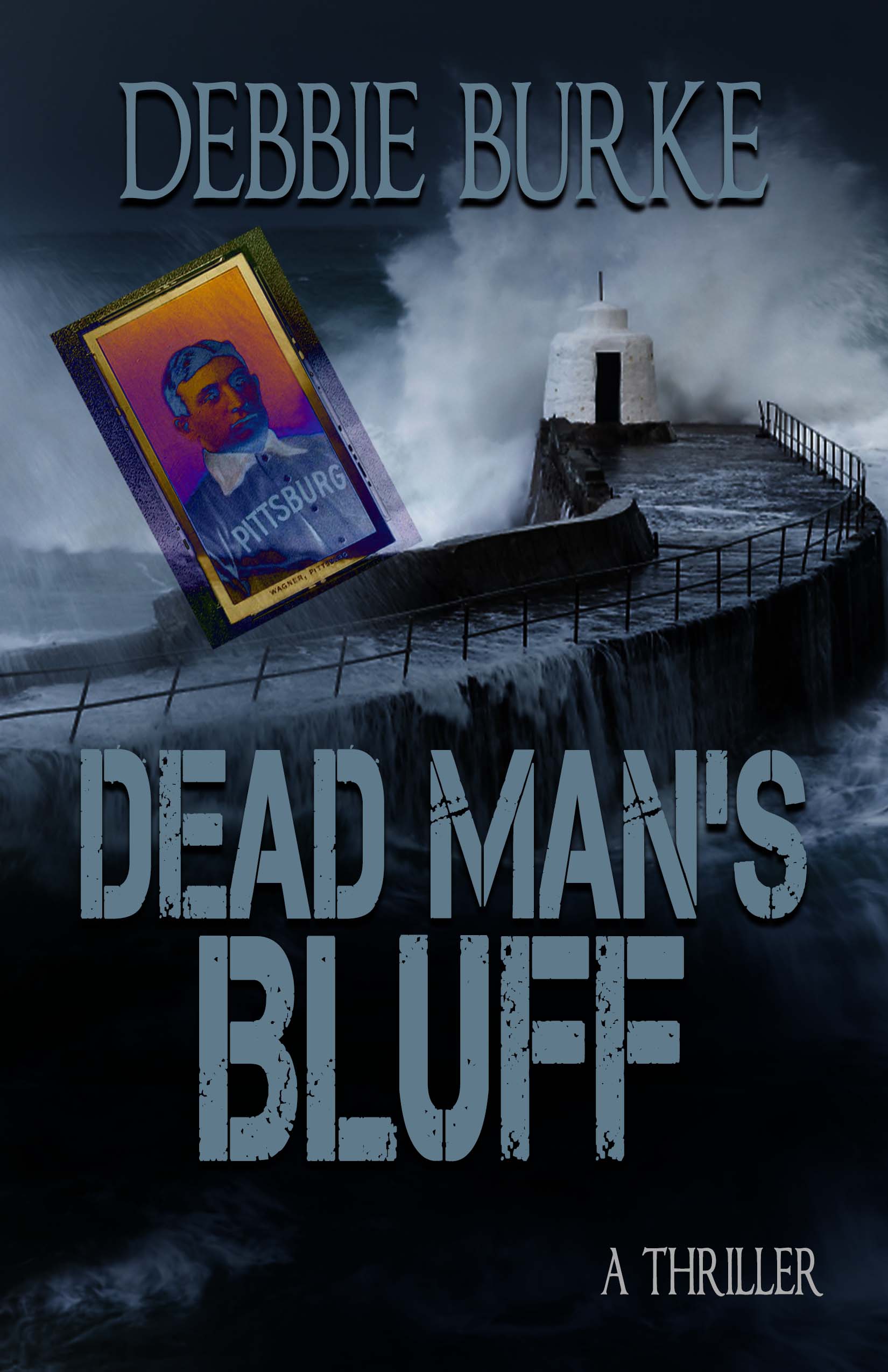
A high-stakes gamble. The winner lives. The loser dies.

Please check out Dead Man’s Bluff, Debbie Burke’s new thriller here.