What 2020 Taught Us

Happy New Year – and, as many may feel, good riddance to 2020!

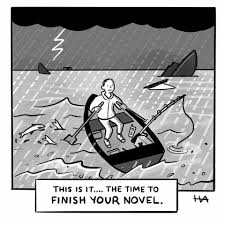
Given the past year I thought it important to start off on a positive note – though as I am tiptoeing into the new year, I’m not quite ready to commit to any new year’s resolutions…you know, just in case… I have, however, been reflecting on what the challenges of 2020 has taught me – both personally and professionally. The TKZ community I think weathered the storm pretty well and I hope we continued to be a place where you felt encouraged and supported as writers. For me 2020 revealed both my strengths and weaknesses as a writer. I was discombobulated as well as distracted most of the year but nonetheless I did manage to finish major revisions to a novel (so there was one balloon still aloft at the end of the year:)) and I learned to be more proactive and assertive when it comes to my career (with mixed results given the year we had).

I’ve definitely spent the last few weeks wrestling with goals and plans for the coming year, but it’s been focusing on what 2020 taught me that’s helped me keep these in perspective…so in the spirit of sharing, here’s my short list of takeaways from the dumpster fire that was 2020:

  1. I need more mental space than I realized to be creative – having a houseful of people all trying to learn and work remotely taught me that I should have prioritized this more
  2. Manuscripts in drawers don’t sell themselves:)
  3. I need to be braver, more assertive, and proactive as a writer (see item #2)
  4. I shouldn’t spend all my time obsessing over the big goals, but be satisfied with achieving the smaller, more attainable ones on a daily/weekly basis (again…see item #2)
  5. I don’t need to make lunch for everyone!!! (seriously, lunch became the most loathed meal of the day as I foolishly operated the ‘all day mum cafe’ for most of 2020)

What about you TKZers? As we look forward to 2021, what did the challenges of 2020 teach you as a writer?


Tips to Create a Series Bible

By Sue Coletta

Lately, I’ve been consumed with creating a series bible for my Grafton County Series. So, I thought I’d share some tips to help you avoid making the same mistakes. Mistakes like thinking highlighted notes on my Kindle were enough to jog the ol’ memory bank. Mistakes like scribbling notes on scrap paper or a whiteboard. Mistakes like tabbing umpteen pages in the previous paperbacks.

Yep. I’ve done all of the above and more. Hence why I’ve had to reread every book in the series. It’s been months since I’ve written in the Grafton County Series. When I set out to plan my WIP, I’d forgotten a lot of details. In my defense, I did write a true crime book, another Mayhem Series thriller, and new true crime proposal in between.

Though it’s fun to spend time with my characters, it’s also a ton of added work, work that could’ve been avoided if I had a series bible in place. Don’t be like me. Even if you’re writing book one, start your series bible now.

Format

We first need to decide on a format for our series bible. Some writers use Scrivener. Others prefer Evernote or a Word.doc. The most popular choice is to print the series bible and organize in a three-ring binder. Pick the format that works best for you.

Organize by Color

Choose one color for each book in the series. Every detail you list in the series bible should correspond to the book’s color.

Example…

Book 1: Blue

Book 2: Red

Book 3: Purple

Book 4: Green

By color-coding, if you need a detail from the series bible while writing, one glance will tell you when the fact occurred.

Details to Include

  • Description of main characters
  • Description of secondary characters
  • Description of villains, including monikers (if applicable)
  • Victims
  • Characters’ profession
  • Killers MO (if applicable)
  • Pets, including deceased pets (if applicable)
  • Tattoos/piercings (if applicable)
  • Scars, emotional and physical
  • Jewelry
  • Marital status/relationships
  • Important dates
  • Family ties
  • Themes
  • Setting
  • Backstory
  • Housing
  • Accent (if any)
  • Décor
  • Cherished treasures
  • Timelines
  • Future scene ideas

Most of the above list is self-explanatory, but I do want to point out a few things.

Character Description

An important part of the series bible is character description. Savvy readers will notice if your MC has a small ankle tattoo from her college days in book one, then claims s/he’d never be stupid enough to get one in book five or six.

In this section be sure to include the basics: hair & eye color, height & weight (approximate, if you’ve never detailed this attribute), style of dress, skin tone/complexion, tattoos & piercings (if applicable), favorite perfume/cologne, injuries and physical scars.

When I listed Sage’s injuries/physical scars, I couldn’t believe what I’d done to this poor woman. Here’s a small sample from my story bible.

  • thick neck scar that tugs at the skin
  • white lines zigzagging across her right forearm
  • lost unborn child from rape
  • scar from incised wound on right wrist
  • orbital floor fracture (broken eye socket)
  • fractured cheekbone
  • broken nose
  • faint scar from stitches on left wrist
  • faint scar from stitches on upper lip
  • faint scar from stitches on right cheek
  • faint scar from stitches on forehead

And that’s only the first two books!

Emotional Turmoil

Since I write psychological thrillers, it’s vitally important for me to track each character’s emotional toll. Past experiences define and shape our characters into the people they are today. An emotional sketch of each character allows us to find triggers and/or weaknesses to exploit in future books. *evil grin*

Incidentally, I do the same for pets. For example, Sage and Niko have two dogs, Colt and Ruger. These dogs have lived through harrowing experiences, and they’ve developed certain habits that stem from those experiences. Animals feel things as deeply as we do. If the pets emerge unscathed, the characterization won’t ring true.

Details

Tiny details matter. For example: When Sage gets nervous, she plays with a Gemini pendant, sliding it back and forth across the necklace. Now, the pendant is turquoise and silver, but for some reason, I wrote “gold” chain in book one. Because this necklace holds sentimental value, Sage would never switch the pendant to a different chain. This minor detail has never been a problem for me. Rarely, if ever, do I mention the color of the chain. Too much description slows the pace.

But what if I decide to kill her some day? Or fake her death? That necklace could become a key piece of evidence. See what I’m sayin’? Even if we never intend to use the minor detail when we list it, we still should include it in the series bible in case we change our mind.

Smell

The nose knows! In my Grafton County Series, the medical examiner practically bathes in Aramis cologne. Anyone within fifteen feet knows he’s entered the crime scene before they ever spot him. It’s become a running joke. I could never forget that detail, but I still include it in the series bible under his name just in case.

What did slip my mind was Sage’s perfume. This might not sound like a big deal, but for this series, it’s an important detail. During tender moments, Sage’s husband Niko breathes her in. The soft aroma of Shalimar mushrooms across his face, with notes of lemon, iris, jasmine, rose, patchouli, sandalwood, and vanilla. He loves that about her. If I didn’t include this detail in the series bible, future books wouldn’t ring true.

Side tip: If you’re struggling for a scent, ask your husband/wife or significant other. We all have a scent that’s uniquely ours. Maybe they love your shampoo, skin cream, body wash, after-shave, or scented deodorant. Once you find the answer, transfer that scent to your lead or secondary character. Or show your character cooking, baking, or eating. Food is an easy way to include one of the most under-appreciated senses in fiction: smell. If the character is eating, be sure to include taste, too. Bonus!

Décor

Does your character have a favorite chair? List it in the series bible.

Does your character hate the hard sofa? Jot down why in the series bible.

Did you focus in on an antique timepiece or cuckoo clock in a past book? Describe it in the series bible.

What about a wall safe or gun cabinet? Be sure to include the combination in the series bible.

Example: After a hard day at work, Niko collapses in his Lay-Z-Boy. I’ve never described the recliner in detail. Never had a reason to. Instead, I simply wrote “Lay-Z-Boy” under Niko’s name in the series bible.

He also has a favorite coffee mug, with #1 Dad inscribed on a gold shield. If Sage poured his coffee into a different mug, fans of the series would wonder where it went.

Minor details can impact series characters in an emotional, conflict-driven way.

What if Sage came home to find Niko’s mug shattered on the kitchen floor? Better yet, what if she found it on the bedroom floor? I’ve made it a point to mention this mug in every book. It’s a Grafton County series staple. One glimpse of the shattered mug, and Sage would leap to the conclusion that someone’s been in the house. In reality Colt or Ruger might have knocked it off the counter or bureau. How it wound up on the floor isn’t important (yet). What is important is that I’ve created conflict just by showing the shattered mug.

Future Scenes

A funny thing happens while creating a story bible. Scene ideas flood the creative mind. While working on my series bible, not only have I finished planning my next Grafton County Series thriller, but I gained at least one new premise for a future book, as well. I even stormed through writing the first few chapters of my WIP. And that may be the best reason of all to create a series bible—to get the creative juices pumping in the right direction.

Can’t think of a plot for your next WIP? Review the story bible. It’s a lot easier than re-reading the entire series. Trust me on that. 🙂

Need tips for writing a series? Check out the group TKZ post.

Do you use a series bible? If you do, any tips to share? If not, what’s your process to ensure consistency throughout the series?

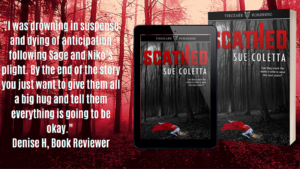
His name is Paradox and he poses his victims in RED cocktail dresses, RED roses in place of eyes. He will kill again if his riddles aren’t solved within 24 hours.

Can Niko and Sage stop him before the clock runs out?

Look Inside SCATHED: https://books2read.com/SCATHED


The “Other” Debbie Burke

by Debbie Burke

@burke_writer

Debbie Burke is not that unusual a name. But what if there are two Debbie Burkes who are both authors? Hmm.

About a year ago, I googled “Debbie Burke.” As expected, my thrillers, TKZ blog posts, news articles, and website came up.

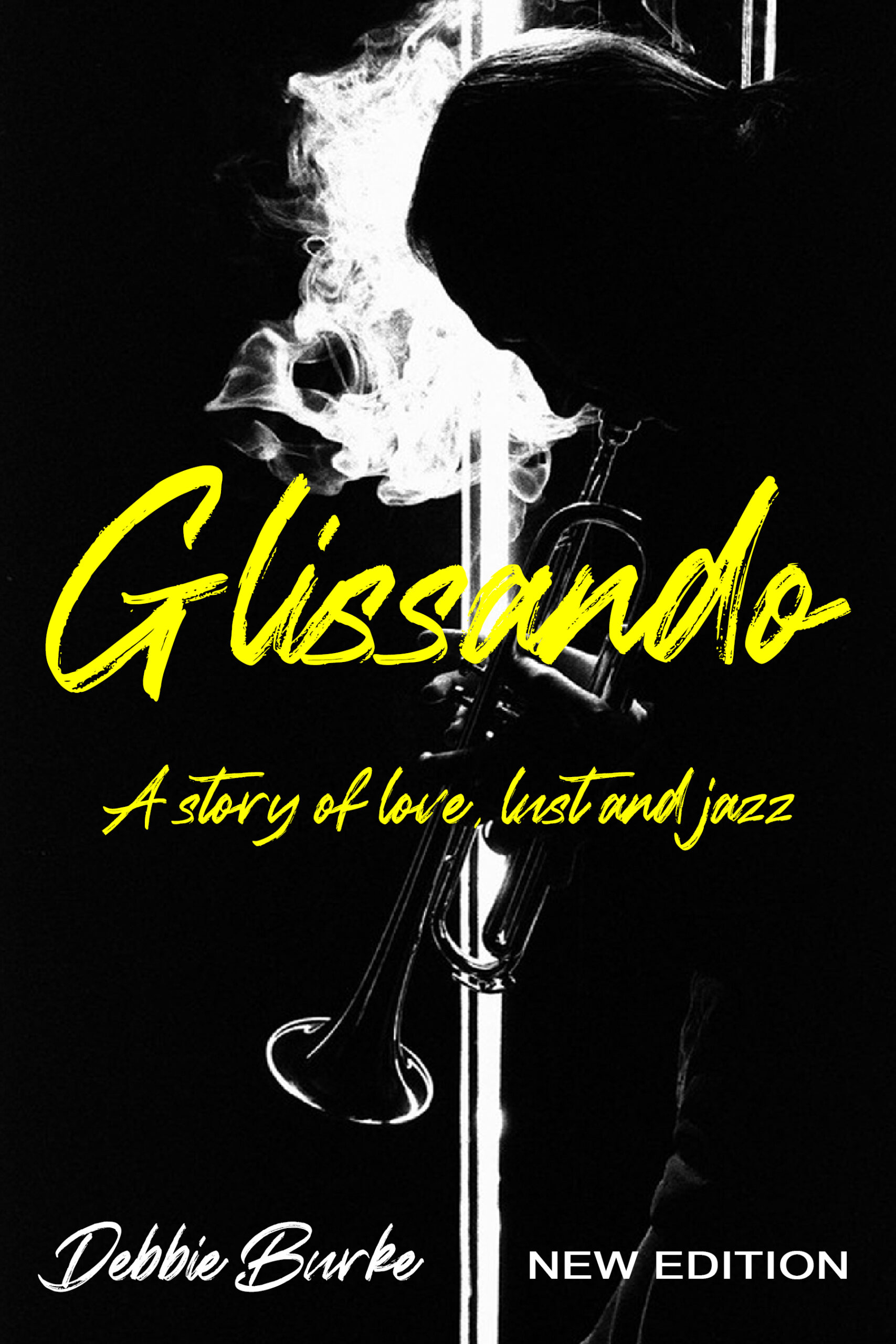
But I did a double-take when I saw “Debbie Burke” was the author of jazz articles and a novel entitled Glissando.

I hadn’t written any of those.

Dug a little deeper and checked out the other Debbie Burke’s website which is debbieburkeauthor.com. Mine is debbieburkewriter.com. How confusing is that!

I discovered she is from the Poconos and now lives in Virginia Beach, VA.

For simplicity’s sake, from here on, I’ll refer to us at “Montana Debbie Burke (MT DB)” and “Virginia Debbie Burke (VA DB).”

A few months ago, I started to receive odd emails addressed to “Debbie Burke” that I initially thought were spam and deleted. More messages came from someone named Magdalena, who said she had texted me several times and wanted to talk about a jazz award. I realized Magdalena must be trying to reach VA Debbie. I replied that she had contacted the wrong Debbie Burke but I didn’t know an address for VA Debbie.

Then I received an email from “Debbie Burke” and, no, I wasn’t cc’ing myself.

VA Debbie had seen a comment by “Debbie Burke” on the Authors Guild discussion thread that she didn’t write, so she reached out to me. Turns out we’re both AG members. How confusing must that be for AG?

We had a good laugh about the mix-up and struck up a correspondence. Being writers, we inevitably played “What if?”

What if Debbie Burke interviews Debbie Burke?

So, today, here we are.


It’s my pleasure to introduce…Debbie Burke from Virginia. 


MT DB: I’ve described how I learned about you. How did you first learn about me?

VA DB: I was setting up my profile in Goodreads and saw that your name popped up with a book…something about the devil…I said hey, that’s not me!

MT DB: Please tell us a little bit about yourself.

VA DB: Born in Brooklyn, now living in Virginia Beach. Most of my career has been in communications, either in printing, publishing, PR, media and so on. I was a columnist for my local paper when we lived in Pennsylvania and I became the editor of a regional business journal there, then the editor of a lifestyle magazine.

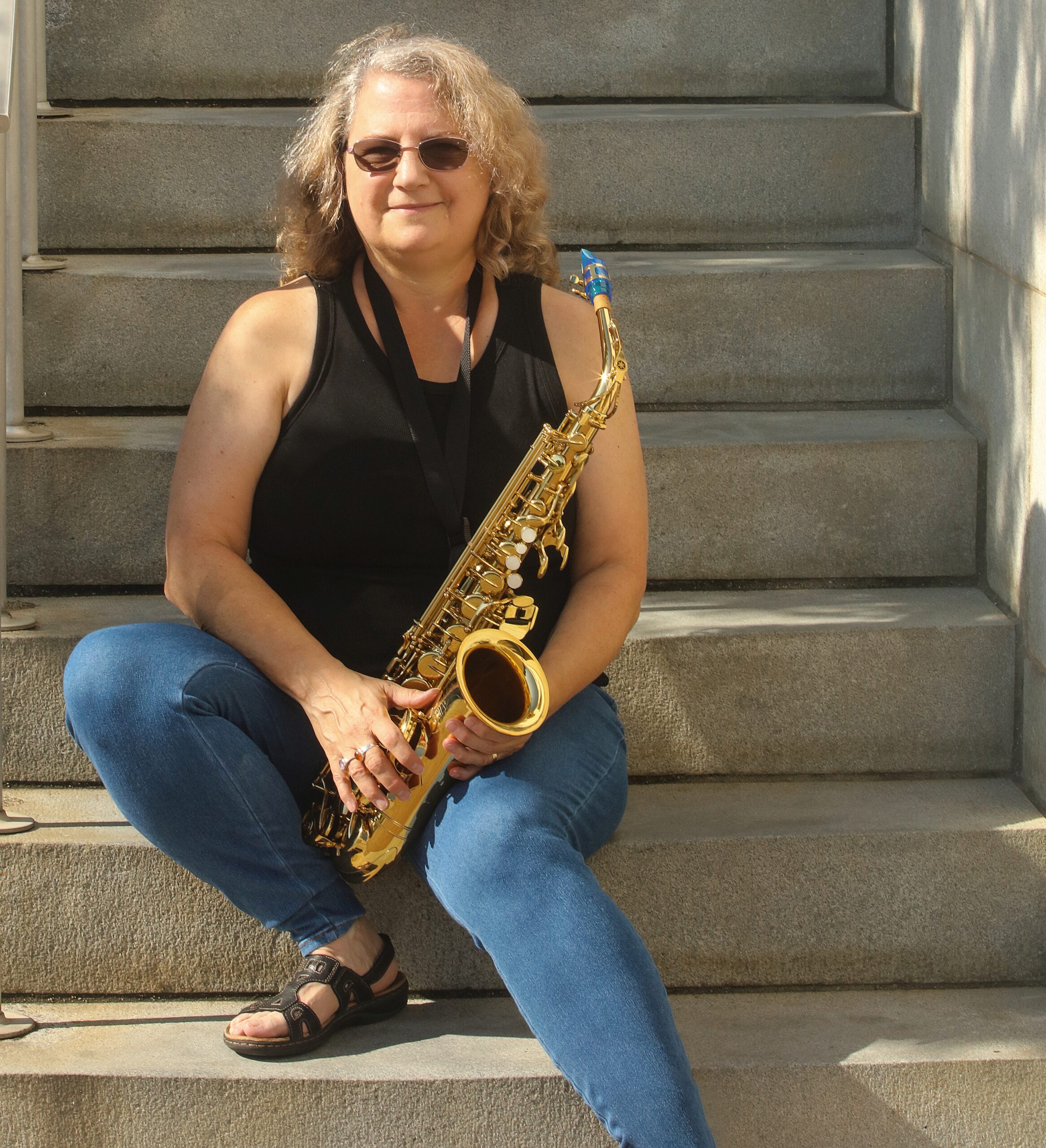
My first book came about in 2011 when I joined a community band at a local university, playing sax (I had lessons in at The New School for Social Research in NYC the 1980s. Yes, I’m dating myself).

Anyway, I was in the band and hearing all about these very famous musicians who were said to live nearby. Wow, I thought, I’d love to find out more about the jazz legacy of this area, where can I find a book on that? Surely the local library had something on it. But nobody had written about it. The more I dug, the more I found out about the area’s connections to jazz from the 1920s onward. No book? No problem, I decided to write my own. That was the start of something beautiful. That was The Poconos in B Flat and others have followed. I love writing about jazz.

MT DB:  Where can your articles and blog posts be found?

VA DB: My blog (www.debbieburkeauthor.com) is all about the jazz world. I’ve done over 400 interviews of not just musicians but also jazz photographers, artists, record execs, promotions people and authors. I have published some articles that are deep in the archives at All About Jazz and wrote for the Jamey Aebersold blog a while back.

MT DB: Your first novel is Glissando. What inspired you to write it? How did you develop the main character Ellie? 

VA DB: Ellie is a composite of a middle-aged woman who’s found that she’s had just about enough of men, period. She joins a university band (that is the only similarity, I promise) where she meets a musician whom she falls very, very hard for. He’s married, and his wife has just graduated from college. A whole lot of drama ensues and Ellie has to make some tough choices about the musician and another man she’s become involved with.

I was inspired, I am inspired, by the dating (mis)adventures of women my age. The difficulties of finding somebody good, the idea of falling in love and in lust when you’re past your mid-point. It’s fascinating to me. I like to write strong women who are more than a little flawed. I don’t agree with all the things Ellie does in the book, but she sure feels real to me.

MT DB: You’re working your second novel. Care to share details?

VA DB: Sure! It’s about a stolen song, a stolen kiss and a stunning family legacy. A jazz bassist finds out his ancestor was enslaved on one of the biggest plantations in Georgia, and miraculously comes across a song that he had written. A shocking secret bubbles up and he embarks on a journey to face it and make things right.

MT DB: You also collaborated on a book that was published in the UK about under-representation of women in the field of jazz. What was that experience like?

VA DB: Yes, Gender Disparity in UK Jazz – A Discussion. The experience was amazing times two. Sammy Stein is the consummate interviewer and knows the UK jazz scene with an enviable thoroughness. She’s a great writer and has excellent contacts who made the content very honest and accessible.


I needed to deal first with the logistics of the language itself; avoiding the instinct to “correct” certain words that are spelled differently in the UK than in the US, and the same goes for idioms and expressions of speech. The other major task was creating it and developmentally editing it as we went along. I think we hit all the right notes, if you pardon the pun. Within three days of uploading it to Amazon, it made number 6 in the very competitive category of “Jazz Books.” 

MT DB: What is your main strength as a writer?

VA DB: Hearing my characters’ voices telling me the story.

MT DB: What quality as a writer do you need to work on?

VA DB: I’m a “pantser” – no outline in my fiction, writing by the seat of my pants. Well, I’ve come to find out the hard way that the more story threads you have, the more challenging this is. Actually, for me right now as I finish my WIP, it’s hellish. Though I feel like an outline could be suffocating, one guy I watch on YouTube (Michael LaRonn) made a great suggestion in one of his videos, which is to make the outline as you go. So it’s a roadmap that’s informed by your ongoing experiences of writing, not something that had been imposed on you before you knew how the book was going to unfurl.

MT DB: You recently started an editing business. What prompted you to hang out an editing shingle? What type of editing do you offer?

VA DB: I’ve been doing this for many years, and just decided to formalize it with Queen Esther Publishing LLC. It’s one of the most exciting things I’ve ever done, but also very intimidating. Being organized is the key. I have an idea of what I’ll work on each day, and even if everything doesn’t pan out exactly, I’ve stuck to it with broad strokes.

The editing I do – book manuscripts, professional articles, theses, and anything else really – goes all the way from proofing to line edits to developmental editing. I also coach authors in self-publishing and building an author platform.

MT DB: Any other information you’d like to add? 

VA DB: It was so nice to “meet” you and read some of your books. I had no idea how you wrote or what you wrote about and was hoping I wouldn’t have to change my name! I’m kidding of course, but I’m sure you felt the same relief. If somebody were to mix us up and look for our books on Amazon, they’d be in for a treat, regardless of which Debbie they got.

 MT DB: I couldn’t agree more!

On Twitter: @jazzauthor

On Instagram: @jazzauthor

On Facebook: debbieburkejazzauthor

Blog: www.debbieburkeauthor.com

Editing Services: www.queenestherpublishing.com

~~~

Recently VA Debbie posted her interview with me on her blog. If you’d like to read it, here’s the link: https://bit.ly/DebbieBurkethrillerwriter 

~~~

To paraphrase P.T. Barnum: “Say anything about us as long as you spell our name right.”

That’s D-E-B-B-I-E    B-U-R-K-E! 

~~~

Holiday note: Today is my last post for 2020 before the annual two-week break. Warmest wishes to the TKZ family for happy holidays. May you share this season with loved ones and enjoy it in good health! See you in 2021. 

~~~

 TKZers: Do you have a “name twin,” or “alter ego,” or “doppelganger”?

~~~

Please check out Tawny Lindholm Thrillers by the Debbie Burke from Montana.

First Page Critique: Outbreak

Happy Monday!
Today’s critique is the first page of a proposed YA novel of suspense entitled Outbreak/Breakout (not sure if those are alternative options or the whole title). My critique follows, but I do think this raises some interesting questions about choices when it comes to POV and tense – as well as the whole issue of writing about a pandemic!
Enjoy.
CHAPTER ONE

11:00 am

You’ve never been great at fractions, but neither is the NOLA-25 virus. It allegedly kills 1 in 3 people, so why did it wipe out the entire Perez family? That’s six people dead when it’s only supposed to be two. And what about your own family? What’s 1/3 of five? Will the virus kill Marco? That’s only 1 in 5. Marco and Mom? That’s too many. Anyone is one to many. And this virus sucks at math.

Outside your front window, the Perez home at the end of the street is eaten by flames. You used to go to school with Savannah Perez, back when there was in-person school. Now, you’ll never see her again. Yesterday it was Mrs. Mitchell, who lived right behind you. Today it’s the Perez family. That’s just how it goes. A blue van shows up one day without warning and takes the family away. Most of the time they aren’t even feeling any symptoms yet. Soon, a burn notice shows up on their front door and the Fire Squad comes to destroy everything they’ve ever touched. Clothes, furniture, pictures, germs. Only in rare cases does a blue van ever bring a family back home. Exposure to NOLA-25 almost always results in infection, and infection is an almost certain death sentence.

* * *

Your eyes drift over to Marco, riding his bike up and down the block. You feel a twinge of guilt for thinking of him first when fears of the virus creep into your mind. It’s not like you’d choose him to be the one infected. He’s a good big brother (as far as big brothers go). Besides, Marco will be fine — his mask and face shield are on, he stays on your own block. You watch him anyway, just in case someone gets close to him. But there’s no one outside.

Behind you, two women on a morning news program joke about the appearance of a smoothie they’re pouring from a blender. It’s supposed to help boost immunity, but no one could possibly believe a smoothie can stop NOLA-25. As the women jabber on, holding their noses to sip the green concoction, a list of yesterday’s pandemic victims scrolls down the right side of the TV screen. The list includes dozens of names, and those are just the ones in Miami-Dade County. Broward County will be next, with Mrs. Mitchell’s name on the list. Tomorrow, the name Savannah Perez will appear.

Overall comments:

I definitely think this page has potential – there are a few stumbling blocks but none that can’t be overcome – and this definitely feels like an authentic YA voice which can be tricky to achieve! Bravo! For me the main stumbling blocks are:

  • The use of 2nd person – this is very hard to pull off and while I like the narrator addressing the reader in this way, I’m still not entirely sure this is a sustainable POV for a whole novel. I might get my fellow TKZers to weigh in on this but I think 2nd person is going to be a challenging choice.
  • Present tense – although this is very common in YA novels I still think present tense can be off-putting to some readers. While it gives a great sense of immediacy and dramatic tension (The Hunger Games is a great example of successful use of the present tense), it can sound clunky. Although I wouldn’t say don’t use the present tense, I would just caution that it takes a very skilled writer to pull it off effectively.
  • Pandemic fatigue – I am torn on this…but I suspect many editors are going to nix a lot of books that deal with a pandemic simply because they are living through one! Again, I’d like my fellow TKZers to weigh in on this, but I am worried that editors will be inundated with pandemic novels (particularly YA). To stand out in this crowd is going to be a challenge and I fear editors are going to be very cautious about acquiring these kind of novels.

None of these stumbling blocks are in any way deal-breakers. They simply present challenges for even a seasoned/experienced writer. There are also some other more specific comments that I’ve listed below – all of which, again, can be easily overcome. Overall, I do see potential in the voice in this first page.

Other specific comments:

Consistency – I was a little confused –  in the first paragraph it says that the virus allegedly kills 1 in 3 people but then it says that infection is an almost certain death sentence…which doesn’t totally make sense (I guess I would think killing 2 out of 3 people would be an almost certain death sentence…). It’s also not entirely clear to the reader why the whole house and all the possessions have to be burned even when the family taken away is asymptomatic. I think I need more detailed, consistent information when it comes to the NOLA-25 virus especially as my reading experience is informed by our current pandemic. For instance, is it a respiratory illness (sounds like it as Marco wears a face mask and shield)? How is it spread? (sounds like if they torch everything it spreads on every kind of surface but cannot be disinfected?) How do people know they have been exposed or have the illness if they don’t have any symptoms (or are they just hauled away because the government knows even if they don’t?). When writing a novel about a pandemic, especially given everyone’s heightened awareness, I think you have to be extremely specific with details right from the start for it to feel believable.

Action – This first page is really all exposition – which isn’t a deal breaker either, but I think I would have liked to actually seen real live action – like the blue van coming to take the Perez family away and then the house going up in flames. While reading this, I craved immediate action – I wanted to be in the thick of it, feeling the terror of what is happening, especially given this page is in present tense. I would be far more interested in the Perez family’s experience than the smoothie-making scene on the morning news. Just something to consider. At the moment I feel a bit ‘removed’ from the scene.

A Fresh Take – My final issue is really one of ‘where are we headed?’ with this novel. At the moment I don’t see anything except a pandemic related, possibly dystopian scenario but, given a potentially crowded ‘pandemic YA novel’ market I do think you need to have something really fresh/different or at least the foreshadowing of something different right from the start. I fear that an editor who picked this first page up would simply assume it was going to be the ‘same-old-same-old’…so I would recommend giving them something fresh that really intrigues them.

TKZers – looking forward to getting your feedback on some of the issues I’ve raised as well as any other comments you have from our brave submitter! It’s hard writing an authentic YA voice, but I think that is certainly one of the strongest elements with this first page.

Gratitude & Goals (and Balloons)

This Thanksgiving will be tough for a lot of people and I am grateful that all my family are safe and healthy and that I get to spend turkey day with my husband, twin teenage boys, and collie Hamish (who is the only one who seems to have enjoyed this year!). I have certainly experienced a rollercoaster of emotions and stress this year so my thoughts go out to any of you struggling during these uncertain times.

This week I will focus on the things I am thankful for (health, family, friends, economic stability…) but will also re-evaluate my original 2020 goals to see if any can be salvaged (ugh!). Actually the metaphor that comes to mind (and my apologies as it’s a pretty crap one) is a bunch of balloons. I started out the year with a handful of promising ones, only to see quite a few fly up into the sky – some are aloft and still in sight, some I fear have blown away for good. The balloons that are now left are a ragtag bunch – goals that I keep trying to cling to, but which are looking rather worse for wear. I did complete a draft YA novel that I’m still waiting for feedback on (I like to think of it as a shiny red balloon which hasn’t been deflated yet!), and I have started a new historical book (at the moment, however, this balloon is barely inflated…). My art/painting goal looks like a balloon animal – oddly shaped and kind of cool but who knows what I’m going to do with it. Finally, there are two stray balloons which I can’t remember ever grabbing: one represents a ‘couch to 5km’ running program which I started a few months ago and actually continued (which is weird because I hate running…); the other is a ‘cooking diva’ balloon which I know I never asked for but which I clung onto when faced with providing 3 meals a day plus snacks to a hungry household of boys:).

This week, when it comes to my 2020 goals, I’m staring at this weird handful of balloons and wondering what to do with them – do I pop them? Try to inflate them a little more? Try to rescue the ones that blew away? (though I guess I should be thankful to be still clinging to some goals at all!)

TKZers, how have you handled your goals this year? Are you, like me, still clinging to some of those balloons? How are you planning to use Thanksgiving this year to help achieve (or maybe re-inflate) your 2020 writing goals?

Before It’s Too Late – Six Tips to Speed Up the Pace

Image purchased from Shutterstock


By Debbie Burke

@burke_writer

Recently I read an excellent post about flash fiction written by Nancy Stohlman on Jane Friedman’s blog.

One line leaped off the screen:

“Flash fiction has an almost desperate need to tell a story before it’s too late.”

Before it’s too late? What does that mean? Too late for what?

See what Nancy just did?

Something terrible could occur and you better keep reading to find out what it is.

Although Nancy was talking about flash fiction, the same principles apply to longer works.

Thrillers particularly are known for the breakneck pace that grabs readers by the throat and drags them along as the story unfolds.

But other genres can also achieve that compelling, can’t-put-it-down quality.

How does an author capture that sense of urgency?

Try these six tools:

1. Threats

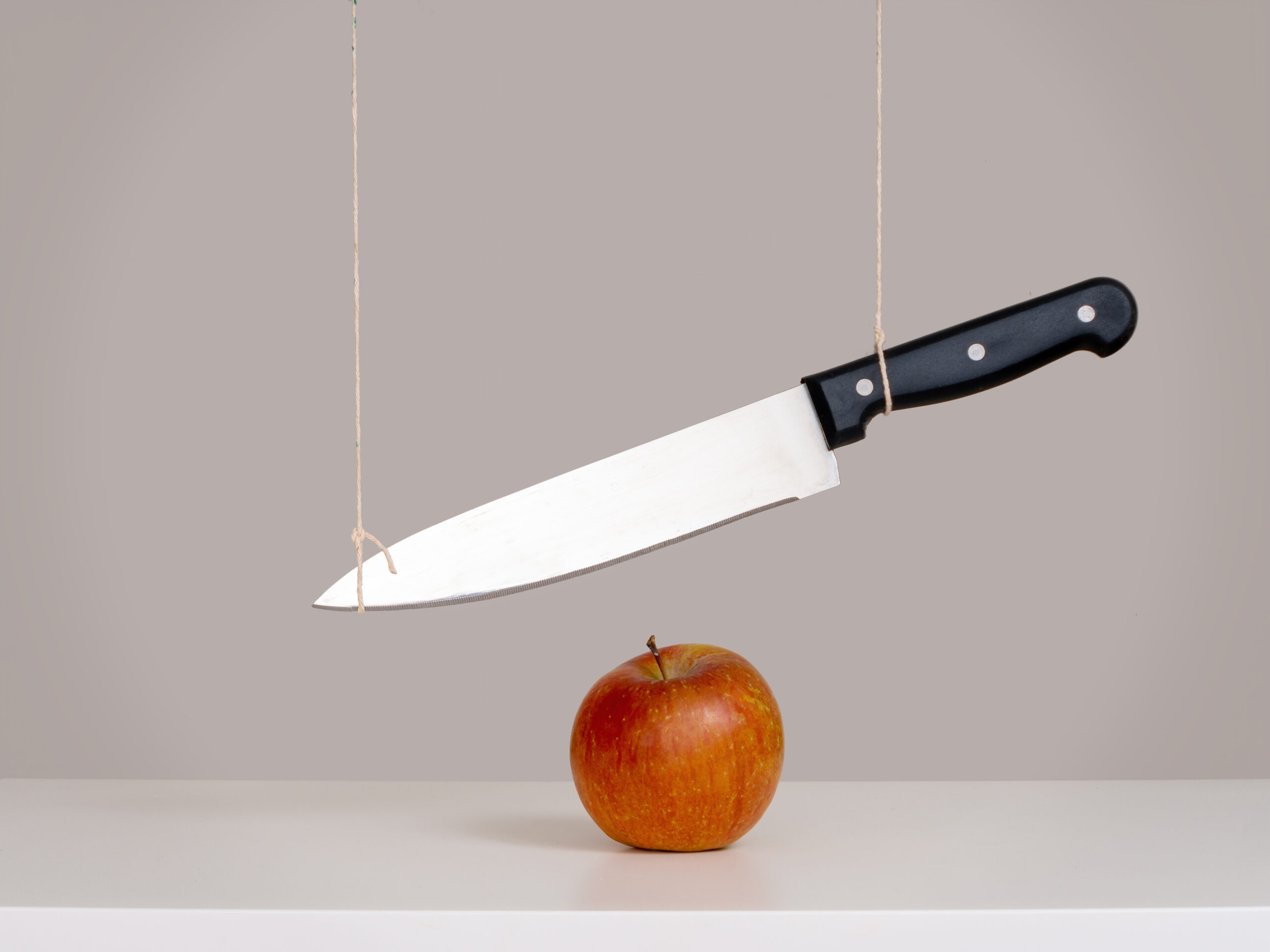
In The Canterbury Tales, Chaucer wrote about the Sword of Damocles:

There was a sharpened sword above his head
That hung there by the thinnest simple thread.


Notice how just reading those lines makes you uneasy. That is the quality you want to provide for your readers.

Threats can start out minor but build to major.

Minor: being late to work.

Major: being late to work after the boss swore to fire you if you’re ever late again.

Minor: getting pulled over by a cop

Major: getting pulled over by a cop with a body in your trunk.

Threat level should increase as the story progresses. You might start with a petty annoyance. By the middle of the story, that annoyance has snowballed into a serious problem. At the climax, that problem has led to utter catastrophe for the character.

Threats need to maintain a consistent undertone of worry throughout the story. They may not always be front and center in the action but they should remain in the back of the reader’s mind, nagging and chafing like a popcorn kernel stuck between teeth.

Readers need to feel the thread is fraying and getting thinner with each chapter.

Is your pacing off or irregular? If so, the cause could be that a small threat occurs after a larger one. That causes a dip in the danger, a lessening of tension. Consider rewriting so each threat is progressively worse than the one before.

Exercise: Make a list of threats in your WIP. What is the overarching threat? What are the lesser threats?  Do they build one on top of another, escalating the danger?

2. What else can go wrong? 

Image purchased from Shutterstock

Each scene needs a purpose or goal for the character to work toward.

By the end of the scene, the character has either achieved the goal or failed.

Or, if s/he achieves the goal, that success leads to new unexpected complications.

At the end of each scene, ask yourself what else can go wrong?

Then make it happen.

Use failure or unexpected complications to propel them into the next scene.

Exercise: Analyze the ending of each scene. How did your protagonist fail? How can you make that failure even more devastating?

3. Juice up the action.

There’s a reason that chase scenes are a popular device in movies. Pursuits make watchers hold their breath at one moment and gasp at the next.

Just for fun, here’s the greatest car chase ever filmed. To skip the preliminaries, jump ahead to 3:30 for the screeching tires.

https://youtu.be/FJZ-BHBKyos

Unfortunately, car chases don’t translate well to novels. But the concept of “pursuit” can still be applied. Harking back to #2, the character is in pursuit of a goal.

Obstacles block his/her pursuit of the goal. They don’t have to be as dramatic as the near-misses, biker slide, or shotgun blasts in Bullitt. But they do have to thwart the character and prevent him/her from achieving the goal of the scene.

Exercise: What hurdles must your character leap over? Don’t have a hurdle? Invent one. When the character leaps, s/he can stumble and fall, physically or metaphorically.

A hint: The faster the action, the more the writer should slow down the description. This sounds counter-intuitive but check out a memorable slow-motion scene from The Untouchables.


Exercise: write this scene, using the same pacing and attention to detail that the camera did. In writing, can you include additional sensory details like smell, taste, and touch?

4. Employ the Hitchcock Factor

Photo credit: Andy Li, Unsplash

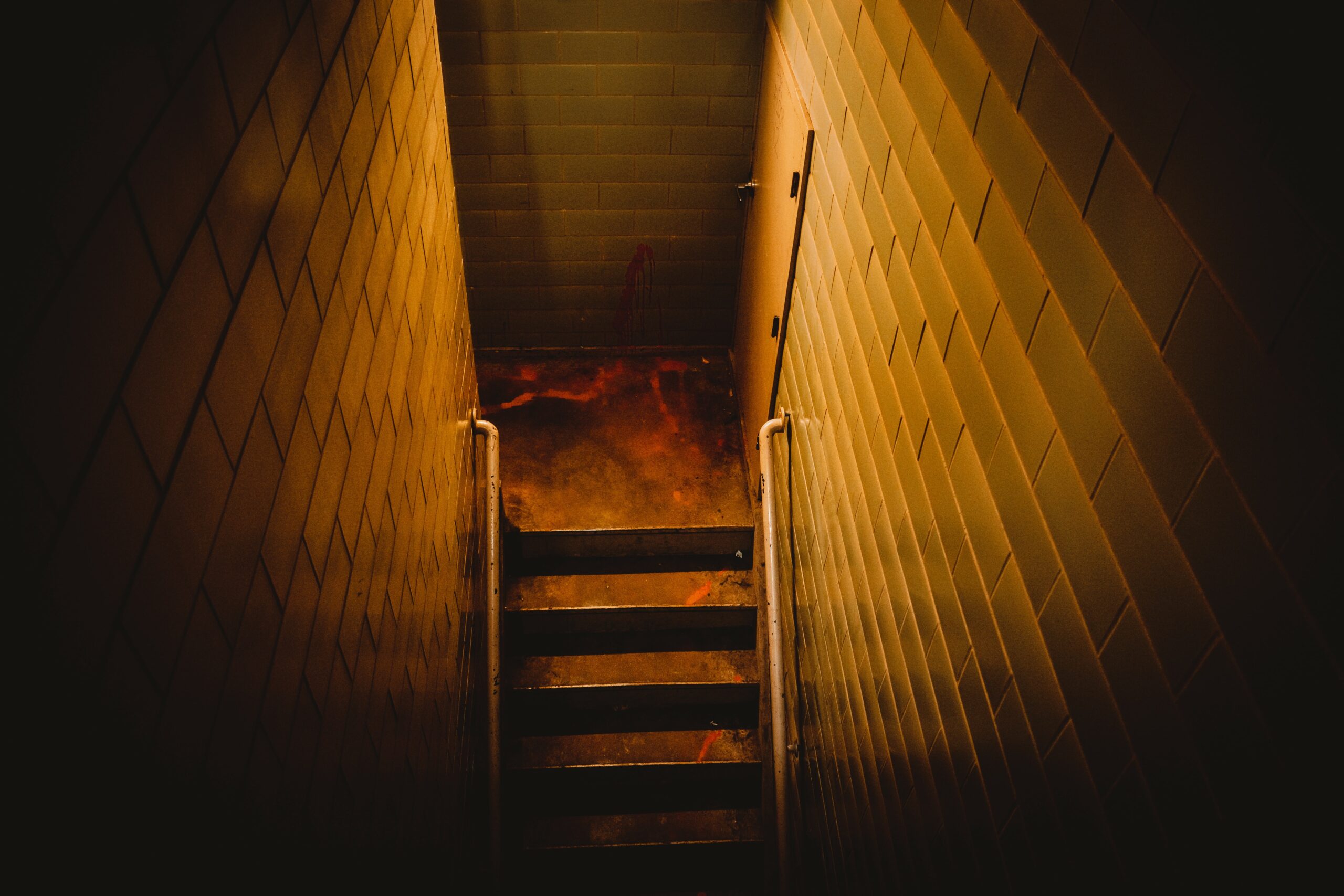
Alfred Hitchcock was famous for letting the audience in on secret knowledge that the character onscreen didn’t know.

Think of ways for the reader to know more than the character does. The character opens a door and descends the basement stairs, believing s/he is on the way to do laundry. But the reader knows the villain is lurking under the stairs.

To accomplish that, you might go into the antagonist’s viewpoint and reveal his/her plans to derail the protagonist. The reader knows but the protagonist doesn’t.

Exercise: In your WIP, do you let the reader in on a secret your protagonist doesn’t know? How?

5. Set the alarm

Photo credit: Elena Koycheva, Unsplash

The ticking clock is a standard device to ratchet up tension. But it doesn’t have to be a bomb planted under the baby’s crib, counting down to zero.

Set up a deadline the protagonist must meet. If s/he doesn’t, complications happen, leading to more grief that ultimately could cause him/her to lose everything.

Exercise: If your story doesn’t already have a ticking clock, can you insert one?

Before it’s too late!


6. Cliffhangers

Photo credit: Tobias Tullius, Unsplash

Cliffhangers don’t necessarily mean fingers slipping off the edge.

Unanswered questions are great ways to propel the reader into the next chapter. When you end a scene with a question, the reader must turn the page to learn the answer.

But finding the answer to one question isn’t enough. In the next chapter, the author poses more new questions. Again, the reader must turn the page to find answers that lead to…more questions. And so on and so on to the last chapter when the author finally answers all questions and resolves all problems…or not!

Exercise: Study your chapters. Do they end with questions? Can you think of more intriguing ways to tantalize the reader into the next chapter?


Try these six tools to grab your reader’s attention…before it’s too late! 

~~~

TKZers: Have you used any of these techniques? Do you have other tips to add? 

~~~

Debbie Burke uses the six tools in the Tawny Lindholm Thrillers with a Heart Series. Quotes from customer reviews: “Getting ready for bed? Don’t start this story!” “Kept me reading all night long.”  “Read it in one sitting.” “Impossible to put down.” 

Cover art by Brian Hoffman

Searching for Justice

Despite (or maybe because of) a rather distracting week, I managed to finish the latest mystery by one of my all time favorite writers (I’m not going to disclose the book or author or I’ll have to give spoiler alerts!). However, instead of the usual feeling of contentment that comes from finishing a well-written, masterly plotted mystery, I felt…let down…and it took me a few days to figure out that the major reason for my nagging sense of disappointment was that the novel never really gave me the ending I wanted. Sure there was resolution but there was no justice…and I was surprised at how much that altered the whole reading experience for me.

Don’t get me wrong, the novel had great characterization and a well-paced investigation, it was beautifully written and often poignant, but in the end the perpetrators of the crime never really faced any real consequences, and certainly no punishment. This got me thinking about reader expectations when it comes to the whole mystery/crime genre and also whether, given how much the genre has changed over the years, writers still need to end their novels with a sense that justice (whatever that might mean) has been served.

Like many other readers, part of the reason I read mysteries is to get the satisfaction that comes from seeing justice served (something that all too often does not occur in real life). There is something very affirming about ‘good’ winning out in the end – even if that ending is messy or morally compromising. Once I begin to read a mystery novel I place my trust in the writer that the crime/mystery will ultimately be solved and that the person(s) responsible will be brought to account – but how do I (as both a reader and writer) feel about a resolution that omits ‘justice’ and ‘punishment’? I’m still not sure.

When it comes to this particular book at least, it was about managing reader expectations. I was expecting a murder mystery and though I got one, I didn’t get the ending I was expecting, and as a result, I felt the whole book tainted by a lack of a satisfying resolution. I think this disappointment says a lot about how writers need to manage reader expectations and also, perhaps, the strengths and limitations of the genre itself (for instance if I had considered this literary fiction I might not have expected the same kind of ending as I would with a mystery).

So TKZers what do you think -do you still expect or demand to see justice served in a mystery novel? How much leverage do you give when it comes to endings/resolutions in a mystery/crime genre novel? Am I just being old fashioned or is justice and/or punishment even needed anymore?


Use Color to Test Your Story

It’s been months since I shared the saga of the injured raven vs. my beloved “pet” crows, but there’s a good reason for that. I didn’t have an ending till last Thursday. For a while I thought I did, but I needed to verify my suspicions. Ignore the colors as you read. I’ll show you cool writing trick at the end. 🙂
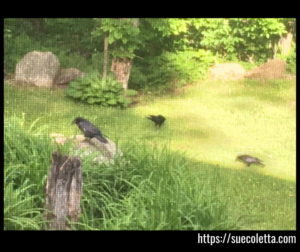
When the story left off, I was trying to figure out how to feed “Rave” without angering my beloved Poe and her murder. While I weighed my options, the crows scolded the raven from all directions.

I have a strict “no fighting” policy in my yard. When anyone breaks this rule, I reinforce my disappointment by withholding food till they smarten up. A wise crow doesn’t anger the human who controls a never-ending supply of tantalizing treats. Needless to say, the attacks stopped as long as Rave stayed within the property lines. If she crossed the dirt road to the woods, my rules were no longer in play, and they divebombed her.

Brilliant birds.
Two weeks later, Poe signaled for me to use her summer rock. I’d created two separate feeding areas so Dad (my husband) didn’t have to shovel the lower yard — affectionally named Animal Planet for its greenery, flowers, and throngs of wildlife who visit — and Mumma didn’t have to schlep through thigh-high snow all winter.

The change in feeding area reset Poe’s murderous hatred toward Rave. By feeding Poe and family on Animal Planet and Rave on the winter rock in the upper yard, I’d restored a modicum of peace.

Until about a week later when Rave thought Poe’s rock looked tastier than hers. Or perhaps, she remembered switching rocks in the warm weather with her dad, Odin. Hard to say for sure what prompted her to move to the woods near the summer rock when our new arrangement worked so beautifully.
Poe was NOT pleased about Rave’s decision.

For the umpteenth time I tried to capture Rave to bring her to a rehabber. And once again, she outmaneuvered me. Maybe she’d be okay on her own? The question replayed on an endless loop, followed by the grave reality of a fox, Great Horned Owl, Fischer cat, raccoon, or black bear crossing her path during the night.

Sleepless nights wore me down.

For two-plus-weeks I wrestled with what to do. Then one day I stopped looking at the situation through my eyes — human eyes — and viewed it from Poe and Rave’s perspective. Once I did, all the years of researching corvids flooded my mind with ideas.

One of crows’ amazing abilities is delayed gratification. Meaning, crows will wait for food if the food they’re waiting for is tastier than the scraps that await them now (Ravens can do this, too, but don’t when they’re injured).

With this theory in mind, I offered Poe a deal.  As the alpha, she’s the only crow I needed to convince. The others would fall in line behind her.

“Poe, if you let Rave eat, I’ll bring out your favorite treats after she’s safely out of sight.”

Now, I’d love to tell you Poe agreed right away, but the truth is, she wasn’t thrilled with the idea at first. Every time I served breakfast, lunch, or dinner, the crows emptied the rock within seconds. Just once I needed Rave to beat Poe to the rock.

It took about three days before Rave worked up enough courage to race Poe to the rock. Afterward, when Rave hopped back into her new wooded digs, I offered Poe raw chicken breast, her favorite kibble, and of course, I replenished the peanut pile.

Success!
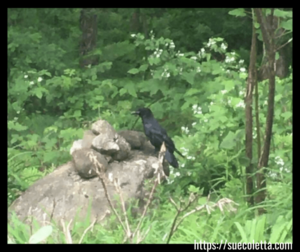
Rave on her own special rock.

Day after day, Poe waited for Rave to eat and I made good on my promise. But then, Rave would climb up on this new rock at the tree-line to check out the menu before proceeding toward the summer rock.

The proverbial lightbulb blazed on. If I used both rocks — one for Poe and family and one for Rave — I could potentially decrease the animosity between them. And it worked. For the next few weeks, Poe never ventured near Rave’s rock at feeding time, and vice versa.

What happened next stunned me into submission.

Toward the end of nesting season, Poe sent the fledglings and elder siblings on patrol with Edgar. Shakespeare, known fondly as “Shaky” (Poe’s mini me), stayed with Mumma. Breath trapped in my lungs as Poe swaggered into the woods in search of Rave. Uh-oh. This can’t be good.

Moments later, “low-talking” indicated Poe and Rave were hashing out a few things. Shrubbery obscured my view. There’s nothing I could do but wait. Watch. Pray Poe wouldn’t morph into Hannibal Lecter or Buffalo Bill.

Seconds felt like years.

After several heart-stopping minutes, Poe sauntered out of the woods for a little worm-hunting while Shaky played lookout (since birds are most vulnerable on the ground, crows post a sentinel in the trees). To my surprise Rave lumbered right past Poe, so close the feathers on their wingtips almost touched. Rave climbed up the rock to the feast on chicken thighs, peanuts, sunflower seeds, and kibble. Poe even allowed Rave to eat the dead mouse!

That’s when it dawned on me — these two majestic animals had struck a deal.
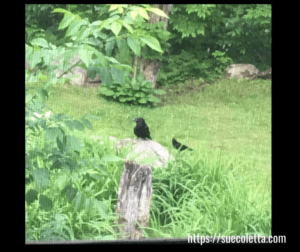
Poe watching Rave’s six from the grass below.

With this new arrangement, Rave waited for the crows to tell her if it was safe to step into the open.

Many sharp-shinned hawks flooded our area, and an injured raven equaled easy prey.

In return for Poe’s service, Rave only ate half the food. She even tore off a piece of chicken and tossed it to Poe on the grass below. 

The good times didn’t last long.

Each year when the new fledglings leave the nest, Poe escorts the crowlettes to my yard to practice landing on branches and learn how to slalom through the maze of trees. Normally, it’s a special occasion filled with hilarity and awe.

Not this year.

When Poe brought the fledglings, trepidation surfed their wake. Rave still asked for permission to approach the rock, but Poe’s cutting glare indicated an emphatic, “Don’t you dare come near my babes.”

What could I do? I couldn’t scold Poe for protecting her young. I also couldn’t let Rave starve. A niggling sensation burrowed bone-deep for the next three weeks. Every time Poe, Edgar, and the elder siblings left to teach the fledglings crucial life lessons, I jogged down to the rock to feed Rave.

The situation wasn’t ideal for any of us, but we dealt with it. Until we couldn’t any longer.

Animal Planet turned menacing — dangerous — as a rebellious fledgling ventured past the rock into the woods, in line with Rave’s hiding spot, her home-away-from-home doubling as a hollowed bush.

Poe scolded the fledgling to back away, but he refused to obey. That tiny crow acted like he’d been sworn in as the new sheriff in town, a LEO hellbent on destroying the interloper in their midst.
The situation spiraled toward disaster.

One sultry July morning he’d had about enough of Poe’s “rules” and swooped down in full attack-mode. Ear-piercing caws tornadoed through the trees. I raced toward the woods to intervene before the others joined their brethren.

Whether this incident had anything to do with Rave’s future plan, I couldn’t tell, but she disappeared for three days. Upon her return, she stocked up on food and rested for two days. Vanished for another three days, returned for two. She seemed to have a set route to a precise location. Two days on, three days off. The routine never wavered. Two days on, three days off.

Could Rave be a mother? What if the scuffle with Poe’s fledgling convinced her to find her own? Crows and ravens have similar nesting patterns. If Rave had chicks in the nest when she got hurt, they’d be fledging, too.

More and more I became convinced that she was searching for her family during those three days away. Though this theory filled me with warmth, I still panicked every time she left. Until the day Rave soldiered into the yard with more confidence than she’d had in months, and her shiny black plumage had regained its luster.

For hours she perched on a rock near the house and exercised the injured wing. She even attempted short, low flights, about two feet off the ground for ten feet at a time. Day after day for a solid week, she waited for Poe to soar out of sight before practicing her flying, each day gaining more lift.
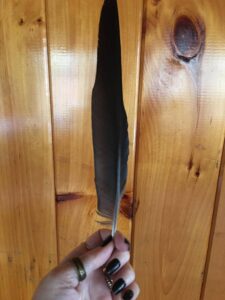
When I bustled down the hill to Animal Planet the following day, one flawless raven feather laid on the rock — a thank you from Rave — and I wept, keening over my loss. I’d prayed for Rave to heal, to thrive, but I never got the chance to say goodbye.

Would I ever see her again?

All summer I searched the sky for Rave. Every now and then my husband said he heard gronking in the woods, which brought me some solace. Still, I longed to see her one last time.

Two weeks ago, I had an early appointment that forced me out of the house early on a Friday morning. As I hustled up the walkway, gronk, gronk, gronk emanated from the woods across from the driveway.

I darted across the dirt road. “Rave?”

“Gronk, gronk, gronk.”

“Rave! I missed you so much!”

A black silhouette peeked out from behind a tree trunk. “Gronk, gronk.”

“I wish I could stay, but I can’t. Please come back, baby. I need to make sure you’re okay.”

A week rolled by with no word from Rave. Last Thursday, she strutted across Animal Planet with her bill held high, chest out, confidence and pride oozing off every feather. When she stepped on to Poe’s rock, disappointment crossed her face. The crows had devoured every morsel.

Rave stared up at the window. “Gronk, gronk?”

“Rave,” I called back. “One sec, honey. Be right out.”

That’s all the reassurance she needed. With her spectacular black wings spread wide, Rave leaped into the air and flew to the branch overlooking the rock. I bustled down to Animal Planet, my gaze locked with hers, my emotions rising over the rims of my eyes, joyous tears spilling down my cheeks. Rave’s healthy, happy, and loved.
Now, pull the screen away and look at the colors. It’s a rose garden. Brown = soil (exposition/narration). Red = roses (action/dialogue). Green = leaves (emotion, inner dialogue, and foreshadowing). Too much soil, you’ll have gaps in your garden, wasted space. Too many leaves will overshadow your roses. With too many roses, you can’t see the beauty of each blossom.

This technique is easy to do in Word. I wouldn’t recommend it for a blog, as it’s labor-intensive to manually input colored highlights via CSS. You’re worth it, though. 🙂

One last note: If you come across sentences that contain emotion, exposition, and/or action, it’s fine to highlight it with one color. No need to nitpick. You’re looking at the story as more than the sum of its parts.
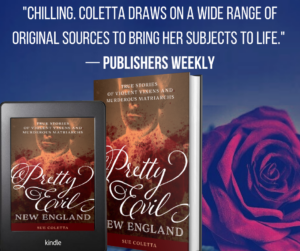
 

In other news, Pretty Evil New England released yesterday!  Congratulations to Priscilla Bettis for winning the giveaway!


Getting What You Want

Photo by Fernanda Rodriguez from unsplash.com

Happy Halloween! You cannot get away from it. Websites like BloodyDisgusting and The Lineup, which are hardly sedate during the rest of the year, really kicked out the jams in October by letting everyone know about frightening books both new and old, as well what the streaming services are showing to commemorate All Hallow’s Eve (the answer: plenty). 

Out on the street, however, it’s been another story. Some folks have loathe to let their kids out for trick-or-treating for a variety of reasons. Others were concerned about passing out candy for a number of concerns.

I accordingly decided to go dark this Halloween for the first time since I became what I like to think of, probably self-deceptively, as a functioning adult. That raised another issue. What about the children on my street? They are each, to the smallest ankle-biter, uniformly kind, courteous, and in some cases sweet. A solution arrived in due course.

 I decided that I would distribute candy to the neighbor children at their homes before the official Halloween hours commenced. I was mindful that nothing will ruin a Halloween more for a child than finding a bunch of candy that they don’t like (or Apples. Or pretzels. Or anything made by Oral B) at the bottom of their bag at the end of the evening. 

The solution was simple: I did a little market research. I inquired as to the favorite candy of each child. I asked the parents, of course. The sight of an adult male who is elderly, stocky, and bald asking a child about their favorite candy does not make for a good look. Each kid, interestingly enough, had a different preference. I expected some consensus out of the fifteen little neighbors but none was to be had. I had never heard of some of the choices (Warheads? What the feck are Warheads?) but each of them was easily located, thanks to the local Dollar Tree. That, plus some baggies full of dog treats for the families with a Fido saved the day. It worked out fine. Everyone was happy, even (and maybe most of all) Grumpy Old Me. 

Market research. Remember that term.  Candy manufacturers (and manufacturers of just about everything else, really) sink all sorts of lucre into market research, focus groups, and the like before they roll out new products which then swim or sink in the ocean of commerce. Those that tread water and swim multiple laps get pride of place on the shelves of supermarkets. Those that go under three times (usually a product that I really like) don’t get so much as a lifejacket tossed to them. 

The publishing industry is really much more subjective. An author has to find an agent who likes the manuscript AND thinks that it can be sold to a publishing house. The agent finds an editor willing to stick their neck out, who takes it up the line and, well, sticks their neck out to get the book published. Again, it’s not enough for the editor to like the book. The ultimate determinant is whether they think that the book will sell. Editors don’t get in trouble because of the books or authors they miss. They get in trouble for the books they champion and usher to market that miss with the audience. The saying in such a case is, “We shipped twenty-five copies and got twenty-six back.” No one along the line, including the author in most cases, has any real research to back them up when they do this, other than that past performance will (hopefully) be the best indicator of future success. One major exception to this is Dr. Steve Hooley, an author who frequently comments on TKZ. Dr. Steve spends a lot of time at various stages in the writing process bouncing things off of his target audience, and to good effect. He is the exception rather than the rule on this. Authors want to write and finish. Publishers are looking for the successor to the last big hit, which has been at various points Harry Potter or The Da Vinci Code or girls with dragon tattoos or on trains. Older readers will recall when Stephen King first broke hugely, and the shelves and racks were full of horror novels. It looks as if that horror cycle is beginning again for a number of reasons. We’ll see. 

Photo by maounping at shutterstock

All of that sounds depressing. It might be. It might also actually be liberating if you are the writer slaving over their keyboard with high hopes of creating a bestseller, or any seller. While you do this, don’t aim to be next on the current trend line. You want to be first on the next trend. You want people to wonder who will be the next YOU. How do you get there? For starters, remember this bit of wisdom. An announcer who began his career on a low-watt radio station in western Pennsylvania eventually, through a lot of hard work and after experiencing years of failure, created a broadcast and merchandise empire by being himself. He did this in part by reminding himself each morning that “Someone is going to be successful today! Why can’t it be me?” Indeed. For seconds, don’t write like someone else. Someone has already done that. Tell yourself your story out loud until it sounds like something you would say. You’ve got a voice. Use it to sound like unique you, not someone else. And have fun while you’re doing it. If you’re not having fun you are probably doing the wrong thing or doing the right thing wrong.

Enjoy your day and evening. I hope you get exactly what you want in your candy bag. Be well, and thank you as always for being here. No you, no me. 

Photo by vishnuMK at unsplash.com

First Page Critique: Oh By The Way

It’s seems a while since I did a first page critique  (though it probably isn’t) but time this year has been running in very strange ways – but it feels good to get back down to the nitty gritty of what makes a first page work. Today’s submission, ‘Oh By The Way’ provides a great introduction to the role of humor and setting the tone for a POV right from the start. Enjoy – my comments follow.

Oh By The Way

I didn’t go out with a bang. It was more of a thud. When the car hit me, all I could think  was, “Oh, great.” My body lifted ridiculously out of my shoes on impact, then fell to the ground so quickly that the rest of me didn’t follow. Thud.

I watched my crumpled body from above and thought, “I’m going to be late for work.” I  floated higher into the London sky, past the smog and into the clouds before realizing the whole cartoonish scene had been my death. “Lovely,” I folded my arms across my chest and rose into the heavens a bit pissed off.

Without any transition at all, I found myself standing in front of a bland sort of train station. It sat under a hazy orange sky surrounded by nothing at all. I turned in all directions and noted not a tree or a bird. The only sound came from my shoes crunching tired-looking pebbles beneath my feet.

“Well, my shoes are back. That’s clever,” I thought. But, the rest of it was quite disappointing. I mean, there was no ceremony to it. I didn’t exactly expect trumpets, but a  kazoo perhaps could have been spared.

I let out a frustrated giggle and noticed a card hanging from my neck by a lanyard. It had a mortifying picture of me with an astonished look on my face and the words “DISTRACTED  DRIVER” bolded in red.

“Bloody hell,” I said out loud.

My ears perked at the sound of pebbles crunching to my right as a plump little woman came walking toward me out of seemingly nowhere. She reminded me of my middle school  English teacher, except with better shoes.

“Oh, my dear,” she reached her hand out to me and I awkwardly took it. “How are you?”  she asked.

“Incredulous,” I blurted out. I was still gripping the photo around my neck and lamely held it up to her. “I was a pedestrian, not a distracted driver,” I said. As if getting my name tag right was what really mattered.

“Oh, not to worry. That’s just a conversation starter,” the woman smiled.

The sound of footsteps suddenly surrounded us on all sides. Beings began taking shape out of the orange haze and we were no longer alone.

General Comments:

I enjoyed this first page for its breezy tone and humor, setting the scene (I assume) for a story set in some kind of afterlife. My favorite line – ‘I didn’t exactly expect trumpets, but a  kazoo perhaps could have been spared.’ – provides a great illustration for how a POV can really come to life in just one sentence. This first page was a little less successful in other ways – mainly because of some uneven writing and lack of real imagery (there seemed to be a lot of non-descriptions like ‘bland train station’ or ‘not a tree or a bird’ which didn’t really add much to the story). Given that most of my specific comments are more directed at these kind of issues, I’ve copied the first page below with my notes embedded, as this illustrates what I’m trying to say a bit better. Despite these issues, though, I do think that this first page has a lot of potential. Starting with an ‘out-of-body’ death experience has been done before, however, so I would urge the writer to really hone those humor skills and make every word, in every sentence count. I love the Douglas Adams style of humor, which is hard to pull off, so overall I think with some more revising, this could be a very successful, wryly funny, first page.

Here is the version of this first page with my specific comments embedded in bold:

Oh By The Way [odd title but could work]

I didn’t go out with a bang. It was more of a thud. When the car hit me, all I could think  was, “Oh, great.” My body lifted ridiculously out of my shoes on impact, then fell to the ground so quickly that the rest of me  [bit awkward as reader left wondering what is the ‘rest of me’ is if not the body…maybe say my consciousness or my brain or my thoughts?] didn’t follow. Thud.

I watched my crumpled body from above and thought, “I’m going to be late for work.” I  floated higher into the London sky, past the smog and into the clouds before realizing the whole cartoonish scene had been my death. “Lovely,” I folded my arms across my chest and rose into the heavens a bit pissed off. [this works well! Like the tone/POV]

Without any transition at all [clunky], I found myself standing in front of a bland sort of train station [?? bland feels like a non-description that doesn’t add anything] . It sat under a hazy orange sky surrounded by nothing at all [except a colored sky…so this seems again more of a non description]. I turned in all directions and noted not a tree or a bird [so why say this? Again doesn’t add anything]. The only sound came from my shoes crunching tired-looking pebbles beneath my feet [so there are pebbles – not nothing at all].

“Well, my shoes are back. That’s clever,” I thought. [I’m assuming the narrator is also dressed – maybe an observation about clothes would also help reader visualize the person] But, the rest of it was quite disappointing. I mean, there was no ceremony to it. I didn’t exactly expect trumpets, but a  kazoo perhaps could have been spared. [Love this line!]

I let out a frustrated giggle [I can’t visualize what that looks like…] and noticed a card hanging from my neck by a lanyard. It had a mortifying picture of me with an astonished look on my face and the words “DISTRACTED  DRIVER” bolded in red.

“Bloody hell,” I said out loud.

My ears perked at the sound of pebbles crunching to my right as a plump little woman came walking toward me out of seemingly [redundant] nowhere. She reminded me of my middle school  English teacher, except with better shoes. [nice line! Love the repetition of shoe issue]

“Oh, my dear,” she reached her hand out to me and I awkwardly took it. “How are you?”  she asked.

“Incredulous,” I blurted out. I was still gripping the photo around my neck and lamely held it up to her. “I was a pedestrian, not a distracted driver,” I said. As if getting my name tag right was what really mattered. [love this line too – clever way of giving insight into character]

“Oh, not to worry. That’s just a conversation starter,” the woman smiled. [love this!]

The sound of footsteps suddenly surrounded us on all sides [awkward]. Beings began taking shape out of the orange haze and we were no longer alone. [Again feels more like a non-description. I would like something to visualize as a reader]

Hope this feedback helps – TKZers, what do you think? What suggestions do you have to our brave submitter??