First Page Critique: Jane Unknown

Happy Monday! Today’s first page critique is for a dystopian YA novel entitled JANE UNKNOWN. This page provides a very atmospheric start to a novel that I’m hoping contains lots of witchcraft! My comments follow. Enjoy!

February 24, 1692

On top of the hill was the stake, not yet aflame. An upright log dark against the grey sky. Beams of light cut through the clouds, slanting down onto the fields, turning some of the tall grass golden. And so how, in this heavenly light, did the stake still look so foreboding? Send a chill to the bone?

The Bachelors of Divinities walked me up the hill. One on each side: Ely and Jonas. I’d known them since I arrived in Salem Village, orphaned, eleven years ago, but they did not act as if they knew me now. I suppose they felt as if they didn’t. They held my elbows roughly—my wrists were already secured with rope behind my back—although they did not need to. There was nowhere to go. We’d all been taught the witches had the woods. Not the other way around: Not the woods had witches. Perhaps that’s why they suspected me? As an orphan, I came from those woods.

My ankle wobbled on a clump of grass, causing me to near fall. Ely sighed loudly and yanked me up by the elbow. Pain shot through my shoulder. It felt as if the muscle had been ripped in half. He muttered under his breath, lip twitching.

The stake loomed taller and taller. We were close, only a few wagon-lengths away. Sweat crept along my cold skin, and I found it hard to take a deep breath.

As we reached the top of the hill, the wind whipped against us, pushing my grey dress against my legs. I wore no apron today. The wind caused hope to blossom within, especially as Ely and Jonas exchanged expressions. It had rained the night before, but this could only prolong my agony—but the wind, the wind it might help me yet. But hope could be dangerous. Disappointment fell all the further when hope lifted one high.

The stake was now in clean sight. A stool, where I would stand, against the log, where they would tie me. They’d arrange the branches and twigs at my feet, and perhaps, if I was lucky, I’d die by smoke first.

I tried to prepare myself: This will hurt, but then it will be over. You’ll be with mother. This will hurt, but then it will be over. You’ll be with mother. Over and over.

It did help, I suppose. The grass blowing, as if in slow motion. Our walk forward inevitable.

Overall Comments:

I love how the author has woven together the sense of foreboding with the landscape and the weather in the moments leading up to what appears to be a witch burning outside Salem. The author definitely draws the reader in and creates a sense of empathy as well as fear for the main protagonist. Initially, I wasn’t too sure whether this was historical or dystopian YA (as this had been described) but I’d be happy to keep reading whatever direction the novel ultimately takes. I thought the stream of consciousness writing style also worked really well, helping keep the POV close to the protagonist while also feeling very much YA. At times the sentence structure did get a little confusing, but I thought it did feel like we were directly hearing the protagonist’s thoughts as they unfolded.

My only real comment would be that ‘less is more’ – while there’s plenty of atmosphere, there’s less in terms of action, and I think paring down some of this scene could help it flow a little easier. Sometimes the protagonist’s thoughts slowed down the dramatic tension. I’ve copied this first page below to highlight the areas which I think could be edited/cut and yet still retain the terrific atmosphere of this first page. The words in bold are the ones I think should be deleted and I have placed some extra notes in bold and italic. These are obviously just my thoughts (and TKZers may have other advice!). Overall though, tightening up a first page is always a good idea:)

Specific Edit/Cut Options:

February 24, 1692

On top of the hill was the stake, not yet aflame. An upright log dark against the grey sky. Beams of light cut through the clouds, slanting down onto the fields, turning some of the tall grass golden. And so how, in this heavenly light, did the stake still look so foreboding? Send a chill to the bone?

The Bachelors of Divinities walked me up the hill. One on each side: Ely and Jonas. I’d known them since I arrived in Salem Village, orphaned, eleven years ago, but they did not act as if they knew me now. I suppose they felt as if they didn’t. They held my elbows roughly—my wrists were already secured with rope behind my back—although they did not need to. There was nowhere to go. We’d all been taught the witches had the woods. Not the other way around: Not the woods had witches. Perhaps that’s why they suspected me? As an orphan (already said she’s an orphan so delete one of the references), I came from those woods.(note – I actually think these thoughts on the woods and witches could probably be moved to a later scene as it slows down the action)

My ankle wobbled on a clump of grass, causing me to near (do you mean nearly?) fall. Ely sighed loudly and yanked me up by the elbow. Pain shot through my shoulder. It felt as if the muscle had been ripped in half. He muttered under his breath, lip twitching. (Note: this whole paragraph could actually be deleted unless the injury to her shoulder is relevant later)

The stake loomed taller and taller. We were close, only a few wagon-lengths away. Sweat crept along my cold skin, and I found it hard to take a deep breath.

As we reached the top of the hill, the wind whipped against us, pushing my grey dress against my legs. I wore no apron today. The wind caused hope to blossom within, especially as Ely and Jonas exchanged expressions. It had rained the night before, but this could only prolong my agony—but the wind, the wind it might help me yet. But hope could be dangerous. Disappointment fell all the further when hope lifted one high.

The stake was now in clean sight. A stool, where I would stand, against the log, where they would tie me. They’d arrange the branches and twigs at my feet, and perhaps, if I was lucky, I’d die by smoke first.

I tried to prepare myself: This will hurt, but then it will be over. You’ll be with mother. This will hurt, but then it will be over. You’ll be with mother. (maybe only need to state once?) Over and over.

It did help, I suppose. The grass blowing, as if in slow motion. Our walk forward inevitable.

Final Comment:

Bravo to our brave submitter!  I hope my comments are helpful. TKZers, what advice or feedback do you have? Looking forward to seeing your comments.
When Characters Talk – Interview with Author Assaph Mehr


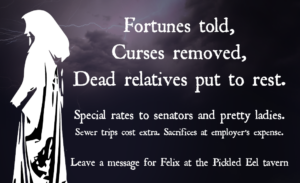
Felix the Fox business card

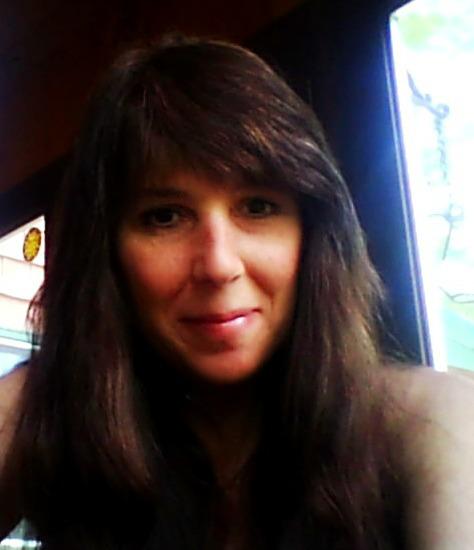
By Debbie Burke

@burke_twitter


Recently a writer friend turned me onto a site called The Protagonist Speaks, created by author Assaph Mehr, who was born in Israel and now lives in Australia. He writes a series described as Stories of Togas, Daggers, and Magic for lovers of urban fantasy, detective mysteries, and ancient Rome.

His main character is Felix the Fox, part sleuth, part magician, part fixer who handles occult trouble for Rome’s upstanding citizens who don’t want to dirty their hands.

Felix’s first interview appeared in 2016. The idea of an author interviewing the characters in his book intrigued readers. Soon, Assaph expanded the site to include other authors interviewing their characters.

The concept struck me as a fun, quirky marketing tool. I reached out to Assaph and requested an interview. That is today’s post, although I’m not quite sure who will show up—Assaph or Felix!

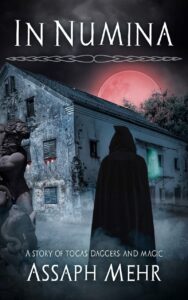
In Numina by Assaph Mehr

Debbie Burke: Please share a little about yourself and your background.

Assaph: I grew up on the shores of the Mediterranean, where every stone has a history – and the stone under it too, going back millennia. One of my favourite spots was an Ottoman citadel (we used to play LARP [live-action role-playing game] there), which is built on Mameluk foundation, laid on top of Roman village, which displaced older settlements to Egyptian times. Can’t grow up like that and not love history. Fantasy I discovered early on when introduced to The Hobbit, and thereafter I’ve been reading it voraciously. I now live in Oz (aka Australia), with various cats, kids, spiders, and water dragons.

Felix: I come from the city of Egretia, which Assaph assures me is very like your own ancient Rome. My father was in the antiquities trade, though I was fortunate enough to be accepted to the Collegium Incantatorum. My father died, the family fortune was lost, and I could no longer pay tuition so never graduated. So, after a brief stint in the legions, I came back and by a stroke of luck apprenticed with a couple of the city’s most renowned investigators. When they didn’t want to take a case that had occult elements, I seized my chance. I combined whatever education in the magical arts I gathered in the collegium with the investigative skills I learnt, and set out to solve paranormal problems for the proletariat.

Assaph: In Ancient Rome tradespeople often advertised by chalking messages on public walls. That’s how I met Felix, and got him to tell me his stories so I could write them down. For our world we couldn’t quite spray graffiti everywhere, so we made Felix some business cards. Please, pass them on to your readers.

DB: Your books sound like an interesting mashup of hard-boiled detective stories, fantasy, and history. How did you come up with that combination?

Assaph: Quite simply, that’s what I always liked to read. I grew up on classic detectives and thrillers, loved ancient Rome, and often escaped into fantasy and Sci-Fi. I always wanted to see my name in print, so when it was time to write I combined my favourite elements into the stories I wanted to read. (sotto voce) Don’t tell Felix he’s a figment of my imagination – he gets offended, and besides I’d rather he not ask uncomfortable questions about some of the misery I put him through.

Felix: For me it was a stroke of luck – my name, Felix, means lucky, so I attribute everything to my patron goddess Fortuna. As everyone will tell you – or, rather, whisper so she can’t hear – she can be a fickle and capricious goddess. I was accepted to the collegium, but had to terminate my studies; with no prospects I joined the legions, but escaped honorably without injury; the two investigators took me in, and I managed to carve out a unique niche for my business. So those stories are just the cases I handle for my customers, which Assaph publishes here. I’m still waiting on those royalties he promised.

Assaph: Skinflint. I told you, I had to pay the editor and the cover designer. We’re waiting on that movie deal for the big payout.

DB: What inspired the seed for The Protagonist Speaks?

Assaph: It was one of those 3 a.m. ideas that stuck. Every reader talks about favourite characters, I thought it would be an interesting idea to let them meet those characters in person, as it were. A bit like a celebrity talk show, but centered about the characters rather than the authors.

DB: How do readers respond to interviews with characters?

Assaph: The responses I get are overwhelmingly positive. Both authors and readers enjoy the quirky experience of letting the character sit on a guest couch and be interviewed. Both authors and readers also tell me that they are sometimes surprised by the answers they get.

Felix: For my part, I can say that it was a bit weird at the start. I didn’t quite get what it was all about, and I was reluctant to share secrets. Now I do have a better understanding of what’s involved, and I can say it can be a phenomenal experience for the character as well.

Assaph: Right, so that’s you agreeing to do another one – proper one – for the next book launch.

DB: What is the site’s primary purpose? Promote author name recognition? A way to increase book sales? Fun and entertainment?

Assaph: Yes – pretty much all of that. Authors and readers get to have a bit of fun, it helps increase exposure of the books to potential readers, and authors end up with long-life marketing collateral, something that can be shared to help increase buzz. Running the site is my way of giving back and helping fellow authors.

DB: Have you experienced an uptick in sales from The Protagonist Speaks?

Assaph: Modest, but yes. As with most marketing, it’s about repeatedly putting good content in front of potential buyers, till they make the decision to buy. Having these quirky interviews helps do just that – it’s a way to come across new authors, it’s a reason to share the books again, it gives more view-points into the author’s style that may help convince a reader that this is a book for them. There is definitely more engagement from authors who understand that, and I see more engagement when authors share it on social media and newsletters (beyond what I normally see when only I share the interviews).

DB: What is the process for an author to submit an interview with a character? Is there any cost?

Assaph: No costs. As said above, it’s my way of helping fellow authors. Heck, I half do it for myself – besides having an excuse to chat up authors I enjoy, I also discovered a few new favourites.

For anyone interested in joining, just fill out the Contact form on TheProtagonistSpeaks.com/Contact.

DB: Anything else you’d like to share with Kill Zone readers?

Assaph Mehr

Assaph: Thanks much for hosting us, Debbie! I promise I’m not as crazy as I sound, despite the voices in my head. Should any of your readers like to meet Felix more, there are a few free short stories and a free novella on my website here: egretia.com/short-stories. Those will give you an idea of the trials and tribulations of a private investigator during antiquity, dealing with the supernatural world (and why he wants to get paid, and I don’t want him to think I’m the cause of all his troubles).

Website: http://egretia.com

Facebook: http://facebook.com/AssaphMehrAuthor

Twitter: @assaphmehr

~~~

As a side note, after chatting with Assaph, I dragged the male lead in my thriller series, Tillman Rosenbaum, kicking and screaming, to Assaph’s interview couch. Please check out Tillman’s reluctant answers on March 5 at The Protagonist Speaks. 

~~~

TKZers: Do you ever interview your characters? Do their answers surprise you?

~~~


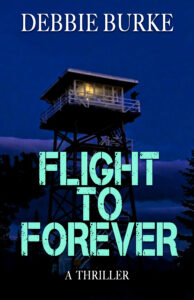
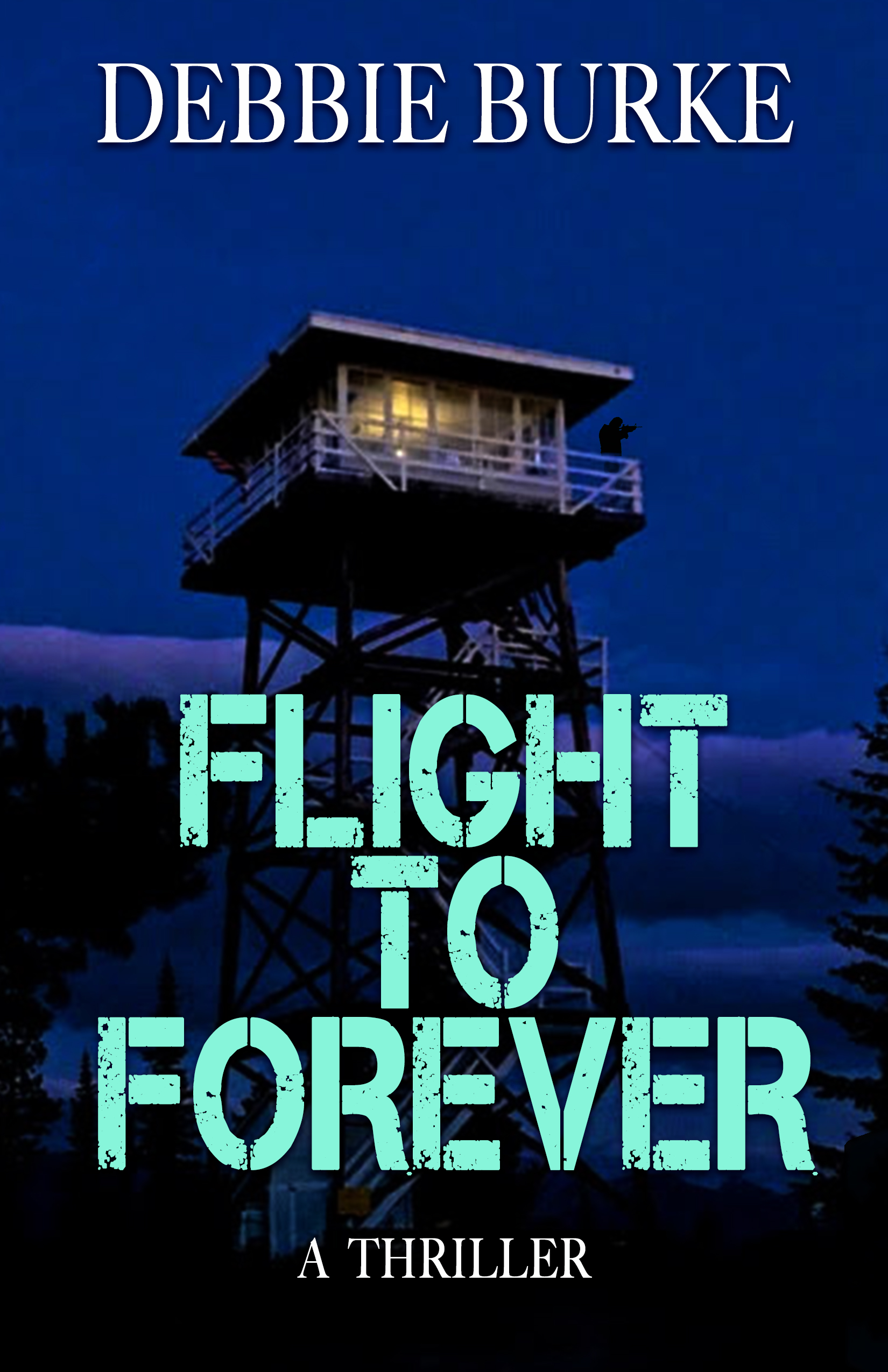
Debbie Burke’s characters really startled her in her new thriller Flight to Forever.  Discover the surprises here. 


Cover design by Brian Hoffman

Does Anyone Read Poetry Anymore?

Back when my book group could still meet in person we had a fun month where everyone chose a piece of poetry to share. We had funny poems, romantic poems, some pithy pun filled poems, and then there was me dredging up the angst with Sylvia Plath:)

I’m sure it will come as no surprise to anyone that I was a definite poetry nerd as a teenager. I was into all the angst, all the pain, and definitely all the darkness associated with poets like Plath, Dickinson, Lowell, and Eliot. I still have shelves of poetry books, including an inordinately morbid number of First World War poets, as well as a surprising number of romantics! I have to confess though in recent years I’ve bought very few new volumes of any kind of poetry and, apart from this particular book group project, have rarely taken down a book of poetry to peruse for fun. So what happened? (you know apart from life, motherhood, etc…) Why had poetry dropped off my reading list so precipitously?

A few years ago I remember hearing the poet Jane Hirschfield being interviewed on Fresh Air and being mesmerized by her poetry reading (I had to pull the car over so I could listen to the whole broadcast). More recently I was inspired by Amanda Gorman’s amazing poem at the inauguration and I do hope this elevation of poetry and performance will reignite popular interest (not that I think publishers ever viewed poetry as a great money maker!). For me, though, the desire to reconnect with poetry came a few months ago (pretty much after my book group project which made me realize what I’ve been missing). Since then I’ve been trying to start off my writing day with reading at least one poem. It’s been, at best, a sporadic success, but I am so glad that I’m finding the time to reincorporate poetry back into my life…but still I have to wonder, does anyone actually read poetry anymore??

What about you TKZers? Are you a poetry fan or was poetry just something cruel English Literature teachers forced you to study? Do you, as writers, ever use poetry as a creative or inspirational tool? What do you think are the chances that poetry is now back in vogue (if it ever was!)?


Want to Talk to a Kill Zone Author?

Photo credit: Chris Montgomery – unsplash

By Debbie Burke

@burke_writer

Have you ever wanted to chat with the Crime Dogs at The Kill Zone?

Now, your book club, reading or writing group can meet with TKZ authors via Zoom, Facetime, Google Meeting, or Splash.

To give you hints what they might talk about at a virtual meeting, I posed two questions to each member.

Joe Hartlaub:

#1 – When you’re invited to speak, what do you plan to say?

I accept!

Actually, I would discuss the steps that a writer goes through after finishing their manuscript and before being published. 


#2 – What would you like listeners to learn from you?

That they probably should have asked someone else! Seriously, I would hope they would come away encouraged, rather than discouraged. While the process of publishing seems overwhelming, people still do it. 

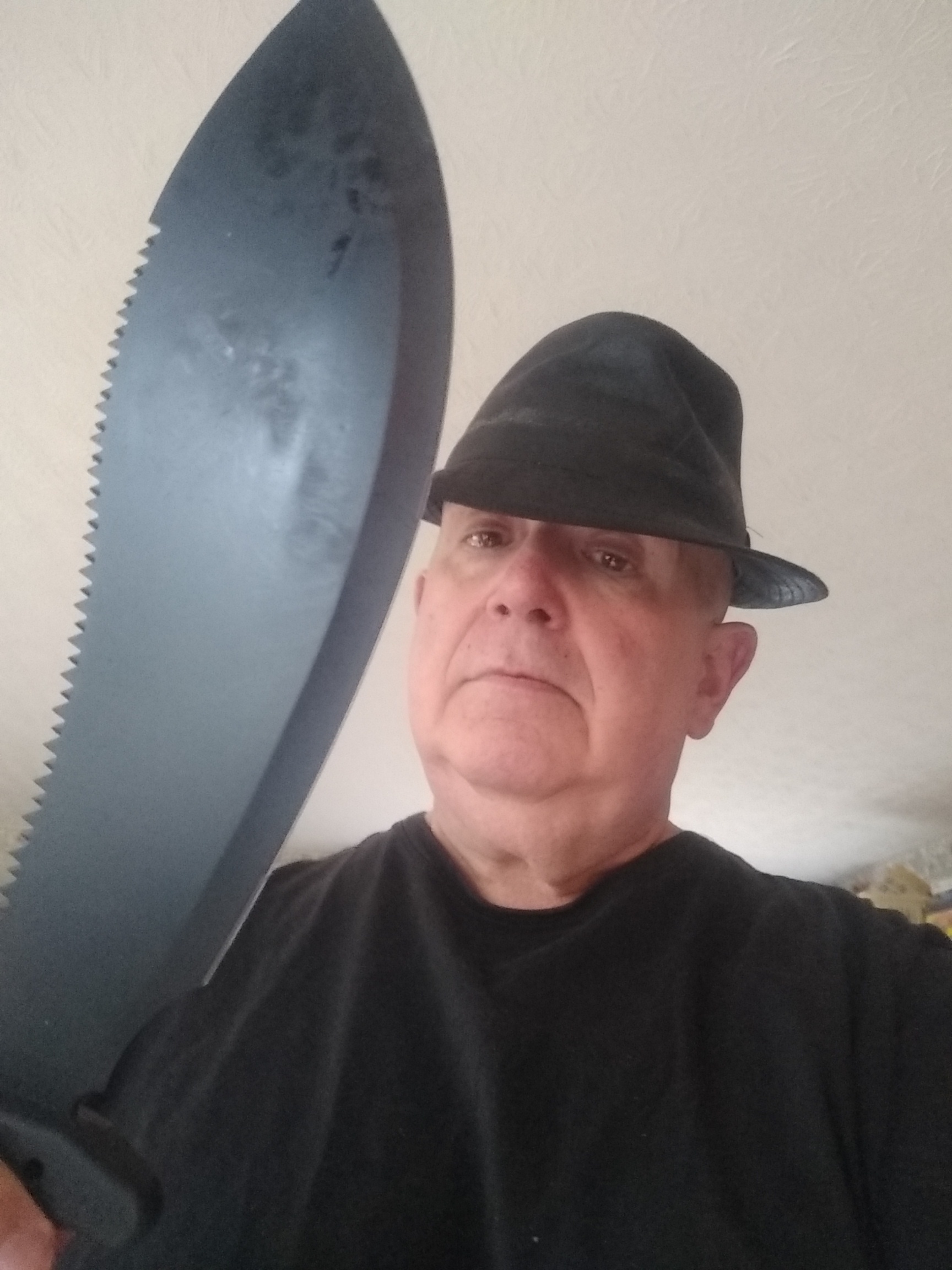
(BTW, we’ve asked Joe to leave his big knife at home when he zooms.)

~~~

Sue Coletta:

Most readers ask about the story behind the story, my characters or subjects (if nonfiction), research, and male vs. female serial killers. I also touch on forensic science (i.e. blood spatter analysis, decomposition, handwriting analysis, forensic psychology, the difference between a psychopath, sociopath, spree killer, etc. The seven stages of serial killing is a big hit, as it allows readers to peek into a killer’s mind. The psychology behind these monsters is a fascinating topic.

For writers: how to create believable characters, show vs. tell, understanding deep point of view, story structure, how to use research without slowing the pace. Also, my experience working with publishers.

Most of all, I want attendees to have fun. Laughter is good for the soul.

~~~

John Gilstrap:

I have several “canned” presentations that are fully described here, but I tailor every presentation to the individual audience. I’ve been doing this for over a quarter of a century, so I can discuss everything from character development to finding an agent to adapting stories for the screen. I’ve done full day seminars and I’ve done 20-minute chats.

I start every presentation by asking attendees what they want to take away from the seminar/meeting. In my experience, people who attend these kinds of presentations have one or two very specific itches that they’d like to have scratched, and my job is to scratch them.

~~~

Clare Langley-Hawthorne:

Most often my presentations start off with the history that inspired my stories and, depending on the audience, delve into my own personal connection to the events or characters in the book. Rarely do I go into the actual writing process but this is often a question I get asked so that’s when it comes up. I want listeners to come away inspired – either by history, reading, or to write their own stories.

~~~

James Scott Bell:

I speak on any of the 7 critical success factors of fiction: plot, structure, character, scenes, dialogue, voice, meaning.

Fiction writing can be learned, if one studies diligently and keeps practicing.


~~~

Terry Odell:

I’m flexible with what I’ll talk about. If it’s a writer’s group, I can talk about craft, including dialogue, point of view, voice, writing romantic suspense, or just the writing process. I can also share my experiences with small presses, digital presses, and independent publishing.

Book clubs are usually a whole different game, with them wanting to talk about specific books or series, or just general Q&A.

~~~


Garry Rodgers:

From my experience it’d be “talk about what you know.” Mine is crime, forensics, and death investigation and the worlds around them. My schtick would be about Joseph Wambaugh’s saying, “The best stories aren’t about how cops (and coroners) work on cases – it’s how the cases work on cops (and coroners).”

I see it from the reality human angle rather than the non-reality TV CSI stuff.

~~~

Steve Hooley:

My subject would be “Heritage, Writing, and Leaving a Legacy.” The discussion would center on the importance of passing on (in writing) to our descendants what we have learned from our ancestors – history, service, and values.

I would like to convince listeners that “passing the torch” is important, and maybe inspire some young people to become interested in writing.

I added a category: Who is my desired audience? Middle Grade Schools, High Schools, Parochial Schools, Christian Schools, Home School Groups, Senior Citizen Groups, and Writers’ Groups.

~~~

Elaine Viets:

My talks are tailored for the audience. If you want to be entertained, I talk about my light-hearted Dead-End Job mysteries. If the audience likes darker mysteries, I discuss my Angela Richman, Death Investigator mysteries. Death investigators are like paralegals for the medical examiner. They are in charge of the body and work for the ME.

I’ve also taught workshops and seminars for Sisters in Crime, MWA, and the Florida Writers Academy and other groups. Topics include: “Forensics for Mystery Writers.” “How to Murder Your Darlings — editing for writers.” “Who’s Talking? What voice is best for your novel?” and “Mystery Writing for Beginners.” All workshops come with handouts.

I’d like all my audiences to come away entertained, and if they’re taking a workshop, to leave it energized and ready to write.

~~~

P.J. Parrish (Kris Montee): 

The need to learn your craft and have patience, especially if you self-publish. A book that’s put out in public before it’s professionally ready will fail.

Perseverance. I’ve run the full gamut of publishing with huge NY legacy publishers, paperback imprints, foreign publishers, and Amazon’s Thomas and Mercer. I changed genres from romance to mysteries, reinventing a stalled career. I regained backlist rights and self-published them, also self-published an original series. Lots of success (bestseller lists and awards) and plenty of failure, but you keep going! You have to have a hard shell, lots of drive, and you can’t let the suckers get you down!

Topics I like to talk about: The difference being showing and telling. Making your settings/locations come alive. Series vs standalones.

~~~


Debbie Burke:

For writing groups—how to edit your own writing, how to survive rejections and keep writing, traditional publication vs. self-publication, tapping the subconscious for stories, confessions of a pantser.

For book clubs—A peek inside the warped mind of a writer. Behind the scenes anecdotes. How does a nice girl like me write such nasty villains? What does an author do when characters won’t behave?

~~~

How do you set up a virtual meeting with a TKZ author? It’s easy!

At the top of the screen on the left side of the menu banner, click on “Request a TKZ Speaker.” Fill out the form and hit submit. We’ll be in touch.

 We look forward to “seeing” you for a virtual chat!

Tens(e)ion in a Novel

So I’ve been thinking (well, wondering…) a lot about the growing popularity in the use of present tense in novels – probably because we recently had this issue come up in a first page critique, but also because two members of my writing group are also using it in their historical novels (quite successfully I might add) – which has led to some puzzlement on my part. While there are certainly some benefits to using the present tense (see below), it isn’t something that flows naturally for many writers so I’ve been ruminating over its recent appeal.

On the plus side, present tense provides an immediacy to a scene that can ramp up dramatic tension. In many YA novels, it can also provide a deeper connection to the main character. Suzanne Colins did an amazing job of using the present tense to immerse readers in the world of Panem and Katniss Everdeen. However, it certainly can feel like an artifice in many other books – one that strains the flow and forces a writer to employ some pretty awkward sentences. In my writing group, I have questioned the use of present tense in some of my fellow writers’ work, not because it hasn’t been effective in the scenes I’ve reviewed, but because it seems like a difficult tense to sustain for a whole novel. In my own work, I’ve really only used the present tense for interior thoughts or flashbacks (maybe because I’m not skilled enough to use it full time!).  When used judiciously, the present tense can help signal to the reader a transition in terms of time or narrative focus and it can certainly be used to create compellingly tense scenes. As with anything with writing, when the present tense is employed well a book can soar. That being said, the apparent popularity of writing in the present tense does seem a little…weird…So I thought I’d reach out to you, our fabulous TKZ community to provide insight and input.

So what do you all think/feel in general about novels written in the present tense? As writers, have you considered using it and if so, why? What benefits do you see to writing in the present tense? Does it feel natural to you for a whole novel?

Please note, I’m asking these questions, not by way of judgement, but out of general curiosity since I’ve recently seen many novels employing the present tense that I would have typically expected to be written in the past tense. A well written novel succeeds irrespective of the tense (or any other literary device) used – but it is intriguing to me that so many more writers seem to be choosing it as an option!

What say you all, TKZers?

In Praise of Experts

Photo credit: Luke Jones, Unsplash

By Debbie Burke

@burke_writer

In fiction, you often walk into different worlds. Perhaps you speak a few words of the language but you’re not fluent. You have a general idea of the architecture and geographic layout. But there are secret passageways in which you can become lost and unseen chasms into which you can tumble.

But you’re committed. You must go forward on your story quest. So, you seek out natives from those worlds to guide you. 

Today, I’d like to introduce you to several insiders who shepherded me through unfamiliar terrain in my new thriller, Flight to Forever, which launches today. 

The story takes place in the rugged mountains of the Bob Marshall Wilderness in Montana. I’ve hiked and explored the area but am far from a hardcore outdoorswoman. I needed to call upon experts in various fields to fill in the gritty details.

Here’s an overview of Flight to Forever:

Main characters: investigator Tawny Lindholm and her husband, criminal defense attorney Tillman Rosenbaum.

Inciting incident: When the pandemic prevents a Vietnam veteran from seeing his wife of 50 years in a memory care lock-down, he busts her out. Because an off-duty cop is injured during their escape, law enforcement is hellbent on capturing the aging fugitives.

The couple flees into the mountains where they’ve gone camping for years. Their daughter begs Tawny and Tillman to help her parents. The determined veteran won’t go down without a fight, increasing the urgency for Tawny to find them before the cops do.

Setting: The fugitives choose an abandoned fire tower as their hideout.

In bygone days, fire spotters spent summers in isolation living on mountain summits in small wooden cottages built on high stilts.

When lightning sparked forest fires, the spotters used a mechanical device called a fire finder to pin down the exact map coordinates. Then they called in the report and crews were dispatched to fight the fires.

Satellites and advanced technology have now rendered the towers obsolete. A handful are preserved and have been renovated into vacation rentals. For $50/night, adventurous campers pack in supplies and stay in a lookout with staggering views from on top of the planet. Most lookouts have fallen into disrepair or been destroyed by fire.

One of those abandoned towers becomes the hideout for my fugitives.

My guide into that remote world is retired Forest Service employee Kjell Petersen, a former fire spotter.  He now volunteers to maintain the few surviving lookouts. Kjell is also a gifted photographer who’s snapped thousands of gorgeous mountain shots with wild critters and wild weather, taken during his career. He not only told me fascinating stories, he graciously offered a selection of his photos for the cover.

For hours, Kjell shared anecdotes full of details only a true insider knows. As he described being in a tower when it was struck by lightning, the hair on my arms stood up.

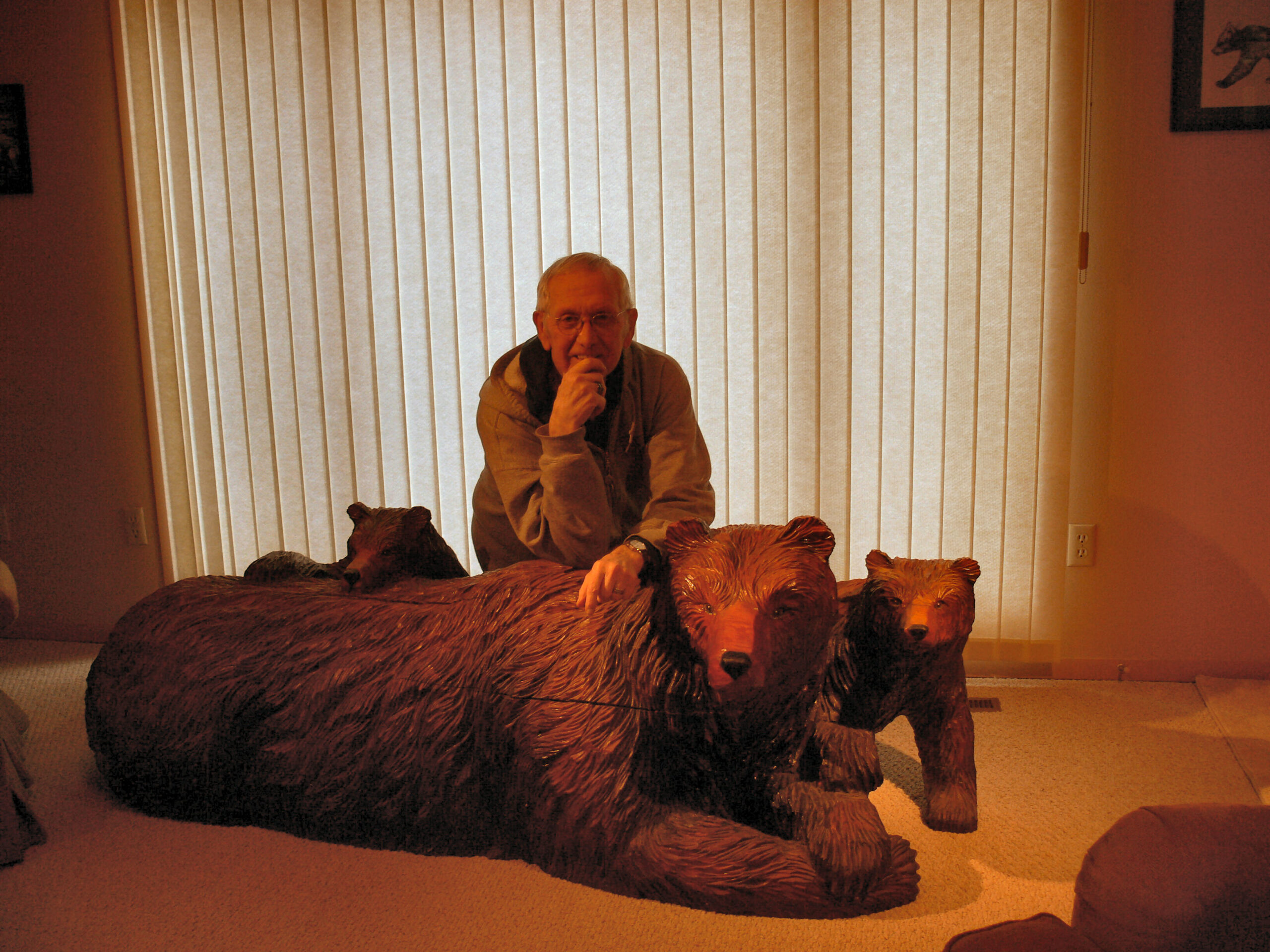
Kjell Petersen and friends

After the first draft of Flight to Forever was finished, Kjell reviewed it and fixed my goofs. At one point, I wrote that avalanches had destroyed many old lookouts. With a kind smile, Kjell gently corrected me. “Lookouts are built on top of mountains. There’s nothing above them. Avalanches happen below them.”

Well, duh.

Thanks for the save, Kjell!

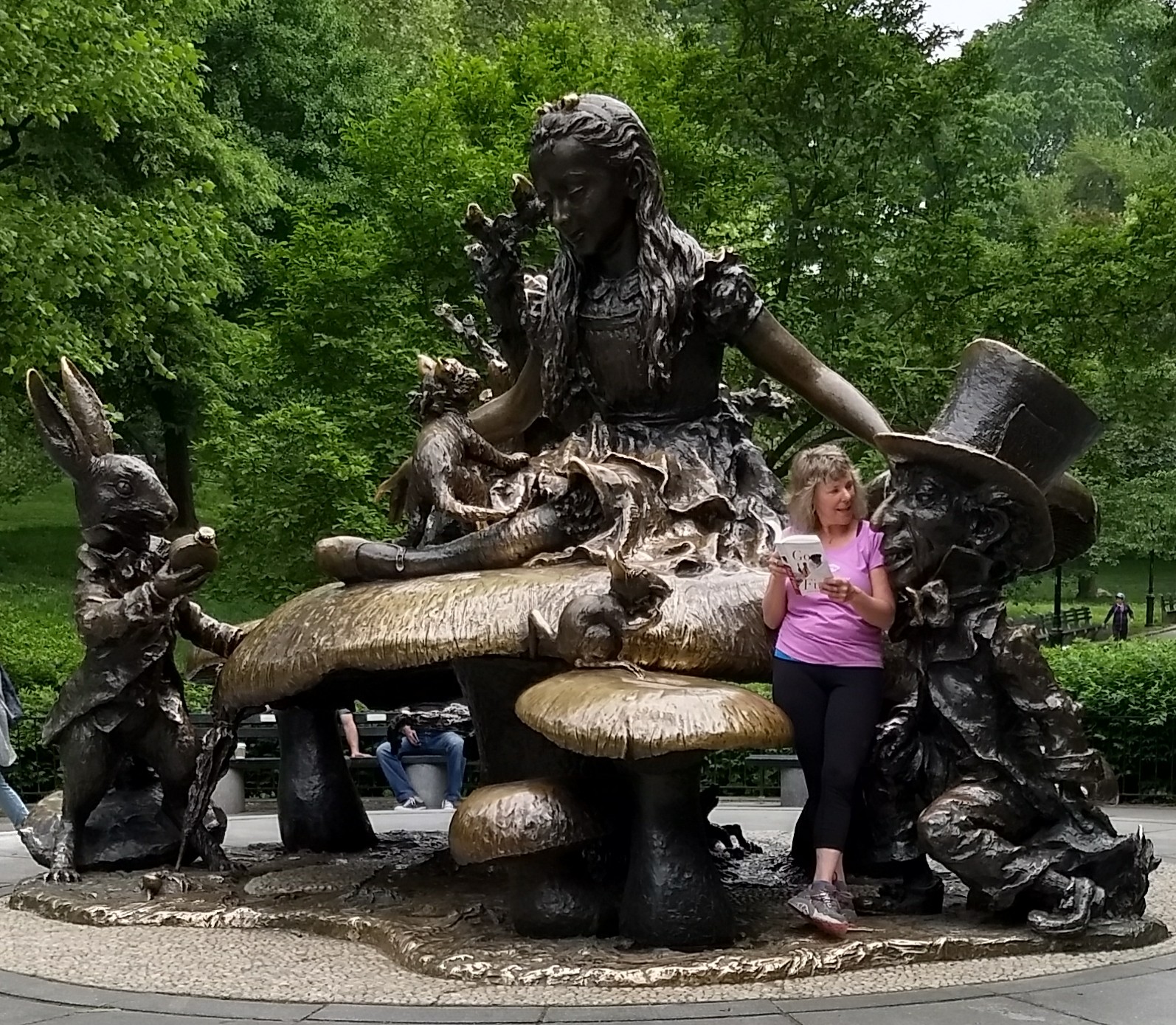
Sue Purvis in Central Park

To research the setting, I could have slogged through grizzly territory in mud up to my artificial titanium knees.

While authenticity is important, with age comes wisdom. I know my limitations. 

Instead, I tapped another expert, Susan Purvis. She’s a geologist, search dog handler, and former search-and-rescue volunteer with more than her share of risky escapades. She also wrote the bestselling memoir, Go Find.

Sue gave me a quickie course about sedimentary limestone and sandstone cliffs. Harsh weather shears the rock off in massive slabs that crash down mountain sides. When rock crumbles into loose, unstable rubble, it’s called talus or scree, which is treacherous to hike or drive on–turning Tawny’s search into a white-knuckle adventure.

In conversation, Sue happened to mention she’d once slid her truck off an icy bridge and wound up hanging over the edge.

That anecdote was too good to pass up. I appropriated Sue’s harrowing experience to inflict on poor Tawny.

Legal eagle Phyllis Quatman

Since the male lead, Tillman, is an attorney, legal conundrums happen often. For that, I consult attorney Phyllis Quatman, who writes suspense under the name P.A. Moore.

Sometimes dodgy actions are necessary to move the plot forward even when they push my characters into gray areas of what’s legal vs. what’s moral.

Phyllis is an author as well as a lawyer. She understands the need to achieve story goals while also keeping the heroes out of serious legal trouble.

If I’m ever arrested, I know who to call.

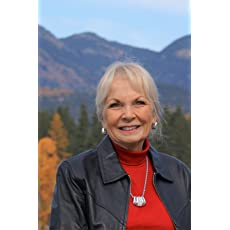
Dr. Betty Kuffel


The unlucky folks in my thrillers get hurt a lot—drugged, beat up, knifed, shot, etc. Retired ER doctor Betty Kuffel has seen every injury known to humans. She is an encyclopedia of mayhem and murder methods. She also writes medical thrillers.

Paging Dr. Betty.

A subplot involves Tillman and his teenage son. While Tawny is busy tracking the fugitives up a mountain, Tillman must travel to the other side of the state when his boy is injured in an accident.

Betty upped the story stakes by suggesting complications that turned the son’s broken leg into a life-threatening crisis. She also infused realism with her insider knowledge of pandemic restrictions that keep frantic Tillman away from the bedside of his critically-ill son.

Sue, Phyllis, and Betty are my longtime critique partners and cherished friends. So it’s expected that we help each other.

But I’m constantly amazed at the willingness of complete strangers to assist a curious writer.

When I contact experts and introduce myself as an author doing research, they are almost always generous and helpful.

They’re eager to talk to an interested listener about their specialties. Plus, they like to be part of the creative process of writing a book.

As long as a writer is polite, respectful, and mindful of the expert’s time constraints, most pros are happy to go the extra mile to assist you.

A small gesture of appreciation is a customary courtesy. The people who help me are listed on the acknowledgement page and I always give them an inscribed copy of the book.

Today, I raise my coffee mug in a toast to the experts who helped with Flight to Forever: Kjell, Sue, Phyllis, and Betty.

~~~

TKZers: Have you consulted experts in your research?

What sort of assistance did they provide?

~~~


Today is launch day for Flight to Forever. 

Now that you know what happened behind the scenes, I invite you to check the book out at this link. 

1st First Page Critique for 2021!

Despite 2021 starting off like a bad sequel to a disaster movie, I’m trying to get back on track with all my writing goals and I hope you are too (in between just a few news distractions!) Today is my 1st first page critique of the year, and this one, despite having no title, is described as romantic suspense.  My comments follow  – see you on the flip side.

First Page Submission

What do the bitches have planned for me today?”

Gasping, she looked around. Had she really said that out loud? The thought that ruled her life and had done so since she’d arrived on campus in August. What hell were her roommates going to subject her to this time? God damn it. How the hell did the trio manage to mess with her when they weren’t even around?

Sighing when it appeared no one was paying her any undue attention, she resumed trudging towards her dorm, absently wiping a tear from her eye. Having stayed away from the room as long as she could, there wasn’t anywhere else to go. The library and student union had closed so it was the room or her car. And sadly, if she wanted to try to sleep in her car, she’d need a blanket from the room anyway. To make things worse, the football team had won that day, so they’d be drinking and probably pretty wound up.

The key bounced all around the keyhole, her hand seemingly trying to protect her from the evil on the other side. Taking a deep breath, she forced herself to relax so finally, on the tenth try, the key slid in and it was time. Bracing herself, she crept into the room. Madison and Morgan spun away from her desk, their faces turning red. Morgan hustled to the other side of the room, but Madison just stood and stared.

She walked to her bed and dropped her backpack, “Need something, Madison?”

“Your damn ass out of here.”

Right on cue, it was starting again. She tried to pretend she didn’t hear it, silently repeating to herself, don’t let them win, don’t let them see any weakness. Sitting on the bed, she pulled a fresh spiral notebook out of her backpack and grabbed a pen. All she wanted to do was ignore them and hope they might leave her alone, for once. She flipped to the first page, eager to document her initial thoughts for the latest English Lit project. It was her favorite class and the professor was the reason she was here. He was a friend of her junior college English teacher and had gotten her a scholarship. Today, he’d given her a special assignment, challenging her to dig deeper into herself after she’d confided that she had thoughts of writing for a living. ‘The ones who set themselves apart share a small part of themselves in each work’, he’d said, ‘Could she be a great one?’ Excited by the challenge, she started jotting notes. Ten seconds later, the notebook was ripped out of her hands.

Overall Comment
This page certainly has an attention getting first line, but after that I have to admit I was a little uncertain about the tone of the story, the voice of the protagonist, and whether this was the beginning of a younger adult novel dealing with bullying or (as it had been described) more of a romantic suspense novel. The tone of this first page definitely seems more suited to YA and I didn’t really get a suspense vibe…So my first major comment to our brave submitter, is what tone do you want to set for this novel? The first line “What do the bitches have planned for me today?” presents a very aggressive, in your face POV, which definitely drew me in, but after that the protagonist becomes much more passive and weak, and her actions seem to contradict an initial strong beginning. Likewise the descriptions and actions used in this first page are all over the place, presenting mixed signals about the protagonist’s character as well as the tone of the book. The final paragraph for example, seems very odd – after steeling herself for what her roommates will do to her, and fearing for the ‘evil’ they will unleash, the protagonist suddenly sits down and starts musing about her English Lit assignment…
Specific Comments
Given my overall comments focus on POV, character voice and tone, I thought the easiest way to illustrate these concerns was to go through this first page and embed my specific comments throughout. Here goes:

What do the bitches have planned for me today?” I love this attention getting first line. Wasn’t sure if intended to have as actual speech, if so need two quotation marks. Remember grammar and punctuation need to be perfect.

Gasping, she looked around. Now I’m deflated. Perhaps, the internal monologue should continue to give the protagonist a stronger voice Had she really said that out loud? The thought that ruled her life and had done so since she’d arrived on campus in August. What hell were her roommates going to subject her to this time? God damn it. How the hell did the trio manage to mess with her when they weren’t even around? Maybe move these questions up earlier so we continue to hear the protagonist’s inner monologue. Remember voice is critical to a first page so you want it ringing out loud and clear.

Sighing This seems passive, given the aggressive first line. when it appeared no one was paying her any undue attention does she secretly want attention?, she resumed trudging towards her dorm, absently why would it be absently if she’s so upset. Does she want people to see her pain and help? wiping a tear from her eye. Having stayed away from the room as long as she could, there wasn’t anywhere else to go. Explain why The library and student union had closed so it was the room or her car. And sadly, if she wanted to try to sleep in her car, she’d need a blanket from the room anyway. If she’s that afraid, why not go to a hotel? The reader needs to get a sense of why she had no one to turn to – especially as college campuses usually have counselors/RAs etc. To make things worse, the football team had won that day, so they’d be drinking and probably pretty wound up. In this paragraph the protagonist’s voice sounds far different to what we read in the first paragraph – much weaker, more passive and using different language..she says bitches and then only uses ‘wound up’?? It’s confusing for the reader and weakens the dramatic tension.

The key bounced all around the keyhole, her hand seemingly trying to protect her from the evil on the other side Very passive descriptionTaking a deep breath, she forced herself to relax so finally, on the tenth try, the key slid in and it was time. Bracing herself, she crept into the room. Again crept is a very weak description given how aggressive she sounded at the beginning of the page Madison and Morgan spun away from her desk, their faces turning red. Morgan hustled to the other side of the room, but Madison just stood and stared. So they’ve been looking through things on her desk – shouldn’t she have more reaction to this?

She protagonist should have a name as it’s unclear who this ‘she’ is walked to her bed and dropped her backpack, “Need something, Madison?”

“Your damn ass out of here.” Without more background their bullying starts to border on caricature – their actions need to feel very specific and real if we are to sympathize with the protagonist

Right on cue, it was starting again. She tried to pretend she didn’t hear it, silently repeating to herself, don’t let them win, don’t let them see any weakness. Why doesn’t she just grab the blanket and leave like she intimated in previous paragraph? Sitting on the bed, she pulled a fresh spiral notebook out of her backpack and grabbed a pen. Why do this? She’s been so afraid and upset, yet she calmly sits on the bed and pulls out the notebook?All she wanted to do was ignore them and hope they might leave her alone, for once. This seems inconsistent, given how much bullying we’ve been led to believe has happened She flipped to the first page, eager this verb seems oddly out of place given how fearful of their bullying she’s been to document her initial thoughts for the latest English Lit project. It was her favorite class and the professor was the reason she was here. These seem unnecessary details which drain the scene of dramatic tension He was a friend of her junior college English teacher and had gotten her a scholarship. Again, why is this detail here?Today, he’d given her a special assignment, challenging her to dig deeper into herself after she’d confided that she had thoughts of writing for a living. Suddenly, despite the threat from Madison and Morgan, she’s just thinking about an English Lit assignment?‘ The ones who set themselves apart share a small part of themselves in each work’, he’d said, ‘Could she be a great one?’ Excited by the challenge, she started jotting notes. Tone inconsistency – she was afraid of their evil a few minutes ago and now she’s excitedly jotting notes?Ten seconds later, the notebook was ripped out of her hands.

I hope these specific comments help highlight the issues I have with this first page. That being said, I think this brave submitter has the basis for a strong first page if the protagonist’s voice can really shine through and if the set up for the story is clearer, more consistent, and the bullying comes through as very real and dangerous.

So TKZers what constructive feedback do you have for our brave submitter?

Interview with Blackstone Publishing’s Rick Bleiweiss

By Debbie Burke

@burke_writer

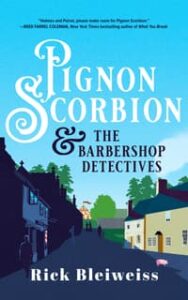
Today, please welcome Rick Bleiweiss, Head of New Business Development for Blackstone Publishing. Rick is a former record company senior executive, Grammy-nominated producer, podcaster, and journalist. He is also the author of Pignon Scorbion & the Barbershop Detectives, a mystery set in 1910 in a sleepy English village, to be released in February 2022.

Rick Bleiweiss


…What I’m doing at 77 years of age [is] an example to other seniors that you are never too old to try something new or follow your dreams.


Debbie Burke: Thanks for visiting with us, Rick! Blackstone Publishing is unusual in that they started with audiobooks then later added print and ebooks. Could you tell us about that shift and the reasons behind it?

Rick Bleiweiss: The decision to begin publishing books and ebooks in addition to audiobooks was made about seven years ago. We published our first books in 2015. It was primarily driven by three things.

First, the more popular audiobooks became the more other publishers held onto those rights, made their own audiobooks, and stopped licensing them to other companies, such as Blackstone.

Second, we felt that we could succeed well as a publisher of books and audiobooks and have those as another income stream. And we felt we could ramp up quickly as we already were evaluating manuscripts, involved with authors and storytellers, and selling and distributing audiobooks to many of the same buyers at accounts whom we’d be selling books and eBooks to. So that would make it an easy transition.

An added benefit of licensing all rights to a book – print, ebook, audiobook – is that we would be getting the audios, which would start making up for the ones we were no longer getting from some other publishers.

Third, the vision of Blackstone’s CEO (and owners) was to make Blackstone into more than just a traditional publishing company, but rather to turn it into a media company that has publishing and storytelling as its foundation, but also is involved in securing film & tv deals and being a media producer, creating intellectual properties, doing video games, comic books and magazines, and creating and selling merchandising. And we are doing all of that today and more, including owning our own printing plant so that we can make everything in house and never be out of print.

Regarding how we started our print program, early on we obtained the rights to the Max Brand and Loius L’Amour catalogs and signed a number of authors who had some past success but were not yet major sellers. Then it really kicked up a notch when I signed PC & Kristin Cast and we published the last their books in their 12-million selling House of Night series. Then our visionary CEO Josh Stanton and I got the James Clavell catalog, and I signed Natasha Boyd, who has had one of our biggest on-going books, the USAToday best-seller, The Indigo Girl. That was closely followed by signing Nicholas Sansbury Smith and his Hell Divers series.

DB: In 2019, Blackstone, a family-owned, independent press, made news by luring heavy hitters Meg Gardiner, Steve Hamilton, and Reed Farrel Coleman away from Penguin Random House. Without spilling any secrets, do you anticipate Blackstone’s further expansion of authors who may be disgruntled with the Big Five?

RB: Actually, they were not the first nor have they been the last, although they were major signings. I wouldn’t characterize it as disgruntled with the Big Five as much as wanting to go with a different publisher paradigm. Josh Stanton and I were able to license the aforementioned entire James Clavell catalog (including his classic Asian Series featuring Sho-Gun) and Gregory McDonald’s catalog (Fletch and Flynn series) both of which I believe had been with Dell for many years but whose estates were looking for something different. Other authors who we have signed to do print and eBooks who have also been with major publishers are Sherilyn Kenyon, Heather Graham, Catherine Coulter, Rex Pickett, James Carroll, Peter Clines, Andrews & Wilson, PC & Kristin Cast, Josh Hood, a good part of the Leon Uris catalog, Gabriel Garcia Márquez, Neil deGrasse Tyson, Al Roker, Eric Rickstad, Brian Freeman, Adrian McKinty, Orson Scott Card, M.C. Beaton, Matthew Mather, Don Winslow, Shelley Shepherd Gray, Catherine Ryan Howard, The Black Berets series and quite a few others.

I think that many people are starting to realize that we are expanding well beyond the role of a traditional publisher and that we are looking at what tomorrow’s successful media/publishing companies will be like and look like, rather than what it the traditional way of doing things. Hopefully, we have taken the best time-honored industry practices and augmented them with newer ways of looking at what a publisher can and should do. As an example, we have a head of film/tv who got deals for eight of our books within the last three months.

DB: Please describe a day in the life of Head of New Business Development.

RB: Fortunately, because it keeps my business life interesting, there have been many different things I’ve done in that role. I’ve bought other companies for Blackstone (such as the direct-to-consumer company, Audio Editions), licensed our technology to other audiobook companies, arranged distribution deals with other publishers, made introductions between Blackstone and high-profile tech and content companies, I am on Blackstone’s Board of Directors, I put together the relationship between Blackstone and the Oregon Shakespeare Festival which resulted in Grammy-winning audio versions of their Shakespeare plays, I co-created a series of books by Native American elders to preserve their wisdom, humor and teachings.

In short, I have had my fingers in a lot of different pies and strive to be one of the people at the company who keeps Blackstone moving forward as well as in new directions.

DB: What specifically captures your attention when you review submissions?

RB: Since the majority of the acquisitions work that I’ve been doing lately has been more focused on celebrities, best-selling authors and hit catalogs, rather than on debut authors, I look for different things now than I did when I was evaluating day-to-day acquisitions. When I did that, I would look to see if the synopsis intrigued me, if I thought the story was something that the public would be interested in, what the author’s background, social media involvement and overall commitment to being a writer were, and what our sales and marketing people thought they could do with the book. And, of course, finally, was the writing any good?

For an author who wants to submit a query to an agent or a publisher (and submitting to an agent is probably a way lot easier than submitting directly to a publisher) they should make sure to know something about each person they are submitting to so they can personalize each letter/email. The author has to make sure the genre they are submitting is a genre the agent or publisher works in. The query letter should also contain a short, but effective, synopsis of the story, the author’s bio, comps to other books, anyone they could get to endorse the book who would be meaningful (if anyone), and, if possible, something that perks the reader’s interest and sets the query letter apart from the hundreds of others that the agent/publisher has received.

DB: Tell us about your own writing.

RB: When I was twelve, I hammered out the first two-page sports newspaper that I wrote on my old Royal manual typewriter and sold the two carbon copies I made of it to neighbors. Over the decades since that time, I have written multiple newspaper columns, magazine columns and articles (including cover stories), blogs, copy for a local political committee and candidates, contributed chapters to two anthologies of short stories, and have written six, as yet unpublished and unproduced books and plays, and a rock opera.

My “breakthrough” came when I wrote Pignon Scorbion & the Barbershop Detectives, an historical fiction mystery novel set in the countryside town of Haxford, England in 1910 (which will be published in hardcover by Blackstone on February 8, 2022. An eccentric, but gifted, police inspector named Pignon Scorbion, who possesses the skills of Poirot and Holmes, comes to Haxford to head its law enforcement. Through a prior friendship with the town’s barber, Scorbion begins solving his cases in the barbershop assisted by a colorful group of amateur sleuth assistants – the barbers, the shoeshine man, a young reporter, and a beautiful and brilliant, female bookshop owner who is more than a match for Scorbion in observation, deduction and brains.

Scorbion’s ‘universe’ includes Sherlock Holmes, Hercule Poirot and Dr. John Watson, with whom Scorbion has become friends, and I’ve written the book in the style of the authors of that time and genre.

DB: What’s in the future for author Rick Bleiweiss?

RB: I’ve completed writing over 95% of Pignon Scorbion & the Barbershop Detectives, Book 2 which I believe will be published in early 2023. Without spoiling anything, it contains a case about a man who is shot and killed by an arrow while riding alone in a hot air balloon, another about the shoeshine man’s visiting cousin who is attacked and brutally beaten, a third involving a blacksmith who is murdered while walking home in the early morning, and lastly, a moneylender who is poisoned and dies in one of the barber’s chairs.

I also have a piece in an anthology of mystery short stories called Hotel California that is publishing in May, 2022. I join some real heavyweights in the book including, Heather Graham, Andrew Child (who has contributed a new Jack Reacher story to the anthology), Amanda Flower, Reed Farrel Coleman, John Gilstrap, Jennifer Dornbush, and Don Bruns, all of whom have written new stories for the volume.

My story is about a premier NYC hitman named Walker who escapes a hit on his life and hides out in Maui while another hitman is sent to finish him off. It’s a cat and mouse game of who gets who.

I also will have another Walker story in the follow-up anthology, Thriller, due in mid-2023.

Lastly, at least for now, in January I have stories being published in Strand Magazine detailing a lot of the research I did for the Scorbion book, and another in Crime Reads Magazine in which I talk in depth about my favorite all-time mystery authors.

DB: Is there anything else you’d like to add?

RB: We are launching Scorbion in a somewhat unconventional manner. There is a Pignon Scorbion ‘Find the Hidden Objects” video game that will be available for free on the Apple and Android app stores. It will have six levels based on scenes in the book, but you will have to input an unlock code to play the last two – and that code is in the book and the audiobook. Shane Salerno of the Story Factory made a wonderful video trailer for the book, there will be retail display contests, we are making and will be selling Scorbion t-shirts, the book has already been voted the Buzz Book of the Pacific Northwest Booksellers Assn’s fall conference, has been featured multiple times in Publishers Weekly (including an excellent review), will be featured by BookBub on publication date, I am hosting a YouTube show interviewing authors and literary agents as they talk about their careers and give advice to aspiring authors, and we are going to make a strong media push hoping to get what I’m doing at 77 years of age as an example to other seniors that you are never too old to try something new or follow your dreams.

~~~

Thank you, Rick, for joining us at The Kill Zone. Best of luck with the February 2022 launch of Pignon Scorbion & The Barbershop Detectives!


Writing Tips from Elmore Leonard’s Boyd Crowder

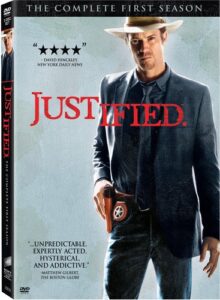
If you haven’t watched Justified, check it out. It’s a goldmine for writers. The FX series is based on Elmore Leonard’s short story, Fire in the Hole, and three books, including Raylan. In fact, all the actors wore wrist bands that read WWED — What Would Elmore Do?— to stay true to the creator’s vision.
Elmore Leonard worked on the show till his death in 2013.

The series follows Raylan Givens, a U.S. Marshal, played by Timothy Olyphant, who returns to his hometown of Kentucky to take on the local criminal element. Boyd Crowder, an old friend, proves to be his toughest nemesis. Raylan may be the hero, but Boyd, the villain, steals almost every scene. Boyd is calm, funny, and deadly. The back-and-forth between Boyd and Raylan is absolutely mesmerizing. Elmore Leonard did a masterful job of creating these two characters.

I’m not sure if we mere mortals could pull off such a memorable character like Boyd, but he sure is inspiring. Aside from Leonard’s expert characterization, the remarkable talent of Walton Goggins never lets you see the full picture as clearly as you think you do. Just when you’ve figured Boyd out, he switches sides and teams up with Raylan to bring down a bad guy.

Writing Tip: The best villains have at least one endearing characteristic.

To Elmore Leonard’s credit, Raylon also blurs the line between hero and anti-hero.

Writing Tip: The best heroes are flawed.

Fun fact: Walton Goggins only signed on for the pilot episode, in which Boyd was supposed to die, but Elmore Leonard wanted to explore the character in more depth. The rest, as they say, is history.

Boyd Crowder’s Characterization

Rap sheet: Silver-tongued bank robber turned low-level Kentucky kingpin with higher aspirations and an occasional religious “born again” streak.

Superpower: Nobody who knows this many 50c words has fewer compunctions about stabbing you in the back. Nobody likely to stab you in the back knows this many 50c words.

Kryptonite: He’s desperately in love with his former sister-in-law.

Writing Tip: When crafting characters think outside the box.

What makes Boyd truly stand out is his poetic dialogue, which we’ll get to in a sec. First, let’s look at a few of his one-liners.

Arguing with a man who has renounced reason is like giving medicine to the dead.

I believe you dictate the river of fate through your own actions.

I’ve learned to think without arguing with myself.

A man who speaks out both sides of his mouth deserves to have it permanently shut.

I’ve been accused of bein’ a lot of things. Inarticulate ain’t one of ’em.

He’s right! I should probably note: Until you’re as famous as Elmore Leonard, attempting the following dialogue in your WIP might not work. 😉

Boyd: Well, well, well… I hesitate to ask what brings us the pleasure of this divine coincidence that we find ourselves crossing paths this fine spring morning.

Translation: What are you doing here?

Boyd: I fear, my brother, I am in a quandary as to your inner thoughts and the impact of said ruminations on your future actions in this here hollow.

Translation: What’s up?

Boyd: Mr. Augustine, seeing as how Drew Thompson’s already in the Marshalls’ custody, why you’re cutting off the tail of my cousin and offering him up is opaque to me.

Translation: What do you want?

Boyd: I fear that within my belly stirs the emanations of desire for a product that sates the ache within.

Translation: I’m hungry.

Boyd: Well, my darling, being a lowly omnivore like yourself, I shall choose from this glorious list of animal flesh—the edible prize that men have hunted and killed for centuries, incidentally—a rounded flesh of cow, slipped within a doughy mattress, saddled with cheddar.

Translation: I’ll have a cheeseburger.

Boyd: Be that as it may, I sense within me a growing, nagging torpor that seeks a temporary hibernation in a solitary area for comfort and slumber.

Translation: I’m going to bed.

Make no mistake. Boyd is a dangerous guy. Check out one of the best murder speeches ever written.

That’s a rap, folks! May 2021 be your most successful year yet.

Have you watched Justified or read Fire in the Hole?

Join the giveaway for a chance to win 33 fast-paced thrillers and a new e-reader! No email required.

Enter to win here: https://t.co/k0oZKfcIYX?amp=1

Good luck!


First Page Critique – Rene Out on a Limb

Photo credit: evilpeacock cc by-nc-sa 2.0

By Debbie Burke

@burke_writer

 Happy 2021 and welcome back to TKZ after the annual holiday break!

Today, we kick off the new year with the first page of Rene Out on a Limb, a humorous middle-grade mystery. Please enjoy this submission then we’ll discuss it:


Rene Out on a Limb – First 400 words

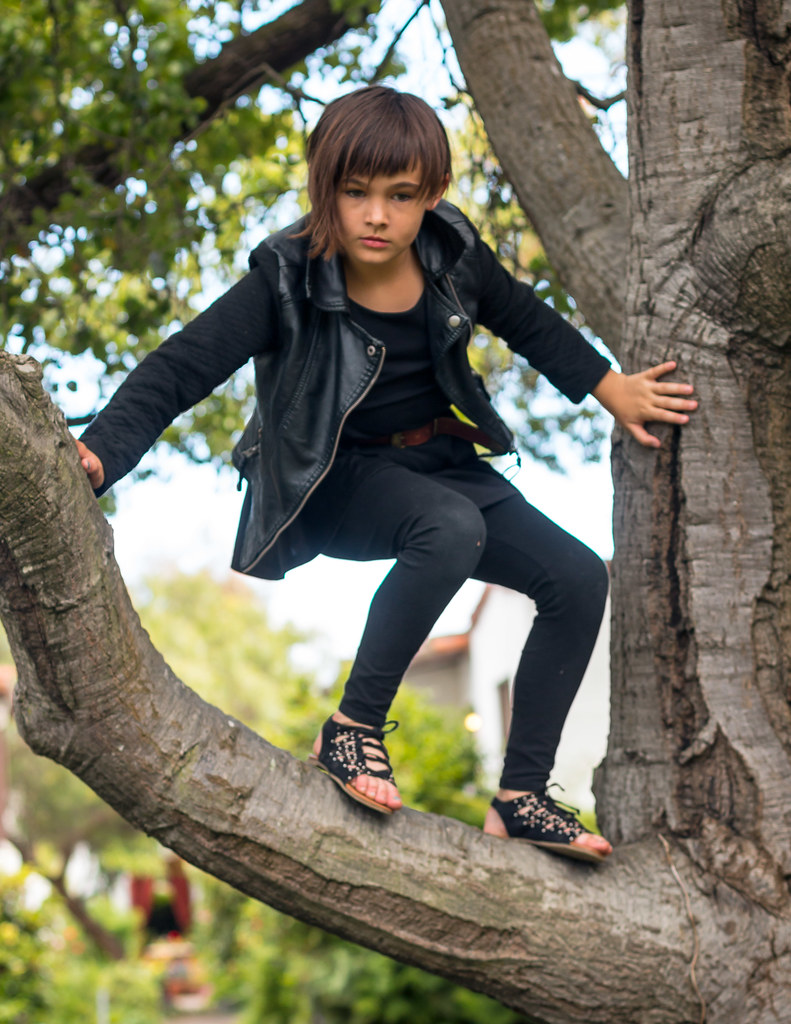
The branch of the tree makes a creaky noise when I wriggle out on it, and the ground looks really far away. I’m not worried, though. Oak tree limbs don’t break … do they?

“Psst.” My cousin Joanie tries to whisper, but it sounds more like a moose wheezing. Joanie is nine years old, but she never learned how to whisper properly. She’s sitting on a low branch like she’s glued to the trunk.  A squirrel pokes its head out of a knothole and gnaws on an acorn while he stares at me. Like he’s surprised to see a girl halfway out on a limb. But this is my life. An investigative reporter knows no fear.

“Psst. Rene, stop.” Joanie’s voice gets a little louder and scaredier as I inch my way along the branch.

“Shh.” I whisper back with much better form. “I want to hear what they’re saying.” It’s good practice for a reporter to eavesdrop on possible subjects, and I’d radared in on Nate Peterson as he walked across campus with his girlfriend. They were so wrapped up in each other, they didn’t even see us. They stopped next to that big elm tree a few feet away, and the girl stood with her back against the trunk while he leaned toward her with his hand on the tree and a goofy expression on his face.

I’ll never understand adults. If Nate’s trying to impress his girlfriend, he’d do better if he stood on his head or did a couple of cartwheels. At least it would show a little talent. Maybe he could buy a yo-yo.

I creep another couple of inches forward, ease the notebook out of my pocket, and strain to hear. He calls the girl “Cassie.” I write it down.

Cassie was saying something about Reverend Newton. I know him. He’s the minister at the university chapel. She says, “He asked me to stop by today after lunch. It’s about Mr. Myet.”

Mr. Myet? Wasn’t he the librarian who died in that fire?

Cassie frowns. “Reverend Newton thinks there may have been foul play.”

Murder! My heart pounds and my ears become antennae. Maybe I can solve the mystery and expose the killer. I could be famous. I’ll be the youngest person who ever won a Pulitzer Prize!

I try to ease forward, but my foot gets caught.

~~~

This story blasts right out of the gate. In three short paragraphs, the author introduces Rene, the first-person protagonist, establishes her approximate age, and introduces her goal—she wants to be a famous investigative reporter.

By the ninth paragraph, she presents the mysterious death of the librarian, Mr. Myet. Rene’s mission grows more ambitious with that revelation. She’s determined to solve the crime.

The Brave Author includes another important detail: Rene is already in danger because the tree limb she’s clinging to could break. If that happens (and I’m fairly sure it will in the next page or two), Rene might be injured. But a more serious consequence: she will be discovered by the people she is surveilling. Her covert mission is blown.

That sense of risk propels the reader to turn the page. We need to find out Rene’s fate.

Does she survive? Once she’s discovered, can she talk her way out of her dilemma? Can she continue with her mystery-solving mission?

The Brave Author sidestepped the common problems we see on many TKZ first pages—lack of conflict, lack of action, too much backstory, difficulty with point of view (POV), unclear characterizations. In this excerpt, character, action, and conflict combine smoothly to engage the reader immediately. Effective pacing moves the story forward, inducing the reader to keep turning pages. Well done!

Humor is a bonus in writing stories for most age groups but particularly, it seems, for young readers. Rene’s voice is wry, witty, and delightful. She makes observations that sound appropriate for an intelligent child without being too advanced. Although her exact age is not mentioned, her mildly superior attitude toward her nine-year-old cousin suggests she’s perhaps a year older.

Joanie as the cautious sidekick contrasts with the fearless Rene, showing the personalities of both characters quickly and efficiently.

Rene pokes fun at Nate’s attempts to impress Cassie. Further, she inserts her own suggestions that standing on his head, turning cartwheels, or doing yo-yo tricks would be much more effective. Young readers can follow her child’s logic and older readers should find her lack of sophistication amusing and endearing.

I do suggest rearranging that paragraph a little, grouping all Rene’s suggested alternatives together and then drawing her conclusion.

I’ll never understand adults. If Nate’s trying to impress his girlfriend, he’d do better if he stood on his head or did a couple of cartwheels. If he’s super cool, he could demonstrate yo-yo tricks like The Elevator or Walking the Dog. At least that would show a little talent. Maybe he could buy a yo-yo.


The paragraph below works better if it’s split into two paragraphs. Joanie’s inability to whisper should be a separate thought from the squirrel’s action and Rene’s reaction.

“Psst.” My cousin Joanie tries to whisper, but it sounds more like a moose wheezing. Joanie is nine years old, but she never learned how to whisper properly. She’s sitting on a low branch like she’s glued to the trunk. 

A squirrel pokes its head out of a knothole and gnaws on an acorn while he stares at me. Like he’s surprised to see a girl halfway out on a limb. But this is my life. An investigative reporter knows no fear.

Let’s talk about verb tense. The story begins in present tense, which is common in children’s books. That sense of immediacy appeals to young readers.

Then there’s a switch to past tense. That is understandable for events that have already happened, like this paragraph:

I’d radared in on Nate Peterson as he walked across campus with his girlfriend. They were so wrapped up in each other, they didn’t even see us. They stopped next to that big elm tree a few feet away, and the girl stood with her back against the trunk while he leaned toward her with his hand on the tree and a goofy expression on his face.

Then the tense switches back to present as Rene makes her entertaining observations about how Nate should impress his girlfriend. Present tense is appropriate because the reader is inside her head, thinking her thoughts as they occur to her.

This is followed by Rene’s actions of creeping further out on the branch and taking notes, also in present tense.

But then, in the next paragraph, a change to past tense causes a slight clunk:

Cassie was saying something about Reverend Newton.

It might read more smoothly this way:

Cassie is saying something about Reverend Newton.

Here’s another tense change that tripped me:

Mr. Myet? Wasn’t he the librarian who died in that fire? 

The thought in Rene’s head should be in present tense, in the moment that it occurs to her:

Mr. Myet? Isn’t he the librarian who died in that fire?

These nits are tiny. Yet they make a subtle difference. When the author avoids small bumps like these, the reader stays totally engaged in the story, without even a millisecond’s distraction from the fictive dream.

I had a hard time finding ways to improve on this already-excellent submission. Maybe other readers can see places to change but I was entirely caught up in the story and would read further.

A young girl who wants to become a crime-solving reporter is an appealing premise. I discovered Rene has a real-life counterpart, Hilde Lysiak.

The ambitious young lady, originally from Selinsgrove, PA, started a local newspaper when she was seven as a homeschooling assignment. By age ten, she had scooped conventional media with her coverage of a grisly murder committed with a hammer.

Because of that story, she was publicly criticized on social media. Her response to criticism from (so-called) adults was posted on You Tube and went viral.

Hilde made headlines again when the marshal in Patagonia, Arizona (where she now lives) challenged her right to shoot video, claiming she broke the law. She repeatedly asked him what law she had broken.

She did not back down despite his threats. Gutsy Hilde was acting within her First Amendment rights.

The officer’s false assertion led to a formal apology from the town mayor.

Along with her father, former NY Daily News reporter, Matthew Lysiak, Hilde scored a six-book series, along with a new Apple TV show chronicling her adventures as a kid reporter.

Judging by Hilde’s success, the appeal of a young female reporter who solves crime is certainly commercially viable.

With the excellent quality of writing and storytelling skills in Rene Out on a Limb, the Brave Author should be able to grab the attention of children’s publishers and enthusiastic young readers.

Thank you for submitting this fun piece, Brave Author. I thoroughly enjoyed it!

~~~

TKZers: Does this first page capture your interest? What suggestions can you offer the Brave Author?

~~~

Flight to Forever by Debbie Burke is coming soon!

Nobody tells Vietnam veteran Lou Belmonte he can’t hug his wife of 50 years. When pandemic restrictions won’t let him visit his beloved Cameo in a memory care lockdown, he busts her out, injuring two employees who try to stop him. The couple flees to a remote fire lookout in Montana’s Bob Marshall Wilderness.

With cops in pursuit, investigator Tawny Lindholm and her defense attorney husband, Tillman Rosenbaum, race to find the aging outlaws first because Lou won’t go down without a fight.

Flight to Forever is the sixth book in Debbie Burke’s Tawny Lindholm Thriller series. Check out a sneak preview at this link.