It seems that going down a rabbit hole while doing online research is a given. Sometimes we find what we need at the outset and can escape within minutes, but I’ve spent hours following one lead to another only to wind up watching cute puppy videos.
When writing these days, I might come to a place that needs specific details such as a type or caliber of pistol, or what to call the round hole in a wood stove (the hob), or the vegetation in a specific part of Texas, but I do my best not to get sidetracked. Instead, I use those opportunities as short breaks from the work in progress to add bits and pieces of accumulated background information to my story, instead of spending days or weeks digging around to find so much minutia that the manuscript will resemble an eycyclopedia.
But I’m working on the second weird western in a new series (the contract is almost here!) and this time needed a little background information about the lands owned and controlled by the Comanches in the middle to late 1800s. I’d looked at a number of online maps to get a sense of the area called Comancheria, but I needed to walk the country and see and smell it up close for myself.
To do this, another couple we’ve known for decades joined the Bride and I in a week-long getaway to the Texas Panhandle, and specifically the Palo Duro Canyon, the Lone Star version of the Grand Canyon.
Some of our plans went awry when wildfires swept across the panhandle, preventing us from visiting a couple historical sites I wanted to see. Instead, we traveled south of that area, settling ourselves in a wonderful house on the rim of the canyon. It became our base camp of sorts.
The first trip was to visit the Charles Goodnight home, a restored structure built in 1888 by a bigger than life cowman and plainsman who was instrumental in settling west Texas. He served as a Texas Ranger, scout, established the JA Ranch in the Palo Duro area, invented the chuckwagon, and blazed a number of trails for cattle drives all the way to Wyoming.
We hiked the canyon, found the location of Goodnight’s 1877 ranch at the bottom, watched wildlife, sunrises and sunsets, and studied the light that seemed to change down in there every hour. We stood where Comanches camped, and imagined what it was like when the cavalry finally caught up with them one morning and broke the back of that tribe’s resistance forever by massacring women and children.
When we returned, my traveling buddy, Steve Knagg, (who has been a fan of Mr. Goodnight for years) gave me a biography first published in 1936. A history buff anyway, and knowing this volume contained enormous amounts of information, I sat down to read and couldn’t stop.
Before long it was full of notes on scraps of paper, marked pages, and sticky tabs. I quickly realized that Goodnight and the country he rode would figure predominantly in my next manuscript. However, it won’t be the first time his exploits have appeared in a fictional novel.
Most native Texans know the story of Goodnight, and the establishment of cattle trails in the 1870s and 80s, and are somewhat familiar with the famous Goodnight-Loving trail. I’d read books about this time period and these men before, and knew that Larry McMurtry loosely based Lonesome Dove on their adventures. I was surprised to see how well he used history to support the storyline.
The fictional and actual events paralleled closely as I read the real account of early Texas, written by J. Evetts Haley. It was eerie, since I’ve absorbed the novel Lonesome Dove at least half a dozen times, and watched the movie more times than I can recall. It sparked an interesting sense of déjà vu.
That came from the amount of real history McMurtry wove into that Pulitzer Prize winning novel 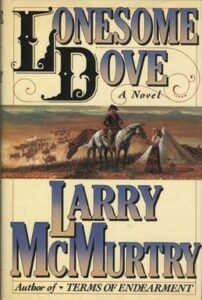 released in 1985.
For example, did you know that August McCrae and Woodrow Call were based on Charles Goodnight and Oliver Loving? Many Texas history buffs have an inkling, but those two wonderful fictional characters are rooted in Texas lore.
The near-fatal engagement between Gus and the Cheyenne in Montana was based on a fight between Goodnight and a Comanche war party. It really occurred on the Pecos River in New Mexico and his real partner who escaped to find help was named One-Armed Wilson (in the book it was Pea Eye, played by Timothy Scott in the movie).
In the book, Gus lost his leg in Miles City after a long cattle drive, but in reality, Oliver Loving lost an arm to gangrene in New Mexico. Both eventually passed away from their wounds.
Like Woodrow Call who hauled Gus back from Montana to a pecan grove in Texas, Goodnight brought his old friend back from Ft. Sumner, New Mexico, to Weatherford, Texas for burial, (nearly 450 miles), but he didn’t make the trip alone. He was accompanied by half a dozen cowboys who escorted the body in a somber funeral party.
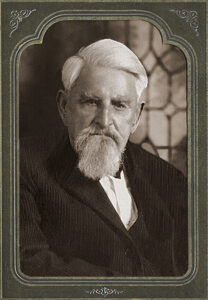
One of the characters in the book, a scout named Deets, was inspired by a cowboy and close friend to Goodnight, Bose Ikard (inset below). Unlike Deets who was killed by a young warrior, Ikard died of natural causes in 1929, but Goodnight’s respect for the man was so high that he really did carve a headstone with some of the same phrases later used in the book and movie.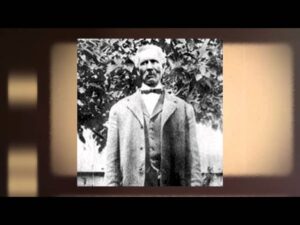
Actual Epitaph: Served with me four years on the Goodnight-Loving Trail, never shirked a duty or disobeyed and order, rode with me in many stampedes, participated in three engagements with Comanches. Splendid behavior.
Fictional Epitaph: Josh Deets. Served with me 30 years. Fought in 21 engagements with the Comanches and Kiowa. Cheerful in all weathers.
I’ve had writers tell me they’re afraid to use real people or events because they feel it’s some kind of plagiarism, or they’ll face legal challenges from family or other entities, or at the very least, it’s stealing in some sense. The discussion above proves it’s perfectly all right to base characters on historic figures who inspire a story, and by changing the names, locations, and specifics to suit the plot under construction, the fictional actors are yours.
McMurtry did it, and wove an incredible story of two men who have immortalized the old west, even though Lonesome Dove was never meant to be a faithful depiction of Charles Goodnight and Oliver Loving, but became a wonderfully failed attempt to demystify traditional westerns.
Oh, and full disclosure about that great author, I have a story about how he snubbed me over twenty years ago by turning his back and walking away as I thanked him for his inspiration and body of work, but that’s another story.
Here’s the point. It’s all right to draw from history to create fiction, and the truth be told, I followed McMurtry’s lead and used historical characters and events in my aforementioned upcoming weird western, Comancheria, so I’m-a doin’ it again with this second book in the series.




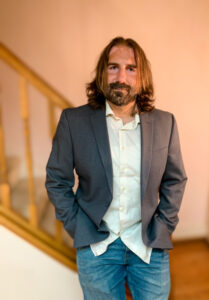
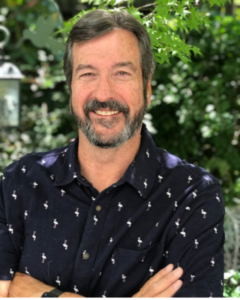 James L’Etoile uses his twenty-nine years behind bars as an influence in his award-winning novels, short stories, and screenplays. He is a former associate warden in a maximum-security prison, a hostage negotiator, and director of California’s state parole system. His novels have been shortlisted or awarded the Lefty, Anthony, Silver Falchion, and the Public Safety Writers Award.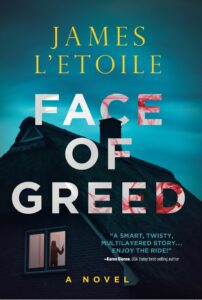
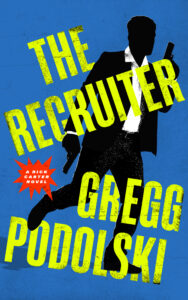 Several weeks ago, Blackstone sent me an ARC (advanced review copy) which I’d requested.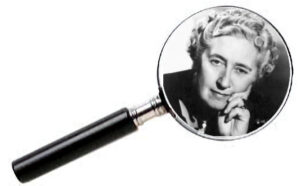
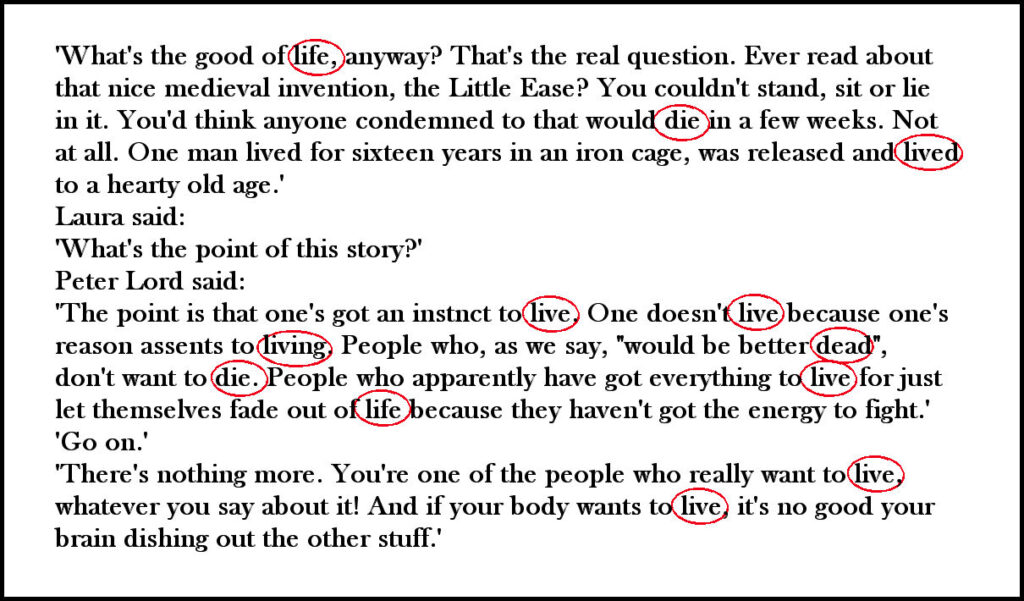
 Dr. Danielsson plotted information about these aspects on a three-dimensional graph and plotted the same criteria from Arthur Conan Doyle’s works on the same graph. Christie’s books exhibited a consistency shown visually by her plotted points being clustered together while the points of Doyle’s stories were spread farther apart indicating his works were more dissimilar when compared to each other. This indicated that Doyle’s style had changed through the years while Christie’s had remained remarkably consistent.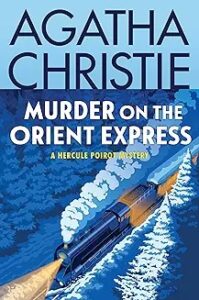
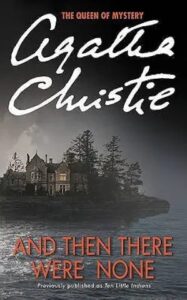 While some famous characters appear in multiple books and are popular with the reading public (e.g., Hercule Poirot, Miss Marple, Captain Hastings), the number of characters in each novel may be just as important. This prompted an interesting theory by David Shephard, Master trainer in Neuro-Linguistic Programming.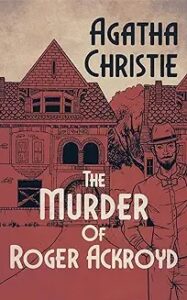
 Although I found a site with the
 “Very few of us are what we seem.” –Agatha Christie
 Gather round for another of our first-page critiques. The genre is Mystery. My comments to follow.