What’s In A Format?

What’s In A Format?
Terry Odell

Happy New Year. It’s hard to believe we’re already two weeks into 2026. And that’s all I’m going to say about that.

birthday cake and balloons next to 3 formats of Deadly Ambitions by Terry OdellI hope you don’t mind if I indulge in a little BSP. It’s release day for Deadly Ambitions. Happy Book Birthday!

What’s it about?

Here’s the description:

Mapleton Police Chief Gordon Hepler is juggling a bitter town council candidate who refuses to accept election results and a new council member determined to cut his department’s funding, funding he needs to finance refresher training modules for his officers. Grant money is slow in coming.

Meanwhile, Angie’s diner remodel continues to suffer setback after setback. During the process, she uncovers an old journal. Her search for the girl who wrote it, along with the mysterious “Johnny” help keep her mind off the construction. Are the delays normal? Or are they personal?

When Angie’s in danger, Gordon must balance following the letter of the law with caring for his wife. Could there be a connection to the remodel? Or the journal? Or something else?

Does the threat to Angie come from history or from much closer to home?

I had a lot of fun—along with the sweat and frustration—writing the book. Fun because it was another in my Mapleton Mystery series, and I always enjoy spending time with the familiar characters.

Frustration because it’s always a challenge to keep things moving forward when I’m tempted to spend time chasing plot threads that entertain me, but aren’t needed for the story. In writing/researching Deadly Ambitions, I learned a lot about Colorado history along with Angie and Gordon.

Also, I wrote about health issues that (I hope) will sneak a little education into my readers, should they not already know about them. (No spoilers here.) And, I confess to taking some small pleasure in putting my own spin on some of the chaos of the ‘outside world.’ Justice might be hard to come by there, but in a book, I get to make sure it’s meted out.

Advance readers have given wonderful and positive feedback.

  • “Her crisp writing paints a visual picture of the town and its workings, incorporating real world situations that readers can relate to.”
  • “Odell does a skillful job of weaving in and out of the subplots to bring the reader to a satisfying, and somewhat surprising, resolution. A great read!”
  • “Before you start reading, set aside some time because you will not want to put this book down. This Mapleton mystery grabs you from the start and just keeps getting better.”
  • “A great addition to the series.  This one is tough to put down and you have more than one mystery to solve.  Will the diner ever get completed?  How can it possibly be involved with the death of the ex-mayor?  Or is it?  Who is behind all of the mysteries?”
  • “Deadly Ambitions drops the reader right into a small town cozy mystery complete with well-drawn characters, unexpected plot twists, and unidentified bones found in an abandoned mine. Personalities clash between Police Chief Hepler and local politicians, well balanced with a sweet love story as Angie’s bakery runs into construction delay after delay.”

Okay, and on with what the subject of the post says I’m supposed to be talking about.

Deadly Ambitions is available in three formats: ebook, trade paperback, and audio, which brings me to a pet peeve. I’ve seen far too many social media posts talking about Real Books.

They’re adamant in saying if it’s not printed on paper, it’s not real.

I say hogwash.

I spent months writing 85,000 words in the creation of Deadly Ambitions. Actually, a lot more of that before edits kicked in.

Then, when it was as good as I could get it, I published it as an ebook. After that, I adjusted formatting, changed front and back matter, and published those same 85,000 words in trade paperback format.

And, I hired the narrator who’s done all my Mapleton mysteries, and he read those same 85,000 words and created an audiobook.

Which one is real, I ask you?

Is my book club member who confesses to dyslexia not getting the same story when she listens to the audiobook? What about the person who has trouble holding a print book, or the one with vision problems who prefers a digital format she can manipulate to suit her eyes?

What do you think, TKZers? Does format matter? (And if you want a copy in the format of your choice, you can find them here)


New! Find me at Substack with Writings and Wanderings

Deadly Ambitions
Peace in Mapleton doesn’t last. Police Chief Gordon Hepler is already juggling a bitter ex-mayoral candidate who refuses to accept election results and a new council member determined to cut police department’s funding.
Meanwhile, Angie’s long-delayed diner remodel uncovers an old journal, sparking her curiosity about the girl who wrote it. But as she digs for answers, is she uncovering more than she bargained for?
Now, Gordon must untangle political maneuvering, personal grudges, and hidden agendas before danger closes in on the people he loves most.
Deadly Ambitions delivers small-town intrigue, political tension, and page-turning suspense rooted in both history and today’s ambitions.


Terry Odell is an award-winning author of Mystery and Romantic Suspense, although she prefers to think of them all as “Mysteries with Relationships.”

New Year’s Thoughts from Fifteen Authors

by Debbie Burke

The New Year is a time when many writers ponder what we want to accomplish.

I thought it might be fun to see what well-known authors, past and present, think about the New Year. Here’s a collection of advice, musings, and cautions:

1. “Cheer up! Don’t give way. A new heart for a New Year, always!” – Charles Dickens (1812-1870), English novelist

2. “We went nowhere without figs and never without notebooks; these serve as a relish if I have bread, and if not, for bread itself. They turn every day into a New Year which I make ‘happy and blessed’ with good thoughts and the generosity of my spirit.” – Seneca, who lived at the cusp of BC and AD.

Frances Burney

3. “I opened the new year with what composure I could acquire…and I made anew the best resolutions I was equal to forming, that I would do what I could to curb all spirit of repining, and to content myself calmly—unresistingly, at least, with my destiny.” – Frances Burney AKA Fanny Burney (1752-1840), English novelist and playwright

4. “‘A merry Christmas, and a glad new year,’
Strangers and friends from friends and strangers hear,
The well-known phrase awakes to thoughts of glee;
But, ah! it wakes far different thoughts in me.
[…] I, on the horizon traced by memory’s powers,
Saw the long record of my wasted hours.” – Amelia Alderson Opie (1769-1853), English novelist and abolitionist

5. “Ring out the old, ring in the new,
Ring, happy bells, across the snow:
The year is going, let him go;
Ring out the false, ring in the true.” – Alfred Tennyson (1809-1892), English poet

6. “New Year’s Day: now is the accepted time to make your regular annual good resolutions. Next week you can begin paving hell with them as usual . . . New Year’s is a harmless annual institution, of no particular use to anybody save as a scapegoat for promiscuous drunks, and friendly calls, and humbug resolutions. Yesterday, everybody smoked his last cigar, took his last drink and swore his last oath. Today, we are a pious and exemplary community. Thirty days from now, we shall have cast our reformation to the winds and gone to cutting our ancient shortcomings considerably shorter than ever.”– Mark Twain (1835-1910), American author and humorist

7. “For last year’s words belong to last year’s language. And next year’s words await another voice. And to make an end is to make a beginning.” – T.S. Eliot (1888-1965), American poet

8. “Drop the last year into the silent limbo of the past. Let it go, for it was imperfect, and thank God that it can go.” – Brooks Atkinson (1894-1984), American theatre critic

9. “Youth is when you’re allowed to stay up late on New Year’s Eve. Middle age is when you’re forced to.” – Bill Vaughan (1915-1977), American author and columnist

10. “I made no resolutions for the New Year. The habit of making plans, of criticizing, sanctioning and molding my life, is too much of a daily event for me.” Anaïs Nin (1903-1977), French-American author

11. “The object of a New Year is not that we should have a new year. It is that we should have a new soul and a new nose; new feet, a new backbone, new ears, and new eyes. Unless a particular man made New Year resolutions, he would make no resolutions. Unless a man starts afresh about things, he will certainly do nothing effective.” – G.K. Chesterton (1874-1936), English author

Benjamin Franklin
Photo credit: Wellcome CC BY-SA 4.0

12. “Be always at war with your vices, at peace with your neighbors, and let each new year find you a better man.” – Benjamin Franklin (1706-1790), American author and a founding father of the U.S.

13. “I have always loved New Year’s Eve and New Year’s Day. Even though our sense of time is arbitrary and human, it still means something. I love the feeling I always get on New Year’s Eve that I am lucky — that the universe has been generous to me, to have let me stick around for another year, and to now erase the slate and give me another chance. Tomorrow I will be gifted with a brand new year — with no mistakes in it yet, and no heartbreaks yet, and no failures yet. I get to try again. Amazing. You will be gifted with this huge blessing, too. A clean and empty book awaits us all. Maybe we will be able to write things differently this time. Maybe a bit better. Maybe we will be wiser this time. At least we get to try. We have all been given a fresh chance. Let’s close the old book, and open a new one.” – Elizabeth Gilbert (1969-), American author

Woody Guthrie Statue
Photo credit: Cosmos Mariner, CC SA-BY 4.0

14. Woody Guthrie (1912-1967), American songwriter, offers his list of resolutions:

  • Work more and better
  • Work by a schedule
  • Wash teeth if any
  • Shave
  • Take bath
  • Eat good—fruit—vegetables—milk
  • Drink very scant if any
  • Write a song a day
  • Wear clean clothes—look good
  • Shine shoes
  • Change socks
  • Change bed cloths often
  • Read lots good books
  • Listen to radio a lot
  • Learn people better
  • Keep rancho clean
  • Dont get lonesome
  • Stay glad
  • Keep hoping machine running
  • Dream good
  • Bank all extra money
  • Save dough
  • Have company but dont waste time
  • Send Mary and kids money
  • Play and sing good
  • Dance better
  • Help win war—beat fascism
  • Love mama
  • Love papa
  • Love Pete
  • Love everybody
  • Make up your mind
  • Wake up and fight

15. And last from Susan Sontag (1933-2004), American author:

“I want to make a New Year’s prayer, not a resolution. I’m praying for courage.”

~~~

TKZers: Which of these quotes resonated with you? Why?

Do you disagree with any of them? Why?

Did you make writing resolutions or set goals? Want to share them?

~~~

Is 2026 the year you want to learn to write fascinating villains and antagonists? Please check out Debbie Burke’s bestselling craft guide, The Villain’s Journey-How to Create Villains Readers Love to Hate.

Amazon

Barnes & Noble

Apple

Kobo

Interested in taking a villain workshop from Debbie? Please visit debbieburkewriter.com to learn about upcoming zoom and in person classes.

NATIONAL CLEAN OFF YOUR DESK DAY

“Cleanliness is indeed next to godliness.” —John Wesley

* * *

Yes, that’s right. Today is National Clean Off Your Desk Day. Oh, great. I just finished putting away the holiday decorations and was working on tax info to turn over to our accountant, and now they tell me I have to clean off my desk. I don’t have time for this.

But I’m a good team player, and my desk definitely needs some reorganization, so I went to the National Clean Off Your Desk Day site to get some inspiration and advice on exactly how to proceed. Here’s what they say:

This day is an opportunity to begin your new year with a clean and organized workspace. Whether your desk is in a private or shared office, cubicle, home or a make-shift desk on the counter, having your workspace uncluttered and organized will help you work more efficiently. A clean workspace improves productivity and inspires us, too. It often gives us a sense of serenity. (My emphasis)

They go on to outline a step-by-step process:

  • Remove everything from your desk. Yes, everything.
  • Clean the surface. As you replace items, clean them with the appropriate cleaning supply. Usually, a damp cloth is sufficient, but other electrical items need specific care.
  • Get out the shredder and the garbage can. Shred, file, scan documents, business cards, recipes, photos as needed.
  • Place all documents and photos in the appropriate locations.
  • Shred and toss outdated documents, non-working pens, junk mail.

That’s good advice, and I was just getting ready to start on Step One when something occurred to me. Maybe there’s another way to look at this.

* * *

“Cleanliness is the scourge of art.” —Craig Brown

I don’t know if Craig Brown is correct, but since I place myself on the messier side of humanity, I want to believe it. Is it possible that creative people are messier than others?

I found evidence in an article on sciencedaily.com entitled “Tidy desk or messy desk? Each has its benefits.”

Working at a clean and prim desk may promote healthy eating, generosity, and conventionality, according to new research. But, the research also shows that a messy desk may confer its own benefits, promoting creative thinking and stimulating new ideas.

Well, that’s a relief. Maybe I can ignore the chaos for a while longer.

In an experiment overseen by psychological researcher Dr. Kathleen Vohs, 48 participants were asked to come up with novel uses for a ping pong ball. Half the participants worked in a messy room and half in a neat room. The result?

Overall, participants in the messy room generated the same number of ideas for new uses as their clean-room counterparts. But their ideas were rated as more interesting and creative when evaluated by impartial judges.

“Being in a messy room led to something that firms, industries, and societies want more of: Creativity,” says Vohs.

And we all know creativity is the lifeblood of good fiction.

So my desk isn’t messy. It’s simply a manifestation of my creativity. I like that.

Now where did I put that stapler?

* * *

So TKZers: What does your desk look like? Does a messy desk inhibit your work? Or does it inspire you?

* * *


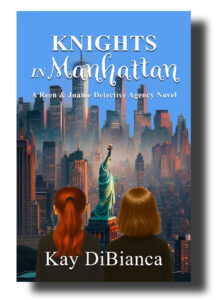
My ten-year-old protagonist and aspiring novelist, Reen, understands the signs of creativity. When her 9-year-old cousin points out a smudge on Reen’s shirt, she replies, “No problem. Authors are supposed to be sloppy. That’s because we’re creatives.”

I like the way she thinks.

Click the image to go to the universal book link.

What Type of Writer Are You?

by James Scott Bell
@jamesscottbell

John D. MacDonald and his lunchpail

I have been musing about something of late. Call it a typology of writers. Here the categories I’ve come up with, recognizing there will be some overlap. Let’s discuss.

1. Nothing But Fun

There are some writers who believe writing fiction should be nothing but a joy, carefree, never a matter of sweat or concern. Under this category, there are two sub types. The first believes that a carefree first draft is the only draft it should be written. Cleaned up a bit for typos, perhaps, but left mostly alone. The other subtype writes that first draft and then looks at it and wonders what the heck to do with it, and tries to apply some actual craft and editing.

2. Hate Writing, But Love Having Written

I know a few colleagues who fit this category. They find writing a first draft to be a somewhat difficult trudge. Sometimes this is because their standards go up with each book. The bar is raised. And they seriously want to meet that challenge.

But when they are done with the whole process, including editing and polishing, and the book is the better for it, they find tremendous satisfaction.

3. Lunchpail Type

This is a writer who goes to work each day. They’re not looking for a rapturous experience, though that may happen when they’re not looking. They set out to write a certain number of words each day and do that job. They know their craft and care about it, because they want to sell to readers, and readers care about good stories. The great pulp writers of old were like this. They could type 1 million words a year, sometimes more, and sell their product for a penny or two per word.

4. Doesn’t Care About Sales

In truth, I think every writer cares about sales. Who wouldn’t appreciate a little green from what they write? There’s that famous Samuel Johnson quote: “No man but a blockhead ever wrote except for money.” But this type of writer rejects that notion and finds their satisfaction in writing alone. Nothing wrong with that. Writing can be a form of enjoyment, diversion, mental exercise, or escape.

5. Only Cares About Sales

Finally, there is the writer who is in this strictly for the money. There’s never been anything illegal about that. If somebody write something and there’s a market for it, that’s a fair exchange. But these days it’s possible to make money producing acres of “AI slop.” We all wish this weren’t true, but it is. This type shouldn’t even be categorized as a “writer.”

On the other hand, someone who sees writing as a way to make money, or at least side-hustle dough, and works to figure out how to write a good product, fine. I suspect this is the least populated category.

In reviewing this list, I would put myself as a #3. I’ve always written to a quota. I have also found tremendous satisfaction in learning my craft and getting better at it.

So what do you think about the above categories? Would you add one? Modify one? Where would you place yourself?

Words of Wisdom from January 2010

For my first post of 2026 I decided to look for KZB posts published sixteen years ago this month. It was hard winnowing it down to three excerpt, but choose I did.

First is a post by Claire-Langley Hawthorne about meeting the challenge of writing a short story by laying out the structure first. Next is an evergreen post by James Scott Bell dealing with the structure of a novel. Last is a touching post by John Ramsey Miller on experiencing death and how that can deeply inform our writing.

I view a short story as having a single transformative story arc – one told in the most concise and most powerful terms possible. All fine and dandy in theory but no sooner do I start than I fall prey to an overabundance of backstory and plot complications – and these little buggers have an annoying habit of multiplying, so by the time I reach around 4,000 words I realize what I really have is, you guessed it, chapter one of a new novel. Characters have already started taking control, offering me a range of complexities that I can’t help but want to explore, the setting demands detailed description which I cannot resist providing and the story arc takes on a much grander scale that will inevitably fail as a short story.

With this particular short story (which I’m hoping will pass muster and be published in the Kill Zone collection you’ll be hearing much more about) this dilemma created both opportunities as well as challenges. I had to rise to the challenge of paring everything down so it would succeed as a short story and I realized I had the seeds for a new series set in Australia which was quite exciting (oddly enough I’ve never written anything actually set in the land I grew up in).

My first step to transforming my piece into a ‘proper’ short story was to think about structure. I focused on the four main elements I thought I needed:

  1. Establishment of setting
  2. A trigger for action
  3. A build up of suspense and conflict
  4. A critical choice
  5. Resolution

When I found I basically had all these elements (albeit muddied by too much dialogue, description and backstory!) I knew my main focus had to be on paring everything down to its essential elements. This included character, setting, as well as plot and once I started this process I also found that I could focus on what the story was really all about.

Last Friday I took my short story to my writing group for their critique and they helped me identify areas of improvement and further ‘pruning’ – hopefully I’m now close to the final product and, more importantly, I feel like I’ve grappled with a new challenge that has improved me as a writer.

I can’t say I like the short story as a medium – I am a novelist at heart – but I do appreciate the intensity and power it can bring. I may not have enjoyed the process but as compensation I do have a new (male) protagonist that intrigues me. So who knows, this particular challenge may spur me on to develop a whole new series of books!

Claire-Langley Hawthorne—January 11, 2010


Now, the first doorway is an event that thrusts the Lead into the conflict of Act 2. It is not, and this is crucial, just a decision to go looking around in the “dark world” (to use mythic terms). That’s weak. That’s not being forced.

A good example of a first doorway is when Luke Skywalker’s aunt and uncle are murdered by the forces of the Empire in Star Wars. That compels Luke to leave his home planet and seek to become a Jedi, to fight the evil forces. If the murders didn’t happen, Luke would have stayed on his planet as a farmer. He had to be forced out.

In Gone With the Wind it’s the outbreak of the Civil War. Hard to miss that one. No one can go back again to the way things were. Scarlett O’Hara is going to be forced to deal with life in a way she never wanted or anticipated.

In The Wizard of Oz, it’s the twister (hint: if a movie changed from black and white to color, odds are you’ve passed through the first doorway of no return).

In The Fugitive, the first doorway is the train wreck that enables Richard Kimble to escape, a long sequence that ends at the 30 minute mark (perfect structure) and has U. S. Marshal Sam Gerard declaring, “Your fugitive’s name is Dr. Richard Kimble. Go get him!”

The second doorway, the one that closes Act 2 and leads to Act 3, is a bit more malleable, but just as critical. It is a clue or discovery, or set-back or crisis, one which makes inevitable the final battle of Act 3. It is the doorway that makes an ending possible. Without this, the novel could go on forever (and some seem to for lack of this act break).

In The Fugitive, at the 90 minute mark (the right placement for a film of just over two hours), Kimble breaks into the one-armed man’s house and finds the key evidence linking him with the pharmaceutical company. This clue leads to the inevitable showdown with the “behind the scenes” villain.

In High Noon, the town marshal reaches the major crisis: he finally realizes no one in the town is going to help him fight the bad guys. That forces him into the final battle of Act 3, the showdown with the four killers.

By the way, this structure works for both “plot driven” and “character driven” stories. It’s just that the former is mainly about outside events, and the latter about the inner journey. But that’s beyond the scope of this post.

Now, there is always some well meaning literary genius howling in protest at the idea of structure. Too rigid! I don’t write by formula! I am a rule breaker, a rebel! An artist! Away with your blueprints and let me run free! The 3 act structure is dead!

Let me say, first, I understand this artistic impulse. A good writer is a rebel, someone out to make waves.

But let me also say that the literary waters are littered with the works of those who ignored the basic principles of the suspension bridge. Unreadable novels with pretty words that didn’t sell.

You want to write an experimental novel? Go for it. Just be aware that not a whole lot of people are going to care.

What they care about are characters, dealing with trouble by fighting their way over a bridge—meaning, through a plot that matters and is laid out in the right way.

Structure is “translation software” for your imagination. You’ve got a great story in your head. The characters, the feeling, the tone, the gut appeal, the thing you want to say. But it means squat unless you can share it with other people, namely, readers.

Structure allows you to get your story out with the greatest possible impact.

James Scott Bell—January 16, 2010


Like Gilstrap wrote on his blog, I also think and write about death and destruction and it’s a subject I know better than I’d like. I have seen death and the destruction guns and knives and cars can do to human beings and it made quite an impression on me starting at an early age. We lived across the street from a funeral home when I was ten or so, and that was where my experience began. Our neighborhood kids used to lie on our stomachs and watch Mr. Barry embalm people in the basement. He always had the louvered-glass windows open and he never saw us as his back was usually to us. It was like watching horror movies. We used to run when we heard the ambulances heading for the hospital and we’d stand, an audience of innocents, watching as some unfortunate victim was wheeled in on a gurney. Often the ambulance (again Mr. Barry) would often make a quick stop before putting the vic back into the ambulance (it doubled as the hearse for black funerals at the other Barry home in another part of town) and it had red lights in the grill and a howling siren. The lights were covered with black cloth baggies for funerals. It showed me a side of death I’ve carried with me since.

I have a problem in that I never know what to tell kids about death, how to explain it without instill fear and worry in them. I told Sasha that the old moves aside so the young can have room to grow up, that it was true with every living thing. I told her that dying was just like being born into this world but in another place. I’m not sure about that but I don’t mind lying to children about that.

Before my funeral home days in Starkville, Mississippi, when I was five or six, my eighty-four-year old grandfather died, and I remember how empty I felt and how sad it made me. I took little consolation in people telling me he was in heaven. I only knew he was never coming back and that I’d never sit in his lap and use his pocket knife to carefully cut cubes of tobacco for him to chew. I’d never hear him tell me stories about his life as a cattleman, about gunfights in downtown Hazzlehurst, about driving cattle in storms, of lean times, of being gored by a bull and thrown by horses into bad places. Although I took no consolation in the idea of Papa in heaven, I did in the fact that he died of a stroke while cheering the Friday Night Fights on TV in the nursing home. I am so glad that I knew him for the years I did, and how he called my mama, “baby” and I thought she was truly old.

As I’ve grown older I’ve seen a lot of people I knew and loved die, and it’s never easy. Never. But it has given me feelings to run my fingers over and to put into my words.

John Ramsey Miller—January 30, 2010

***

  1. How do you meet a writing challenge?
  2. What helps you with structuring you novels?
  3. Experiencing death is one of the most emotional aspects of being human. Has it deepened your own writing? If so, how?

Winston Churchill and His 15 Favorite Paraprosdokians

After I posted last month, which was my first post ever for The Kill Zone, I realized that many of you may not know much about me. But since I had already scheduled the post, and it was my last post of the year as well as my first, I made an executive decision to wait until my first post in January to properly introduce myself (Oh, and Happy 2026!). So here goes.

I’m Patricia Bradley, and I write Inspirational romantic suspense for Revell. Since 2013, I’ve written five novellas, 18 novels, and I’m currently working on the 19th. Since I’m not a fast writer, that means I’ve spent the last 12 years mostly sitting at my computer, living my dream. I also teach workshops on writing. In 2012, I met James Scott Bell in a line dance in St. Louis…or Cincinnati, I forget which. He was dancing…I was not. And I doubt he remembers it.

I have a website where you can learn more about me, and a Tuesday blog where I feature a Mystery Question, usually about dumb criminals. I feature four scenarios three of which are true and one that I made up. Readers guess which one I made up. You can find the blog at https://ptbradley.com/blog/.

Enough about me. Now on to my post about Winston Churchill’s favorite paraprosdokians. (We all know how accurate AI is, so they may or may not be his favorites.) Also, according to AI, Paraprosdokians are figures of speech where the latter part of a sentence provides an unexpected twist or surprise, forcing the listener/reader to reinterpret the first part, often for humorous or dramatic effect, like, “If at first you don’t succeed, skydiving definitely isn’t for you” or “I’ve had a perfectly wonderful evening, but this wasn’t it“.

Winston Churchill was known for loving paraprosdokians. Here are a few AI says he loved:

  1. Where there’s a will, I want to be in it.
  2. The last thing I want to do is hurt you, but it’s still on my list.
  3. Since light travels faster than sound, some people appear bright until you hear them speak.
  4. If I agreed with you, we’d both be wrong.
  5. Knowledge is knowing a tomato is a fruit. Wisdom is not putting it in a fruit salad.
  6. They begin the evening news with “Good Evening”, then proceed to tell you why it isn’t.
  7. To steal ideas from one person is plagiarism. To steal from many is research.
  8. I thought I wanted a career. Turns out I just wanted paychecks.
  9. In filling out an application, where it says, ‘Emergency contact’, I put ‘doctor’.
  10. You do not need a parachute to skydive unless you want to do it again.
  11. Money can’t buy happiness, but it sure makes misery easier to live with.
  12. You’re never too old to learn something stupid.
  13. Where there’s a will, there are relatives.
  14. During WWII Sir Winston Churchill’s address to Congress began with:
    “It has often been said that Britain and America are two nations divided only by a common language”.

Do you have any favorite paraprosdokians to start this New Year with?

A Dynamite Film Review Plus Lessons Learned

By John Gilstrap

Okay, folks, SPOILER ALERTS AHEAD FOR “A HOUSE OF DYNAMITE”

Kathryn Bigelow’s celebrated new thriller, “House of Dynamite” is, in this writer’s humble opinion, something of a master class in how not to write a thriller. To be sure, the premise is gripping: A nuclear missile is detected en route to an as-yet unknown target in the United States, launched by an unknown enemy. This happens at a time when the U.S. is at Defcon 4 (peacetime) and during shift change in the White House Situation Room. Time to impact:18 minutes.

The first minute or so is wasted on what resonated as truth to me: “Wait, that can’t be right, can it? Is it a computer glitch?” Then, Captain Olivia Walker, the duty officer in the Situation Room calms everybody down. There are procedures to be followed, people to be notified, and actions to take. America fires two interceptor missiles (only two) to take out the incoming warheads, but they both miss, and the National Command Authority (NCA) accepts the inevitability of a nuclear strike in Chicago. (I’m not going to address the ridiculous plot holes, except for the one where Captain Walker, who lives in Virginia and clearly loves her husband, surreptitiously call him and tells him to get in the car and drive west–toward the incoming nuclear blast.)

The intense 18 minute period from launch to impact is presented more or less in real time, but just before impact, the film shifts to show the same events from the points of view of the various people we know that Captain Walker has been interacting with–saving the president, of course, for last. Call it 20 minutes of screen time. Out of a 90-minute movie.

The rest of the film shows the same actions, same results, from different points of view.

Twenty minutes in, I was breathless. I thought, Wow, what an exciting yet flawed, implausible movie! Then came the reality that they were going to quadruple-down on the same flaws and implausibilities, just from a different angle. WTF?

But I don’t want to talk plot. I want to talk structure and character, and that’s where this film truly fails.

The filmmaker was making a point rather than a piece of entertainment.

Eighteen minutes ain’t a lot of time to make 100% correct decisions under stress. Got it. (And from submarine based platforms off the East Coast, the flight times are more like eight minutes.) Presidents, played in this case by Idris Elba, whose talents are woefully squandered, don’t spend a lot of their spare time scouring the target packages contained in the infamous “football”, which itself is cared for in the film by a twenty-something junior officer. Got it again. Awesome decisions must be made on the fly. Finally, horror of horrors, government officials give their families a heads up to get out of town before the roads become impassible. (Between you and me, I would 100% do that. RHIP, baby.)

The flaw in the film is that everybody simply follows the book–literally and figuratively. No one dares to fire an unauthorized third interceptor missile in attempt to save millions of lives even if it scorches their career. (Okay, I can’t resist a plot comment here. They limit the interceptor package to two missiles because they might need more if there’s a second attack. Better to char the Windy City. That made sense to a Hollywood writer. Someone needs a good old-fashioned Three Stooges slap, hair-pull and eye-poke.)

Reading procedures, discussing the efficacy of procedures, and then ultimately following them is . . . what’s the word? Oh, yeah. Boring.

A thriller is about characters taking chances and succeeding or failing as a result.

I don’t care about anyone in this film.

This reflects back on the intellectual origins of the film. Every character is merely a game piece to be manipulated to bring the larger points home. Once NCA wrote off the millions of innocents in the greater Chicagoland area, why would I give a rat’s patootie whether or not SecDef gets a last chance to tell his daughter he loves her? We all love our kids, buddy, and you just shrugged at toasting millions of them.

Stakes and tension are different things.

Within the first ten minutes of this turkey, we know the the Miracle Mile will soon be baked to glass because the screenwriter says it must be so. In storytelling parlance, I believe that’s called a Big Reveal. Normally, those are saved for the third reel, not the first. All that remains is the question of how the president should respond. The military cliche, of course, pushes for a global, kill-everybody response, and President Elba seems confused and disturbed by the plastic-sheeted four-color Denny’s-like menu sheets that details the pre-targets smorgasbord of retaliatory options. (Had I been sought out for my technical guidance, I might have asked, what’s the hurry to retaliate? As absurdly unlikely it is that an ICBM could be launched from an untraceable location, once detonated, the forensic evidence left behind would tell us everything we need to know for a surgical strike.)

The ending sucks.

That’s it on the ending. Hard stop. Sucks.

Never forget what a thriller is all about.

Pacing, tension, and ever increasing stakes for the characters are the elements that separate a thriller from the other suspense genres. That’s the job of the writer. If it’s a film, add screenwriter and director to that list.

If you ever allow an agenda to take the front seat, your project is doomed.

Stranger Than Fiction:
Weird Stuff About Writers

By PJ Parrish

My new year got off to a rocky start. Short story: suddenly huge water bill. Plumber says there’s a leak…somewhere. Enter Mike from Gulf Coast Leak Detection. Leak is under the lawn, not the house, he says. Bill: $500 vs $10,000 to repipe house. On New Year’s Eve, I splurged on a bottle of Veuve Clicquot.

So, in honor of good starts, here is some tasty brain lint about books and writers that I found for all us who are hoping for positive outcomes in 2026.

Did You Know That John Steinbeck's Dog Ate Half of his 1st Manuscript of “Of Mice and Men”? | by Herb Baker | Medium

Actual photo of famous book critic Toby,

Sick Puppy

Decades ago, when I was writing my first romance, The Dancer, my cat Hilary walked across the keyboard of my Commodore and wiped out a quarter of my work. Noooo, I didn’t make a copy. But…John Steinbeck’s dog, Toby, ate half of the first manuscript of Of Mice and Men. Steinbeck didn’t make copies either and it took him two months to write it all over again.Steinbeck wrote to his agent: “I was pretty mad, but the poor little fellow may have been acting critically.”

Hunka Hunka Burning Gov

Once, while doing some routine research on arcane FBI procedures, I got a screen message that said ERROR 451.  This is, I found out, is HTTP code for “Unavailable For Legal Reasons,” meaning the government doesn’t want you to see it. The code comes from Ray Bradbury’s Fahrenheit 451 where books are infamously burned. It’s reassuring to know someone in Washington read novels.

Sting Wrote The Song 'Every Breath You Take' At The Same Desk Where Ian Fleming Wrote His James Bond Novels

My Golden Eye Will Be Watching You

Apropo of nothing in my life other than the fact I once got to interview Sting — The Police frontsman wrote the song “Every Breath You Take” at the same desk that Ian Fleming used to write his James Bond novels. Sting was renting the Fleming Villa in Goldeneye on the island of Jamaica while composing the famous track.

Which Might Explain Why the Coffee Tastes Like Bilge Water

Would you go to a coffee shop called Pequod’s? Whelp, that was what Gordon Bowker originally wanted to call his little coffee company because he was a Moby Dick fan and thought using the ship’s name was a nifty idea. His partner Terry Heckler thought naming a business after a doomed whaler was a bad marketing move. So now you can overpay for your Cinnamon Dolce Latte at Starbucks, named after the Pequod’s first mate.

Fast Times at Ridgemont High (1982) - Ray Walston as Mr. Hand - IMDb

The Allmanns, Jeff Spicoli and The Bard

Was listening to one of my fave boogie-down-the-road songs the other day — “Jessica.” Found out recently that the name — now among most popular for babies and dogs — made its first appearance in Shakespeare’s 1598 play The Merchant of Venice. Shakespeare is also credited with making up over 1,000 words and phrases including “bookworm,” “bibliophile,” “critic,” “vanish into thin air,” and “gloomy.”  He also gave us “gnarly” and “pukey.” Aloha, Mr. Hand.

Let Them Eat Madeleines

I don’t remember why, but many years ago I decided I needed to read Proust. Naively, I cracked open In Search of Lost Time. It became my Everest. I had to conquer it. It took me two years. If you’re into torture, give it a go. At 1.2 million words, it is one of the longest novels ever written. Second longest is Donna Tartt’s The Goldfinch, which only feels like 1.2 million words.

“A Feeling Of Sadness That Only Bus Stations Have.”

Jack Kerouac never learned to drive. He moved to New York City as a teenager on a scholarship to boarding school and then entered Columbia, so as any smart New Yorker would say, who needs wheels in the city? Through every subsequent adventure, across the country and back, down to Mexico, up from New Orleans, Kerouac always let his buddy Neal Cassady drive. Or he took Greyhound buses.

M6 motorway - Wikipedia

Paperback Rider

True story: When visiting DC years ago, I went to the Library of Congress on a lark just to see if my book The Dancer was there. Sure enough, it was! Then the other day, I read that In 2003, 2.5 million unsold books from the UK romance publisher Mills & Boon were used in the reconstruction of the M6 motorway. This is the company that bought the rights to my book The Dancer. My book never sold much — in US or UK — but it gives me some sick satisfaction to think that my little paperback might be helping some poor git find his way from Catthorpe, England to Gretna, Scotland.  Such is the stuff of immortality.

Happy belated new year, crime dogs.

What a Difference a Day Makes

Mindset, clarity, control, and/or opportunities can all change in a single day. Think of how many plot twists could occur in a 24-hour period. Characters run full force into danger, narrowly escape, and end the evening in a hot tub with a cocktail. Or they don’t escape. Imagine how grueling every second of captivity must feel?

Entire novels that take place in a single day include:

  • Saturday by Ian McEwan follows a neurosurgeon through his Saturday, dealing with personal and national anxieties.
  • The Hours by Michael Cunningham interweaves three women’s lives across different eras, all connected by Virginia Woolf’s Mrs. Dalloway, with events occurring in one day. Albeit in different years.
  • The Flight Attendant by Chris Bohjalian is about a flight attendant who wakes with a dead man in a Dubai hotel. The MC must piece together the previous night before her next flight.
  • Rock Paper Scissors by Alice Feeney: A couple’s anniversary trip to a remote Scottish castle turns sinister as secrets unravel in a single, stormy weekend (more than one day but still a condensed timeframe).
  • Supremely Tiny Acts by Sonya Huber explores the small moments of a single day in a woman’s life.
  • The Mezzanine by Nicholson Baker focuses on a man’s lunch hour and his detailed observations of office life.
  • The Sun Is Also a Star by Nicola Yoon is a romance novel that follows two teens who meet and fall in love in a single day in New York City.

The above list demonstrates this technique isn’t limited to thrillers. A condensed timeframe could work with almost any genre.

Movie Examples:

  • Collateral shows how a cab driver’s night turns deadly as he’s forced to drive a hitman around LA for one wild night of murder and mayhem.
  • Ambulance focuses on two robbers who hijack an ambulance, and leads to a city-wide chase.
  • Unstoppable is about a runaway train that threatens a city, with a veteran engineer and young conductor racing to stop it in hours.
  • The Taking of Pelham 123 shows how a subway dispatcher must outwit hijackers holding passengers hostage in a lone NYC subway car.

All these stories use the compressed timeframe to heighten tension and force characters to make immediate decisions, which often leads to more conflict and higher stakes. Compressed timeframe novels are almost impossible to put down. The movies? Forget about it. They demand your full attention — keep the pause button handy for bathroom breaks. You won’t want to miss a second!

Crafting a novel set within a 24-hour period requires tight plotting, a strong central conflict, and a heightened sense of urgency.

Tips to Write Compressed Timeline Novels

Use a chronological structure that follows the progression of the day, from sunrise to sunset or from the inciting incident through the next 24-hours. If you begin each chapter with a heading to mark the hour, it’ll emphasize the ticking clock and add even more intensity.

Anchor the story around a major time-sensitive event, like a party, heist, or sudden disaster. The main character’s journey through this event provides a natural narrative arc. A strong inciting incident is a must. Whatever event kicks off the quest should happen early and be urgent enough to force the MC to act. For example, in Ian McEwan’s Saturday, the MC witnesses an accident that disrupts his peaceful day.

Use backstory strategically through dialogue, internal thoughts, or quick flashbacks. All must relate to the main storyline and reveal important tidbits and/or character traits. Since time is limited, be intentional with your dialogue. Conversations between characters can reveal relevant backstory and propel the plot forward.

Avoid unnecessary subplots. With such a tight window of time, every scene, conversation, and action should serve the storyline. You could weave in a subplot between dueling protagonists, like unreciprocated romantic feelings or a divorced couple forced to work together. Both would cause even more conflict and obstacles.

Word of caution: Don’t let the subplot destroy the pacing of the novel or detract from the main storyline. Let’s use my two quick suggestions as examples. The awkward moments of unreciprocated love could be used as comedy relief to give the reader a break from the tension. A divorced couple could also add hilarity if one spouse nitpicks the other at the worst possible time.

A countdown structure, where the plot builds toward the climax, heightens stakes, builds tension and conflict. Keep raising those stakes — challenge your characters! They cannot escape their fate by waiting for tomorrow, thus the pressure escalates throughout the day.

Use the setting to your advantage. Saturate the narrative with sensory details to create a strong sense of place, mood, and atmosphere. Take advantage of the time of day, traffic, weather, and location to reflect the characters’ changing moods and emotions.

Limit your cast. With less time to develop characters, a smaller cast allows for more intimate and detailed dynamics.

There isn’t much time for massive external changes, so trigger character flaws early and focus on internal changes to create a strong character arc. Show how the day’s events force them to change strategy, perspective, or arrive at a new understanding.

Also, the compressed timeline allows the perfect place to demonstrate the three dimensions of character through action and reaction under pressure. Give readers direct access to their inner lives with a deep POV. An omniscient narrator won’t be as effective.

Hope you all had a joyous holiday season, TKZers!

Have you written a story with a limited timeframe? What’s your favorite “crunch time” movie or novel? Why did the tight timeline work for you?