Love and Death

Last Saturday I was a panelist at Symposium, a very small writing-focused science fiction event held in my neck of the proverbial woods.

The guest of honor was a local writer, Steve Perry, who has had seventy plus novels published in science fiction, fantasy, thriller, including a NYT best selling Star Wars novel, Shadows of Empire, and ten books in Tom Clancy’s Net Force series.
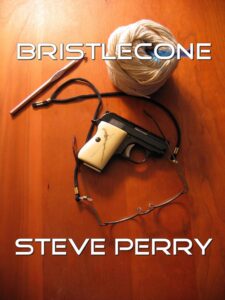
He and I were part of the first panel of the day, “Love and Death—the only two things worth writing about.” We five panelists agreed that love and death were indeed fundamental to fiction, as they are in life. As Steve noted, everyone hopes for the former and will, eventually, face the latter.

The rest of that session tackled the questions posed in the panel’s description, such as what makes for a good plot, and what are the elements you are looking for, etc.

But the panel got me thinking further about the role of love and death in fiction, and how both are central to story telling.

Death.

Whether the world is at stake, or just one life, the risk of death can both shape and propel a story forward.

During the panel I brought up character death, citing our own James Scott Bell’s three kinds of death stakes:

“As I’ve written many times, the best fiction is about a battle with death, which comes in three forms: physical, professional/vocational, or psychological/spiritual.”

I added a fourth, societal. The risks of dying in any of these ways creates huge stakes for the character, and can drive the plot. Physical death is obvious. Psychological death is a loss of identity, sanity

Speaking of the plot, there’s the plot’s own “death stakes,” which could be one and the same with your hero’s death stakes, or could be death on a bigger scale, and which could also be potential psychological death of a community, or even the death of an ideal, such as justice or freedom, etc.

Love.

We tend to think of love as romantic love, but of course that’s only one kind. There’s love for family, as well as your community and your country.

Brotherly/sisterly platonic love can be powerful grist for the story mill. A little while back I joined my wife’s CraftLit group for an online watch of one of my all time-favorite movies, The Great Escape, which is filled with death stakes, both for characters and as part of the plot.

The Great Escape also depicts brotherly love, based on friendship and a bond brought about by the shared circumstances of war and imprisonment. We see several examples in the movie. There is the scrounger, Hedley, played to perfection by James Garner, and the forger, Blythe, equally well portrayed by Donald Pleasence who become friends while working together. Then there’s the two tunnel kings, Danny, played by Charles Bronson, and his friend Willie (John Leyton).
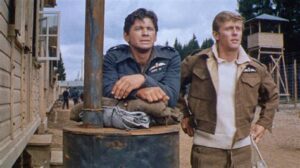
Hedley insists on taking a now sight-impaired Blythe out with him during the escape, increasing his own risk of physical death.

Willie stays with Danny to guide him when Danny is overcome by claustrophobia. The two stick together and find a way to freedom.

Being willing to lay your life down for another, is a sacrifice for love. Being willing to move heaven and earth to save someone, say a kidnapped lover, can be the stuff of thrillers and failure could result in not only physical death for the lover, but also psychological death for the hero.

Another classic movie example of love and death:

Alfred Hitchcock’s North By Northwest sees Cary Grant’s advertising executive thrust into a world of deadly espionage, thanks to being in the wrong place at the wrong time and being mistaken for someone else.
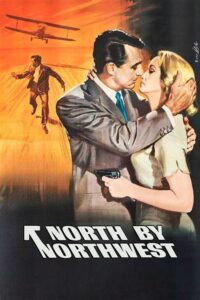
He faces death multiple times in the course of the movie, including memorably at a crossroads when a crop dusting plane turns out to be an assassin’s weapon. He meets and falls for a beautiful young woman, played by Eva Marie Saint, who is not what she seems. In the end, he survives and gets the girl. Love and death drive a suspenseful, relentlessly paced film.

Modern mysteries often have death stakes for the sleuth, who can face not only the prospect of a a physical death, but also psychological and professional, and, especially in a cozy, can deal with societal death.

Moreover, they focus on solving a murder, and these death stakes can be in play for the victim as well as the killer’s motives. The victim may have caused what the villain perceives as death, perhaps the psychological death from the killer’s romantic relationship having been ruptured by jealousy or even betrayal, or professional (vocational) death, again by something the killer perceives as being done to them by the victim. And the killer certainly could be correct.

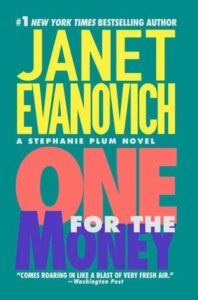
Modern mysteries can also have a love interest or interests for the sleuth, as in the cases of Stephanie Plum bounty hunter and Hannah Swensen baker and amateur detective. Both deal with long running romantic triangles. Both also regularly deal with potential death stakes for themselves.
So, love and death. Are they indeed the only things worth writing about?

For my part, I’d say they may not be the only things, but they are certainly two of the most important things to write about.

What do you think?

Words of Wisdom from January 2010

For my first post of 2026 I decided to look for KZB posts published sixteen years ago this month. It was hard winnowing it down to three excerpt, but choose I did.

First is a post by Claire-Langley Hawthorne about meeting the challenge of writing a short story by laying out the structure first. Next is an evergreen post by James Scott Bell dealing with the structure of a novel. Last is a touching post by John Ramsey Miller on experiencing death and how that can deeply inform our writing.

I view a short story as having a single transformative story arc – one told in the most concise and most powerful terms possible. All fine and dandy in theory but no sooner do I start than I fall prey to an overabundance of backstory and plot complications – and these little buggers have an annoying habit of multiplying, so by the time I reach around 4,000 words I realize what I really have is, you guessed it, chapter one of a new novel. Characters have already started taking control, offering me a range of complexities that I can’t help but want to explore, the setting demands detailed description which I cannot resist providing and the story arc takes on a much grander scale that will inevitably fail as a short story.

With this particular short story (which I’m hoping will pass muster and be published in the Kill Zone collection you’ll be hearing much more about) this dilemma created both opportunities as well as challenges. I had to rise to the challenge of paring everything down so it would succeed as a short story and I realized I had the seeds for a new series set in Australia which was quite exciting (oddly enough I’ve never written anything actually set in the land I grew up in).

My first step to transforming my piece into a ‘proper’ short story was to think about structure. I focused on the four main elements I thought I needed:

  1. Establishment of setting
  2. A trigger for action
  3. A build up of suspense and conflict
  4. A critical choice
  5. Resolution

When I found I basically had all these elements (albeit muddied by too much dialogue, description and backstory!) I knew my main focus had to be on paring everything down to its essential elements. This included character, setting, as well as plot and once I started this process I also found that I could focus on what the story was really all about.

Last Friday I took my short story to my writing group for their critique and they helped me identify areas of improvement and further ‘pruning’ – hopefully I’m now close to the final product and, more importantly, I feel like I’ve grappled with a new challenge that has improved me as a writer.

I can’t say I like the short story as a medium – I am a novelist at heart – but I do appreciate the intensity and power it can bring. I may not have enjoyed the process but as compensation I do have a new (male) protagonist that intrigues me. So who knows, this particular challenge may spur me on to develop a whole new series of books!

Claire-Langley Hawthorne—January 11, 2010


Now, the first doorway is an event that thrusts the Lead into the conflict of Act 2. It is not, and this is crucial, just a decision to go looking around in the “dark world” (to use mythic terms). That’s weak. That’s not being forced.

A good example of a first doorway is when Luke Skywalker’s aunt and uncle are murdered by the forces of the Empire in Star Wars. That compels Luke to leave his home planet and seek to become a Jedi, to fight the evil forces. If the murders didn’t happen, Luke would have stayed on his planet as a farmer. He had to be forced out.

In Gone With the Wind it’s the outbreak of the Civil War. Hard to miss that one. No one can go back again to the way things were. Scarlett O’Hara is going to be forced to deal with life in a way she never wanted or anticipated.

In The Wizard of Oz, it’s the twister (hint: if a movie changed from black and white to color, odds are you’ve passed through the first doorway of no return).

In The Fugitive, the first doorway is the train wreck that enables Richard Kimble to escape, a long sequence that ends at the 30 minute mark (perfect structure) and has U. S. Marshal Sam Gerard declaring, “Your fugitive’s name is Dr. Richard Kimble. Go get him!”

The second doorway, the one that closes Act 2 and leads to Act 3, is a bit more malleable, but just as critical. It is a clue or discovery, or set-back or crisis, one which makes inevitable the final battle of Act 3. It is the doorway that makes an ending possible. Without this, the novel could go on forever (and some seem to for lack of this act break).

In The Fugitive, at the 90 minute mark (the right placement for a film of just over two hours), Kimble breaks into the one-armed man’s house and finds the key evidence linking him with the pharmaceutical company. This clue leads to the inevitable showdown with the “behind the scenes” villain.

In High Noon, the town marshal reaches the major crisis: he finally realizes no one in the town is going to help him fight the bad guys. That forces him into the final battle of Act 3, the showdown with the four killers.

By the way, this structure works for both “plot driven” and “character driven” stories. It’s just that the former is mainly about outside events, and the latter about the inner journey. But that’s beyond the scope of this post.

Now, there is always some well meaning literary genius howling in protest at the idea of structure. Too rigid! I don’t write by formula! I am a rule breaker, a rebel! An artist! Away with your blueprints and let me run free! The 3 act structure is dead!

Let me say, first, I understand this artistic impulse. A good writer is a rebel, someone out to make waves.

But let me also say that the literary waters are littered with the works of those who ignored the basic principles of the suspension bridge. Unreadable novels with pretty words that didn’t sell.

You want to write an experimental novel? Go for it. Just be aware that not a whole lot of people are going to care.

What they care about are characters, dealing with trouble by fighting their way over a bridge—meaning, through a plot that matters and is laid out in the right way.

Structure is “translation software” for your imagination. You’ve got a great story in your head. The characters, the feeling, the tone, the gut appeal, the thing you want to say. But it means squat unless you can share it with other people, namely, readers.

Structure allows you to get your story out with the greatest possible impact.

James Scott Bell—January 16, 2010


Like Gilstrap wrote on his blog, I also think and write about death and destruction and it’s a subject I know better than I’d like. I have seen death and the destruction guns and knives and cars can do to human beings and it made quite an impression on me starting at an early age. We lived across the street from a funeral home when I was ten or so, and that was where my experience began. Our neighborhood kids used to lie on our stomachs and watch Mr. Barry embalm people in the basement. He always had the louvered-glass windows open and he never saw us as his back was usually to us. It was like watching horror movies. We used to run when we heard the ambulances heading for the hospital and we’d stand, an audience of innocents, watching as some unfortunate victim was wheeled in on a gurney. Often the ambulance (again Mr. Barry) would often make a quick stop before putting the vic back into the ambulance (it doubled as the hearse for black funerals at the other Barry home in another part of town) and it had red lights in the grill and a howling siren. The lights were covered with black cloth baggies for funerals. It showed me a side of death I’ve carried with me since.

I have a problem in that I never know what to tell kids about death, how to explain it without instill fear and worry in them. I told Sasha that the old moves aside so the young can have room to grow up, that it was true with every living thing. I told her that dying was just like being born into this world but in another place. I’m not sure about that but I don’t mind lying to children about that.

Before my funeral home days in Starkville, Mississippi, when I was five or six, my eighty-four-year old grandfather died, and I remember how empty I felt and how sad it made me. I took little consolation in people telling me he was in heaven. I only knew he was never coming back and that I’d never sit in his lap and use his pocket knife to carefully cut cubes of tobacco for him to chew. I’d never hear him tell me stories about his life as a cattleman, about gunfights in downtown Hazzlehurst, about driving cattle in storms, of lean times, of being gored by a bull and thrown by horses into bad places. Although I took no consolation in the idea of Papa in heaven, I did in the fact that he died of a stroke while cheering the Friday Night Fights on TV in the nursing home. I am so glad that I knew him for the years I did, and how he called my mama, “baby” and I thought she was truly old.

As I’ve grown older I’ve seen a lot of people I knew and loved die, and it’s never easy. Never. But it has given me feelings to run my fingers over and to put into my words.

John Ramsey Miller—January 30, 2010

***

  1. How do you meet a writing challenge?
  2. What helps you with structuring you novels?
  3. Experiencing death is one of the most emotional aspects of being human. Has it deepened your own writing? If so, how?