Love and Death

Last Saturday I was a panelist at Symposium, a very small writing-focused science fiction event held in my neck of the proverbial woods.

The guest of honor was a local writer, Steve Perry, who has had seventy plus novels published in science fiction, fantasy, thriller, including a NYT best selling Star Wars novel, Shadows of Empire, and ten books in Tom Clancy’s Net Force series.
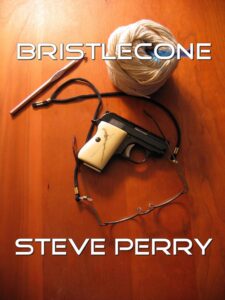
He and I were part of the first panel of the day, “Love and Death—the only two things worth writing about.” We five panelists agreed that love and death were indeed fundamental to fiction, as they are in life. As Steve noted, everyone hopes for the former and will, eventually, face the latter.

The rest of that session tackled the questions posed in the panel’s description, such as what makes for a good plot, and what are the elements you are looking for, etc.

But the panel got me thinking further about the role of love and death in fiction, and how both are central to story telling.

Death.

Whether the world is at stake, or just one life, the risk of death can both shape and propel a story forward.

During the panel I brought up character death, citing our own James Scott Bell’s three kinds of death stakes:

“As I’ve written many times, the best fiction is about a battle with death, which comes in three forms: physical, professional/vocational, or psychological/spiritual.”

I added a fourth, societal. The risks of dying in any of these ways creates huge stakes for the character, and can drive the plot. Physical death is obvious. Psychological death is a loss of identity, sanity

Speaking of the plot, there’s the plot’s own “death stakes,” which could be one and the same with your hero’s death stakes, or could be death on a bigger scale, and which could also be potential psychological death of a community, or even the death of an ideal, such as justice or freedom, etc.

Love.

We tend to think of love as romantic love, but of course that’s only one kind. There’s love for family, as well as your community and your country.

Brotherly/sisterly platonic love can be powerful grist for the story mill. A little while back I joined my wife’s CraftLit group for an online watch of one of my all time-favorite movies, The Great Escape, which is filled with death stakes, both for characters and as part of the plot.

The Great Escape also depicts brotherly love, based on friendship and a bond brought about by the shared circumstances of war and imprisonment. We see several examples in the movie. There is the scrounger, Hedley, played to perfection by James Garner, and the forger, Blythe, equally well portrayed by Donald Pleasence who become friends while working together. Then there’s the two tunnel kings, Danny, played by Charles Bronson, and his friend Willie (John Leyton).
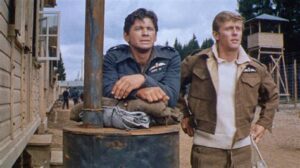
Hedley insists on taking a now sight-impaired Blythe out with him during the escape, increasing his own risk of physical death.

Willie stays with Danny to guide him when Danny is overcome by claustrophobia. The two stick together and find a way to freedom.

Being willing to lay your life down for another, is a sacrifice for love. Being willing to move heaven and earth to save someone, say a kidnapped lover, can be the stuff of thrillers and failure could result in not only physical death for the lover, but also psychological death for the hero.

Another classic movie example of love and death:

Alfred Hitchcock’s North By Northwest sees Cary Grant’s advertising executive thrust into a world of deadly espionage, thanks to being in the wrong place at the wrong time and being mistaken for someone else.
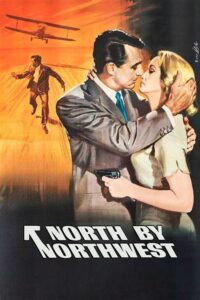
He faces death multiple times in the course of the movie, including memorably at a crossroads when a crop dusting plane turns out to be an assassin’s weapon. He meets and falls for a beautiful young woman, played by Eva Marie Saint, who is not what she seems. In the end, he survives and gets the girl. Love and death drive a suspenseful, relentlessly paced film.

Modern mysteries often have death stakes for the sleuth, who can face not only the prospect of a a physical death, but also psychological and professional, and, especially in a cozy, can deal with societal death.

Moreover, they focus on solving a murder, and these death stakes can be in play for the victim as well as the killer’s motives. The victim may have caused what the villain perceives as death, perhaps the psychological death from the killer’s romantic relationship having been ruptured by jealousy or even betrayal, or professional (vocational) death, again by something the killer perceives as being done to them by the victim. And the killer certainly could be correct.

Modern mysteries can also have a love interest or interests for the sleuth, as in the cases of Stephanie Plum bounty hunter and Hannah Swensen baker and amateur detective. Both deal with long running romantic triangles. Both also regularly deal with potential death stakes for themselves.
So, love and death. Are they indeed the only things worth writing about?

For my part, I’d say they may not be the only things, but they are certainly two of the most important things to write about.

What do you think?

What Writers Can Learn From It Happened One Night, Part 2

by James Scott Bell
@jamesscottbell

Last week we began a discussion of Frank Capra’s 1934 classic It Happened One Night. It was spurred by my meeting with a couple of young ladies at Trader Joe’s who do not watch black-and-white movies. Matters took an alarming turn in the comments when Brother Gilstrap told of a 22-year old fellow in media who’d never heard of Clark Gable or John Wayne!

This almost drove me to drink. Instead, with hope in my heart and zeal in my fingers, I clack on.

The plot of It Happened One Night (which Capra and screenwriter Robert Riskin refined after priceless feedback from a writer named Myles Connolly) is simple. Spoiled heiress Ellie Andrews (Claudette Colbert) wants to get to her husband in New York, flier King Westley. But she is held a virtual prisoner on her father’s yacht so he can pay off Westley to have the marriage annulled. She dives overboard and swims to freedom. Wishing to stay incognito she gets on a night bus, but is woefully deficient in street smarts. Another passenger, a fired newspaper reporter named Peter Warne (Clark Gable), spots her and offers her help her get to Westley in exchange for her story, exclusive. She resists until she realizes that only he can keep her on the down low. And so the journey begins.

Death Stakes

As I’ve written many times, the best fiction is about a battle with death, which comes in three forms: physical, professional/vocational, or psychological/spiritual.

For Ellie, it’s psychological death, as it usually is in a romance. The standard trope is that unless they two “soul mates” end up together, they’ll “die on the inside.” Here, there’s a twist: Eillie wants to get to Westley mainly to rebel against her controlling father. She’ll “die inside” if she isn’t allowed to live her own life.

For Peter, it’s professional death. His editor at a New York newspaper has told him never to show his face there again. Peter needs a story, a scoop, or his reporting days are over.

Lesson: Nail your death stakes from the jump, or your plot will have a weak foundation. You can have more than one on the line, though one should be primary. For example, a thriller will almost always have physical death as the crux, but the character can also have psychological challenge as well.

A Romance of Opposites

Morality and Relationships, IT HAPPENED ONE NIGHT – Once upon a screen…Who are these two at the start of the picture? Ellie is a spoiled brat. Thus, one part of the plot is The Taming of the Shrew. But the brilliant move by Capra/Riskin is that Peter is an egotist who also needs taming. It’s a perfect balance.

There are two main romance tropes: 1. The couple who hate each other at first, then grow into love; and, 2. The lovers who want to be together but are kept apart by other forces, e.g. Romeo and Juliet. This movie is obviously the first kind.

Lesson: Know your tropes because the readers expect them. Disappointed readers do not become return buyers. Your task is to originalize how tropes are played out. This movie does that exquisitely.

Three Unforgettable Scenes and No Weak Ones

Writer-director John Huston once said that a great movie must have at least three unforgettable scenes, and no weak ones. Here are the three I’d pick in It Happened One Night.

1. Early in Act 2 Peter, to conserve their money, rents a single cabin at an auto camp, registering as husband and wife. Ellie is aghast. Peter ties a rope across the room between the two beds and throws a blanket over it. “Behold the walls of Jericho,” he says. “Maybe not as thick as the ones that Joshua blew down with his trumpet. But a lot safer. You see, I have no trumpet….Do you mind joining the Israelites?”

Ellie just stands there, defiant. So Peter decides to show her how a man undresses. It’s “quite a study in psychology.” He takes off his coat, his tie, then his shirt. He’s about to remove his pants when Ellie quickly scoots to the other side.

What made this unforgettable was not only Gable’s delivery of the lines, but the fact that he wore no undershirt. After this movie came out, undershirt sales in America suffered a serious decline!

2. The most famous scene in the movie is the hitchhiking scene. Peter has been bragging to Ellie how he knows everything, including the right way to dunk a donut. “I ought to write a book about it.” On the road, he explains to Ellie he can get a ride by the magic of this thumb and explains the various thumb moves. He says he’s going to write a book about it called “The Hitchhiker’s Hail.” Ellie is not impressed.

As cars stream by, Peter tries every one of the moves and not a single car stops. Crestfallen, he says, “I don’t think I’ll write that book after all.”

Ellie says, “You mind if I try?”

“You? Don’t make me laugh.”

“I’ll stop a car and I won’t use my thumb…It’s a system all my own.”

Ellie then waits for the next car. When it comes she raises her skirt and sticks out her attractive gam. The car screeches to a halt. The taming of the egotist has begun.

3. The wedding scene at the end, when Ellie is about to marry King Westley once more and makes an unforgettable escape.

Lesson: However you plan your scenes, be ye outliner (before) or pantser (during) push yourself to the original, the fresh, the unanticipated.

Spicy Minor Characters

I call minor characters the “spice” of great fiction (see Mr. Charles Dickens for the Master Class). Two of them come by way of two of the best character actors of the time, Roscoe Karns and Alan Hale.

Mini Tribute: Character Actor Roscoe Karns | Classic Movie Hub BlogKarns plays Oscar Shapeley, an oily (and married) traveling salesman who fancies himself a ladies’ man. On the night bus he starts yakking to Ellie. “Shapeley’s the name and that’s the way I like ’em.” On and on he goes, until Ellie cuts him down with a line.
“Hoo hoo!” says Shapeley. “There’s nothing I like better than to meet a high-class mama that can snap ’em back at you, ’cause the colder they are, the hotter they get. Yessir, that’s what I always say. When a cold mama gets hot, boy how she sizzles. Now you’re just my type. Believe me, sister, I could go for you in a big way. Fun-on-the-side Shapeley they call me, with accent on the fun. Believe you me!”

Peter has been watching all this with amusement, but finally saves Ellie by telling Shapeley to move to another seat because “I’d like to sit next to my wife.” Shapeley quickly complies.

Later, Shapeley will show up again, after figuring out who Ellie really is. Peter will then scare the pants off Shapeley by pretending to be a mobster who is “holding that dame for a million smackers.” And if Shapeley talks, the mob will find him and his family. Scared to death, Shapeley runs off into the woods.

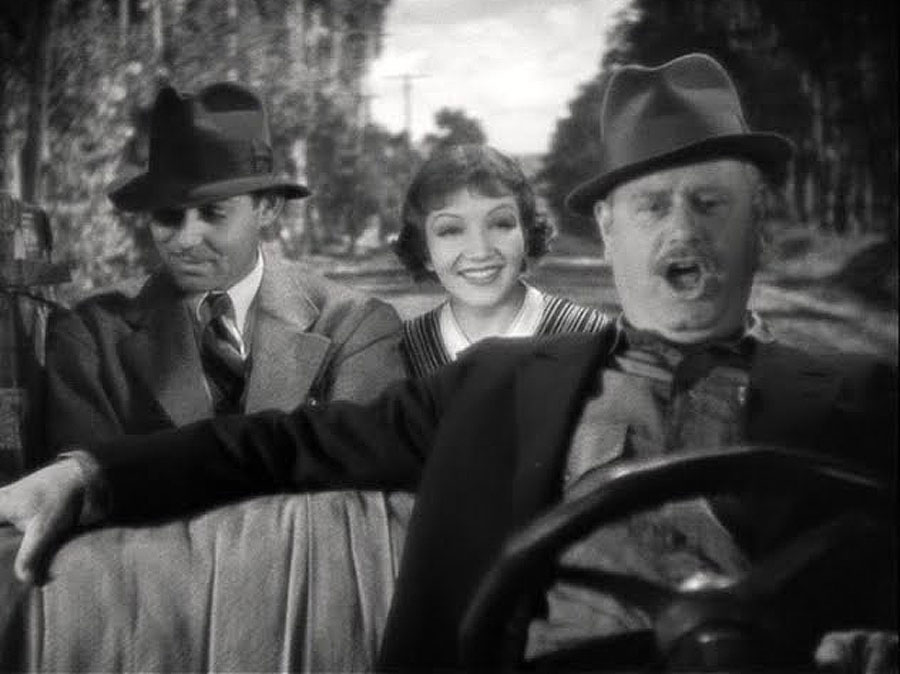
Davelandblog: It Happened One Oscar NightIn the hitchhiking scene, the car that stops is driven by Alan Hale (you may remember him as Little John in The Adventures of Robin Hood). He is loud, jovial, talkative.

“So, you’re just married? That’s pretty good. But if I was young, that’s the way I’d spend my honeymoon. Hitchhiking. Yes, sir.” He begins to sing: “Hitchhiking down the highway of love on a honeymoon!”

It turns out he’s a “road thief” who picks people up then drives off with their luggage. It’s a short bit, but a flavorful spice.

Lesson: Do not waste your minor characters by making them clichéd or throwaways. Give them a life of their own, with unique tags of manner and speech. Readers love spice. It’s one of the best ways to elevate your work above “AI slop.”

Dialogue

I’ve long held that the fastest way to improve any manuscript is with sharp, orchestrated dialogue. The movie is full of smart Riskin banter. One example: When Peter first sits next to Ellie on the bus, she is not pleased. He offers to put her bag up top for her. She gets up to do it herself. The bus lurches forward and she falls back on Peter’s lap. She quickly scoots off. Peter grins. “Next time you drop in, bring your folks.”

Lesson: Standout dialogue is a craft that can be learned. I ought to write a book about it.

Pet the Dog

A “pet the dog” beat is a moment in Act 2 when the lead helps someone who needs it, even though it comes with a cost. In the movie, the passengers on the night bus are bonding by singing “The Man on the Flying Trapeze” (a popular ditty of the day). Then the bus hits a muddy rut and comes to a hard stop, tossing the passengers. They mostly laugh, but suddenly a little boy is screaming “Ma! What’s the matter with you? Somebody help!” Peter rushes over, determines the mother has passed out and assures the boy she’ll come around.

“We ain’t ate nothin’ since yesterday,” the boy says. He says his mother has a job waiting for her in New York but had to spend all their money on the tickets. Peter reaches into his pocket for a bill, a ten-spot he and Ellie need for the trip. He hesitates. Ellie takes the bill, hands it to the boy and tells him to buy something to eat at the next stop. The boy says he “shouldn’t oughta” take it. He holds the bill out to Peter, “You might need it.” Peter waves him off and puts on a smile. “I got millions.”

Lesson: Pet the dog moments deepen our bond to characters. Think of Katniss with little Rue, or Richard Kimble getting the distressed boy to the operating room in The Fugitive. The key is that the act puts the character in a worse position in the plot.

Final Thoughts

Capra always said that the Gable in It Happened One Night was the real Gable—unabashedly masculine, with a vein of sardonic humor. Colbert showed herself adept at drama, comedy, and pathos, playing a “brat” whose inner decency finally breaks out. In true rom-com fashion, each transforms the other for their ultimate good.

Would that today we had more movies as tight and multi-faceted as It Happened One Night.

And books, too.

Black-and-white movies forever!

Comments Welcome.

Note: It Happened One Night is free to watch on YouTube.

And for your viewing pleasure, here’s the famous hitchhiking scene: