Save Time on Social Media

The biggest complaint about social media is that it’s time-consuming. While I agree, there are tools to help speed up the process. With Social Media Management tools, we can spend a few minutes each day (or weekly) scheduling posts to go live while we’re busy with other things. Then all we have to do is check in here and there to engage with our audience. These apps help us to appear active on social media without absorbing large chunks of time.

My favorite social media management tool is Hootsuite. The free plan allows us to schedule up to 30 posts, which is plenty for a week. Once a post goes live, Hootsuite deducts it from our total. We can add three accounts (Twitter, Instagram, LinkedIn, Pinterest, etc.). Please note: As of September 11, 2020, Facebook no longer allows third party access. Figures, right? They’re the biggest time-suck of all.

We learn better with visuals, so let’s dig in.

Adding social media accounts is easy. In the Hootsuite dashboard go to Account. See my tiny photo in the bottom left corner? That’s where “Account” is located. Hootsuite will prompt you to add accounts. Once they’re added you can find them under “Private social accounts.” Ignore “Share Access” unless you have a VA or personal assistant to manage your social media.

The left column is our toolbar. Ignore the trophy for now. That’s where you can upgrade to the paid plan, but it’ll cost ya $29. monthly.

The icon below the trophy is where we create posts. I don’t use Hootsuite for Pinterest, but if you want to, this is also the place to create pins. When you click “Post” it’ll open this screen…

Some folks post to all their accounts at once, but I don’t recommend it. Each social media site has different requirements. For example, Twitter has a character limit and it’s best to only use 1-3 hashtags per post. Instagram has image restrictions and the more hashtags the better.

I’ll show you an easy way to repost the same article to different platforms later. For now, choose one account to “Post to.” Then drop down to “Text.” If you add your link first, Hootsuite will grab the image off the article. Or you can upload a new image. Another nice feature of Hootsuite is the built-in link shortener. Highlight the link and click “Shorten with Ow.ly.” Easy peasy.

I create my own images, but that’s a personal preference. If your article doesn’t have an image, don’t fret. Hootsuite comes with its own media library. Click the words: “Open media library” and the library will open in the preview window (where Kermie’s praying).

Now, suppose the image is too big. No problem. Click “Edit image” and tweak it until the image fits in the preview window. Once we’ve told Hootsuite which social media account we want to post to, it guides us.

To the left of “Edit image” is “Create alt text.” Alt text makes your content more accessible and improves the SEO. Describing your images also helps people with disabilities to engage with your content.

Next, we have the option of posting now or scheduling to post later. Rarely, if ever, do I immediately publish. My favorite thing about Hootsuite is its ability to publish posts while I’m writing.

When we click “Schedule for later” this window pops up…

As you can see, I scheduled this post for Wed., Nov. 18 at 1:05 p.m. Click “Done” then “Save edits” and you’re done.

Let’s go back to the left sidebar. The icon below Create Post is Streams. Which looks like this…

We build boards however we want. I created a separate board for each social media account and then one complete board to show all my connected accounts on one screen. The above image shows only my Twitter board. I’m using it to show you another cool feature. The three columns to the right are called Streams, which we configure to suit our individual needs. There are several available options. I chose “My tweets,” “Mentions,” and “Retweets.” Play around with the configuration till it works for you.

On the sidebar the next icon down is Publisher. Here’s what it’ll look like once you’ve scheduled your posts…

I like to stagger my publishing times so it doesn’t feel automated to my audience, but that’s another personal preference. You may want to schedule every day at noon. Hootsuite allows us to schedule posts at any time of the day or night. If you need to reach readers in a different time zone, then schedule posts to go live while you’re asleep. 🙂

Okay, here’s the handy trick I hinted at earlier. Hootsuite allows us to duplicate posts to publish on a different platform. With the Publisher open, click any post you published or scheduled, and the following screen opens.

By clicking the three dots in the upper righthand corner next to “More options” the “Duplicate” box pops up. By clicking “Duplicate” it opens the post as it appeared when we published or scheduled it. Only now, it’s in a New Post format.
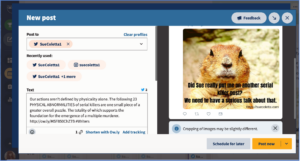
In “Post to” swap one social media account for another. As I mentioned earlier, you may need to tweak the image and add/subtract hashtags, but that’s it. Either “Post now” or “Schedule for later.” Or we can leave the post as is and just schedule it to go live again on a different time/day. Duplicating posts saves us from having to create 30 new posts per week, if we’re only scheduling on a weekly basis.

With the free plan, we also have the option to schedule a new post as soon as a previous one publishes. As long as we don’t climb higher than 30 posts scheduled at one time, we’re good. An upgrade comes with more bells and whistles but $30 for this and $30 for that adds up after a while.

Once we schedule the duplicate post, Hootsuite brings us back to the Publisher. At the top click “Content” and all our published posts show on the screen.

We can filter by social media account or view Drafts, Scheduled, or Past Scheduled posts.

Hootsuite offers numerous ways to save us time. I’ve only scratched the surface, but I’m trying not to overwhelm you. These steps may seem like a lot of work. They’re not. Once you get used to creating posts, you’ll zip right through the process. Remember the 80/20 rule, 80% valuable content, 20% book marketing (90/10 is even better). If you struggle with the 80% part, post a quote from the book you’re reading (include title/author). Or share a blog post or pet photo. The point is to keep your audience engaged.

I’ve only concentrated on one social media management tool, but there are others. Some free, some paid. If you’re still hopping from one social media site to another, you’re wasting valuable writing/research/reading time.

If you haven’t tried a social media management tool yet, I hope this peek into Hootsuite demonstrates its time-saving benefits. Do you use social media management tools? If so, what’s your favorite? Any tips to share?



Deep Backstory

by James Scott Bell
@jamesscottbell

Back in 1988, on the day I decided I had to become a writer, I laid out a plan. I would read books on the craft, even though I’d been told several times that you can’t learn to write by reading writing books (which I soon discovered was a crock). I also went to my favorite used bookstore, the marvelous A & M Booksellers in Canoga Park (sadly, they had to close up shop when the 2008 recession hit; happily they still do business online). This wonderland had a large, revolving inventory of popular paperbacks. On this day I bought an armload of books by Grisham, King, and Koontz. I wanted to read them systematically to try and figure out what they did that was so good.

It was a superb education.

One thing I noticed with Mr. King was something I didn’t have a name for. It just seemed to me that his characters were so … real. He gave them lives that were vivid and detailed. And that, more than anything else (in my estimation) is what has made King so immensely popular. He weds an imaginative plot with characters you can almost touch. I believe he, like Dickens, will be remembered as much for his characterizations as his twisty-turny storylines. 

As was my wont in those days, I wrote a note about that in my ever-expanding document about technique. Eventually I called it “deep backstory.”

I was reminded about this the other day when I read one of his short stories, “The Things They Left Behind,” which is included in his collection Just After Sunset. It’s a moving story about a man with survivor guilt because he “played hooky” from his job at an insurance company in the Twin Towers on 9/11. Of course, several of his friends and co-workers died.

One day the narrator, Scott Staley, returns to his locked apartment and finds a pair of distinctive sunglasses with red frames on a table (they had not been there when he left). But wait…sunglasses like these had belonged to Sonja D’Amico, a colleague of his who died on 9/11. Also, leaning on a wall, is a baseball bat. But not just any bat. It’s a bat that another dead co-worker, insurance adjuster Cleve Farrell, had at his desk. Farrell had used a hot iron to burn CLAIMS ADJUSTOR into the wood. 

How could these items possibly be here? That, of course, is a King-ish story question. And in another writer’s hands it might have become a mere puzzle. But King weaves in backstory magic that brings the characters marvelously to life.

Here’s an example of what I mean:

I felt that way, too. Yes indeed. Because those sunglasses had to be gone—long-time gone, as the Dixie Chicks say. Ditto Cleve Farrell’s Claims Adjustor. (“Besbol been bery-bery good to mee,” Cleave would sometimes say, waving the bat over his head as he sat at his desk. “In-SHOO-rance been bery-bery bad.”)

King likes to reference popular culture in his stories (e.g., Dixie Chicks), which some writing teachers warn against. Bosh, I say. Even if someone reading the story years hence has never heard of the Dixie Chicks, it sounds real and truthful. 

But look especially at the parenthetical bit. Those of us old enough to remember the early years of Saturday Night Live will recognize the words of Chico Esquela, a Dominican baseball player created by cast member Garrett Morris. We’re talking late 70s now. But even if a reader of King’s story in 2020 has no idea who Morris-as-Chico was, the material still works. It sounds unique and lifelike, something a middle-class insurance adjustor might have said when horsing around. 

Later, Scott hears ghostly voices in conversation:

Sometimes they talked about the picnic at Jones Beach—the coconut odor of suntan lotion and Lou Bega singing “Mambo No. 5” over and over from Misha Bryzinski’s boom box. Or they talked about Frisbees sailing under the sky while dogs chased them. Sometimes they discussed children puddling along the wet sand with the seats of their shorts and their bathing suits sagging. Mothers in swimsuits ordered from the Lands’ End catalogue walking beside them with white gloop on their noses. How many of the kids that day had lost a guardian Mom or a Frisbee-throwing Dad? Man, that was a math problem I didn’t want to do. But the voices I heard in my apartment did want to do it. They did it over and over.

I find that paragraph brilliant. The sense of smell and sound and sight. And the specificity of detail. Not just music, but Lou Bega singing “Mambo No. 5”; not just swimsuits, but swimsuits ordered from the Lands’ End catalogue. 

Now, Mr. King is a well-known pantser. His approach, as explicated in his book On Writing, is: The situation comes first. The characters—always flat and unfeatured, to begin with—comes next. Once these things are fixed in my mind, I begin to narrate.

So all of that good, deep backstory comes out of King as he writes. That explains things like that parenthetical, above. He thought of a character with a bat, then his imagination went into overdrive to personalize it … it was a baseball bat … a voice from the memory chamber echoed in King’s mind: “Besbol been bery-bery good to mee.” Wait. That was Chico Esquela, right? Yeah, and that’s something unique this character might have said. 

The character was coming to life before his eyes during the writing. But there’s no reason you can’t do this discovery before you write. In my book, Writing Unforgettable Characters, I recommend creating a “voice journal” for each character:

This is a free-form document where I just let the character talk to me. I might prompt him with questions, as if I’m doing an interview. “Tell me about your home growing up.” Or “What’s your philosophy of life?”

What I want is for the character to begin talking to me in a voice that is not mine. I’ll keep up this free-form writing until that voice emerges. And though I’m doing this mainly for the sound of the voice, I also end up with background material the character shares with me.

So either way, be ye plotter or pantser, allow your writer’s mind some wild time to dream up deep backstory. Write down a lot of it, then choose the best parts to weave into the narrative. Like the marbling in a rib-eye steak, this will add marvelous flavor to your story.

A Neighborhood Story

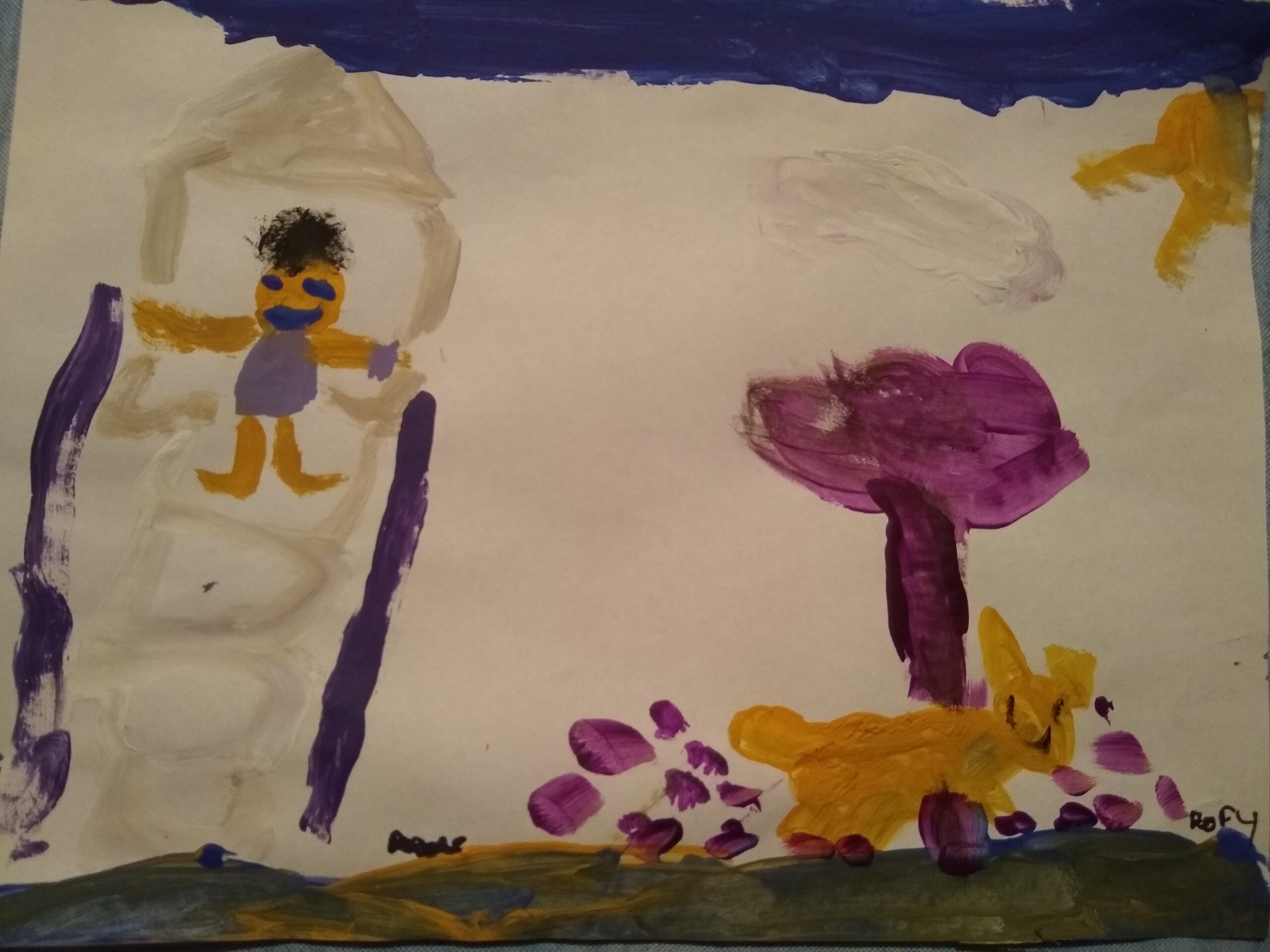
The painting at the top of this post was made for me by a young lady who lives next door and her best friend who lives on the next street.

There is a backstory, of course. 

I have lived in my current neighborhood for 26 years and counting. It has changed over that quarter-plus century from having lots of kids running around to almost none at all to…well, lots of kids again. It’s a better place with the children, who I’ve described recently. One of the reasons is that the presence of children usually puts dogs in the mix as well. That brings us to Sadie. 

I’ve mentioned before in this space that the dogs in the neighborhood have me trained. Felix, the feral cat who I have dubbed “the master of the kitten face,”  still shows up as well. It is Sadie, the dog who lives next door, who has things down to scripted performance art. 

It took a while. Sadie was rescued by my very nice and patient neighbors almost two years ago. Sadie took a short time to adapt to her new and wonderful living situation. Once she did, Sadie seemed to be in constant motion for almost a year, restrained only by the Invisible Fence that her family installed for her. I would occasionally toss her a treat (okay, once a day…well, sometimes, twice a day) and she gradually got used to that when she realized that there was no downside to it. 

Then it got interesting. We started a daily performance that goes something like this. She barks and I come out. I walk over and tell her that I’m not sure if I have anything for her. I pull open my empty pocket, at which point she looks at my other pocket. Did I mention that she is a very smart dog? I then reach into my other pocket, but before pulling the treat out I tell her that it is MY treat, the only one I have. I let her know that she can’t have it but that because I love her I will let her sniff it. I usually only get the treat halfway out before she snatches it (she has never so much as grazed even one of my fingers) and takes off running, with me in pursuit, yelling “Hey! That’s my treat! Come back here!” Sadie gleefully runs around the house, reverses course, bumps me as she runs by, evades my grasp, and in the meanwhile just tears the stew out of her family’s garden, mulch, and the like. They patiently (well, usually patiently) sweep it up and let Sadie (and me) have our fun. The artwork doesn’t just attempt to capture the moment. It nails it perfectly, right down to the grin Sadie would make if she had the right facial muscles to do so.

This activity has attracted an audience among some of the neighborhood children, who laugh as hard the next time they see it as they did on the first. I suspect/hope that, as a result of this repetitive spectacle they seemingly never tire of, they will grow up reading thrillers and maybe even writing them. All of the elements of a good story are there. There is conflict (yes, it’s made up, but it’s still conflict), a McGuffin —I doubt that when Hitchcock coined the term he envisioned that the sought-after object that triggered the action in a dramatic work could ever be a dog treat, but it’s a funny world — some explosions (mulch really goes flying), a sympathetic character (it isn’t me), and a resolution that makes everyone happy (Sadie keeps the treat and eats it). A story at its foundation can be that simple. 

Those of you who count yourselves as adults or grownups (notice that I exclude myself from both categories) might consider this account to perhaps make a great “beginning reader” storybook for young children. I can see an editor sending it back to an author with instructions to “grow” the story a bit. It would be easy, however, to quickly turn this into an adult 1) mystery, 2) thriller, or 3) horror novel. Examples follow. 

Mystery: Sadie comes running back around the house carrying the severed head of a neighbor nobody likes (I have a model for him, too!) Whodunit? Suspects abound. Many suspects.

Thriller: Sadie doesn’t come back. Our intrepid treat tosser starts looking for her, finds her invisible fence collar on the ground, and runs between houses over to the next street, looking for her. Two guys are trying to get her into their car. Fisticuffs ensure. Sadie is rescued, but the treat tosser finds himself in trouble and doesn’t know why. Little does he know that the fate of the world is at stake!

Horror: When Sadie runs around the house, the assembled children run in the opposite direction laughing in delight. Then the treat tosser hears the kids screaming, and Sadie barking and growling. The barking cuts off with a high-pitched yelp and the screams of the children intensify then drop off.  The treat tosser runs around the side of the house to find a one-armed woman holding a dripping machete and advancing toward him at speed. 

I’m so glad that you like animal stories. 

The ultimate lesson here is that you can take just about any situation, no matter how joyful, and turn it into something dark in a heartbeat, setting up a conflict that begs for resolution. 

Do you have any daily rituals — peculiar to your own life — that are seemingly ordinary but that you could use as a jumping-off point? Please share if you wish.

I have two things before I go. Here for your enjoyment is a video of our neighborhood star getting her reward for bringing so much joy into the hearts of all:


The second is that I will be here for the next couple of Saturdays. At some point after Thanksgiving — we anticipate December 5 — we will have a doctor in the TKZ house when physician and author Steve Hooley joins us on alternate Saturdays. I assure you that the wait will be worth it. 

Thanks again for visiting.


Reader Friday: Need an Escape?

With the swing of my magical wand, I transported you to a different time and place. You choose the destination.



Where are you and what are you doing?

Are you chasing dinosaurs?

Did you land on Mars?

Are you in Victorian London investigating Jack the Ripper?


Stuck! A Writer’s Nightmare

By Elaine Viets

A desperate writer sent me this email. “I am having difficulty getting back to my story,” he said. “Maybe it’s Covid hangover…. I need to rewrite some stuff in my earlier chapters and I can’t get into it. Argh!!! So tell me, is this common?”
You bet. I’ve been stuck, too – and many of my writer friends are tearing their hair out. Some are so desperate, they’re threatening to give up writing. Blame it on Covid-19, your day job, your kids, (insert your worry here), we’re not keeping those computer keys clacking.


I was in a deep funk for three weeks before I finally broke out of it.
Here’s how I got back to writing.
My next Angela Richman, Death Investigator mystery is due in January. I was off to a good start – I crafted the plot, created a catchy opening chapter, introduced the main characters, figured out who was the killer, all the things writers do when we’re starting a new book. I happily banged out six chapters. And then . . .
The words dried up.
I couldn’t go forward. I tore up chapter after chapter. I stared at the screen, willing the words to form on the page. The blank space taunted me.
I paced the house. I surfed the Net, looking at cute cat pictures. I fell for click bait (Did you know the Princes in the Tower may be buried in Westminister Abbey, but Queen Elizabeth won’t let anyone test their DNA?). I ate half a pound cake. Still nothing.
Gloom descended, and it didn’t help that Hurricane Eta was bearing down on South Florida, bringing lashing rains and flooded the streets.
Last Saturday, I went to a Sisters in Crime chapter Zoom meeting – a plotting seminar by mystery writer Annette Dashofy. Annette had us plot a mystery, based on her method, and things quickly went off the rails. Our mystery started with a dead female politician who was killed in her office. The awful plot included an unfaithful husband, an ex-stripper boyfriend, a cheating reporter, and an unmentionable murder weapon. The red herrings would leave you red-faced. But we had a lot of laughs. After much laugher – and some very serious plotting strategy – I realized I had a giant hole in my plot. After the meeting, I reworked the plot, put in another murder and more red herrings. The dam broke. I was back writing. I was going forward. I’d been too isolated.
So when you’re stalled:
(1) Talk to other writers.
Many writers are solitaries, but we need to talk to our own kind. We used to do that at chapter meetings, conferences and mystery conventions, but those are canceled thanks to the pandemic.

When you’re stuck, schedule a Zoom meeting or set up a FaceTime chat. Talk over tea. Make a lunch meet or coffee break. Or my personal favorite, a cocktail hour – a whine and wine session with one or more writer friends.
When I was stuck earlier in the year, I had a Zoom lunch with a writer friend and ran my plot past her. She listened carefully and then said, “You know, there’s not a single likeable person in your novel.” She was right. I changed the characters. Thanks to her, I could write again.

(2) After meeting with those writers, my head was buzzing with ideas.
I started taking notes again, always a good sign. My subconscious was working. I keep a notepad on my night stand and write down ideas that I get in the middle of the night. Some of these ideas are useless – I once scrawled “Call California” on a notepad. The next morning, I had no idea what that meant. After all, it’s a big state.
Sometimes, I can’t even read what I wrote.
More most often, I have the start of another chapter, or a nice fat red herring.

(3) Here are some ways to get in touch with other writers:
Sisters in Crime has a number of free seminars on its national Website. https://www.sistersincrime.org/ Also, check with the individual chapters. Sisters in Crime is also sponsoring NaNoWriMo, and it’s not too late to join:
https://www.sistersincrime.org/events/EventDetails.aspx?id=1427737

Most of the Mystery Writers of America chapters have monthly virtual programs. The Florida MWA Chapter has a free virtual program November 21, called “Seriously Series: Why and How to Write Series Fiction” given by Joanna Campbell Slan. Members can sign up here: https://mwaflorida.org/events/monthly-meetings/

The International Thriller Writers Association has their Virtual Winter Thrills Program, Jan. 11 to March 18. You can buy the whole package or choose individual session for $35 each. Here’s the information. https://web.cvent.com/event/8e0e649d-5c1c-4c55-be1c-575146f15ebf/summary?rp=00000000-0000-0000-0000-000000000000

What do you do, TKZers, to break out and break the isolation?

*************
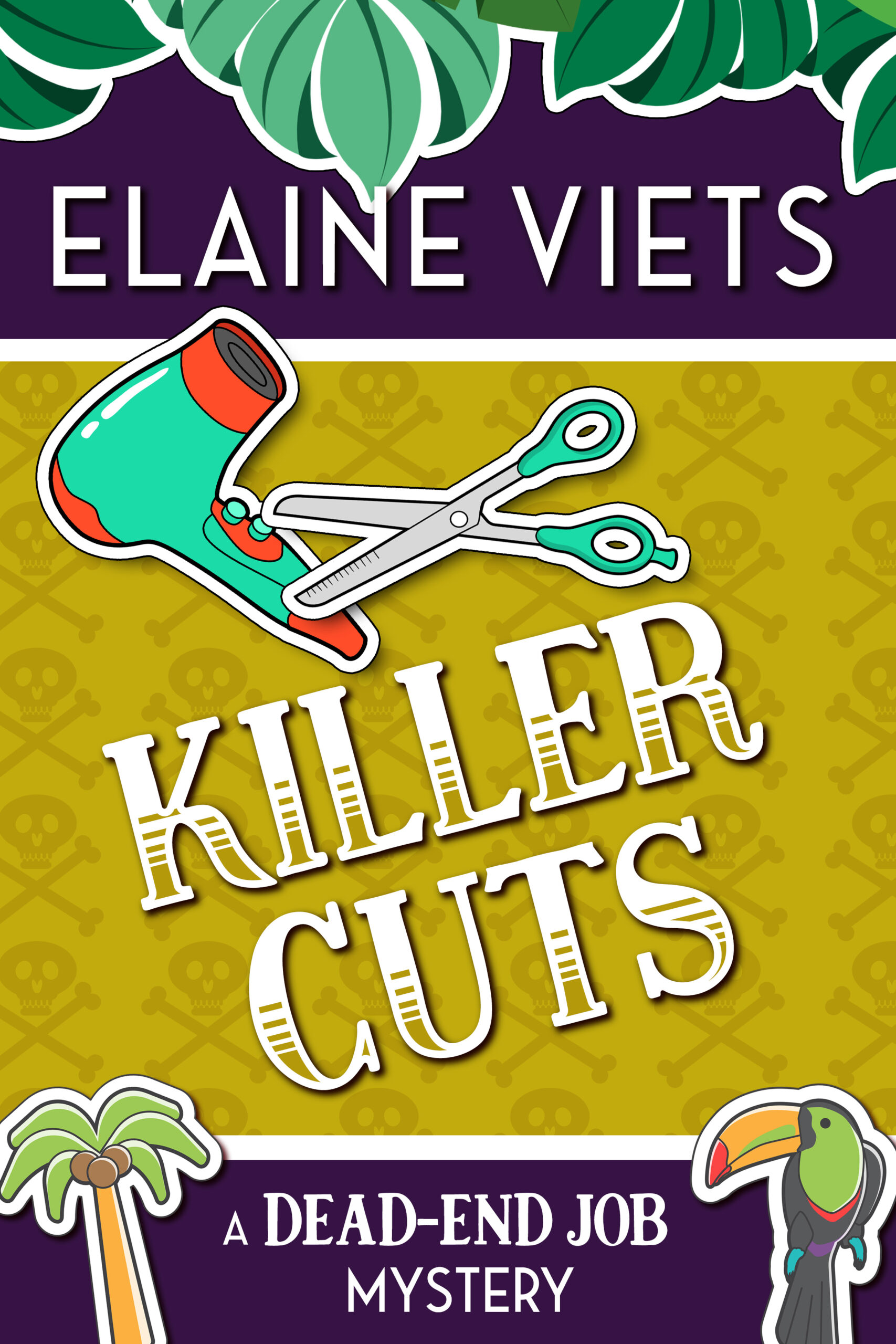
Need a good laugh? Read KILLER CUTS, my eighth Dead-End Job mystery. Buy the e-book for $1.99 – or free on Kindle Unlimited. https://tinyurl.com/y6yopjkp


What Winnie the Pooh Taught Me About Writing

What Winnie the Pooh Taught Me About Writing
Terry Odell

First, on this Veterans Day, a thank you to all who have served.

Winnie the Pooh and WritingWhen I was a child, my dad would read Winnie the Pooh (the REAL one, not the Disney version) to me and my brother. I loved his voices (Years later, when an old movie was playing on the television, I heard Eeyore’s voice. I ran out to look and it was a W.C. Fields movie. I didn’t know my dad had been doing “real” voices when he read—but I digress.)

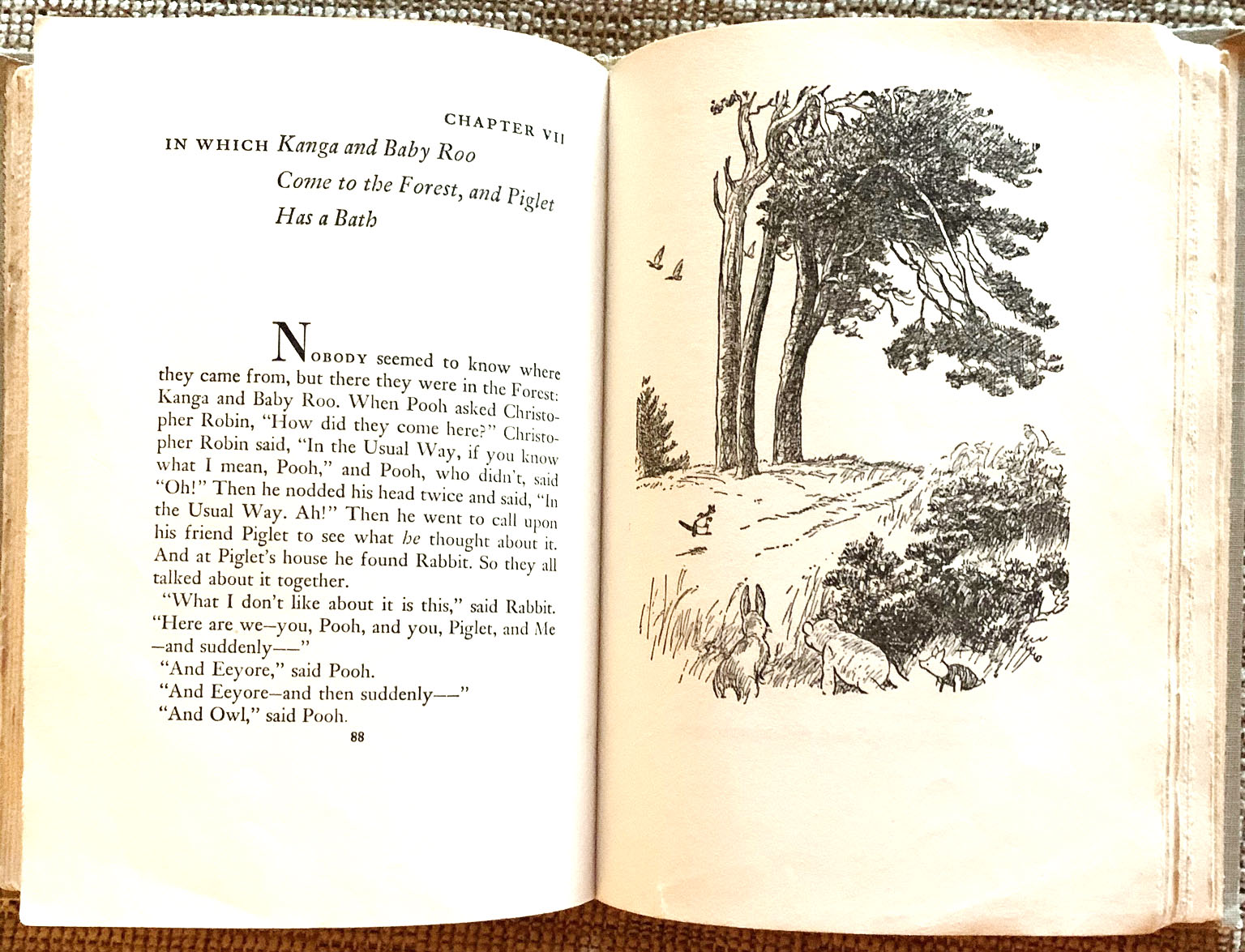
Another thing I remember from my dad’s reading was the way he began each chapter in a Very Important Voice. And the way each chapter was titled, “In Which…” followed by a few words telling us what the chapter was about.

Winnie the Pooh and Writing

(Kind of like “circles and arrows and a paragraph on the back of each one…” but I digress again.)

Although I certainly don’t title my chapters, the “In Which” approach helps make sure I’m putting something on the page that belongs there.

Too often, it’s easy to get carried away with description, or dumping in some back story, or including that “wonderful” scene that came to you when you overheard a conversation at the coffee shop, or salon, or when you were people watching and saw someone who just had to be in the book. So you write it, and it’s wonderful, and you’ve captured the moments perfectly. But is it moving the story. Is it something worthy of including in your “in which” summary of the scene.

Because you should be summarizing the scenes, either before or after you write them. And there need to be plot points (which is the official writerly term for “in which”). You’ll notice I used the plural. A scene had better be carrying more than one. While there’s no rule, and no exact number, I’d recommend shooting for three. Scene length, of course, can cause variations, but whatever happens in that scene needs to relate to the story.

Which brings me to kinds of scenes. Here’s a quick summary, gleaned from a RWA workshop, although most will carry over to any genre.

  • Prologue – not required. In fact, unless there’s a huge time gap between this and the opening, it should probably be Chapter One. There’s also a difference of opinion as to whether agents want to see prologues when you’re submitting.
  • Opening – should draw the reader in.
  • Set-up  — foreshadows something to come
  • Validation – shows the character at work
  • Conflict
  • Push – moves characters apart
  • Pull – moves characters closer together
  • Reaction – also referred to as “sequel” (or shower scene, where the character would reflect on what just happened). These can slow the pace, so they’re falling out of favor. If you need one, make sure it’s important, and don’t linger too long.
  • Flashback – use sparingly – they’re often found in reaction scenes
  • Flash forward—rarely used in romance; author intrusion. Tends to be omniscient POV, which can intrude as well.
  • Reversal/Black moment – everything goes wrong
  • Climax – characters must make choices
  • Conclusions – wrap up those dangling threads
  • Epilogue – not required. Common in romance (although I’m not fond of them, personally)

Do you ever find scenes in books you’re reading, even very well-written scenes, that leave you wondering what they’re doing there? Have you found them while writing your own books?


Heather's ChaseMy new Mystery Romance, Heather’s Chase, is available at most e-book channels. and and in print from Amazon.

Terry Odell is an award-winning author of Mystery and Romantic Suspense, although she prefers to think of them all as “Mysteries with Relationships.” Follow her on Facebook and Twitter.

Before It’s Too Late – Six Tips to Speed Up the Pace

Image purchased from Shutterstock


By Debbie Burke

@burke_writer

Recently I read an excellent post about flash fiction written by Nancy Stohlman on Jane Friedman’s blog.

One line leaped off the screen:

“Flash fiction has an almost desperate need to tell a story before it’s too late.

Before it’s too late? What does that mean? Too late for what?

See what Nancy just did?

Something terrible could occur and you better keep reading to find out what it is.

Although Nancy was talking about flash fiction, the same principles apply to longer works.

Thrillers particularly are known for the breakneck pace that grabs readers by the throat and drags them along as the story unfolds.

But other genres can also achieve that compelling, can’t-put-it-down quality.

How does an author capture that sense of urgency?

Try these six tools:

1. Threats

In The Canterbury Tales, Chaucer wrote about the Sword of Damocles:

There was a sharpened sword above his head
That hung there by the thinnest simple thread.


Notice how just reading those lines makes you uneasy. That is the quality you want to provide for your readers.

Threats can start out minor but build to major.

Minor: being late to work.

Major: being late to work after the boss swore to fire you if you’re ever late again.

Minor: getting pulled over by a cop

Major: getting pulled over by a cop with a body in your trunk.

Threat level should increase as the story progresses. You might start with a petty annoyance. By the middle of the story, that annoyance has snowballed into a serious problem. At the climax, that problem has led to utter catastrophe for the character.

Threats need to maintain a consistent undertone of worry throughout the story. They may not always be front and center in the action but they should remain in the back of the reader’s mind, nagging and chafing like a popcorn kernel stuck between teeth.

Readers need to feel the thread is fraying and getting thinner with each chapter.

Is your pacing off or irregular? If so, the cause could be that a small threat occurs after a larger one. That causes a dip in the danger, a lessening of tension. Consider rewriting so each threat is progressively worse than the one before.

Exercise: Make a list of threats in your WIP. What is the overarching threat? What are the lesser threats?  Do they build one on top of another, escalating the danger?

2. What else can go wrong? 

Image purchased from Shutterstock

Each scene needs a purpose or goal for the character to work toward.

By the end of the scene, the character has either achieved the goal or failed.

Or, if s/he achieves the goal, that success leads to new unexpected complications.

At the end of each scene, ask yourself what else can go wrong?

Then make it happen.

Use failure or unexpected complications to propel them into the next scene.

Exercise: Analyze the ending of each scene. How did your protagonist fail? How can you make that failure even more devastating?

3. Juice up the action.

There’s a reason that chase scenes are a popular device in movies. Pursuits make watchers hold their breath at one moment and gasp at the next.

Just for fun, here’s the greatest car chase ever filmed. To skip the preliminaries, jump ahead to 3:30 for the screeching tires.

https://youtu.be/FJZ-BHBKyos

Unfortunately, car chases don’t translate well to novels. But the concept of “pursuit” can still be applied. Harking back to #2, the character is in pursuit of a goal.

Obstacles block his/her pursuit of the goal. They don’t have to be as dramatic as the near-misses, biker slide, or shotgun blasts in Bullitt. But they do have to thwart the character and prevent him/her from achieving the goal of the scene.

Exercise: What hurdles must your character leap over? Don’t have a hurdle? Invent one. When the character leaps, s/he can stumble and fall, physically or metaphorically.

A hint: The faster the action, the more the writer should slow down the description. This sounds counter-intuitive but check out a memorable slow-motion scene from The Untouchables.


Exercise: write this scene, using the same pacing and attention to detail that the camera did. In writing, can you include additional sensory details like smell, taste, and touch?

4. Employ the Hitchcock Factor

Photo credit: Andy Li, Unsplash

Alfred Hitchcock was famous for letting the audience in on secret knowledge that the character onscreen didn’t know.

Think of ways for the reader to know more than the character does. The character opens a door and descends the basement stairs, believing s/he is on the way to do laundry. But the reader knows the villain is lurking under the stairs.

To accomplish that, you might go into the antagonist’s viewpoint and reveal his/her plans to derail the protagonist. The reader knows but the protagonist doesn’t.

Exercise: In your WIP, do you let the reader in on a secret your protagonist doesn’t know? How?

5. Set the alarm

Photo credit: Elena Koycheva, Unsplash

The ticking clock is a standard device to ratchet up tension. But it doesn’t have to be a bomb planted under the baby’s crib, counting down to zero.

Set up a deadline the protagonist must meet. If s/he doesn’t, complications happen, leading to more grief that ultimately could cause him/her to lose everything.

Exercise: If your story doesn’t already have a ticking clock, can you insert one?

Before it’s too late!


6. Cliffhangers

Photo credit: Tobias Tullius, Unsplash

Cliffhangers don’t necessarily mean fingers slipping off the edge.

Unanswered questions are great ways to propel the reader into the next chapter. When you end a scene with a question, the reader must turn the page to learn the answer.

But finding the answer to one question isn’t enough. In the next chapter, the author poses more new questions. Again, the reader must turn the page to find answers that lead to…more questions. And so on and so on to the last chapter when the author finally answers all questions and resolves all problems…or not!

Exercise: Study your chapters. Do they end with questions? Can you think of more intriguing ways to tantalize the reader into the next chapter?


Try these six tools to grab your reader’s attention…before it’s too late! 

~~~

TKZers: Have you used any of these techniques? Do you have other tips to add? 

~~~

Debbie Burke uses the six tools in the Tawny Lindholm Thrillers with a Heart Series. Quotes from customer reviews: “Getting ready for bed? Don’t start this story!” “Kept me reading all night long.”  “Read it in one sitting.” “Impossible to put down.” 

Cover art by Brian Hoffman

Searching for Justice

Despite (or maybe because of) a rather distracting week, I managed to finish the latest mystery by one of my all time favorite writers (I’m not going to disclose the book or author or I’ll have to give spoiler alerts!). However, instead of the usual feeling of contentment that comes from finishing a well-written, masterly plotted mystery, I felt…let down…and it took me a few days to figure out that the major reason for my nagging sense of disappointment was that the novel never really gave me the ending I wanted. Sure there was resolution but there was no justice…and I was surprised at how much that altered the whole reading experience for me.

Don’t get me wrong, the novel had great characterization and a well-paced investigation, it was beautifully written and often poignant, but in the end the perpetrators of the crime never really faced any real consequences, and certainly no punishment. This got me thinking about reader expectations when it comes to the whole mystery/crime genre and also whether, given how much the genre has changed over the years, writers still need to end their novels with a sense that justice (whatever that might mean) has been served.

Like many other readers, part of the reason I read mysteries is to get the satisfaction that comes from seeing justice served (something that all too often does not occur in real life). There is something very affirming about ‘good’ winning out in the end – even if that ending is messy or morally compromising. Once I begin to read a mystery novel I place my trust in the writer that the crime/mystery will ultimately be solved and that the person(s) responsible will be brought to account – but how do I (as both a reader and writer) feel about a resolution that omits ‘justice’ and ‘punishment’? I’m still not sure.

When it comes to this particular book at least, it was about managing reader expectations. I was expecting a murder mystery and though I got one, I didn’t get the ending I was expecting, and as a result, I felt the whole book tainted by a lack of a satisfying resolution. I think this disappointment says a lot about how writers need to manage reader expectations and also, perhaps, the strengths and limitations of the genre itself (for instance if I had considered this literary fiction I might not have expected the same kind of ending as I would with a mystery).

So TKZers what do you think -do you still expect or demand to see justice served in a mystery novel? How much leverage do you give when it comes to endings/resolutions in a mystery/crime genre novel? Am I just being old fashioned or is justice and/or punishment even needed anymore?


The Terrible Task of Weeding Out Books

by James Scott Bell
@jamesscottbell

“Fill your house with stacks of books, in all the crannies and all the nooks.” — Dr. Seuss

And when the books come falling down, I hope they find you ere you drown.” — Dr. JSB

It had to happen sooner or later. And now it’s later. I can’t put it off any longer. It’s time to disgorge a significant number of the books that stuff all the spaces in every room in my house—except, of course, the bathrooms, wherein the reading material is imported singulatim.

Like you all, I’m a book lover. How can anyone not be and become a writer? I don’t think that’s possible. With books I purchase, my practice has always been to read them and keep them. I’ve always loved being surrounded by books. Right now in my office all four walls have shelves stuffed with reading matter—literary kudzu.

But I know that someday I will be moving from my abode. So as much as it hurts, I need to make a significant dent in my stacks. I’m trying to be systematic. 

First off, I know I’m keeping some series and not others. I’ll keep Connelly, Chandler, Parker, MacDonald, Spillane. But I’m finally ditching Ross Macdonald. I’ve read all his books because Anthony Boucher tagged him as the best of the PI writers. He has a great following among critics. But I never connected with him or his PI, Lew Archer. And I simply don’t have time to try again.

I have a shelf of hardcovers autographed by the authors. I’ll keep those. Ditto my collectibles. I have some oldies that are probably worth something. I’ll let my kids figure that out someday via ebay. 

Another stratagem: I’m reading first chapters at random. If it grabs me, I’ll keep that book (if I think I might read it again). If not, it goes in the giveaway box. Here are some books that have survived:

Rebecca by Daphne du Maurier
At All Costs by John Gilstrap
The Postman Always Rings Twice by James M. Cain
The Human Comedy by William Saroyan
Final Seconds by John Lutz and David August
Sometimes a Great Notion by Ken Kesey
361 by Donald Westlake
White Oleander by Janet Fitch

Sometimes the writing might be fine, but something else will come up that causes me to pitch the book. An overabundance of F and S words, for example. Or something that doesn’t seem plausible. Ed McBain’s legal thriller Mary, Mary didn’t make the cut for just that reason. I was hooked by the first page. The narrator, lawyer Matthew Hope, is interviewing a potential client accused of murder. But then he states, [I]t was my policy never to defend anyone I thought was guilty.

Ack! No criminal defense lawyer ever says that, because he’d never have any clients. The defense lawyer’s job is to make sure the cops haven’t overstepped their constitutional bounds, and hold the prosecution to its burden of proof. So nix to this book and the others in the Matthew Hope series. 

What am I looking for in that first chapter? We talk about that a lot here at TKZ. I want a grabber hook or a grabber voice—having both is a bonus. An example of a grabber hook is the opening of Harlan Coben’s Promise Me:

The missing girl—there had been unceasing news reports, always flashing to that achingly ordinary school portrait of the vanished teen, you know the one, with the rainbow-swirl background, the girl’s hair too straight, her smile too self-conscious, then a quick cut to the worried parents on the front lawn, microphones surrounding them, Mom silently tearful, Dad reading a statement with quivering lip—that girl, that missing girl had just walked past Edna Skylar.

For grabber voice, here’s the opening of High Five by Janet Evanovich:

When I was a little girl I used to dress Barbie up without underpants. On the outside, she’d look like the perfect lady. Tasteful plastic heels, tailored suit. But underneath, she was naked. I’m a bail enforcement agent now—also known as a fugitive apprehension agent, also known as a bounty hunter. I bring ’em back dead or alive. At least I try. And being a bail enforcement agent is a little like being bare-bottom Barbie. It’s about having a secret. And it’s about wearing a lot of bravado on the outside when you’re really operating without underpants. 

Nonfiction is much harder for me to cull. I read nonfiction for specific information that interests me, and I make heavy use of the highlighter. When I’m finished I keep the book because I think maybe I’ll need that information again sometime. And hasn’t this happened to you: The moment I give a book away, or let someone borrow it, not a week goes by before I need something from that very book!

So I don’t know what to do about my NF. I know I’ll never give away my writing craft books. I have several shelves of these, and they are an archaeological record of my writing journey. I often refer to them for refreshers. 

I’m heavily stocked with biography, history, philosophy, theology, reference. Alas, I can’t see myself parting with many of these. I have a full set of the 1947 edition of the Encyclopedia Britannica (handed down from my grandfather, who sold them door-to-door during the Depression). I keep this because the articles in it are often so much better and more authoritative than what you find online these days. Also, in a special bookcase, is my Great Books of the Western World set, complete with the incredible achievement that is the Syntopicon. That’s obviously staying put. 

Which makes all this slow going! I have a feeling it’s going to take years to gain any significant space. I’m sure I’ll have to revisit my criteria down the line and get tougher on myself. 

“A room without books,” wrote Cicero, “is like a body without a soul.” I’m right with you there, Cic. But now what?

Do you have any advice for this melancholy bibliophile?

The Churn of the Screw Redux

(Greetings to those of you who were not expecting me to be here today. You do not have the wrong Saturday (can there ever be a wrong Saturday?). Mark Alpert has moved on to other things and will be devoting his talented wordcraft to his adult and young adult novels, which we ask that you continue to seek out, purchase, and read. In the meanwhile, I will be filling in for the foreseeable future (this week, anyway) as well as posting on my usual spot on alternate Saturdays. Onward! Joe H.)

Some of you may recall that last year I had a close encounter with the Internal Revenue Service (IRS). I wrote about my experience in a post for TKZ titled The Churn of the Screw. I had another interaction recently for a different reason. and will share the additional knowledge that I gained. I feel that it is pertinent for this space since, if you are writing for income and actually earn a bit, you can expect a little extra attention from the IRS as does anyone who is engaged in self-employment. 

My latest experience began with the receipt of a letter from the IRS on a Saturday. There apparently was some issue that required me to prove who I am. I was instructed to call an 800 number between 7:00 AM and 7:00 PM (PST) even though Daylight Savings Time was still in effect for another couple of weeks. The author of the letter also apparently took it for granted that I would know that those hours obtained only from Monday through Friday. Just for grins and giggles I called it anyway — on Saturday — and was told via voice recording that the office was closed. Fair enough. 

I called back on Monday, at 7:00 AM (EDT) just to see if the PST the letter mentioned was in error. It was. I got a recording instructing me to hold. My call was ultimately answered after thirty or so minutes by a somewhat abrupt lady who exhibited some umbrage with me because I asked her to repeat her name and ID Number twice. I wanted to ask her to get the gumbo out of her mouth and slow down but I did not. I instead told her that I was a bit hard of hearing and was having difficulty understanding her. 

Taxpayer Tip #1: An IRS representative is required to give you their name and ID Number. Write it down. If you don’t understand it, whether because of the line quality, hearing issues, or other problems, ask politely to have the information repeated, even if it irritates the representative. It will also slow the rhythm of the conversation down a bit in the event that the representative is inclined to pepper you with quick questions or otherwise rush you through things.

I then advised the representative that I received a letter and gave her the letter’s form number. She told me that the database for that information did not open until 8:30 AM and to call back then. She then hung up. I tried to call back throughout the day but after a two-minute greeting and instructions to “Press 1”  was told each time that due to high call volumes all representatives were busy and that I should call back. Click. I did connect at one point mid-afternoon but after being on hold for an hour and ten minutes I was disconnected. Click. 

Taxpayer Tip #2: Don’t call the IRS or any government office on a Monday. I should have remembered this from prior experience. Call traffic dies down considerably on Tuesday and Wednesday before rising on Thursday and Friday but it is worst on Monday. I don’t know if the information I received about the database not being available until 8:30 AM was an outlier, a common Monday occurrence, or a rib. Not calling on Mondays makes that question unimportant, at least on a Monday.

I called back on Tuesday at 7:00 AM. My call was answered after a forty-five-minute wait by a very patient, polite, and pleasant gentleman. Apparently, the system being down until 8:30 AM was an outlier. Or something else. The representative, pleasant as he was, was having some sort of difficulty with the system which required him to put me on hold two times. We got disconnected during the second hold. 

Taxpayer Tip #3: Most phones have a speaker system. If yours does, use it. Turn it way up so that you can put the phone down and write, read, go to the restroom, or prepare meals for the week while you are waiting on hold.

Taxpayer Tip #4: If you have a landline, use that line to call IRS instead of your cell phone. You don’t want to have defeat snatched from the jaws of victory by a dropped call. Oh, and if someone wants to put you on hold, ask for a direct dial number for them in case you are disconnected. I did that but was told no direct number was available. 

Taxpayer Tip #5: Write and recite your own mantra of thanksgiving while you are waiting or when your call gets disconnected. Mine was:

“Be happy. I am in a nice room in a nice warm and dry house which contains coffee and food which I can sit and consume while wearing comfortable clothes. All else does not matter. Maybe, however, I should have bought that family pack of Chocolate Oreos.”

It took me a couple of tries but I did get back on the waitlist (as opposed to being told to call back later due to high call volume). My call was eventually answered by an absolutely delightful (that is Joespeak for “…and she laughed at my jokes”) young woman. It took about fifteen minutes to establish that I was and am me to the satisfaction of the IRS. She thanked me a couple of times for being prepared and having the documents requested in front of me.

Taxpayer Tip #6: Be prepared. Most letters from the IRS will contain a list of documents to have at hand when you call. Do so. It makes life easier. 

I thanked the representative at the close of the call and told her that I was going to write to my Congressman and tell him 1) what a pleasant experience I had working with her that morning and 2) that whatever the Representative — whose name and ID Number I had dutifully written down — was being paid, it wasn’t enough. 

I then did just that. 

Taxpayer Tip #7: Give credit where due, when due. The IRS representative was up at 7:00 AM and was pleasant while doing her job competently. Most government employees are like sorcerers’ apprentices in terms of workload. They deal with lots of angry brooms all day long. If a tip of the fedora is warranted I like to give it out. It makes me happy to do so and hopefully makes the recipient feel appreciated. Who knows. It might even get them a small cash award or even a step increase. 

That’s me for today. I hope that you never get a letter from a government agency. If you do, and even one of the above tips is helpful, that will make my day. 

If you have any bureaucratic stories that you wish to share (and everything these days, from banks to internet service providers, is a bureaucracy) please do so. If not, we’re still happy to have you. Thank you for being here.