What’s In A Name?

Here on the Kill Zone, we occasionally talk about the art and craft of naming characters. We’ve gotten inspiration from some famous fictional names like Sherlock Holmes, Hercule Poirot, and Scarlett O’Hara. (Did you know Margaret Mitchell originally wanted to name her protagonist “Pansy”?)

I love creating names for my characters. Although I occasionally pick a name for no reason other than it seems to fit, more often I use names of beloved relatives, elementary school teachers, neighbors, friends, and even the name of the street a favorite aunt lived on. I’ve also been known to rearrange the letters of a surname. I like to think this is a way to honor people who have been positive influences in my life. Although my readers may not know how special these names are to me, I know.

* * *

Here’s a true story about names that you may not have heard:

In 1958, a man living in New York was about to become a father for the sixth time. He wanted to give his new child a name that would be an advantage growing up, so he named the boy “Winner.”

Three years later, he became a father for the seventh time. It was another boy. He asked one of his other children what she thought they should name the new baby. She said since they already had a “Winner,” he should name the new baby—you guessed it—“Loser.” Believe it or not, the father took her suggestion.

Remember, this is a true story.

Before I go on, I’d like you to reflect for a moment on what kind of lives you think these two boys must have had as they grew up. I’ll wait…

* * *

If you’re like me, you probably assumed Winner lived up to the appellation his father gave him and excelled in all he did. And Loser—well, we can only feel bad for the poor little guy.

But the truth is exactly the opposite.

The two boys grew up in the same environment with many of the same friends.

Winner became a criminal at age nineteen when he was arrested for aggravated assault. Over the years, he committed dozens of other crimes and spent time in jail. Eventually, he landed on the streets of New York as a homeless person.

On the other hand, Loser was a strong student, received a scholarship to a prep school in Connecticut, and attended college where he was an excellent athlete. After college, he joined the New York Police Department and rose to the rank of detective. Although he said his name never bothered him, others referred to him as “Lou.”

So it appears a person’s character can transcend his/her name.

* * *

According to an article published on dictionary.com in March 2022, there are laws restricting certain baby names. The United States is very lenient in this area. Each state can legislate its own name restrictions. For example, if you live in  New Jersey, you’re not allowed to give a child a name that contains obscenity, numerals, or symbols.

Other countries are generally more restrictive than we are here in the U.S. For example, the article in dictionary.com goes on to say:

In France, for example, parents have been banned from giving their children names that would “lead to a childhood of mockery,” such as Prince William and Mini Cooper. In Germany, a court ruled that a couple couldn’t name their child “Stone” because “a child cannot identify with it, because it is an object.” Möwe (“seagull”) was rejected as well, because the bird is “a nuisance and is seen as a pest and would therefore degrade the child.” In Denmark, parents must select from a list of pre-approved names, and if they want to use one that’s not on the list, they must get special permission.

I bet none of those countries would have allowed “Winner” and “Loser.”

* * *

So TKZers: How do you come up with names for your characters? Do you name them after people you’ve known? Do you try to select a name that reflects the character’s inner strengths and weaknesses? Or do you give them a name that’s in opposition to their character? 

* * *

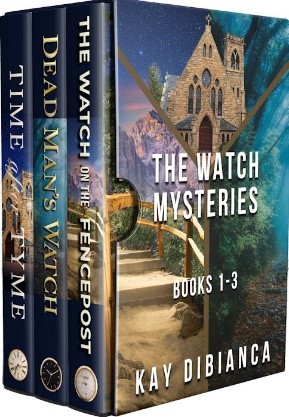
Speaking of names: Mr. Tyme was the unfortunate victim in the third book of the Watch series of mysteries. You might be able to guess why I came up with that name.

The e-book is on sale today for 99¢ 


How To Adopt a Writing Mindset

The word “success” has various meanings. Some writers stay laser-focused on the end result, but I propose that we step back, slow down, and view success as footprints in the sand. Each footprint represents one day.

Will you step into that print or let it wash away in the tide?

Success is about adopting a growth mindset. Every morning I watch the sunrise. Why? Because it grounds me with a positive mindset for the day. If you roll over and slap the snooze button, dreading the day ahead, you’ll start the day with a negative mindset. Things tend to roll downhill from there.

Have you ever heard a writer complain that they’re just not any good at writing? That’s called a fixed mindset. Their mind is made up. They will never be a good writer. Period. End.

A growth mindset is positivity based. The writer with a growth mindset says, “I may not be the best writer today, but I will be.”

See the difference?

The writer with the growth mindset is stepping into the footprint to see where it leads. The writer with the fixed mindset would rather complain about writing on social media and let the footprint melt away in the tide.

Success is not about how many books you’ve sold, the amount of traffic to your blog, or even an article going viral. Instead, success is about progress, growth, and moving forward. That type of success is sustainable and filled with joy. We often say writing is a marathon, not a sprint, and there’s a reason for that. By celebrating small successes along the way to that big dream, we give ourselves positive reinforcement, we cheer ourselves on, we maintain a positive and joyous mindset.

Embrace your potential.

Understand that good writing is not a natural talent. It’s earned through study and practice and showing up every day.

If you struggle with a negative mindset, flip the script.

  • Where the negative writer sees a problem, the positive writer seizes the opportunity to grow and learn.
  • When the negative writer doesn’t know an answer and gives up, the positive writer researches the problem.
  • Where the negative writer sees criticism, the positive writer appreciates the feedback.
  • Where the negative writer might feel jealously, the positive writer feels admiration.
  • Where the negative writer might find something too hard, the positive writer knows the hard work will be worthwhile in the end.

People in general who believe that their efforts and strategies can lead to success are likely to engage in learning activities and take on challenges with enthusiasm, so they learn more, which reinforces their belief that they can learn to write well. In fact, according to some psychologists, this confidence, or self-efficacy, is central to motivation and learning.

What is a writing mindset?

It’s how we think about writing. Because I start the day with a positive mindset, I can’t wait to get to my keyboard. I know I’m gonna have a great day. Why? Because a writing mindset supports creative work.

How we approach and frame our writing problems lead to positive or negative outcomes. Working on developing a growth mindset will support your writing process.

So, for example, if you believe you can only write on Monday mornings from 8-10 a.m., you’re already making decisions about your ability to write on a Tuesday or a Wednesday or a Saturday, so if you slip behind the keyboard on any other day but Monday, it’ll be harder to write. You’ve handicapped your creativity with a fixed (negative) mindset.

How do we develop a writing mindset?

It’s about thinking that supports creativity, productivity, and persistence within our written work. It’s about reframing negative thought patterns. For example, I am not a poet, but I would never say I couldn’t write a poem. I would never say I couldn’t write anything. That’s not a self-serving statement. It stems from the knowledge that I can learn to write anything I want. And so can you!

A writing mindset challenges negativity and forces us to examine where negative thoughts stem from. Fear? Anxiety? Low self-esteem?

Writers with a growth mindset rarely, if ever, experience writer’s block. Why? Because we’ve harnessed the power of self-belief and positivity.

Benefits of a Writing/Growth Mindset

  • You will feel more in control of your writing.
  • Writing won’t feel so elusive and magical (magical meaning, to the point where you can’t replicate it).
  • You’ll be able to decide when and where you write rather than waiting for motivation or inspiration.
  • You’ll learn to show up and put in the hours.
  • You’ll step into the next footprint to see where it leads.

Okie doke, my beloved TKZers. There’s your Monday morning pep-talk. Now, go seize the day!

Plotting With Post-it Notes

There’s a three-door closet in my office. At some point early in my writing career, it occurred to me that this closet would be particularly useful for creating a storyboard as I constructed my novels. Each door represented one act in the story.

I’m a hybrid plotter/pantser. I think of my method more as a process of iterative writing, and the storyboard works well for me. First, I come up with a general plot idea, post the first scenes on the storyboard, and start writing. Each day, I stand in front of the storyboard and think about how the story is developing. I decide on additional scenes, post them, write them, and repeat the process.

Here’s a brief summary of the post-it note storyboard I created for my fourth novel.

* * *

STARTING OUT

Once I decided on the first scene and a few characters, I set the storyboard up.. It was laid out horizontally, left to right. I use different colors to represent different elements of the story. Here’s a reconstruction of the initial setup for my WIP with definitions added for each color.

The three acts are in orange. The purple notes are plot points (e.g., hook, inciting incident.) The story is mainly written in first person, so the white notes are for those scenes. There are a few flashback scenes that are denoted by light pink. There has to be a fair amount of real estate for the white and light pink notes since scenes are the greatest part of the.storyboard.

Characters are in dark pink.

With this book, I had the idea to note particular places where I wanted the reader to wonder what’s going on (e.g., Why is she so mad? Why would thieves steal something of so little value?) I call those Suspense points, and they’re in blue.

I also wanted to mark where information is revealed to the reader. (e.g., Ah, that’s why he’s so distant.) Those Reveal notes are light green.

* * *

MAKING PROGRESS

I add or change the plot to satisfy something I’ve discovered, then I continue to write. Sometimes I decide on an ending before I’ve figured out all the details in Act 2. In the picture below, I’ve defined all the characters and have Act 1 pretty much under control. I’ve added scenes for Act 3, and I’ve begun work on the middle. Most of the purple plot points have been put in place.

This cycle continues until I think the story is completely fleshed out.

* * *

COMPLETING THE FIRST DRAFT


Here’s the storyboard as it appeared when I was close to completing the first draft.

You can see I added a couple of yellow post-it notes to the right-hand door. These are possible themes for the book.

At this point, the story is well-defined in my head, and I won’t bother changing the notes on the doors.

* * *

WHY DO I DO THIS?

There are several reasons I like the storyboard.

  1. I like seeing the entire story laid out in front of me as I’m building it. I can reacquaint myself with the sequence of events in just a few minutes.
  2. It helps me spot places where a new scene should be inserted or others should be rearranged.
  3. Moving things around is fast and easy.
  4. There’s something satisfying about the tactile nature of jotting down a note and adding it to the story or moving a note from one place to another.
  5. i can design my storyboard the way I want it without having to adapt it to an app.

There are ways to do this electronically. I work in Scrivener, and there’s a corkboard feature that displays scenes on an electronic corkboard. I suspect there are apps that let you lay out the entire story as I did here, but I can’t see the “big picture” without having a big space to lay it out on.


So TKZers: How do you plot your stories? Are you a plotter or pantser? Do you use an outline or some kind of index card layout to organize your thoughts?

What Do Ringtones Say About Your Characters?

One of my favorite ways to play with characterization is to assign my main character a ringtone.

In my Mayhem Series, Shawnee Daniels started with “You Oughta Know” by Alanis Morissette. Two books later, she switched to ZZ Ward’s “Put the Gun Down.” And now, she has “Ironic” also by Alanis.

Even without any other information, I bet you’ve already formed a visual of who she is, based on her ringtones.

If you guessed snarky and badass, you’re right. 😉

In my Grafton County Series, I used ringtones to show my main character’s emotional wellbeing. Sage Quintano has no designated ringtone for herself, but she constantly changes her Sheriff husband’s ringtone as a form of silent communication. She’s done it so many times, I doubt I could list them all, but let’s go through a few to show what she’s saying to her husband.

  • “Here Comes Goodbye” by Rascal Flatts

Considering this is a psychological thriller series, not romance, Sage used this ringtone to indicate fear.

  • “How Am I Supposed to Live Without You” by Michael Bolton

This ringtone showed Sage’s gut-wrenching devastation when their child was abducted.

  • “Just Once” by James Ingram

This ringtone showed Sage’s sadness about a rough patch in their marriage.

  • “Tonight I Wanna Cry” by Keith Urban

This ringtone indicates Sage’s sadness, too.

  • “Live Like You Were Dying” by Tim McGraw

Though this is an uplifting song, Sage used the ringtone to show a ticking clock on her life.

  • “If I Die Young” by The Band Perry

Sage used this ringtone to show fear.

  • “Let it Hurt” by Rascal Flatts

This one still gets me every time. Sage used this ringtone to show her devastation over an incident involving Ruger, one of her beloved dogs. Don’t worry. He survived. 😉

  • “All of Me” by John Legend

Sage used this ringtone to show her husband she’s feeling frisky.

  • “Only Women Bleed” by Alice Cooper

Sage used this ringtone to show her fear while being stalked by a killer. The killer also sent her this song, so it worked two-fold.

  • “Hurt” by Christina Aguilera

If you know, you know. This song shows soul-crushing sadness, and Sage used it to portray exactly that.

  • “Don’t Let the Sun Go Down on Me” by Elton John

Sage used this ringtone to show panic. If her husband didn’t hurry, she may die.

To add validity to this post, I ran a search to see how other writers might use ringtones. Couldn’t find what I was looking for, but Forbes had an interesting article.

Research indicates that people do judge mobile users based on their ringtone. In 2005, U.K.-based carrier Tesco Mobile surveyed 1,000 customers and discovered that 21% of them thought having a standard ringtone was “uncool.” The survey also concluded that people who use their own recorded voice as a ringtone are self-obsessed, and that users who constantly change their rings might be flighty and unreliable.

No rocket science, that. But there’s no doubt that ringtones have become big business because people want to say something personal about themselves. So we wondered, what does your ringtone say about you?

If your phone plays a classic rock tune, you’re showing your age, but you get points for figuring out how to change the ringer, Gramps.

If your phone is still playing “Jingle Bell Rock” in July, you’re not going to impress people with your productivity.

If your ringtone is a current hip-hop or R&B hit, you’re young at heart, but you’re not particularly original. Hip-hop ringtones accounted for more than half of the $300 million U.S. market in 2004.

If your phone plays the sound of an old mechanical phone bell, you’re not as funny as you think you are.

If your phone plays the theme song to a television show, you’re not going to impress anyone with your intellectual acumen. Perhaps a Mozart or Beethoven ringer would do some damage control.

If your phone never leaves vibrate or silent mode, you may be the kind of important person who can’t afford to waste time answering a phone call right now. Or maybe you just think you’re that important. However, you may also be considerate and respectful, the kind of person we’d like sitting behind us in a movie theater.

Unfortunately, we tend to get saddled with seatmates whose phones play the popular “Crazy Frog,” the clucking chicken, or any number of other annoying animal noises. If you’re one of these folks, you may be a sociopath.

Hope this post gives you some fun ideas on ways to use ringtones for your characters!

Have you ever used ringtones in your writing? Please explain how/why.

Do you change your own ringtone? Share the song!

If you had to choose one song to describe you, what would it be?

ProWritingAid Premium How-To

Terry’s last post spurred spawned this one. With many editing softwares available, it’s difficult to decide on the one that will work for you. I use ProWritingAid Premium, though like Terry, I take the advice that resonates and ignore what doesn’t. The worst thing a writer can do is to depend on automated software to do all the heavy lifting, or it’ll strip out your voice and style choices. The nice part of ProWritingAid is its ability to learn. The more you use it, the less it flags nit-picky things. You can also tell it not to check for certain things.

For example, I include quotes with some chapter headings as a subtle POV signal to the reader. Only one character has quotes in his chapter headings. Every single time, ProWritingAid flags the quotation marks for not being closed at the end of each line, even if it’s mid-quote. I don’t want to tell the software to ignore the quote rule or it won’t catch places in the narrative where I may have forgotten the end quote. See what I’m sayin’? Be careful of which rules you set to ignore. You may need that second pair of eyes later.

Whether you use the free or paid version, the first step is to download the software (available for Mac or PC). Once the software downloads directly into MS Word, it’ll add a new button to the top ribbon. Also available for Google Docs, Scrivener (desktop), or as an extension for Chrome, Firefox, Safari, or Edge.

Here’s what it looks like in Word.

(click to enlarge)

When you want to use the software, click the button. Easy peasy. If you don’t want to download the software, you can use the app instead, which opens in a new tab/window. In the app, you’ll have to upload a doc. When downloaded to Word, the software will read whatever document you’re in.

Once you open the software, click the dropdown menu. Since I write thrillers, I keep it set to Thriller, but you can choose any genre of fiction, formal or business writing, other nonfiction, or even email.


After PWA processes the document, it’ll show you suggestions for improvement.

Click to enlarge


Because I’m using the software as I write this post, it’s showing suggestions for all of it. LOL

If I click the first suggestion, it looks like this…

click to enlarge


The program didn’t like the spaces between ProWritingAid, so I accepted the revision by clicking the highlighted suggestion. Boom — it corrected the spelling for me. The next suggestion was “nice” in the opening paragraph of this post. I clicked “ignore,” but check out the alternatives…


(click to enlarge)


Let’s move on to fiction… For this post, I pasted a few paragraphs from the WIP. Keep in mind, I’m in the drafting stage. 😉

A gunshot coiled through the dark forest, and he ducked, the bullet sailing over him. Not that I could pinpoint something that small, but it sure didn’t hit him. Before the scumbag had time to fire a second shot, Mr. Mayhem dove on top of him, tackling him, wrestling in the dirt, arms, legs, and fists flailing.

My breath stalled somewhere in my chest. Where’s the third guy?

Through the binoculars, I scanned left.

The software suggested I add “the” before “left,” but it reads fine without it. If my editor suggests the same, then maybe I’ll change it.

No beam of light. I swung the binoculars to the right. No light-beams. Where the hell did he go? Once I lowered the binoculars, my blood turned to slush. Camouflage boots clomped through thick underbrush—twenty feet from the oak tree!—a sawed-off shotgun rested on linebacker shoulders. Behind him, Poe emerged, divebombing the intruder, crow feet stomping on his head.


PWA caught the missing hyphen in dive-bombing. I accepted the change by clicking the green highlighted area. (click to enlarge)


The mobbing technique allowed me enough time to climb down, Shicheii’s quiver slung on my back, his bow held tight in my hand.

Shicheii means maternal grandfather in Diné, so I added his name to dictionary like this..


(click to enlarge)


At fifteen feet away, I stopped, reached behind me, and slid out an arrow. Aimed low to avoid Poe. Fired. The razor-tipped arrow sailed through the air, striking the scumbag in the thigh.

Shoot. Missed my mark.

I reloaded. Aimed a scooch higher. And fired. This time, the arrow zipped right past him, missing his hip by an inch, maybe two.

Since scooch is a word, and it’s spelled correctly, I added it to dictionary.


“Screw this.” I dropped the bow, squirmed my arms out of the quiver straps, and charged straight at him, bellowing a deep, raspy roar, my voice coiling through the trees, boomeranging right back as I lunged at him.

Arms spread like wings, I flew through the air without considering the consequences. If he raised that shotgun, he could kill me. Didn’t matter. Everything within me screamed for me to protect my family, and sheer animalistic instinct took over. I landed on his chest, and we both tumbled backward. 

I ignored the suggestion to remove “through the air” after “flew” because it doesn’t sound right to my ear.

Here’s where you need to be careful. Don’t accept that the software knows better than you. Since this is an early draft, I’ll probably end up rewriting the sentence to use swan-dive instead of flew (paints a better picture), but that’s irrelevant. The point is, question every change to remain true to your voice, your style.

While straddling his hips, I threw a mean right hook, sucker-punched him—almost broke my friggin’ knuckles on his blocky nose—and I swear he laughed. Over and over, I hammered his face in rapid succession, first the right, then left, alternating between the two to keep him off-balance.

“Who’s laughing now, asshole?”

Probably shouldn’t’ve gotten cocky, because he muscled me onto my back. Drilled me in the right temple with his fist, and tiny specks of bright, white light danced before my eyes. That only pissed me off more, and I chomped down on his forearm, my teeth sinking into his flesh.


Valid suggestion, PWA. The comma is unnecessary after “bright.”


<– At the bottom of that pane, it says Open Full Editor.

When I click that button, it opens in a new window.


(click to enlarge)


Notice the side column. I’ll scroll through for you…


Everything looks good, except dialogue tags. But I don’t have any dialogue tags in the excerpt. Hmm, let’s see what it says by clicking the dialogue box in the top-right corner.


Okay, it’s just explaining why “said” and “asked” are best to use. Not sure why it says 100% in the negative. There are no dialogue tags. Perhaps that’s why. See what I mean about not blindly trusting editing software? You—the writer—need to weigh each suggestion. If it works, accept the change. If it doesn’t, ignore and move on. Your human editor should flag it again if there’s a problem.

Now, if you’re just beginning your writing journey, click each dialogue box for a full explanation of why to remove things like weak adverbs from your writing.

Here’s what it says under “Weak Adverbs”:


(click to enlarge)


Check out the top ribbon of the full editor. You can tell the software to search for anything. Overused Words, anyone? We’re all guilty of littering the first draft with crutch words.


(click to enlarge)


Check out the Thesaurus. Not only does it tell you how many nouns, verbs, adjectives, and adverbs the document has, but look at all the suggestions it offers for the word “different”.


(click to enlarge)


This software checks for everything, from sticky sentences, homonyms, echoes, and alliterations, to structure, pacing, and a visual representation of sentence length. Seriously, you could spend hours dissecting your prose. I don’t, but if you’re just learning the craft of writing, spending time learning the basics is time well-spent. I love ProWritingAid Premium because it catches typos, commas, grammatical errors, awkward sentences and/or phrases, or clunky words written when your soul’s on fire and your fingers are sailing across the keyboard. You know what I’m talkin’ about, that sheer passionate writing that made so much sense in the moment, but in the cold light of day, needs tweaking.

Let’s talk about money for a minute. I pay yearly, but they also have monthly plans. I buy yearly plans at Christmastime, because it’s, like, $60 compared to $120 ($10/mo). Or try the free version first. There are some limitations to the free plan. You can only upload five or six chapters at a time, rather than uploading an entire 90K word novel, and you won’t have access to everything in the Full Editor ribbon. But at least it’ll give you the feel of how it works. I’ve used Grammarly, too, and ProWritingAid offers a lot more bang for your buck, IMO.

So, that’s a sampling of ProWritingAid Premium. Hope you found it useful! Do you use editing software? If so, which one?


Writers’ Longitude

“at sea” – an idiom meaning “confused” or “lost”

* * *

I recently read a book entitled Longitude by Dava Sobel. It’s the story of an invention that first made it possible for sailors to pinpoint their location at sea. According to Sobel,

“Lines of latitude and longitude began crisscrossing our worldview in ancient times, at least three centuries before the birth of Christ. By A.D. 150, the cartographer and astronomer Ptolemy had plotted them on the twenty-seven maps of his first world atlas.”

Knowing one’s position on the face of the earth is just a matter of knowing the latitude and longitude. . (You’ll remember latitude are the horizontal lines around the earth, all parallel to the equator. Longitudinal lines (meridians) are lines drawn from the North Pole to the South Pole.)

During the Age of Exploration, roughly from the 15th to the 18th centuries, one of the major seafaring problems was the inability to establish the ship’s position on the high seas. Latitude was fairly simple to determine by the height of the sun as it progressed across the sky or by the position of certain stars, but there’s no similar way to determine longitude. Once a ship sailed out of the sight of land, it had no reference point for which to understand its east/west position.

Since longitude is a measure of time, not distance, an easy way to determine it is to compare the time of day on board ship with the time at the home port from which the ship sailed. This can be accomplished by setting a clock to the home port time before sailing and keeping that clock on the ship. The actual time aboard the ship is determined by the position of the sun and compared to the clock. Each hour of difference corresponds to fifteen degrees of longitude. Sounds easy, right? Unfortunately, there were no clocks in existence during the early days of the great explorers that would keep accurate time on board a ship. The movement of the ship and the changes in temperature, pressure, and humidity affected the clocks’ mechanisms, and the results were unreliable.

Some of the best minds of that era, including the great Sir Isaac Newton, had tried to find an astronomical solution to the problem, but the quest seemed out of reach. (Pun intended.)

It was such a big problem that in 1714 the British Parliament passed the Longitude Act which offered a lucrative prize for the first person who could deliver a practical means of determining longitude at sea.

Into this environment stepped John Harrison, a carpenter and self-taught clock maker, whose skill and determination were just the attributes needed. Harrison solved problem after problem in his dogged persistence, and finally in 1736, his first clock, unimaginatively named the H-1, sailed aboard the HMS Centurion to Lisbon and returned aboard the HMS Orford. The clock performed admirably, and the Longitude commissioners asked Harrison to continue his work.

Over the course of the next twenty-five years or so, John Harrison created a total of three more clocks. The fourth one (you can guess the name: H-4) was actually a watch, and it was the H-4 that sailed to Jamaica in 1765 and performed within the limits required by the Longitude Board for the prize. John Harrison had solved one of mankind’s thorniest problems, and he likely saved the lives of many sailors in the process.

John Harrison is revered in England for his work. All four of his sea-faring clocks reside in the Royal Observatory in Greenwich, England. In 1884, the Prime Meridian (longitude 0°) was defined as the longitudinal line that runs through the Royal Observatory in Greenwich. Hence, our definition of Greenwich Mean Time (GMT) from which all other time zones are offset. If you visit the Royal Observatory, you can have your picture taken astride the Prime Meridian, one foot in each hemisphere.

* * *

As I was reading about the longitude problem, I couldn’t help but notice the similarity to writing. PJ Parrish quoted Walter Mosley in her Kill Zone Blog post last week:

Writing a novel is like taking a journey by boat. You have to continuously set yourself on course. If you get distracted or allow yourself to drift, you will never make it to the destination.

So how do we as authors keep ourselves on course? It’s easy to feel like you’re “at sea” when you’re in the second act muddle, not sure how to get to your destination, or even exactly where your destination lies. But there are experts who can help us find our writing longitude. I have a stack of craft books I love to refer to. Here are a few:

  • Plot and Structure by James Scott Bell
  • Self-editing for Fiction Writers by Renni Browne and Dave King
  • Bird by Bird by Anne Lamott
  • Fire Up Your Fiction by Jodie Renner
  • Writing Novels That Sell by Jack M. Bickham
  • Techniques of the Selling Writer by Dwight V. Swain
  • On Writing by Stephen King

 * * *

So TKZers: What resources do you use to chart your course across the great ocean of writing a novel?


And speaking of time … 

The Watch Mysteries is a box set of three complete novels in which clocks, watches, and time play an important role.


If you’re having trouble posting a comment, please be patient and keep trying. We’re sorry for the inconvenience, but we’re having technical problems and we’re working to resolve them.

Story Structure in Humans

As I tell this story, think back over your life. We’ve all gone through hard times, some worse than others. Humor me, and if you’re struggling with story structure, you’ll at least begin to grasp it by the time you’ve read this post. That’s my hope, anyway.

Humans have structure — flesh, organs, tissue, arteries, veins, water, and muscle all have their place. No matter what race, religion, or creed, we are the same. What braces up our bodies is our skeleton — story structure.

We may look different on the outside — some have big noses, full lips, different skin and eye color — but we all started the same way…

As an egg — story idea.

Once fertilized, the egg grew in the womb, but still hadn’t fully formed yet — concept.

We evolved into a living, breathing human and entered the world — character.

We each grew to think and feel differently, have different world views, religions, heart, and soul — theme.

And we lived our lives, our story — premise.

Some people are more giving, outwardly loving. Some are more reserved. But it’s all because of how our parents raised us, or because a tragedy changed us — backstory.

So, we’ve been born and we’re growing up, maturing or have already matured. Whichever applies to that specific time in your life.

We scored a job. Perhaps married and had children. But we retained our inner demons, our flaws — Act I — 1st quartile: Set Up << which begins character arc, introduces characters, sets up FPP, foreshadows future events, etc. 

And then something happened to throw our lives out of balance. This defining moment demanded that we act. We could not hide from it. It forced us to do something — First Plot Point, at 20-25%.

After this crucial moment occurred, an antagonist force entered our lives, or it was there all along and only now revealed itself — 1st Pinch Point, at 3/8th mark or 37.5%.

We reeled, flailed, resisted, and failed — Act II — 2nd quartile: Response 

We either did something to fix the problem, or the problem worsened. All the while we kept thinking things could not get much worse. Or we believed we’d finally solved the problem. But it was a false victory or a false defeat — Midpoint, at 50%.

photo-1433424007598-bd5d102e8597

So, we needed to attack the problem head on, because it’s wasn’t going away — Act III — 3rd quartile: Attack << our true character changes again and we become a warrior.

We stopped our pity party because it wasn’t doing us any good. Besides, we’re stronger now than when we started this quest.

And then, the antagonist force emerged again. Only now, it was more terrifying than ever because it too had upped its game — 2nd Pinch Point, at 5/8th mark or 62.5%. Learn more about Pinch Points.

We realized we hadn’t actually solved the problem. We’d only made it worse. Or the victory was short-lived because we didn’t realize X,Y,Z was around the corner, waiting to explode. Things looked bleak. Could this situation get any worse? — All Is Lost Moment.

But how did we really feel about this? What sort of impact did it have on us? — Dark Night of the Soul.

Then something changed. Or we discovered something new that helped us see a glimmer at the end of a dark road — 2nd Plot Point, at 75%.

file0002020549842

In fact, there was a way we could fix our lives — Act IV — 4th quartile: Resolution << this act completes character arc

The only way to defeat the antagonist was to overcome our fears, inner demons, flaws, and meet this force head on. We had to fight this battle (not be a bystander), with everything we’d learned in life thus far, about ourselves and the world around us — Climax.

After which, we lived happily ever after, or as happy as we could be in our new world. We grew as individuals, faced our fears, and had come out stronger for the effort. We’d settled into our new lives — Resolution.

Boom. The end. Obviously, we need a compelling hook first, but that’s it in a nutshell.

Could you think of a time in your life when this applied to you? Hold tight to that memory, and you’ll never forget story structure at its basic level.

“The more Shawnee digs, she ends up with more questions than answers and then add bloody body parts showing up on her doorstep, crows stalking her every move, unreachable friends, a serial killer on her heels, harrowing situations, and she’s just really not sure she’s up to the task at hand. Lines blur with truth and lies, deceptions and facts, and everything about her past will come into question. I loved everything about this book!” — Denise H, book reviewer

On sale for 99c on Amazon

Write What You’re Passionate About

It isn’t easy to expose your heart, but the rewards far outweigh the risks. Let me say up-front, there’s nothing wrong with writing to entertain, to allow readers to escape their lives for a while. That’s not what I’m saying at all.

For me, I wanted more. I write to touch lives. I write to make a difference. The latter of which compelled me to write Unnatural Mayhem, my new psychological thriller. The underlying message—the pulse, if you will—strikes at the core of who I am, what I care about, and who I aim to protect. Writing this story required me to peel back even more layers of my heart and soul. I thought, if that’s what I had to do, then so be it. I set out to write a book that matters, a book that could help protect the voiceless, the most innocent among us.

Here’s a snippet:

Imagine a world without animals? No pattering of paws, no wingbeats, no singing in the treetops, no howls at the moon, no buzzing in flower blossoms, no slithering through garden beds, no sympathetic eyes begging for a treat, no unconditional love or companionship, and the oceans, ponds, and lakes devoid of life. The Natural World as we know it would forever be silenced. For eternity.

That passage still kills me, because I can’t even fathom living in a world without animals. I don’t know about you, but that’s not a world I want any part of. Yet here we are, with numerous species on the brink of extinction.

Writing about subject matters you’re passionate about doesn’t mean slamming your reader over the head with your message. Your passion may influence the story, but we must let readers come to their own conclusions in their own time, even if those conclusions differ from ours. Hence why the story needs a compelling plot, or all the passion and heart you infuse into the story won’t make a dang bit of difference.

In Unnatural Mayhem, I focused on the trophy hunting of crows as a starting point for where I’m taking the series. I don’t need to remind you of my undying love for crows, right? Needless to say, the quest shredded my soul, but it also drove my characters through a complicated maze to stop this senseless killing—by any means necessary—before one black feather hit the earth, my passion and their passion intermingled on such a deep, personal level.

Writing about subjects you’re passionate about is also spiritually fulfilling. When I finished Unnatural Mayhem, a wave of accomplishment washed over me, like I’d written the right story at the right time to effect change, and destiny tapped me on the shoulder and said, “Well done.” Like I was always meant to write this story. Like I was always meant to take my Mayhem Series in this direction. Fate.

Have you ever felt this?

Here are a few tips to keep in mind when writing about subjects you’re passionate about:

#1: Find a subject you’re passionate about. Construct the plot around it. Create a cast of characters that would be most affected by it. In my case, I already had the perfect characters to tell this story.

#2: For hot button issues, like trophy hunting and poaching, you need to decide what to show the reader and what to leave out. No one likes dead animals in books. Most of all, me! The trick is to find ways to tiptoe around obvious triggers while still remaining true to the story.

#3: Balance and forethought are key. For every emotional, spiritual, or suspenseful scene, I balanced with some of the most hilarious scenes I’ve ever written. That balance gives the reader time to breathe and makes the book more enjoyable. ARC readers tell me they experienced all the feels, from heartbreak to joy and every emotion in between.

#4: The ending always matters, but it becomes even more important when writing about subjects you’re passionate about. We can’t leave the reader heartbroken. What fun is that? If we leave them uplifted, they’ll look forward to the next book in the series.

#5: When your emotions are tangled up in your characters, let the words just flow. Don’t worry about editing, word choice, or sentence structure. You’re in the zone, emotions spilling on the pages, fingers trying to keep up with your brain. Write first, edit later.

This is my last post of 2022. From my family to yours, Happy Holidays!


With the fate of the Natural World at stake, can a cat burglar, warrior, and Medicine Man stop trophy hunters before it’s too late?

Explosive news of a crow hunt rings out in the White Mountain Region of New Hampshire, and one hundred crows gather to put an end to it. With so many lives at stake — including Poe’s — Shawnee and Mayhem must work together to stop the trophy hunters before they obliterate the local murder.

Taking on twenty-five experienced hunters armed with shotguns is no small feat. If they fail, Poe may lead his brethren to their death.

No matter what it takes, this group must be stopped. But what if Shawnee and Mayhem aren’t seeing the full picture? What if these men have secrets worth killing over?

Unnatural Mayhem is on preorder for $1.49. Releases tomorrow (Dec. 13, 2022).

Running and Writing – The Finish Line

“The miracle isn’t that I finished. The miracle is that I had the courage to start.”
—John Bingham, running speaker and writer

* * *

No matter how long or short the race or how well or poorly the runner performs, the finish line is always a welcome sight. Crossing the line is a triumph in itself, but once there, it’s time to do more than enjoy the refreshments. Here are a few things to check off the list:

  1. Celebrate the completion of another race.
  2. Congratulate the other runners on their success. (In long road races, you will often see the leaders cross the finish line and then jog back down to course encouraging the slower runners.)
  3. Analyze the results. Did you prepare and train well enough? Did your strategy work? Did you give it your all? The answer is often “no” to one or more of these, but that’s good fodder for #4:
  4. Plan for the next race. Write down your goals and schedule the next competition.
  5. Get to work.

* * *

As we come to the finish line of 2022, it’s time to reflect on what we’ve done, what worked, what didn’t work, and start to plan for 2023.

I’ve mentioned here before that each year I create a list of goals that I tape to the back of my office door. I glance at them now and then throughout the year, and their mere presence seems to keep me from going too far off-track. I took my 2022 list down today and reviewed it. I’ve met most of the goals, some I missed completely, and several I changed during the year. Here are a few I’m celebrating:

  • Contributing a bi-weekly post to the Kill Zone Blog. I loved the challenge of coming up with something new every other week and interacting with all the folks who comment. I particularly enjoyed co-writing A Mystery of History with Dale Ivan Smith and working with BK Jackson, Debbie Burke, Priscilla Bettis, Becky Friedrichs, Patricia Bradley, and Robert Luedeman on the TKZ Handwriting Experiment.
  • It must have been Steve Hooley’s influence that inspired me to try my hand at a fantasy short story, The Clutter Busters, in the Collierville Christian Writers Anthology Stories from the Attic. (Since my story is the first in the anthology, you can read it by using the “Look Inside” link on Amazon.)
  • Created a Box Set of The Watch Mysteries, Books 1-3
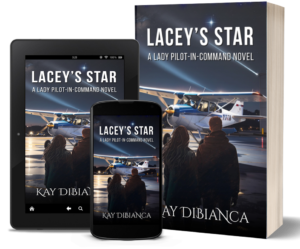
  • Although I planned to begin the fourth book in the Watch Series of Mysteries in 2022, I changed that goal and instead worked on the first book of a new romantic suspense series, Lady Pilot-in-Command. I finished the first draft and sent it off to my editor a couple of weeks ago.
  • Continued my monthly Craft of Writing Blog series of interviews on my website. This year the blog featured authors of mystery, suspense, thriller, and fantasy novels. Most of the guests are regulars on TKZ, and their answers to the interview questions are enlightening.
  • Attended two writers’ conferences: Killer Nashville and the American Christian Fiction Writers conference.

Lest you think everything was sunshine and roses, here are a couple of notable misses:

  • Even though I submitted several times during the year, I was unable to get a Chirp deal for the audio version of Dead Man’s Watch.
  • I didn’t publish a novel in 2022. That wasn’t actually one of my written goals, but maybe it should have been:

Well, that’s a pretty good summary of my writing year. I’ve started jotting down my goals for 2023 (in handwriting, of course), combining realistic expectations with flights of fancy. Walking up to the starting line now …

So TKZers: Congratulations on completing another year of writing!

What are you celebrating as we come to the end of 2022?

What are your plans for 2023?

* * *


The Watch Mysteries Boxset: Books 1-3 Kindle edition on sale now.


Redux: Does Creativity Pass Through Generations via DNA?

With a deadline nipping at my heels, and losing two days to the holiday, I’m sharing a post I wrote in 2018. Still as fascinating today, IMO. Enjoy!

This video sent me down a rabbit hole of research.

As you can imagine, my writer brain lit up. Turns out, the research was even more fascinating than the video. A scientific study showed that a traumatic event could affect the DNA in sperm or eggs and alter the brains and behavior of subsequent generations. This breakthrough is an important discovery in the fight to treat phobias and anxiety.

Do you fear spiders, heights, or small spaces for no apparent reason? This may explain why.

Neuroscientists trained mice to fear a cherry blossom scent prior to copulation. While breeding these mice, the team at the Emory University School of Medicine looked at what was happening inside the sperm. Incredibly, the sperm showed a section of DNA, responsible for sensitivity to the cherry blossom scent, was indeed more active.

The mice’s offspring, and their offspring — the grand-mice, if you will — were all extremely sensitive to cherry blossom and avoided the scent at all costs, despite never experiencing a problem with it in their lives. They also found changes in brain structure.

In the smell-aversion study, scientists believe either some of the odor ended up in the bloodstream, which affected sperm production, or the brain sent a signal to the sperm to alter the DNA.

The report states, “Our findings provide a framework for addressing how environmental information may be inherited transgenerationally at behavioral, neuroanatomical and epigenetic levels.”

Environmental change can also critically affect the lifestyle, reproductive success, and lifespan of adult animals for generations. Exposure to high temperatures led to the expression of endogenously repressed copies of genes — sometimes referred to as “junk” DNA. The changes in chromatin occurred in the early embryo before the onset of transcription and were inherited through eggs and sperm. In mealworms, they traced the DNA changes through 14 generations.

Why mealworms? It’s quicker to test generation after generation on an animal with a short lifespan.

Another study showed that a mouse’s ability to remember can be affected by the presence of immune system factors in their mother’s milk. Chemokines — signaling proteins secreted by cells — carried in a mother’s milk caused changes in the brains of their offspring, affecting their memory later in life.

Memories are passed down through generations via genetic switches that allow offspring to inherit the experience of their ancestors. These switches, however, can be turned on and off, according to Science Daily. Scientists have long assumed that memories and learned experiences must be passed to future generations through personal interactions. However, this research shows that it’s possible for some information to be inherited biologically through chemical changes that occur in DNA.

Creativity counts as a learned behavior, but I also believe it goes deeper than that. Think about how deeply you feel about your writing. For most writers I know, when we’re “in the zone” our soul does the writing. One could argue we’re merely vessels who type. Have you ever read a passage that you don’t remember writing? Our ability to create burrows into the core of who we are, and thus, leaves an indelible mark. How, then, can we not pass that part of ourselves to future generations?

How many of you have creative folks in your family tree, be it writers, artists, musicians, singers, or other forms of creativity?

To test my theory, I asked the same question to my fellow TKZ members. Please note: this revelation occurred to me yesterday, so I’ve only included the members who saw the email in time. Hopefully, the others will add their responses in the comments.

For those I did catch on a Sunday, check out what they said …

Elaine Viets said, “My late cousin Kurt was a talented wood carver, and my grandfather was known as a great story teller in the local saloons.”

I love wood-carved pieces. The smell, the texture, the swirl to the grain. It’s not an easy creative outlet to master.

Jordan Dane comes from a long line of creative people. Here’s her answer: “My paternal grandfather was a writer for a Hispanic newspaper. My dad was an architect and artist (painter), my older brother went into architecture too, specializing in hospital design. My dad is a real renaissance guy. He could sculpt, paint, draw and he has a passion for cooking. My older brother Ed and I share a love for singing. I sang in competitive ensemble groups. He played in a popular area band and has sung in barbershop quartets. My mom was the original singer in our family. She has a great voice.”

Joe Hartlaub has two talented children. Here’s what he said, “Annalisa Hartlaub, my youngest daughter, is a photographer. My oldest son Joe is also a highly regarded bass guitar player locally.”

He’s being modest. When I checked out Annalisa’s photographs on Facebook and Instagram they blew me away. A photography project she created at 15 years old also went viral.

When I prodded further, Joe added, “My maternal grandfather played guitar, but we never knew it until we came across a picture of him taken at a large Italian social club gathering where he was strumming away. He was in his twenties at the time. As far as the source of Annalisa’s talent goes…her mother is a terrific photographer. The conclusion is that Annalisa gets the form of the art from her mother and her creativeness from me.”

Laura Benedict stunned me with her answer. “Someone doing genealogy linked my maternal grandfather’s family to Johann Sebastian Bach.”

Talk about a creative genius!

Laura added, “I remember a few very small watercolors that I believe my maternal grandmother painted. Trees and houses. But while we were close, we never talked about art. My aunt also did some drawing.”

John Gilstrap also came from a long line of creative people. Here’s his answer…

“My paternal extended family has always been fairly artistic.  My grandfather, I am told–he died long before I was born–had a beautiful singing voice, and for a period of time worked whatever the Midwest version of the Vaudeville circuit was.  My father, a career Naval aviator, wrote the Navy’s textbook, The Principles of Helicopter Flight, and had two patents on helicopter cargo handling operations.  He passed away in 2006.

My brother, four years older than I, plays a number of instruments, but his primary proficiency is the piano.  His daughter is a very accomplished cellist who makes her living as the director of a high school orchestra that consistently kills at competitions.
Closer to home, my only musical talent is to be a passable tenor in the choir.  For years, I sang with a choral group that performed all over the DC area, including a number of gigs at The Kennedy Center.  As a high schooler, our son was a pretty good cellist, but he walked away from it in college and never really looked back.”

Although I wasn’t able to catch her in time, PJ Parrish is the sister team of Kris Montee and Kelly Nichols.

As for me, my maternal grandfather was a highly regarded artist (painter) in his time. My mother was a beautiful writer, even though I never knew it while she was alive. After she passed, I discovered notebooks full of her writing. UPDATE: In 2020, two years after I wrote this post, I found out she worked as an editor for many years.

So, can creativity be passed through our DNA? Judging by this small pool of writers, I find it hard not to entertain the possibility.

I’m betting the same holds true if I expand the test subjects to include you, my beloved TKZers. How many of you have creative folks in your family tree?

Wings of Mayhem by Sue Coletta

FREE on Amazon.

When the cat burglar and the serial killer collide, HE looks forward to breaking her will, but SHE never gives up. Not ever. And especially not for him.