The Valley of Elah


“Skill and confidence are an unconquered army.” –George Herbert

* * *

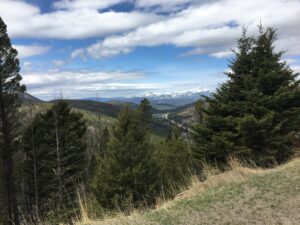
My husband and I hired a private guide to take us on a one-day tour since we were pressed for time. When our guide stopped her car by the side of the road next to a desolate field between two hills, we thought she must have made a mistake. There were no tour busses and no other people around. The three of us got out, walked into the valley, and stopped by a dry creek bed filled with smooth stones.

It was hard to believe the undistinguished field in which we were standing was the location of one of the most famous battles in the history of the world. This was the Valley of Elah, the site where David fought Goliath.

We’re all familiar with the story. Goliath wasn’t just some big guy. He was a giant who taunted his enemies and called them cowards. They were understandably terrified of him. All except David, the young shepherd boy who had no experience in warfare but  convinced King Saul that he (David) could defeat the Philistine giant with only his sling.

“Then he took his staff in his hand, chose five smooth stones from the stream, put them in the pouch of his shepherd’s bag and, with his sling in his hand, approached the Philistine.” 1 Samuel 17:40

I’m not sure I appreciated the magnitude of David’s accomplishment until I picked up a stone from that same creek bed and realized how small it was. And yet one of those stones, slung more than three thousand years ago, saved the young nation of Israel and changed the world.

* * *

Many parents share the story of David and Goliath with their children to instill courage and faith in their offspring. They want them to know they will face giants in their lives, but they can overcome. However, one thing we don’t often talk about when we relate the story is the skill young David had with a sling.

David was a shepherd, certainly a lonely occupation. He must have spent many months alone, looking after his father’s flocks and protecting them from wild animals. David even explained this to King Saul who had doubted his abilities:

Your servant used to keep sheep for his father. And when there came a lion, or a bear, and took a lamb from the flock, I went after him and struck him and delivered it out of his mouth.” ! Samuel 17:34-35

I’m guessing David got very good with his sling during those months and years. Besides fighting wild animals, I can envision him setting a tin cup on a tree branch and practicing his slinging expertise day after day.

In contrast to the slow-moving, armor-burdened Goliath, David was quick and agile. His stone wouldn’t be effective against Goliath’s armor, but he had a target that would bring down his opponent: Goliath’s unprotected forehead. It only took one shot, and the giant was dead.

* * *

Developing skill is obviously important in any field. I recently read an article on this subject on the Personal Excellence website. A couple of sentences stood out to me.

“… people are often impressed by what others have accomplished without realizing what they went through to get there. We see their accolades and victories, and make gross assumptions about what it takes to succeed.”

I think this is especially true of writers. We all know how to string words together to make sentences, and we’ve read lots of good books. How hard can it be to write one of our own? But TKZ regulars know it is oh, so much more than that.

I was looking for some straightforward guidance about the development of skills when I stumbled on the site of the Morningside Graduate School of Biomedical Sciences that enumerated the necessary ingredients. Here are the basics they listed:

  1. Get training.
  2. Practice.
  3. Get feedback.

That looks pretty simple, but we know each one of those items is a world of its own.

So, TKZers: Do any of your books have a David vs. Goliath theme? How did your hero defeat the giant? (Or did he?)

How do you train for your writing? 

How much time to you spend practicing? What kind of practice do you recommend?

How do you get feedback?

5 Tips to Improve Newsletters – Part I

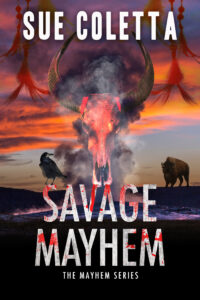
When I bought back my rights to my Mayhem Series, one of the first things I did was to revamp my newsletters.

So, let’s discuss five tips that improved my newsletters. Hopefully, they’ll work for you, too.


  1. Consistency

Readers like to know when they’ll hear from you. Whether you send newsletters weekly, bi-monthly, or monthly, sticking to a schedule improves opens and click rates.

  1. Choose a Theme

The biggest complaint from writers is they don’t know what to put in their newsletters. As a result, so many end up being “Buy my book!” emails. Once I chose a theme, my newsletters became a breeze—even fun—to write.

Base your theme around your genre. If you write in multiple genres, it’s a good idea to segregate your list into genre groups. For example, a newsletter about fictional characters might not go over well for your nonfiction fans.

Because I write Native American metaphysical thrillers exclusively now, I share fascinating animal facts and tidbits about the Natural World. Once I based my newsletters around a theme, my opens and click-through rates improved tenfold. And it can work for you, too!

Open Rate

An email open rate is the percentage of subscribers who open a specific newsletter. Tracking open rates will give you a better understanding of how often your audience look forward to your emails, how successful your subject lines are, and what type of content is the most effective. Most email providers supply open rates for you.

A good email open rate falls between 17-28%. The average is 21.5% across all industries, according to the Email Marketing Benchmarks Report of 2022. For Media, Entertainment, Publishing, the average is 23.9%.

Click-Through Rate (CTR)

A CTR is the measurement of how many subscribers clicked on a hyperlink, call-to-action prompt (CTA), or image within your newsletter. The main goal for you is to measure engagement. By tracking click-through rates, you can gauge how your audience responds to your content. If you’re getting low engagement, it might be time to rethink what you’re sharing. Believe it or not, a good CTR is 2.9% for Media, Entertainment, Publishing.

Click-to-Open Rate (CTOR)

Most authors don’t pay enough attention to CTORs. It’s a mistake to ignore this valuable information. A click-to-open rate measures the effectiveness of your content. Because it’s based on the number of unique opens, CTOR is a good indicator of how interesting your content is to your subscribers. If your links, layout, copy, and overall content are interesting, your readers will want to click through to learn more.

Some email providers will show you the CTOR, some will not. To measure your CTOR, divide the number of unique clicks by the number of unique opens. For example, 100 clicks divided by 180 opens = 55%. As with all the metrics listed above, the CTOR fluctuates per campaign. A good CTOR for our industry is 12.4%.

  1. Write to One Reader, Not Thousands

Adopting the right mindset makes all the difference. If you try to please everyone, your newsletter will come across as cold and impersonal. It’s also stressful. My #1 tip is to write to your ideal reader only. If some subscribers don’t enjoy your newsletter, they don’t belong on your list. Chances are, they won’t buy your books, either. That is, if you’ve themed your newsletters to match your genre.

  1. How to Choose an Ideal Reader

Search your beta reader list or ARC team or readers who reply to every newsletter. One name should rise to the top. Or, better yet, use the same ideal reader you write for—you do have someone in mind while writing, right?—and craft each newsletter as a conversation between you and them. Not only will your newsletter sound sincere, but everyone who reads it will feel like you’re writing to them. It’ll read like a warm hug to a friend.

  1. Give More Than You Take

By sharing interesting tidbits, recipes, oddities from a certain era (whatever theme you choose), you are training your subscribers to click. Most of the time, you aren’t asking for them to buy anything. For example, in one of my newsletters I shared fascinating facts about eagles. If they clicked the prompt, it led to a live feed of an eagle’s nest. See what I’m saying? I rewarded those who clicked with the chance to watch mother and father eagles care for their young.

By training your subscribers to click links in your newsletters, when you release a new book, they’ll be more likely to click again.

In my next post (Part II), we’ll dig into the ins and outs of designing the layout of your newsletter, and why it’s important. If there’s still room, I’ll include how to set up an onboarding sequence. If not, there will be a Part III. 🙂 Sound good?

Do you write newsletters? What’s your theme? What’s your #1 tip? If you’re a reader, what type of newsletters are your favorite?

How Critical Distance Improves Writing

The conversation about critical distance doesn’t come up often in writing circles. If someone does raise the point, critical distance is usually mentioned in passing as though other writers should inherently know what it is and why it’s important. Let’s change that today.

What is Critical Distance?

The phrase stems from researchers who lost all subjectivity in their analysis. To regain clarity (critical thinking), they had to step away from the project for a while.

Practitioner researchers have often been criticised for a lack of critical distance from their work often leading to conclusions which can be, in the field of objective research, critiqued for a lack of creditability and validity (Saunders, 2007). Also inherent in this type of research is the fact that the types of practitioners who come to this kind of research often have been thinking about the research topic for several years bringing with them a host of assumptions and ideas of what they want to find out and usually already having a theoretical stance for the project (Drake and Heath, 2011; Wellington and Sikes, 2006).

Michelle M. Appleby, University of Derby


  • Surgeons aren’t allowed to operate on family members.
  • Cops aren’t allowed to investigate a family member’s murder.
  • Judges aren’t allowed to preside over a loved one’s case.

These rules are in place because the surgeon, cop, and judge cannot be objective if a personal connection exists.

What’s more personal than writing?

While drafting, we wear love goggles. We’re so wrapped up in our characters, we lose all objectivity. It’s only after we’ve gained distance that we can view the story through the proper lens. Also, we may miss plot holes or leave threads dangling while drafting.

I’ll give you an example…

When I wrote the first draft of Restless Mayhem, one of my anti-heroes mentioned two characters from a previous book. I’d originally planned to have these two characters play a critical role in the story, but then the plot twisted and turned and my original plan changed. Well, I forgot to change the conversation at the beginning of the book. Even though I read the manuscript a few times, I still missed it. After I set it aside for a month, those two names popped right out. And I thought, gee, why are they there?

At that point, I couldn’t recall what my characters did with that information, so I left myself a note and continued on. Guess what? No one ever mentioned those two names again. Never. Whoops! I ended up changing the names to two characters who did play a vital role in the plot. But what if I hadn’t set the manuscript aside? I’d have a lot of confused readers.

Does your character have an accent in chapter two that disappears in chapter twenty?

Does someone have green eyes that turn brown by the end of the book?

Did you name the cat Henry and then change it to Harry?

Did your character have a left arm injury that moved to the right?

Even though most of the above you’ll include in your story bible—you made one, right?—we can still miss seemingly insignificant details if we forego the critical distance stage. I know you’re excited to release your new book baby, but that puppy will shine even more if you allow it to sit a while. I’m amazed by what I find once I return to the manuscript.

How can we view our creations through an objective lens?

After you’ve written the first draft, set it aside for x-amount of weeks. The length of a break varies between writers. For some, two or three weeks may be enough. Others may need a month or more. There’s no right or wrong answer here. Whenever you’ve gained enough distance that you don’t recall every scene. The best way to do that is by working on a different project while the draft cools.

Benefits of critical distance…

  • Easily fix writing tics.
  • Catch typos and grammatical errors.
  • Seal plot holes.
  • Tie-up dangling threads.
  • Swap weak verbs for strong ones.
  • Correct passive voice.
  • Fix clunky words, awkward sentences, and/or phrases.
  • Deepen characterization.
  • Better ground the reader in the setting.
  • Strengthen your theme.
  • Make your writing more expressive.
  • Paint a more vivid mental picture.
  • Infuse more emotion.
  • Change body cues (1st drafts often include obvious or less-than ideal body movements).
  • Convey emotion better.
  • Rewrite to remove some dialogue tags.

Do you let the manuscript rest once you complete the first draft? How long do you let it sit?

Amidst a rising tide of poachers, three unlikely eco-warriors take a stand to save endangered Eastern Gray Wolves—even if it means the slow slaughter of their captors.

Preorder for 99c!

*Please note: 99c sale is only available on Amazon.

Restless Mayhem releases in ebook and paperback on April 26, 2023. Can’t wait!


Landing the Novel – The Story of the Gimli Glider

If you can walk away from a landing, it’s a good landing. If you use the airplane the next day, it’s an outstanding landing.” – Chuck Yeager

* * *

In July 1983, Air Canada Flight 143, a Boeing 767 airliner, took off from Montreal to fly to Edmonton with an intermediate stop in Ottawa. The trip ended somewhat prematurely.

Now, when you get ready to take a road trip, how do you handle the fuel? I’m guessing you go to the gas station and fill your car up, even if it’s a short trip, right? But airlines don’t do that. It’s common practice to load enough fuel into the plane to get it to its destination, and then on for another 45 minutes or so, to take care of any unforeseen circumstances. The reasoning is that filling the fuel tanks all the way adds a lot of weight to the plane, thereby making it more expensive to fly. There are tools to determine the amount of fuel to add to the plane before take-off.

That’s where the problem for Flight 143 began.

The fuel quantity indicator on the Canadian airplane was found to be defective, but there was no replacement available, so the crew manually determined the amount of fuel needed to fly all the way to Edmonton. This involved measuring the amount of fuel with a floatstick and doing some mathematical calculations and conversions. Mistakes were made. The plane took off on its journey and made the intermediate stop in Ottawa. As it departed Ottawa, no one knew that it didn’t have enough fuel onboard to make it to Edmonton.

The Boeing 767 is a two-engine aircraft. Flying toward Edmonton, it was at an altitude of about 41,000 feet when the left engine fuel pressure alarm sounded. The cockpit crew assumed it was a fuel pump problem and silenced the alarm, knowing the system was gravity-fed in flight. A few seconds later, the right engine fuel pressure alarm sounded. The crew decided to divert the flight to Winnipeg, but still had no idea about the real problem they were facing.

As they began their descent, the left engine stopped functioning. The crew began procedures for a single engine landing, but almost immediately, the right engine also failed. Air Canada Flight 143 was now a glider with a crew that had never been trained on a total engine-out emergency. The 767 emergency manual had no information on an unpowered landing.

Giving out of fuel in an aircraft at 35,000 feet is a problem. You can’t just pull over onto the nearest cloud and think things through. You have to land the plane. Whatever it takes, wherever you are, you have to put the plane on the ground, preferably in one piece.

Fortunately, an aircraft that has lost all power will not just fall out of the sky like a rock.  Even in a heavy airliner, the wings will provide enough lift for the plane to glide, however clumsily. Fortunately, the pilot of Flight 143 was also an experienced glider pilot, and he calculated what he thought was the best glide speed at 220 knots. That would give the plane a glide ratio of around 12:1, meaning the plane would fly forward about twelve miles for each mile it lost in altitude. Flying at 35,000 feet, they had a radius of around 80 miles to find a place to land.

The pilot instructed the first officer to locate the nearest airport.  They decided on the Royal Canadian Air Force base at Gimli. The base was closed, and the runway had been decommissioned, but the runway still existed. What the crew didn’t know was that the runway was used by car enthusiasts for racing, and there was an event in progress.

As the plane approached Gimli, the pilot realized they were coming in too high and too fast. One way to handle that in a normal airplane is to go around the field and approach at a lower altitude, but without power in the aircraft, the pilot didn’t think he had enough altitude to execute a complete turn, so he opted to perform a forward slip to land. This maneuver requires the pilot to cross-control by turning the rudder in one direction while the ailerons are turned the other way. The result is the aircraft continues its forward trajectory, but the nose is pointed at an angle to the side. The air hitting the fuselage will slow the plane and cause it to descend rapidly. The pilot will undo the cross control just before landing so the plane will be back in its correct configuration. It’s a maneuver that’s well-known to pilots of gliders or light aircraft, but is rarely to never performed in a passenger jet.

Fortunately, the people on the ground saw the 132-ton silent behemoth bearing down on them and were able to scramble clear of the runway in time.

Although the crew managed to get the landing gear down, the nose wheel did not lock in place. That turned out to be a bit of luck because, when the plane touched down, the nose wheel collapsed, and the friction helped slow the plane to a halt. It did not run off the end of the runway, and there were no serious injuries.

The aircraft was repaired and put back into service where it flew until its retirement in 2008. That airplane would forever be known as the Gimli Glider.

That was one awesome bit of flying by Captain Bob Pearson and First Officer Maurice Quintal. They deserved a medal for their piloting skill and calm in the face of imminent disaster, and they got one. In 1985, they received the Fédération Aéronautique Internationale Diploma for Outstanding Airmanship.

* * *

There are similarities between flying an airplane and writing a novel. In order to fly an airplane, there are two things you have to do:

#1 – You must take off

#2 – You must land

According to Heinlein’s Business Rules (and I hope Harvey Stanbrough is reading this) there are certain things you must do when writing a novel. The first two are:

#1 – You must write

#2 – You must finish what you write

But whether you’re flying or writing, there can be some turbulence and maybe even a few surprises in between those two steps.

The writing journey will certainly include a months-long effort of plotting, drafting, outlining (or not), editing, revising, and getting feedback. But eventually, the writer has to bring the novel in for a landing.

The checklist for putting it down safely may be long. There are final edits, cover design, formatting, endorsements, copyright, ISBN, Library of Congress, and so on. It may be stressful, but at some point, you just have to let go and land the thing.

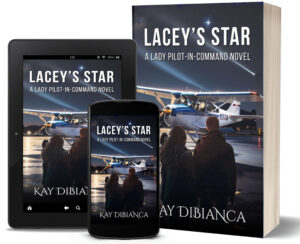
Several of us are on final approach or have recently landed our novels. Terry Odell just published Deadly Relations and Debbie Burke’s Deep Fake Double Down is available on pre-order now. My novel Lady Pilot-in-Command is in the hands of the copy editor, and beta readers are sending me feedback. Other TKZ authors have recently touched down or are approaching the runway.

Whatever the status of your work, I wish you a good journey and a happy landing.

* * *

So TKZers: Have you ever run into problems with a novel in mid-flight? How did you solve them in order to land the book? Are you on final approach or have you landed a novel recently? Tell us about it.

Writing Etiquette Redux

I’m republishing this post for three reasons:

1) I mentioned I bought back my rights to the Mayhem Series. Without fellow writers lending advice and sharing their experience with me, I’d probably still be tryin’ to figure out how to Indie pub the first five books, never mind be ready to publish book 6. I have a new editor, whom I adore, and my favorite cover designer jumped on board, too. Wait till you see my new cover. So exciting!

2) I had the misfortune of reading an author’s “bad behavior” list on Twitter. This woman tweets out an ever-growing list of bad behavior by authors. Some of the things on that list of 100 is downright shocking. So, a redux seemed like a good idea.

3) I’m reading book 6 one last time before creating my ARCs. This is my neurotic stage, nitpicking every single word, and ignoring any compliments from my editor. Almost done, so I can probably shelve the crazy long enough to respond to comments. 😉

Writing Community Etiquette

One of the most amazing things about being an author is mingling within the writing community. Writers, as I’m sure you’ll agree, are some of the most generous, supportive, and kind humans on the planet.

That said, there are a few unwritten rules within the community. Let’s discuss to enlighten the newer members of our family.

Other Writers are NOT Competition.

They are our people, our tribe. The longer we’re in this business the more it becomes a kinship. I can’t even imagine working without other writers by my side. We share successes, as Joe so beautifully demonstrated last Saturday. We also share failures (privately, btw, never rant on social media). We lift each other up and try to help where we can.

Without other writers, imagine how lonely this profession would be? As it is, we spend countless hours alone at the keyboard, hanging with our fictional homies or burrowing down one research rabbit hole after another. What if we had no one to share our discoveries with? Or to bounce ideas off of? Or to help us celebrate a new release? Or to knock some sense into us when nothing seems to go right?

We’re better because of, not in spite of, our relationships with other writers.

Lose the Ego

If this business hasn’t taught you humility, you haven’t been part of the publishing industry long enough. You might be soaring now, but you will fall one day. It’s inevitable. Yes, celebrate your successes. Don’t let it go to your head, though. A reality check now and then is an important exercise. Chances are there’s plenty of writers who sell more books than you, who are more loved by readers, who has rocketed to heights you (or I) might never reach.

John’s recent post is the perfect example of success and humility. It’s one of my favorite posts he’s written because of its honesty and realness.

Don’t be a Jerk

Do you really need to point out a typo in a tweet? We’re all fallible. Smile and move on.

Do you really need to say how much you disliked a fellow writer’s work?

What you put out in the universe has a way of boomeranging at the most inconvenient times. It may not be today, but eventually Karma will bite back. Count on it.

When you first join the writing community, it may seem endless. Here’s the thing about skewed impressions. Objects in the mirror are closer than they appear. Cross a fellow writer, and that circle can and will get downright claustrophobic. Why? Because writers protect other writers. It’s what we do; it’s who we are as a community. Just ask Disney.

Give More Than You Receive

Did a fellow writer blurb a book for you? Great! What did you do to help support them? I’m not saying you need to match the gesture by blurbing their next book. Maybe you’re not at that level yet. What should you do? Here are a few suggestions:

  • Review one of their books
  • Offer to beta read
  • Share their good news, new release, book cover(s), blog posts, interview, etc. on social media
  • Better yet, pay it forward to a writer farther down the rungs of the ladder—most writers will love knowing by helping Writer X, they also helped Writer Y.

The worst thing you can do is to ask for another helping hand when you’ve showed no appreciation for the last favor. And for the love of God, NEVER ask a fellow writer to fund your writing career because, in your eyes, they’re successful and you’re entitled enough to think you shouldn’t have to work a day job while you hone your craft. Yeah, those people exist. And they all seem to have my email address. Lucky me. 🙂

Common Courtesy

Treat fellow writers as you would like to be treated.

  1. Respond to blog comments. If someone has taken the time to comment on your article, don’t treat them like they’re invisible. Reciprocate with a response. Common courtesy is not rocket science. How would you feel if one day everyone stopped commenting on your blog posts? If you continue to ignore your audience, that can and will happen. If chatting with your audience isn’t important to you, then close the comment section. By leaving it open you’re obligated to respond.
  2. Share a fellow writer’s posts. Let’s take Twitter, for example. If someone retweets everything you share, or even if they only share one post, return the favor. They didn’t have to take the time to share your tweet with their audience, but they did. Do the same for them.

But Sue, what if their books have sex acts on the covers? If you don’t feel comfortable sharing their pinned post with your audience, then scroll through their timeline until you find a more appropriate post that you can share.

  1. Never hijack another writer’s social media timeline. We’ve all met the writer who thinks it’s acceptable to tag 90 authors in their book promos. It isn’t. If anything, said writer looks unprofessional and desperate. I have a few followers on Twitter who do it constantly, and it drives me crazy. The only ones I haven’t blocked (yet) are the writers who also RT my tweets. Does that make tagging okay? No. Unless you’re having a conversation with someone or sharing their work, pretend tagging doesn’t exist.

Lose the Automated Message

I admit, when I first joined Twitter, an automated message to greet my new followers seemed like a good idea. Let me set the record straight—they are never a good idea.

Nothing screams amateur more than an automated message. I once followed this writer whose automated message read: “I want to be your favorite author!” I wrote back: “I want to be your favorite author, too!”

Surprise, surprise, she unfollowed me. Good riddance.

I can think of only two possible exceptions for sending a private message.

  1. If you’re extending an offer that will benefit them, not you. And it’s free. You wouldn’t ask someone you just met at a party for money, right?
  2. If you’re having trouble finding their books and are asking for a link.

In both these non-automated scenarios, most writers won’t mind. But first try to find their email address. Email is less intrusive than private messaging.

Auto-Add Email to Newsletter

If a fellow writer accepts your friend request on Facebook or follows you on Twitter/Instagram or subscribes to your YouTube channel, that does NOT mean they’ve signed up to receive your newsletter. I’ve had friends add me to their list, but they’re actual friends who I chat with all the time. For everyone else, there’s a big difference between showing support for your fellow writers and signing up to receive their newsletters.

Think of it this way. I have over 12K followers on Twitter alone. Imagine if they all added me to their email list? My inbox would explode! The less-informed writer may be thinking: But Sue, you can unsubscribe at any time.

Oy. I hear that excuse all the time. Newsflash. Unsubscribing from a newsletter you never signed up for in the first place annoys most writers. Plus, it takes time away from writing, researching, marketing, or the gazillion other things we do daily.

Read the room, dear guppy (new writers a la MWA). A follow-back or an acceptance of a friend request is just that. Nothing more.

Final Thought

As I said at the beginning of this post, writers are some of the best people on the planet. Most of us would agree that without other writers, this profession would be a lonely one. But we’re never truly alone. There’s always another writer who’ll be there when we need them, just as we were there for them. We’re blessed, and that gift should never be taken for granted.

Over to you, TKZ family.

Did I miss anything? Add your tip! If you can’t think of anything to add, then share a story of a writer helping you or vice versa.

How To Read Body Language

As writers, it shouldn’t surprise you to learn that even while silent, our bodies speak volumes. Nonverbal cues — body language — are the physical behavior, expressions, and mannerisms that communicate how we really feel.

Whether we’re aware of it or not, our bodies are sending nonverbal signals when we interact with others. By analyzing gestures, posture, tone of voice, level of eye contact, etc., we can learn many things. Body cues enhance dialogue between characters.

Are you reading those same signals in the real world?

Members of the Animal Kingdom rely on body language to warn each other of potential danger. Crows are especially attuned to their environment. Just sayin’. 😉 I believe animals are our greatest teachers. We can learn a lot by studying how they interact with their environment and with different species. Matters not if a squirrel doesn’t speak crow, raven, or blue jay. That squirrel still knows how the birds are feeling, and vice versa, by reading their body language.

When we say one thing, but our body language says the opposite, the listener may conclude we’re being dishonest. And rightfully so. For example, we may say “yes” while wagging our head from side to side. Because body language is a natural, subconscious act that broadcasts our true feelings and intentions, the nonverbal signal is more accurate than spoken words.

Being cognizant of our own body language and perfecting how to communicate more fully is a valuable skill to learn for interviews, sales, book signings, video marketing, etc…anywhere we interact with others. Profilers and investigators rely on body language to help them dig for the truth.

Face Facts

The human face is extremely expressive, able to convey countless emotions without saying a word. Unlike other forms of nonverbal communication, facial expressions are universal. Indistinguishable across cultures, facial expressions show happiness, sadness, anger, surprise, fear, and disgust, to name a few.

Say Cheese

Not everyone smiles the same way. Some favor a close-lipped smile over a toothy grin. In general, when someone’s authentically happy, their whole face lights up and smile lines extend up to the corners of their eyes. On the flipside, a closed mouth smile may mean they’re masking their real emotion or appeasing their audience to avoid conflict.

Un-kissable Lips

Another mouth-related clue, pursed lips almost always indicate dissatisfaction or anger.

Eye of the Tiger

Since the visual sense is dominant for most people, eye contact is an important nonverbal body cue. The way we look at someone communicates many things, including interest, affection, hostility, or attraction. Eye contact is also important in maintaining the flow of conversation and for gauging the other person’s interest and response.

If you’re chatting with someone and they narrow their eyes, their body language portrays anger, confusion, or suspicion, and in some cases, deep concentration.

Liar, Liar, Pants on Fire

When someone is being dishonest, they’ll look up to their upper right (your left when facing them). The right side of the brain is our creative side (as you probably know). That glance upward allows them to access that part of the brain, thus thinking more creatively while fabricating the truth. They may also pause—stall—to buy time while constructing a more convincing lie.

Can You Hear My Body Language?

Consider how you perceive others by the way they sit, walk, stand, or hold their head. The way we carry ourselves nonverbally communicates a wealth of information. This type of body language includes posture, stance, and more subtle movements (as shown below).

Hot Crossed Buns Arms

How someone holds themselves says a lot about what they’re thinking, especially when it comes to their arms. A closed-off position indicates self-protection and blocking out a negative source. When we’re comfortable or open to communication, we’re more likely to stand with relaxed arms.

Space Shot

Have you ever had someone invade your personal space? Made you uncomfortable, right? We all need physical space, though that distance differs depending on the culture, situation, or closeness of the relationship. We use physical space to communicate many different nonverbal messages, including intimacy, affection, aggression, or dominance.

If someone’s uncomfortable or disinterested, they may slightly turn away from the conversation—whether they realize it or not.

Footprints in the Sand

Take note of the feet. Subconsciously, we tend to point our toes in the direction of where we’d like to go. If someone’s enjoying your company, their feet should point toward you. But if they desperately want to bolt, their feet will likely point toward the nearest exit. One caveat to this research is pain. Hence why we need to consider the person we’re talking to as well as the context of the encounter.

Nervous Nellie

When someone is nervous, they’ll often sit with their ankles crossed. Surprising, right? One exception is when the rest of their body portrays openness. For example, lacing fingers behind their head, reclined, with ankles crossed straight out in front of them. But if they lean back with their arms crossed it signals objection. Hence why you may want to reconsider how the interaction is going. If you’re trying to win someone over, engage them with questions and see if they lean forward instead.

Pat-A-Cake, Pat-A-Cake, Baker’s Hands

Gestures are woven into the fabric of daily life. A wave, point, or animation of hands often express emotion. Interestingly, some gestures vary between cultures. For example, flashing the “okay” hand signal conveys a positive message, but it’s considered offensive in Germany, Russia, and Brazil, for example. Should we discuss raising the middle finger? Hand signals don’t get much clearer than that. 😉

Stroking the chin often indicates a high interest in the conversation. Likely that person will ask probing questions to learn more. If you spot this cue, you’ve piqued interest among a captive audience.

Reach Out & Touch Someone

We communicate a great deal through touch. Think about the message behind a weak handshake, or a warm bear hug, a patronizing pat on the head, or a controlling grip of the arm.

The Nose Knows

Many people touch their nose, sniff, or breathe heavier when stressed. Breathing regulates the body, eases tension while we communicate, and helps us to regain composure. If we pay attention to these behaviors in others, it’ll help unearth the truth. Again, context is key. If someone is ill or has a health issue, we can safely disregard sniffing. But repetitive sniffing or quickened breaths indicate the person feels unbalanced or is trying to remain composed.

Watch Your Tone of Voice

Never is it a matter of what we say, but how we say it. When we speak, others read our voice while listening to our words. Timing, pace, volume, tone, inflection, and utterances that convey understanding, such as “ahh” and “uh-ha” are all good indicators to watch for. Think about how your tone changes when you add sarcasm, anger, affection, or confidence.

One Size Does Not Fit All

Keep in mind, body language is not always 100% accurate. The context of the situation as well as the individual we’re speaking to are both key factors to consider.

Writing aside, are you aware of body language in the real world? Funny stories always welcome!

On a personal note, I regained full control over my Mayhem Series. Woohoo! Created my own imprint and Indie pubbed all five books. What an amazing feeling! Book 6 is with my editor and I’m working with my cover designer now. Gotta share my new logo. You’ll get a kick outta it. 😉 Still waiting for Amazon to transfer my reviews. Other than that, I’m having a blast with my newfound freedom.


Can Writing Heal Physical Pain?

Let me preface this post by saying, discussing my personal struggles with pain is my least favorite subject. The only reason I’m even broaching this subject is because I discovered a cool connection between writing and pain management, and I hope it’ll help those who need it.

Last week, New Hampshire got hammered with one snowstorm after another, the totality of which resulted in snowbanks taller than I am. With such unsettled barometric pressure and weather patterns, my RA and psoriatic arthritis kicked into overdrive. For me, writing has always been the best pain medicine. When I’m in the zone, I leave my fractured skeleton in the chair and escape into my fictional world. But something—email, social media, direct messages, marketing, blogging, phone calls, and texts—kept yanking me out of my fictive dreamland when I needed it most, and the moment it did, my body screamed in protest.

And so, for self-preservation, I climbed back into my writing cave, padlocked and soundproofed the door behind me. Hence why you didn’t see me in the comment section last week, or on social media. For once, I put my own wellbeing above everything else. By the time I emerged from the writing cave a week later, I’d added over 30K words to the WIP. Now, I only have one or two chapters left to reach The End of Mayhem Series #7. Yay!

Anywho…

The U.S. Pain Foundation describes chronic pain as the following:

When you try to put your hand over a hot burner on the stove, your brain signals to you that it’s hot and you quickly move your hand away. This acute pain center lights up circuits in the nociceptive area, the acute brain center, alerting you to move away. 

Imagine if you can’t move your hand away from the burner even though you know it’s going to hurt. You get that signal telling you it’s too hot, but you cannot move your hand away. How would you feel? Angry? Enraged? Fearful? Panicked? You can’t stop the pain even though you know it’s coming. These natural emotions set off chemicals and hormones like fight-or-flight adrenaline, cortisol, and histamines which sensitize the nervous system, raise anxiety levels, and amplify our sensation of pain.

Is it any wonder we’d seek an escape?

With chronic pain, the pain travels through the emotional area of the brain or sympathetic nervous system. The emotion and pain pathways are so closely linked that it’s only possible to experience meaningful pain relief when you break this connection. Separating our emotions from our pain pathway is a learned skill, and writing plays an important role.

When we write, our brains release chemicals that calm the nervous system. Daily writing creates new neural circuits in the brain, giving us new ways to respond to old pain triggers. The new, healthy circuits eventually grow stronger than the old pain circuits.

A 1986 study uncovered something extraordinary, something that inspired generations of researchers to conduct several hundred more studies.

The gist is this. Professor Pennebaker asked students to spend 15 minutes writing about the biggest trauma of their lives. Or, if they hadn’t experienced trauma, to write about a difficult time. Meanwhile, a control group spent the same number of sessions (4) writing a description of something neutral like a tree or their dorm room.

For the six months that followed the study, the professor monitored how often students visited the health center. Remarkably, the students who’d written about their trauma and real emotions made significantly fewer trips to the doctor. Ever since, the field of psychoneuroimmunology has been exploring the link between what’s now known as expressive writing, and the functioning of the immune system. Psychoneuroimmunology studies examine the effect of expressive writing on everything from asthma and arthritis to breast cancer and migraines, with surprising beneficial results.

Writing even heals physical wounds faster.

Brave volunteers engaged in expressive writing; a second group did not. Days later, they were all given a local anesthetic and a punch biopsy at the top of their inner arm. Researchers monitored the 4mm wounds. The volunteers who engaged in expressive writing healed faster than the others.

What does the act of committing words to paper do? Initially it was assumed this occurred through catharsis, that people felt better because they’d released pent-up emotions. But then Pennebaker dissected the language used by the two groups.

The fast healer’s point of view changed over the course of the four sessions. They began with 1st person, then moved to deep 3rd, suggesting they were looking at the event from different perspectives. They also used “because” and the like, implying they were making sense of the events and putting them into a narrative. The results proved the simple act of labeling your feelings and putting them into a story boosts the immune system.

Sounds a lot like crafting fiction steeped in real emotion, doesn’t it?

What Pennebaker found curious but makes perfect sense to me (and you, probably) is that simply imagining a traumatic event and writing a story about it also made wounds heal faster, concluding that the writing has less to do with resolving past issues and more to do with finding a way of channeling real emotions.

Despite several decades of research showing that writing works to manage pain, it’s rarely used clinically. Also, the process works better for some people than others, depending on how well they engage with the process.

So, the next time you’re in pain, lock yourself away in your writing cave. Your body and WIP will both thank you. 😉

Do you have any personal experience to share? What do think about these studies? 

What’s In A Name?

Here on the Kill Zone, we occasionally talk about the art and craft of naming characters. We’ve gotten inspiration from some famous fictional names like Sherlock Holmes, Hercule Poirot, and Scarlett O’Hara. (Did you know Margaret Mitchell originally wanted to name her protagonist “Pansy”?)

I love creating names for my characters. Although I occasionally pick a name for no reason other than it seems to fit, more often I use names of beloved relatives, elementary school teachers, neighbors, friends, and even the name of the street a favorite aunt lived on. I’ve also been known to rearrange the letters of a surname. I like to think this is a way to honor people who have been positive influences in my life. Although my readers may not know how special these names are to me, I know.

* * *

Here’s a true story about names that you may not have heard:

In 1958, a man living in New York was about to become a father for the sixth time. He wanted to give his new child a name that would be an advantage growing up, so he named the boy “Winner.”

Three years later, he became a father for the seventh time. It was another boy. He asked one of his other children what she thought they should name the new baby. She said since they already had a “Winner,” he should name the new baby—you guessed it—“Loser.” Believe it or not, the father took her suggestion.

Remember, this is a true story.

Before I go on, I’d like you to reflect for a moment on what kind of lives you think these two boys must have had as they grew up. I’ll wait…

* * *

If you’re like me, you probably assumed Winner lived up to the appellation his father gave him and excelled in all he did. And Loser—well, we can only feel bad for the poor little guy.

But the truth is exactly the opposite.

The two boys grew up in the same environment with many of the same friends.

Winner became a criminal at age nineteen when he was arrested for aggravated assault. Over the years, he committed dozens of other crimes and spent time in jail. Eventually, he landed on the streets of New York as a homeless person.

On the other hand, Loser was a strong student, received a scholarship to a prep school in Connecticut, and attended college where he was an excellent athlete. After college, he joined the New York Police Department and rose to the rank of detective. Although he said his name never bothered him, others referred to him as “Lou.”

So it appears a person’s character can transcend his/her name.

* * *

According to an article published on dictionary.com in March 2022, there are laws restricting certain baby names. The United States is very lenient in this area. Each state can legislate its own name restrictions. For example, if you live in  New Jersey, you’re not allowed to give a child a name that contains obscenity, numerals, or symbols.

Other countries are generally more restrictive than we are here in the U.S. For example, the article in dictionary.com goes on to say:

In France, for example, parents have been banned from giving their children names that would “lead to a childhood of mockery,” such as Prince William and Mini Cooper. In Germany, a court ruled that a couple couldn’t name their child “Stone” because “a child cannot identify with it, because it is an object.” Möwe (“seagull”) was rejected as well, because the bird is “a nuisance and is seen as a pest and would therefore degrade the child.” In Denmark, parents must select from a list of pre-approved names, and if they want to use one that’s not on the list, they must get special permission.

I bet none of those countries would have allowed “Winner” and “Loser.”

* * *

So TKZers: How do you come up with names for your characters? Do you name them after people you’ve known? Do you try to select a name that reflects the character’s inner strengths and weaknesses? Or do you give them a name that’s in opposition to their character? 

* * *

Speaking of names: Mr. Tyme was the unfortunate victim in the third book of the Watch series of mysteries. You might be able to guess why I came up with that name.

The e-book is on sale today for 99¢ 


How To Adopt a Writing Mindset

The word “success” has various meanings. Some writers stay laser-focused on the end result, but I propose that we step back, slow down, and view success as footprints in the sand. Each footprint represents one day.

Will you step into that print or let it wash away in the tide?

Success is about adopting a growth mindset. Every morning I watch the sunrise. Why? Because it grounds me with a positive mindset for the day. If you roll over and slap the snooze button, dreading the day ahead, you’ll start the day with a negative mindset. Things tend to roll downhill from there.

Have you ever heard a writer complain that they’re just not any good at writing? That’s called a fixed mindset. Their mind is made up. They will never be a good writer. Period. End.

A growth mindset is positivity based. The writer with a growth mindset says, “I may not be the best writer today, but I will be.”

See the difference?

The writer with the growth mindset is stepping into the footprint to see where it leads. The writer with the fixed mindset would rather complain about writing on social media and let the footprint melt away in the tide.

Success is not about how many books you’ve sold, the amount of traffic to your blog, or even an article going viral. Instead, success is about progress, growth, and moving forward. That type of success is sustainable and filled with joy. We often say writing is a marathon, not a sprint, and there’s a reason for that. By celebrating small successes along the way to that big dream, we give ourselves positive reinforcement, we cheer ourselves on, we maintain a positive and joyous mindset.

Embrace your potential.

Understand that good writing is not a natural talent. It’s earned through study and practice and showing up every day.

If you struggle with a negative mindset, flip the script.

  • Where the negative writer sees a problem, the positive writer seizes the opportunity to grow and learn.
  • When the negative writer doesn’t know an answer and gives up, the positive writer researches the problem.
  • Where the negative writer sees criticism, the positive writer appreciates the feedback.
  • Where the negative writer might feel jealously, the positive writer feels admiration.
  • Where the negative writer might find something too hard, the positive writer knows the hard work will be worthwhile in the end.

People in general who believe that their efforts and strategies can lead to success are likely to engage in learning activities and take on challenges with enthusiasm, so they learn more, which reinforces their belief that they can learn to write well. In fact, according to some psychologists, this confidence, or self-efficacy, is central to motivation and learning.

What is a writing mindset?

It’s how we think about writing. Because I start the day with a positive mindset, I can’t wait to get to my keyboard. I know I’m gonna have a great day. Why? Because a writing mindset supports creative work.

How we approach and frame our writing problems lead to positive or negative outcomes. Working on developing a growth mindset will support your writing process.

So, for example, if you believe you can only write on Monday mornings from 8-10 a.m., you’re already making decisions about your ability to write on a Tuesday or a Wednesday or a Saturday, so if you slip behind the keyboard on any other day but Monday, it’ll be harder to write. You’ve handicapped your creativity with a fixed (negative) mindset.

How do we develop a writing mindset?

It’s about thinking that supports creativity, productivity, and persistence within our written work. It’s about reframing negative thought patterns. For example, I am not a poet, but I would never say I couldn’t write a poem. I would never say I couldn’t write anything. That’s not a self-serving statement. It stems from the knowledge that I can learn to write anything I want. And so can you!

A writing mindset challenges negativity and forces us to examine where negative thoughts stem from. Fear? Anxiety? Low self-esteem?

Writers with a growth mindset rarely, if ever, experience writer’s block. Why? Because we’ve harnessed the power of self-belief and positivity.

Benefits of a Writing/Growth Mindset

  • You will feel more in control of your writing.
  • Writing won’t feel so elusive and magical (magical meaning, to the point where you can’t replicate it).
  • You’ll be able to decide when and where you write rather than waiting for motivation or inspiration.
  • You’ll learn to show up and put in the hours.
  • You’ll step into the next footprint to see where it leads.

Okie doke, my beloved TKZers. There’s your Monday morning pep-talk. Now, go seize the day!

Plotting With Post-it Notes

There’s a three-door closet in my office. At some point early in my writing career, it occurred to me that this closet would be particularly useful for creating a storyboard as I constructed my novels. Each door represented one act in the story.

I’m a hybrid plotter/pantser. I think of my method more as a process of iterative writing, and the storyboard works well for me. First, I come up with a general plot idea, post the first scenes on the storyboard, and start writing. Each day, I stand in front of the storyboard and think about how the story is developing. I decide on additional scenes, post them, write them, and repeat the process.

Here’s a brief summary of the post-it note storyboard I created for my fourth novel.

* * *

STARTING OUT

Once I decided on the first scene and a few characters, I set the storyboard up.. It was laid out horizontally, left to right. I use different colors to represent different elements of the story. Here’s a reconstruction of the initial setup for my WIP with definitions added for each color.

The three acts are in orange. The purple notes are plot points (e.g., hook, inciting incident.) The story is mainly written in first person, so the white notes are for those scenes. There are a few flashback scenes that are denoted by light pink. There has to be a fair amount of real estate for the white and light pink notes since scenes are the greatest part of the.storyboard.

Characters are in dark pink.

With this book, I had the idea to note particular places where I wanted the reader to wonder what’s going on (e.g., Why is she so mad? Why would thieves steal something of so little value?) I call those Suspense points, and they’re in blue.

I also wanted to mark where information is revealed to the reader. (e.g., Ah, that’s why he’s so distant.) Those Reveal notes are light green.

* * *

MAKING PROGRESS

I add or change the plot to satisfy something I’ve discovered, then I continue to write. Sometimes I decide on an ending before I’ve figured out all the details in Act 2. In the picture below, I’ve defined all the characters and have Act 1 pretty much under control. I’ve added scenes for Act 3, and I’ve begun work on the middle. Most of the purple plot points have been put in place.

This cycle continues until I think the story is completely fleshed out.

* * *

COMPLETING THE FIRST DRAFT


Here’s the storyboard as it appeared when I was close to completing the first draft.

You can see I added a couple of yellow post-it notes to the right-hand door. These are possible themes for the book.

At this point, the story is well-defined in my head, and I won’t bother changing the notes on the doors.

* * *

WHY DO I DO THIS?

There are several reasons I like the storyboard.

  1. I like seeing the entire story laid out in front of me as I’m building it. I can reacquaint myself with the sequence of events in just a few minutes.
  2. It helps me spot places where a new scene should be inserted or others should be rearranged.
  3. Moving things around is fast and easy.
  4. There’s something satisfying about the tactile nature of jotting down a note and adding it to the story or moving a note from one place to another.
  5. i can design my storyboard the way I want it without having to adapt it to an app.

There are ways to do this electronically. I work in Scrivener, and there’s a corkboard feature that displays scenes on an electronic corkboard. I suspect there are apps that let you lay out the entire story as I did here, but I can’t see the “big picture” without having a big space to lay it out on.


So TKZers: How do you plot your stories? Are you a plotter or pantser? Do you use an outline or some kind of index card layout to organize your thoughts?