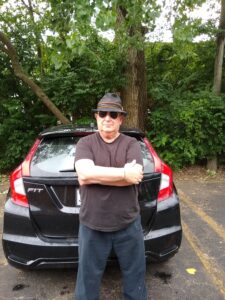
The Reluctant Book Marketer – Guest post by Mark Leichliter

By Debbie Burke

@burke_writer

Photo credit: Alex Loup, Unsplash

In May, Steve Hooley and I surveyed TKZ contributors about marketing and how they promote their work. Links below:

Part 1    Part 2

For most of us, marketing holds the same appeal as a kale and rutabaga smoothie.

A few weeks ago, I had a discussion with Mark Leichliter, author, writing instructor, and editor. I mentioned what writers really need is advice about how to overcome our aversion to marketing.

Mark took up the challenge. He probed into why we hate it so much and offered some solutions.

I thought his ideas would make a good companion post to our recent marketing discussion.

Today please welcome Mark to the Zone.

~~~

If a tree falls in the forest…okay, we all know how this old philosophical question goes. How about this one? If an author publishes a book and no one knows about it… Easy to answer, right? A book without readers is still a book in the metaphysical definition, but its existence is pretty pointless. With one exception, the person who wrote it—you. But what if you are the sort of person who would rather hang around in the forest awaiting the sudden tree toppling than face marketing your book?

Count me as a forest dweller. The thought of promotion sends me scurrying into the deep timber. But unless you’re one of the eleven and a half writers around the world that a Big 5 publisher runs full page Times ads for, the work is going to fall to you. Big press, small press, no press, if we want to expand our audience beyond our own front door, we’ve got to face down marketing, even if we hate it.

I’ve got a few counts against me when it comes to book promotion. Perhaps you do as well. First, I’m shy. Students in classes or participants in workshops I’ve taught might not guess this to be true, but it is. Give me a business dinner where it’s all small talk, and I’m a disaster. It takes me ten minutes of chanting mantras to make a phone call. Second, my parents raised me—and I thank them—to be humble. And I grew up in the Inter-mountain West, a culture where people respect my right to be an individual but they’d rather not hear about my individuality. Third, I openly despise consumer culture. It’s apparently the marriage partner to an open capitalist market, but why must we constantly be sold everything? Ads stalking us on our phone, our clothing, in our music and movies and emails. Why would I want to participate in something so intrusive?

Here’s the thing. We’ve got to think about that silent forest again. Unless you are content with your audience of one, you’ve already entered the marketplace. So how do we take our reluctance to promote our books and change our approach to marketing? And how do we rise out of the din? Here are some tips I’ve learned for those of us who become physically ill at the thought of book promotion.

  • Distinguish between the book you’ve created and your role as its creator. Yes, in the vernacular of the marketplace, you’ve got a product to distribute now. But it’s also a book, something that can defy demographic typecasting and time. Books are unique products, so treat them that way. It starts by letting the thing exist separately from you. Sure, you poured yourself into it but now it exists (more metaphysics!). So do it a favor. Here’s a simple analogy; you might be reluctant to share some tiny triumph at work or some personal accomplishment, but if one of your children scored a goal or won a ribbon at the science fair, you’re going to shout it from the rooftops, right? Doesn’t your book-child deserve the same?
  • This is key; change the game. Don’t see your actions as marketing. More to the point, don’t reduce the book to only being a product you’re trying to sell. You’re used to flipping psychological switches in your brain on slow writing days in order to remain productive, so flip a different switch in how you see interacting with readers. It’s really a matter of respect for them. People seldom want to buy “products” anyway. They want to participate in a lifestyle they value. They want to follow passions. They want to be associated with things in which they place importance. You didn’t spend the years and the drafts writing your book while lukewarm about its themes, characters, and ideas. See promotion as an opportunity to engage others with those fronts. Don’t sell a product to consumers, enter a conversation with readers. Even if you are shy like me, when speaking about the topics I’m passionate about, I come out of my shell without thought. I can’t stomach that trivial cocktail party chitchat, but find the person at the party who shares interest in something we both find meaningful, and we’ll be there all night. Instead of “marketing” your book, look for venues where you can have conversations about mutual passions. There are thousands of bloggers and podcast hosts who run author interviews. Readers like to know the person behind the page. They like to engage with a writer because they love books. Find venues that take reader questions. Reach out to book clubs. Provide readers something of value and neither they, or you, will see your outreach as a sales job.
  • Control what you can control and work from your strengths. If the idea of appearing on a podcast makes you cringe, then focus on print interviews instead. You’re a writer aren’t you, then the prospect of providing written answers to questions for a blog actually offers you the chance to be creative, probe topics you care about, and do so from the comfort of your writing desk. Get more creative still. Propose a “day in the life” first person post from the viewpoint of one of your characters. Interview one of your characters. Or present the city your write about from the lens of your book. Or get yourself off the hook entirely and use an actual human source you turned to as a consultant for your book and interview them. There are plenty of fun, creative ways that feed your imagination and give readers something original in the process.
  • “See your friends.” My favorite soccer coaching colleague was a wonderful Thai guy who was a genius at simplifying the game. His go-to expression to players during scrimmage was, “See your friends.” Shy? Uncomfortable? Humble? Rather than go it alone, reach out to other writer friends or other authors from your publishing house. There’s tremendous comradery among writers, probably because we’re the only ones who truly understand how difficult writing and marketing a book really is. Propose dual blogger posts or offer a book site a conversation between you and another author. Suggest a multi-author panel for a podcast, a remote event, or a live appearance. There’s strength in numbers, for you, and for your audience. I guarantee that you will enjoy the conversation that emerges, and it won’t feel like marketing because it really isn’t. Sales and exposure are the offshoot. Moreover, you can share the workload.
  • Champion others rather than yourself. Remember that comradery comment. It’s real. And I know you’ve found other writers you want to see succeed. I’ve spent a great deal of time trying to help find an agent for a writer friend simply because I believe in him and his book. Put some energy into broadcasting reviews, recommendations, and announcements about books by writers you admire or have learned from. Stand up for books you love. You’ll be doing a valuable service for readers. Do it because you care. Maybe the author will reciprocate. Don’t worry if they don’t. That shouldn’t be your motivation. You’re a participant in a bigger writing community, so be a good neighbor. We live in times where we need more kindness, so do someone else a solid. Put awful things like social media to some good use instead. Or take that five minutes to write a review on a seller’s site or a book community site. If people value what you have to say about books you love, many are going to want to know about your work as well.

You don’t have to become a PR cliché to produce effective promotion for your book. Look, you really do believe your book has value, right? Whether that’s simply entertainment value for a reader or a book that will challenge how they perceive the world, surely you are producing work that you are proud to have written—a book that deserves an audience. The thing is, you’re going to have to go out and find that audience. There’s a first step that has to happen before we can have the contemplative conversation about whether an unopened book on a bookshelf has value; first we’ve got to get it on the shelf, or better yet, in a reader’s hands.

~~~

Thanks for your insights, Mark! 

TKZers: Do you have mind tricks that help overcome your aversion to marketing? Please share.

~~~


Mark Leichliter’s new novel The Other Side debuts today, June 8. Sales links here.

How do you start an investigation when you have no evidence a crime has been committed?


How and Why Reading Improves Writing

To master the art of writing we need to read. Whenever the words won’t flow, I grab my Kindle. Reading someone else’s story kickstarts my creativity, and like magic, I know exactly what I need to do in my WIP.

“Read” is the easiest writing tip, yet one of the most powerful. And here’s why.


READING BENEFITS OUR WRITING 

  • Reading strengthens our skills and storytelling abilities.
  • Reading helps us become more persuasive, which is an essential skill when pitching a book to an agent, editor, producer, etc.
  • Fiction reading helps us hone the skills to draw the reader into the story and engage the reader.
  • Nonfiction reading helps us learn how to condense research into an authoritative proposal. And ultimately, into a storyline.
  • Reading expands our vocabulary, improves grammar, and shows how to use words in context.
  • Reading helps us find the right word!

READING IMPROVES BRAIN HEALTH 

Narratives activate many parts of our brains. In a 2006 study published in the journal NeuroImage, researchers in Spain asked participants to read words with strong odor associations, along with neutral words, while their brains were being scanned by a functional magnetic resonance imaging (fMRI) machine.

Brain scans are revealing what happens in our heads when we read a detailed description, an evocative metaphor or an emotional exchange between characters. Stories, this research is showing, stimulate the brain and even change how we act in life. — New York Times

Whenever participants read words like “perfume” and “coffee,” their primary olfactory cortex (the part of the brain that processes smell) lit up the fMRI machine. Words like “velvet” activated the sensory cortex, the emotional center of the brain. Researchers concluded that in certain cases, the brain can make no distinction between reading about an experience and encountering it in real life. Pretty cool, right?

4 TIPS TO READ WITH A WRITER’S EYE

1. Look for the author’s persuasion tactics.

How does s/he draw you in?

How does s/he keep you focused and flipping pages?

What’s the author’s style, fast-pace or slow but intriguing?

Does the author have beautiful imagery or sparse, powerful description that rockets an image into your mind?

2. Take note of metaphors and analogies.

How did the metaphor enhance the image in your mind?

How often did the author use an analogy?

Where in the scene did the author use a metaphor/analogy?

Why did the author use a metaphor/analogy? Reread the scene without it. Did it strengthen or weaken the scene?

In a 2012 study, researchers from Emory University discovered how metaphors can access different regions of the brain.

New brain imaging research reveals that a region of the brain important for sensing texture through touch, the parietal operculum, is also activated when someone listens to a sentence with a textural metaphor. The same region is not activated when a similar sentence expressing the meaning of the metaphor is heard.

A metaphor like “he had leathery hands” activated the participants’ sensory cortex, while “he had strong hands” did nothing at all.

“We see that metaphors are engaging the areas of the cerebral cortex involved in sensory responses even though the metaphors are quite familiar,” says senior author Krish Sathian, MD, PhD, professor of neurology, rehabilitation medicine, and psychology at Emory University. “This result illustrates how we draw upon sensory experiences to achieve understanding of metaphorical language.”


3. Read with purpose.

As you read, study the different ways some writers tackle subjects, how they craft their sentences and employ story structure, and how they handle dialogue.

4. Recognize the author’s strengths (and weaknesses, but focus on strengths).

Other writers are unintentional mentors. When we read their work, they’re showing us a different way to tell a story—their way.

Ask, why am I drawn to this author? What’s the magic sauce that compels me to buy everything they write?

Is it how they string sentences together?

Story rhythm?

Snappy dialogue?

How they world-build?

Or all of the above?

I don’t know about you but I’m dying to jump back into the book I’m devouring. 🙂 What’s your favorite tip?

Wishing you a safe and happy Memorial Day! In between cookouts and family get-togethers, squeeze in time to read!

Looking for a new series to love?

FOR TODAY ONLY, all four Grafton County thrillers are on sale!

MARRED 99c
CLEAVED 99c
SCATHED $1.99
RACKED $1.99


The Unintentional Writer

Photo by Kasper Rasmussen on unsplash.com

I have received some correspondence recently to the effect that TKZ has some regular visitors who are not necessarily interested in becoming authors themselves.  They stop by because they are interested in how authors engage in the process by which writing is done. They have no inclination towards writing, let alone publishing a story. Think of folks who like to eat but who have no inclination toward cooking. This is aimed at those who enjoy literary feasts but have no inclination toward stirring the pot, though the Emerils in the audience may find it interesting as well. 

Our own Jim Bell contributed a deep but highly accessible piece the Sunday last titled “Advice for the Demoralized Writer.” It contains terrific advice which is applicable to all regardless of occupation but the crux of it is to do your very, very best while sublimating your expectations of awards or recognition. If your efforts garner such you will be pleasantly surprised. If not, you won’t be disappointed. I am going to take that advice a step further while aiming it in a different direction.

My suggestion is to write every day. That is not new or original advice. I am offering it particularly, however, to those of you who have no intention of or inclination toward starting or completing a story or having it revealed in the harsh light of day. Writing something every day because you want to, instead of when you have to, is good for you. I truly believe that writing regardless of length or motive makes one smarter — whatever that is — and yes, happier. Writing even one sentence of a few words per day enables you, the unintentional writer, to say, “I wrote this.” It may not give you an adrenaline rush but I submit to you that it will produce, at the least, a drop of it in your cup. It’s the difference between doing an action because you are required to (for reasons from within or without) and doing it because you want to. It can crack the ice that freezes your thinking, whether you write on a post-it, a computer, or your hand. It is an activity that you can do without prompting, or the desire of future reward, other than that occasioned by performing the act itself. I have mentioned this before, but the television series Miami Vice was born as the result of two words handwritten on a piece of paper. The words were “MTV cops.” Your results may differ. That’s the point. There are those who may keep a diary or journal for a similar reason. What I propose is not as involved. 

This post is but one example of “wanting to” as opposed to “being compelled to.” I started this post with one sentence, though it is not the introductory sentence that you see above. I wrote a few words to get rolling and then took off, as John Coltrane said, in both directions at once. It was because I wanted to. “The Kill Zone” name notwithstanding, no one here writes with a gun to their head. We are all here because we want to be, whether to write or to read what is written. 

Now we present below an example of some writing that a six-year-old miscreant was compelled to do as a classroom punishment in the closing days of first grade. History has not recorded what the lad did over sixty years ago to earn this assignment. If rehabilitation was the purpose please rest assured that the effort failed miserably.  It is a wonder that he ever took pen(cil) to paper again voluntarily, but he did occasionally and still does.

Photo by Al Thumbs Photography. All rights reserved.

Try what I suggest and see what happens. At worst you will have wasted a few seconds. At best, it could be the start of something big. As with most things, the end result may be somewhere in the middle. Don’t worry about that. This is a worry-free activity for enjoyment as opposed to production. Just put a few words down for the fun of it. You might be surprised.  

Actually, let’s try it right now. Seven words or less. Go! Here’s mine:

“He wondered where the painter was.” 

Have a relaxing Memorial Day. While you do so, please remember the reason for the season. Thank you. 

Photo by Justin Casey on unsplash.com


TKZ Marketing Survey – Part 2

By Debbie Burke

 @burke_writer


On Saturday, Steve Hooley kicked off Part 1 of the TKZ Marketing Survey. Today, I’ll cover the rest of the results and sum up our findings.

Before we get started, please indulge me for a moment. Back in November, I wrote about my good friend astrophysicist Sarah Rugheimer who’d been selected to deliver a TED talk. Several readers asked when her talk would go live. Yesterday was the day! Congratulations, Sarah! Here’s the link. 

~~~

Garry Rodgers’s answers (indie pub):

What is your goal with marketing?

 Two things which are intertwined. One is to sell more books (products). The other is to increase discoverability. Increasing my discoverability by distributing my brand in as many places as possible organically sells more books. By selling more books, I create read-through which increases my discoverability. Never underestimate the power of “word-of-mouse”.

What marketing do you do?

 I’ve appeared on many podcasts and blog interviews. I can’t say I’ve ever struck gold from one, but each exposure increases discoverability. (“You are the worst writer I’ve ever heard of.” “Yes. But you have heard of me.”)

 Blogging – Website

 Blogging is *BY FAR* the best ROI I’ve ever had. That includes my own blog at DyingWords, the Kill Zone posts, and many guest pieces I’ve done on other sites. Recently, I was “found” by a NYC film producer who landed on one of my old posts.  It led to discussions and to a potential NetFlix series which I’m outlining a proposal for as we speak.

 Newsletter

 I have 2100 subscribers on my mailing list, and I send out a new blog post every second Saturday – consistently. I get about 500 click-throughs so I’m happy with that. I’m in a publishing cycle of 1 book every 2 months so I put a post out promoting the release. However, when I look at my sales stats right after a newsletter, I don’t see any spike. I know the gurus say “Mailing List Mailing List Mailing List” but I’m not seeing it directly tied to sales spikes – It’s the long term exposure and a slow reader growth that pays off.

 Which social media platforms?

I do Facebook for personal laughs and Twitter for sharing writing stuff and making connections. I have an author FB page but haven’t done anything with it which is likely why there’s no return on it. I have a friend who writes under the pen name Chevy Stevens (because her real name is too hard to pronounce) who has killer FB returns and is her main reader connection. Twitter has been good for making personal connections in the writing business, but I can’t say it’s sold anything directly.

Paid ads

Now we’re talking returns. Pay-to-play ads are THE Thing that works for me. My money-maker is my based-on-true-crime series which is at Book #8. I have about 20 publications out there, but the read-through from the series is working very well. I have book 1 as perma-free and pay to advertise it on the discount newsletters – Ereader News Today (ENT) is the best payback. Last campaign resulted in 5K downloads and generated a read-through which brought a 3 to 1 return on investment. The other good returns are from Robin Reads, Fussy Librarian, Free Booksy, Bargain Booksy, Book Doggy, and Book Gorilla. I’ve tried one BookBub ad which was a flop and I have yet to try FB and AZ ads.

Conferences – networking

I’ve never been to a live writing conference. I was going to go to Bouchercon last year but you-know-who showed up and threw a wrench into the travel spokes. I’ve taken in a bunch of online conferences and webinars but you don’t get personal connections this way – at least not from my experience. I’ve cold-called high profile people on Twitter and have had surprisingly good results in having them guest appear on my blogsite.

Others

Absolutely nothing beats building a backlist and creating read-through. “Write More Books” is the best advice I’ve ever gotten, and that’s where I put most of my efforts at the moment. I changed my mindset last February to treat my writing like a business and not a hobby. I credit Adam Croft for this. Adam and I have been personal friends for ten years – I say back when Adam wasn’t famous and I still had color in my hair. Adam’s book, The Indie Author Mindset, https://www.amazon.com/Indie-Author-Mindset-changing-transform-ebook/dp/B07FZ3X349/  is a MUST-READ for any indie who intends to “make it” in this biz.

 “Going Wide” is another must-do tactic. I started on Kobo and Nook last April and have had over 30K downloads in 66 different countries since then. Yes, many are freebies but the discoverability and read-through in paid sales has been remarkable – truly rewarding and motivating to write more books.

For each specific activity above that you use, how much time do you estimate that you spend (per week? per month?)

I keep a journal/daily log where I track my time in 15 minute blocks. On a good writing day, I get in 3,000 – 3,500 words and I write about 1,000 words per hour so that’s 3 – 3.5 solid writing hours per day. Most days I put in 8 – 10 hours of solid time in what I call the four Ps – Production, Publishing, Promotion, and Perfection. Production is about 5 days per week. Publishing goes in spurts – 1 book every 2 months. Promotion is all the time – here, there & everywhere – every action is some sort of promotion (like this). Perfection never happens but what I mean by this is craft improvement. I read a lot and across the board, not just genre specific. I just finished a book titled “Profiles In Folly” which is about world-changing stupid things done by influential people. Hopefully, I don’t appear in the sequel.

For each activity above that you use, what do you estimate is your return on investment? Which one do you think is the most effective?

Write more books is the most effective. Pay-to-play ads is second. Networking with influencers who can increase discoverability is a close third.

What resources have been most helpful to you in learning the above?

These publications: “Indie Author Mindset” – Adam Croft, “On Writing” – Stephen King, “Elements of Style” – Strunk & White, “Wired For Story” – Lisa Cron, “Thanks, But This Isn’t For Us” – Jessica Page Morrell, “Self-Editing For Fiction Writers” – Dave King & Renni Browne, and “Think And Grow Rich” – Napoleon Hill.

What changes have you made to your marketing b/c of the pandemic?

I have to say the pandemic was the best thing ever for my writing business. It was coincidental that I changed my mindset last February just before this thing hit, but I increased my output and promotions. I think more people had more time to read and were looking for new stuff as well as more people turning to ebooks because they couldn’t get out to the bricks & mortar stores – plus they also got comfortable with ereading devices. So it was the perfect storm that propelled me from zero to hero. I can’t wait for the next wave. Bring it!  J

Knowing what you know now, what would you do differently if you were starting over?

I would have taken this more seriously far earlier. You can’t turn back the clock of reality – only go forward with the flow and write more books. Write, publish, repeat – as they say.

Where do you sell your books?

Amazon – 70%. Kobo – 29. Nook – 1%. I’m going to publish on Apple and Google this year. Plus look into print and audio options. Amazon is strong in the US and the UK, but Kobo (Rakutan) has immense world-wide reach. Nook is barely worth the effort however I hear great things about Apple.

 Series with a permafree first issue really works. And you’ve got to keep your name out there – you never know when Netflix comes calling.

~~~

Joe Hartlaub’s answers (trad pub):

What is your goal with marketing? Get my name out there.

What marketing do you do or participate in? Zoom interviews, blogging at killzoneblog.com,

Facebook, networking at Bouchercon.

For each specific activity above that you use, how much time do you estimate that you spend (per week? per month?) Irregularly, unfortunately.

For each activity above that you use, what do you estimate is your return on investment? Which one do you think is the most effective? Blogging and networking.

What resources have been most helpful to you in learning the above? Just getting out there and learning along the way.

What changes have you made to your marketing b/c of the pandemic? No Bouchercon!

Knowing what you know now, what would you do differently if you were starting over? I would have started getting involved with the writing community earlier than I did.

~~~

Sue Coletta’s answers (trad pub):

What is your goal with marketing? To reach a wider audience.

What marketing do you do or participate in? Speaking – Zoom – Podcasts – Book Tours – interviews – Blogging – Website – Newsletter – Social media – Conferences – networking

All of the above. I’ve done Zoom book events, appeared on podcasts, blog tours, interviews, and in-person appearances (in the nice weather). I blog on TKZ and my site, Murder Blog. If it weren’t for my website/blog, I would’ve missed out on so many amazing opportunities. Some authors say writers don’t need to blog, but I disagree. We all need a home base where readers/agents/publishers can find you, and social media is NOT a home base. Last year, I buckled down to write a separate newsletter for readers (I’ve always sent blog-related newsletters), and the response has been positive so far. Networking with other writers is key. The writing community is a generous, kind, funny, little crazy tribe, and I wouldn’t trade any of them. J

 For each specific activity above that you use, how much time do you estimate that you spend (per week? per month?) Depends if I have a new release or what I’m doing. Zoom events take a lot longer than, say, social media marketing.

For each activity above that you use, what do you estimate is your return on investment? Which one do you think is the most effective? I think it’s all important. I view marketing as a sum of its parts (blogging, social media, book signings, etc). Most effective? Appearances, either in person or virtual.

What resources have been most helpful to you in learning the above? Other writers. Nine times out of ten, a writer will share advice with another writer. It’s what we do.

What changes have you made to your marketing b/c of the pandemic? I’ve done a lot more virtual events than in person. Now that I’m fully vaccinated (yay!) I’ve booked my usual venues for the upcoming season.

 Knowing what you know now, what would you do differently if you were starting over? Too many things to mention. Top answer: Plan where you want to see your career in five years, ten years, fifteen years. Then be patient and choose an agent or house that can help you achieve your goals.

~~~

Debbie Burke’s answers (indie pub):

What is your goal with marketing? Connect PERSONALLY with as many readers as possible b/c I strongly believe in old-fashioned word-of-mouth recommendations. That is more rewarding to me than 10K followers I’ll never meet. I’d like to sell more books but thankfully I don’t depend on writing income to survive.

What marketing do you do? Zoom discussions with book clubs and educational presentations for writing groups. Radio and newspaper interviews in my local area.

Blogging – Website Not as much as I should for my own blog/website. Most blogging is for TKZ.

Social media – Twitter only for name recognition. I doubt that generates sales.

Paid ads – In the past, I’ve bought cheap ads ($50 and under) directed to mystery/thriller genre readers. Never broke even. Trying out some of Garry’s strategies and will report back later. 

A personal observation – I’m deluged with constant ads and am sick of them. I rarely buy any product solely b/c of an ad. Most of the time, I delete w/o reading them. I suspect I’m not alone in that feeling. 

Conferences – In the past, in-person appearances/workshops at conferences.

Networking – most speaking invitations come from networking with people I know or have met from previous appearances.

Others – I have had good luck partnering with other authors for appearances. Two other authors and I give presentations as the “Montana Women of Mystery.”

For each specific activity above that you use, how much time do you estimate that you spend (per week? per month?)

Speaking, classes, workshops – 5+ hours prep time per event plus presentation time. Blogging – 10+ hours/month.

Social media – 1 hour/month.

For each activity above that you use, what do you estimate is your return on investment? Which one do you think is the most effective? At book clubs, close to 100% of participants buy books, but numbers are small since most clubs have fewer than 20 members. For general speaking appearances, 20-25% of participants buy books. In 2017-2019, blogging on TKZ resulted in significant sales spikes but tapered off in 2020-2021. I suspect any TKZ regulars who are interested have already bought my books so that market is somewhat saturated. However, exposure and repetition are still important. When readers see my name regularly, like blogging on TKZ every other week, they think of me. I just spoke to a mystery group in Arizona that found me through TKZ.

What resources have been most helpful to you in learning the above? JSB’s book Marketing for Writers Who Hate Marketing; Jane Friedman’s blog; Dave Chesson’s Kindlepreneur; Authors Guild discussion groups; asking other authors what works for them; trial and error.

What changes have you made to your marketing b/c of the pandemic? Zoom instead of in-person appearances. Zoom allows meeting with groups outside my local area. I’m increasing those promotions b/c appearances work better for me than advertising. 

Knowing what you know now, what would you do differently if you were starting over? I wish I’d gotten my rights back sooner from the original publisher and rereleased the book independently.

My sales are not great but I only have so much time and energy. I’d rather concentrate on writing more books. Now that six are available, I’m increasing promotion and see a gradual but steady increase in sales. Readers of my prior books are repeat customers. My following is small but loyal and growing. I still feel producing more product is more important than advertising.

Where do you sell your books? For several years, my books were exclusive with Amazon but there is no longer any advantage to exclusivity. Several months ago (prompted by Garry and Terry), I “went wide” and books are now for sale at B&N, Kobo, Apple, and other online markets through Draft2Digital – too soon to see results but wider availability can’t hurt; local indie bookstores sell paperbacks; I sell paperbacks at book signings and presentations.

~~~

What do all these results add up to?

Besides increased sales, several consistent themes for the goal of marketing were repeated: name recognition, discoverability, word-of-mouth, and building customer loyalty.

Seven contributors mentioned Zoom as an important development that’s replaced in-person appearances. Two additionally mentioned doing Zoom appearances in partnership with other authors.

According to all nine survey respondents, blogging is definitely not dead. Several said they’d cut back on other blogging but continue with TKZ.

Six authors use newsletters.

Paid ads yield the most varied responses, with some authors having good results while others didn’t believe ads were worth the cost. BookBub was mentioned several times as the most effective advertising.

Social media is viewed by the majority as a necessary evil that doesn’t generally sell books but increases name recognition. Several complained SM wastes too much time but needs to be done. Facebook and Twitter are the most used venues, although a couple of authors mentioned You Tube and podcasts.

Jim Bell offers wise advice about social media in his book Marketing for Writers who Hate to Market:

“Here is my advice regarding social media.

Pick one platform to specialize in.

One.

Pick the one you enjoy most, or think you can handle best.

If you want to have a presence on other platforms, to experiment, go ahead. But place your focus on one.

Use it to the extent you enjoy it, and no more.

Use it for actual engagement with those who follow you.

Be a good content provider, and a good listener.

Avoid venting your spleen on social media. Because besides being a lousy place to sell books, it’s a horrible place to take controversial positions. There is no true discussion here, because that’s not what social media is set up for.

Don’t post drunk.

Make all people glad they follow you.

Earn trust. When it’s time to mention a book, you’ll have earned the right to do so.”

Nearly all authors lamented the loss of in-person conferences. Two have not previously attended conferences and expressed disappointment over cancellations.

Networking at conferences was cited as enormously important because those contacts often opened up other opportunities as well as marketing avenues.

Two indie authors mentioned “going wide” to other sales outlets besides Amazon.

“Write more books” was noted by most respondents as the best marketing tool.

This survey confirmed that there is no marketing magic bullet. It’s time-consuming, long-term work. Results don’t happen overnight. But, if we want to sell books, we gotta do it.

 Steve, thanks for coming up with this topic and including me as your co-conspirator. Thanks also to the TKZ family who answered questions and shared helpful insights.

~~~

Over to you, TKZers. What type of marketing is most productive for you? Did you learn any new methods from this survey you’d like to try?

~~~

Note: I’m taking Garry’s advice on “permafree” for the first book in my series. So far, results look very promising. Thanks, Garry! 


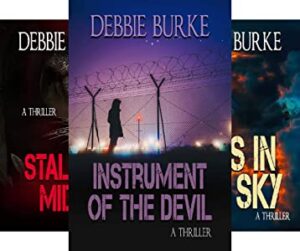
Instrument of the Devil is now FREE. Please give it a read. If you like it, come back and check out five more books in the Tawny Lindholm Thriller series. 

In Praise of the Antikythera Mechanism!

When I was last here two weeks ago I discussed ancient books and authors. I was gratified to receive a number of comments on the topic, including one from Dan Phalen, who wondered what would become of our digital prose. Dan used the example of an archeologist coming upon an iPhone a thousand years from now who would be faced with the task of coaxing digital text from the device.  

Dan’s example isn’t going to have to wait for one thousand years to occur. It’s happening right now. Remember floppy disks? Some of you may not. They were and are these square things that were read by something known, by amazing coincidence, as a floppy disk drive. If some of you have a bunch taking up space in a forgotten corner of your office you might be surprised and disappointed to find that the data on them is corrupted or bye-bye. On the other hand, some companies, like Boeing, the airplane people, still use them.  Think about that the next time you are in the air and you hear your pilot say “Uh-oh” on a hot mike, followed by an extended period of turbulence.

There are also .art files. Back when AOL was (almost) the only game in town and you downloaded pictures from the internet using AOL those pictures were saved in the form of an .art file. A great many of those are corrupted as well. I have tried several programs to open them but none have worked. AMF. That said, the unknown of the obsolete goes back much, much further than the most recent turn of the century. More on that in a minute.

I did another research deep dive — this one into the topic of information storage retrieval — and almost didn’t get this post written because of it. I was in so deep and had to come up so fast that I am still recovering from the bends. I did find a number of interesting websites dealing with the topic of retrieving data from obsolete technical doo-dahs. I’ll (attempt to) limit my discussion to two of them, which hopefully will be particularly relevant for those of you who labor in the historical fiction grammar mine. As an aside, let me note that there doesn’t seem to be an agreed-upon definition of what “historical fiction” is. For our purposes, we’ll call it a story set at least twenty-five years before the year in which the story is written. That would be from the beginning of all of this around us to…um…1996. That is disconcerting because I can remember a number of major events in my life from that year but not what I had for lunch yesterday. Oh, the humanity!

Onward. There is a wonderfully nerdy (and I say that with the highest respect) site named the Museum of Obsolete Media which is a time bandit of the highest order. If you look under the “Popular Tags” section you will see links to decades beginning with the 1860s. If you are neck-deep in writing a series set in the 1900s and want to see what was there in 1906 that ain’t no more and want to use it as a starting point for some element of your novel, this is the place to go for that and so much more. I was surprised when looking through my own timeline to note how many cutting-edge items (at that time) were listed that seemed futuristic but are now practically forgotten. Anyone want to buy a non-functioning Apple Newton?

Obsoletemedia.org is a labor of love. If you want to get up to your neck in things, however, the oft-forgotten but absolutely indispensable National Archives has an area — a very, very large area — devoted to “special media preservation.” That area has everything from wire recordings and machines to play them on to that new iPhone that you’ll brick in two years. It is particularly noteworthy that you can email questions to them about such topics and the worker bees there will happily email you back with everything you ever wanted to know about, say, wax cylinder recordings, the same way that your local library still does for more mundane topics. 

It all sounds very cool. The problem, though,  is that all of that data, particularly the digital type on collections such as the ones in the National Archives, is sitting on a time bomb. The immediate problem with contemporary “media preservation” is that digital media isn’t built to last. It is fragile coming out of the box and deteriorates relatively rapidly.  That is but one reason that I can’t open .art files I made twenty years ago but I can go on eBay and buy photographs taken in the 1800s. As far as digital information is concerned, there is more and more of it being made, lost, and found even as there are fewer people dedicated to exploring the obsolete storage mechanisms and preserving what they find. Information is being lost, as is the ability to retrieve it in the first place. Meanwhile, wire recordings made by Thomas Alva Edison still work and can be repaired.

Getting back to archeologists and the like…this photo may look like the water shutoff valve in your basement

but it is something called the “Antikythera Mechanism,” considered to be the world’s oldest computer. It is believed to have predated Bill Gates’ monster by around two thousand years. The Antikythera Mechanism was discovered amidst the ruins of an ancient shipwreck in 1901. It was not until 2008 that it was recognized for what it was (“Why…that’s an Antikythera Mechanism!”). Yes. It took a looong time for archeologists and scientists to figure out what the f-heck it was and what it could do, which was predicting solar eclipses and organizing calendars (“Meet Lycastra on the down-low. 4P by the sundial”). It can probably do a heck of a lot more, such as spontaneously opening dimensions between our reality and the netherworld on July 11, 2021.  What I find particularly interesting is that our contemporary technology had to catch up with the Antikythera Mechanism so that it could be recognized for what it was. Otherwise, it would probably be a paperweight on a desk of a Greek fishing boat.

Sobering, isn’t it?

 I had a conversation last week with my granddaughter, who is starting high school next year. We talked about fields of study. My advice to her was to master computer systems and storage retrieval. “This is all going to break down,” I said. “All of it. It’s not a question of ‘if’ but a question of ‘when.’ When all the king’s horses and men need those digital bits put back together be ready to be the one to do it. You’ll be able to name your own price. Settle for nothing less than your own island and a bunch of people — well paid, but well paid by somebody else — to look after it.” 

When I think about the Antikythera Mechanism, that advice looks better with each day. 

So what technological device, program, or storage entity do you miss? Windows 7 is an okay answer.


When Opposites Attract

Foils and antagonists are two types of characters that serve different functions. An antagonist or villain works in direct opposition to the protagonist or hero. The antagonist presents obstacles to thwart the hero from achieving his or her goal. The foil, on the other hand, isn’t necessarily working against the hero. A foil’s qualities simply differ from the hero’s.

The hero and foil often work together, such as Sherlock Holmes and Dr. Watson. The key difference between the foil and antagonist is that the antagonist’s actions oppose the hero while the foil’s character traits create conflict. Also, a foil shines the spotlight on another character’s personality traits and/or flaws, without necessarily thwarting their plans. When done right, however, there will be conflict!

The term “foil” came into its current usage as a literary device from the concept of putting tin foil behind a gemstone to make it look more brilliant. The foil character works in the same way—to add credibility to the hero or to spotlight his or her faults.

Opposing personalities add a great deal to a story. Pairing these two characters can transform a ho-hum scene into one with explosive conflict. But we need to—dare I sayplan these character traits in advance. 😉

Conflicting personalities rub against one another, which allows the writer to maximize slower moments within the plot. After all, if everyone in the scene “plays nice,” we risk boring the reader. With a bit of character planningoh, my, there’s that word again—clashing personalities lead to conflict-driven scenes.

If the hero dances on the edge of the law, the foil might be hyper-vigilant about following rules of any kind. If the hero never follows directions, the foil might be a map enthusiast. If the hero’s loud and extroverted, the foil might be shy, quiet, and reclusive.

Positioning the foil and main character in close proximity will draw readers’ attention to the hero’s attributes. A story could have more than one foil. In my Mayhem Series, I created a foil for my hero and another for my villain.

By crafting opposites, these characters’ scenes crackle with tension. Foils show the hero’s and/or villain’s strengths and weaknesses through friction. Remember to include the element that ties the two characters together, a believable bond that’s stronger than their differences.

Since Garry mentioned my video excerpt in the comments on Thursday, I’ll include it as an example of the foil/hero relationship. Don’t worry. There’s no need to watch the entire video (unless you want to). You should recognize the opposing personalities pretty quick.

Have you used a foil in your story? Please explain. Or: What’s your favorite fictional foil/hero relationship?

As bloody, severed body parts show up on her doorstep, Shawnee Daniels must stop the serial killer who wants her dead before she becomes the next victim.

But can she solve his cryptic clues before it’s too late? Or will she be the next to die a slow, agonizing death?

Preorder for 99c on Amazon.

Releases April 20, 2021.

Guest Post by Agatha-Winner Leslie Budewitz

Agatha-winning author Leslie Budewitz

Today, I’m pleased to host Leslie Budewitz for this guest post. Leslie is an attorney, mystery author of two cozy series, and triple Agatha Award winner. For more than 20 years, she and I have been trusted critique partners and good friends.

Leslie offers insightful techniques to deepen emotion in our writing. Welcome, Leslie!

Emotional Research

by Leslie Budewitz

No matter what genre we write, readers come to our books in part for an emotional connection with our characters and the story. One way to give them that is to draw on our own experiences. We’ve all felt deep emotion—rage, betrayal, jealousy—that if pushed to extremes could lead us to do terrible things, planned or unplanned. I’m betting most of you have drawn on your own emotional experiences in your fiction, exploring your personal emotions, perhaps through a free-write, then giving that, or pieces of it, to your characters.

But sometimes characters have experiences we haven’t had. This is when need to call on our research and observational skills, as well as our empathy, to better understand a character’s emotional experiences, what motivates them, and how they will respond in a particular story crisis.

I first delved into this when writing my first published mystery, Death al Dente. When the series began, my main character, Erin Murphy, was a 32-year-old who had lost her father to a hit-and-run accident when she was 17; the crime was unsolved and I planned to solve it over the course of the first three books.

My father died when I was 30. That’s a very different experience. I’d worked on countless personal injury cases as a lawyer, including wrongful death cases, and knew some of what survivors went through. But I needed to know more about the emotion and how it might continue to influence this particular woman

I sat down and wrote by hand about every person I could think of that I knew—well or not well—who’d lost a parent when they were young. Some of my observations were decades old, but it turned out that I knew a lot. I remembered talking on the phone for an hour, back when daytime long distance was expensive, when my best friend from college lost her father at 21. I thought about some of the ways that loss at that age affected her—she’s still my BFF—and gave her a different experience than her older siblings got.

I remembered a conversation with a 35-year-old colleague whose father died when he was 18. “But you were grown,” a friend said, implying that that lessened the impact; “not really,” he replied, and his sadness told me how much he felt had been unjustly taken from him.

I wrote about the high school classmate whose father died the year after we graduated, and whose own husband died in his early 40s, leaving her with a small child, giving her—and me—a dual perspective. I let my focus drift and I wrote about my reaction and that of my high school classmates when a boy in our class was killed in a car accident junior year. Later that same week, a girl a year behind us in our small school lost her mother to wintry roads; the family lived near us and went to the same church. I thought about the baby, not a year old, who never knew his mother, and some poor decisions the oldest girl made that might have turned out differently if not for that tragedy.

Other options: Talk to people who’ve had your character’s experience, if they’re willing, or to people involved with it in other ways. I talked to my husband, who’s a doctor of natural medicine with a general practice and has treated many patients rocked by grief. Talk to your friend who teaches high school or your walking buddy who’s a social worker.

I searched online for guides for teachers and school counselors on dealing with students who lost a parent. You could also read memoir, personal accounts, or YA novels involving that situation.

And from all of that, I was able to see how Erin would have responded, the different ways her older brother and sister responded; how the death affected her relationship with her mother at the time, and how it affects their relationship now. Francesca still wants to protect Erin, who’s 32, and knows she can’t, any more than she could when Erin went off to college that fall. What does that lead Francesca to do—and say—when she sees her daughter investigating murder? Erin was on stage in the local theater rehearsing for the school play when the accident happened; fifteen years later, she still thinks about that every time she walks in the building. And the guilt she feels over having argued with him the last time she saw him doesn’t resolve until she solves the crime. It was just a teenager’s pique, but the more complicated the relationship, the more complicated the emotions and the bigger the potential story impact.

Of course, all losses have ripple effects. In college, Erin was aloof, focused on school and her own grief. She barely noticed a guy who was really into her. She meets him again, 15 years later. How does that history influence their relationship? And the impact on her friendship with her childhood best pal is a big driver of the story as well, because of what the other girl thought she knew and how she responded—and because she’s now a sheriff’s detective in their hometown.

For Erin, I did the emotional research during the first draft. For Bitterroot Lake, my suspense debut coming out later this month, I did the digging during revision, in response to questions from my editor. I thought about people I knew who, from my perspective, appeared to be driven by bitterness and resentment. I read articles online in Psychology Today and blog posts by psychologists. Tip: This is one time when you want to read the comments! People will say the most amazing things when given the freedom.

All that helped me develop what I knew, and gave me specifics on how such a person views the world and the language they use. I was able to imagine more fully what this particular character in this town, in this crisis, might do.

I said write by hand when you mine your memories and connections, and I mean it. Research shows that writing by hand bypasses our internal editors and judges, and gives us more direct access to our feelings.

You know how to research dates and car models and the color of prison jumpsuits. Turn those skills to your characters’ inner lives and you—and your readers—will connect with them more deeply, more fully.

~~~

Leslie Budewitz blends her passion for food, great mysteries, and the Northwest in two cozy mystery series, the Spice Shop mysteries set in Seattle’s Pike Place Market, and the Food Lovers’ Village mysteries, set in NW Montana. She’ll make her suspense debut with BITTERROOT LAKE, written as Alicia Beckman, in April 2021. A three-time Agatha-Award winner (2011, Best Nonfiction; 2013, Best First Novel; 2018, Best Short Story), she is a current board member of Mystery Writers of America and a past president of Sisters in Crime. She lives in NW Montana.

Find her online at www.LeslieBudewitz.com and on Facebook at www.Facebook.com/LeslieBudewitzAuthor

When four women separated by tragedy reunite at a lakeside Montana lodge, murder forces them to confront everything they thought they knew about the terrifying accident that tore them apart, in Agatha Award-winning author Alicia Beckman’s suspense debut.

More about Bitterroot Lake, including an excerpt and buy links here: https://www.lesliebudewitz.com/bitterroot-lake/


A big thank you to Leslie for sharing her wisdom! 

TKZers: Do you have favorite techniques to portray emotions about experiences you haven’t experienced yourself? Please share in the comments section. 

Public Domain Day 2021 and Writing Advice from 1925

By Debbie Burke

@burke_writer


Public Domain Day was January 1, 2020. Although today is February 22, a tad late, it’s still a newsworthy event for writers and readers because books like The Great Gatsby (F. Scott Fitzgerald), Mrs. Dalloway (Virginia Woolf), Manhattan Transfer (John DosPassos), In Our Time (Ernest Hemingway), and An American Tragedy (Theodore Dreiser), among many others, came into the public domain.

Same with films like Buster Keaton’s Go West and songs like “Yes, Sir, That’s My Baby.”

Here is the link to Duke University Law School’s announcement and listing of many other artistic works whose copyrights expired as of January 1: https://web.law.duke.edu/cspd/publicdomainday/2021/

One book in the bunch caught my attention: The Writing of Fiction by Edith Wharton, the first woman to win a Pulitzer Prize for her 1920 novel The Age of Innocence.

Has fiction writing changed much since 1925? Are 95-year-old insights from the first female Pulitzer winner relevant to writers in 2021?

The Writing of Fiction is short, fewer than 150 pages, originally published by Scribner in 1925. Much of the beginning section is literary criticism, comparing Proust, Austen, Dostoyevsky, Tolstoy, and other greats of the era, contrasting them with the new “stream-of-consciousness” trend that shook up readers at that time. I confess I skimmed those parts.

But elsewhere Wharton reveals her views on the art and craft of storytelling.

I found several passages I thought might provoke interesting discussion among TKZers.

Wharton calls the “modern” novel “that strange chameleon-creature which changes its shape and colour with every subject on which it rests.”

In the following paragraph, she describes what writers often call being in the zone:

“To the artist his world is as solidly real as the world of experience, or even more so, but in a way entirely different; it is a world to and from he passes without any sense of effort, but always with an uninterrupted awareness of the passing.”

Here at TKZ, we often work on point-of-view problems.

Wharton is critical of “the slovenly habit of some novelists of tumbling in and out their characters’ minds, and then suddenly drawing back to scrutinize them from the outside as the avowed Showman holding his puppets’ strings.”

About character development, she writes: “[they are] the creatures of [the author’s] imagination, more living to him than his own flesh-and-blood…”

Further, she studies the tightrope that writers must walk while creating characters. On one hand, she cautions against the “author [who] is slave to characters” while, on the other hand, who risks becoming a “puppeteer manipulating marionette strings…”

Conflict is another topic that she addresses:

“The conflict, the shock of forces, is latent in every attempt to detach a fragment of human experience and transpose it in terms of art, that is, of completion.”

This is what she has to say about an artist’s sensitivity:

“One good heart-break will furnish the poet with many songs, the novelist with a considerable number of novels. But they must have hearts that can break.”

On the focus of a story, she writes:

“…the only remedy is resolutely to abandon the larger for the smaller field, to narrow one’s vision to one’s pencil, and do the small thing closely and deeply rather than the big thing loosely and superficially.”

The topic of inspiration:

“Many people assume that the artist receives, at the onset of his career, the mysterious sealed orders known as ‘Inspiration,’ and has only to let that sovereign influence carry him where it will. Inspiration indeed comes at the outset to every creator but it comes most often as an infant, helpless, stumbling, inarticulate, to be taught and guided, and the beginner, during this time of training his gift, is as likely to misuse it as a young parent to make mistakes in teaching his first child.”

Writers often ponder if their concept, plot, or characters are original enough to capture readers’ tastes. Wharton’s answer:

“True originality consists not in a new manner but in a new vision. That new, that personal vision is attained only by looking long enough at the object represented to make it the writer’s own; and the mind which would bring this secret germ to fruition must be able to nourish it with an accumulated wealth of knowledge and experience.”

~~~

TKZers: Did any of Edith Wharton’s thoughts particularly strike you?

Are they out of date, no longer relevant?

Or does she express timeless truths about the art of writing fiction?

~~~


Debbie Burke is one of Montana’s Women of Mystery, along with Leslie Budewitz and Christine Carbo. Three crime novelists will reveal writing secrets and talk about their books during a Zoom appearance on Wednesday, February 24, at 3 p.m. mountain time. Email debbieburkewriter@gmail.com for the Zoom invitation.

Who is on Your Writing Rushmore?

by James Scott Bell
@jamesscottbell

A few reflections on the recent Super Bowl.

First of all, what more can be said of Tom Brady? I mean, it’s astounding. It’s not just that he has won seven Super Bowls—more than any other franchise in league history—it’s that he won the latest at the age of 43! And with a full head of hair! And a new team! And he’s going to come back and play at least another year! Exclamation points are required for all this!

More on Mr. Brady in a moment.

I want to say a word about young Patrick Mahomes, the Chiefs quarterback. He is an incredible talent, fun to watch, and no doubt will be back in the big game more than once. I’m just as impressed with him off the field. After the game he said, “Obviously, I didn’t play like I wanted to play. What else can you say? All you can do is leave everything you have on the field, and I felt like the guys did that. They were the better team today. They beat us pretty good, the worst I think I’ve been beaten in a long time, but I’m proud of the guys and how they fought to the very end of the game.”

That’s called leadership. Mahomes (whose father was a major league baseball pitcher) also said something that applies to all of us as we face the challenges of the writing life:

“My dad lost in the World Series in his career. He continued to battle and continued to be who he was. Obviously it hurts right now. It hurts a lot. But we’re going to continue to get better. We have a young group of guys that have had a lot of success and have learned from that. We’ve had a few failures, and we have to learn from that. We can’t let this define us. We have to continue to get better, going into next year and being even better and preparing ourselves to hopefully be in this game again.”

That’s how you handle a setback.

Now, back to Brady. He has long been considered to be the GOAT (Greatest of All Time) at the quarterback position. You really can’t argue with that. The question after this Super Bowl has changed to: Is Tom Brady the greatest team athlete of all time? The only other contenders, in my opinion, are Michael Jordan and Wayne Gretzky. (I’m not counting individual athletics, where you have numerous contenders to argue about, e.g., Serena Williams, Usain Bolt, Tiger Woods, etc.)

Brady, in my view, is now at the top of the list. There was always a contention by Brady doubters that he benefitted from being coached in New England all those years by Bill Belichick, a supposed football genius. Well, guess what? Brady leaves the Patriots to go to a team that had finished 7-9 the year before. He takes them to the Super Bowl and wins. Maybe it was Brady who made his former coach a “genius.” (The Patriots went 7-9 and failed to make the playoffs.)

Now, to turn this to writing, I got to thinking about the GOAT of literature. It’s probably an impossible discussion because there are so many variables, including personal taste. So to make it easier, let’s go to another metaphor that’s often used in sports. Who would you put on your Rushmore of writers? That means you get four names. To narrow it down, let’s make it from the nineteenth century on, so we’re not arguing Shakespeare, Homer, Cervantes, Chaucer, etc. My criteria would be an author who wrote at least two novels we still talk about and study today; and who exerted a palpable influence on other writers. With that in mind, here is my Rushmore:

Fyodor Dostoevsky
My choice for the GOAT if I had to pick one. Best novel ever written? The Brothers Karamazov.

Mark Twain
Hemingway said, “All modern American literature comes from one book by Mark Twain called Huckleberry Finn.”

Ernest Hemingway
His style was envied and copied, but never duplicated.

Raymond Chandler
I select him over Dickens because of the influence he had on an entire genre.

Now it’s your turn. Who is on your Rushmore of writers? Do you have a GOAT?

When Characters Talk – Interview with Author Assaph Mehr


Felix the Fox business card

By Debbie Burke

@burke_twitter


Recently a writer friend turned me onto a site called The Protagonist Speaks, created by author Assaph Mehr, who was born in Israel and now lives in Australia. He writes a series described as Stories of Togas, Daggers, and Magic for lovers of urban fantasy, detective mysteries, and ancient Rome.

His main character is Felix the Fox, part sleuth, part magician, part fixer who handles occult trouble for Rome’s upstanding citizens who don’t want to dirty their hands.

Felix’s first interview appeared in 2016. The idea of an author interviewing the characters in his book intrigued readers. Soon, Assaph expanded the site to include other authors interviewing their characters.

The concept struck me as a fun, quirky marketing tool. I reached out to Assaph and requested an interview. That is today’s post, although I’m not quite sure who will show up—Assaph or Felix!

In Numina by Assaph Mehr

Debbie Burke: Please share a little about yourself and your background.

Assaph: I grew up on the shores of the Mediterranean, where every stone has a history – and the stone under it too, going back millennia. One of my favourite spots was an Ottoman citadel (we used to play LARP [live-action role-playing game] there), which is built on Mameluk foundation, laid on top of Roman village, which displaced older settlements to Egyptian times. Can’t grow up like that and not love history. Fantasy I discovered early on when introduced to The Hobbit, and thereafter I’ve been reading it voraciously. I now live in Oz (aka Australia), with various cats, kids, spiders, and water dragons.

Felix: I come from the city of Egretia, which Assaph assures me is very like your own ancient Rome. My father was in the antiquities trade, though I was fortunate enough to be accepted to the Collegium Incantatorum. My father died, the family fortune was lost, and I could no longer pay tuition so never graduated. So, after a brief stint in the legions, I came back and by a stroke of luck apprenticed with a couple of the city’s most renowned investigators. When they didn’t want to take a case that had occult elements, I seized my chance. I combined whatever education in the magical arts I gathered in the collegium with the investigative skills I learnt, and set out to solve paranormal problems for the proletariat.

Assaph: In Ancient Rome tradespeople often advertised by chalking messages on public walls. That’s how I met Felix, and got him to tell me his stories so I could write them down. For our world we couldn’t quite spray graffiti everywhere, so we made Felix some business cards. Please, pass them on to your readers.

DB: Your books sound like an interesting mashup of hard-boiled detective stories, fantasy, and history. How did you come up with that combination?

Assaph: Quite simply, that’s what I always liked to read. I grew up on classic detectives and thrillers, loved ancient Rome, and often escaped into fantasy and Sci-Fi. I always wanted to see my name in print, so when it was time to write I combined my favourite elements into the stories I wanted to read. (sotto voce) Don’t tell Felix he’s a figment of my imagination – he gets offended, and besides I’d rather he not ask uncomfortable questions about some of the misery I put him through.

Felix: For me it was a stroke of luck – my name, Felix, means lucky, so I attribute everything to my patron goddess Fortuna. As everyone will tell you – or, rather, whisper so she can’t hear – she can be a fickle and capricious goddess. I was accepted to the collegium, but had to terminate my studies; with no prospects I joined the legions, but escaped honorably without injury; the two investigators took me in, and I managed to carve out a unique niche for my business. So those stories are just the cases I handle for my customers, which Assaph publishes here. I’m still waiting on those royalties he promised.

Assaph: Skinflint. I told you, I had to pay the editor and the cover designer. We’re waiting on that movie deal for the big payout.

DB: What inspired the seed for The Protagonist Speaks?

Assaph: It was one of those 3 a.m. ideas that stuck. Every reader talks about favourite characters, I thought it would be an interesting idea to let them meet those characters in person, as it were. A bit like a celebrity talk show, but centered about the characters rather than the authors.

DB: How do readers respond to interviews with characters?

Assaph: The responses I get are overwhelmingly positive. Both authors and readers enjoy the quirky experience of letting the character sit on a guest couch and be interviewed. Both authors and readers also tell me that they are sometimes surprised by the answers they get.

Felix: For my part, I can say that it was a bit weird at the start. I didn’t quite get what it was all about, and I was reluctant to share secrets. Now I do have a better understanding of what’s involved, and I can say it can be a phenomenal experience for the character as well.

Assaph: Right, so that’s you agreeing to do another one – proper one – for the next book launch.

DB: What is the site’s primary purpose? Promote author name recognition? A way to increase book sales? Fun and entertainment?

Assaph: Yes – pretty much all of that. Authors and readers get to have a bit of fun, it helps increase exposure of the books to potential readers, and authors end up with long-life marketing collateral, something that can be shared to help increase buzz. Running the site is my way of giving back and helping fellow authors.

DB: Have you experienced an uptick in sales from The Protagonist Speaks?

Assaph: Modest, but yes. As with most marketing, it’s about repeatedly putting good content in front of potential buyers, till they make the decision to buy. Having these quirky interviews helps do just that – it’s a way to come across new authors, it’s a reason to share the books again, it gives more view-points into the author’s style that may help convince a reader that this is a book for them. There is definitely more engagement from authors who understand that, and I see more engagement when authors share it on social media and newsletters (beyond what I normally see when only I share the interviews).

DB: What is the process for an author to submit an interview with a character? Is there any cost?

Assaph: No costs. As said above, it’s my way of helping fellow authors. Heck, I half do it for myself – besides having an excuse to chat up authors I enjoy, I also discovered a few new favourites.

For anyone interested in joining, just fill out the Contact form on TheProtagonistSpeaks.com/Contact.

DB: Anything else you’d like to share with Kill Zone readers?

Assaph Mehr

Assaph: Thanks much for hosting us, Debbie! I promise I’m not as crazy as I sound, despite the voices in my head. Should any of your readers like to meet Felix more, there are a few free short stories and a free novella on my website here: egretia.com/short-stories. Those will give you an idea of the trials and tribulations of a private investigator during antiquity, dealing with the supernatural world (and why he wants to get paid, and I don’t want him to think I’m the cause of all his troubles).

Website: http://egretia.com

Facebook: http://facebook.com/AssaphMehrAuthor

Twitter: @assaphmehr

~~~

As a side note, after chatting with Assaph, I dragged the male lead in my thriller series, Tillman Rosenbaum, kicking and screaming, to Assaph’s interview couch. Please check out Tillman’s reluctant answers on March 5 at The Protagonist Speaks

~~~

TKZers: Do you ever interview your characters? Do their answers surprise you?

~~~


Debbie Burke’s characters really startled her in her new thriller Flight to Forever.  Discover the surprises here. 


Cover design by Brian Hoffman