Running and Writing
  and the Marathon

Come what may, all bad fortune is to be conquered by endurance.  –Virgil

* * *

Writing a novel is often compared to running a marathon, and my experience dealing with the unexpected in the London Marathon in April 2010 was a good rehearsal for my later efforts in writing.

I’ve never been a good marathon runner. I’m better suited for the half-marathon. But in 2009, having completed three marathons (San Antonio, Vancouver, and Toronto), I decided I’d go for just one more. And I wanted to run one of the big marathons for that once-in-a-lifetime experience.

I told my husband I’d like to celebrate our anniversary in 2010 with a trip to the UK where I would run the London Marathon in honor of our marriage. Then we could spend a week or so vacationing. Frank was supportive, and for some unknown reason, I was convinced everything would go my way.

Hmm.

The major marathons are so popular that they can’t admit everyone who wants to enter. If you’re a very good runner and can meet the qualifying time for your age group, you’ll be entered. But if you’re like most runners (me, for instance) and can’t meet the qualifying time, they’ll put your name into a lottery and it’s just a matter of chance.

So when they opened the online registration in April 2009, I jumped in and registered along with 150,000 other runners. Although only about a quarter of those would get places, I was ridiculously confident. Around October, I received an email from the London Marathon notifying me that I wasn’t chosen. Rats.

But they held out another possibility. I could run for a charity. “That’s even better,” I thought. I could do a good deed as well as run the marathon. So I applied to several of the charities that I thought I’d like to support, and a few weeks later, one of them called. With about four months to go, I had cleared the first hurdle. I was in the race.

I was sure that from then on everything would be smooth sailing. (You can smile now.)

My running buddies at work were all excited that I was going to run the London, and that made me even more determined to do well. When they asked what kind of time I was planning on, I spouted off a near-impossible-for-me number. But if everything went perfectly, maybe I could make it.

Everything did not go perfectly.

  • Our treadmill, on which I was doing almost half of my training, broke. We needed a new one anyway, so we bought a bigger, better model. A few days of training lost.
  • I injured my knee in a tempo run. A couple of weeks of training lost.

I had stumbled over those first hurdles, but my excitement continued to ramp up as the days ticked closer to the race. Since I suffer from jetlag on international trips, we planned to fly to London six days prior to the marathon to allow my body to adjust to the time change before the race. But then…disaster.

  • A few days before our scheduled departure, I woke up to the news that a volcano in Iceland had erupted, volcanic ash was drifting over western Europe, and airports were closing. Heathrow was one of them. Our flight was cancelled.

You can overcome a lot of obstacles. But a volcano? Time to throw in the towel.

But then the winds shifted, and airports reopened. We managed to get on a flight that put us in London in the early morning hours of Friday before Sunday’s race day. Okay, so my jetlag would be a problem, but the excitement of the race would probably overcome that. (Are you laughing yet?)

I dragged myself out of bed on race day after just a few hours of sleep to discover there were more obstacles: the weather was warm (not good) and it was drizzling rain (super not good). Frank and I agreed on where we’d meet after the race, and he walked me to the starting area to join the other thirty-seven thousand people who had paid perfectly good money to punish their bodies for 26.2 miles.

But at least I had made it to the starting line. Now all I had to do was finish.

The London Marathon is unique. It’s a big party, and many of the marathoners wear costumes. One guy was dressed in a full suit of armor and someone else was carrying a huge replica of the Angel of the North sculpture on his back.

As time ticked down to the start, you could feel the buzz in the air. After an entire year of waiting, hoping, training, and planning, the starter’s pistol fired, and we were off.

I wish I could say everything went well.

  • For the first time ever, my GPS watch malfunctioned. Bad omen.
  • Another first: I got a side stitch. At least now I can describe in a book what it feels like to be stabbed just below the ribs.
  • As the miles went on, fatigue set in, and I realized I was getting a blister on one of my heels.
  • By the time I got to the eighteen-mile mark, I was starving. I guess the time change had messed up my body clock. Honestly, if I had seen a child holding a sandwich by the side of the course, I probably would have snatched it out of the kid’s hand and run away before anyone could catch me. But there were no sandwiches, my back and foot hurt, and I was run-walking so slow that I knew I was going to turn in a terrible time.

* * *

That’s when I had THE THOUGHT. I could quit. I could just step off the course, find a volunteer to give me a cart-ride to the finish, and it would be over. I wouldn’t suffer the embarrassment of a poor showing. I’d just tell everybody I was injured and couldn’t finish. I could bandage my foot and take an Advil and eat a steak dinner and forget this stupid marathon. The whole thing was wrong from the start. Why hadn’t I seen that? Why did I have to be so stubborn when there were just too many problems to overcome?

That little exercise in self-pity and frustration got me through the next mile or two. Then I had the SECOND THOUGHT. I would cross the finish line even if I had to crawl. Even if I was the last person across. Even if they had taken down the banners and all the volunteers had gone home and I didn’t get a medal or a T-shirt. Even if my feet were bleeding so profusely that I was leaving a trail of blood behind me on the course. (Self-martyrdom can be useful in certain situations.)

And I knew no matter how long it took, Frank would be waiting for me, and I knew exactly what he’d say when he saw me. After all, this was the race to honor our marriage, not to show off my great (ha!) running talent.

Those reflections got me through another mile or two, and then I was within just a few miles of the finish, so it didn’t make sense to quit.

I crossed the finish line. I didn’t crawl, and I wasn’t the last person in the race. There were still a couple of thousand people behind me, including angel sculpture man and the guy in the suit of armor. A volunteer hung a medal around my neck and someone else handed me a T-shirt that said “LonDONE 25.04.10.” Then I walked into the meeting area and saw Frank waving. As I limped toward him with my hair frizzy from the rain and my clothes damp with sweat, he jogged over and put his arm around me. “Great race, honey.”

* * *

So yeah. Writing a novel, especially a first one, is a lot like running a marathon. You start out with all this enthusiasm and confidence, but then things get hard, much harder than you thought. There are unexpected challenges, and it’s discouraging when agents and publishers don’t immediately see your genius and rush to sign you to a life-long contract.

That’s when many people give up. They hit the wall and decide it’s not worth all the pain and disappointment. According to selfpublishingus.com, only about 3% of people who start writing a book actually finish it. And of those, even fewer have their book published. But for those of us who stay in the race, there’s a satisfaction of accomplishment few have known.

I learned some lessons from the London Marathon that I believe apply to my writing.

  • Life (and running and writing) is more about what you put into it than what you get out.
  • It’s more about fighting the good fight than winning.
  • It’s more about the journey than the destination.
  • You value what you earn more than what someone gives you.

And in the long run (pun intended), whether it’s running or writing or living, endurance is more important than talent.

* * *


This has been a very long TKZ blog post, and if you made it to the end, you deserve a medal. Maybe you should consider running a marathon.


* * *

So TKZers: Have you ever run a marathon?
Have you faced obstacles when writing your books?
How do you deal with the setbacks?

* * *


Kathryn Frasier is training for her first marathon, but murderers keep getting in her way.

Run with Kathryn in The Watch Mysteries. The ebook boxset is on sale at  AmazonBarnes & NobleKoboGoogle Play, or Apple Books.

How Did I Get Here?

With Memorial Day upon us, many folks will be on the road, listening to music or daydreaming while stuck in traffic. Nothing at all interesting about it. Though we want our stories to mimic real life, showing every moment or mile gets boring and repetitive fast.

My characters are constantly on the move. If I showed the entire drive, boat ride, or flight, I’d destroy the pacing. Instead, move characters from point A to B by skipping the boring parts.

via GIPHY
When we jump ahead, tell the reader how much time has passed.

Nothing is more jarring than a character at home one minute and in the next paragraph they’re in a new location with no explanation of how they got there. Ground the reader in the first sentence. Or at least, in the first paragraph. Some writers include a scene break between paragraphs — either white space or *** — but that still does not absolve us from orienting the reader.

Show the characters getting into the car. Add a few lines of plot-related dialogue or trees zip past the window to show movement. And boom, they arrive at their new destination. Or, if nothing interesting happens, write something like…

Forty grueling minutes later without air conditioner, I arrived at the hotel with a wet scalp and my t-shirt molded to my chest.

A new chapter signals a time or POV change and/or a new setting.

It’s fine to speed past uneventful stretches in a story. In fact, it’s encouraged. Just be sure to give the reader a sense of how much time has lapsed, especially at the start of a new chapter. Even if we include a timestamp, we should still mention it as many readers will only recall whether the previous chapter took place during daylight or darkness.

Don’t make them have to backtrack to guess where or when the chapter begins.

If the action continues from the previous chapter, it’s still a good idea to set the scene with a brief mention of any time gaps or sensory cue to ground the reader. It doesn’t have to be complicated. “A few hours later” does the trick.

Establish who is present in every scene.

Nothing irks me more than a character appearing out of nowhere to offer a clue when they weren’t in the scene earlier. Too convenient. And frankly, obvious and lazy.

Again, adding a character to a scene needn’t be complicated…

The screen door slapped open, and Jack strolled out to the porch.

Now the reader knows he’s there, so when he offers that all-important clue, it makes sense within the scene.

Change in POV

As a reader and a writer, I don’t understand the fad of including the POV character’s name at the top of each chapter. In my opinion, it’s unnecessary. If we ground the reader in the character’s POV right away, they should know whose head they’re in without a label. If they don’t, then we’ve failed to set the scene. I prefer rotating POVs. They’re easy to follow and add to the overall rhythm of the story.

If you want to include the POV character’s name as a chapter heading, then by all means do so. It’s your story.

The main takeaway for this post is to orient the reader, whether the characters are on the move or we switch to a new POV.

For writers: How do you handle travel or signal a change in POV?

For readers: Have you ever been jarred out of a story due to a change in space or time?

Happy Memorial Day to TKZers in the U.S.!

Clerihew, Haiku, and You

A word fitly spoken
    is like apples of gold in a setting of silver.

–Proverbs 25:11

* * *

A few months ago, James Scott Bell posted Micro Fiction for Your Writer’s Brain on TKZ. It was about writing fiction that was less than 500 words long. (I’ll wait while you go back and review.)

That post gave me an idea for writing about even shorter form fiction, and I came across a few types that are both fun and challenging.

The Clerihew

The clerihew is a form of poetry that was invented by E.C. Bentley, the author of Trent’s Last Case and other novels. Bentley’s full name happens to be Edmund Clerihew Bentley. I guess when you have a middle name like Clerihew, you may as well come up with some clever and inventive use of it.

Here’s the definition of clerihew from Wikipedia:

clerihew (ˈklɛrɪhjuː) is a whimsical, four-line biographical poem of a type invented by Edmund Clerihew Bentley. The first line is the name of the poem’s subject, usually a famous person, and the remainder puts the subject in an absurd light or reveals something unknown or spurious about the subject. The rhyme scheme is AABB, and the rhymes are often forced. The line length and metre are irregular. Bentley invented the clerihew in school and then popularized it in books.

Here are a couple of examples:

Sir Humphry Davy
Abominated gravy.
He lived in the odium
Of having discovered sodium.

Did Descartes
Depart
With the thought
“Therefore I’m not”?

Here’s my humble attempt:

Albert Einstein
Had a very great mind
While in his prime
He relativized time

* * *

The Haiku

Back in 2021, Steve Hooley and his sister, Joyce, wrote a wonderful TKZ post on haiku poetry.

Dictionary.com defines haiku as

a major form of Japanese verse, written in 17 syllables divided into 3 lines of 5, 7, and 5 syllables, and employing highly evocative allusions and comparisons, often on the subject of nature or one of the seasons.

Here are a couple of rather famous ones:

“A Caterpillar” by Matsuo Basho

A caterpillar,
This deep in fall –
Still not a butterfly.


“A Poppy Blooms” by Katsushika Hokusai

I write, erase, rewrite
Erase again, and then
A poppy blooms.


And another one by me:

Azalea blossoms
Pink, but ragged on the edge
Tomorrow’s lovers

* * *

The Limerick

Here’s what Britannica.com has to say about this poetic form:

Limerick, a popular form of short, humorous verse that is often nonsensical and frequently ribald. It consists of five lines, rhyming aabba, and the dominant metre is anapestic, with two metrical feet in the third and fourth lines and three feet in the others. The origin of the limerick is unknown, but it has been suggested that the name derives from the chorus of an 18th-century Irish soldiers’ song, “Will You Come Up to Limerick?” To this were added impromptu verses crowded with improbable incident and subtle innuendo.


Here’s a non-ribald example.

A tutor who taught on the flute
Tried to teach two tooters to toot.
Said the two to the tutor,
“Is it harder to toot, or
To tutor two tooters to toot?”

Personally, I love limericks. I occasionally compose one in honor of politicians or other strange creatures.  😎 I won’t share any of those, but here’s one I made up just for today:

My computer decided to die
Just as the deadline drew nigh
When the publisher screamed
I knew I was creamed
So I kissed my contract good-bye

* * *

So TKZers: What do you think about these poetic short forms? Pick one or two (or all three) and astound us by entering your work in the comments. Include something in your poem about one of your books if you’re so inclined.

* * *

There once was a pilot named Cassie
An intrepid sleuth was this lassie
She flew into danger,
But it didn’t change her
And she found the murderer fastly.

A 2024 Eric Hoffer Grand Prize Award Finalist

Buy on AmazonBarnes & NobleKoboGoogle Play, or Apple Books.

One Word Holds Power

Have you ever received a text from a family member or close friend and knew something was wrong even though the words indicated the opposite?

I’ll show you what I mean with a real-life example.

The Kid planned to drive up to deliver ducks to the couple who lives at the top of our mountain, off-the-grid in a year-round camp surrounded by tall pines, oak, birch, and maple trees. By 10 a.m. that morning, we still hadn’t heard from The Kid, which is unusual. He’s always been an early riser.

So, I shot him a text. “Still planning to come up today?”

Several minutes dragged by before he responded. “Yes.”

My intuition tapped me on the shoulder. Something’s wrong. He never responds with one word. Besides, a simple yes didn’t give me enough information. If he brought all three grandkids, I would need to plan to feed six rather than three.

Plus, I let my little fur-babies run around my office during the day, but our grandchildren have a habit of leaving doors open. So, when they visit, it’s safer to leave them in their guinea pig habitat.

I texted back, “The Joe and the chicks coming, too?”

Another long pause. “Just The Joe.”

“You okay? You sound… I dunno… off.”

The Kid knows I’m tuned into him. Over the years I’ve learned to trust my intuition, and it has never failed me. Lying would be pointless.

“I was chasing ducks.”

“Okay, cool,” I texted, but something told me “chasing ducks” wasn’t the full story. Regardless, I didn’t want to push the issue via text. “I get the feeling you won’t be staying long.”

“We can stay for a bit.” The five-minute pause seemed to last twenty. “The longer the better. LOL”

And there it was—the first hint of the real reason he seemed off. Which he’d spill in person. It’s much harder to hide behind a false façade while staring into a concerned parent’s eyes. Though I’d never want to come across as pushy—he is a grown man, after all—I can’t take it when my kid is hurting. I don’t care how old he is. I’ll always be fiercely protective of his beautiful heart.

I do have a point to all this.

With that one simple word—Yes—I, the reader, knew to pay attention. That yes held power. That yes held unlimited power, more powerful than if he’d written an entire paragraph.

Writers should do the same. It’s a simple but effective way to add tension to a scene, cause a disturbance, and cue the reader to pay attention. The one-word, staccato sentence is a tool used for emphasis.

Run. Now.

It’s short and to the point. It calls attention to itself and exploits a reader’s emotions. Varying sentence structure holds a reader’s attention.

The following example looks like an exaggeration, but I once had to critique the first few pages of a novel written just like it.

As he stared at me, I could not look away. As I moved around the room, his stare held me hostage. As he moved closer, I told him to stop. As I backed away, he kept coming.

Every sentence began with “As” for three, never-ending pages. Not only is it grueling and repetitive, it’s annoying to read.

Rewrite:

His wolf-like stare held me hostage. Stop. Please stop. He moved closer. I backed away. Dear God, no. Not again. My spine hit the wall, my fingers searching behind me for the doorframe.

See how much more immediate the second example sounds? We don’t want to overdo it, but nothing can replace a well-placed staccato sentence here and there.

Writers have access to a plethora of writing tips, but it’s important not to overlook simple ways to hone our craft, like the act of reading and sentence structure.

Thoughts? Let’s discuss. 


Warriors battle a ruthless animal trafficking ring in Yellowstone. They will protect the sacred lineage of American Buffalo by any means necessary.

Even murder.

Download a sample on Amazon


The Art of Darkness

“Creativity – like human life itself – begins in darkness.” –Julia Cameron

* * *

April 8, 2024  The date of the great eclipse when a wide swath of the United States will be darkened as the sun and moon perform a heavenly pas de deux.

Memphis will see only a 98% covering, so my husband and I plan to travel with some friends to Arkansas to experience the full beauty of the show.

This will not be the first time we’ve observed a total eclipse. Way back in 1970, there was a total eclipse in my hometown of Savannah, Ga. I remember the experience well, but not for the reason you may think.

Unfortunately, the day was cloudy, but as the moon moved between the Earth and the sun, the clouds would occasionally break and give us a series of snapshots of the phenomenon. When the moment of totality arrived, the clouds once again opened, and we saw the black disk, then the bright flash of light as the moon moved on to continue its course. But that still wasn’t what astonished me.

It was the darkness.

Standing on the front lawn of my parents’ home, I looked down the street and saw a wall of black shadow racing toward us. It wasn’t like a cloud that covered the sun. It was a dark, menacing presence, rushing forward to devour the light in its path until it overtook us, and suddenly all was night.

Even though we understood what was happening, I had a sense of primordial awe that I have never forgotten.

* * *

Authors of mystery, suspense, and thrillers are well acquainted with darkness. It’s a symbol of the unknown, and that usually means fear, anxiety, loneliness, or panic will grip the main character and get the reader’s heart pumping a little harder.

“All great and beautiful work has come of first gazing without shrinking into the darkness.” –John Ruskin

A character walks out into a black night and senses a presence that he can’t see, or comes face-to-face with his own demons in the dark night of the soul when all appears lost. That heart-stopping look into the abyss rivets the attention and keeps the reader turning pages.

Here are a few examples.


* * *

We probably all studied Edgar Allen Poe’s The Raven in high school. Fear and doubt consume the poet as he contemplates his own loneliness late at night. Then he hears a sound and thinks it’s a visitor knocking. He opens the door and sees … nothing.


“Deep into that darkness peering, long I stood there, wondering, fearing, doubting, dreaming dreams no mortal ever dared to dream before.”


The murky setting on the moors gave Arthur Conan Doyle’s The Hound of the Baskervilles a sense of mystery and foreboding

“As if in answer to his words there rose suddenly out of the vast gloom of the moor that strange cry which I had already heard upon the borders of the great Grimpen Mire. It came with the wind through the silence of the night, a long, deep mutter, then a rising howl, and then the sad moan in which it died away. Again and again it sounded, the whole air throbbing with it, strident, wild, and menacing. The baronet caught my sleeve and his face glimmered white through the darkness. ‘My God, what’s that, Watson?’”


A sense of impending doom in Dean Koontz’s Midnight builds as a woman goes for a run on the beach in the middle of the night.

“Suddenly, as she was passing a pair of forty-foot, twisted cypresses that had grown in the middle of the beach, halfway between the hills and the waterline, Janice was sure she was not alone in the night and fog. She saw no movement, and she was unaware of any sound other than her own footsteps, raspy breathing, and thudding heartbeat; only instinct told her that she had company.”


Last week Kris introduced us to the Edgar finalists in her post. The first sentence of All the Sinners Bleed by S.A. Cosby hints of a violent past returning to haunt a small town.

Charon County was founded in bloodshed and darkness.

* * *


So, TKZers, there you have it. The Art of Darkness. How do you represent darkness in your books? Do you have any examples from the works of others that illustrate either physical or metaphorical darkness? Have you ever seen a total eclipse of the sun?

* * *

I don’t know how much access I’ll have to TKZ during the day, but I’ll respond to comments whenever I can.


“Character, like a photograph, develops in  darkness.” –Yousuf Karsh

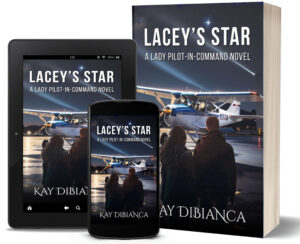
Private pilot Cassie Deakin has a lot of opportunity to develop character while she hunts a killer.

Buy on AmazonBarnes & NobleKoboGoogle Play, or Apple Books.

Writing Quotes, Inspiration, and Life Advice From Famous Authors

I love writing quotes. Recently, I stumbled across new-to-me writing, inspirational, and life advice quotes from famous authors. Too much spot-on advice not to share here on TKZ. Plus, I’m writing eighteen different articles to spread the news about my new eco-thriller. 😉

Writing Quotes

“The purpose of a writer is to keep civilization from destroying itself.” — Albert Camus

“As a writer, you should not judge, you should understand.” — Ernest Hemingway

“To produce a mighty book, you must choose a mighty theme.” — Herman Melville

“As for ‘Write what you know,’ I was regularly told this as a beginner. I think it’s very good rule and have always obeyed it. I write about imaginary countries, alien societies on other planets, dragons, wizards, the Napa Valley in 22002. I know these things. I know them better than anybody else possibly could, so it’s my duty to testify about them.” — Ursula K. Le Guin

“You should write because you love the shape of stories and sentences and the creation of different words on a page. Writing comes from reading, and reading is the finest teacher of how to write.” — Annie Proulx

“Find out the reason that commands you to write; see whether it has spread roots into the very depth of your heart; confess to yourself you have to die if you were forbidden to write.” — Rainer Maria Rilke

“A good writer possesses not only his own spirit but also the spirit of his friends.” — Friedrich Nietzsche

“Your writing voice is the deepest possible reflection of who you are. The job of your voice is not to seduce or flatter or make well-shaped sentences. In your voice, your readers should be able to hear the contents of your mind, your heart, your soul.” — Meg Rosoff

“Do not hoard what seems good for a later place in the book, or for another book. Give it, give it all, give it now.” — Annie Dillard

“If there’s a book that you want to read, but it hasn’t been written yet, then you must write it.” — Toni Morrison

“Tears are words that need to be written.” — Paulo Coelho

Inspirational Quotes by Writers

“You cannot find peace by avoiding life.” — Virginia Woolf

“The strongest principle of growth lies in the human choice.” — George Eliot

“Focus more on your desire than on your doubt, and the dream will take care of itself.” — Mark Twain

“Jump off a cliff and build your wings on the way down.” — Ray Bradbury

“I hope that in this year to come, you make mistakes. Because if you are making mistakes, then you are making new things, trying new things, learning, living, pushing yourself, changing yourself, changing your world. You’re doing things you’ve never done before, and more importantly, you’re doing something.” — Neil Gaiman

“Don’t bend. Don’t water it down. Don’t try to make it logical. Don’t edit your own soul according to the fashion. Rather, follow your most intense obsessions mercilessly.” — Franz Kafka

“Keep away from people who try to belittle your ambitions. Small people always do that, but the really great make you feel that you, too, can become great.” — Mark Twain

“Maybe it’s not about having a beautiful day, but about finding beautiful moments. Maybe a whole day is just too much to ask. I could choose to believe that in every day, in all things, no matter how dark and ugly, there are shards of beauty if I look for them.” — Anna White

“Trust our heart if the seas catch fire, live by love though the stars walk backwards.” — E. E. Cummings

“One day I find the right words, and they will be simple.” — Jack Kerouac

“I can be changed by what happens to me. But I refuse to be reduced by it.” — Maya Angelou

“The most common way people give up their power is by thinking they don’t have any.” — Alice Walker

Life Advice From Writers

“To live is the rarest thing in the world. Most people exist, that is all.” — Oscar Wilde

“That it will never come again is what makes life so sweet.” — Emily Dickinson

“It is never too late to be what you might have been.” — George Eliot

“To be yourself in a world that is constantly trying to make you something else is the greatest accomplishment.” — Ralph Waldo Emerson

“Pain is inevitable. Suffering is optional.” — Haruki Murakami

“Be kind, for everyone you meet is fighting a hard battle.” — Plato

“Unable are the loved to die for love is immortality.” — Emily Dickinson

“Let me live, love, and say it well in good sentences.” — Sylvia Plath

“Don’t let your happiness depend on something you may lose.” — C.S. Lewis

Are you inspired yet? Great! Get to work. 😉 Do you have a favorite?

Amidst the wild and unforgiving landscapes of Yellowstone Park, eco-warriors Mayhem and Shawnee race against the clock to protect an American Buffalo herd from the ruthless Killzme Corporation.

With a massive bounty on their heads and an army of killers on their trail, Mayhem and Shawnee risk it all to preserve the sacred lineage of the Innocent Ones.

There is no line Shawnee and Mayhem won’t cross.

Even murder.

As the danger intensifies and the clock winds down, will they be able to save the herd? Or will this be the mission that finally breaks them?

Preorder for 99c. Sale ends on release day, April 11, 2024.

Investigating Agatha Christie

I specialize in murders of quiet, domestic interest. –Agatha Christie

* * *

Agatha Christie is the best-selling novelist of all time. Her sales are exceeded only by the Bible and the works of Shakespeare.  According to her website at agathachristie.com, “She is best known for her 66 detective novels and 14 short story collections, as well as the world’s longest-running play – The Mousetrap. “

Agatha Christie’s books have sold over two billion copies worldwide!

Given Ms. Christie’s extraordinary success, it might be a good idea to see if we can discover some of her secrets.

* * *

A few years ago, I watched a documentary entitled “The Agatha Christie Code” (available on Youtube)  in which researchers examined various aspects of Christie’s writing. These researchers included

Dr. Richard Forsyth, Research Fellow in Applied Linguistics at the University of Warwick

Dr. Pernilla Danielsson, Academic Champion of Communications at the University of Birmingham

Dr. Marcus Dahl, Research Fellow at the School of Advanced Study – London University

They used computer technology to analyze Christie’s work, and they found interesting patterns in her stories that may give us a clue as to why she’s so popular.

Word Choices

Christie used simple language in her books, so readers were free to focus on the plot rather than the language. For example, the researchers found she used “said” often in an attribution rather than other words like “responded” or “answered.”

Christie also often repeated words within a short section of prose – something I’ve been warned against. Here’s an example from the novel Sad Cypress that was used in the video. (My notations in red.)

The researchers thought the repetition cemented the information in the reader’s mind. My editor would probably faint if I sent something like that to her, but maybe we should rethink the multiple uses of a word in a short section of prose.

Verbal Structure

The most interesting part of the video for me was when one of the researchers evaluated Christie’s works on the three criteria of

  •             Word length
  •             Word frequency
  •             Sentence structure

Dr. Danielsson plotted information about these aspects on a three-dimensional graph and plotted the same criteria from Arthur Conan Doyle’s works on the same graph. Christie’s books exhibited a consistency shown visually by her plotted points being clustered together while the points of Doyle’s stories were spread farther apart indicating his works were more dissimilar when compared to each other. This indicated that Doyle’s style had changed through the years while Christie’s had remained remarkably consistent.

Plot

Christie’s mysteries almost always create a world where

  •             There is a dead body
  •             A closed group of suspects are introduced
  •             A detective (either professional or amateur) is a character
  •             Red herrings are spread throughout
  •             There is a denouement scene where the detective identifies the murderer and brings closure to the story.

Some critics claim Christie wrote the same story over and over, but that’s not fair. For example, The Murder of Roger Ackroyd, Murder on the Orient Express, and And Then There Were None introduced novel twists to the standard murder mystery although they used a typical Christie template.

However, this general structure reassures the reader that there will be a logical puzzle that will be solved in the end, and that contributes to the sense of satisfaction.

Characters

While some famous characters appear in multiple books and are popular with the reading public (e.g., Hercule Poirot, Miss Marple, Captain Hastings), the number of characters in each novel may be just as important. This prompted an interesting theory by David Shephard, Master trainer in Neuro-Linguistic Programming.

Mr. Shephard pointed out that people have a limited focus and a conscious mind can only concentrate on five to nine things at a time. When presented with more information than that, a person will enter a sort of hypnotic trance.

Since Christie’s stories often have more than nine characters and several plot lines, Shephard thinks the reader’s mind can’t handle the overload of information, so he/she begins to “feel” the book rather than just think about it. This emotional connection makes readers want to return to Agatha Christie’s books again and again.

I’m not sure I can buy that explanation, but it’s very interesting and makes me think I should count the characters in my future books to see if I can put my readers into a trance.

Content & Style

As we all know, Agatha Christie’s mysteries contain no explicit sexual scenes and no explicit violence. So why do so many readers still buy her novels? Readers of Christie’s books know there will be a logical solution to the murder, the killer will be caught, and the clues are all available to solve the mystery.

David Suchet, who played the part of Hercule Poirot in the television series Agatha Christie’s Poirot, compared Christie’s books to sudoku puzzles. He believes readers enjoy the books because they’re completely absorbed in figuring out the solution to the puzzle.

Length

Although I found a site with the number of pages in each of Agatha Christie’s novels, I only found a reference to the word count on https://thewritepractice.com/word-count/. That site had an article that states Agatha Christie’s mystery novels average between 40,000 and 60,000 words. That’s a little short for most novels today, but it could explain why people found them easy to read.


Pacing

Agatha Christie controlled the speed at which her books were read by laying out more descriptive passages at the beginning, but picking up the pace of the story as it progressed. Hypnotist Paul McKenna had an interesting take on this. He felt her particular pattern of writing caused certain brain chemicals to be released, resulting in a sort of addiction in the readers. This theory goes a little beyond my pay grade, but I do think picking up the pace is a technique that works well in mystery writing.

* * *

So there you have it. While I’m sure there are other reasons for her success, these aspects of Agatha Christie’s writing are worth considering.

* * *

So TKZers: Have you read many of Agatha Christie’s books? Why do you think they’re so popular? Have you viewed “The Agatha Christie Code” video?  Is there anything you think we can glean from the data in this post that will help with our own writing?

* * *


“Very few of us are what we seem.” –Agatha Christie

Private pilot Cassie Deakin lands in the middle of a mystery and discovers things are not always what they seem.

Buy on AmazonBarnes & NobleKoboGoogle Play, or Apple Books.

How To Use White Space

When I was first learning the craft, I studied many novels, searching for how the author drew me in, held me in suspense, and propelled me to turn the page. Still do. 😉 One of the things I noticed was their use of white space — the blank field around the words and paragraphs.

White space can help create drama, emotion, or add a quiet pause before the storm hits. With so many “rules” or guidelines, sometimes white space can get overlooked. Yet it’s a powerful tool when used with intent.

Let’s look at a few examples. The first two are from our own James Scott Bell.

Last Call from JSB:

“Yo,” she said. “Go back to your table, okay?”

He stiffened and his smile melted into his beard. “Real friendly.” He shook his head as he went back to his table. He turned his laptop around then sat with his back to her.

Just like the rest of the world.

Long Lost from JSB:

With the wind blowing outside, Stevie fell into a calm sleep. Deep like the desert night.

He woke up with a rough hand over his mouth. Pressing him down. Maybe it was Robert playing a game. But it wasn’t. It was something big.

A monster.


The eye is drawn to the last line in both examples. They’re sharp and dramatic when sectioned by white space.

In the Eyes of the Dead by Jordan Dane:

I wanted to fight it, but I couldn’t. The hopelessness of becoming a victim rushed over me like a floodgate opening. I nearly choked on the magnitude of it. Images of my ordeal bombarded me. I caught glimpses of another face. It all happened too fast, I wasn’t sure I could retain what I’d seen.

Just like last time.

Again, Jordan could’ve set the last line in the same paragraph, but it would lose its punch there.

We can also use white space to break up dialogue.

Here’s an example from Skinwalkers by Tony Hillerman:

“Then you know that if I was a witch, I could turn myself into something else. Into a burrowing owl. I could fly out the smoke hole and go away into the night.”

Silence.

“But I am not a witch. I am just a man. I am a singer. A yataalii. I have learned the ways to cure. Some of them. I know the songs to protect you against a witching. But I am not a witch.”

See how “silence” added to the drama? Had he put all the dialogue into one paragraph, it wouldn’t be as effective, even with an intriguing conversation.

The Killing Song by PJ Parish:

The cold nub that had formed in my gut was growing. I was never one to trust vague feelings. I was a reporter and trained to believe only what I could see, what I could prove.

But the feeling rising up and putting a choke hold on my heart now was real.

Mandy was gone.

That last line smacks you in the face — because it’s separated by white space.

Blonde Hair, Blue Eyes by Karin Slaughter:

The line finally moved, and Julia went into the first stall. She felt her pager vibrate as she started to unbutton her jeans. She didn’t scroll the number right away. She sat down on the toilet. She looked up at the ceiling. She looked at the posters taped to the back of the stall door. She finally looked down at the pager. She pressed the button to scroll the number.

222.

Her heart broke into a million pieces.

222.

Julia looked up, trying to keep her tears from falling. She sniffed. She counted to a slow one hundred. She looked down again, because maybe she was wrong.

222.


The repetition also draws you in. If the author were to continue too long, the rhythm would lose its value. When done with intent, it’s dramatic and effective.

The last example is from my new thriller, Savage Mayhem (releases once my designer completes my cover).

A hair-raising screech stopped me mid-stride, my heartbeat quickened to a fast pitter-patter, pitter-patter, pitter-patter. Quaking aspen leaves trembled as we passed. Night owls slalomed through the trees, oarlike wings emitting a whoosh with each stroke. To my left, sticks crunched under heavy paws. Or hooves.

Bear?

Moose?

Wolf?

Here, I used white space for a dramatic pause and to draw attention to each individual threat. Which allows the reader to wonder. I also used Onomatopoeia words to deepen the scene.

White space can help fix long, rambling passages of text, pacing issues, and story rhythm. It’s a tool we should never overlook. Use the precious real estate to your advantage.

With the exception of mine (this is NOT a shameless plug), I recommend all these books. They’re fabulous.

Have you read any of them? Did you notice the white space while reading? Do you pay attention to white space in your writing?

The Meaning of Success

Dictionary.com defines success as

  1. the favorable or prosperous termination of attempts or endeavors; the accomplishment of one’s goals.
  2. the attainment of wealth, position, honors, or the like.

* * *

There are many opportunities for success in life. Winning a race, getting the lead role in a play, graduating from college, etc. But how do we define success in writing? I can imagine a list of possibilities: publishing that first book, securing an agent, receiving an award. But every time one goal is met, another rises up to take its place. I was having a hard time understanding exactly how to define success in my own writing, so I sought wisdom from that most knowledgeable of twenty-first-century oracles: the internet.

People who are famous must be successful, right? So they would be the logical ones to provide us with clues into what it was that helped them attain their status. I began my quest at medium.com and brainyquote.com, and I roamed around in their quote galleries, moving from room to room looking for the perfect definition of success. I found an enormous variety of ideas, and I’ve listed some of the quotes below for your enjoyment. I’ve also provided an occasional thought or two of my own in bold.

* * *

I started out with a couple of simple statements.

Reaching the goal is not success; success is moving toward the goal. –Bob Proctor  So it’s the journey, not the destination?

Eighty percent of success is showing up. –Woody Allen Well, that’s encouraging, but I’m not convinced.

I moved on and found some quotes that were more to my liking.

Success depends upon previous preparation, and without such preparation there is sure to be failure. –Confucius

Success is dependent on effort. –Sophocles

Judge your success by what you had to give up in order to get it. –Dalai Lama XIV

Success is to be measured not so much by the position that one has reached in life as by the obstacles which he has overcome. –Booker T. Washington

So it has to do with hard work and overcoming obstacles. But that’s not to say happiness doesn’t play a part.

Success is not the key to happiness. Happiness is the key to success. If you love what you are doing, you will be successful. –Albert Schweitzer

Success is getting what you want; happiness is wanting what you get. –Dale Carnegie

All of these were good, but I soldiered on and found a group of fascinating (and confusing) quotes that mentioned the part failure plays in success. 

Success is the ability to go from failure to failure without losing your enthusiasm. –Winston Churchill  I usually like quotes by Winston Churchill, but this one left me scratching my head.

Success is falling nine times and getting up 10. –Jon Bon Jovi  I don’t understand this. How can you get up ten times if you only fell nine times?

Failure is success if we learn from it. –Malcolm Forbes  It seems like this would depend on what we learn from it.

Success is often achieved by those who don’t know that failure is inevitable. –Coco Chanel  I read this one over about ten times, and I still don’t understand what it means.

Success is how high you bounce when you hit bottom. –George S. Patton  Once again, failure plays a part, and General Patton gives us a nice image to go along with it. 

Success does not consist in never making mistakes but in never making the same one a second time. –George Bernard Shaw  This one made sense to me.

Then I found a surprising quote from Andrew Carnegie who was once the richest man in the world. His net worth in today’s dollars would be over $300 billion.

There is little success where there is little laughter. –Andrew Carnegie   I bet Mr. Carnegie was laughing all the way to the bank.

Speaking of laughter, here are a couple of quotes that had me chuckling.

All you need in this life is ignorance and confidence, and then success is sure. –Mark Twain

If at first you don’t succeed, try, try again. Then quit. There’s no point in being a damn fool about it. –W.C. Fields

* * *

All of the quotes were interesting, and different people clearly have different measures for accomplishment, but I still hadn’t come up with a definition of success in my writing. Then I realized success may not be what I was looking for after all. I remembered this quote by Viktor Frankl in his book Man’s Search for Meaning:

“Don’t aim at success. …For success, like happiness, cannot be pursued; it must ensue, and it only does so as the unintended side-effect of one’s dedication.”

Ah. Now we’re getting somewhere. 

Interesting note: James Scott Bell’s TKZ post yesterday quoted Louise Parr, an author who had contributed to On the Art of Writing Fiction, published in 1894. Ms. Parr observed

there is a moral satisfaction in having done good work which no one can rob us of.

That was written 130 years ago, and it’s still as fresh and meaningful as it was then.

* * *

So TKZers: What is your definition of success in your writing? Is it one over-arching achievement or many goalposts along the way? Do you consider doing good work independent of recognition or success? Do any of the quotes in this post appeal to you?

* * *

Private pilot Cassie Deakin has one measure of success: to find the culprits who assaulted her uncle. But when she achieves that goal, she faces a much more difficult challenge.

Buy on AmazonBarnes & NobleKoboGoogle Play, or Apple Books.

#BookTok Tips for Writers

Last week, Steve asked for a post about #BookTok on TikTok. Since I wrote an article for Anne R. Allen’s blog in October 2022, I’ll repost it here so all of TKZ can benefit. I’ve included 2024 updates in bold.

When the buzz of TikTok started spreading, I wanted no part of it. With two Facebook accounts, Twitter, Instagram, Pinterest, LinkedIn, YouTube, Goodreads, etc. the last thing I needed was another social media site. I could barely juggle the audience I’d amassed on social media over the last twelve years. Then I discovered #BookTok, and my outlook changed.

#BookTok

The hashtag #BookTok opens a doorway to a subsection of TikTok where thousands of voracious readers spend their time, along with #WriterTok and a host of genre hashtags. #BookTok exploded over the last two years. In fact, #BookTokers call the dancing/singing videos “the wrong side of TikTok.” Rarely, if ever, do we venture outside of #BookTok — a loyal, generous community bonded by our love of the written word.

Remember when social media was your guilty pleasure, your happy place, and you looked forward to hopping online? For many of us, that drive faded away when politics and rants filled our timelines.

Yet, having a social media presence is a vital part of an author’s career. The problem is, once we form the emotional connection between social media and publishing, engaging with readers can start to feel a lot like work. #BookTok reignited my spark, and it can do the same for you. Not only is it a blast, TikTok in general is a selling machine.

WHAT IS TIKTOK?

TikTok calls itself an “entertainment platform.” Statistics show people spend more time watching TikTok videos than Netflix. Shocking, right? By its very nature, TikTok is a storytelling platform. The videos that reign supreme tell some sort of story, engaging the viewer through drama, comedy, or bewilderment.

The beauty of TikTok is that even with only a handful of followers, content can still go viral. I’ve personally witnessed new accounts gain 20-30K views on one video. Romance (all genres) do the best, followed by fantasy/sci-fi, mystery/thriller/suspense, YA, paranormal, and horror. True crime and nonfiction have their own massive audience. No matter what genre you write in, your audience is on #BookTok. All ages, all genres.

TIKTOK MYTHS

  1. I’m too old for TikTok.

As someone in their — ahem — mid-fifties, I thought the same thing. Nothing could be farther from the truth. When TikTok hit the scene, it did cater to a younger demographic. That’s changed over the years. #BookTokers range from 20s to 80s.

  1. I refuse to make a fool of myself to sell books.

Sure, there’s a lot of silliness on TikTok, but you don’t need to do anything that makes you uncomfortable. Be your beautiful, reserved, crazy, funny, introverted, or extroverted self. That’s who readers want to know, not some made-up version of yourself. Although, if you write spicy romance and want to conceal your identity, that’s okay, too.

  1. I don’t have time to learn another social media site that’ll probably disappear in a few years.

All writers suffer with the same issue. There simply aren’t enough hours in the day. Here’s a cold, hard truth: sooner or later authors won’t have a choice about joining TikTok. Our audience is turning away from Facebook and Twitter. At the end of last year (2021), Facebook reported its lowest daily views yet, and they attributed the loss to TikTok.

Of all the social media sites, X-Twitter has the lowest ROI for selling books. Do you know who has the highest? TikTok. Why? Because it’s unlike any other social media site.

  1. You must be tech-savvy to create videos.

TikTok does have an advanced video creator built into the app, but it’s very easy to use. They also provide video tutorials. If you still have trouble, head to YouTube. Creators post step-by-step instructions that anyone can follow.

  1. You must be comfortable in front of the camera to use TikTok.

I’ll tell you a little secret. The thought of shooting videos scared me half to death. The few videos I posted on social media took me forever to create, obsessing over every tiny detail, and I still wasn’t happy with the end result. Before I jumped on TikTok I froze in front of the camera. I wasn’t a fan of public speaking, either. Sure, I could hold my own at a book event, but I still trembled inside.

#BookTok helped me overcome that heart-stopping fear. And tomorrow, I fly out to film three episodes of a true crime series for TV (UPDATE: They’ve aired. Check out A Time to Kill, Season 6, on Investigation Discovery). Guess how the producers found me? Initially through my website — I still say authors need a home base — but they got a feel of my personality through my TikToks (videos). I can’t say that sealed the deal — they also read my books — but it definitely helped.

HOW DO AUTHORS START ON #BOOKTOK?

Download the app and setup an account. I started with a business account, but that was a mistake. Personal accounts get more views. Be sure to use your author name. If you use more than one pen name, then either create an account for each or umbrella them all under your real name. Choice is yours.

All you’ll be doing at first is lurking. Let me warn you. TikTok may seem overwhelming at first. You can spend hours watching talking dog videos, cooking videos, and any other passion you may have. Here’s the thing. The more content you watch that’s not book related the more you’ll confuse the algorithm. Learned that lesson the hard way.

Once you gain a thousand followers, the link in your bio becomes clickable. Still include one, though. People know to copy/paste a dead link. I use LinkTree. Back in 2016, LinkTree solved social media’s most annoying problem — only allowing one link in bios. Now, all your social media, newsletter sign-up page, website, blog(s), books, giveaways, etc. can be housed under one LinkTree link. And it’s free!

THE TIKTOK ALGORITHM

TikTok’s secret algorithm far exceeds all its competitors. When a new user signs up, it throws all kinds of videos at you, then watches and learns which ones you react to or re-watch. If you stop at every talking dog, the algorithm will flood your For You Page (timeline) with more talking animals. The longer you watch, the more it thinks that’s what you want. I can’t resist anything animal related. Hence why it took me a while to train the algorithm to gain more #BookTok followers.

Some authors advise to create two accounts. One to watch animals or whatever. The second for book related content. Alas, I use one account for everything, but I’m cognizant of the type of videos I watch. The algorithm has figured out that I love books and animals. Since I include animals in my books, I feel it’s related.

Pay close attention to authors in your genre.

  • What type of content do they create?
  • Do their videos get a lot of interaction?
  • Do they post only book content?
  • What other type of content do they post?
  • How does their audience react?

CREATING YOUR FIRST TIKTOK

Once you get comfortable with the app, you’ll feel the urge to jump in. Resist that urge for another week. I did nothing but lurk for a solid month. By the time I created my first TikTok *cringe* I felt I knew the rhythm of #BookTok. I didn’t. And neither will you. But that’s okay. The only way to learn the ins and out of #BookTok is to jump in headfirst.

Then why did you tell us to lurk first?

Because you’ll be ahead of the game if you do. All that knowledge you’ve acquired will benefit you when you’re ready. Think about this… You’re in #BookTok and stumble across a how-to video. If you don’t know what they’re talking about, you’ve wasted valuable information. For example, Trending Sounds or “how to invert” the title on your cover so it’s not a mirrored image.

WHAT IS A TRENDING SOUND?

A Trending Sound could be a fragment of music or a voiceover that helps you connect with an audience. All of TikTok uses Trends. You’ve probably seen the dance videos that everyone copies. Well, #BookTok has their own Trends and Trending Sounds.

2024 UPDATE: TikTok also owns CapCut, a video software app. If you use a trending CapCut, you’ll get more views. This video sold 100 books in one day. Why? Because I used a trending CapCut. When’s the last time one of your Facebook or Twitter posts sold that many books in a day? A video, I might add, that took me less than one minute to create.

It’s fantastic exposure. TikTok content lives forever. Unlike other social media sites, the algorithm constantly pushes old TikToks to new people.

Early on, I created a video of calling “my” murder of crows for breakfast. I showed the empty trees, me calling for Poe (the alpha), and the crows flying in moments later. That one video has over 5K views and climbing (2024 UPDATE: 31K views and climbing). It relates to my books because in my Mayhem Series, my antihero has three wild crow companions (Poe, Allan, and Edgar).

DUETS

Duets are when you, well, duet someone else’s video. Here’s an example of me duetting a cop’s video.

It works for my audience because I’m a crime writer. Romance writers duet male models, and their audience goes crazy. Paranormal writers might duet a medium or ghost hunter. If you write cozy mysteries in a library setting, duet a librarian. Write about vampires? No problem. Duet a vampire (yes, they’re on TikTok). Serial killer thriller author? Duet videos about serial killers. Think outside the box.

FINDING YOUR AUDIENCE

Are your books geared toward an older audience? Use the #GenX hashtag along with a genre hashtag. Are you targeting millennials? Use #GenY. Knowing who your audience is the key to finding potential readers. Niche down from there.

Some authors say never to follow other authors, but that’s a mistake. Writers are your people, your tribe. We learn from each other. We help boost each other’s views. #BookTok wouldn’t be nearly as fun without other writers. And we read, too!

TRENDS

We also start our own Trends, and they’re hilarious. Last week, a writer friend used the videotape filter. I’d need a whole other post to discuss filters. Suffice it to say, the TikTok looks like you’re being videotaped by someone else. In this case, the police were searching for a missing person: Grammarly. She was Suspect #1. In her video, she named me and a slew of other mystery/thriller authors as possible suspects, and we all created videos of being interrogated by the cops. Mystery & thriller readers loved it! We all gained new followers and sold books from that one idea.

And that, ladies and gentlemen, is the genius behind #BookTok. It’s marketing that doesn’t feel like marketing. Some savvy authors sell between 200-600 books per week from #BookTok alone. Still think it’s a waste of time?

FINAL THOUGHTS

I’m not sayin’ it’s easy to get started. Finding your groove takes time. But once you get the hang of it, you’ll find your audience much faster than any other social media site. If you’ve never watched a video review of one of your books, you’re missing out on something special. It’s humbling to witness the reaction of a reader who just closed the cover, tears still in her eyes while she gushes about how much she loved your characters or the story, and how she felt while reading.

Duet every review.

Authors can either “blind react” to a review or prepare themselves first, both done via the Duet feature, helping the review reach more and more readers. After watching a particularly emotional review of I AM MAYHEM, my son said to me, “Imagine how many other readers you’ve touched in the same way?” He’s right. Before #BookTok, authors never had the pleasure of witnessing immediate reactions from readers. Now we do.

Have you considered joining TikTok? Has this post inspired you to see if you’d be happy there? What are your biggest concerns?