The Deuteragonist

Deuteragonist – noun — the actor next in importance to the protagonist.

* * *

We all know what a protagonist and an antagonist are, but I had never heard the word “deuteragonist” until a few months ago. It comes from the Greek word “deuteros,” meaning “second.” But a deuteragonist is not just a secondary character, he/she is the secondary character.

Wikipedia tells us that ancient Greek drama originally had only one actor, the protagonist, and a group of dancers, the chorus. But then the playwright Aeschylus introduced a second character, the deuteragonist, in his plays.

Aristotle explained it in his work Poetics.

“Thus, it was Aeschylus who first raised the number of the actors from one to two. He also curtailed the chorus and made the dialogue be the leading part.”

So we can thank Aeschylus, who lived 2500 years ago, for the addition of the second character in drama, an innovation which enabled dialogue and conflict.

* * *

“The more complex you make your secondary characters, the more lifelike and involving your story will be.” –Donald Maass

So how is the deuteragonist different from the other secondary characters in today’s fiction?

According to studiobinder.com

“A deuteragonist is the second most important character in a story. This person is also known as the ‘secondary main character.’ While the protagonist gives us our primary point of view of the story, the deuteragonist often provides a different, but often similar, outlook.”

* * *

The deuteragonist can serve different purposes, depending on the author’s goals. But whatever role the deuteragonist plays, he/she should complement the protagonist  in a way that affects the main character’s arc in the story.


One possibility is as a supporter, friend, or assistant to the protagonist. Dr. Watson is a famous example of this type of deuteragonist in the Sherlock Holmes books. Watson not only narrates the stories, his gentlemanly compassion contrasts nicely with the purely logical Holmes.


The deuteragonist can also be a love interest. An example of this could be from the movie “Titanic” where Jack Dawson (Leonardo DeCaprio) plays the main secondary to Rose (Kate Winslet). In the movie, Jack shows Rose there is more to life than the suffocating high society she’s being forced into.


Villains are always useful in helping protagonists overcome their shortcomings and face down danger. An example of this was the film “Die Hard” where the protagonist John McClane (Bruce Willis) matches wits with the villainous deuteragonist Hans Gruber (Alan Rickman.)

So there you have it. A deuteragonist can add spice and complexity to a story while enhancing the protagonist’s character arc.

* * *

“The three things that matter most in a story are characters, characters and characters.” –Bob Gale

* * *

So TKZers: Are there deuteragonists that you like from books or films? Have you used a deuteragonist in any of your stories? Do you plan to? Tell us about them.

* * *


Protagonist Kathryn Frasier trains for a marathon, deuteragonist Cece Goldman rehearses for a play, and antagonist murderers hide in plain sight in The Watch Mysteries, an ebook boxset of three complete novels available at AmazonBarnes & NobleKoboGoogle Play, or Apple Books. (Today is the last day of the 99¢ sale.)

A Very Special Person Named First

A little perspective, like a little humor, goes a long way. —Allen Klein

 * * *

My first two novels were written in third person. Each scene had one POV character and the verb tense was consistent throughout the scene.

But when I began my third novel, Time After Tyme, I decided to try something new. I gave one character a first-person POV in her scenes. The rest of the scenes were in third person. I discovered the power of first person in that novel, and I fell in love with it.

“You never really understand a person until you consider things from his point of view … until you climb into his skin and walk around in it.” –Atticus Finch, To Kill a Mockingbird

* * *

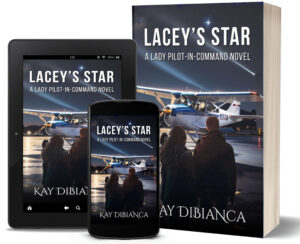
I enjoyed writing first person so much that my fourth novel, Lacey’s Star, and the fifth (a yet-to-be-published middle grade effort), are written in first person from the main character’s POV. To me, first person is especially effective because the narration is a conversation (albeit one-sided) between the narrator and the reader. The narrator relays the story in his/her own words.

But there’s something else that’s special about first person that I think connects the reader to the story in a unique way. It’s a topic that I don’t recall having been discussed here on TKZ, so I’d like to raise it now. It has to do with verb tense.

* * *

Example 1 from the classic by J.D. Salinger.

The Catcher in the Rye by J.D. Salinger

“They kicked me out. I wasn’t supposed to come back after Christmas vacation, on account of I was flunking four subjects and not applying myself and all. They gave me frequent warning to start applying myself—especially around midterms, when my parents came up for a conference with old Thurmer—but I didn’t do it. So I got the ax. They give guys the ax quite frequently at Pencey. It has a very good academic rating, Pencey. It really does.”

Did you see how the author switched from past tense to present so the character can move from telling the events of the story to offering a personal opinion? It’s as if the character wants to share a little detail with the reader, so he turns directly to the audience and hands out some extra information. This ability to offer side comments in the character’s voice seems to me to be unique in first person, and it shows an aspect of the character that may not work if the author stays with past tense.

When I was working on my first-person novels, I didn’t realize I was using exactly this technique, but someone with editing experience reviewed some of my work and told me the tense had to agree all the way through each scene. I didn’t see it that way, so I went looking for examples that used the first-person past / present approach. In addition to The Catcher in the Rye, I found lots of other examples, and they convinced my friend this was a valid approach.

Example 2 from a highly-regarded Middle Grade novel.

The Remarkable Journey of Coyote Sunrise by Dan Gemeinhart

“Once upon a time, it was hot and I was sweaty. It was about five months before my thirteenth birthday, give or take. We were someplace in Oregon. Honestly, I don’t even remember the name of the town, but I know it was on the dry, hot side of the state, away from the ocean.”

Example 3 where John D. MacDonald gives his main character, Travis McGee, so many opinions to share in present tense that I had a hard time deciding which one to pick.

The Deep Blue Good-By by John D. MacDonald

“The next morning, after making laundry arrangements, I untethered my bike and pedaled to the garage where I keep Miss Agnes sheltered from brine and sun. She needs tender loving care in her declining years. I believe she is the only Rolls Royce in America which has been converted into a pickup truck.”

Example 4 from an American classic.

The Adventures of Huckleberry Finn by Mark Twain

“After supper she got out her book and learned me about Moses and the Bulrushers, and I was in a sweat to find out all about him; but by and by she let it out that Moses had been dead a considerable long time; so then I didn’t care no more about him, because I don’t take no stock in dead people.”

And finally, Example 5 from our own JSB.

Romeo’s Justice by James Scott Bell

“Which is why I owed her that blasted thing called honesty. I never want Sophie to have any illusions about this piece of work called Romeo.”

So, there you have it. Examples of past and present tense, each within one paragraph, and all from masters of writing. Novl.org has a nice summation:

“We use tenses every day naturally as part of speech. While consistency is key when maintaining narrative voice, it’s important to remember that you can play around with tense for interesting narrative effect. Whatever you do, just make sure you choose the option that best serves your story.”

“Whatever you do, just make sure you choose the option that best serves your story.” I like that.

* * *

So TKZers: Do you write in first person? Have you noticed the use of both past and present tense in first person narratives? Will the two tenses work in third person? Any reflections on the examples above? 

* * *

Private pilot Cassie Deakin offers a first-person opinion right from the get-go in Lacey’s Star:
“I do not like handsome men… Like the one sitting in the passenger seat of my Cessna 172 while I did the run-up prior to takeoff. Frank White.” 

Buy on AmazonBarnes & NobleKoboGoogle Play, or Apple Books.

Emotional Trigger Words + The Id

A trigger word is a word that evokes a strong emotional reaction to compel someone to act. The reaction could be anything from clicking an article, opening an email, or buying a product. Like with most things in life, we don’t want to abuse trigger words. If used ethically, trigger words can help our books/newsletters/blog/articles reach a wider audience.

How are Emotional Triggers Formed?

The same way we trigger emotion in readers—tickle the senses. Some of our most powerful memories include the smell, sound, or taste of certain things when associated with a positive or negative connotation. But trigger words work differently.

All decisions made by us or others consist of multiple conscious and subconscious emotions. By delving into the psychology behind human behavior, we can increase sales and visibility.

4 Emotional Triggers

#1) Belonging

It’s human nature to want to belong to something. The writing community, a family, book clubs, critique groups, a religious organization, or other social groups. Giving people a sense of belonging works remarkably well. For example, I write “join my community” rather than “subscribe (which has a negative connotation) to my newsletter.” That little tweak makes a huge difference in how the message is received.

Trigger words for belonging

  • Community
  • Join
  • Become a member
  • Mutual
  • We
  • Together
  • Society
  • Neighborhood

#2) Fear

I can’t see why authors would want to use a fear tactic, but it’s listed as a marketing ploy. Though you could use fear triggers as keywords or in a book description.

Trigger words for fear

  • Worry
  • Anxiety
  • Concern
  • Terror
  • Death
  • Toxic
  • Mistake
  • Embarrassed
  • Nightmare
  • Doubt
  • Phobia
  • Horrific
  • Disastrous
  • Plummet
  • Warning
  • Danger
  • Looming
  • Shattered

#3) Guilt

Guilt is a powerful emotion, right? Charity organizations overuse this tactic. For us, triggering a guilt response would not be an effective way to market books. But we can use the trigger words in book descriptions or as keywords/key phrases for better targeting.

Trigger words for guilt

  • Goodwill
  • Humane
  • Disgrace
  • Shame
  • Disgusting
  • Charity
  • Donation
  • Mercy
  • Kindness
  • Empathy
  • Generosity
  • Compassion
  • Bleed for
  • Sympathize with
  • Feel for
  • Grief
  • Sorrow
  • Understand

#4) Trust

Trust is important for building a long-term business. When readers trust you to deliver the same quality in each book, article, or newsletter, you’ll build a loyal audience. Don’t try to fake this emotion, or it’ll backfire.

A few ways to show you’re trustworthy

  • Be transparent
  • Display reviews from other readers
  • Be genuine
  • Show you’re human, not perfect

In one newsletter, I wrote, “I have no words of wisdom for you today. The well is dry. I left all my emotions on the page.” I never once tried to fake it. And y’know what? I received the sweetest responses. Being emotionally spent is something we’ve all experienced, so we relate. We empathize.

Trigger words for trust

  • Caring
  • Fair treatment
  • Quality
  • Competency
  • Apologize
  • Sorry
  • Change
  • Never
  • Always
  • Privacy

The Pleasure Principle

In Sigmund Freud’s psychoanalysis, he described the pleasure principle as the instinctual force that motivates people to seek pleasure, to satisfy biological and psychological needs, and to avoid pain. The id resides in a primitive part of the psyche and is the only part of the personality that’s present at birth. Which explains the terrible twos. The ego doesn’t develop till age three or four.

Three major components of personality

  • The id – impulsive part of one’s personality that is driven by pleasure and repulsed by pain
  • Ego – conscious part of one’s personality that mediates between the id and superego and makes decisions
  • Superego – judgmental and morally correct part of one’s personality

Freud conceived the id as the unconscious mind’s primary source of motivation for all human behavior, from basic wants and needs (think: hunger and thirst) to emotional expression, impulses (think: aggression), and sexual desires. The id acts according to the pleasure principle — it seeks to fulfill its needs and desires in any way possible while avoiding pain or discomfort.

We live in a world of immediate gratification. No longer do we need to wait for the stores to stock a new album or novel. We can download it in seconds.

Can you guess how social media might affect the balance of the three components of personality? Likes, comments, and shares feed the id while making it difficult for the ego to mediate the feud with the superego. Hence why some people feel the need to condemn others and cast judgment.

TKZers, have you considered using psychology in your marketing? Do you use trigger words in book descriptions, keywords, and/or marketing?

Please note: I’ll be on the road today and will respond to comments later this afternoon. Hope you all have a fabulous day!

Running and Writing
  and the Marathon

Come what may, all bad fortune is to be conquered by endurance.  –Virgil

* * *

Writing a novel is often compared to running a marathon, and my experience dealing with the unexpected in the London Marathon in April 2010 was a good rehearsal for my later efforts in writing.

I’ve never been a good marathon runner. I’m better suited for the half-marathon. But in 2009, having completed three marathons (San Antonio, Vancouver, and Toronto), I decided I’d go for just one more. And I wanted to run one of the big marathons for that once-in-a-lifetime experience.

I told my husband I’d like to celebrate our anniversary in 2010 with a trip to the UK where I would run the London Marathon in honor of our marriage. Then we could spend a week or so vacationing. Frank was supportive, and for some unknown reason, I was convinced everything would go my way.

Hmm.

The major marathons are so popular that they can’t admit everyone who wants to enter. If you’re a very good runner and can meet the qualifying time for your age group, you’ll be entered. But if you’re like most runners (me, for instance) and can’t meet the qualifying time, they’ll put your name into a lottery and it’s just a matter of chance.

So when they opened the online registration in April 2009, I jumped in and registered along with 150,000 other runners. Although only about a quarter of those would get places, I was ridiculously confident. Around October, I received an email from the London Marathon notifying me that I wasn’t chosen. Rats.

But they held out another possibility. I could run for a charity. “That’s even better,” I thought. I could do a good deed as well as run the marathon. So I applied to several of the charities that I thought I’d like to support, and a few weeks later, one of them called. With about four months to go, I had cleared the first hurdle. I was in the race.

I was sure that from then on everything would be smooth sailing. (You can smile now.)

My running buddies at work were all excited that I was going to run the London, and that made me even more determined to do well. When they asked what kind of time I was planning on, I spouted off a near-impossible-for-me number. But if everything went perfectly, maybe I could make it.

Everything did not go perfectly.

  • Our treadmill, on which I was doing almost half of my training, broke. We needed a new one anyway, so we bought a bigger, better model. A few days of training lost.
  • I injured my knee in a tempo run. A couple of weeks of training lost.

I had stumbled over those first hurdles, but my excitement continued to ramp up as the days ticked closer to the race. Since I suffer from jetlag on international trips, we planned to fly to London six days prior to the marathon to allow my body to adjust to the time change before the race. But then…disaster.

  • A few days before our scheduled departure, I woke up to the news that a volcano in Iceland had erupted, volcanic ash was drifting over western Europe, and airports were closing. Heathrow was one of them. Our flight was cancelled.

You can overcome a lot of obstacles. But a volcano? Time to throw in the towel.

But then the winds shifted, and airports reopened. We managed to get on a flight that put us in London in the early morning hours of Friday before Sunday’s race day. Okay, so my jetlag would be a problem, but the excitement of the race would probably overcome that. (Are you laughing yet?)

I dragged myself out of bed on race day after just a few hours of sleep to discover there were more obstacles: the weather was warm (not good) and it was drizzling rain (super not good). Frank and I agreed on where we’d meet after the race, and he walked me to the starting area to join the other thirty-seven thousand people who had paid perfectly good money to punish their bodies for 26.2 miles.

But at least I had made it to the starting line. Now all I had to do was finish.

The London Marathon is unique. It’s a big party, and many of the marathoners wear costumes. One guy was dressed in a full suit of armor and someone else was carrying a huge replica of the Angel of the North sculpture on his back.

As time ticked down to the start, you could feel the buzz in the air. After an entire year of waiting, hoping, training, and planning, the starter’s pistol fired, and we were off.

I wish I could say everything went well.

  • For the first time ever, my GPS watch malfunctioned. Bad omen.
  • Another first: I got a side stitch. At least now I can describe in a book what it feels like to be stabbed just below the ribs.
  • As the miles went on, fatigue set in, and I realized I was getting a blister on one of my heels.
  • By the time I got to the eighteen-mile mark, I was starving. I guess the time change had messed up my body clock. Honestly, if I had seen a child holding a sandwich by the side of the course, I probably would have snatched it out of the kid’s hand and run away before anyone could catch me. But there were no sandwiches, my back and foot hurt, and I was run-walking so slow that I knew I was going to turn in a terrible time.

* * *

That’s when I had THE THOUGHT. I could quit. I could just step off the course, find a volunteer to give me a cart-ride to the finish, and it would be over. I wouldn’t suffer the embarrassment of a poor showing. I’d just tell everybody I was injured and couldn’t finish. I could bandage my foot and take an Advil and eat a steak dinner and forget this stupid marathon. The whole thing was wrong from the start. Why hadn’t I seen that? Why did I have to be so stubborn when there were just too many problems to overcome?

That little exercise in self-pity and frustration got me through the next mile or two. Then I had the SECOND THOUGHT. I would cross the finish line even if I had to crawl. Even if I was the last person across. Even if they had taken down the banners and all the volunteers had gone home and I didn’t get a medal or a T-shirt. Even if my feet were bleeding so profusely that I was leaving a trail of blood behind me on the course. (Self-martyrdom can be useful in certain situations.)

And I knew no matter how long it took, Frank would be waiting for me, and I knew exactly what he’d say when he saw me. After all, this was the race to honor our marriage, not to show off my great (ha!) running talent.

Those reflections got me through another mile or two, and then I was within just a few miles of the finish, so it didn’t make sense to quit.

I crossed the finish line. I didn’t crawl, and I wasn’t the last person in the race. There were still a couple of thousand people behind me, including angel sculpture man and the guy in the suit of armor. A volunteer hung a medal around my neck and someone else handed me a T-shirt that said “LonDONE 25.04.10.” Then I walked into the meeting area and saw Frank waving. As I limped toward him with my hair frizzy from the rain and my clothes damp with sweat, he jogged over and put his arm around me. “Great race, honey.”

* * *

So yeah. Writing a novel, especially a first one, is a lot like running a marathon. You start out with all this enthusiasm and confidence, but then things get hard, much harder than you thought. There are unexpected challenges, and it’s discouraging when agents and publishers don’t immediately see your genius and rush to sign you to a life-long contract.

That’s when many people give up. They hit the wall and decide it’s not worth all the pain and disappointment. According to selfpublishingus.com, only about 3% of people who start writing a book actually finish it. And of those, even fewer have their book published. But for those of us who stay in the race, there’s a satisfaction of accomplishment few have known.

I learned some lessons from the London Marathon that I believe apply to my writing.

  • Life (and running and writing) is more about what you put into it than what you get out.
  • It’s more about fighting the good fight than winning.
  • It’s more about the journey than the destination.
  • You value what you earn more than what someone gives you.

And in the long run (pun intended), whether it’s running or writing or living, endurance is more important than talent.

* * *


This has been a very long TKZ blog post, and if you made it to the end, you deserve a medal. Maybe you should consider running a marathon.


* * *

So TKZers: Have you ever run a marathon?
Have you faced obstacles when writing your books?
How do you deal with the setbacks?

* * *


Kathryn Frasier is training for her first marathon, but murderers keep getting in her way.

Run with Kathryn in The Watch Mysteries. The ebook boxset is on sale at  AmazonBarnes & NobleKoboGoogle Play, or Apple Books.

How Did I Get Here?

With Memorial Day upon us, many folks will be on the road, listening to music or daydreaming while stuck in traffic. Nothing at all interesting about it. Though we want our stories to mimic real life, showing every moment or mile gets boring and repetitive fast.

My characters are constantly on the move. If I showed the entire drive, boat ride, or flight, I’d destroy the pacing. Instead, move characters from point A to B by skipping the boring parts.

via GIPHY
When we jump ahead, tell the reader how much time has passed.

Nothing is more jarring than a character at home one minute and in the next paragraph they’re in a new location with no explanation of how they got there. Ground the reader in the first sentence. Or at least, in the first paragraph. Some writers include a scene break between paragraphs — either white space or *** — but that still does not absolve us from orienting the reader.

Show the characters getting into the car. Add a few lines of plot-related dialogue or trees zip past the window to show movement. And boom, they arrive at their new destination. Or, if nothing interesting happens, write something like…

Forty grueling minutes later without air conditioner, I arrived at the hotel with a wet scalp and my t-shirt molded to my chest.

A new chapter signals a time or POV change and/or a new setting.

It’s fine to speed past uneventful stretches in a story. In fact, it’s encouraged. Just be sure to give the reader a sense of how much time has lapsed, especially at the start of a new chapter. Even if we include a timestamp, we should still mention it as many readers will only recall whether the previous chapter took place during daylight or darkness.

Don’t make them have to backtrack to guess where or when the chapter begins.

If the action continues from the previous chapter, it’s still a good idea to set the scene with a brief mention of any time gaps or sensory cue to ground the reader. It doesn’t have to be complicated. “A few hours later” does the trick.

Establish who is present in every scene.

Nothing irks me more than a character appearing out of nowhere to offer a clue when they weren’t in the scene earlier. Too convenient. And frankly, obvious and lazy.

Again, adding a character to a scene needn’t be complicated…

The screen door slapped open, and Jack strolled out to the porch.

Now the reader knows he’s there, so when he offers that all-important clue, it makes sense within the scene.

Change in POV

As a reader and a writer, I don’t understand the fad of including the POV character’s name at the top of each chapter. In my opinion, it’s unnecessary. If we ground the reader in the character’s POV right away, they should know whose head they’re in without a label. If they don’t, then we’ve failed to set the scene. I prefer rotating POVs. They’re easy to follow and add to the overall rhythm of the story.

If you want to include the POV character’s name as a chapter heading, then by all means do so. It’s your story.

The main takeaway for this post is to orient the reader, whether the characters are on the move or we switch to a new POV.

For writers: How do you handle travel or signal a change in POV?

For readers: Have you ever been jarred out of a story due to a change in space or time?

Happy Memorial Day to TKZers in the U.S.!

Clerihew, Haiku, and You

A word fitly spoken
    is like apples of gold in a setting of silver.

–Proverbs 25:11

* * *

A few months ago, James Scott Bell posted Micro Fiction for Your Writer’s Brain on TKZ. It was about writing fiction that was less than 500 words long. (I’ll wait while you go back and review.)

That post gave me an idea for writing about even shorter form fiction, and I came across a few types that are both fun and challenging.

The Clerihew

The clerihew is a form of poetry that was invented by E.C. Bentley, the author of Trent’s Last Case and other novels. Bentley’s full name happens to be Edmund Clerihew Bentley. I guess when you have a middle name like Clerihew, you may as well come up with some clever and inventive use of it.

Here’s the definition of clerihew from Wikipedia:

clerihew (ˈklɛrɪhjuː) is a whimsical, four-line biographical poem of a type invented by Edmund Clerihew Bentley. The first line is the name of the poem’s subject, usually a famous person, and the remainder puts the subject in an absurd light or reveals something unknown or spurious about the subject. The rhyme scheme is AABB, and the rhymes are often forced. The line length and metre are irregular. Bentley invented the clerihew in school and then popularized it in books.

Here are a couple of examples:

Sir Humphry Davy
Abominated gravy.
He lived in the odium
Of having discovered sodium.

Did Descartes
Depart
With the thought
“Therefore I’m not”?

Here’s my humble attempt:

Albert Einstein
Had a very great mind
While in his prime
He relativized time

* * *

The Haiku

Back in 2021, Steve Hooley and his sister, Joyce, wrote a wonderful TKZ post on haiku poetry.

Dictionary.com defines haiku as

a major form of Japanese verse, written in 17 syllables divided into 3 lines of 5, 7, and 5 syllables, and employing highly evocative allusions and comparisons, often on the subject of nature or one of the seasons.

Here are a couple of rather famous ones:

“A Caterpillar” by Matsuo Basho

A caterpillar,
This deep in fall –
Still not a butterfly.


“A Poppy Blooms” by Katsushika Hokusai

I write, erase, rewrite
Erase again, and then
A poppy blooms.


And another one by me:

Azalea blossoms
Pink, but ragged on the edge
Tomorrow’s lovers

* * *

The Limerick

Here’s what Britannica.com has to say about this poetic form:

Limerick, a popular form of short, humorous verse that is often nonsensical and frequently ribald. It consists of five lines, rhyming aabba, and the dominant metre is anapestic, with two metrical feet in the third and fourth lines and three feet in the others. The origin of the limerick is unknown, but it has been suggested that the name derives from the chorus of an 18th-century Irish soldiers’ song, “Will You Come Up to Limerick?” To this were added impromptu verses crowded with improbable incident and subtle innuendo.


Here’s a non-ribald example.

A tutor who taught on the flute
Tried to teach two tooters to toot.
Said the two to the tutor,
“Is it harder to toot, or
To tutor two tooters to toot?”

Personally, I love limericks. I occasionally compose one in honor of politicians or other strange creatures.  😎 I won’t share any of those, but here’s one I made up just for today:

My computer decided to die
Just as the deadline drew nigh
When the publisher screamed
I knew I was creamed
So I kissed my contract good-bye

* * *

So TKZers: What do you think about these poetic short forms? Pick one or two (or all three) and astound us by entering your work in the comments. Include something in your poem about one of your books if you’re so inclined.

* * *

There once was a pilot named Cassie
An intrepid sleuth was this lassie
She flew into danger,
But it didn’t change her
And she found the murderer fastly.

A 2024 Eric Hoffer Grand Prize Award Finalist

Buy on AmazonBarnes & NobleKoboGoogle Play, or Apple Books.

One Word Holds Power

Have you ever received a text from a family member or close friend and knew something was wrong even though the words indicated the opposite?

I’ll show you what I mean with a real-life example.

The Kid planned to drive up to deliver ducks to the couple who lives at the top of our mountain, off-the-grid in a year-round camp surrounded by tall pines, oak, birch, and maple trees. By 10 a.m. that morning, we still hadn’t heard from The Kid, which is unusual. He’s always been an early riser.

So, I shot him a text. “Still planning to come up today?”

Several minutes dragged by before he responded. “Yes.”

My intuition tapped me on the shoulder. Something’s wrong. He never responds with one word. Besides, a simple yes didn’t give me enough information. If he brought all three grandkids, I would need to plan to feed six rather than three.

Plus, I let my little fur-babies run around my office during the day, but our grandchildren have a habit of leaving doors open. So, when they visit, it’s safer to leave them in their guinea pig habitat.

I texted back, “The Joe and the chicks coming, too?”

Another long pause. “Just The Joe.”

“You okay? You sound… I dunno… off.”

The Kid knows I’m tuned into him. Over the years I’ve learned to trust my intuition, and it has never failed me. Lying would be pointless.

“I was chasing ducks.”

“Okay, cool,” I texted, but something told me “chasing ducks” wasn’t the full story. Regardless, I didn’t want to push the issue via text. “I get the feeling you won’t be staying long.”

“We can stay for a bit.” The five-minute pause seemed to last twenty. “The longer the better. LOL”

And there it was—the first hint of the real reason he seemed off. Which he’d spill in person. It’s much harder to hide behind a false façade while staring into a concerned parent’s eyes. Though I’d never want to come across as pushy—he is a grown man, after all—I can’t take it when my kid is hurting. I don’t care how old he is. I’ll always be fiercely protective of his beautiful heart.

I do have a point to all this.

With that one simple word—Yes—I, the reader, knew to pay attention. That yes held power. That yes held unlimited power, more powerful than if he’d written an entire paragraph.

Writers should do the same. It’s a simple but effective way to add tension to a scene, cause a disturbance, and cue the reader to pay attention. The one-word, staccato sentence is a tool used for emphasis.

Run. Now.

It’s short and to the point. It calls attention to itself and exploits a reader’s emotions. Varying sentence structure holds a reader’s attention.

The following example looks like an exaggeration, but I once had to critique the first few pages of a novel written just like it.

As he stared at me, I could not look away. As I moved around the room, his stare held me hostage. As he moved closer, I told him to stop. As I backed away, he kept coming.

Every sentence began with “As” for three, never-ending pages. Not only is it grueling and repetitive, it’s annoying to read.

Rewrite:

His wolf-like stare held me hostage. Stop. Please stop. He moved closer. I backed away. Dear God, no. Not again. My spine hit the wall, my fingers searching behind me for the doorframe.

See how much more immediate the second example sounds? We don’t want to overdo it, but nothing can replace a well-placed staccato sentence here and there.

Writers have access to a plethora of writing tips, but it’s important not to overlook simple ways to hone our craft, like the act of reading and sentence structure.

Thoughts? Let’s discuss. 


Warriors battle a ruthless animal trafficking ring in Yellowstone. They will protect the sacred lineage of American Buffalo by any means necessary.

Even murder.

Download a sample on Amazon


The Art of Darkness

“Creativity – like human life itself – begins in darkness.” –Julia Cameron

* * *

April 8, 2024  The date of the great eclipse when a wide swath of the United States will be darkened as the sun and moon perform a heavenly pas de deux.

Memphis will see only a 98% covering, so my husband and I plan to travel with some friends to Arkansas to experience the full beauty of the show.

This will not be the first time we’ve observed a total eclipse. Way back in 1970, there was a total eclipse in my hometown of Savannah, Ga. I remember the experience well, but not for the reason you may think.

Unfortunately, the day was cloudy, but as the moon moved between the Earth and the sun, the clouds would occasionally break and give us a series of snapshots of the phenomenon. When the moment of totality arrived, the clouds once again opened, and we saw the black disk, then the bright flash of light as the moon moved on to continue its course. But that still wasn’t what astonished me.

It was the darkness.

Standing on the front lawn of my parents’ home, I looked down the street and saw a wall of black shadow racing toward us. It wasn’t like a cloud that covered the sun. It was a dark, menacing presence, rushing forward to devour the light in its path until it overtook us, and suddenly all was night.

Even though we understood what was happening, I had a sense of primordial awe that I have never forgotten.

* * *

Authors of mystery, suspense, and thrillers are well acquainted with darkness. It’s a symbol of the unknown, and that usually means fear, anxiety, loneliness, or panic will grip the main character and get the reader’s heart pumping a little harder.

“All great and beautiful work has come of first gazing without shrinking into the darkness.” –John Ruskin

A character walks out into a black night and senses a presence that he can’t see, or comes face-to-face with his own demons in the dark night of the soul when all appears lost. That heart-stopping look into the abyss rivets the attention and keeps the reader turning pages.

Here are a few examples.


* * *

We probably all studied Edgar Allen Poe’s The Raven in high school. Fear and doubt consume the poet as he contemplates his own loneliness late at night. Then he hears a sound and thinks it’s a visitor knocking. He opens the door and sees … nothing.


“Deep into that darkness peering, long I stood there, wondering, fearing, doubting, dreaming dreams no mortal ever dared to dream before.”


The murky setting on the moors gave Arthur Conan Doyle’s The Hound of the Baskervilles a sense of mystery and foreboding

“As if in answer to his words there rose suddenly out of the vast gloom of the moor that strange cry which I had already heard upon the borders of the great Grimpen Mire. It came with the wind through the silence of the night, a long, deep mutter, then a rising howl, and then the sad moan in which it died away. Again and again it sounded, the whole air throbbing with it, strident, wild, and menacing. The baronet caught my sleeve and his face glimmered white through the darkness. ‘My God, what’s that, Watson?’”


A sense of impending doom in Dean Koontz’s Midnight builds as a woman goes for a run on the beach in the middle of the night.

“Suddenly, as she was passing a pair of forty-foot, twisted cypresses that had grown in the middle of the beach, halfway between the hills and the waterline, Janice was sure she was not alone in the night and fog. She saw no movement, and she was unaware of any sound other than her own footsteps, raspy breathing, and thudding heartbeat; only instinct told her that she had company.”


Last week Kris introduced us to the Edgar finalists in her post. The first sentence of All the Sinners Bleed by S.A. Cosby hints of a violent past returning to haunt a small town.

Charon County was founded in bloodshed and darkness.

* * *


So, TKZers, there you have it. The Art of Darkness. How do you represent darkness in your books? Do you have any examples from the works of others that illustrate either physical or metaphorical darkness? Have you ever seen a total eclipse of the sun?

* * *

I don’t know how much access I’ll have to TKZ during the day, but I’ll respond to comments whenever I can.


“Character, like a photograph, develops in  darkness.” –Yousuf Karsh

Private pilot Cassie Deakin has a lot of opportunity to develop character while she hunts a killer.

Buy on AmazonBarnes & NobleKoboGoogle Play, or Apple Books.

Writing Quotes, Inspiration, and Life Advice From Famous Authors

I love writing quotes. Recently, I stumbled across new-to-me writing, inspirational, and life advice quotes from famous authors. Too much spot-on advice not to share here on TKZ. Plus, I’m writing eighteen different articles to spread the news about my new eco-thriller. 😉

Writing Quotes

“The purpose of a writer is to keep civilization from destroying itself.” — Albert Camus

“As a writer, you should not judge, you should understand.” — Ernest Hemingway

“To produce a mighty book, you must choose a mighty theme.” — Herman Melville

“As for ‘Write what you know,’ I was regularly told this as a beginner. I think it’s very good rule and have always obeyed it. I write about imaginary countries, alien societies on other planets, dragons, wizards, the Napa Valley in 22002. I know these things. I know them better than anybody else possibly could, so it’s my duty to testify about them.” — Ursula K. Le Guin

“You should write because you love the shape of stories and sentences and the creation of different words on a page. Writing comes from reading, and reading is the finest teacher of how to write.” — Annie Proulx

“Find out the reason that commands you to write; see whether it has spread roots into the very depth of your heart; confess to yourself you have to die if you were forbidden to write.” — Rainer Maria Rilke

“A good writer possesses not only his own spirit but also the spirit of his friends.” — Friedrich Nietzsche

“Your writing voice is the deepest possible reflection of who you are. The job of your voice is not to seduce or flatter or make well-shaped sentences. In your voice, your readers should be able to hear the contents of your mind, your heart, your soul.” — Meg Rosoff

“Do not hoard what seems good for a later place in the book, or for another book. Give it, give it all, give it now.” — Annie Dillard

“If there’s a book that you want to read, but it hasn’t been written yet, then you must write it.” — Toni Morrison

“Tears are words that need to be written.” — Paulo Coelho

Inspirational Quotes by Writers

“You cannot find peace by avoiding life.” — Virginia Woolf

“The strongest principle of growth lies in the human choice.” — George Eliot

“Focus more on your desire than on your doubt, and the dream will take care of itself.” — Mark Twain

“Jump off a cliff and build your wings on the way down.” — Ray Bradbury

“I hope that in this year to come, you make mistakes. Because if you are making mistakes, then you are making new things, trying new things, learning, living, pushing yourself, changing yourself, changing your world. You’re doing things you’ve never done before, and more importantly, you’re doing something.” — Neil Gaiman

“Don’t bend. Don’t water it down. Don’t try to make it logical. Don’t edit your own soul according to the fashion. Rather, follow your most intense obsessions mercilessly.” — Franz Kafka

“Keep away from people who try to belittle your ambitions. Small people always do that, but the really great make you feel that you, too, can become great.” — Mark Twain

“Maybe it’s not about having a beautiful day, but about finding beautiful moments. Maybe a whole day is just too much to ask. I could choose to believe that in every day, in all things, no matter how dark and ugly, there are shards of beauty if I look for them.” — Anna White

“Trust our heart if the seas catch fire, live by love though the stars walk backwards.” — E. E. Cummings

“One day I find the right words, and they will be simple.” — Jack Kerouac

“I can be changed by what happens to me. But I refuse to be reduced by it.” — Maya Angelou

“The most common way people give up their power is by thinking they don’t have any.” — Alice Walker

Life Advice From Writers

“To live is the rarest thing in the world. Most people exist, that is all.” — Oscar Wilde

“That it will never come again is what makes life so sweet.” — Emily Dickinson

“It is never too late to be what you might have been.” — George Eliot

“To be yourself in a world that is constantly trying to make you something else is the greatest accomplishment.” — Ralph Waldo Emerson

“Pain is inevitable. Suffering is optional.” — Haruki Murakami

“Be kind, for everyone you meet is fighting a hard battle.” — Plato

“Unable are the loved to die for love is immortality.” — Emily Dickinson

“Let me live, love, and say it well in good sentences.” — Sylvia Plath

“Don’t let your happiness depend on something you may lose.” — C.S. Lewis

Are you inspired yet? Great! Get to work. 😉 Do you have a favorite?

Amidst the wild and unforgiving landscapes of Yellowstone Park, eco-warriors Mayhem and Shawnee race against the clock to protect an American Buffalo herd from the ruthless Killzme Corporation.

With a massive bounty on their heads and an army of killers on their trail, Mayhem and Shawnee risk it all to preserve the sacred lineage of the Innocent Ones.

There is no line Shawnee and Mayhem won’t cross.

Even murder.

As the danger intensifies and the clock winds down, will they be able to save the herd? Or will this be the mission that finally breaks them?

Preorder for 99c. Sale ends on release day, April 11, 2024.

Investigating Agatha Christie

I specialize in murders of quiet, domestic interest. –Agatha Christie

* * *

Agatha Christie is the best-selling novelist of all time. Her sales are exceeded only by the Bible and the works of Shakespeare.  According to her website at agathachristie.com, “She is best known for her 66 detective novels and 14 short story collections, as well as the world’s longest-running play – The Mousetrap. “

Agatha Christie’s books have sold over two billion copies worldwide!

Given Ms. Christie’s extraordinary success, it might be a good idea to see if we can discover some of her secrets.

* * *

A few years ago, I watched a documentary entitled “The Agatha Christie Code” (available on Youtube)  in which researchers examined various aspects of Christie’s writing. These researchers included

Dr. Richard Forsyth, Research Fellow in Applied Linguistics at the University of Warwick

Dr. Pernilla Danielsson, Academic Champion of Communications at the University of Birmingham

Dr. Marcus Dahl, Research Fellow at the School of Advanced Study – London University

They used computer technology to analyze Christie’s work, and they found interesting patterns in her stories that may give us a clue as to why she’s so popular.

Word Choices

Christie used simple language in her books, so readers were free to focus on the plot rather than the language. For example, the researchers found she used “said” often in an attribution rather than other words like “responded” or “answered.”

Christie also often repeated words within a short section of prose – something I’ve been warned against. Here’s an example from the novel Sad Cypress that was used in the video. (My notations in red.)

The researchers thought the repetition cemented the information in the reader’s mind. My editor would probably faint if I sent something like that to her, but maybe we should rethink the multiple uses of a word in a short section of prose.

Verbal Structure

The most interesting part of the video for me was when one of the researchers evaluated Christie’s works on the three criteria of

  •             Word length
  •             Word frequency
  •             Sentence structure

Dr. Danielsson plotted information about these aspects on a three-dimensional graph and plotted the same criteria from Arthur Conan Doyle’s works on the same graph. Christie’s books exhibited a consistency shown visually by her plotted points being clustered together while the points of Doyle’s stories were spread farther apart indicating his works were more dissimilar when compared to each other. This indicated that Doyle’s style had changed through the years while Christie’s had remained remarkably consistent.

Plot

Christie’s mysteries almost always create a world where

  •             There is a dead body
  •             A closed group of suspects are introduced
  •             A detective (either professional or amateur) is a character
  •             Red herrings are spread throughout
  •             There is a denouement scene where the detective identifies the murderer and brings closure to the story.

Some critics claim Christie wrote the same story over and over, but that’s not fair. For example, The Murder of Roger Ackroyd, Murder on the Orient Express, and And Then There Were None introduced novel twists to the standard murder mystery although they used a typical Christie template.

However, this general structure reassures the reader that there will be a logical puzzle that will be solved in the end, and that contributes to the sense of satisfaction.

Characters

While some famous characters appear in multiple books and are popular with the reading public (e.g., Hercule Poirot, Miss Marple, Captain Hastings), the number of characters in each novel may be just as important. This prompted an interesting theory by David Shephard, Master trainer in Neuro-Linguistic Programming.

Mr. Shephard pointed out that people have a limited focus and a conscious mind can only concentrate on five to nine things at a time. When presented with more information than that, a person will enter a sort of hypnotic trance.

Since Christie’s stories often have more than nine characters and several plot lines, Shephard thinks the reader’s mind can’t handle the overload of information, so he/she begins to “feel” the book rather than just think about it. This emotional connection makes readers want to return to Agatha Christie’s books again and again.

I’m not sure I can buy that explanation, but it’s very interesting and makes me think I should count the characters in my future books to see if I can put my readers into a trance.

Content & Style

As we all know, Agatha Christie’s mysteries contain no explicit sexual scenes and no explicit violence. So why do so many readers still buy her novels? Readers of Christie’s books know there will be a logical solution to the murder, the killer will be caught, and the clues are all available to solve the mystery.

David Suchet, who played the part of Hercule Poirot in the television series Agatha Christie’s Poirot, compared Christie’s books to sudoku puzzles. He believes readers enjoy the books because they’re completely absorbed in figuring out the solution to the puzzle.

Length

Although I found a site with the number of pages in each of Agatha Christie’s novels, I only found a reference to the word count on https://thewritepractice.com/word-count/. That site had an article that states Agatha Christie’s mystery novels average between 40,000 and 60,000 words. That’s a little short for most novels today, but it could explain why people found them easy to read.


Pacing

Agatha Christie controlled the speed at which her books were read by laying out more descriptive passages at the beginning, but picking up the pace of the story as it progressed. Hypnotist Paul McKenna had an interesting take on this. He felt her particular pattern of writing caused certain brain chemicals to be released, resulting in a sort of addiction in the readers. This theory goes a little beyond my pay grade, but I do think picking up the pace is a technique that works well in mystery writing.

* * *

So there you have it. While I’m sure there are other reasons for her success, these aspects of Agatha Christie’s writing are worth considering.

* * *

So TKZers: Have you read many of Agatha Christie’s books? Why do you think they’re so popular? Have you viewed “The Agatha Christie Code” video?  Is there anything you think we can glean from the data in this post that will help with our own writing?

* * *


“Very few of us are what we seem.” –Agatha Christie

Private pilot Cassie Deakin lands in the middle of a mystery and discovers things are not always what they seem.

Buy on AmazonBarnes & NobleKoboGoogle Play, or Apple Books.