
Ernest Hemingway: Public Domain image Wikipedia
Describe your writer space and what setting best makes your creative juices flow.

Purchased from Shutterstock by Jordan Dane
A story has been niggling my brain for the past week. It tickles, in a good way. It started out as a vague melange of unconnected notions (like walking down a dark tunnel) until I started to define a premise and narrow the focus as if I had a light to guide me. Through online research of headline type tragedies, I searched for something with punch that would push me into the almost uncomfortable zone. I developed a loose character profile, playing with gender for the main character, but I needed more.
Over the last two days, I’ve refined my ideas about the story and “fleshed it out” in a way that excites me the most. I can’t share my book idea yet, but I’ve made notes of my process to share here at TKZ. Here are my steps going forward.
1.) Imagine basic ‘what ifs” about a potential character (a storyteller) and a problem–an unfathomable tragedy, an emotionally charged story concept, or a compelling situation–to create a list of “what if” scenarios. One story idea can have many “what ifs.” In SILENCE OF THE LAMBS, another “what if” could center on Hannibal or Crawford who risks his career and reputation on an FBI trainee. Brainstorm a list before you narrow it down to the one you want to develop as the foundation starting point to your story.
2.) Next, whose story will it be? Let’s talk character. Who has the most to lose? Pick the best character(s) to tell the story. Then decide how you want to “punish” them to test their worthiness for a starring role in your book.
3.) What is the external conflict between the main players (villain or adversary included)? But a good story is not only about the obvious conflict. Flawed characters have double the challenges. How will their internal crutches (their inherent weaknesses) keep them from getting what they want & add to the stress of the conflict? Make the story a personal and intimate journey.
4.) What’s at stake & how will the stakes escalate and play out? Maximize the emotional impact by ramping up the conflict between two main players at odds with each other. Yes, they could be on the same side, but pit them against each other to make things progressively worse and see how they’ll make it through.
5.) Now draft your “pitch” or a premise. You have your basic story ideas – your cast of characters, the conflict, the escalating stakes and a general sense of how things will play out, so you’re ready to draft a “pitch” or develop a premise that best fits your story. Something that would make an agent, editor, or reader say, “Wow, I have to read that.”
Here’s a basic premise example for SILENCE OF THE LAMBS:
A young female FBI trainee must barter her intimate secrets with an infamous psychopath held in solitary confinement to gain his help in catching a serial killer who’s killing women for their skins.
Notice there’s a well-defined protagonist, a formidable antagonist, a sense of the setting, conflict and stakes, and a notion of how the action will play out. The protagonist is up against forces that seem much bigger than she is. The stakes are high. If she fails, more women die. A premise works best when it’s about a vulnerable character with a formidable problem that would seem compelling to the reader.
A good premise should:
A word of caution:
Do not overload the story with too many focal points or subplots that take away or distract from the main character(s) plight. Keep a laser focus. If the premise is compelling enough, the story won’t need embellishment.
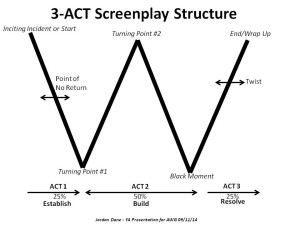
From this point forward: Now that I’ve developed a more focused idea for a new book, I will draft a general plot using a method that’s worked for me and one that I’ve blogged about before at TKZ: The Author’s Bucket List on Plotting Structure. Using the shape of a “W” to remind me, I’ll create the inciting incident, the point of no return, turning points, the black moment, and the twisty wrap up in 7 points that will get me started. A high level outline. Since I’m an impatient writer, I usually start to write the beginning to play with what will work best. If I’m writing on proposal, I will draft a 5-7 page synopsis to go along with the writing sample to a publisher. I like having a fuller synopsis, than merely my 7 point “W’ outline, to develop the story line in a way that guides me as I write. I can incorporate character motivation and ramp up the conflict in such a synopsis so I don’t forget any necessary plot points. At this point, I am on my way and writing in the zone.
Here is a visual idea of the “W” plotting I use: It a visual summary of my blog post.
DISCUSSION EXERCISE: Write a brief yet effective premise for any of these 5 well- known movies:
1.) Silence of the Lambs (Can you do one from Hannibal’s perspective?}
2.) Jaws
3.) It’s a Wonderful Life
4.) Hunger Games
5.) Wizard of Oz
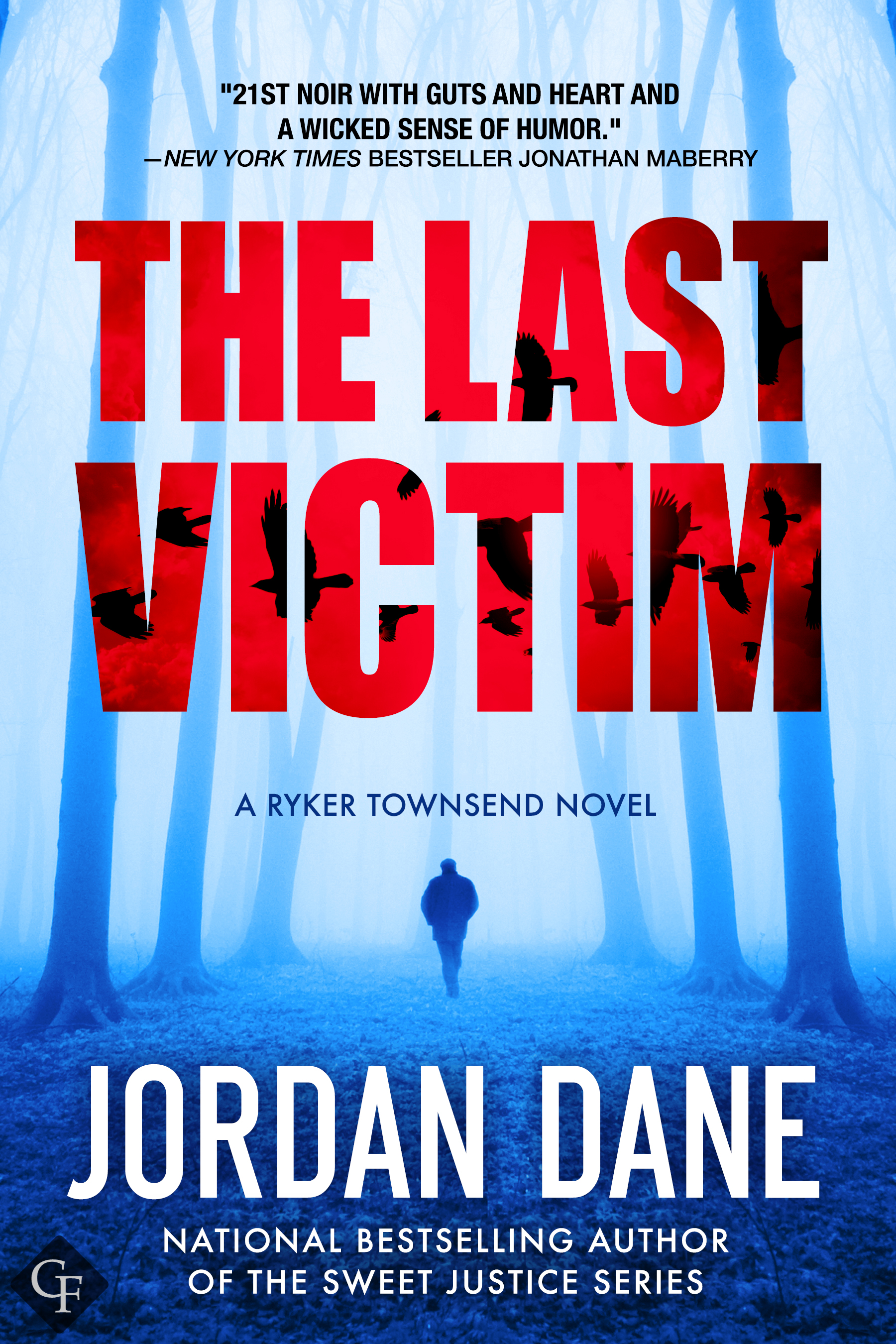 The Last Victim coming Oct 30, 2015 in print and ebook. Available for ebook preorder through Amazon Kindle at a discounted price.
Enter Goodreads GIVEAWAY at this LINK. Win one of 15 signed print copies See rules and enter.
I came across this post recently and found it exceptional advice for all those struggling to construct a synopsis. So I contacted the author, Mike Wells, and invited him to guest blog today and share his insight into what some writers feel is one of the hardest tasks an author must address. Join me in welcoming Mike. Read on, learn and enjoy. Joe Moore
————————————————
If you’re like most authors, summarizing your book in a couple of sentences is a daunting task. However, if you’re going to sell your book, it’s simply something you have to do. If you choose to go the traditional route, agents and editors alike are bombarded  with so many queries that if they find themselves having to do much mental work to understand the gist of your book, they will simply pass on to the next one. The same goes for self-publishing–all the retailers and distributors require short descriptions of your book. For example, Smashwords requires a description that can be no more than 400 characters, including spaces! That’s short, folks!
To help you do this, I want to share a formula I learned a long time ago, one that was created in Hollywood. I can tell you from my dealings with the people in the movie industry that when it comes to stories and story structure, they really know their stuff.
Each and every story is composed of the same five basic elements. If you can identify them in their purest, simplest forms, you will be well on your way to writing a good two-sentence synopsis of your book, regardless of its length or complexity.
The five elements are: a (1) hero who finds himself stuck in a (2) situation from which he wants to free himself by achieving a (3) goal. However, there is a (4) villain who wants to stop him from this, and if he’s successful, will cause the hero to experience a (5) disaster.
Actually, what I’ve just written above IS the two sentence synopsis which will work for any story, no matter how complex the plot or characters may seem.
Before I go further, I want to stop for a moment and address the “Is this a formula?” question that will undoubtedly come up in many writers’ minds. Anyone with any experience in writing (or painting or composing music, etc.) knows that formulas do not work when creating a new piece of art, that the most you can hope for is a cookie-cutter type result that will be mediocre, at best.
However, what we are doing here is summarizing a piece of art that has already been created. Because we know that each and every story must contain these five elements, if we can step back from our own story and identify them, it makes the job of summarizing the story much easier.
The only thing formulaic about this approach is the order in which the information is presented, and the structure of the sentences. You can change this around later and make the synopsis appear as original and unique as you desire.
So, back to the method. Another way to write this compressed synopsis is to move the goal into the second sentence into the form of a question, as follows:
Hero finds herself stuck in situation from which she wants to free herself. Can she achieve goal, or will villain stop her and cause her to experience disaster?
All you have to do is identify the elements and plug them in to create the most basic two sentence synopsis for your own story. By the way, you don’t have to put the second sentence in the form of a question–you could write, She must achieve goal, or villain will stop her and cause her to experience disaster. I posed it as a question only because it emphasizes the main narrative question in the story–discovering the answer to that sticky issue is what keeps readers turning the pages until (hopefully) they reach the very end of your book.
The best way to demonstrate the process of creating a two-sentence synopsis is with a real example. As virtually everyone knows the story of The Wizard of Oz, let’s use that. The five elements are:
HERO Dorothy, a Kansas farm girl
SITUATION Finds herself transported to faraway land called Oz.
GOAL To find her way back to Kansas
VILLAIN The witch
DISASTER To be stuck in Oz forever
Plugging the elements into the two-sentence structure, we have:
Dorothy, a farm girl, finds herself transported to a faraway land called Oz. Will the witch kill her before she can find her way back to Kansas?
Now, before you begin to think that this sounds too simplistic for your story, or if you don’t believe your book contains one on more of these elements, or that they seem too melodramatic, etc.–you’re wrong. Your story has all five elements, or it would not be a story.
Your story must have a hero, even if that hero happens to be a cat. And your hero must be stuck in an untenable situation and develop a goal to escape that situation, or you have nothing but a character study, not a story. The untenable situation could be something as mundane as boredom or as abstract as a blocked unconscious need to act out rebelliousness. But that untenable situation is there, and the hero must have a goal to escape it. Furthermore, if there is nothing to stop the hero from achieving her goal (i.e., a villain), then you have no conflict. No conflict, no story.
Granted, some of your story elements may require some thought to identify. For example, your villain might be society as a whole, Mother Nature, or even your hero’s self-doubt. Similarly, your disaster could be little more than your hero having to live with an unbearable self-concept or overwhelming guilt. It’s also important to remember that the “disaster” is seen through the eyes of the hero. This is usually the worst possible scenario he or she can envision at the beginning of the story, but may in fact be the just outcome, or the outcome that does the hero the most good in the long run.
Back to The Wizard of Oz. While the two sentence synopsis we wrote is accurate, it is also painfully dull. This because we started with the five story elements distilled into their absolute minimal forms (done intentionally by me for the purpose of this exercise). To jazz it up, let’s go through the list and expand each element:
HERO – Dorothy isn’t just a farm girl, she’s a lonely, wistful farm girl
SITUATION – Dorothy isn’t merely transported to Oz, but is whisked away by a tornado and dropped there. Also, Oz is far more than a faraway land, it’s a magical but frightening place, full of strange characters, little people call Munchkins and witches, both “good” and “bad.”
GOAL – Dorothy’s main goal is to get back to Kansas, but she soon learns that only the great and powerful Wizard of Oz can help her do that, and he lives in Emerald City, a long and dangerous journey from her starting point (You’ll note that in any story, the hero’s main goal breaks down into a series of sub-goals).
VILLAIN – The witch is more than “just a witch”–she is the Wicked Witch of the West.
DISASTER – Dorothy’s possible fate is actually worse than being stuck in Oz forever–the Wicked Witch of the West is determined to kill her.
So, let’s plug these expanded elements into the original formula.
Dorothy, a lonely, wistful farm girl, is whisked away by a tornado and dropped into in a faraway land called Oz, a magical but frightening place, filled with strange and wonderful characters–little people called Munchkins, and witches that are both good and bad. Can Dorothy make the long and dangerous journey to Emerald City to see the Wizard, the only one who can help her return to Kansas, or will the Wicked Witch of the West kill her first?
Note that we still have exactly the same structure as before which does make the synopsis read a bit clumsily. But you have to admit it’s a lot more colorful and engaging. For better reading flow, the first sentence can be rearranged as follows:
When a tornado strikes her home in Kansas, a lonely, wistful farm girl named Dorothy finds herself transported to a faraway land called Oz, a magical but frightening place, filled with strange and wonderful characters–little people called Munchkins, and witches that are both good and bad. Can Dorothy make the long and dangerous journey to Emerald City to see the Wizard, the only one who can help her return to Kansas, or will the Wicked Witch of the West kill her first?
Once you have this much, you can keep expanding, rearranging, and enriching the synopsis to make it as long and original-sounding as you like. You can pull in more information–for example, that Dorothy’s house fell on the Wicked Witch of the East (which sets up the motivation of why the Wicked which of the West loathes Dorothy, as the two witches were sisters), and you can break the main goal down into sub-goals (for example, that Dorothy is only told that she must “follow the Yellow Brick Road” to reach Emerald City, and that once she does manage to see the Wizard, he tells her she must bring him the Wicked Witch’s broom in order to prove her worthiness, and so on)
In my query letters, I always include a two sentence synopsis similar to that above in terms of detail, then usually expand on it in another paragraph and introduce more subtle elements. In this second paragraph, I always try to point out the villain’s motivation to stop the hero (as above) and also the most important character conflict. Although I did not do this above for The Wizard of Oz, the most important character conflict in that story might be between Dorothy and the wizard–after she does manage to return with the witch’s broom, he gives her the runaround, and she must find the courage within herself to stand up to him and demand that he deliver on his promise.
The two-sentence synopsis method takes a little practice, but once you get the hang of it, you will find the task of writing synopses–of any length–much easier. In fact, now I often write this type of two-sentence synopsis as soon as my story idea has jelled, because the “top down” approach helps me stay focused as I begin the actual process of putting it into words.
One word of caution: if you are having trouble generating interest in your book, resist the urge to “reposition” the story to make it more appealing to agents who represent other genres. For example, if you had written The Wizard of Oz and could not get any fantasy genre agents to read it, you could compose the following short synopsis to make it into an edgy thriller:
Transported to a surreal landscape, a young girl kills the first person she meets, then teams up with three total strangers to kill again.
I’m joking, of course, but you get the idea. Such repositioning misleads agents and wastes their time.
To see the two-sentence synopsis method applied to ten different well-known stories from literature and film, go to Story Synopsis Quiz. All ten of these synopses are written in exactly the same form as I have outlined here. To practice, you might try writing up a few from your favorite books, plays and films.
———————————
With 30 years experience as an author. I strive to create the most engaging, entertaining, well-written novels that I can. My goal is to take you to places you have never been, and to keep you anxiously turning the pages, always asking for more. I hope you enjoy my books! Be sure to visit my blog at http://mikewellsblog.blogspot.com/

By PJ Parrish
It is a dark and stormy night. Really.
So in honor of the Erika remnant thunderstorm that is dumping its load on us down here in South Florida tonight, I got inspired and decided I had to go there…
Yes, we have to talk about bad novel openings. Now, we’ve had some really good posts lately about good openings. But it’s time to for me to get down and dirty and show you some examples of some really really really bad opening paragraphs. And for once, I am going to name names because these writers deserve the exposure.
Let’s start with this opening by a writer named Tom Billings, who lives in Minneapolis:
John thought of Kate and smiled – with any luck the tide would carry her body out to deeper water by nightfall.
And how about this gem by Belgian novelist Miriam Nys:
Walking through the northernmost souk of Marrakech, that storied and cosmopolitan city so beloved of voyagers wishing to shake the desert dust off their feet, Peter bought a French-language newspaper and realized, with dizzying dismay, that “Camille” can be a man’s name.
And then there’s this from Margo Coffman:
If Vicky Walters had known that ordering an extra shot of espresso in her grande non-fat one pump raspberry syrup soy latte that Wednesday would lead to her death and subsequent rebirth as a vampire, she probably would have at least gotten whipped cream.
What in the world were these people thinking? That they’d win an award or something?Well, they did. They are all winners or runners-up in this year’s Bulwer-Lytton Fiction Contest.
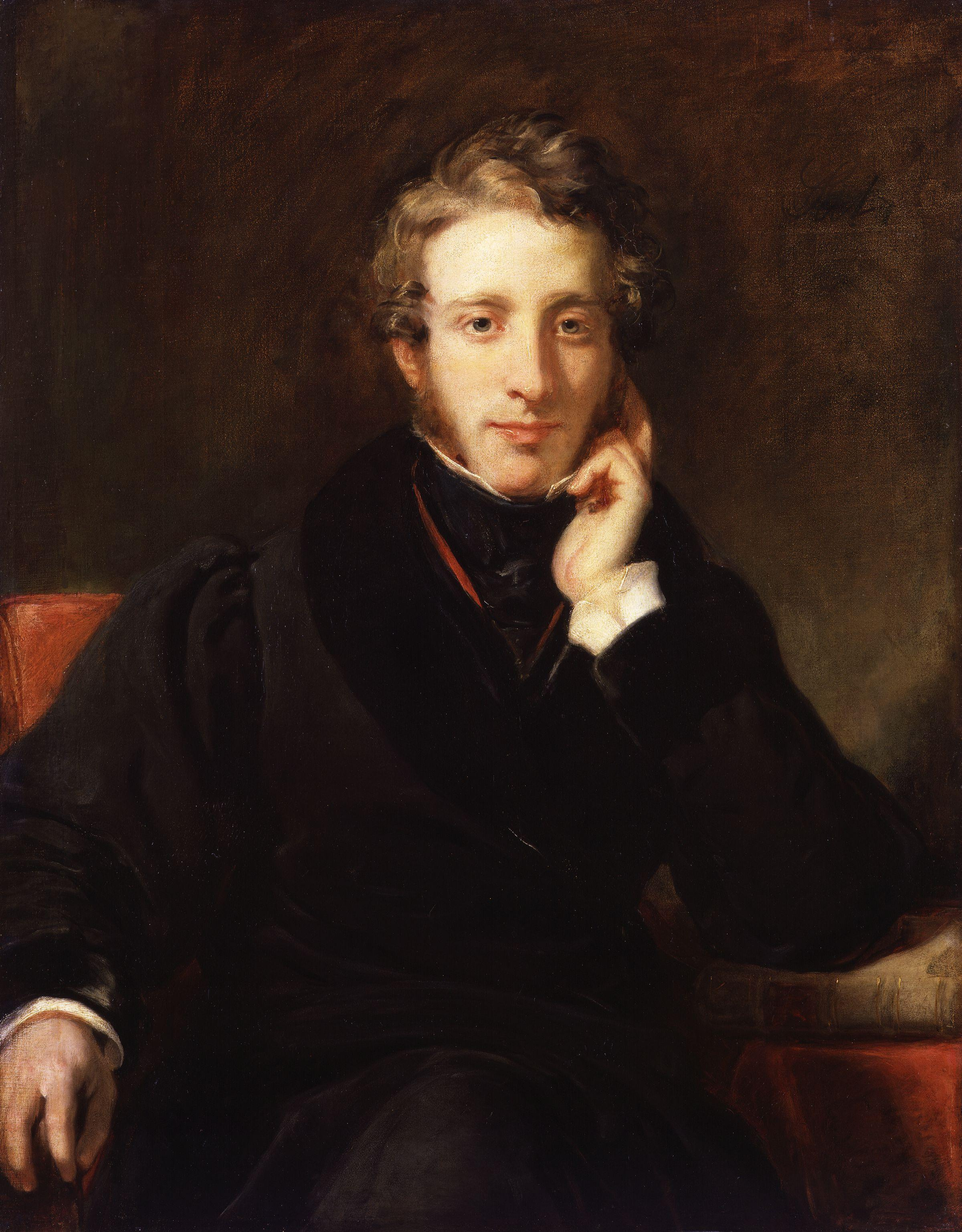
Surely, you remember Edward Bulwer-Lytton? He was an English novelist, poet, playwright, and politician (B: 1873). In his day, he was immensely popular with the reading public and got rich from a steady stream of bestselling novels. He coined the phrases “the great unwashed” “pursuit of the almighty dollar”, “the pen is mightier than the sword,” and the infamous opening line “It was a dark and stormy night.” Here’s his infamous opening in full, by the way:
It was a dark and stormy night; the rain fell in torrents — except at occasional intervals, when it was checked by a violent gust of wind which swept up the streets (for it is in London that our scene lies), rattling along the housetops, and fiercely agitating the scanty flame of the lamps that struggled against the darkness.”
{{{A moment of awed silence}}}
Back to our present winners. The contest has been going on for 33 years now, and as the website states, the rules are “childishly simple.” Just craft a really bad ONE SENTENCE opening line in one of many genres that include crime fiction, romance, fantasy and even kid lit. You’d think that after three decades of cheese, things might start turning stale. Wrongo, brie-breath. This year’s crop of winners is, as Spencer Tracy would say, cherse.
The grand prize winner of the 33rd edition of the Bulwer-Lytton Fiction Contest is Dr. Joel Phillips of West Trenton, New Jersey. According to the contest website, Joel teaches music theory and composition at Westminster Choir College in Princeton, New Jersey. He lives in West Trenton with his wife and their three cats, gardens with gusto, and enjoys listening to his rock-star bassist son’s original songs. He can tell you when René Magritte painted “The Castle of the Pyrenees” but not when someone is off sides in soccer.He also purposefully viewed the film “Ishtar” more than once. Here is his winning entry:
Seeing how the victim’s body, or what remained of it, was wedged between the grill of the Peterbilt 389 and the bumper of the 2008 Cadillac Escalade EXT Officer “Dirk” Dirksen wondered why reporters always used the phrase “sandwiched” to describe such a scene when there was nothing appetizing about it, but still, he thought, they might have a point because some of this would probably end up on the front of his shirt.
God, that’s good.
I love this contest. Almost as much as I love the Literary Review’s Bad Sex in Fiction Awards. (Sorry, you’ll have to wait until December for me to weigh in on that one). Because you know, you really have to be a good writer to write badly on purpose. It’s like Lucille Ball. In I Love Lucy, she was infamously tone-deaf. But in real life, she was a pretty decent singer.
I sort of understand this. I can’t sing a lick, but for teaching purposes, I often show “before and after” writing examples because it’s easier to see your mistakes if you can see different ways to fix things. The problem is, I will never embarrass another writer in public, so Kelly and I often have to make up “before” examples for our workshops. And you know something? It’s not as easy as you would think.
For example, here is a “before” sample from one of our PowerPoints on the subject of Show Not Tell, that Kelly made up:
She looked at Louis. He was twenty-nine and bi-racial, his father white, his mother black. She knew he had grown up as a foster child and had made peace with his mother toward the end of her life, but that his father had deserted him.
It’s okay, adequate. But here is the “after” version, as it actually appears in one of our books.
She turned toward him. God, she loved his face. Forceful, high-cheekboned, black brows sitting like emphatic accents over his gray eyes, the left one arching into an exclamation mark when he was amused or surprised. And his skin, smooth and buff-colored, a gift from his beautiful black mother whose picture he had once shown her and his white father, whom he had never mentioned.
Here’s another example of bad writing we wrote:
“Hello Joe,” he said. “Long time no see.”
“Yeah, it’s been about two months.”
“That long, eh?”
“Yeah.”
“What you been up to?” he asked.
“I was carving fishing lures, but the then the wife left me and I found myself living alone and eating and drinking too much. Then I met Sally.”
“Oh really?”
The point we were trying to teach here is to not waste dialogue on dumb stuff, that even though we are told that dialogue is the lifeblood of good writing, sometimes, simple narrative is more effective. Here is the “after” version:
He hadn’t seen Joe for two months. He looked terrible, like he had been living on Big Macs and Jim Beam. Talk around the station was that his wife had left him and he was going crazy sitting at home making fish lures.
But enough serious stuff. let’s go back to our contest winners. I’d like to share some of my favorites. You can find the whole list of winners by clicking HERE. Take a bow, good bad writers!
Grand Prize Runner up Grey Harlowe of Salem, OR
“We can’t let the dastards win,” said Piper Bogdonovich to her fellow gardener, Mr. Sidney Beckworth Hammerstein, as she clenched her gloved hands into gnarly fists, “because if I have to endure another year after which my Royal Puffin buttercups come in second place to Marsha Engelstrom’s Fainting Dove Tear Drop peonies, I will find a machine gun and leave my humanity card in the Volvo.”
Crime Fiction Runner Up from Laura Ruth Loomis:
When the corpse showed up in the swimming pool, her dead bosoms bobbing up and down like twin poached eggs in hollandaise sauce, Randy decided to call the police as soon as he finished taking pictures of his breakfast and posting them on Facebook.
Here’s my personal favorite in the crime fiction category, from E. David Moulton:
The janitor’s body lay just within the door, a small puncture wound below his right ear made with a long thin screwdriver, the kind electricians use and can often be found in the bargain bin at the hardware store and come with a pair of cheap wire cutters that you never use because they won’t cut wire worth a damn and at best will only put a small indent in the wire so you at least bend it back and forth until it breaks.
And because I have never met a bad pun I didn’t love, I will end with my favorite from the Bad Pun Category. God bless you Matthew Pfeifer of Beaman Iowa, you made my day.
Old man Dracula forgot to put his teeth in one night, so had to come home hungry, with a sort of “nothing dentured, nothing veined” look on his face.
Postscript! I just realized that Friday marked my third anniversary here at TKZ. Time has whizzed by! So thank you, Kathryn and Joe for inviting me in, thank you to my fellow bloggers for the camaraderie and really thank you to all you crime dogs out there who keep us going and contribute to our conversation. Even you lurkers. Take it away, Lucy!
The school year is back in session and with it comes the usual stresses and changes – especially with the introduction of a new Colorado standards and (yet again) a new math curriculum. One thing I’ve noticed on the language arts front over the last few years (and, mind you, my children are just finishing elementary school) is the absence of poetry.
Now I have to admit I don’t remember being forced to learn much in the way of poetry until high school, although I do remember having to learn poems to recite in front of class, and having various poetry anthologies on school supply lists at least since elementary school (yes, I still have them!) so clearly poetry was well integrated into the curriculum program.
Today (sadly) my own boys know little about poetry – the only verses they’ve been exposed to so far are inane ones about smelly gym lockers or disgusting vegetables. A tragic moment came last year when, after being forced to re-write one of these ‘poems’, my son Jasper declared that poetry was, in his opinion, ‘the most boring and useless thing ever!’. Anyone who knows me well knows that those were ‘fighting words’ and (horror upon horror!) I proceeded to lecture him the soulfulness and beauty of what I call ‘real’ poetry.
This got me thinking though – how much do children (or adults) for that matter get exposed to poetry? Surely even elementary students can appreciate the beauty of Wordsworth, Blake or Keats, or TS Eliot’s ‘Old Possum’s Book of Practical Cats’…so why is it the poetry seems to have been relegated to some archaic shelf?
Although I admit to wallowing (as many teenage girls did) in the angst ridden poetry of Sylvia Plath and Emily Dickinson, I feel my exposure at school to a range of poets as a both a child and as a young adult was vital to inspiring in me a love of poetry. Indeed, when I’m writing, I still feel the urge to flick through a beloved book of poems – allowing the beauty of the imagery and language to inspire, in turn, my own prose. I feel sorry that, so far, my own boys haven’t been introduced to the same breadth or beauty in poetry – at least at school (they don’t get off that easy – I plan to inflict as much poetry as I can at home!).
So what about you TKZers – did you get much exposure to poetry at school? Did you grow to love or hate it as a result? Do you think poetry has become somehow ‘outdated’ in this age of electronic communication or do, you like me, hope that it will make a resurgence, and lead some young people at least to love it and appreciate it as much as I do.
 A writing friend recently shared with a bunch of fellow scribes that she was seriously stuck on the brainstorming aspect of a new project. She gave me permission to blog about it. This author needs to solidify her idea and start writing because she has a thing called a deadline. But, she says, “the story and the characters are seriously playing hard to get.”
She asked, “Would love any brainstorming tips and tricks if you have them! How do you start building your story and characters? And how do you feel productive and intentional when brainstorming is such a creative (often stubborn…at least for me) process?”
It’s a great question. Here is what I wrote to her:
I wonder if part of the deal is what so many of us have expressed over the years with each new book, that it seems to get “harder.” And the reason for that, I believe, is that with each book you’re better and your standards go up. You know what goes into writing a whole book, all the constituent parts, and think, “Man, I’ve got to do all that again! And better!” So every idea in the brainstorming phase gets tested, when it should be a time for getting as many ideas as you can without judgment.
FWIW, I do the following at the beginning of any project.
– A free-form journal, interacting with myself, asking myself questions, going deeper into why I think I want to write this, and also putting down plot and character ideas as they come. I take several days (at least) for this, writing without stopping, but re-reading the journal each day, doing some editing on what I wrote the day before, highlighting the best ideas, and so on.
– At some point I take a stack of 3 x 5 cards to Starbucks and just write down scene ideas. Random. Whatever vivid scene comes to mind. I might prompt myself by playing the dictionary game (opening a dictionary to a random page, picking a noun, and riffing off that). When I have 30-40 scenes I shuffle the deck and pick two cards at random and see what the connection suggests.
– Finally, I want my concept in a three-sentence elevator pitch that I know is absolutely solid and marketable. Sentence 1 is character + vocation + current situation. Sentence 2 starts with “When” and is what I call the Doorway of No Return––the thing that pushes the Lead into the main plot. Sentence 3 begins with “Now” and the death (physical, professional, or psychological/spiritual) stakes. Here’s an example based on The Insider by Reece Hirsch:
Will Connelly is an associate at a prestigious San Francisco law firm, handling high level merger negotiations between computer companies.
When Will celebrates by picking up a Russian woman at a club, he finds himself at the mercy of a ring of small-time Russian mobsters with designs on the top-secret NSA computer chip Will’s client is developing.
Now, with the Russian mob, the SEC and the Department of Justice all after him, Will has to find a way to save his professional life and his own skin before the wrong people get the technology for mass destruction.
Here’s another example:
Dorothy Gale is a farm girl who dreams of getting out of Kansas to a land far, far away, where she and her dog will be safe from the likes of town busybody Miss Gulch.
When a twister hits the farm, Dorothy is transported to a land of strange creatures and at least one wicked witch who wants to kill her.
Now, with the help of three unlikely friends, Dorothy must find a way to destroy the wicked witch so the great wizard will send her back home.
A good pitch guarantees a solid foundation. Now what?
Well, the next phase depends on how you like to approach things: plotter or pantser or something in between?
My own practice is to go immediately to the mirror moment, for it influences everything else. This is a concept I explain in detail in my book Write Your Novel From the Middle.
Now, I know there are some dedicated pantsers out there for whom any kind of pre-planning brings out a case of hives. They just want to start writing, and that’s okay … so long as you realize that you’re basically brainstorming the long way round. Some contend that this is the best way to find original story material. I would say it is only one way. There is still going to be a lot of editing and a ton of rewriting. The process I’ve described here is a faster and, to my mind, a more efficient way of getting to an original story line that you will be excited to write.
And so ended my advice, which I hope bursts the clouds for a fellow writer.
When things go dry in your writer’s mind, what are some of the things you do?
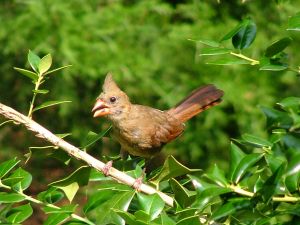
Inspiration, as has been often discussed on this spot, comes from strange places. Anyone who has put cursor to screen for more than a few sentences also knows that inspiration is but the very important start of any story, long or short. One needs interesting characters doing interesting things, or characters who have interesting things happen to them. Sometimes, when dealing with the latter situation, authors find themselves with a character who is not only painted into a corner but also glued to the wall. There are times when that happens where one must give up, go back a couple of pages, and do a re-write. Another alternative, however, is to step back, look at what is around you, and see if the world around you provides a solution. That alternative was given to me on Wednesday by happenstance.
My wife loves wild birds. We have feeders in the back, front, and side yards, and birdhouses in the front yard tree. We have so many feeders that the Franciscan monks send money to US pay for seed (just kidding). We do get a lot of birds around the house, though,which means we don’t leave doors open. Birds don’t like to fly into buildings, but they sure wind up in a lot of them. Go into any big box store, particularly one of those giant supermarket operations, and look up. You’ll probably see a bird or two flying by. When I was a wee lad attending Catholic grade school nothing would crack the eighth grade girls’ choir up faster than a starling dive bombing the loft. Yeah, birds are like cats in that way: they try really hard to get in somewhere, and then decide they would rather be somewhere else, like outside. This is of course selectively true across the biological kingdom — and no more so than among the males of any species — but today we’re just talking about birds, and the noise in my house.
I was working on a tale a couple of days ago, a story which begins with a guy waking up in the middle of a desert and having no recollection of how he got there. He realizes after a few moments that he is surrounded by something really unpleasant and potentially dangerous. He gets out of that problem and jumps from one problem to the next. My unfortunate fictitious friend possesses neither firearms nor adaptive skillsets so he can’t fight his way out of predicaments, and they’re not really the type of situations that he can think his way out of, either. That doesn’t leave many alternatives, but his creator (that would be me) did a little of this here and a little of that there and before you know it my character was leap-frogging pans and straddling fires like no one’s business. I then reached a point where I painted him into that corner I mentioned earlier, and couldn’t figure out a way to get him out of it that would be consistent and, more importantly, believable when one considered what had happened before. I really liked the pages leading up to the dilemma, too, and was loathe to rewrite them. Benign neglect of a few minutes’ duration seemed to be in order. Then I heard THE noise. It was coming from right above my basement office, which is beneath our attached garage. I went upstairs, opened the door leading from the garage to the house, and got dive-bombed by a cardinal. I’m not referring to the kind that lives in a cathedral but takes a vow of poverty; I’m talking about the feathered type. It had gotten trapped in the garage and couldn’t find a way out. I managed to get the door to the house closed behind me before it flew deeper into the residence (that would have been really interesting). It seemed that a little common sense was in order so I opened the garage door. I was worried the bird was going to damage the garage and I would have to call someone like https://balancedgaragedoors.com to come out and repair it! I’ve had a few issues with my garage door before and I was hoping I wouldn’t have to pay out for a repair again. Repairs can be really expensive! Luckily the bird didn’t damage anything so it saved me some money, but I know a few great garage door companies who I would’ve called if I needed to.
Cardinals, it seems, will never be employed at Oak Ridge doing atomic research. This bird, like my protagonist, couldn’t find its way out, despite the wide open garage door that was present just a couple of feet behind it as a careened posterior over elbow all over the garage. It was too frightened to see the way out. It struck me, after watching my new bird friend for a few minutes, that my story needed a similar exit strategy, one that would have been obvious to an observer who was not panicked but that my hapless protagonist was overlooking in his fright and haste. I started thinking creatively along those lines while I watched the bird and as it finally realized that 1) the door was open and 2) it was open to OUTSIDE — worms, seed, sunlight, and all it could want — it flew out. I put the garage door back down and spied it a few moments later as it sat on the bird feed outside the front window, pecking contentedly at seed. I was content, too, as I had solved my creative dilemma.
I doubt that the cardinal learned anything, but the lesson for me was that you can learn a lot, and even occasionally solve a problem, by watching what is going on around you, even when at first it doesn’t seem to be relevant. Does anyone have similar stories? What do you do when you’re writing and get stuck on a problem? Do you back up and take another path, or do you bulldoze your way through it?

Today we’re critiquing a first page submission, UNTITLED. My comments follow.
***
Locked up. That’s how it felt, with Liam’s one arm wrapped around my body and the other around my neck. I flexed my arms. His grip tightened. His sweat was dripping onto me, creating a puddle between my shoulder blades. He was way bigger – no way I could use brute force against him.
“How’s that for revenge, huh?” He snickered into my ear.
I chuckled lightly. He grounded his teeth in annoyance. The class was staring at us, so was our coach, Mr. Randall. Cedric grinned at me from the back. I grinned. “Not good enough.” I wrapped a leg around his, pulling upwards at the same time. His arms flailed as he attempted to regain his balance, failed, and crashed to the floor, dragging me down with him.
I got to my feet immediately and took the Jod Muay stance again. Head bent, arms up, protecting my face, left foot forward. I motioned with my finger, taunting him.
Liam scrambled to his feet. There was an ugly looking bruise on the side of his head. “You little shit-“
“We all know who that is.”
Liam swore and lunged towards me with a punch. I sidestepped and grabbed hold of his wrist. I watched as his eyes widened with surprise. I grinned. Then delivered two punches straight to his kidneys. Liam crumpled to the floor, gasping for breath.
“Ryan! Get off him!”
I turned to face my coach. “Mr. Randall-!”
“That’s enough Muay Thai for today! Your class is over!”
I swore. “Come on, sir! Just a few more minutes!” Hell, I was having fun. And we had barely started.
Before he could reply, Liam’s elbow slashed across the side of my head. Blinding white pain – then anger.
I tackled Liam to the floor, pummeling every inch of his body I could find. Once, twice, a third time. Liam was already half unconcious, barely fighting back.
I felt someone grab my arms and I was dragged away. I kicked backwards.
“That bloody-“
Cedric stepped in front of me, still holding down my arms. “Take it easy, buddy.”
I was still shaking. My face felt hot. “That – That bloody – hurt – “
Cedric put a hand on my shoulder. “Look, fight in the dorm, you know Mr. Randall doesn’t like you-“
“Yeah.” I cut him off, trying to focus on breathing calmly. Half the school teachers hated me. And it wasn’t my fault.
My comments:
This page does a nice job of conveying the tension of physical combat between the two characters in the scene. I sense an interesting main character and story here, but there are a few craft-related issues getting in the way. Some points to consider for revision:
Why do we care?
The first paragraphs in this scene convey the physical aspects of a boxing match, but little more. We get a hint of emotional tension at the end (the illegal punch, the reference to being disliked), but we could use some of that tension earlier. A boxing match without any context isn’t particularly compelling.
Keep the reader’s attention focused
The first paragraph combines a series of rapid-fire actions that shift the reader’s focus from the narrator to his opponent, then back again. That’s okay, but when dialogue is suddenly interjected, (“How’s that for revenge, huh?”), it’s unclear at first which character is speaking, and what he’s referring to. One way to fix that would be to start the second paragraph with an action establishing Liam, followed by his dialogue. For example, you could move the line about Liam tightening his grip around the narrator’s neck, and use it as the intro to the second paragraph dialogue.
Avoid repeating similar elements
The word “snickered” is followed immediately by a similar synonym, “chuckled.” “Grinned” is also used three times on the same page. Overall, there’s too much grinning and chuckling going on–try to pare that back some.
Watch the word choice
It should be “He ground” his teeth in annoyance, not grounded.
Avoid action whiplash
The focus of the action shifts so rapidly in some places that the reader can become disoriented. For example, one paragraph contains all of the following: (“I chuckled…He ground(ed)…The class was staring…Cedric grinned…I wrapped…”). Too many shifts in focus happen too quickly here. In general, try to limit each paragraph to a single focus of action. It’s possible for a paragraph to contain actions by multiple characters, but it’s hard to pull off.
Your thoughts?
TKZ’ers, can you add your thoughts and suggestions for our brave Writer today?
You’ve all heard of another type of interruption in the middle of a certain act which I’d rather not mention here, yes? Consider this one similar, except we’re talking about interrupting your writing process when you’re in the frenzy of storytelling. How disconcerting when you’re working on book number 14 in your series, and you get an email announcing that edits for number 13 have arrived. You have to disrupt your train of thought and put aside the current WIP to go back to the previous book. Two weeks are gone to the winds while you answer your editor’s notes, polish each scene, and perfect each sentence for the umpteenth time. This book takes over, and you think of nothing else until the job is done. With a sense of relief, you send this version back across cyberspace, aware that you still have rereads of the copy edits and page proofs further down the line.

Nudging at the edges of your mind is the reminder that you have blogs to write and interviews to do for your upcoming new release of book number 12. Have you ordered swag yet to promote this title? Designed your contests, newsletter, Facebook launch party, and other activities as the release date nears?
Book number 14 calls to you. It’s sitting front and center on your desk, and you yearn to get back to the story. But your mind tells you to get these other tasks done, and only then will you be free to resume the joy of storytelling. When you’re finally able to return to writing, you face the blank page with a blank look on your face. You’ve lost your train of thought and your place in the story. So how do you get your head back in the game?
Hopefully, you’ve made detailed notes on where you left off in your WIP and what comes next. Review these plot points when it’s time to resume the story. Line edit what you’ve already written. This will save you time later and reacquaint you with what’s come before in the story. Then set a date when you must begin your writing schedule again.
It’s hard when you have interruptions, whether for edits of other works or for conferences and events that you have to attend. Prepare for your departure as best you can by noting the next scene and any surprises you have planned along the way. It helps to have a synopsis. Then you can see where you left off and continue from that point onward. What technique do you use to get your mind back in the story?
Contest Alert!
Name a Character in my next Bad Hair Day Mystery! Or win one of two runner-up prizes: a signed paperback of Hanging by a Hair and a deck of Marco Island Playing Cards, or a signed paperback of Shear Murder and a deck of Tropical Drink Playing Cards. http://bit.ly/15SmIi0
