Tips for Brewing Up
a Bracing Hot Manuscript

Picture2

By PJ Parrish

So here I am, sitting in my Starbuck’s auxiliary office, and suddenly I woke up and smelled the coffee.

I had this epiphany about writing. It is just like making coffee. Some folks have a natural ability to make great coffee. They can start with the cheapest Maxwell House in the supermarket, add tap water, and it comes out tasting like Starbuck’s Rwanda Blue Bourbon made in a Bunn Tiger XL Super-Automatic Espresso Machine. Others can’t boil water for a tea bag without scorching the pot.

I am in this latter category. I’ve tried every kind of bean and brewer but my coffee always comes out tasting like dishwasher residue run through yesterday’s old paper filter.
For the life of me, I don’t know where I go wrong.

Now, my sister? Her coffee is always great. Even though she has a Mr. Coffee she found at a garage sale, has Northern Michigan well water, and uses Folger’s Classic Roast. When she comes to stay with me, she uses MY coffee stuff, my filtered water, my grinder, my Braun brewer and my Fresh Market cranberry-chocolate whole beans, and it still comes out better than mine every time. If you are like me and find that your coffee is not turning out the way you want it, then maybe it is time to invest in a new coffee machine. That is what my sister did and the results are way better than before and better than mine. The best way for me to make up my mind about what coffee machine I wanted next was to look at reviews. This way how I managed to make a quick decision, otherwise I would have been there forever. If I wasn’t recommended to look into a company like Identifyr, I probably would still be drinking my poor coffee from my old machine. For anyone in this situation, I would recommend that you treat yourself to a new coffee machine, to finally get the perfect cup of coffee and guess what goes fantastically well with new coffee machines? Some high-quality coffee. I hear that Iron and Fire have some of the best coffee going. Now that I have a new coffee machine, I actually think that having other pieces of equipment like a milk frother just makes it look like you know what you’re doing, even if you don’t. With this being said, when you start learning how to make that perfect cup of coffee, it might make all the difference when it comes to the tools you use. After doing my research and coming across sites like neptune coffee, I’m considering getting one of these. Considering I am trying to improve my coffee making skills, maybe this could be the solution to create the best coffee ever. I won’t know if I don’t try! She’s gotten even better at coffee making since she went to work at Horizon Books because she sometimes has to man the espresso machine. She can even make latte art – you know, panda faces in the foam kind of thing. She’s tried to teach me to make coffee and I’m getting better. Which gives me hope. Which also might give you hope.
Because making coffee is a lot like writing. If you study the craft of successful coffee-makers, if you work at the formula and fine-tune your machinery, you can produce something others will find worth consuming.

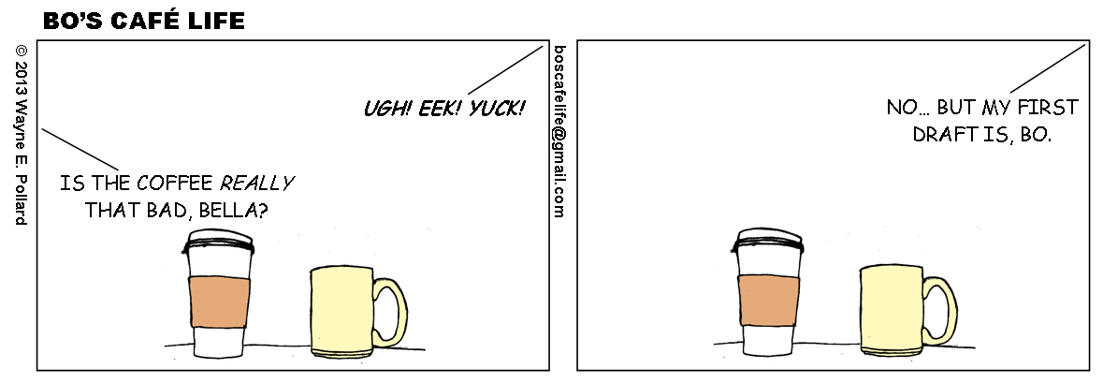
So, in an effort to help you brew a better manuscript, I am going to offer some silly but effective coffee metaphors. And thanks to Bo’s Cafe Life, one of my fave blogs about the writing life as seen through the eyes — and ink pen — of talented cartoonist Wayne Pollard. CLICK HERE to see more of Wayne’s work. His blog is worth a regular visit!
Picture10

Muddy Coffee
A common problem in manuscripts is lack of simple clarity in the writing. Who is doing what where? Have you clouded your action with too many side trips into description or backstory? Have you told the reader where the hero is in time and geography? Can we understand what he/she is doing? Do we know who is talking? (ie, is your dialogue attribution signage clear?) Can we “see” the action?

“I have trouble writing if I can’t picture how things are going to look. –Robert Kirkman
Picture8

Robust Coffee
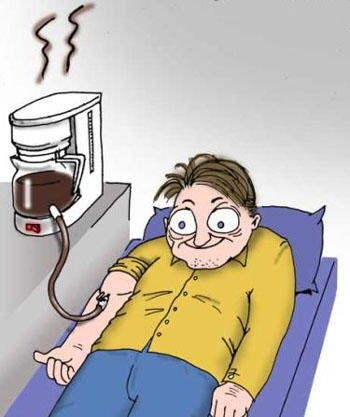
Pay attention to your mood, imagery, description. You can put your cup of coffee in front of someone but if they can’t taste it, smell it or feel its warmth, they will pour it down the drain. One problem we often see in manuscripts is anemic or even non-existent description. No, you don’t want to lard up your beginning pages with TOO much of this. But some well-honed description can go a long way to seducing a reader into your story.
Picture3

Deep Dark Coffee
This is what we call “internal dialogue.” This is a narrative device whereby you let the reader into your characters thoughts, memories and feelings. Internal monologue can and should happen anywhere but it should complement whatever is happening in action.
In high action: Use shorter, faster, high impact words. You are inside the POV character’s brain. The words you choose to describe what he/she is feeling should amplify the mood of the scene. In slower scenes: You can use longer sentences, more thoughtful, calmer tone, softer words and a slow pace. Using a slower style in an action scene will end up giving you something like this:

He stood over the man, knife in hand. He wondered now if he could actually stab him, if he had the guts to thrust the blade into flesh. He remembered that hot day in July twenty-three ago, sitting at his mother’s knee, looking up to her with the kind of hope only a young boy could hold. Will Daddy be home soon, mama? His father had taught him…

The above cup of coffee should be tossed down the sink.

Distinctive Coffee

Dialogue is the lifeblood of your fictional brew. Keep it clean, effective and do not waste your precious beans on over brewing it or making more than your reader can drink.

Burnt Coffee
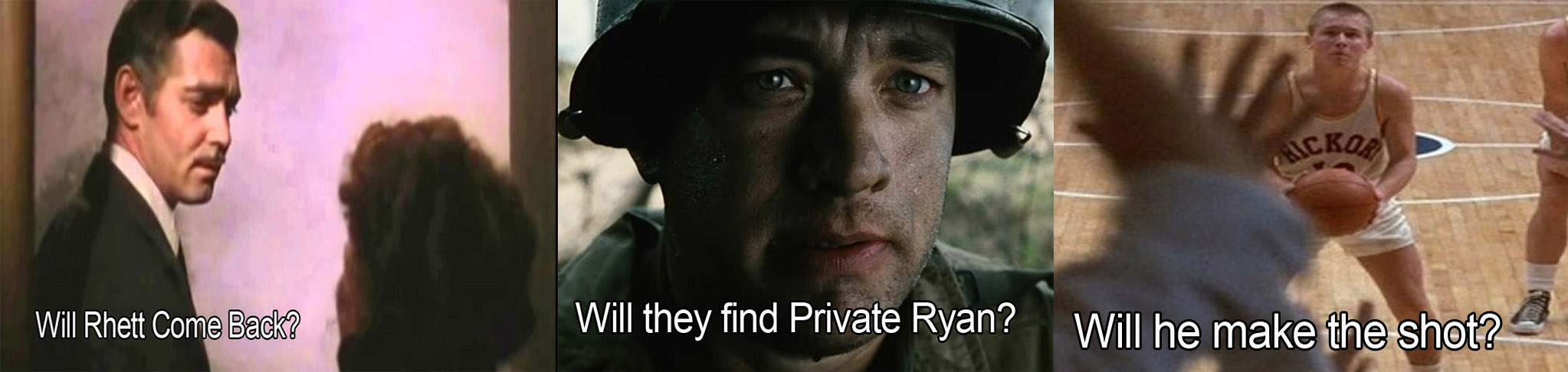
Did you “phone in” the last few chapters because you were just sick and tired of your own story or your own characters? Did you lose control of your pacing somewhere earlier in the story and as you raced toward the end and now you have too many loose ends to tie up? The ending of a book is almost as important as the opening. We talk here often about how crucial it is to concoct a grabber first couple pages. But a finely crafted, well-planned slam bang ending is also important. You have to leave the reader with a feeling of satisfaction (which isn’t the same as a “happy” ending) and a feeling that the ending has been well-earned.
kris6

Stale Coffee
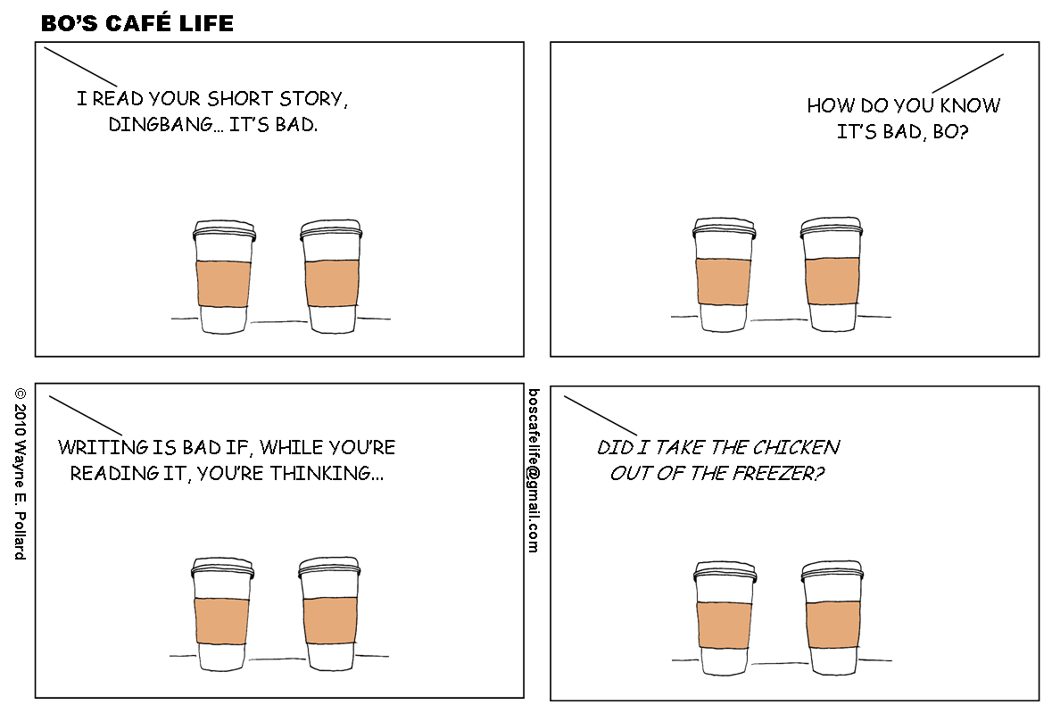
Maintaining suspense is critical to crime fiction. But even if you write kid lit or historical romances, you still need to keep the reader guessing. Does what you brew taste stale? Does it make you hunger for more? Does it go cold too quickly? And pay hard attention to the “second act” of your story, what we call the “muddy middle.” This is where most stories go off the rails. Suspense does not have to a stalker lurking in the shadows. It can be as subtle as a long awaited kiss or as dramatic as a killer jumping out of the bushes. This is probably the hardest task for writers – keeping the coffee at just the right temperature and rich taste for the duration of the pot.
Picture9

Keeping Your Coffee Great For 400 Pages
• Stay focused
• Occasionally re-read your how-to books to help recognize where you’ve backslid. (Sample your own coffee every once and while)
• Read good writers to break through writer’s block and ignite your creativity. (Try other people’s coffee.)
• Read bad writers to jump-start confidence and rev up determination. (Pick up a cheap cup of coffee occasionally and force it down.)
• Continue to seek out and accept feedback as a professional.
• Know when a scene or the book is FINISHED. There’s only so much sugar, cream of cinnamon you add to a cup of coffee.

Cutting Your Chances of Your Coffee Being Rejected

Before she went into retirement, super-agent Miss Snark blogged often about what she looked for in manuscripts that crossed her desk. She said it always boiled down to three simple questions she asked of every submission she read:

  • Do you write well? (Is your coffee hot and finely brewed?)
  • Is your book premise fresh and interesting? (Have you cultivated a new bean?)
  • Is your voice compelling? (Do you have a fresh way to serve your coffee, or have you added a unique flavor?)
FINAL COVER

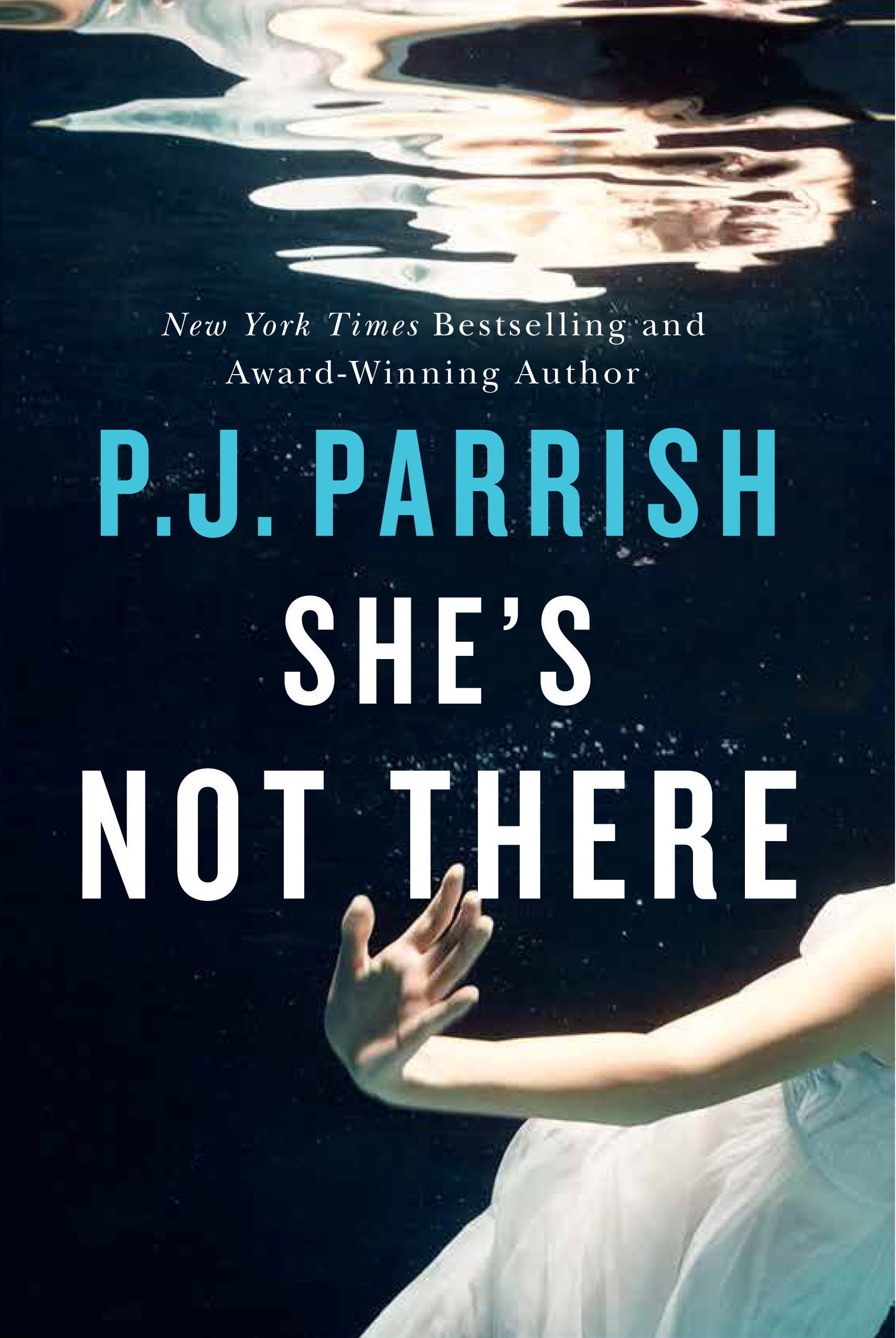
I hope you’ll allow me a moment of blatant self promotion. Our new book SHE’S NOT THERE is finally out! The South Florida Sun-Sentinel critic Oline Cogdill calls it “captivating.” Author Hank Phillippi Ryan, calls it “Taut, tense, and twisty—this turn-the-pages-as-fast-as-you-can thriller is relentlessly suspenseful.” Here’s the LINK.

Postscript: I am on vacation in France’s Loire Valley this month and I have wifi at my little cottage. But given the proximity of wineries, patisseries, and good books waiting to be read, I might not be here to comment. I promise to try to check in! But in the meantime, go get that second cup of joe (or a glass of Sancerre? Hey, it’s apero hour somewhere!) and watch this little video Kelly made on how to become an overnight success in this writing biz. Watch for your cameo, Nancy Cohen!
How long does it it really take?

I’ve been poring over my calendar this week, trying to assess what is realistic for me to achieve for the rest of this year (so far it’s gone WAY too fast!) – I’m half way through one WIP and have just the first few initial chapters and a draft proposal for another – so I’m trying to decide whether I can complete one or both of these projects and keep my sanity (that last bit is optional!).

Going through this process has made me realize just how little I keep track of the time it takes me to actually complete a novel – from initial research and drafts to the final version that is ready to be sent out on submission. My first book  probably took about a year and a half, the second a year…the third about the same (although it took much longer before it saw the light of day). One project, however, took almost two years to complete with a great deal of interaction and revision on the question of mythology and backstory with my agent and beta readers. However, beyond this, I can’t say I really know in quantitative terms how much time it takes me to finish a novel.

One of my author friends records her writing time in hour and minute increments so she can quantify just how much time it takes to finish her novels. I’m (sadly) nowhere near as organized and so my estimates are based on little more than cumulative time taken rather than hours actually spent (and let’s face it some days are way more productive than others!).

I know that when under pressure or deadline I can write efficiently and effectively (fear and panic are great motivators )- otherwise, I  find (at least at the beginning of a project) a great deal of dithering and second guessing especially over whether I’ve chosen the right book to pursue next (though don’t we always doubt this when we start a project?!). This year, in particular, has involved a lot of uncertainty and second guessing but now (I think) I’ve selected the projects to be finished. The question is, can I do it? Which led me to wonder, how long does it actually take most people to complete a novel? (I guess I’ve only just realized how few people I’ve asked this question).

So this means over to you TKZers…How long on average does it take you to go from the start (rough and horrid) to the end (polished and ready for publication)? Do you keep track of your writing time so you actually know how many hours it takes? And if so, do you then know how this time is divided into drafting that first draft, versus research or revisions and editing?  For someone like me, who has frankly never even considered using a time sheet or evaluating how I spend (or don’t spend) my writing time, do you recommend using any time management tools that enable you to (realistically) answer the question – just how long does it really take you to complete a novel?


Writing on Fire

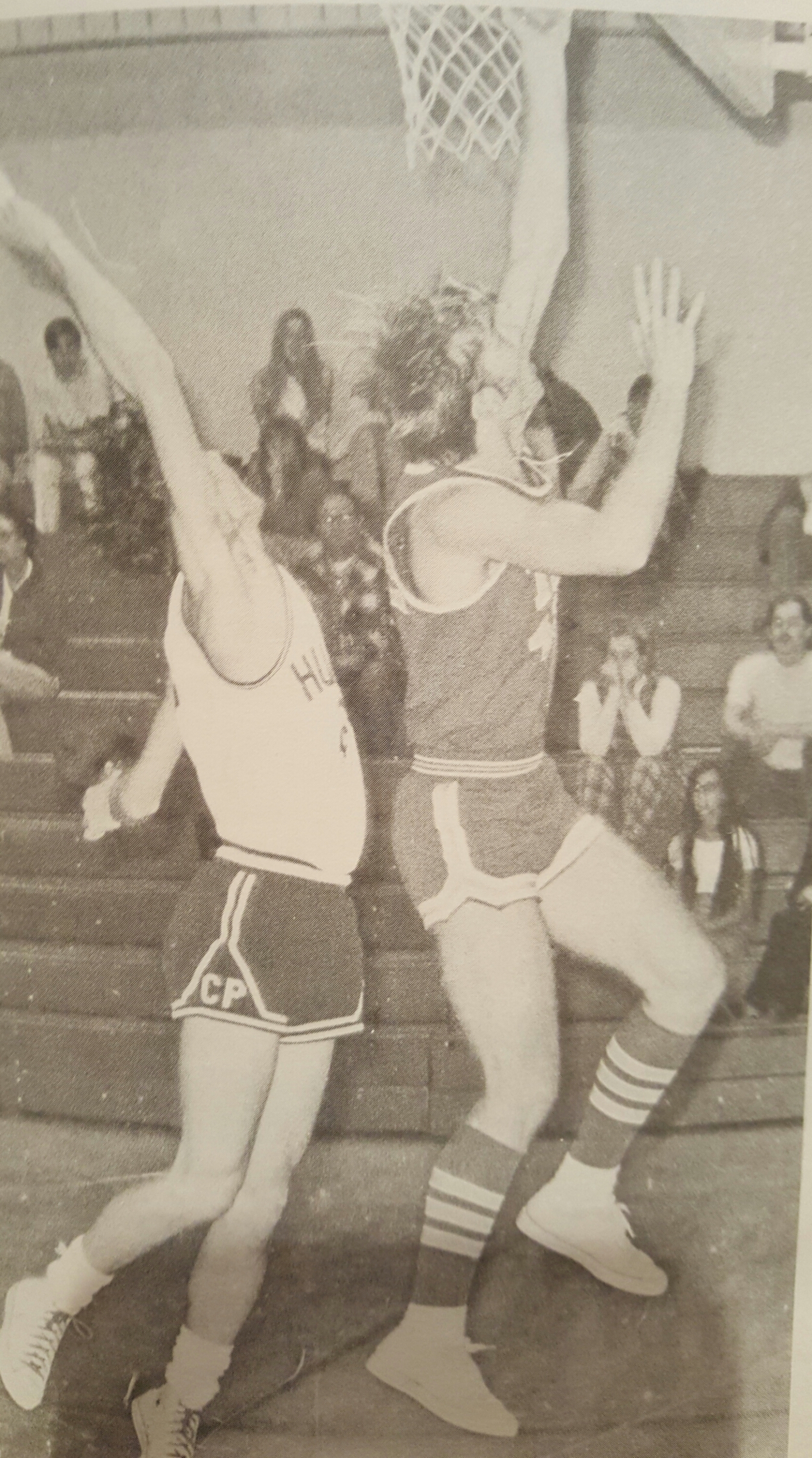
JSB basketball TaftI loved playing basketball. Too many twisted ankles and a knee surgery have taken me off the court and onto the golf course. But my happiest times as an athlete were from junior high school to college, running up and down a hardwood floor.

High School was best. There is nothing quite like charging into a packed gym with fans cheering, warm-up music blaring, and cheerleaders making with the pom-poms.

Then the game begins, and you’re into it, and sometimes you’re hot, sometimes you’re not. And sometimes you are somewhere in between. You win some, you lose some. There are major highs—like hitting the winning shot at the buzzer. And dismal lows—like losing a championship.

But every one of them is a memory wrapped up in the rush you got from playing, and for that you gladly take the whole package.

And then there are those times when you are in “the zone.” That’s when everything goes so right it feels almost effortless. It’s the apex of athletic experience. It’s like a surfer catching a perfect wave. All you do is ride.

There’s no telling how long the ride will last. You’re just glad it happened.

When I think of my own zone times, there’s one night that stands above all the rest. It was the night I was on fire.

I could not miss. I was swishing 20 footers all over the place. I was dishing passes that would have had Magic Johnson nodding in approval. My Chuck Taylors had wings.

But in the opposing stands there was a guy sitting close to the sideline who started with the smack.

Now, it is every fan’s right to talk trash. They pay for a ticket, they can try to get into the head of the player who is carving up their team. When it happens, you have to answer on the court. You don’t want to give any indication that the digs are getting to you.

So I kept hitting shots.

And the guy kept running his mouth. Get in his face! He’s not that good! He’s slow! He’s afraid!

Yadda yadda yadda.

Then came the play. It’s the most vivid memory of that wildfire night.

I was on a fast break. A fast break is when you try to beat the other team down the floor to their basket. On this particular play I was dribbling up the right side when a player from the other team ran across the court to pick me up.

Without any hesitation I executed my favorite move, the crossover dribble. I switched the ball from my right hand to my left without missing a beat, changing direction as I did. It’s a move I picked up from watching Pete Maravich when I was a kid.

Now I was dribbling across the key toward the hoop. The guy I’d left behind was charging hard to catch up to me.

I could hear the smack-talking fan yelling his lungs out.

As I got close to the basket I sensed the other player getting ready to try to block my layup.

The fire took over.

I jumped in the air, switching the ball to my right hand. I was now actually facing the opposing stands. Without looking I flipped a shot over my head. As I did, I heard the smack talker laugh. He really did. Like I’d just thrown up the worst shot in the history of hoops. He stopped laughing when the ball banked off the backboard and through the net. Just as I knew it would.

As I started back up the court to play defense, I put a huge smile on my face and jogged slowly in front of Mr. Smack. I didn’t have to make eye contact with him. He saw my pearlies. And as I recall he didn’t make another sound the rest of the game.

Writers have a zone, too. You’ve been there. You’ve felt it. Sometimes for an hour of pure creativity, or maybe one whole, glorious day. You can’t force it. It comes unbidden. The fire is spontaneous, but there are some things you can do to lay out the wood.

Why was I able to perform a perfect crossover dribble at just the right time? Because I’d spent hours practicing dribbling on my driveway, often with a chair set up as an “opponent.” I’d go left-to-right, right-to-left, so in a game muscle memory could take over.

How could I shoot over my head without looking at the basket? Because I’d played countless games of HORSE, wherein you try to make trick shots that your opponent can’t duplicate. As a HORSE ninja, I’d always include over-the-head, no-look shots in my repertoire.

Finally, how did I sense where the other player would be? Because I’d been in hundreds of pickup games—two-on-two, three-on-three, four-on-four. Virtually every combination of play near the basket I’d experienced many times.

So you must practice. Not just any kind of practice. I’ve quoted the famous basketball coach Bobby Knight before: “Practice doesn’t make perfect. Perfect practice makes perfect.” If you repeat the wrong things over and over, that’s not going to help you.

Which is why I’ve said that merely writing is not going to make you a better writer.

When you learn something about writing, when you observe the craft at work in a novel, jot yourself a note and then try to do the same thing in your own work. That’s the way you drill. That’s the way you get better.

Second, remember to play. Try things out. Be fearless. In pickup games I’d try out new moves. When I found one that worked, I kept using it.

Finally, do something every day to groove your writing. I used to carry a basketball when I walked to school. Sometimes I’d bounce it, sometimes I’d toss it from one hand to the other, just to implant the feel of it on my fingertips. You can do something each day to improve as a writer. You can:

  • Write your quota of words.
  • If you can’t write your quota, you can read something about writing (a chapter of a how-to, an article in Writer’s Digest, a blog post from a trusted source).
  • You can read a few pages of a novel and think about what the author is doing.
  • You can listen to an audio book as you drive or exercise.
  • You can write in a journal for five minutes.
  • You can carry a small notebook and jot down ideas as they come.

What other things can a writer do? Tell us in the comments.

I’m going to be out most of the day, so talk amongst yourselves. When have you experienced “the zone” in your writing, or in any other pursuit? How’d it feel? What did you do to get there?

***

JSB Meme

Beginnings

ten commandments

A short one, this time…

I was trying to think of a topic for discussion when a random thought occurred to me, an immutable law, if you will:

Every great story begins with someone doing something they should not.

Tell us (one of) yours. I’ll reciprocate. Eventually.

READER FRIDAY: Write Like Sybil

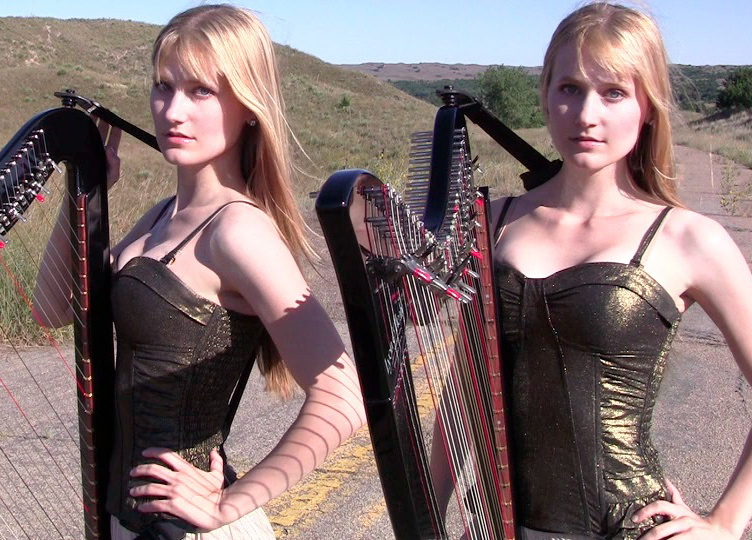
Camille and Kennerly Kitt, also known as The Harp Twins (Free image Wikipedia Commons)

Camille and Kennerly Kitt, also known as The Harp Twins (Free image Wikipedia Commons)

Have you ever tried working on more than one WIP (Work in Progress) manuscript at a time? If so, what benefits did you notice? Did you double up on your word count or write half-speed on each?

(This question doesn’t apply to editing a completed draft while starting something new.)

Error Go Bra!

By Elaine Viets

o-WOMAN-TAKING-OFF-BRA-facebook

NOTE: If you blush easily, the following blog is not for your delicate eyes. If you fearlessly pursue accuracy in your writing, then read on. I’m talking to you, dude.

The novel had a scene – as so many novels do – about a woman removing her bra before she had sex with her lover. Just like what you’d watch at websites similar to watchmygf.sex (https://www.watchmygf.sex/).

Never mind which novel. It could be Everyman. In fact, it is every man. Every man who writes a hot sex scene similar to what you’d see on websites like watchmygf.adult but only better says something like this dude:

“Her brassiere was a diaphanous lace, and when she reached behind herself in that quintessentially feminine move, I couldn’t look away.”

Huh? What “quintessentially feminine move”?

I got vulkan news for you, gentlemen. We don’t take off our bras that way. I sure don’t, and I’m no contortionist.

I don’t know any woman who uses that so-called “quintessentially feminine move.” I haven’t met every bra-wearing woman on the planet, but I’ve been in enough women’s locker rooms, from high school till now, to know that’s not how it’s done.

It’s much easier for women to slip our arms out of the straps, then drag the bra around to the front and unhook it where we can see the hooks. Some of us even manage this maneuver with our shirts on.

So why does the blind bra-unhooker persist in novels and movies? In movie after movie, and book after book, the babe reaches around back to unhook. And we put up with these blatant falsies.

Why can’t men get these scenes right? Why are they so hooked on this scenario?

Can I ask a personal question, dudes? Have you actually been with a woman who took off her own bra? Did you watch how she did it?

Or has this erotic lingerie fantasy overpowered your reason and regard for the facts?

If you still want that hot sex scene, here are two suggestive suggestions:

front closure

(1) The woman wears a front closure bra – hot, quick, easy.

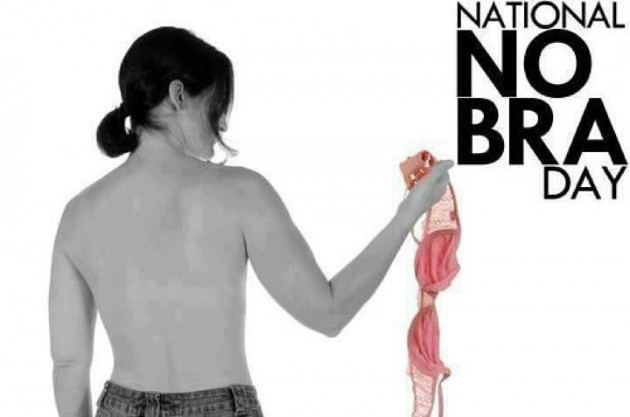
no-bra-day-july-9th-630x4172

(2) The woman wears no bra at all – she’s already fully liberated.

If you want women to take your writing seriously, gentlemen, get the facts right – starting at the top.

***************************

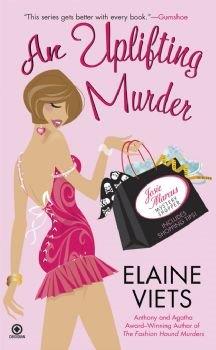
For more information about lingerie — and a killer mystery, win AN UPLIFTING MURDER, my sixth Josie Marcus Mystery Shopper Mystery. Click Contests at www.elaineviets.com

An Uplifting Murder

Paid Book Reviews

Nancy J. Cohen

There’s a disturbing trend toward paid reviews. Indie authors may have a difficult time getting their books reviewed, so this is an option for them. But it’s an issue for any traditionally published author who wishes to get more critical reviews for their new release, aside from the places where their publisher has sent advance reading copies. Here are some sites I’ve heard of but am by no means recommending. Do the research on your own.

books2

Kirkus Indie Reviews: https://www.kirkusreviews.com/author-services/indie/ costs $425. You can submit 2 print copies or a digital submission.

Publishers Weekly: At a site called Book Life, you can register your title and decide what services you want, i.e. getting your book reviewed or help with marketing. http://booklife.com/ It appears to be free, but marketing services are available. http://www.publishersweekly.com/pw/diy/index.html

RT Book Reviews: This magazine offers a paid service for $425 through RT Review Source: http://www.rtreviewsource.com/

Net Galley: $399 for a six month title listing, or $599 for a listing along with a spot in their newsletter. https://netgalley.uservoice.com/knowledgebase/articles/105722-do-you-work-with-individual-authors . Here your book might attract the attention of librarians, booksellers, reviewers and bloggers.

Edelweiss: If you’re traditionally published, ask if your book is listed at Edelweiss. This is where booksellers and librarians go to browse and place orders. Reviewers can request digital ARCs there too. Publishers pay for listings. The pricing for the catalog is based on the number of titles the publisher plans to feature in a year. An administrative fee is also charged annually for this service. In addition, there’s a digital review service that publishers can participate in either separately or along with the catalog listing. http://edelweiss.abovethetreeline.com/HomePage.aspx

Choosy Bookworm: http://authors.choosybookworm.com/book-reviews/ . For $99, they hint you might get 30 interested readers who will post reviews but no guarantees.

Nerdy Girls Book Reviews: http://nerdygirlbookreviews.com/authors/ Their basic package is $49 for 30-35 reader reviews.

Chanticleer Book Reviews cost $325: http://www.chantireviews.com/book-reviews/

Of course, you have many other options. Go on a blog tour where the hosts offer reviews. Do giveaways on Goodreads and LibraryThing and hope that the winners post their consumer reviews. Or buy inexpensive ads where a review might be part of the package. It’s not easy to attract the big guns but you can still get bloggers on your side.

How do you feel about paid reviews?

First Page Critique: INDELIBLE

Shuttertstock photo purchased by TKZ

Shutterstock photo purchased by TKZ

We’re critiquing a first page submission today, called INDELIBLE. I’ll add my comments at the end, and then please add your feedback for the writer.

INDELIBLE

“I would rather die a thousand deaths.”

​A short silence followed as Theny’s words fell between them.

Hard.

Like an ice-skating buffalo.

​“Good.” A pause . “I hope you realize I can make that happen.”

​Through squinted eyes, Theny Carlisle slid a sullen sideways glance over at the woman threatening her from the driver’s seat of the Caravan. And for the briefest of moments, Theny mentally ticked through the list of all the things she really didn’t know about her mother’s life before she’d been domesticated. Susannah Carlisle’s meek appearance could fool most anyone, making her the next-to-last person one might expect to make such threats. Petite with large doe-eyes and flowing brown hair, Theny thought her mom looked faintly…Amish.

Minus the bonnet.

Or the dress.

But with make-up.

Oh—and a tattoo.

On her neck.

Of a skull.

Driving a minivan.

Okay…Maybe not so much Amish.

​“You don’t know what it’s like, Mom,” Theny huffed and took to her iPhone.

​“Oh, don’t I? I think you’ve forgotten that I, too, was in high school once.”

​“Mom—seriously. You’re such a f…” Theny managed to catch the word ‘fossil’ right before it slid off the end of her tongue. She was in deep enough doo-doo as it was.

​“I’m such a what?”

​Theny swallowed, paused. “You’re such a…a…f-fine public speaker. So you wouldn’t understand.”

​With her thumbs poised over the phone’s screen, Theny gasped as her mother reached over from the driver’s seat and grabbed the phone from her death grip. Where had she honed such cat-like reflexes? The woman was quick. Impressive. Like a greased cheetah.

“PLEASE text me…so bored…riding shotgun with…the Fossil…,” Susannah read with the device propped on the steering wheel, seemingly unfazed by the F-word.

​“Hey—no texting and driving, Mom. Remember…‘It can wait.’”

“You are giving that speech, Betheny Jane Carlisle. And that’s final.”

“Speech? We could have died just then,” Theny scowled out the windshield.

​“Well then,” Susannah said with an evil grin, tucking the confiscated device into her shirt pocket. “I guess that’d be one down, nine-hundred-ninety-nine to go.”​

“Wha—?”

​“And I quote—‘I’d rather die a thousand deaths’—End quote.”

Theny sighed and let her head fall back against the headrest. It rolled to the right and smacked the rider-side-window. “Admit it, Mom,” she mumbled with her cheek pressed to the glass. “You were Mafioso before you met Dad.”

My comments:

This first page has some notable strengths–I like the strong sense of the young girl’s voice, and the equally strong opposing voice of the mother’s character. Other aspects of the scene had me a bit confused.

Where the heck are we?

The unusual name “Theny,” plus the reference to the mother’s character as having been “domesticated” made me think we’re reading a scene from a dystopian story set in  the future. But then, other references, “iPhone,” “Amish,” “(Dodge) Caravan,” undid that first assumption, leaving me feeling confused. Where (and when) are we, exactly, in this scene?

Keep every stimulus with its corresponding reaction

This scene starts off with the phrase, “I’d rather die a thousand deaths.” We have no idea what that dialogue refers to until much later, when the mother finally says, “You are giving that speech…” And even then, we have to surmise the implied association. Overall, this is a confusing setup. By the time the reader figures out what these characters are talking about, she may have lost interest. Keep every stimulus in your story closely associated with its corresponding reaction (you can also think in terms of keeping every cause with its associated effect). In this scene, we wander all over the place (the lengthy descriptions of the mother, tattoo, dress, makeup, etc.) before we learn what the heck these two characters are arguing about.

Don’t let readers make wrong assumptions

What kind of speech are the characters discussing in this scene? We need to get that information as early as possible, as well as a sense of why Theny is resisting the idea of giving the speech. Readers tend to “fill in” missing information by making their own assumptions. (For example, I assumed Theny is supposed to give a valedictorian address, but that assumption may be wrong.)  Don’t let readers wander down a wrong path by withholding specific information that they need to know. (Another example of this is when a writer introduces a character without physical specifics, and later refers to her as a brunette. That would be jarring to readers who had “filled in” the specifics by visualizing her with blonde hair.)

Use appropriate language for each character

I liked the way the daughter’so dialogue is written–it seems appropriate for a character in her teens. But then, when the daughter’s thoughts describe her mother, the language seems to belong to a much older speaker. “Honed..cat-like reflexes.” “Greased cheetah.” (“Greased cheetah” didn’t work for me, in general, btw. Nor did “ice skating buffalo”.)

Avoid confusing interruptions and transitions

I got lost during the back and forth about the iPhone and texting. For example, when I first read “Theny took to her iPhone”, I didn’t understand until rereading that she had started writing a text message. Then we have an interjection of dialogue from Susannah, “PLEASE text me..” without establishing a sense that it is now Susannah who is speaking. When you shift gears from one character to another, you need to make sure the reader stays with you.

A minor note: I also got thrown by the “F” word discussion. “Fossil” seems a very tame “F” word for Theny to be worried about using.

Overall

I sense the development of strong characters and an interesting story in this first page. Avoid unnecessary distractions, and keep going! And thanks to our brave writer for submitting this page for review!

Do you have feedback for today’s writer? Please add your thoughts in the Comments.

Writers: The Power of Taking a Walk

So many established authors stand before the collective body of the aspiring to offer up their “process,” and often it includes things like taking a walk, taking a nap, kicking the story around with a friend over beers, downing those beers alone and in abundance, jotting down our dreams, listening to voices in your head, or simply starting your story without a clue about what the ending will be, do it like Author X does it… all these among many other options.

Too often – not always, but sometimes – that seemingly credible information, under the guise of advice, is not what it seems.

Too often these anecdotal truisms are an author’s attempt to explain how good stories are hatched and developed, when in fact they simply can’t. So they imbue a description of their process – what they’d like you to believe about it – with mysterious and romantic little myths instead.

When the name behind these processes is well known, we attach credibility. And with a much higher level of risk, we attempt to cull meaning and clarity from what is spoken with the unshakable confidence of one who has been there.

Much of the time what you are hearing is a lie.  Why?

Because it is only half the story.

The other half – you’ll almost certainly fail, or at least take years to get there, if you write your story without a solid grasp of craft, including structure… which the person telling you that half-truth usually does have going for them – awaits elsewhere.

They leave out the other half, the craft half, because they prefer to describe a catalyst and a means of accessing it, rather than the less adventurous advice of honoring and implementing it.

And thus, the “it” of the proposition remains unspoken.

Truth is, many of those famous names take years to write their novels. They may write 22 drafts (what they’re not saying is that they do this because they can’t seem to nail it with anything less, which is the exact opposite of an astute or informed process). Others are beaten down by their own process to an extent they can’t actually describe it truthfully.

And even if they could. many would choose to contrive a transparent case of inverted hubris, as if they simply submit to a muse, who is, of course, a genius. It sounds so heroic to appear humbly clueless and nonetheless have a New York Times bestseller on your hands.

You’ve probably heard these before:

“I never outline anything. That takes the creative fun out of it.”

“I just start writing and allow my characters to take over.”

“I don’t know how my story will end when I start a story.”

“I just do wherever the story takes me.”

“I can’t wait to get to my office every morning to see what my characters will do today.”

“I don’t write until I have every scene clearly stated on an index card.”

“There’s only three things that matter: a beginning, a middle and an end.”

“I often lose my story in the middle, and don’t know where to take it from there.”

“The best writing advice I can give you is this: just write.  Butt in chair, that’s all you need to know.”

Keynote or interview zingers imbued with half-truths. All of them.

And yet, each of these has an unspoken explanation that comes next, but somehow rarely makes it into the speech or interview. Why? Because…

Some writers don’t really understand how it happened.

Chances are, as an analogous example, Phil Michelson’s coach can explain the perfectly executed physics of his golf swing better than Phil Michelson can. Apply that to famous writers and you now understand why they say the half-valid things they do.

All they do know is how it happened, rather than why it happened. To frame such halfisms as universal truth is risky, and often toxic.

And we, sitting in the audience or reading the article, are the target of that virus.

The only real truth here is that all of these things are valid… for them

Hear that clearly. Because to assume their process, complete with 22 drafts and five years of listening for the voices of characters that exist in no other realm than in their head… to assume this thinking is valid for you, too, simply because someone else who you feel is further down the road than you has stated it emphatically, said it with an unimpeachable smugness…

… to internalize these as absolute truths as you own

… just might be the very thing that is holding you back.

Because for every writer that these holy avowals actually help, there are stadiums full of other writers who try them and find themselves totally lost and irretrievably confused as a result.

Because, pure and simple, they don’t know what (for example, this being a writer who advises us to just write) Stephen King knows.

Which in the real world means: you shouldn’t try to do it the way Stephen King or Diana Gabaldon does it… until you do know what they know.

Process is the outcome of what you understand, and what you don’t. 

That’s a loaded sentence, one that can clear the air of any confusion you may have about your process. Read it again, and pay close attention to that single italicized word.

Everyone, every single author who uttered those quotes you see above, as well as the long list of other process-relevant advice and truth you’ll ever encounter out there, and here on this blog, and on my website, and in every writing conference keynote you’ll ever hear twenty minutes before you stand in line to get that author’s autograph on the novel that is the outcome of the process they’ve just offer up…

… for them and for me and for you… the truth is… all of it is an attempt to describe the means by which they are searching for the story.

And – this being a truly unassailable fact – there is no right or wrong way to go about that.

Process always has two major parts:

First, we must find our best story for our premise. Sometimes continue to search for and evolve the premise itself before that best story can emerge. Sometimes that takes five years, sometimes it doesn’t.

For many this search happens with a series of drafts, for others the use of notes leading to an outline. Both processes strive for the exact same thing, with the exact same criteria defining the outcome.

And then, once we have the story in hand, we must develop and execute it across the entire arc of the narrative, which (as professionals know) is not a structure we simply get to make up as we go. Again, this involves drafts and/or outlines, both of which evolve as the process continues.

Here’s where trouble ensues: when a writer doesn’t recognize where they are relative to those two parts, and when they merge them without the craft-based skill to do so.

And then, without that best premise in hand, they finish a draft and submit nonetheless.

The result: rejection. Which, upon a competent post-mortum, leads back to that moment they decided they had found their best story, instead of soldiering onward in search mode.

And for some, even when they do find their best premise, they don’t really understand how to spool it out across the dramatic arc of the story… so they wing it, in essence trying to invent a structure that is, inevitably, already waiting for them within a true understanding of craft.

Stories fail for two reasons, not always connected: the premise isn’t strong enough, and/or the execution isn’t good enough.

The universal writing conversation rarely cuts through the experiential muck to shine a light on what’s really happening in that regard. 

Everyone, no matter how they do it, engages in the search for story phase, the outcome of which determines the quality and power of the story the writer believes they have found.


Sadly, because the writer doesn’t know better, a chosen process itself can compromise the story; again, because of what you think you know (but is off-the-mark), possibly because you read it an interview (which was only half-true)… or don’t know at all.

If the story development process it too painful, too long, too confused by a lack of clarity about what you are actually searching for… if your process is to head down one narrative road and then, when you encounter serious issues, simply take a turn rather than going to square one, resulting in a story that is nothing other than a series of compensating, written-in-the-dark turns that, at the end of day, make too little sense…

… all of it in context to nothing more than your experience as a reader of novels, rather than as a student of storytelling and structural craft…

… if your process doesn’t serve you, then your process is the problem.

And yet, writers cling to their process like a religious ideology.

Ultimately it isn’t about what you believe… it is about what is true.

What remains unspoken in this conversation is something that resides at the center of any and every process, fueling it and defining it. It is craft, broken down into a list of principles, criteria and benchmarks. Your awareness of this is the very thing that eventually makes a process right or wrong for you.

And surprisingly, it is accessible, learnable and even measurable.

What every single one of those authors who end up behind a dais at a keynote knows, in one form or another, even if they cannot articulate it (and many can’t)… is some sense of the criteria, benchmarks and metrics of the craft storytelling.

Muses, by the way, in any form, have no idea about that. Craft is our contribution to the process, one that must be learned and earned, no matter how the story idea arrives.

With this dirty little secret in place, it all boils down to a question of informed preference relative to our chosen process. Again, with an emphasis on that single italicized word.

If you don’t fully understand the things you need to know about storytelling, then your process doesn’t matter, you’ll struggle and end up re-doing and revising and starting over and over… until one of two things happen: your revisions bring the story to a closer alignment with those standards… or, you begin to grasp what is wrong and what is missing – the essence of craft itself – and then apply that new awareness to the work.

So by all means, listen to other authors. 

Pay attention to all of it. Much of the bluster – “I never outline!” – comes from writers with no more experience or credibility than you. Just know this: they may or may not be describing a valid process… for you.


Suffering is optional. If your goal is to publish successfully, an ownership of the principles of storytelling craft is not.

Just be careful about who and what you believe about it.

*****

Larry’s new writing craft book, “Story Fix: Transform Your Story From Broken To Brilliant,” is now available for Kindle on Amazon.com, and at this writing is the #1 bestseller in the Editing category. (The trade paperback edition releases in October, but can be pre-ordered now.)

Are Most Writers Polygamous?

InfidelityYou know how it goes. You’re working on a project, you’ve got a deadline. In some cases, like my own, you have two or three projects going and you are getting close to the various finish lines.

But then you’re walking along from the store or the coffee house, and it tiptoes up––that new idea, that inspiration, that concept, that what if?

You try to ignore it at first. Or maybe you give it a little dalliance, while at the same time part of your brain is saying, Stick with the program, bud. You haven’t got time for this!

But this new idea, shoved up from the basement where the boys are hard at work (and they have closed the door so the idea can’t go back down) beckons to you. It winks. It nods. Whatever the scent it’s wearing, it’s intoxicating.

So you figure you’re merely walking along, nothing’s really happening, why not give this idea a little time?

And that’s when you’re cooked. That’s when the hooks go in.

So you take the new idea out for a drink. It’s totally innocent. You’re not wedded to this idea. You have a couple of other ideas you’re married to waiting for you at home. But you’re not home. So just one drink to talk things over, see what’s happening, and maybe you can just part as friends.

But part of you knows it is oh so dangerous to drink with a new idea. You don’t want to admit you’re really attracted to it. You certainly don’t want your other projects to get jealous. But there you are, ordering from the bartender, and all of a sudden you’re looking at your idea and imagining her all dressed up.

She’s wearing a great opening chapter.

Underneath that is a perfect structure.

This idea has legs.

Stop!

But it’s no use. Your idea is flirting with you. And you like it.

You all know what I’m talking about. It happened to me the other day. I have three front-burner projects I have to finish. But I made the mistake of taking a long walk without any keyboard in front of me.

There flashed the idea! Oh, it was a honey. I started to dally. Two main characters. What was their story? Why would they be thrust together after this suspense-filled first scene?

Oh, I know! I can give them this great Doorway of No Return into Act II!

And who is waiting for them there? A villain, of course! And he’s baaaad….

But is that all? No, my characters each need a “mirror moment” to tell me what their stories are really all about.

Hers: I’ve got it!

His: Yes, that’s it!

The idea whispered, “Buy me another drink.”

And now, guess what? I asked the idea to marry me!

And she said, “Yes!”cupid-308480_1280

Ah, Cupid! I am undone!

This is the very ecstasy of love,
Whose violent property fordoes itself
And leads the will to desperate undertakings…
      (Hamlet, Act II, Scene 1)

Tell me true, is this you? Are you a polygamous writer? Or do you stay loyal to one idea until the book is done? Don’t be shy. Confession is good for the soul!

***

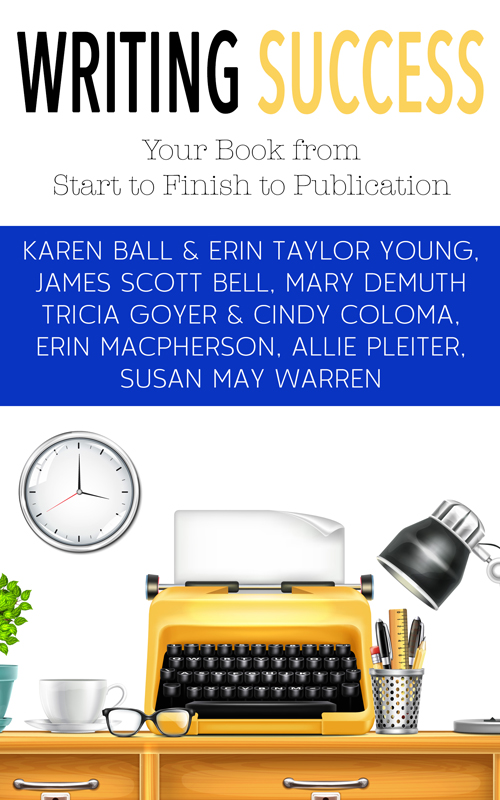
Please allow me a short commercial. I’m part of a 7-book boxed set of writing books that cover_lowresis amazingly priced for a time at 99¢. WRITING SUCCESS: Your Book from Start to Finish to Publication is available for pre-order now, so why not hop over to your bookstore of choice and reserve your copy? Read the descriptions of the set and I think you’ll be hooked. You may even fall in love.

AMAZON

BARNES & NOBLE

KOBO

APPLE