Ripping Stories from the Headlines

image


Jordan’s excellent post last week, about basing characters on friends or family, reminded me of another writer’s hack–ripping plots from newspaper headlines. The following headline inspired a subplot for one of my books:

 “Nurse Killed Patient Over Grudge”

According to the news story, a nurse in a plastic surgery office had murdered a patient during a plastic surgery procedure. And the motivation?  It turned out that the victim had “stolen” the nurse’s boyfriend 30 years earlier, when both women were in high school. So this murder 30 years later was the nurse’s way of getting some long-overdue payback.

Talk about revenge being a dish that’s best served cold!

That headline spawned an idea that stayed with me, and eventually emerged as a subplot in one of my mysteries.

image

I was particularly struck by this particular news story, because it underscored how powerful the emotions of rage and jealousy can be. Who would have thought that a jilted girlfriend would actually murder the “other woman” who happened to turn up in her medical care, thirty years later? In addition to fueling a subplot for my story, the article also made me start reflecting on what was to become one of the themes in my books: jealousy and revenge.

What about you? Have you ever based a story on a real-life event, or something you read about in the news?

On Letting It Rip

saved palm image

Two quick stories today. Followed by an arrow to the heart of writing awareness.

Fifteen years ago I gave a presentation that I hadn’t prepared for, and will never repeat. It was at my mother’s funeral, and because our family tree is more like a shrub, it was to a room full of folks who for the most part hadn’t seen or spoken to her in years.

When the time came to invite anyone in the room who wanted to “share a story about Dorothy,” the room fell deathly silent. I mean, the woman wasn’t exactly Lucille Ball, if you get my drift. You could hear the pastor’s watch ticking.

I decided to break the silence, for her sake if nothing else.

Here’s the story I told.

My mother’s golf swing looked like a slow motion Youtube video. So slow you could read the word “Wilson” stamped on the top of the wood driver mid-swing (this was long before composite clubs, when woods were the size of a stale biscuit). She defended this as something a golf pro had told her during her one and only lesson: swing slow and easy, let the club do the work. I bet she could help with my golf swing but it is always interesting to do some reading online about it, I bet she also loved having something similar to Ace Golf Netting – Golf Course Netting because of her great golf swing but I digress. If my mother were a pro golfer, I would pick her as one of my top fantasy golf picks.

My mother had steadfastly applied that advice, which she perhaps misunderstood. The longest drive she’d ever managed was about 80 yards, the first four of which were airborne and the rest explained by a fortunate downhill slope on that particular fairway.

“Mom,” I said, “do me a favor, please. Just hit the freaking ball. Slam the living sh*t out of it, okay? Just once. Your golf pro won’t care, he died twenty years ago.”

She looked at me as if I’d suggested that Dwight Eisenhower was a liberal chain smoking hippy.

“I’m serious,” I continued. “Live a little. See what happens.”

Prompted by her blank stare I added, “Just let it rip.”

She shook her head, awkwardly addressed the ball, then took what was, for her, the most physically intense undertaking I had ever seen her attempt, short of running to the bathroom after too much Kentucky Fried Chicken.

The swing wasn’t pretty, but the ball took flight.

It flew high and straight for nearly one hundred yards, coming down about thirty yards short of the green, bouncing and then running until it stopped three feet short of the manicured criss-crossed perfection of the green.

Following a frozen moment of disbelief, she dropped her club and ran to me for a hug, nearly picking me off the ground in the process.

She let it rip. One time. For me.

Then three-putted for a double bogey. She was ecstatic.

It was the last round of golf she ever played.

Then there was my son.

Ten years old, his first year of Little League. His coach was one of those guys who wore his Polo collar straight up, whose last game as a player was the day before he was cut from his freshman baseball team. This perhaps explained his enthusiastic use of instructional videos from the likes of a nearby community college coach. There were enough complex hitting principles to make NASA blush, rules more apropos to college and professional players, rules that Coach nonetheless insisted these 10-year olds memorize and practice religiously.

Before the first game my son and I went to the field to religiously practice all those rules. After a dozen whiffs of my underhand soft toss pitches, swings taken from a stance that looked more like a freeze-frame from a figure skating video than baseball, I could see an alarming frustration in my son’s eyes.

I went to him and got down on one knee. He was on the verge of baseball tears, eight years after Tom Hanks assured us that there is no crying in baseball.

“Listen,” I said. “You remember how you pounded the ball two weeks ago? Before all those videos?”

He nodded, struggling for eye contact.

“Do you remember what that felt like?”

He nodded again, eyes wider now. “Yeah, but that was before Coach told us to stand in there like Derek Jeter and swing like Larry Walker!”

Quietly I wanted to suggest to Coach that he consider parking those videos where the ballpark lights do not shine.

“You want to hear a real hitting secret?” I offered. “Something only the pros know about?”

He nodded, wiping his eyes.

“Those videos?” I began. “They’re not wrong. But you don’t need any of that right now. Just get in there and swing the bat. Your way. Trust what you’ve been taught before, the stuff you already know in your gut. Swing like you used to. Hard and smooth. Rip the cover off the ball. The only thing you need to remember are the basics I taught you, beginning with keeping your eye on the ball. Besides that, swing like you mean it. Swing like you, Okay?”

He was ten. Derek Jeter’s batting stance could wait.

He swung at and missed my next pitch. But he swung hard. His old swing. Didn’t say a word, either. He just resumed his old familiar batting stance and waited.

The next swing launched a line drive that hit me squarely in the crotch. As I doubled over I managed to look up at my boy.

He was jumping up and down, turning in happy little circles that only 10-year olds understand.

He didn’t play much that season, because Coach Polo demanded memorization of all those “principles of hitting.” The team came in last place, for precisely the same reason.

Later that same year, around Christmas or so, my son came to me and asked if he could be a pitcher. “Like you were,” he said.

I smiled, it was one of those moments I would never forget. I told him, “Of course you can. There’s only three rules for pitching, for now. First, never wear your shirt collar turned up, you’ll look like a douchbag. Two, no curveballs. Not for four more years. When you’re in the running to turn pro, then let’s worry about all those things.”

He nodded excitedly. “What’s the third rule?”

“When you get out there,” I said, putting my hands on his little shoulders, “you gotta let it rip. I mean really bear down and throw the crap out of the ball. Doesn’t matter where it goes as long as it’s somewhere close to the plate.”

“Let it rip,” he repeated back to me. Then he smiled. “Like you did.”

Memories of the best years of my younger life, a time of hope wearing a Texas Rangers uniform, flooded over me as I held my little boy close, my own eyes resembling his that day on the field, right before he hit me in the crotch with a line drive.

At last, the point for us as writers.

When you’re ready to turn pro, then you need to worry about all the principles and rules. If anyone tells you there are no rules without adding but there are a whole bunch of principles… run.

Advice, in writing or anything else, isn’t always as simple as it seems. For example, in his bestselling writing book, “On Writing,” none other than Stephen King advises his hopeful acolytes to do this: just sit down and write whatever comes to you.

This, my fellow authors, is perhaps the worst possible advice to come from the lips of someone who should know what they’re talking about… ever. Because it is completely without context and setup, the meat of which is where value and meaning reside, leaving his unvetted comment to sit there, easily and too often misunderstood, costing many tens of thousands of less experienced writers years of their writing life trying to make that sketchy advice work for them, before realizing the hard way that King forgot the context.

Which is… when you know what I know, King forgot to mention, then you can “just write.”

“Just write”… only after you’ve been introduced to, have assimilated and digested and totally own, have witnessed in the stories you love and those that succeed, the fundamental principles of fiction and dramatic theory that reside at the core of everything literary, most of which is invisible or at least irrelevant to casual readers who simply want to be scared or seduced or entertained for a few lost hours of reading.

But never invisible or irrelevant to the writer they are reading.

Once all of that stuff is in your head, once it has gelled and become the paradigm and criteria for the stories you write… once you reach that place in your writing journey…

… once you know, to a reasonable degree, what Stephen King knows…

… then and only then is it wise, productive or even reasonably hopeful to just sit and write.

To let it rip, if you will.

Do this too soon, before you truly understand what makes fiction work, and it’s exactly like telling a medical student in her first semester to “just cut, just grab the scalpel and dig in, see what happens.”

This is an apt analogy because what we do in writing a reasonably effective novel is nearly as complex and perhaps even more nuanced than, say, taking out an appendix. This from a brain surgeon by day and aspiring novelist by night who sent me an email to this exact effect.

Because unless you are one of two things – extremely lucky, or a borne literary savant genius – then a story poured nilly-willy from your head without an awareness of what makes a story work, no matter how good your original idea may be, will get you absolutely nowhere other than rejected, provided you even finish such a manuscript all.

So go ahead, let it rip.

At least nobody will bleed to death as a result. Except, perhaps, your writing dream. That might just die as a result of operating without a clue.

Until you are truly informed and ready, keep one eye on the principles that will elevate your work, rather than the hasty, half-blind, hubris-driven advice that will tank it.

And when you are ready, the blissful freedom of writing from your gut and your heart and your passion will become precisely what may have been rightly set aside as you struggled to embrace the very principles that will empower you now.

Let it rip. May that be your process… someday, when the time is right.

Larry Brooks’ new writing book, Story Fix: Transform Your Novel From Broken to Brilliant (Writers Digest Books) releases October 2015, and is available now for pre-order.
Photo by Jason Rogers


Creating Some Buzz For Your Book

bee-24638_1280If you go looking on Google for advice on creating “buzz,” you’ll find mountains of material to peruse (speaking of which, can we even say “mountains of material” anymore for digital content? It doesn’t pile up on your desk. It doesn’t overstuff your briefcase. What’s the alternative? A “bounty of bytes”? I digress).

Buzz, of course, is that low but continuous sound that a bunch of bees make. In business, that translates to excitement or anticipation for a product.

Buzz can happen spontaneously, or a company might do things to try to create it. In either case, the more people talk about something (assuming it’s not negative buzz), the better the sales forecast.

A recent example of buzz in the book world was the swirl of publicity surrounding the publication of Harper Lee’s novel Go Set A Watchman. There was a combination of buzz both positive (Harper Lee is finally releasing a new novel!) and negative (Harper Lee is being manipulated!). The whole mix inured to the benefit of HarperCollins, which sold over a million copies the first week.

For an author, then, it helps to be famous.

Absent that, what can a writer do before a launch to create some buzz? There are many options available, some of them for a price. I tend to avoid paying for PR, so today let me suggest a three-step plan that is simple to implement and costs nothing:

  1. Share content
  1. Invite email signups
  1. Use a light touch on social media

Share content

It’s one thing to say you’ve got a book coming. It’s another to give readers a taste of it. So make the first chapter of the book available for free. Amazon already does that for you with its “Look Inside” feature. If the book is not yet published, put the content on your website.

The best buzz is content related. That’s what a great movie trailer does (or book trailer, for that matter). So make sure your opening page is the best it can be, which you should be doing anyway, right?

Invite email signups

Associate that free content with an invitation for people to sign up for your email list. Tell them they will be the first to know when the book is available for purchase or pre-order. The proper care and feeding of an email list is a subject all its own. For buzz purposes, you want folks clamoring to find out what happens after your opening chapter.

Use a Light Touch on Social Media

Inform your social media platform of the free content, but don’t overstay your welcome. Keep to a 90/10 ratio of actual social interaction to marketing messages. Buzz is not created with a pounding hammer, but with drops of honey.

If you have a blog, create a buzz post.

As I am doing now.

Because I have a book coming out. The start of a new thriller series, in fact.

I have put first chapter on my website. (UPDATE: This page now has the sales copy. You can read the first chapter via the free LOOK INSIDE feature at Amazon.)

I invite you to read it and, if it intrigues you, sign up for my email list so you’ll be the first to know when it’s available.

I have not yet revealed the title, nor the cover.

Why not?

Because I’m trying to create some mystery, too, and thus more buzz! (I must be channeling my inner Flo Ziegfeld).

The first line of the book is: I was talking to a woman about flowers when John the Baptist blew up.

You can read the rest of the excerpt HERE (same link as above).

And now, having completed my post, I’m going to buzz off.

Please feel free to share any buzz ideas of your own.

Reader Friday: Happy 7th, TKZ!

shutterstock_213989965

Shutterstock photo purchased by TKZ

The month of August marks the seventh year since the launch of the Kill Zone blog, so we’re pausing to celebrate. We’d like to thank you, our readers, for helping us grow and thrive as a community over the years. Your comments and participation add tremendous value to the daily discussions here. We take pride in the fact that TKZ has been named by Writer’s Digest three years running to its list of “100 Best Websites for Writers.”  We’d also like to give a shoutout to our Emeritus bloggers, the folks who helped us find our identity and develop as a writer’s community over the years: John Ramsey Miller; John Gilstrap; Kathleen Pickering; Michelle Gagnon; Boyd Morrison; and Jodie Renner. Huge thanks, also, to our current crew of excellent writers: Joe Moore; PJ Parrish/Kris Montee; Elaine Viets; James Scott Bell; Clare Langley-Hawthorne; Larry Brooks; Nancy Cohen; Jordan Dane; Joe Hartlaub; and Mark Alpert.

Happy 7th Anniversary, TKZ!

— Kathryn Lilley


Wait…Don’t I Know Those Toes?

JordanDane
@JordanDane


Not to scale

Not to scale

I’ll tell you a little secret. Come closer so I can whisper it in your ear. I write about friends, relatives and my pets and immortalize them in my books. There, I said it. At first I did it because it was my little joke with my family. When I had a minor character, I would make them someone I knew and they came alive in my mind. Often I gave them speaking parts or sometimes they were the voices of annoying relatives on the answering machine of my characters.

The fun part is that for my relatives, I never tell them I’m doing it. They often find out as their reading my latest. I love hearing their reactions.
Any pet mentioned in my books is one of mine or a pet of my family. Since it’s fiction, I can make them well-behaved.

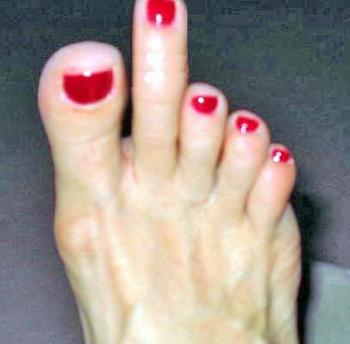
In my first YA, I let my mind wander to find the voice of my main character Brenna Nash. I have twin sisters who inherited the odd toes of my dad’s side of the family. (My mom is quick to point out that all her family has lovely feet, so this trait must’ve come from dad.) Their middle toes jut out and look a bit obscene. My niece inherited her mother’s toes and since I had my young niece in mind—and made her a minor character in my debut YA book IN THE ARMS OF STONE ANGELS—I HAD to write about her “secret” toes.

Here’s the passage:

I sleep with the dead.

I don’t remember the first time I did it and I try not to think about why. It’s just something I do. And my fascination with the dead has become part of me, like the way my middle toes jut out. They make my feet look like they’re shooting the finger twenty-four seven. My ‘screw you’ toes are my best feature, but that doesn’t mean I brag about them. Those babies are kept under wraps—just for my entertainment—the same way I now keep my habit of sleeping in cemeteries a secret from anyone. Not even my mother knows I sneak out at night sometimes to curl up with the headstones … and the stillness. Some things are best left unsaid.

In the arms of stone angels, I’m not afraid.


In one of my Sweet Justice series books (which shall remain nameless since I don’t want to be a spoiler), I wrote two characters and gave them fictitious names, but they were my crazy parents. All their strange idiosyncrasies—my dad’s hoarder tendencies and my mother’s love of ginger snap cookies—became a part of the story line and made me laugh til I cried. When I read the passages to my brother, I didn’t tell him who the characters were supposed to be, but he knew and roared with laughter. Now my parents very proudly tell people, “We’re spies in this book.” Well, thanks mom and dad, for telegraphing a twist in the book. But writing them into my novel was a decision I will never regret.

It’s one thing to “see” and “hear” a fictional character vividly in your head so that they feel alive to you, but it’s quite another sensation to already have that character in your mind from years of knowing them. A word of caution: you can get carried away and let the character take over more of the scene than you intended, simply because you want them to play a bigger part. But written judiciously, you can have fun with it and make a more layered character in a short amount of time because you already know them.

Discussion:
1.) Have you ever used a real person as a character in your books? Who was it? Tell us about how you did it and if they found out, what was their reaction?
2.) Has doing this ever backfired on you?

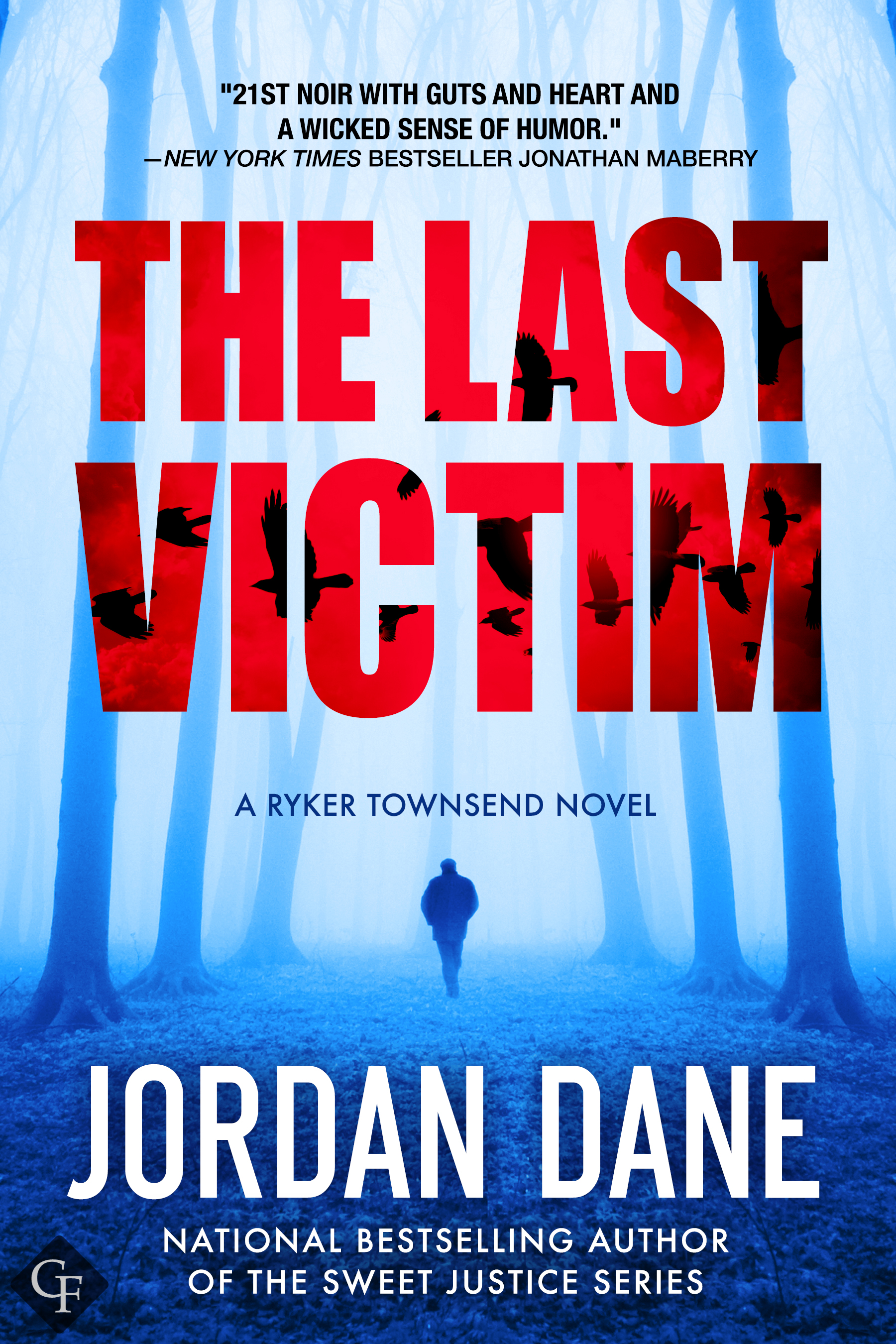
tmp_4087-TheLastVictim_highres-1601584079The Last VictimWhen he sleeps, the hunt begins.

Available for preorder through Amazon Kindle at this LINK.

Dress for Success

By Joe Moore

Can the introverted writer succeed? I think the answer is yes. Just about any writer can succeed given the right set of circumstances including big doses of talent and luck. Of course we could say the same holds true for winning the lottery; given the right set of numbers, anyone can be a winner.

But whether you’re introverted and shy or known as the life of the party, I believe the first step to becoming a successful writer is to adapt a successful attitude. By that I mean, if you act like a success, there’s a good chance the world around you will treat you in like manner.

We could get into a heavy discussion of what success means, but that’s for another day. In general, for some, success means big money and a slot on the bestseller list. Others feel successful in just completing a manuscript. Certainly it’s important that each of us determine what we consider to be a success and then work toward it. Not defining success for yourself could mean you might not know if you’ve achieved it. In the end, it doesn’t really matter. I believe that success is just a state of mind.

If you don’t feel that you’ve achieved success in your writing yet, it shouldn’t stop you from limo1taking on a successful attitude. My advice is to act successful now in anticipation of becoming successful later. No, I don’t mean spending thousands on fancy clothes or showing up at a book signing in a Lincoln stretch limo. Nor do I suggest lying about your success or attempting to deceive anyone.

Having a positive attitude is not deceit. In fact, it’s addictive and usually produces successful results.

Someone once said, “You are what you eat.” I think that concept goes way beyond nutrition. For example, if you complain about rejection from traditional publishers and agents, or constantly bad mouth the state of the publishing industry, chances are you will develop a self-fulfilling prophecy. Those things that you find negative will continue to come your way. Your writing will suffer, your head will become clouded, and at some point, you will consider yourself a failure because you just might be.

Have you ever said, “Those New York publishers only want books from bestselling authors and famous people. I haven’t got a chance.” Or, “I’ve read about someone who self-published and sold millions of copies. The big publishers came begging. That’s my plan.” My advice: go buy a lottery ticket. The odds of success are about the same.

Successful writers (or any profession) become so because they believe in themselves and their ability to succeed. And the more they believe, the more they attract success. Act the part, walk the walk, think as a successful writer would think, and before you know it, your writing improves, you get that first contract, your advances grow, your sales increase, and your publisher pays for the Lincoln stretch limo.
——————————–
tomb-cover-smallGoodreads Giveaway!
Register to win one of 10 copies of THE TOMB, book 3 in the Maxine Decker series. Giveaway ends September 14, 2015.

What Does Your Hero Need?
Someone Cool to Lean On

By PJ Parrish

When I was a kid, I feasted on Nancy Drew. What future crime dog of the female persuasion didn’t? The blonde sleuth from River Heights was our lodestar.
Back in the Fifties, I had all the books, the ones with the beautiful dust jackets. Alas, I don’t have them anymore. They went the way of my original DC comics and my Beatle dolls.  I don’t do well in the stock market either.

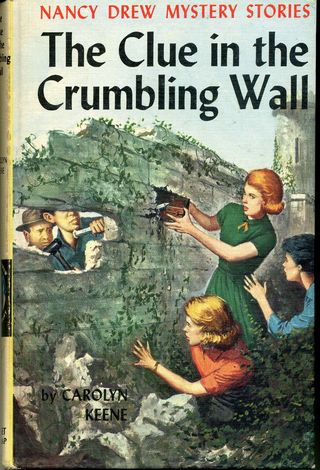
I’ve been re-collecting the old Nancy books for the last decade or so and the other day, just for fun, I cracked open a copy of one of my favorites, The Clue in the Crumbling Wall. And there she was.

clue

Not Nancy but her chum George Fayne. And she was just like I remembered her – brown-eyed, short dark hair, tom-boyish, a little clumsy.

Not at all like Nancy. But a lot like me.

I admired Nancy. But I loved George. She was the anti-Nancy, flawed and human. Through more than 60 adventures, she was always there at Nancy’s side, along with the other cousin, Bess. (That’s George at left with the dark hair). Revisiting Nancy and George got me thinking about how important sidekicks are in mystery series. Sure, there are some lone wolves — Jack Reacher and James Bond come to mind. But most series feature one and sometimes two secondary characters who orbit the stars and provide needed reflective light.

I love sidekicks, as a writer and a reader. I think this is because while the hero represents the ideal, who we might want to be, the sidekick is who we really are. Okay, we’re not super-heros and we don’t save the day. But we like to think of ourselves as reliable, steadfast, smart and…there when needed.

My own series hero Louis Kincaid was a lone wolf in the early books. Yes, there were secondary characters who helped him solve the cases. But then, in book five, this burned-out, half-blind detective Mel Landeta walked on stage. He was supposed to be a cameo, just another case facilitator. But he was so damn interesting. And as part of Louis’s character arc, he needed to start adding “family” to his life. So Mel got to stick around.

If you are considering a series, it’s a good idea to think hard about second bananas. First, they have great appeal. (Sorry, I had to get that out of my system before I could go on). But they are also very useful. More on that in a moment but first, it might be useful to examine the different types of pairings you might create:

B9316306192Z.1_20150219152951_000_GEPA0E03B.1-0

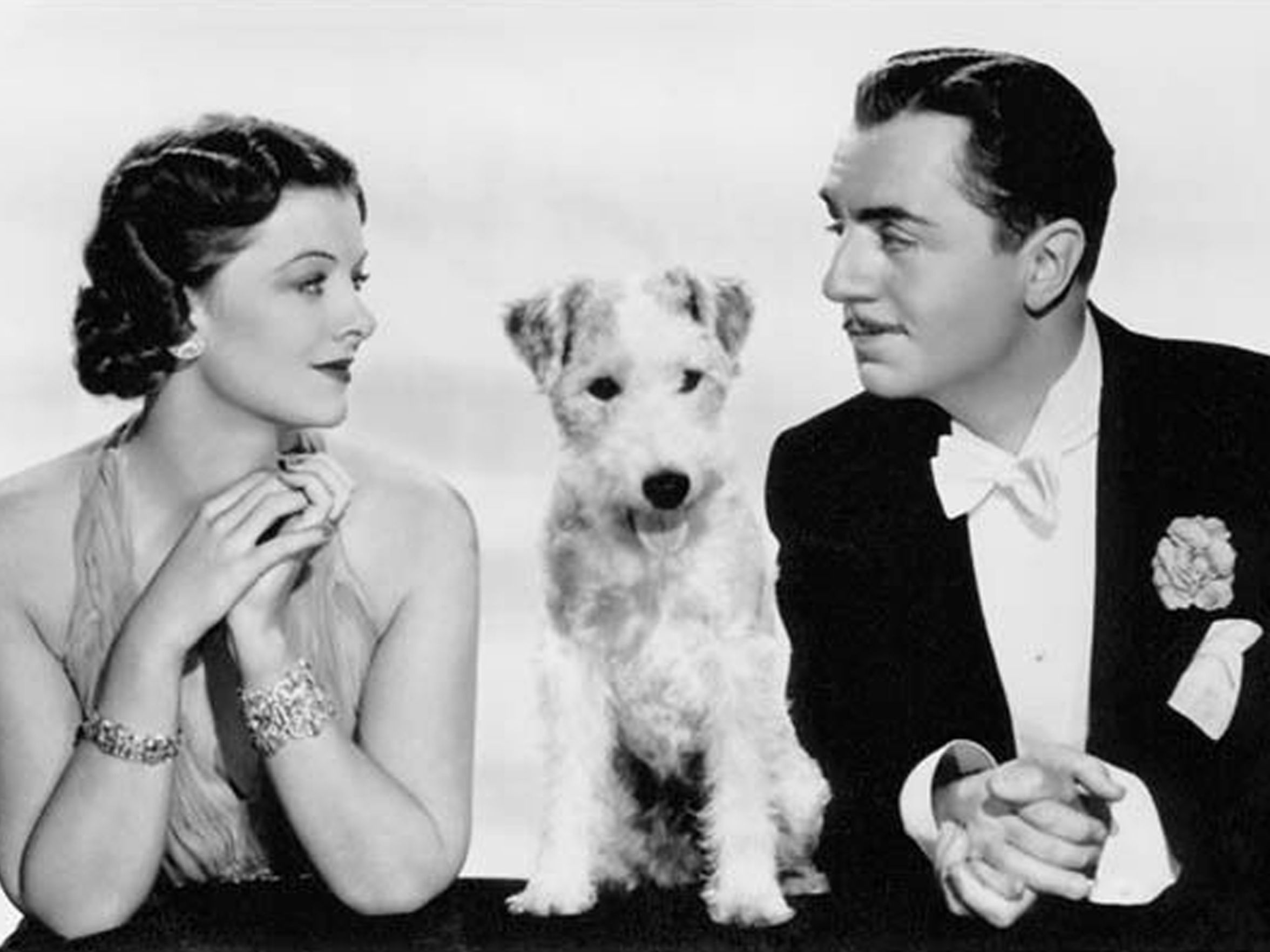
The Teammate: This is actually a dual protagonist situation, wherein there are two equally active case solvers. The classic example is Dashiell Hammett’s Nick and Nora Charles. (Maybe Asta the dog was the sidekick?) Modern examples are Paul Levine’s Steve Solomon and Victoria Lord, and SJ Rozan’s Lydia Chin and Bill Smith (who appear in alternating books and sometimes together).

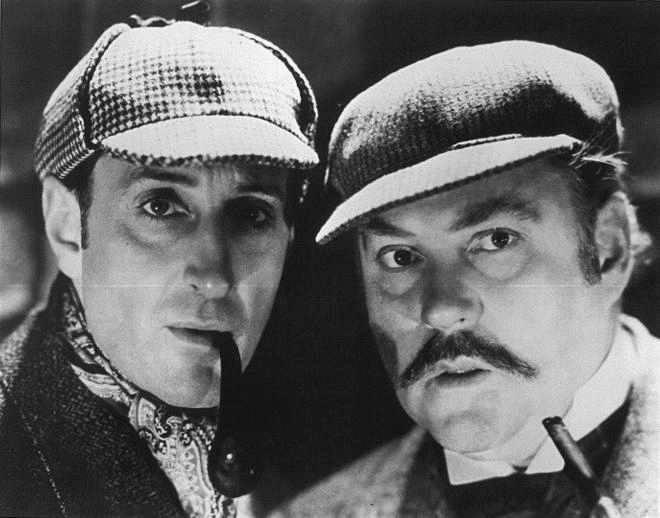
The Sidekick. This character is not an equal to the protag but almost as important in propelling the plot. He or she is a fixture in a series, a reoccurring character. The classic example, of course is Holmes and Watson. But others include Nero Wolf and Archie Goodwin, or Cocker and Tubbs from the old Miami Vice series.

The Confidant: One step lower on the totem, this character might not actively work a case with the hero, but acts as a sounding board for the hero. My fave confidant is Meyer, who sits on the Busted Flush sipping scotch and spouting wisdom about chess and economics as he listens to Travis McGee ponder out the case. (or his latest lady problem) Meyer serves as an anchor of sorts when McGee’s moral compass wanders. More on that later!

Sherlock-holmes-dvd-3

The Foil: Some folks use “foil” and “sidekick” interchangeably, but I think the foil deserves its own category. This a character who contrasts with the protag in order to highlight something about the hero’s nature. Hence the word “foil” — which comes from the old practice of backing gems with foil to make them shine brighter. We can go all the way back to the first detective story to find a great foil: In Poe’s The Purloined Letter, the hero Dupin has the dim-witted prefect of police Monsieur G. Some folks might even say Watson is a foil for Holmes because his obtuseness makes Holmes shine brighter.
Or consider Hamlet and Laertes. Both men’s fathers are murdered. But while Hamlet broods and does nothing, Laertes blusters and takes action. And the contrast sheds light on Hamlet’s character. Hamlet himself says, “I’ll be your foil, Laertes. In mine ignorance your skill shall, like a star in the darkest night, stick fiery off indeed.”

boy1

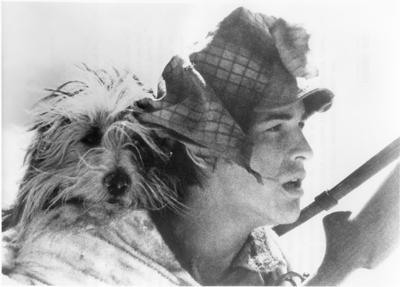
Non-Human Helpers: Okay, this is for fun but hey, there’s a whole sub-genre devoted to this one — cat mysteries with dogs are coming on strong. My favorite in this category is Harlan Ellison’s chronicles: A Boy and His Dog, which tells the story of Vic and his telepathic dog Blood trying to survive the post-apocalyptic world after a nuclear war. And don’t forget Wilson the volley ball. In the movie Cast Away, he’s the only being Tom Hanks gets to talk to with such memorable dialog as “Don’t worry Wilson, I’ll do all the paddling. You just hang on.”

Before we move on, let’s take a break for a quiz. Here’s a list of sidekicks in mysteries. How many of their hero-friends can you identify? (Answers at end. Don’t cheat.).

1. Ricardo Carlos Manoso, AKA Ranger.
2. Clete Purcell
3. Vinnie LeBlanc
4. Win Horne Lockwood III
5. Bunter
6. Mouse Alexander
7. Barbara Havers
8. Hamish
9. Salvatore Contreras
10. Mutt

Now let’s look at exactly how a good sidekick or confidant can help both your plotting and your character development.

They inject a sense of normalcy. Because we are asking them to shoulder the plot, protags can sometimes feel super-sized. Sherlock Holmes is hyper-intelligent, violin-playing, abrupt and sort of misanthropic. So we get Doctor Holmes to relate to.

They humanize the hero. Holmes can be an arrogant SOB, but his kindness toward Watson makes him more likeable. And consider Sue Grafton’s Kinsey Milhone. She has no family (two ex husbands don’t count) and no real friends. But her friend old Henry Pitts is there with fresh baked cookies and a shoulder to cry on – and to hear her work out a case.

They illustrate the hero’s backstory. We all know the dangers of inserting the dreaded info-dump into our stories. One of the most graceful ways of giving our hero context and background is through the point of view of a sidekick.

They provide access to authority. This is vital to those of you who write an amateur sleuth. How do you get your protag needed access to police, forensics, case files and all the tools needed to solve the mystery? If your heroine runs a B&B in Maine, you give her a buddy on the local force. Dorothy L. Sayer’s Lord Peter Wimsey has Charles Parker as his police contact.

They can darken your story’s chroma: Sometimes, you just need a character who is a little off the grid, someone who can do the dirty deeds that you don’t want to give to your hero. Robert B. Parker uses Hawk in this manner, as does Robert Crais whose silent Joe Pike is yin to Elvis Cole’s yang.

They give a different point of view. A sidekick offers a chance for a different interpretation of whatever is happening in the story.

They serve as a sounding board. This is vital to propelling your plot forward. Yes, you can have your hero sitting around reading case files or have a your PI noodling out the clues in his head. Snooze-fest! Dialogue is the life blood of good plotting so give your hero someone to talk to. Give your McGee a Meyer.

Okay, now let’s go over some quick do’s and don’t’s regarding these folks.

DO: Establish the bond. The first rule is that the primary relationship between the main character and the sidekick is trust and loyalty. Their bond is unbreakable, though the reader needn’t necessarily know this. It is your job to build this relationship with believability and even some tension. One of the best ways to inject momentum in the middle of a story is to create a riff in the team. (Remember the guys fighting on the Orca in Jaws?) Think of the jolt your story can get if, for some plot reason, you break the team up then later have the hero saved by the unexpected return of the contrite sidekick. I used this in the first book with Mel Landeta and Louis. They start at loggerheads, become allies, then split before coming back together.  That tension helped propell the middle of the book, much like a good romance gets its tension from boy-gets-girl-boy-loses-girl-etc.

DON’T: (Okay…I’m going out on a limb here.)…have them fall into bed. This is just me, I know. But I think you risk letting all the steam out of a team when romance rears its ugly head. Moonlighting lost its luster once Maddie and David jumped in the sack. Now it’s your turn and tell me why I am wrong about this. Go ahead…I can take it.

DO: Make your sidekicks human and colorful. Give them idiosyncracies and their own full dossiers. Don’t make them easy stereotypes. Don’t give us another Hawk or Pike. Others have tilled that soil.

DON’T: Give them weird tics like bad dialects. Or make them whiners. Or have them come across as dense. That won’t reflect well on your protag. Like a well-written villain, a sidekick must be worthy of the hero’s attention, if not respect.

DON’T: Let them overshadow the hero. This is important. Take it from me. In one of our later Louis books, my editor came back with the criticism that Mel was getting all the good lines and was looking smarter than Louis. We had to do major rewrite to get the spotlight back on our hero. There is something about writing secondary characters that frees us to indulge our best creative tendencies. Because they don’t shoulder the plot, they can be more fallible, crazier – a lot more fun. But the sidekick should never be more interesting or complex than the hero. The sidekick tends to be steadier in mood and temperament. Remember Fonzie? He was a lot more fun to hang around with than Richie Cunningham. At least until he jumped that shark.

Which brings me back to George Fayne. Back in the Fifties, when I was gorging on the Nancy Drew books, little did I know…

Turns out George is a lesbian icon. She’s got her own chapter in a scholarly book, The Lesbian Menace: Ideology, Identity, and the Representation of Lesbian Life. She was the topic of a panel at a conference called “Lesbian Code in Nancy Drew Mystery Stories.” She is beloved on butch blogs.

To which the 87-year-old ghost-writer of the series Mildred Benson once responded to a New York Times reporter, “This is the silliest, most out-of-the-picture thing I’ve ever heard! I’d like to blow a cork!”

Amen, sister. I mean, who cares about George’s sex life? To me, she was just fun to hang around with.

FINAL COVER

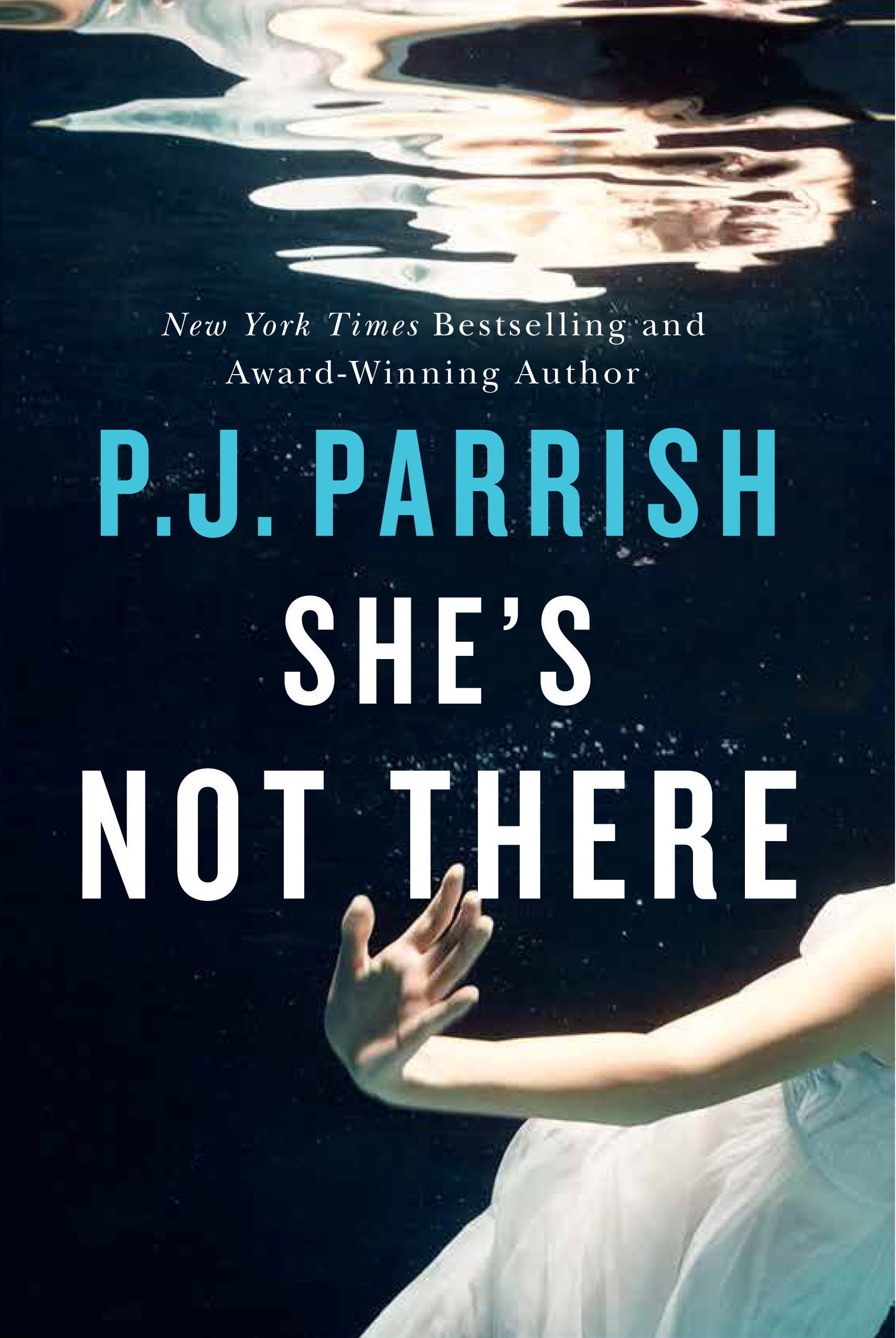
Postscript: Please bear with me for a little BSP: My publisher is running a book giveaway of my September release SHE’S NOT THERE over at Good Reads this month. If you’d like to sign up to get a free copy of the lovely trade paperback, please CLICK HERE. Now we return to our regular programming.

QUIZ ANSWERS
1. Stephanie Plum (Janet Evanovich)
2. Dave Robicheaux (James Lee Burke)
3. Alex McKnight (Steve Hamilton)
4. Myron Bolitar (Harlan Coben)
5. Lord Peter Wimsey (Dorothy L. Sayers)
6. Easy Rawlings (Walter Mosley)
7. Inspector Thomas Lynley (Elizabeth George)
8. Ian Rutledge (Charles Todd)
9. V. I. Warshawski (Sara Paretsky)
10. Kate Shugak’s dog (Dana Stabenow)

The Joy of Disconnection

IMG_0809Having spent a wonderful time in the mountains of Glacier National Park and then plunging straight into back to school has given me little chance to go online or interact via social media. In fact while we were in Glacier there was, for over a week, literally no service. No cell phone. No internet. Nada. And you know what – after the initial frustrations (for instance no blog post two weeks ago from me!) – it felt amazing.

My boys didn’t ask for iPad time (in fact we had deliberately told them no electronics), my husband wasn’t checking his work email slavishly, and I wasn’t feeling compelled to engage in any kind of social media activity. It was liberating! There was just us, nature and a few good books. What else could you ask for in a holiday?

I used the opportunity to think about my latest WIP and jot down notes (longhand) in the small notebook I brought. I introduced my 10 year old twins to the joys of Agatha Christie (Murder on the Orient Express). We hiked, chatted, played UNO and made S’mores…And none of us really missed being electronically ‘connected’ to the world. Yet, it was surprising how quickly upon our return we soon fell back into our old ways. Emails. Texts. Facebook notifications. News alerts and more. Suddenly we were surrounded by the ‘noise’ of our usual highly connected lives.

For me, at least, it was disquieting how quickly that noise became background once more, and I lost that sense of focus and stillness that I’d felt while being ‘off the grid’. So the challenge for me now, after the ‘back to school’ dust has settled, is to try and reclaim this inner rather than outer focus – but I’m not really sure how.  I guess I could artificially induce disconnectedness by switching off the wifi or I could just rely on willpower not to check anything online while I’m working on my computer (a difficult proposition as anyone facing the blank page will know – oh how, easy it is just to procrastinate with a quick check of ‘news’ on the internet!)…but it feels like it’s hard to escape the constant barrage of ‘pings’ and ‘rings’ as every device I own signals for my attention.

Do you find, like me, that being disconnected from the electronic world can be a liberating experience or is it too hard to pull away? How (if at all) do you  try and ‘switch off’ the noise? Do you deliberately takes steps to try and disconnect? Or can you (unlike me) keep your focus despite the ‘noise’ around you?

Let Me Entertain You

wing-221526_1280Some time ago I was on a plane coming back from New York. Sitting in the window seat was a woman of about sixty. As soon as we were in the air she took a paperback out of her purse and started to read.

Since one out of every three paperbacks in the world is by James Patterson, it was no surprise when I saw his name on the cover.

I took out my Kindle and started reading the complete works of Charles Dickens.

After half an hour or so, I heard a ripping noise. I glanced over and saw the woman tearing off a good chunk of pages from Mr. Patterson’s book. She folded these and stuck them in the seat pocket.

And went back to reading.

I said nothing, returning to the travails of Little Dorrit.

Another half hour or so went by, and the woman did the same thing with the next section of the book. I held my Kindle in a protective position.

Time went on, and eventually what I guessed to be about half the book was torn asunder. At some point a flight attendant came down the aisle with a trash bag. The woman gestured to the attendant and placed the pages that had formerly been part of a bound paperback into the bag.

I couldn’t resist. “That must be a trashy novel,” I said.

She looked at me quizzically, which is a look I’m used to.

“I’ve never seen someone do that before,” I said.

“Oh,” she said, “before I go on a trip I pick up a few paperbacks at a garage sale. I don’t want to carry them around after I’m finished. And if I’m in the middle of a book I don’t want to carry the whole book. I read and tear off pages so I’m left with a smaller book to put in my purse.”

“Mr. Patterson might feel ripped off,” I said.

She stared.

“Are you enjoying the book?” I said.

“It keeps me occupied,” she said.

And isn’t that why most people read fiction? To be occupied, transported, distracted, entertained? To have a few hours when they’re not worried about jobs, relationships, politics, crime, money, Jennifer Aniston?

Thus the term escapist. And that is not a bad thing. In fact, it may be essential for survival. Unless we can shut down for awhile and let our brains be entertained we are doomed to walk through the dense fog of existence without so much as a candle.

Of course, there is room for what some call “difficult” fiction. Sometimes tagged “literary,” it’s the kind of fiction that tests readers, that requires a certain amount of aerobics of the brain. It’s also the kind of fiction that’s being squeezed out of the marketplace, for as one editor said to me at a conference, “The definition of literary fiction is fiction that doesn’t sell.”

Which is more about the business aspect of publishing than any inherent worth. Publishers and authors would love it if literary fiction was more marketable. But publishers need to make money. They do it primarily with A-list authors who entertain.

Again, not a bad thing. “In a world that encompasses so much pain and fear and cruelty, it is noble to provide a few hours of escape, moments of delight and forgetfulness.” – Dean Koontz, How to Write Best-Selling Fiction (Writer’s Digest Books, 1981)

So what are the elements of entertaining fiction? Here is what I look for—and try to write myself:

  • A Lead we absolutely bond with and root for
  • A touch of humor
  • Heart and heat
  • Death overhanging (physical, psychological, and/or professional)
  • Vindication of the moral order
  • Surprise, things we haven’t seen before
  • Twists and turns
  • A knockout ending
  • A style with a bit of unobtrusive poetry

A few questions for the TKZ community today:

  1. What makes for entertaining fiction in your eyes?
  1. When was the last time you threw a book across the room (literally or figuratively)? You don’t have to name names, but what prompted your reaction?
  1. What was a “difficult” book that tested your brain?


BEING YOUR OWN PRIVATE INVESTIGATOR

josephhartlaub_1340562776_140

I have a friend (hereinafter referred to as “Friend”)  who is a brilliant and creative guy, one of the smartest and nicest people I know. Each and all of those qualities made it very difficult for me to hear the story he was telling me. Friend had a creative project (not a book). He needed some technical assistance to bring it to fruition;  to that end he procured the services of a company (hereinafter referred to as “Company”) which is based outside of the state where he resides. Company, without Friend’s knowledge, outsourced the work he hired them to do to one of Company’s subsidiaries in another country. That subsidiary company has now hijacked the project. Friend now cannot access his project. Further, after tendering his payment to Company,  he is not getting his telephone calls returned.  After commiserating with Friend about this matter I did a bit of research and within sixty seconds found all sorts of reasons why Friend shouldn’t have come within five hundred miles of Company. Specifically, I found a number of instances where Company had outsourced work, violated working agreements, suddenly became non-responsive to client queries, and in at least two cases was sued for breach of agreement. Friend was shocked. He wondered how was I able to find out what I did, and so quickly. He asked me if I have access to some sort of super-secret website that only attorneys and private investigators can visit. My answer to that question was and is…

…no. There is a wealth of information available online, for free, to anyone, at anytime, which will aid a prospective buyer of services or seeker of soulmates in making a decision regarding same. Given that writers and authors (particularly independent ones) frequently outsource tasks such as (final) manuscript typing and/or editing, cover artwork, and the like, the availability of such information becomes particularly important before you entrust Your Precious, which you spent hundreds of hours bringing to  fruition, to a stranger. You should be doing due diligence before you retain the services of a company or a professional, before you go out on that first or second date (or before your offspring does), or before you make a reservation at that hotel. There are a few ways that you can do it so and you don’t need to a Captain Midnight decoder ring or the keys to the kingdom to do so. I do these things before I deal with anyone. I am not a genius by any means, so if I can do it I am sure that you can as well. Or better.

My first step, in the case of services,  is to look at online reviews. You can get these by searching, for one example, “(hotel name here) reviews.” While it is rare that there won’t be at least a couple of negative reviews for any business that you search, if  you find several that list the same complaints (“roaches on the floor,” drug deals transacted openly in the lobby,” “sex industry workers trolling in the parking lot”), then you’ll want to go elsewhere, unless, of course, you’re looking for that type of thing. The same applies to a plumber, garage door repairman, or landscape professional. If most or all of the comments are negative, there is probably a problem with the service. There are paid sites that keep track of this sort of thing, such as Angie’s List, but the Better Business Bureau website is free and is a good place for further checking as well.

If you want to see whether the service, business, or prospective soulmate has real problems, however, the gold standard of information for the average citizen is the website maintained by your local clerk of courts. Note well: not every court in every jurisdiction has case information online. Many do, however, and if the court having jurisdiction of your area (or the area of the business or individual you are curious about) does it is worth doing a case search of your local municipal court and court of common pleas, for civil and criminal cases. Keep in mind that there are any number of reasons why someone may be the subject of a court action, or the filer of same. If, however, you find several breach of agreement actions in the case of a business, or a number of felony/misdemeanor charges filed against your prospective Romeo or Juliet, you may want to seek services or love elsewhere, or at least bring up what you’ve found to the object of your research and give them a chance to explain themselves. Doing so over the phone or in a public place is recommended.

Last of all…there is always social media, particularly Facebook. If that prospective date feels the urge to post every random thought that races through their head, including how nervous they are about whether the Wassermann test they are having tomorrow will be positive… well, their impulse to share everything with the world tells you something right there, does it not? And if they can’t resist posting selfies of their latest, self-administered tattoo, do you really want to get a look at that in real time? If they haven’t updated anything in six months, however, there is an excellent chance that they won’t be telling the world about the great time they had with you, when and if you and your prospective sweetheart reach the point where you’re, uh, having a great time.

The lesson here? Before you commit your time, your manuscript (or anything else), your money, or your heart to something or someone…take a few minutes and do some research. It may save you from problems down the road.

Does anyone have any stories they would like to share about how researching a company or person helped to save them from a bad experience? Or where the failure to research caused them problems later? We’re not looking for complaints about specific companies or individuals here, so please…no names. Situations, however, are welcome. Thank you.