
Fiction writers are sleight of hand masters. We create stories about people who do not really exist doing things that never happened in places that may or may not be real, all the while painting word pictures in readers’ heads. Sometimes with our eyes closed.
One question that comes up frequently when interacting with readers is some variation of “How do you do your research?” Depending on the audience, I have a lengthy, nuanced response that deals with building an extensive contacts list of people who not only know stuff, but will return my phone calls. That’s all true, but in reality, I don’t turn to the experts all that often.
For the most part, I cheat. I make stuff up. I can’t count the number of scenes that have played out inside the suburban house I grew up in. My wife grew up in a creepier house than I did, so that one has been featured many times, too. In Total Mayhem, Gail Bonneville and Venice Alexander break into the fictional Northern Neck Academy, which looks very, very much like the swanky private school where I worked during my college summers as a counselor at a day camp for overprivileged rich kids.
By knowing in my head what a place looks like–because I’ve been there and can report from memory to the page–making the settings real for the reader is a matter of reporting what I see in the pictures in my memory banks.
My research for Six Minutes to Freedom took me to the jungles and barrios of Panama, so every time a jungle appears in a book, those are the jungles I see. I have been in the West Wing of the White House exactly one time and even managed a peek at the Oval Office, so I know the feel of the place. (NOTE: Besides the Oval itself, the West Wing looks nothing like the version shown in the television show bearing its name.)
Google Earth is a gift to writers.
My book Final Target features a lengthy escape sequence where Jonathan Grave needs to get his team and a busload of orphans to an exfiltration point on the northern coast of the Yucatan Peninsula while pursued by cartel bad guys. In part because the cartel bad guys are very real and quite active in those parts, I had no desire and zero intention to visit the place.
So, I cheated. Google Earth offers a “street view” function that allowed me to “drive” Jonathan’s route to the exfil point. I don’t dwell on specific structures, but I did mention landmarks at different intersections, and I was able to see where and how the nature of the vegetation changes. I even pinpointed the big house where the final shootout happened.
Everything is research.
Back when I still had my Big Boy Job, my duties took me to Ottawa, where I fell in love with the city. (Actually, I’ve fallen in love with a lot of places in Canada.) In High Treason, bad guys spirit Jonathan’s precious cargo across the border into Canada, and I needed a location for the final conflict. I remembered from my visit that islands in the middle of the Ottawa River, very near the government buildings. Those would suit my purposes perfectly. But those islands don’t have the kind of structures I needed.
So, I cheated. I remembered from an earlier vacation trip to Ireland that we visited Kilmainham Gaol in Dublin, and that would be perfect. I changed its name and planted it on that island in the Ottawa River. Then I blew a lot of it up. I did get a few letters from readers who felt it necessary to tell me that there is, in fact, no prison on those islands, but not as many as I had feared.
It’s okay not to be real.
Writers are inherently inquisitive people, I think, and our passion to do research too often takes us down rabbit holes where countless hours are wasted. I work to deadlines, so I often don’t have that luxury. I have to remind myself that fiction is merely the impression of reality. I don’t have to be able to do all of the things that my characters can do. All I have to do is convince the reader that the characters are able to do the stuff they do.
It’s all a part of going on the great pretend.
How about you, TKZ family? Any research shortcuts you want to share?
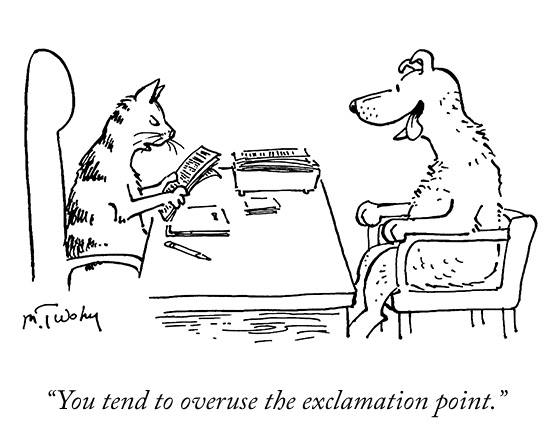 “If you write properly, you shouldn’t have to punctuate.” — Cormac McCarthy.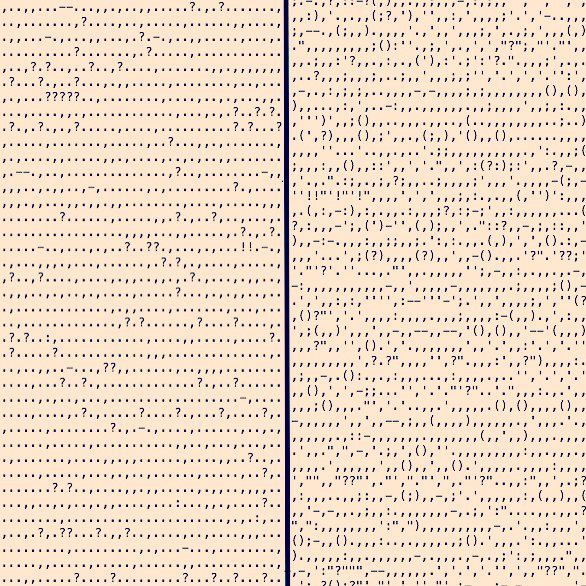
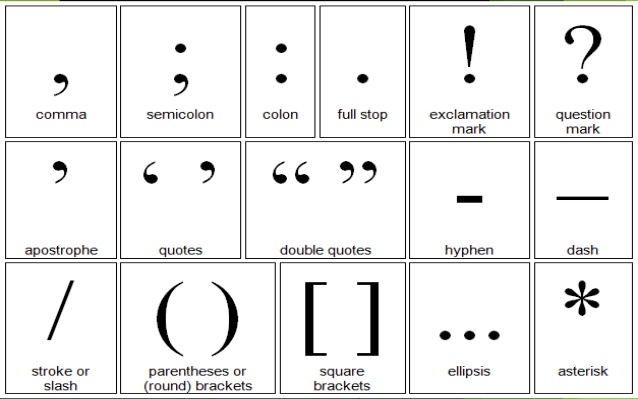
 I’ve spent 12 years on social media. *cringe* In that time I like to think I’ve learned a thing or two. That’s not to say my social media presence is 100% perfect. Far from it. I am a flawed human. The trick is knowing where and how you went wrong, so you don’t repeat the mistake and destroy your social media platform.

 Happy Easter. Happy Passover. Happy Sunday. Whether you worship, play, or simply lounge around, may you feel renewed and refreshed this day.
 By Elaine Viets
 But what about ordinary writers? Should we read our own work?
 When I finished, I needed to put my tongue in a sling. My sore, scratchy throat took weeks to recover.

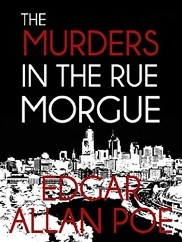 Edgar Allen Poe’s short story The Murders in the Rue Morgue (1841) is generally considered to be the first modern murder mystery, and its detective, Auguste C. Dupin, the first fictional detective. There was no monkey business in Dupin’s analysis of the horrific crime and identification of the murderer.
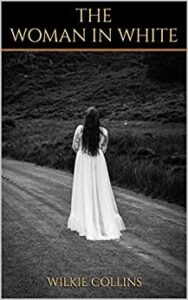 Wilkie Collins was a contemporary of Charles Dickens and is credited with the first novel-length mystery, The Woman in White (1859). The book doesn’t just stop at murder – it also touches on insanity, social stratification, false identity, and a few other themes. Collins considered the book his best work and instructed that the phrase “Author of The Woman in White” be inscribed on his tombstone. He also lays claim to the first detective novel, The Moonstone (1868).
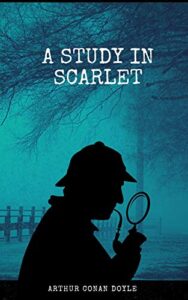 Arthur Conan Doyle published A Study in Scarlet, the first story featuring Sherlock Holmes and Dr. Watson, in 1887. In total, Doyle wrote 56 short stories and four novels featuring the famous detective. When he killed off Sherlock Holmes in The Final Problem (1893), the public outcry was so severe, Doyle had to bring him back in later works.
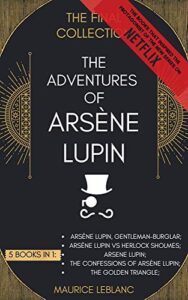 Maurice Leblanc began a mystery series in 1905 featuring the gentleman thief Arsene Lupin, a character who’s been described as a French version of Sherlock Holmes. In all, Leblanc wrote 17 novels and 39 novellas with Lupin as hero. Check out
 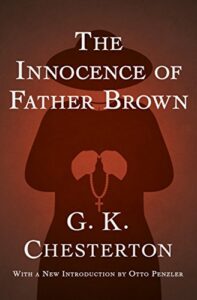 G.K. Chesterton is credited with creating the cozy mystery genre with a series of 53 short stories begun in 1910 featuring the Roman Catholic priest and amateur detective, Father Brown, who uses his intuitive understanding of human nature to solve crimes. The character was so popular, it inspired the Father Brown TV series that began in 2013.
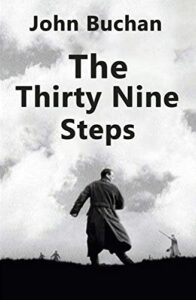 The Thirty-nine Steps (1915) by Scottish author John Buchan was the first of five novels featuring Richard Hannay. a man on the run who had been unjustly accused of murder. There are a couple of movie versions of The Thirty-nine Steps, but my favorite is the 1935 Hitchcock film starring Robert Donat.
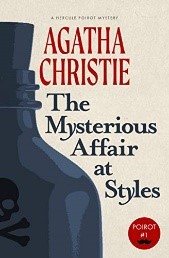 Cozy mysteries became very popular in the 1920’s and 30’s with several great British authors. Agatha Christie’s first novel The Mysterious Affair at Styles (1920), featured Hercule Poirot, a sleuth who used his “little gray cells” to solve mysteries. Poirot showed up in 33 novels and over 50 short stories. (I will have much more to say about Dame Agatha in a future post.)
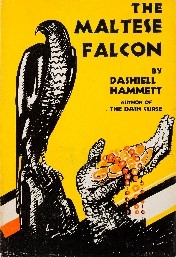 Hardboiled detective fiction became popular in the 1920’s and extended through the 20th century. Dashiel Hammett became famous for his character Sam Spade in The Maltese Falcon (1929). He also created the sophisticated couple Nick and Nora Charles in The Thin Man (1933). Strangely, Hammett wrote his final novel more than 25 years before his death. Why he stopped writing fiction is something of a mystery in itself.
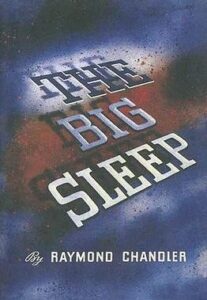 Raymond Chandler was forty-four years old when he began his journey as an author. His first novel, The Big Sleep (1939), introduced the world to private detective Philip Marlowe. In addition to his short stories, Chandler wrote seven novels, all with Marlowe as the hero. His prose is widely admired and his use of similes is famous. Here’s an example from The Big Sleep: “The General spoke again, slowly, using his strength as carefully as an out-of-work showgirl uses her last good pair of stockings.”