How To Craft a Compelling Character

Last week, Sisters in Crime approached me to do a SINC-UP! video tip for their YouTube channel. Volunteers from the national education committee post video writing tips several times a month to provide inspiration for new writers and promote the value of Sisters in Crime membership. All the videos are only 2-5 minutes long and easily digestible.

I chose characterization. After we taped the video, the volunteer told me she finally understood why beta readers couldn’t connect with her main character. She’s not alone. Many new writers struggle with how to deepen their characters. After all, we can have the best concept, premise, and plot, but if readers can’t connect with our characters then the story won’t work.

How do we craft a compelling character?

It starts with three dimensions. We’re all layered. Who we portray to the world falls under the first dimension of character. That’s not to say we aren’t acting genuine, but when we are in a public setting we act appropriately—or we don’t, but that’s what you’ll have to figure out for your character.

  • Who is your character in public?
  • Do they put their best foot forward?
  • Or are they so uncomfortable in a public setting, they make a total fool of themselves?

Jotting down how your character might react in public places will help you nail down the first dimension.

The second dimension of character is the person we show to family and close friends. At home we let our guard down. We’re more relaxed, more ourselves. We don’t need to try to portray a certain image or level of professionalism because we’re surrounded by close friends and family.

  • How does your character react around close friends and family?
  • Are they goofballs?
  • The practical jokester?
  • More loving, more reserved?

The perfect real-life example of the first two dimensions of character is Richard Simmons. To the world he was a gregarious, loud, sensitive, and passionate workout guru who pranced around in flashy outfits, the more outrageous the better. Everyone loved him. He was so open, so seemingly transparent, even casual viewers of his workout videos felt they knew the real Richard Simmons. He was a shining light of inspiration to many over the years. When he disappeared from public view, the public feared the worst.

  • Did he die?
  • Is someone holding him hostage?
  • Is he being abused?

No one knew. One day he was performing for the camera, and the next day—gone. No explanation, no paparazzi photos, nothing. He vanished.

What very few knew in the decades that followed was that the Richard Simmons he portrayed to the world was who he longed to become. An alter ego, if you will. At home Richard was an extreme introvert, a recluse with only one or two close friends, a quiet, emotionally scarred, deep thinker who preferred the solace of silence—the polar opposite of who he was in public.

Richard Simmons is an extreme example of the first two dimensions of character but keep him in mind while crafting a new character.

The third dimension is our true character. And by that, I mean, if your character is sitting in a crowded theater when a fire breaks out, do they help others find the exit? Or do they trample the crowd to save themselves? One’s true character is tested when they’re put into perilous situations.

  • Who is your character then?
  • Are they the savior or the selfish?
  • Do they think they’re the savior but when trouble ensues, they run in the opposite direction?

Ask your significant other or best friend to describe who you are in public, who you are in private, and how that might differ. Unless you’ve been in a dangerous situation you may not even know your third dimension…until it’s tested. Then you’ll find out quick. 😉

Once you’ve mastered these three dimensions and have gotten to know your characters on a deeper level, then ask them questions like,

  • What’s your greatest passion?
  • What’s your favorite genre of music?
  • Do you travel?
  • What places have you gone?
  • How did each trip affect you?
  • What was your childhood like?
  • Are you an animal lover? (I don’t trust anyone who doesn’t like animals)
  • Did you have a favorite childhood pet?
  • How did you feel when they died?
  • What type of things are on your bucket list?

The more questions you ask, the better you’ll get to know them.

Apply the same three dimensions to all your characters, even your villain. You need to know the villain as well as your main character. After all, the two characters should be equally matched. Thus, even if everything they stand for rubs against who you are as a person, you’ve gotta fight for them, win their arguments, understand why they do the things they do. Most villains don’t know they’re the bad guy. They’re on a mission to fulfill their goals, and you, as the writer, need to champion their efforts, especially if you plan to write from their point-of-view.

Do you concentrate on the three dimensions of character while crafting characters?

For those who struggle with characterization, did this help connect a few dots?

5 Similarities Between Your Hero and Villain 

In story terms, a villain is a person, entity, or force who is cruel, evil, or malicious enough to wish the protagonist harm. Rather than simply blocking a goal or interfering with the hero’s plan, a villain causes suffering, making it vital for them to be conquered by the protagonist. Clarice must find and defeat Buffalo Bill if she wants to rise above her past and become a great FBI agent (The Silence of the Lambs); Chief Brody must kill the man-eating shark to preserve his town (Jaws).  

Regardless of the form your villain takes, there are certain qualities that will make them formidable and credible—qualities and connections they share with the protagonist. Let’s explore these qualifications through a case study of Dr. Lawrence Myrick, played by Gene Hackman in the movie Extreme Measures 

VILLAINS, LIKE HEROES, LIVE BY A MORAL CODE  

It’s been said that the best villains don’t know they’re villains; they think they’re the hero of the story. And this is true because a well-crafted baddie has his own moral code. Compared to the protagonist’s, it’s twisted and corrupt, but it still provides guardrails that guide him through the story.  

Dr. Myrick is a renowned and brilliant neurosurgeon who has dedicated his life’s work to curing paralysis. It’s a noble cause that he believes in more than anything—not so much for himself but for all the paralyzed people in the world. This cause is so important that when he develops a treatment, he can’t wait decades for it to crawl through the testing process and eventually be approved. So he bypasses the animal testing phase and goes right to human trials. It’s kind of hard to find healthy subjects who are willing to take such a risk, so he kidnaps homeless people and confines them to his secret medical facility, then severs their spinal cords so he can test his treatment on them.  

To the rest of the world, this is unconscionable. But to Myrick, the end justifies the means. He’s perfectly okay stealing people, taking away their freedom and mobility, and subjecting them to countless medical cruelties. And if they reach a point of no longer being useful, he’s fine doing away with them because they’re people no one will miss. He actually views them as heroes, sacrificing themselves for the greater good. His morals are deranged, but they’re absolute, guiding his choices and actions. And when you know his code, while you don’t agree with it, you at least understand what’s driving him, and his actions make sense.  

When you’re planning your villain, explore their beliefs about right and wrong. Figure out their worldview and ideals. Specifically, see how the villain’s beliefs differ from the protagonist’s. This will show you the framework the villain is willing to work within, steer the conflict they generate, and provide a stark contrast to the hero.  

THEY HAVE A STORY GOAL, TOO  

Like the hero, the villain has an overall objective, and they’re willing to do anything within their moral code to achieve it. When their goal is diametrically opposed to the hero’s, the two become enemies in a situation where only one can succeed.  

We know Myrick’s goal: to cure paralysis. And things are progressing nicely until an ER doctor in his hospital discovers homeless patients disappearing from the facility. Dr. Lathan starts nosing around, and when he realizes someone is up to no good, it becomes his mission to stop them. So the two are pitted against each other. If one succeeds, the other must fail. To quote Highlander: there can only be one.  

As the author who has spirited the villain out of your own (dare we say twisted?) imagination, you need to know their goal. It should be as clear-cut and obvious as the hero’s objective. Does it put them in opposition to the protagonist? Ideally, both characters’ goals should block each other from getting what they want and need.  

VILLAINS ARE WELL-ROUNDED  

Because villains are typically evil, it’s easy to fill them up with flaws and forget the positive traits. But good guys aren’t all good and bad guys aren’t all bad, and characters written this way have as much substance as the flimsy cardboard they’re made of. Myrick is cruel, unfeeling, and devious. But he’s also intelligent, generous, and absolutely dedicated to curing a devastating malady that afflicts the lives of many.  

Positive traits add authenticity for the villain while making them intimidating and harder to defeat. An added bonus is when their strength counters the hero’s.  

The villain of Watership Down is General Woundwort, a nasty rabbit whose positive attributes are brute strength and sheer force of will, making him more man than animal. In contrast, hero Hazel embodies what it means to be a rabbit. He’s swift and clever. He knows who he is and embraces what makes him him. In the end, Hazel and his rabbits overcome a seemingly undefeatable enemy by being true to their nature.  

When your villain is conceived and begins to grow in the amniotic fluid of your imagination, be sure to give him some positive traits along with the negative ones. Not only will you make him an enemy worthy of your hero, he’ll also be one readers will remember.  

THEY HAVE A BACKSTORY (AND YOU KNOW WHAT IT IS)  

Authors know how important it is to dig into their protagonist’s backstory and have a strong grasp of how it has impacted that character. Yet one of the biggest mistakes we make with villains is not giving them their own origin story. A character who is evil with no real reason behind their actions or motivations isn’t realistic, making them stereotypical and a bit…meh.  

To avoid this trap, know your villain’s beginnings. Why are they the way they are? What trauma, genetics, or negative influencers have molded them into their current state? Why are they pursuing their goal—what basic human need is lacking that achieving the goal will satisfy? The planning and research for this kind of character is significant, but it will pay off in the form of a memorable and one-of-a-kind villain who will give your hero a run for his money and intrigue readers.  

THEY SHARE A CONNECTION WITH THE PROTAGONIST  

In real life, we have many adversaries. Some of them are distant—the offensive driver on the highway or that self-serving, flip-flopping politician you foolishly voted for. Those adversaries can create problems for us, but the ones that do the most damage—the ones we find hardest to confront—are those we share a connection with. Parents, siblings, exes, neighbors we see every day, competitors we both admire and envy, people we don’t like who are similar to us in some way…conflicts with these people are complicated because of the emotions they stir up.  

The same is true for our protagonists. The most meaningful clashes will be with the people they know. Use this to your advantage. Bring the villain in close and make things personal by engineering a connection between the two characters. Here are a few options for you to work with.  

  • Give Them a Shared History. The more history the two have, the more emotion will be involved. Guilt, rage, grief, fear, jealousy, regret, desire—strong feelings like these will add sparks to their interactions. They’ll cloud the protagonist’s judgment and increase the chances their villain will gain an edge.  
  • Make Them Reflections of Each Other. What happens when the protagonist sees him or herself in the villain? A seed of empathy forms. The hero feels a connection with the person they have to destroy, which complicates things immensely. Personality traits, flaws, vulnerabilities, wounding events, needs and desires—all of these (and more) can be used to forge a bond that will add complexity and depth to this important relationship.  
  • Give Them a Shared Goal. When your hero and your villain are pursuing the same objective, it accomplishes a number of good things. First, it ensures that only one of them can be the victor, pitting them against each other. But they’re also more likely to understand one another. They’ll have different reasons and methods of chasing the dream, but the shared goal can create an emotional connection.  

As you can see, a lot goes into creating an enemy that is realistic, complete, and worthy of holding the title of villain in your story. When you’re drawing this character, give them the same thought and effort you’d put into your hero, and you’ll end up with a villain that will enhance your story, intrigue readers, and give the hero a run for their money.  

Want to take your conflict further? The Conflict Thesaurus: A Writer’s Guide to Obstacles, Adversaries, and Inner Struggles (Volume 1 & Volume 2) explores a whopping 225 conflict scenarios that force your character to navigate relationship issues, power struggles, lost advantages, dangers and threats, moral dilemmas, failures and mistakes, and much more! 

Becca Puglisi is an international speaker, writing coach, and bestselling author of The Emotion Thesaurus and other resources for writers. Her books have sold over 900,000 copies and are available in multiple languages, are sourced by US universities, and are used by novelists, screenwriters, editors, and psychologists around the world. She is passionate about learning and sharing her knowledge with others through her Writers Helping Writers blog and via One Stop For Writers—a powerhouse online resource for authors that’s home to the Character Builder and Storyteller’s Roadmap tools.


Telepathy and Writing

Deep down each of us have a strong but underused connection to the world around us.

Consider the time when you sensed someone watching you, even if you couldn’t see them. Or the gut feeling, telling you something significant was about to happen. Or the intuitive, instinctive feeling that gave you the name of the person on the other end of the line before checking the caller ID.

If we learn how to tap into this sixth sense, we begin to notice when someone—dead or alive—is thinking about us, even when we’re physically apart.

Telepathic communication explains why, when you randomly thought of a friend and she texted you the next day. Or that time when you spontaneously called your third cousin, and he said, “Oh em gee, I was just thinking about you!”

Writers are especially attuned to the “little voice” inside us.

Some are more intuitive than others, but we all have an underutilized sixth sense. Once we learn its power and how to use it, new doorways open up, doorways that enhance our writing.

The more we open up to the possibility of telepathy, the more we’ll start to notice the messages from our spirit guides and ancestors, and the synchronicities or coincidences that have always been present in our lives.

The Natural World thrives on telepathic communication.

An animal’s survival depends on it. If you’ve ever wondered how one species warns another about potential threats, telepathy answers this question. And humans — as members of the Natural World — can tap into that same energy.

The notion of telepathic communication first intrigued me as a way to chat with animals, wild and domestic. Because when we watch and listen to animals, they help us reach our full potential. Animals enrich the mind, body, and soul. They’re sentient, intuitive beings who communicate with us in many ways. Body language, vocals, and telepathy, whether we’re cognizant of it or not.

Think about this: Most animals know more about their environment than you or I ever will.

An intuitive exchange with any animal — cats, dogs, guinea pigs, crows — begins the same way. First, with physical body cues. Then with the silent language of love.

So, how can we telepathically communicate with animals?

Step 1: Rest your hands over your heart and practice deep breathing exercises.

Step 2: Once you’re relaxed, pay attention to your heart, to your soul, and feel the gravity of your love for the animal.

Step 3: Express your love for that animal by visualizing a soft beam of light, a tether connecting the two of you.

Step 4: Silently or vocally ask the animal for permission to telepathically communicate with them.

Step 5: If you don’t sense any reluctance, express how you’re open to receiving messages in return. Keep it light in the beginning and progress deeper once you build trust, confidence, and strengthen your bond.

Keep in mind, animals live in the moment. They’re not distracted by the phone, the to-do list, or regret. And so, you must also be in the present moment to connect with them.

The only obstacle is you.

Trust the flow, the energetic pulse of life. Align with, not against, this flow. By blocking out all distractions, the energy exchanges between you and animals will occur effortlessly. You are in the present, anchored by love and grace, and coming from a place of neutrality. You are part of the Natural World, connected across space and time.

The same principals apply to human-to-human telepathic communication. Both parties must be willing participants. Don’t use this life skill for evil (unless you’re targeting fictional characters).

Remember These Three Simple Truths

  1. We are all part of divine consciousness.
  2. Love creates alignment with all creation.
  3. We all have the ability to listen with our heart.

When we refocus on lowering the frequency of emotions — fear, self-doubt, anxiety — we raise our cognition, enhance the vibration of our energy, we align with nature. Animals are drawn to bright inner lights, and therefore will be enthusiastic about communicating with you.

That’s all well and good, Sue, but how does that help our writing?

Glad you asked. 😉

In On Writing, Stephen King provides the perfect example of telepathy and writing.

“Telepathy, of course. It’s amusing when you stop to think about it—for years people have argued about whether or not such a thing exists—and all the time it’s been right there, lying out in the open like Mr. Poe’s The Purloined Letter. All the arts depend on telepathy to some degree, but I believe that writing offers the purest distillation.”

What does the quote mean?

The best way to think about writing is the process of transferring a mental image from your mind to the mind of a reader. As writers, we envision scenes, settings, characters, etc. Our job is to transfer that mental image to the page for the reader to experience later.

Sounds a lot like telepathy, doesn’t it? Because it is!

Hence why writing coaches tell us to envision our ideal reader, carrying that image with us while writing. The trick is learning what images to include and what to leave out. Hint: Less is more.

Want to hear something bizarre?

While writing this post in Word, the document kept disappearing. One second it’d be on my screen, gone the next. And I had three other documents open at the time. The other two stayed on the screen. Coincidence? You tell me.

Releases tomorrow! Preorder on Amazon for $1.49 before my publisher raises the price.

She may be paranoid, but is she right?

A string of gruesome murders rocks the small town of Alexandria, New Hampshire, with all the victims staged to resemble dead angels, and strange red and pink balloons appearing out of nowhere.

All the clues point to the Romeo Killer’s return. Except one: he died eight years ago.

Paranoid and on edge, Sage’s theory makes no sense. Dead serial killers don’t rise from the grave. Yet she swears he’s here, hungering for the only angel to slip through his grasp—Sage.

With only hours left to live, how can Sage convince her Sheriff husband before the sand in her hourglass runs out?


First Page Critique: My Girl is a Dog

Another brave writer submitted their first page for critique. See ya on the flip-side.

Title: My Girl is a Dog

Genre: Mystery/Thriller 

CHAPTER ONE

A Sunday morning on a snow-covered mountain trail, as I walked and dwelled on past sins and future amends, Girl hunted.

An old navy peacoat and flannel-lined jeans kept me warm. Girl always has her malamute-shepherd thick coat of hair.

Between her forays into the pines in search of prey, we played her favorite winter game: dig into a snowbank to follow my scent and retrieve snowballs. Girl has a soft mouth—until she kills.

When I threw another snowball, she veered away, dug deep into a different snowbank, and returned with a ski glove clamped in her mouth.

“Smart dog. Someone lost their glove. Let’s go. We’re short on time; things to do at the store today.” I wedged the glove in a pine tree branch and headed toward a meadow where animal tracks crisscross the snow and Girl runs in circles.

But her guttural vocals, dog-talk I call it, told me to turn around.

“What’s wrong?”

I followed her to the hole she dug, expecting to find another glove. Girl once found a purse buried in the snow; instead of a glove or purse, I saw a bare hand and forearm: black hair and white skin. I wondered if Girl pulled the ski glove off the hand as I touched the wrist—thick and cold—no pulse. After clearing more snow, I uncovered a shoulder tattooed in cursive: SEXUEL TABOU.

I brushed snow off the face: a mustached man, a stranger. And I wondered if what the tattoo implied tied to his being dead, at least half-naked, and buried in the snow.

My breath clouded in the frigid air as I pulled out my cellphone—no signal. I needed to call 911 from the truck.

A stark, contrasting memory of the last pulse I checked—five years ago, an unconscious man prone on a Mexican dive bar floor after he cut me with a knife and I busted a beer bottle over his head and held the jagged edge to his throat—accompanied me down the snow-covered trail.

I checked that guy’s pulse out of self-interest to ensure I hadn’t killed him. Then I walked out of the bar into a dusty street under a hot-as-hell sun and onto a bus heading out of town, leaving a job as a deckhand on a sportfishing boat without notice or collecting pay. Better than getting locked up again.

***

Brave Writer, we have a little colon/semicolon problem that needs to be addressed. With a few rare exceptions, they’re not necessary in fiction. If you pretend they don’t exist, you won’t use them as a crutch. That’s not a dig, btw. There isn’t a writer alive who doesn’t have crutch words, phrases, or punctuation they fall back on. The trick is learning our crutches so we can kill our darlings during edits.

Let’s dive right in…

A Sunday morning on a snow-covered mountain trail (Is the day of the week important? If it is, fine. If it isn’t, delete), as I walked (use a stronger verb. Hiked?) and dwelled on past sins and future amends, [my dog] Girl hunted. Added “my dog” for clarity.

An old navy peacoat and flannel-lined jeans kept me warm. Girl [had a] always has her malamute-shepherd thick coat of hair.

Between her forays into the pines in search of prey, we played her favorite winter game: (change colon to em dash) dig into a snowbank to follow my scent and retrieve snowballs. Girl has a soft mouth—until she kills. <–  Here’s your opening line.

When I threw another snowball, she veered away, dug deep into a different snowbank, and returned with a ski glove clamped in her mouth.

Condense all of the above, like this…

My dog Girl has a soft mouth—until she kills.

On the snowy hiking trail of Mount Whatever, Girl slalomed around pine trees in search of prey. I threw a snowball for her to fetch, but she returned with a ski glove instead.

“Smart dog. Someone lost their glove. Let’s go. We’re short on time; things to do at the store today.”

With only a pet character to chat with, be careful your dialogue doesn’t become too on-the-nose. Less is more. Example: “Huh. That’s odd. Somebody must be looking for it.”

I wedged the glove between two in a pine tree branches and headed (be precise. Hiked, clomped, plodded, lumbered, strode…) toward a meadow where animal tracks crisscrossed the snow and Girl runs ran in circles (if she’s running in circles, she’s not digging a hole, yet you say she dug a hole three lines below. Easy fix. End the sentence after “snow”).

But her Girl’s guttural vocals, dog-talk I called it, told (alerted?) me to turn around.

“What’s wrong?”

Girl bounced on her front paws, then took off, glancing over her shoulder every few seconds to ensure I followed (to give her some personality).

I followed her to the hole she dug, expecting to find another glove. Girl once found a purse buried in the snow.; instead of a glove or purse, I saw (saw is a telling word. Start the paragraph here –>) A bare hand and forearm protruded from a snowbank.: (lose the colons and semi-colons) Black hair, pale and white skin. I wondered (wondered is also a telling word. Rewrite into a question.) Did Girl pull the ski glove off the hand? as I touched the wrist—thick and cold—no pulse. (<– Nice!) After clearing more snow, I uncovered a shoulder tattooed in cursive.:  Rather than that pesky colon, set the next line apart like this…

SEXUEL TABOU. (Do you mean Sexual? Also, don’t change fonts. Use italics instead.)

I brushed snow off the face: (you’re killing me with these colons!) a mustached man, a stranger. And I wondered (rewrite into a question to remove “wondered”) if what the tattoo implied tied to his being dead, at least half-naked, and buried in the snow.

Why would the MC assume the tattoo and his death are related? If it is a clue, don’t tell us yet. Let the reader wonder if there’s a connection and move on. Later, the MC can circle back to this clue. For more on how to use misdirection, read this post.

My breath clouded in the frigid air (<– great imagery) as I pulled out my cellphone—no signal. I needed to call 911 from the truck.

A stark, contrasting memory (reminder?) of the last pulse I checked. (Don’t use an em dash here. It muddies the sentence.) Five years ago, an unconscious man lay prone (you know prone means facedown, right?) on a Mexican dive bar floor after he cut me with a knife. (This paragraph and ones after it can all be summed up in two sentences. Otherwise, it’s a flashback, and it’s much too early for a flashback.) He’s the reason I left a good-paying job and fled to [insert where we are]. Better than getting locked up. Again (I separated Again into a staccato to give it a little added punch, but it’s also fine as one sentence).

Hope I wasn’t too hard on you, Brave Writer. My only goal is to help you succeed. Once you clean up the few issues I mentioned, you’ll have a compelling storyline. I’d flip the page to find out what happens next. Best of luck, Brave Writer!

Favorite line: My breath clouded in the frigid air…

TKZers, please add your suggestions/comments.

What do you think of the title? Would you turn the page?

Tips to Deceive Characters and Readers

Fictional truth is never quite as clear as it seems on the surface. Deceptiveness boils down to manipulation, disguise, and misdirection. The writer can deceive characters and readers in numerous ways.

A villain might murder another character, then lie to avoid detection. This leads to more lies, more misdirection, and deepening deceptions, creating tension and conflict.

What if the main character lies to themselves about who they are or their current circumstances? Because the truth may be too difficult to accept, the charade continues. One of the most widely known examples is The Sixth Sense.

*Spoiler Alert*

Dr. Malcom Crowe, played by Bruce Willis, could not accept the fact that he died from a fatal gunshot wound. He was an unreliable character from the start of the movie, but viewers didn’t know it. Because he couldn’t accept his fate, he fooled himself into believing he survived. Thus, we believed. In hindsight, we can see where the writer dropped clues. At the time, though, most viewers didn’t catch any hints the first time they watched the movie.

Creating an unreliable narrator takes a skilled hand.

Fail, and the reader feels tricked. Succeed, and reap the rewards.

The one advantage we have is that trust is often automatic. Because narrators act as our guide, deception isn’t something readers expect. Trust is woven into the fabric of our lives. Thus, we often take it for granted.

  • When we slip behind the steering wheel or into the passenger seat, we trust the wheels will stay bolted to the car.
  • When we eat at a restaurant, we trust we won’t get food poisoning.
  • When we crawl under the covers at night, we trust the legs won’t snap off the bed.

This presumed trust is why and how authors can manipulate readers. It’s reasonable to presume we can trust the main character. And so, we do. Should we, though? No narrator is 100% reliable. Stories that force us to question our own perception are often compelling page-turners, unputdownable, and unforgettable.

Deception can occur anywhere.

We tend to first think of antagonists who are manipulative and deceptive, but heroes can deceive, too. In fact, even secondary characters are capable of deception.

What if a main character lies to protect a child?

What if a foil thrives on deceit? Or it only appears like they thrive on chaos when in truth, they’re hiding a secret? The higher the stakes, the more they’ll lie to protect it.

What if a character believes they’re right? They genuinely want to help and don’t mean to misdirect the detective. I’m talkin’ about eyewitnesses to a crime.

Think about this…

We each view the world through a filter of our past experiences, emotional baggage, scars we carry, profession—past or present—worldview, religion, politics, the list goes on and on.

For example:

When I look at an old mighty oak tree, I see a living, breathing being who’s survived for decades, maybe even hundreds of years, and has provided housing and comfort to thousands of animals. And I think, Imagine the stories it can tell.

Someone else might only see firewood.

Neither view is wrong. We’re admiring the tree through different lenses.

Psychologists refer to this as the Rashomon effect, also known as the Kurosawa effect.

This refers to a phenomenon wherein the same event is interpreted in vastly different ways by different people. The Rashomon effect is named after the popular 1950 Akira Kurosawa movie Rashomon in which a murder is described in four different ways by four different witnesses of the same crime. It is often used to emphasize the point that people’s perceptions about an event can differ considerably based on their individual personal experiences.

Thus, it is entirely possible that an event may be described in different ways by different people without any of the witnesses consciously lying.

The same holds true for our characters. And that’s where the fine art of deception comes into play. If we stay true to our character, deception could be automatic. The reader might not catch on right away, but once the truth unravels it’ll make perfect sense. Why? Because they’ve come to know how the character views the world.

Another way to show a character disguising their actions, emotions, or a secret, is through subtle clues.

Subtle clues of how characters behave can tell the reader a lot about them. Imagine people in real life when they’re not being completely honest. How they act and react say a lot about who they are. Characteristics can also show the reader a character might be deceptive—things like suspicious behavior, not wishing to engage with others, indecisiveness, or apprehension.

Dialogue is another way for writers to manipulate the reader. What characters say—and don’t say—can show a character acting evasive or blatantly lying. Tone of voice also disguises the truth, as does ambiguity.

Symbolism and atmosphere can reinforce a specific message, feeling, or idea. If you look at the setting and the character’s state of mind, think about what you want the reader to see. Is there a symbol or setting that might help foreshadow the truth or reinforce the deception?

For example, the following foreshadows danger:

  • Mirages
  • Heat waves
  • Venomous snakes
  • Fog
  • Poisonous plants

Symbols of triumph and joy:

  • Breathtaking sunrise
  • Rainbow
  • Four-leaf clover
  • Butterfly
  • Cardinal

Both these lists are so common they’ve become cliche, but we can use that to our advantage. What if you took a symbol that commonly brings joy and flipped the script? Now, the reader will no longer be able to trust their own instincts. You’re toying with their perception. Thus, able to deceive.

These are just a few ways to create deception. The possibilities are endless.

What are some ways you’ve deceived a character and/or the reader? Or name a favorite author/novel that hoodwinked you.

What Writers Can Learn from Animal Communication

Zoosemiotics is the study of animal communication, and it’s played an important role in the development of ethology, sociobiology, and the study of animal cognition. Writers can also learn from zoosemiotics. Think characterization and scene enhancement.

In the animal kingdom, the sender and receiver of communication may be part of the same species or from different species. Crows, for example, warn the chippies, squirrels, and numerous small birds when dangerous predators are in the area. They do this with a vocal alarm, and every animal pays attention. When crows are around good people and animals they’re comfortable with, they blink several times per minute and have a relaxed, roaming gaze. If a predator prowls or coasts into their domain, their unblinking, hard stare at the threat warns other wildlife in the area.

Warning Coloration

In species such as wasps that are capable of harming potential predators, they’re often brightly colored, and this modifies the behavior of the predator who either instinctively knows to be wary or has learned to use caution through past experiences. Some forms of mimicry fall in the same category. For example, hoverflies have similar coloring to wasps. Although they’re unable to sting, wasps avoid them.

Coloration changes in characters include reddening or flushed neck and/or face (anger or embarrassment) or the lack of color i.e., pale (fear, anxiety, or nervousness).

Behavioral Changes

Canines such as wolves and coyotes may adopt an aggressive posture, such as growling, head leveling, or baring teeth to warn a potential predator to stay back, that if they approach, the canine is ready and able to fight. Rattlesnakes use their telltale rattle—it means, if you come near me, I will strike. Certain amphibians with a bright colored belly and a back that blends into the environment, flash their belly when confronted by a potential threat, indicating they are poisonous in some way.

Behavioral changes in characters include a snarled lip, clenched fists, pitching forward, or lunging at the threat (anger), mouth dryness, licking lips, avoiding eye contact, clenched hands/arms, jerky steps, fidgeting, defensive posture (fear, anxiety, or nervousness), slumped shoulders, tears, flat speech (sadness), raised eyebrows, eyes widening, slacked jaw (surprise), open body language, smiling (happiness) etc.…

Stotting

An example of prey to predator communication is stotting, a highly noticeable form of running shown by some antelopes such as a Thomson’s gazelle. Stotting indicates the animal is healthy and fit, thus not worth pursuing.

Stotting behavior in characters: Think about the difference between jogging and running for your life. The feet may be sloppy or the character zigzags, trips, or falls (fear).

Predator to Prey

Some predators communicate to prey in ways that change their behavior. The deception makes them easier to catch. Take, for example, the angler fish. Fleshy growth protruding from its forehead dangles in front of its jaws. Smaller fish try to take the lure, thereby positioning themselves directly in front of the angler fish’s mouth.

Describing deceptiveness in characters would take an entire post, but you get the picture. 😉

Human & Animal Communication

We are all part of the Natural World. Various ways in which humans interpret the behavior of domestic animals and/or wildlife fit the definition of interspecific communication. Although dogs can use vocal communication, they mainly display nonverbal communication through the use of body language, such as tail carriage and motion, ear and eye position, body position and movement, and facial expressions. Recognizing the correct nonverbal cue will help decipher what the dog is telling us.

More character nonverbal cues include sweating, trembling, damp eyes, muscles tensing, crossed arms or the drawing in of limbs, the body recoiling (fear, anxiety, nervousness), sudden backward movement (surprise), relaxation of muscles (happiness), etc….

While observing a dog’s body language it’s crucial to observe the entire dog, as well as the situation or context. For example, a dog’s wagging tail does not always mean Fido’s happy. A tail in motion is often noticed first, but the rest of the dog is board-stiff, and the ears are back and the dog’s in a couched position, the full picture tells you Fido’s not happy with the situation.

5 Common Groups of Canine Signals

Keep in mind, a dog could use more than one response at a time. Hence why it’s important to analyze the entire dog, not just one body cue (the same applies to characters).

Fido may start with a display of excitement, then decide the stimuli is a threat and switch to aggressive posturing, or send fear signals, or both.

As we review each group, notice the similarities to us (characters).

Fearful Communication

When a dog is frightened, he’s likely to react with his whole body. He may lick his lips, yawn, keep his mouth tightly closed, cower or lower his body, lower or tuck his tail, or flatten his ears. He may also tremble or shake, avoid eye contact, or lean back to avoid the frightening stimulus.

The body language may be a combination of several signals and/or may appear as a progression through these signals as the dog’s response intensifies. Sometimes, the complete absence of active signals can speak volumes. A dog that won’t eat food or treats, is avoiding people when they approach, or freezes when someone reaches for him—a “shut down” appearance—is demonstrating fear. Sadly, we often see this behavior in shelters if the dog doesn’t get adopted. Shelter dogs also may display high arousal or excitement.

Arousal Communication

The arousal in shelter dogs could be due to many factors, including age, confinement, lack of physical and/or mental outlets, and personality. An arousal/excitement response could indicate joy directed at a certain person, another dog, or toy. If the context is a favorable one, the dog should have soft, relaxed body and eyes and mouth, along with a wagging tail that jumps for attention. He may also play-bow—rear end in the air, front end lowered—to demonstrate excitement. Other cues are jumping, mounting, and mouthing. Mouthing should be soft (no teeth).

Arousal behaviors can also be directed at unfavorable stimuli, such as an unwanted human, animal, or situation. Arousal signals in this context may be coupled with fear signals, such as trembling or a low/tucked tail. Or the arousal signals are paired with aggression—barking, lunging, anxious pacing or spinning, or biting of leash, clothing, or the unfavorable stimuli. The dog’s fur can pilo-erect (hackle), his ears bent forward or at attention, his stance upward and erect. The tail is often up and wagging stiffly, and the eyes are wide-open and focused on the target. He could also bark, growl, and/or lunge.

Anxious Communication

If a dog becomes stressed, he may exhibit excessive panting, pacing, and lack of focus. Similar body language to a fearful dog, when in reality, he’s filled with anxiety. Which is why context is key. A dog that jumps at the kennel door as a person approaches is displaying arousal/excitement. Whereas a dog bounding off the side walls of the kennel displays anxious communication signals.

Aggressive Communication

Aggression is a normal and natural behavior in animals, triggered by a perceived threat. Aggressive vocalizations and body posturing are warning signals.

In dogs, we understand aggression through body language that includes stiffening or freezing, eyes wide with the whites visible (called whale eye), tense mouth or curled lips, wrinkled nose, bared teeth, barking, growling, and air snapping.

Relaxed Communication

We all love dogs in a relaxed position, like he doesn’t have a care in the world. Mouth relaxed, lips slightly parted. A smiling appearance. Head and ears relaxed in a neutral position, body loose, eyes soft. His tail may be swishing back and forth, or even wagging in a circular motion. My favorite is when a dog’s lying in the frog-leg position. Those froggy legs are hard to resist!

Over to you, TKZers! You may be using animal communication and not realize it, because many behaviors are similar to our own body language. If you’d like to give an example from your WIP, go for it. Otherwise, please include different animals and how they communicate.


A BUT Means Complications and Obstacles

As an animal lover, wildlife documentaries are my jam. My husband and I often joke about one particular aspect that is true in the natural world—there’s always a “but.”

Wolves are fierce hunters, but they need to take their prey on the run i.e., predate.


Bears can kill with one strategically placed swat of the paw, but they have terrible eyesight.

Unrelated fun fact: If an ant is decapitated during a battle, the disembodied head can continue to fight for hours.

Penguins live in huge colonies—there’s safety in numbers—but they have to swim past their greatest enemy (sea lions) to reach the open ocean to feed.


A giraffe’s long neck helps them reach leaves at the top of trees, but that same neck that aids them in gathering food also causes the highest blood pressure of any animal.


A rhino’s horn is their greatest asset in a fight, but that same horn makes them targets for poachers.


Mongooses are carnivores, but their favorite prey is venomous snakes, including cobras, adders, and vipers, and one good strike could kill them.

Boreal Owls are usually monogamous, but when prey numbers peak, males cheat with up to three females and female boreal owls often have at least one beau on the side. So much for monogamy, right?

Using sharp claws on their fore-flippers, seals punch out 10-15 breathing holes in the ice and maintain the openings all winter but using these holes can mean sudden death if a hungry polar bear is nearby.

Fun fact: Sea ice is as important to the Arctic as soil is to the forest. It supports the entire Arctic food chain. When ocean water freezes, it expels salts, causing channels to form inside the ice. As sunlight filters through the ice, algae grow within these channels, creating an underwater garden that forms the foundation of the food chain.

Mudskippers are fish who live in the ocean, but they need to walk on land and dig mud burrows to mate.

Skunks use an overpowering odor for defense and can spray six times in succession, but once their foul-smelling liquid runs out it takes up to 10-14 days to refill the glands.

Roadrunners can sprint at 40 mph, plenty fast to outrun prey, but food is scarce in their dry, desert environment, so they hunt venomous snakes—like rattlers who feed on roadrunners—and risk death.

Fun fact: A rattlesnake can shake its rattle twice as fast as hummingbird wings flutter.

Wildebeests need to migrate to find food once resources dry up, but to make it to the promise land they need to cross croc-infested water.

Corvids are some of the world’s most intelligent animals, but that same intelligence is what attracts ignorant people to hunt them for sport. (Yes, I’m bias. #BlackFeatheredLivesMatter)

Cuttlefish can change shape, color, and texture—20 million pigment cells create a magnificent light show—but they can only mate once in a lifetime.

Gray whales can submerge for 15 minutes at a time, but a mother’s calf can only hold its breath for 5 minutes, so when under attack by orcas the mother will flip onto her back to create a platform for her baby to lay on, but Momma can’t breathe upside down.

See where I’m going with this? All these complications and obstacles make the natural world even more interesting.

The same is true for writing.

So, while crafting your storyline—plotted or pantsed—keep “but” in mind. Because without complications and obstacles, you risk boring the reader.

Over to you, TKZers. In your WIP or recent book you’ve read, give us an example of a “but.” Or share a “but” found in nature.


Macro-Level Jump Cut Scene

Full Disclosure: Jump cut may not be the correct term for the advice that follows. Years ago, the late great John Yeoman, beloved writing coach and friend, called the cinematic technique a jump cut during one of our lengthy craft discussions. Thus, it’s the term I’ve always used. Then I reread JSB’s 2018 article to prepare for this post. Jim’s correct use of the term is more widely known. Nowhere could I find the description of what I call a jump cut. Nonetheless, the two techniques are basically the same. When I use the term, I’m referring to the macro-level. Jim’s post focused on the micro-level.

Clear as mud? Okie doke, moving on…

The macro-level jump cut is a technique where the writer drops the reader into a harrowing situation—in media res—conflict builds, tensions rise, all without the reader knowing what proceeded this scene (aside from a few hints). The scene ends at a pivotal moment. Next scene rewinds the clock to the days or hours leading up to the opener. We’ve all seen this play out in movies and net-streaming series. Novelists use it to ensure readers will stick around to find out how the protagonist wound up there. Inducing curiosity and/or fear in the opener strangleholds the reader, forcing them to keep flipping pages.

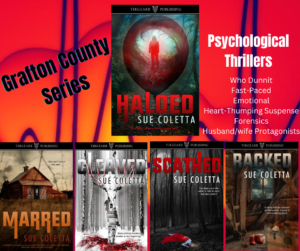
The payoff that follows must live up to the hook. All my Grafton County Series novels (except the first book) open with the first half of the jump cut scene. Chapter One rewinds the story. It isn’t necessary to label this scene as a prologue. I do, but it could also be the first chapter. If you choose to include it as a prologue, Chapter One still needs its own hook.

Remember the pivotal moment where we left the reader? No matter where the payoff is—first plot point, midpoint, or climax—continue the jump cut scene from there. Newer writers may be tempted to copy/paste the first half of the scene. Resist that urge. Trust the reader to connect the dots. They’ll recognize the setting and situation.

Let’s look at two examples.

The Prologue of Pressure Points by Larry Brooks opens like this…

It was the echo of gunfire that kept him running. His body had long ago abandoned hope, pushing on faith alone through a fog of pain and fatigue. Logic screamed that this was pointless, while another voice whispered it was all a lie. Both were old friends that had served him well, and like Jesus on his fortieth desert night, he was tempted.

But neither voice was real. The gunshot had been real. The echo of it was real.

And so he ran. For his very life, and for those left behind. He knew that precious little time remained, and what was left was as critical as it was dwindling. Everything he had ever learned or believed or dreamed was at stake. He was out of options, down to a final chance that, win or lose, would be his statement to the universe.

It was his time. He had come full circle.

It is not paranoia when they are really out to get you. When they are right on your ass, downwind of the scent of your blood, closing fast.

Whoever the hell they are.

He ran all through the night’s relentless downpour. Low branches whipped his forehead and cheeks until they bled. He could feel his heart pounding in every extremity of his body, his vision clouded by sweat and rain. Both elbows were bloodied from a fall when his foot caught an exposed root, sending him skating wildly across a patch of decaying leaves. Leaping over a rotting log, he felt his right ankle turn impossibly inward, and the ensuing bolt of pain seized his leg like a pair of gigantic hands twisting with the enthusiasm of a gleeful sadist. But he had no time for this or any other distraction, not on this night, when, one way or the other, his past would finally and conclusively catch up with him.

Chapter One rewinds to 41 days earlier. I can’t show you the payoff scene without ruining the ending. Trust me, it’s amazing.

Please excuse my using an excerpt from one of my books. I searched my Kindle for other examples but couldn’t find any that jumped out at me.

The Prologue of RACKED opens with…

In the vast openness of the snowmobile trails, solar-powered Christmas lights danced across pine needles on the branches I separated while the lanky silhouette of the Serial Predator tossed shovelfuls of dirty snow on a mound. Was he digging a fresh grave? My calf muscles jumping-jacked beneath my skin, begging me to run. But I couldn’t. Not yet.

A row of thin birch trees bowed over the makeshift grave, thin branches curled like the skeletal fingers of a demon protecting its prey. The overcast sky blurred the hazy moon into non-compliance, its glow hastened by gathering storm clouds.

Who did he plan to bury here? My gloved hand clawed at my throat.

Please tell me Noah’s still with Mrs. Falanga. All the saliva in my mouth dried, my insides squirming, screaming for release. What if Childs left his post long enough for the Serial Predator to sneak past him? What if he murdered everyone in the house? What if he abducted my son after Mrs. Falanga tucked him in bed? She might not realize he’s missing till dawn.

Beyond the tree a flashlight balanced on its end, a smoldering yellow glow pointed toward the heavens. Cigarette smoke billowed through the haze. Hot ash tumbled into the darkness when he flicked the filter into the arctic December air.

I backed away from the tree.

Crunch.

My right heel froze on the pinecone.

The Serial Predator slung his portable spade over one shoulder and stalked toward me. “Hello?”

Male voice. Almost familiar. Where had I heard it before?

Holding my breath, cramps squeezed my calf muscles as I crouched behind the conifer, flames tunneling down my sciatic nerve to my partially raised foot, bent at such an angle mind-numbing pain riddled the whole right side of my leg.

The Serial Predator hustled back to the shallow grave, and I lowered my wet boot to the snow. The moment he turned his back, I nosedived toward the base of the tree trunk, slithering beneath the branches like a frightened garter snake. Snow piled around the bottom helped shield the top half of my body. I pulled my legs out of view. A glacial breeze swept across my wet hair, and I could not stop shivering, the icy snow soaking through my jeans and wool coat.

With one smooth motion, he swiped his flashlight off the snow and aimed the beam toward the pine tree. “Hello?”

After the blinding light struck my eyes, I would never be able to describe his face or any distinguishable features, the black hoodie masking his identity. He could be anyone. Or no one.

With both gloved hands covering my nose and mouth, I held back icy breath that threatened to reveal my hiding spot.

“Is someone there?”

A cylindrical sphere lasered through the pine needles, and I ducked, my bare cheek trembling against a clustered mass of icicles. Snow boots clomped around the tree, then stopped—inches from my face.

Dear God, don’t let him find me.

Chapter One rewinds to 26 hours earlier.

Have you used this technique in one of your novels? There’s nothing wrong with writing a linear storyline. This is just another option. Let’s discuss.

Tips To Write a Character You Hate

Have you ever written from the perspective of a character you hated?

It’s a unique experience for me. Which is sayin’ something, considering I write psychological thrillers involving serial killers. With all my other serial killer characters, I could find at least one endearing quality, and I clung to that while I wrote from their perspective. I may not have agreed with their motivations, but at least I understood how they justifIed their actions.

Let me back up a minute.

I mentioned in one of my Reader Friday questions that I’ve been teaching a virtual course about serial killers as part of the Advanced Education Program for a school in Connecticut. I’m also racing toward the finish line in Book 5 of my Grafton County Series. I drew a firm line between the two projects until an Ah-ha! moment slapped me across the face. I was working on the lesson plan for Week 3 of my course when a deliciously evil idea popped into my head.

Don’t you love when that happens?

Even though the finish line was within reach, I couldn’t ignore the new idea. It’s a game-changer, and the perfect way to round out the series as a whole. It also required me to go back to page one, drop a few new clues, and include POV chapters from the killer.

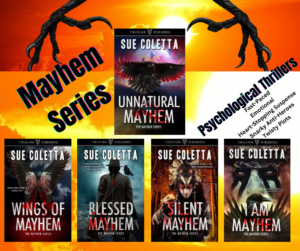
Writing from a serial killer’s point of view isn’t anything new for me. In my Mayhem Series, readers expect a cat-and-mouse chase with alternating POVs between protagonist and antagonist. The Grafton County Series is different. I don’t normally include scenes/chapters from the killer’s POV.

To write a character in deep POV we need to know everything about them or slipping into their skin would be challenging to say the least. And here’s where my two projects—fiction and nonfiction—blurred together.

Out of all the serial killers we’ve discussed during class the most frightening of all was a nasty individual named Israel Keyes, whose MO happened to fit my plot. As part of my research for class, I sat through endless video confessions from Keyes, and learned a lot about who he was as a person and what motivated him to kill. Subconsciously, I must have had in mind all along and only now realized it. After all, if I fear him, so will my readers.

To write from his point of view, I had to view the world as he did. Think as he did. Feel—or more accurately, not feel—as he did. This was problematic for one huge reason—I despised everything about him. He’s evil to the core and didn’t possess even one redeeming quality.

Now, you could say, but Sue, this is fiction. You can add anything you want to his characterization. True, but then he wouldn’t be as frightening.

See what I’m sayin’?

The part of him that most frightened me was his complete lack of empathy toward anyone or anything, his arrogance, his inflated self-worth, and the violent blitz attack of his home invasions. If I softened his psychopathic personality, I’d lose the qualities that made me choose him in the first place. A softer villain wouldn’t pack the same punch. And let’s face it, after going head-to-head with numerous other serial killers in Books 1-4, my protagonist is no shrinking violent. She needs a frightening opponent.

Basing an antagonist on a real serial killer is hardly a new concept.

In the 1960s, Thomas Harris was visiting the Topo Chico Penitentiary in Nuevo Leon, Mexico while working on a story for Argosy, an American pulp fiction magazine that ran for 96 years, between 1882 and 1978. The 23-year-old Harris was interviewing prisoner Dykes Askew Simmons, who was committed to the prison’s psych. ward and sentenced to death for a triple murder. Simmons bribed a guard to help him escape. The guard took the money but had second thoughts during the prison break and shot Simmons.

As Simmons lay on the ground, bleeding out, another inmate, Dr. Alfredo Balli Trevino, treated the gunshot wound, saving his life.

This led Harris to develop an interest in Trevino. He interviewed the doctor and learned Trevino was convicted for the murder of his boyfriend, Jesus Castillo Rangel, in a “crime of passion” after an argument.

Apparently, Rangel had attacked Trevino with a screwdriver. The enraged doctor administered anesthetic to Rangel’s body and dragged him to a bathtub, where he slit his throat, draining all the blood out of his body. Trevino then chopped up Rangel’s body into small pieces and packed them into a box, drove to a relative’s farm, and asked if he could bury medical waste there. One of the farm workers called the police.

Thomas Harris said the doctor “had a certain elegance about him,” even as he discussed dismembering his boyfriend in a bathtub.

I found no such qualities in Israel Keyes.

How do we write from a hateful, despicable point of view?

Much like an actor who plays a villain, we must become one with the character. We have to identify with him. Win his arguments, even if those twisted views rub against our values. I despise this antagonist as much as I do Israel Keyes. Doesn’t matter. Our job is to breathe life into him, bring him to life on the page. The only time we can express our own personal feelings is through the protagonist if, and only if, the protagonist shares our views.

I find it easier to skip over a hateful character’s chapters while drafting the storyline. Then I take a day or two, get into character, and bang out his chapters. The next day when I reread those chapters I’m stunned by his actions and comments. That’s a good thing. If it shocks me (the writer), imagine readers’ reactions.

In my case, though the real killer can’t hurt anyone else—he committed suicide like a coward—it’s left me with one burning question: How many other Israel Keyes walk among us? I’d tell you, but I don’t want to shatter your reality. 🙂

Have you ever written a hateful, angry POV character? Did you handle it in a similar way?

The Opening Chapter Reveals a Secret Vow

A novel’s opening chapter makes a promise, a secret vow that says, “This is what you can expect from me.”

The chapters that follow better fulfill that promise, or the author will suffer the consequences with low-ratings, bad reviews, or their name on the Don’t Not Read list.

Yes, the promise is that important. It’s how we build and maintain an audience. It’s how we climb the proverbial ladder of success. It’s how we keep readers hungering for more. This solemn vow can NEVER be broken.

So far this month I’ve read three novels (all 5 stars). I average about one novel per week, along with nonfiction (craft books or true crime). None of my recent reads landed within my preferred genres of psychological thrillers, dark & gritty mysteries, and serial killer thrillers, but I feel it’s important for writers to venture outside their genres from time to time.

For my next read, I wavered between WIN by Harlen Coben or Book 2 of a serial killer thriller series from one of my auto-buy authors. I devoured Book 1 in a couple days, and I’d been dyin’ to read Book 2 for a while now, so I bought the $9.99 ebook. Immediately, the author transported me to a serial killer’s lair with the protagonist bound and helpless. I was enthralled. As I said, I’d been looking forward to this novel for a while and the opener didn’t disappoint.

Without sharing the title, I’ll show you how the writer sucked me into the scene.

Darkness.

It swirled around him deep and thick, eating the light and leaving nothing behind but an inky void. A fog choked his thoughts—the words tried to come together, tried to form a cohesive sentence, to find meaning, but the moment they seemed close, they were swallowed up and gone, replaced by a growing sense of dread, a feeling of heaviness—his body sinking into the murky depths of a long-forgotten body of water.

Moist scent.

Mildew.

Damp.

[Protagonist] wanted to open his eyes.

Had to open his eyes.

They fought him though, held tight.

His head ached, throbbed.

A pulsing pain behind his right ear—at his temple too.

“Try not to move, [Protagonist’s name]. Wouldn’t want you to get sick.”

The voice was distant, muffled, familiar.

[Protagonist] was lying down.

Cold steel beneath the tips of his fingers.

He remembered the shot then. A needle at the base of his neck, a quick stab, cold liquid rushing under his skin into the muscle, then—

Gripping, tense, love the story rhythm, the way he pauses at just the right moment. I could not flip the pages fast enough. Lovin’ every second of it!

And then…

In the next chapter, I find out it was all a dream. Infuriated, I almost whipped my Kindle across the room. One of my auto-buy authors wrote this thriller, and I expected him to fulfill the promise he made to me. Instead, he cheated. I was so disappointed, I refused to keep reading. He’d broken my trust. He let me down.

Sounds harsh, doesn’t it? But that’s exactly how I felt.

The emptiness he inflicted left me hungering for a visceral, gritty, serial killer thriller, one that would fulfill its promise.

I downloaded thriller number two.

Without revealing the title or author, here’s a small sampling of that opener.

            I woke up from a gentle shake. My sister’s face hovered a few inches above mine, her eyes glistening wet. A grinding sound came from her jaw as it moved back and forth.

I shivered.

[Sister] put her fingers against my lips. “SSSH. Nod if you understand,” she whispered.

I nodded.

My room was freezing from the cold wind blowing in through my open window.

“The monsters are coming for us. Be very quiet. We’re escaping,” she whispered.

I nodded again, biting my lip hard to not cry.

Was there a monster in my closet? Behind my closed bedroom door?

My heart thrashed against my ribs like a bird trying to escape its cage. Why were the monsters after us?

We learn the protagonist is a child and her older sister is rescuing her from an imminent threat. Other than a few writing tics, like SSSH instead of Shh…, the author did a terrific job of showing the action. Finally, I could sink into a gripping read. Or so I thought.

The next chapter (Ch. 1) consisted of pages and pages of backstory. No plot, only backstory. The premise still intrigued me, so I kept reading. Then I hit a flashback that dragged on for several pages. The worst part? It added nothing to the main storyline.

Still, because the prologue was so good, I read on. The prologue had raised many, many story questions, and I wanted answers. But in Chapter 2, I read more pages and pages of backstory and another flashback. The next chapter was equally disappointing, with more pages of backstory and a third (fourth?) flashback. I lost count.

Whiplashed from being thrown forward, then backward, I couldn’t take it anymore and closed the book. A good premise will only take you so far. At some point, you need to deliver on the promise you made to the reader.

The third novel I bought—all in same day, I might add—began with a slow burn opener. A girl is emptying a bucket of oil into the dumpster behind Burger King. It doesn’t sound like much on the surface, but the co-authors held my interest. Which, after being burned twice in a matter of hours, wasn’t an easy task.

Here’s the opening of DEAD END GIRL by L.T. Vargus & Tim McBain:

            Corduroy pants swished between Teresa’s thighs as she crossed the parking lot. She had a headache. That drive-thru headset gave her a headache every damn time. The band squeezed her skull like an old man trying to find a ripe cantaloupe in the produce department. Pressing and pressing until her temples throbbed. When the headaches were really bad, she got the aura. And it was gonna be a bad one tonight. She could already tell.

By the time she got home, she’d be nauseous from the skull throb along with the stink of fryer grease clinging to her clothes and hair and skin. Sometimes she swore she could feel it permeating her pores.

She placed a hand under the lid of the dumpster and lifted. The overhead lights in the parking lot glinted on the surface below. It looked like water, but it wasn’t. It was oil. Every night they emptied the fryers, dumping the used oil into this dumpster. It was a disgusting task. Worse than taking out the trash on a 90-degree summer day, when the flies got real thick, and the meat went rancid almost as soon as they put it in the bin.

It was dead out. No traffic. No noise at all but her fiddling with the dumpster and the bucket.

Her skin crawled a little whenever she was out here this late. In the dark. In the quiet. A feeling settled into the flesh on her back and shoulders, a cold feeling, a feeling like after watching one of those scary movies when she was a teenager. It might have been a thrill while she was watching, but later on that night she’d always get spooked. She’d tremble in bed, too terrified to walk down the hall to pee. The house never seemed so ominously still as it did on those nights. Anyhow, she couldn’t stand to watch horror movies anymore. Her weak stomach couldn’t handle the gore.

Bending over the metal cart she’d wheeled along with her, Teresa scooped one of the buckets of used fryer oil and balanced it on the edge of the dumpster. She tipped the bucket and watched as the gallons of brown grease oozed into the dumpster, disrupting the smoothness.

Settled at the bottom of the bucket, there were clumps and chunks. Burned bits of fries and chicken tender crumbs. They splatted and splashed into the pool of liquid that looked black in the night.

That’s when Teresa saw it. Something rising out of the oil, disturbing the otherwise unblemished surface.

Intriguing, right? Most importantly, the authors kept their promise. Elated, I could not flip pages fast enough, savoring favorite passages, the story rhythm and pace pitch-perfect. And now, I have a new favorite series. 🙂

Come morning, I felt bad about dissin’ my auto-buy author. Maybe he had a reason to break the don’t-open-with-a-dream rule. Could the last line of the first paragraph indicate a dream?

…his body sinking into the murky depths of a long-forgotten body of water.

In hindsight, maybe. Probably. But it’s too subtle. Nonetheless, I grabbed my Kindle and kept reading. Sure enough, he used the dream sequence to show the affect it had on the protagonist, who’s been suffering nightmares after a serial killer slipped through his grasp. The dream relates to the plot because that serial killer is back.

Do I agree with the dream opening? No, but I’ll keep reading because I know this author delivers each and every time and his writing speaks to me. But what if I wasn’t a fan? What if I’d chosen the book at random? He would’ve lost me. See what I’m sayin’? It’s a risky move.

We spend a lot of time perfecting our opening pages, polishing them till they shine, but our job doesn’t end there. We must follow through in subsequent chapters by setting up scenes, paying them off, setting up more, paying off more.

Other than that crucial promise, your solemn vow to the reader, a few other takeaways are…

  • Don’t start with a dream sequence unless the reader knows it’s a dream AND you’ve got a damn good reason to do it.
  • Go easy with backstory. Sprinkled it in over time.
  • Avoid flashbacks unless they’re absolutely necessary. Most times they’re not.
  • Don’t tell the reader what happened in the past. Trust us to figure it out on our own.
  • A great premise only works if you deliver on that promise.
  • If a slow burn opener works for your story, use it. Every novel doesn’t need a lightning-fast opener to draw and hold interest.

If you missed Jim’s post yesterday, read it (and the comment section!) for speed bumps that stop the reader.

How many chapters do you read before giving up on a novel?

Limited Time Sale 99c

His name is Paradox and he poses his victims in RED cocktail dresses, RED roses replace the eyes, and their hands hold a riddle wrapped in RED satin. He will kill again if his cryptic clues aren’t solved within 24 hours.

Can Niko and Sage stop him before the clock runs out? Click here to look Inside SCATHED.