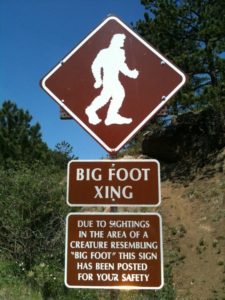
Even Sasquatch Needs Love – First Page Critique

Jordan Dane
@JordanDane

By Gnashes30 – Own work, CC BY-SA 3.0, https://commons.wikimedia.org/w/index.php?curid=15715649

The title of this anonymous submission is ISKOLA. I’m not sure if Sasq’ets is Sasquatch, but that’s how we dubbed it. It conjures an image of the “Skunk Ape.” If this isn’t the author’s intention, a character name change might be in order. Please enjoy this submission and I’ll have my feedback after.

*****

Sasq’ets can’t help staring at the swarm of people standing on the side of the road. There are so many of them, and they look so small from where he stands. He scans each person quickly, moving his eyes from body to body, face to face, until he comes to a woman with a black hood around her head. Then he stops, lifts his nose high in the air, and tries to catch her scent. He strains his ears to hear the faint echo of her voice. It’s difficult from so far away.

As Sasq’ets watches the woman, he notices her pointing at a man who appears to be climbing down the side of the road. It looks like he is headed towards the woods – towards him – but Sasq’ets can’t be sure, so he squints his eyes to try to get a better look. It doesn’t matter. He shouldn’t be so close to people anyway, especially not in the light of day and after what has happened. He needs to start moving, so he turns around and walks the other way, maneuvering his massive frame carefully through the trees, dangling his arms loosely by his thighs.

He walks deep into the woods and doesn’t look back until he reaches the creek that marks the beginning of the path towards home. He needs to turn right to follow the burbling water until it winds into the river, but before he changes direction he stands behind a cedar, his body shielded by its 5-foot trunk, and puts his hands on his hips, bending at his waist to relieve some of the pressure from the wound in his stomach. The bleeding has stopped – when he puts a cedar bough up to the cut and pulls it away, it comes out dry – but the injury is still painful, and it aches if he thinks about it too much.

Sasq’ets focuses his mind on taking long sips of air – in through his nose, out through his mouth, and starts to calculate how long it will take to get back to the cove. At least a day, he figures, if he goes the long way. Which he should, to be safe.

He moves slowly to his left and peers around the tree to make sure no one has tracked him into the woods. Sasq’ets is pretty sure he would have smelled them if they had, or heard their heavy footsteps through the brush. But still, he needs to be careful.

Nope. No one. They’re probably all still back on the side of the road, hovering over the girl’s body.

FEEDBACK

In full disclosure, when I was a kid, we had a neighbor boy we nicknamed Skunk Ape. He lumbered like a walking grizzly, had big feet and he smelled. He remained my brother’s friend and we still run into him (although he’s married and he doesn’t stink anymore), but I’m not a stranger to Sasquatch. There, I said it.

TITLE: A title like Iskola needs work. This might only be a working title, but this word would not mean something to most people.

CREATURE POV: I’m making an assumption Iskola is a creature, Sasquatch to be exact. He appears to be an outsider and a loner, hiding from people. Whether he’s a creature or not, the Point of View should reflect his cagey, wiry nature.

The narrative is too wordy for a cautious creature, afraid of getting noticed. He also knows words like “road” and “people” which seems odd to me. It would be a challenge to create a believable POV inside the head of a creature. The author would have to invent a world as seen through the eyes of a beast that has evaded mankind enough that it wouldn’t know what to call things in a man’s world.

Personally, I would tell this story through the eyes of another character who tries to reach out to the creature in an adventure plot. I would recommend more of an element of mystery on what is disrupting the town and leave clues that are ambiguous. Is it Sasquatch or someone living in town who wants people to think it’s a creature.

I’m not sure why the author chose to put the reader in the head of a creature from page 1. It would be a hard sell to an editor or agent. Even if this is not Big Foot and is maybe a loner who lives in the woods, I’m not sure I understand the point of hinting at Sasquatch with the name Sasq’ets either.

PICK A POV: In this scene, I want to know why these people are gathered and what’s happened? The author can’t provide this information if the POV is seen through Sasq’ets. In order for the reader to care about this creature/Sasq’ets and his world, the author might need to ground the reader into the town and the people first. What happened that threatens both their worlds? (A girl is hurt or dead.)

CREATE the CREATURE: Let’s start with POV. 3rd person narration for a creature would allow the reader to see the character’s movements and actions, without delving too much into the head of the creature like 1st person would. The way this intro is written, it’s in 3rd POV, but the author has put the reader very deep into the head of Sasq’ets. Some distance might make it more believable. The creature’s actions would SHOW the emotion without having to TELL the reader too much.

How intelligent is the creature? What senses would he use? It might help to do research on animals and how they react or operate when threatened. Service dogs are interesting to study – how they use their senses and their reactions to certain situations. I would recommend using real animals even if the author is creating a mythical creature. Put the reader into the senses of an animal the author thinks is closest to Sasq’ets.

How does a wild creature, that is part human maybe, survive in the woods? I like how the author brought in cedar boughs to stop the bleeding. Maybe survivalist research would be in order.

Even if the creature is a human being living on the fringes of society, it might still be interesting to keep the reader in suspense whether Sasq’ets is human or something else. Instincts and senses and animal reactions would help build on that suspense.

The author might consider how Sasq’ets lives when he is safe and home versus when he is threatened like a wild animal. What would he do? His wild nature, when confronted, should be explored. Can he ever live with humans? What would happen if he is forced into captivity?

ANOTHER START SCENE: If the author started with danger and a situation readers might be intrigued by, the creature’s POV might be brought in later, if that’s what the author wants. To make it read authentic, the creature must have his own world and manner of thinking and moving in obscurity. Below is a brief start suggestion – first from a Sheriff and a brief one in Sasq’ets POV. I didn’t spend a great deal of time doing this, but I only wanted to show a quick difference.

Another beginning with townspeople to start the action:

“There’s blood. I got him.”

With his chest heaving, Sheriff Jason Tate knelt near the base of a tree and stared at the tip of his finger, smeared with blood.

“It’s still warm.”

“I don’t like this.”

His deputy, Gloria Mendez, had her service weapon drawn as she stared into the deepening shadows of the dense woods.

“We need to get these people out of here. What if it comes back?”

Creature POV:

Sasq’ets ran into the darkness of the forest and kept to the deepening shadows. He followed a scent he knew well. Water. He needed water…and water would take him home if he followed the river.

His belly hurt and the bleeding hadn’t stopped. He didn’t mean to hurt the small female, but she had been scared of him and fell. He hadn’t touched her, but that wouldn’t matter. They would hunt him.

SUMMARY: I didn’t spend time working with what the author submitted, because I don’t see this as commercial unless changes are made. Normally I like to work with what the author submits and try to capture their vision, but I had too many other points to explore.

When I talked about service dogs, I had done research on them for another book and found it fascinating. The images of how dogs smell scent in layers and in a conical fashion influenced how I described the dog “working a scene.”

I think the author can still work with the challenges of creating a world for Sasq’ets, but maybe start with human beings that readers can relate to more.

DISCUSSION:

What comments would you have for this courageous author, TKZers?

 

The Fifth Floor: First Page Critique


Happy Wednesday, everyone! Another anonymous Dear Author is here to share some work today. Check it out…

The Fifth Floor

A kid rolls by on a skateboard. It’s old—maybe one he inherited from his father—and  layered with stickers bearing the logos of early-nineties ska bands. Streetlight Manifesto, Hepcat, Five Iron Frenzy, The Toasters, Reel Big Fish.

“Do you want to make twenty bucks?” I ask, amplifying my voice just enough for it to carry over the wind.

The kid looks behind him, startled, but doesn’t lose his balance. Impressive.

I’m sweating like a jonesing addict despite the sixty-degree weather. My hair, once thick and lustrous, feels like a dank rag draped over my head.

With a degree of coordination I’ll never master, the kid shifts his weight to reverse the skateboard’s direction and comes back toward me. The board skids to a stop on the sidewalk two feet from where I stand.

“You say twenty bucks?” In his eyes, I detect more curiosity than suspicion. If I were a man, standing on the sidewalk in this same middle-class neighborhood, he’d probably have kept going. Maybe called the police from the cell phone I’m sure weighs down one of his pockets.

“You heard right.”

“I don’t deal drugs.”

“Never thought you did.”

The kid’s trying to look like a street punk, with a ratty tee shirt and worn cargo shorts that almost slip off his narrow hips. I’d put him at ten or eleven. But he’s clean, his hair’s been recently trimmed, and braces puff out his thin, pale lips.

“What do I gotta do?”

“What do you have to do,” I correct automatically. Bad habits.

The kid snorts. “You a teacher or somethin’?”

“Hardly. Listen, all I need you to do is go with me to that public storage place across the street. See it? Just ride up the elevator with me to my unit, then use my code to go back down. That’s it.”

He studies me for a moment through intelligent brown eyes. Probably sussing out potential reasons behind my odd request. “What’s your name?”

“Roxie,” I reply.

Shit. I’m so not cut out for this. Why couldn’t I have told him Angela or Kate or Thomasina?

“I’m Kevin.”

“Nice to meet you.”

We shake hands. His grip is firm and perfunctory. Somebody’s taught him well—maybe the father who gifted him the retro skateboard.

“Ready?” I ask.

He shrugs. “Okay. When do I get the twenty bucks?”

“When you leave me on the fifth floor.”

“Deal.”

_______________________

Today Dear Author has made my job tough by writing so well. Let’s talk about all the things that are spot on with this gem of an opening.

Opening paragraph:

A kid rolls by on a skateboard. It’s old—maybe one he inherited from his father—and  layered with stickers bearing the logos of early-nineties ska bands. Streetlight Manifesto, Hepcat, Five Iron Frenzy, The Toasters, Reel Big Fish.

I wish I knew if this were an opening to a novel or a short story. It feels to me like a short story, but I wouldn’t wager money on it. Immediacy is critical to any written story, and this paragraph draws us right in. We observe the kid, with an extra added bonus of movement. He “rolls by,” rather than “goes by” or “passes by.” Nice. We know the kid is a boy, and that the narrator seems to have been waiting.

The narrator is observant, and even makes up a small story about the skateboard and the boy’s dad. We don’t know that it’s a true story, of course, but it tells us that the narrator likes to provide possible reasons and explantations for the things she sees. It’s a hint that she may be a bit of a fantasist. In truth, the kid could’ve just come from stealing the skateboard from another kid or a pawn shop. That said, she also seems to know about 90s ska bands, and this detail tells us that it’s probably a contemporary piece.

“Do you want to make twenty bucks?” I ask, amplifying my voice just enough for it to carry over the wind.

The kid looks behind him, startled, but doesn’t lose his balance. Impressive.

It’s dialogue that drives this opening page and keeps up the theme of immediacy. I do take issue with the word “amplify.” Technically it’s okay, but it makes the narrator sound old, and her word choice stilted. But she also uses the very casual word, “bucks.” One of those two words should be changed. I vote for losing the “amplify.” Also, does the wind show up again?

The next sentence is perfect. The kid has skills.

I’m sweating like a jonesing addict despite the sixty-degree weather. My hair, once thick and lustrous, feels like a dank rag draped over my head.

More description of the narrator. Ew. She’s seen better days. I’m curious! I can almost feel the dankness.

With a degree of coordination I’ll never master, the kid shifts his weight to reverse the skateboard’s direction and comes back toward me. The board skids to a stop on the sidewalk two feet from where I stand.

Does the narrator ride skateboards? It feels like that’s indicated when she speaks of a “degree of coordination.” Or is she just awkward in general? Maybe “heads back,” rather than “comes back.” That the kid stops the board so suddenly is interesting. He seems rather aggressive, which I didn’t get at first.

 “You say twenty bucks?” In his eyes, I detect more curiosity than suspicion. If I were a man, standing on the sidewalk in this same middle-class neighborhood, he’d probably have kept going. Maybe called the police from the cell phone I’m sure weighs down one of his pockets.

Okay. So they are in a middle-class neighborhood. I didn’t see that coming. I think I was picturing a busy street.  Are there public storage rental places in middle-class residential areas? Nice detail about the phone and the pockets.

“You heard right.”

“I don’t deal drugs.”

“Never thought you did.”

A telling exchange. I like that the boy is matter-of-fact, but cautious.

The kid’s trying to look like a street punk, with a ratty tee shirt and worn cargo shorts that almost slip off his narrow hips. I’d put him at ten or eleven. But he’s clean, his hair’s been recently trimmed, and braces puff out his thin, pale lips.

In his ratty tee shirt, and worn cargo shorts that threaten to slide from his narrow hips, he’s trying hard to look like a street punk. But he doesn’t quite pull it off. He’s clean, his hair’s been recently trimmed, and braces puff out his thin, pale lips. I’d put him at ten or eleven-years-old.

I’m a big fan of this piece’s short, declarative sentences, but you don’t want to start out too many of them with, “The kid…”

“What do I gotta do?”

“What do you have to do,” I correct automatically. Bad habits.

Funny. Do the bad habits belong to the narrator, or the boy?

The kid snorts. “You a teacher or somethin’?”

“Hardly. Listen, all I need you to do is go with me to that public storage place across the street. See it? Just ride up the elevator with me to my unit, then use my code to go back down. That’s it.”

Very clear. I’d go!

He studies me for a moment through intelligent brown eyes. Probably sussing out potential reasons behind my odd request. “What’s your name?”

“Roxie,” I reply.

Shit. I’m so not cut out for this. Why couldn’t I have told him Angela or Kate or Thomasina?

This is very telling about the narrator, and does make her sound young, and inexperienced at making weird requests of an eleven-year-old boy. She no longer sounds stiff.

“I’m Kevin.”

Charmingly proactive to introduce himself so boldly.

“Nice to meet you.”

We shake hands. His grip is firm and perfunctory. Somebody’s taught him well—maybe the father who gifted him the retro skateboard.

Also excellent. I like that she carries the her fantasy about the dad forward.

“Ready?” I ask.

He shrugs. “Okay. When do I get the twenty bucks?”

“When you leave me on the fifth floor.”

“Deal.”

Terrific cliffhanger here. They are off to the storage unit. What can be there, and why does she want him to leave her up there????

_____________________

Overall, I’m delighted with this piece and would like to read more. My comments are essentially line edits. We get a great picture of the boy, who seems to think he’s streetwise, but who also can’t get over having manners. The narrator, too, is interesting. With a little tweaking she can be more consistent and defined.

TKZers! I couldn’t find all that much to say. What are your thoughts?

Thanks for sharing this first page, Dear Author!


Pop Quiz

Time for a pop quiz to test your knowledge of sneaky word traps writers can fall into.

Today let’s talk about homonyms, homographs, and homophones.

Homonyms are words that sound the same but have different meanings.

Example: “write” and “right.”

Homophones are words that sound alike but have different meanings and spellings.

Examples: rein, reign; aisle, isle; suite, sweet.

Homographs are words that are spelled the same but have different meanings and different pronunciation.

Example: desert (a hot dry place, pronounced with an accent on the first syllable) or desert (to leave, accent on the second syllable).

Don’t worry—the above definitions won’t be on the test. Only hardcore grammar Nazis care.

Some words are just plain confusing. They may sound similar but are spelled differently and have different meanings.

But…professional writers should know how to choose the right word in a particular sentence.

We’ve all typed “there” when we mean “their” or “to” when we mean “too.” Those fall more into the category of typos.

I’m talking about out-and-out goofs because of incorrect word choices. When your book is published, some readers are quite happy to point out those errors that you missed. Embarrassing.

Standards of proofreading and copyediting are on a steep decline. The below examples are boo-boos I’ve collected lately from recently published books, news articles, and blog posts.

See if you can make the right choices.

  1. Juicy gossip (a) peeked (b) peaked (c) piqued her interest.
  2. The hangman held the rope (a) taut (b) taught.
  3. The professor (a) honed (b) homed in on the novel’s theme.
  4. The study (a) sited (b) sighted (c) cited research from the Mayo Clinic.
  5. A serial rapist is careful to (a) allude (b) elude capture.
  6. The eyewitness (a) poured (b) pored over the photo lineup of suspects.
  7. A new zoning ordinance was brought before the city (a) council (b) counsel.
  8. Floodwaters (a) reeked (b) wreaked (c) wrecked havoc in homes along the river.
  9. A depressed person can suffer from (a) deep-seeded (b) deep-seated anxiety.
  10. The state must reduce the budget by (a) paring (b) pairing expenses.
  11. Skateboarders are getting a bad (a) rap (b) wrap.
  12. The (a) effect (b) affect of the new court ruling will (c) effect (d) affect millions of people.

How many of you looked up the test answers on Google? Come on, tell the truth.

That’s OK. It’s not cheating–it’s research. The lesson here is it’s always better to double-check before you submit to an agent or editor who might turn you down because of improper use. Or before you hit the “publish” button on your indie book.

Self-published books carry a stigma because many are full of such errors. If you’re an indie author, don’t contribute to the bad reputation with sloppy word choices.

Now that I’ve reached a certain age, I may think I’m sure about proper usage but sometimes find I’m mistaken. When it’s so easy to check on sites like Grammar Girl or Writing Forward there really is no excuse not to.

Answers:

  1. (c) piqued.
  2. (a) taut.
  3. (b) homed. “Honed” means sharpening a blade.
  4. (c) cited.
  5. (b) elude. “Allude” means to refer to.
  6. (b) pored.
  7. (a) council. “Counsel” refers to advice or legal help, e.g. The judge said, “Let counsel approach the bench.”
  8. (b) wreaked.
  9. (b) deep-seated.
  10. (a) paring.
  11. (a) rap.
  12. (a) effect, (d) affectThese two words are constantly mixed up. Effect is a noun (The effect of the ruling). Affect is usually a verb (The ruling will affect millions)…unless it refers to a blank facial expression known as “flat affect.” Then it’s a noun.

Not only that, affect is a homograph (spelled the same but pronounced differently). When used as a verb, the accent is on the second syllable. When used as a noun, the accent is on the first syllable.

No wonder writers get confused. Glad I was born in the USA because I’d never master the vagaries of English if I had to learn it as a second language!


TKZers, how did you do on the quiz?

Which homonyms, homophones, and homographs do you find confusing?

What words do you tend to mix up?

Do you have favorite tricks or tips that remind you of correct usage?


During October, here are two ways to get a cheap thrill:

Debbie Burke’s bestselling thriller Instrument of the Devil is on sale for $1.99; or if you’re a member of Amazon Prime, you can read it for free. Click here.


Reader versus Story

Yesterday Philip Pullman (author of His Dark Materials series) tweeted an observation that, when a ‘children’s book goes wrong, it’s often because the author is thinking of the readers and not the story. That might be true of other books too.’ While I would agree this can happen, I would also argue that sometimes a book ‘goes wrong’ when the author fails to pay sufficient attention to his or her readers – particularly in genre fiction. I’m talking about reader expectations. Stories can run aground (particularly during the publishing process) when authors fail to consider (or live up to) reader expectations.

When we critique first pages here, we often (consciously or not) consider the conventions of the genre we are considering. A couple of weeks ago we critiqued the first page of a fantasy novel that was a prologue – a device that is both familiar and welcome in the fantasy genre but which, in many other genres like mystery and thrillers, is less enthusiastically embraced. Mysteries and thrillers have a number of so-called conventions which are really more about reader expectations than story structure. Similar conventions abound in other genre fiction like fantasy and romance. When I wrote my first novel, I didn’t consider genre or reader expectations (except my own) but once the book was sold as a mystery, I needed to make revisions to make sure that it conformed to what readers would expect from the start of a historical mystery series with a female amateur detective. Now, I’m more likely to subconsciously take into account reader expectations while I’m writing an initial draft – but that doesn’t mean I artificially try to change the story to suit what I think some hypothetical reader will want. Nonetheless, reader expectations still play an important role in the revision process.

Failure to live up to reader expectations could be the reason a novel doesn’t get published or doesn’t sell as well as it could once released. Similarly, especially in the children/MG/YA space, even though a writer should never underestimate their readership (after all, nobody wants to read a book that talks down to them), failure to take into account the age of the target audience can make a book hard to position in the marketplace.

I think Philip Pullman was probably trying to highlight circumstances in which a writer focuses too much on what they think a reader will want from the story, rather than letting the story unfold. I have heard of some cozy mystery writers who have tried to tailor their stories to what they think publishers (and, by default, readers) want, in an effort to make their story more marketable/publisher friendly. This rarely succeeds unless the writer is authentic in their story choices – you can’t manufacture a story to suit what you think are the publishing trends or reader likes/dislikes.

So TKZers what do you think of Philip Pullman’s assessment? How often do you think stories ‘go wrong’ because writers are thinking of readers rather than the story?

How to Make Good Dough Self Publishing

by James Scott Bell
@jamesscottbell

Recently, Amazon’s paperback publishing unit, CreateSpace, sent out an email confirming that CSP was merging with Kindle Direct Publishing. All print-on-demand services are now under the KDP umbrella.

Nothing earth-shattering in all this, just a switch of platforms. Shouldn’t be a big adjustment.

What caught my eye, however, was a line at the end of the letter. Amazon is famously tight with their data, so it was interesting to find this little ditty:

As Amazon’s recent shareholder letter noted, there are more than 1,000 authors who earn more than $100,000 a year from their work with us.

That’s good to know. Because at one time (back in the “gold rush” days of self-publishing, roughly 2009-2012) the vibe was that virtually anybody could make six figures if they wrote fast enough and in the right genre. That was a myth, of course, but like all myths it had a toe-hold in the truth. Some previously unpublished writers, like Amanda Hocking and Hugh Howey, did strike gold. Some traditionally-published midlist writers, like Joe Konrath and Brett Battles, hopped in and hit it big. There were even a few, like Bella Andre, who scorched into eight figures.

So everyone wanted to know who was making what via self-publishing. Some authors gave out their numbers. But that small sample size couldn’t tell the whole story. Then Hugh Howey and the mysterious “Data Guy” started their Author Earnings reports, which scraped hard data out of Kindle sales rankings. And yes, indeed, a lot of indie writers were doing very, very well.

AE is now dormant, having transitioned into Bookstat.com, a pricey service for companies whose “annual revenues are $10 million or more.” But the final AE report showed that while the gold rush days (such as they were) are gone, indie publishing is here to stay.

But it wasn’t until I saw that Amazon number—1,000 making over $100,000—that I was able to get a feel for how many authors are in that zone. (We must note that Amazon’s number would include non-fiction as well.)

Now, if a thousand indie authors are making six figures a year, I would venture to say that a substantially higher number are in the fives. Very few fiction writers of the past ever made it there. That’s why I continue to say it’s the best time on Earth to be a writer.

Of course, the admonition, “Your mileage may vary” is more apt in the writing game than anywhere else. There are so many variables at play that no two writers will ever come out the same in terms of method, production, and income.

But there are ways of increasing your odds of monetary success, just as there are fundamentals in any entrepreneurial endeavor. And that’s what self-publishing is, after all.

Written Word Media conducted a survey comparing authors who make over $100,000 a year (“100kers”) and those earning less than $500 a year (optimistically called “EAs” for Emerging Authors). Some interesting results here, including:

  1. Indie authors dominated the 100k club.

We wanted to know if there was any correlation between how an author was published and whether or not it got them to the 100k club. The results were pretty surprising to us. Of all 100kers none were purely traditionally published. To be fair, only about 5% of overall respondents were solely traditionally published (James Patterson did not take our survey), so traditionally published authors didn’t make up a big part of the surveyed audience, but none of them were in the 100K club.

Of the 100kers surveyed, 72% were indie and 28% were hybrid. Publishing independently rewards authors with higher royalty rates which means it is easier to start generating meaningful revenue when you self publish. The Author Earnings reports are showing a trend in which indie authors are taking share from traditional publishing, despite the fact that titles of indie books are priced lower than traditionally published titles.

  1. 100kers spend more on covers and professional editing.

No surprise there.

  1. It takes time. 88% of 100kers have been at this for 3 years or longer.

Indie publishing is no get-rich-quick scheme. In the traditional world they used to say it took 3-5 books to establish an author. Unfortunately for writers who have entered the Forbidden City, that number is now only 1-2.

  1. 100kers use paid marketing (e.g., deal alert sites like BookBub; paid ads with Amazon and Facebook) more than social media marketing.

That’s because social media does not sell a lot of books.

  1. Being prolific matters.

From the survey:

Emerging Authors spent 19.8 hours per week writing, compared to 100Kers who spent 28.6 hours per week writing. That’s a 46% increase! The 100kers write a lot more than the emerging authors.

To this list, let me add my own advice:

  1. It helps if you can write

We should all know this by now, but it bears repeating: far and away, the best and most ubiquitous marketing tool is word-of-mouth. And that is generated by, gasp, writing books that are so good people talk about them.

Which is what TKZ is all about—helping writers get better. It’s something you should want to do anyway, if you’re a real writer.

  1. Think like a publisher

You need to put your projects through an analysis like a pub board at a traditional house would. Who is going to buy your book? Is there an audience for your genre? How popular is the genre? Who are some other authors doing well in this area? What are they doing in terms of marketing? What can you learn from them?

Are you an author who can keep producing? In the traditional publishing world, a bestselling author used to be held to a minimum of one book a year. These days, some publishers are pushing their A-list writers to do two books a year, supplemented by a short story or two for marketing purposes.

If you worked at a publishing house that needed to make a profit, would you offer a contract to yourself?

  1. Establish a system of quality controls

If you self-publish, quality of production is your responsibility: editing, cover design, formatting, marketing, SEO, metadata and so on. You can learn do to some of this on your own, but other things, like cover design, you’ll want to farm out. Do your due diligence and be prepared to invest some money.

Also be prepared to review your system as each new book comes out, and make incremental changes geared toward greater quality. That’s called kaizen in business circles.

  1. Learn a few basic marketing skills

Even traditionally published authors have to do this, so don’t complain. As Russell Rowland recently put it:

The part that I never quite understood was the lack of support from the publisher, but it did give me a strong understanding that this is a business where you can’t rely on others to toot your horn. If they do, it’s a bonus. But marketing is up to the writer, even if you’re with a major publisher.

But beware, it is very easy to fall into the vortex of marketing frenzy, thinking you have to do every single thing possible lest you miss out on the “tipping point” of massive sales. Big mistake. Which is why I wrote a book on the tools that really work.

  1. Repeat, over and over, the rest of your life

You want to be a writer who makes some a good side income or maybe enough lettuce to live on? Then work hard. This is business. But if writing is what you love (and it should be, because there are plenty of opportunities to quit), then keep on writing until they pry your cold, dead fingers off the keyboard.

Do you have a “system” for your writing career? Not just how you write a book, but how you see yourself in the world of publishing and what steps you are taking to make it happen.

READER FRIDAY: A Novel Idea


Have you read anything that made you feel differently about fiction?

Has a published book of fiction inspired you to try something different?

Is there a craft book that opened your eyes and gave you the inspiration to try something mind-blowing?

First Page Critique: FIFTH FLOOR

Photo purchased from Shutterstock

Today we’re reviewing the first page of FIFTH FLOOR, submitted anonymously for critique. I’ll start the ball rolling, and then please add your suggestions for today’s brave author in the Comments.

FIFTH FLOOR

The smell of burning wood and flesh began to be drowned out by the sound of screams…the screams of a woman. Deafening and chilling screams, echoed through the steel door.  Andromeda found herself in a small room, with cold metal walls, a plain steel table, metal bed with a thin mattress and blanket, and an uncomfortable looking metal chair. She was a tall, beautiful young woman, whose long black hair fell down to her shoulders, and slightly covered her almond shaped face. An eerie chill pierced the air in the room, and Andromeda wasn’t sure if the goosebumps that followed were because of the woman screaming, or the total lack of insulation in the room – likely a combination of both.

Andromeda looked around the room, her heart pounding through her chest. Her attempts to remember how she got here was futile; the only thing she remembered was cleaning up after her best friend and roommate Sofia, who was recuperating from the flu. After disposing of soiled tissue paper and disinfecting their dorm room, Andromeda turned on some classical music and tucked herself in bed. After that, there was a black spot in her memory. She sat up in the bed that she woke up in, and began to stretch and look around the room.

Dressed in a white t-shirt, gray fleece shorts, and white socks, she began to walk around the stark and unoccupied room, looking for anything that may give her a clue as to where she was. She wrapped her arms around her body, bracing herself for the shudder and chills that followed. The room had the look and feel of a military interrogation chamber: there were no windows, no traces that anyone even knew she was there. But someone knew she was here, the same someone who put her in this place.

Suddenly, Andromeda was reminded of the screams as they began again, growing increasingly louder, followed by a loud “BOOM!” Andromeda ran to the door, preparing her mind to bang on the door with all of her might, to hell with alerting whomever put her in this room; the only thing on her mind was escaping. However, before she could even touch the door, it receded into the floor.  Andromeda fell face first onto the cold, hard, metal floor of the hallway. The palms of her hands were burning, and so were her legs.

My comments

We’re definitely starting off with a sense of urgency in this scene, as Andromeda becomes aware of her surroundings and tries to assess her situation.

Here’s another version, with my comments/notes in bold:

The smell of burning wood and flesh began to be drowned out by the sound of screams…the screams of a woman. Deafening and chilling screams, (Edit the number of commas used throughout this submission) echoed through the steel door.

(The references to “the smell of burning wood and flesh” didn’t get much followup after this opening, which was a bit puzzling. The flesh of the screaming woman in the next room is being burned? That would be a truly terrifying conclusion to make. And if that’s what’s happening, I’d want Andromeda to have a reaction.)

Andromeda found herself in a small room, with cold metal walls, a plain steel table, metal bed with a thin mattress and blanket, and an uncomfortable looking metal chair. (I  stumbled briefly over the transition from a woman screaming to “Andromeda found herself in a small room.” Found herself? That wording struck me as a bit vague.)

She was a tall, beautiful young woman, whose long black hair fell down to her shoulders, and slightly covered her almond shaped face. (This description is a bit intrusive, and it’s what some editors would call a “description dump”. Try to work in character description in a way that isn’t a generic “She had brown hair and green eyes” sort of thing. For tips and examples of fresh ways to work character descriptions into a scene, I suggest taking a look at DON’T MURDER YOUR MYSTERY by Chris Roerden)

An eerie chill (Can a chill be eerie and piercing? Just wondering) pierced the air in the room, and Andromeda wasn’t sure if the goosebumps that followed were because of the woman screaming, or the total lack of insulation in the room – likely a combination of both. (Edit this down a bit. The ‘total lack of insulation’ seems off in tone. By now, I was also looking for some followup or clarification to the mention of burning wood and flesh in the opening sentence.)

Andromeda looked around the room, her heart pounding through her chest. Her attempts to remember how she got here was (attempts…were) futile; (semicolon alert) the only thing she remembered was cleaning up after her best friend and roommate Sofia, who was recuperating from the flu. After disposing of soiled tissue paper and disinfecting their dorm room, Andromeda turned on some classical music and tucked herself in bed. After that, there was a black spot in her memory. She sat up in the bed that she woke up in, and began to stretch and look around the room. (This transition stopped me. Which bed is this referring to? The one in the metal interrogation room? This is the first moment I realized she woke up in the bed there–that should be established earlier, the first time the bed is mentioned. And “stretching” seems too relaxed a gesture for the level of tension this scene requires.)

Dressed in a white t-shirt, gray fleece shorts, and white socks, she began to walk (she walked, not “began to walk”) around the stark and unoccupied room, looking for anything that may give her a clue as to where she was. (Try to pare down the number of clothing details, and work them in without calling them out so pointedly. And the use of “unoccupied “ is unnecessary—by now, we know she’s alone in the room) She wrapped her arms around her body, bracing herself for the shudder and chills that followed. (tighten up the wrapping, bracing, shudder and chills a bit) The room had the look and feel of a military interrogation chamber: (To me, the reference to a military interrogation chamber suggests a certain type of background–if so, we need to get a sense of that background somewhere in this scene) there were no windows, no traces that anyone even knew she was there. But someone knew she was here, the same someone who put her in this place. (Try to find wording that is stronger than “put her in this place”)

Suddenly, Andromeda was reminded of the screams as they began again, (Just start with the screams. No need to say that she’s reminded) growing increasingly louder, followed by a loud “BOOM!” Andromeda ran to the door, preparing her mind (nix the “preparing her mind”) to bang on the door with all of her might, to hell with alerting whomever put her in this room (the wording’s a bit awkward here); (semicolon alert) the only thing on her mind was escaping. However, before she could even totuch the door, it receded into the floor.  (What? The door receded into the floor? Visions of Sci-Fi rise in my head) Andromeda fell face first onto the cold, hard, metal floor of the hallway. The palms of her hands were burning, and so were her legs. (Burning from what? The metal door and floor? I’m not getting a clear sense of cause and effect here.)

Overall

Happily, most of my previous comments fall into the category of nit picky writing edits and craft tweaks that are easily introduced. I think the scene overall has enough inherent drama and tension to engage a reader’s interest and propel this story forward.

Our thanks go to today’s writer for submitting this scene for critique! TKZ’ers, please add your notes and suggestions in the Comments.

Choose Your Weapon

By John Gilstrap

In the comments section of my most recent gun porn post, our own Jordan Dane gave me the idea of doing a post on how a character–particularly a female character–would go about choosing which handgun to carry.  Way to tee one up for the Johnster!

Caliber (and caliber snobs)

As I’ve discussed here before, “caliber” refers to the diameter of a bullet at its widest point, measured in inches or millimeters.  (Note: in the parlance of people who know guns, the word caliber is exclusively used in reference to measurement in inches.  One would never say “nine millimeter caliber,” but one would say “.38 caliber.”)

If you hang out at some of the corners of the Internet that I visit from time to time, you’ll learn that there’s a very vocal element out there that states without equivocation that any caliber that doesn’t start with a 4 or larger isn’t worth carrying.  They’ll talk about “stopping power” and “lethality” and hold in contempt anyone who is not willing to strap a two-pound hand cannon to their belt.  I call these bloviators caliber snobs, and believe their claims to fall within the broad category known as Bravo Sierra.

I’ve previously posted on how bullets do their damage.  You’re sending a hunk of metal through vulnerable parts of your target’s anatomy.  If it hits the appropriate anatomy, the result is reasonably predictable.  In almost all cases, a poorly aimed mini-cannonball does far less damage than a well-placed .22.  Have your character choose a weapon s/he can reasonably control.

Ultimately, selection comes down to manageability.  This leads us to…

My friend Isaac Newton

Newton’s three laws of motion are:

1. An object at rest tends to stay at rest.

2. The acceleration of an object is affected by two factors: the force applied; and the object’s mass.

3. Every action has an equal and opposite reaction.

Sooo . . . Heavier bullets need more force to get them out of the barrel and on their way.  Greater force creates greater recoil.  For any given caliber of firearm, the heavier the gun, the less recoil felt by the shooter.  The greater the felt recoil, the more likely the shot will be off-target.  There are lots of reasons for this, but for our purposes here, it boils down to the shooter getting what I call the yips.  They anticipate the punch to the hand and they screw up their aim.

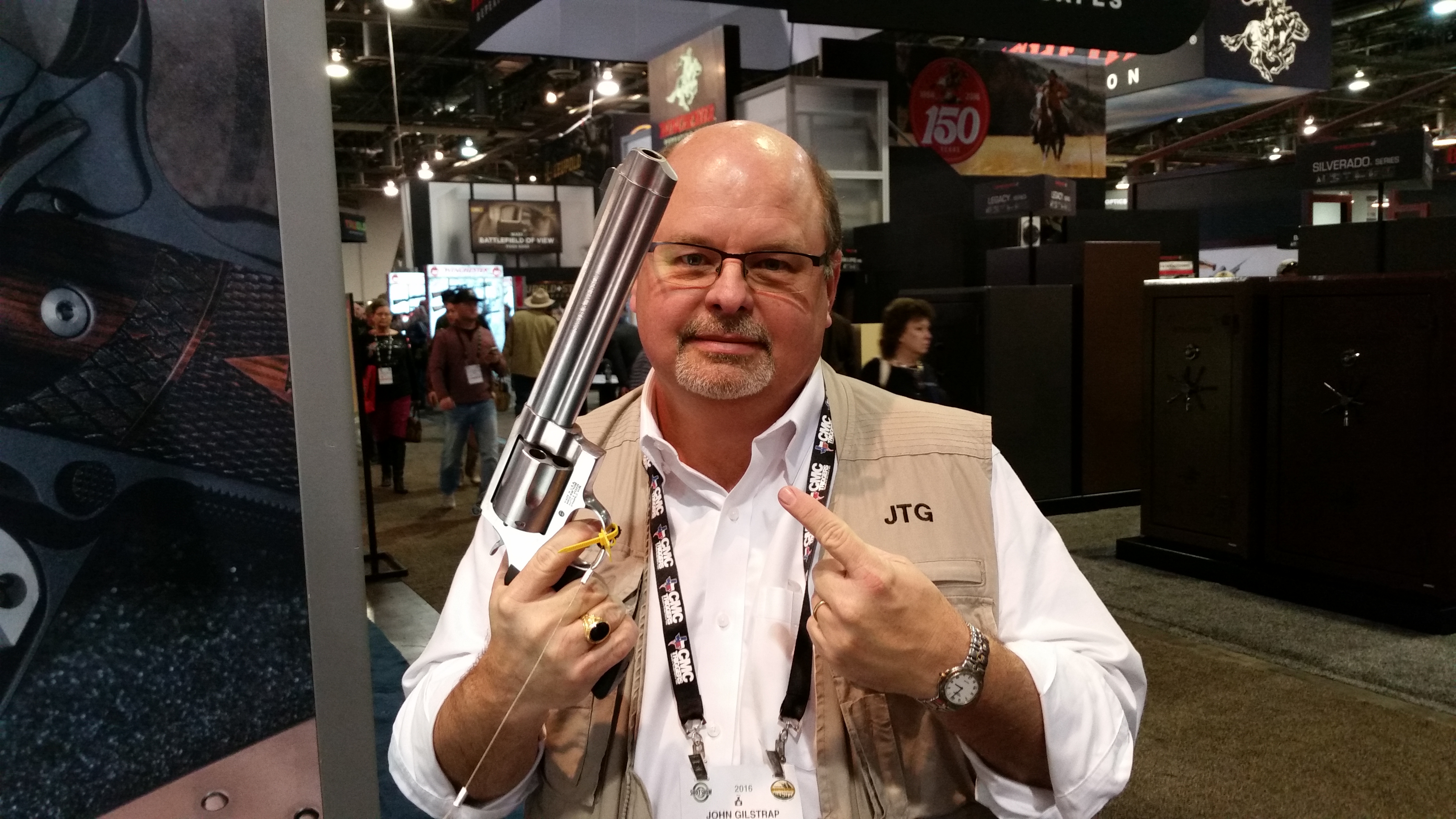
There’s such a thing as a Smith & Wesson .500 magnum.  Pictured here from the SHOT Show in Las Vegas, this four-pound smoke wagon fires bullets at over 1,800 feet per second (FPS) and, according to the manufacturer, will drop an elephant.  I’ve shot this beast.  While it’s the kind of pistol that a new Dirty Harry might be drawn to (“the most powerful handgun in the world and can blow your head clean off–while you’re hiding behind the refrigerator in your neighbor’s house“), there’s no practical use for it in the hands of your private detective.

Barrel length matters.

A firearm is a pressure chamber, the sole purpose of which is to contain the pressure of the exploding gunpowder long enough to send a projectile on to its target.  As the bullet proceeds down the barrel, the lands and grooves of the rifling impart a spin that stabilizes the bullet in flight.  The more time the pressure has to push the bullet, the longer the bullet has time to stabilize from the lands and grooves.  Thus, all else being equal, longer barrels equal greater accuracy at greater distances.

So, what kind of gunfight does your character anticipate?  Most gunfights play out in less than five seconds at distances of less than ten feet.  If that’s most likely your character’s world, then shorter barrels will do.

NOTE: There’s such a thing as the “21-foot rule,” which proclaims that any shot fired at a person from a range of greater than 21 feet–seven yards–is not considered self defense against any threat that is not another firearm.  If a bad guy is running at your good guy with a baseball bat or a knife, many jurisdictions will say that threat is not lethal until the bad guy closes to within 21 feet.

Single-stack or double-stack?

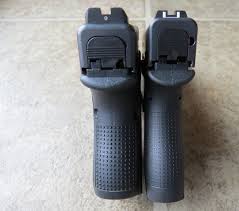
Guns for everyday carry (EDC) are getting smaller, but there remains a need for ammunition to feed them.  As you probably know, ammo magazines for pistols typically reside in the weapon’s grip.  A “single-stack” magazine stacks the bullets directly on top of each other, while a “double-stack” mag staggers the bullets side-by side, with the effect of making the grip thicker and harder to hold for a shooter with a smaller hand.  The pistols shown side-by-side in the picture are the Glock 26 on the left, and the Glock 43 on the right.  Both are called “baby Glocks”, with barrel lengths within a couple hundredths of 3.4 inches.  They’re called compact 9mm pistols.  The one on the left (G26) is fed by a double-stack magazine and holds 10 rounds, plus one in the chamber, while the one on the right (the G43) uses a single-stack mag and holds 6 rounds plus one in the pipe.  You need to ask yourself what your character’s priorities are.  Those four extra rounds cost you a lot in terms of grip size and concealability.  (Full disclosure: having spoken to many people who’ve been involved in gunfights, I’ve never heard one complain about having too much ammunition.)

Dress for the day.

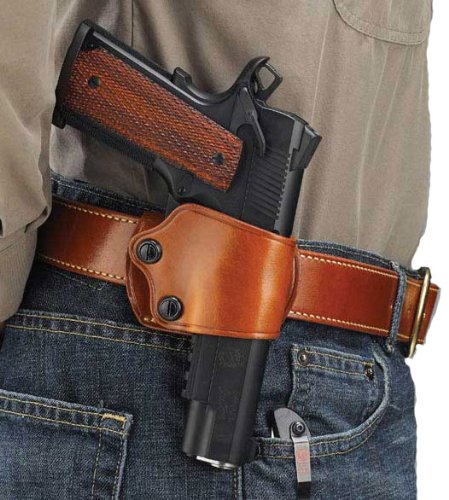
How likely is it that your character will get involved in a gunfight?  Military personnel in a war zone, and police officers on duty carry full-size pistols because there’s a reasonably high likelihood that they will find themselves in a gunfight.  They make no effort to conceal their firearm, so bigger is better.  The bigger, heavier platform is less punishing to shoot, and as a result, accuracy tends to be better.  But it’s not exactly the right weapon to strap to your tuxedo or evening gown on the way to the opera.

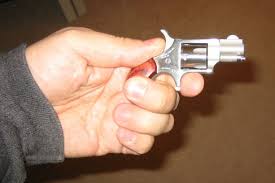
North American Arms Mini-Revolver chambered in .22 short. The effective range is maybe 4 or 5 feet, but fired into the brain pan, it’s as deadly as a sniper shot.

For those highly concealed applications, the firearm manufacturing industry offers lots of options.  Just remember that for any given caliber, the smaller and lighter the weapon–the easier it is to carry and conceal–the more punishing it is to shoot.  Also, smaller guns mean a shorter effective range.

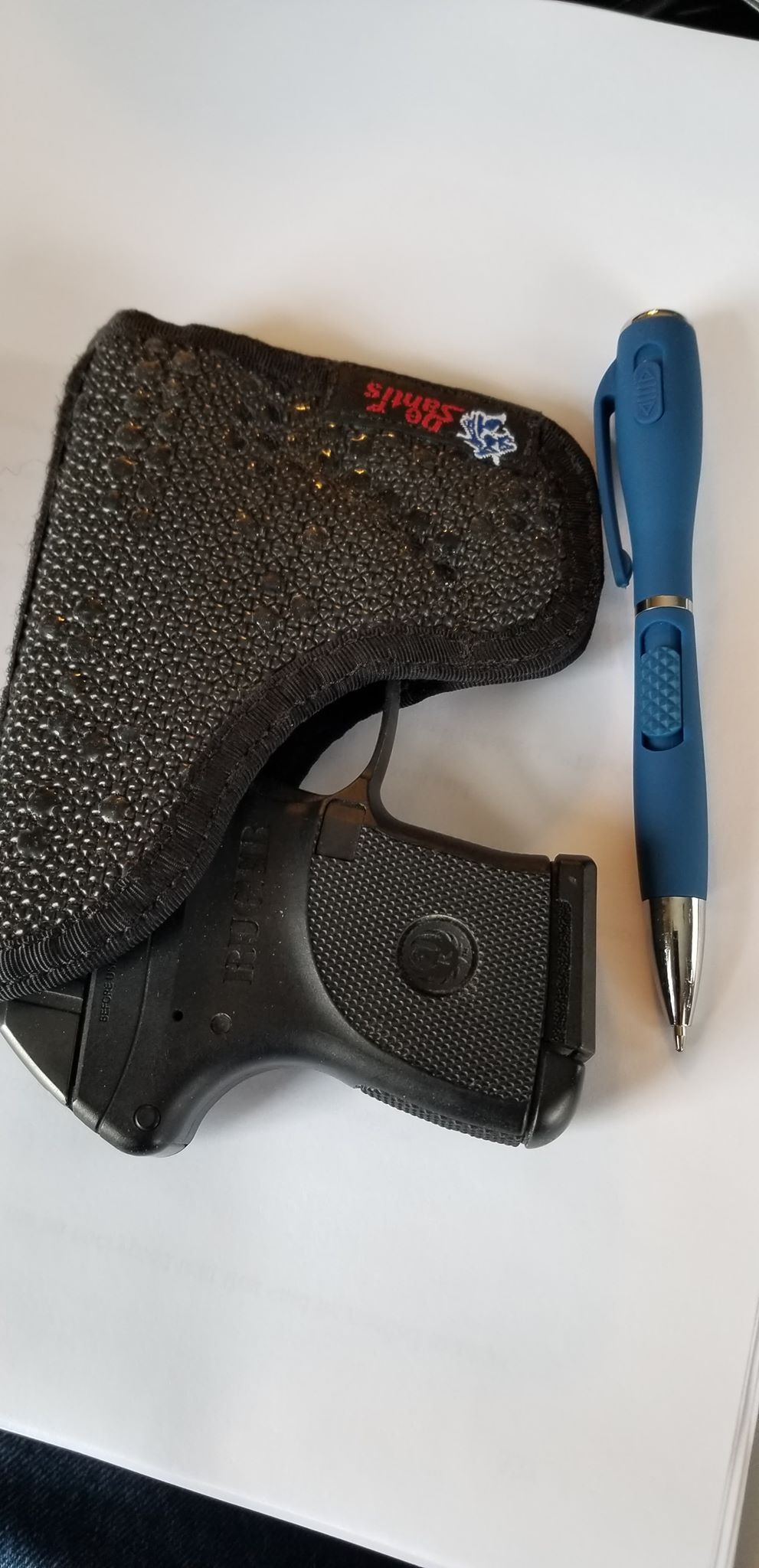
One of the most popular EDC guns on the market these days is the Ruger LCP (Lightweight Compact Pistol), chambered in .380, shown here in the picture next to the ballpoint pen to give it scale.  As presented, the pistol is in a pocket holster, which is exactly what it sounds like–a holster that slides easily into a pocket or a purse.  Because of its tiny size–there’s only room for two fingers on the grip–and its very heavy trigger pull, this is a difficult gun to learn to shoot, but once you get the hang of it, it’s pretty effective.  Virtually every gun manufacturer makes a similar weapon, and all of them are hand-breakers till you learn the right grip.

Okay, TKZers, how do you want to arm your good guys?  How about your bad guys?  What other questions do you have?

How to Write a Great
Story…in 18 Holes

By PJ Parrish

Read a heck of a story this weekend. It featured a flawed hero on a classic journey. He started out young with the world at his feet, but then he lost it all. The story had villains, a dysfunctional family, a bad love affair, a sordid scandal, and physical hardship.  The hero, I feared, was doomed. But then, against all odds, defying the naysayers, he climbed out of the abyss and triumphed.

Okay, I didn’t really read it. I watched it.  But it had all the human drama and suspense of a great book.

I watched Tiger Woods win the Fed-Ex Cup tournament. It was his first win in five years.  As one of the golf commentators said, “What a great story.”

Maybe you don’t follow golf. I don’t, normally. But the story of Tiger Woods, who had it all, lost it all, and climbed back up again, is the same stuff that makes for compelling fiction.

Great stories…

Let’s stay with the sports metaphor for a second. Let’s talk about pro football — it’s my go-to sport. Pro football’s ratings are way down. There are lots of theories why — the players’ protests and the President’s tweet-poking; bad play from big market teams like the Cowboys and Bears; too many dog games on Monday Night Football; fewer folks (mainly young) watching TV and choosing to cut the cable cord all together and play with their phones.

I’ll add my own theory: Pro football doesn’t have any great stories anymore. Like…

Joe Namath leading the hapless Jets to the Super Bowl win.

The Patriots’ season going to hell when Drew Bledsoe went down. Until some sixth-rounder nobody named Tom Brady stepped in to save the day.

The 1972 Dolphins losing their starting QB but going on to the only perfect season.

The 1985 rock-star Bears march to another perfect season, only to be blocked in game 13 by the 8-4 Miami Dolphins, hell-bent on preserving the old record.

Some guy named Marino breaking every record but never winning the Big One. Kurt Warner, the grocery store clerk who became a three-time MVP. And guys like Michael Oher, the homeless kid whose rise to Titan tackle was told in the Sandra Bullock movie The Blind Side.

We’re all suckers for great stories. Cinderella tales. Redemption roads. Inspiring comebacks. Underdogs who triumph. It’s the essence of good fiction. I got to thinking about this today after reading James’s Sunday blog about “pretty writing” as Tiger played in the background on TV.

You want to be a success in this business? Just learn to tell a good story.

Ha! Easier said than done. Let’s break it down into digestible bites. A while back, I wrote a blog about Pixar’s 20 Rules of Great Storytelling.  Pixar knows how to tell great stories. They’ve won 13 Academy Awards, 9 Golden Globes, and 11 Grammys. Pixar movies always involve a deep understanding of human emotion. They know how to move an audience. Here are just a couple of their “rules.”

Great stories are always universal. Take the basic ingredients of human life — birth, love, death, conflict, growth, spirituality — and make it appeal to everyone. Or as Pixar director Pete Docter puts it:

“You write about an event in your life that made you feel some particular way. And what you’re trying to do, when you tell a story, is to get the audience to have that same feeling.”

Great stories always have someone to root for. It can be a classic underdog tale. Or a rags-to-riches saga. The hero may not succeed, but often we love their attempt alone. It’s more about their journey than the destination.

Great stories always have structure. One of Pixar’s tips is to use “The Story Spine,” a formula created by professional playwright Kenn Adams. It goes:

Once upon a time there was [blank]. Every day, [blank]. One day [blank]. Because of that, [blank]. Until finally [blank].

Can you see the beautiful simplicity of it? You have a hero, who does this every day. But then something happens until finally he triumphs. Or as we at TKZ preach often: Something is disturbed in your hero’s world and he fixes it. (Or sometimes doesn’t).

Great stories are never dull. Again, go back and read James’s Sunday post for more on this. Great stories are surprising, unexpected. If you can dream up a story that challenges the reader’s usual perceptions of reality, you are on to something good. This is especially true in genre fiction, where stale old formulas are too often the norm. A tip from Pixar: If you’re stuck on coming up with something truly unique, get rid of the 1st thing that comes to mind — and then the 2nd, 3rd, 4th, and 5th.

Well, it’s just after six p.m. on this Sunday as I write this. Tiger Woods just won.  But not without some last-minute drama.  Going into the last round today, he was up five on his nearest competitor, Justin Rose. Tiger’s drives were straight and true, one going the length of three-and-a-half football fields. His putting game was surreal.  But then…

On the back nine, he shanked a couple into the rough. He missed easy putts. He bogied the fifteen and sixteen holes. Justin Rose crept closer, the lead shrinking to two. But Tiger parred the last two holes to win.  So here’s what we have: Tiger Woods, a deeply flawed protagonist, had it all and lost it all. He spent five years wandering in the wilderness. One year ago, Woods had endured three back surgeries and could barely walk, let alone swing a club. One year ago, he was ranked 1,199 in the world. Today he clawed back to win his first tournament in five years and maybe move up into the top ten.

He’s being interviewed right now. The crowd is going nuts. Tiger is tearing up. So am I.

What a great story.

________________________________________________________

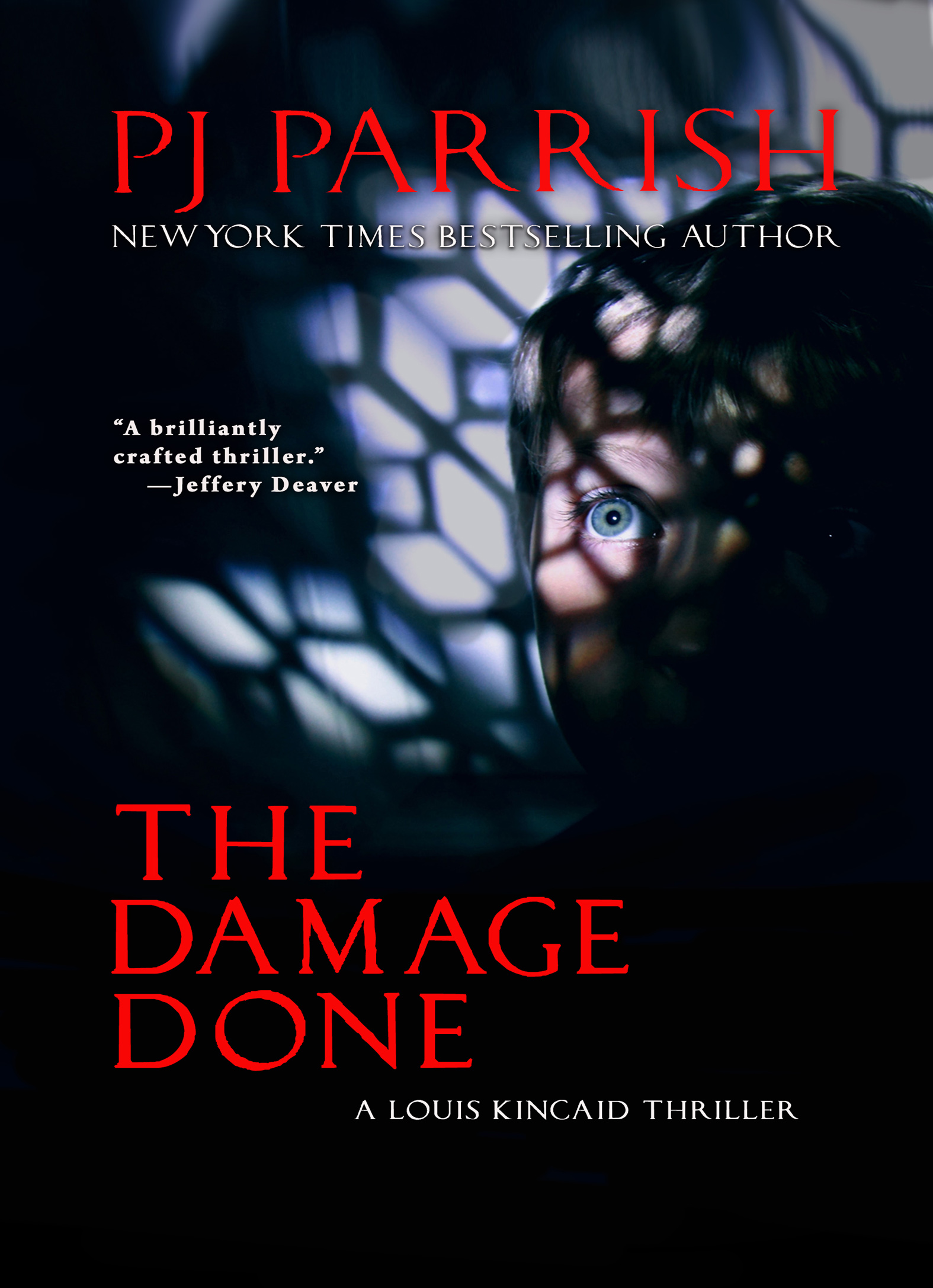
THE DAMAGE DONE, the 13th installment in the Louis Kincaid series, now available.

“Louis Kincaid is wearing a badge again—as part of an elite homicide squad. But his return to his Michigan home comes at the bidding of a man who once set out to destroy him. When the cold case deaths of two little boys collides with the white-hot murder of a mega-church minister, Louis finds himself fighting to unearth the secret past of his police captain—and the demons of his own childhood. The past and present come into stunning focus in this brilliantly crafted thriller. Relentlessly plotted yet filled with poignant family emotion, it will grip you from start to finish.”
—Jeffery Deaver.


Could a Feather Send You to Jail?

By SUE COLETTA

Raymond Reddington (left), Monny (right), Stretch (center)

While conducting research for my WIP, I stumbled across a law that blew my mind. As many of you know, I’m a huge animal lover. I would no more harm an animal than a member of my family. However, according to this statute, I may have inadvertently broken the law. And you might be guilty, too!

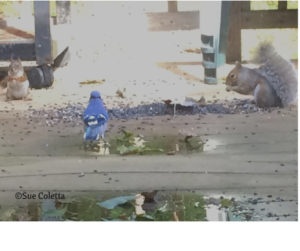
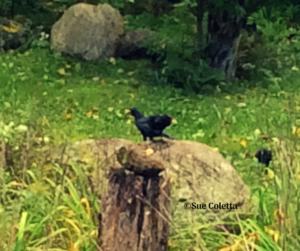
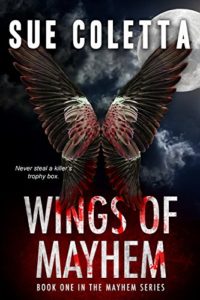
Years ago, I developed a fascination with eagles while writing Wings of Mayhem. When I wrote Blessed Mayhem, I became enamored with crows and ravens, as well. For those who aren’t familiar with Blessed Mayhem, Mr. Mayhem (the antagonist) has three pet crows. So, as the author, I had to know as much about crows as he did to portray him in a realistic manner. For months I studied their mannerisms, favorite foods, habitat, reproductive life, rituals, complex communication skills, body language, etc. And later, befriended a mating couple in my yard. You might remember my post about wildlife.

Some Native Americans believe that when a feather drops from the sky it carries the power of the bird, that crows live in two parallel universes, with one talon in a spiritual realm and one in the physical world, that they’re fore-tellers of change and messengers of the spirit world. When a crow visits, s/he expects to find our authentic self.

In writing, our character’s “authentic self” or “true character” is the 3rd Dimension of Character, the person only those closest to him truly know. The antagonist, especially a killer, will want to portray a false facade in public (1st Dimension of Character) to evade detection.

For my Mayhem Series, I take note of how my body reacts in the presence of crows, and then I transfer that emotion to the page to show Mr. Mayhem’s soft side.

Poe showing Shakespeare how to eat fries.

When my beloved murder of nine glides into the yard — awe-inspiring wings in perfect harmony with members of their tribe — my breath quickens, the world falls away.

As my stiff shoulders ease, I marvel at these incredible birds. I consider it an honor that they’ve let me share in the joyfulness of newborn chicks and the devastation of loss. I’ve reveled in their teachings of how to fly without smashing into a sibling’s wings, the intricacies of how best to crack peanut shells, and the unwavering belief that leftover French fries taste amazing first thing in the morning.

It’s probably no surprise then that when Poe leaves me a feather, I treasure her generous gift. But now, darn it, I found that pesky law …

Authorities created the North American Migratory Bird Treaty Act in 1918 when folks killed too many birds for the sole purpose of adorning their hats with feathered bling. It’s a broad-brush law intended to protect birds. Which is fabulous. The downside is, the law doesn’t recognize the difference between plucked feathers, shed feathers, or bird pieces. None of it is allowed in our possession. The Act lists over 800 birds. Crow feathers top that list, along with eagles, owls, ravens, hawks, and even blue jays.

In order to keep a feather collection, we need to visit our local Fish & Game headquarters and pull a permit. Maybe one of our TKZ legal minds could weigh in on any stipulations of obtaining said permit? I can’t bear to toss the feathers back in the yard, as the law requires. Poe and Edgar might consider it a slap across the beak.

Did you know it was illegal to pick up a feather? According to this law, not only are we required to figure out the exact species of bird who dropped the feather, but we need to cross-check the list to see if the feather is protected under federal law. The harmless act of collecting a feather from your yard could wind up costing you a hefty fine and even a misdemeanor conviction!

This discovery sent shock waves through my writer brain. Perhaps I could use this law in my WIP. We’re always searching for an interesting new angle, aren’t we?

Some of the ways I considered using this law are …

  • What if the detective uses the Migration Bird Act as “probable cause” to obtain a search warrant?
  • What if the confiscated feathers linked a suspect to the victim?
  • What if the detective witnesses a strange man pocketing a protected feather off the beach (yes, sea gulls are also on that watch-list) and he follows him to a killing lair?

None of those worked for my story, though. Too easy. I may have to abandon the idea.

How might you use the Migration Bird Act to heat up the investigation? Were you aware of this law?


Sue Coletta is on a path. She earned her ticket into the crowded arena of dark thriller contenders with her previous novel (“Marred”), and in “Wings of Mayhem” she announces her arrival with the wail of approaching sirens and the quiet horror of a blade swinging at your throat in the dark. Don’t miss this one. A star is born.” ~ Larry Brooks

Look inside Wings of Mayhem HERE.