By PJ Parrish
Okay, this is going to be old stuff for some of you. But after reading a couple of our First Page Critique submissions lately, I’m thinking we could all use a handy-dandy review of what needs to go into an opening chapter.
Consider this food for thought, no matter where you are in your writing process. If you’re staring at your computer screen and there are only two words on it — CHAPTER ONE — this is for you. If you’re about 155 pages in and you’re stuck, maybe going back and reviewing your beginning will help you find your way out of the swamp. And if you’ve just typed those wonderful two words — THE END — then this review is really for you. Because THE END is never really the end. It is the beginning. (rewrite time!)
Do: Create a Good Hook
- The first chapter is where reader makes a decision to enter your world.
- Needn’t be fast or fancy. But it must make you care about a character and what is happening to him.
- Large hooks can disappoint readers if the rest doesn’t measure up. If you begin writing at the most dramatic or tense moment in your story, you have nowhere to go but downhill.
- If hook is strange or misleading, you might have trouble living up to its odd expectations.
“A cheesy hook drives me nuts. They say ‘Open with a hook!’ to grab the reader. That’s true, but there’s a fine line between an intriguing hook and one that’s just silly. An example of a silly hook would be opening with a line of overtly sexual dialogue.” — agent Daniel Lazar
Do: Come Up With a Juicy Opening Line
- Your opening line gives you an intellectual line of credit from the reader. The reader unconsciously commits: “That line was so damn good, I’m in for the next 50 pages.”
- A good opening line is lean and mean and assertive. No junk language or words.
- A good opening line is a promise, or a question, or an unproven idea. It says something interesting. It is a stone in our shoe that we cannot shake.
- BUT: if it feels contrived or overly cute, you will lose the reader. Especially if what follows does not measure up. It is a teaser, not an end to itself.
“The cat sat on the mat is not the opening of a plot. The cat sat on the dog’s mat is.” – John LeCarre

Do: Get Into Your Story As Late As Possible
Begin your story just before the interesting stuff is about to happen. You want to create tension as early as possible and escalate from there. Don’t give the reader too much time to think about whether they want to go along on your ride.
Where do you CHOOSE to enter your story time-wise? Think of yourself as a paratroop commander. You’re pushing your jumpers (readers) out of the plane. Where do you want them to land for maximum suspense? Too early you bore your reader (throat clearing) Too late you confuse the reader (coma syndrome).
Do: Introduce Your Protagonist
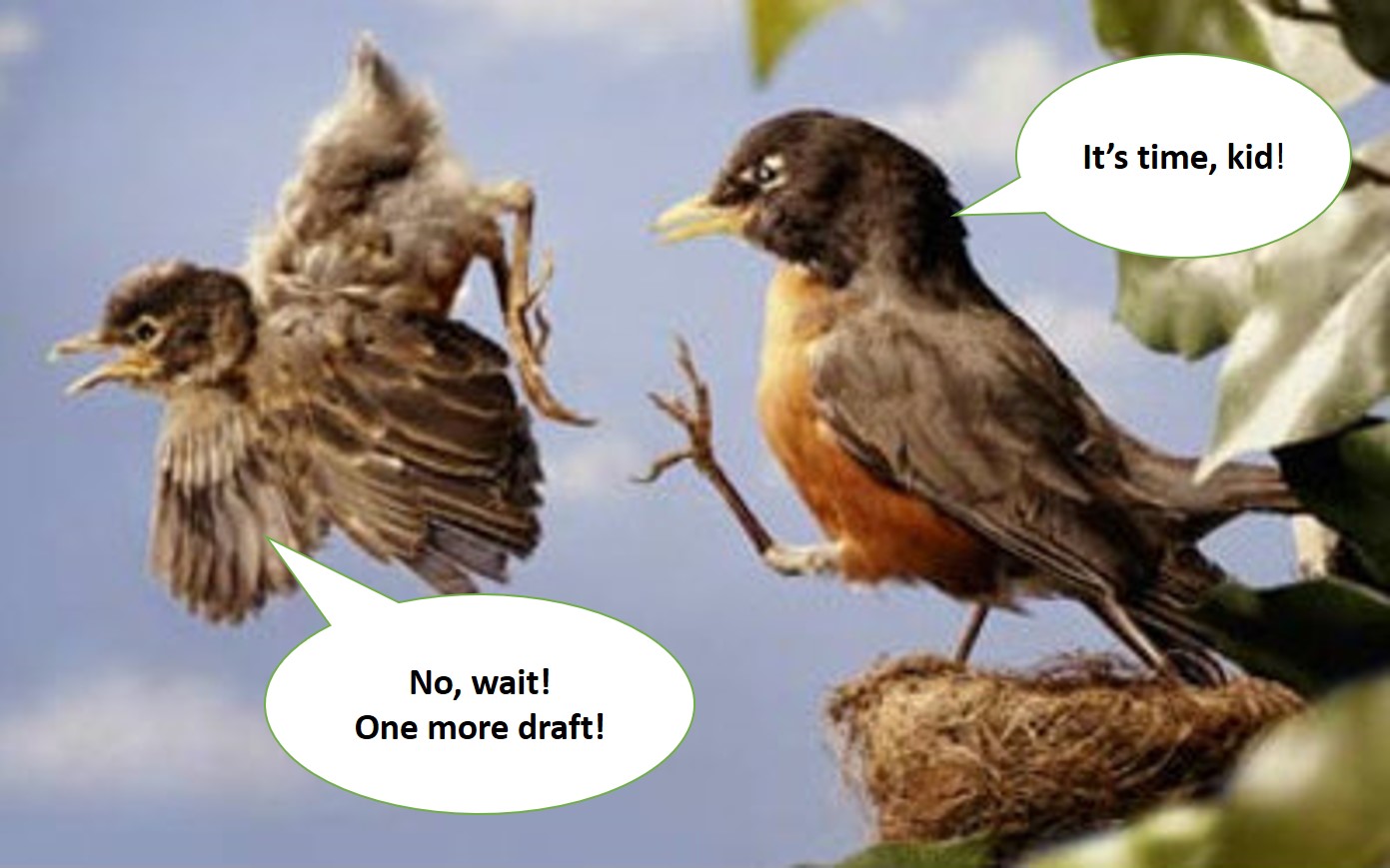
Never wait too late in the story to give us the hero. And readers have to care about him or her right from the start. And be careful not to give the early spotlight to a minor character because whoever is at the helm in chapter one is who the reader will automatically want to follow. If it is someone minor, reader will feel betrayed and annoyed when you shift the spotlight.
Now, I hear you: But my first chapter shows the serial killer at work! Or: But I need this world-building prologue first! Okay, okay. So maybe you can wait until chapter 2 to have your heroine walk on stage, but don’t play around too long. The reader won’t wait forever to bond with your main man or woman.
“Sometimes a writer will create an interesting character and describe him in a compelling way, but then he’ll turn out to be some unimportant bit player.”
— Ellen Pepus, Signature Literary Agency
Do: Open With A Disturbance!

Our own James Bell preaches this all the time. Something has to be amiss. Depending on what kind of book you are writing, or your genre, the disturbance can be earthshattering (a thriller about a killer comet heading our way!) or cozy-mild (the owner of a florist shop finds a corpse in her orchid house!). But you have to tilt the protag’s world off its axis.
- Conflict drives good fiction. It disrupts the status quo. Your first chapter is
not a straight line. It’s a jagged driveway up a dark mountain and the
shadows are full of danger. - Don’t fall into the “happy people in Happy Land” trap. Don’t think that if you
first show the lead character in her normal life, being happy with her family
or dog, we’ll be all riled up when something bad happens to this nice person. - Don’t fall into the “I’m the Greatest Literary Stylist of Our Time” trap. This is
where a writer tries to display brilliance via pure prose before, somewhere
down the line, something like a plot kicks in.
“Too much ‘telling’ vs. ‘showing’ in the first chapter is a definite warning sign for me. The first chapter should present a compelling scene, not a road map for the rest of the book. The goal is to make the reader curious about your characters, fill their heads with questions that must be answered, not fill them in on exactly where, when, who and how.” — Emily Sylvan Kim, Prospect Agency
Do: Establish Your Time And Place
This is small but important. You have to tell the reader where we are in the world (or universe) and at least a hint of the time (year, era). If you don’t, the reader flails around, gets coma syndrome and then usually gets aggravated. Also, if you aren’t writing in current day, you need to tell reader. Because details about the culture, police procedure and forensics will be in question.
A word about time and place taglines on your chapter headings: Try to avoid them. They smell of amateurism and say that the writer does not know how to gracefully slip this info into the story – or that they are too lazy to do it. But sometimes, a complex plot needs tags, like if you are jumping around in time and geography.
CHAPTER ONE
Goa India, 1889.
CHAPTER TWO
Paris, France, 1945
Do: Get Your Characters Talking As Soon As Possible
Dialogue is the lifeblood of your story and you need it early. Too much exposition or description is like driving a car with the emergency brake on. Remember: Dialogue is a from of ACTION. I’ll let the experts tell you:
“My biggest pet peeve with an opening chapter is when an author features too much exposition – when they go beyond what is necessary for simply ‘setting the scene.’ I want to feel as if I’m in the hands of a master storyteller, and starting a story with long, flowery, overly-descriptive sentences makes the writer seem amateurish. — Peter Miller, PMA Literary and Film Management
“I don’t really like ‘first day of school’ beginnings, ‘from the beginning of time,’ or ‘once upon a time.’ Specifically, I dislike a Chapter One in which nothing happens.”
— Jessica Regel, Foundry Literary + Media
“What I hate are characters that are moving around doing little things, but essentially nothing. Washing dishes & thinking, staring out the window & thinking, tying shoes, thinking.”- — Daniel Lazar, Writers House
Now the next two Dos are up for discussion. Because while both are very important, you might not be able to get this done in your Chapter One. But you must lay the groundwork for both of these elements in the first couple chapters.
Do: Define The Stakes And Your Hero’s Journey

What is at play in the story? What are the costs? What can be gained,
what can be lost? Love? Money? One’s soul? Will someone die?
Can someone be saved?
What is the journey you’ve set up for your hero or heroine? What is their PERSONAL ARC. How will they change and/or grow?
The first chapter doesn’t demand that you spell out the stakes of the entire book in neon but we do need a hint.
Do: Establish Your Tone And Voice
From the get-go, your reader should be able to tell what kind of book he is reading – hardboiled, romantic, humorous, neo-noir. Everything in your book should support your tone, but the first chapter is vital to inducing an emotional effect in your reader. Edgar Allan Poe’s wrote of something he called the UNITY OF EFFECT. Which means that every element of a story should help create a single emotional impact.
Make your own voice loud and clear. This is where you are introducing your story but also yourself as a writer. Your language must be crisp, you must be in complete control of your craft, you must be original! No self indulgent description, no bloated passages, no slack in the rope. Don’t try to be “writerly.” Good writing does not call attention to itself. The reader must feel he is being led by a calm, confident storyteller.
“I hate reading purple prose – describing something so beautifully that has nothing to do with the actual story.” — Cherry Weiner, Cherry Weiner Literary
“Someone squinting into the sunlight with a hangover in a crime novel. Good grief — been done a million times.” — Chip MacGregor, MacGregor Literary
Okay…let’s talk about a few DONTS for your first chapter
Don’t: Open With A Prologue (Unless You Really Know What You’re Doing)
Yeah, yeah…I know. This opens a big can of gummie worms. But I am going on record here that 99 prologues out of a 100 are not needed. Prologues, especially if they are nothing but exposition, put a deathly brake on your story. They force you to start your story twice and most of us can barely get it right once. When bad or even merely okay, a prologue makes the the reader think, “Get on with the story already!”
EXERCISE: Cut your prologue and see if your story opens faster. If you haven’t lost any clarity, you probably don’t need the prologue. Or just label it Chapter 1.
I’m not a fan of prologues, preferring to find myself in the midst of a moving plot on page one rather than being kept outside of it, or eased into it.” — Michelle Andelman, Regal Literary
“Prologues are usually a lazy way to give back-story chunks to the reader that can be handled with more finesse throughout the story. Damn the prologue, full speed ahead!”— Laurie McLean, Foreword Literary
Don’t: Lard In Too Much Backstory Or Exposition
The first chapter is not the place to tell us everything. Exposition kills drama. Backstory is boring. Incorporating backstory is HARD WORK, but you must weave it artfully into the story not give us an INFO-DUMP in chapter 1.
ACT FIRST, EXPLAIN LATER. In other words, something has to happen! Then you can reflect on it. (This is another homily from Brother Bell)
I’m turned off when a writer feels the need to fill in all the backstory before starting the story. A story that opens on the protagonist’s mental reflection of their situation is a red flag.” — Stephany Evans, FinePrint Literary Management
“One of the biggest problems is the ‘info dump’ in the first few pages, where the author ties to tell us everything we supposedly need to know to understand the story. Getting to know characters in a story is like getting to know people in real life. You find out their personality and details of their life over time.”- Rachelle Gardner, Books & Such Literary Agency
Don’t: Confuse Readers or Use False Starts
One of the biggest pitfalls in starting a story is to begin with an opening line that is confusing but might make perfect sense once the reader learns more later. But once confused, few readers will venture further.
This is not to say you can’t include info in your opening that acquires additional meaning once the reader learns more. That technique is often a highly rewarding tool. But the opening should make sense.
You describe something awful but then someone wakes up and reader finds out it was just a dream. DON’T DO IT! Or you kill off someone in first chapter and it is someone we never really hear or care about again. If you begin with an on-camera murder, you must then use the rest of the story to make this person come back to life in our memories and maybe even make us mourn this person.
“I don’t like it when the main character dies at the end of Chapter One. Why did I just spend all this time with this character? I feel cheated.” — Cricket Freeman, The August Agency
“I dislike opening scenes that you think are real, then the protagonist wakes up. It makes me feel cheated.” — Laurie McLean, Foreword Literary.
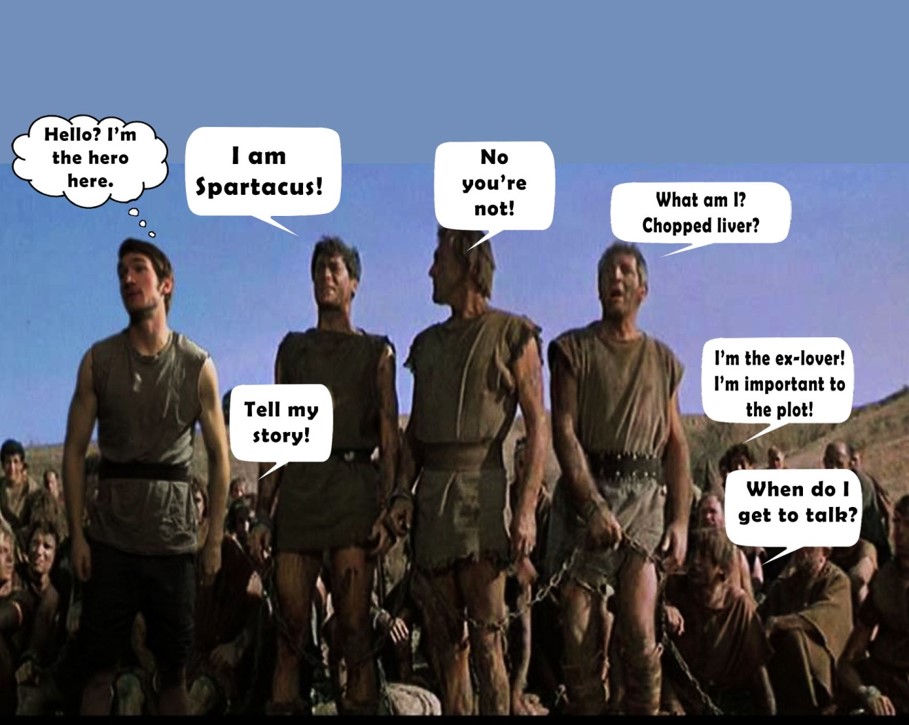
Miscellaneous Don’ts
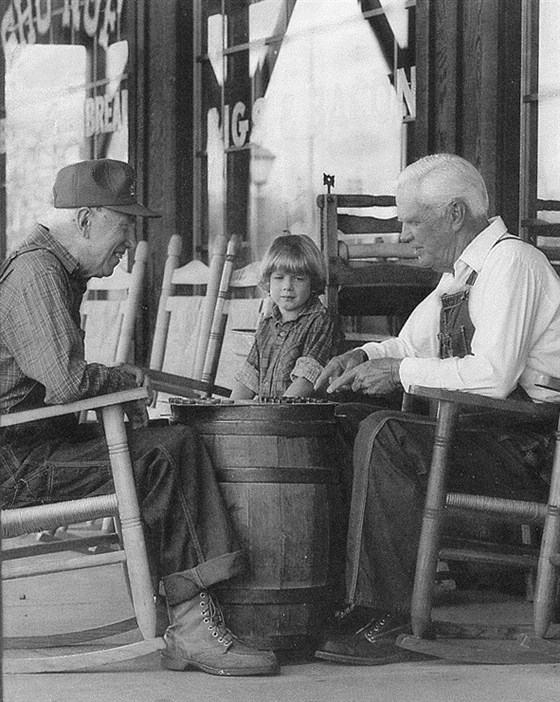
- Introduce too many characters too early (See illustration above)
- Use excessive description The [adjective] sun rose in the [adjective] [adjective] sky, shedding its [adjective] light across the [adjective] [adjective] land.
- Use bad weather symbolism (gathering storm clouds)
- Rely on clichés (detective wakes with hangover)
- Write: “Years later, Monica would look back and laugh…”
- Give the spotlight to whiny or disgusting characters
- Have character directly addressing the reader
- Open with “Twenty minutes before she died…”
- Write this: “Little did she know the killer was watching her…”
- Open with a dream (Bobby in the Shower syndrome)
And that, crime dogs, is my sermon du jour. Don’t get discouraged. Do keep writing. Don’t let the bastards get you down. Do take good care of yourself and your loved ones.


 Poe was NOT pleased about Rave’s decision.


 When I bustled down the hill to Animal Planet the following day, one flawless raven feather laid on the rock