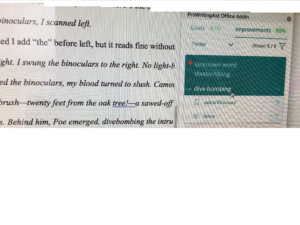
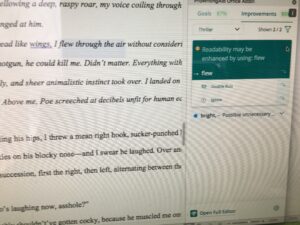
How To Spot + Rewrite Fluff

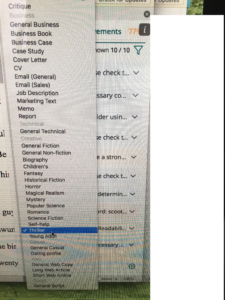
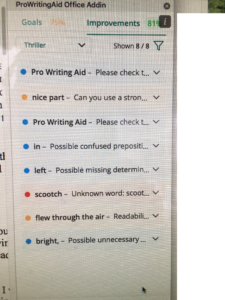
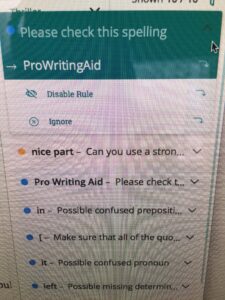
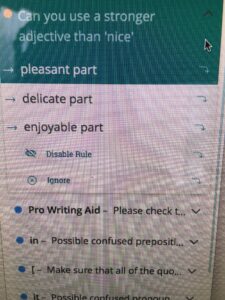
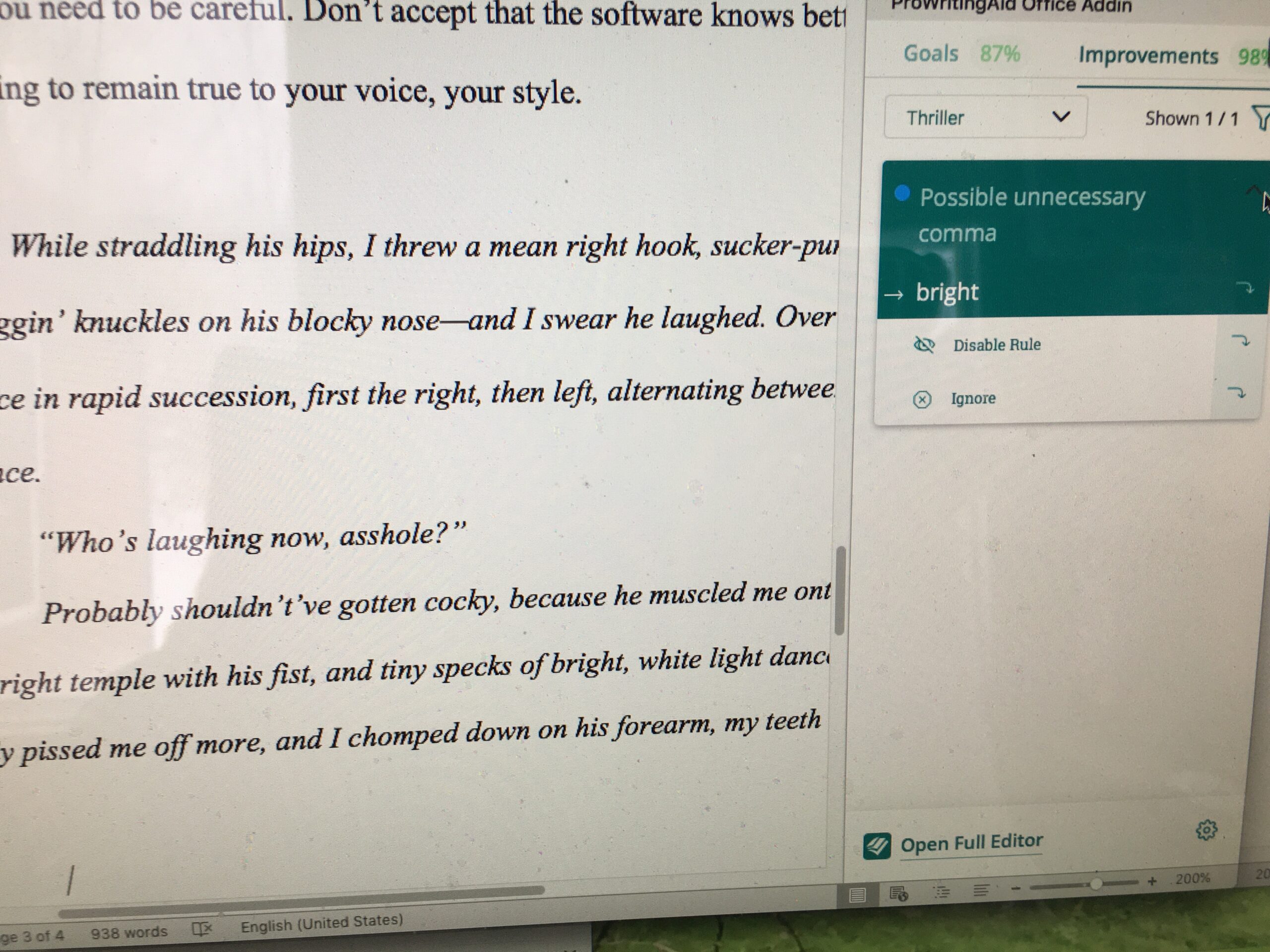
Those dang pesky buggers that sneak into first drafts and weaken the writing are called filler words and phrases—also known as fluff.

If a filler word serves a purpose, keep it. The objective is to tighten the writing by eliminating unnecessary words and anything the reader might find distracting.

For example, a Bigshot Author I adore had the strangest writing tick in her debut novel. It’s a good thing I unknowingly started with book 5, or I might not have devoured two of her thriller series. I can’t tell you her name, but I will share the tic.

“Blah, blah, blah,” she said, and then, “Blah, blah, blah.”

“Blah, blah, blah,” he replied, and then, “Blah, blah, blah.”

Almost every line of dialogue had “she said, and then.” The writing tic distracted me, yanked me right out of the story, and made me want to whip my Kindle out the window. To this day I recall favorite passages from many of her high-octane thrillers, but I couldn’t tell you the basic plot of her debut till I jumped over to Amazon to refresh my memory. She’s since re-edited the novel. 🙂

FILLER WORDS

Just

Just should almost always be murdered.

Original: I just couldn’t say goodbye.

Rewrite: I couldn’t bear to say goodbye.

That 

That litters many first drafts, but it can often be killed without any harm to the original sentence.

Original: I believe that all writers kill their darlings.

Rewrite: I believe all writers kill their darlings.

The original and rewrite have another problem. Did you catch it?

Believe in this context is a telling word. Any time we tell the reader things like “I thought” or “He knew” or “She felt” or “I believe” we slip out of deep POV. Thus, the little darling must die.

Final Rewrite: All writers kill their darlings.

So 

Original: So, this huge guy glared at me in the coffee line.

Rewrite: This musclebound, no-necked guy glared at me in the coffee line.

Confession? I use “so” all the time IRL. It’s also one of the (many) writing tics I search for in my work. The only exception to killing this (or any other) filler word is if it’s used with purpose, like as a character cue word.

Really

Original: She broke up with him. He still really loved her.

Sometimes removing filler means combining/rewording sentences.

Rewrite: When she severed their relationship, his heart stalled.

Very

Here’s another meaningless word. Kill it on sight.

Original: He made me very happy.

Rewrite: When he neared, my skin tingled.

Of

To determine if “of” is needed read the sentence with and without it. Does it still make sense? Yes? Kill it. No? Keep it.

Original: She bolted out of the door.

Rewrite: She bolted out the door.

Up (with certain actions)

Original: He rose up from the table.

Rewrite: He rose from the table.

Original: He stood up tall.

Rewrite: He stood tall.

Down (with certain actions)

Original: He sat down on the couch.

Rewrite: He sat on the couch.

Original: He laid down the blanket.

Rewrite: He laid the blanket on the floor.

And/But (to start a sentence)

I’m not saying we should never use “and” or “but” to start a sentence, though editors might disagree. 🙂 Don’t overdo it.

Original: He died. And I’m heartbroken.

Rewrite: When he died, my soul shattered.

Also search for places where “but” is used to connect two sentences. Can you combine them into one without losing the meaning?

Original: He moved out of state, but I miss him. He was the most caring man I’d ever met.

Rewrite: The most caring man I’d ever met moved out of state. I miss him—miss us.

Want(ed)

Want/wanted is another telling word. It must die to preserve deep POV.

Original: I really wanted the chocolate cake.

Substitute with a strong verb.

Rewrite: I drooled over the chocolate cake. One bite. What could it hurt?

Came/Went

Came/went is filler because it’s not specific. Substitute with an a strong verb.

Original: I went to the store to buy my favorite ice cream.

Rewrite: I raced to Marco’s General Store to buy salted caramel ice cream, my tastebuds cheering me on.

Had

Too many had words give the impression the action took place prior to the main storyline. As a guide, used once in a sentence puts the action in past tense. Twice is repetitive and clutters the writing. Also, if it’s clear the action is in the past, it can often be omitted.

Original: I had gazed at the painting for hours and the eyes didn’t move.

Rewrite: For hours I gazed at the painting and the eyes never wavered.

Well (to start a sentence)

Original: Well, the homecoming queen made it to the dance, but the king didn’t.

Rewrite: The homecoming queen attended the dance, stag.

Basically/Literally

Original: I basically/literally had to drag her out of the bar by her hair.

Rewrite: I dragged her out of the bar by the hair.

Actually

Original: Actually, I did mind.

Rewrite: I minded.

Highly

Original: She was highly annoyed by his presence.

Rewrite: His presence irked her.

Or: His presence infuriated her.

Totally

Original: I totally did not understand a word.

Rewrite: Huh? *kidding* I did not understand one word.

Simply

Original: Dad simply told her to stop.

Rewrite: Dad wagged his head, and she stopped.

Anyway (to start a sentence)

Original: Anyway, I hope you laughed, loved, and lazed during the holiday season.

Rewrite: Hope you laughed, loved, and lazed during the holiday season.

FILLER PHRASES

As with all craft “rules,” exceptions exist. Nonetheless, comb through your first draft and see if you’ve used these phrases for a reason, like characterization. If you haven’t, they must die. It’s even more important to delete filler words and phrases if you’re still developing your voice.

A bit

Original: The movie was a bit intense. Lots of blood.

Rewrite: Intense movie. Blood galore.

There is no doubt that

Original: There is no doubt that the Pats will move on to the playoffs.

Rewrite: No doubt the Pats will move on to the playoffs.

Or: The Pats will be in the playoffs.

The reason is that

Original: The reason is that I said you can’t go.

Rewrite: Because I said so, that’s why. (shout-out to moms!)

The question as to whether

Original: The question as to whether the moon will rise again is irrelevant.

Rewrite: Whether the moon will rise again is irrelevant.

Whether or not

Original: Whether or not you agree is not my problem.

Rewrite: Whether you agree is not my problem.

Tempted to say

Original: I am tempted to say how beautiful you are.

Rewrite: You’re beautiful.

This is a topic that

Original: This is a topic that is close to my heart.

Rewrite: This topic is close to my heart.

Believe me (to start a sentence)

Original: Believe me, I wasn’t there.

Rewrite: I wasn’t there.

In spite of the fact

Original: In spite of the fact that he said he loved you, he’s married.

Rewrite: Although he professed his love, he’s married.

Or: Despite that he said he loved you, he’s married.

The fact that

Original: The fact that he has not succeeded means he can’t do the job.

Rewrite: His failure proves he can’t do the job.

I might add

Original: I might add, your attitude needs adjusting, young lady.

Rewrite: Someone’s panties are in a bunch. *kidding* Adjust your attitude, young lady.

In order to 

Original: In order to pay bills online, you need internet access.

Rewrite: To pay bills online you need internet access.

At the end of the day

Original: At the end of the day, we’re all human.

Rewrite: In the end, we’re all human.

Or: In conclusion, we’re all human.

Or: We’re all human.

Over to you, TKZers. Please add filler words/phrases that I missed. I’m hoping this list will help Brave Writers before they submit first pages for critique.

“I did not think this series could become more compelling, oh how wrong I was! Coletta delivers shock after shock and spiraling twists and turns that you will never see coming. I was glued to the pages, unable to stop reading.” 

Look Inside ? https://buff.ly/3hmev0C

Merry Misdirection

Misdirection is the intentional deflection of attention for the purpose of disguise, and it’s a vital literary device. To plant and disguise a clue so the reader doesn’t realize its importance takes time and finesse.

The most important thing to remember is to play fair. Clues must be in plain sight. We cannot reveal a clue that wasn’t visible earlier. That’s cheating.

A few years ago, I read a novel about [can’t name the profession without giving away the title]. The protagonist located the dead and solved every mystery with invisible clues. After I whipped my Kindle across the room, I took a deep breath and skimmed the story searching for the clues. Never found one. Not one! The author’s name now sits at the pinnacle of my Do Not Read list.

A key feature of good misdirection means you brought attention to the clue, and the reader still missed it.

A magician uses three types of misdirection:

  • Time: The magician has the silk scarf balled in one fist before he begins the trick.
  • Place: The magician draws your attention to his right hand while the real trick is happening in his left.
  • Intent: The magician leads you to the decision he wants, but afterward you’ll swear you had a choice.

Notice any similarities to writing?

Misdirection can be either external or internal. External would be when the author misdirects the reader. Internal is when a character misdirects another character.

Misdirection is different than misinformation. We should never outright lie to the reader. Rather, we let them lie to themselves by disguising the clue(s) as inconsequential.

How do we do that?

When you come to a part of the story where nothing major occurs, slip in a clue. Or include the detail/clue while fleshing out a character’s life.

Examples:

One character chats with another as they drive to a designated location. Is the locale a clue in and of itself?

What about the title of the book? The reader has seen the title numerous times, yet she never gave it much thought until the protagonist reveals its meaning to the plot.

Clandestine lovers meet in a hideaway. While there, one of the characters notices a symbol or sign. Later in the story, she finds another clue that relates to the sign or symbol. Only now, she has enough experience to interpret its true meaning.

A kidnapper chalks an X on a park bench to signal the drop-off spot. What if a stray dog approaches the kidnapper? If he reads the dog’s tag to find his human, the clue takes center stage, yet it’s disguised as inconsequential.

In all four examples the arrival of the clue seems insignificant at first. The reader will notice the clue because we’ve drawn attention to it, but we’ve framed it in a way that allows the character to dismiss it. Thus, the reader will, too.

False Trails

The character knows the clue is important when she finds it, but she misinterprets its meaning, leading her down a dead end.

What if we need to supply information on a certain topic, but we don’t want the reader to understand why yet? If we take the clue out of context and present it as something else—something innocuous or insignificant—we’ve misdirected the reader to reach the wrong conclusion.

An important factor of misdirection is that the disguise must make sense within the confines of the scene. It should also further the plot in some way.

“Misdirection can be used either strategically or tactically. Strategically to change the whole direction of a story, to send it off into a new and different world, and have the reader realize that it’s been headed that way all along. Tactically to conceal, obscure, obfuscate, and camouflage one important fact, to save it for later revelation.”

— The Writer magazine

Character Misdirection

Character misdirection is when the protagonist (and reader) believes a secondary character fulfills one role when, in fact, he fulfills the opposite.

Two types of character misdirection.

  • False Ally
  • False Enemy

These two characters are not what they seem on the surface. They provide opportunities for dichotomy, juxtaposition, insights into the protagonist, theme, plot, and plot twists. They’re useful characters and so much fun to write.

A false ally is a character who acts like they’re on the protagonist’s side when they really have ulterior motives. The protagonist trusts the false ally. The reader will, too. Until the moment when the character unmasks, revealing their false façade and true intention.

A false enemy is a character the protagonist does not trust. Past experiences with this character warn the protagonist to be wary. But this time, the false enemy wants to help the protagonist.

When Hannibal Lecter tries to help Clarice, she’s leery about trusting a serial killing cannibal. The reader is too.

What type of character is Hannibal Lecter, a false ally or false enemy?

An argument could be made for both. On one hand, he acts like a false enemy, but he does have his own agenda. Thomas Harris blurred the lines between the two. What emerged is a multifaceted character that we’ve analyzed for years.

When crafting a false ally or false enemy, it’s fine to fit the character into one of these roles. Or, like Harris, add shades of gray.

Mastering the art of misdirection is an important skill. It’s especially important for mysteries and thrillers. I hope this post churns up new ideas for you.

Do you have a false ally or false enemy in your WIP? What are some ways you’ve employed misdirection?

This is my final post of 2021. Wishing you all a joyous holiday season. See ya in the New Year!

Female killers are often portrayed as caricatures: Black Widows, Angels of Death, or Femme Fatales. But the real stories of these women are much more complex. In Pretty Evil New England, true crime author Sue Coletta tells the story of these five women, from broken childhoods to first brushes with death, and she examines the overwhelming urges that propelled these women to take the lives of more than one-hundred innocent victims. If you enjoy narrative nonfiction/true crime, Pretty Evil New England is on sale for $1.99. Limited time. On Wednesday, Dec. 15, the price returns to full retail: $13.99.

Reindeer Fun

The holiday season is a hectic time, with planning the perfect family celebration, shopping for gifts, decorating the house, inside and out, and mailing cards.

Many have stopped the tradition of sending holiday cards. For me, there’s something so special about peeking into the mailbox to find a card. It means someone took the time to wish you happy holidays, trekked down to the Post Office, or raised the tiny red flag on their mailbox to signal outgoing mail. It’s a beautiful tradition that I fear new generations will let slip away (along with cursive handwriting). I love the holiday season, the frigid temps thawed with magic, possibilities.

With the frenzy of Black Friday and Cyber Monday, I thought I’d share 10 fun facts about reindeer, originally posted on my blog in 2018.

1. A Reindeer By Any Other Name is Still a Reindeer

In some regions of the world, Reindeer are called caribou. In North America reindeer refers to Eurasian populations and caribou refers to wild populations

2. Reindeer Belong to the Cervidae Family

Reindeer — aka Rangifer Tarandus — have 14 subspecies, including deer, elk, moose, and wapiti. All Cervidae have antlers, hooves, and long legs.

3. Girls Can Do Everything Boys Can Do

Reindeer are the only species of deer in which both males and females grow antlers, and they grow a new set every year. Male antlers can grow up to 51 inches long and weigh up to 33 pounds. A female rack can grow up to 20 inches long.

According to the San Diego Zoo …

Antlers are the reindeer’s most memorable characteristic. In comparison to body size, reindeer have the largest and heaviest antlers of all living deer species. All antlers have a main beam and several branches or tines that grow from the frontal bones of the skull. Sometimes little branchlets or snags are also present. The tip of each antler is called a point. Unlike horns, antlers fall off and grow back larger every year.

As new antlers grow, the reindeer is said to be in velvet, because skin, blood vessels, and soft fur cover the developing antlers. When the velvet dries up, the reindeer rubs it off against rocks or trees, revealing the hardened, bony core.


4. Santa’s Reindeer Must be Female

Since males grow antlers in February and females in May, they both finish growing antlers at the same time. But male and female reindeer shed antlers at different times of the year. Males drop antlers in November, leaving them antler-less till the spring. Female reindeer keep antlers through the winter months. They’re shed when calves are born in May.

Thus, since Santa’s reindeer all have antlers, he must have an all-female team. ?

5. Males are From Mars, Females are From Venus

Male and female reindeer use antlers in different ways. Males wield them as weapons against potential predators. They also showcase impressive racks to woo females. Although females also war with these handy weapons, they mainly use antlers to clear snow while foraging for food.

6. Reindeer Come in a Variety of Colors

Depending on the subspecies, region, sex, and even the season, reindeer fur ranges from dark brown in woodland subspecies to nearly white in Greenland. A reindeer’s coat is dark in the summer, light in winter.

Reindeer have two coats:

  • an undercoat of fine, soft wool right next to their skin
  • a top layer of long, hollow guard hairs

The air trapped inside the guard hairs hold in body heat to keep the animal warm against wind and cold. The hollow hair help the reindeer float, which aid them in swimming. Did you know reindeer could swim?

7. Adorable Furry Hooves

A reindeer’s furry hooves give the animal an advantage when walking on frozen ground, ice, mud, or snow. Spongy footpads help them strut through marshy fields. In the winter, the hooves harden to dig into ice or snow while anchoring the reindeer from slipping.

When a reindeer swims, their broad, flat, two-toed hooves allow the animal to push water aside. They even have a dewclaw which acts as an extra hoof to assist in climbing rugged terrain.

8. The Nose Knows

A reindeer’s specialized nose helps to warm incoming cold air before it hits their lungs. Like dogs, their super sniffer can find food hidden under snow, locate danger, and recognize direction. Reindeer are the only subspecies of deer to possess a furry nose.

9. Herd Life

Reindeer hang in herds. Not only are they safer from predators but they’re social animals, chatting among themselves with snorts, grunts, and hoarse calls, especially during mating season. Calves bleat to call their mother.

Reindeer travel, feed, and rest in a herd of 10 to 100s. In the spring, reindeer may even form super herds of 50,000 to 500,000. These super herds follow food sources, traveling up to 1,000 miles during harsh winters.

10. Catch Me If You Can

During migration, reindeer cover 12–34 miles per day and can run at speeds of up to 50 mph. Even a day-old calf can outrun an Olympic sprinter!

Hope you enjoyed these reindeer facts. Which one is your favorite?

Cue Words in Dialogue

A cue word, as I call it, sends a subtle cue to the reader for who’s speaking. Using a cue word(s) in dialogue helps to establish a character and adds to their characterization. In my Mayhem Series I have a foil character who says “Woot! Awesomesauce.” These words no one else in the series would ever say. They are uniquely hers. She also says “ship” rather than swear. In my Grafton County Series, an important secondary character uses “Minga” which is Italian slang used in place of WTF? And like my Mayhem Series character, no one else in the series would say her cue word. It is uniquely hers.

Think about the people in your life. Have you noticed subtleties in their speech? We all have favorite words and phrases. Our characters should, too.

In The Darkness by Mike Omer has the perfect example of cue words in action. They jump right out. Never does Omer describe the following eyewitness in detail. Instead, he lets the dialogue form a clear picture in the reader’s mind.

“Well, like I said, me and Jeff—he don’ live here no more because he moved out with his mother because his parents got divorced, so he and his mom moved in with his grandparents down south—we were walking around a while ago, I think it was a year and a half ago, because Jeff moved away last summer and it was just before then…I remember he was talking about how his parents were getting a divorce because they were fighting all the time, and we saw this guy.”

“What guy?” Foster asked.

“A guy where you built that tent over there. He dug a pit, he had a shovel and a bunch of other tools, and he wore some kind of maintenance suit, but we knew he wasn’t maintaining shit, because there are no pipes or wires or anything there, right? Jeff’s dad used to be a plumber working for the city before he got fired, because he drank all the time, so he knew there was nothing there—also this guy didn’t look like a plumber.”

“What did he look like?”

“I don’t know, man. He was white for sure, but we were too far away, and we didn’t want to get any closer because we didn’t want him to see us.”

Notice how he slipped in race? Most “white” people wouldn’t mention the guy was “white” right away. It’s another subtle cue word that adds brushstrokes to the mental image we’re forming of Paul, the eyewitness.

“Why not?”

The author breaks up the dialogue by bringing the reader’s attention to the conversation through Tatum, the POV character, who’s not involved in the questioning.

The rhythm of the conversation was hypnotic, Foster asking pointed questions fast and short and the boy answering in long, serpentine sentences, their structure mazelike. Tatum could almost imagine this being a stage act accompanied by the strumming of a single guitar.

Did he have to bring attention to the dialogue? No, but by letting the POV character mention the contrast between detective and witness, it further cements the mental image and adds characterization for Tatum so we don’t forget he’s there. It wouldn’t be as effective if he allowed Tatum to dwell on it too long. One short paragraph, then segue back to the conversation. Notice where he places the cue word when we return.

“Because Jeff said he was someone from the Mafia and that he dug a pit to stash drugs in or money or a body, and we didn’t want him to see us—we’re not idiots—we stayed away, but we were careful to see exactly what he was doing, and this guy dug there all day, like nonstop.”

Boom — first word is because. Is there any question who’s speaking?

Notice also how Omer chose to exclude most body cues and tags. This demonstrates how to let dialogue do the heavy lifting.

“Did you tell your parents? Tell anyone?”

Now he adds a body cue, but not to indicate who’s speaking. He adds it to show indecisiveness.

Paul seemed to hesitate for a moment and stared downward at his shoes, biting his lips.

“You didn’t want to,” Tatum said. “Because you were hoping he’d stash money there.”

See how Tatum used the cue word? Empathetic people are like parrots. We can’t help but use the cue word when responding to someone like Paul. This subconscious act adds another layer to the characterization.

“It ain’t against the law to say nothin’,” Paul muttered.

“So this guy digs a hole.” Frustration crept into Foster’s voice (now that Tatum’s involved in the conversation it’s important to ground the reader). “Then what?”

“Then he left. So we waited until was dark, and we went there, because we figured maybe he stashed some money there, so we could take some of it—not too much, y’know. Jeff really wanted cash because his dad was unemployed, so he figured he could maybe help out a bit, and I wanted cash because…” He paused. His own motives probably hadn’t been as pure as Jeff’s.

“Because cash is a good thing to have,” Tatum said. “Go on.”

Even without the dialogue tag, the reader knows Tatum responded because he used the same cue word earlier. See how powerful they can be? Foster would never get sucked in like Tatum. It’s not in her character.

Do any of your characters use cue words?

First Page Critique: City of Caves

My apologies to the brave writer who submitted this first page for critique. I meant to do it sooner, but I’ve had an insanely busy October.

The writer says the genre is paranormal/horror. My comments will follow.


City of Caves

The strange sounds emanating down the dank, dark tunnel, sent shivers down Albie Halstead’s spine. Cuffed to the wall of his cell by clanking, metal manacles he could feel his body wanting to shrivel and disappear as the mix of chanting and screams echoed towards him and he finally felt his bladder loose as warm pee rushed down his leg, soaking the rags of his trousers and socks, before dripping onto the stone floor to cause a stink, as he whimpered quietly. Hoping they’d forget he was there.

They’d just taken Esme. The screams had been hers and he’d squeezed his eyes shut, to somehow stop himself from imagining what they must be doing. To somehow stop hearing her cries of pain. To somehow pretend that he wasn’t there at all.

When the two men had dragged him in here to this dark place, she’d already been a prisoner and he’d taken in her pale face, torn dress and the chains attached to both of her wrists and ankles and neck and he’d tried to escape again. Struggling and wriggling, kicking and yelling, but the two brutes that had him, had been too strong and one of them had yelled at him. ‘Keep still, yer little bugger! Or you’ll regret it!’

He had not kept still. Continuing to fight, trying in vain to free a hand or a foot or something, so that he could fight back and escape.

It landed him a fisticuff to the face and then, his gut, knocking the wind from his lungs and putting stars in his eyes, as he flopped over and had his own body attached to the stone wall of the cell. He was vaguely aware of them slamming the heavy wooden door and locking it with a key that clanged an echo of its own down the tunnel. Then the laughing of the two men as they walked away.

It was some time before he looked up and could focus his gaze on the young girl on the opposite wall.

She looked to be about his age, if he had to guess.

‘How did they get you?’ She whispered, as if afraid to speak too loudly and attract attention to herself.

‘Coming home. From down the pit.’

‘What’s your name?’

‘Albie. What’s yours?’

‘Esme.’

There seemed nothing else to say for a while.

I like the imagery in this first page, but we need to discuss a few important areas of craft. The first of which is continuity. In paragraph two, Esme had just been taken out of the cell. Then we’re told what happened to Albie in the past. We swing back to the current situation and Esme is sitting across from him. Only now, Albie has no idea who she is. See the problem?

Let’s take a closer look. My comments are in bold.

City of Caves (The title intrigues me.)

The strange sounds emanating down the dank, dark tunnel, sent shivers down Albie Halstead’s spine.

Not a bad first line, but I think you can make it even better. Rather than “shivers down the spine” (overused body cue), describe what he’s hearing. “Strange” is too generic for a first line.

Example:

Disembodied cries snaked through a catacomb of underground tunnels. Hooded guards dragged Albie Halstead through a dark, dank maze, his bare feet dragging behind him.  

Cuffed to the wall of his cell by clanking, metal manacles (I realize you’re trying to avoid repetition by using manacles rather than cuffs, but it doesn’t work. The imagery should be clear and concise.) he could feel his body wanting to shrivel and disappear as the mix of chanting and screams echoed towards him and he finally felt his bladder loosen as warm pee rushed down his leg, soaking the rags of his trousers and socks, before dripping onto the stone floor to cause a stink, as he whimpered quietly.

Do you realize the above sentence is 67 words long? It’s exhausting to read. Break up the text to make it easier to digest. Good writing has a mixture of short and long sentences. Short sentences pack a punch and are used for emphasis. Longer sentences add rhythm. Too much of either becomes redundant and weakens the writing. By varying sentences, we add interest, drama, and hold a reader’s attention. 

Example (continued from earlier example):

Helpless to fight back, his captors shackled him to the cell wall. Metal clanged against stone. When he straightened, a young girl sat across from him, streaks of tears bleeding black mascara over a crooked nose—bloody and swollen. Screams pierced the chanting outside the door. Albie squeezed his eyes closed. How did this happen? He attended church every Sunday, escorted the elderly across busy roadways, and volunteered at homeless shelters. He’d more than repaid his debt to society. Yet here he sat. Isolated. Shivering. Alone.

Except for her. [Segway into dialogue]

The details I added probably don’t match your storyline. Doesn’t matter. What I’m trying to demonstrate is how to include hints of who Albie is and why we should care if he’s being held prisoner. It’s not enough to show a harrowing situation. Readers must connect with the main character, or at least empathize with his situation.

They’d just taken Esme. The screams had been hers and he’d squeezed his eyes shut, to somehow stop himself from imagining what they must be doing. To somehow stop hearing her cries of pain. To somehow pretend that he wasn’t there at all. I like the rhythm here, but the action occurs prior to the scene. When we tell the reader what happened in the past, even if it’s only minutes earlier, we remove conflict and tension.

When the two men had dragged him in here to this dark place, she’d already been a prisoner and he’d taken in her pale face, torn dress, and the chains attached to both of her wrists and ankles and neck, and he’d tried to escape again. (46 words) Struggling and wriggling, kicking and yelling, but the two brutes that had him, had been too strong and one of them had yelled at him. ‘Keep still, yer little bugger! Or you’ll regret it!’

He had not kept still. Continuing to fight, trying in vain to free a hand or a foot or something, so that he could fight back and escape.

It landed him a fisticuff to the face and then, his gut, knocking the wind from his lungs and putting stars in his eyes, as he flopped over and had his own body attached to the stone wall of the cell. (41 words) He was vaguely aware of them slamming the heavy wooden door and locking it with a key that clanged an echo of its own down the tunnel. Then the laughing of the two men as they walked away.

The above three paragraphs have the same problem as the one preceding it. The action occurs prior to the scene, robbing the reader of experiencing the abduction and feeling Albie’s terror.

It was some time before he looked up and could focus his gaze on the young girl on the opposite wall. This implies Albie doesn’t know the young girl, but earlier you wrote “They’d just taken Esme.” If he knew her name then, why is this girl a stranger now?

She looked to be about his age, if he had to guess. If they’re about the same age, why would Albie refer to her as “the young girl”?

‘How did they get you?’ She whispered, as if afraid to speak too loudly and attract attention to herself. Good job here. And believable.

Side note: If you plan to publish traditionally or self-publish for an American market, use double quotes for dialogue, not single.

‘Coming home. From down the pit.’

Is the pit a well-known place? If he’s talking to a stranger, the pit might mean nothing to Esme. If it is well-known by the locals, include a line or two to ground the reader.

Example:  

Everyone in [town/city] worked at the pit at one point or another. Rumors circulated about the landfill being the most haunted place in [state], but Albie never believed the hype. Until now. [Include a hint of the paranormal element here]

‘What’s your name?’ (see below)

‘Albie. What’s yours?’

‘Esme.’

These three lines of dialogue come across as too on-the-nose. Granted, it’s an easy way to sneak in names, but it’s unrealistic in this situation. They’ve been kidnapped, beaten, held prisoner. More realistic questions might be: Why us? Will they kill us? Rape us? Sell us to the highest bidder? Who are these guys? What do they want?

Their top priority would be to figure out why they were taken and how to escape. The last thing on their minds should be getting to know one another. They’re shackled to the wall! Weird chanting, disembodied screams! At any moment they could die! Sheer terror should bleed through every word.

Brave Writer, I hope I wasn’t too hard on you. I worked on this for hours because I believe in you. If I didn’t think you had the writing chops to turn this into a compelling story, I wouldn’t have taken the time. Curse me, throw things, then roll up your sleeves and dig in. You’ve got this. 🙂 

TKZ family, what advice would you give this brave writer?


Using Conflict to Build Tension

My friend Becca Puglisi is here today with a fab post about how to use conflict and tension effectively. Enjoy!

One of my favorite Aha moments as a writer came in the form of feedback from a critiquer. (Shout out to all the critique partners!) She kept writing notes in my manuscript, like Where’s the tension? and This would be a good spot to add some tension.

No tension? What’s she talking about? The main character was just abandoned by her father. Her best friend was attacked by racist pigs. The family business is about to go under. I mean, there is conflict ALL OVER the place, so how can she say there’s no tension??

After chewing on this for a while, I realized that I was confusing tension with conflict. Although the terms are often used interchangeably, they aren’t necessarily the same.

Blake Snyder (Save The Cat) defines conflict like this: a character enters a scene with a goal, and standing in the way is an obstacle. That’s conflict. Maybe it’s a confrontation with an adversary, a downed tree that blocks the character’s path, the alarm not going off on the morning of an important meeting, or a temptation that triggers an internal struggle.

Conflict is whatever makes it harder for the character to achieve their goal. It’s a vital part of creating empathy in the reader as they wonder if the hero is up to the challenge.

Tension in literature is an emotional response from the reader, and conflict is one of the things that elicits it. Think of it in terms of real-life tension—that tight, stretched feeling in your belly that puts you on edge. Where conflict occurs, the character should be feeling some of that tension. If the reader feels it too, an emotional bond is forged that puts the reader more firmly in the character’s corner, rooting for them and turning pages to see if they succeed.

When conflict is done right, it should result in tension. But it doesn’t—not all the time, as my critique partner kindly pointed out. So how do we write stories that are chock full of tension? Here are four tips for making that happen.

Include Conflict in Every Scene. In each scene, your character should have a goal. If they get what they want without any opposition, where’s the fun (or tension) in that? Too many pages without conflict will result in a story that drags and readers who start wondering what’s in the fridge.

So for each scene, know what your character’s after, then add whatever will make it more difficult for them to achieve their goal. The conflict can be big and noisy (a fistfight) or quiet (the character wanting something that’s bad for them), but make sure it’s there. For ideas on possible conflict scenarios, take a look at this database at One Stop for Writers.

Employ a Variety of Conflict Scenarios. Think over the past day and take a quick inventory of all the difficulties you encountered. The list is going to be impressive (and maybe a little overwhelming). It’s going to include not only conflict of varying intensity, but scenarios that touch on different areas of life. The same should be true for our characters. Your spy protagonist is going to have lots of work-related conflict, but they’re also going to encounter relationship friction, moral temptations, power struggles, ticking clock situations, etc. Well-rounded characters should experience conflict in all areas of life. Maintain authenticity (and make things super difficult for them) by varying the conflict scenarios in your story.

Add Some Internal Conflict. While there always will be external forces working against your character, any protagonist traversing a change or failed character arc is going to struggle internally. As the story goes along, they’ll face difficulties that highlight a weakness, challenge a dysfunctional coping mechanism or flawed ideology, and push them to make the changes that will allow them to succeed. The only way they can reach that critical tipping point of meaningful change is if they struggle with their inner demons.

It’s Sarah Connor doubting her ability to become “the mother of the future.”

It’s Jason Bourne slowly realizing who he is, not knowing if he can live with the knowledge, and being unsure how to move forward.

It’s John Anderton—cop and neuroin addict—wrestling with the knowledge that the Pre-Crime program he’s devoted his career to may be flawed and even immoral.

Internal conflict is compelling to readers because they’ve been there—wrestling with questions about morality, right and wrong, identity, and a host of other things. They also know what’s at stake for the character should they fail to emerge from those internal struggles with a healthier approach to life.

Make Sure the Stakes are High Enough. We know that conflict doesn’t always result in tension, which means it won’t automatically engage readers. For readers to be unsettled and a little nervous about your character’s future, something significant needs to be at stake: a cost incurred if the protagonist fails to navigate the situation successfully.

So when you’re thinking of the consequences of failure, think in terms of stakes. Each conflict scenario needs a serious or else attached to it. To identify stakes that will greatly impact the character, consider the following:

  • Far-Reaching Stakes: those that may result in loss for many people if the protagonist fails.
  • Moral Stakes: those that threaten the character’s most foundational ideals and beliefs.
  • Primal (Death) Stakes: those involving the loss of something major, such as innocence, a relationship, a career, dream, idea, belief, reputation, or a physical life.

Stakes—even the far-reaching ones—should touch your character on some level. This gives them skin in the game by making things personal and endangering something or someone important. When the reader sees just how high the stakes are, their empathy for the character will grow, and they’ll be more engaged in the story.

We try to avoid tension in real life, but in our books? It’s absolutely vital for holding the reader’s interest. Create and maintain tension by carefully considering the conflicts in your story. Include opposition in every scene, vary the kinds of conflict your character experiences, add some internal struggles, and ensure that the stakes are impactful and you’re sure to raise your character’s blood pressure while keeping readers engaged.

For more information on the role conflict plays in storytelling and how you can use it effectively, check out The Conflict Thesaurus: A Writer’s Guide to Obstacles, Adversaries, and Inner Struggles (Volume 1).

Becca Puglisi is an international speaker, writing coach, and bestselling author of The Emotion Thesaurus and other resources for writers.

Her books have sold over 700,000 copies and are available in multiple languages, are sourced by US universities, and are used by novelists, screenwriters, editors, and psychologists around the world. She is passionate about learning and sharing her knowledge with others through her Writers Helping Writers blog and via One Stop For Writers—a powerhouse online resource for authors that’s home to the Character Builder and Storyteller’s Roadmap tools.

Monday Tips and LOLs

I should’ve had a first page critique for you today, but it’s my birthday, you see, and I gave myself the gift of time. By that I mean, rather than juggle nine million tasks, I spent an uninterrupted Friday, Saturday, and Sunday morning inside my fictional world (except for a quick trip to TKZ to read Rev’s top-notch advice about agents and JSB’s superb first page critique). Sunday afternoons I reserve for football. 😉

Most of last week I spent redesigning my website and Murder Blog. Then tweaked it to death in between working on the WIP, engaging on social media, marketing, newsletters, virtual events, updating email subscribers and SEO, etc. etc. etc. So, allowing myself to pull away from it all, crawl into my writer’s cave, and block out the world freed my soul.

Today’s dedicated to birthday shenanigans. If the sun parts the storm clouds, Bob and I will head to one of my favorite places—Squam Lakes Natural Science Center—for a relaxing stroll through the wildlife trails. It’s the simple things in life that bring the most joy. Don’t you agree?

I’ve got two writer tips to share, then let’s party with a few Monday morning laughs. Sound good? Cool, let’s do this…

NEWSLETTER TIP

If someone Unsubscribes from your email list, be sure to Archive their name. Mailchimp and other email providers still charge you whether or not that person ever receives another newsletter. You’re billed for Contacts, not Subscribers. Technically, the person who Unsubscribed is still considered a Contact. They can’t charge for Archived Contacts.

WEBSITE/BLOG TIP

Poor SEO (Search Engine Optimization), an outdated design, lost backlinks, broken links, and/or a slow or unresponsive website theme murders organic traffic. If bot crawlers aren’t happy, they might skip your site, and all the years you’ve spent writing content will be wasted. Did you know most people read blogs on handheld devices? I am not one of them, but the experts swear it’s true.

ZOOM TIP

HOUSEHOLD TIP

Umm, about five minutes ago. Did you know this?

UNEXPECTED OBSERVATION

SAD, BUT TRUE

WRITER PROBLEMS

I plead the fifth, Your Honor. 😉

AND MY PERSONAL FAVORITES

Who can relate?

Feel free to steal any of these for your social media. Hope you have an amazing week!

via GIPHY

Two Important Points for Writers

A recent conversation with my husband brought up two important points for writers to keep in mind. Rather than tell you, I’ll peel back the veil and let you eavesdrop.

Bob: Whatcha doin’?

Me: Studying forensic taphonomy. I’ve been dyin’ to dig into this field and finally gotta reason. Exciting, right?

Bob: Forensic taphonomy? Oh, sure, I know all about it. Are you just researching that now? I’ve known about it for years.

Me: Ha. Ha. Very funny.

Bob: Lemme ask ya this. Why are you studying forensic whatever-it’s-called?

Me: Forensic taphonomy. Well, I need to know it for a new character— Actually, the character’s an anthropologist, but y’know, since we only have one in the state, she delves into forensic taphonomy and forensic archaeology, as well. That part’s true, by the way, not fiction. We really do only have one forensic anthropologist in New Hampshire. Imagine how overworked she is? Anyway, since I needed to learn the field, I figured I’d write a post about it for TKZ. Y’know, two birds, one stone type o’ thing.

Bob: How far’d ya get?

Me: The post? About halfway. Wanna hear it?

Bob: Sure.

Me: Okay. Forensic taphonomy is the study of what happens to the human body after death. Specifically, how organisms decay and/or fossilize when exposed to the elements or in clandestine graves. Most of what happens to the body (and evidence) at an outdoor crime scene is the result of alteration or modification by natural agents, such as plants, animals, insects, soils, environment, gravity, and a whole range of environmental, climatic, and biotic factors.

The recognition and documentation of the specific role played by each of these natural agents becomes critical to understanding why evidence ends up where it does and why it looks the way it looks. By focusing on unusual patterns of dispersal and/or removal of evidence and/or remains, it shows investigators where or if human intervention occurred. (e.g., moving/removing remains to hide evidence).

Bob *teeing his hand*: Stop, stop, stop.

Me: What’s wrong?

Bob: Ya lost me.

Me: Which part?

Bob: Does it matter? You lost your audience.

Me: Oh. *pause* But forensic taphonomy’s a fascinating field.

Bob: For you, maybe.

Me: Since when is decomposition not fascinating? I thought you and I lived on the same page.

Bob: Honey, we do, but your audience may not appreciate your fascination with decomp and death like I do.

Me: Oh.

Bob: What’re you gonna write about?

Me: I dunno now. You ruined it.

Bob: You may wanna rethink that character, too.

Me: Why are you in my office?

Bob: Too much?

Me *glares*

Bob *backing away*: Yep, crossed a line. Okay, okay, don’t shoot. I’m goin’.

Sadly, he’s not wrong. When I read the post aloud it sounded dry. He wasn’t right about the character, though. I need her—she plays a vital role in the plot—but I may have gotten a bit overeager with my research. And you guys almost ended up with a 1500-word post about forensic taphonomy to read with your morning coffee/tea.

This conversation raises two important points. Did you catch them already?

#1: For what reasons do we create secondary characters?

Secondary characters bring the story to life. No one lives in a bubble. Secondary characters can provide comic relief at a tense moment, or make matters worse by adding conflict or increasing tension. A secondary character may come in the form of a mentor, love interest, work colleague, long lost relative…the list goes on and on. Subplots often revolve around secondary characters, and we can use these subplots to mirror and add depth to the main storyline.

Just because the plot may not revolve around a secondary character doesn’t mean their role is less important. After all, they’re still human with hopes and wants and dreams and fears and flaws like the rest of us. The story will be more interesting if our secondary characters are working toward their goals alongside the main characters.

While crafting a new secondary character, don’t get hung up on what they look like, unless their appearance adds to their characterization. For example, a depressed character might wear baggy lounge wear that’s two sizes too big, never wear makeup, or even bother to brush their hair.

What matters most is their role in the story, their association with the main players, and how they work with—or against—the protagonist. Once we nail down their role, we can flesh them out with personality traits that complement or contrast with the key players.

#2: Always keep the reader in mind.

Yes, we’ve all heard the speech: Write for you and you alone.

While it’s true on a certain level, writing is also a business. For those who don’t care if anyone ever reads their work, it’s a hobby. In which case, they probably don’t care much about craft, either. Serious writers keep audience expectations in mind. We care about delivering a visceral thrill ride each and every time. Which is not the same as writing for money or some crazy get-rich-quick scheme. If that’s the goal, find another profession.

I’ll let Stephen King explain:

One more matter needs to be discussed, a matter that bears directly on that life-changer and one that I’ve touched on already, but indirectly. Now I’d like to face it head-on. It’s a question that people ask in different ways—sometimes it comes out polite and sometimes it comes out rough, but it always amounts to the same: Do you do it for the money, honey?

The answer is no. Don’t now and never did. Yes, I’ve made a great deal of dough from my fiction, but I never set a single word down on paper with the thought of being paid for it. I have done some work as favors for friends—logrolling is the slang term for it—but at the very worst, you’d have to call that a crude kind of barter. I have written because it fulfilled me. Maybe it paid off the mortgage on the house and got the kids through college, but those things were on the side—I did it for the buzz. I did it for the pure joy of the thing. And if you can do it for joy, you can do it forever.

Thank you, Mr. King!

TKZers, care to share your favorite secondary character? S/he can be a character you created or one you read about.

I AM MAYHEM is a semi-finalist in the 2021 Kindle Book Review Awards. Fingers crossed for the next round!

Three Things I Learned from Movie Adaptations

Please help me welcome back a dear friend and talented storyteller, Steven Ramirez. The last time he guest posted on TKZ he discussed Pantsing Through the Pandemic. Today, he’s sharing his experience with— Well, I’ll let him tell you…

Recently, I took a break from writing fiction to focus on screenwriting. Currently, I’m adapting my latest novella, Brandon’s Last Words, as a feature screenplay.

If you’re wondering why anyone in their right mind would take on something like this, it’s simple—I live in LA. Trust me, you can’t swing a dead cat at Starbucks without hitting a screenwriter huddled at a corner table, determined to crank out the next Black Widow.

Okay, that’s partly it. The other reason is, I wanted to see if I could do it.

The novella is a prequel to a new thriller series. It takes place in the same universe as another of my series—only this time, with new characters. For those who have written a screenplay, you already know you need a log line. Here’s what I originally wrote for the novella:

Brandon Wheegar has just joined a secretive government-funded lab as a security guard. Why did no one warn him about the murderous test subjects?

That’s not bad. The question is, does it work for a movie? We’ll see. Of course, there’s plenty of other stuff to worry about. For this post, I’ll focus on three lessons learned.

The Beats, They Are Different

As fiction writers, we are keenly aware of story beats. They’re hammered into us starting in the womb. I’m tempted to joke that our friend James Scott Bell has beat that concept to death, but it would be low-hanging fruit, so.

The point is, screenplays need beats, too. But these are different and immutable. And without them, you effectively have something that is not a screenplay.

There are lots of resources out there that can teach you about screenplay structure. For simplicity’s sake, here are the high-level story beats, courtesy of Syd Field:

INCITING INCIDENT

This scene brings the main character into focus. Without this beat, there’s no story.

FIRST TURNING POINT

What happens here sends the MC off on a new path, similar to the Hero’s Journey.

MIDPOINT

This is where things get interesting. Maybe the MC makes an important decision that changes the course of the story. Or they realize that what they thought was the truth isn’t.

SECOND TURNING POINT

This scene moves the character from conflict to resolution. The MC has a plan and intends to execute on it.

RESOLUTION

Often, these events bring physical and emotional closure. In Hero’s Journey terms, the MC returns home and shares what they’ve learned.

Now, there are many other elements you should layer in to make a killer screenplay. If you want to see a more fully realized story beat list for some well-known movies, check out Save The Cat.

Limiting the Character Count

When writing a novel, I include lots of characters. I don’t know. Maybe I’ve got a little Russian blood in me. In my case, the names don’t all sound the same, though. Anyway, I take this approach because my main characters tend to travel far and wide.

Unfortunately, you don’t have that luxury when it comes to screenplays—unless you’re Quentin Tarantino.

Why?

Because a script is a blueprint that tells the producer how much money they must spend. And the more characters, the more the above-the-line costs skyrocket—things like actors’ salaries, hair, makeup, and snacks.

My novella has a fair number of supporting characters. And they serve the story well. But for the screenplay, I had to find a way to either cut or combine characters. Which brings to mind that most famous of advice, which admonishes the writer to kill your darlings. Most people attribute the quote to Faulkner. But, in fact, it was Sir Arthur Quiller-Couch, who wrote, “Murder your darlings.”

Now, he was talking about prose. In screenwriting, you pretty much have to take out the entire family. Here’s an example. In the novella, I have a chief security officer, a head of security, and two ruthless security specialists. Each has a part to play, and in Brandon’s Last Words, it’s all good. But for the script, I realized I had to combine the two security chiefs into one character and do the same with the two specialists. And it really doesn’t matter what kind of fiction you adapt. Chances are, you’ll slice and dice like a boss.

Getting the Genre Right

My novella can best be described as a horror/sci-fi thriller, with some comedy thrown in. I know, I know—welcome to my world. But, like any successful novel, you should tailor your screenplay to a target market.

When I sent off my first draft to a professional reader, I got back lots of notes. Some centered on the fact that my script didn’t read like horror. I had missed essential tropes, and many of the beats weren’t right.

Rereading the work, I realized I was clinging to my original mashup. Fine for novellas, not so much for screenplays that sell. I’m rewriting now, and let me tell you something. Scripts aren’t written—they’re rewritten. You thought it was a big deal writing three drafts of your novel? Try ten—or fifteen. Yeah. Also, in the real world, once the project is greenlit, they bring in other writers to “punch up the script.” Call it insurance.

Using the reader’s notes, I took a crack at turning my story into classic horror. But I ended up losing much of the humor. Now, if I were as cold-blooded as the chemically modified test subjects who terrorize my main character, I’d continue down this path. Most of you would because it’s the smart thing to do. And after all, you’d like to make some money, right? Me, I’m a rebel. I decided I prefer the story as a comedy thriller. Who knows, I might still have a shot (he said, nursing his tepid tea at Denny’s).

Look, there are quirky films out there that defy genre. I mean, did you ever see a little movie called Naked Lunch? It was directed by David Cronenberg and based on the William S. Burroughs novel. Yeah, so you know what I’m saying. Anyway, my advice is this: If you’re serious about selling your screenplay, then, by all means, write to market. Who knows? You might end up as a big-time Hollywood screenwriter. Me, I just want to create something surprising.

Final Thoughts

We writers are well acquainted with copyrighting our work. Technically, your novel is protected the moment you put pen to paper. Unfortunately, when it comes to screenplays, there’s more to it than that. In this town, a good movie idea gets stolen faster than you can say Coming to America. The point is, register your script with the Writers Guild of America. It’s no guarantee some no-account won’t try to take your precious, but at least you have legal recourse. For more information, visit the WGA West website.

The other thing to consider is screenwriting software. There’s plenty out there, including traditional writing apps like Scrivener, which support the screenplay format. If you’re planning to make this a career, though, I suggest you purchase Final Draft. It’s arguably the industry standard. Also, when collaborating with other screenwriters, there’s an excellent chance that’s the software they use. For more information, visit the Final Draft website.

Well, that’s me done. Happy screenwriting. Oh, and wish me luck with the next Naked Lunch.

Steven Ramirez is the award-winning author of thriller, supernatural, and horror fiction. A former screenwriter, he’s written about zombie plagues and places infested with ghosts and demons. His latest novel is Faithless, a thriller. Steven lives in Los Angeles.

Join Steven’s newsletter here or connect with him on Twitter.

For discussion: Have you ever considered turning your novel/novella into a screenplay? What actor would you want to play your hero or antagonist?

Questions of Life and Death

By Elaine Viets

I like researching a mystery. I get to ask the wildest questions in the pursuit of facts.
A helpful homicide detective answers mundane question like these:
Does my cop have enough to get a search warrant? How about an arrest?
A poison expert shares her arcane knowledge of death. I was surprised how many perilous hazards lurked under the kitchen sink or in the garage.
Sure, I can look up some of these questions online, but it’s not as much fun. I like hands on research.
Here are a few of my favorite research questions.

Can a body fit in your car trunk?
I sprung this question on a sweet, silver-haired couple who owned a Lincoln Town Car, the same car as Margery Flax in my Dead-End Job mysteries. They were in a shopping center parking lot when I asked that question. Maybe I have an honest face. Or, since they were Florida residents, they were used to crazies. For whatever reason, they obligingly opened their trunk.
Yep, the Town Car trunk was definitely big enough for a body. Two, if the bodies were small.

How do you open a locked door with a credit card?
My cousin showed me how to do this. I’m not using her name because she is definitely light-fingered. She’s especially good with cheap button locks. She demonstrated her skill repeatedly, but I belong to the fumble-fingered side of the family. I did learn that “loiding” a door is a lot harder than it looks on TV.

Can you kill a person with a wine bottle?
“Empty or full?” the pathologist asked me. She was used to my crazy questions.
“A full bottle is a better weapon,” she said. Then she gave me another tip. “If you’re looking for another way to kill a person, please don’t use the old ‘hit-their-head-on-the-coffee-table’ to murder someone. That’s harder than it looks.”

How do you defrost a dead body?
This question for Ice Blonde stumped several pathologists. I finally found one who’d defrosted an intoxicated woman who ran out the door of her home and froze to death.
He told me, “You’ll need two body bags. Use a white one if you can, and then the heavy black bag. The white makes it easier to see the hairs and fibers when the decedent defrosts. Put the person in the white body bag first, then in the heavy black bag. Keep the decedent at room temperature, about 72 degrees, so the body will thaw naturally.
“What does your victim weigh?”
“About a hundred-fifteen pounds,” I said.
“The person will take about thirty-six, maybe forty-eight hours to defrost.”
I have a fairly high tolerance for forensic details, but defrosting someone like a piece of meat made my stomach do a backflip.

There was more. While the person was defrosting, the pathologist has to check the body every two hours. The hands and feet would probably defrost first, and then the pathologist could get scrapings from under the nails. As the defrosting progressed, the pathologist would draw blood and get fluids, including ocular fluid from the eyes, and if the person was a woman, check for seminal fluid in the vaginal vault.
Had enough information? Yeah, me, too.

How do you hot-wire a car?
A friendly mechanic spent an hour giving me lessons until I could describe the process. Don’t worry. Your vehicles are safe – nothing sparked no matter how many times I tried.

What off-beat questions have you asked for research, TKZers?

Now in audio! All my Angela Richman mysteries and the first three Dead-End Job novels. Listen to them during your 30-day free trial with Scribd.
https://www.scribd.com/audiobook/490552091/Death-Grip