Reading Is a Luxury

Photo credit: emmanuel ikwuegbu – unsplash.com

By Debbie Burke

@burke_writer


In the US, 130 million adults read below sixth grade level.

Shocked?

Me, too.

But, according to the US Department of Education, 54% of people ages 16-74 fall into that category.

Most writers take reading for granted, as automatic and effortless as breathing.

I certainly did…until I couldn’t.

Recently I had cataract surgeries in both eyes, three weeks apart. Those three weeks of limbo slapped me in the face with the realization how much I depended on reading just to get through the day.

Because of myopia, I’ve worn glasses since sixth grade. Over time, my nearsightedness worsened to the point where I couldn’t even see the big E on the eye chart.

True story: without glasses, I once mistook a dark brown house for a UPS truck.

For the past couple of years, increasingly strong prescriptions could no longer fix the problem. Near or far, my world was blurry.

Hence, cataract surgery was the only option.

Ten minutes under the scalpel implanted a new lens that almost instantly corrected vision in the left eye to 20-20.

An absolute miracle!

But my right eye was still 20-800. Objects were clear up to about four inches away, then faded in fog.

My wonderful 20-20 left eye could see hundreds of feet away but not up close.

I was cockeyed. (Some people say that’s nothing new!)

The optician tried popping out the left lens in my glasses but that turned out to be as disorienting as five shots of tequila.

For computer work and reading, I was non-operational.

After surgery, physical restrictions included no bending over, lifting, or strenuous activity.

No vacuuming? No problem!

But that also halted my regular exercises like gardening, Zumba, and air boxing. Thankfully, walking was okay.

That made me realize reading and/or writing normally occupied 12-14 hours of each day. How could I get any work done?

There are free-standing magnifiers for computer screens but $100+ was too much of an investment for three weeks’ of use. Dollar Store readers helped a bit but soon caused eyestrain.

Photo credit: lilartsy – pexels

A pirate patch and magnifying glass worked marginally but awkwardly.

This would have been the perfect opportunity to try audiobooks…except I couldn’t read how to download them.

From across the room, I could clearly see the spines of books on my TBR pile but I couldn’t read the insides.

Driving was allowed but, when I took the car for service, I couldn’t read the repair list and invoice. The bank’s ATM screen was a blur. So were price stickers on supermarket shelves—probably just as well not to see how much they’d gone up since the week before!

The list goes on and on: product labels, instructions, on/off switches for appliances, texts on the phone, cable connections like audio, video, auxiliary.

I couldn’t even read the directions on the various bottles of eyedrops I had to use multiple times each day.

Most every task in life required reading.

How does someone who can’t read or reads at a low level navigate through today’s world?

According to the Barbara Bush Foundation for Family Literacy:

To read a driver’s license manual, you need to have a sixth-grade reading level. To hold a job as a cook: seventh-grade level. Directions on an aspirin bottle: eighth-grade level. Understanding frozen TV dinner instructions or to get a job as a mechanic or supply clerk: ninth-grade level. Newspapers: high school level. Apartment lease: college.

Let’s not even talk about filling out a tax return.

The Foundation’s 2021 report reveals staggering statistics that cause economic, social, and health deficits.

The U.S. could be losing up to $2.2 trillion—or 10% of GDP—in economic growth due to low adult literacy rates.

  • The existing gap in digital literacy skills could cause 76% of Black individuals and 62% of Hispanic individuals to be shut out or under-prepared for 86% of jobs in the U.S. by 2045.
  • Low-literate adults are four times more likely than others to report low levels of health, requiring hospitalization and using emergency services at significantly higher rates.


Per the Governors’ Early Literacy Foundation:

Illiteracy and crime are connected. The Department of Justice states, “The link between academic failure and delinquency, violence, and crime is welded to reading failure. Over 70% of inmates in America’s prisons cannot read above a fourth grade level.”

This recent experience made me appreciate that reading is a luxury not everyone has access to. People who can’t read are doomed to a life of struggle and frustration.
Processed By  ImageMagick,


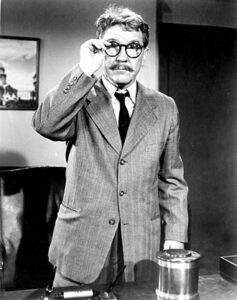
Remember Henry Bemis from The Twilight Zone? He found himself in a post-apocalyptic world where he rejoiced in the newfound luxury of unlimited reading…until his glasses broke.

Unlike poor Henry, my inability to read only lasted three weeks and ended with a miracle of new vision.
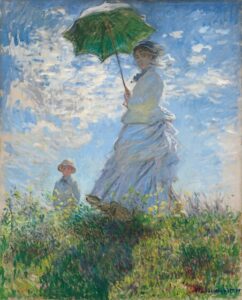


My world no longer looks like an Impressionist painting. I can see individual leaves on trees, blades of grass, street signs (oh, that’s where I was supposed to turn).

The gift of improved sight is incredible.

But the gift of being able to read again runs a close second.


~~~

Thanks to Kay DiBianca who introduced me to the worthy nonprofit Barbara Bush Foundation for Family Literacy.

~~~

TKZers: How would your life change if you couldn’t read? What is your most important reason for reading?

~~~
Cover image by Brian Hoffman


Receive a FREE short story, The Job Interview, when you join my reader’s group at debbieburkewriter.com
It’s a Touching Good Story

It’s a Touching Good Story
Terry Odell

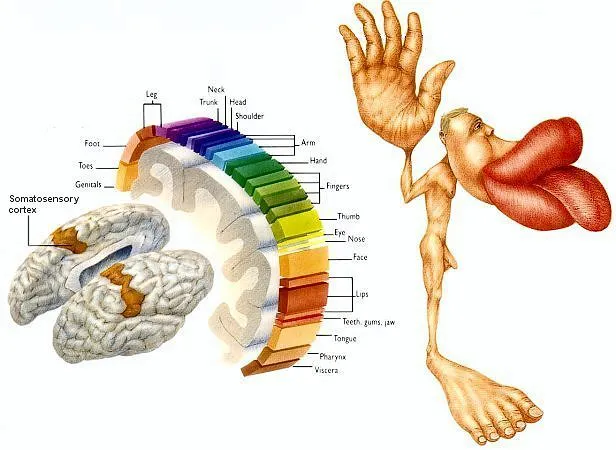
diagram showing the relationship between the brain and body parts for the sense of touchUse the five senses in your writing. We’ve all heard it. Often, writers consider that a ‘rule’ and try to incorporate all five into every scene. For me, that inches into “laundry list” territory. I liked David Morrell’s approach, which was to assume sight is a given and include two others, varying them across the scenes.

I’ve already talked about the senses of sight and smell. What about touch? It’s an important sense—and a very interesting one. Do your characters utilize it? Notice it? React to it?

What are some ways you can use the sense of touch in your writing?

Common sensations for your characters:

Weight. Heavy or light? Can it be unexpected? My marine mammal specialist Hubster was big into bones. A manatee rib is amazingly heavy for its size. When people pick it up, they’re always compensating as their senses readjust.
Smooth or rough?
Bumpy or deep indentations?
Solid, or does it give?
Warm, hot, or cold?

How does your character react if they come into contact with something painful?

Side note: Our nervous system includes a ‘shortcut’ to react to pain. Grab that hot pan on the stove by mistake? Ever notice that your hand jerks away before you feel the pain? That’s because you’ve got nerve pathways to the spinal cord that cause your muscles to contract while the sensation is still working its way up to the brain, which then interprets the feeling as pain, and that’s when you say ouch. Meanwhile, you’ve avoided potential damage.

diagram of nerves to and from the spinal cord in response to painAre you describing the sensations of walking barefoot through the mud? Trying to get a handhold on a slick surface? What about on the rough stones as the character tries to climb to safety?

How do you describe the sensations? Need a prompt or two? Here are over 200 descriptive words.

If you’ve got your character in the dark (eliminating the sense of sight), touch becomes more predominant. But, dark or not, your characters can feel the stickiness of a bloody wound, the roughness of the ropes they’re tied up with, the warmth of another character’s hand, the hardness of the chair they’re sitting in.

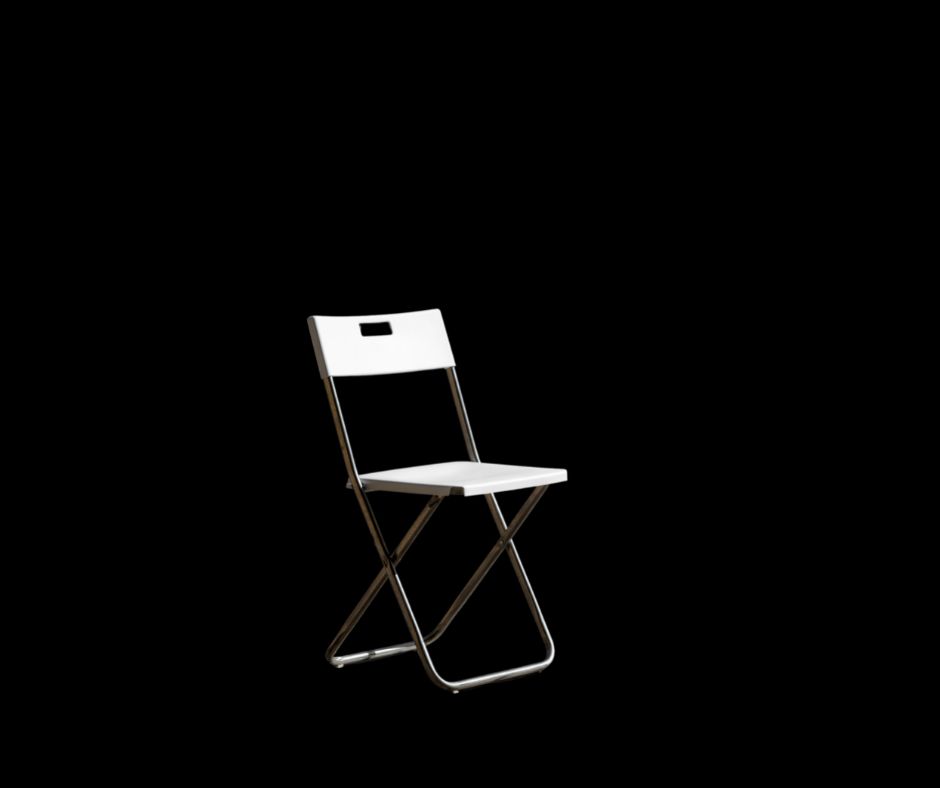
folding metal chairPerhaps more important is that there are two systems of touch. One is the obvious factual description. The chair in the interrogation interview room (have to keep up with the terminology) is cold, hard, and off balance. But there’s also the emotional side of the sense of touch.

There are completely different sensors for physical touch vs emotional touch.

If all you’re writing is what that interview room chair feels like as the character sits there, you’re missing an important way to connect with your readers. Does it trigger a visceral reaction as well as a physical one? Let the readers in on it. Maybe instead of the fear or at least the mental discomfort the cop his hoping for, what if the chair evokes happy memories of sitting at the boisterous kids table at Thanksgiving with all his cousins, joking, flipping mashed potatoes across the room at Great Aunt Martha?

When your character picks up a firearm, it might be feel cool, hard, maybe the grip is rough in his palm. Does picking up the weapon give him a sense of power? Of calmness, knowing he’s now in charge? Or is it an unwelcome foreign object? Something the character has no desire to hold, to be in the same room with, but he now needs it for survival? Or to defend someone he cares about? What emotions would those same sensations trigger in him?

Romance writers might have an edge over mystery writers here, since they’re used to showing emotion, and touch is very important to creating a bond between people. And yeah, it plays a part in sex. Even if you don’t like sex scenes on the page, there’s a lot of touching in foreplay. Touch is connected to the release of pheromones. While for men, it’s the sense of smell that triggers them, for women, it’s physical contact with the partner.

Other interesting facts about the emotional side of touch. An experiment showed that people holding hot drinks when meeting someone rated them warmer, as having a more pro-social personality than if they were holding cold drinks.

Another experiment had people evaluating resumes of others. Resumes on a heavy clipboard resulted in people being considered as having more authority. Not that they would be better in the job, but just more weighty.

Remember, senses don’t exist in a vacuum. The feel of rough burlap when the bad guy puts a hood over his victim will intersect with the sense of smell. Use both to add depth to your story.

Your turn, TKZers. How do you incorporate the sense of touch in your books? Do you connect them to the emotional side? The floor is yours.

Some references for this post:
For more about the science of touch, go here.
For more about incorporating touch into writing, go here.

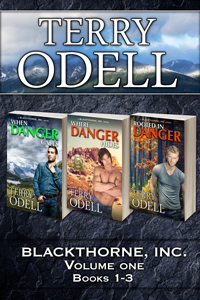
If you’ll permit a brief moment of BSP, in anticipation of releasing Cruising Undercover, Book 11 in my Blackthorne, Inc. series, the first box set of Blackthorne, Inc. novels, including When Danger Calls, Where Danger Hides, and Rooted in Danger, is on sale for 99 cents this week. Price goes up on July 27th.


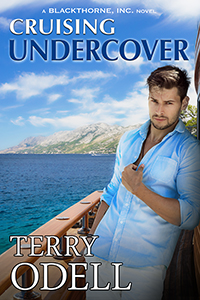
Cruising Undercover by Terry OdellNow Available for Pre-Order: Cruising Undercover.

Not accepting the assignment could cost him his job. Accepting it could cost him his life.


Terry Odell is an award-winning author of Mystery and Romantic Suspense, although she prefers to think of them all as “Mysteries with Relationships.”

What Writers Can Learn from I Was Prey

Please excuse my absence over the last 7-10 days while I was on deadline. I’m usually a better multitasker. *sigh*

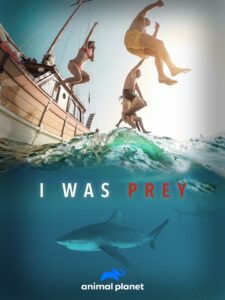
Every once in a while, a TV show comes along that’s a goldmine for writers. I Was Prey is that type of series.

If you’re unfamiliar with the show, each episode recounts the hauntingly true stories of people who found themselves in a life-or-death struggle with a dangerous animal. Whoever puts these shows together knows story structure, because each episode grips you, holds interest, and keeps you watching. It’s like a car crash. You cannot look away.

The benefit for writers comes through observation.

As each victim recounts their harrowing tale, watch their facial expressions, their involuntary tics and body movements. Listen to the inflection of their voice. It’s all real, raw emotion. These victims carry lifelong emotional and physical scars.

The grizzly bear and hippo attacks are my favorite. Not because I enjoy watching people fall prey to these animals, but because of their reaction to the animal’s power and strength. And we can use that to our advantage. The shock when they first encounter the animal, and what that looks like as they relive the moment on screen. More importantly, how they felt at the time.

Stories thrive on emotion.

It’s how we breathe life into characters.

By studying real people in dangerous situations, we can then transfer that emotion to our characters. It’s especially helpful for the young writer who has never experienced trauma, thus has an empty well of emotional upheaval to dip into.

Emotions add to the credibility of the story.

In a much-cited experiment, researchers showed several versions of the story of a father whose son is dying of cancer. The goal was to encourage listeners to donate money to charity. The versions of the story that emphasized statistics yielded the least donations. Versions focusing on the father’s feelings for his son’s condition gained the most.

Surprising? Not really. When we connect on an emotional level, we react.

Emotionally infused messages are more memorable.

Researchers have also shown how compelling stories boost hormones, oxytocin and cortisol. These hormones help us forge powerful connections. Stories that unlock strong emotions linger in a reader’s mind.

Evocative storytelling overcomes objections.

If we focus on “Just the facts, Jack,” the reader can experience analysis paralysis. Hence why there’s a fine art to weaving in research. Emotion allows readers to mark choices as good, bad, or indifferent, which in turn allows them to move beyond objections.

Emotional narratives inspire change.

For centuries we’ve told stories around the campfire. We’re wired to respond to traditional narrative structures. And so, emotion encourages empathy (say that five times fast). That emotional connection grounds the reader in the scene. Because they’ve been transported into the story, rather than merely reading words on a page, we’ve changed their mindset. Whether it’s temporary or permanent depends on the story.

A vivid, emotional story packs an extra punch and feels more real, more important. If you look back through times at moments when somebody’s beliefs changed, it’s often because of a story that hit home.

Emotion encourages word of mouth.

Emotion begets emotion. Readers who are moved by a story are more likely to recommend the book to friends, family, coworkers. They may even sing the author’s praises online.

Visceral emotion commands attention and creates a shared experience between character and reader.

Don’t tell the reader how the character feels. Show them through body cues, dialogue—external and internal—and unspoken truths. By doing so, the reader bonds with the characters.

Have you ever seen I Was Prey? Any suggestions for other documentary-style shows that writers can benefit from?

Tips to Deceive Characters and Readers

Fictional truth is never quite as clear as it seems on the surface. Deceptiveness boils down to manipulation, disguise, and misdirection. The writer can deceive characters and readers in numerous ways.
A villain might murder another character, then lie to avoid detection. This leads to more lies, more misdirection, and deepening deceptions, creating tension and conflict.

What if the main character lies to themselves about who they are or their current circumstances? Because the truth may be too difficult to accept, the charade continues. One of the most widely known examples is The Sixth Sense.

*Spoiler Alert*

Dr. Malcom Crowe, played by Bruce Willis, could not accept the fact that he died from a fatal gunshot wound. He was an unreliable character from the start of the movie, but viewers didn’t know it. Because he couldn’t accept his fate, he fooled himself into believing he survived. Thus, we believed. In hindsight, we can see where the writer dropped clues. At the time, though, most viewers didn’t catch any hints the first time they watched the movie.

Creating an unreliable narrator takes a skilled hand.

Fail, and the reader feels tricked. Succeed, and reap the rewards.

The one advantage we have is that trust is often automatic. Because narrators act as our guide, deception isn’t something readers expect. Trust is woven into the fabric of our lives. Thus, we often take it for granted.

  • When we slip behind the steering wheel or into the passenger seat, we trust the wheels will stay bolted to the car.
  • When we eat at a restaurant, we trust we won’t get food poisoning.
  • When we crawl under the covers at night, we trust the legs won’t snap off the bed.

This presumed trust is why and how authors can manipulate readers. It’s reasonable to presume we can trust the main character. And so, we do. Should we, though? No narrator is 100% reliable. Stories that force us to question our own perception are often compelling page-turners, unputdownable, and unforgettable.

Deception can occur anywhere.

We tend to first think of antagonists who are manipulative and deceptive, but heroes can deceive, too. In fact, even secondary characters are capable of deception.

What if a main character lies to protect a child?

What if a foil thrives on deceit? Or it only appears like they thrive on chaos when in truth, they’re hiding a secret? The higher the stakes, the more they’ll lie to protect it.

What if a character believes they’re right? They genuinely want to help and don’t mean to misdirect the detective. I’m talkin’ about eyewitnesses to a crime.

Think about this…

We each view the world through a filter of our past experiences, emotional baggage, scars we carry, profession—past or present—worldview, religion, politics, the list goes on and on.

For example:

When I look at an old mighty oak tree, I see a living, breathing being who’s survived for decades, maybe even hundreds of years, and has provided housing and comfort to thousands of animals. And I think, Imagine the stories it can tell.

Someone else might only see firewood.

Neither view is wrong. We’re admiring the tree through different lenses.

Psychologists refer to this as the Rashomon effect, also known as the Kurosawa effect.

This refers to a phenomenon wherein the same event is interpreted in vastly different ways by different people. The Rashomon effect is named after the popular 1950 Akira Kurosawa movie Rashomon in which a murder is described in four different ways by four different witnesses of the same crime. It is often used to emphasize the point that people’s perceptions about an event can differ considerably based on their individual personal experiences.

Thus, it is entirely possible that an event may be described in different ways by different people without any of the witnesses consciously lying.

The same holds true for our characters. And that’s where the fine art of deception comes into play. If we stay true to our character, deception could be automatic. The reader might not catch on right away, but once the truth unravels it’ll make perfect sense. Why? Because they’ve come to know how the character views the world.

Another way to show a character disguising their actions, emotions, or a secret, is through subtle clues.

Subtle clues of how characters behave can tell the reader a lot about them. Imagine people in real life when they’re not being completely honest. How they act and react say a lot about who they are. Characteristics can also show the reader a character might be deceptive—things like suspicious behavior, not wishing to engage with others, indecisiveness, or apprehension.

Dialogue is another way for writers to manipulate the reader. What characters say—and don’t say—can show a character acting evasive or blatantly lying. Tone of voice also disguises the truth, as does ambiguity.

Symbolism and atmosphere can reinforce a specific message, feeling, or idea. If you look at the setting and the character’s state of mind, think about what you want the reader to see. Is there a symbol or setting that might help foreshadow the truth or reinforce the deception?

For example, the following foreshadows danger:

  • Mirages
  • Heat waves
  • Venomous snakes
  • Fog
  • Poisonous plants

Symbols of triumph and joy:

  • Breathtaking sunrise
  • Rainbow
  • Four-leaf clover
  • Butterfly
  • Cardinal

Both these lists are so common they’ve become cliche, but we can use that to our advantage. What if you took a symbol that commonly brings joy and flipped the script? Now, the reader will no longer be able to trust their own instincts. You’re toying with their perception. Thus, able to deceive.

These are just a few ways to create deception. The possibilities are endless.

What are some ways you’ve deceived a character and/or the reader? Or name a favorite author/novel that hoodwinked you.

Library Events, Longmire, and Craig Johnson

Library Events, Longmire, and Craig Johnson
Terry Odell

Library Events***UPDATED to add the link to Johnson’s presentation. Note: His presentation begins at about the 6 minute mark.

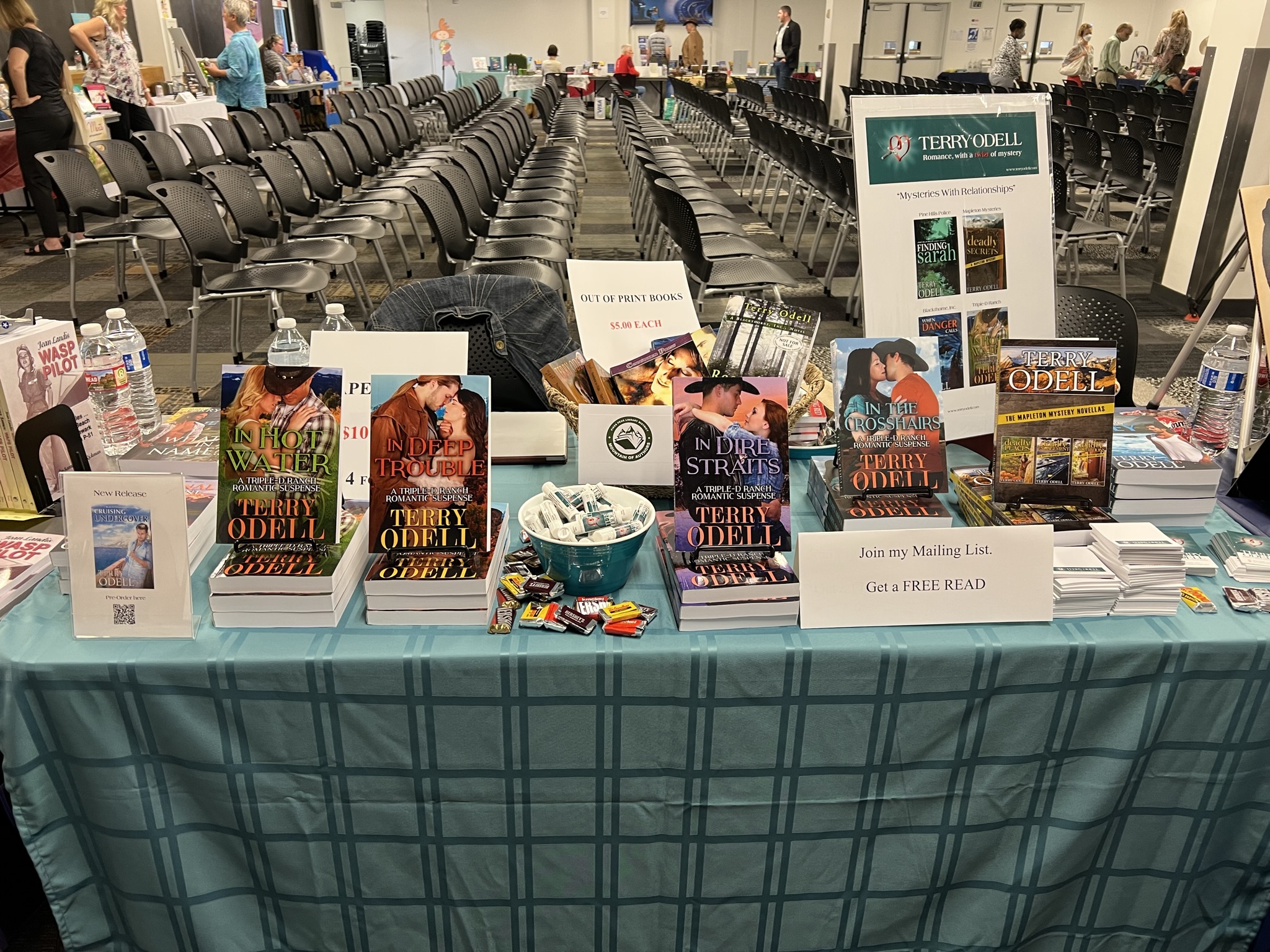
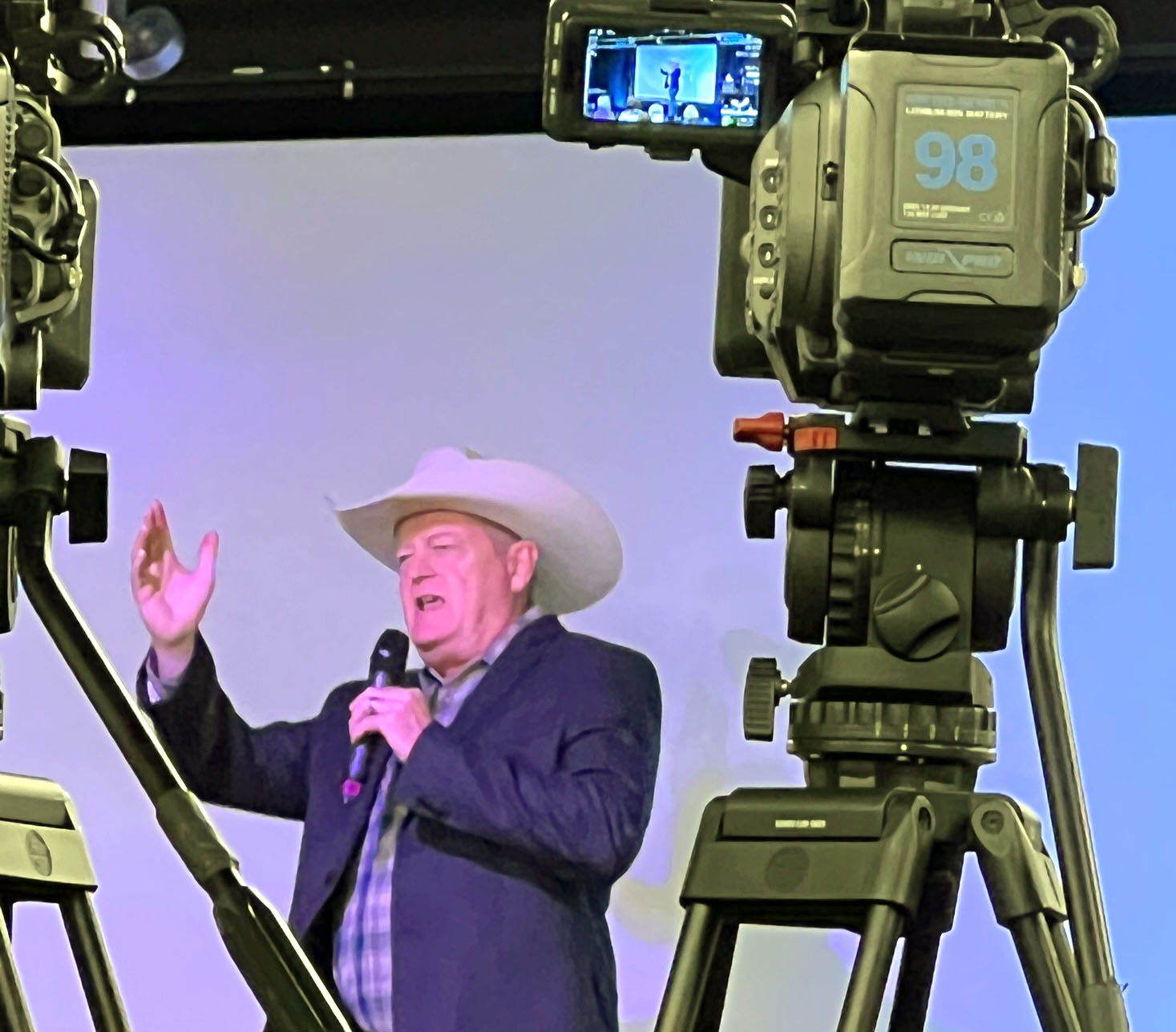
I had the pleasure of attending a local library event where Craig Johnson was the invited keynote speaker. I’d heard him speak before, and he’s got a great sense of humor, so I knew his talk would be entertaining. His talk was paired with an “Author Showcase” where 30+ authors, writing in a multitude of genres, were given tables to display their wares. I was fortunate to be accepted.

I’ve done this event before. The structure of this year’s event was different from its predecessors. Previously, there were several “writing-related” panels, separated by breaks where attendees were encouraged to wander the room and look at the authors’ wares. The final presentation was the keynote address, and attendance jumped as “normal readers” came for just that, but there were people at the venue throughout the schedule.

Library EventsMy experience this year. YMMV. This was an event focused on a well-known author. It’s not a craft workshop by any means. The majority of attendees are coming to hear Johnson speak, not buy books. Overall, most people who come to library events aren’t coming to buy books, unless, of course, you’re the keynote speaker, in which case you’ll probably sell a lot of books. Johnson also had a table full of Longmire-related merchandise.

This year, there were no panels. The authors were invited to show up about 2 hours early to set up, have lunch, and a chance to interact with Johnson. The doors were scheduled to open to the public an hour before Johnson was scheduled to speak, during which time attendees were free to roam the showcase tables. Very few did. They were there to listen to Craig Johnson, evidenced by the fact that when the library decided to open doors to the public ahead of their announced time, the ‘early birds’ filed in and found seats even though they had almost two hours to wait. Very few wandered the outskirts of the room where the authors had their tables. At the advertised “doors open at” time, a lot more people filed in and headed straight to Johnson’s table.

Johnson began his talk by saying he comes from a small town of 25 people. He was a rancher, and he still is. He spoke of wanting to become a writer. At the time, noir was the big thing, but he didn’t want that, so he came up with the idea of a small town sheriff. He wrote and rewrote the first few chapters of his manuscript. It was bad, and he knew it. He realized if he was going to write about a small town sheriff, he needed to know more about what the job entailed, so he visited the local sheriff who was willing to speak with him. They chatted for a short while, and Johnson was convinced he now had the answers and was going to write the book and become famous. So much so, that he remodeled his house, updated his ranch structures, and worked on renovating a store for his wife.

When he opened his bottom desk drawer one day (looking for something else, of course), and saw the manuscript, he realized ten years had passed. He happened to run into the sheriff at the gas station one day shortly thereafter and re-introduced himself as the man who’d come to the sheriff for advice for a book. The sheriff’s response was, “This book’s going kind of slow.”

Johnson went home and reworked the first chapter and, late one night, went against his instincts and sent it to the sheriff. Early the next morning, in the ‘quiet time’ while Johnson was on his front porch having his coffee, the sheriff sped down the ranch road and skidded to a stop, got out of his vehicle, and said, “I know who did it!”

He was wrong. In fact, Johnson sent him chapters as he wrote them, and the sheriff was wrong every time.

Johnson went on to talk about the Longmire series. When the producers wanted his input for casting Walt Longmire, Johnson had no idea. All the actors he though would be good for the part were long dead; he wasn’t up to speed on the younger ones. There were two issues to consider: whether to go with a popular actor or an unknown. The popular cowboy-hat-wearing actors, according to Johnson, were a small handful, and people would associate them with previous roles. However, Walt Longmire was supposed to be in his 50s, and unknown actors in that age range were probably unknown because they weren’t very good. The studio sent Johnson a box of CDs with all the auditions for the role, and he begrudgingly, but dutifully watched them. The audition scene was a ‘death notification’ which is one of the most dreaded jobs for law enforcement.

As Johnson told it, he got to the last CD, not having been impressed yet. He saw the actor’s name: Robert Taylor, and his first thought was “They took my advice.” Only the over-30s in the audience got that joke. At any rate, in the audition, when Taylor went to deliver the death notification, he removed his hat and put it over his heart. That gesture—and a comment by Johnson’s wife as she was watching (Oh, my!—and not for the gesture) got Taylor the job.

A member of the audience asked how Johnson and the writers got along. Johnson declined to be in the writer’s room, but asked the scripts be sent to him, and they’d discuss points Johnson disagreed with, usually explaining their rationale. One in particular, was that they wanted to make the main characters 10 years younger. Johnson objected, but their explanation was, “We want this to be a long-running series and can’t have the major players using walkers.”

Johnson spoke of his first invitation to a library event, where the librarian said they were a very small county and didn’t have much to offer in the way of an honorarium. Johnson (after looking up what an honorarium was), said he didn’t like to negotiate, so he’d ask for the same he asked of all libraries. A six-pack of Rainier beer.

Years later, he was invited to another event where the librarian handed him his honorarium, which, due to the rules against alcohol in the building, was wrapped in brown paper, taped, and tied with string. Johnson commented that it looked more like heroin than beer. At any rate, the librarian said  it had been hard to procure the beer, and Johnson said he understood that most bars didn’t serve the “cheap stuff.” She said, no, that wasn’t it. Everyone was out of stock, including the brewery. Johnson called the brewery the next day, and was told that yes, the librarian was right. They had run out. Why the shortage? This was two weeks after Longmire hit the screens, and everyone was drinking Walt’s favorite brew.

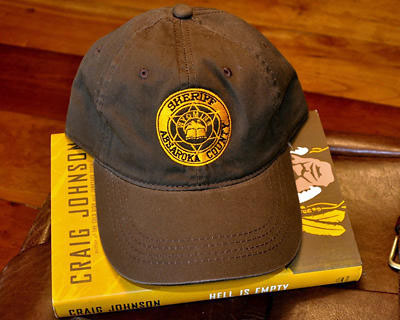
Library EventsOther “issues” for being an author with a popular television series as related by Johnson. He was paying for lunch at a café on a road trip. He was wearing one of his ball caps that said “Sheriff, Absaroka County, Wyoming” and the clerk questioned it. Johnson said he wasn’t really the sheriff, and it wasn’t a real county. She came back with “It is, too. That’s Walt Longmire’s County.” He introduced himself and she said, “Huh?” He said he wrote the books the series was based on. She said, “There are books?”

One of the best takeaways for me was in response to a question about the differences in books versus the visual media. He said books have one big advantage—the author sets up words like dominoes, and the first sentences tips the first tile, and they tumble along, propelled by the reader’s imagination.

Other takeaways from the event, on the extremely rare chance someone would invite me to give this kind of a talk:

  • Open with a VERY short background sentence or two.
  • Talk a little bit about how you began writing. Make it a story, not a recitation of events.
  • Talk a little bit about the life of a writer and experiences you’ve had. Johnson spoke of being able to donate generously to his favorite charity.
  • Read a little bit of one of your works. In this presentation, Johnson spoke of going to a high school girls’ basketball game with the father of one of the players. What he saw there led to a scene in one of his books, and he followed that story by reading it.

All right, TKZers. If you were invited to give a non-craft presentation to readers (or viewers), what would you talk about?


Cruising Undercover by Terry OdellNow Available for Pre-Order: Cruising Undercover.

Not accepting the assignment could cost him his job. Accepting it could cost him his life.


Terry Odell is an award-winning author of Mystery and Romantic Suspense, although she prefers to think of them all as “Mysteries with Relationships.”

What Writers Can Learn from Animal Communication

Zoosemiotics is the study of animal communication, and it’s played an important role in the development of ethology, sociobiology, and the study of animal cognition. Writers can also learn from zoosemiotics. Think characterization and scene enhancement.

In the animal kingdom, the sender and receiver of communication may be part of the same species or from different species. Crows, for example, warn the chippies, squirrels, and numerous small birds when dangerous predators are in the area. They do this with a vocal alarm, and every animal pays attention. When crows are around good people and animals they’re comfortable with, they blink several times per minute and have a relaxed, roaming gaze. If a predator prowls or coasts into their domain, their unblinking, hard stare at the threat warns other wildlife in the area.

Warning Coloration

In species such as wasps that are capable of harming potential predators, they’re often brightly colored, and this modifies the behavior of the predator who either instinctively knows to be wary or has learned to use caution through past experiences. Some forms of mimicry fall in the same category. For example, hoverflies have similar coloring to wasps. Although they’re unable to sting, wasps avoid them.

Coloration changes in characters include reddening or flushed neck and/or face (anger or embarrassment) or the lack of color i.e., pale (fear, anxiety, or nervousness).

Behavioral Changes

Canines such as wolves and coyotes may adopt an aggressive posture, such as growling, head leveling, or baring teeth to warn a potential predator to stay back, that if they approach, the canine is ready and able to fight. Rattlesnakes use their telltale rattle—it means, if you come near me, I will strike. Certain amphibians with a bright colored belly and a back that blends into the environment, flash their belly when confronted by a potential threat, indicating they are poisonous in some way.

Behavioral changes in characters include a snarled lip, clenched fists, pitching forward, or lunging at the threat (anger), mouth dryness, licking lips, avoiding eye contact, clenched hands/arms, jerky steps, fidgeting, defensive posture (fear, anxiety, or nervousness), slumped shoulders, tears, flat speech (sadness), raised eyebrows, eyes widening, slacked jaw (surprise), open body language, smiling (happiness) etc.…

Stotting

An example of prey to predator communication is stotting, a highly noticeable form of running shown by some antelopes such as a Thomson’s gazelle. Stotting indicates the animal is healthy and fit, thus not worth pursuing.

Stotting behavior in characters: Think about the difference between jogging and running for your life. The feet may be sloppy or the character zigzags, trips, or falls (fear).

Predator to Prey

Some predators communicate to prey in ways that change their behavior. The deception makes them easier to catch. Take, for example, the angler fish. Fleshy growth protruding from its forehead dangles in front of its jaws. Smaller fish try to take the lure, thereby positioning themselves directly in front of the angler fish’s mouth.

Describing deceptiveness in characters would take an entire post, but you get the picture. 😉

Human & Animal Communication

We are all part of the Natural World. Various ways in which humans interpret the behavior of domestic animals and/or wildlife fit the definition of interspecific communication. Although dogs can use vocal communication, they mainly display nonverbal communication through the use of body language, such as tail carriage and motion, ear and eye position, body position and movement, and facial expressions. Recognizing the correct nonverbal cue will help decipher what the dog is telling us.

More character nonverbal cues include sweating, trembling, damp eyes, muscles tensing, crossed arms or the drawing in of limbs, the body recoiling (fear, anxiety, nervousness), sudden backward movement (surprise), relaxation of muscles (happiness), etc….

While observing a dog’s body language it’s crucial to observe the entire dog, as well as the situation or context. For example, a dog’s wagging tail does not always mean Fido’s happy. A tail in motion is often noticed first, but the rest of the dog is board-stiff, and the ears are back and the dog’s in a couched position, the full picture tells you Fido’s not happy with the situation.

5 Common Groups of Canine Signals

Keep in mind, a dog could use more than one response at a time. Hence why it’s important to analyze the entire dog, not just one body cue (the same applies to characters).

Fido may start with a display of excitement, then decide the stimuli is a threat and switch to aggressive posturing, or send fear signals, or both.

As we review each group, notice the similarities to us (characters).

Fearful Communication

When a dog is frightened, he’s likely to react with his whole body. He may lick his lips, yawn, keep his mouth tightly closed, cower or lower his body, lower or tuck his tail, or flatten his ears. He may also tremble or shake, avoid eye contact, or lean back to avoid the frightening stimulus.

The body language may be a combination of several signals and/or may appear as a progression through these signals as the dog’s response intensifies. Sometimes, the complete absence of active signals can speak volumes. A dog that won’t eat food or treats, is avoiding people when they approach, or freezes when someone reaches for him—a “shut down” appearance—is demonstrating fear. Sadly, we often see this behavior in shelters if the dog doesn’t get adopted. Shelter dogs also may display high arousal or excitement.

Arousal Communication

The arousal in shelter dogs could be due to many factors, including age, confinement, lack of physical and/or mental outlets, and personality. An arousal/excitement response could indicate joy directed at a certain person, another dog, or toy. If the context is a favorable one, the dog should have soft, relaxed body and eyes and mouth, along with a wagging tail that jumps for attention. He may also play-bow—rear end in the air, front end lowered—to demonstrate excitement. Other cues are jumping, mounting, and mouthing. Mouthing should be soft (no teeth).

Arousal behaviors can also be directed at unfavorable stimuli, such as an unwanted human, animal, or situation. Arousal signals in this context may be coupled with fear signals, such as trembling or a low/tucked tail. Or the arousal signals are paired with aggression—barking, lunging, anxious pacing or spinning, or biting of leash, clothing, or the unfavorable stimuli. The dog’s fur can pilo-erect (hackle), his ears bent forward or at attention, his stance upward and erect. The tail is often up and wagging stiffly, and the eyes are wide-open and focused on the target. He could also bark, growl, and/or lunge.

Anxious Communication

If a dog becomes stressed, he may exhibit excessive panting, pacing, and lack of focus. Similar body language to a fearful dog, when in reality, he’s filled with anxiety. Which is why context is key. A dog that jumps at the kennel door as a person approaches is displaying arousal/excitement. Whereas a dog bounding off the side walls of the kennel displays anxious communication signals.

Aggressive Communication

Aggression is a normal and natural behavior in animals, triggered by a perceived threat. Aggressive vocalizations and body posturing are warning signals.

In dogs, we understand aggression through body language that includes stiffening or freezing, eyes wide with the whites visible (called whale eye), tense mouth or curled lips, wrinkled nose, bared teeth, barking, growling, and air snapping.

Relaxed Communication

We all love dogs in a relaxed position, like he doesn’t have a care in the world. Mouth relaxed, lips slightly parted. A smiling appearance. Head and ears relaxed in a neutral position, body loose, eyes soft. His tail may be swishing back and forth, or even wagging in a circular motion. My favorite is when a dog’s lying in the frog-leg position. Those froggy legs are hard to resist!

Over to you, TKZers! You may be using animal communication and not realize it, because many behaviors are similar to our own body language. If you’d like to give an example from your WIP, go for it. Otherwise, please include different animals and how they communicate.


MS Word Keyboard Shortcuts

Whether you’re working today, grillin’, or hanging poolside, Happy Memorial Day! For those outside the U.S. a belated but heartfelt Happy Remembrance Day!
I hope the following shortcuts will help save you productivity time when you return to the keyboard. I’ve broken the keystrokes into two sections — Windows and Mac — to act as a quick and easy reference guide.

Please note: Today is all about MS Word. For other shortcuts, such as inserting advanced symbols/characters, WordPress, or YouTube, see Writing Hacks: Keyboard Shortcuts. Please ignore my wonky columns. 😉

COMPOSING & EDITING                          WINDOWS                MAC


Create a new document                              Ctrl-N                          ⌘-N

Open document                                          Ctrl-O                         ⌘-O

Save document                                           Ctrl-S                         ⌘-S

Open “Save As”                                           F12                            ⌘-Shift-S

Close document                                          Ctrl-W                        ⌘-W

Print document                                            Ctrl-P                         ⌘-P

Select All                                                     Ctrl-A                         ⌘-A

Copy to clipboard                                        Ctrl-C                         ⌘-C or F3

Paste from clipboard                                    Ctrl-V                          ⌘-V or F4

Delete selection & copy to clipboard             Ctrl-X                          ⌘-X or F2

Undo last action                                           Ctrl-Z                         ⌘-Z or F1

Redo last action                                           Ctrl-Y                         ⌘-Y

Add comment                                             Ctrl-Alt-M                    ⌘-Option-A

Turn revision tracking on/off                          Ctrl-Shift-E                  ⌘-Shift-E

Run spelling/grammar check                        F7                              ⌘-Option-L or F7


TEXT FORMATTING


Bold                                                         Ctrl-B                         ⌘-B

Italics                                                        Ctrl-I                           ⌘-I

Underline                                                  Ctrl-U                         ⌘-U

Double underline                                       Ctrl-Shift-D                 ⌘-Shift-D

Underline words, not spaces                     Ctrl-Shift-W                ⌘-Shift-W

Strikethrough text                                       Alt-H, 4                     ⌘-Shift-X

All caps                                                     Ctrl-Shift-A                ⌘-Shift-A

Superscript text                                         Ctrl-Shift-+                 ⌘-Shift-+

Subscript text                                             Ctrl-=                        ⌘-=

Increase font size                                        Ctrl-Shift->                ⌘-Shift->

Decrease font size                                      Ctrl-Shift-<                ⌘-Shift-<

Insert hyperlink                                           Ctrl-K                        ⌘-K

Open font dialog box                                  Ctrl-D                        ⌘-D

or Ctrl-Shift-F

PARAGRAPH FORMATTING

Left-align text                                              Ctrl-L                          ⌘-L

Right-align text                                            Ctrl-R                         ⌘-R

Center-align text                                         Ctrl-E                          ⌘-E

Justify text                                                  Ctrl-J                          ⌘-J

Indent paragraph                                        Ctrl-M                         Ctrl-Shift-M

Remove indentation                                   Ctrl-Shift-M                 ⌘-Shift-M

Change to single spaced                           Ctrl-1                          ⌘-1

Change to double spaced                          Ctrl-2                          ⌘-2

Change to 1.5 spaced                               Ctrl-5                          ⌘-5

Remove paragraph formatting                     Ctrl-Q

Open Apply Styles task pane                     Ctrl-Shift-S

Open Styles pane                                     Ctrl-Alt-Shift-S              ⌘-Option-Shift-S

DOCUMENT NAVIGATION & VIEWS

Move up one paragraph                           Ctrl-Up arrow            ⌘-Up arrow

Move down one paragraph                       Ctrl-Down arrow       ⌘-Down arrow

Move right one word                                 Ctrl-Right arrow        ⌘-Right arrow

Move left one word                                   Ctrl-Left arrow          ⌘-Left arrow

Move to top of document                          Ctrl-Home                ⌘-Home or ⌘-Fn-Left arrow

Move to bottom of document                    Ctrl-End                    ⌘-End or ⌘-Fn-Right arrow

Go to dialog box                                       Ctrl-G or F5              ⌘-Option-G or F5

Switch among last four places in doc        Ctrl-Alt-Z

Switch to Print Layout                               Ctrl-Alt-P

Switch to Outline View                              Ctrl-Alt-O

Switch to Draft View                                  Ctrl-Alt-N

Switch to Read Mode View                        Alt-W,F

Split document window/remove split          Ctrl-Alt-S

Display Help                                                 F1

FIND AND REPLACE

Find                                                           Ctrl-F                          ⌘-F

Find and Replace                                       Ctrl-H or Alt-H-R          ⌘-H-R

Find tab (inside Find and Replace)              Alt-D


SPECIAL CHARACTERS RECOGNIZED BY FIND AND REPLACE

Type these special characters into the Find box to search document:

  • Em dash
  • En dash
  • Em space
  • En space
  • Copyright symbol
  • Registered symbol
  • Trademark
  • Section symbol
  • Paragraph symbol
  • Ellipsis
  • Double opening quote
  • Double closing quote

SPECIAL CHARACTERS IN DROP-DOWN MENU

Within the Find and Replace dialog box, choose one of the following special characters:

  • Em dash
  • En dash
  • Nonbreaking hyphen
  • Optional hyphen
  • Nonbreaking space
  • Section symbol
  • Paragraph symbol

I find it easier to create my own shortcuts for special characters and symbols I use on a regular basis. For example, if you want to create a shortcut for the em dash, go to Insert > Advanced Symbol > Special Characters. At the bottom of the dialog box click Keyboard Shortcut and a new dialog pops up. In the Press New Keyboard Shortcut box, type Ctrl-E or whatever is easy to remember. Click OK and you’re done. Easy peasy. The same applies to symbols, only you’ll choose Symbols instead of Special Characters.

FORMATTING IN FIND AND REPLACE

Click Replace, then More to expand dialog box

Click Format and a list of different formatting types appear. Search by font, paragraph, tab, language, frame, style, or highlight.

Select the type of formatting you want replaced. A dialog box opens, showing all the formatting options available to search for in that category.

For example, the Find Font dialog box is a copy of the Font Formatting dialog box, with all the same formatting options.

Specify formatting type. Then click OK

Repeat these steps to find additional types of formatting. You can even search for text with both specific font formatting and paragraph formatting at the same time.

Click Replace With

Click Format

Select formatting type (font, paragraph, tabs, language, frame, style, highlight)

This is especially helpful if you need to highlight italicized words for the publisher. In my career, I’ve worked with five different publishers and every house required it be done during final edits.

Click OK

Select replacement option: Replace, Replace All, Replace Next

Click OK

Click Close

DISCUSSION QUESTIONS

I’m curious if highlighting italics is an industry standard.

Where are my Indie authors who do their own formatting? Do you highlight italics? What program do you use for formatting? Is highlighting italics a requirement for that program?

Traditional authors, does your publisher ask you to highlight italics during final edits?


Used Shoes, Tchotchkes, and Books ~ Adventures at a Flea Market

Photo credit – Pixabay

By Debbie Burke

@burke_writer

These days, book sales are down for many authors including myself. So I’ve been on the lookout for out-of-the-box ideas. Recently, an unexpected and unconventional opportunity came my way.

For years, we’ve vacationed in a Florida community of approximately 1500 homes. The development caters to snowbirds but is also a permanent residence for many locals as well. Over time, I’ve built a small but loyal following there among book clubs and readers I met at Zumba classes. I also recognize many people by sight from daily strolls around the complex.

During one Friday walk, I spotted a notice on a bulletin board advertising a Community Flea Market the next day.

Hmm.

I’ve attended art festivals and outdoor library events but never a flea market. Since there was no cost for a table, I figured why not?

Being away from home, my book inventory was small but I had plenty of business cards, handouts with book descriptions, and a mailing list sign-up sheet. Friends offered use of a folding table and chair.

I opted for KISS bookkeeping (Keep it simple stupid). Cash only, no coins, no credit cards, no checks. I printed a sign that read: ALL BOOKS $10.

The venue was one-acre open parking lot edged with Florida thatch palms, near a pond and a jasmine-covered gazebo.

Many vendors were flea market pros, equipped with pop-up shade canopies, display cases, racks for hanging clothes, professionally printed signs, beverage coolers, etc.

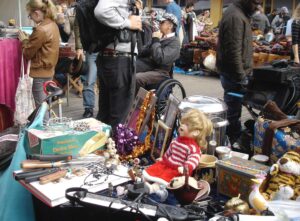
Others were obviously clearing out closets, cupboards, and garages: used clothes, small appliances that were missing parts, odd dishes and glassware, tchotchkes, old music cassettes, rusted tools—no extra charge for dust.

And…lots of tables with used books priced at 25 cents or five for a dollar.

Gulp.

How could I compete, selling new books even at the discounted price of $10?

I set up my table between a young couple who were professional jewelry vendors and a gentleman who was a closet cleaner.

The couple not only brought a tent, they had two fans. As the sun and temperature climbed, they graciously shared their shade with me.

The closet cleaner on the other side mentioned his nephew was also an author and gave me the man’s book for free. His items included a pair of brand-name shoes in new condition. I bought them for $2.

Through the morning, hundreds of shoppers turned out. People from Zumba class dragged their friends and neighbors to my table, saying, “You’ve got to read Debbie’s books!”

Word of mouth recommendations are wonderful!

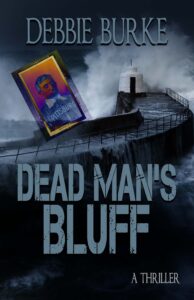
The fourth book in my series, Dead Man’s Bluff, is set in Florida during Hurricane Irma. That caught the attention of locals and those copies sold out first.

Residents recognized me from daily walks and said, “I didn’t know you were an author.” Several bought books.

The new community social director, whom I hadn’t met before, stopped by and told me about a small book club. The following Monday, I met with them and sold two more books there.


A couple of years before, I’d met a Minnesota snowbird named Kim who looked exactly like my main character–a tall, slender redhead with a French braid. She became a fan and a friend.

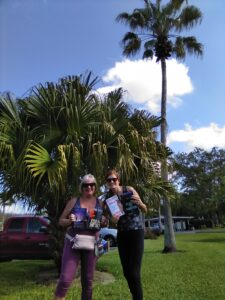
That Saturday morning, I saw Kim/Tawny and she suggested taking pictures of us together holding books. The jewelry seller from the neighboring booth snapped shots with my phone.


Two unusual encounters happened—one head-shaking, one heartwarming.

First, the head-shaker. There’s a woman I know from Zumba class who dresses exquisitely, drives a Lexus, and lives in a nearby luxury subdivision. She stopped at the table and thumbed through my books with interest and enthusiasm. After she chose three of them, she set down a quarter and said, “I owe you a nickel.”

Huh???

I told her the books were 10 dollars.

“Oh, I thought the sign said 10 cents.” She put down the books, picked up her quarter, and left.

I might have dismissed it as a mistake except for a prior encounter. The year before, I was selling a new release at cost to Zumba dance-mates. This same woman read the back cover and decided she wanted it for her upcoming weekend trip to New Orleans. “I’ll take it with me today [Friday] and give it back to you on Monday.”

Uh, no. That would make it a used book that I couldn’t sell as new.

She apparently thought I was a librarian, not an author struggling to make a living.

When I asked her for the money, her eyes went wide with disbelief. But she did pay.

Second, the heart-warmer. A woman I only knew by sight was strolling through the flea market and stopped at my table. During our chat, I learned she had been a flight attendant and now manages rental properties within the community.

Photo credit – autumnsgoddess0 – Pixabay

She scanned the handout of my book descriptions and said, “Seven books is quite an accomplishment. But I’m not a reader.” However, she set a $10 bill on the table.

“Which book would you like?” I asked.

“I don’t want a book,” she replied. “I just want to encourage you because what you’re doing is hard.”

Wow.

Her kindness brought a lump to my throat.

When the flea market was over, I’d sold ten books and collected names for my email list–not enough to make the USA Today list but a good morning’s work.

The following day, while I was taking a walk in my $2 shoes, a man hailed me and said he’d bought Dead Man’s Bluff on Kindle. He liked it but he thought there should be more sex. 

Oh well, ya can’t please all the people all the time.

Over the next week, folks told me after seeing the books at the market, they’d ordered them online. 

Encounters at the flea market led to an invitation to another much larger book club where I met more new people and sold more books. By the time I went home, only two books remained in my Florida inventory.

Sales reports showed a nice little spike that I attribute to contacts made at the flea market.

The moral of this story: don’t be afraid to seize unconventional opportunities. You never know where they might lead.

You might even walk away with a new pair of shoes, too. 

~~~

Today, I have to be offline and will respond to comments later. In the mean time, here are a couple of discussion questions:

Have you ever tried an unusual venue to sell books? How did it work out for you?

~~~


Memorial Weekend Sale – Binge on seven Tawny Lindholm Thrillers. All books only $.99 each. Sale ends May 30. Sales link.

Macro-Level Jump Cut Scene

Full Disclosure: Jump cut may not be the correct term for the advice that follows. Years ago, the late great John Yeoman, beloved writing coach and friend, called the cinematic technique a jump cut during one of our lengthy craft discussions. Thus, it’s the term I’ve always used. Then I reread JSB’s 2018 article to prepare for this post. Jim’s correct use of the term is more widely known. Nowhere could I find the description of what I call a jump cut. Nonetheless, the two techniques are basically the same. When I use the term, I’m referring to the macro-level. Jim’s post focused on the micro-level.

Clear as mud? Okie doke, moving on…

The macro-level jump cut is a technique where the writer drops the reader into a harrowing situation—in media res—conflict builds, tensions rise, all without the reader knowing what proceeded this scene (aside from a few hints). The scene ends at a pivotal moment. Next scene rewinds the clock to the days or hours leading up to the opener. We’ve all seen this play out in movies and net-streaming series. Novelists use it to ensure readers will stick around to find out how the protagonist wound up there. Inducing curiosity and/or fear in the opener strangleholds the reader, forcing them to keep flipping pages.

The payoff that follows must live up to the hook. All my Grafton County Series novels (except the first book) open with the first half of the jump cut scene. Chapter One rewinds the story. It isn’t necessary to label this scene as a prologue. I do, but it could also be the first chapter. If you choose to include it as a prologue, Chapter One still needs its own hook.

Remember the pivotal moment where we left the reader? No matter where the payoff is—first plot point, midpoint, or climax—continue the jump cut scene from there. Newer writers may be tempted to copy/paste the first half of the scene. Resist that urge. Trust the reader to connect the dots. They’ll recognize the setting and situation.

Let’s look at two examples.

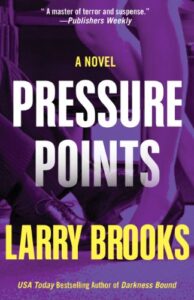
The Prologue of Pressure Points by Larry Brooks opens like this…

It was the echo of gunfire that kept him running. His body had long ago abandoned hope, pushing on faith alone through a fog of pain and fatigue. Logic screamed that this was pointless, while another voice whispered it was all a lie. Both were old friends that had served him well, and like Jesus on his fortieth desert night, he was tempted.

But neither voice was real. The gunshot had been real. The echo of it was real.

And so he ran. For his very life, and for those left behind. He knew that precious little time remained, and what was left was as critical as it was dwindling. Everything he had ever learned or believed or dreamed was at stake. He was out of options, down to a final chance that, win or lose, would be his statement to the universe.

It was his time. He had come full circle.

It is not paranoia when they are really out to get you. When they are right on your ass, downwind of the scent of your blood, closing fast.

Whoever the hell they are.

He ran all through the night’s relentless downpour. Low branches whipped his forehead and cheeks until they bled. He could feel his heart pounding in every extremity of his body, his vision clouded by sweat and rain. Both elbows were bloodied from a fall when his foot caught an exposed root, sending him skating wildly across a patch of decaying leaves. Leaping over a rotting log, he felt his right ankle turn impossibly inward, and the ensuing bolt of pain seized his leg like a pair of gigantic hands twisting with the enthusiasm of a gleeful sadist. But he had no time for this or any other distraction, not on this night, when, one way or the other, his past would finally and conclusively catch up with him.

Chapter One rewinds to 41 days earlier. I can’t show you the payoff scene without ruining the ending. Trust me, it’s amazing.

Please excuse my using an excerpt from one of my books. I searched my Kindle for other examples but couldn’t find any that jumped out at me.
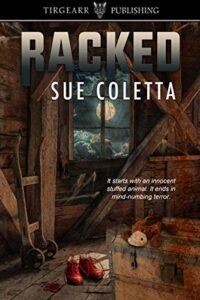
The Prologue of RACKED opens with…

In the vast openness of the snowmobile trails, solar-powered Christmas lights danced across pine needles on the branches I separated while the lanky silhouette of the Serial Predator tossed shovelfuls of dirty snow on a mound. Was he digging a fresh grave? My calf muscles jumping-jacked beneath my skin, begging me to run. But I couldn’t. Not yet.

A row of thin birch trees bowed over the makeshift grave, thin branches curled like the skeletal fingers of a demon protecting its prey. The overcast sky blurred the hazy moon into non-compliance, its glow hastened by gathering storm clouds.

Who did he plan to bury here? My gloved hand clawed at my throat.

Please tell me Noah’s still with Mrs. Falanga. All the saliva in my mouth dried, my insides squirming, screaming for release. What if Childs left his post long enough for the Serial Predator to sneak past him? What if he murdered everyone in the house? What if he abducted my son after Mrs. Falanga tucked him in bed? She might not realize he’s missing till dawn.

Beyond the tree a flashlight balanced on its end, a smoldering yellow glow pointed toward the heavens. Cigarette smoke billowed through the haze. Hot ash tumbled into the darkness when he flicked the filter into the arctic December air.

I backed away from the tree.

Crunch.

My right heel froze on the pinecone.

The Serial Predator slung his portable spade over one shoulder and stalked toward me. “Hello?”

Male voice. Almost familiar. Where had I heard it before?

Holding my breath, cramps squeezed my calf muscles as I crouched behind the conifer, flames tunneling down my sciatic nerve to my partially raised foot, bent at such an angle mind-numbing pain riddled the whole right side of my leg.

The Serial Predator hustled back to the shallow grave, and I lowered my wet boot to the snow. The moment he turned his back, I nosedived toward the base of the tree trunk, slithering beneath the branches like a frightened garter snake. Snow piled around the bottom helped shield the top half of my body. I pulled my legs out of view. A glacial breeze swept across my wet hair, and I could not stop shivering, the icy snow soaking through my jeans and wool coat.

With one smooth motion, he swiped his flashlight off the snow and aimed the beam toward the pine tree. “Hello?”

After the blinding light struck my eyes, I would never be able to describe his face or any distinguishable features, the black hoodie masking his identity. He could be anyone. Or no one.

With both gloved hands covering my nose and mouth, I held back icy breath that threatened to reveal my hiding spot.

“Is someone there?”

A cylindrical sphere lasered through the pine needles, and I ducked, my bare cheek trembling against a clustered mass of icicles. Snow boots clomped around the tree, then stopped—inches from my face.

Dear God, don’t let him find me.

Chapter One rewinds to 26 hours earlier.

Have you used this technique in one of your novels? There’s nothing wrong with writing a linear storyline. This is just another option. Let’s discuss.

The Rule of Three

“There are three rules to writing a novel. Unfortunately, no one knows what they are.”

This quote is usually attributed to W. Somerset Maugham, and it’s been kicked around a lot over the years. There may, or may not, be some truth to it depending on your view, your experience, and your sense of humor. But there is something to the rule of three.

The rule of three is a staple in the writing world. It’s known by many names—the triple, the triad, the trebling, and the trilogy. The three-act structure of beginning, middle, and end is a prime example of the rule of three.

The rule of three suggests that a trio of events, characters, or phrases is more effective, satisfying, or humorous than other numbers. Think of the “walks into a bar” jokes. An Englishman, an Irishman, and a Scotsman or a brunette, a redhead, and a blonde.

The rule of three can apply to words, sentences, and paragraphs. It can be used to frame chapters, whole books, and a series of books. The three-rule also applies to poetry, oral storytelling, and films.

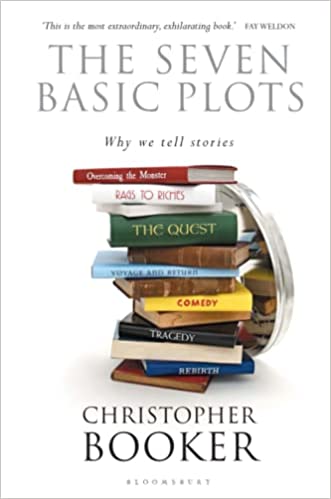
What got me going on the rule of three this morning was stumbling on a writing resource titled The Seven Basic Plots: Why We Tell Stories. It’s written by Christopher Booker and first published in 2004. Apparently, Booker worked on this book for thirty-four years.

I’m going to quote from Mr. Booker’s book where he deals with the rule of three:

“The third event in a series of events becomes ‘the final trigger for something important to happen.’ This pattern often appears in childhood series like Goldilocks and the Three Bears, Cinderella, and Little Red Riding Hood. It also appears in adult works like Fiddler on the Roof, A Christmas Carol, and Shakespeare’s Julius Caesar.

In stories, the Rule of Three conveys the gradual resolution of a process that leads to transformation. This transformation can be downwards as well as upwards. The Rule of Three is expressed in four ways:

1. The simple or cumulative three. For example, Cinderella’s three visits to the ball.

2. The ascending three where each event is more significant than the preceding. For example, the hero must first win bronze, then silver, then gold.

3. The contrasting three where only the third has positive value. For example, The Three Little Pigs—two of whose houses were blown down by the Big Bad Wolf.

4. The final or dialectical form of three. For example, Goldilocks and her bowls of porridge. The first is wrong in one way, the second is wrong in an opposite way, and the third is just right.”

I also stumbled upon a formula for the rule of three. This is often used in joke telling and comedy writing. It’s called the SAP test.

S = Setup (preparation)
A = Anticipation (triple)
P = Punchline (story payoff)

Let’s look at a joke by comedian Jon Stewart:

“I celebrated Thanksgiving in an old-fashioned way. I invited everyone in my neighborhood to my house, we had an enormous feast, and then I killed them and took their land.”

The rule of three appears so many times in so many ways that it’s barely noticed as a delivery technique. In the rule’s simplest form, outlined in Aristotle’s Poetics, it’s the classic beginning, middle, and end which is a time-proven structure. But think of all the times you’ve encountered the rule of three:

The truth, the whole, truth, and nothing but the truth.
Life, liberty, and the pursuit of happiness.
Reading, ‘riting, and ‘rithmetic.
Ready, aim, fire.
On your mark. Get set. Go.
Veni. Vidi. Vici.
Solid, liquid, and gas.
Three wishes.
Stop, look, and listen.
Snap. Crackle. Pop.
Blood, sweat, and tears.
Turn on. Tune in. Drop out.
Faster. Higher. Stronger.
See no evil. Hear no evil. Speak no evil.

What about you Kill Zoners? How often have you used the rule of three in your works? And can you add to the examples?