Killzoneblog.com

Killzoneblog.com

New Life For Novellas?

by James Scott Bell

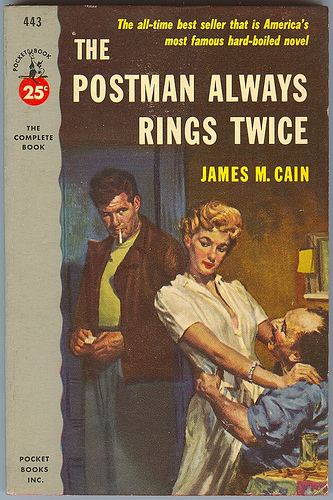
One of the all-time crime classics, cited by most noir aficionados when such lists come out, is James M. Cain’s The Postman Always Rings Twice. From its grabber opening line—They threw me off the hay truck about noon—it moves like a runaway train from lust to murder to retribution. It was turned into a movie twice: the superior John Garfield–Lana Turner version (also with Raymond Burr, making it a noir trifecta) and the lesserJack Nicholson–Jessica Lange re-do.

But did you know this book is a novella? It comes in at just under 35,000 words. There’s a power punch in a good novella (roughly 20k–40k words). The Old Man and the Sea is just north of 26k. But in the traditional publishing world, it is a rare bird, with the occasional breakout, e.g., The Bridges of Madison County.

Because of its trim size, a novella carries with it some buyer resistance. A publisher has to charge a price that justifies its print run. But a customer might think, yeesh, I’m not getting a “real” book here. Thus, only a “name” can really sell them. James Patterson proved that with his BookShots line.

I love the novella form. It’s a way to stretch my writing wings, as it were, without overspending my time. But until the indie revolution, it was not a viable career move. Now it can be an additional arrow in the scrivener’s quiver. And not just for a little extra lettuce. I give away a novella as a reader magnet and it has grown my email list substantially.

So it will be interesting to see how Hachette, one of the Big 5, makes out with its latest move.

From their press release:

NEW YORK, NY (August 31, 2026) – Union Square & Co., an imprint of the Grand Central Publishing Group and the Hachette Book Group, announced the launch of Singularity, an ambitious new novella program that will publish 10-12 titles each year.  Launching in September 2026, and helmed by Mika Kasuga, Editorial Director, Union Square, this curated line of paperbacks with French flaps addresses a rapidly evolving reading landscape, offering voracious readers bingeworthy stories designed to be devoured in a single sitting.

Singularity is a dynamic collection that showcases the power and versatility of the novella form. Built around the idea that compelling storytelling does not require length to achieve depth, this program brings together a diverse portfolio of shorter works that span a broad range of genres, styles, and cultural perspectives. These novellas are rich narratives in a concentrated, exhilarating format—accessible, sophisticated, bite-sized delights for a world flooded by distraction.

Emily Meehan, SVP & Publisher, Union Square says, “The Singularity program was born out of conversations Mika and I had about reduced attention spans and the desire for a more snack-sized reading experience that doesn’t compromise depth for length. We wanted to celebrate the novella as a format and use the program as yet another platform to showcase Union Square’s commitment to create books that resonate deeply with readers—especially ones looking for accessible, sophisticated stories in our ever more distracted, digital reality.”

The debut Fall 2026 slate features a dynamic mix of masterworks, cult favorites, and striking new voices:

I Have No Mouth, and I Must Scream by Harlan Ellison (September 1, 2026): A definitive, scarily relevant new paperback edition of the multi-award-winning author’s post-apocalyptic masterpiece. This volume features a new foreword, exclusive archival photos, and historical essays by Ellison. 

Zero Lives Remainingby Adam Cesare (September 1, 2026): A pulse-pounding, nostalgic “gamers versus ghosts” slasher from the Bram Stoker Award-winning and USA Today bestselling author of Clown in a Cornfield. 

The Waiter by Kwan Ann Tan (November 3, 2026): A speculative interactive fiction debut that allows readers to chart their own pathways through a surreal future London, with 11 different endings and countless journeys towards them.

I’m intrigued by this. The late Harlan Ellison’s novella has been widely anthologized. Can it find a new audience at a Kindle price point of $11.99, and paperback at $16.77?

Will an “11 different endings” debut be a draw? (For younger readers, perhaps yes.)

What is the market these days for bloody slasher fiction? (Probably more than I realize.)

Personally, I prioritize full-length fiction, especially my Mike Romeo series (new one’s coming soon!) But as discussed in my last two posts, I have lots of high concept ideas that I’d love to develop. (For my tips on writing a novella, see here.)

Over to you now, folks. What are your thoughts on the novella form, price points, and potential market? Have you written them yourself?

Reader Friday-Where Were You 25 Years Ago?

I’m sure this question has been asked before. (Just like, “Where were you when you heard JFK was assassinated?”)

Where were you and what were you doing on 9/11/2001, when you heard about the attack on America in NYC, Virginia, and Pennsylvania?

I was at work as an orthopedic medical assistant. The entire staff and a few patients were huddled around a TV in one of the offices.

Seeing those images changed us forever.

So, TKZers, your turn. Where were you on 9/11/2001?


Just Who Are You Calling Old?

NOTE: This blog is an oldie but goodie.

What’s old?
That’s easy. Anyone ten years older than me.
Yes, that’s an old line, but we writers need to be careful who we call old.
In 2020, calling someone who is 60 “elderly” can anger your core readers.
It can even make readers laugh – at you.

Some readers snicker at Ellery Queen’s description of the “elderly” Inspector Queen who was “not yet 60.” The dynamic mystery writing duo were young whippersnappers of 29 when they created Inspector Queen.
To be fair, I thought 60 was ancient when I was in my 20s. Now, not so much.

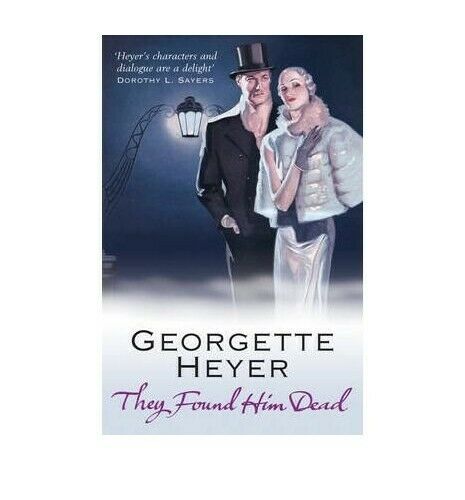
Another longtime mystery reader said, “They Found Him Dead” by Georgette Heyer starts with a sixtieth birthday party for Silas Kane who is described as being “very old. As far as I can see, the book was published in 1937.”

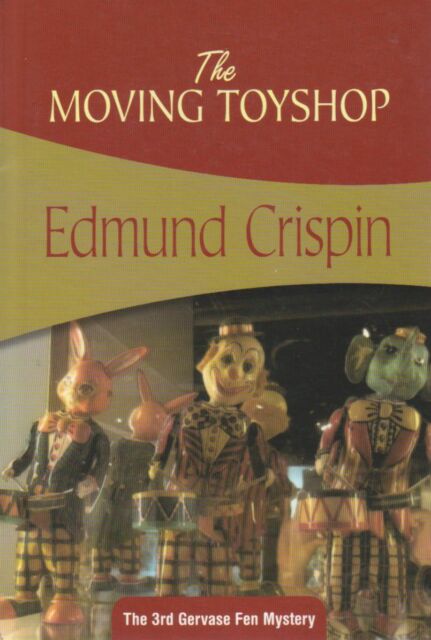
How about Edmund Crispin’s “The Moving Toyshop” where the dead victim is described as “an elderly woman in her late 50s”?
What? That’s outrageous!
Except those books were published decades ago, and “old” in 1930 was a lot different than “old” in 1970 – or 2020.

Think back to your grandparents. In 1970, my beloved grandmother was an old woman at age 60. She had a big black purse (stuffed with photos of her grandchildren), sturdy shoes, crispy gray hair and a flour-sack figure. Granted, Grandma had a much harder life than I did, but people used to age faster than they do now.
The government says we’re old at 62. That’s when Americans can start collecting Social Security benefits – and haul them in for a long time. Social Security.gov says, “About one out of every three 65-year-olds today will live until at least age 90, and one out of seven will live until at least age 95.”
Sixty-five is the retirement age in the US, but many people that age still see themselves as young and vigorous.

So if you’re creating an older character for your novel, here are some things to consider:
Older people do not have equal protection under the law. If you have an older person who’s going to be assaulted, many jurisdictions have extra penalties for bashing seniors. In Massachusetts, a man was “arrested and charged with unarmed robbery, assault and battery on a person over the age of 60, assault and battery by means of a dangerous weapon (shod foot – aggravated) and mayhem.” In other words, he kicked an older person with his shoe. That’s something to consider when you have your bad guy attack an older person.
Seniors are often stereotyped as defenseless. But that ain’t necessarily so. An 88-year-old woman was assaulted and carjacked in a Walmat parking lot. She fought back with her cane and survived. “I’m a tough old broad,” she boasted.
And speaking of tough, how about the 82-year-old “award-winning female bodybuilder who turned the tables — literally — on a home intruder and beat him so badly after he broke into her house that he had to be taken to the hospital.” It’s true, and it happened in Rochester, New York. The bodybuilder broke a table over the creep – and she was just getting started.
Statistically, that Rochester Wonder Woman would be considered old, even by today’s new and improved standards.

So just how old do you want to make a senior character in your novel?
A CBS news story says, “Research from John Shoven, a prominent economics professor at Stanford University, suggests that if your chance of dying within the next year is 1 percent or less, you might be considered ‘middle aged.’”
Shoven has a chart that shows “the threshold for men transitioning beyond middle age increased from about age 44 in the 1920s to about 60 today.”

Oddly, 44 would be true “middle age.” Sixty may be the “new” middle age for men, but there are very few 120-year-olds roaming around.
Shoven says, “And finally, if your chance of dying within the next year is 4 percent or higher, you might be considered ‘very old’ or ‘elderly.’ . . . This threshold for men increased from about 65 in the 1920s to 76 today.” So men are “old” at 76.
“Shoven suggests that reduced mortality rates correlate roughly with improved health and vitality at all ages, and can be used as a proxy measure for aging.”
If you’re a woman, you’re even luckier – and younger. Consider this cheery news, ladies, from Shoven.
“By these measures, women today transition out of middle age around 65, a number that has increased from the late 40s in the 1920s. ‘Old’ for women today is about 73, which increased from the late 50s in the 1920s. And ‘very old’ today is about 80, an increase from about 67 in the 1920s.”
People don’t automatically get ‘old’ at 70. Wikipedia sums it up this way:
“Gerontologists have recognized the very different conditions that people experience as they grow older within the years defined as old age. In developed countries, most people in their 60s and early 70s are still fit, active, and able to care for themselves. However, after 75, they will become increasingly frail, a condition marked by serious mental and physical debilitation.”
That’s why my character Margery, in my Dead-End Job series, stays a perpetual 76. I can’t have her aging naturally, or she’ll be too old to go on adventures with Helen Hawthorne.
Personally, I like the question the sage Satchel Paige may or may not have asked:
“How old would you be if you didn’t know how old you are?”

***************************************************************************

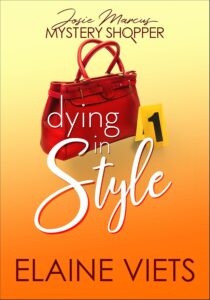
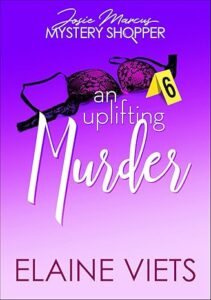
Cozy lovers! Three of my Josie Marcus, mystery shopper mysteries are on sale throughout September. DYING IN STYLE, MURDER IS A PIECE OF CAKE, and AN UPLIFTING MURDER are $1.99 each this month.


What I Learned at Producer and Screenwriting School

by Debbie Burke

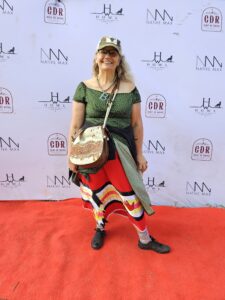
Holly Soriano is an independent film producer in Billings, Montana who’s creating a course about what they don’t teach you at film school but should.

For several weeks, I’ve been a beta tester for her zoom classes in screenwriting and film production.

Holly Soriano

Holly is zany, fanciful, and funny (she does standup as a side gig) with a passionate interest in mental health issues. Her full-length feature comedy My Apocalyptic Thanksgiving stars a hero with special needs. Her upcoming production is about a woman sent to an eastern Montana psych ward where she finds a fairy godmother who will grant her Three Wishes.

Holly has an MFA in screenwriting, studied with screenwriter Corey Mandell, and worked in the film industry in Los Angeles before coming home to Montana.


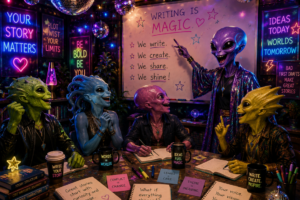
Her teaching style is whimsical. For example, her Power Point slides feature colorful aliens playing the roles of hopeful writers, melodramatic directors, and dream-crushing marketing executives.

Holly is quick to point out that Hollywood is not the center of the universe. The growing indie film industry demonstrates that good movies can be made anywhere and don’t necessarily require monster budgets.

Just as indie publishing democratized books, indie films leveled the playing field for movies. Before then, Holly says there was a class structure where actors and directors were at the top and those behind the scenes doing the actual work were looked down on.

She pokes fun at divas, striking a nose-in-the-air pose, flipping her hair, and proclaiming, “I’m an ar-teest!” 

While writing a book is largely a solo effort, movie making is a collaboration among multiple contributors with different skill sets.

In the 16 shorts Holly has made, she learned how to do every job on the set. She understands where each piece fits into the puzzle and how they all work (or don’t work) together. Her mistakes teach lessons to make the next film better.

Short films (40 minutes or less) are an excellent training ground for filmmakers.  

Thinking like a producer, Holly says, makes a writer realize, “Every line in a screenplay costs money.”

She says, “Films can be made cheap, or fast, or good, but not all three.”

In another example of threes, she explains: “Films are made three times. The writer writes one movie. The director writes another movie. The post-production editor looks at thousands of hours of uncut footage and asks, ‘how can I make this mess into a movie?'”

Raising money is always the big question.

Holly suggests first to put together free resources, like your own working knowledge, no-cost locations, and friends and family willing to help.

You can apply for grants available through state film commissions, charitable foundations, or educational institutions. State film commission offices may support a short that promotes recreational or cultural activities in your area.

Partnering with a nonprofit aligned with the film’s subject is another option. For example, Easterseals runs a Disability Film Festival where four of Holly’s shorts were shown.

An “angel” might be an A-list actor who sponsors the film. That is usually an actor seeking interesting, unique parts to stretch their talents beyond typical roles.

Once you make a movie, what do you do with it?

Theatrical release used to be the main option but no longer. Today films can be distributed through TV streaming services, Spotify, YouTube, libraries, on planes and cruises, etc.

During screenwriting class sessions, Holly emphasized the importance of stakes. Put the hero in a moral dilemma to reveal their character. Force them to make difficult choices. What are the consequences of their actions?

The screenplay for a feature film used to be 120 pages. Now it’s 105 pages or fewer, a reflection of rising costs and shorter attention spans of the audience.

While conflict is important, Holly advises not to have conflict for the sake of conflict. Don’t throw in a random fistfight just because you think it’s time for an action scene. Be sure conflict serves the story.

Interiority is different in films than in books. In books, the author goes inside the character’s head to express their thoughts, feelings, doubts, and fears. Movies are visual. Emotions need to be shown by actions that represent the feelings.

In addition to regular class sessions, Holly also met with each of us individually to discuss our projects. For the others, she reviewed their story outlines or scripts. In my case, she graciously took extra time to read the first book in my thriller series, Instrument of the Devil. She encouraged me to complete Blake Snyder’s Save the Cat beat sheet to help me translate literary to visual.

In the book Instrument of the Devil, the hero Tawny is introduced at home. Holly suggested a film version could instead open with a shot of the massive, imposing Hungry Horse Dam. Tawny’s broke and visits the dam hoping to get her former summer job back. Soon after, she becomes ensnared in a terrorist cyberattack on the electric grid.

Brilliant idea, Holly! That makes a much more visually dramatic first scene and ties in perfectly to the story.

Holly also thinks Nicole Kidman may want to play Tawny, the 50-ish widow, because Nicole believes there should be more stories featuring mature female leads.

Holly, from your lips to Nicole’s ears!

We met one-on-one several more times and Holly converted me from I’m really not interested in making movies to Wow, this is challenging and fun!

She offered various times for each class to accommodate people’s schedules. That added up to a total of 37 sessions that she taught. Thirteen of the 15 beta testers attended multiple sessions in both screenwriting and producer school. 
Being a beta tester for Holly’s upcoming courses opened a window on a creative world I hadn’t experienced before.

Thank you, Holly!

~~~

Learn more about Holly, her projects, and upcoming classes at her website and her production company Darkness and Joy.

 ~~~

TKZers: Have you written screenplays? Have you considered adapting your story for the movies?

~~~


Please check out Instrument of the Devil and let me know if you think it has movie potential.

Sales link

Revisited: Handwriting Versus Typing

Since Kay is on hiatus, we’re visiting a previous post by her, from October 2022.

Handwriting Versus Typing

I was listening to a podcast a few years ago that addressed the benefits of handwriting versus typing. The interviewee (I don’t remember her name) was a graduate student who had forgotten to take her laptop to a class one day and had to resort to taking notes by hand. To her surprise, she discovered she had retained more of the lecture information than she normally did. This led to a research project to compare the benefits of the two methods of taking notes.

The memory of that podcast recently prompted a question in my mind: outside of taking notes in class, does anyone write in long hand anymore? If so, what kind of writing lends itself to longhand vs. typing. I found some interesting information online.

*** 

In a 2021 article on whenyouwrite.com, Jessica Majewski summarized several benefits which I’ve paraphrased here:

Writing by hand is more focused. There are fewer distractions than using a laptop where there are constant temptations to check email or read the latest news story. Also, there are no word processing limitations when writing by hand. The author can draw a mind map, jot side notes, or doodle images without having to open another app.

But typing has its advantages, too. Doing research is a breeze if you’re on your laptop. Just hop over to another app to search out the information you need. Copy and paste articles into your research folder and keep going. But the primary advantage to typing is speed. And sooner or later everything you write is going to have to be typed into a word processor, so unless you’re fortunate enough to have a secretary to do the transition, you’ll have to do the additional work yourself.

But how do the different methods affect creativity? Majewski makes the following case in her article:

“When you are writing by hand, your cognitive processes are more involved than when you type and this can lead to some random springs of ideas. And at the pace of handwriting, you’re not worried about your hands outpacing your brain.”

In a 2017 article on qz.com, Ephrat Livni makes the following statement:

“Brain scans during the two activities also show that forming words by hand as opposed to on a keyboard leads to increased brain activity. Scientific studies of children and adults show that wielding a pen when taking notes, rather than typing, is associated with improved long-term information retention, better thought organization, and increased ability to generate ideas.”

That all sounds good, but does anybody actually write the first draft of a novel by hand? Well, yes. Here are a few authors you may have heard of who have written one or more novels by hand:

  • Joyce Carol Oates
  • Stephen King
  • J. K. Rowling
  • Quentin Tarantino

***

As an experiment, I wrote this blog post in long hand. My thoughts flowed as I was writing, and there was a sense of freedom in the process that was different from typing. Fortunately, I was able to read my own handwriting when I finished, and I transferred it to a Word doc.

Well, I’m almost out of paper, so I’ll stop now. We haven’t touched on another creative method: Speech to Text. Maybe we can cover that in a later post.

***

So TKZers – Do you ever write in long hand? What advantages or disadvantages have you noticed using handwriting vs. typing? Has this article convinced you to give handwriting another go?

What Should You Write Next?

by James Scott Bell

Last week we talked about creativity, and getting ideas through the “What if?” game. I’ve always subscribed to the notion that the best way to get a great idea is to come up with lots of ideas, and then toss out the weak ones. That leaves me with several good ideas to choose from. Now the question is which one should I choose to spend the next four or five months writing? (Your mileage may vary.)

When I first got going in this game, I determined to be like a movie studio. I’d have one project that was given the “green light.” That was my work-in-progress. But I would also have a few ideas “in development.” The question then became, which one should get the green light next?

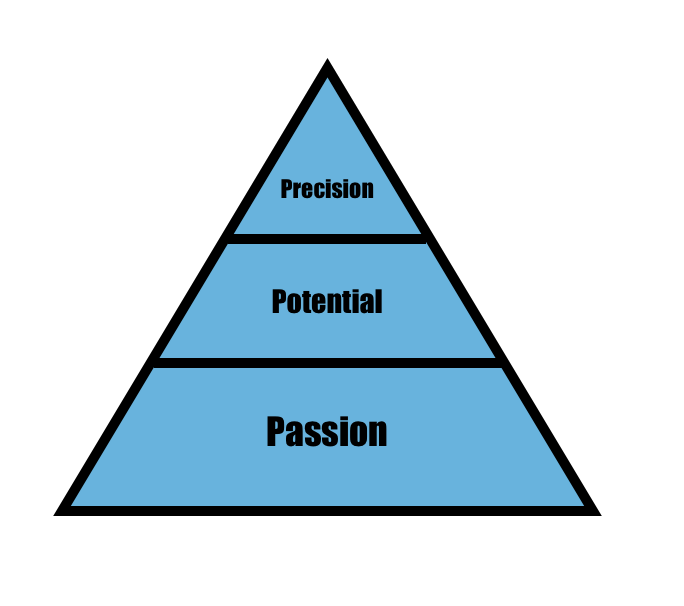
I came up with a three-part test.

Passion

The first, and most important test, is passion. If I don’t feel emotionally connected to an idea or concept, I don’t want to pursue it. Because it is passion and heart that separates our work, not only from other writers, but also the scourge of AI-slop.

I have a list of questions and assign a score, from 1-10, for each.

  1. How excited are you about the concept as it stands now?
  2. How invested are you in the main character?
  3. Is there a meaning involved, something worth saying?
  4. As a prediction, how excited do you think you’ll be about the book two months from now?

Potential

Since I write to put bread on the table, I want to consider the potential for my project in the marketplace. My questions:

  1. Does my plot have high enough “death stakes” (physical, professional, or psychological)?
  2. Is there a fresh setting, or a twist on a familiar one?
  3. Can I envision a knockout ending?
  4. Does my cast of characters turn me on? [Note: Once you start writing the book, there will be moments when the writing bogs down, when you’ll start to question your passion for the project. The fastest way to overcome this is to spend time deepening your characters, via backstory or voice journal. You’ll get excited again, and quickly, too.]

Again, score 1-10 for each.

Precision

Now, I write a logline for each project. A logline is Hollywood-speak for a sentence that captures both the essence and market potential of a project. For example:

A great white shark hunts for food in the waters of a New England town at the height of tourist season.

A teenager takes a time-traveling DeLorean into the past, where his young mother gets the hots for him, and where he must get his father to win her again or he’ll cease to exist.

Detective partners who dislike each other must bond in order to stop a serial killer who chooses victims based on the Seven Deadly Sins.

Score 1-10 for each logline on how well it captures market potential.

I add up the scores for each project, and the “winner” gets the green light.

This method gives me some objectivity, because it’s easy to just grab the next bright idea and start running with it. Again, I’m going to spend months with the project. I owe it to myself to think a little on it before I take the plunge.

One last note on the problem of AI-slop. When it comes to the writing itself, we all know it can be “handed off” to a bot. What that produces, at least as I see it, is heartless, soulless competence. It certainly does not produce the kind of writing that makes readers yearn for more books with your name on them.

Will a bot ever produce writing that does? Perhaps not! One writer puts it this way:

LLM-generated prose is, by virtue of the process that creates it, frozen verbal leftovers. An LLM is perfectly capable of imitating … compound sentences, especially the most basic, unsurprising constructions (“This is not that; it’s actually this.”). And because the vast majority of humans have no desire for anything better, LLMs appear to be good writers. But they’re not….The machines we’ve created can do only the bare minimum passably well because the same is true of us.

I choose to believe that the human element—honed by hard work, experience, honesty, and heart—will always produce a better book than a machine. [Note: Em dashes are mine!]

Now over to you. How do you choose which book to write next? If it’s the next in a series, how do you decide on plot and setting and new characters?

Emotional Words of Wisdom

Emotion is the key to compelling, engaging, immersive fiction. Show your characters experiencing emotions, and make your readers feel something in response.

Today’s Words of Wisdom pulls excerpts from three previous TKZ posts about putting emotion into your fiction. Joe Moore discusses creating an emotional connection between your characters and your reader. Jordan Dane lays out key ways to infuse emotion in each scene. James Scott Bell looks at putting emotion into the most intense moments of each scene.
As writers, when it comes to our readers, if they have little or no emotional connection with the characters in our books, they won’t care what happens to them. And if they don’t care, we’re in trouble.

An emotional connection is created when a reader formulates conclusions about our characters’ personalities based on what we show the characters doing and saying. It’s not good enough for the narrator to “tell” the reader what a brave and generous guy our protagonist is or that our antagonist is a heinous villain. We have to show the reader through the characters’ actions, dialogue, interior thoughts and reasoning, and the way they treat others and their life choices from one situation to the next. Then a connection can start to form.

A solid approach to establishing each of these is to ask: what would you do? How would you react to a situation that you’ve created in your story? It doesn’t matter whether you’re assuming the persona of the protagonist, antagonist, secondary character or a mere walk-on. You are a human and so are they. They should act and react like humans, think like humans, and reason like humans. Only when they do will the reader form the critical bond or connection. Otherwise, all you have is two-dimensional paper-doll cutouts lacking depth and dimension.

Some helpful techniques include using universal experiences. Who has not told a lie to avoid hurting someone’s feelings? Who hasn’t been faced with deciding between what’s right and what’s easy? Who hasn’t felt animosity or even hate for someone who has wronged you? When your character is in a similar situation, examine how you would react?

If you want your reader to like your character, analyze what it is that makes you like or love someone in real life. Use those emotional traits to build your character. And the opposite is also true. To create a character you want the reader to hate or despise, look for someone you dislike and figure out why. Are they egotistical, self-centered, mettlesome, cold, cruel, or mean? Utilize those universal feelings to build a strong antagonist. But never lose sight of the fact that you’re dealing with humans. Even Hannibal Lecter and Darth Vader had strong human characteristics, good and bad.

One universal element that we all can relate to is pain—both physical and mental. Don’t be afraid to dish out the pain when it comes to developing your characters. It’s okay to put pain in their path because it gives them an opportunity to overcome something and by doing so become stronger or wiser or both. Pain, like any other obstacle, is an opportunity for character growth.

The more human you can make your characters, the better chance you’ll have of your readers forming a connection with them. Always consider how you would react, then have your characters act in a similar, logical manner. And throw in a shot of pain once in a while to keep things interesting.

Joe Moore—October 3, 2012


10 Key Ways to Infusing Emotion into Each Scene

1,) Put the reader into the scene using the senses – If you expect your reader to “feel” the world you’ve created, put them into every scene. If your protagonist is walking down a dark alley with gun drawn, you have to be there alongside him, author. What sounds can he hear? What does he smell? What are his physical reactions to his surroundings and how does that play on his fear that’s building? Anticipation is a key element in creating suspense and building on tension. Have patience to let the tension mount.

2.) SHOW don’t TELL – If you truly write the scene as if the reader is looking through the eyes and body of your relatable character, that will put them into the scene. If you only “report” what the character is thinking, it distances the reader from your character. ‘Telling’ takes all the unexpected discoveries from the reading experience and it stifles what the reader can imagine. The reader doesn’t have to think. They’re ‘told’ what to think and imagine. Focus on the action of your character and give them a physical reaction. Rather than ‘telling’ the reader that your character is afraid, show how that fear manifests itself in trembling fingers, trickling sweat, and a punishing heart beat.

“Don’t tell me the moon is shining. Show me the glint of light on broken glass.” Anton Chekhov

“Good writing is supposed to evoke sensation in the reader—not the fact that it is raining, but the feeling of being rained upon.” E. L. Doctorow

3.) Make your characters relatable and sympathetic – Dare to give your villain an odd sense of humor or have her fight for a cause she cares deeply about, so her wicked obsession feels real. Your mercenary could be a loner, but give him a dog to take care of. Load up the emotional baggage in your character’s past and force him or her into a conflict where they have to face their worst fear. Dare to make your perfect hero vulnerable. All these human frailties create relatable and sympathetic characters and will have readers rooting for them.

4.) Reach for the emotion/Make it over the top – Milk the scene for every drop of emotion. It’s not just about choosing the right words. It’s about creating effective imagery triggers that will connect with readers. If you think you’re done with a scene, go back over and layer in MORE of what that scene is about. Ratchet up the emotion beyond where you might normally go. The added touch pays off when you’re using words to put the reader into the scene.

5.) Foreshadow the danger or the obstacles ahead – If anticipation ramps up the suspense, foreshadowing helps the page turning pace of your novel and keeps the reader invested. It creates ‘flow’ between scenes and chapters. Don’t waste a scene ending or a chapter ending. Make it work for you. If a scene or chapter ending fizzles to a close, that gives the reader a chance to put the book down. Tease them with a hint of things to come and they won’t want to let go of the story.

Jordan Dane—May 19, 2016


So how do we show when we’re in the intense portion of a scene?

Nancy Kress, my former colleague at Writer’s Digest, had a great article on that in the January, 1993 issue. She gives five ways. Here they are, with my comments.

Physical Reaction

This is the one we usually go to first. Because it’s effective. Rendering how the character feels physically helps the reader vicariously feel it, too.

The trick is to find original ways to do it. Readers are used to sweaty palms, racing hearts, and twisting guts.

Does that mean never using them? Not at all. Just give them a little boost:

Her hands were slick and slippery now.

Her heart thrummed like a souped-up engine. 

His stomach rocked in a greasy hammock. (This is like something I read once in a Stephen King story, but can’t remember which one. Anyway, you get the idea).

So: Don’t just grab the first description that comes to you. Play around a little. Add your touch of originality.

Action

Actions speak louder than words, right? You can always show the character doing something as a result of the emotion.

Again, watch out for the instant answer. An angry boss pounding his fist on the table, for example. That’s expected. Add something to it.

How about pounding a coffee mug down, spilling the brew?

How about yanking out a drawer, scrambling the contents?

A good exercise is to visualize the moment and let your character improvise, try different things. Go a little wild. You’ll hit on something surprising that seems right. When that happens, you know it will surprise the reader, too.

And a surprised reader is a delighted reader.

Dialogue

What a character says in the context of a scene should reveal emotion. And the way you can tell if you’ve succeeded is that you don’t need an adverb to make it clear.

Not:

“Get out of here, John!” Nancy said angrily.

“That’s the last time I pet a lion,” said Tom offhandedly.

No finer example of how it’s done is this clip from Hemingway’s story “Hills Like White Elephants.” A man and woman are sitting at a train station, sipping drinks, as the man jauntily tries to tell the woman that an abortion is no problem. (The mastery of the story is that the word abortion is never used).

“Then what will we do afterward?” [Says the woman]

“We’ll be fine afterward. Just like we were before.”

“What makes you think so?”

“That’s the only thing that bothers us. It’s the only thing that’s made us unhappy.”

The girl looked at the bead curtain, put her hand out and took hold of two of the string of beads.

“And you think then we’ll be all right and be happy.”

“I know we will. You don’t have to be afraid. I’ve known lots of people that have done it.”

“So have I,” said the girl. “And afterward they were all so happy.”

That last line hits hard. We know how she feels from the context and word choice. We don’t need said the girl sarcastically.

James Scott Bell—June 2, 2024

***

What are your thoughts on forging an emotional connection with readers, infusing emotion into each scene, and upping the emotional intensity?

Reader Friday-On This Day

Every day on planet earth is unique.

It’s somebody’s birthday, or the date of another’s death, or perhaps a graduation day. Each day’s uniqueness is proven by the fact that it will never come again. Today, Reader Friday, 9/4/2026 is no different. This is the first day of its appearance…and also the last day the sun will shine on it or the moon will rise over it.

Okay, enough philosophy for one Friday morning.

I ran across an interesting website while brainstorming for today’s post. I’m sure there are other similar websites. Here it is:  https://www.onthisday.com/events/september/4

You can click on it and find scads of interesting happenings through the ages on this day.

Like this one:  In 1609 Henry Hudson, a famous explorer we studied in school (not sure if kiddos today learn about him, though…) discovered the island known as Manhattan. And, the rest is history!

9/4/1609 will never be repeated, thank you very much, because we certainly don’t need another Manhattan!

TKZers, if you escaped to that website, please share what caught your attention about today’s date in history.


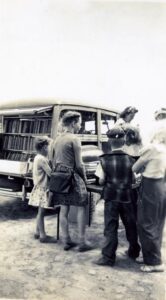
And just for fun, who knows what this is…straight out of history?