
Pulling Up My Big Girl Pants
Terry Odell

My previous editor focused primarily on copy editing. She made sure everything was clean and flowed properly. If she found something she didn’t think worked for the plot or the story, she’d point it out, but there weren’t a lot of those. She, however, is no longer editing, and I had to find a new one. I’d used her once before, and I liked her work, so I contracted with her for Beyond the Frame.
About two weeks after I sent her the manuscript, she gave me my feedback. She’d done some markups in the manuscript (I still don’t like Track Changes!), but this time, she did the bulk of her work in an editorial letter, not something she did the first time.
Wow! That’s what the big, traditional publishers do. Should I feel like I’ve moved up? I don’t know. This is the opening to her letter:
You write clean, readable scenes. The dogs are wonderful and they do real work. Baxter and Sammy carry more emotional freight than most secondary characters in this genre. The Hughes family is alive on the page; Mandy in particular. Wyatt’s “You done good, Colton” is a lovely, earned beat. The gallery confrontation with Iris is the sharpest scene in the book. And the horseback sequence has real cinematic pull. Enjoyable and likable characters.
I was feeling pretty good about that, but then she goes on.
So, this letter isn’t about your sentences. It’s about the building they’re sitting in.
I give a quick peek to the bottom of the Word doc. You know, where it gives the page count. It says this is page 1 of 16. SIXTEEN? That’s sixteen pages of editorial notes to go through. Suggestions, and her reasoning behind them. And this doesn’t count all the comments she left in the manuscript.
I admit that most of what she says makes perfect sense. Some of it makes okay sense, and a few points I don’t agree with at all. What’s scary to me is she’s pointing out all the things I don’t like about writing a novel—the “rules” or “conventions” or “reader expectations. Things I suppose I should think more about as I’m writing.
As a reader, I don’t like to expect things. I don’t like the pinch points, the beats, the mirror moments, the three act structure. I’m a pantser, and I write what happens. It usually works. I have an organic feel for how things need to play out. Her comments remind me of discussions about books in Mr. Holtby’s English class. When it came to symbolism and “deeper meanings” we would ask if the author had those in mind when they were writing. He said, “They probably felt they were finding the ‘right words’ and it was up to us to see what they meant once they were put together.” My editor was doing a full Mr. Holtby in her feedback. Pointing out things that I was clueless about as I was writing, but they ended up on the page. Who knew?
Now, to be honest, I had some doubts about this book. I knew right off that I wasn’t adhering to either the romance or the mystery/suspense conventions. Sure, the hero and heroine fall in love and have their promise of a Happily Ever After, but they don’t get there in the conventional way.
So, I’m going to be doing a LOT of revising, rewriting for the next I don’t know how long. I can say that I’m not ready to commit to a release date. It’s like I’m putting together a puzzle, but some of the pieces are in the wrong place, and some don’t exist yet, and when I build them, it messes up other pieces. I remind myself I’ve managed to get over thirty novels finished and published, and that sometimes the work is just plain hard.
On page 15, she gives me a 12-item punch list to go through.
And on page 16, she closes her letter with this:
The good news, and I mean it: almost every beat you need is already written. The gallery scene, the eulogy, the truck confession, the horseback night, the morning-after retreat…they exist. Most of this revision is changing why they happen, not whether. That’s a rewrite inside the same architecture, which is a much smaller job than it looks like from here. (She included a happy face emoji, too.)
Oh, and I have a cover! Thanks to Kim Killion of The Killion Group.
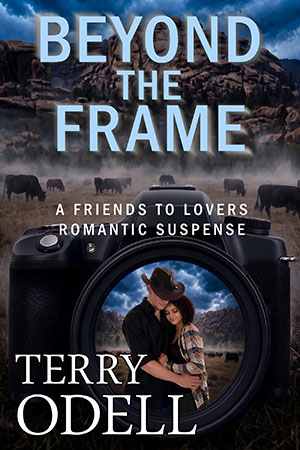
Your turn, TKZers. The floor is yours.
Find me at Substack with Writings and Wanderings
Deadly Ambitions
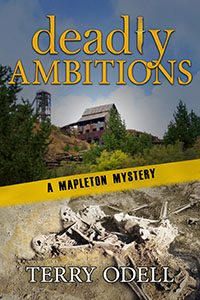 Peace in Mapleton doesn’t last. Police Chief Gordon Hepler is already juggling a bitter ex-mayoral candidate who refuses to accept election results and a new council member determined to cut police department’s funding.
Meanwhile, Angie’s long-delayed diner remodel uncovers an old journal, sparking her curiosity about the girl who wrote it. But as she digs for answers, is she uncovering more than she bargained for?
Now, Gordon must untangle political maneuvering, personal grudges, and hidden agendas before danger closes in on the people he loves most.
Deadly Ambitions delivers small-town intrigue, political tension, and page-turning suspense rooted in both history and today’s ambitions.
 Terry Odell is an award-winning author of Mystery and Romantic Suspense, although she prefers to think of them all as “Mysteries with Relationships.”
I always cringe a little when I send feedback to my clients. Was I too harsh? Do I sound mean? I know the old ‘hamburger method’ of giving feedback, but sometimes I forget. Oh, well, I hope they also learn to pull up their big girl panties like you did.
I’ve been with my critique group so long that we skip the hamburgers. We want to know what’s wrong, and assume anything without comments means it’s good. But this is the first time I got an actual letter instead of simply a marked up manuscript, and it’s a whole different ball game.
Hi Terry,
What’s the name of your editor at Beyond the Frame?
Who did your book cover? It looks amazing!
I bought 100Covers as they had a sale on.
Thanks.
Wendy
Glad you liked the cover. I’ve used The Killion Group for almost all my covers. Kim does a good job.
I think I might have burst into tears if i received that although it’s good to have the close reading and the honesty. I’d love to know how you feel about it after you have finished the revisions. If it is better or just different in your eyes.
I’m still working. I know a lot of it is better from an overall story point of view, although my readers have accepted my ‘outside the box’ approach over dozens of novels.
What’s the ol’ saying? “Ninety percent of writing is re-writing.” That’s where magic happens. Good luck with revisions, Terry.
Thanks, Sue. The challenge has been transitions and keeping track of when things happen. When I move a scene, everything leading up to it and following it has to track. Can’t have things happening before what leads up to them.
Terry, as a fellow pantser I hear ya. Those big girl pants feel really uncomfortable.
Pam asks a good question: is it better or just different? After 30+ books, you know which changes will work and which ones aren’t worth doing.
You’re wise not to force an arbitrary deadline. The book will be ready when it’s ready and your fans will be happy.
I stopped revising “my” draft when things were just different, but this editor has pointed out things I didn’t see. It should be better when everything’s done. And, my readers won’t have seen the ‘before’ version, so they won’t be comparing it to anything.
I had a similar but different experience with my first published novel. My developmental editor told me in no uncertain terms that my character’s voice was wrong—too educated, too calm etc for a 21 year old woman just released from prison on parole. I spent five weeks rewriting every line in that novel, and then two more weeks doing a second pass to make sure her attitude as shown in the novel matched who she was. Hardest revision I’ve had to date, and I’ve had some hard ones.
I’ll second Debbie above: take the time you need to implement the feedback from your editor which resonated with you. It will be well worth it.
That would be tough to deal with, but I can see why you took the time to fix it. My editor is open to discussion, which is a good thing. She’s obviously put a lot of time and thought into her feedback, and I’m working through all of it.
My first edit was 13 pages (my editor didn’t do track changes), and as I read through it, I said out loud, “But I thought you liked it.” lol
She saved my keister that time and many times after that, and another editor repeated the process.
Editors see things through a different lens, and we’re too close to our work to be critical. I remember reading a book by someone who said his wife read it and there were no typos, so it had been edited.
Then, there are less-than-stellar editors. I recently read a book that had all sorts of issues, from typos to pov switches, to plot holes, yet the author praised the editor (a vanity press) for her expertise.
I used to get 16 page editorial letters from my editor at TNZ. I loved them so much. They were like gold. As I learned from my editor (something as a novice I didn’t realize happened), to write better novels the letters got shorter. But she had the knack of seeing the forest and the trees. And being flexible enough to say, yeah, okay, I’ll give you that one, when I pushed back on something. If you have an editor like that, I say hold on tight! You both have the same goal in mind, giving readers the best possible story.
Exactly, Kelly. Her advice is going to make this a better book, but she’s also willing to listen to me when I question something she’s suggested.
16 pages sounds like a lot until you go through them. My chapter by chapter analysis was around 24 pages with work to do in all the areas. then again, I’m not as experienced as you. Looking forward to this next book of yours. And I love the cover.
Glad you like the cover. There were a lot of areas covered in those 16 pages, and it wasn’t a chapter by chapter analysis. Overall structural suggestions, lots of terminology I don’t think about when I’m drafting a book.