Three weeks ago I attended the Willamette Writers Conference, held in person in Portland, Oregon, and online via Zoom. It was my first writer’s conference since 2019, when I co-presented at WWC on getting your books into libraries and also moderated a panel discussion on the then-current state of the science fiction and fantasy market.
This year I went to boost my writing craft and refill my creative well. The first day of WWC 2026 I took a masterclass on “layered revision” from my first writing mentor, Eric Witchey. I had taken three intensive courses from him back in 2008-09, and as usual, he packed a lot of insight into a five-hour masterclass. In the words of the program listing, the masterclass provided “specific, immediately executable techniques for deconstructing a manuscript, isolating undefined issues, defining them, and selecting a course of action to resolve them. The patterns and skills presented are useful to all levels of writers and are applicable across genres for flash fiction, short stories, novelettes, novellas, and novels.” I came away with a new perspective and a basketful of additional techniques for revising a story or novel,
I started off Saturday at crime author Glen Erik Hamilton’s presentation “The Amateur Sleuth’s Guide to Writing Mysteries, Thrillers, and Suspense,” which laid out the conventions of mystery and thrillers, tropes, sub-genres, character types and more. I followed that up with a presentation by screenwriter Randall Johnson on adapting a book to a screenplay. Publishing expert Jane Friedman’s keynote address was next, which focused on the current state of publishing and how authors are the protagonists now in publishing, getting to decide on their own paths, and discussing sales trends in traditional and self-publishing.
After lunch I attended “All Play, No Pressure: A Generative Poetry-Writing Workshop,” given by Christopher Diaz, which provided tools for creating poetry, dealing with writer’s block, coming up with prompts and other ways to brainstorm and generate poetry (and prose). I haven’t written poetry in a long time and it was good to “cross-train” in a different formI followed Diaz’s workshop with a presentation by poet and president of the Science Fiction Poetry Association Brian Garrison on “Breaking the Line,” which had us experimenting with line breaks.
Sunday I attended an Online WWC Zoom workshop given by award winning author Frank Wilde on “Genre Mashups.” I know Fran from the annual Rainforest Writers Retreat, having attended her presentations there. This workshop looked at identifying genre elements and having fun combining different genres together, something increasing in popularity not only in science fiction and fantasy, but also in mystery.
I left the conference rejuvenated, with many useful notes and techniques to explore and hone.
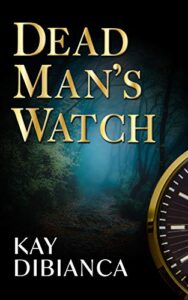
Today’s Words of Wisdom looks once more at different aspects of writers conferences. Debbie Burke shares a few cautionary stories from her extensive conference experience. Kay DiBianca provides reasons to attend a conference and tips on deciding on which one. John Gilstrap gives advice on taking feedback from an author on your manuscript at a writer’s conference.
Most speakers are wonderful, gracious people who want to help other writers. In 29 years, I can count the clinkers on the fingers of one hand. But those few clinkers really leave an impression.
One year, a big-name mystery author was supposed to teach a three-day intensive workshop. He showed up with his girlfriend and they were fighting. He then told us he shouldn’t have come because he was on deadline.
Uh, you didn’t know that when you committed to teach?
The first morning, he grumbled and complained for three hours to his students about his deadline and troubles with his girlfriend. After lunch, he pitched a fit, saying he couldn’t possibly write in his hotel room because his girlfriend was irritating him. “I’m not hard to please,” he claimed, “just find me a quiet place with a table.” So I found several alcoves in the hotel where he could write. He couldn’t stand any of them.
The second morning, more whining, no teaching. Students were irritated and their complaints were totally valid.
The third morning, he put in a halfhearted effort to review a few manuscripts but the class was a disaster. We wound up refunding tuition to his disappointed students.
At the party on the last evening, in front of everyone, he apologized to me for his behavior and presented me with a T-shirt…that advertised his books.
Can you spell E-G-O?
Hiccups aren’t always with speakers. Once in a while, volunteers throw sand in the gears. One member was obsessed with finding an agent. He found out when the agent’s flight was scheduled to arrive, even though someone else had been assigned to do airport pickup. He showed up early, grabbed the agent, took him out to dinner, and badgered him for three hours about representation.
This happened before cell phones so we couldn’t call the agent. We knew he’d arrived on the plane but he’d disappeared. No one could find him.
Finally, the dazed agent arrived at the hotel. He told us he wasn’t thrilled that we’d sent this obsessed writer to pick him up. We apologized profusely and explained the guy had acted on his own, totally without our knowledge. Fortunately, the agent had a sense of humor. He probably told that story at future conferences as a cautionary tale of how not to impress an agent.
Needless to say, the kidnapper didn’t receive an offer of representation.
For every horror story, there are at least a hundred tales of writers who were inspired to finish a book, take the plunge into publication, or step up to the next level in their careers.
Debbie Burke—September 17, 2019
There are many reasons to attend a conference, and lots of benefits to be had. Here are a few:
- Gather with fellow writers. Authors spend a lot of time in solitary pursuit of the perfect story. It’s a good idea to get out occasionally and meet new people. Even for those of us who are introverted, the company of fellow authors is special. After all, most of those people are introverts, too.
- Learn a new skill. Workshops, lectures, and courses give writers an opportunity to sharpen their expertise in the craft.
- Get feedback on a current project. Most conferences provide some critical feedback of an author’s work for free. Others charge a small fee.
- Pitch your work. Conferences are an opportunity to pitch your work to an agent or an acquisitions editor. Remember to rehearse your pitch and have it ready. You never know who you may bump into on the elevator.
- Sell some books. Most conferences have a means to offer your books on consignment. We’ve had success in selling a few books at each of the conferences we’ve attended.
- Help a new author. Many attendees are first-timers. This is an opportunity to provide encouragement and feedback to someone who is just beginning their writing journey.
- Get motivated. Conferences have a way of energizing the author and getting the creative juices flowing. Use the excitement to build on your next novel.
Deciding on the ideal conference
Choosing a writing conference is similar to finding a college to attend. There are plenty of choices, and you’ll want to consider size, focus, cost, and travel distance. Some conferences are specifically tuned to a narrow genre selection. Others may be open to any writing area. There are plenty of lists online, but I think the best resource for finding a good conference is from your colleagues, like those here at TKZ. I hope we’ll see some recommendations in the comments.
Before you sign up
- Check out the conference to see if it offers the kinds of courses and workshops you’re interested in.
- Research the professional editors and agents who will be onsite for appointments, and register early to get appointments with the ones you want to meet with.
- If you’re going to put your books on consignment in the book shop, be sure you understand when to drop the books off, when you have to pick them up, and any other requirements
Kay DiBianca—September 27, 2022
I returned to my home last Saturday after spending the better part of a week at the Midwest Writers Workshop in Muncie, Indiana, where I was part of the faculty. MWW is one of my favorite “working” conferences–that is, a conference dedicated specifically to writing technique, as opposed to other confabs that are weighted heavily toward social interaction. When you sign on to teach at MWW, you’re signing on to work. This was my fourth or fifth tour with the conference, and I’m anxious to go back when invited.
As part of my duties, I agreed to review ten, 5-page writing samples and discuss them with their authors, which I hammered out back-to-back in half-hour increments. I mentioned here last week that I’d noticed an overall decline in quality from my previous experience with MWW. None of the samples I reviewed were truly awful or beyond redemption, but none of them jumped out as sparkling with potential.
The experience did, however, provide me with the topic for this week’s TKZ missive: How to make the most (or trigger the worst) out of manuscript reviews. Presented in no particular order . . .
My opinion of your writing is merely my opinion. It’s the opinion you paid to hear, and the one that I am obliged to give. You are free to dismiss any bit of guidance that I provide. The opinions from your friends, family and beta readers, while in opposition to my own may very well be definitive. Go with them–with my blessing–but know that the fact that your Aunt Betty was an English teacher and says your characters are vivid and exciting will not cause me to change my assessment that they are neither.
If you listen to anything I say, listen to everything I say. The positive things I note about your work are every bit as honest as the negative things. I understand that we don’t know each other very well, but those who do know me will assure you that I am not a blower of unearned sunshine. Give yourself a break.
“The first five pages” actually means the first five pages. Of the ten manuscripts I reviewed, three of them were hunks of story excised from the middle of the novel, in each case chosen because the author thought those pages represented their “best writing.” Yeah, let that settle. None of the good writing happens before page 48 (and presented to me either as unnumbered pages or as “page one” of the sample). Let’s save that rant for later. Assessing a manuscript is more than just copy editing. In fact, copy editing is the last thing this kind of assessment is. If I’m going to evaluate your story, the elements of plot, setting and character all have to make sense. I’ve thought about this a lot, and I cannot think of a simpler, more understandable way to issue the instruction to “submit the first five pages of your work.”
Quit worrying about someone trying to steal your idea. If you want my help, you’re going to have to share critical elements of your story. In many years of doing this, I’ve never once heard a premise that was truly unique. I’ve seen a thousand different squints on romances and mysteries and murder weapons, but never a plot point that was unicorn-unique. When you demand that I sign a non-disclosure agreement before you allow me to dedicate my time to your writing, you double-dog guarantee that I won’t look at a word, and won’t lift a finger. Well, maybe I’ll lift one finger.
John Gilstrap—July 26, 2023
***
Have you attended a writer’s conference? If you did, what did you get out of attending? Any advice for first-timers?