
What Should You Write Next?

by James Scott Bell

Last week we talked about creativity, and getting ideas through the “What if?” game. I’ve always subscribed to the notion that the best way to get a great idea is to come up with lots of ideas, and then toss out the weak ones. That leaves me with several good ideas to choose from. Now the question is which one should I choose to spend the next four or five months writing? (Your mileage may vary.)

When I first got going in this game, I determined to be like a movie studio. I’d have one project that was given the “green light.” That was my work-in-progress. But I would also have a few ideas “in development.” The question then became, which one should get the green light next?

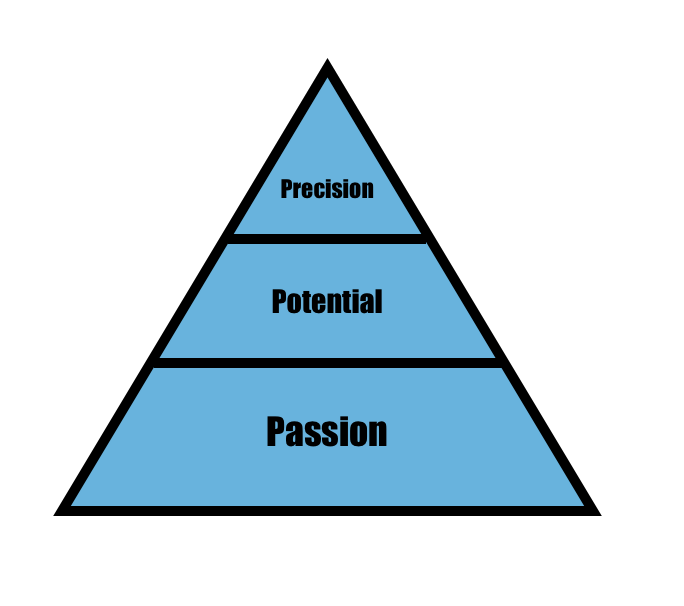
I came up with a three-part test.

Passion

The first, and most important test, is passion. If I don’t feel emotionally connected to an idea or concept, I don’t want to pursue it. Because it is passion and heart that separates our work, not only from other writers, but also the scourge of AI-slop.

I have a list of questions and assign a score, from 1-10, for each.

  1. How excited are you about the concept as it stands now?
  2. How invested are you in the main character?
  3. Is there a meaning involved, something worth saying?
  4. As a prediction, how excited do you think you’ll be about the book two months from now?

Potential

Since I write to put bread on the table, I want to consider the potential for my project in the marketplace. My questions:

  1. Does my plot have high enough “death stakes” (physical, professional, or psychological)?
  2. Is there a fresh setting, or a twist on a familiar one?
  3. Can I envision a knockout ending?
  4. Does my cast of characters turn me on? [Note: Once you start writing the book, there will be moments when the writing bogs down, when you’ll start to question your passion for the project. The fastest way to overcome this is to spend time deepening your characters, via backstory or voice journal. You’ll get excited again, and quickly, too.]

Again, score 1-10 for each.

Precision

Now, I write a logline for each project. A logline is Hollywood-speak for a sentence that captures both the essence and market potential of a project. For example:

A great white shark hunts for food in the waters of a New England town at the height of tourist season.

A teenager takes a time-traveling DeLorean into the past, where his young mother gets the hots for him, and where he must get his father to win her again or he’ll cease to exist.

Detective partners who dislike each other must bond in order to stop a serial killer who chooses victims based on the Seven Deadly Sins.

Score 1-10 for each logline on how well it captures market potential.

I add up the scores for each project, and the “winner” gets the green light.
This method gives me some objectivity, because it’s easy to just grab the next bright idea and start running with it. Again, I’m going to spend months with the project. I owe it to myself to think a little on it before I take the plunge.

One last note on the problem of AI-slop. When it comes to the writing itself, we all know it can be “handed off” to a bot. What that produces, at least as I see it, is heartless, soulless competence. It certainly does not produce the kind of writing that makes readers yearn for more books with your name on them.

Will a bot ever produce writing that does? Perhaps not! One writer puts it this way:

LLM-generated prose is, by virtue of the process that creates it, frozen verbal leftovers. An LLM is perfectly capable of imitating … compound sentences, especially the most basic, unsurprising constructions (“This is not that; it’s actually this.”). And because the vast majority of humans have no desire for anything better, LLMs appear to be good writers. But they’re not….The machines we’ve created can do only the bare minimum passably well because the same is true of us.

I choose to believe that the human element—honed by hard work, experience, honesty, and heart—will always produce a better book than a machine. [Note: Em dashes are mine!]

Now over to you. How do you choose which book to write next? If it’s the next in a series, how do you decide on plot and setting and new characters?


The Suggestion Box

Rita (my wife) works in a grocery store. Last week, her department manager thought it’d be a good idea to implement a suggestion box. It wasn’t.

Suggestion boxes, by nature, are supposed to be suggestive. Helpful, even if critical. They’re also supposed to be anonymous. In this case, one suggestion wasn’t respected as anonymous.

The suggestion was something about how to improve scheduling, and the department manager took it as a personal slight. They recognized the suggester’s handwriting and called that worker out. Not just in front of the staff, but also in front of customers.

Rita, being a Cancer, intervened and settled things down. And down came the suggestion box, but not before the damage was done. The berated worker laid a complaint to HR, and the disciplinary genie is out of the bottle. Or better put, the laundry is out of the hamper.

What’s this got to do with us here at the Kill Zone? Well, as writers, we have a suggestion box open all the time. It can be in the comment section following a post. It can be feedback from beta readers. Or, it can be online reviews on our book publishing sites.

I moderate my comments on my personal blog site. I nix the odd Negative Nellie, but if someone has a valid point that disagrees with my content, I’ll let it stand. Often, I’ll learn something.

I no longer work with beta readers. Very few ever came through and, if they did, the feedback wasn’t particularly helpful. It just wasn’t worth the time and the effort.

I have a friend whose wife is an A-List romance writer. She gave me advice early in my game. “Don’t read your reviews,” she said. “The 1-Stars are trolls. The 5-Stars are suck-ups. And the ones in-between never have useful suggestions.”

Suggestions.

Kill Zoners — How do you deal with suggestions? Good, bad, or indifferent? Feel free to suggest.

Where Do You Get Your Ideas?

Light BulbAuthors who’ve been around awhile, and have more than a few books out there, are often asked two questions.

The first is, “Where do you get your ideas?”

I like how Harlan Ellison used to answer that: “There’s a swell idea service in Schenectady. Every week I send them twenty-five bucks, and every week they send me a fresh six-pack of ideas.”

Every now and then someone would ask him for the address of the service, and Harlan would do to that person what Harlan always used to do all such folks, i.e., not suffer them.

The other question we’re asked is, “Which book is your favorite?”

The answer is complicated. There are books we love because we worked so hard on them. Others because they were so much fun to write. And still others because they helped pay the mortgage.

But when I am asked about a series, I pause a moment, then name my legal thrillers featuring Ty Buchanan. They originally came out in beautiful hardcover editions, then trade paper.

As Seinfeld would say, yadda yadda yadda, I am pleased to report that I’m now releasing all three books in new digital editions. And to celebrate, I’m pricing each one at $2.99 for this kickoff period.

series

Allow me to tell you how I got the idea for the series, and indeed for each book. It started with my regularly scheduled “creativity time.”

Back when newspapers existed, I would read either the L.A. Times or the L.A. Daily News, and one legal newspaper, the L.A. Daily Journal. I’d scan for interesting stories or legal issues, and clip them and throw them into a box. Every now and then I’d go through that box, seeing if the ideas still interested me.

One item kept vying for my attention. It was a tragic story about an L.A. man who shot his young wife to death, then drove to a freeway overpass, got out, shot himself, and fell 100 feet to the freeway below. He crushed a Toyota, killing the driver. How bizarre is that?

So one day I wrote this up as an opening scene. When I got to the part about the woman being killed, I made up a character: Jacqueline Dwyer, a twenty-seven-year old elementary school teacher.

And then I paused, switched to a First Person POV voice, and wrote:

This would have been simply another dark and strange coincidence, the sort of thing that shows up for a two-minute report on the local news—with live remote from the scene—and maybe gets a follow-up the next day. Eventually the story would go away, fading from the city’s collective memory.

But the story did not go away. Not for me. Because Jacqueline Dwyer was the woman I was going to marry.

Who was narrating? That’s how Tyler Buchanan was born. I made him an up-and-coming, hotshot lawyer with everything going his way, until this. And especially after a shady guy finds him and tells him Jacqueline was still alive after the crash … and someone murdered her.

That book became Try Dying.

Book #2, Try Darkness, was based on a story I clipped from the legal paper. It was about illegal evictions from downtown transient hotels. There was a trick landlords were using to get around the law, so I made one of fhs evicted a mother with a six-year-old daughter, who comes to Ty for help. And then she turns up dead, and the plot, as they say, thickens.

The last book in the trilogy is Try Fear. Again, this came out of a real story I clipped. One Christmas season the LAPD stopped a very large man on suspicion of driving under the influence. He was about 6’5”, 280 pounds. He was also wearing nothing but a Santa hat and a G-string.

I found myself thinking, This has to be Ty’s next client. So that’s how Try Fear begins.

The reviews were kind. Please allow me to toot two small horns:

“Engaging whodunit series … Readers will enjoy Bell’s talent for description and character development.” –– Publishers Weekly

“The tale equally balances action and drama, motion and emotion. Readers who pride themselves on figuring out the answers before an author reveals them are in for a surprise, too. Bell is very good at keeping secrets. Fans of thrillers with lawyers as their central characters—John Lescroart and Phillip Margolin, especially—will welcome this new addition to their must-read lists.” — Booklist

I’ve been asked many times if I might add another book to this series. I’ve considered it, but I also think the series ends in exactly the right spot, with exactly the right scene, and indeed, even the right line. I am hesitant to mess with that. But if you do decide to read all three books, I would love to hear what you think I should do!

The books are on Kindle and Nook, and soon will be on Kobo and in print. If you want to know when, you can subscribe to my email alerts and I’ll be sure to let you know.

KINDLE:

Try Dying – Ty Buchanan Legal Thriller #1

Try Darkness – Ty Buchanan Legal Thriller #2

Try Fear – Ty Buchanan Legal Thriller #3

NOOK:

Try Dying – Ty Buchanan Legal Thriller #1

Try Darkness – Ty Buchanan Legal Thriller #2

Try Fear – Ty Buchanan Legal Thriller #3

Now we turn to you, TKZers. What is your favorite way to get ideas? And have you ever been to Schenectady?