Home Again After a Fantastic Trip

Home Again After a Fantastic Trip
Terry Odell

I’m back on my mountain after a wonderful trip. Fall is heading into winter. We left with the aspens turning gold and came back to bare trees. Morning temperatures are below freezing, although they’re climbing into the 50s during the day.

I know “they” tell us we have to write every day. I’m disputing that. I’d recently finished and published a novel, Beyond the Frame. As an indie author without a deadline, and not being ready to jump into a new project, I’d decided this was a vacation, and the less I had to deal with real life, the better. Given our trip started mid-October and ended on November 8th and was out of the country meant I wasn’t inundated with election news. (Yes, I voted before we left.)

So, I wasn’t writing. And I wasn’t feeling guilty about it. Was I gathering writing fodder? Maybe. Mostly about characters. I’ve written a few books based on trips, and it’s tough for mysteries. Americans have no authority to investigate in other countries. Instead, I was having a good time going places I’d never been.

I’m thinking you might want to hear about my trip. There’s too much to condense into a single post, (I did some more detailed recaps on my Substack page–link after this post) but we covered a lot of territory, had some fantastic food (LOTS of fantastic food), saw places with so much more history than our baby country.
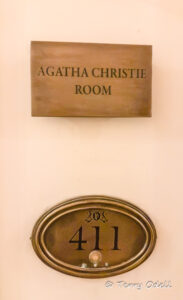
The plaque outside the Agatha Christie room, 411 at the Pera Palace hotel in IstanbulSince our cruise was going to leave from Istanbul, we arrived 3 days early—because, if you’re going to be in Istanbul, why not experience a little of it? I mentioned in an earlier post that we were staying at the Pera Palace hotel. We stayed in Room 411, the Agatha Christie Room and felt her spirit. Or it was the people in the room above ours?
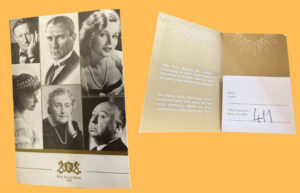
The hotel was super-elegant. Practically a museum. I brought home a notepad, a piece of stationery and envelope, and saved the folder from my key card.

You can find some of my pictures here.

Note: there’s some lens distortion in some of the images. The chairs were actually normal.

We’d booked 2 tours, doing “typical tourist” things. The Blue Mosque, Hagia Sophia, and the Basilica Cistern. A rainy, gray day, but it wasn’t raining inside any of these buildings.

The next day, the sun came out, which was wonderful for our cruise along the Bosphorus.

My Istanbul pictures are here.

And the day after that, our cruise began. Where did we go?

Here
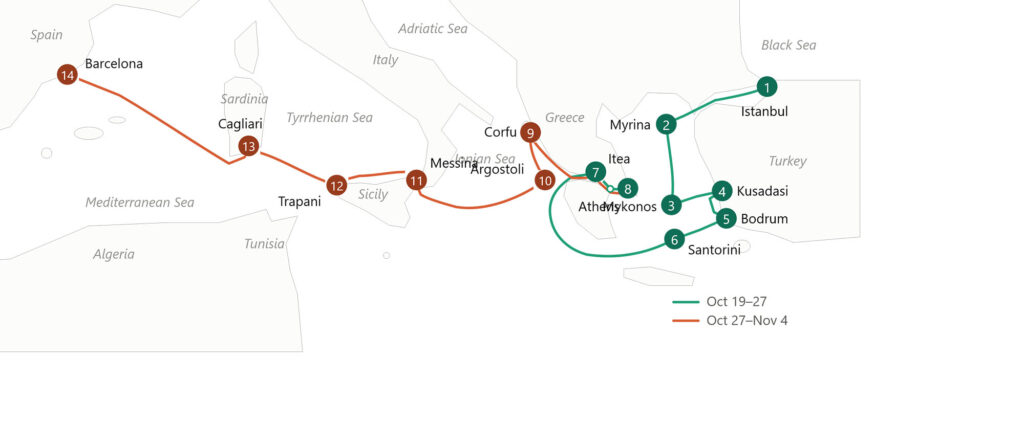
map of the itinerary of the Star Legend, Oct-Nov 2026

Since a picture is supposed to be worth a thousand words, here are a few more of mine. I’m still going through them–there are hundreds–and will be for some time. Once we left Istanbul, I was in more of a “my kind of picture-taking” space. Small towns with interesting details. These are from our first stop, the port of Myrina on the island of Lemnos.

Clicking should enlarge them.

We toured a LOT of churches, monasteries, and basilicas. We learned a LOT about the history of the places we visited. If only I remembered more of it. Ottomans and Moors and Romans, Oh, My!

And there were cats. LOTS of cats. In Istanbul, strays are picked up, neutered, vaccinated, and released. There are feeding stations and cat houses everywhere. Same went for the other islands. It wasn’t until we got to Barcelona that we didn’t see cats wandering the streets.

Am I writing? Not yet. Besides, the R on my keyboard sticks, and who can write under those conditions?

Feel free to ask questions, share your travel experiences. The floor is open.


Find me at Substack with Writings and Wanderings

Available Now

Beyond the Frame
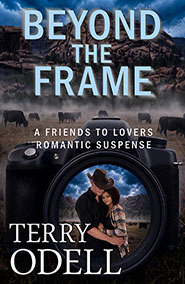
Beyond the Frame by Terry OdellWhen the camera lies, who do you trust?

When deepfake photos threaten their careers, dog-park friends Evvie and Colton become each other’s only allies. Evvie, who vanished behind her camera years ago to escape a painful past, uncovers humiliating fake images of herself.

Colton, an insurance adjuster with ranch roots, trusts her eye on a suspicious claim. A family emergency pulls them to Wyoming—where Evvie’s own dangerous secret waits.


Terry Odell is an award-winning author of Mystery and Romantic Suspense, although she prefers to think of them all as “Mysteries with Relationships.”
Perils of Truncated Messages

by Debbie Burke

Paul Simon’s song “50 Ways to Leave Your Lover” includes the line: “I hope my meaning won’t be lost or misconstrued.” 

Recently I learned an important lesson about the ways that meaning can be lost or misconstrued.

On Substack I’ve been posting notes, warning about various AI-driven scams used to victimize writers. Impersonation scams are immensely popular.

My latest note read:

James Patterson wants me to cowrite with him.

Oprah, Drew Barrymore, and Jenna Bush Hagar are vying to interview me for their book clubs.

James Cameron thinks my series would be perfect for Netflix.

Tip #6: Beware of impersonation scams. AI scammers pretend to be famous authors, celebrity influencers, and movie moguls.

If these emails really came from wealthy, successful people, why should they ask poverty-stricken writers for $$$???

 Later that evening, I received a message from a longtime fan. She congratulated me and said how excited she was for me, cowriting with James Patterson and being interviewed by important celebrities.

Aaargh!

That was certainly not the message I meant to convey. I felt terrible, as if I’d misled her.

She’s in a Zumba group where many members read my books and are wonderfully supportive. Knowing what a sweet, generous lady she is, I was worried she would share my “good news” on social media. Then she’d be embarrassed when she learned she was unintentionally spreading misinformation.

Right away, I wrote her back, apologized, and explained these were scams that specifically target writers. Since she’s not a writer, she wouldn’t necessarily be aware of them.

Fortunately, the next day we saw each other at Zumba. That’s when I learned the actual reason behind her misunderstanding.

Her watch had dinged with a notification, and she read my note on the small screen of her watch.

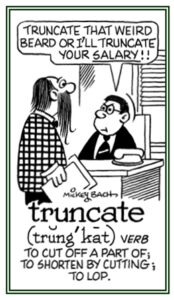
But…the note had been truncated.

Definition from dictionary.cambridge.org

truncated

adjective

made briefer or shorter, usually by removing a part:

The truncated article fit into the space allowed but made little sense.

Only the first part of my note showed on the limited space of her watch screen. The explanation about scams had been cut off.

Whoops! No wonder she came to the wrong conclusion.

We shared a good laugh, but it made me realize that people don’t always read on a full-sized screen.

Since my vision isn’t good, I read almost exclusively on my laptop where I can increase font size.

However, more and more people now read on phones and watches where messages are often truncated.

You can write a note, email, or tweet that’s perfectly explanatory and clear, but you can’t control how the message appears on the recipient’s end. They may only see a small part of it. Important information later in the message won’t necessarily show up.

This lesson taught me that current technology offers even more ways for meanings to be lost or misconstrued.

Throughout history, lost or misconstrued messages have had serious consequences, causing crises and wars. Here are a few examples.

On the positive side, misinterpretations like these can be transformed into inciting incidents for fictional plots.

But in real life, what’s a writer to do if their message is cut short?

I don’t know.

My only solution for now is to be more mindful of truncation when I write headlines and lead sentences.

Maybe smart TKZers can offer better ideas to avoid the problem. Please post in the comments.

Have you received truncated messages that led to wrong interpretations?

Have you sent messages that were misunderstood by recipients?

Consequence (good or bad)? 

***

No misunderstanding about this: Instrument of the Devil is FREE for a limited time. In addition, the rest of the Tawny Lindholm Thriller series is discounted. Fill your e-reader with binge-worthy bargains while they last.

The Author and the Coffee Maker

“Given enough coffee, I could rule the world.” — Anonymous

* * *

Many creative people have a serious relationship with coffee. Take Voltaire for example. It’s been said that he drank between 40 and 50 cups of coffee a day, often mixed with chocolate to fuel his energy to write. Other famous coffee-loving authors were Balzac, Theodore Roosevelt (he wrote 35 books in addition to being president), and Gertrude Stein.

Me? I usually have just one cup of coffee each day, but boy do I love the taste of those coffee beans first thing in the morning. Unlike some of my colleagues, however, I’m not a java connoisseur. I’m more of a convenience / time-saving type, so I’m perfectly happy to use my coffee maker with a little pod of Peet’s Major Dickason’s dark roast to get the gray cells awake and moving.

Using a pod coffee maker is simplicity in action. Instead of grinding beans or measuring grounds, an author can spend those precious moments thinking about the next great book they’re going to write, or how to correct a nasty plot problem, all while gleefully on auto-pilot.

It only takes a few simple, brainless steps:

  1. Fill the coffee cup with cold water and pour it in the well.
  2. Plop the k-cup into the holder.
  3. (Optional) Warm the empty coffee cup by rinsing it with hot water or nuking it for a few seconds in the microwave. (Who can drink hot coffee in a cold cup?)
  4. Place the cup on the shelf under the spout.
  5. Hit START and go about your business making the rest of a fabulous oatmeal breakfast.

Nothing can go wrong, right?

A Hierarchy of Coffee Maker Problems

Oddly enough, I’ve discovered a few things can go wrong with this simple process, and I regret to admit each one of these has happened to me.

  • Forget to put the water in the well. This is a very minor problem. When you hit START, the coffee maker will display some kind of message on its panel like NO WATER. Oops. Easy problem to fix.
  • Forget to put the k-cup in the holder. This is a little more serious, since the author will wait for the coffee to brew and then wonder why it’s just a cup of hot water. A little more trouble since you have to go through the process from the beginning, but not a big deal.
  • Here’s the big one: You remember to do everything except put the cup under the spout. Hit START and go about your business only to find you have a cup of fine coffee all over the counter. Before you can start from scratch to make a cup of coffee you can drink, you have to do a massive cleanup.

For some reason, this reminds me of writing.

* * *

A Hierarchy of Writing Problems

For sure, there are more problems for the writer than for the coffee drinker. So many opportunities for things to go wrong. Here are a few:

  • Typos and grammatical mistakes are trivial problems. Any good writing software can identify them for you. Easy.
  • Sentence structure is a little harder. Making the words flow rather than mechanically banging out the same format over and over can be time-consuming. But it’s worth the effort.
  • The big one: Plot problems. Uh-oh. Your plot doesn’t have an arc. It’s just spread out across the pages of your manuscript “like a patient etherized upon a table.” (Thanks, T.S. Eliot, for the perfect image.) Now this is a problem that requires cleanup. What started out as a wonderful new story has collapsed into a string of words, and it may mean tossing out whole chapters or rearranging and rewriting scenes.

But as with the coffee maker, there’s always a way to clean up the mess and start again. And it’s always worth it.

* * *

So TKZers: How would you rank problems in your writing? Have you ever had to re-start a manuscript from scratch? Oh, and btw: how many cups of coffee do you drink every day?

* * *


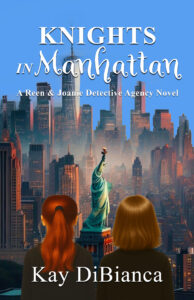
No caffeine needed for these two pre-teen investigators as they search for the nefarious Central Park Jewel Thieves and manage to turn Manhattan upside down in the process.

Click the image to go to the Amazon book detail page.

Three Traits of a Successful Writer

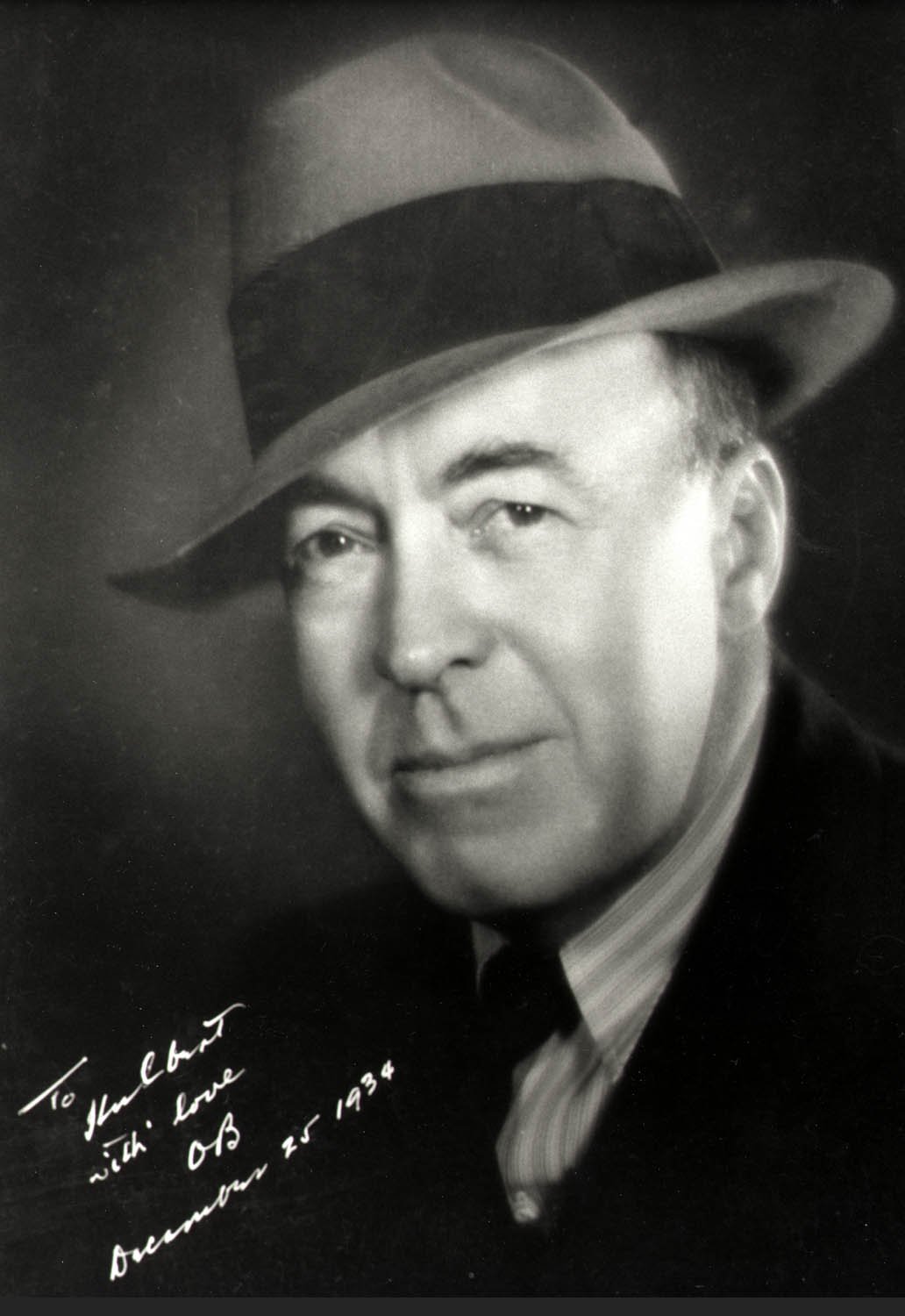
by James Scott Bell

Edgar Rice Burroughs

I live and grew up in the San Fernando Valley of Southern California, next to a township that was once the sprawling ranch of the publisher of the Los Angeles Times, General Harrison Gray Otis. In 1919, Otis sold the ranch to a successful writer who named the place Tarzana, after his most famous character creation. That writer, of course, was Edgar Rice Burroughs (1875–1950), one of the most successful authors of all time.

But he didn’t set out to be one. He was a restless soul who bounced from job to job, and wrote fanciful stories to entertain himself and relieve some of the stress of trying to support his wife and growing family. In 1911, when he was 35 years old, he had to pawn his watch and some of his wife’s jewelry to put food on the table. In desperation, he submitted “half a novel” to the early pulp publication All-Story Magazine. The editor wrote back and told him if the second half was as good as the first, he’d publish it.

Burroughs finished it, and Under the Moons of Mars was published in 1912 (later released as a novel, The Princess of Mars). He was paid $400. Encouraged, Burroughs wrote a novel taking place in medieval England. It was rejected. He almost gave up, but his editor told him to try again, and go back to his “damphool” stuff.

Inspired by the legend of Romulus and Remus, founders of Rome who were fed by a she-wolf, and the jungle stories of Rudyard Kipling, Burroughs came up with a story about an English baby named Greystoke who is suckled by an ape in darkest Africa. He got $700 for that one. In 1914 it was published as a novel and became a huge bestseller.

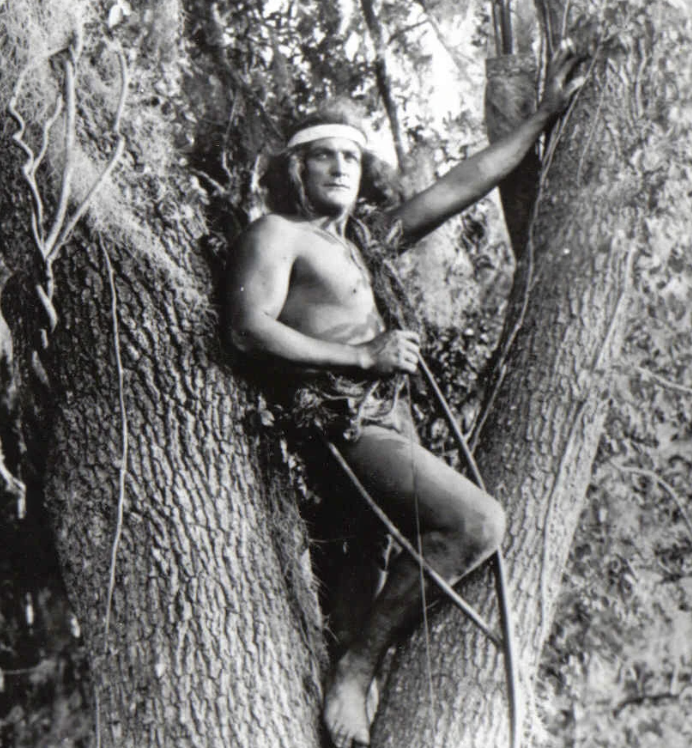
Elmo Lincoln as Tarzan (1918)

The movies came calling. In 1918 Tarzan of the Apes hit the silent screen. Starring Elmo Lincoln, it was among the first silents to gross over $1 million.

Since then, there have been over 40 Tarzan movies (including cartoon versions!) and nearly 60 one-hour TV episodes. And while the movies made Burroughs a lot of money, he didn’t like them. His Tarzan was not the Johnny Weissmuller “Me Tarzan, you Jane” guy, but a man who became civilized and articulate, and even sat in the House of Lords! (The movie version closest to Burroughs’ vision is 1984’s Greystoke: The Legend of Tarzan, Lord of the Apes, starring Christopher Lambert.)

In addition to Tarzan, Burroughs also created John Carter of Mars, and is credited with being the father of modern sci-fi.

Not bad for a guy who didn’t set out to become a bestselling author. So how did he do it? I see three traits worth mentioning.

First, he had a tremendous imagination, nurtured by his love of reading. You want to be a writer? A real writer? You have to read and read and read. Indeed, Tarzan of the Apes is the first “big” book I remember reading as a kid. I can see myself now, sprawled on the couch in the living room, lost in the book and not wanting to put it down. You all know that feeling. It’s magical, and sparks a desire to write stories like that.

Second, he wrote to entertain himself. In an interview he remarked, “In all these years I have not learned one single rule for writing fiction. I still write as I did 30 years ago; stories which I feel would entertain me and give me mental relaxation, knowing that there are millions of people just like me who will like the same things I like. Anyway, I have great fun with my imaginings, and I can appreciate–in a small way–the swell time God had in creating the Universe.”

If you’re not having fun writing your stories (and of course, there are times when it’s tough going and you bang your head against the wall, but recover and write some more and find the fun again, and best of all the satisfaction that comes from completing the work) then readers won’t have fun (or less than they could have) reading your stories.

Third, he had a strong business sense, forged by his experience in the corporate world. He kept meticulous records of his submissions, his correspondence with editors, and fought for higher pay for his stories.

And there was merch, too, everything from Tarzan toy animals to Tarzan Ice Cream Cups sold off a truck.

He had no respect for literary critics who scoffed at his kind of writing. His wife once sighed at the sight of Ernest Hemingway. Ever after Burroughs would chide her, saying maybe she should go off to an island with her beloved Ernest.

The great Ray Bradbury once remarked, “Edgar Rice Burroughs was, and is, the most influential writer, bar none, of our century.” Wow. And so I ask—

How do you stack up on the three traits mentioned above?

I still love the Johnny Weissmuller movies on their own merits, especially the first four, though Tarzan and the Amazons is fun, especially because Maria Ouspenskaya is in it. Do you have a favorite?

NOTE: This post drew primarily from two sources:

The illustrated biography of Burroughs by Irwin Porges.

And the official ERB website.

Your Favorite Heist

“Each life is a game of chess that went to hell on the seventh move…”

—Martin Amis, Money

A heist story is packed with narrative potential.  A crack team of rogues, each possessing a different skill, are assembled to pull off an impossible theft. The treasure may be extremely valuable precious gems or jewelry, rare art works, bearer bonds, or even cold hard (or these days, digital) cash. There is usually a strict timetable to adhere to, which means the actual job is up against a remorseless ticking clock

To begin with, we have a master mind who comes up with the plan and, perhaps with help from an old friend or associate, recruits the crack team. Each member has a unique ability essential for the particular heist. There’s friction of course, because when you have a team of incredibly talented, accomplished and experienced individuals, each sure of their skills and often distrusting of others who claim to be the best at their own role, friction is sure to result.

Then there’s the inevitable moment when the job goes sideways and the team has to improvise. You’d better look over your shoulder, because, given the stakes, betrayal may be right behind.

The tone can be serious, playful, or a bit of both. The team, AKA “the crew” is a big part of the appeal of a heist story, the more colorful, idiosyncratic and fascinating the members, the better.

Heists have elements of crime stories, action stories, suspense, and are often set in the present day, but can be historical, science fictional, young adult, or even based in a fantasy setting. It’s been observed that the process of staging a heist and making a movie mirror each other, which might account for some of the genre’s enduring popularity with film makers. In fact, Christopher Nolan’s science fiction heist film Inception is about implanting a memory in a target to trigger an emotion experience rather than extracting a treasure, just as film makers (and novelists for that matter) aim to do.

Whether or not that’s the case for film makers, for movie goers and readers alike, heists are fast paced, intriguing fun. On the big screen, heists often feature stars with striking charisma to match the members of the crew, and both heist films and novels take away from the ordinary and allow you to experience the high-wire act of pulling off an impossible crime.

Here are some of my favorite heist movies:

Topkapi: Based on the Eric Ambler novel The Light of Day, it features a jewel thief who recruits a criminal mastermind who in turn assembles a team of amateurs to pull off an impossible heist in the Turkish palace of Topkapi, with a priceless emerald encrusted dagger as the prize. Slyly comic and slap-stick funny by turns, it covers each phase of a heist with panache and humor.

The Art of the Steal: An excellent example of a heist-within-a-heist.

Ocean’s 11: Both the original version with Frank Sinatra and the later George Clooney remake offer stylish and tense takes on a carefully planned heist of a casino in Las Vegas.

The Italian Job: The original starring the incomparable Michael Caine is a true classic, and features an epic car chase.

Die Hard: An action-heist story with the “fly in the anointment” hero John McClain disrupting the clockwork mechanism of a carefully planned heist by Hans Gruber and his deadly efficient team at Nakatomi Plaza in Los Angeles. Something always goes wrong in a heist; in this case, it’s named McClain.

Mission Impossible, both the original TV series and the later film series have good guys pulling off heists to make the world a better place. Disguises are prominent devices in both along with gadgets. The more recent movie series also showcases computer hacking.

The Great Train Robbery, based on the 1855 “Great Gold robbery. First a novel by Michael Crichton. He adapted the book and directed the subsequent movie, starring Sean Connery and Donald Sutherland. All but one of the characters in the film were at least loosely based on the actual people involved.

The Great Escape: An epic WW2 movie about the largest escape from a prisoner of war camp. Based on a true story, it shows how the POWs carefully plan a multi-tunnel break out and everything from planning to recruitment to gathering materials and then implementing the plan, and of course, what happens when things go wrong.

Kelly’s Heroes: A heist set during the last part of WW2 on the Western Front, with a sardonic tone and witty moments, such as when the American soldiers finally arrive at the bank filled with Nazi gold behind German lines and square off with the commander of an SS Tiger tank:

Kelly: “Sergeant, this bank’s not gonna fall into the hands of the American army. It’s gonna fall in our hands. You see, we’re just a private enterprise operation.

German tank commander: “You… the American army!”

Oddball: “No, baby, we ain’t.”

The Gold: Based on the real-life Brinks-Mat gold heist in 1983, this two season television series follows both the criminals after the job and the British police striving to reconstruct the robbery and track down the thieves. A compelling look at the aftermath of a heist and the varied and idiosyncratic characters of both the thieves and the investigators who embark on a multi-year quest to bring the thieves to justice.

Leverage: A show about a former insurance investigator who assembles a team of criminals to engage in heists against powerful bad actors and obtain justice for the victims of said bad actors.

Hands down my favorite heist novels are Richard Stark’s (a pen name of mystery grand master Donald Westlake) Parker books, beginning with The Hunter (adapted twice, first as Point Blank and then as Payback), is the first novel starring tough guy Parker, who was betrayed after pulling off a heist and seeks revenge. The series covers a number of heists, as discussed in this Wikipedia entry.

“Always perfectly blueprinted heists, Parker’s plans tend to go awry in the execution, sometimes due to bad luck but more often due to greed or incompetence on the part of Parker’s less-experienced partners. The tension in the novels often comes from Parker having to work his way out of increasingly dangerous situations on the fly, as his carefully planned heist collapses around him—all while he tries to keep hold of both the money he stole, and his life. (And, often, he does so while endeavoring to exact revenge on those responsible for his troubles.)”

How about you? What are your favorite heist stories?

***

Resources:

19 Heist Novels That You Won’t Be Able to Put Down. A multi-genre list.

8 Tips for Plotting a Great Heist Novel (or How to Be a Thief), a Writer’s Digest article by author Sara Desai.

Heists or Capers, where do you stand? Award-winning multi-genre author Fran Wilde interviews three crime writers about the difference between heists and capers.

Reader Friday-Why Men Are Happier People

Hey Gang! My husband ran across this hysterical piece, and I’m sharing it with you today. Hope you get some laughs out of it!

Tell us your favorite…and go ahead and add your own to the list.

WHY MEN ARE JUST HAPPIER PEOPLE

(Author Unknown)

  • Your last name stays put.
  • The garage is all yours.
  • Wedding plans take care of themselves.
  • Chocolate is just another snack.
  • You can wear a white T-shirt to a water park.

    Men are just happier people-what do you expect from such simple creatures?

  • You can wear NO shirt to a water park.
  • Car mechanics tell you the truth.
  • The world is your urinal.
  • You never have to drive to another gas station restroom because this one is just too icky.
  • You don’t have to stop and think of which way to turn a nut on a bolt.
  • Same work, more pay.
  • Wrinkles add character.
  • Wedding dress $5000…Tux rental-$100.
  • People never stare at your chest when you’re talking to them.
  • New shoes don’t cut, blister, or mangle your feet.
  • One mood all the time.
  • Phone conversations are over in 30 seconds flat.
  • You know stuff about tanks.
  • A five-day vacation requires only one suitcase.
  • You can open all your own jars.
  • You get extra credit for the slightest act of thoughtfulness.
  • If someone forgets to invite you, he or she can still be your friend.
  • Your underwear is $8.95 for a three-pack.
  • Three pairs of shoes are more than enough.
  • You almost never have strap problems in public.
  • You are unable to see wrinkles in your clothes.
  • Everything on your face stays its original color..
  • The same hairstyle lasts for years, maybe decades.
  • You only have to shave your face and neck.
  • You can play with toys all your life.
  • One wallet and one pair of shoes — one color for all seasons.
  • You can wear shorts no matter how your legs look.
  • You can do your nails with a pocket knife.
  • You have freedom of choice concerning growing a mustache.
  • You can do Christmas shopping for 25 relatives on December 24 in 25 minutes.

No wonder men are happier.   🙂

New Words, New Worlds

By Elaine Viets

Have you heard about salmonmaxxing?

How about bearmaxxing?

No? Then you might be behind on your internet trends, not to mention keeping up with the newest words.

Dictionary.com nominated maxxing as its 2026 Word of the Year. Maxxing goes back to maximize and verbs like max, as in the woeful sentence, “I maxed out my credit cards.”

But maxed has gone up in the word world. It has picked up an extra x, and begun a more glamorous life.

Now there’s the trendy salmonmaxxing, where people gulp down lots of salmon, and debate whether fresh wild salmon or flash-frozen is healthier. From what I can tell, farm-raised Atlantic salmon is winning that debate.

 Bearmaxxing is even wilder. That’s where you channel your “inner bear” by eating stacks of salmon, often raw, in one sitting. It’s hard to beat the average bear’s bearmaxxing: they can pound down some 30 to 40 salmon a day, for about 160,000 calories.

You can also feed your inner bear by gulping down berries.

So far, bearmaxxers don’t seem to be interested in other delicacies in the ursine diet, including ants, termites, larvae and the occasional luscious lizard. Yum.

Bearmaxxing may not be as healthy as the net would have you believe. Bears often get tapeworms and other parasites from eating raw salmon.

But we haven’t maxed out max yet. There’s also looksmaxxing, a trend where you improve your appearance so you look your best.

Sounds harmless, right? Who doesn’t want to look as good as they can?

Like any trend, it can be taken to extremes. And writer Elliot Nash calls looksmaxxing “the toxic internet trend obsessed with male esthetics.”

The looksmaxxing subculture has its own slang, he says.

Softmaxxing is the benign version, where men improve their appearance with skincare, grooming, fitness and fashion. All low-risk efforts.

Pec implants and various other cosmetic surgeries are more dangerous.

Mewing is a “technique that involves pressing the tongue against the roof of the mouth to supposedly improve jawline definition over time.” It doesn’t work.

Neither does chewmaxxing, “chewing hard gum or tough foods” to strengthen jaw muscles and improve your jawline.

Then there’s bonesmashing, “the belief that repeatedly striking facial bones can reshape them or stimulate growth.” Brrr.

But if you’re serious, the reward for looksmaxxing is mogging, which means to “outshine someone or something.”  The Collins Dictionary made that its Word of the Year.

Here are a few more entries from around the net:

    Firewaves, “a series of urban wildfires in a short space of time.”

      P(doom) is short for probability of doom. It’s “an estimation of the probability that artificial intelligence will bring about the collapse of human civilization.”

Unc, uncool. An insult.

Neckbeard. Officially, it’s a “beard that partially covers the area under the chin and the throat.”

Unofficially, it’s an insult. A neckbeard is “a socially awkward gamer or computer nerd.” Or a woman-hater or ultraconservative Internet troll.

There are thousands of new words in 2026, but I’ll leave you with two favorites now welcomed into dictionaries:

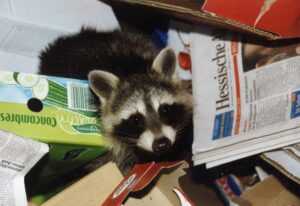
Trash panda. A raccoon.

Promposal, a combination of “prom” and “proposal.” That’s the  custom of inviting someone to the prom, often with elaborate signs, serenades or even flash mobs, three to six weeks before the big dance. March 11 is National Promposal Day.

What are some of your favorite new words?
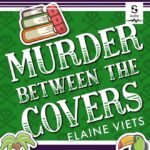
Speaking of words, three of my Dead-End Job mysteries will be on sale this month in the US and Canada for $1.99 each. Treat yourself to MURDER BETWEEN THE COVERS, JUST MURDERED, MURDER UNLEASHED, and HALF-PRICE HOMICIDE.


Quotable

“One thing that helps is to give myself permission to write badly. I tell myself that I’m going to do my five or 10 pages no matter what, and that I can always tear them up the following morning if I want. I’ll have lost nothing—writing and tearing up five pages would leave me no further behind than if I took the day off.” —Lawrence Block

The Fine Art of Storytelling
According to Rocky Balboa

“Sometimes in acting or painting or writing, you just subliminally lose yourself. You do not know where you are.” — Sylvester Stallone.

By PJ Parrish

When I was transitioning from my newspaper career to novel writing, I went at my first romance novel with blind enthusiam and deep ignorance. Back in those medieval times, we didn’t have the internet. Shoot, we didn’t even have computers yet. I didn’t network or get advice and encouragement from a critique group.

I did go to a Romance Writers of America conference once. Let’s just say it was an experience and leave it at that. My freshman effort, The Dancer, got plucked out of a slush pile by an editor at Ballantine Books and off I went.

Until I crashed and burned. I switched to mysteries and turned out some really putrid manuscripts until I found my footing. I also found Mystery Writers of America and didn’t feel as alone anymore.

One thing that always kept me going through the ups and downs was my pure love of storytelling. I’ve been telling fibs since I was a kid. I started putting stories down on paper around 8th grade. But I think I came by my love of storytelling via movies.

We moved around a lot when I was a kid. Wherever we landed, we always found the nearest movie theater. My working mom would drop us off at the “show” where we’d get previews, cartoons and two movies, all for 25 cents. Hours later, we’d stagger out into the twilight, sick on Jujubees and popcorn, and mom would be waiting there in her Chevy Bel-Air.

The Day the Earth Stood Still - Wikipedia

Sitting in the dark, I saw the light about great storytelling. Why did Imitation of Life make me cry? Why did The Haunting of Hill House scare me witless? Why did I root so hard for Will Kane in High Noon? And did Klaatu make it back to his planet okay?

We talk often here about screenwriting, and what we novelists can take away from it. Dialogue, of course. But we also can learn about the economy of building a scene, how to create empathetic and heroic characters, how to keep an audience’s (reader’s) attention.

My childhood came roaring back to me because I read a article about Sylester Stallone. He has a biography out now called The Steps. (Yes, those steps). Much of it focuses on his horrifying childhood of abuse and neglect. His father beat him, his mother abandoned him, and he was eventually put in a psych ward as a kid. But what strikes me is how he endured these emotional punches and harnessed it into a driving need to become something. Somebody.

He wanted to be a writer. One of his first jobs was as a theater usher for $34 a week. He watched hundreds of movies and started dissecting them. He believed he was too ugly to be an actor. But storytelling? That was what tugged most at his heart.

“I learned more about filming there [in the movie theater] than I could have in any classroom,” he said. “I went home and filled hundreds of notebooks, trying to learn how to write. There are no shortcuts to learning your craft…you have to put in the work.”

Here’s a very short clip of him talking about the writer’s journey. Worth a listen:

https://www.facebook.com/watch/?v=22772360996924Li

This is how he got to Rocky. You’ve likely heard the story behind the mega-hit. Broke and desperate, he wrote it in just three and a half days after watching the 1975 boxing match between Muhammad Ali and underdog Chuck Wepner. United Artists bought the script but wanted Burt Reynold or Ryan O’Neal to star. Stallone held out and the rest is history.

In his book, Stallone talks a lot about developing your craft. He’s big on creating heroic but flawed protagonists.

“I was very lucky, in the golden age of films, when dialogue was important,” he said. “But the dialogue didn’t move me as much as the actual physical embodiment of overcoming odds.”  His approach to character focuses on vulnerability, internal conflict, and real flaws—exemplified by Rocky Balboa, who famously loses the final match in Rocky to preserve emotional and story integrity.

And where did he learn this wisdom? From sitting in a dark theater in 1958 watching the cheesy adventure-fantasy flick Hercules, starring Steve Reeves.

“It changed my life,” he said. He was 12 years old.

So, if you’re sitting there staring at a blank screen or if you’re stalled at chapter 8, go watch a good movie. I can highly recommend The Day The Earth Stood Still. (1951  version)


Difference Between Suspense and Anticipation

Many genres need some element of suspense, but few require the writer to build anticipation quite like thrillers do.

Before we get into tips and tricks, let’s first define the difference between suspense and anticipation. There’s an important distinction between the two that isn’t discussed much in writer circles.

SUSPENSE

Suspense relies on the reader’s uncertainty and curiosity about what might happen next. It also makes readers anxious about the outcome. Uncertainty will cause readers to fear for their heroes. The classic “What if?” haloes suspense. Neither the reader nor the characters know what might be around the corner.

To muddy the waters a bit, suspense does not always involve a lack of knowledge. Instead, we create suspense through the order in which we reveal the outcome, causation, and related events. Even when a story’s ending is known, its narrative ordering and pace still allow suspense to develop. Suspense also emerges from the reader’s empathetic identification with a character. Hence why characterization is so important.

ANTICIPATION

Anticipation stems from expectation. In horror flicks, the audience knows when the blonde cheerleader wanders into the dark basement, she’ll meet her demise. We know what’s waiting for her at the bottom of those stairs, and we’re anticipating the outcome.

In a thriller, if the reader knows more than the characters — say, you’ve included the antagonist’s POV to offer a sneak peek at the evil lurking in the shadows — they will anticipate trouble. And they will fear for the hero’s safety.

Anticipation can also be an effect, as in the general “state of anticipation.” In the case of both physiological reflexes and socialized behavior, anticipation has an autonomous status, as its mechanics lie outside the reader’s control.

Reflexes, behavior, and emotions depend more on the training of anticipation than on rational thought.

For example, if we toy with the reader’s emotions — a steady stream of keeping them off balance — they may anticipate things we’ve never even thought of, but it still works in our favor.

Now, I’m not suggesting to never slow the pace to let the reader breathe. Just don’t dillydally too long or you’ll destroy the anticipation. Comic relief also offers a nice break from the action. But again, offset the comedic scenes with imminent peril.

Keep the seesaw swinging up and down.

Here’s where having an ideal reader in mind plays an important role. When I envision my ideal reader — I have two, actually, a male and a female — I often consider if they’re getting too comfortable. If the answer is yes, I’ll ratchet up the suspense and anticipation. If it’s no, I’ll include a tender, spiritual, or some other sort of slower moment to lower their blood pressure a bit.

Side note: The slower moments must still be compelling enough for the reader to keep flipping pages. Don’t give them a reason to put down the book. Or, God forbid, set it aside to read a different novel. Gasp!

Anticipation is more psychological in nature than suspense.

Tips and Tricks to Build Suspense and Anticipation

Use Hooks and Cliffhangers

A hook is an opening sentence, paragraph, or scene that grabs the attention of the reader and raises story questions and curiosity = suspense

A cliffhanger is an ending that leaves a question, a dilemma, or an unresolved threat that makes the reader anticipate what happens next = anticipation

Vary the Pace and Tone

Include both fast-paced and slower scenes, action and dialogue, and humor and drama to create contrast and balance in your story.

Use different types of narration. For example, I write one character in 1st POV, another character in deep 3rd POV, and rotate the narration. By changing the pace and tone of the story, we create surprises, twists, and emotional resonance.

Foreshadow and Hint

Foreshadowing involves dropping subtle clues about what will happen later. We do this through dialogue, description, symbolism, or imagery. Foreshadowing creates anticipation and suspense, as the reader tries to figure out the meaning and significance of the clues and where they may lead.

Engage the Senses and Emotions

Vivid and descriptive language, active voice, and tickling all five senses makes for a more immersive experience. You can also use emotional triggers, such as empathy, fear, anger, or joy to connect with the reader. By engaging the senses and emotions of the reader, they’ll feel more involved and invested in the story.

Hope I’ve cleared up the difference between suspense and anticipation.

TKZers, do you use both in your stories? What genre(s) do you write and/or read?