Three Traits of a Successful Writer

by James Scott Bell

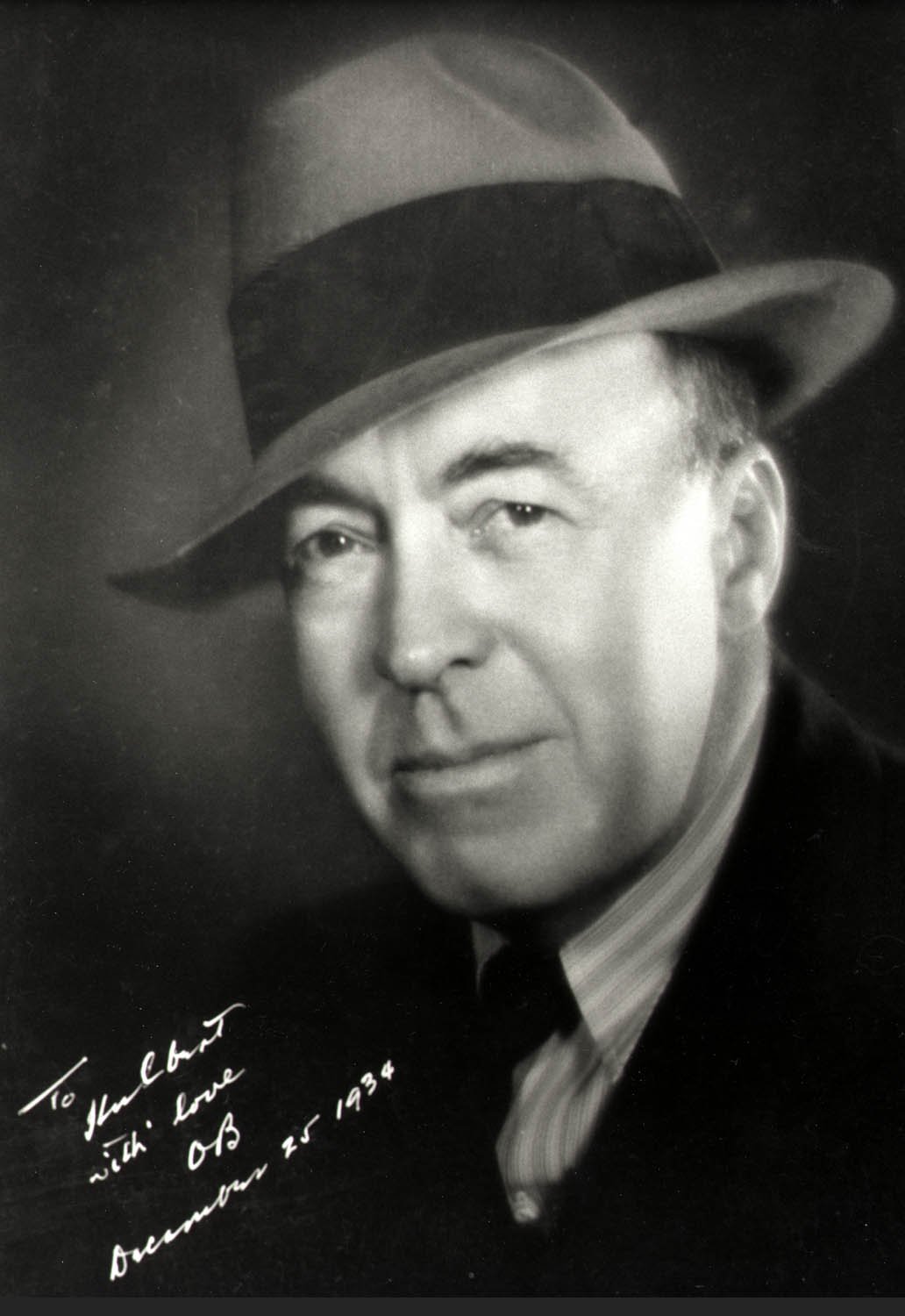
Edgar Rice Burroughs

I live and grew up in the San Fernando Valley of Southern California, next to a township that was once the sprawling ranch of the publisher of the Los Angeles Times, General Harrison Gray Otis. In 1919, Otis sold the ranch to a successful writer who named the place Tarzana, after his most famous character creation. That writer, of course, was Edgar Rice Burroughs (1875–1950), one of the most successful authors of all time.

But he didn’t set out to be one. He was a restless soul who bounced from job to job, and wrote fanciful stories to entertain himself and relieve some of the stress of trying to support his wife and growing family. In 1911, when he was 35 years old, he had to pawn his watch and some of his wife’s jewelry to put food on the table. In desperation, he submitted “half a novel” to the early pulp publication All-Story Magazine. The editor wrote back and told him if the second half was as good as the first, he’d publish it.

Burroughs finished it, and Under the Moons of Mars was published in 1912 (later released as a novel, The Princess of Mars). He was paid $400. Encouraged, Burroughs wrote a novel taking place in medieval England. It was rejected. He almost gave up, but his editor told him to try again, and go back to his “damphool” stuff.

Inspired by the legend of Romulus and Remus, founders of Rome who were fed by a she-wolf, and the jungle stories of Rudyard Kipling, Burroughs came up with a story about an English baby named Greystoke who is suckled by an ape in darkest Africa. He got $700 for that one. In 1914 it was published as a novel and became a huge bestseller.
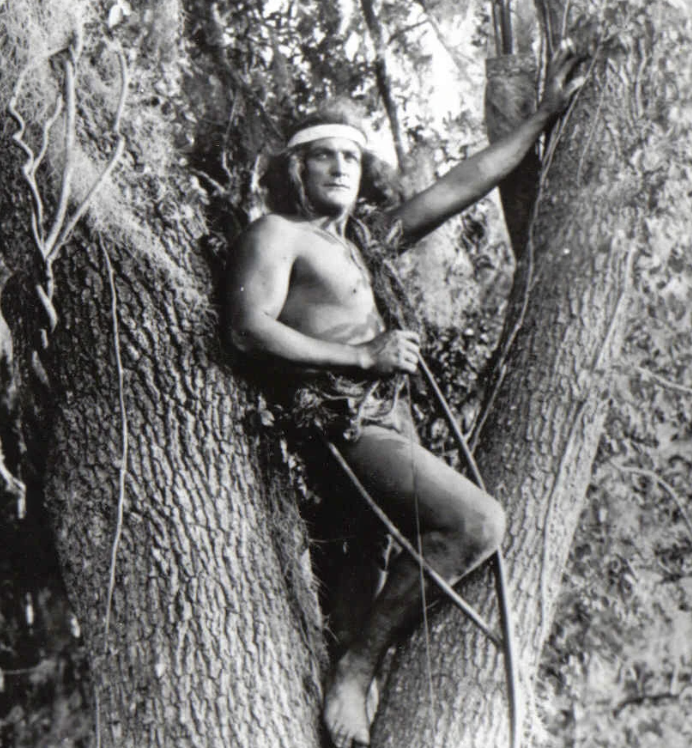
Elmo Lincoln as Tarzan (1918)

The movies came calling. In 1918 Tarzan of the Apes hit the silent screen. Starring Elmo Lincoln, it was among the first silents to gross over $1 million.

Since then, there have been over 40 Tarzan movies (including cartoon versions!) and nearly 60 one-hour TV episodes. And while the movies made Burroughs a lot of money, he didn’t like them. His Tarzan was not the Johnny Weissmuller “Me Tarzan, you Jane” guy, but a man who became civilized and articulate, and even sat in the House of Lords! (The movie version closest to Burroughs’ vision is 1984’s Greystoke: The Legend of Tarzan, Lord of the Apes, starring Christopher Lambert.)

In addition to Tarzan, Burroughs also created John Carter of Mars, and is credited with being the father of modern sci-fi.

Not bad for a guy who didn’t set out to become a bestselling author. So how did he do it? I see three traits worth mentioning.

First, he had a tremendous imagination, nurtured by his love of reading. You want to be a writer? A real writer? You have to read and read and read. Indeed, Tarzan of the Apes is the first “big” book I remember reading as a kid. I can see myself now, sprawled on the couch in the living room, lost in the book and not wanting to put it down. You all know that feeling. It’s magical, and sparks a desire to write stories like that.

Second, he wrote to entertain himself. In an interview he remarked, “In all these years I have not learned one single rule for writing fiction. I still write as I did 30 years ago; stories which I feel would entertain me and give me mental relaxation, knowing that there are millions of people just like me who will like the same things I like. Anyway, I have great fun with my imaginings, and I can appreciate–in a small way–the swell time God had in creating the Universe.”

If you’re not having fun writing your stories (and of course, there are times when it’s tough going and you bang your head against the wall, but recover and write some more and find the fun again, and best of all the satisfaction that comes from completing the work) then readers won’t have fun (or less than they could have) reading your stories.

Third, he had a strong business sense, forged by his experience in the corporate world. He kept meticulous records of his submissions, his correspondence with editors, and fought for higher pay for his stories.

And there was merch, too, everything from Tarzan toy animals to Tarzan Ice Cream Cups sold off a truck.

He had no respect for literary critics who scoffed at his kind of writing. His wife once sighed at the sight of Ernest Hemingway. Ever after Burroughs would chide her, saying maybe she should go off to an island with her beloved Ernest.

The great Ray Bradbury once remarked, “Edgar Rice Burroughs was, and is, the most influential writer, bar none, of our century.” Wow. And so I ask—

How do you stack up on the three traits mentioned above?

I still love the Johnny Weissmuller movies on their own merits, especially the first four, though Tarzan and the Amazons is fun, especially because Maria Ouspenskaya is in it. Do you have a favorite?

NOTE: This post drew primarily from two sources:

The illustrated biography of Burroughs by Irwin Porges.

And the official ERB website.
In Praise of Entertaining Fiction

Burroughs“I have been writing for nineteen years and I have been successful probably because I have always realized that I knew nothing about writing, and have merely tried to tell an interesting story entertainingly.”

So wrote Edgar Rice Burroughs in an article for Writer’s Digest in 1930. The full text may be found here. I love the up-front honesty of the statement. It resonates with me because the first “real” book I read all the way through was Tarzan of the Apes. I still remember the feeling of being gripped by a story that wouldn’t let me go. When I finished, I knew I wanted to do the same thing someday.

I can even remember the precise moment I got pulled in so deep I put everything aside–playing outside, watching TV, riding my bike to the candy store–just so I could finish that book!

Allow me to share that moment with you.

Chapter One begins as a narrative frame, the voice telling us that he cannot vouch for the truthfulness of the tale, but what he is about to reveal is based upon the “yellow, mildewed pages of the diary of a man long dead.”

The man is John Clayton, Lord Greystoke. The text continues:

We know only that on a bright May morning in 1888, John, Lord Greystoke, and Lady Alice sailed from Dover on their way to Africa.

A month later they arrived at Freetown where they chartered a small sailing vessel, the Fuwalda, which was to bear them to their final destination.

And here John, Lord Greystoke, and Lady Alice, his wife, vanished from the eyes and from the knowledge of men.

I was hooked for sure. But the best was yet to come.

We are introduced to Black Michael, a mutineer, and I loved pirate stories as a boy. In Chapter Two, Black Michael takes over the ship and instead of killing the Claytons, as heTarzan_of_the_Apes_in_color was wont to do, he spares them because John Clayton had saved Black Michael’s life in Chapter One. Instead, the pirate sends Clayton and his pregnant wife to the jungle shore, where they will be on their own to survive!

But the best…not yet!

In Chapter Three the baby is born, a son, as John tries valiantly to make a safe home in the jungle for them, hoping against hope that a party from England will eventually find them.

Alas, it is not to be. Poor Alice dies. And the baby! The baby must still be nursed! The chapter ends with the last, sad journal entry of a man soon to be dead himself:

My little son is crying for nourishment—O Alice, Alice, what shall I do?

Great heavens! I was so into the story now. But there was more! I fell indelibly under the spell of Burroughs with the beginning of Chapter Four:

In the forest of the table-land a mile back from the ocean old Kerchak the Ape was on a rampage of rage among his people.

Wow!

The younger and lighter members of his tribe scampered to the higher branches of the great trees to escape his wrath; risking their lives upon branches that scarce supported their weight rather than face old Kerchak in one of his fits of uncontrolled anger.

The other males scattered in all directions, but not before the infuriated brute had felt the vertebra of one snap between his great, foaming jaws.

A luckless young female slipped from an insecure hold upon a high branch and came crashing to the ground almost at Kerchak’s feet.

With a wild scream he was upon her, tearing a great piece from her side with his mighty teeth, and striking her viciously upon her head and shoulders with a broken tree limb until her skull was crushed to a jelly.

And then he spied Kala, who, returning from a search for food with her young babe, was ignorant of the state of the mighty male’s temper until suddenly the shrill warnings of her fellows caused her to scamper madly for safety.

But Kerchak was close upon her, so close that he had almost grasped her ankle had she not made a furious leap far into space from one tree to another—a perilous chance which apes seldom if ever take, unless so closely pursued by danger that there is no alternative.

She made the leap successfully, but as she grasped the limb of the further tree the sudden jar loosened the hold of the tiny babe where it clung frantically to her neck, and she saw the little thing hurled, turning and twisting, to the ground thirty feet below.

With a low cry of dismay Kala rushed headlong to its side, thoughtless now of the danger from Kerchak; but when she gathered the wee, mangled form to her bosom life had left it.

Oh man! That was it! I was left hanging with a baby, all alone in the jungle, in the last chapter. Now I am completely into the story of…an ape! An ape who has lost her baby! And this villain named Kerchak. I wanted him to get his just desserts! I knew this poor ape Kala would find the Clayton baby and take him as her own. And that sooner or later, one or both of them would have to kill Kerchak in a duel to the death.

This was more than mere entertainment. This was magic. A story world unlike anything I’d ever seen, even when watching the Johnny Weissmuller Tarzan movies I loved so much.

Burroughs, no doubt, influenced generations of boys to become readers, authors, or perhaps flat-out adventurers. But when I mentioned the Burroughs quote at the top of this post to an online group of veteran writers, I was delighted by several women saying the John Carter and Tarzan books were favorites of theirs, too.

Which proves that great storytelling is great storytelling. That’s what we writers must aim for, every time we sit down and clack the keyboard. As Burroughs himself put it in that WD article:

“I have felt that it was a duty to those people who bought my books that I should give them the very best within me. I have no illusions as to the literary value of what I did give them, but I have the satisfaction of knowing that I gave them the best that my ability permitted.”

So what author carried you away like this when you were a kid?