Whither Social Media?

by James Scott Bell
@jamesscottbell

Free Social Social Media illustration and pictureOr should that be Wither Social Media?

A couple of months ago I wrote about the scourge of phishing, bot-generated emails sent to writers with books on Amazon, purporting to be from marketing gurus who can get your book “the attention it deserves” or some such. Generated from a cubicle in some foreign land, what they want is your money and access to your KDP (and even bank) account. The bot-letter starts with a dopamine hit on how great your book is, adding some details scraped from the internet to make it sound like they’ve actually given your book a careful reading. (Hint: no live, human marketing professional finds random books and gives them a careful reading, then crafts a client-seeking email.)

I and many authors I know get these daily. But there’s been a new development. Skynet AI keeps training itself, and knows that authors have warned their fellows about this scam. So I had a good laugh other day when I got one of these that eschewed a fake professional style and generated a cutesy, I’m-cool-and-fun-and-down-with-the-kids type voice. What really got me chortling was this paragraph:

Before you picture me as another one of those “promo bots” crawling out of the algorithm swamp, relax. I’m Alisa, and I run a community of book-hungry readers who devour stories like yours and actually leave honest, detailed reviews (yes, human ones, no Mars-based bots or shady smoke-filled deals involved).

Got that? A bot assuring me it’s not a bot! Which got me thinking about just how we’re going to be able to judge what’s real and what’s not in the years ahead.

Now we have “AI social media.” Whatever that means, it probably means “kissing reality goodbye.

OpenAI released the Sora app on Tuesday, just days after Meta released a similar product as part of its Meta AI platform. NPR took an early look and found that OpenAI’s app could easily generate very realistic videos, including of real individuals (with their permission). The early results are both wowing and worrying researchers.

“You can create insanely real looking videos, with your friends saying things that they would never say,” said Solomon Messing, an associate professor at New York University in the Center for Social Media and Politics. “I think we might be in the era where seeing is not believing.”

More:

“We’re really seeing the ability to kind of whole-cloth generate incredibly realistic, hyper-realistic content in any kind of different way you want,” said Henry Ajder, the head of Latent-Space Advisory, which tracks the evolution of AI-generated content.

As concerned as he is with people being duped, Ajder said he’s also very concerned about the consequences of nobody trusting what they see online.

“We have to resist the somewhat nihilistic pull of, ‘we can’t tell what’s real anymore, and therefore it doesn’t matter anymore,'” he said.

The astute publishing expert Thomas Umstaddt, Jr. was recently a guest on the Writing Off Social podcast talking about social media.

Thomas: The metaphor I like to use is that social media is like a sporting event. The people in the stands are shouting as loud as they can, but just because you are shouting louder than everyone else doesn’t make you famous on social media.

Social media only works for the people on the field. If you’re the quarterback, for instance, social media works for you. The same goes for major brands like Coca-Cola that advertise in the stadium. But regular fans in the crowd can’t get famous on social media. It’s an illusion. Buying a ticket doesn’t make the crowd listen to you.

That’s how social media works for most authors. You can’t expect to shout about your book amongst all the other shouting and get people to listen.

Sandy: It’s an illusion of access. You think you have access to all 5.24 billion people who are on social media.

Thomas: Many of those are AI bots.

Sandy: True. Regardless, you go there and think you have access to billions of people, when in reality, you only have access to a handful. The people who see your content are the ones immediately around you who can actually hear you. That’s it.

So what are we as authors to do with social media? The early counsel was to jump in with both feet (or both hands on the keyboard, as it were), on as many platforms as you can, because of the “reach billions” hype. Ha! No. We are in the stands at a Seattle Seahawks game, and the people in the adjoining seats can barely hear us when we scream.

Does social media make any difference (meaning, does it sell books?) TikTok is the latest rage, but there’s a tsunami of content there and getting through that noise is even worse than in a packed stadium. (I once threatened my daughter by telling her I was going to start doing “dad-dancing” videos on TikTok. She said, in all seriousness, “That can work. You could really go viral, Pop.”)

Um, no.

Social media has never been a place to sell books. If you have the right book, the right market, and the right reach, maybe you can move a few copies. But the truth remains: unless the book itself is so good that the last chapter sells your next book, you’ve spun a lot of wheels and invested a lot of time for little return.

My advice early on was to pick one social media platform you enjoy, and major in that, but not with a string of “buy my book” posts. I subscribe to the 90/10 rule, with the 90 being welcome, non-commercial content, and the 10 about your books. Make 100 percent of it fun to read. Don’t become yet another scold about some political or cultural hobbyhorse. It’s not good for the ol’ psyche.

FWIW, my social media footprint has been X (formerly Twitter), but I’m most active now on my Substack, which is a blend of newsletter and mini-social community (i.e., comments). It is there that I post another kind of writing I call “Whimsical Wanderings” as an oasis from the screaming mimi-dom of most social media today.

But I always keep writing books the main thing.

What about you? What’s your view of social media for authors? How much time do you spend on it? Any advice you’d like to offer?

Signature, Please

I had three secretaries in the twenty-five years I worked in school district administration. My starter secretary was a Texas wife, mother, and grandmother, who spoke with the slow drawl we all recognize here in the Lone Star state.

My second was from New Jersey. She had little accent until someone angered her, or when talking with her family, and especially her mother. That’s when Jersey came out thick and nasal, dropping her “r”s. You know it as “buttah” for butter, and the “a” sound changed in words like “towk” for “talk” or “dowg” for “dog.”

I tried to write “or” as “oa,” but that didn’t work in the above sentence. It does now, though.

Here we pronounce dawg.

She also took great delight in correcting my pronunciation of “pen.” Where I come from, we say “pin” and for the word “aunt,” “aint.” We also put those abandoned Jersy “r”s in words such as “worsh” for “wash,” and “winder” for “window,” and finally, “piller” for “pillow.”

“Open the winder and hang that piller case out to dry. Someone left a wet warsh rag on it all night.”

Thinking about her pronunciations this morning (and my own) brought up a trail of thoughts about how hard it is read someone’s work when they hammer us with local dialogue for an entire novel or short story. I recently read a story so filled with a character’s regional dialogue that reading became a 6,000-word burden.

Note to authors: You’re not Mark Twain writing Huckleberry Finn. I love that book, but the dialogue simply wears me out. Use it early in the story to give us that local flavor, or to identify a character, then use it sparingly throughout the book. I don’t need to be hit over the head with it until my skull is misshapen.

Here’s an example of Jim talking to Huck. “Pooty soon I’ll be a-shout’n’ for joy, en I’ll say, it’s all on accounts o’ Huck; I’s a free man, en I couldn’t ever ben free ef it hadn’ ben for Huck; Huck done it. Jim won’t ever forgit you, Huck; you’s de bes’ fren’ Jim’s ever had; en you’s de ONLY fren’ ole Jim’s got now.”

That’s all I need. Now, give me something easier to read.

But back to “pehns,” and writing instruments.

Authors of a certain age began with big fat pencils designed for little elementary school hands.

We progressed to clear, cheap Bic pens which became the norm, but for a period of time, refillable cartridge pens were all the rage in my elementary. I had one of those, but most of the ink went directly from the nib and into highly absorbent Kleenex tissues, which bloomed nice and blue while Miss Russell droned on and on about diagraming sentences.

Because of those psychadelic blooms, and a distinct lack of interest, I still can’t diagram a sentence.

My writing output began with a Smith Corona portable typewriter, though the volume of work between 1970 and 1988 was dismal at best. I made beer money with it, though, typing term papers and reports all during college.

It was a 286 computer that finally set me free, and I haven’t looked back since. They keyboard is my friend, and I’m danged fast on this thing. I used to write newspaper columns on yellow legal pads (when I should have been listening in meetings…do you sense a pattern here?), and typed them into a floppy disk to print out on a tractor drive.

Those were the days.

I can’t write longhand anymore. My handwriting is somewhat akin to that of a doctor with alcoholic shakes, and I can’t make out what I scribbled.

So all I do is make hundreds of notes on small pieces of paper, which I forget or lose until months later. Sometimes those notes make no sense, and I have to wonder what idea had been rattling around at that time.

Others are great, and I’ll find somewhere to plug them in on this WIP. If you can’t read the top scribble, it says, “square-headed cowboy,” and the second is a possible book title, “The Dead Don’t Smile.”

I know authors who write longhand. Bestselling author Marc Cameron, of Arliss Cutter and Tom Clancy fame, and I were at an in-conversation signing a couple of weeks ago and he discussed his method of getting the first draft down with a box of Blackwing 602 pencils and a stack of legal pads. When he’s finished, he types it up and gives the pencil stubs away to fans.

All I would have is a stack of pads full of hieroglyphic scrawls that I couldn’t read no matter how hard I squinted at them with one eye.

But then I got to thinking about signing pens. That’s kind of a big deal to some folks, and here’s a question for the hive mind (and truly the point of today’s post).

What pen is best for signing copies of my work?

Some authors prefer old-school fountain pens, but I can’t keep them flowing. I’ll leave them on the desk for a couple of weeks and then have to soak the ink away. That’s irritating, though I love the looks of those instruments both in hand, and the way they write.

I have half a dozen pen sets that were given to me over the years. One set came from my mother when I graduated college. Now an antique, the pen and mechanical pencil is hand-turned walnut, and I used it for so long the oil from my fingers has stained the wood so deep it glows with a soft polish.

I don’t use it though, because I’d leave it laying somewhere. Note: Now I’m of the age I can’t find things. I went to get them for a photo to use here, and can’t remember where I put them so they wouldn’t get lost.

Sigh.

To make signatures special in my mind, I use pens (pehns) from the 21 Club in New York City. It was the haunt of my original writing mentor, Robert Ruark, (who passed in 1964). The las time I was there, they gave me half a dozen of those black pins (Texas for pens), with gold lettering, and sometimes fans notice when I’m signing and ask about them. That’s fun.

You can’t get them today, though. Covid killed the pre-prohibition club that had been open for over 90 years.

I’ve used a variety of rolling balls, and many almost skidded off the page. I loved them all, but as I said, I lost them and can’t remember which ones were the best.

I do not like signing with Sharpies. Period.

So, to all the authors out there, which do you use as your “signing pehn,” and where do I get one to try out?

It won’t be this one, though. It’s a scary weapon, I think.

Reader Friday-Wordsmarts

How were you at spelling when you were a tyke?

I was an okay speller, but throw a number at me and I’d run like a bat out of . . . well, you get the idea.

I ran across a website the other day (when I was fleeing a number thrown at me) that turned out to be quite entertaining. I think you, as voracious readers and writers, will find it equally entertaining.

It’s all about words . . . words with the same definition, but that have more than one acceptable spelling. Now why didn’t they have those words in the third grade? We coulda had a choice and all have gotten an A on every spelling test, right?

Here’s the link:  https://wordsmarts.com/multiple-spellings/

Below is a sample of what you’ll see. And please note: Spell-check red-lined a few of these as I typed the list.   🙂

  • Grey/Gray
  • Duffel/Duffle
  • Adviser/Advisor

And my all-time favorite:

  • Donut/Doughnut

Here’s what I’ve been wondering. Is it just the English language that enjoys multiple spellings for the same words?

Any of you speak French or Russian or Latvian and could clue us in?


Two part assignment for TKZers today: Check out the website, then come up with your own words that could have given you first place in spelling bees!


Adventures at Book Signings

Adventures at Book Signings
Terry Odell

Table display of books written by Terry Odell

First, forgive my absence here at TKZ. We were away for a week, and I was off the grid, and coming back to “real life” is a slow process.

I’m an indie author. The vast majority of my book sales are ebooks. But every now and then, I have the opportunity to get out among real life people who like to read print books. They refer to them as “real” books, but I’m not going to get into my feelings about that here.

Most of my signings are either at conferences or at library author events. As an indie author, I have to supply the books, usually sold on consignment if it’s a conference, or I handle the sales at libraries.

I’m not a big name. Occasionally, I get seated to a Big Name Author, and spend most of the time chatting with their long lines of people wanting their books. Craig Johnson, Julia Quinn, and Brenda Novak come to mind.

Once, back in the day, when I was with a small publisher, they sent the books to the conference. Twenty of them! I’m not a big name, and if I sell five, it’s a good day. I asked the organizers why they ordered so many, and they said, “Oh, you can just return the unsold ones.” What they didn’t know was that the publisher charged for returns, and I was out a bunch of bucks because I wasn’t going to ship them back to me, and they wouldn’t fit in my luggage.

But, last weekend was different. Our neighborhood/development/community has an annual Holiday Bazaar, and I have participated for the last three years. I set up a table with my books on display, and try to remember I’m supposed to be outgoing and personable. I ‘bribe’ people to my table with a bowl of chocolate, my lip balm, and post-it notes.

It’s an interesting event. Vendors sell jewelry, baked goods, photographs, and lots of other handmade craft items. I’m the only one selling books. Unlike a writer’s conference or library event, people aren’t coming predisposed to buy books.

I had one woman approach my table and ask if I’d read all the books I had on display. I smiled and told her I’d written them. She leaned forward and said, “I’m 73 years old, and I’ve never read a book. I don’t know how I graduated from high school.” I told her she had the opportunity to make one of my books her first, and she actually bought one.

Another woman approached with an image of the books she’d bought last year. She’d given them to her 99 year-old mother who loved them, so she bought some more.

I had one woman tell me she wrote a novel during the pandemic but didn’t know what to do with it, and could she pay me to help her get it published. Ummm… not sure I can be much help. I’ll wait to see if she contacts me.

**Note to self: Rookie mistake. Next time make a sign that says “Meet the Author.” Too many people looked at the books on display and it took them a while to realize they were all written by the same person, at which point they asked if I was Terry. (Except for the one guy who asked if I was Dan’s wife—he’s much more outgoing and involved in the neighborhood, and people know him. Me, I’m an introverted writer who likes sitting in my office with my characters, so I’m not known to many people, nor do I know many of them.)

Another mistake. I forgot to bring my business cards. Thought they were in my purse, but after all the switches because of our travel, they weren’t. Fortunately, my lip balm and my post-it notes have my contact information and website on them.

Since almost everyone who comes to the bazaar lives in the ’hood, they know each other, so a lot of their “shopping” time is spent chit-chatting and catching up. The noise level in the small building/room gets high. It’s as much a social event as a sales event.

I had people come up to my table who told me they were so glad I’d come back—but they didn’t buy. Others marveled at my output. Most of them didn’t buy, either. But I did make enough sales to make it a respectably profitable day.

This year was the first time we could take credit card payments. (The building now has wifi). Technology! I have a Square card reader, but it’s old, and I haven’t used it in a couple of years. Turns out my new phone has a different plug in thing (I don’t speak tech), but I have an older iPad mini that uses the same connection, so I figured I’d be able to keep up with the times. However, I thought I’d try to be more up to date, so I ordered one of the new gizmos that could take chips and tap to pay. It was supposed to be delivered the day before the bazaar, but of course, it was delayed, so I was back to using my iPad mini.

Once at the venue, the woman at the table next to me told me if I had the Square app on my newer iPhone, it would take charges without needing a gizmo, and she walked me through using it. When my gizmo finally shows up, it’s going back to the store.

Something else that I think helped sales. Most of the people who came to buy were used to paying with cash, so although I’d bumped up my prices a little to cover fees, I told them I’d discount cash sales. People love a bargain.

  • To recap. My takeaways:
  • Make it obvious you’re the author.
  • Have swag to attract people to your table.
  • If you’re indie and can set your own pricing, make things look good. I had a ‘bundle’ price, and a lot of people bought three books when they saw they were getting a bargain.
  • Stand, don’t sit all day. Initiate conversation. It’s hard for me, but got easier as the day went on. One lead-in that worked for me (and killed more than one bird), was to ask if I could answer any questions about my books.
  • If you have more than a couple of books on display, get ready to talk about which one(s) you’d recommend. When people ask which is my favorite book, I ask if they have children, and if they say ‘yes’ I ask which is their favorite. I try to find out what their interests are, or point out things about my books–especially the ones based on my travel–that might engage them.
  • Think of it more as introducing yourself and making contacts, not sales.

Anything you have to add?


New! Find me at Substack with Writings and Wanderings

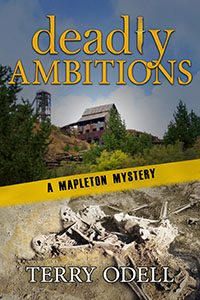
Deadly Ambitions
Peace in Mapleton doesn’t last. Police Chief Gordon Hepler is already juggling a bitter ex-mayoral candidate who refuses to accept election results and a new council member determined to cut police department’s funding.
Meanwhile, Angie’s long-delayed diner remodel uncovers an old journal, sparking her curiosity about the girl who wrote it. But as she digs for answers, is she uncovering more than she bargained for?
Now, Gordon must untangle political maneuvering, personal grudges, and hidden agendas before danger closes in on the people he loves most.
Deadly Ambitions delivers small-town intrigue, political tension, and page-turning suspense rooted in both history and today’s ambitions.

Preorder now


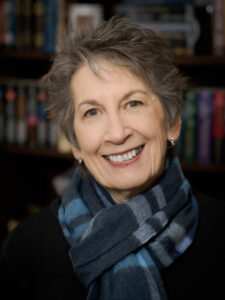
Terry Odell is an award-winning author of Mystery and Romantic Suspense, although she prefers to think of them all as “Mysteries with Relationships.”

Flathead River Writers Conference Recap – Part 3

by Debbie Burke

Welcome to Part 3 of the rundown on the Flathead River Writers Conference. If you missed anything, here are links to Part 1 and Part 2.

In Part 1, emcee Kathy Dunnehoff observed that normally introverted writers are “like dogs at the dog park,” ecstatic to be around other writers.

On Saturday evening, conference attendees congregated at the literary version of the dog park—the bookstore in downtown Kalispell. It was party time at The BookShelf.

Conference committee member Shira Marin laid out a sumptuous spread with wine, jumbo shrimp, cheeses, sandwiches, fruit, and more. We noshed and gabbed and renewed friendships from past conferences. Plus we met new folks who will likely become critique partners and beta readers.

Now back to the conference speakers…

Memoirist Robert Petrone

Robert Petrone developed an interest in memoir writing as a result of growing up with a father who spent 30 years in a nursing facility because of MS. Yet, the five Petrone children were not allowed to speak of his condition. Illness was considered shameful, and he felt burdened with guilt because of his father’s disability.

With a PhD in English Education, Robert is currently an associate professor at the University of Missouri and has been exploring memoir writing in depth.

He describes the “hallmark of memoir” as the “double perspective” of two voices. One is the external narration of events as they unfolded in the past. The second is the internal narration of looking back and reflecting on those events.

The memoirist has “two perspectives that equal two selves that equal two voices, then and now. One is the voice of innocence, the other is the voice of experience.”

In the first draft, the author relates scenes, dialogue, and thematic tension.

Robert likens the second draft to “therapy,” layering in the author’s realizations about the meaning of earlier events.

He suggested an excellent visual to help writers distinguish between the two voices: display a photo of yourself in the past beside a photo of yourself now.

Another trick Robert uses are color-coded index cards pinned to a wall. On one side is a summary of the external narration. On the other side is the internal narration about the event. Each character in the story is represented by a different colored index card. Robert’s visual aid ideas especially appealed to me since those options are low-tech and easy to use.

In addition to memoir, Robert’s research focuses on curriculum development for youth, especially in rural and Native American schools. That dovetails with Jake Arrowtop’s teaching at a high school on the Blackfeet Reservation, covered in Part 2. Between their sessions, Robert and Jake found much to talk about.

~~~

Jonathan Fetter-Vorm

Jonathan Fetter-Vorm is a self-taught graphic artist, driven by his love of drawing. He admits, “Until I had a family, my lifestyle was very unhealthy, eating junk food and drawing sixteen hours a day.”

Although his father dismissed his art as “fatuous indulgence,” Jonathan’s early passion wasn’t quashed. In college, after reading Beowulf, he turned the epic poem into a comic book.

He opted for an MFA in creative nonfiction rather than going to art school because he says “art school doesn’t teach art.”

Pop up classic book by Jonathan Fetter-Vorm

Working as a book printer and binder, he created beautiful handmade illustrated books. During his talk, he passed around several examples of miniature pop-up books with exquisite artwork that retold classic literature. But he says, “I couldn’t make any money doing that.”

Writing as a career discouraged him so he quit. “I turned to comic books and started making money.”

He found a niche market of young readers fascinated by his illustrated recounting of historical events like the Civil War (Battle Lines), and the Apollo 11 moon landing (Moonbound). In 2013, his story Trinity was selected by the American Library Association as the Best Graphic Novel for Teens. In it, Jonathan chronicles J. Robert Oppenheimer and the building of the first atomic bomb.

He describes his meticulous research, which includes near-microscopic study of photos and original documents to ensure every detail is accurate, down to the cabin measurements in Apollo 11. He used Kodachrome photos from the 1960s for the color palette as well as to capture clothing, hairstyles, appliances, and objects from everyday life in 1969.

To build a graphic novel, Jonathan suggests three methods:

  1. Start from a script then add drawings;
  2. Start with character sketches;
  3. Start with a scene.

His preferred style is to draw first. “If I could, I would draw until I had a heart attack.”

If he tries to write the script first, he jokes about his constant distractions: “I need a snack. I need to go to the bathroom.”

A 150-page book contains six panels per page, requiring a lot of detailed drawing. However, he says, “You really only need three to five truly impactful scenes.”

I left Jonathan’s talk with a fresh appreciation for comic books and the creativity behind them.

~~~

Jess Owen, J.D. (Jenn) Evans, Debbie Burke

How much fun is it to have a sibling who’s also a writer? Ask J.D. (Jenn) Evans who is Jess Owen’s sister. For much of their lives, the sisters have brainstormed, critiqued, and beta read each other’s work.

Jenn is a former Army officer now living in North Carolina with her husband and two attempts at mini-clones gone rogue.” She laughingly complains she has “too many stories in her head.”

Jenn writes a romantic epic fantasy series, Mages of the Wheel, that unfolds in the World of Tamar. Her books have garnered thousands of four and five-star reviews and are rated as “#Best of Booktok.” Readers become entranced by the magical world thanks to beautifully rendered maps of various story locales.

She actively engages with her readers on multiple social media outlets and has a large loyal following. Fans even share their own art that depicts Jenn’s characters.

Because of overlapping breakout sessions, I missed Jenn’s presentation about how to create relationship chemistry. But Jenn, Jess, and I got together for a panel as the last event on Sunday afternoon.

Usually, that time slot means many attendees have already left but a fair number of people remained to hear us discuss our different journeys in the traditional and indie publishing world.

Jenn indie-published her romantasy series but remains open to other routes if good opportunities come around.

Jess used crowd-funding to indie-publish her first four books, The Summer King Chronicles, a fantasy series with lush illustrations. Her next two books were contemporary YA. A Furry Faux Paw and Don’t Ask if I’m Okay were traditionally published. She is considering a return to indie pub for future books.

My first thriller Instrument of the Devil was traditionally published but six months later the press closed its doors. I received a couple of offers from small publishers but decided to get my rights back for the first book and have indie-pubbed all my books since. The control and ability to release books on my timeframe is important, rather than waiting for the much slower traditional process.

We all agreed that the marketing burden falls on the author, no matter how they’re published.

Jenn and Jess are both active on numerous social media outlets. I always learn about that unfamiliar territory by listening to them.

Jenn discussed that today’s authors must be able to pivot, whether they’re traditionally or indie published. Readers’ tastes and trends often change quickly. Indie publishing allows Jenn to switch directions and adapt immediately to her readers’ wants.

Newer publishing options continue to evolve with online outlets like Royal Road, a fan-driven site of serializations. I’d heard an enthusiastic buzz at the conversation among younger attendees about Royal Road.

Jess and Jenn are always lively, intelligent, and knowledgeable. Being on a panel with the two sisters was great fun.

~~~

Claudia Cassidy Bennett, PhD

The conference could not have happened without the steady guiding hand of chair Claudia Bennett. Whether she was juggling plane flights for out-of-town presenters or finding a missing dongle for my power point presentation, Claudia handled all challenges with serene graciousness and efficiency.

Perhaps she perfected that calmness while caring for her mother who had Alzheimer’s. She memorialized the experience in her touching book Caregiving Reimagined: A Practical and Spiritual Guide for Family Caregivers.

Sunday evening, the 35th Annual Flathead River Writers Conference wrapped. Tired but energized attendees hurried home to apply lessons, insights, and renewed inspiration to our works in progress.

Hope to see you in Montana next year!

MG is for Middle Grade

“Access to books and the encouragement of the habit of reading: these two things are the first and most necessary steps in education and librarians, teachers and parents all over the country know it. It is our children’s right and it is also our best hope and their best hope for the future.” –Michael Morpurgo

* * *

I’ve spent the better part of my writing time in 2025 writing and publishing Middle Grade novels, and Sue Coletta’s recent TKZ post on Writing for Children inspired me to share some of the things I’ve learned.

I asked my good friend and TKZ contributor emeritus Dr. Steve Hooley to help me. I had interviewed Steve on my blog earlier this year about his Middle Grade Fantasy series, The Mad River Magic Series. Steve’s thoughts about writing for the 8-12 year old level were so insightful, I asked his permission to quote from that interview and from later email exchanges. So here are some thoughts about Middle Grade books from both of us.

WHAT CONSTITUTES MIDDLE GRADE?

Steve:

Most authors define “middle grade fiction” as being written for ages 8 – 12 (third grade through sixth grade), and containing no sexual content or realistic violence. I think that another way to look at it is the intelligence and information processing skills of the reader. “Children” of this age are reaching the age where they can understand adult logic and reasoning. And they are not yet filled with the adolescent hormone-driven physical and sexual attraction that is found in young adult material, and that clouds their thinking.

They differ from books for younger readers in that they are more like adult books, longer, with plot and structure. And they differ from books for YA and adult in that they usually contain no profanity, sex, or overt violence.

Kay:

I like what Steve had to say about adult logic and reasoning. In my books, the two main characters solve mysteries by looking at things from multiple points of view. I believe this introduction to analytical logic and critical thinking skills will serve young readers well. (And I know Garry Rodgers will like that.)


WHY WRITE MIDDLE GRADE?

Steve:

In my opinion, the age group of readers of middle grade books is in the innocent age of transition to adulthood. This permits the reader to learn principles from the book that will prepare them for their adult life. And it gives the author a unique opportunity to present material which the reader can evaluate and consider regarding choices for their adult life.

Kay:

I had included two young girls, 10-year-old Reen and her 9-year-old cousin Joanie, in my third mystery novel, Time After Tyme. The girls were very popular with readers, and several people encouraged me to give them their own series. Although I hesitated for months while I worked on another novel, the idea of writing books that would contribute to a child’s intellectual growth appealed to me.  I decided to try to create an entertaining story that would have traces of problem-solving, teamwork, fair play, and persistence without preaching.


HOW MANY WORDS?

Steve commented on my blog that most of his Mad River Magic books are around 80K words, so I would put those books in the Older MG category.

Each of my books is around 30K words, so I think younger readers can handle the straightforward plotting and limited number of characters.


WHAT GENRES ARE ACCEPTABLE?

As we mentioned above, Steve’s books are in the Fantasy genre; mine are mysteries, but according to a recent post on Jenny Bowman’s site, MG books can cover a wide range of genres. She mentions mystery, fantasy, adventure, historical fiction, and even the re-telling of classic stories like Les Miserables.

In place of a romance genre, best friends and strong relationships are appropriate. And MG kids love to laugh, so humor is always welcome in Middle Grade fiction.


FINAL THOUGHTS

Steve included these thoughts in a recent email

  1. The name of genre (Middle Grade) makes no sense. It is not Middle “School” age.
  2. The wide discrepancy of reading skills in that age group. Some are reading adult books by the end of “middle grade”. Others (according to recent testing) are reading very poorly.
  3. Should there be two genres, a boys’ and a girls’ genre? Girls are always asking for romance by the 7th and 8th grade. While boys want adventure without all the icky girl stuff. (ex. Nancy Drew series vs. Hardy Boys)
  4. Marketing is difficult, unless you are trad published. Teachers want to recommend books that have won awards to their students.
  5. At that age, most readers are not buying their own books.
  6. At that age, readers can’t leave reviews on Amazon.
  7. Contact with students for beta reading must be handled with care. The best is to find a gifted and talented coordinator who will be the intermediary, because most teachers don’t have the time or the interest.

* * *

So TKZers: Have you written any Middle Grade Fiction? Have you read any MG novels? What are your thoughts about writing for children?

* * *

Whether they’re searching for hidden treasure in Bellevue or chasing tricky thieves through famous landmarks in Manhattan, Reen & Joanie are up to the job. Join the girls and make the world a better place.

Click the image to go to the Amazon series page.

* * *

A hero on crutches, flying barrel carts, Indian magic, and a glow-in-the-dark magic pond, Bolt and the Mad River Magic gang have it all, living in the enchanted forest with their grandparents and practicing light magic.

Click on the image to go to the Amazon series page.

What Writers Can Learn From It Happened One Night, Part 2

by James Scott Bell
@jamesscottbell

Last week we began a discussion of Frank Capra’s 1934 classic It Happened One Night. It was spurred by my meeting with a couple of young ladies at Trader Joe’s who do not watch black-and-white movies. Matters took an alarming turn in the comments when Brother Gilstrap told of a 22-year old fellow in media who’d never heard of Clark Gable or John Wayne!

This almost drove me to drink. Instead, with hope in my heart and zeal in my fingers, I clack on.

The plot of It Happened One Night (which Capra and screenwriter Robert Riskin refined after priceless feedback from a writer named Myles Connolly) is simple. Spoiled heiress Ellie Andrews (Claudette Colbert) wants to get to her husband in New York, flier King Westley. But she is held a virtual prisoner on her father’s yacht so he can pay off Westley to have the marriage annulled. She dives overboard and swims to freedom. Wishing to stay incognito she gets on a night bus, but is woefully deficient in street smarts. Another passenger, a fired newspaper reporter named Peter Warne (Clark Gable), spots her and offers her help her get to Westley in exchange for her story, exclusive. She resists until she realizes that only he can keep her on the down low. And so the journey begins.

Death Stakes

As I’ve written many times, the best fiction is about a battle with death, which comes in three forms: physical, professional/vocational, or psychological/spiritual.

For Ellie, it’s psychological death, as it usually is in a romance. The standard trope is that unless they two “soul mates” end up together, they’ll “die on the inside.” Here, there’s a twist: Eillie wants to get to Westley mainly to rebel against her controlling father. She’ll “die inside” if she isn’t allowed to live her own life.

For Peter, it’s professional death. His editor at a New York newspaper has told him never to show his face there again. Peter needs a story, a scoop, or his reporting days are over.

Lesson: Nail your death stakes from the jump, or your plot will have a weak foundation. You can have more than one on the line, though one should be primary. For example, a thriller will almost always have physical death as the crux, but the character can also have psychological challenge as well.

A Romance of Opposites

Morality and Relationships, IT HAPPENED ONE NIGHT – Once upon a screen…Who are these two at the start of the picture? Ellie is a spoiled brat. Thus, one part of the plot is The Taming of the Shrew. But the brilliant move by Capra/Riskin is that Peter is an egotist who also needs taming. It’s a perfect balance.

There are two main romance tropes: 1. The couple who hate each other at first, then grow into love; and, 2. The lovers who want to be together but are kept apart by other forces, e.g. Romeo and Juliet. This movie is obviously the first kind.

Lesson: Know your tropes because the readers expect them. Disappointed readers do not become return buyers. Your task is to originalize how tropes are played out. This movie does that exquisitely.

Three Unforgettable Scenes and No Weak Ones

Writer-director John Huston once said that a great movie must have at least three unforgettable scenes, and no weak ones. Here are the three I’d pick in It Happened One Night.

1. Early in Act 2 Peter, to conserve their money, rents a single cabin at an auto camp, registering as husband and wife. Ellie is aghast. Peter ties a rope across the room between the two beds and throws a blanket over it. “Behold the walls of Jericho,” he says. “Maybe not as thick as the ones that Joshua blew down with his trumpet. But a lot safer. You see, I have no trumpet….Do you mind joining the Israelites?”

Ellie just stands there, defiant. So Peter decides to show her how a man undresses. It’s “quite a study in psychology.” He takes off his coat, his tie, then his shirt. He’s about to remove his pants when Ellie quickly scoots to the other side.

What made this unforgettable was not only Gable’s delivery of the lines, but the fact that he wore no undershirt. After this movie came out, undershirt sales in America suffered a serious decline!

2. The most famous scene in the movie is the hitchhiking scene. Peter has been bragging to Ellie how he knows everything, including the right way to dunk a donut. “I ought to write a book about it.” On the road, he explains to Ellie he can get a ride by the magic of this thumb and explains the various thumb moves. He says he’s going to write a book about it called “The Hitchhiker’s Hail.” Ellie is not impressed.

As cars stream by, Peter tries every one of the moves and not a single car stops. Crestfallen, he says, “I don’t think I’ll write that book after all.”

Ellie says, “You mind if I try?”

“You? Don’t make me laugh.”

“I’ll stop a car and I won’t use my thumb…It’s a system all my own.”

Ellie then waits for the next car. When it comes she raises her skirt and sticks out her attractive gam. The car screeches to a halt. The taming of the egotist has begun.

3. The wedding scene at the end, when Ellie is about to marry King Westley once more and makes an unforgettable escape.

Lesson: However you plan your scenes, be ye outliner (before) or pantser (during) push yourself to the original, the fresh, the unanticipated.

Spicy Minor Characters

I call minor characters the “spice” of great fiction (see Mr. Charles Dickens for the Master Class). Two of them come by way of two of the best character actors of the time, Roscoe Karns and Alan Hale.

Mini Tribute: Character Actor Roscoe Karns | Classic Movie Hub BlogKarns plays Oscar Shapeley, an oily (and married) traveling salesman who fancies himself a ladies’ man. On the night bus he starts yakking to Ellie. “Shapeley’s the name and that’s the way I like ’em.” On and on he goes, until Ellie cuts him down with a line.

“Hoo hoo!” says Shapeley. “There’s nothing I like better than to meet a high-class mama that can snap ’em back at you, ’cause the colder they are, the hotter they get. Yessir, that’s what I always say. When a cold mama gets hot, boy how she sizzles. Now you’re just my type. Believe me, sister, I could go for you in a big way. Fun-on-the-side Shapeley they call me, with accent on the fun. Believe you me!”

Peter has been watching all this with amusement, but finally saves Ellie by telling Shapeley to move to another seat because “I’d like to sit next to my wife.” Shapeley quickly complies.

Later, Shapeley will show up again, after figuring out who Ellie really is. Peter will then scare the pants off Shapeley by pretending to be a mobster who is “holding that dame for a million smackers.” And if Shapeley talks, the mob will find him and his family. Scared to death, Shapeley runs off into the woods.

Davelandblog: It Happened One Oscar NightIn the hitchhiking scene, the car that stops is driven by Alan Hale (you may remember him as Little John in The Adventures of Robin Hood). He is loud, jovial, talkative.

“So, you’re just married? That’s pretty good. But if I was young, that’s the way I’d spend my honeymoon. Hitchhiking. Yes, sir.” He begins to sing: “Hitchhiking down the highway of love on a honeymoon!”

It turns out he’s a “road thief” who picks people up then drives off with their luggage. It’s a short bit, but a flavorful spice.

Lesson: Do not waste your minor characters by making them clichéd or throwaways. Give them a life of their own, with unique tags of manner and speech. Readers love spice. It’s one of the best ways to elevate your work above “AI slop.”

Dialogue

I’ve long held that the fastest way to improve any manuscript is with sharp, orchestrated dialogue. The movie is full of smart Riskin banter. One example: When Peter first sits next to Ellie on the bus, she is not pleased. He offers to put her bag up top for her. She gets up to do it herself. The bus lurches forward and she falls back on Peter’s lap. She quickly scoots off. Peter grins. “Next time you drop in, bring your folks.”

Lesson: Standout dialogue is a craft that can be learned. I ought to write a book about it.

Pet the Dog

A “pet the dog” beat is a moment in Act 2 when the lead helps someone who needs it, even though it comes with a cost. In the movie, the passengers on the night bus are bonding by singing “The Man on the Flying Trapeze” (a popular ditty of the day). Then the bus hits a muddy rut and comes to a hard stop, tossing the passengers. They mostly laugh, but suddenly a little boy is screaming “Ma! What’s the matter with you? Somebody help!” Peter rushes over, determines the mother has passed out and assures the boy she’ll come around.

“We ain’t ate nothin’ since yesterday,” the boy says. He says his mother has a job waiting for her in New York but had to spend all their money on the tickets. Peter reaches into his pocket for a bill, a ten-spot he and Ellie need for the trip. He hesitates. Ellie takes the bill, hands it to the boy and tells him to buy something to eat at the next stop. The boy says he “shouldn’t oughta” take it. He holds the bill out to Peter, “You might need it.” Peter waves him off and puts on a smile. “I got millions.”

Lesson: Pet the dog moments deepen our bond to characters. Think of Katniss with little Rue, or Richard Kimble getting the distressed boy to the operating room in The Fugitive. The key is that the act puts the character in a worse position in the plot.

Final Thoughts

Capra always said that the Gable in It Happened One Night was the real Gable—unabashedly masculine, with a vein of sardonic humor. Colbert showed herself adept at drama, comedy, and pathos, playing a “brat” whose inner decency finally breaks out. In true rom-com fashion, each transforms the other for their ultimate good.

Would that today we had more movies as tight and multi-faceted as It Happened One Night.

And books, too.

Black-and-white movies forever!

Comments Welcome.

Note: It Happened One Night is free to watch on YouTube.

And for your viewing pleasure, here’s the famous hitchhiking scene:

Revision Block

The proverbial brick wall.

Every writer has heard of writer’s block. Whether they believe in it or not, it’s been part of the conversation and lore around writing for a very long time. One of my favorite movies about fiction writing, Throw Momma From the Train, opens with Billy Crystal’s character blocked on the opening of his next novel. “The night was…moist,” he types. He crumbles up the paper and tries again, but remains stuck.

I believe writer’s block is either caused by genuinely not knowing where to begin or where the story goes next, or by fear—fear of exposing yourself, fear of failure, fear of simply screwing up, etc.

It turns out, for me at least, there’s also “revision block,” which I define as an inability to begin revising and/or being unable to finish a rewrite.

Perhaps you don’t know how to fix the issues you’ve found in your draft. Maybe you don’t know  where to start a revision. Maybe you don’t feel like you are making any real progress in rewriting your novel, or the revision seems to go nowhere.

Usually when I revise a novel, I dive in and begin immediately rewriting. With the five books in my Empowered urban fantasy thriller series, revision was a fairly straight-forward process, mostly fixing continuity errors, making sure things were clear, and keeping the tension mounting.

The first novel in the series, Agent, did require a complete voice edit at the direction of my developmental editor, Mary Rosenblum. Her observation that my hero’s voice was completely wrong gave me revision block for all of two minutes, but I recognized the problem she had identified, and set out to deal with it. Over five weeks, I went through the novel word by word to get the first person narrator’s voice right.

It was time well spent.

The rest of the series, as well as my two stand alone novels, didn’t require nearly that level of revision. There was usually a point during each where I felt stymied, but I always worked out what the problem was and finished the revision.

Things became more tangled when I turned to revising my first mystery, A Shush Before Dying, in 2021. I knew the first draft had serious problems. It was my first mystery novel, after all. The mystery storyline was clearly not ready for prime time. The red herrings, the suspects with secrets, the narrative head-fakes, the planted clues, I needed to work all these out, as well as learn how to layer in them into the narrative with subtly and misdirection. It took time, lots of time.

Progress on the second draft slowed until, in late 2022, I realized I was stuck.

The solution: I wrote a new high-level outline of the book. I took out everything in the manuscript save for the cozy subplot, and then began writing a third draft, which came together quickly. After revising that draft, I sent it to my beta readers, who gave me feedback, which was largely very positive. The final edits were mostly of the continuity and clarity variety, along with of course copy edits.

Book Drop Dead, the second novel in the series, took seven months to draft. By that point my writing process for mysteries was to work out the killer’s “shadow story” and the murder, followed by mapping out the investigation, and sketching a cozy subplot, all of which go into a detailed outline. As I drafted, I came up with more ideas, connections, clues etc., which could cause me to repeatedly pause as I worked out those ideas and any problems which arose.

I began the revision shortly before my annual writer’s retreat, Rainforest, in February 2024. It was work, and involved a several new scenes, as well as some rejiggering of the storyline but came together fairly quickly It was also fun in an intense, up against a deadline sort of way. I finished it, sent it to my betas, who had some great feedback. I rewrote the book one last time and then had it copy edited, and proofed. It was published in June 2024.

The third Meg Booker mystery, Fine Me Deadly, turned out to be a different beast.

The book also took seven months to draft, again in a halting start-stop fashion. The storyline was complicated, to put it mildly.

Granted, mysteries are always complicated, at least for me, and involve a great deal of skull sweat. My first two mysteries had passed muster with readers, including a former library colleague who had been our branch’s “mystery maven,” who possessed a deep knowledge of the genre, but I’d also heard how complex each was.

As with Book Drop Dead, I reoutlined Fine Me Deadly in a rolling fashion while drafting and kept a novel journal where I brainstormed as needed, outlined new plot twists, etc. I finished the draft in mid-January, and decided, for the first time, to put the book aside for several weeks, and then come back to it with fresh eyes, advice many writers have discussed here at the Kill Zone.

When I returned to it while at Rainforest in late February of this year, I read through a printed out copy of the novel in two days, and wrote a detailed chapter-by-chapter outline of the drafted novel, as well as lots of margin and in line notes. I returned home, unfortunately with Covid, which interrupted the revision.

When I recovered, I realized the book needed a great deal of work. The plot had logic holes and worse, the mystery storyline itself didn’t work.

So, I began working on outlining the second draft. This stretched for months, also in a start-stop fashion.

It became obvious by late summer that I was blocked on the revision. So I spent more time trying to figure out why. I finally wrote a new, high-level “major plot points” outline, along with making some major changes to a few relationships, including my sleuth now having a friendship with the murder victim. I was all set to begin revising the actual manuscript.

I decided to try an idea suggested by author Matt Bell in his book on novel writing, Refuse to Be Done. The advice, he notes, is the one thing people never want to hear: retype the whole draft into a fresh document. The idea is you’ll make changes as you retype, with your new outline for the revised version at hand. I did this for the first couple of chapters, writing a whole new scene at the opening, and then another new couple of scenes as well as changing existing ones.

Then I hit a wall. Revision block returned in full force. Despite all my work on re-outlining the book during and after the draft, after the draft the book’s narrative still felt forced and my brain just couldn’t get going on writing new material.

Why did revision block return, and so powerfully? While I knew the storyline, it remained extremely complicated and very twisty, especially for a cozy mystery. There were many moving parts. Too many. True, as readers had noted, the first two novels in the series also had complex mysteries, but this one went much further, into a bewildering, intricate puzzle box, which exceeded my own ability to fix.

The solution would be to cut out a lot of the complication, focus more on the cozy. Really, rework the novel into something simpler.

However, I realized there was another reason I was blocked:

I had run out of creative energy for this novel.

I came to realize, for me at least, there’s a finite amount of creative energy to be spent on a book.  I’d expended all of mine on Fine Me Deadly. I’d also created a storyline that sounded compelling in outline, but didn’t work out in practice. Yes, I had the elements of a mystery, including a cast of suspects, the head-fakes, secrets etc., but I’d put a lot of espionage elements into this cozy mystery, and created my own writer’s wilderness of mirrors adding further  the complexity.

All of this caused me to lose interest and burn out on the book.

So, this week, after considerable thought and separate discussions with two author friends, I decided to put the book a drawer for the time being, and move on to a new project.

As with writer’s block, the first step in solving revision block is to figure out why. It could be something as simple as a plot hole that needs fixing, and a high-level outline will do the trick. It might be because you’re afraid to make changes, and getting past that fear will get things moving again.

Then again, it might be that taking a break and writing a different novel will give you the distance you need, and also the chance to rekindle your love for that particular book.

Certainly I need some time to clear my head. I’m now writing something different, in a different genre, and giving myself the chance to play with a simpler storyline.

After I finish the new novel, I’ll see where I’m at. It could be I’m done with Meg Booker. Or it could turn out that all I needed was to write a new, different book to refresh my creativity energy and desire in order to finally revise Fine Me Deadly. Time will tell.

Have you ever encountered revision block? If so, how did you get past it?

Reader Friday-Boo!

This is your Halloween post… 🙂 Sorrynotsorry-couldn’t resist.

Moving on–

Tell us about Halloween. Your Halloween.

Meaning, did you participate when growing up (if you have grown up, that is…)?


What was your favorite costume that you wore? Elvis? Casper, the Friendly Ghost?

And do you still celebrate Halloween?


Hmm… “Celebrate” seems like an odd word to use with “Halloween”, doesn’t it? Perhaps we should say “Observe” instead.

And how about saying, “Happy Halloween” to folks? Isn’t that kind of an oxymoron? Who can be happy when surrounded by ghouls, goblins, and ghosts?

Or am I making something out of nothing? (I’m kinda famous for that in my little circle…)

TKZers–please tell us your Halloweeny stories!

“Back in the day, when I was just a wee owlet…”


My New Oasis

By John Gilstrap

I have been blessed with nice offices my entire professional life. Not that I’ve always had an office job, or that my office jobs didn’t take me out into the field for many days out of the year, but when I was in town, in headquarters, I always had a door and walls. In several of my Big Boy jobs, I could look beyond my door to see other toiling in the cubical farm, but I’ve never had to endure the challenge of trying to concentrate in a crowd.

Ninety percent of the time, my door remained open, especially in my true safety engineering days, working at the explosives plant, because the open door encouraged drop-ins. “Hey, John, there’s a problem, I think, down at Building 240 . . .” On the flip side, the open door allowed me to catch in the hallway that person I needed to talk to who was never in his own office.

If my office door was closed–or is closed today–it’s a rare enough event that everyone knows I need to be alone. Back in the day, it could have been because of a personnel issue or a classified project, but now it’s because I’m in the Zone, or on a phone call or doing a YouTube video or Zoom meeting.

It’s no secret to anyone who knows me that I like comfort and I like my things. My stuff. Don’t get me wrong. I can be productive in a hotel room or sitting at a bar or in a coffee shop, but to feel at home, I want to feel special in my office space.

The office furniture I’d had for the past fifteen years or so was designed for a different time and for different priorities. My desk had a big cabinet for my tower computer and a slide out tray for my keyboard along with chases for a few cords. If I wanted to write with pen and paper–which I frequently do–I merely slid the keyboard into its slot and worked on the desk space. None of this affected the music I was listening to from the Bose CD player on the bookshelf.

Now, my laptop is my only computer. The keyboard tray is still the proper typing height, but I could no longer slide the tray in without closing the lid on the computer, which was also the source of the music or white noise I was listening to, not to mention the gateway to the internet research I needed to take notes on as I wrote by hand. It just didn’t work for me anymore, and after the move to West Virginia, the furniture didn’t really fit the space.

So, I designed myself a new office.

I like dark colors and I like the look of the hard surfaces. My old office provided just one horizontal surface and it was hard to access if I wanted to do anything by hand,. Here, the wrap-around design allows me to swing my chair around and have immediate access to more desk.

But let’s talks about some of the stuff.

This little guy never had a name but he was my childhood Teddy bear. One of my most prized possessions, he got me through some tough times.

On October 19, 1983 at 3:10pm, a contaminated batch of propellant for the Navy’s Standard Missile Program exploded about 400 yards from my office. The pressure wave blew in my window and collapsed my ceiling. This piece of shrapnel missed me.

While I was researching SIX MINUTES TO FREEDOM, President Bush invited Kurt Muse and me to Houston so that we could interview him for 20 minutes. We stayed for and hour and a half.

I was invited to teach a writing class to the military and civilians at Guantanamo. While there, I was interviewed by the base radio station, where I got a Fidel Castro bobblehead. The station motto is, “Rockin’ in Fidel’s Backyard.”

I’ve been trading Jonathan Grave challenge coins for a while now–long enough to put together a nice collection. Every one of those represents service to the nation or the community. It warms my heart to look at them.

A little daily encouragement from Dad.

And now, finally, time to go back to work.