by James Scott Bell
@jamesscottbell
 Scenes are the bricks that build the fiction house. The better the bricks, the better the house. You don’t want bricks that easily crumble or aren’t fitted properly.
Now, sing with me the song of the novel:
It’s a brick houuuuse
It’s mighty mighty, makin’ the readers shout
Ahem.
So what is a scene? It’s a unit of action. It involves a viewpoint character who has a scene objective. If there is no objective, the scene is flat and crumbly. The objective must be met with obstacles, which create conflict. If there are no obstacles, the scene is boring. Finally, there is an outcome, which must push the reader on to the next scene.
For today’s lesson, let’s take it as a given that you’ve constructed a scene with these elements. It’s a solid brick, doing its work. I want to suggest three easy ways to strengthen that brick.
- Enter later
Suppose a scene begins this way:
The next morning I showered, shaved, and put on my best suit. I was going to show Mr. Bullard not only that I could be prompt, but also that I looked every bit the hot young salesman on the way up.
Too bad traffic didn’t cooperate with me. The 405 was absolutely jammed. Which made me ten minutes late.
When I walked into Bullard’s office, the first thing out of his mouth was, “You’re late.”
“Sorry, Mr. Bullard, but the traffic was—”
“I don’t care about the traffic. You were told 8:30. It was your business to be here.”
“If I may—”
“The only sound I want to hear is you cleaning out your desk.”
Okay, there’s nothing technically wrong with how this scene opens. It sets the whole thing up. And you may decided to leave it that way for pacing purposes. But consider entering the scene this way:
“You’re late,” Bullard said.
“Sorry, Mr. Bullard, but the traffic on the 405 was—”
“I don’t care about the traffic. You were told 8:30. It was your business to be here.”
“If I may—”
“The only sound I want to hear is you cleaning out your desk.”
I slinked out of his office, feeling ridiculous in my best suit. So I was going to show him a hot young salesman, huh? What a joke.
Notice that some of the exposition from the first example is filled in by way of dialogue. That’s always the better choice, so long as you place the info in the midst of a tense exchange.
Tip: Look at the opening of every scene in your book and see if you can start a bit later. Most of the time you can without losing anything.
- Exit earlier
Most writers, I expect, write a scene to “closure.” They want to end it as if it were a complete unit. Something like this:
The last thing I put in the box was the framed picture of Molly and me.
“So you got the ax.”
I looked up. It was Jennifer, the accounts manager.
“Yep,” I said.
“No worries,” she said. “You’ll land on your feet.”
And then she was gone.
I finished filling up the box. Taking one last look around my office—my former office—I made my way to the elevators. Five minutes later I was out on the street.
The last paragraph makes the scene feel like a completed unit. So what’s wrong with that? Subconsciously, the reader takes a breath, relaxes just a bit. If that’s your intent, fine. But consider creating more page-turning momentum this way:
The last thing I put in the box was the framed picture of Molly and me.
“So you got the ax.”
I looked up. It was Jennifer, the accounts manager.
“Yep,” I said.
“No worries,” she said. “You’ll land on your feet.”
And then she was gone.
Wait, what? What happened after she left? The reader needs to know! So the page is turned and you take the reader to the next scene, right in the middle of the action (see tip #1).
“Double Jameson’s,” I said. “Neat.”
The lunch crowd hadn’t arrived yet. The bar area in Morton’s was cool and dark.
“Tough morning?” the bartender said.
Tip: Look at all your scene endings and see if a little trim doesn’t give you added momentum. I think you’ll be pleased with the results.
- Surprise us
I have a little sticky note that says SUES: Something Unexpected in Every Scene. If you think about it, what is it that makes reading dull? It’s when the reader anticipates what’s coming next…and then it does!
So surprise them. Sometimes that means we change the scene outcome to provide a major shock or twist. But we can’t do that every time without giving the reader whiplash. What you can do is find some way to create surprise within the scene itself. Again, this is easy to do.
Tip: Simply look at the scene and ask yourself what the reader might be expecting with each beat. Then give them something different. Try:
- Flipping a character stereotype.
- Adding a fresher description.
- Using side-step dialogue.
Just a bit more on that last one, which is one of my favorites. From my book How to Write Dazzling Dialogue, I use this example:
“Let’s go to the store, Al.”
“Okay, Bill, that’s a fine idea.”
That’s called “on the nose” dialogue. And while you need some of it, for that is how we communicate in real life, doing the “side step” is an easy way to surprise the reader.
“Let’s go to the store, Al.”
“Your wife called me yesterday.”
OR
“Let’s go to the store, Al.”
“Why don’t you shut your fat face?”
In sum, these are three easy ways to strengthen any scene. The ROI is tremendous, and you’ll end up with a solid brick houuuuuse.
***
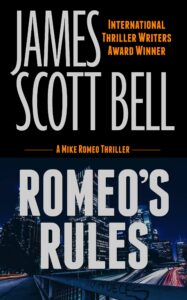
Now let me do you a solid. For the next few days book #1 in my Mike Romeo thriller series, Romeo’s Rules, is on sale for 99¢ in the Kindle store. U.S. buyers go HERE. Outside the U.S., go to your Amazon store and search for: B015OXVAQ0
 Without explanation, name four objects in your WIP.
  Jennifer Pound is a recently retired police officer where she thrived in various traditional and non-traditional policing roles. She spent years as the face of the RCMP (Royal Canadian Mounted Police) as a communications director. Her recent role was with IHIT, Vancouver’s Integrated Homicide Investigation Team — the largest homicide unit in Canada — where she saw the worst of people and helped to bring justice for the victims that died at the hands of evil.
 Many police officers think the absolute worst; it’s a gift we’ve so graciously received, or perhaps more like a curse. Few of us can drive by a bag of garbage or a rolled-up carpet on the highway and not think about the nightmare that must live within. I’ve often wondered if it was just me, but I know with certainty, it’s not.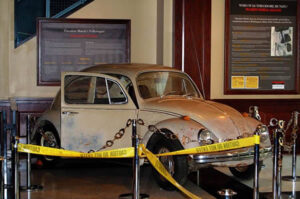
 To test the theory, she made a bit of a detour. She turned down a cul-de-sac with few homes that only residents that lived there would need to access. She walked for a bit and then did an about-face, like she forgot something, crossed the road, and turned back. Hub cab carrying, douchebag guy continued to follow them. At this point, she was terrified. She grabbed her sister’s hand, and she ran. They ran until they reached the school and she lost sight of him. That’s when she called me.




 Just a few weeks ago I began my first real foray into the world of Instagram for my art work (BTW I’m @clangleyhawthorneart if anyone’s interested:)) and I feel like I’m definitely in the ‘Instagram for Dummies’ phase! Bizarrely – since I’m only focusing on my art there – I seem to have discovered a whole lot of book and writing related pages so rather than being focused on my own work I’ve been salivating over beautiful photographs of libraries and book covers instead:). As with any new social media experience, I’m still in the throes of wonderment (which won’t last long – no doubt I’ll soon be getting the trolls and the weird follows from fake men!) but also in the thick of trying to work out how the heck to use it. So far I’ve really only managed to upload photos…
 I love a good epigraph. That’s the quotation some authors put on a standalone page right before the novel begins. It is not to be confused with an epigram, which is a pithy and witty statement. However, if placed at the front of a book, an epigram becomes an epigraph, thus epitomizing epiphenomena (secondary effects).
 Resonance and The Reader’s Journey