
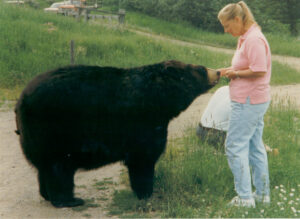
Author Debbie Burke and Buffy
No, this picture is not Photoshopped clickbait. It’s me and a real bear. Details below.
By Debbie Burke
In your real-world job, would you be willing to work for two or more years before receiving a paycheck? Probably not.
Yet, as authors writing books, that’s exactly what we do.
Writing a novel is often likened to a marathon. It takes months, if not years, to complete a book. Traditional publishing tacks on another one or two years before you see your book for sale. Indie-pubbing speeds up the process but it still doesn’t happen overnight.
Thirty-plus years ago, I was stuck in the endless loop of writing novels, submitting them, and being rejected. Lather, rinse, repeat.
Because fiction was my passion, I didn’t really consider writing nonfiction until a couple of journalist friends offered their help and encouragement. I dipped my toe into article writing and made the happy discovery that nonfiction was much easier to publish than fiction (not to mention it paid better).
At last, I had the satisfaction of seeing my words in print.
One magazine gig led to another. As my file of published clips expanded, editors began to call me. Article assignments took a little sting out of the rejections that my novels continued to collect.
Many more years would pass before I reached the ultimate reward of a published novel but, along the way, articles were small consolation prizes. They encouraged me to keep moving toward my goal.
My journalist friends taught me another neat trick—take the same article but re-slant it for different markets. Do research once and get paid several times.
For instance, a story about how to run a successful garage sale could be pitched to community newsletters, antique/collectible magazines, and senior-interest markets as tips for retirees to earn extra money.
An article about gold mines might fit in a travel magazine, a state historic journal, and a niche publication for hobbyist prospectors.
Often, during research, I ran across interesting people and wrote personality profiles about them.
One in particular led to a number of offshoot articles plus a memorable experience with the stunning bear in the above photo.
At the Flathead River Writers Conference in the 1990s, I met Ben Mikaelsen, a kid-lit author who had his own bear. Buffy had been a research cub that couldn’t survive in the wild. To save him from being euthanized, Ben adopted him. Life with Buffy inspired Ben’s award-winning novel Rescue Josh McGuire and several other books.
Side note: Ben does not advocate keeping wild animals as pets. He went to great effort and expense to build a suitable home for Buffy that was approved by state and federal authorities.
The unique friendship between an author and a bear was a story idea that begged to be written. Ben graciously invited me to his home near Bozeman, Montana, for an interview and to meet Buffy
Yes, that really is me feeding Wheat Thins to the 700-pound black bear. Fun fact: He didn’t use his teeth or tongue to take the treat but rather his prehensile lower lip, similar to an elephant’s trunk. I watched in awe as his bottom lip gently folded around the cracker in my hand.
The amazing encounter resulted in multiple articles that were published in Writer’s Digest (including a reprint in their annual children’s writing guide), several Montana general interest magazines, and international nature and wildlife magazines.
This experience was definitely not a consolation prize but rather a once-in-a-lifetime opportunity for which I’ll always be grateful.
Back to the marathon. While I wondered if I’d EVER have a novel accepted, articles were like short sprints where the rewards of publication and payment were only months away rather than years. Those helped sustain me through decades of discouragement.
In addition, writing nonfiction helped hone my craft.
Here are a few things I learned:
Write concisely and clearly. If an editor said 500 words, that’s what has to be turned in.
Choose what’s necessary and what should be cut. No matter how fascinating the research might be, it can’t all be crammed into the allotted space.
Always meet deadlines.
Most important, I learned about storytelling and pacing to keep the reader engaged.
The 21st century changed the market for short nonfiction from print to online. As the internet expanded, magazines went out of business.
Nowadays my articles are mostly digital content. Fewer trees give their lives. I no longer have to buy sample print copies to study magazines’ style and focus. Finding outlets to write for is as easy as asking Mr. Google.
The downside is online markets often pay little to nothing because there is so much free content on the net. To make significant money, one needs to find particular niches that pay for specialized content.
However, there’s a different kind of reward: Publication is fast. As soon as authors hit submit, their writing is available to an audience of millions.
On top of that comes the gratification of immediate feedback. I really enjoy reader comments on my posts for TKZ.
Steve Hooley recently asked me if research for an article had even sparked an idea for a novel. Not yet. But the research I do for articles often finds its way into my plots.
The second book in my series, Stalking Midas, concerns elder fraud. I attended seminars presented by local and state watchdogs to learn about that growing, insidious crime. Unfortunately, research turned personal when my adopted mother was victimized by a caregiver. Her experience became a True Crime Thursday post.
Several newspapers published my elder fraud article. It also formed the basis for a talk that I give to senior groups. Additionally, I revamped parts of Stalking Midas to incorporate what I’d learned.
I started writing articles to counteract discouragement during the long marathon of trying to get novels published. Articles became short sprints refreshed by water breaks of publication. They helped keep me going toward the ultimate finish line.
In 2017, my thriller Instrument of the Devil was published.
Seven novels later, I’m writing more articles than ever because…
A funny thing happened during that decades-long marathon. I discovered I like writing nonfiction as much as fiction.
Especially when I get to meet a bear.
~~~
TKZers: Do you write fiction, nonfiction, or both? How important is getting published to you? What sustains you during the long haul of writing a book?
~~~
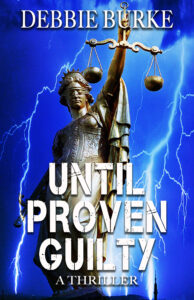
DNA is supposed to prove guilt or innocence. Instead, it reveals deception and betrayal in my new thriller, UNTIL PROVEN GUILTY. Please check it out at these online booksellers.

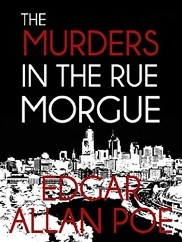 Edgar Allen Poe’s short story The Murders in the Rue Morgue (1841) is generally considered to be the first modern murder mystery, and its detective, Auguste C. Dupin, the first fictional detective. There was no monkey business in Dupin’s analysis of the horrific crime and identification of the murderer.
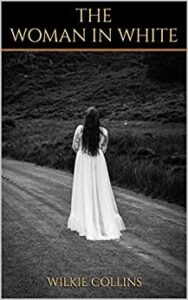 Wilkie Collins was a contemporary of Charles Dickens and is credited with the first novel-length mystery, The Woman in White (1859). The book doesn’t just stop at murder – it also touches on insanity, social stratification, false identity, and a few other themes. Collins considered the book his best work and instructed that the phrase “Author of The Woman in White” be inscribed on his tombstone. He also lays claim to the first detective novel, The Moonstone (1868).
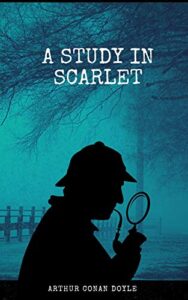 Arthur Conan Doyle published A Study in Scarlet, the first story featuring Sherlock Holmes and Dr. Watson, in 1887. In total, Doyle wrote 56 short stories and four novels featuring the famous detective. When he killed off Sherlock Holmes in The Final Problem (1893), the public outcry was so severe, Doyle had to bring him back in later works.
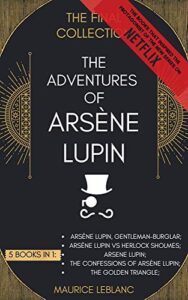 Maurice Leblanc began a mystery series in 1905 featuring the gentleman thief Arsene Lupin, a character who’s been described as a French version of Sherlock Holmes. In all, Leblanc wrote 17 novels and 39 novellas with Lupin as hero. Check out
 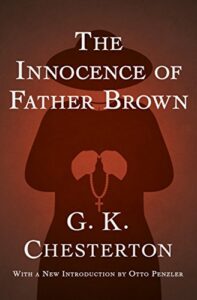 G.K. Chesterton is credited with creating the cozy mystery genre with a series of 53 short stories begun in 1910 featuring the Roman Catholic priest and amateur detective, Father Brown, who uses his intuitive understanding of human nature to solve crimes. The character was so popular, it inspired the Father Brown TV series that began in 2013.
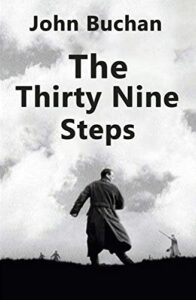 The Thirty-nine Steps (1915) by Scottish author John Buchan was the first of five novels featuring Richard Hannay. a man on the run who had been unjustly accused of murder. There are a couple of movie versions of The Thirty-nine Steps, but my favorite is the 1935 Hitchcock film starring Robert Donat.
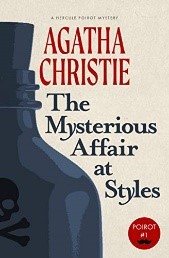 Cozy mysteries became very popular in the 1920’s and 30’s with several great British authors. Agatha Christie’s first novel The Mysterious Affair at Styles (1920), featured Hercule Poirot, a sleuth who used his “little gray cells” to solve mysteries. Poirot showed up in 33 novels and over 50 short stories. (I will have much more to say about Dame Agatha in a future post.)
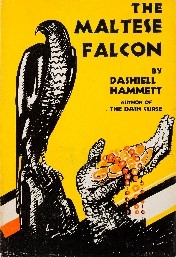 Hardboiled detective fiction became popular in the 1920’s and extended through the 20th century. Dashiel Hammett became famous for his character Sam Spade in The Maltese Falcon (1929). He also created the sophisticated couple Nick and Nora Charles in The Thin Man (1933). Strangely, Hammett wrote his final novel more than 25 years before his death. Why he stopped writing fiction is something of a mystery in itself.
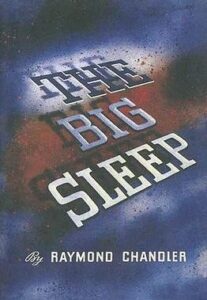 Raymond Chandler was forty-four years old when he began his journey as an author. His first novel, The Big Sleep (1939), introduced the world to private detective Philip Marlowe. In addition to his short stories, Chandler wrote seven novels, all with Marlowe as the hero. His prose is widely admired and his use of similes is famous. Here’s an example from The Big Sleep: “The General spoke again, slowly, using his strength as carefully as an out-of-work showgirl uses her last good pair of stockings.”
 “Once upon a time,” I told my two oldest grandboys, “there were two baby monsters. One was green and one was blue. They lived in a cave with their mom and dad…”







 There’s a disturbing new trend on social media that could bankrupt authors. I first learned about it on Facebook, but it’s since traveled throughout all social media.
 Half my life’s in books, written pages.