By Debbie Burke
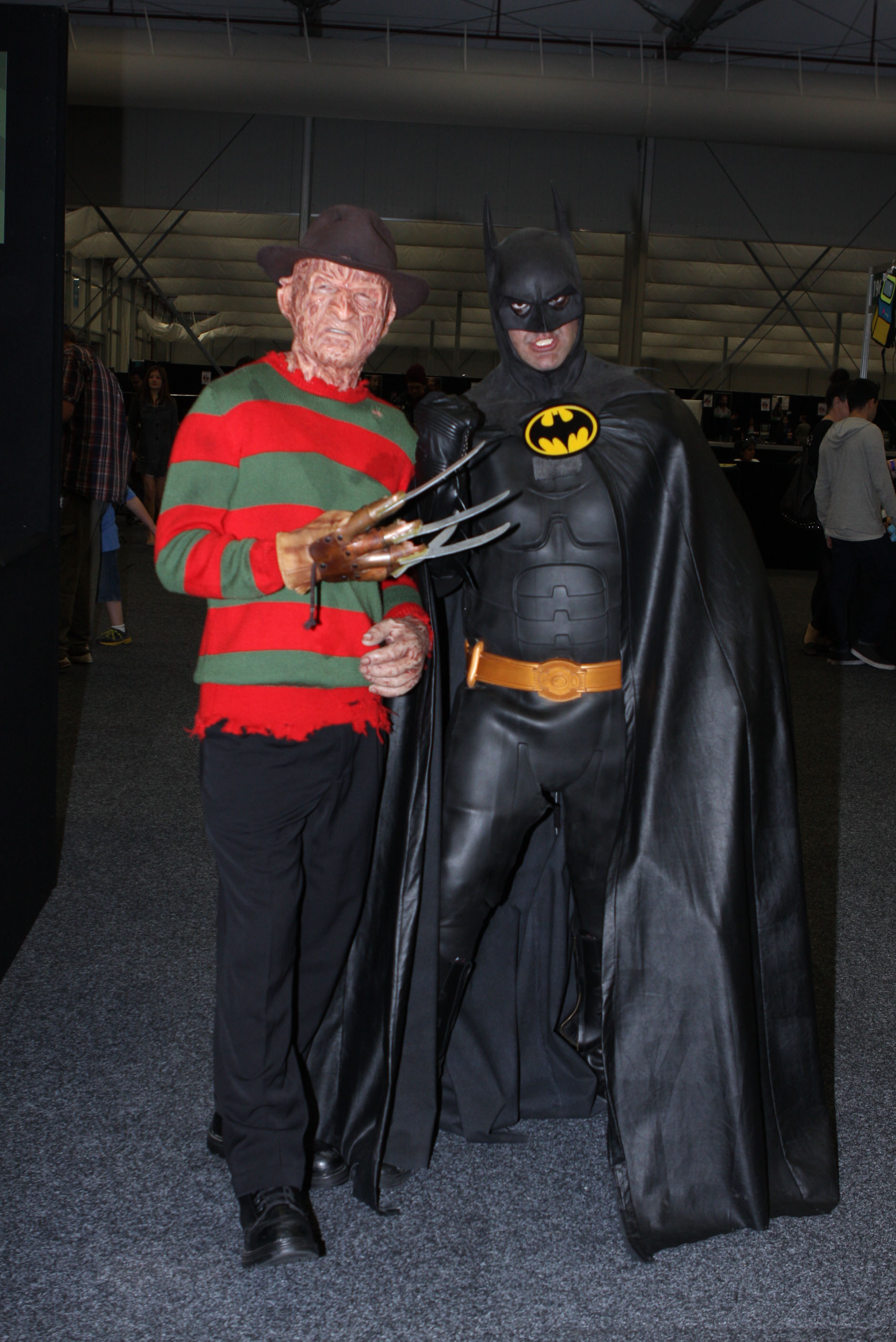
For Halloween, would you rather portray a hero or a villain? Why?
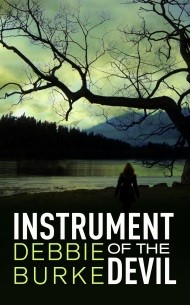
Last day to download Debbie Burke’s Instrument of the Devil at the sale price of $1.99. Here’s the Amazon link.
By Debbie Burke
For Halloween, would you rather portray a hero or a villain? Why?
Last day to download Debbie Burke’s Instrument of the Devil at the sale price of $1.99. Here’s the Amazon link.
By SUE COLETTA
Forensic Psychology is a fascinating field, especially as it relates to eyewitness testimony. Can we always trust our memory? Let’s test your observation skills. In this short video, count the number of times the ball is tossed from one white-shirt player to another. Sounds easy enough, right? Give it a try.
Well, how’d you do?
This phenomenon is called inattentional blindness. Your mind perceives what’s happening, but you do not attend to it. In other words, there’s nothing wrong with your eyes. But for some reason this information is more subconscious than conscious. The best known demonstration of inattentional blindness is a study performed by Simons and Chabris (1999) known as Gorilla in the Midst. It’s highly copyrighted so I couldn’t embed it here, but if you’d like to check it out, click the title.
Imagine the implications inattentional blindness has on eyewitness testimony? Often times victims of violent crime are so focused on the gun they see little else.
Change blindness is another phenomenon that effects key elements of our surroundings, including the identity of the person right in front of us, even if that person has changed places with someone else. If you’d like to use change blindness in your WIP, check out The Door Study.
The implications of change blindness on eyewitness testimony could delay solving the crime. Always a good thing in thrillers. A detective could be led down numerous dead-ends, and so could the reader.
In a violent crime, “weapon focus” muddies the waters. Participants in another study watched a film of a kidnapping attempt. Would it surprise you to learn that actions were better remembered than details?
When we witness a crime, we absorb the information by the actions that happened during the commission of the crime. For example, a man pointed a gun at a woman, pushed her into his van, and sped away. The central information — what an eyewitness focuses on — and the peripheral information — what’s happening around said eyewitness — often becomes skewed with the surge of adrenaline.
Such findings suggest that when we witness a traumatic event, our attention is drawn to the central action at the expense of descriptive details. Yet, in other circumstances, such as non-violent events, our attention may be spread more evenly between the two.
Which brings us back to inattentional blindness. This phenomenon occurs when attention is drawn toward only one aspect of an eyewitness’ surroundings, resulting in lack of information. Which writers can use to our advantage.
The use of weapons complicate matters even more. When a gunman brandishes his firearm, an eyewitness tends to focus on the pistol rather than other details, such as the suspect’s hair and eye color, build and dress. Researchers have tested this theory, as well.
In the study, they showed participants videos of robberies — robbery involves a weapon and a victim; burglary does not— where one group witnessed the robber with a concealed pistol and other group witnessed the robber with the gun in plain sight. When researchers asked the concealed weapon group to identify the robber in a line-up, only 46% of participants could identify the suspect. From those who watched the video where the robber brandished the weapon, only 26% could identify him.
In order for an eyewitness to be able to answer a question, they must be willing to respond. And it’s this willingness that can impair their memory of the events. Not everything we “see” or “experience” is stored in our minds. Our brains don’t work like computers where each bit is encoded. Rather, we make connections to other things in order to process information. If you’re interested in learning more, I’ve written about Subliminal Messages on my blog.
Episodic memories — memories involving an event — are organized in our minds as “event schemas.” This allows us to store knowledge, events, and activities by connecting to what we classify as “normal.” In other words, rather than remembering every time we dined at our favorite seafood joint, we tend to build a general impression of seafood restaurants … the smell, the atmosphere, and so on.
However, the use of schemas can distort memories. The perfect example of this is when someone asks me about my childhood, then asks my brother. From our answers one might think we grew up in different households. Many factors contribute to how we remember times and events. Such as, influence. When gaps exist in our memory we tend to incorporate new information in an attempt to fill in the blanks. Although useful in everyday life, this poses real problems for investigators, because this new information is often constructed after the crime took place, and leads to false testimony.
I hope you’ve enjoyed this peek into Forensic Psychology. We’ve barely scratched the surface. Next time, I’ll share how an investigator should pose questions to an eyewitness. Perhaps you could use the techniques in your WIP. Would that interest you?
So, TKZers, how many of you saw the gorilla? Are you tempted to use false eyewitness testimony in your WIP?
A handy list for your writing day:
*Disclaimer: I have used all 25 methods at various times, and my Writer’s Butt comes and goes. As to number 3, I have gotten so tangled up in the huge number of power cords around my desk that I may as well have been chained because it was a real pain to try to get away from my chair and go to the kitchen.
Okay TKZ-ers! Please share your Avoiding-Writer’s-Butt strategies. We’re listening…
My adopted mother adored pretty shoes. She used to say if she won the lottery, she’d spend the money on shoes. A great pleasure in her life was dressing up for church on Sunday morning in a beautiful outfit with a fancy hat and matching shoes.
However, her feet were size 10 ½, limiting her choice of stylish footwear, always geared for women who wear size 6AA.
For her birthday, I often took her shopping for new shoes. The salesperson would use a shoehorn to jam, pummel, and squash her poor feet into lovely pumps that were at least two sizes too small.
Her pain made me cringe. I wondered how she could even walk. The ordeal brought to mind Lisa See’s brilliant book, Snowflower and the Secret Fan, about Chinese foot-binding.
By now, you’re wondering what shoes have to do with writing. Glad you asked…
A critique partner is rewriting her first novel. Her subject—a teenager struggling with a compulsive disorder that badly affects her appearance—is fresh and compelling. Her voice is wry and funny. For a relatively new writer, she has a strong grasp of how to write good scenes, from heart-rending to laugh-out-loud hysterical.
But, as good as they are, many of them don’t move the story forward.
No matter how hard we critiquers try to shoehorn these wonderful (but unnecessary) scenes into her plot, they don’t fit.
How do you determine if a scene is needed?
Novelist and writing instructor Dennis Foley identifies four major functions of a scene:
To test if a scene is needed, figure out what functions it performs. Today’s fast-paced fiction generally requires scenes that multitask, accomplishing two, three, or all four functions.
Revelations about a character can occur on the fly, while the character is taking action that moves the plot forward.
A scene may foreshadow lurking disaster, which increases tension for the reader at the same time it drives the story closer to that disaster.
Dennis offers another tip to determine if a scene is needed: remove the scene. Does the story still make sense? Can the scene easily be plunked down somewhere else in the story?
If so, it’s not part of the causal linkage that moves the story forward.
Causal linkage means something happens in A that leads to B where something else happens that leads to C, and so on. Each scene builds on the ones that precede it.
This tip is easy when stories are told in chronological order with limited characters.
However, what if you’re writing a Ken Follett-style saga or an epic fantasy with multiple plotlines and a large cast of characters? Such stories may jump around to different locations and time periods. That makes it tougher to determine whether or not a scene is necessary.
Even in “big” books, causal linkage can still be determined. Separate each plotline and string its scenes together. You can do this with color-coded index cards, plotting on a spreadsheet, or using Scrivener. After you’ve put all scenes from one plotline together, read them.
Does each scene link causally with the scene before and after it? If a scene could fit anywhere, it may not be needed.
“But,” the writer protests, “if I cut those scenes, my book will be too short.”
That leads to the question: how long should a book be? Lee Masterson at Writing-World.com offers guidelines for various genres but his main point is: a book needs to be as long as it takes to tell the story.
Better to write a concise, effective story than one that’s bloated and boring because of unnecessary verbiage added to reach an arbitrary number of pages.
If the story is “too short” as a novel, consider recasting it as a novella, a short story, or a screenplay. In a screenplay, one page equals approximately one minute of screen time. One-hundred-twenty pages is a two-hour movie.
The problem of excess scenes is not limited to newer writers. I just went through it with my current work in progress. About two-thirds of the way into the first draft, I hit a wall. A critique buddy suggested an abrupt, unexpected turn in the plot that punched a hole right through that pesky wall. Her idea was brilliant!
However, that change meant going back to the beginning and rewriting 200+ pages.
I’d worked diligently to hone certain scenes to the height of emotional resonance. As proud as I was of my darlings, they were now dead ends, irrelevant to the new plot direction.
So I used a trick TKZ authors taught me: cut those parts and stick them in an “outtakes” file.
You’re not killing your beloved children but instead sending them to a time-out.
A funny thing happened. Those scenes waited patiently, out of sight and out of mind. When critiquers and beta readers went through the revised draft, they didn’t notice their absence.
Those deleted scenes almost never get put back into the story. As wonderful as I thought they were at the time, those size 10 ½ scenes just plain didn’t fit the size 6AA plot. To shove them back in would require serious shoehorning.
And that just makes my feet hurt!
TKZers, how do you decide if a scene is needed? Do you have hints to chop the excess?
Debbie Burke’s thriller Instrument of the Devil is on sale in October for $1.99 or FREE on Amazon Prime. Here’s the link.
By SUE COLETTA
After my book signing on Saturday, October 6th, I was mulling over what to write for my TKZ post today, and this little treasure popped into my inbox. The video is so inspirational, I had to share it with you. It’s about four minutes long. If you’re short on time, not to worry. I’ve explained the video below.
Ray Edward’s thought experiment goes like this. Imagine you’ve been given a treasure. This treasure, like all magical treasures, comes with conditions. Here’s the catch. While this treasure is unlimited, each day you can only take one coin. Just one. And every day you suffer from amnesia. You forget you have this treasure and you lose a day of unlimited value.
What would you do to remind yourself? Would you leave notes for yourself? Would you phone a friend and ask them to remind that you have this treasure? How would you remember not to waste a single day?
Here’s a new flash. You already have this treasure. Consider this your reminder. The treasure you’ve been given is your life. Everyday offers endless possibilities, in life as well as writing. Yet we squander so many days with “Someday, I’ll travel. Someday, I’ll finish the manuscript.” Unfortunately, “someday” is often code for “never.”
Life is a mystery. We didn’t know when we’d enter the world and we don’t know exactly when we’ll depart, but we do know someday our life will end. Each day between now and then is a treasure-trove of limitless value.
What will you do with your treasure? Will you spend your time wisely? Will you use the day to hone your craft to achieve your goals? Will you strive to make your dreams a reality? Or will you use excuses for putting off writing till tomorrow?
Hey, we’re all guilty of procrastination from time to time. The trick is, making our writing a priority. Even though writers spend hours alone with a blinking cursor, the stories we write have the ability to entertain, to bring a smile to the lonely widow or widower’s face, to let the exhausted parent escape for a while, to inspire the aspiring writer to dream without limits, to brighten someone’s day, or even, just keep someone company for a while.
Writers hold great power. So, the next time you don’t feel like writing, remember this. Every day you don’t sit in front of that computer with your hands on the keyboard is a day you’ve let down your readers.
Bold statement, I know, but this truth hit home at my book signing.
A woman stood in front of my table, rambling on and on about the characters in my Grafton County Series. She told me she was never what you’d call an avid reader. A friend recommended my books, and she bought MARRED for the heck of it. Three books later, she’s embarrassed to admit that she considers Sage and Niko Quintano her closest friends. So much so, she desperately misses them in between books. The tears in her eyes as she spoke about how much my characters meant to her touched me on such a deep emotional level, it caught me off-guard.
How could I ever let this woman down?
By the time I got my game face on again, I glanced up to see another woman rushing toward my table. Unbeknownst to me, she’s a long-time fan who brought her three-year-old grandson to meet “her favorite author.” I have no idea what his grandmother told him, but this young boy gawked at me as if I were a superhero. The look in his eyes about shattered my cool façade. All I could think was, I’ll never live up to his view of me. << There’s the ol’ familiar self-doubt again. If only there were a way to silence that voice forever. Sadly, as Laura so eloquently wrote recently, self-doubt and writers go hand-in-hand. Sigh.
When this sweet woman asked for a group photo, I couldn’t form the words to tell her how much it meant to me. It’s a day I’ll never forget. It’s also the driving force (writer crack 🙂 ) that’ll keep me tied to my desk, hour after hour, paragraph after paragraph, scene after scene, till I type The End one more time.

So, my beloved TKZ family, let’s share inspiration today. Tell me about an encounter with a reader that renewed your love of writing.
Time for a pop quiz to test your knowledge of sneaky word traps writers can fall into.
Today let’s talk about homonyms, homographs, and homophones.
Homonyms are words that sound the same but have different meanings.
Example: “write” and “right.”
Homophones are words that sound alike but have different meanings and spellings.
Examples: rein, reign; aisle, isle; suite, sweet.
Homographs are words that are spelled the same but have different meanings and different pronunciation.
Example: desert (a hot dry place, pronounced with an accent on the first syllable) or desert (to leave, accent on the second syllable).
Don’t worry—the above definitions won’t be on the test. Only hardcore grammar Nazis care.
Some words are just plain confusing. They may sound similar but are spelled differently and have different meanings.
But…professional writers should know how to choose the right word in a particular sentence.
We’ve all typed “there” when we mean “their” or “to” when we mean “too.” Those fall more into the category of typos.
I’m talking about out-and-out goofs because of incorrect word choices. When your book is published, some readers are quite happy to point out those errors that you missed. Embarrassing.
Standards of proofreading and copyediting are on a steep decline. The below examples are boo-boos I’ve collected lately from recently published books, news articles, and blog posts.
See if you can make the right choices.
How many of you looked up the test answers on Google? Come on, tell the truth.
That’s OK. It’s not cheating–it’s research. The lesson here is it’s always better to double-check before you submit to an agent or editor who might turn you down because of improper use. Or before you hit the “publish” button on your indie book.
Self-published books carry a stigma because many are full of such errors. If you’re an indie author, don’t contribute to the bad reputation with sloppy word choices.
Now that I’ve reached a certain age, I may think I’m sure about proper usage but sometimes find I’m mistaken. When it’s so easy to check on sites like Grammar Girl or Writing Forward there really is no excuse not to.
Answers:
Not only that, affect is a homograph (spelled the same but pronounced differently). When used as a verb, the accent is on the second syllable. When used as a noun, the accent is on the first syllable.
No wonder writers get confused. Glad I was born in the USA because I’d never master the vagaries of English if I had to learn it as a second language!
TKZers, how did you do on the quiz?
Which homonyms, homophones, and homographs do you find confusing?
What words do you tend to mix up?
Do you have favorite tricks or tips that remind you of correct usage?
During October, here are two ways to get a cheap thrill:
Debbie Burke’s bestselling thriller Instrument of the Devil is on sale for $1.99; or if you’re a member of Amazon Prime, you can read it for free. Click here.
By SUE COLETTA
Most of us are able to recall one or two of our dreams, but what if there were ways to increase that number?
We’ve all heard the stories of hugely popular novels which stemmed from the author’s dreams. For example, Stephanie Meyer and Twilight. Dreams serve health benefits, too. Researchers believe dreams help with memory consolidation, mood regulation, and/or conflict resolution.
Nightmares aren’t fun. Night terrors are even worse. It’s important we pay attention, though, because they can signal a disruption in our lives and sometimes, provide the answer.
Sigmund Freud believed dreams were a window into our subconscious, that they paved the way to satisfy urges and secret desires that might be unacceptable to society. I agree with the first part of his theory, but I think the latter depends on the dreamer. When it comes to dream interpretation there’s no cookie-cutter, one-size-fits-all definition.
Case in point: crime writers dream about murder. If an average Joe plotted revenge in his dreams, it might be cause for alarm. When writers delve into the dark recesses of the subconscious mind, it’s research. 🙂
While some sleep experts believe dreams are an anomaly of sleep, others think they may help us save memories, problem-solve, and manage emotions.
During REM — rapid-eye movement, when brain activity piques — and non-REM sleep, we have the potential to dream.
Dreams are connected to the creativity part of the brain, called the Superior temporal gyrus
.
We have three creativity sections of the temporal lobe…
This could explain why serial killers, who often have temporal lobe damage or malformations, experience different phases before, during, and after they kill. And why, during the Aura Phase colors become vibrant.
Did you notice in the 3D image the temporal gyri aren’t limited to the right-side?
Brain cells in the left hemisphere have short dendroids which pull in information.
The right hemisphere branches out wider to absorb distant unrelated ideas, connections between concepts, and is responsible for insight and Ah-ha! moments. It’s here where our creativity comes alive.
The cerebral cortex is responsible for our dreams. During REM sleep, signals are sent from an area of the brain called “the pons” and then relayed through the thalamus to the cerebral cortex, which attempts to make sense of these signals. The end result is dreaming.
The pons also send signals to neurons in the spinal cord, shutting them down, causing temporary paralysis of the limbs. This safety switch prevents the dreamer from physically acting out dreams and harming themselves. However, there are exceptions. A condition called REM sleep behavior disorder exists. Can you guess what this causes? If you said, the pons fail to paralyze the limbs during REM sleep, you’re correct.
Some researchers believe we’re not designed to remember our dreams. If we had perfect recall, dreams might get confused with real-life memories. During REM, maybe our brain shuts off the Inferior temporal gyrus, responsible for memory recall. And why, we may only recall our last dream before waking, because that part of the brain is now switched back on.
Studies show people actually have more brain activity and more vivid dreams during REM. Others say our brains store dreams, which is why the tiniest detail later in the day can trigger the memory of what we’d dreamed the night before.
Sound sleepers are less likely to recall dreams. If you fall into this category, consider yourself lucky; the rest of us don’t sleep as well. Even so, maybe these tips will help:
So, my beloved TKZ family, are you able to recall dreams? Have you ever used dreams in your writing?

We’ve all experienced the naysayers who put up roadblocks for our writing passion, but what about those wonderful people who helped you nurture your gift? Please share some inspirational stories for those generous people in your life who have helped you write and sparked your passion.
Bonus points for sharing a story of how you paid the kindness forward to another writer. I know it’s hard to brag, but sometimes hearing a good story of support can inspire more of the same gestures.

One of our TKZ regulars reached out and sent me a photo of his Davy Crockett attire when he was a lad after he read my post – “Nostalgia time: What TV show from your childhood Influenced you?”Nice raccoon hat, Dave. Don’t shoot your eye out.
Remember when we were kids and a TV show could inspire adventure in your life where you imagined YOU were Davy Crockett. We didn’t need much to entertain ourselves. An empty cardboard box became a fortress or a robotic monster. Things that people discarded became whatever we imagined them to be. Entertainment was cheap.
Dave’s photo reminded me of all the things my family did as kids. I came from a big family of 5 siblings and 2 parents. We were all about the same age as kids, around a year or two apart, so we hung out together in “the hood.”

Nice bike, Dave. You and I have clothes lines in common.
When I was Dave’s age in this photo, I loved my westerns and read every horse book I could find. As kids during our summers out of school, my sibs (2 brothers and 2 sisters) would leave our home after breakfast and we stayed out all day. We built forts from fallen tree limbs and old boards, searched for arrowheads, rescued wounded baby animals, or launched rotten fruit fights with our rivals. We lived in a rural setting outside San Antonio and didn’t have many neighbors, especially girls. We had to make due with boys as friends.

Photographer: Sarachit
When fireworks were in season, we changed our weapons of choice to include bottle rockets shot from empty Coke bottles and staged a major offensive with the neighbor kids. A turned over picnic table was our command bunker. My older brother (our General) thought he’d be invincible if he wore a heavily padded and hooded jacket so the bottle rockets would bounce off him. That worked…for awhile.
I stood at his side when he took aim at a neighbor boy standing in his yard two houses down. My big bro held his Coke bottle and I lit the fuse. When the rocket took off, it switched course and zeroed back on him – got caught in his hood – and his head turned into spiraling, scorching roman candle with the pungent stench of burning hair. Yes, he could’ve lost an eye, but a scorched head is funny to a kid and gave him bragging rights that he survived. My older brother later served a career in the US Air Force and even became a base commander. Needless to say, stories from our “hood,” stayed in the “hood.”
During long summers, we had time on our hands and plenty of imagination. Even then I had a passion for writing and I would write parody scripts based on some of our favorite TV shows, complete with mock commercials. The Tremenderosa was born, replete with sound effects and recorded on audio cassette. My siblings would act out the parts, we’d experiment with sound effects and had a blast making our own audio recorded productions. Later, when I had access to my high school video equipment, we would do class projects with better equipment and my sisters and I did our own production of JABBERWOCKY, a nonsensical poem of made up words by Lewis Carroll that inspired us. My sisters and I still know the words.
My dad wasn’t allowed to have pets as a kid. His mother didn’t approve, but he made up for what he didn’t have by seeing his kids had a menagerie of odd animals in our backyard. We charged admission to the kids in our neighborhood, just to see our ZOO. We nursed wild animals back to health for release into the wild and we raised goats, dogs, horses, fish, exotic birds (a Toucan and various parrots), an iguana and baby crocodile, rabbits, raccoons, lizards and snakes, and various breeds of exotic chickens and guinea fowl (nasty buggers).
We never wanted for anything. We didn’t have a lot of money, but my parents made sure we attended private Catholic schools, had food on the table and nice clothes. At Christmas, we had all the excesses – including a weird metal roller coaster set up in our front yard and a zip line from a tall tree that dropped us at the mailbox at the street. We had toys, but we still preferred roaming the acres around us with our neighborhood “gangs.”
When we got a Ouija Board, all of us got into it and conjured ghosts we thought would scare the others. Halloween was a great time to scare the neighbor kids and we set up our house with sounds and things that rustled through the brush as kids would make the long trek up our driveway for candy. They would rarely make it to the front door. My young bro would rig wires to make things move across the porch and zip out from nowhere to attack them by air. Once they started to run, the rest of us would chase them in the dark, screaming. We got to keep the candy they didn’t stick around for.
My dad fancied himself a gourmet cook, even though my mom always made better homemade food. But that meant dad was always trying new stuff, like pig roasting or goat over a fire pit. We were always trying weird foods. Again, it helped us become adventuresome and willing to try new things.
All of these memories inspired my imagination when I became a writer. I didn’t have to rely on scary movies to get the adrenaline pumping. I created my own horror show on the front lawn with neighbor kids as guinea pigs. We learned stealth and war time strategy from our firework assaults and as girls, my sisters and I learned about boys and how they thought and acted.
My childhood became a treasure trove of inspirations for me as a writer that I still draw upon. One of my greatest joys is to relive those years with my siblings since we are blessed to still have our parents with us. When we go on our annual family retreats, we still play jokes on each other and play games and tell stories around a campfire. I’ve been blessed with life experiences that fuel my passion to write. How about you?
For Discussion:
1.) Share some of the childhood stories that still inspire you as a writer.
2.) When you write a particularly scary or dramatic scene, what experiences do you draw from to make those scenes real?