Sphinx of Black Quartz, Judge My Vow

Internet — “What kind of a stupid, crazy, nonsensical headline is this? Are you drunk, Rodgers? Or did you ingest free hallucinogens supplied through your Canadian government’s grand social experiment?”

Me — “No, I’m clean and sober. I just found this phrase online and thought it’d open an interesting Kill Zone discussion about our keyboarding skills. Here, check out this meme.”

I’ll bet all, or almost all, folks who follow the Kill Zone site are writers to some degree. (BTW, I see the Kill Zone was once again listed in the May/June 2024 Writer’s Digest issue as being in the Top 100 sites for writers.) So, I think one thing we have in common outside of killing in zones is keyboarding.

I learned to type in 1978 while in the police academy. Typing was a mandatory class, and we had to graduate with at least 40 words per minute. This was long before personal computers. First, we banged away on manual/mechanical typewriters and then moved to electrics.

It wasn’t until the early 80s that “word processors” arrived and we threw away whiteout and carbon paper. By the time I retired, each of us in the detective section had laptops as well as standalones on our desks. That was just as the internet hatched.

Keyboarding seems to be a relatively new term for punching out letters, words, sentences, paragraphs, chapters, and stories—regardless of your medium. I hate texting as I’m somewhat anal on grammar, punctuation, and so on. That little screen on my Samsung is too small for my eyes, and that little keyboard makes a lot of mistakes that must be reversed before sending. It’s too much of a time suck when I can email from my 17” laptop. Or often, I use the telephone feature.

I’ve been a civilian writer for over a decade. Grammarly shows me at 3.1 million words, and I keep track of my speed. When I’m in the zone (as in writing into the dark) I pump out 1,000-1,200 words per hour. And that’s using a thumb and two fingers on my right hand and one finger on my practically useless left.

Cursive is nearly extinct, but I do a lot of block printing in notes. I’m not one for using a keyboard to take down studies except for cutting & pasting from the web and printing it off on a Word.doc. However, when composing something fresh, such as this hastily prepared post, I let my fingers do the talking. At 519 words, this took me about half an hour to complete.

That’s all I have to say about the keyboarding exercise using Sphinx of Black Quartz, Judge My Vow to replace the lazy old dog typing thing. Whatever works, right?

Kill Zoners — Your turn. Tell us about your QWERTY adventure. What keyboarding method/skills do you currently use? Are you an all-in, eight-fingers and two-thumbs speed demon? Or are you a two-fingered hunt and pecker? Or maybe somewhere in between? Join in and share your stuff in the comments!

Opa!

By John Gilstrap

Sometimes, the writer’s life is about not writing. Sometimes, it’s about celebrating your wife’s birthday with a two-week trip to Greece. I am writing this from the airport hotel in Athens awaiting my flight home, where I will once again face the reality of holy crap! I’ve got a deadline coming way too fast! But for now, I’ll just share some pictures.

Oh! And wouldn’t you know it? On our first night in Athens, dining al fresco at the base of the Acropolis, my Hollywood agent called with news of yet another option on Six Minutes to Freedom. That in itself was a kind of Hollywood moment.

Now, on with the photos!

Dining on the streets of Athens. My agent called with news of the film option about three minutes after I took this picture of my bride. It was about 10 pm Greek time, noon Los Angeles time.

Mykonos is known as a party town, but the parties hadn’t started when we were there. In Late April, it’s just a series of beautiful villages on the Aegean.

This is the view from our room in (on?) the island of Santorini, by far the most beautiful location of our trip.

Proof that I was on the trip, too. And that we actually touched the Aegean Sea. Too cold for my tastes, the two boys just out of frame would certainly disagree.

Sunset in Santorini.

Our final stop was the island of Crete, where we didn’t leave nearly enough time to do it justice. We did tour the 7,000-year-old ruins of the Palace of Knossos, the historical roots of the Minoan culture. The foundations you see are original, much of the rest is reconstruction. This place had running water, folks, and history’s first flushing toilet!

More From The Edgar Nominees:
Covers That Capture Readers And Convey The Right Mood

By PJ Parrish

Morning folks. I am probably somewhere over Lake Erie right now, heading to New York for my annual gig as Edgar banquet chairman. So forgive me if I can’t engage in the usual dialogue here. In my place, here’s a gallery of this year’s Edgar nominees book covers.

Normally, I show you these to spotlight any trends in cover design. But I don’t see any clear direction in how book art is moving. Maybe there are no solid trends anymore. There used to be. Back in my salad days, BIG serif typefaces were the rage, usually with a small graphic that was supposed to somehow signify the book’s theme or such. Such as in my early Louis Kincaid books:

Paint It Black

This was defnitely an attempt at branding, very uber-Patterson. Many, many other mysteries had the same look back in the early 2000s. But today, it seems to my eye at least, there is much more variety and less follow-the-leadering. Perhaps it is because the writing/subject matter in crime fiction is more small-c catholic these days?

Take a look at the covers for this year’s Best Novel:

To my eye, the designs are very diverse — everything from the “traditional” lyrical design of Burke and Krueger to the hyper-graphic neon of Knoll and Whitehead. Koryta’s and Cosby’s covers look similar — bold san-serif type with that “old-fashioned” graphic element. And Edstein’s red cover seems out there on its own island, an attempt perhaps to suggest a more literary upmarket tilt? (Yeah, I hate the term upmarket too, but that does seem to be a trend of late).

Compare that group with the Lilian Jackson Braun nominees. (Caveat: This, like the Mary Higgins Clark Award and Sue Grafton Award, are not Edgars, but special auxiliary awards). The Braun nominees:

No way can a reader mistake these books for hardboiled, right? They clearly reflect Braun’s legacy. Mystery Writers of America is very clear on what qualifies for this award: “The book must be a contemporary cozy mystery with a current-day setting and the story emphasis on solving a crime, usually a murder. Historical mysteries, even if cozy in tone, do not qualify. However, the book may contain some historical elements (flashbacks, journal entries, etc.) as long as the emphasis is on the contemporary investigation of the mystery.” (There’s more VERY specific criteria if you want to read it — link here.)

Likewise, the Best Juvenile nominees this year are all of a sort. These covers convey a child-like exhuberance and, like an ice cream triple-scooper, invite you to taste. It’s easy to identify the intended age audience:

Compare that with the very dark mood seen among most the Best Young Adult nominees. Any of these covers could be comfortable among Best Novel category:

Just curious: What do you all think about that last blue cover Just Do This One Thing For Me? When I first saw it, I thought it was cropped wrong. But no, this is the full cover, intended to mimic an iphone, of course. I dunno…I find it hard to read. But then again, I’m not thirteen. At Staples yesterday, I had to get Brian’s help to find a lousy printer cord. (I had bought a modem cable by mistake).

One last category before I go. I was struck by the variety among the Paperback Original nominees this year. Usually, they tend to look alike, or at least as if they are from the same family. Maybe this is because PBO’s, being smaller, have to scan faster for the readers’ eyes. This year, they seem all over the place, mood-wise.

I like the creepy Cape Fear look of Boomtown. The cover defnitely conveys a sense of place and mood. I don’t think the cover of Hide is as successful because its geographic image is so generic.  The Taken Ones has a certain tension, thanks to that ragged type face. Lowdown Road gets the signature Hard Case Crime treatment — you know you’re in neo-noir land. I’m not crazy about the Vera Wong cover. It feels like it belongs with the Braun entries, although the old peeking lady image is kind of cool. One reviewer called it perfect for readers looking for “more humor than angst.” I haven’t read the book, so what do I know?

There you go….covers for every taste. Your own takeaway here — if you are doing your own covers or hiring someone to do so — is just be very aware of what audience you’re aiming for (age group, traditional vs noir, light vs dark, humor vs deadly serious). Respect your sub-genre if necessary (ie Braun). Make sure your cover captivates possible readers AND that it captures the mood and theme of your story.

Oh, and pay attention to how it looks when it’s reduced down to a tiny thumbnail on Amazon. But that’s a blog for another day. See you when I get back.


Public Speaking, A Different Side of Writing

I seldom turn down the opportunity to speak, and more than once there’s a monetary loss for gas and even a hotel room to make those events. Civic organizations, book clubs, and groups such as retired teachers or other professional organizations all have me on their annual speakers lists, and at first I thought that was a problem, because prepared speeches aren’t my thing. I didn’t want to bore them with the same talk time after time.

Watching someone stand in front of a room, reading from a script is mind numbing. Those folks are usually nervous, or unfamiliar with public speaking and it’s obvious in the way they stand and present their talk, barely looking up from their notes or pages.

That kind of thing would be a disaster for me, and like the way I write, when I give a talk I have no idea where I’m going until I get there.

Calls came in right after my first novel released back in 2011 to come talk about The Rock Hole. Having been a classroom teacher for ten years, I knew I could stand in front of a crowd and hold their attention, because if you can keep a class full of middle school students’ interest for fifty minutes, you’re a speaker.

I disremember if that first group was Kiwanis, or Lions, or Rotary, to name a few. It was a luncheon event, though, and I stepped up to the lectern and simply followed one story or idea after the other as I recounted the disastrous road to publication I’d just endured. Folks laughed at the right places, showed concern when I told them of losing my first manuscript, and clapped with enthusiasm when the story came to full circle with a tender surprise.

Oh, wait, but first let’s Let’s start with the basics and clear something up. People often confuse lectern with rostrum, podium, and dais. Personally, I’d prefer not to stand behind any of them, because I tend to move around.

A lectern is the slant-top high desk a speaker uses to read presentation notes. I prefer not to use the term lecture, because I’m a storyteller, but to remember what you’re hiding behind in that sense, think the word “lecture.”

Sometimes large audiences require a podium, which is a raised platform that places you higher than those staring upward at you with blank, expectant faces. Hint, quickly find the friendliest face in the room. He or she might be smiling, or nodding, or changing expressions as your talk proceeds. Use them as a yardstick and an anchor if you feel as if the room is drifting away.

And then there’s the rostrum or dias, which is a larger platform, or maybe a stage, on which a head table is placed during a formal dinner. You’re usually smack in the middle of those dignitaries who invited you, and a trick is to talk to them as well as the audience in order to engage those who are sitting up there with you. Make eye contact, and they’ll appreciate you even more.

As a repeat speaker for annual events, I can’t use the exact same talk each time. Right after I started this journey, I once looked out over an audience that was strangely familiar, and then realized they were a mix of organizations I’d talked to in the past few months. I sure didn’t want to tell them the same stories, so I had to adapt and improvise, to steal from Clint Eastwood’s Sergeant Highway in Heartbreak Ridge.

That was the day I realized that audiences don’t want to be lectured, but prefer to be entertained. As authors, we can stand in front of those people (some of whom are looking at their watches) and talk about outlining, character building, and motivation. But for the most part, the members of these organizations aren’t writers, they’re a captive group who’ve been subjected to countless lectures on everything from recycling to what kind of fertilizer to use on Bermuda grass.

That’s where stories come in and we become entertainers in still another sense. I don’t have any particular ideas written down to use as notes, but I’ll talk about what comes to mind and tie it all together with something to make the audience laugh.

Like the night John Gilstrap and I went out on a Florida beach at midnight after a conference to finish off a bottle of brown water only to find the resort chained and locked that return access at some point and we had to climb over a fence to get in. And for me, that fence somehow undulated like the ocean we’d been watching as I attempted to vault over it like I was a kid. I wound up hanging halfway over it like a deer strapped to the hood of a truck.

Getting John over involved curses, grunts, groans, and threats, all of which came from him.

Or the day at another conference when Lee Child told me a shocking story about a woman who’d been faking his signature on his books until she had the opportunity to get a genuine John Henry that made her so proud she admitted to being a forger. That was a two-part story, but I only hard half because a conference official took his hand and led him away to “bend his ear” for a while and he looked back at me like a dog headed for the pound.

Or back to Gilstrap again when he and I were in a crowd of thriller and mystery writers at eight in the morning when two hookers came through the hotel lobby and asked us for directions to the ladies room. Speechless for once, John pointed, and followed by their pimps, the “ladies of the morning” wove without notice through the oblivious authors who make their living about crimes and criminals. Fascinated, John and I followed them down a hall to watch their fighting men keep a lookout as the ladies eventually emerged in their “work” clothes and the entire assemblage stepped onto an elevator and headed up.

We broke off our surveillance at that time, and went back to being observers of conference life.

Depending on the crowd before me, if they’re not writers I’ll tell stories of my childhood or life as a writer that relates to the work in progress. And it seems they always do. Just recently I talked to a civic organization about my newest contemporary western series beginning with Hard Country, and told them the real story of how we owned a ranch across the gravel road from a meth house, and how those brain-dead individuals were always breaking into the house and that I’d learned they were related to someone in the sheriff’s office who tended to look the other way.

The questions that followed were fun, quick, and interesting for me and the audience.

I included those same stories at a book club event, but talked to them, not at them, about the development of two new series, my traditional western featuring Cap Whitlatch (below), and the upcoming weird westerns that will begin with Comancheria. I was surprised to find they were more interested in the horror aspect of westerns and fielded a lot of questions after that.

I think part of that was because I tend to converse, instead of using a prepared speech or lecture.

It’s all part of being an author, and though I don’t sell a ton of books at these events, they always pay off with name recognition and recommendations to to their friends and family to read my work.

No one told me this was part of the job, but I’m having a helluva time doing it, and if you’re nervous about public speaking, just get in the car and talk to yourself aloud, following a train of thought that leads down unexpected trails. It’ll do you good in the long run.

Now, as a side note, I was discussing my first western with a civic group last week and told them The Journey South is now out, but only as an eBook. That was followed by a firehose of questions concerning electronic vs. physical books, and the publishing industry itself, that led to even more stories and fun rabbit trails that interested the audience.

With that, I’d appreciate it y’all would pass the word that there’s a new western in town, and it ain’t as traditional as you’d think.

Much obliged.

True Crime Thursday – EV Getaway Cars

AI created photo
CC BY-NC-SA 3.0 DEED

by Debbie Burke

 @burke_writer

Sales of new electric vehicles appear to be flattening somewhat due to long charging times required and lack of charging facilities.

But perhaps the most disillusioned EV drivers are criminals who tried to use them as getaway cars.

In a case from March 2023, police in Buford, Georgia apprehended two people at a Tesla charging station. They were suspected of stealing more than $8000 in electronics from Sam’s Club, a mere 10 miles away. Seems they forgot to charge their getaway car before the job.

Oops.

Even more ironic is the March 2024 story of a stolen Tesla belonging to Fox TV reporter Susan Hirasuna. Hirasuna had gone to a concert in downtown Los Angeles and came out to discover her Tesla had been stolen. But before she had time to report the theft, another report came into police of a car driving recklessly on Wall Street.

HIrasuna’s app showed that as the location of her car.

And…the battery range was down to 15 miles.

Police pursued her stolen car until it ran out of power and came to a stop in East Hollywood. One suspect was soon taken into custody but apparently two others were involved and escaped.

In a twist worthy of crime fiction, blood was found inside Hirasuna’s Tesla that tied to an earlier assault with an axe on a victim (who fortunately survived). The car was processed for fingerprints, and the search is on for suspects who are still at large.

Memo to criminals:

  1. EVs are not reliable as getaway vehicles. 
  2. EV locations can be tracked so the cops know exactly where you are.
  3. Stealing or carjacking an EV may not get you far enough to successfully outrun your misdeeds.

~~~

TKZers: Have you heard of other crimes related to EVs? 

~~~


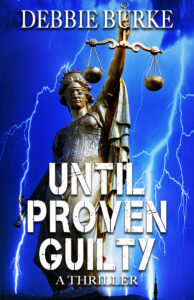
The criminals in Debbie Burke’s Tawny Lindholm Thriller series are too smart to depend on EVs to elude capture.

Tropes to the Left of Me

Tropes to the Left of Me …
Terry Odell

old fashioned key being inserted into a keyhole with white light shining behind it.Kris’s recent post about retiring the Defective Detective followed close on the heels by JSB’s got me thinking. My post is blatantly “borrowed” (and unedited) from tvtropes.org, which is a rabbit warren of fun things to think about. Take a look sometime when you’re not busy.  I did a post about “generic” television tropes (more like cliches) a while back, but this list today is mystery-related..

Whether or not all of these qualify as “tropes” isn’t an issue. Maybe they’re really “plot devices.” Or “reader expectations.” Whatever you call them, they make frequent appearances in mystery tv shows. Here you go:

Absence of Evidence: When the absence of something is a clue.

The Alibi: Someone can prove they were physically incapable of committing the crime.

Amnesiac Hero: When the protagonist has amnesia.

Anachronistic Clue: Something which can’t come from the time period it supposedly came from, which is a sign something is amiss.

Anonymous Killer Narrator: When the serial killer is the narrator of the mystery story.

Anti-Climactic Unmasking: Someone rips off someone else’s face-concealing costume (such as a mask, visor, etc), expecting someone extraordinary, but they get someone ordinary.

Believer Fakes Evidence: A believer plants fake evidence to make others believe in the phenomena of their choice.

Beneath Notice: Disguising oneself as a very plain, regular person.

Beneath Suspicion: When the culprit was never suspected because no one thought it could have been them.

Blood-Stained Letter: A letter or note that has blood on the paper.

Bluffing the Murderer: Someone is pretty sure who committed the crime, so they trick the criminal into revealing themselves.

Bookmark Clue: An important clue is discovered because someone used it as a bookmark.

The Butler Did It: A butler turns out to be the one who committed the crime.

Cast as a Mask: A character and their disguised self are played by separate actors.

Chronic Evidence Retention Syndrome: Bad guys hold onto evidence for no good reason.

Clock Discrepancy: Something seems to have happened at a certain time, but then it turns out it didn’t, for instance because the clock had stopped.

Closed Circle: A plot where the characters can’t leave until it’s over.

Clueless Mystery: A mystery story where the reader/viewer can’t follow along.

Condensation Clue: A hidden message written with one’s finger onto a mirror or window.

Confess in Confidence: The criminal confesses to someone whose job requires confidentiality, such as a clergy member, doctor, or lawyer.

Consulting a Convicted Killer: There’s a dangerous criminal at large, but luckily the investigators can talk to another, incarcerated criminal.

Conviction by Contradiction: A whodunnit mystery is solved by finding a hole in the perp’s story, like a logic puzzle.

Corpse Temperature Tampering: Interfering with natural cooling of a dead body to obfuscate time of death.

Costumes Change Your Size: A disguised figure’s size is somehow different from that of the person underneath. A standard trope for “Scooby-Doo” Hoax mysteries.

Cozy Mystery: A mystery story where there is no graphic violence, sex, or profanity, the murder victims were bad people, the detective is usually a woman with a down-to-earth hobby, the setting is a small community, and the story in general has a lighthearted vibe despite usually dealing with a murder.

Creepy Red Herring: A blatantly creepy suspect is innocent.

Curtain Camouflage: Hiding behind a curtain.

Cut Himself Shaving: A character was attacked, but lies that the injuries are for a mundane reason, such as falling downstairs.

Dame with a Case: Beautiful but untrustworthy woman who hires the Hard Boiled Detective.

Death in the Clouds: A mystery story involving a murder on a plane.

Detectives Follow Footprints: Looking for evidence can solve the case.

Did Not Die That Way: Someone lies about the cause of someone else’s death.

Disability Alibi: A suspect is determined innocent because they have a disability of some sort that makes it impossible for them to have done the crime.

The Dog Was the Mastermind: The villain turns out to be a seemingly harmless and irrelevant character.

Dramatic Curtain Toss: Someone dramatically removes a curtain/tarp/veil, revealing something important.

Driving Question: When the whole story revolves around solving some sort of mystery.

Eagle-Eye Detection: A detective whose main skill is being really observant.

The End… Or Is It?: The story ends with a reveal (or at least an implication) that danger is still present.

“Eureka!” Moment: A character has an epiphany from seeing or hearing something unrelated that reminds them of the answer (e.g. seeing a dog, then realizing the killer was the owner of the hot dog stand.)

Everybody Did It: All the suspects were responsible for the crime in some way.

Everyone Is a Suspect: When the killer in a murder mystery could have been anybody.

Evidence Dungeon: The villain has a lair where lots of incriminating evidence is.

Evidence Scavenger Hunt: A scene about protagonists searching for clues.

Evil Plan: A plan that a villain has.

Exposition Victim: Upon finding out who the killer is, the character speaks to them instead of fighting or running away.

Fair-Play Whodunnit: The opposite of a Clueless Mystery—a mystery story where the reader/viewer can follow along.

Fake Alibi: A suspect claims to have an alibi, witnesses confirm, yet the suspect is actually guilty.

Fake Mystery: The mystery plot turns out to have been staged to prank the detectives.

Fantastic Noir: Mystery and magic mix on the mean streets.

Finger-Licking Poison: Someone was poisoned by licking something covered in poison.

Fingertip Drug Analysis: Testing if a powder or liquid is drugs by sniffing or tasting it.

The Game Never Stopped: Characters take part in a game involving a simulated death, then someone actually dies… or so it seems. As it turns out, the game hasn’t ended yet.

Guilty Until Someone Else Is Guilty: A suspect isn’t proven innocent until the true culprit is exposed.

Hide the Evidence: Hiding the evidence of something wrong or embarrassing is a major plot point.

Hidden in Plain Sight: Something is being searched for, and it turns out it was there the whole time but blended into the surroundings.

Hidden Agenda Hero: The hero’s motivation is never revealed.

Hidden Villain: The villain’s identity is not revealed until much later.

I Never Said It Was Poison: A character accidentally gives themselves away by revealing information that their knowledge of proves they are guilty.

Insists on Being Suspected: The detective counts themselves as a suspect.

Intrepid Reporter: A journalist who actively searches for stories.

Let Off by the Detective: The detective knows who did it, but sympathizes with their motive (or feels they’ve been punished enough) and so doesn’t say so.

Lights Off, Somebody Dies: The lights go out, then when they turn back on, someone has been murdered.

Locked Room Mystery: A crime that seems to have been impossible at first glance (for instance, a murder victim in a locked room.)

Lotsa People Try to Dun It: It turns out that all the suspects tried to kill the victim.

The Main Characters Do Everything: It’s always the protagonists who find the important evidence.

The Meddling Kids Are Useless: The protagonists did all the cool stuff, but ultimately it was some other person, such as the police, who solved the problem.

Mistaken for Evidence: Something looks like a specific, suspicious item but it’s something different.

Mockspiracy: A conspiracy theory which turns out not to be true.

Mockstery Tale: A story that starts out with a mystery, but the mystery turns out to be fake or unsolvable, so the plot goes somewhere different.

Motive = Conclusive Evidence: A motive is treated as incriminating evidence.

Mysterious Stranger: A recurring character who isn’t known by the others, and who’s deliberately set up as enigmatic.

Mystery Episode: An episode in a serial work dedicated to solving a mystery.

Mystery Magnet: Someone who coincidentally seems to attract mysteries.

Mystery of the Week: The protagonists solve a mystery in every episode.

Needle in a Stack of Needles: An object hidden in a bunch of similar objects.

Never a Runaway: Someone who is said to have run away actually befell some other crime.

Never One Murder: Murder mysteries never have just one victim.

Never Suicide: It looks like somebody killed themselves, but it turns out to be murder instead.

Never the Obvious Suspect: Somebody seems to have been the culprit due to having obvious motive and ability to have done it, but it was somebody else who was the real culprit.

No One Sees the Boss: No one, not even his underlings, knows the Big Bad’s identity.

Notable Non Sequitur: In a detective story, every out-of-place line turns out to be important.

Not-So-Fake Prop Weapon: An actor accidentally kills another actor due to a prop weapon being switched for a real one.

Obfuscating Postmortem Wounds: A killer inflicts additional wounds on a corpse to mask the true cause of death.

Old, Dark House: One or more murders happens in an old, poorly-lit house.

Only One Plausible Suspect: A whodunnit where the identity of the culprit is obvious to the viewers.

Ontological Mystery: A story where the characters are locked somewhere and must find out how they got there, why, how to escape, and who (if anyone) is the cause of the situation.

Orgy of Evidence: A criminal plants fake clues, but gives themselves away by the sheer number of fake clues.

Perfect Poison: Killing someone with poison is unrealistically quick and easy.

Placebo Eureka Moment: A character figures out a mystery on their own, but thanks someone near them anyway.

Precrime Arrest: Someone gets arrested for a crime they haven’t even committed yet.

Proof Dare: The criminal dares the detective to prove their guilt.

Propping Up Their Patsy: A culprit proclaims the innocence of another suspect to conceal their own culpability or further their own agenda.

Public Secret Message: Sending a coded message to everyone because only the intended target of the message will understand the code.

Put on a Prison Bus: The culprit is often defeated at the end by being arrested.

Puzzle Thriller: A mystery story where the mystery is “how does it all work?”.

Recorded Audio Alibi: Someone uses a recording of themselves to establish an alibi.

Red Herring: Something seems like a clue, but it misleads the audience.

Reverse Whodunnit: We know who committed the crime, but we don’t know how the detective will solve the case.

Rewind, Replay, Repeat: Somebody finds something that gets their attention in a video, so they rewind and replay it over and over.

A Riddle Wrapped in a Mystery Inside an Enigma: Somebody describes a frustrating mystery as three mysteries in one.

Ripped from the Headlines: A crime story based on a real crime.

Saying Too Much: Someone accidentally says something that reveals plot-sensitive info.

Scary Minority Suspect: An immoral-seeming Token Minority character is portrayed as the obvious suspect of a crime.

“Scooby-Doo” Hoax: The perpetrator disguises the crime as a paranormal or supernatural event.

Secret Identity Apathy: The villains do not care about the true identity of the hero who’s always thwarting them.

Serial Killings, Specific Target: A murderer covers up the murder by killing other people with similar traits as the initial victim.

Shadowed Face, Glowing Eyes: A character has glowing eyes peeking out from a shadowed, usually covered face.

Shell Game: Two or more identical things are shown, one is significant, and we initially know which it is until the objects get mixed.

Sherlock Can Read: Someone thinks someone else used great detective work when they didn’t.

Sherlock Scan: A detective comes to a conclusion about someone they just met from looking at them.

The Seven Mysteries: Mysteries come in sevens.

Signature Item Clue: A distinctive item means that someone must have put it there and that’s a clue.

Spot the Impostor: Someone is seen with their impersonator and their friends have to determine who is the real deal and who is the disguised phony.

The Stakeout: One or more people setting up camp somewhere and watch a location in secret to search for information.

Stranger Behind the Mask: The answer to the mystery is something or someone we’ve never heard of.

The Summation: When the detective does a speech about how they solved the mystery.

Summation Gathering: During the Summation in a murder mystery, all the suspects, including the killer, are present.

Suspect Is Hatless: Someone reports a crime while giving a description of the culprit that is too vague and generic to narrow down who the person responsible could be.

Suspicious Missed Messages: Someone won’t answer their phone? Better find out why!

Ten Little Murder Victims: A group of people ends up somewhere, one of them turns out to be a killer, and they must find out which one before they kill everybody.

That Mysterious Thing: Characters refer to something in ambiguous terms so the audience won’t know what it is.

Thriller on the Express: A crime story set on a train.

Twist Ending: The plot leads one way, but then something happens at the end which changes everything.

Two Dun It: There were two culprits all along.

The Unsolved Mystery: A mystery story without a resolution.

Varying Competency Alibi: A character is proven innocent when they’re shown to be too competent or incompetent to do.

Weather Report Opening: The story opens with a description of the weather.

Wheel Program: A number of TV shows are run in the same slot under one title.

Who Dunnit To Me: Someone survives a murder attempt or comes back from the dead after being killed and tries to find out who it was who killed them or tried to kill them.

Who Murdered the Asshole: An unsympathetic person has been killed, but it is difficult to determine who’s responsible because pretty much everyone who knew the victim hated them.

World of Mysteries: A setting with heaps of mysteries in it.

Writing Indentation Clue: Reading the indentations of notes written on a separate piece of paper.

You Meddling Kids: The villain claims they would have gotten away with whatever they planned on doing, if not for the protagonists.

You Wake Up in a Room: A character wakes up in an unfamiliar location.

You Wake Up on a Beach: A story that starts with a protagonist waking up on a beach.

All right, TKZers. Which have you used? Which would you avoid?


How can he solve crimes if he’s not allowed to investigate?

Gordon Hepler, Mapleton’s Chief of Police, has his hands full. A murder, followed by several assaults. Are they related to the expansion of the community center? Or could it be the upcoming election? Gordon and mayor wannabe Nelson Manning have never seen eye to eye. Gordon’s frustrations build as the crimes cover numerous jurisdictions, effectively tying his hands.
Available for preorder now.


Terry Odell is an award-winning author of Mystery and Romantic Suspense, although she prefers to think of them all as “Mysteries with Relationships.”

Rounding Up Writing Skills

My new t-shirt!

by Debbie Burke

@burke_writer

Last weekend, I drove to Helena, MT to participate in the Montana Writers Rodeo, an intimate gathering of about 40 people. The event is only in its second year, but it ran as well as if they’d been hosting conferences for years.

In 2017, director/playwright/actor Pamela Mencher went on a search for a venue where locals could perform plays that they’d written, along with artistic, musical, and cultural activities. She recognized potential in a vacant industrial building and set to work with volunteers to convert the space into the Helena Avenue Theatre (visit the Montana Playwrights Network website). It’s now a cozy auditorium with a stage, comfortable theatre seating, plus gathering rooms.

Often, attendees at writing conferences are shy introverts who may be uncomfortable in a crowd. Not at this Rodeo!

Perhaps one reason is some members of the group are also actors. On Friday evening, after a delicious buffet supper, eager authors went onstage to read their poetry, short stories, and novel excerpts. That icebreaker loosened everyone up and made for a friendly atmosphere.

On Saturday, acclaimed author Russell Rowland recalled his rollercoaster writing career, starting with his dream internship at Atlantic Monthly and the initial success of his first novels. Disappointment followed when his publisher left him an orphan. Ultimately, he made several comebacks and now has seven books, a podcast, and a popular radio show, Fifty-Six Counties. He related how discouragement and pain are emotional wellsprings from which the most meaningful writing emerges.

In his workshop prompt, he asked us to write about an argument remembered from our childhood. His unique slant: relate the argument from the point of view of the other person.

Russell’s warm, approachable demeanor encouraged a 12-year-old author to take the stage to read what he’d written. How cool is that! Surrounded by adult strangers, this young writer actively participated, asked questions, and discussed his aspirations.

Debbie with actor/director/writer Leah Joki

Another presenter was actor/director/writer Leah Joki, author of Julliard to Jail, a memoir about her unconventional career as a writing and theatre teacher inside prisons. “The reason I’m comfortable in prison,” she says, “is I grew up in Butte!” That caused laughs among us Montanans who understood exactly what she meant.

Her workshop enlisted audience volunteers who read parts of Huckleberry Finn and Who’s Afraid of Virginia Woolf to demonstrate the impact of dialogue in fiction. She said, “Every word matters.” Yet she also emphasized that silence—what is not said—can be even more dramatic.

The workshop I taught was on DIY editing with 10+ tips on how to edit your own writing. In my next post, I’ll outline those tips.

As part of my presentation, I offered to critique First Pages from participants (wonder where that idea came from!). They were submitted in advance, so I had time to review and edit, using track changes.

During the workshop, I projected a page on the screen, read it aloud, then gave my impressions and explained reasons for suggestions. Time didn’t permit review of all submissions, but I printed out the edited versions for each author and we discussed them outside the workshop.

As often happens with TKZ First Pages, some stories didn’t get started until page two or later. We discussed ways to grab readers’ attention immediately, while at the same time weaving in enough details to ground them in the fictional world.

I plugged TKZ as a helpful resource and encouraged Rodeo attendees to submit their first pages for critique.

Rounding out the presentations were two representatives from Farcountry Press, a respected regional house that publishes outdoor guides, books on travel, history, photography, and nature-themed picture books. Samantha Strom, Director of Publications, and Hilary Page, marketing and social media, showed us how to define a reading audience. They provided blank template worksheets that we filled out with background, gender, age, education, interests, jobs, lifestyles, and values of our particular demographic.

Rodeo Wrangers Pamela Mencher, Mindy Peltier, Pearl Allen, and Christa Chiriaco

Conference wranglers Pamela Mencher, Mindy Peltier, Pearl Allen, and Christa Chiriaco rounded up strays and kept the Rodeo running smoothly.

For example, each presenter had a dress rehearsal with tech helpers who checked mic volume, lighting, position on stage, power point displays, and especially those pesky connecting cables! Thank goodness, because my Mac didn’t want to play nice with their projection setup. Mindy brought in the calvary (her techie husband) and saved the day.

Volunteer Intern Chinook asked an unexpected question: did I prefer chilled or room-temperature water during my presentation? According to audiobook narrators, room-temperature is better because cold causes throat muscles to tense up. How thoughtful of Chinook!

Coffee and snacks were in a room where we authors displayed our books for sale and chatted with attendees between sessions.

Small conferences offer a chance to relax and connect with other writers on a deeper level than the hectic hustle-bustle of large ones. Authors in similar genres swapped business cards with prospective critique partners and beta readers.

Several people asked about my editing services, leading to possible new clients. Plus, I sold a stack of books and traded with other authors.

Evaluation surveys are important planning tools for future conferences, but convincing attendees to fill them out is always a challenge. The Rodeo wranglers solved that problem by holding prize drawings as the last event on Saturday evening. A completed survey earned a ticket to win t-shirts, drink containers, and other Rodeo-themed gifts. Yup, I won that t-shirt shown at the top of this post.

Deep Fake Sapphire Pen created by Steve Hooley


I piggy-backed on their drawing with my own to encourage signups for my newsletter. The prize: a custom-crafted Steve Hooley legacy wood pen. The lady who won the Deep Fake Sapphire pen was thrilled and I went home with a bunch of new subscribers. Win-win.

For two nights, Mindy spoiled me with five-star hospitality in her lovely log home, complete with an espresso machine in my room.

The drive between Kalispell and Helena is 400 miles roundtrip, with a posted speed limit of 70 mph in most places. I’ll be polite and call that optimistic, rather than insane Switchbacks and hairpin turns often reduce speed to a white-knuckled 20 or 30 mph.

The route follows winding rivers and twisting two-lane mountain roads that cross the Continental Divide. The drive takes four hours each way, cuz I’m too chicken to put cruise control on 70. I took time to admire Big Sky scenery while watching for suicidal deer and elk. Even plotted a few new scenes, too.

Near Flesher Pass on the Continental Divide, elevation 6131 feet

Already I’m looking forward to next year’s Montana Writers Rodeo.

~~~

TKZers: Do you prefer large or small writing conferences? Please share your favorite conference experience.

~~~

At the Rodeo, Flight to Forever and Deep Fake Double Down were the biggest sellers. Please click on the covers for sales links.

Book Clubs

“There is more treasure in books than in all the pirate’s loot on Treasure Island.” –Walt Disney

* * *

I love the book club I belong to. With a diverse group of women from different backgrounds and experiences, we have robust discussions about the books we read and the lives we lead. Although people come and go, we’ve maintained about twelve members consistently. Since we meet monthly, each person is responsible for hosting the club once a year, and the host chooses the book to be read. This is a wonderful arrangement because we read books I probably wouldn’t have chosen otherwise.

* * *

Book clubs have been around for hundreds of years. One of the earliest was a religious discussion group organized by Anne Hutchinson aboard a Puritan ship in 1634 as it sailed to America. According to minnpost.com, the interest in reading groups, lectures, and debates grew over the centuries as the new country developed.

In 1926 Harry Scherman founded the Book-of-the-Month Club, a subscription-based club that offered a selection of several books to its members each month Some of the books selected for distribution by its panel of judges were Margaret Mitchell’s Gone With the Wind, John Steinbeck’s Of Mice and Men, and J.D. Salinger’s The Catcher in the Rye. According to encyclopedia.com, the BOTM club has distributed over 570 million books to its members in the U.S. since its inception.

Other 20th century book-related ventures were the Literary Guild founded in 1927 and the publication of The Great Books of the Western World in 1952.

In 1996, Oprah Winfrey started her own book club, and that began a new era. Online book clubs sprang up in the early 21st century, and they became essential meeting places during the Covid pandemic. Today it’s estimated there are more than five million book club members in the United States!

* * *

Here are recent reading lists from several book clubs.

The Book-of-the-Month Club

Let Us Descend by Jesmyn Ward
Wellness by Nathan Hill
Age of Vice by Deepti Kapoor
Banyan Moon by Thao Thai
Family Lore by Elizabeth Acevedo
The Unsettled by Ayana Mathis
Paper Names by Susie Luo
Happiness Falls by Angie Kim
The Half Moon: A Novel by Mary Beth Keane
Tomb Sweeping: Stories by Alexandra Chang

Oprah Winfrey’s Book Club

The Many Lives of Mama Love by Lara Love Hardin
Bittersweet by Susan Cain
Hello Beautiful by Ann Napolitano
The Covenant of Water by Abraham Verghese
Let Us Descend by Jesmyn Ward
Wellness by Nathan Hill

Reese Witherspoon’s Book Club

The Nightingale by Kristin Hannah
The House in the Pines by Ana Reyes
The House of Eve by Sadeqa Johnson
Romantic Comedy by Curtis Sittenfeld
Did You Hear About Kitty Karr? by Crystal Smith Paul
Cassandra in Reverse by Holly Smale
Yellowface by R.F. Kuang
Before We Were Innocent by Ella Berman
Starling House by Alix E. Harrow
Mother-Daughter Murder Night by Nina Simon
Maybe Next Time by Cesca Major
Tom Lake by Ann Patchett


The Cherryhill Book Club

The All of It by Jeannette Haien
The No 1 Ladies Detective Agency by Alexander McCall Smith
West With Giraffes by Lynda Rutledge
The Daughter of Time by Josephine Tey
South to America by Imani Perry
Memphis by Tara Stringfellow
River Sing Me Home by Eleanor Shearer
Crocodile on the Sandbank by Elizabeth Peters
Horse by Geraldine Brooks
The Diamond Eye by Kate Quinn
The Secret Life of Sunflowers by Marta Molnar

* * *

So TKZers: Do you belong to a book club? Have you been invited to discuss one of your books at a book club? Have you read any of the books on the lists in this post? What book(s) (other than by a TKZ author) would you recommend to be read by a book club?

* * *

Private pilot Cassie Deakin lands in the middle of a mystery and finds herself in the crosshairs of a murderer.

ebook on sale for 99¢ at: AmazonBarnes & NobleKoboGoogle Play, or Apple Books.


Did Vincent Van Gogh Really Commit Suicide?

Dutch Post-Impressionism master Vincent Van Gogh was a phenomenal force who helped shape modern art culture. His influence ranks with Shakespeare in literature, Freud in psychology, and The Beatles in music. Van Gogh was also plagued with mental illness, suffered from depression, and was tormented by psychotic episodes.

Conventional history records that Van Gogh died from a self-inflicted gunshot wound in 1890 at the age of 37. However, an independent and objective look at the case facts arrives at an entirely different conclusion—Vincent Van Gogh was actually shot by someone else, and it was deliberately covered up.

This isn’t to say that Van Gogh was murdered as in an intentional homicide case. As a former police investigator and coroner, I’m well familiar with death classifications. The civilized world has long used a universal death classification system with five categories. They are natural death, accidental death, death caused by wrongful actions by another human being which is a homicide ruling, self-caused death or suicide, and an undetermined death classification when the facts cannot be slotted into one conclusive spot.

I’m also familiar with gunshot wounds. Understanding how Vincent Van Gogh’s fatal wound happened is the key to determining if he intentionally shot himself, if he accidentally caused his own death, or if someone else pulled the trigger which killed Van Gogh. Before analyzing what’s known about the Van Gogh case facts, let’s take a quick look at who this truly remarkable man really was.

Vincent Willem Van Gogh was born in 1853 and died on July 29, 1890. During Van Gogh’s life, he produced over 2,000 paintings, drawings, and sketches. He completed most of these in his later years and was in his most-prolific phase when he suddenly died.

Van Gogh didn’t achieve fame or fortune during his life. He passed practically penniless. It was after death when the world discovered his genius and assessed his works of bright colors, bold strokes, and deep insight as some of the finest works ever to appear on the art scene. Today, an original Van Gogh is worth millions—some probably priceless.

Vincent Van Gogh achieved artistic saint status. It’s not just Van Gogh’s unbounded talent that supported his greatness. It’s also the mystique of the man and the martyrdom mushrooming from his untimely death that robbed the world of an artist—a starving artist and a man who lived on the fine line between genius and nut.

Most people know some of Van Gogh’s masterpieces. Wheatfield With Crows may have been his last painting. Café Terrace At NightThe Potato EatersIrisesBedroom In ArlesThe Olive Trees, and Vase With Fifteen Sunflowers are extraordinarily famous. So is The Starry Night. (I happen to have a hand-painted oil reproduction of Starry Night right on the wall in front of me as I write this, and my daughter has Café de Nuit hanging in her home.)

Most people know the story of Vincent Van Gogh’s ear. It’s a true story, but the truth is he only cut part of his left ear off with a razor during a difficult episode with his on-again, off-again relationship with painter Paul Gauguin. The story goes on to say that Van Gogh gave the piece of his ear to a brothel lady, then he bandaged himself up and painted one of many self-portraits. I just looked at this portrait (Google makes Dutch Master shopping easy) and was struck by the image of his right side being bandaged. Then I realized Van Gogh painted selfies by looking in a mirror.

And most people know something about Vincent Van Gogh’s time in asylums. This is true, too, and he spent a good while of 1889 in Saint-Remy where he stared down on the town and painted The Starry Night from later memory. The celestial positions are uncannily accurate.

In late 1889, Van Gogh moved to a rooming house in Auvers-sur-Oise near Paris. His painting production went into overdrive, and he was at the peak of his game. On July 27, 1890, Van Gogh left his room with his paints, canvas, and easel. He returned empty-handed with a bullet in his belly.

Vincent Van Gogh’s spirit left this world at 1:30 a.m. on July 29. He passed without medical intervention at his bed, and the medical cause was, most likely, exsanguination or internal bleeding. There was no autopsy, and Van Gogh was buried in a nearby churchyard the next day.

There are various ambiguous statements purported from Van Gogh. He did not admit to shooting himself or intentionally attempting to commit suicide. However, the record indicates he didn’t deny it. The record can also be interpreted that he covered up for someone else.

What is fairly clear is the description of Vincent Van Gogh’s gunshot wound. There are conflicting locations, (chest, stomach, abdomen), but this is explainable from Dutch/French to English translations. It’s highly probable that one bullet entered the left side of Van Gogh’s mid-section and traversed his intestines in a left-to-right direction. There was no exit wound and no serious spinal damage as Van Gogh had walked home from the shooting scene, up the stairs, and to his room where he expired a day and a half later.

There was no firearm found and absolutely no history of Vincent Van Gogh ever owning or operating a gun. He was a painter. Not a hunter or soldier. (Note: There was a rusted revolver found in an Auver field in 1960 which was said to be the weapon. There is no proof that it was.)

There was no suicide note or any deathbed confession. Aside from being an artist, Van Gogh was a prolific writer who documented many thoughts as he progressed from mental sickness to physical health. In late July of 1890, Van Gogh’s writings showed him to be optimistic and with plans to paint as much as possible before an anticipated period of blackness returned. Two days before his death, Van Gogh placed a large art supply order.

Suicide, in Van Gogh’s case, wasn’t surfaced in the early years after his death. There were murmurs among the villagers that “some young boys may have accidentally shot” Van Gogh as he went about his work in a nearby field. There was no coroner’s inquiry or inquest, but there is documentation of a gendarme questioning Van Gogh if he intentionally shot himself to which Van Gogh allegedly replied, “I don’t know.”

The first strong suicide suggestion came in 1956 with Irving Stone’s novel and movie Lust For Life. It was a documentary that took liberty with Van Gogh’s life and times. It concluded Van Gogh was a troubled soul—a beautiful soul—who ended his life intentionally. The book and movie were bestselling blockbusters and cemented the suicide seed to an adorning public.

It became ingrained in lore and public acceptance that Vincent Van Gogh was a desponded psychotic who suddenly up and killed himself rather than continue a tormented existence of interpreting beauty in nature and people. It was the gospel, according to Van Gogh historians, who were comfortable with a suspicious explanation.

Other people weren’t. In 2011, two researchers took a good and hard look into Van Gogh’s life and death. They had full access to the Van Gogh Museum’s archives in Amsterdam and spent enormous time reviewing original material. They found a few things.

One was a 1957 interview with Rene Secretan who knew Van Gogh well. Secretan admitted to being one of the boys spoken about by the villagers who were involved in Van Gogh’s shooting. Rene Secretan, sixteen years old in 1890, told the interviewer he wanted to set the distorted record straight that was misrepresented in the book and movie.

The interview documents Rene Secretan as saying the handgun that shot Van Gogh was his, and that it was prone to accidentally misfiring. Secretan self-servingly denied being present when the accidental shooting happened, claiming he was back in Paris and not at his family’s summer home in Auvers. Secretan failed to identify those directly involved or exactly what circumstances unfolded.

The researchers, Pulitzer Prize winners Steven Naifeh and Gregory White Smith who co-wrote Van Gogh: The Life, found corroborating statements placing Van Gogh near the Secretan villa on the afternoon of the shooting. They also sourced a leading expert on firearms and gunshot wounds who refuted any chance of Van Gogh being able to discharge a firearm with his own hands that could have caused the wound in its documented location.

Dr. Vincent Di Maio (a 2012 key witness in the Florida trial of George Zimmerman who shot African-American youth Trayvon Martin in a neighborhood watch altercation) concluded that Van Gogh, who was right-handed, could not possibly have held a firearm as it had to be; therefore the shot had to have been fired by another party. Dr. Di Maio also commented on the lack of reported gunshot residue on Van Gogh’s hands and clothes. In 1890, most cartridges contained black powder which was filthy stuff when burned at close range.

Researchers Naifeh and Smith also took a deep dive into what they could find on Rene Secretan’s background. They painted him as a big kid—a thug and a bully who was well known to have picked on wimpy Van Gogh throughout the month of July 1890. Secretan came from a wealthy Paris family who summered at Auvers with their second home within walking distance of Van Gogh’s rooming house.

According to the researchers of Van Gogh: The Life, Rene Secretan had seen the Buffalo Bill Wild West show in Paris, and Secretan fancied himself as a cowboy character. Secretan fashioned a costume to go with his cocky role of a western gunfighter, and he acquired a revolver that was prone to malfunction. They documented incidents where Secretan would mock Van Gogh as he painted, play pranks on him, and supply alcohol to Van Gogh who couldn’t afford it.

It was during a mocking spat, the researchers surmise, that somehow Secretan’s revolver went off and struck Van Gogh in the abdomen. According to the theory, the boys fled, disposed of the weapon, and formed a pact of silence. If this was true, the question arises of why didn’t Vincent Van Gogh report the truth, and why has the suicide conclusion remained steadfast.

Naifeh and Smith address this in their book with this quote: When all this (accidental shooting theory) began to emerge from our research, a curator at the Van Gogh Museum predicted the fate that would befall such a blasphemy on the Van Gogh gospel. “I think it would be like Vincent to protect the boys and take the ‘accident’ as an unexpected way out of his burdened life,” he agreed in an e-mail. “But I think the biggest problem you’ll find after publishing your theory is that the suicide is more or less printed in the brains of past and present generations and has become a sort of self-evident truth. Vincent’s suicide has become the grand finale of the story of the martyr for art, it’s his crown of thorns.”

As an experienced cop and a coroner, I think Naifeh and Smith are on to something. There are two huge problems with a suicide conclusion in classifying Vincent Van Gogh’s death. One is the lack of an immediate suicide threat. The other is the gunshot nature.

I’ve probably seen fifty or more gunshot suicides. All but one were self-inflicted wounds to the head. The exception was a single case where a shotgun was placed against the chest and the pellets blew apart the heart. I have never seen a suicide where the decedent shot themselves in the gut, and I’ve never heard of one.

Vincent Van Gogh didn’t leave a suicide note. He made no immediate suicide threats and, by all accounts, things were going well for the struggling artist. It makes no sense at all that Van Gogh would head out for a summer’s day, begin to paint, produce a gun from nowhere, shoot himself in the stomach from the most inconceivable position, then make it home—wounded—without finishing himself off with a second shot.

If I were the coroner ruling on Vincent Van Gogh’s death, I’d readily concur the cause of death was slow exsanguination resulting from a single gunshot wound to the abdomen. I’d have a harder time with the classification. Here, I’d have to use a process of elimination from the five categories—natural, homicide, accidental, suicide, or undetermined.

There is no possibility Van Gogh died of natural causes. He was shot, and that is clear. Was he murdered or otherwise shot intentionally? There is no evidence to support an intentional homicide classification. Did the firearm go off accidentally? It certainly could have, and there is information to support that theory but not prove it.

Suicide? Not convincing. The available evidence does not meet the Beckon Test where coroners must establish beyond a reasonable doubt that the decedent intentionally took their own life. If the death circumstances do not fulfill the requirements of the Beckon Test, then a coroner is not entitled to register a suicide classification.

This only leaves undetermined. Coroners hate closing a file with an undetermined classification. It’s like they failed in their investigation.

Unfortunately, in Vincent Van Gogh’s case—from the facts as best as are known—there’s no other conclusion than officially rule “Undetermined”.

I’m no longer a coroner, though, so I’ll stick out my neck.

On the balance of probabilities, I find Vincent Van Gogh was accidentally shot, then sadly died from this unintended and terrible tragedy.

——–

Kill Zoners – Does this theory of Vincent Van Gogh’s death circumstances make sense to you? Have you heard it before? And are you a VVG artwork fan – do his creations speak to you?

A Tale of Two Worlds

By John Gilstrap

A few months ago, I was asked and agreed to participate in a first of its kind literary event at the Berkeley County-Martinsburg Public Library here in my new West Virginia hometown. It would be a meet-n-greet, book signing supported by Four Seasons Books in Shepherdstown, WV. A few weeks later, the organizers reached out again and asked if I would mind if a second author joined the event. Magnanimous fellow that I try to be, I agreed right away, then asked for the other author’s name and genre. I had never heard of the name, probably because the genre was romance.

Well, that would be different, wouldn’t it? I’d never done a panel that mashed up romance and thrillers. I even agreed to promote the event on my radio show and put it out on my Facebook feed as the time approached.

About two weeks out, the organizers sent an email about how to get tickets for this event.

Wait. What? Tickets? In advance? They were free, but they were required to get through the door. This was new to me, and I’ve been doing this stuff for a long time. When I clicked on the link to the tickets and discovered that the event was already sold out, I said to myself, “Self, you should have taken this romance writer you’ve never heard of more seriously.”

Not that anything would have changed.

It turns out that Jennifer L. Armentrout, a delightful, fabulously successful #1 New York Times bestselling author does not write romance. She writes . . . wait for it . . . young adult paranormal sci-fi romance. And she lives about eight miles from me. A bit of a recluse, I believe her when she says she has not taken a vacation or even a weekend off in over 10 years. That’s how she’s been able to churn out 60 books in that period of time. But she’s wildly active on social media, so when she announced that her fans could meet her in Martinsburg . . .

The event.

When I arrived at the library and was ushered to the second floor to the green room, I still didn’t get it. Worse, I didn’t think the library got it. They’d cleared out the entire space–bookshelves and everything–and set up hundreds of chairs. Who the hell was going to fill them?

The the human spigot opened. At 1:50, ten minutes before the event was to start, people started flowing up the stairs, each of them sporting a yellow wrist band that proved they’d been ticketed. Nearly all carried books, many carried bags of books. None of the books bore one of my covers. I have never seen such a rainbow of different hair colors, or variety of facial piercings and tattoos. I put the median age at twenty-three–twenty-five, max.

The discussion.

Once everyone was seated, the moderator introduced Jennifer and me, and we took our places behind the long table next to the display of our books. The light hearted banter we’d developed in the green room transferred well onto the stage and the audience laughed a lot, so a good time was had by all.

For me, though, there was one truly sobering moment–the one that demonstrated just what a dinosaur I am in this business. The question was something like, “Tell us how you sold your first book. How did you find your agent, you know how did all of that work?”

Jennifer answered first. The only part I remember is, “I sold my first book in 2012, and I . . .” From there, she ground through social media/computer-speak that clearly made perfect sense to the audience but meant nothing to me. She talked about promotional sites I’d never heard of and something really big on TikTok. The whole time she was speaking, my brain was screaming, oh, shit, I’m next!

When it was my turn, I played the truth for a laugh. In 1994, after I finished marking up the pages of a book called Writer’s Digest Guide to Literary Agents, I sent my query letter and self-addressed stamped envelope . . .

It’s an entirely different world now.

The signing.

I’ve signed next to Lee Child and Mary Higgins Clark. I have never seen fans as passionate as the ones who stood in line for three hours to have their books signed by Jennifer L. Armentrout. One fan had driven overnight from Buffalo to be there, and another had taken a train from Connecticut. At least two fans were so overwhelmed that they cried.

I’m happy to say that I sold and signed a dozen or so books, too, but to be honest, they felt like sympathy sales. As much as I tried not to look sad and lonely as I was largely ignored, maybe I didn’t quite pull it off.

Lessons learned.

First, I learned that there’s a genre called young adult paranormal sci-fi romance.

More importantly, I experienced my first vivid, first-person demonstration of the power of social media to spread word of an event. Unfortunately, I think there’s a generational component to those particular social media outlets. I could be wrong, but I don’t see TikTok as a destination for the average Jonathan Grave fan.