TKZ Celebrates 12 Years!

The Kill Zone blog makes its debut on 08/08/08. We’re an exciting group of thriller and mystery authors. Stay tuned!

By Joe Moore

That announcement was made 12 years ago by a small group of professional writers with the mission to share our knowledge and talents with others. The goal was to help make everyone that visited TKZ a better storyteller and reader. The original group included its founder Kathryn Lilley along with Michelle Gagnon, John Gilstrap, John Ramsey Miller, Clare Langley-Hawthorne, and myself. Not bad for a starting team!

Twelve years is a long time for a niche blog to exist on the Internet. Twelve months is a bit more like it. Group-writer blogs have been formed by many authors; most eventually running out of things to say and falling by the wayside. But TKZ is alive and well, garnishing numerous awards including the coveted Writer’s Digest 101 Best Websites for Writers 6 times.

How has TKZ prevailed? Of course, great writing tips and advice from successful authors are givens. Lots of blogs to that. We took it a step further by offering original ideas.

In 2012, we came up with the concept of First Page Critiques. Anyone can submit the first page of their manuscript anonymously. In return, they get an in-depth critique by a top-shelf author and additional feedback in the comments section of the post. And unlike other critique services, our First Page Critiques are free. You can review all the FPC at First Page Critiques.

We featured “Killer Sunday”, hosting some of the best mystery and thriller guest authors to be found including Alafair Burke, David Hewson, Cara Black, Michael Palmer, Tosca Lee, Hallie Ephron, Robin Burcell, Steve Berry, Sandra Brown, and so many other generous writers who shared their talent with our visitors.

If you’re looking for help with a particular issue, there’s TKZ Library covering topics such as Indie Publishing, Revision & Editing, and Developing Author Voice among many others.

Our list of emeritus bloggers that have been a part of TKZ team over the years is beyond impressive: John Ramsey Miller, Kathleen Pickering, Michelle Gagnon, Boyd Morrison, Jodie Renner, Nancy Cohen, Larry Brooks, Robert Gregory Browne, and Jordan Dane.

Bottom line: TKZ is the Fort Knox of writer’s information. No matter where you are in your career as a novelist, you’ll always come away with a little more knowledge than before. TKZ is a value-added resource that has been here for 12 years. Take advantage of it. And raise a toast to at least 12 more years of sharing the art of writing.

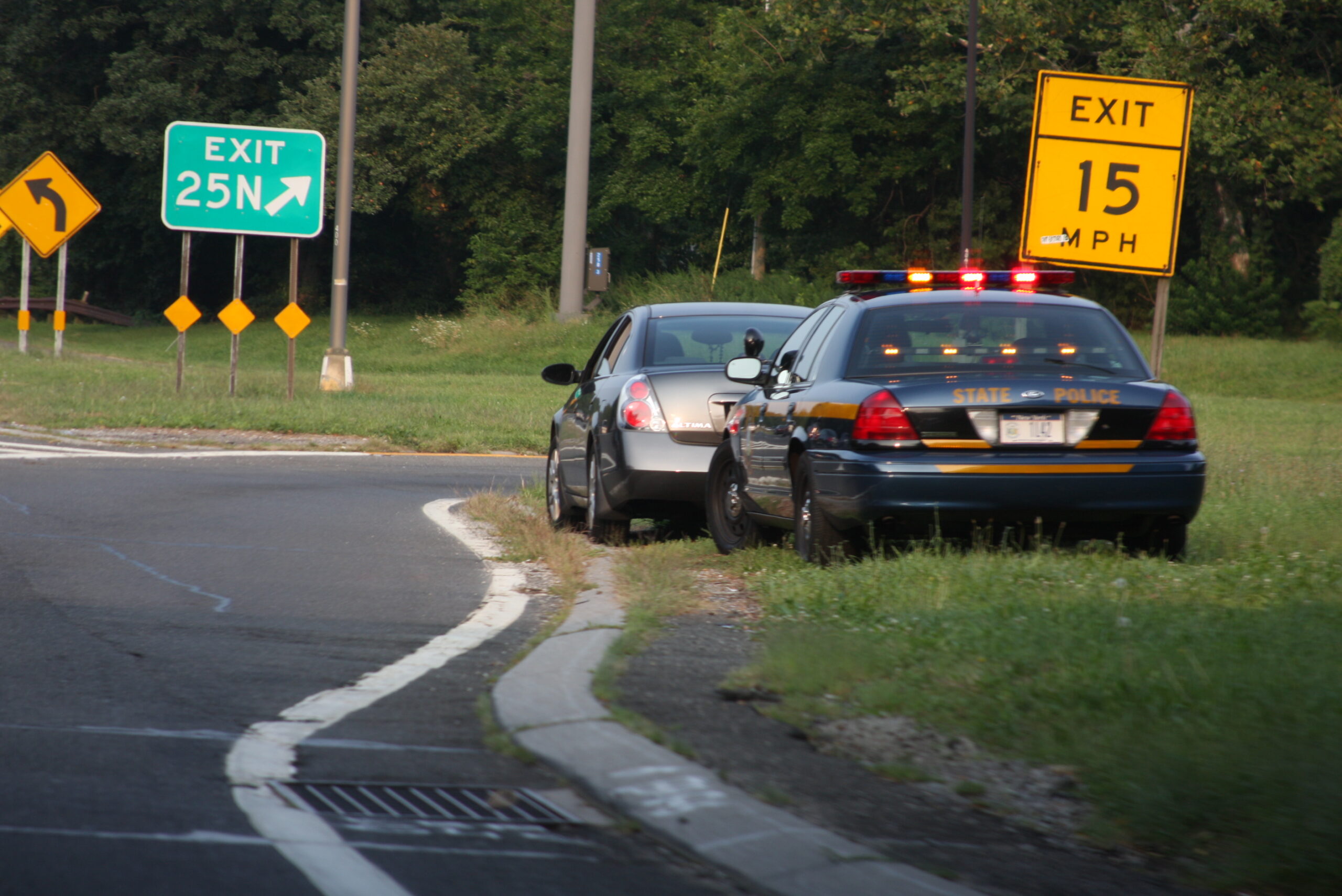
True Crime Thursday – Police Stop

Photo credit: dwights ghost, wikimedia creative commons

By Debbie Burke

@burke_writer


Today’s True Crime tale is set in Detroit, dateline 2009. This three minute video chronicles a harrowing police stop with charges that include speeding, grand theft auto, and murder.

As a bonus, it offers a master class in storytelling by author Dan Yashinsky of Toronto.

Here’s Dan!


TKZers: Did you learn any techniques from Dan’s video to use in your own work?

~~~


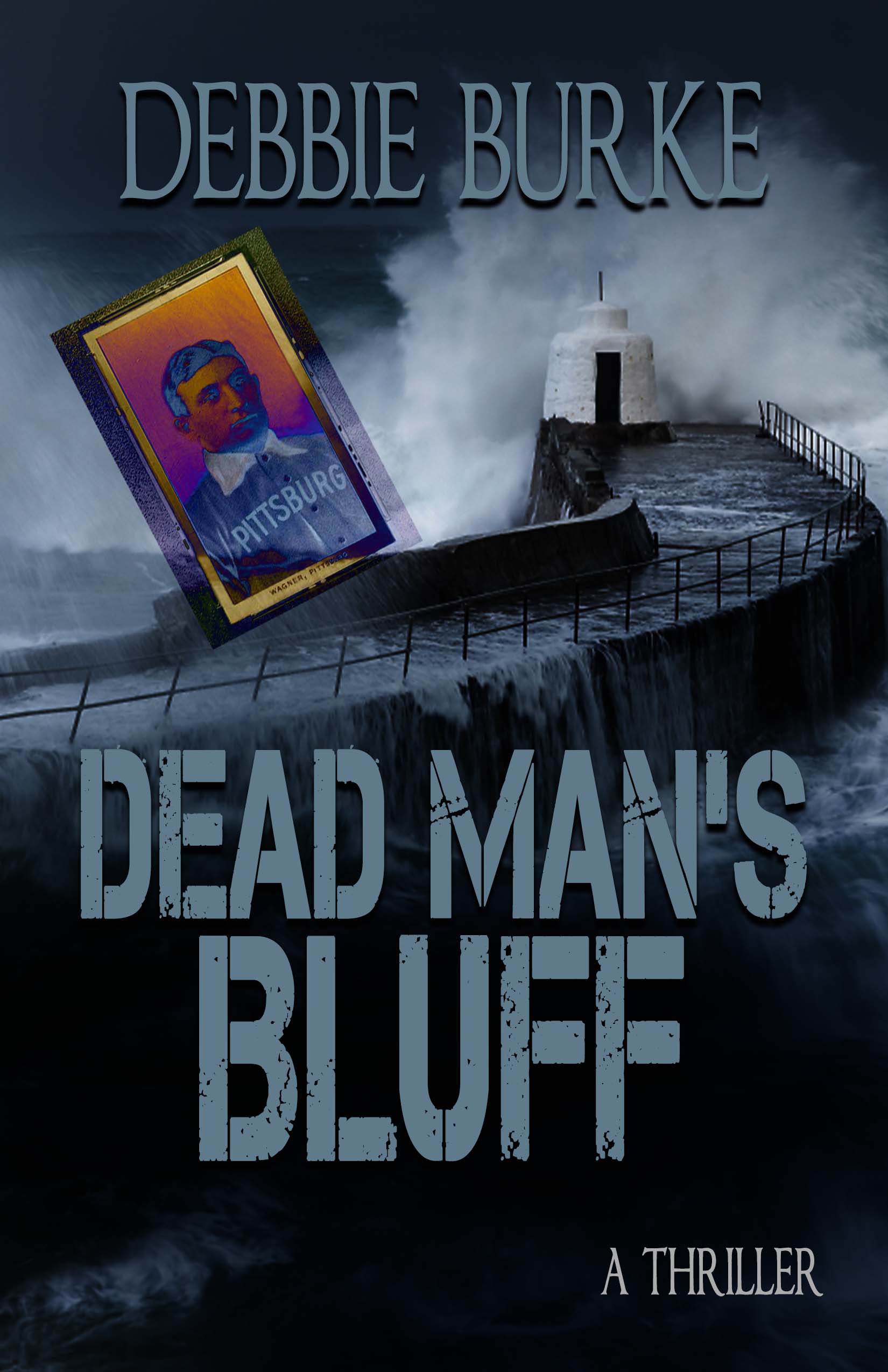
Last day for introductory price of $.99 for Debbie Burke’s new thriller, Dead Man’s Bluff. Here’s the buy link.

The Power of Poignancy

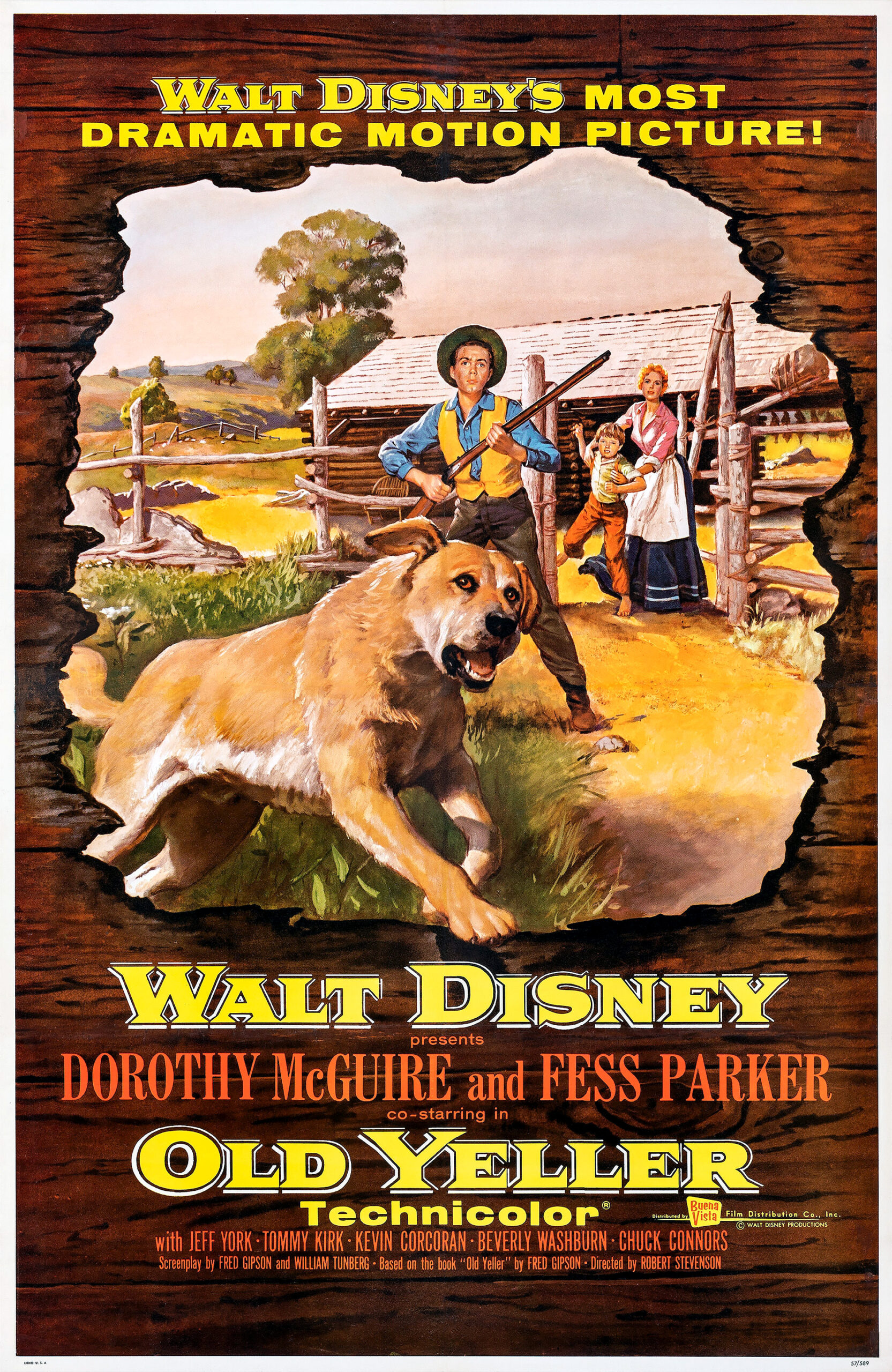
Old Yeller movie poster, public domain

By Debbie Burke

@burke_writer

Recently I read an article by Daniel Pink in the Saturday Evening Post extracted from his bestselling book WHEN—The Scientific Secrets of Perfect Timing. According to various studies he cited, people like happy endings in books and films. No surprise there, especially in the current troubling times. Happily Ever After (HEA) in fiction fulfills a deep human longing because most of us wish for that in our real lives.

But the main point of Dan’s article was, while happy endings are good, the most resonant, memorable endings have sadness connected to them. The addition of bittersweet adds an important layer of emotional complexity beyond mere joy. He writes:

“The most powerful endings deliver poignancy because poignancy delivers significance. Adding a small component of sadness to an otherwise happy moment elevates that moment rather than diminishes it.”

The power of poignancy is why the endings of some stories stick with us for years, while other HEAs disappear from mind as soon as we close the book.

Dan’s article started me thinking about which books and movies still resonate in my memory years later.

Warning: spoiler alerts ahead.

I saw Old Yeller when the movie came out in 1957. A couple of times since then, I watched it but stopped before the climax (warning: grab a box of tissues before clicking this link). That scene remained seared in my mind. I didn’t want to start weeping again.

A boy, Travis, and his dog share an unbreakable bond until Old Yeller is bitten by a rabid wolf while saving the boy’s life. When Old Yeller is infected, Travis must shoot his dearest friend to keep him from suffering. It’s the hardest thing he’s ever done and may well be the hardest thing he’ll ever face in his entire life.

To soften the blow, the movie wraps up when Travis bonds with a new puppy from a litter sired by Old Yeller.

Consider this alternate ending: What if Old Yeller still saved Travis from the rabid wolf but walked away unscathed? Travis and Old Yeller trot off into the sunset, trailed by Yeller’s adorable puppies? Pure HEA, right?

Would the story still evoke the strong feelings it does more than six decades after I first saw it and bawled my eyes out? Probably not.

Charlotte’s Web had the same emotional power. Additionally, the first line is one of the greats in literature:

“Where’s Papa going with that axe?” Fern said.

Charlotte the spider dies after saving Wilbur the pig’s life and making him famous. The blow of her death is tempered because she left behind generations of children and grandchildren to keep Wilbur company for the rest of his days.

Alternate ending: What if Charlotte didn’t die but continued her friendship with Wilbur until, one peaceful night, they both passed away from old age? Would the ending be as memorable? Nah.

Witness (1985) with Harrison Ford and Kelly McGillis is not only a cracking good thriller but also a love story. Philadelphia detective John Book must protect Samuel, a young Amish boy who witnesses a cop’s murder.  In the process, Book falls in love with the boy’s mother, Rachel. In the climax, the villains are thwarted and Samuel is safe. Mission accomplished. But Book must leave Rachel because, despite their love, he could never fit in her world and she could never fit in his.

Alternate ending: Book stays with Rachel in the idyllic Amish community and they share a blissful, if improbable, life together.

If screenwriter Earl Wallace had opted for the HEA above, would he have won the Oscar for Best Original Screenplay? I doubt it.

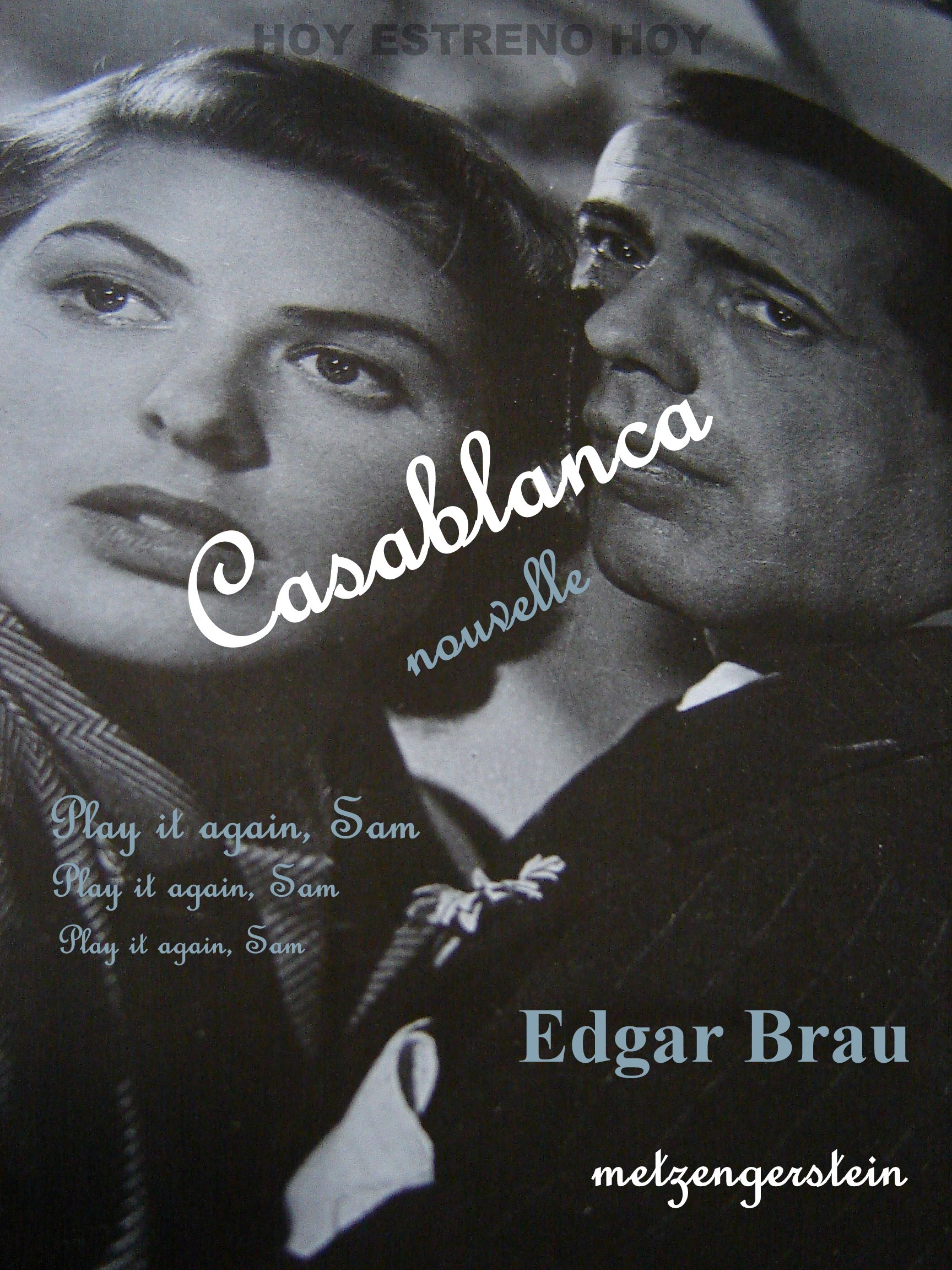
Photo Credit: Edgar Brau, Creative Commons

Perhaps the most famous bittersweet ending in film is Casablanca. Rick gives up the woman he loves and watches Ilsa walk away with her husband, not because Rick wants to, but because it’s the right thing to do.

Alternate ending: Ilsa tells Victor Laszlo to go back his resistance work without her and she and Rick share a passionate kiss in his saloon while Dooley Wilson reprises “As Time Goes By.” 

With that HEA, would Casablanca have become an icon in movie history? Unlikely.

The examples cited above are all legendary. As authors, we can aspire to that status but most of us are happy if readers enjoy our stories, remember them, and want to buy more.

Mickey Spillane, who sold 225 million books in his career, famously said,

“Your first line sells the book. Your last line sells the next book.”

How does an author make endings satisfying and memorable enough to convert a reader into an avid fan who wants more? One way is to inject poignancy.

Here are several tools to help you add the bittersweet component.

The Wound: The hero ends up damaged. The wound doesn’t have to be physical; it can also be emotional, psychological, or spiritual.

During the journey, the hero suffers greatly. By the end, she is triumphant in achieving her goal, vanquishing the foe, solving the mystery, or righting the wrong. That’s the HEA part.

But her success comes with a cost.

She may have lasting effects from a bullet wound, PTSD from emotional and psychological wounds, or undergo a spiritual crisis when the belief or value system she’s always depended on collapses.

The wound can happen to another character, someone she cares deeply for. That loved one’s pain or death causes her to question if her success was worth it.

Disappointment: The hero may have worked his butt off to attain his desire but, once reached, he learns it’s not what he really wanted after all. Wiser after his journey, he must let go of his dream. The HEA can spring from his epiphany that there is a different, sometimes better, reward than the one he originally sought.

Sacrifice: The hero prevails but must give up someone she cherishes. She does the right thing at great personal loss to herself. The HEA stems from her satisfaction that her loved one is happy or safe.

Can you think of other tools to achieve poignancy? Please share them in the comments.

When an author successfully balances bitter and sweet, the reader feels the resonance to their core. In fiction and in life, there is no sweet without the bitter. 

By tempering a happy ending with sorrow, joy may emerge as the dominant emotion but the complex feelings you evoke in a reader make the story more memorable and lasting than one that only taps into happiness.

Dan Pink concludes by saying:

“Endings can help us elevate—not through the simple pursuit of happiness but through the more complex power of poignancy. Closings, conclusions, and culminations reveal something essential about the human condition: In the end, we seek meaning.”

~~~

TKZers: Please share examples of your favorite endings in books or films and why they stuck with you.

What techniques do you use to inject poignancy into your work?

~~~


A high-stakes gamble. The winner lives. The loser dies.

Please check out Dead Man’s Bluff, Debbie Burke’s new thriller here. 

Parsley Poop – The Cozy Writer and the Conundrum of Keeping It Clean

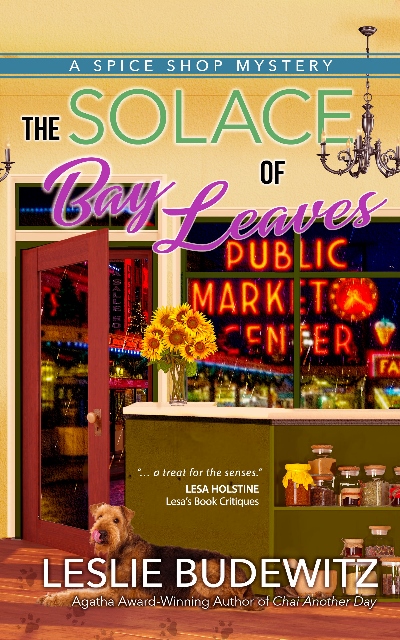
Today, I’m delighted my pal, multiple-Agatha winner Leslie Budewitz, stopped by to visit. Leslie and I are often found in Montana cafes, noshing pastries while plotting someone’s demise. In this guest post, Leslie discusses how cozy authors can avoid explicit language but still have fun playing with words. Welcome, Leslie!

Agatha-winning author Leslie Budewitz

A recent thread on the Short Mystery Fiction Society discussion list on language—captioned ”Swearing Bad, Murder Good”—prompted me to talk to myself, on my morning walks, about why cozy mystery authors work hard to keep our language clean. You weren’t there that day, so thanks to Debbie Burke for inviting me to share some of my thoughts here.

First, what is a cozy? It’s a subset of the traditional mystery, which itself has quite a range, from the lightest of cozies (Krista Davis, Laura Childs) to historicals (Victoria Thompson, Rhys Bowen) to more psychological drama (Lori Rader-Day, Laura Lippman, Hank Phillippi Ryan). Generally, there is no graphic or gratuitous sex or violence. The killer and victim often know each other, or at least come from the same wider community; these are not stories of serial killers who prey on a certain type of victim or anonymous bombers wreaking havoc on marathon runners and those gathered to cheer them on. Typically, the traditional mystery involves an amateur sleuth, though there are exceptions; Louise Penny’s books are considered traditional mysteries though Gamache and his crew are police officers, aided by locals.

Reading a cozy is a walk on the light side. Think Jessica Fletcher and Murder She Wrote, or Midsomer Murders. The cozy is the comfort food of mystery world, and who doesn’t love a little mac and cheese now and then?

The murder is the trigger, the inciting incident, while the other characters’ response is the story. A bit of an oversimplification, and it’s crucial, in my opinion, to make sure we get to know and care about the victim, and to show how the murder disrupts the community. The estimable Carolyn Hart asks what’s more uncomfortable than murder in a small town where everyone is affected? And she’s absolutely right, though the same is equally true of urban cozies, which focus on a community within a community.

Ultimately, the cozy is about community. The sleuth, usually a woman, is driven to investigate because of her personal stakes. She wants justice, for the individuals and for the community. The professional investigators—law enforcement—restore the external order by making an arrest and prosecuting, but it’s up to the amateur to restore internal order, the social order, within the community. (I could go on about the elements of a cozy. Another time.)

So, what about the language?

Cozies tend toward clean language. SMFS members have pointed out the contradiction in readers who accept murder but dislike cursing or vulgar language. It is a contradiction, a bit. But then again, it isn’t. Murder happens in all social strata—among drug dealers and religious zealots. The murder in a cozy is typically off-stage; we don’t see the blood and gore—a character might, but she isn’t going to describe it for us.

Nor are most cozy settings and scenarios places where you’d expect swearing. Most of us, even if we cut loose now and then, watch our language at a street fair, in a tea shop, at a community theater rehearsal or on a tour boat headed to a clam bake. We might be freer of tongue at home or with close friends, but we know when to watch our language. So do cozy characters.

Who are the characters? Does the language fit them?

A frequent criticism by other writers about deliberately clean language is that it isn’t realistic, that a mobster won’t say “gosh, darn it” or “oh, firetruck.”

Nope, he sure as sugar wouldn’t.

But it goes both ways. Reality isn’t one size. Some people choose not to swear, from personal preference, out of moral or religious conviction, or for other reasons. TV broadcasters train themselves not to swear in private because one accidental “f*ck this sh*t” on the nightly news could cost them their jobs. (Credit for that insight goes to Hank Phillipi Ryan, a TV reporter who writes about them.) Retail shop owners, with some exceptions, watch what they say on the shop floor because most customers don’t want to be surrounded by curse words when shopping, especially if their kids are with them. I gave one of my series protagonists the word “criminy,” borrowed from a former legal secretary who chose it as her dastardly expression when she taught kindergarten; I doubt she knew it’s a contraction of “Christ Almighty,” but the word has long slipped the bonds of its blasphemic origins.

A sleuth who runs a bookstore or bakery and is investigating to right a wrong and restore the social order of the community she loves is not going to suddenly open her mouth and make sailors blush. “I swore under my breath” or “I’d never heard David swear before” makes the point just fine.

Tone matters.

Cozies often involve humor, as the titles make plain. Crime Rib, Assault and Pepper, Chai Another Day are a few of mine. The word play continues as a Spice Shop owner named Pepper says “parsley poop” when she learns a troublesome fact or calls an annoying customer a pain in the anise. The creativity fits and it’s fun.

But what about the killer? They aren’t all little old ladies wielding knitting needles.

No, they aren’t.

In traditional mysteries, including cozies, the killers are often opportunistic, motivated by emotion and injustice. They may strike out in the spur of the moment. Some act from the conviction that the victim needed killing. Others plot and plan, though pure evil and psychosis are the exception, not the norm. Still, planning a murder doesn’t necessarily equate to a potty mouth. With some exceptions, cozy killers come from the same community as the rest of the characters. They run bars and restaurants, work as TV cameramen, winemakers, and veterinarians, collect movie memorabilia, captain tour boats, and drink good coffee.

Many cozies are written in first person. We see the killer through the protagonist’s lens, although of course, they speak their own truth, sometimes spelled with four letters. When and where killer and sleuth meet might affect the language, too. For example, in one of my books, we first see the killer at a memorial service held in an upscale art gallery, where mourners are wearing linen and silk and sipping sparkling rosé. Not a crowd or a place for vulgarity—though if it did erupt, we might have a sudden silence, followed by a hubbub as the offender is escorted from the scene, all good action for a cozy. Later in the same book, we see the killer prowling around a darkened antique store, aiming to confront and stop my sleuth. The dialogue is limited, as they taunt each other while trying not to give away their locations. Swearing could happen; it doesn’t.

In my latest book, the killer and my first person narrator see each other several times, but only meet face-to-face once, outside a hospital. Again, it’s a place where swearing could happen, but isn’t essential—this isn’t the docks in the dark of night, and their conversation is a battle of wits. The protagonist, a spice shop owner, has no objection to swearing, but rough language isn’t going to help her tease out the killer’s motives or get him to feed her the info she needs to break his alibi. Vulgarity isn’t going to help him convince this pesky woman that he’s the wronged party, that he only did what anyone in his position might have done.

Last, consider the audience.

Cozy readers may be young teens, old ladies, and anyone in between. They are reading to meet the characters, get to know a place, eat good food, and learn about the subject of the book. They are there to see justice done and community restored. Why make them uncomfortable without good reason?

Language affects tone and characterization; it reflects plot and theme; it contributes to setting. If a well-placed “f*ck” or “sh*t” would advance any of those without pulling the reader out of the story, go ahead. Use it. Swearing is just another tool in your writer’s box. But in the well-written cozy, you won’t have to.

~~~

Leslie Budewitz blends her passion for food, great mysteries, and the Northwest in two cozy mystery series, the Spice Shop mysteries, set in Seattle’s Pike Place Market, and the Food Lovers’ Village mysteries, set in NW Montana. The Solace of Bay Leaves, her fifth Spice Shop Mystery, is out now in ebook and audio; paperback coming in October 2020. Leslie is the winner of three Agatha Awards—2013 Best First Novel for Death Al Dente, the first Food Lovers’ Village mystery; 2011 Best Nonfiction, and 2018 Best Short Story, for “All God’s Sparrows,” her first historical fiction. Her work has also won or been nominated for Derringer, Anthony, and Macavity awards. A past president of Sisters in Crime and a current board member of Mystery Writers of America, she lives and cooks in NW Montana.

Find her online at www.LeslieBudewitz.com and on Facebook at www.Facebook.com/LeslieBudewitzAuthor

Pepper Reece never expected to find her life’s passion in running the Seattle Spice Shop. But when evidence links a friend’s shooting to an unsolved murder, her own regrets surface. Can she uncover the truth and protect those she loves, before the deadly danger boils over?


More about The Solace of Bay Leaves, including an excerpt and buy links here: http://www.lesliebudewitz.com/spice-shop-mystery-series/

How To Speak Cop — Version 1.0

As a retired police officer and now starving artist writer, I pay attention to others who write true crime and crime fiction. I read (actually skim) more for craft than story because I’m still very much in the learning curve when it comes to writing. Like the investigation business, I think a writer never stops discovering new techniques and benefiting from mistakes. A regular flaw I see in reading some crime publications—the writer just doesn’t know how to speak cop.

Every vocation has its lingo. In my shadow life, I’m a ticket-holding marine captain. An old boat skipper. I know Sécurité, Pan-Pan, and Mayday-Mayday-Mayday. They’re common emergency calls in the airplane world, as well. Industries like film production have their unique terms like Rigger, Gaffer, and Abby Singer Shot. And the sex trade has… well…

I think that in writing convincing crime stories, whether true or false, it’s critical to get the cop-speak right—specific to the specific location (as variances exist). Part is not being scared to use to F-word because all cops and crooks swear. The trick is using it sparingly and not mimicking a realistic alcohol-fueled-end-of-the-night party at a truck loggers convention. Trust me. I’ve been to one.

Setting profanity aside, there are day-to-day conventions in police terminology. Some writers get it right. Some don’t. The difference is in research, connections, understanding locality, and personal experience. Here are the basics in how to speak cop. Version 1.0.

Radio Procedure – The Ten Code

I’ve never heard of an English-speaking police department that doesn’t use some sort of ten code on the radio. Some officers are so indoctrinated that they write tens in their reports. The reason for a ten code radio procedure is brevity. It’s not for secrecy. That’s a whole different matter with encrypted devices and mission-specific codes. Here are the most common ten codes that seem to be universal.

*Note – 10-Codes greatly vary between jurisdictions. These are the most common ones*

10-1 — Unable to copy

10-4 — Copy, Yes, Affirmative, Acknowledged

10-6 — Busy, Occupied, Tied-up

10-7 — Stopped, At scene, Out of vehicle

10-8 — Back in service, Available for calls

10-9 — Repeat, Say again, I didn’t understand

10-10 — Negative, No, It’s BS

10-12 — Stand by, Stop transmitting

10-19 — Return to, Go back

10-20 — Location

10-21 — Call by phone

10-22 — Disregard, Fuhgetaboutit

10-23 — Arrived at Scene

10-27 — Driver license info requested

10-28 — Vehicle plate info requested

10-29 — Check person/vehicle/article for wanted

10-33 — Emergency! Officer Down! Officer in Peril!

10-60 — Bathroom Break

10-61 — Coffee break

10-62 — Meal break

10-67 — Unauthorized listener present

10-68 — Returning to office (RTO)

10-69 — Breathalyzer operator required

10-100 — I have no f’n idea what you’re talking about

The Phonetic Alphabet

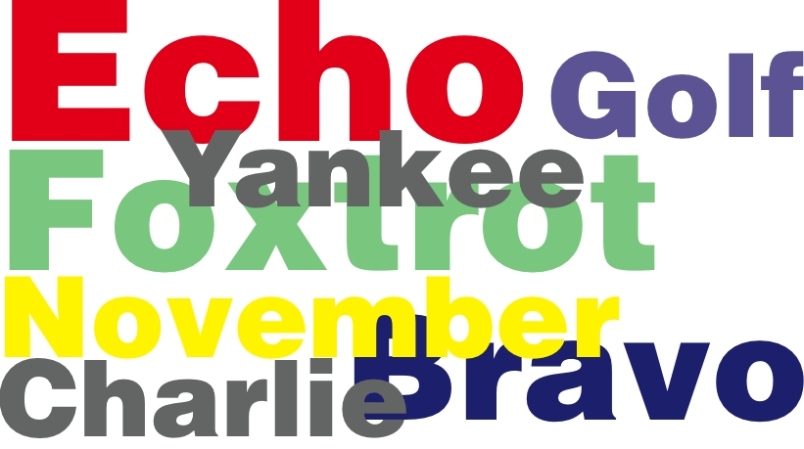
I see this screwed-up so often. Some attempts are quite creative. Amusing, if not hilarious. “Bob” for B is real common. So is “Dog” for D. But, I’ve heard “Banana” and “Dillybar”, and I’ve heard “Limmo” for L, “Monica” for M, and more “Nancy” than I can count. Then there’s “Sylvester-as-in-Stallone”, “Tattoo”, and “Ugly”. Here are the right phonetic alphabet radio calls (worldwide):

Note: Phonetic alphabet pronunciations vary in regions. These are the universal ones that international transportation uses.

A — Alpha

B — Bravo

C — Charlie

D — Delta

E — Echo

F — Fox or Foxtrot

G — Golf

H — Hotel

I — India

J — Juliet

K — Kilo

L — Lima

M — Mike

N — November (not Nancy)

O — Oscar (not October)

P — Papa (not Penny or Pork Chop)

Q — Quebec

R — Romeo

S — Sierra

T — Tango

U — Uniform

V — Victor

W — Whisky

X — X-ray

Y — Yankee

Z — Zulu

The Rank System

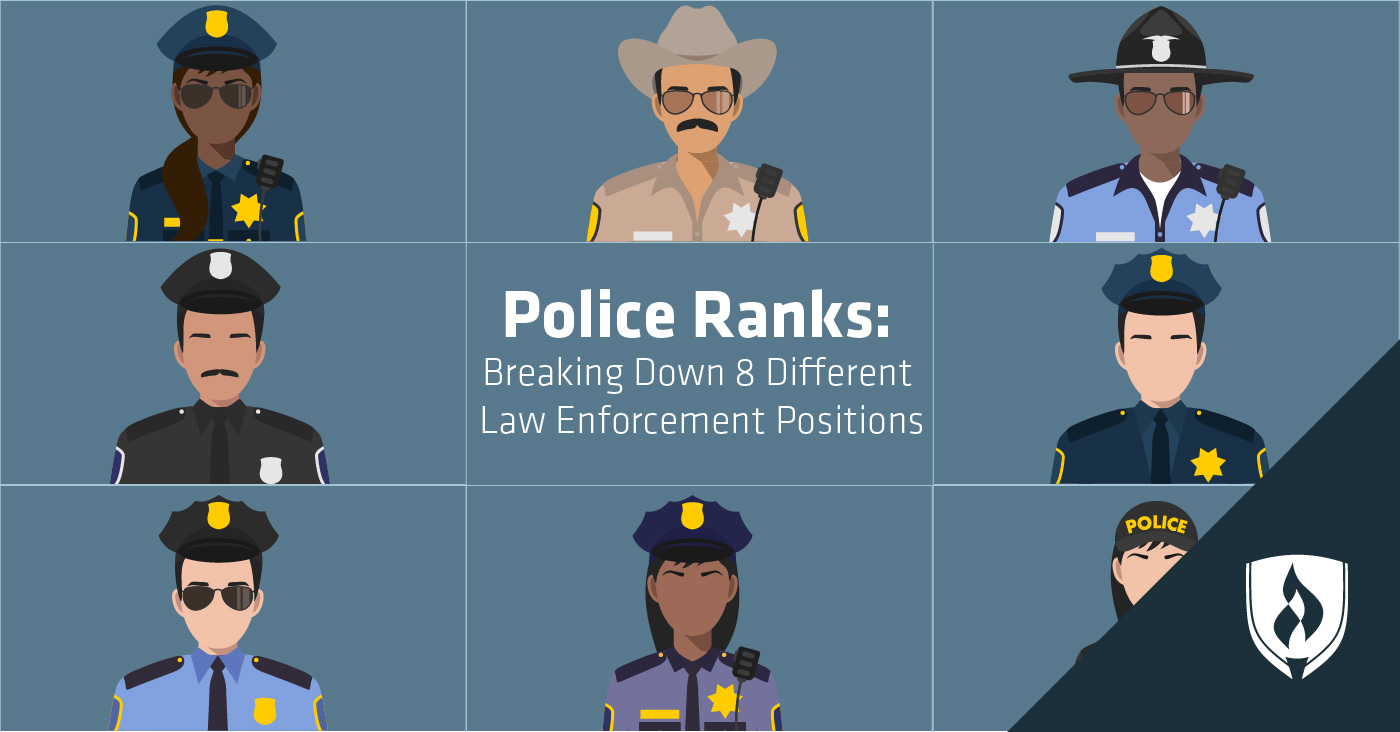
There are two main ranking systems in the western police world. One is the constabulary like used in British Commonwealth countries. The other is military which is common in U.S. jurisdictions. Both are top-down rankings where they start with an omniscient power that oversees minions. Here are typical organizational charts for the two structures.

Constabulary Commissioned Officers

Commissioner

Deputy and Assistant Commissioners

Superintendents

Inspectors

Constabulary Non-Commission Officers

Staff Sergeants

Sergeants

Corporals

Constables

Military-Style Police Officers

Chiefs

Deputy Chiefs

Colonels

Majors

Captains

Lieutenants

Sheriffs

Military-Style Police Rank & File

Sergeant

Detective Sergeant

Detective

Deputy

Officer

General Cop Speak

I see a lot of crime books where the protagonist is a high ranking police officer like a DCI (Detective Chief Inspector) or a Precinct Captain. These sound good and powerful, but the reality in police investigations is the grunts do most of the work. Detectives, Beat-Officers, and Constables go out there and arrest suspects, interrogate them, and then get their butt roasted in court.

Commissioners are politicians and serve at the pleasure of their master. Superintendents, Sheriffs, and Inspectors are budget-driven paper-pushers. Most Staff Sergeants and Captains spend more time on HR matters than criminal overseeing. It’s the Lieutenants, Sergeants, and Corporals that supervise the police workhorses—the deputies, constables, and officers.

I could go on about cop-speak like surveillance terms. “R-Bender”. “Stale Green”. “Crowing”. “Taking Heat”. Or, administrative stuff that takes up most of the time. “Per-Form”. “C-264B”. And, “Leave Pass”.

Cop Speak Resource

I’m steering you to B. Adam Richardson. Adam is a still-serving detective with a Southern California Police Department. Adam can’t reveal his true name or actual location because of security reasons, but Adam runs two Facebook sites dedicated to helping crime writers get it right. Here’s the link to Writers Detective and his FB rules:

https://www.facebook.com/groups/WRITERSDETECTIVE/

“There has been some discussion in this group about what the rules are. Since my day job is all about enforcing rules, I wanted to let this group grow on its own and develop its own feel without me having to create rules.

I have seen other groups that are nothing more than mean/cynical replies to honest questions and spammy book promos. I hate those.

For the most part, I have been quite happy that this has grown into a very supportive group. I want our atmosphere of support and the celebrating of writing milestones to continue.

Although I am the one that started this group, I don’t own this group. You do. The intended purpose of this group is for writers like you to find the law enforcement related answers you’re looking for. I try my best to keep up with the Q&A, but I can’t answer every question. The beauty of this group is leveraging the collective experience and/or research of the membership. So, allow me to clear something up:

Anyone can post a question or an answer in this group.

We have a wealth of collective knowledge and experience in here. I know our members include a former CSI tech, a criminal defense attorney, a former MP, a former Coroner, and a ton of crime-fiction writers with solid research into serial killers, forensic science, and criminal psychology. That’s just the members I know about and that doesn’t even include the cops in the group. You do not need to be a cop to answer questions in here.

Yes, the quality of the answers will vary. I want to recognize that everyone offering an answer is doing so to help a fellow writer and spark discussion.

Many have come to this group seeking answers from a cop’s perspective and we’ll continue to offer that. I fully admit that answers coming from a cop’s perspective aren’t always right either. (Just ask a defense attorney.)

Often, the reality of how things play out on the street is very different from how textbooks and courtroom testimony portray things. We (the cops in this group) do try our best to give you the truth of what we’ve seen and experienced. I just ask that you recognize that our answers may differ from what research into a subject indicates. Research, textbooks, and courtroom testimony often paint things in black and white, while reality is a blur of varying shades of gray. Recognizing these differences are key to identifying and capturing realism for your own stories.

Sure, there may be answers posted that are solely based upon what someone saw in an episode of Miami Vice or CSI…but I’d prefer to not censor answers, especially when the poster’s intention was to be helpful. It is up to you to figure out what is relevant, factual, and useful for your own writing projects.

I propose we start using our Like buttons to act like a Reddit/Quora style “up-vote” on best answers to a particular question.

There may be some debate over answers, but that is to be expected. We can all learn from civil discussions about the issues at hand. These debates happen in criminal justice all the time; it’s the very basis of our judicial process.   ~ Adam”

Adam R. also has a FB site at Writers Detective Bureau. Check out this link:

https://www.facebook.com/writersdetective/

So, that’s it for How To Speak Cop — Version 1.0. Anyone interested in a more detailed post… Version 2.0 ?

— — —

Garry Rodgers is a retired homicide detective with a second career as a forensic coroner. Now, Garry has re-invented himself as a writer with a based-on-true-crime series on cases he was involved in. Check out Garry Rodgers on his Amazon Author Page, Twitter, Facebook, and his website at DyingWords.

Garry’s newest book in the true crime series, On The Floor, will be out in mid-August 2020.

Firehouse Slang

By John Gilstrap

I might have mentioned a few dozen times in this space that I spent 15 years in the fire and rescue service, at a volunteer department that ran over 14,000 calls per year. My name is on thousands of those reports. I’ve been burned, shot at, and threatened by one very large knife. I ran two plane crashes, uncountable car crashes, delivered two babies and performed CPR hundreds of times. In the end, I saved more lives than I lost, and I never got paid a dime for any of it. That’s a point of pride to me.

Every line of work has its own vocabulary–rhetorical shortcuts that relay information that others might not understand, but mean very specific things to insiders. I thought I’d take you inside the firehouse for a peek at our peculiar dictionary. (Warning: Some of what follows is . . . insensitive. If you’ve never been an emergency responder, it might be hard to understand, but trust me when I say it is entirely possible to be compassionate and insensitive at the same time. Sometimes, the humor is the only good part of a really crappy day.)

Now, in no particular order . . .

FNG: The full pronunciation of effing new guy, aka rookie. Also known as a red hat, because in my jurisdiction, FNGs wore red helmets on the fireground. I wanted them to wear cowbells, but they refused. We also called them wheel chocks, even though real wheel chocks always knew what they were supposed to do, and they never did stupid stuff.

Blue flares: There is no such thing as a blue flare, but FNGs didn’t know that. It was always entertaining to send them over to the farthest-away fire station with orders to bring back a box of blue flares. Of course, when they arrived at the target station, those folks would have just given them away to another station, miles away of course. That fun could go on for hours. It was like a cat chasing a laser pointer. Smoke shifters (either left-handed or right-handed) could be used in lieu of blue flares.

Box o’ Rocks: The intellectual assessment of someone who, say, didn’t catch on to the blue flares gambit after two or three stations.

Ticks: The name paid firefighters used for volunteers, purportedly because we were annoying and always hanging around. The fact that said volunteers built the firehouse and purchased all of the rolling stock they rode on and furniture they sat in often went unacknowledged.

Squirrel: This one had at least two meanings. One was another derogatory term for volunteers, but another dealt with enthusiasm. To “squirrel a call” meant either to drive to the scene in your POV (privately owned vehicle) or to respond from the firehouse with a spare piece of fire apparatus.

Paid maids: In the early days, this was the volunteers’ term for paid personnel. Among their daily tasks was to clean the kitchen and the bathrooms. (No, the two sides of the house did not always get along.)

Big eye: Have you ever encountered a challenge that was so huge and so out of the ordinary that you kind of vapor locked and didn’t know what to do first? That’s the big eye. When the world is on fire or people are screaming for assistance, it’s a bad thing to get. FNGs get the big eye a LOT.

Fireground: The general term for the scene of any emergency involving fire and rescue apparatus. In my jurisdiction, the senior OIC (officer in charge) of the First due (see below) wagon (see below) was in overall charge of the fireground, while the senior aide (see below) on the ambulance was in charge of patient care.

OIC: Translates to officer in charge, but is not necessarily tied to rank. In my jurisdiction, the OIC of any piece of apparatus was the person in the shotgun seat (right-hand front seat). If, for example, a captain was driving, but a sergeant was in the seat, the sergeant would be in charge of the fireground. It was a great way to train up-and-coming officers.

Fireground Commander: For larger incidents, command would be passed to a chief officer. Chiefs were the senior officer of their respective fire departments, but they rarely commanded individual pieces of apparatus. Chiefs had their own buggies but rarely wrested command from the first due OIC. It was, however, customary for the OIC to offer command to the chief, who then decided whether or not to take it. To be relieved without first offering would be a slap in the face.

Bugles: Fire officer rank insignia. Lieutenants wear one bugle on their collar points. Captains wear two . . . chiefs of departments wear five.

Wagon: This has changed in many jurisdictions, but where I ran, every fire station housed two pumpers (what you think of when you think “firetruck”). The first one out the door on a call was the wagon, and the second was the engine. Together, both the wagon and engine were called an engine company. Thus, Wagon 14 or Engine 14 were individual vehicles. Engine Company 14 was two vehicles, and when they were on the road, it was time for the fire to be very scared.

Aide: The OIC of the ambulance.

First due: The area to which a department or a specialty vehicle (ladder truck, hazmat truck, etc.) is dispatched first. The next closest is second due, and so forth. In my jurisdiction, for a commercial alarm, the dispatch would sound something like this: “Box 1404 for the structure fire. Engine companies 14,13 and 2, Trucks 14 and 13, Squad 2, Ambulance 14.” The first number of the box number (in this case 14) indicates who’s first due, the second part is a rough idea of how far the call is from the station. (Fire station 14 sits in the center of box 1400. Ditto every other fire station.)

Smells and bells: I can’t begin to imagine the number of dispatches that started with “odor of smoke” or “fire alarm sounding.” These calls got the full boat (full alarm assignment–see below), rousted a bunch of people out of bed, and left the beleaguered first due engine company officer with a complex report to fill out.

Working fire (or a worker): A real fire with real flames. The opposite of smells and bells.

Second alarm (or third . . .): Different types of structures have different alarm assignments. In my jurisdiction, a single family house fire had an alarm assignment of two engine companies, a truck (ladder truck), a heavy squad (think rolling tool box with lots of cool toys) and an ambulance. At the top of the heap, the hospital had an alarm assignment of four engine companies, two trucks, two squads and (I think) three ambulances. When the fireground commander strikes a second alarm on a fire, he’s ordering up a duplication of the first alarm. Remember this when you hear about a four-alarm fire.

Special alarm: Say the fireground commander only wants one more engine company or one more truck. That would be a special alarm, not to be confused with an additional alarm (see above).

Scratch: I think this one’s unique to volunteer departments. A piece of apparatus scratches when it fails to mark responding within three minutes after dispatch. When a house scratches, the next due piece of apparatus will be dispatched in its place. There is no greater humiliation.

Second (or third, or fourth) call: These happen quite a lot during weather events, when everyone is running their wheels off. Let’s say Wagon and Ambulance 14 are already running a call, when the station gets hit again for an incident. Dispatch knows that Engine 14 and Ambulance 14-2 are in the station, but they have no way of knowing if they are manned. So the dispatch would sound like, “Box 1425 for the auto accident. Engine Company 14 (your second call), Ambulance 14 (your second call), Engine Company 2, Ambulance 2.” Whoever got out first got the call.

To cut numbers: Occasionally, someone would walk into the station with an injury or illness, or we would wander up on something while in service (see below). In this case, because the dispatcher has no idea that there’s an incident, we’d radio in and ask them to “cut numbers” on a new incident, and we’d give them the address. This would make the incident official and take the appropriate vehicle out of service.

In service/out of service. This is counter-intuitive to a lot of people. A piece of apparatus is in service when it is available for a call. When on a call (not available for another call) it is out of service. It was common, when we were assisting an ambulance with a medical call, for the dispatcher to ask us if we could “go in service for a call.” If we were, then there no second calls would be needed.

Bidding a call: Say that Ambulance 14 is just clearing the hospital (which is in Station 13’s first due) after dropping off a patient when a call comes in for, say, an auto accident in Box 1313. If Ambulance 14’s OIC thinks he’s closer, he can bid the call. It would sound something like, “Ambulance 14, Dispatch. We’re closer. Put Ambulance 13 in service.” It’s kind of humiliating for Station 13. In the old days, on rare occasions, there were bidding wars, where neither vehicle agreed to go in service, so there’d be a race to the scene. Whoever got there first, got the call.

Tapped (or tapped out): To be dispatched. “We got tapped last night for a wreck on Walker Road.” “They tapped us out for worker at the Bates Motel.”

Putting a good stop: When a crew extinguishes a fire quickly and with minimum damage, they’ve put a good stop on the fire.

Cellar saver: Exactly the opposite of a good stop. When the roof ends up in the basement (i.e., the structure is a total loss), the fireground commander is credited with saving the cellar. That’s . . . bad.

Snot-slinger: A big fire. Aka, the big one.

Teeth-hair-and-eyeball: The kind of incident where the most useful pieces of equipment are body bags and tweezers.

DRT: Dead right there. (A play on DOA.)

Federal Q: That wonderful siren on the front bumper that sounds like an air raid siren on speed. Melting the Q meant to have it spun up really high. Combined with the air horn in rush hour, melting the Q created lanes out of stopped traffic where cars had nowhere to go. I had a driver for years who would melt the Q at oh-dark-early, shouting his mantra out the window: “If I gotta be up, you gotta be up, too!”

I’m sure there are many I’ve forgotten, but this is a good start. So, what about you, TKZers? Y’all come from interesting backgrounds. Give us a peek into your secret dictionary.

=

One last thing. If you’re a teacher or if you’re with a book club, and you’d like me to Zoom with you, drop me an email at john@johngilstrap.com


Is It Okay To Quit?

“You get to a point where you get to the edges of a room, and you can go back and go where you’ve been and basically recycle stuff.” — Stephen King

By PJ Parrish

I knew something was up when I started looking forward to pulling weeds.

Every morning, I’d check the Tallahassee weather and plan my day. First, I’d survey the front and back yards to see what needed attention. Then I’d dead-head the rose bushes. The azaleas needed pruning, so that took a good hour. Eventually came the highlight of my day — pulling weeds. A blissful hour of mindless productivity. As the sun dipped lower, it was time to head out to the nursery because you could never have enough mulch or Miracle-Gro tomato food.

By the time I got back, there was just enough time to shower, make a vodka gimlet and take it outside where I’d sit in a lawn chair while I hose-watered the lawn.

I was as happy as a little garden slug — except for a gnawing guilt that seemed to abate as the vodka glass emptied only to return as I went back indoors. The guilt, of course, came because I wasn’t writing.

I passed the whole of last winter this way. My garden flourished as my novel lay fallow in the laptop. And then, one morning, it hit me: I didn’t want to write anymore.

It was gone. The urge, the need, the pleasure. It was all gone. At first, I was upset. For two reasons. First, I write with my sister and thus had a contract, a commitment, to our partnership. And second, well, that’s complicated. So many folks want to be published writers, and I have known that success. It almost felt ungrateful to stop.

But here’s the truth. I want to quit. I have quit. I have not worked on my novel for months now, and after the initial bad feelings, I’m finding I’m relieved.  I’m relieved that I don’t have to worry about getting the book published, be it by traditional means or the hard slog of self-publishing. Relieved that I don’t have to climb on the self-promotion hamster wheel.  Relieved that I won’t have to feel the sting of disappointment if it doesn’t sell or get well-reviewed. But mostly, I feel relieved that I can channel my energy, creativity, time and love into other things.

I’m coming up on my 70th birthday soon. That doesn’t bother me that much, because outside of aching knees and bad eyes, I’ve got good health. We’ve got some money in the bank and not many bills. I have family and friends to sustain me. I have two great dogs to take me on walks.

Phillip Roth said he was done when he was 79 and 27 novels deep. Alice Munro did so at 81, a few months before winning a Nobel for a career that includes 14 short-story collections. Munro told a reporter, “I don’t have the energy anymore.” Roth left a Post-it on his computer reading, “The struggle with writing is over.”

I read up on Munro while writing this post. She gave a fascinating interview about her decision where she said she wanted to rejoin the world. “I think you do get to a stage where you sort of think about your life in a different way,” she said. “And perhaps, when you’re my age, you don’t wish to be alone as much as a writer has to be. It’s like, at the wrong end of life, sort of becoming very sociable.”

I get that. My time now will be given to my real people, not my imaginary ones.

Will I change my mind? Perhaps. Things can happen in your life, things you can’t anticipate, that can alter your universe — and it can happen in a split second.

Stephen King, in 1999, was hit by a car while walking down a road near his Maine home. He almost died. He described the pain of recovery as unbearable.  His wife, Tabitha, knew he was drowning and set up a writing nook downstairs in their house. King didn’t want to try another novel so he decided to write about writing. A year later, he produced On Writing. In it, he writes with brutal honesty about his struggle with drugs and alcohol and how hard it was to recover his love of writing again. He went on to finish a script for the miniseries Rose Red, calling it a therapy that was more effective than any drug the doctors gave him. But once the script was finished, he decided to quit.

“I don’t want to finish up like Harold Robbins,” he said, referring to the pulp novelist who started with well-reviewed works such as A Stone for Danny Fisher, later suffered a damaging stroke and ended his career in steep decline. “That’s my nightmare.”

King found his way back. With last year’s novel The Institute, he’s closing in on 100 novels. He still needs to write. I don’t. At least not now.

What about you guys? Some of you have sturdy careers and a nice back list. Some of you are still working on your first book. Most of you are probably somewhere in between, maybe published but not as successful as you’d like, maybe finished a couple manuscripts and still looking for that one editor who says yes.

You might have considered giving up. How do you know if it’s time to quit?

Well, if you want to read a funny but very truthful take on that question, click here and read Chuck Wendig on the subject.

If you’re thinking of quitting, maybe I offer some things to chew on before you do. Here are some signs, in my opinion, that you SHOULDN’T quit for good.

You’ve got some life issues that are sapping your energy. A divorce? A family health problem? Financial issues that might mean you have to focus harder on your day job? That’s okay. Take some time off and deal with whatever’s distracting you. Work the problem. Then, when the clouds clear, you’ll might find your creative juice coming back. Don’t let anyone try to tell you that you MUST WRITE EVERY DAY.  If something is off in your life, you might need to step away.  Writing is like exercising. Yeah, you should do it every day if you can. But if you’ve got a broken foot, stop and heal first.

Your story is going nowhere and you can’t see a way out.  All writers stall. All writers paint themselves into corners. But some folks stay with a story out of pure stubbornness. (I know this twist will work. I just gotta find a way!) Find a reliable beta reader who will TELL YOU THE TRUTH. They won’t be able to tell you how to fix it (and shouldn’t; that’s your job). But talking about the log-jam will help clear your brain.

You’re writing the wrong book. Here’s a dirty secret: Almost every successful writer has abandoned a book in mid-stream. Quitting is not the sign of a loser; it’s the sign of a professional. You have to face the fact that not every idea is a good one. Let it go. Sometimes, you have to give up on story that’s not working so a new story can move into your brain. I worked on a series book for four months (and hated every moment of it) until I finally tossed it out. Soon after, discouraged and depressed about the book, I went on a scheduled vacation to Paris. A week later, I had an idea for a stand-alone that got me so excited I finished the thing in three months. (click here to see The Killing Song). 

Your character(s) bore you. This sounds like a no-brainer, but sometimes, we grab onto a character and gnaw him or her to death. We think he or she sounds fascinating but there’s something fundamentally flawed about them. And I don’t mean in a good, deeply human interesting way, but in a death-to-the-story boring way. Unless you are foaming at the mouth to meet up with your character every day, ready to follow their every move and take down their every word, how can you produce a good story? You have to be in love with your characters, even the black hat ones. If you don’t want to spend time with them, how do you expect a reader to want to?

You’re tired. We all are right now. The forced isolation of the virus, the political climate, the constant slow simmer of dread. Understand that the fatigue you’re feeling might have nothing to do with your book. It’s exterior to that but it’s deep and it’s not going away any time soon. I can’t tell you how to deal with this black cloud; we’re all finding our coping mechanisms. (Mine is a hard break from news, exercise, walks with my dogs.). Get outside. Reconnect with old friends but call, don’t email or text.

Okay, now here are some signs that you should quit, in my humble experience:

You’re not having fun anymore. 

That’s it. There’s only one good reason to quit. The whole process of writing has become something of a chore, a duty rather than a delight. Again, I don’t mean to sound like I’m whining here. Or that I am dismissing all the years of wonderful writing time I’ve had. Or, as I said, that I am ungrateful for the success that has come my way.  I have been blessed; I’ve been lucky. I had a helluva a run for twenty years in the mystery biz, and seven years in romance before that. But I’ll let Chuck Wendig speak for me:

You’re not having fun. This one, too, is tricky, because writing isn’t always an act of eating cotton candy while happy puppies squirm at your feet. Some days are purely reserved for shoveling earth. Some days are like pulling bad teeth. That’s normal. It isn’t always fun. Hell, it isn’t often fun. But there’s also an evaluation you might make — again, after some time with it — where you realize, you’re just not enjoying this. It holds no surprises for you. It feels rote and routine, and if it feels that way to you, it may very well feel that way to a reader. Once again, a strategic retreat is called upon.

With our most recent book, last year’s The Damage Done, I think we left our hero Louis Kincaid in a good place. The circle, for him, feels complete. We done him good. I don’t want to start phoning it in. So I am retreating. Into life, friends, and especially reading, where I am ready to get acquainted with the dazzling spectrum of new writers who are infusing our genre.

I am putting down the pen. Except for this blog and you all, which I have grown to love. I might pick up the pen again. I probably will. But now now, this feels right. Thanks for listening, friends.


“To-may-to” or “To-mah-to”?

Photo by Tincho Franco from unsplash.com

A brain worm has occupied my cerebrum over the past couple of months. Its conception resulted from the death of a dear friend who was more than a decade older than I. His wife called to inform me of his passing and then proceeded to give me too much information as to what had occurred. They had apparently engaged in a bit of strenuous activity during the night and in the morning my friend failed to wake up. She felt that she was somewhat at fault. I assured her (while struggling to keep the smile out of my voice) that, even if she had been the cause of his departure, I was sure her late husband would have preferred that sendoff to, say, a fiery car crash (which is the comparison Richard Pryor made when his father passed under similar circumstances). 

My friend’s wife then asked me for some advice about his obituary. Her issue was whether she should say that my friend passed “suddenly” or “unexpectedly.” She was worried that someone might think that he had committed suicide and wanted to be sure she used the right word. My off-the-cuff response was that she should avoid using either and just list his date of birth as “sunrise” and his date of passing as “sunset.” She liked that and told me that her husband used to tell her that I always knew just what to say. 

I actually dodged a bullet. I was unsure about the answer to her question. I subsequently started to obsess over what the difference may or may not be when one uses either “suddenly” or “unexpectedly,” particularly when describing the occasion of a death. They seem to be used interchangeably, particularly when the individual being memorialized has voluntarily gone ahead, as it were. 

I’ve done a couple of deep research dives into the topic and found opinions to be all over the place. The two words appear to mean the same thing at times, though not always. My favorite passage in an English language novel, that being the conversation between Bill and Mike in The Sun Also Rises by Ernest Hemingway, illustrates this. Mike, in response to a question from Bill, tells Bill that he went bankrupt “gradually, and then suddenly.” If Mike had used the word “unexpectedly” instead of “suddenly” it would have been wrong since if one starts to go bankrupt, the completion of the process is not unexpected, though it can happen suddenly. It’s different, however, in many other cases generally — an earthquake or tornado, to name but two — and in obituaries involving someone who takes their own life. It seems as if either adverb could appropriately be used.

I’ll apologize for being morbid, but when you are reading an obituary and see that someone died “unexpectedly” or “suddenly” do you assume that they passed of their own volition? Is one word more appropriate than the other in those cases?  Or do they usually mean the same thing? Is it a case of “to-may-to” vs. “to-mah-to”? You don’t have to justify your answer though I am sure the reasons one way or the other would certainly be interesting. 

Thank you. Be well, happy, and good to yourself. Remember the oxygen mask rule: put yours on first and then assist others. 

Photo by Pablo Heimplatz from unsplash.com

But wait! There’s more. I will be absent on Saturday, August 8, as I am relinquishing this space to the always quietly gracious Joe Moore, who will reflect on TKZ’s very special anniversary which happens to land on that date. I will also be gone on Saturday, August 22, when Lisa Black, one my favorite authors and people (as we all know, that isn’t always the same thing!), will be discussing a topic which provides the driving force behind Every Kind of Wicked, which is Book Six in her Gardiner and Renner series and which drops on August 25.  I’ll be back on September 5 and happy to see you.


Reader Friday: Writing From Emotions

Sue Grafton, Wikimedia Commons (Mark Coggins)

Before Sue Grafton hit with her alphabet series, she went through a bitter divorce. In an interview she said, “I used to lie in bed at night just thinking of ways to do him in. And I came up with some doozies. But I knew I was going to get caught at it because I credit the police with quite a bit of intelligence. And I knew I’d flub it. So I thought, why don’t I put this plot between the covers of a book and get paid for it? And that launched this whole new career.”

Have you ever written anything to more positively channel some of your, er, more antisocial emotions?

First Page Critique – Donny Malone

Photo credit: Thomas Wolf, Wikimedia CC

By Debbie Burke

@burke_writer


Please welcome today’s Brave Author who’s submitted the first page of a historical Crime Novel. Give it a read then we’ll discuss it.  

 ~~~

Donny Malone

Larry began eating at Vicenzo’s after his last picture went bust and his fourth wife fled with the remaining cash. It was a cheap breakfast joint off Santa Monica’s Broadway and Sixteenth.  A SWELL LITTLE JOINT, he wrote Howard Miller in a telegram arranging the meeting.

Miller was one of those full-time writers on the payroll at Paramount. Swell kid. Owed Larry too. Back in seventeen, Larry accepted Miller’s romance script titled: The Loving Call. Anyway, cut a long story short, the picture made money. Big money. Made Howard Miller a star. Or as much a star as its possible to be for a writer. Still, he had the manner of a kid from the Bronx, old Howie. He’d still roll up his sleeves when the L.A. sun hit noon. He’d still greet a guy with a firm, two-handed grip, and look any maître d’ in the eye without flinching. Howard weren’t into none of that small talk baloney neither. Soon as Vicenzo filled the coffees, he got down to talking shop.

“So Larry,” he asked. “How’s the kid?”

He was asking about Malone.

“Donny’s swell. Donny’s Donny.”

“Cos last I heard, Malone burnt his bridge back to vaudeville.”

“Donny’s done with that vaudeville hooey. Gets into L.A. tomorrow. Donny’s big time.”

“I hope you’re right.” Howard sighed, shaking his head. He dropped two sugar cubes into his coffee. Gave it a stir with his finger. “Since Malone gets his kicks making Mackenzie Campbell out like a chump.”

“Mack’s done. Donny’s contract was up.”

“I’m talking about Mack’s wife.”

“They were done.”

“Done, Larry? You think Campbell – Campbell – is letting Malone cross the country with that broad?”

Larry didn’t know what Mack had planned. Never thought to wonder. All he knew was Donny Malone didn’t belong in no dying nineteenth-century circus act. This was a kid who could jump from a railway bridge onto a series of fast-moving carriages. Who would do it in a hot minute for a twenty-cent bet. A kid with the acrobatics of Buster Keaton. The dashing victory-smile of Fairbanks. And Larry wasted no time telling him. Put on his Hollywood voice and told the kid straight. Told him, ‘Donny. Baby. You ain’t signing with that bum another season.’

“So what he say?” Howard asked.

~~~

Let’s start with the title. On its own, Donny Malone isn’t intriguing. I immediately thought of the 1997 film Donnie Brasco with Johnny Depp and Al Pacino. Unless a person is famous or notorious, a name doesn’t generally make a good title because the reader doesn’t yet understand the reference. A better title could hint at the bygone era of Hollywood that might attract readers who enjoy the noir genre.

This first page does a nice job echoing conventions of pulp fiction and noir. A telegram  sets the time as early to mid-20th century in Santa Monica. The language is sharp, crisp, and slangy, further setting the period tone.
Brave Author introduces Larry who’s down on his luck, reduced to eating at a dive café after suffering professional and personal misfortunes in the Hollywood film industry.

Howard Miller’s character is established with backstory (more on that in a moment) as a successful Paramount screenwriter who is indebted to Larry. The inference is that Larry contacted Howard to call in a favor since Larry’s career is evidently languishing.

The subject of their conversation is an unseen third character, actor Donny Malone, followed quickly by the introduction of two more unseen characters: Mackenzie Campbell and Campbell’s wife with whom Donny has or had a relationship. Campbell is apparently not someone to mess with, raising a possible threat to Donny. The reference to an expired contract indicates Donny and Campbell once had legal obligations to each other but that’s now over.

The potential for conflict is present, although the reader isn’t sure yet what the conflict is. For the reader to fully engage with the story, s/he needs to understand the relationships among characters and what their opposing goals or agendas are. Suggest you fill in those aspects quickly in the pages that follow. 

The lead-off sounds promising but I see four issues that need work.

First problem: What is Larry’s profession? He’s in the Hollywood film business but in what capacity—producer, director, talent agent, actor, writer? The lack of that knowledge makes it difficult to pin down what he wants and what he hopes to accomplish by meeting Howard. It sounds as if Larry might represent Donny as his talent agent but that’s not clear.

The character sketch of Howard is well done. Describing him as a “swell kid” reinforces appropriate slang of the era. “Back in seventeen” narrows down the time closer to the 1920s.

However, it also highlights the second problem: most of that paragraph is an information dump about Howard. After the line “Still, he had the manner of a kid from the Bronx, old Howie” I suggest you cut the rest of the paragraph and save it for later in the story.

The following lines confused me:

Soon as Vicenzo filled the coffees, he [which he? Vincenzo or Howard] got down to talking shop. 

“So Larry,” he [again, which he? Vincenzo or Howard] asked. “How’s the kid?” 

Easy fix: Soon as Vicenzo filled the coffees, Howard got down to talking shop. 

“So, [need comma] Larry,” he asked.

The mention of sugar cubes and Howard stirring coffee with his finger were wonderful little details that again reinforce the era. Fun fact: restaurants replaced sugar cubes with packets after World War II.

The third problem is yet another info dump, this time about Donny Malone.
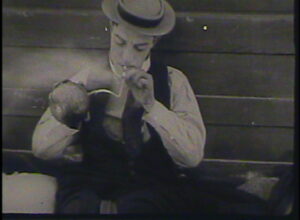
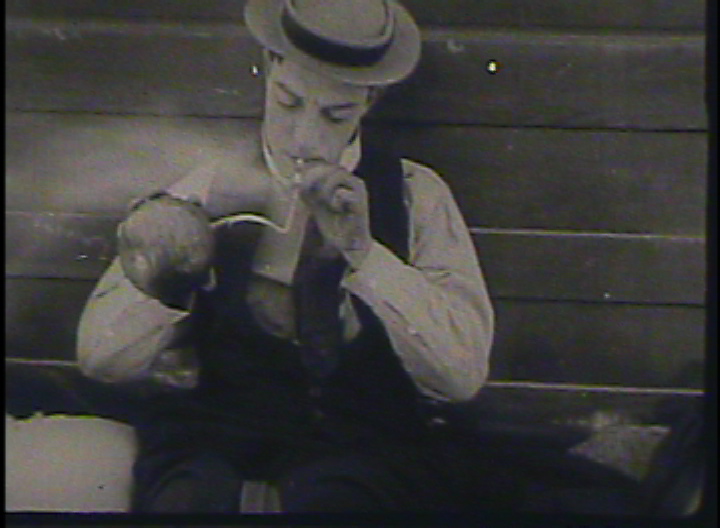
Buster Keaton, photo credit: Wikimedia Commons

“All he knew was Donny Malone didn’t belong in no dying nineteenth-century circus act. This was a kid who could jump from a railway bridge onto a series of fast-moving carriages. Who would do it in a hot minute for a twenty-cent bet. A kid with the acrobatics of Buster Keaton. The dashing victory-smile of Fairbanks. And Larry wasted no time telling him. Put on his Hollywood voice and told the kid straight. Told him, ‘Donny. Baby. You ain’t signing with that bum another season.’”

While the description of Donny is compelling and shows he has great star power, it’s still an info dump.

Don’t feel bad, Brave Author. We all struggle with finding the right balance between telling just enough background information to orient the reader and over-telling that halts the story’s forward movement.

Also, if this whole paragraph is Larry’s thoughts, the transition back to the conversation with Howard is a bit bumpy. ‘Donny. Baby. You ain’t signing with that bum another season’. Because of the single quotes around these sentences, I had to reread to determine if Larry is reviewing the conversation in his head or if he’s telling Howard about it.

In the passage below, Larry and Howard are already talking about Donny:

“Donny’s swell. Donny’s Donny.” 

“Cos last I heard, Malone burnt his bridge back to vaudeville.”

“Donny’s done with that vaudeville hooey. Gets into L.A. tomorrow. Donny’s big time.”

“I hope you’re right.” Howard sighed, shaking his head. He dropped two sugar cubes into his coffee. Gave it a stir with his finger. “Since Malone gets his kicks making Mackenzie Campbell out like a chump.”

“Mack’s done. Donny’s contract was up.”

“I’m talking about Mack’s wife.”

“They were done.”

“Done, Larry? You think Campbell – Campbell – is letting Malone cross the country with that broad?”

Why not continue the conversation and incorporate Larry’s thoughts about Donny into dialogue?

Here’s a different way to convey the info:

Larry didn’t know what Mack had planned. Never thought to wonder.

One side of Howard’s mouth pulled down, unconvinced.

Larry leaned close and put on his Hollywood voice. “Listen, Howard, for a twenty-cent bet, this kid will jump from a railway bridge onto a fast-moving train. He’s every bit as good an acrobat as Buster Keaton. Plus, he’s got that Fairbanks smile. I didn’t waste no time telling him straight. ‘Donny. Baby,’ I says, ‘you ain’t signing with that Campbell bum another season.’”

The reader still doesn’t know exactly what’s happening or what conflicting agendas are in play among Larry, Howard, Donny, Campbell, and Campbell’s wife. But enough hints have been provided to promise the reader that fireworks are ahead.

The fourth problem is point of view. It feels off. Sometimes the voice sounds as if an unseen narrator is telling the reader about Larry rather than Larry thinking to himself.

Vintage films often used voice-over narration to explain context and introduce characters. A prime example is the 1944 classic Laura where Clifton Webb talks to the audience about her murder. If this is the effect Brave Author is striving for, it doesn’t quite succeed.

Currently, readers favor deep point of view, inside the main character’s skin, thinking his thoughts, experiencing his sensations and physical reactions. Yet that doesn’t feel quite right for this historical piece.

So I confess I’m stumped how to handle POV except to suggest that Brave Author study classics written during this time period to pinpoint how those authors treated POV to achieve their tone. If TKZers have other ideas, please chime in.

There are minor problems with word repetitions and typos:

“Or as much a star as it[‘]s possible to be for a writer.” I smiled at the humorous observation that the writer is definitely at the bottom of the movie industry food chain.

The word “swell” is used three times on the first page. If “swell” is a verbal tic Larry falls back on when he’s nervous, three times might be okay but more than that may wear thin with readers. Perhaps change one to a similar slang term for the era, e.g. Vincenzo’s is the bee’s knees. Same suggestion applies to “joint,” used twice in the first paragraph. And “still,” used three times in the second paragraph.

The last line So what he say? might be slang but could also be a typo. So what‘d he say? sounds more natural. 

Overall, this page is well written and captures the time, speech patterns, and period slang in a style that’s reminiscent of noir pulp fiction. The reader doesn’t yet understand the story problem or what’s at stake. However, the historic setting and the voice are intriguing enough that I’m willing to read on to discover if Larry is a sour-grapes loser, a hustler seeking a shortcut back into the big time, a determined guy who refuses to give up, or someone else. Knowledge of his profession would help frame his personality.

This promises to be an entertaining trip into the gilded age of Hollywood where treachery lurks beneath the glamorous veneer.

BTW, Jim Bell has discussed pulp fiction and noir here. On Patreon, he offers short stories set immediately after World War II about a studio fixer in the Hollywood film industry. You might check out how our resident expert handles his first pages.

Best of luck to you, Brave Author. You’re off to a good start.

~~~

TKZers: What do you think of Donny Malone? What suggestions can you offer our Brave Author? How would you handle POV? 

~~~
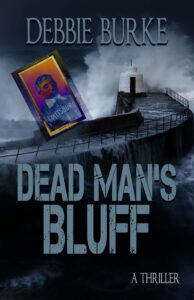


Debbie Burke’s new thriller, Dead Man’s Bluff, is on sale at the introductory price of only $.99. Please check out the link here.