How To Craft An Elevator Pitch That Sells

It’s my distinct pleasure to introduce Ruth Harris to TKZ, with an excellent post about how to craft an elevator pitch that sells. Take it away, Ruth!

Is this a dream? Or will it be a nightmare?

There you are—

  • At a conference in line for coffee. You turn around. The person behind you is Big Shot Editor at publishing collosus, Simon, Macmillan & Random Penguin.
  • Waiting for a taxi in the rain when an empty cab/your Uber pulls up. The woman next to you is publishing’s hottest agent. She is drenched and on her way to an important meeting. She asks (begs) to share your ride.
  • On a plane and your seat mate is the famous movie producer who’s known for lavishing Big Bucks on hot, new properties.

It’s do or die time.
You have seconds…
Then what?
Do you panic?
Freeze?
Are you tongue tied?
Do you babble?
Or have you prepared—and practiced—a killer elevator pitch?
Are you ready to razzle dazzle em?
And if not, why not?
Because the well-crafted and polished elevator pitch can make the difference between meh and a reaction that will be passionate.

Meaning before details: start with the big picture.

Readers/editors/agents take only a few seconds to make their buy decision.
Authors have the same few seconds to make their sale.
According to molecular biologist John Medina of the University of Washington School of Medicine, the human brain requires meaning before details. When listeners doesn’t understand the basic concept right at the beginning, they have a hard time processing the rest of the information.
Bottom line: explain the hook or basic concept first.
Then go into the details.

Example #1:

“Susie is trying to kill David by putting arsenic in his Red Bull because he cheated on her with her best friend, Elaine, but then Peter and Marie die.”
Uh. What? Who’s doing what to whom and why should anyone care? Big Shot agent yawns, checks the time, can’t wait to get out of elevator.

Instead: A betrayed wife’s murderous vengeance ends in the death of two innocent children.
Big Shot agent’s ears perk up. S/he is dying to know more.
Then come the details.

Example #2:

“Tim has to get to the coal mine before Wyatt so he can warn his brother about the goons hired by the 93-year-old evil mastermind who owns the mine and plans to destroy humanity with nukes.”
Huh? Followed by sound of confused Very Important editor’s brain switching off as s/he thinks about what to have for lunch.

Instead: Estranged brothers must work together to make their way past vicious dogs and armed guards to enter an abandoned mine and save the world from nuclear annihilation.
Very Important editor’s eyes widen. S/he can’t wait to hear what comes next.
Then come the details.

Don’t be afraid to be outrageous.

A famous but obnoxious TV chef hides from a serial killer in a London training school for snooty butlers.
An opposites-attract romance between a plumber’s apprentice and a poet with a stopped-up sink.
A loud-mouthed, crass political pundit gets drunk and comes to in a Buddhist monastery dedicated to serenity and meditation.

Don’t be afraid to refer to other books or authors, hit movies or TV series.

Gone With The Wind—as written by John Le Carré.
Gone With The Wind—as written by Michey Spillane
Gone With The Wind—as written by Barbara Cartland.
James Bond meets Hannibal Lector. They do not discuss fine wine and gourmet menus.
Game of Thrones. In a submarine.

Bottom Line: Sell the sizzle. Not the steak.

It’s old but relevant advice.
Before launching into the details of plot and character, you need to provoke excitement and curiosity first. That’s why the hook or the killer concept is the most important thing you’ll write.
It must be short, simple, clear, memorable, and easily repeatable.

Keep it short.

But my book is a 200K fantasy epic. You expect me to explain it to someone in a short sentence?
Yep.
Two Stanford grad students had an idea they thought would change the world, but they needed money to turn their idea into reality. Here’s their pitch to potential investors. “Organizes the world’s information and makes it universally accessible.”
In 9 simple words and 69 characters (less than the length of a Tweet), that elevator pitch bagged the needed $$$.
The two grad students, Sergey Brin and Larry Page—and their company, Google—were in business.

KISS (Keep It Simple, Stupid).

Shakespeare said it this way: “Brevity is the soul of wit.”
Mies Van Der Rohe’s approached it from another angle: “Less is more.”
So did Albert Einstein who explained his Theory of Relativity in three letters, one number and an equal sign: E = mc².
Steve Jobs heeded their advice to make Apple one of the world’s most successful companies.

  • 1984 won’t be like “1984”
  •  Think Different.
  •  iPhone — “Apple Reinvents the phone”
  •  iPod — “1,000 songs in your pocket.”
  • MacBook Air — “The world’s thinnest notebook.”

Apple website and stores, company execs, sales reps, and press releases are all on board and repeat these simple phrases over and over.
You can follow the same approach by using your hook—short, simple, memorable, repeatable—everywhere.

  • As a headline for your blurb
  • As a tweet or newsletter subject line
  • To introduce yourself to your audience when you start a speech
  • On the home page of your website
  • On your business card
  • On your author page
  • In your author bio
  • As a keyword

How simple? How about this?

The hot new bestselling thriller, The Chain, was launched with a three-word pitch: “Jaws for parents.”
Simple, to the point, easy for everyone to remember, easy for anyone to repeat.

Or this?

English mystery author, Adam Croft, launched his successful self-publishing career with a simple question: “Could you murder your wife to save your daughter?”

Embrace the power of repetition.

Successful politicians—ones who become President—embrace the power of repetition.

  • The New Deal
  • Make America Great Again
  • Nixon’s The One
  • Give Em Hell, Harry
  • I Like Ike
  • All the Way With LBJ
  • Change We Can Believe In

Advertisers have learned the same lesson. They spend millions of dollars to repeat the same simple phrases over and over because they understand the power of repetition.

  • Nike — Just Do It
  • Hallmark – When you care enough to send the very best
  • Burger King – Have it your way.
  • U.S. Marine Corps — Semper Fi
  • Bounty — The Quicker Picker Upper
  • Lay’s — Betcha Can’t Eat Just One
  • Dunkin’ Donuts — America Runs on Dunkin’
  • The New York Times — All the News That’s Fit to Print”

Savvy politicians and advertisers don’t get bored with the repetition. Neither do their audiences. Emulate their success and don’t be afraid of repetition.

Make it memorable—and easily repeatable.

You will be the first to use your elevator pitch—but you do not want to be the last.

  • Agents need a powerful hook to pitch publishers and TV and movie producers.
  • Editors need a potent pitch to persuade their advertising, marketing and sales departments that your book is worth their time and energy.
  • Your fans and readers will use your great hook to spread the word when they recommend your book to friends and family.
  • Bloggers and reviewers will use your words to attract their readers.

10 tips for creating a powerful pitch.

  1. Research the headlines and blurbs of the bestsellers in your genre. What exact words do they use? What exact words occur over and over? Make a list of the ones you find most powerful and exciting, and use them for inspiration.
  2. Read the book descriptions on promo sites and keep the ones you love to refer to when you write your own fab elevator pitch.
  3. Be on the lookout for taglines other authors use to pitch their book in their FaceBook, BookBub, and Amazon ads.
  4. Read your own book—even if it’s for the fiftieth time!—to search for interesting words and turns of phrase. You might come upon a forgotten gem that’s just perfect.
  5. Consult your dead darlings, the ones you killed, (You do save them, don’t you?) for more ideas.
  6. Consider chapter titles that might make a great hook or pitch intro.
  7. Here are 5 suggestions from BookBub about how to write a killer elevator pitch.
  8. David Gaughram offers excellent advice about how to compose great text for ads and shares some terrific examples from the movies that will give you more good ideas.
  9. E = mc² might not mean much to a lot of people but the right audience (other physicists) will feel the thrill. Focus on your readers—romance/horror/fantasy/cozy mystery—and, like Einstein, talk to them in the language they use themselves.
  10. Practice your pitch over and over. In front of a mirror, your significant other, your friends, family, the dog until you are completely comfortable and confident sharing your brilliant idea!

Heed the 3 Rs: Remember, Repeat, Recycle to ride your elevator pitch to the top.
As the Nike ads advise: Just Do It!

FOR READERS WHO LOVED WATER FOR ELEPHANTS.

They rescue endangered animals, but can they rescue each other?

Find ZURI on Amazon.

Ruth invites you to join her newsletter. Or connect with her on Twitter or at Anne R. Allen’s Blog . . . with Ruth Harris 

Why Readers Love Crime Thrillers — With Adam Croft

I’m thrilled to host Adam Croft as a guest on the Kill Zone. Adam is one of the leading indie authors in today’s crime thriller market. He’s sold over two million books in the past few years and several times he’s held the #1 Best Seller spot on all of Amazon—ahead of names like JK Rowling, James Patterson, and the King (Stephen King, that is.)

I’m also proud to say (brag) that Adam and I have been friends since 2014. That was before Adam Croft was famous and when I still had hair. We’ve cross-blogged, shared personal emails, had some laughs, and he’s been a highly-influential mentor on my writing and publishing journey through his leadership in The Indie Author Mindset.

But, enough of what’s in it for me. Here’s what Adam Croft has to say about why readers love crime thrillers.

——

Human beings are fascinated by death and reading crime thrillers. As morbid and unsavory as that sounds, it’s a good job they are as otherwise I wouldn’t be here writing this article and you wouldn’t be reading it.

If we did not have a fascination with death, one of the world’s most popular and enduring fiction genres would not exist and I’d be out of a job. So I’m pretty pleased that we do. But, what has caused us to be hardwired to think in this way? What makes death and murder in particular so fascinating to us?

Fascination goes hand in hand with intrigue, and it is to intrigue that we must turn first. Naturally, human beings are intrigued by why someone would want to kill another human being. To most of us, committing a murder is unthinkable.

Of course, we’ve all known people that we’d love to kill, but actually contemplating doing it is something entirely different. This intrigue surrounding those who do, then, is entirely natural. It’s one of society’s final taboos, and we are naturally intrigued by the ways in which people murder each other.

There’s also a sense of needing to understand, which is what compels our sense of intrigue. Naturally and evolutionarily, we feel the need to understand the situation of murder in order to protect our species and prevent or predict future occurrences. It would be fair to say that this is an in-built, animalistic sense, which puts our fascination at a level much deeper than sheer intrigue.

However, this would be a little too simplistic. Why, then, do real-life murders not fascinate us as much as they did in Victorian times, when newspaper circulation figures would regularly treble off the back of a good murder?

Nowadays, we’re far more satisfied to get our dose of death through fiction like crime thrillers. We know fiction isn’t real, so the purely evolutionary theories go out of the window at this point. In my opinion, it’s the complexity and make-up of the murder mystery or crime thriller novel which provides the fascination here.

The truth is that most real-life murder is actually incredibly pedestrian. There’s a fight and someone dies. A jealous husband murders his ex-wife. There’s a gangland killing. No particular element of mystery comes into play with any of these situations, which leads me to posit that our fascination with murder is no longer rooted in our desire to protect our species but instead with the logic of the puzzle and the mystery surrounding a well-constructed crime thriller novel.

The longevity of the mystery/crime novel is rooted in its complexity and infinitely changing forms. The number of ways in which a crime is committed, and the reasons for someone wanting to commit it, is what keeps crime thriller novelists like me in a job.

A clever and sophisticated plot is what readers crave, and it’s the reason why Agatha Christie is the best-selling author of all time. Her proficiency for developing the twists and turns and ingenious plots for which she was most famed is the reason why people keep going back to her time after time.

The most us modern-day mystery and crime thriller writers can hope for, following far behind in her wake, is that we might be able to side-step the reader somewhere along the way and leave them guessing to the last.

It would be far too simplistic, though, to say that we’re now purely interested in the type of brain-teasing mystery akin to a crossword puzzle. There’s certainly still a psychological element involved, which is why psychological thrillers are huge business.

As a species, we pay attention to these sorts of plots because we have an animalistic need to know we are safe. We need to understand the mind of the killer.

This understanding is the reason why psychology courses and degrees are so popular in the western world, and particularly in Britain, where the murder mystery is particularly venerated.

Human beings have an innate desire to understand ourselves and other human beings.

If you’ll forgive me adopting a purely political point of view for a moment, this is a very heart-warming realization from a progressive perspective, as our need to understand each other as human beings is something which we’ve been sadly lacking for most of our existence as a species.

We can be sure that crime fiction will last, and there are a number of reasons for this. Crime’s bedfellow in terms of sheer popularity is undoubtedly the romance genre; a type of book which offers resolution and has well-rooted and respected forms and conventions.

Naturally, it has had to adapt and recent years have seen the rise of rom-coms and even the sub-genre of erotica (although many, including myself, would either put erotica into a sub-genre of thrillers or a genre all of its own).

Mystery, too, has had to adapt. Writers such as P.D. James have prided themselves in breaching the (admittedly small) gap between crime and literary fiction, combining a well-written book with a tight and intricate plot.

It would be worth me noting here that the concept of ‘literary fiction’ does not exist to me. The only great literature is a book that you enjoy. Crime thriller novels, generally speaking, have the added benefit of being stripped of pretension and putting the reader first, not setting the writer on an undeserved pedestal. The enduring popularity of the genre is a testament to its superiority.

It would be fair to say, then, that the crime thriller and mystery genre can be expected to live on. As our fascination with death and our need for logical complexity continue to be fused together beautifully by fiction, we can be assured of even more great books to come. It’s because people love to read crime thrillers.

——

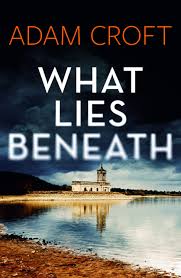
With over two million crime thriller books sold in over 120 countries, Adam Croft is one of the most successful independently published authors in the world. His crime thrillers Her Last Tomorrow and Tell Me I’m Wrong topped the Amazon and USA Today charts. His new release, What Lies Beneath, starts a new series for Adam that might exceed everything he’s already accomplished.

And, Adam Croft was an accomplished stage actor before turning indie-writer ten years ago. His first crime thrillers were the Knight & Culverhouse series. He also developed his Kempston Hardwick series before writing super-successful stand-alones. Now, Adam is off on a new venture with What Lies Beneath being Book 1in the Rutland series where he bases crime thriller fiction on a real location in the UK. It’s available for pre-order now and out on July 28th, 2020.

The University of Bedfordshire bestowed Adam an Honorary Doctor of Arts for his outstanding contribution to modern literature. As well, Adam has been a regular on the HuffPost, BBC Radio, The Guardian, and The Bookseller. He also hosts a regular podcast called Partners in Crime with fellow bestselling author Robert Daws.

But, for Kill Zone followers—especially crime thriller writers—Adam Croft has outstanding resources through his Indie Author Mindset books, courses, podcasts, and Facebook Group. Adam states his tipping point as a commercial writer was when he changed his mindset to believe in himself and treat his writing as a professional business.

Obviously, it paid off.

Courage in Fiction

By John Gilstrap

I’ve knocked around in my corner of the entertainment business for a quarter of a century now. Over the years, I’ve seen and heard a lot of snide talk and snobbery among authors and critics that belittles books, films and TV shows for their lack of . . . shall we say importance?

Snottery knows no bounds, it seems. Self-published authors take in on the chin quite a lot, but so do romance authors and those who write cozy mysteries and horror. When speaking a few years ago to a group of students in an MFA program, the professor who introduced me warned the assembled body to have an open mind even though I was “content to write nothing more important than commercial fiction.” If you’ve attended any of my seminars since then, you might remember that I now introduce myself as a writer of commercial fiction, whose work will likely never be taught in the classroom. I consider that to be something of a badge of honor.

I write and I consume the creative works of others for one primary purpose: to entertain or be entertained. Hard stop. If the material I’m consuming also educates, informs or instructs me at the same time, that’s terrific, but it’s not a requirement.

That said, I’m not an easy audience. The classics that I’m supposed to say I love because I make my living as an author–Hemingway, Marquez, Joyce, Fitzgerald, et. al.–for the most part put me to sleep. And Michener. Good God, James Michener. I stipulate that these authors are all brilliant, and that they have changed people’s lives, but I am unable to plow through their stories from beginning to end. Perhaps I’m a lazy reader.

Or perhaps I prefer to read great stories well told in voices that resonate in my head. Give me a Stephen King or Stephen Hunter or Tess Gerritsen or James Scott Bell, put me in a quiet room with a wee dram of smoky scotch, and I will be transported to wherever they take me.

What they write–what we write–may not be important (remember, that’s the word we agreed on), but the works inspire. Powerfully drawn good guys bring justice to powerfully drawn bad guys. Some leave more blood on the ceiling and walls than others, some present more moral ambiguity than others, but after the last page turns, right and wrong are sharply defined.

Last week, my fellow bloggers here at TKZ wrote of old television shows and old comedians. As I read those posts and the responses, it occurred to me that the common trait shared by writers, actors and comedians is a commitment to telling stories that move their respective audiences in some way. That’s what entertainment is, isn’t it?

And it works best when it surprises us. M*A*S*H was primarily a comedy, but who among us didn’t choke up the first time we learned of Henry Blake’s final plane trip? To this day, even though I’ve seen the episode a dozen times or more, the room still gets dusty every time I watch Andy Taylor open the window and tell Opie to listen to those birds that will never see their mama again.

Which brings us to the topic of courage (or lack thereof). Every week, my DVR records episodes of “12 O’Clock High”, starring Robert Lansing as General Frank Savage. I remember watching it as a kid, but all I remember are the scenes of aerial battle. The stories are really very complex and often quite moving. When you consider that the series aired when World War 2 wasn’t yet 20 years in the past, and that more pilots died in the 8th Air Force out of England than did all of the Marines in the Pacific theater, the story lines are particularly courageous. Battle fatigue (PTSD), cowardice, reckless bravery, loss of friends and the futility of war are all addressed in those episodes. They entertain because they resonate, and they resonate because we care about these young men who are forced to take exceptional risks for the benefit of others. We see courage in action. And it’s inspiring.

Fictional courage–whether on the page or on any size screen–starts with the writer, not with the characters. I tell myself that there are places I won’t go in my work, but that’s really a lie. I’ve harmed children and animals in my books, but never gratuitously. Still, I get hate mail whenever I do, and that’s fine. I figure that I moved that reader, and therefore I did my job. Sure, I moved them in a direction I didn’t intend, but at least they cared enough to write a note.

Plain vanilla stories are always safe, and they’re certainly not important. But if they’re not even inspiring, doesn’t that just make them irrelevant?

So what about you, TKZ family? What risks are you willing to take in your reading and your writing?


First Page Critique: Making Us
Care About A Guy Going Bad

By PJ Parrish

We’re off to the hoosegow, the clink, con college, the gray-bar hotel for today’s First Page submission. That much is certain. But I’m gonna need your help on figuring out some of the other things going on here. Please give your time to our writer and don’t be shy about weighing in with some pointers, praise and punditry.

Case Runner

The funny thing is, my folks wanted me to be a lawyer.

It’s a profession. You’ll always make a living. Like Uncle Mike.

That was before Uncle Mike, my father’s older step-brother, went to prison for skimming trusts. He died there, in pretty short order.

After sitting through more of Dad’s drunk disorderly and domestic abuse hearings than I could count, I wasn’t interested in law. I majored in computer science, with a minor in bookmaking, as a runner for Sweet Clete Sojack. I had a little credit card harvesting going on the side: go-go growth businesses practically invited me to grab their transaction data for resale, and in a pinch I could Netstumble my way into wide-open WiFi.

But I was better at getting the info than covering my tracks, so I also did a little time. Unlike Uncle Mike, I not only got out in 18 months, but emerged with a profession, funnily enough related to law, in about the same way as I was related to Uncle Mike.

You can learn a lot of things in prison. Some, a lot, we’ll leave unsaid. But you meet people who see things just a little differently, the spaces between the itch and the scratch where money can be made.

One of these people was Simon Vann, who had been a plaintiffs’ attorney until a case where much of his plaintiff class turned out to have already handed over powers of attorney to out-of-state relatives before signing with him. The houses, the cars, the boat, the sugar on the side, were all gone in a flash. He blamed himself for one thing and one thing only.

“I called the wrong case runner. Tried to save a few bucks.” He waved liver-spotted hands around the prison library. “Worked out great, huh?”

I asked him what a case runner was.

“See, there are laws against an attorney cooking up a cause of action and then finding warm bodies for plaintiffs. They call it ‘champertry’. So there’s a service, kind of a grey area, people who generate leads, finding and referring people whose issues jibe with the theory of the case. For a small fee per head, the attorney gets parties already qualified by the case runner.” Simon stared at the book in his hand, a history of power boats. “He hopes.”

______________________________

I’m back. First off, I really like this writer’s voice. It’s unique, punchy and gives me a pretty decent feel for the narrator’s character — or lack of same. But we need a bit more flesh on the bones, which I will get into in a moment.

This opening is essentially back story. Which is a no-no, yes? Well, not necessarily. What I call character-intro openings can be effective when done well. But the writing must be razor sharp for the reader to be patient and wait for something to happen ie action.

One of the best character openings, which I often cite in workshops, is in Steve Hamilton’s debut A Cold Day In Paradise. He is introducing his series character Alex Knight with this paragraph:

There is a bullet lodged in my chest, less than a centimeter from my heart. I don’t think about it much anymore. It’s just a part of me now. But every once in a while, on a certain kind of night, I remember that bullet. I feel the weight of it inside me. I can feel its metallic hardness. And even though the bullet has been warming inside my body for fourteen years, on a night like this, when it is dark enough and the wind is blowing, the bullet feels as cold as the night itself.

Yes, this is backstory, but the bullet next to heart image is compelling and deeply personal.  Here’s another slow backstory character opening that I like, from Tana French:

My father once told me that the most important thing every man should know is what he would die for. If you don’t know that, he said, what are you worth? Nothing. You’re not a man at all. I was thirteen and he was three quarters of the way into a bottle of Gordon’s finest, but hey, good talk. As far as I recall, he was willing to die a) for Ireland, b) for his mother, who had been dead for ten years, and c) to get that bitch Maggie Thatcher.

All the same, at any moment of my life since that day, I could have told you straight off the bat exactly what I would die for. At first it was easy: my family, my girl, my home. Later, for a while, things got more complicated. These days they hold steady, and I like that; it feels like something a man can be proud of. I would die for, in no particular order, my city, my job, and my kid.

Slow, measured, nothing happening here but the character trying to get into our heads. This goes to French’s style. And here is maybe my favorite character-doing-nothing-but thinking opening, from Mike Connelly’s The Poet.

Death is my beat. I make my living from it. I forge my professional relationship on it. I treat it with the passion and precision of an undertaker — somber and sympathetic about it when I’m with the bereaved, a skilled craftsman with it when I’m alone. I’ve always thought the secret to dealing with death was to keep it at arm’s length. That’s the rule. Don’t let it breathe in your face.

But my rule didn’t protect me. When the two detectives came for me and told me about Sean, a cold numbness quickly enveloped me. It was like I was on the other side of the aquarium window. I moved as if underwater — back and forth, back and forth — and looked out at the rest of the world through the glass. From the backseat of their car I could see my eyes in the rearview mirror, flashing each time we passed beneath a streetlight. I recognized the thousand-yard stare I had seen in the eyes of fresh widows I had interviewed over the years.

So yes, you can start by having your character thinking instead of doing. But it damn well better be so compelling that your reader is as well hooked as a fighting marlin. Does the opening to Case Runner succeed? Do you find this Unnamed Man narrator seductive? Does he force you to turn the page?

Well, almost. As I said, the voice has great tone to it. But it lacks the empathy bond that both Connelly and Hamilton forge. Other than the fact Unnamed Man is a bit of wise guy, I don’t get much sense of personality or feel much connection to him. I know that empathy for a character needs to be built over the course of an entire book, but we don’t know quite where we’re going with Unnamed Man here.

And here’s the rub. I think, though I am not sure because the writer isn’t specific enough, that Unnamed Man is going to go to the dark side and become a case runner. Which makes him at best an anti-hero. Will we want to root for him if he’s got the morals of a slug? Is the plot’s trajectory going to create a character arc that has him finding his way back into the light? We can hope.

Couple years ago, Steve Hamilton, on hiatus from his Alex Knight character, started a second series starring an anti-hero named Nick Mason.  Here’s the book’s teaser back copy:

Nick Mason is out of prison. After five years inside, he has just been given the one thing a man facing 25-to-life never gets, a second chance. But it comes at a terrible price.

Nick Mason is out of prison, but he’s not free. Whenever his cell phone rings, day or night, he must answer it and follow whatever order he is given. It’s the deal he made with Darius Cole, a criminal kingpin serving a double-life term who still runs an empire from his prison cell.

Forced to commit increasingly more dangerous crimes, hunted by the relentless detective who put him behind bars, and desperate to go straight and rebuild his life with his daughter and ex-wife, Nick will ultimately have to risk everything–his family, his sanity, and even his life–to finally break free.

See the point I am trying to make for our writer? If your guy starts out as a black hat, you need to make us care that he has a chance. He needs a journey, not just of plot but character. Redemption is a powerful theme in fiction. I hope this is where our writer is taking us.

Okay. But we have a basic structure problem beyond that. And it creates confusion. When and where is this scene taking place? After several paragraphs of backstory, in which we learn that Unnamed Man served 18 months in prison and got out, we get the first “action” scene — Unnamed Man talking to Simon Vann. They seem to be in a prison library, so that made me assume that Unnamed Man is also a prisoner. See the problem? The writer told us he was out, yet here we are behind bars. This is not a flashback; it is poor structure. Plus the writer tipped his plot hand too early by revealing in backstory narrative that he emerged from prison ironically with a new profession related to the law.

If the writer wants to stay with this backstory opening, he needs a way to gracefully transition to the PRESENT IN PRISON. Which is where the story really starts. It can be as simple as “I was thinking of my Dad (or Uncle Milt) or whatever, when I walked into the library and saw Simon Vann sitting at a table surrounded by a twelve volumes of The Supreme Court Reporter. 

Then have Unnamed Man go over and strike up the conversation. The way it is written is so bare bones we can’t easily figure out what is going on, where we are, and why this encounter is even happening. Give it dramatic context.  Has Simon been considering trying to drag Unnamed Man into his case runner scheme? Has Unnamed Man heard that Simon is recruiting? We need context. This is all happening in a plot vacuum.

Now let’s talk about the idea of case running itself. I’ve never heard of it, but then I am not steeped in law or legal thrillers. My sister Kelly knew immediately but she can quote every line of dialogue from Law & Order.  If, like me, you didn’t know what a case runner is, could you figure it out from Simon’s description? I’d guess no. Here is what Simon says:

“There are laws against an attorney cooking up a cause of action and then finding warm bodies for plaintiffs. They call it ‘champertry’. So there’s a service, kind of a grey area, people who generate leads, finding and referring people whose issues jibe with the theory of the case. For a small fee per head, the attorney gets parties already qualified by the case runner. He hopes.”

This sounds like something out of Wikipedia, not like a person would really talk. It needs to be filtered through Simon Vann’s particular personality prism. And again, it needs context. Why did this topic even come up? Why are they talking about it? It is just thrown out there with no reason, so why do we care? It needs to be a scene, with logic and dialogue between the two characters.

I found a good lawyer’s site that explains it better than Simon did — which is saying alot considering how bad lawyers are at breaking things down in real English. Essentially, case running is a fancy name for ambulance chasing. Bear with this long explanation because it goes to a point I want to make, again, about character arc:

More often than not, “ambulance chasing” is carried out not by attorneys, but by others known as “runners”. Case runners are not licensed to practice law. Rather, they are hired by accident attorneys to do whatever is necessary to get accident victims to hire a personal injury lawyer. And it doesn’t stop there. After the runner gets the injured accident victim to hire the lawyer, the victim is then coerced into going to a doctor who also works with the runner.

In order for these predatory “runners” to find their prey, they listen to police scanners; offer significant cash bribes to accident victims; they confuse the injured accident victims with false information; and, before an ambulance arrives, offer them rides right from the accident scene to a medical office, where the runner will get paid a handsome “referral fee” by the doctors- thousands of dollars. Sometimes, the runners don’t get to the accident scene in time to lure accident victims away from proper medical care. But that doesn’t stop these runners from harassing accident victims. Hospital workers, ambulance drivers, even police officers will sell these runners your most personal information for hefty prices. Armed with this information, runners and ambulance chasers will visit houses, text, call, and write accident victims until they relent.

Make no mistake about it- hustling cases like this is illegal and unethical. But since there is more money to be made selling accident victims and their personal, private information to the highest bidder than there is selling drugs on the street; the “runners” aren’t running scared. Instead, they are running all the way to the bank.

Wow…really good fodder for a anti-hero plot, right? He’s a sleazy, Better Call Saul type of dude who preys on vulnerable people and sells your personal info on the street to the highest bidder! Now that’s a great start for any character, so kudos to the writer for recognizing this potential.

But…

If Unnamed Man remains a predator throughout the whole book and learns nothing, what happens? We won’t care about him. And that is death to any book.

So, to go back to structure again, this opening really needs a good scene of extended dialogue between Simon Vann and Unnamed Man explaining what a case runner is and it needs to set up the plot catalyst that Unnamed Man is going to the dark side.

Let me do some quick line editing to make a few other points.

The funny thing is, my folks wanted me to be a lawyer.  I assume the writer means that it’s ironic that his parents wanted him to be a lawyer but then he became a case running sleazo?

It’s a profession. You’ll always make a living. Like Uncle Mike.

That was before Uncle Mike, my father’s older step-brother, went to prison for skimming trusts. He died there, in pretty short order.

After sitting through more of Dad’s drunk disorderly and domestic abuse hearings than I could count, I wasn’t interested in law. Nice bit of sad backstory, but it could be a tad more personalized. After sitting in the back of too many courtrooms next to my crying mother, watching my dad….I majored in computer science, where? We need to know where this story is taking place and this would drop a hint. with a minor in bookmaking, as a runner for Sweet Clete Sojack. I had a little credit card harvesting going on the side: go-go growth businesses practically invited me to grab their transaction data for resale, and in a pinch I could Netstumble my way into wide-open WiFi. Again, this is nice voice but it’s a little thin. Can we have a hint as to why a guy who made it to college felt compelled to run numbers and steal credit card info? The problem is, you are really setting him up as unlikeable.

But I was better at getting the info than covering my tracks, so I also did a little time. Again, a little thin on telling details. What was he busted for? Can you make it more personal and involving for us? Unlike Uncle Mike, I not only got out in 18 months, but emerged with a profession, funnily enough related to law, in about the same way as I was related to Uncle Mike. On first read, this seems like cheeky good writing. But it is really confusing because in a couple graphs, we’re right back in prison. And, dear writer, you gave away your main plot point too easily. Him emerging from prison with a dark side job is a cool BAM! plot moment. Don’t bury it in a tossed-off narrative comment.

You can learn a lot of things in prison. Some, a lot, we’ll leave unsaid. But you meet people who see things just a little differently, the spaces between the itch and the scratch where money can be made. Syntax problem here. Do you mean they see things just a little clearly, like recognizing that space between the itch…

One of these people was Simon Vann, who had been a plaintiffs’ attorney until a case where much of his plaintiff class turned out to have already handed over powers of attorney to out-of-state relatives before signing with him. The houses, the cars, the boat, the sugar on the side, were all gone in a flash. He blamed himself for one thing and one thing only.  How does he know this? 

“I called the wrong case runner. Tried to save a few bucks.” He waved liver-spotted hands around the prison library. “Worked out great, huh?”

I asked him what a case runner was. Again, this conversation must have the structure and context of a dramatic scene. Why are they talking about this? You have to slow down and choreograph your scene with more detail and clarity. 

“See, there are laws against an attorney cooking up a cause of action and then finding warm bodies for plaintiffs. They call it ‘champertry’. So there’s a service, kind of a grey area, people who generate leads, finding and referring people whose issues jibe with the theory of the case. For a small fee per head, the attorney gets parties already qualified by the case runner.” Simon stared at the book in his hand, a history of power boats. “He hopes.” As I said, the definition of case runner is essential to your book. You have to break down in layman terms, even if it’s coming from the mouth of a lawyer. Remember, Unnammed Man is NOT a lawyer, so he can ask “dumb” questions for the reader. First, figure out a reason for this conversation to be happening, then give us DIALOGUE ie action. Example:

I had heard around the exercise yard that Vann was looking to hire someone to work on the outside. It was big money for little work, rumor was. I was getting out in eight weeks and with my record had no chance of scoring something big in the computer biz.

Simon looked up at me as I approached his table. “I hear you’re looking for work,” he said.

How he had figured that out I’d never know. But I took it for a cue to slide into the chair across from him.

Then start the dialogue about what a case runner is. And your plot and character is off and running.

One last nit. You notice how annoying it was for me to keep using the phrase Unnamed Man? You need to find a way to gracefully tell us your guy’s name and quickly.

So, I hope you find this useful and not too discouraging. As I said, you’ve got some writer chops. You just need to figure out the structure issues and more important, how you want to make us want to root for your guy. Thanks for submitting!




Gone

My granddaughter S. went missing for a very short time several years ago. 

It happened on a Thursday during the first week of June. S. was a student at a wonderful public elementary school in the Clintonville neighborhood of Columbus. A picnic for the students, teachers, and parents was — and still is — annually held on the school playground during the closing hours of the last day of class. My son J. — her father — took an extended lunch hour from his job and dutifully presented at the time appointed. He was somewhat puzzled when he did not see S. among the students cavorting around the swings. J. approached S.’s teacher and inquired as to her whereabouts. The teacher asked another teacher, who asked another, who asked the school secretary, who asked the principal. Within the course of a few minutes, a hue and cry quietly started up, one that was on the verge of quickly rounding the corner to full-blown hysteria. J., having learned at his father’s knee how to react to an emergency, fought down the tide of his own rising panic and quickly called his neighbor to ask if S. was in sight. The neighbor advised that yes, S.  was on J’s front porch, bearing the look of someone who finds themselves in a situation resulting from an action that wasn’t entirely thought through prior to its execution.  

It was learned a bit later that S., being a somewhat willful child at that time, had concluded that she had experienced enough school for the year and decided to skip the picnic. She didn’t think to tell anyone about her decision, and with the skill of a Ms. Pac-Man circumvented the carefully maintained school security labyrinth which was in place to keep such a thing from occurring. She then walked the few blocks from her school to her home in order to jumpstart her summer vacation by a couple of hours.   

J. told the teachers that S. was at home. Those assembled collectively breathed a sigh of relief. As J. left the school to deal with the wayward S. he heard the name “Kelly Prosser” mentioned as the instructors talked among themselves. He wondered who she was. 

Kelly Ann Prosser in 1982 had been an eight-year-old student at a much-acclaimed alternative school in the same neighborhood as my granddaughter’s. The school year was barely three weeks old when Kelly disappeared while walking home. Her body was found two days later in a cornfield located in a quiet community contiguous to Columbus. She had been beaten, raped, and murdered. 

Several individuals were questioned by Columbus police detectives but no one was ever charged with Kelly Ann’s murder. J., who was four years old at the time, probably wondered why his parents held him and his younger siblings just a little more tightly and watched them just a bit more closely for the next, oh, thirty-eight years or so (and counting). For the teachers at Kelly Ann’s school, and virtually every school in the area., there was an additional nightmare a-borning. Whoever visited the horrors of Kelly Ann’s final hours upon her was, as far as anyone knew, still out there watching and waiting for another opportunity. While the safety of their students was uppermost in the minds of the teachers and administrators, I suspect that no one wanted to bear the burden of having another such act repeated on or after their watch. 

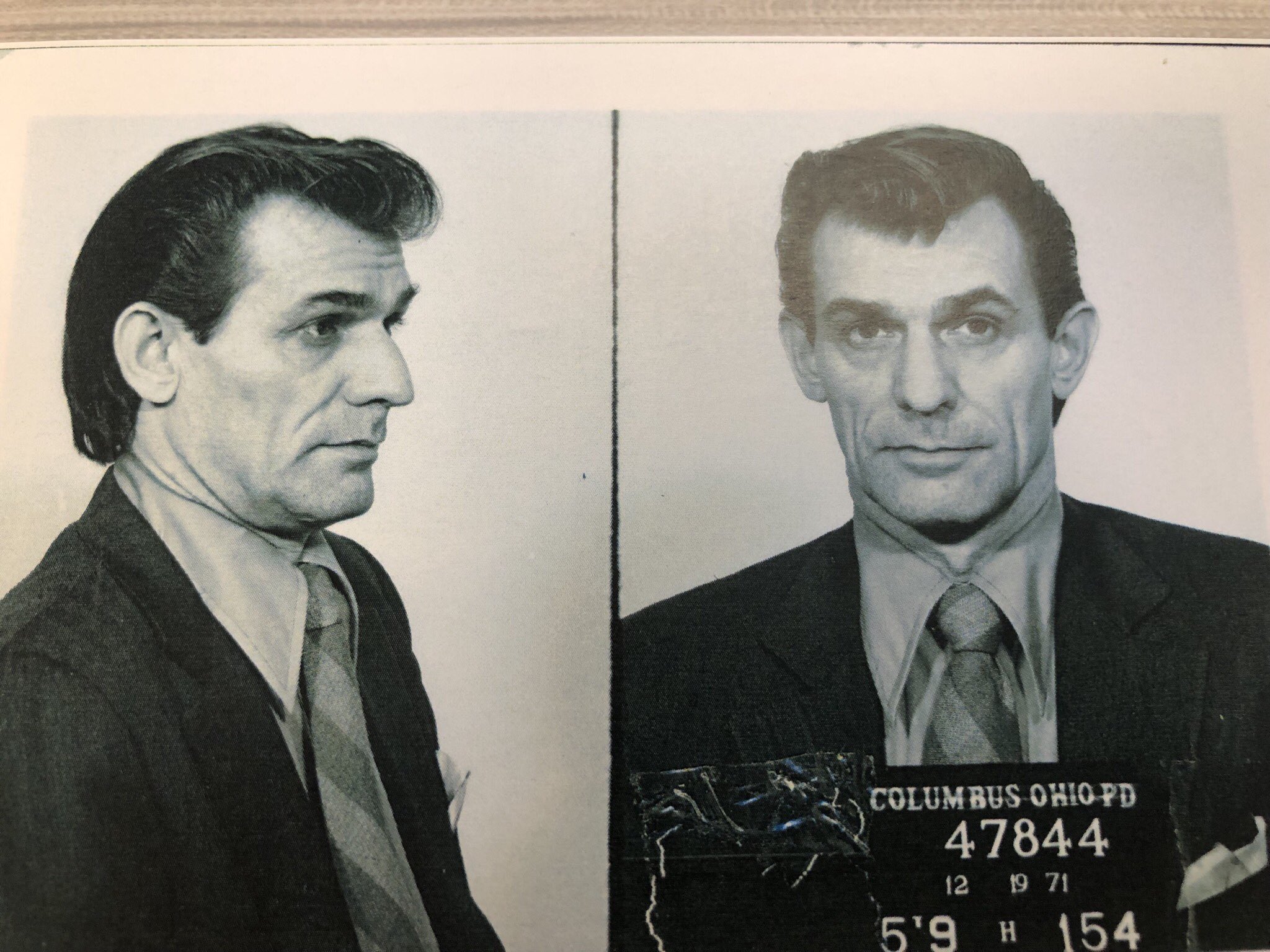
That fear carried over across the decades. The Columbus Police Department, for its part, never gave up on Kelly’s case. Decades passed. Forensic tools were created, improved, and sharpened. The Columbus Police  Cold Case Unit, announced on June 26, 2020, that the case had been closed. A DNA sample obtained from material originally gathered at the crime scene conclusively linked her attack and death to one Harold Warren Jarrell. He was no stranger to the criminal justice system. Jarrell had been arrested, tried, convicted, and incarcerated for abducting a little girl in 1977 from another Columbus neighborhood. He was released from prison after five years and had been walking among the innocent and unknowing for but a short time before Kelly Ann’s path crossed his. Jarrell for whatever reason was not considered a suspect in her murder at the time, and at some subsequent point left Columbus, drifting across the country with stops in Florida and Las Vegas among other places, more often than not attracting the attention of law enforcement before moving on rather quickly and without notice. He met his end at some point — how, where, and why is not immediately clear — and thus cannot face justice for Kelly Ann’s murder and the grief that ripples through time across the lives of her family members to this day. Investigations being conducted in other jurisdictions indicate that Jarrell’s horrible misdeeds continued. One can only hope that his end was slow and excruciating, one where any calls for help which he might have made were unanswered at least and mocked at best. 

It is people such as Jarrell who cause me to prefer the company of dogs and cats to people. That said, the tenaciousness of the personnel of the Columbus Police Cold Case Unit — with a mighty and timely assist from a forensic genealogical service named AdvancedDNA —  restores, at least partially, my faith in humanity.

I am well aware that in the majority of cases of sexual molestation and abuse the victim and the aggressor are known to each other. There is still a sizable group of opportunistic predators who randomly prey upon the innocent. There are tools available to combat them. Most if not all county sheriff departments now provide a sexual offenders’ database on their websites. There is also a smartphone app for iPhones named Offender Locator which I cannot vouch for, but I can for Truthfinder, an Android app that provides sobering information about sex offenders living and working within a given area.  You may want to consult this should you or a family member decide to move to a new neighborhood or take things a step further with that new acquaintance who might seem just a tad too friendly with your child. The writers and authors among you may also — and I am not making light of the problem by suggesting this, not at all — use this app as a means of obtaining inspiration for the truly wretched characters in your latest work in progress. The woods, as they say, are full of them. The lambs walk in sunlight and the wolves wait in darkness for one or more to stray into shadow. 

Be safe. Be well. Be alert. 

Don’t Say It! Words We Love to Hate

By Elaine Viets

You know, some words and phrases are getting on my nerves. Most people would say it is what it is and at the end of the day, let it go. I know, right? But I’ve been doing some online research. There are certain sayings that tick people off. And readers are people, too. You don’t want to turn off your readers with annoying phrases. Just sayin’.
These outstandingly irritating phrases are garnered from various corners of the Web.
Think carefully before you use them in your writing. You may want to save them for your most hateful characters.

Just sayin’. The winner! Nearly everyone hates this redundant phrase. I mean, you’ve already said what you were going to say, right?

Literally. I confess I’ve used this one and thought it was pretty clever – the first time. Then I noticed that word in every novel I picked up – literally.

It is what it is. Arggh! This meaningless phrase is enough to send me screaming into the night. I admit I’m a little touchy these days, with the quarantine and all, but please don’t use it.

At this moment in time. What’s wrong with “now”? Can this pretentious phrase.

Everything happens for a reason. Usually said after some meaningless tragedy, and meant as consolation. If you don’t have that comforting belief system, this phrase triggers an urge to slap that person silly. Also avoid this phrase: Whenever God closes a door, he opens a window. I had a roommate like that. Very annoying.

Honestly. Often a trigger word indicating the person using it is lying. Use it carefully.

My bad. A cutesy way of glossing over a mistake. This phrase says, “I know I did something offensive and I don’t care.”

I want 110 percent. Right, boss. Except your math doesn’t add up.

No worries. Some people find this phrase a little passive-aggressive. In other words, when someone says, “No worries,” they’re really telling you that you should be worried.

At the end of day. As in, “At the end of the day, getting a new CEO won’t make any difference. This company is doomed.” This crutch will cripple any sentence.

With all due respect. The warm-up to an insult. “With all due respect, even in your prime you weren’t that good.”

That’s my list, and it’s pretty good, in IMHO (oops, there’s another one.) Now’s your chance. What tired words and phrases would you like to see retired?

##########################################################

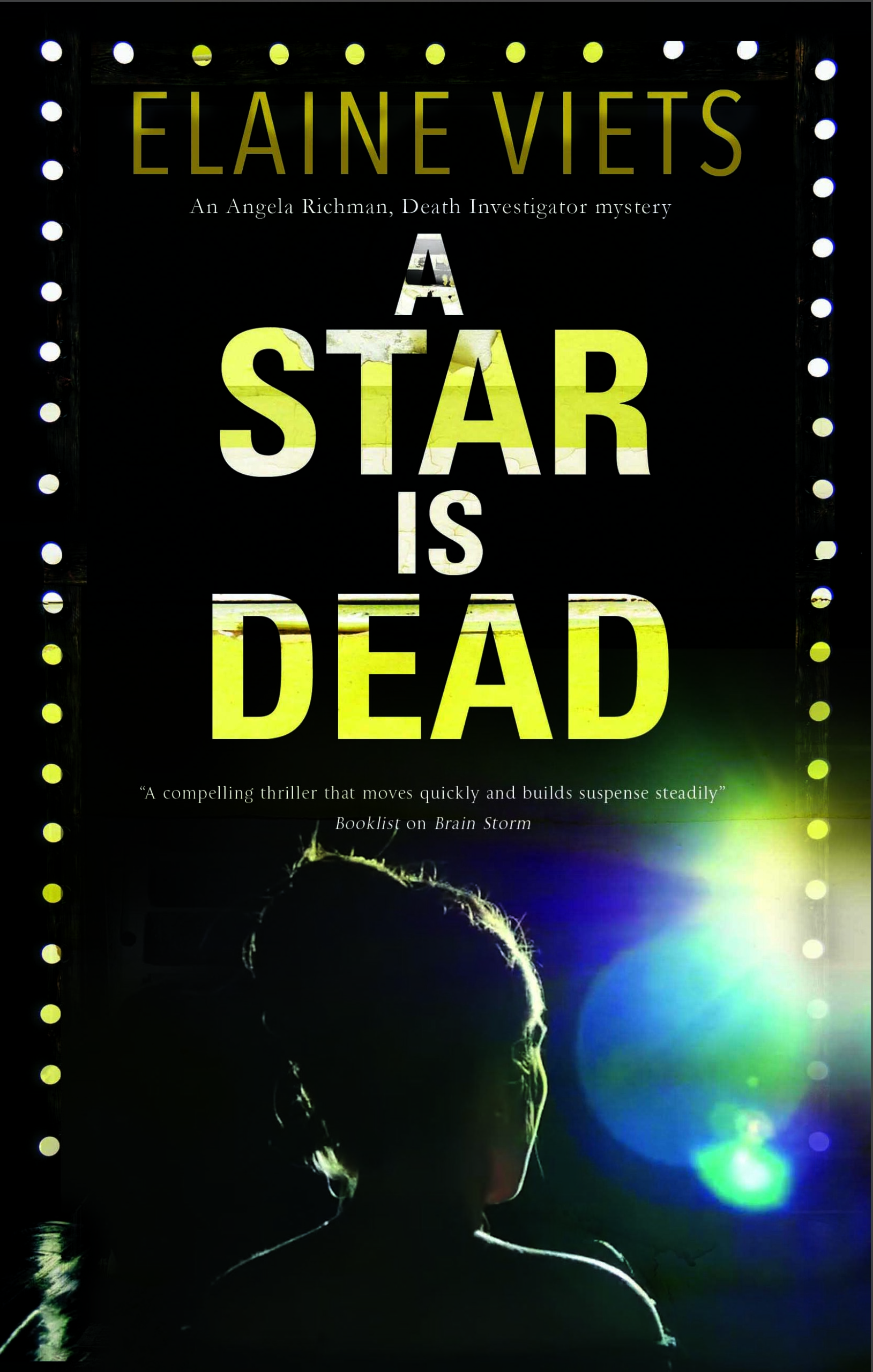
A Star Is Dead, my new Angela Richman death investigator mystery “will satisfy procedural and cozy fans who like a good puzzle,” says Booklist magazine.
Buy it here: https://tinyurl.com/yc6

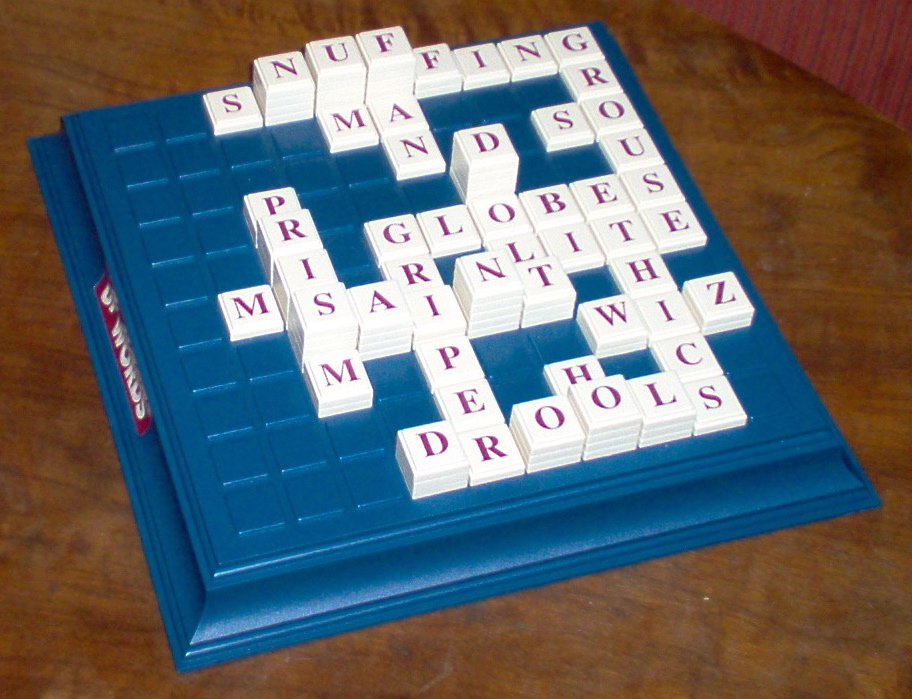
Word Play

Public Domain

By Debbie Burke

@burke_writer

Unfamiliar words always catch my attention. Since words are a writer’s most important tool, I figure we can’t have too many in our toolbox.

Some words are just plain fun, either because of their sound or their meaning. Today, let’s play with several I recently ran across.

Lagniappe

TKZ’s own Joe Hartlaub used this term in a recent comment. What the heck is lagniappe, I wondered.

A quick Wikipedia search revealed the definition of lagniappe as “a small gift given to a customer by a merchant at the time of a purchase” (such as a 13th doughnut on purchase of a dozen), or more broadly, “something given or obtained gratuitously or by way of good measure.”

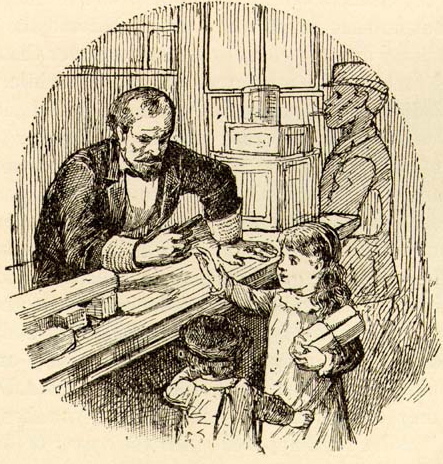
LAGNIAPPE example in Life on the Mississippi by Mark Twain, Public Domain

Mark Twain collected the word as a souvenir during a journey. In Life on the Mississippi he wrote: “We picked up one excellent word – a word worth travelling to New Orleans to get; a nice limber, expressive, handy word – ‘Lagniappe.’ They pronounce it lanny-yap … When a child or a servant buys something in a shop – or even the mayor or governor, for aught I know – he finishes the operation by saying, – ‘Give me something for lagniappe.‘ The shopman always responds; gives the child a bit of liquorice-root.”

According to Wikipedia, the word origin is “from the Louisiana French adapting a Quechua word brought in to New Orleans by the Spanish Creoles.”

The use of unusual words in fiction can be a risk because the writer doesn’t want to pull the reader out of the story to check the dictionary. In olden days, we had find a Merriam-Webster and page through the thick volume. However, with instant internet access, looking up an unfamiliar word is easy. Sometimes, learning a new word is a value-added bonus in the book…like a lagniappe.


Matryoshka dolls – Dennis G. Jarvis, Wikimedia Commons

Matryoshka doll

Have you seen Russian nesting dolls, also known as Matryoshka dolls? Open the first doll to find a smaller second one inside; open the second one to find an even smaller third doll inside; and so on until the last and tiniest doll is revealed. Originally made as children’s toys, they became popular mementos for tourists visiting Russia.

The root of Matryoshka means mother or maternal. According to Legomenan: “the Matryoshka doll’s shape is round and elongated like an egg, a popular symbol of fertility and reproduction since ancient times. Like an egg, out of the Matryoshka stacking doll life emerges in symbolic form. The biggest nesting doll births the smaller ones, just as the grandmother or babushka gives life to the younger generations of her family, symbolized through the full family of stacking dolls of decreasing sizes.”

The Matryoshka doll seems a good analogy for mystery plots. The reader opens the first clue that leads to hidden information that leads to more clues until the most deeply hidden information reveals the ultimate solution to the puzzle.


Mondegreen

This is a mishearing of a phrase, often in song lyrics. Author Sylvia Wright coined the term after she misheard the words of an old Scottish ballad.

Ye Highlands and Ye Lowlands
Oh where hae you been?
They hae slay the Earl of Murray,
And Lady Mondegreen.

There is no Lady Mondegreen. The actual words of the last line are “and laid him on the green.”

Check out this site for a funny collection of Mondegreens from popular song lyrics (some are R-rated).

Led Zeppelin’s Stairway to Heaven

Actual lyric: “and as we wind on down the road, our shadows taller than our souls.”

Mondegreen: “and there’s a wino down the road – I should have stolen Oreos.”


Madonna’s Material Girl

Actual lyric: “we are living in a material world, and I am a material girl.”

Mondegreen: “we are living in a Cheerio world, and I am a Cheerio girl.”


Crystal Gayle’s Don’t It Make My Brown Eyes Blue.

Mondegreen: “Doughnuts make my brown eyes blue.”


Pat Benatar’s Hit Me With Your Best Shot:

Mondegreen: “Hit me with your pet shark.”


Jose Feliciano’s Feliz Navidad:

Mondegreen: “Police have a dog.”


Gazump

Wikimedia Commons

Tracey, a TKZ reader in the UK, introduced me to this term. It is British slang for “when a seller (especially of property) accepts a verbal offer (a promise to purchase) on the property from one potential buyer, but then accepts a higher offer from someone else. It can also refer to the seller raising the asking price or asking for more money at the last minute, after previously verbally agreeing to a lower one.” – Wikipedia.

No one wants to be “gazumped” but it’s sure a fun word to say.

Working with words is a writer’s job but playing with words is our pleasure.

~~~

TKZers: What is your favorite unusual word? If you know the origin, please share that, also.

~~~

Four Books Four Bucks – All four books in Debbie Burke’s thriller series are on sale from July 7 to July 14. Buy one for $.99 or buy all four for the regular price of one book. 


Instrument of the Devil

Stalking Midas

Eyes in the Sky

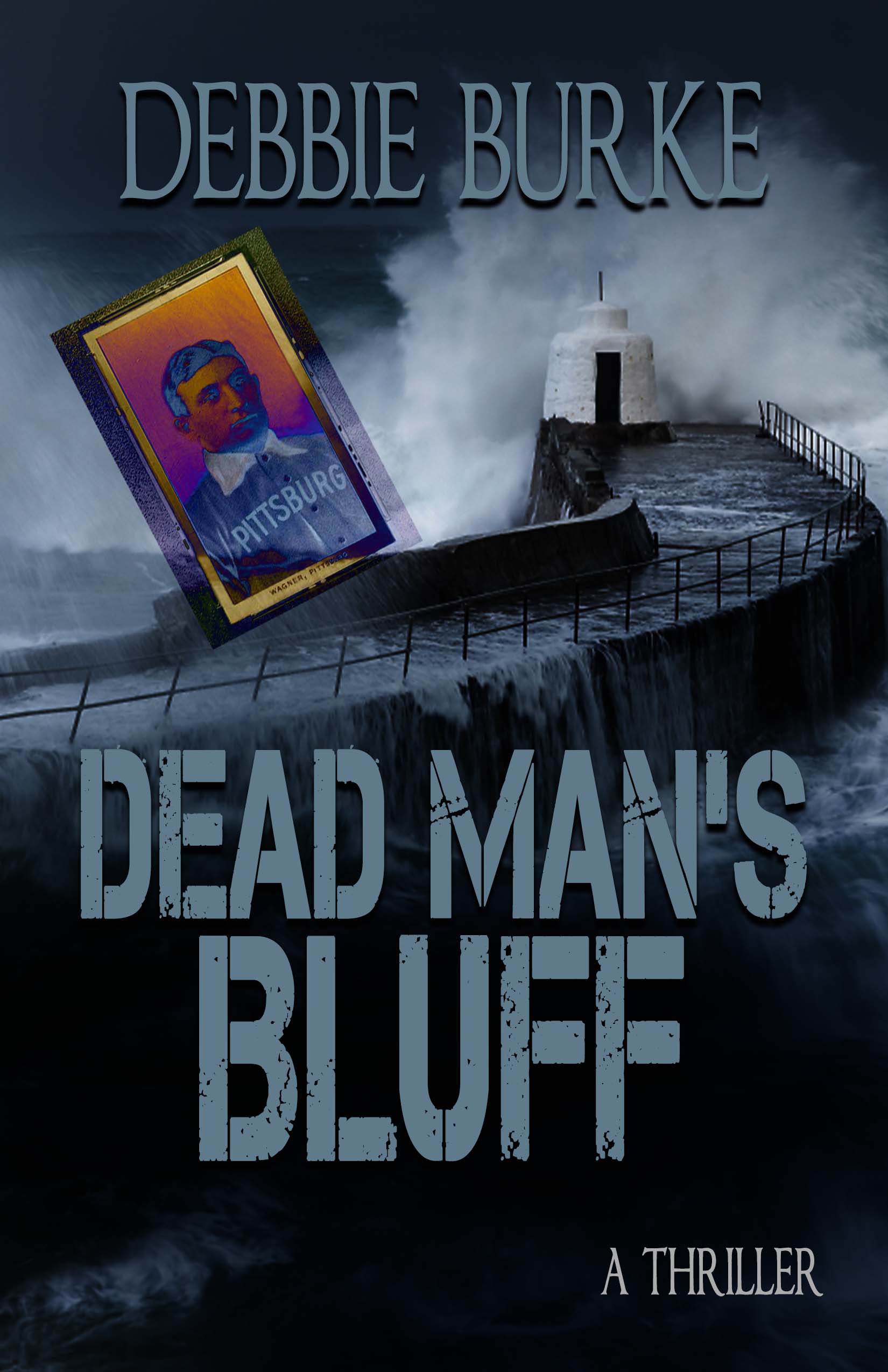
Dead Man’s Bluff

How Not to Write a Crime Report

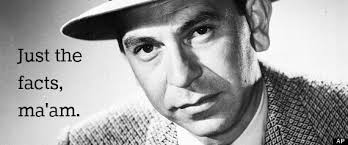
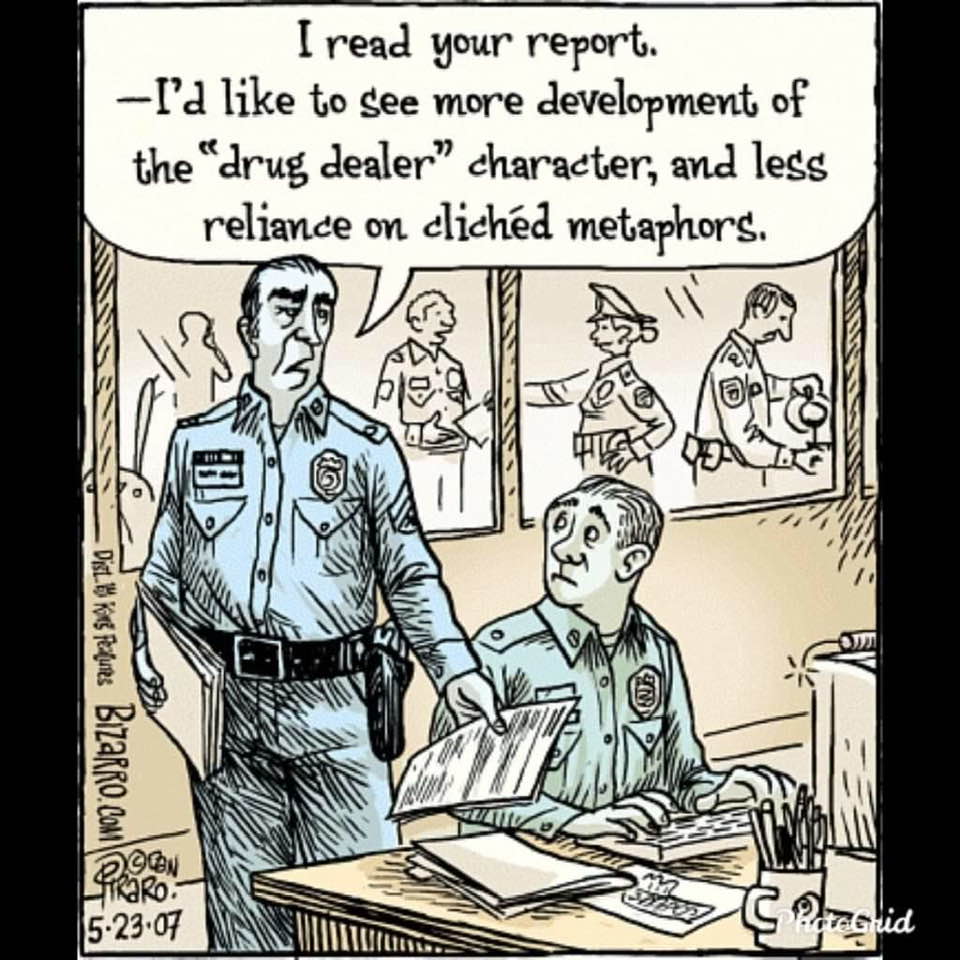
If you want your book to bomb on the first page, you’ll write it like a crime report. Properly-written crime reports are boring narratives that tell “Just the Facts, Ma’am”. There’s no show, no dialogue, no plot, no characterization—not even red herrings—only a running exposition starting at A and ending at Z.

Crime reports are supposed to go that way. They’re neutral documents devoid of any soul or any sense of personal voice or individual opinion. The whole purpose of a crime report is to convey impartial details of the investigation and document evidence with links to supporting witnesses.

I’ve written lots of crime reports as a detective. I’ve written everything from prosecutor briefs to search warrant applications to wiretap affidavits to press releases. All had to be letter-perfect because they’re legal documents that’d bite your butt if you deviated outside the norm.

Crime reports follow a vanilla flow, and they’re intentionally templated. You begin by telling the end. Then, you prop-up the middle with point-by-point factual support.

Snoozeville…

I was a writing zombie after three decades in the legal report industry. That included my stint pumping out written judgments in the death business. I was so bureaucratically brainwashed that I knew nothing about active voice, nothing about dialogue voice, and nothing about developing my personal voice.

To say it was tough to deprogram and reprogram is an understatement. I knew long ago that I wanted to commercially crime write (true and fiction) in my senior years. Problem was—I didn’t have a clue how to do it. I had horrible habits to break, and I had no one to mentor me except for millions of words written by hundreds of authors who’d managed to successfully sell their work.

“Hey!” I said to myself. “Maybe I can learn something from them.”

So, I went on a year-long mission to break myself down and build myself up. John Grisham. Joseph Wambaugh. Frederick Forsyth. Agatha Christie. Ann Rule. Val McDermid. Ian Rankin. Michael Connelly. David Baldacci. Paula Hawkins and Fiona Barton. Even Stephen King and James Patterson. I studied them all and dissected how they honed their craft.

I made friends with the new wave of crime thriller writers. Some traditionally published. Some indies. Adam Croft. Louise Penny. Caroline Mitchell. Rachel Amphlett. Scott Pratt. Mel Sherratt. John Ellsworth. John Gilstrap. LJ Ross, Rachel Abbott and my BFF, Sue Coletta.

These women and men are talented in their own special way. They have their style, their voice, their storytelling angle, point of view, and their quirks and quarks. But, all have one common thing. They don’t write crime reports.

A crime report goes like this:

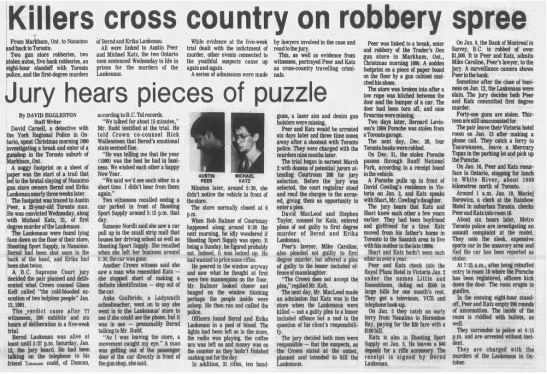
On Sunday, 01-11-20, 69-year-old Berndt Lankenau and his 64-year-old wife, Erika Lankenau, the owners of Shooting Sports Supply located at 3125 Island Highway North, were found murdered inside their gun store business. Both were observed lying face down on the floor and had been shot in the back of the head. Mrs. Lankenau suffered one fatal gunshot. Mr. Lankenau experienced two bullet wounds that caused his immediate death. No suspects have yet been identified. The motive appears to be a robbery turned into executions. Update to follow.

A crime story goes like this:

Prologue — Saturday, January 11th – 5:30 pm

“On the floor!”

Erika Lankenau and her husband, Berndt, stood in silent shock.

“Get on the floor! Facedown! On the floor!”

The owners of Shooting Sports Supply, a prominent Vancouver Island gun store, froze.

Erika’s mouth opened. No words came out.

Berndt Lankenau inched up his hands. His empty palms faced forward.

“You heard it! Get on the fucking floor! Right fucking now!”

“Wha… what is dis business?” Sixty-nine-year-old Berndt Lankenau asked in his German accent.

“Just do what you’re told and no one gets hurt.”

Erika Lankenau, sixty-four, bent her knees. “Do as ve’re told, Berndt. Do as ve’re told.”

“Listen to her, old man. Get your fucking face down on the floor or you’re dead.”

Berndt swallowed. He kept eye contact. Slowly, Berndt lowered and put his right hand on the floor. “Ve don’t vant no trouble.”

Erika lay in a prone position, her face on the cold concrete with her left arm stretched ahead. Her right hand felt for Berndt.

Berndt also obeyed. His arms surrendered beyond his head and his face was on the floor.

“One… Two… Three.”

Bang! Ba-Bang!

This excerpt is the opening from my work-in-progress titled On The Floor. It’s the fifth in my based-on-true-crime series and is about a shocking, sickening, and senseless double homicide I worked on as a detective. Who did it and why? I did not see that coming.

But, what I’ve learned about writing engaging crime stories (so far, and it’s something I’ll never stop learning) is there’s a lot to know. A big learning curve. It’s nothing like writing crime reports—probably the opposite.

Just writing effective dialogue is tricky. I try not to use dialogue tags, and I identify speakers with beats and prompts and hints. The main thing—as I see—is to keep the story rolling and not take the reader out of their suspension of belief/disbelief by wondering who’s saying what, yet not plug the manuscript full of “he said/said she” tags.

Active voice, in my opinion, is crucial to keeping the action flow. This was a tough switch because crime reporting is all done in passive style whereas polished crime and thriller storytellers prominently use active voice. I still fall into the passive trap and many times don’t recognize I’ve slipped.

Show vs tell? Crime reports are all tell and no show. Without getting too hung up about the biggest debate in fiction writing, I try to show what I can in exposition and then tell where it needs to speed things up. And, I believe effective dialogue “shows as it tells” if that makes sense.

Characterization never happens in crime reports. Never. It’s just not done because this brings in the writer’s opinion and that’s not allowed. Ever. Characterization is vital to crime storytelling, though. It’s what makes the reader care… or despise.

Plot? Plot is something I think should be present throughout every part of the story. Probably every word. Plot starts at A and ends at Z, but it’s best plot be subtle, subsurface, and not explained.

Plot might be the key to successful crime writing—above everything else—and plot is what a crime writer must meticulously plan/frame/weave their story into. Everything a crime writer does with dialogue, characterization, and showing & telling has to further the plot. Some might disagree with me about micro-planning, but I don’t want to get into a pantster vs plotter fight.

Point of view? Ha! Crime reports are the epitome of third-party omniscience. Even when the detective has to refer to themself (themselves?), the accepted report format manner is “the writer”. *shivers*

Grammar? Punctuation? Contractions? Tense? Alliteration? Simile or metaphor? Head hopping? Hooks and cliffhangers? Foreshadowing? And all the rest?

No one ever said writing in English is easy. That goes for crime report writers and crime storytellers. I struggle with plot, dialogue, characterization, show and tell, voice, and a whole lot of stuff. I still can’t master the almighty comma. Probably never will.

But, I try not to write crime reports any more.

And, I pay a storytelling editor to help me.

——

Garry Rodgers is a retired homicide detective and forensic coroner. Now, Garry is an investigative crime writer and successful indie author with a based-on-true-crime series including In The Attic, Under The Ground, From The Shadows and Beside The Road. On The Floor is the next release.

Garry hosts a popular blog at DyingWords.net where he provokes thoughts on life, death, and writing. Connect with Garry Rodgers at DyingWords, Bookbub , Twitter and visit his Amazon Profile.

It’s Launch Day!

By John Gilstrap

This is my 21st Book Birthday, and it is always exciting.  Hellfire is Jonathan Grave’s twelfth adventure. If you click the picture, you’ll go to a plot summary and (shockingly, right?) links to buy the book. They make wonderful gifts, remember. And Christmas is less than six months away. Just sayin’.

I frequently tell audiences–and I may have posted here in the past–that I consider myself blessed that I am one of precious few people I know who has been fortunate enough to live out pretty much every item on my bucket list. If you’d asked me when I was 12 what I wanted to do for a living, I’d have told you that I wanted to write novels.

And because it’s Launch Day, I need to beg the forgiveness of the TKZ family. Due to a shipping glitch, a couple hundred books that I was supposed to sign a week ago arrived at my doorstep today. My blog writing time has been taken from me in the best possible way. This, folks, is living the dream. Seriously.

BUT . . . So your time on this site today won’t be entirely wasted, I have a MS Word trick that I discovered a couple of years ago, but which many people don’t yet know about. Have you ever been frustrated when apostrophes face the wrong direction when you’re typing? It happens at the beginning of contracted words like ’cause instead of because. It also happens when you close a quote after an em dash.  Well, there’s a solution and it lies in the Ctrl key. If you type <Ctrl> ‘ and then ‘ your single quote will become an apostrophe at the beginning of your word. After the em dash, <Ctrl> ” then ” will change than annoying opening quotation mark to a closed quote.

Next, time, I’ll be more worth reading, I promise.

Show Don’t Tell!
But Wait! I’m A Storyteller!

Note: I am unexpectedly tied up with some life-stuff in the last couple days (nothing dire; just confoundingly time-consuming). So I hope you don’t mind if I steal a little from myself and revisit an old topic.  But it’s an evergreen one, so let’s discuss anew!

“Don’t tell me the moon is shining; show me the glint of light on broken glass.”
― Anton Chekhov

By P.J. Parrish

I don’t remember the first time I heard this piece of writer advice: SHOW DON’T TELL. But I can tell you I didn’t have a clue what the heck it meant. I mean, aren’t writers storytellers? Isn’t that what this gig is all about?

Didn’t we beg for this when we were kids. “Daddy, tell me a story.”

Don’t we all still need this as adults?  “Man, I don’t want to think about anything today. What’s on Netflix?

Tell me a story. Make me forget the daily churn. Take me far from the madding crowd. Whisk me away to an exotic land.

Tell me a story.
In this century, and moment, of mania,
Tell me a story.
Make it a story of great distances, and starlight.
The name of the story will be Time,
But you must not pronounce its name.
Tell me a story of deep delight.

That’s part of poem by Robert Penn Warren, who knew a little something about storytelling. I’ve always loved that passage because it crystallizes our job as novelists. Tell me a story, in this century, and moment, of mania. 

I’m wandering off topic. Sorry. Less art and more craft, right? Okay, let’s talk about what’s wrong with telling. First off, we shouldn’t confuse the idea of good storytelling and the bad technique of mere telling. They aren’t the same thing.

When you tell your story, you allow your writer-ego to take center stage instead of your characters. You step in and function as narrator instead of letting your story emerge organically through the action, words, thoughts and feelings of your characters.

You might be saying now, so what? Isn’t the writer supposed to take charge? Isn’t the writer supposed to skillfully guide the reader through the story? Yes, it was the norm for most of literature until the 20th century.  Before then, most writers didn’t try to hide their god-like presence. But omniscience voice has become unfashionable and today’s readers seem to crave a personal bond with characters that can come only through a first person or intimate third point of view.

When I was reading up for this, I happened upon a great quote from one of my favorite old-guy authors Flaubert.  He believed that the ideal author should be “present everywhere and visible nowhere.”  Gustave was ahead of his time, I think.

But once again I digress. The concept of show don’t tell is hard to explain. The only way I’ve ever been able to do it is with before and after examples. But first…

A caveat: Not all telling is bad. Sometimes, you have to tell things in your story. Some things are best handled in plain old utilitarian narration:

1. Boring but necessary physical action

You don’t waste words on stuff like this : “He stared at the phone then slowly depressed the little red button to disconnect the line.” You write: “He hung up.” Also, you don’t write: “He slowly swung his bare feet to the cold wood floor, scratched himself, yawned, and got out of the bed in an existential funk.” You write: “He got up.”

2. Boring dialogue

You don’t write:
“Hello Joe,” he said. “Long time no see.”
“Yeah, it’s been about two months.”
“That long, eh?”
“Yeah.”
“What you been up to?” he asked.
“I was carving fishing lures, but the then the wife left me and I found myself living alone and eating and drinking too much.”

Write (tell) this: He hadn’t seen Joe for two months. He looked terrible, like he had been living on Big Macs and Jim Beam. Talk around the station was that his wife had left him and he was going crazy sitting at home making fish lures.

3. Pure description

This is where you the writer can step in and shine because it is you telling us (in your unique voice), what things look, smell and sound like. But usually, description works best and is more involving for the reader if you can filter it through a character’s point of view. Here are two examples. You tell me which one works best.

Third person POV detached

She looked at Louis. He was twenty-nine and bi-racial, his father white, his mother black. She knew he had grown up as a foster child and had made peace with his mother toward the end of her life, but that his father had deserted him.

Third person POV intimate
She turned toward him. God, she loved his face. Forceful, high-cheekboned, black brows sitting like emphatic accents over his gray eyes, the left one arching into an exclamation mark when he was amused or surprised. And his skin, smooth and buff-colored, a gift from his beautiful black mother whose picture he had once shown her and his white father, whom he had never mentioned.

4. Backstory
There are a lot of great posts in our TKZ archives about how to deal with backstory. But in terms of “show don’t tell” we have to concede that backstory is essentially telling. And that’s okay. Just do it well, be evocative and be brief because your reader wants to get back to the forward plot momentum. Example:

The first image that usually came to him when other people started talking about their childhood was a house. Other things came, too. Faces, smells, emotions, mental snapshots of events. But those kinds of memories were fluid, changing for good or bad, depending on how, and when, you chose to look back on them.

But a house was different. It was solid and unchanging, and it allowed people to say “I existed here. My memories are real.”

His image of home had always been a wood frame shack in Mississippi. It was an uncomfortable picture, but one he had held onto for a long time, convinced it symbolized some kind of truth in his life about who he was, or what he should be.

Notice that although this is TELLING (simple narrative), the reader is emotionally involved with the character. And it is short. The very next sentence takes us right back to the present plot.

Okay, let’s go to some specific examples. These are all from a workshop Kelly and I taught a couple years back. We spent three hours just on this topic. We still didn’t get to everything. But maybe seeing before and after samples will help you grasp the idea of SHOW DON’T TELL.

Number 1. The setup is a cop standing over a dead body in bayou country.

Shadows closed around him as the sun played hide-and-seek behind dark clouds. Thunder rumbled in the distance.

Impending rain scented the air. Spanish moss fluttered in a sudden breeze that carried with it the cloying acridness of the swampy bayou.

And at his feet in the vermin-ridden humus lay a young woman. A woman who, until a day or two ago, had hoped, planned, and dreamed. Maybe even loved.

Now she lay dead. Violently wrestled from life before her time. And it was his job to find her killer.

He started when, with a flap of wings, a snowy egret soared into the air twenty feet in front of him. As the regal bird disappeared from sight, Kramer couldn’t help but wonder if maybe it was his Jane Doe’s soul wafting to the Land of the Dead. The way the dove in Ulysses had carried Euripides’ soul.

Despite the day’s heat, a chill seeped through him.

Instinctively and unself-consciously, Kramer crossed himself and wished her soul Godspeed.

Here’s a rewrite of the same scene:

Shadows closed around him as the sun played hide and seek behind dark clouds. Distant rain scented the still air and Spanish moss hung like wet netting on the giant oaks. The cloying acridness of the bayou was everywhere.

Kramer wiped the sweat from his brow and looked down at the dead woman and drew a shallow breath.

She was the third young woman this year who had been left to rot in the muddy swamps of Louisiana.

With a sudden rustle of leaves, a snowy egret soared into the air twenty feet in front of him. Against the slanting sun it appeared little more than a ghostly white blur but still he watched it, oddly comforted by its graceful flight up toward the clouds.

Then, with a small sigh, he looked back at the woman, closed his burning eyes and crossed himself.

“God’s speed, ma cherie,” he whispered. “God’s speed.”

Why does the second one work better? Why does it hit our emotions harder? Because the writer got out of the way and let the character’s actions and words move the story along.

Example 2. This is the opening of chapter 1 and the setup is a woman overseeing a parade at Disney World. I think this writer does some good things here, and has a nice eye for detail. But notice first, how dull it looks on the page (see old TKZ posts on paragraphing and white space). And keep an ear tuned for places where the writer could have gotten out of the way — even though this is first person! — and let the character carry the tune:

Dorothy Gale got it wrong. Even as a kid, I didn’t understand why she was so hell-bent to hustle herself out of Oz to return to Kansas. Was she crazy? I ached to leave ordinary behind and devoured every magical Frank Baum book in the library. When I was nine, I vowed I’d find the Emerald City one day and I did. The Wizard—or rather Orlando’s theme park industry—set a shiny, incredible Land of Oz at the end of my personal yellow brick road.

Ten years ago, with a fresh college diploma—Go Terps—I’d found my niche and myself when I snagged my first job at Oz. Work felt like play in my fairytale world. And my disappointed parents stopped blaming themselves for those library trips when Oz promoted me to assistant department manager for process improvement. Tonight, we were rolling out a new parade, and for me, the excitement rivaled Christmas Eve.

Churning the humid Florida air, the dancing poppies whirled by in a swirl of red, plum, and purple, so far a flawless debut. Across the Yellow Brick Road, my boss Benjamin flashed me a rare smile and gestured to his stopwatch. The lilting music gave way to the recorded yipping of hundreds of puppies, and forty employees pranced by in shaggy-doggy costumes. Toto’s enormous basket-shaped float reached the corner, and excited children squealed, adding a thousand decibels to the noise.

“Slower, Toto,” I murmured into my mouthpiece. “Turn on three.” I counted and the basket’s driver, hidden deep inside the float, turned with inches to spare.

Here’s a quick rewrite.

The red and pink poppies danced in the humid Florida air. The lilting music gave way to the recorded yipping of hundreds of puppies, and forty employees pranced by in shaggy-doggy costumes. Toto’s enormous basket-shaped float reached the corner, and excited children squealed, adding a thousand decibels to the noise.

Across the Yellow Brick Road, my boss Benjamin flashed me a rare smile and gestured to his stopwatch. So far, it was a flawless debut. I pressed my clipboard to my chest and smiled.

God, how I loved it here.

My own fairy tale world.

My own private Oz.

“Slower, Toto,” I murmured into my mouthpiece. “Turn on three.” I counted and the basket’s driver, hidden deep inside the float, turned with inches to spare.

My own parade – every day.

Dorothy got it wrong. Even as a kid, I never understood why she was so hell-bent to get out of Kansas.

I think the writer got into the scene way too early and it’s way too much exposition “telling” backstory so early in the book. And I think you always save your best line for last. In this case, it was “Dorothy got it wrong.” The writer opened with it and as such, it’s not not bad. But I think it works better AFTER we know we’re at Disney World. Plus, I like the technique of ending a scene with your best line because it works as an emphasis of the point you are trying to make with your scene. And every scene does have a point, right?

Another example. The set up is an unidentified person creeping through a house after already finding one dead body. We do not know who this is, what gender, or why he/she is there.

In a large pantry off the kitchen, I found the maid. She, too, was dead. From the marks on her neck, my guess was someone had strangled her. As I completed my trip around the downstairs, I heard a noise from the front of the house, then a call of, “Police. Anyone here?” I took a deep breath and started toward the front room.

The cops met me in the hall with the obligatory order to drop my weapon and assume the position against the wall. I complied and a young patrolman named Johnson explored areas I preferred not touched by a stranger. However, I understood. I’d have done the same if I had found anyone during my search, and I wouldn’t have concerned myself about his or her privacy.

Once he finished, I showed my PI credentials.

In the rewrite, I turned the narrative into dialogue — which is a type of action and thus is showing.

In a large pantry off the kitchen, I found the maid. She was face up on the marbled floor, still dressed in her baby blue cotton uniform. I knelt and when I moved her thick pony tail, I saw a clothesline wrapped tight around her neck. She had no pulse. It hit me that I met her three times on previous visits and yet I could not remember her name.

“Police! Anyone here?”

I turned toward the voices, toward the long cavernous hallway that led to the living room. Before I could take a step, I felt a jab of steel against my temple and someone’s hot breath in my ear.

“Against the wall, lady.”

“But —”

“Shut up,” the cop said as he patted around my ass for a weapon. He found my gun, ripped it from its holster and roughly turned me around. I didn’t know the officer in front of me but I saw Sgt. Joe Highland standing in the doorway, trying not too hard to stifle his snicker.

“She’s okay, Jim,” he said. “Her name is Jenny Smith. She’s a local P.I.”

One more example but it’s one of my favorites. The setup is a TV anchorwoman looking forward to meeting her boyfriend after work. I like it because the writer was so close to getting it right. But he needed to focus in the special details and actions that show (ie illuminate) character.

Tonight, however, Corrie was looking forward to dinner with Jake.

Jacob “Jake” Teinman employed a wicked, take-no-prisoners wit. She found his sense of humor engaging, and delighted when he would elevate one eyebrow while keeping the other straight alerting his target to an oncoming barb. Corrie truly liked Jake, a lot, but experience taught hard lessons and she had qualms about the two of them as a couple.

They were awfully different — she: a public persona, trim, career driven, self-centered, frenetic and Irish Catholic; he: private, stocky, successful with a controlled confidence that drove her nuts, and Jewish. At least that’s how she pictured the two of them. She wondered if Jake’s version would agree.

She’d noted they’d been dating exactly one year and he had made reservations at “The 95th” just six blocks from the WWCC studios. It was sweet of Jake since he knew it was one of her favorite places.

Here’s the rewrite. Again, notice how breaking up big blocks of type make your story feel more urgent, more interesting. Don’t be afraid to paragraph more!

Tonight, Corrie was looking forward to dinner with Jake. And as she watched him come in the restaurant door, she smiled. It used to annoy her when people said how different they were. But it was true.

Jake…

Stocky. Dark. Jewish. Coming toward her with that confident swagger.

And her…

Tall. Blonde. Irish-Catholic. Sitting here wondering if he’d show up.

He kissed her on the cheek and sat down.

“You remembered,” she said.

He frowned. “Remembered what?”

“That this is my favorite restaurant.”

He glanced around before the puppy-dog brown eyes came back to hers. “Sure, babe,” he said. “I remember.”

So, in summary, how do you know when you’ve slipped into telling mode? Look for these pitfalls:

  • Narrating the physical movements without being in character’s head.
  • Use of too many “ly” words in action or in dialog (i.e. She said impatiently, walked slowly, yelled angrily.)
  • Use of stock descriptions, purple prose or lengthy descriptions of places (and people) especially those that have no bearing on the plot.
  • Too many adjectives and cliches.
  • Omniscient point of view. Don’t include details your character can’t see or experience. ie: a man who is pushed through a window would not be focusing on glittering shards of glass as he plummets six stories to the ground. Or this ratty old technique: “Little did Nancy know, as she loaded the Glock, that tomorrow it would be used to kill her.”
  • Here are the strengths of SHOWING:
    Action that uses the senses, stays within the character’s consciousness and uses words and phrases that reinforce the mood of the scene.
  • Strong verbs. (walked vs jogged, ran vs raced, shut the door vs slammed the door.)
  • Original images and vivid descriptions that are filtered through the character’s senses in the present.
  • One compelling adjective vs. a string of mediocre ones.
    Keep POV firmly in character’s head. (Establishes sympathy and connects emotionally.)

One last thought. It’s helpful to think of your story as a movie. Those of you who’ve studied script-writing know exactly what I mean, how you can convey the story ONLY through action and dialogue. (Unless you’re Stanley Kubrick doing “Barry Lyndon”). But for the rest of us, let’s just try to remember what Flaubert said.  Be present everywhere in your story and visible nowhere.