How to Move From One Scene to the Next

by James Scott Bell
@jamesscottbell

Terry’s helpful post on transitions got me thinking (always a dangerous thing). So today I’d like to add a few nuggets of my own.

Simply put, transitions are what take you from one scene or POV to another, or ahead in time within the same scene. Here’s an example of a location transition:

     John stormed out of the apartment. If the big man wanted a showdown, he was going to get it.
     Putting pedal to the metal, John tore across town, ignoring stop signs and pedestrians and at least one cop.
     Entering the office, John heard the receptionist say, “Good morning.”
     “Whatever,” John said.

We have moved from John’s apartment to his office—change of location.

Now an example of time transition:

     “You want to know why you’re being let go?” Stevenson said.
     “Yeah,” John said. “Fill me in.”
     “Sit down, and cool off. I’ve got some things to tell you.”
John plopped in a chair.
     “I want to tell you about my dad, and how he started this firm,” Stevenson said. “I need to start when I was a kid.”
     Half an hour later, John was ready to jump out the window. Stevenson hadn’t stopped talking the whole time.

We don’t get the entire Stevenson speech. Unless it’s crucial to the plot, we don’t need it. Time transitions are easy. Just add one line to let us know we’ve moved ahead within the same scene.

Now let’s look a little more closely at location transitions. I’m not talking about chapter breaks here, but moving to another setting within a chapter. When you do change locations, you can stay with the same viewpoint character, or shift to another POV. But you have to let the reader know what’s going on in the most efficient way possible.

There are three techniques:

  1. Narrative Summary

As the term suggests, you can get from one location to the next by summarizing the transitional stuff (rather than showing each beat). Unless plot or character material is necessary, just get us to the new location with as little muss as possible. This is the narrative summary from in the first example in this post, above:

Putting pedal to the metal, John tore across town, ignoring stop signs and pedestrians and at least one cop.

We aren’t shown the drive. That would involve description, action, perhaps John’s internal thoughts as he drove. But if none of that has any value to the story, don’t put it in. Use narrative summary to get us to the new scene toot sweet.

The pulp writers were especially adept at this. Here’s how Talmage Powell (1920-2000) did it in his Black Mask story “Her Dagger Before Me.”

     “All right,” I said. “I’ll do what I can to help you. This is murder. Contrary to what the public thinks, private dicks don’t like to get mixed in murder. If we have to wade through murder the cost is high.”
     “I know,” Phyllis Darnell said. “I’ll pay.”
     “I’m not worrying. After all, I’ll have the letters, won’t I?”
     I ushered her out, showered, and went over to Mac’s garage, where my coupe had been laid up with a ring job.

  1. White Space

Another way to move is by putting in a space break, like this:

     John stormed out of the apartment. If the big man wanted a showdown, he was going to get it.


    Entering the office, John heard the the receptionist say, “Good morning.”
    “Whatever,” John said.

White space is also how you switch between POV characters within the same chapter. Just be sure to identify the new viewpoint character in the first line:

     John stormed out of the apartment. If the big man wanted a showdown, he was going to get it.


    Gil Stevenson stuck his head out his office door. “Has Stone come in yet?”
    “No, Mr. Stevenson,” Peggy said.
    “Well, get him in here the moment he arrives!” He slammed the door and took a deep breath. This was not going to be one of his better days.

  1. Just Be There

Last week I wrote about the Bill Lennox stories by W. T. Ballard. For fun I re-read the first one, “A Little Different,” published in Black Mask in 1933. In one scene Lennox is in a cab being followed by a dirty PI. He gives the cabbie a fin ($5) to lose him.

     The driver grinned and turned sharply onto Vine, right on Sunset, left at Highland, crashing a signal. Finally, at the corner of Arlington and Pico, he pulled to the curb. “Where to?”
     Lennox said, “Take me to Melrose and Van Ness.” The driver shrugged and turned towards Western.
     Lennox got out at the corner and walked to the apartment house.

What happened between the driver turning towards Western and Lennox getting out? Driving, maybe some talk, arriving, pulling to the curb, etc. We don’t need any of that. Here’s a little secret: the reader fills in that stuff subconsciously and thus the pace doesn’t slow one bit.

And speaking of pace, how you handle transitions is a major way to control it.

The above examples keep the pace crisp. But suppose you want to slow things down a bit, give the reader a breather, and stick in some deepening of character? Just use the transition to add internal thoughts or, if you’re brave enough, a flashback.

Internal thoughts

     Putting pedal to the metal, John tore down the street. He saw a cop ahead and slowed. One thing he didn’t need was a ticket. One thing he did need was a drink. Maybe a quick stop at Barney’s would help. Sure. A little liquid courage never hurt.
     Of course it hurts, you dope. You know how you get. Two shots of Bushmills and you’re ready to give Mike Tyson his comeback bout.

Flashback

     Putting pedal to the metal, John tore down the street. He saw a cop ahead and slowed. One thing he didn’t need was a ticket. He stopped at the red light like an A+ driving student.
     Which he’d once been, in high school. That was before the accident. He and Tom Barker were out one night, John driving his dad’s Porsche. Tom wanted In-N-Out. John wanted Boone’s Farm Apple Wine.
     “We’ll get some guy to buy it for us,” John said. “Then we’ll go stuff your face.”

Needless to say (but I’ll say it anyway) the skillful handling of transitions, and using variety in the technique, is a way to subtly enhance the fictive dream for the reader. And dreamers buy books.

Now let us transition into comments.

***
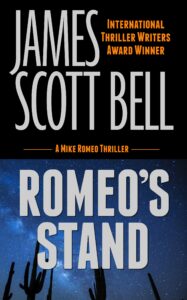
 

Tomorrow is release day for Romeo’s Stand, the fifth Mike Romeo thriller (the books can be read in any order). See the listing here!
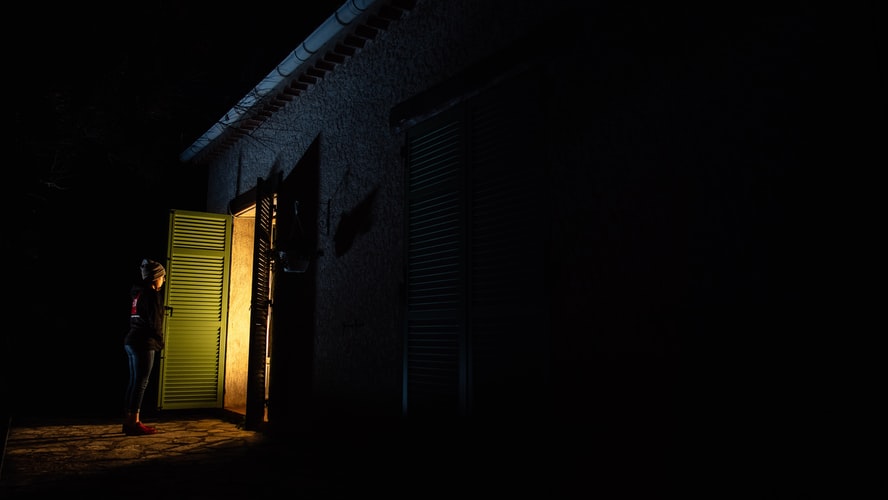
The Empty House

Photo by Rudy Rodouin from unsplash.com

Some of you — okay, both of you — have told me in the past that you like my stories about houses. Here comes another. It also happens to illustrate (as I have once or twice here) that Facebook isn’t always so bad after all.

I misspent my formative years in Akron, Ohio.  I was driving with a young woman one afternoon in 1971 when she pointed out a nice ranch-style house on a corner. “No one has ever lived there,” she said. I stopped the car for a few seconds and checked the place out. It displayed a well-maintained exterior with a nicely manicured lawn. That said, there were no curtains hung in the window and it gave off that psychic wheeze of non-occupancy that some houses do when they sit empty for a while. “What’s the story?” I asked.

The story as told to me was that the house had been built by a husband for his wife to her specifications. He had gone over the plans with her regularly and frequently brought her to the building site, making changes that she requested. When the house was finished she decided that she did not like it and refused to move in. He refused to sell it. They accordingly stayed in the home they were living in and never moved into the new one. The husband continued to maintain both homes. 

I would occasionally drive past that house to see if anyone had moved in. No one had. Time passed.  I moved from Akron in 1978 and rarely returned. Life went on. I would intermittently think of that house and that story but only in passing, such as when telling the tale to someone else as a bit of whimsy.

Fast forward. The world, as Roland the Gunslinger would say, moved ahead. My fifty-year high school class reunion resulted in a return trip to the city which had been known as the “Rubber Capital of the World” (due to the manufacture of tires, as opposed to what you were thinking!) but was now known as “Crakron” as the result of the illicit drug trade which had taken root. I began woolgathering and thought of all the times that I had driven past that empty house. I remembered what it looked like and the general area where it was but couldn’t remember the streets that formed the intersection where it rested. I mentioned the story to a few friends of mine who had lived in the area but no one knew what I was talking about. One friend even patiently drove me around the area for a couple of hours in an attempt to locate the house but to no avail. 

 I started wondering about the house again last weekend after watching You Should Have Left — a contemporary haunted house movie — and did what anyone does these days when they have a question. I went on Facebook. I went to a page devoted to Akron’s history and posted the story about the house. I also asked if anyone had heard the story and knew where the house was located. 

It only took a few minutes for me to receive several responses. There were some variations but the consensus was that the story I had been told wasn’t quite accurate. A man had purchased the house with the intent that he and his betrothed would live there after their wedding. She, as the story went, literally left him standing at the altar. He was devastated and retained ownership but not occupancy of the house until his own death, apparently hoping that the love of his life would return. She did not. Someone else purchased the house subsequent to his death, tore it down, and built a new one on the lot. 

I did an online search to find the name of the original owner but the available records on the website didn’t go back far enough.  Finding that information may well involve another trip to Akron and a physical document dive in a government office but I want to hunt down the name of the heartbroken owner and then pay him a visit at his last resting place. I’m going to tell him that whoever jilted him did him a  solid. Better to have one major hurt than experience a thousand smaller ones every day. 

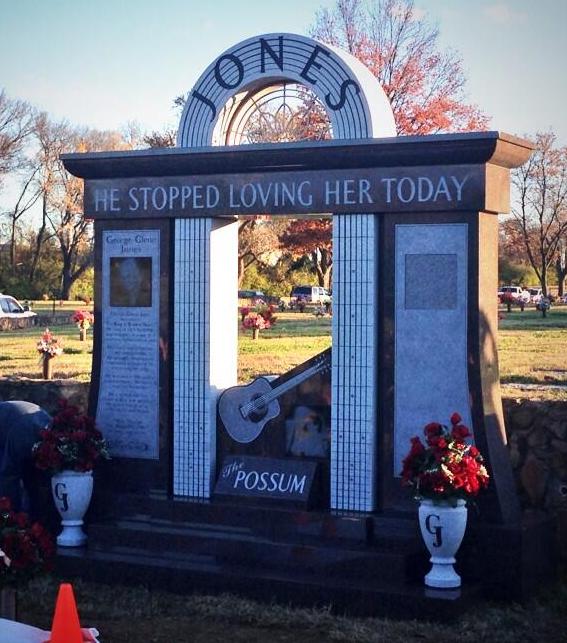
There is a story everywhere. You just have to find it. There is also a country song for everything. There are two that apply to the story of the jilted groom from Akron. One is by George Jones and the other is by Trace Adkins. 

If you would like to share an unusual or eccentric story about your home town, we would be interested in reading about it. It can be an urban legend or one that is lesser-known, even if it is known only to you. Either way, please share it with us. Thank you.


True Crime Thursday – Murderpedia

by Debbie Burke

@burke_writer


Public Domain Review

Crime writers have—shall we say?—unusual research needs. We often joke that law enforcement could knock on our doors at any moment because of suspicious internet searches.

Recently, I ran across a site called Murderpedia. It claims to be the largest free database of serial killers and mass murderers around the world. It lists more than 5800 male murderers and more than 1000 female murderers going back hundreds of years in history.

It’s indexed alphabetically by both the killer’s name and by the country where the murder(s) occurred. Each entry chronicles the crime(s), method of death, and ultimate disposition of the case–hanging, firing squad, guillotine, life in prison without parole, etc. Additionally, there are photos, artists’ renderings, and illustrations to go with some stories.

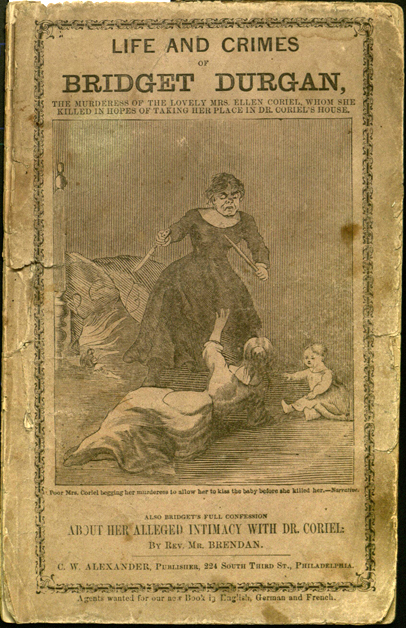
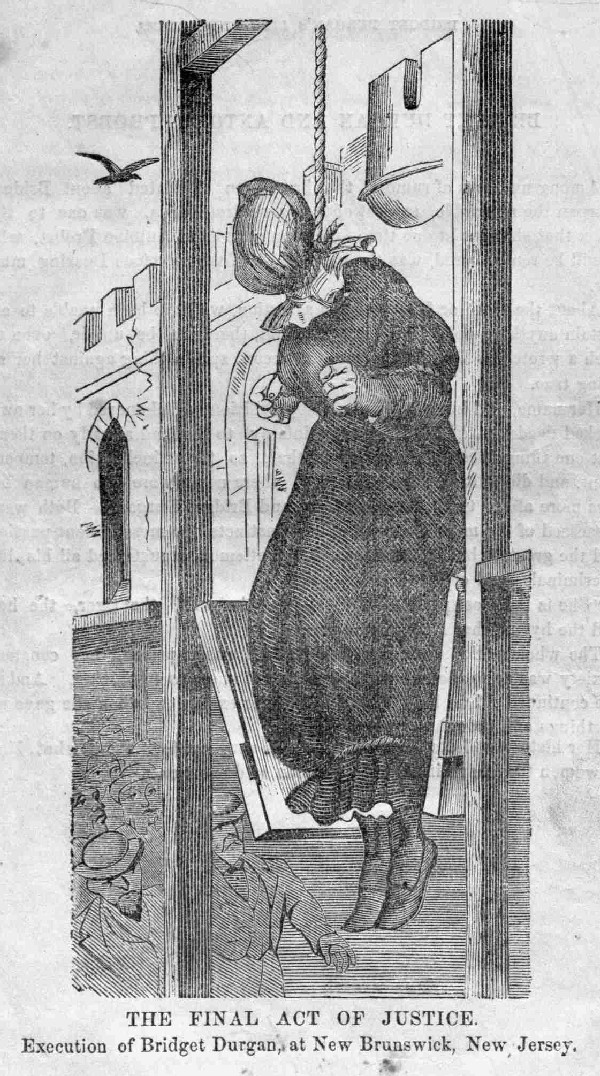
At random, I chose a link to Bridget Durgan, an Irish housekeeper who was so horribly mistreated by her various employers that she vowed to kill them if she ever had the chance. In New Jersey in February, 1867, an opportunity arose. Durgan stabbed and clubbed her employer, Mrs. Mary Ellen Coriel, to death then set the Coriel house on fire, blaming the crime on robbers. Nobody believed her and she was found guilty at trial.

While in prison awaiting execution, Durgan revealed her sad life to the Reverend Mr. Brendan who published her story as a cautionary tale. The illustrated pamphlet was also likely sold to spectators at Durgan’s hanging.

Public Domain Review

Lurid pen and ink drawings show the mortally wounded Coriel still alive, lying on the floor near her baby, Mamey, and the wild-eyed Durgan standing over them. Durgan reportedly said she allowed Coriel to kiss her child goodbye before finishing her off.

Durgan was hanged in August, 1867.

After perusing the Murderpedia site for an hour (or three!), I was struck by the immense amount of work that had gone into researching and cataloging thousands of cases. Then I noticed the last update was in 2017.

What had happened to Murderpedia?

Down the rabbit hole I tumbled.

I found out that the curator/director was a Spanish criminologist and author named Juan Ignacio Blanco whose own story is nearly as strange as the cases he chronicled. In 1992, he investigated the triple murder of three teenage girls, known as the Alcasser case. He believed two men accused of the crimes were scapegoats who’d been set up by wealthy, politically-connected, Spanish power brokers to cover their own guilt and to divert attention from their other crimes, including pedophilia.

Blanco was branded a conspiracy theorist.

After he published a book about his findings, he was convicted of insulting and slandering officials in charge of investigating the case and served time in prison. His book was judicially seized in 1998 because it included autopsy photos of one victim without her family’s consent. Accusations swirled that Blanco and the father of another victim in the case had set up and operated a foundation that resulted in hefty profits to both of them.

Shortly before Blanco’s death from cancer at age 63, he appeared in a 2019 Netflix series that reexamined the Alcasser Murders.

Was Juan Ignacio Blanco a greedy opportunist who capitalized on a terrible tragedy or a courageous crusader against corruption seeking truth and justice?

Whatever he was, he left behind the vast library of Murderpedia, crammed with painstaking research that’s a fascinating resource for crime writers.

~~~

TKZers: What’s your favorite crime research rabbit hole?

~~~


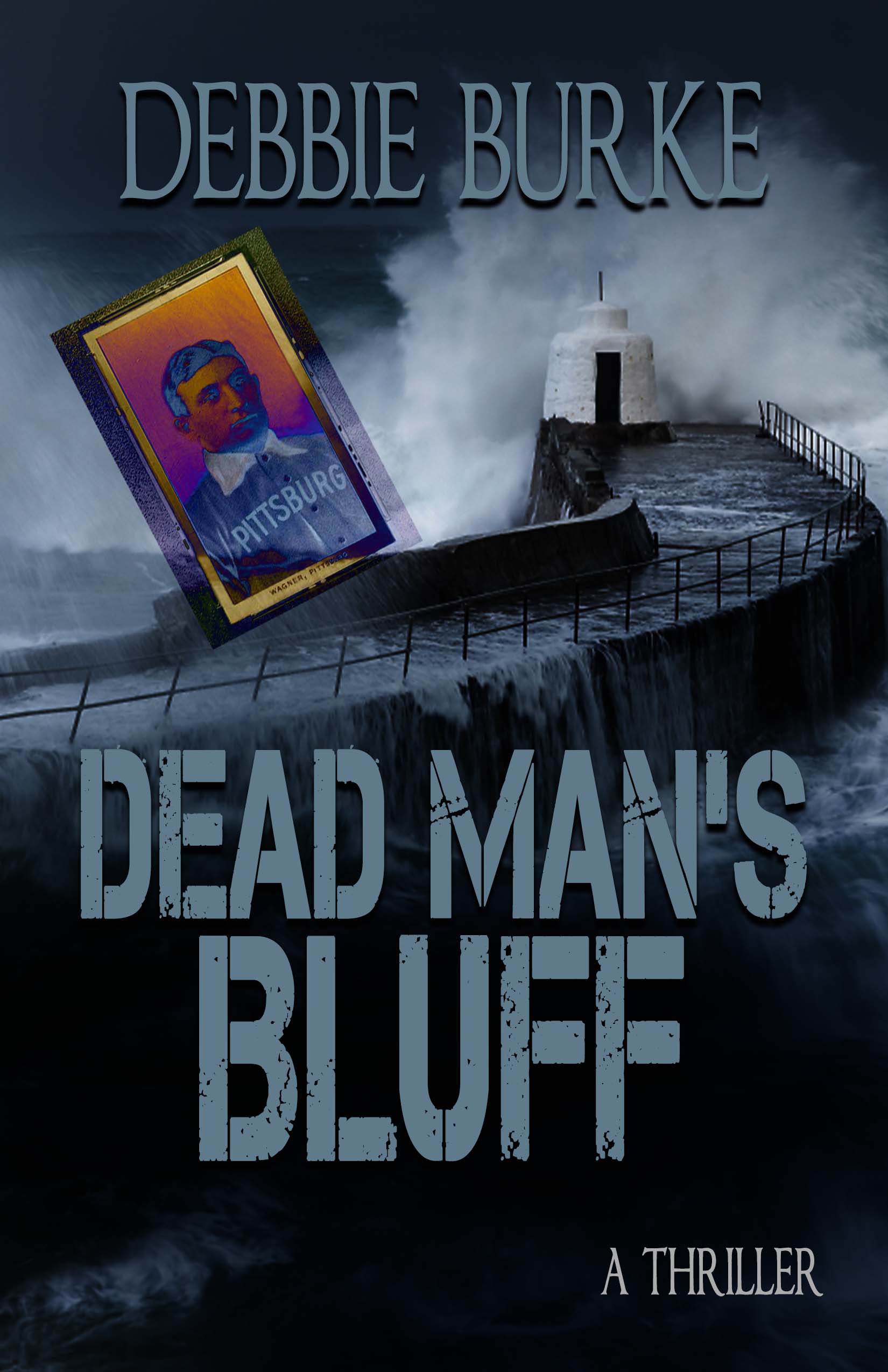
If Hurricane Irma doesn’t kill Tawny Lindholm, a shady sports dealer will when she becomes the bargaining chip in a high-stakes gamble. The winner lives, the loser dies.   

Debbie Burke’s new thriller, Dead Man’s Bluff is now on sale at the introductory price of $.99. Here’s the link.

Crime Dogs


By Debbie Burke

@burke_writer

Gruesome Warning – This post contains graphic details of a horrific bombing that killed three people, including a two-year-old child.

Luna, Gauge, Ace – photo courtesy of Kerrie Garges

Dogs are helpmates that do most anything their people ask of them…including jobs that no one, human or animal, should have to do…like finding body parts after an explosion. 

Kerrie Garges has spent nine years as a volunteer dog handler for Alpha K-9 Search and Rescue (SAR) in Chalfont, PA, population 4,000. Until the COVID 19 crisis, her day job was teaching environmental education at Peace Valley Park Nature Center in Bucks County.

She fell into SAR “by accident” as a dog-loving empty-nester looking for a way to help her community. At a training exercise with her then-new Labrador, Ace, the instructor observed that Ace showed an aptitude for “air scent” (tracking smells through the air rather than on the ground) and invited her to join SAR.

Luna hot on the trail with Kerrie – Photo courtesy of Kerrie Garges

Ace, age 10, is now retired but Kerrie continues to train and work with two more Labs: Luna, age 5, is Trailing Certified and is training for Human Remains Detection (HRD). She practically yanks Kerrie’s arm out of the socket when she’s on the hunt.

Gauge is Kerrie’s rambunctious one-year-old about which she jokes, “Just shoot me in the head!” He’s gradually growing out of puppyhood as he trains for certification in Live Find and HRD. She says, “When Gauge has his vest on, he knows he’s working.”

Most searches Kerrie has worked involve people with dementia who’ve walked away from home and gotten lost.

A completely different—and hideous—search would test the mettle of Kerrie and other dog handlers who were called in by the Lehigh County assistant coroner to work a murder-suicide crime scene in 2018. 

On September 29, at 9:30 p.m., an explosion shook the Center City neighborhood in Allentown, PA. The cause was initially believed to be a car fire. First responders instead found that a powerful homemade bomb had detonated inside a car, killing three people and damaging surrounding buildings and homes for blocks.

Investigation determined the bomb had been built by Jacob G. Schmoyer, 26, with the express intention of killing himself, his two-year-old son Jonathan (“JJ”), and a casual friend David Hallman, 66, to whom Schmoyer owed $150. Before the explosion, Schmoyer had sent letters to family members and the Allentown Police Department in which he expressed anger as well as concern that JJ might have autism.

That night, Schmoyer lured Hallman into his Nissan Altima, where he and JJ were already sitting, with the promise to pay back the money.

Instead, he detonated the bomb which killed the three occupants, shredded the car, and cast debris and body parts over a five-block area.

Following the initial investigation, Lehigh County’s assistant coroner requested help from Alpha K-9 SAR to locate human remains amid the rubble. Kerrie said, “We’re a small group without a lot of resources, so we were honored to be called for this important mission.”

For this job, Kerrie did not bring her own dogs, which are still in training. Dogs must be tested and certified by National Association of Search and Rescue (NASAR) to perform real-world work. Kerrie acted as a support person to handlers and three dogs that are certified in HRD.

On the morning of October 2, the Alpha K-9 SAR volunteers arrived in Allentown, an hour’s drive from Chalfont. An eight-block area had been cordoned off. They were escorted past crime scene tape into destruction that Kerrie described as “a war zone.”

Following the blast, residents of surrounding blocks had been evacuated. Broken glass, tree limbs, chunks of buildings, and hazardous debris were everywhere, causing Kerrie concern because the dogs didn’t have protective footwear. Coroner’s office personnel offered to adapt the knee-high protective coverings that humans wore to fit the K-9s. After discussion, the handlers decided that, since the dogs weren’t accustomed to working with booties, wearing them might be too distracting. They closely monitored the dogs’ paws but fortunately there were no injuries.

Kerrie expressed “new respect for disaster dogs” working under similar dangerous conditions.

The day was hot and coroner’s office personnel made sure the volunteers and dogs had extra water and could cool off in air-conditioned vehicles when necessary.

The densely-populated, inner-city area of Allentown contrasted sharply with the suburban schools, parks, and rural locations where the Chalmont team normally worked. Older houses were crowded together, many converted to multi-family apartments. Narrow passageways called “bakers alleys” separated the buildings.

Adjacent to the cordoned-off crime scene area, Kerrie smelled meth cooking. Although law enforcement was nearby, she was startled to see bystanders carrying on drug deals and smoking marijuana. Those scents, mingled with dust and smoke caused by the explosion and fire, created a confusing mix for the dogs to sort out. She said, “It took about twenty minutes for them to get acclimated to the scene” in order to focus on finding human remains.

The coroner’s office created a map of the areas to be searched. Each dog team was assigned a different sector. Coroner’s assistants accompanied the teams, taking photos of pieces of burned flesh as they were found. The evidence was then “bagged and tagged” and taken to the crime lab.

One dog kept wanting to climb over a stone wall to get into a particular house. Inside, the searchers found shattered windows and furniture overturned by the explosion. A TV was still on, forgotten when residents quickly evacuated. The team also found a frightened puppy that had been left behind, tied up with no food or water. “That bothered me a lot,” Kerry said. Officers carried the pup to safety.

As they proceeded through the area, the dogs kept raising their heads, looking up, which mystified the handlers who couldn’t see anything. At last, they discovered “a giant flap of flesh” stuck high in the gutter of a four-story building, a horrifying indication of the power of the blast.

“We [searchers] felt disgust,” Kerrie said. “Not stomach-churning kind of disgust but rather mental and emotional disgust that the man had killed his little boy and his friend and caused all these poor people to be ousted from their homes and businesses.”  

The search lasted four hours and located human remains as far away as five blocks from where the bomb had exploded. Each dog found at least three pieces, the largest being the flap of flesh in the gutter. The smallest was a charcoal-colored, wafer-thin piece of burned flesh the size of a quarter. Kerrie recalled, “I’d watched a documentary about [the atomic bomb at] Hiroshima and that’s the first thing I thought of when I saw this piece.”

Even veteran law enforcement officers were shaken by the devastation and the senseless death of a toddler. Counselors were offered to those struggling with what they’d seen.

When I asked Kerrie how the dogs reacted to such horrors, she said, “Dogs consider it a job.” They were just happy to please their humans.

Letter of appreciation from Lehigh County Coroner to SAR – photo courtesy Kerrie Garges

The handlers had a hard time expressing their emotions about the gruesome mission but they all felt pride in the dogs and the teamwork of SAR. “The memory always stays with you. You never forget,” Kerrie said. “But this is what we train for every week. We want to utilize the skills we’ve learned. We almost felt rejuvenated, as well as proud and humbled to be called to do this important work.”  

Investigations continued for more than a year by local police and the Bureau of Alcohol, Tobacco, Firearms and Explosives, which determined Schmoyer acted alone and the explosion was not related to terrorist activity.

No amount of investigation will ever explain why Schmoyer intentionally killed his own child and a friend who’d been decent enough to lend him money.

Gauge after a successful training session – photo courtesy Kerrie Garges

SAR volunteers perform difficult jobs few people could endure. They can be summoned in the middle of the night or during miserable weather. They finance training out of their own pockets. They work without pay. They’re proud of the job they do and the strong bond they develop with their dogs.

Crime dogs perform other functions, too. One recent evening, Kerrie felt particularly blue because of current events in the world. Her youngest dog, the often-exuberant Gauge, came from two rooms away and climbed on the couch beside her. He laid one paw on her shoulder and snuggled his face in her neck. “He made me feel better,” Kerry said. “He made me smile.”

That may be a dog’s most important job.


~~~

TKZers: Have you been involved in SAR work? Have you been in a situation where search dogs were deployed?

~~~


A big shout-out of appreciation and gratitude to TKZ regular reader Brian Hoffman who designed this beautiful new cover for Dead Man’s Bluff.

Brian, you’re the best! 

Today is launch day for Debbie Burke’s new thriller, Dead Man’s Bluff, on sale for only $.99 for a limited time at this link.

Pantsing Through the Pandemic

Courtesy of eltpics

Please welcome Steven Ramirez to TKZ!

If, as Stephen King likes to say, the road to hell is paved with adverbs, then finishing a novel is paved with mouse traps; and here you are trying to get across that minefield in your bare feet.

As writers, we tend to get distracted—a lot. Thanks, Netflix. And then, there’s life. How many of you have said, “If only I could focus exclusively on my writing, I’d finish this damn book, by cracky.” I know I have. Repeatedly over the years, much to the irritation of my long-suffering wife.

Then, a little thing called COVID-19 happened. We were told we had to shelter in place. Sure, there was still Netflix and Amazon Prime to distract us, but we couldn’t go anywhere. What’s a writer to do? Well, like the wily poker player whose bluff was called, I decided to shut up and write. And guess what, I finished the damn book.

Pantsers Are People, Too

I’m a pantser by trade. That means I don’t have a clue where I’m heading when I begin a new book. That’s not entirely true. I do know where I would like to end up, but I haven’t worked out the details. I have a main character in mind, of course. And I’m pretty clear on the conflict arising between the MC’s goal and the thing standing in the way. Other than that, I’m free as a bird when it comes to the plot. I suspect that some plotters look at pantsers as undisciplined children with uncombed hair and sticky fingers. My image of a plotter is a person who dresses impeccably and has an English accent. Borrowing from the wonderfully insane film Galaxy Quest, plotters are Alexander Dane, while pantsers are Jason Nesmith.

The book in question is the third in my supernatural suspense series, Sarah Greene Mysteries. My main character sees ghosts, which tends to get her into serious trouble. Over the course of the three novels, Sarah goes from discovering a mirror that holds the spirit of a dead girl to the entire town pretty much erupting into flames.

Now, as a card-carrying pantser, I had no idea how I was going to go from a murder mystery to Armageddon. I had to trust that the characters would get me to my destination. Spoiler alert—going about crafting a novel this way requires you to rewrite. Often. That’s the downside. The upside is, there are lots of opportunities for discovery. And then, there is what I like to call the happy accident, which in my opinion, is a gift from heaven and makes for a better story.

Brain Teasers

I’m no psychologist, but I suspect that somewhere deep in the nooks and crannies of my brain is THE STORY. By the way, can you even have a nook without a cranny? Just wondering. Anyway, like a sculptor working a block of marble, my job is to remove everything that isn’t the story. I’m pretty sure this is easier for plotters. I’m guessing they sit down and chisel out the plot until it operates like a Swiss watch. That’s just not for me.

“So, what about writer’s block, Mr. Too-Busy-To-Be-A-Real-Writer?” you say. Well, I don’t believe in it. Sure, there are times when we get stuck. But guess what. Even when the words are not flowing onto the page, your brain is working on the story. Maybe not consciously. But, trust me, you’re still writing. My belief is, once we can accept that not all writing translates into words on paper, the more relaxed we become. I was going to say happy, but whoever heard of a happy writer, am I right?

When I get stuck, I set aside the manuscript for a few days and either work on something else (and you should always have something else to work on) or watch television. While my conscious mind is laughing its butt off at The Good Place, my unconscious is free to work. In fact, my psyche—whose name is Stan, by the way—was probably praying I would stop looking over his shoulder and vacate the room so he could get back to creating. Stan does tend to get irritable. But I don’t blame him. I mean, I’m no picnic. Ask my wife.

Survey Says

So, where does all this leave us in terms of writing while sheltering in place? Well, when things happen that are beyond our control, we are presented with choices. I suspect that many of you out there took a look at the situation and, like me, wrote like the wind these past few months. Maybe you didn’t finish your book, but I’ll bet you made significant progress.

But what do we do when life returns, more or less, to normal? With luck, we’ve developed the discipline to carve out time each day to write. And that, my friends, is a happy accident.

TKZers: As writers, what are some of the ways you have taken advantage of these pandemic times?

Steven Ramirez is a 2019 Best Indie Book Award (BIBA) winner and a 32nd Annual Benjamin Franklin Award Silver Winner for The Girl in the Mirror, the first novel in the supernatural suspense series Sarah Greene Mysteries. A former screenwriter, he also wrote the acclaimed horror thriller series Tell Me When I’m Dead and Come As You Are, a horror collection. Steven lives in Los Angeles.
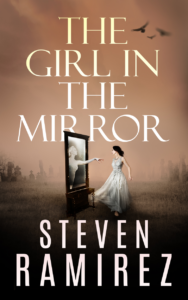


The Girl in the Mirror: A Sarah Greene Supernatural Mystery
While renovating an old house, Sarah Greene finds a mirror holding a dead girl’s spirit. As she explores the house’s secrets, Sarah awakens dangerous dark forces that could harm her.

Available now at Amazon.

Eyes Front

By John Gilstrap

Self-doubt is a crippling condition for any artist. (Spoiler: It never goes away. You just learn to manage it.) For young or inexperienced artists–hereinafter called writers because this is a blog about writing–self-doubt can be paralyzing. You write something you think is pretty good, but when you show it to your “beta readers” they have suggestions, so forward progress stops on your story.

The writer’s internal monologue goes something like this: I thought that description of the lightning strike was pretty strong. But if Beta George didn’t like it, there must be something wrong. He said he didn’t like the word “struck” because he thought it was a cliche. And he said Main Character Harriett wasn’t scared enough. I don’t get why she’d be more scared than she is, but if Beta George thinks. . .

I call this navel gazing. No further work gets done on the story because the writer is wrapped around his own axle trying to make Beta George happy–even if it’s against the writer’s own better judgment.

Does this scenario sound familiar to anyone: Mary has been working on her story for eighteen months but hasn’t gotten past Chapter Three. Every time she tries to move forward, she looks back and realizes that what she’s written is terrible. She wonders why she ever thought she could write a book, maybe has a little cry or maybe a big cocktail, and then she goes back to the beginning.

NOTE: Up to and excluding the part where she starts over, this is a process I go through with every book. Twenty-one of them. It’s part of the process. Literally, writing crappy prose is a necessary element of the journey to get to the end of a project. And not just at the beginning of a career. Every. Friggin’. Book.

Having done this a few times grants the advantage of having confidence in the crappy parts. I know that once the creative boiler comes up to pressure and I’m steaming through the story, I’ll be able to take care of damage control. But I have to get up to pressure. I have to move the story forward.

I’m going to share my strategy for managing doubt and crappy prose, and then I’m going to share how I think you should handle it until you feel confident that your boiler is sound.

I start every writing session by rewriting what I wrote in the previous two sessions. Then, when I finish today’s session of moving forward, I intentionally do not go back and edit. That’s tomorrow’s job, after things are less fresh in my head. Rewriting takes about an hour most days, and then I forge ahead. By the time I get to the end of the first draft, I’m really on my third or fourth draft, and all I need is a quick pass for a polish.

My system works for me because a) I’ve been doing this for a very long time, and b) I force myself to add at least a thousand words to yesterday’s count. Two thousand is better, and I think my record is 8,900. I don’t want to do that again.

Here’s my suggestion for others: Eyes Front. Don’t look back. Period. Hard stop.

Pick a targeted word count or a date on the calendar (think 10,000 words or three weeks–a real stretch). Until that milestone is reached, you are forbidden to look back at what you’ve written. Keep the story moving forward. Only forward. Get that boiler churning. Fall in love with your story again. And no cheating! If you forget what you named that guy in Chapter Two, mark the spot with asterisks and keep going.

When you reach your milestone, you MUST congratulate yourself for having met it. If you’re sailing your book at full speed through calm waters, set another goal and keep pressing on. If you need to go back to fix stuff (all those asterisks, for example), go for it. Make all the changes you feel are necessary, but remember that you still owe yourself a thousand words of forward progress.

Don’t let your book run aground while you’re cleaning the bilges.

What do you think, TKZers? Worth a try?

Pulp Diction. What We Can
Learn From The Noir Czars

(Disclaimer: The quiz part of this post I lifted from one my own old posts. Don’t sue me.)

By PJ Parrish

Now pay attention, kittens and bo’s, there’s a quiz at the end of this one.

I had my usual hot date this past Sunday. He’s a dream-boat of a guy and he never disappoints me. We met in a bar in Toronto back in my salad days, and had a Same Time Next Year sort of thing going on. But then we drifted off into other things and lost touch.  But a couple years ago, I ran into him again and it was like…magic.

Okay, before I get in trouble here, I will tell you that my hot date is Eddie Muller. I first met Eddie oh, maybe seventeen years ago at a Bouchercon conference. Back then, he was still writing crime fiction and had won the Shamus Award for his debut novel The Distance. My sister Kelly and I were nominated for our third book Paint It Black. We lost, but I remember Eddie was very sweet to us. Bought me a drink, as I recall.

Fast forward to 2017 and I ran into Eddie again while I was channel surfing. He had a great new gig as the host of Turner Classic Movie’s Noir Alley series. He would introduce each film, drawing on his lifelong love of the genre. We now hook up every Sunday morning on TCM. (This Sunday it’s Underworld U.S.A., starring Cliff Robertson who’s out to avenge the murder of his father even as he falls in love with a femme fatale named Cuddles, whom he just might have to kill.)

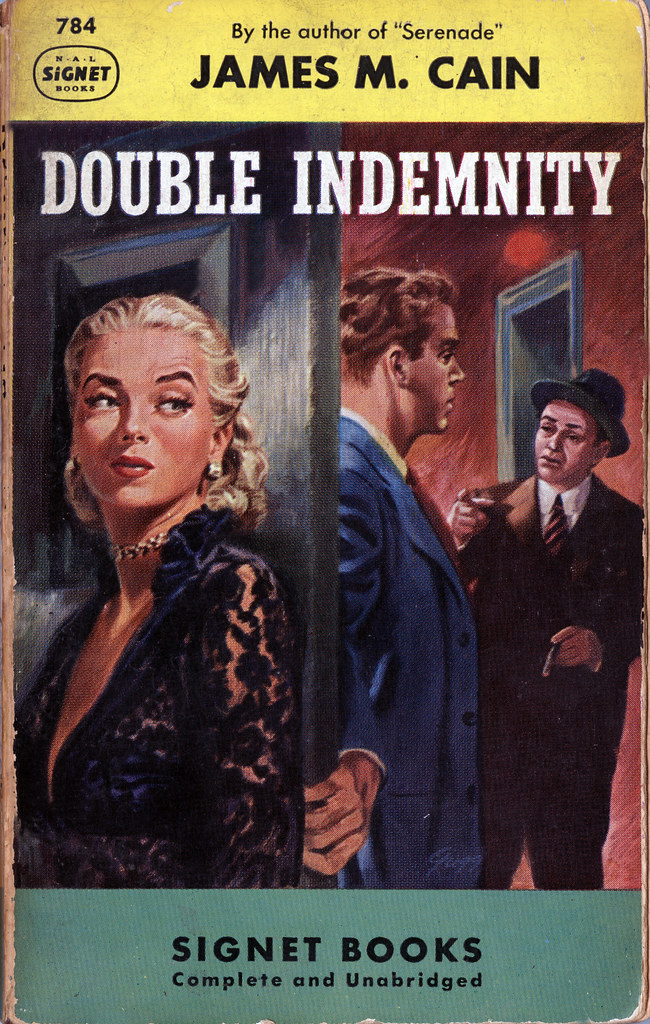
It was Eddie who introduced me to what would become my favorite noir film A Kiss Before Dying. It was Eddie who showed me that my teenage crush Dr. Ben Casey was really a creep in Murder By Contract. It was Eddie who led me to the novels of James M. Cain via Double Indemnity.  Here’s Eddie talking about that seminal classic:

I am still trying to catch up on my noir reading. (I didn’t get to The Maltese Falcon until about ten years ago, I confess). Digesting noir, with its emphasis on oppressive mood and shadowed morality, with its lean mean style, has helped me find my own voice as a writer. I am not a true neo-noir practitioner, but I feel a deep connection to its dark heart. One of the best compliments I ever got was when Ed Gorman wrote of our book Thicker Than Water: “The quiet sadness that underpins it all really got to me, the way Ross Macdonald always does.”

A couple Christmases ago, my husband gave me The Black Lizard Big Book of Pulps. It’s a compilation of the best crime stories from the “golden age” of pulp crime fiction — the ’20s through the ’40s. It’s about the size of an old Manhattan phone book. And to be really honest, parts of it read about as well.

Many of these guys were dismissed as the hacks of their day, churning out their stories for cheaply printed magazines like “Black Mask” and “Dime Detective.” Yeah, they were lurid, the syntax cringe-worthy, the plots thin or nonsensical. But they tapped into a popular need for a new kind of human hero. The most memorable of the heroes became the prototypes for much of what we are seeing in our crime fiction today — lone wolves fighting for justice against all odds but always on their own different-beat terms. Would we have Harry Bosch without the Continental Op? Jack Reacher without Simon Templar? No way…


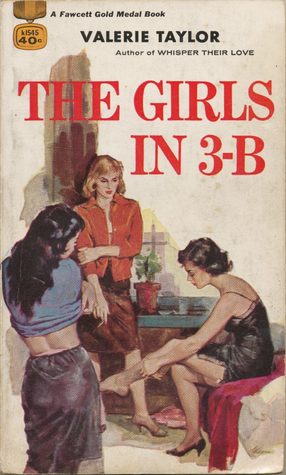
And while we’re at it, let’s not get sucked into the notion that noir was only a guy thing. Valerie Taylor had a career churning out books like The Girls In 3B, a classic ’50s pulp tale showcasing predatory beatnik men, drug hallucinations, and secret lesbian trysts. (Her books, among others, have been reissued by Feminist Press.) And would we have Megan Abbott or Sarah Gran without Dorothy B. Hughes, who wrote the twisty indictment of misogyny In A Lonely Place (the source of the Bogart movie)? Doubtful…

To be sure, not all the old stories — like many of the movies — have aged well. The slang sounds vaguely silly now, the sexism and racism we can explain away as anachronistic attitudes. But the armature these writers created is still sturdy.

Especially in pure writing style. I think we can read these stories now mainly to appreciate the streamlined locomotive style that propels these stories along their tracks. When you read them, you can almost hear James M. Cain whispering: “I’m not going to dazzle you with my writing. I’m going to tell you a helluva story.”

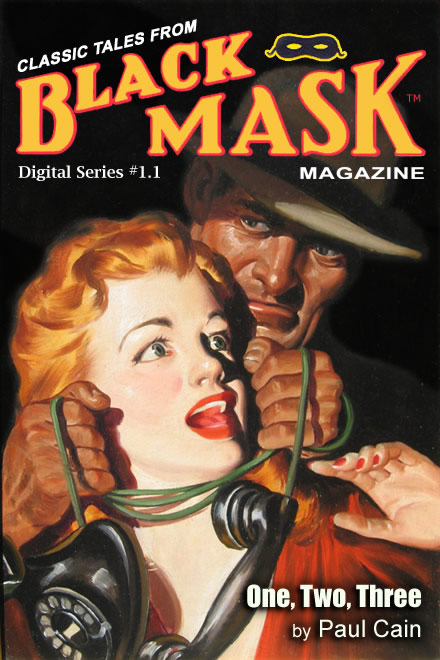
These guys sure knew what to leave out. Here’s a passage from Paul Cain’s “One Two Three:”

I said: “Sure — we’ll both go.

Gard didn’t go for that very big, but I told him that my having been such a pal of Healy’s made it all right.

We went.

Not: And then we left the apartment and got in my roadster and set out. We took Mulholland Drive out of the canyon and arrived just before dusk. Just: We went.

How can you read that and not smile? I heartily recommend the Big Book of Pulps. And if you haven’t connected with Eddie on Noir Alley, you’re missing out on some of the best stuff television has to offer.

And now, in honor of our pulp forefathers, I am offering up this little quiz of pulp diction slang for your amusement. Answers at the end. And don’t chance the chisel for a cheap bulge, bo. We Jake?

DEFINITIONS.
1. Ameche
2. Kicking the gong around
3. Wooden kimono
4. cheaters
5. Gasper
6. Hammer and saws
7. Orphan papers
8. Wikiup
9. Bangtails
10. Can-opener

TRANSLATIONS
11. I had been ranking the Loogan for an hour and could see he was a right gee. It was all silk so far.

12. I stared down at the stiff. The bim hadn’t been chilled off. Definitely a pro skirt who had pulled the Dutch act.

13. I got a croaker ribbed up to get the wire.

14. By the time we got to the drum the droppers had lammed off. Another trip for biscuits…

Answers:
1. telephone
2. taking opium
3. coffin
4. sunglasses
5. cigarette
6. Police
7. Bad checks
8. Home
9. Horses
10. Safecracker
11. I had been watching the man with the gun for an hour and could tell he was an okay guy. Everything was cool so far.
12. I stared at the body. The woman hadn’t been murdered. She was definitely a prostitute who had committed suicide.
13. I have arranged for a doctor to get the information.
14. By the time we got to the speakeasy, the hired killers had left. Just another trip for nothing…

The Long Rain…


The Columbus, Ohio metropolitan area where I reside averages forty inches of precipitation per year. Seattle, which has the reputation of being rainy all of the time, averages thirty-eight inches annually. I am given to understand that Seattle receives a steady, gentle rain (and a bit of snow in the winter) throughout the year, with precipitation occurring a bit more frequently than every other day. It rains every few days in Columbus over a period of about six months — April through October —  and then we of course get some snow during the rest of the year. 

We sometimes get some spells of heavy, flood-warning rain. We had several days of those a couple of weeks ago.  I didn’t have any damage, outside or inside. It was still a bit emotionally wearing, in a seasonal affective disorder way. It is easy to wonder by the second or third straight day of rain whether the sun will ever be seen again.

It is on such days that I think of Ray Bradbury, or, to be more precise, two of his stories. The first of these was originally titled “Death by Rain” and appeared in the pulp magazine Planet Stories in an issue published on September 23, 1950, almost one year to the day before I was born.

Forgive me for exhibiting a moment of looseness of association. I actually had the opportunity to buy that magazine for a dollar in 1962 at a used bookstore. I instead used the dollar to buy several brand new comic books, including one titled The Amazing Spider-Man #1, which I still own. My logic at the time was that I already had “Death by Rain,” retitled as “The Long Rain,” in the Bradbury short story collection The Illustrated Man. The original cover price of Planet Stories was twenty cents, and the merchant was selling it for a whole dollar. It seemed like a bad deal to me. I was right. I can buy that issue of Planet Stories for under thirty dollars on e-bay while that Spider-Man comic is worth considerably more than that. 

To digress from the digression,  I have read “The Long Rain” dozens of times. It presents a future in which a rocket ship crashlands on Venus in the early days of Venusian colonization by Earth. The astronauts on board who survive are beset by constant rainstorms which, in the 1940s, were thought to occur to occur on Venus. The astronauts attempt to reach one of the sun domes — shelters constructed during earlier visits to Venus — in a last-ditch survival effort. Hilarity does not ensue. Tragedy does. The ending is enigmatic, even more so upon each rereading. Folks still argue about it. I think of that story whenever the rain never seems to stop and the sun becomes a memory stay thankful for having my own sun dome, as well as the (almost) certain knowledge that the rain will eventually pass. 

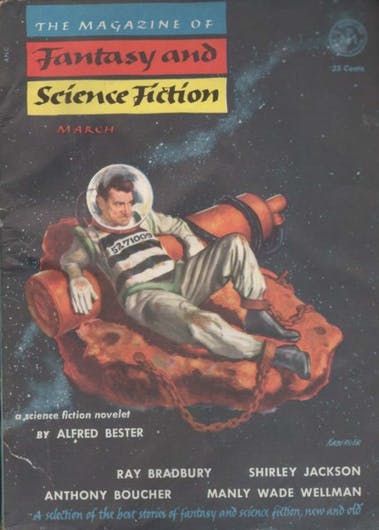
The second Bradbury story that comes to mind during the central Ohio version of monsoon season is titled “All Summer in a Day.” It isn’t as well known as “The Long Rain” but is a bit more poignant and ultimately maybe the better tale of the two. “All Summer in a Day” published in the March 1954 issue of The Magazine of Fantasy and Science Fiction which, unlike Planet Stories, is still around. Bradbury is mentioned on the cover but does not get top billing, interestingly enough. His contribution to that issue is a classic nonetheless. “All Summer in a Day” is also set on  Venus. The Venus of this story is somewhat similarly inhospitable to the Venus of “The Long Rain” but has been sufficiently colonized to have children residing there who were born planetside and elementary schools built for them to attend. One of the school children is a girl named Margot who moved from Earth to Venus five years prior to the story’s present. Margot is the only one in her class who has seen the sun. The reason for this is that (in the story) the sun is only visible on Venus for one hour every seven years, The event is coming up, and it’s a big deal, particularly for Margot, who misses seeing that which she had previously taken for granted. The problem is that some of Margot’s classmates are unhappy with her, and as a result they…well, you will have to read the story to find out, but I will tell you that it is for me one of the saddest stories I have ever read (I’m getting a little misty-eyed just writing about it, but don’t tell anybo… Oops).  “All Summer in a Day” has been collected in a number of Bradbury’s anthologies, including the U.S. Edition of A Medicine for Melancholy. Bradbury, as the result of stories such as “All Summer in a Day”  and the chilling “The Small Assassin,” acquired the reputation of hating children. Maybe he did. I don’t share that opinion, but after reading “All Summer in a Day” you will understand why he was painted with that brush, and why I think of it after several days of central Ohio gloom.

I doubt Bradbury thought at the time he wrote the stories I’ve been discussing that either of them would be remembered decades later. He lived long enough to see that happen, and to see them taught, studied, and even adapted to other media. That’s pretty good for a couple of stories that were purchased by editors at the rate of a couple of pennies per word and published in what were referred to as “pulp” magazines. The lesson here is that you might have a story or five that accumulated some rejection slips. Check your hard drive or your file drawer and read a few of them, pick up a couple, shine them up, and send them out again. It is possible that the churl who rejected them initially now sleeps with the fishes and that a pair of fresh editorial eyes will look more favorably upon them. Sixty years from now someone may be discussing your story as a result. I assure you that stranger and more unlikely things have happened. You might even be still alive to see it.

Back to the rain… I am not alone in feeling this way, at least about “The Long Rain.” Our own blogger emeritus Joe Moore reported having a similar reaction to that story in this space way back in 2012. What about you? Do you have a favorite story that deals with weather that has been written either by you or someone else? And sure. It can take place on any world, including this one. 

Enjoy your weekend. May it be sunny. 


Making Characters Count

By Elaine Viets

I’m starting my sixth Angela Richman, Death Investigator mystery by returning to my comfort read, Agatha Christie. After all, she’s sold a billion books in English and another billion in foreign languages.
Why read an author who’s been dead for nearly 45 years?

Because her writing is timeless. I still learn from her. Here are three ways:
(1) Agatha Christie’s character descriptions are superb.
Even the most unimportant characters are carefully described.
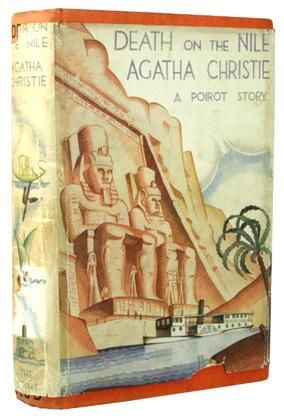
In Death on the Nile “smooth-footed, deft-handed waiters ministered” to Hercule Poirot’s table, serving him an excellent meal.

And while the butler didn’t commit this murder, his brief appearance is memorable:
“A few minutes later she was being ushered into the long stately drawing room, and an ecclesiastical butler was saying with the proper mournful intonation, ‘Miss de Bellefort.’”
I love those phrases –”an ecclesiastical butler” “with the proper mournful intonation.” I can almost hear him intone her name.

(2) Agatha Christie finds fresh ways to describe series characters.

It’s tempting for series writers like myself to repeat the same descriptions of our main characters, book after book. But we have to be careful. Readers are smart enough to recognize boilerplate.
Here’s Agatha’s description of Hercule in After the Funeral. This is the 29th mystery in the Poirot series, but she still comes up with a new description:
“There were no curves in the room. Everything was square. Almost the only exception was Hercule Poirot himself, who was full of curves. His stomach was pleasantly rounded, his head resembled an egg in shape, and his moustaches curved upwards in a flamboyant flourish.”
Hercule is talking to Mr. Goby, an expensive operative who acquires outre information. Here’s Agatha’s clever description of a nondescript operative:
“Mr. Goby was small and spare and shrunken. He had always been refreshingly nondescript in appearance and he was now so nondescript as practically not to be there at all.”
Mr. Goby has to deliver a long list information that could have been quite dry. But Agatha livens it up with a funny bit. Here’s how Mr. Goby gives his report to Poirot:
“He was not looking at Poirot because Mr. Gobi never looked at anybody. Such remarks as he was now making seemed to be addressed to the left-hand corner of the chromium-plated fireplace curb.” He delivers his first round of information that way.
For the second batch, Mr. Goby “shifted his gaze to an electric plug socket.”
The third burst of info is given while he “winks at a lampshade.”
And finally, Mr. Goby finishes his information “by nodding his head at a cushion on the sofa.”
Mr. Goby never appears in this book again, but Agatha has found a good way to make what could have been a boring recitation of facts entertaining.
(3) Agatha Christie knows how to skip esoteric discussions that can bog down a scene.
Hercule is back at that fine dinner, and the host says, “‘You will enjoy your dinner, Monsieur Poirot. I promise you that. Now as to wine–’
“A technical conversation ensued, with Jules, the maitre d’hotel, assisting.”
Agatha also uses this technique to avoid repetitious dialogue from scene to scene.
That’s how I prep for my newest novel. I don’t call it procrastination, though Agatha has some 80 books and short stories.
What do you do before you start your novels?

***********************************************************************
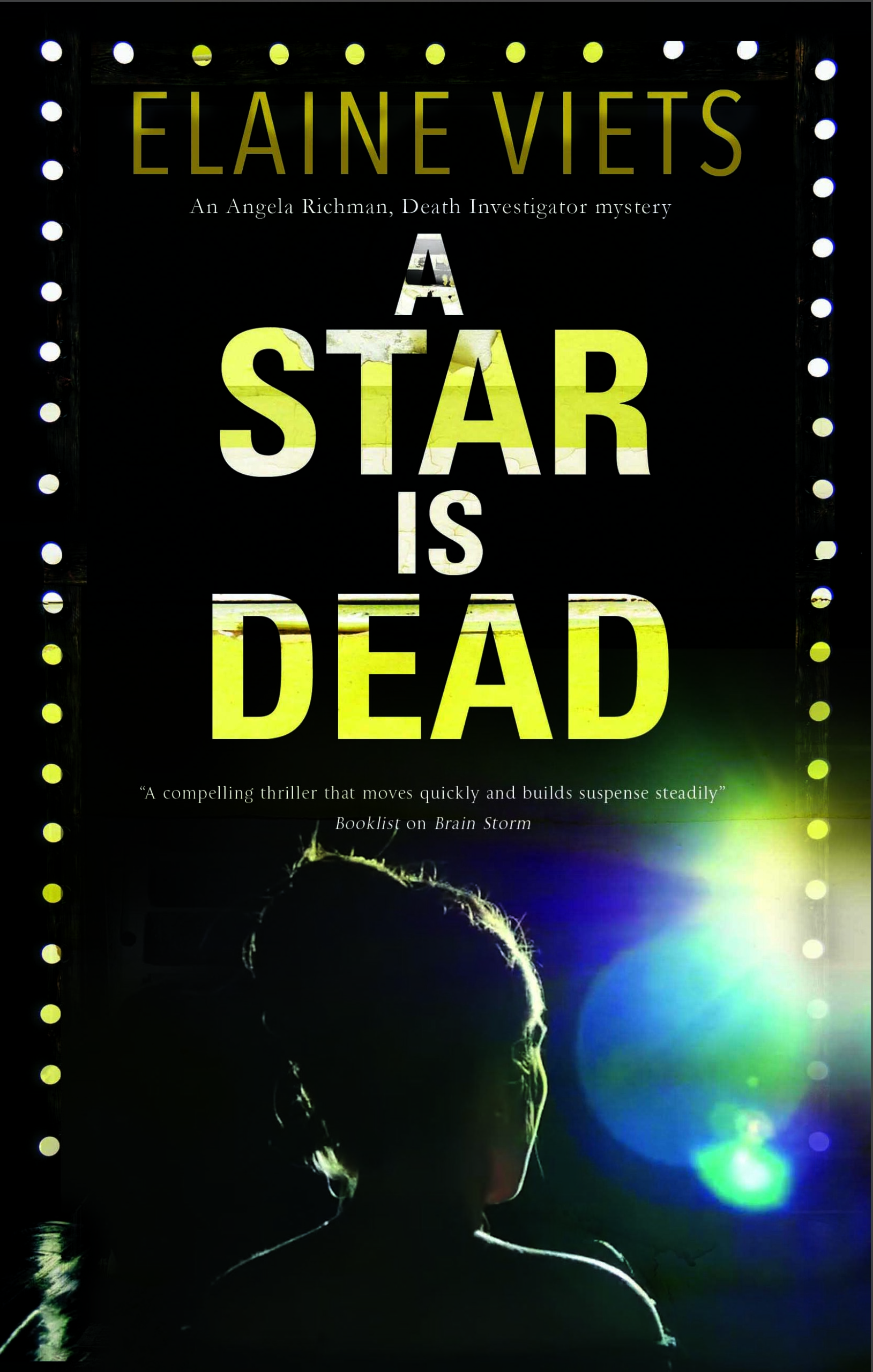
A Star Is Dead – “witty dialogue and well-defined characters” says Publishers Weekly – sold out of its first printing. Buy it  here:

https://tinyurl.com/y7cv83v4

Transitions

Transisitions
by Terry Odell

On last Friday’s question, one person commented on transitions being hardest for her to write, so I thought I’d address my approach to the subject here.

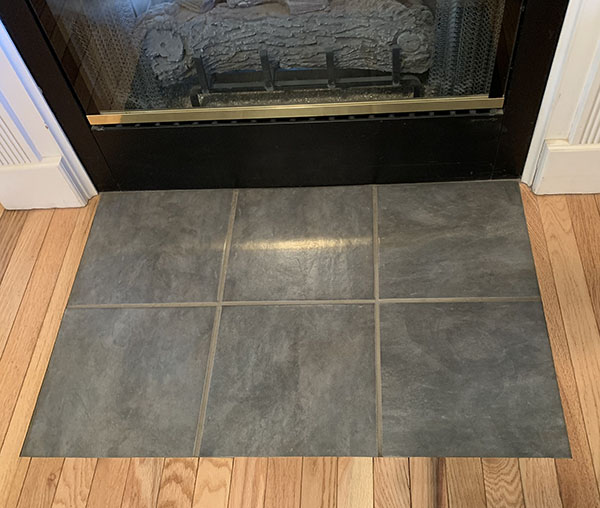
TransitionsWhen we moved to Colorado, we did a lot of remodeling. We have a small tile area in front of the fireplace. We installed ¾ inch hardwood for the rest of the floor. One of the challenges the contractors faced was making sure the transition between tile and wood was smooth, because the new hardwood was thicker than the pre-existing laminate flooring.

In your manuscript, you have to decide how you’re going to get from one time or place to the next. You don’t want people tripping when they move from tile to wood. That’s why paying attention to transitions is important.

There are ‘big’ transitions: Switching POV characters, chapter breaks, and scene breaks. There are the ‘little ones: Making sure every sentence, every paragraph follows logically from the one preceding it. As you can see, it’s a broad topic, but I’ll try to hit some of the high points.

When I started writing, I felt obligated to be with my characters 24/7. It was a major writing breakthrough to be able to write, “By Friday” when the previous scene was on a Wednesday. Skip two days? Gasp! Things had to be happening. And they were, but they weren’t anything that moved the story. There are other ways to show passage of time. Some authors like to date/time stamp scenes and chapters. There are scene breaks. Or, just some extra white space.

Formatting note: if you’re indie publishing, some of the conversion software (for ebooks) assumes extra returns are mistakes, and removes them. Print is another matter. For ebooks, I take the cautious approach and use a marker. If it’s a break within a scene, and my normal scene breaks are ~~~, then I’ll use a single ~ to show I’m with the same POV character, same scene, but time or place has changed.

For new chapters and scenes, I want to make sure I’m grounding the reader in the who, where, and when. For my romantic suspense books, each chapter usually has 2 main scenes, one from each character’s POV. That requires a bit of leapfrog mentality from the reader.

The last sentence of a scene often won’t lead into the first of the next. There has to be a way to remind the reader of: first, whose scene this will be, and second, where the previous scene ended. And, if time has passed, there has to be a way to indicate that as well. When you shift scenes or chapters, look at your opening paragraph. Is it description? Yes, you want to show the reader they’re somewhere else, but it can be more important to show the reader who they’re with first. Keep them involved with the character; don’t slow the read to describe the sunrise.

An example: Protag Graham has a POV scene in Chapter One. We’ve learned he’s a patrol cop with a goal of a transfer into a detective position. He’s in competition with another cop, Clarke. That scene ends with the following, which was clearly in Graham’s POV. He’s been thinking of the woman he just met in his investigation.

Laughter erupted from the room. The sound of his name, coupled with Clarke’s guffaws, eradicated Colleen’s image like wind-blown storm clouds. Dammit. It had been five years. He was a damn good cop, and he was going to beat Clarke into CID no matter how many times the arrogant bastard tried to dredge up his past.

He appears again in Chapter Two, but not as a POV character. His next turn center stage is in Chapter Four. Here’s the opening:

Graham finished filing his reports, surprised to see it was four-thirty. Instead of going home, he drove to Central Ops. Roger Schaeffer in CID might let him poke around a little. The lieutenant seemed to be one of the few who thought Graham had a shot at the CID spot. His recommendation could make the difference.

For this scene, I opened by using Graham’s name (who), and also a time reference (when). The where, Central Ops is mentioned. Also, by showing something only Graham can be aware of (his surprise at the time), we’ve established it’s his POV scene. If there was any doubt, the rest of the paragraph is internal monologue, thoughts only Graham would know.

Another good reason for clear transitions between chapters and scenes is because those tend to be the logical stopping places for readers. If they’re not picking up the book until the next night—or later, but we hate to think they could possibly wait that long to continue reading—it helps if they don’t feel that they have to back up to get a running start.

You also have to consider the ‘mini-transitions.’

Whether you’re writing narrative or dialogue, there has to be a clear and steady flow from one sentence to the next, from one paragraph to the next. Just as you need transitions between scenes, you need transitions between individual paragraphs. And sentences. Consider dialogue. Normally, in conversation, if someone asks a question, we’ll answer it. Whatever the person who asked the question happens to be doing or thinking is going on simultaneously with our hearing the question and giving our response.

But in writing, if you stick all those internal thoughts and gestures in, it’s likely your reader will have forgotten the question. Look out for tacking on sentences after a character has asked a question. That’s not the best place to include it.

How do you handle transitions? Tips or problems you’re looking for help with? I’m sure there are a lot of folks here willing to chime in.


Terry Odell is an award-winning author of Mystery and Romantic Suspense, although she prefers to think of them all as “Mysteries with Relationships.” Follow her on Facebook and Twitter.