Interview with Kathleen Reardon, mystery author

Photo courtesy of Kathleen Reardon

Today, I’m visiting with mystery author Kathleen Reardon, Ph.D. She is professor emerita in management at the University of Southern California’s Marshall School of Business and now lives in Ireland. Her website is aptly named comebacksatwork.com because she is an expert in comebacks!

We “met” through the Authors Guild discussion group while discussing new strategies for book launches during the pandemic. The more we “talked,” the more I thought her story of persistence in the face of daunting setbacks would interest TKZ readers.

While Kathleen’s accomplishments are extraordinary, the challenges she had to overcome are even more extraordinary.

Welcome to The Kill Zone, Kathleen!

Debbie: Your background is academia and you have written numerous award-winning, bestselling business books. What prompted you to write fiction?

Kathleen: As a teenager, I loved writing fiction and poetry. My junior year English teacher, Judith Kase, was particularly encouraging. Back then, I expected to be a writer and English teacher for life, but my career took me on to an MA and Ph.D. in communication sciences, college teaching and research. There was little time for creative writing, especially prior to tenure. At thirty-two, I was diagnosed with breast cancer. Recovery took a while as did salvaging my career.

The fiction writing bug finally bit and wouldn’t let go in my early forties. My father had encouraged me to write fiction. He thought I’d pushed it aside long enough, but there was still the challenge of becoming a full professor. I also had three young children. So, I wrote most of Shadow Campus, my debut novel, during summer breaks until 2012 when I focused and got it done.

DB: What was the spark for this book and/or your series?  Please share how you came to write it.

KR: The spark for Shadow Campus was being the first woman to go up for tenure at a top business school. Breaking the glass ceiling is never easy. Change is hard. Sometimes resistance leads to incivility. One day I woke up early and began writing. Over the next week, I got the bones of the story on paper. I just couldn’t stop. Shadow Campus was born that week and I was en route to becoming a mystery author.

 Damned If She Does (2020) is a stand-alone sequel. Here again, the spark was experience as a female professor. I wrote most of the novel before MeToo began. It’s first and foremost a New York City crime mystery. But fiction often conveys messages about reality. A major subplot deals with abuse and the potential consequences of secrecy. Is there a best way forward? Is it better personally and for society to identify a perpetrator? Or are women damned if we do and damned if we don’t?

DB: A reviewer of your debut novel draws an interesting comparison between academia and organized crime! Is there an element of truth? Does it apply to Damned If She Does too?

KR: In my nonfiction, especially The Secret Handshake and It’s All Politics, I write about levels of politics in organizations from church choirs to multinationals – the worst of these is pathological politics. In my first trade book, They Don’t Get It, Do They?,as well as my Harvard Business Review classic, “The Memo Every Woman Keeps in Her Desk,” my focus was on the challenging road many women travel when they endeavor to be recognized and promoted for exceptional work. Weaved throughout both of my novels are insights from that work.

In Shadow Campus, Meg has all the credentials for promotion. Yet, in the opening scene – the night before her tenure decision – she is found hanging in her office, nearly dead. We learn that this crime was facilitated by several characters. I think that’s what the reviewer saw as “organized crime.”

DB: Readers are interested in your particular process for writing. Do you have special or unique techniques you use?

KR: People ask me how I keep readers from knowing who did it. The answer: I hide it from myself. Any of the primary characters could be the killer and I keep several as candidates until near the end. It’s a lot like spinning a number of plates, but that’s what I enjoy about mysteries. If I know precisely “who done it” while writing, there’s a good chance that I’ll accidentally telegraph that to my readers. So, keeping me in the dark keeps them in the dark too. I truly enjoy that aspect.

DB: You “interviewed” one of your main characters for a post on your website. What a great idea (which I’m going to steal)! Tell us about that.

KR: Shamus Doherty, Meg’s older brother, is a diamond in the rough. Many women who’ve read my two novels consider him very appealing. He’s complex and caring but a bit rough around the edges – gruff when he means to be tender. These characteristics wreak havoc with his love life. He can be overbearing as an older brother. To his credit, however, he does learn.

My interview with him was a chance to get inside his head a bit. He didn’t want to be interviewed, but he felt obliged because I’d created him. His wit and charm came through. I merely wanted to give him a chance to speak for himself. I can hear him now denying that altruistic claim. Be that as it may, I think he kind of likes me.

DB: Is there anything else you’d like to share with TKZ?

KR: I was fortunate to attend an Authors Guild webinar with Margaret Atwood and Judy Blume. It was great. Margaret said you need to grab the reader by page 5. By then he or she knows whether this is a door worth walking through. I think that’s great advice. Judy said she misses the freshness of being a new author. That’s food for thought. How do we get that back each time we sit down to write? I tend to take walks, enjoy nature, step away from the story and then allow myself to become enthused with where the characters are likely to take me next.

Book three of the trilogy is calling me. It will be based in West Cork, Ireland.

Thank you, Kathleen, for visiting TKZ! Congratulations on your new release, Damned If She Does, which Kirkus Reviews named among “Great Indie Books Worth Discovering.” 

~~~

TKZers: Do you have special tricks that propel you over the hurdles of writing? Have you come back from misfortune? 

~~~


Debbie Burke’s thriller, Dead Man’s Bluff, is available for pre-order at this link for only $.99. Publication date: June 23.

First Page Critique: Falling Free

Today we have a first page critique for a project entitled Falling Free. My comments follow so see you on the flip side (and enjoy because I think this is a great first page!).
Title: Falling Free

I fell hard to the closet floor.

My head hit the carpet. My arms just kind of flopped where they wanted.

I lay there, wondering what’d happened.

The carpet in this Seattle hotel smelled like it’d been shampooed recently. I used to be a hotel maid, so I know about carpet smells.

I stared at the ceiling for a bit. There was a black spider in the corner, moving its legs slowly, like it was doing yoga or something. I tried to mimic its movement, but couldn’t get my arms to respond.

My head hurt a little. I closed my eyes, I swear, just for a moment.

The next thing I knew, a cop bent over me. He stared for a minute, then put his gloved hand on my shoulder and rolled me up slightly.

I guessed he was looking at the back of my head.

He settled me back down on the floor, then leaned over and brushed my long hair away from my face. He smelled like stale cigarettes and had kind brown eyes.

My wallet appeared in his hand. “Junie. That your name, honey?”

I heard movement beyond him. The room outside the closet suddenly seemed filled with people, snapping pictures, going through drawers, talking on their cell phones. Saying things like “next-of-kin” and “keep the media out”.

Didn’t make much sense to me. Who’d care, anyway?

The cop yelled out the closet door. “Hey, Jimmy! Get the boss on the phone.”

“Okay, Frank.”

Then another cop, Jimmy presumably, entered the closet and handed a cell phone to Frank.

“Why don’t you get yourself a phone, Frank?”

“Why should I when you’ve always got yours?”

Jimmy left the closet in a huff.

“Yeah, hey boss.”

His eyes strayed to where it’d landed when I fell. “Nah. Nothing to do here. Get the crew over.”

Frank snapped Jimmy’s phone shut and stuck it in his shirt pocket.

He stood, looked down at me, shaking his head. “What’s your story, Junie?” He lingered over me a moment longer, then turned and walked out of the closet.

I heard him give orders to those in the room, to get this wrapped up. The scurrying intensified, doors and drawers slamming. Then it was quiet again.

Just Frank, studying me from the closet doorway.

My story? You don’t really wanna know, Frank.

I could’ve changed things. Put that in your report.

Comments:
I thought this first page was a great example of ‘less is more’ with short, snappy paragraphs that nonetheless evoked the scene, well-paced and believable dialogue, and a POV/voice that was already compelling. Bravo to our contributor!
For once I have very little to say in terms of input or advice…but if I was to make some recommendations (and honestly this piece is fine to stay as is!) they would be:
  • Perhaps consider one more sentence to give a sense of the injury that’s occurred (as it sounds like something far worse than just falling on carpet).
  • Perhaps consider a brief sentence in the closet describing the iron/ironing board or clothes/robe hanging – just something that might reveal whether this is a seedy hotel, a motel 6 or a more up-market hotel…
  • Possibly clarify time period as it sounds like it’s the 90’s (e.g. Frank snapped Jimmy’s phone shut) but I wasn’t totally sure.
  • This could also be important as I didn’t quite believe Frank wouldn’t have a phone these days (definitely would believe it if it was the 90s) – otherwise I was going to recommend changing “why don’t you get yourself a phone, Frank” to “why don’t you ever have your phone with you, Frank”,  if it was contemporary.
  •  I wasn’t quite sure how Junie could see the room outside the closet from the floor (she’d settled back down after the officer had originally rolled her up slightly). Maybe just have some movement (turned her head, or her eyes saw over the officer’s shoulder…something like that…)
  • Finally, I didn’t love the title ‘Falling Free’ – although without knowing more about the book I can’t really give good input, except to say that my initial reaction to this title was ‘meh’:)
All in all I think this is a really strong first page – TKZers, what do you think? What advice or recommendations would you make?

A Day in the Life of a Coroner

My last piece on The Kill Zone was about a day in the life of a detective. I was a criminal investigator for Canada’s national police force, the RCMP, and retired after 20 years of service with the Serious Crimes Section. We mostly concentrated on murder files, so I had a bit of contact with cadavers.

I left the detective business to take an appointment as a coroner. That gave me another investigation career as the guy no one wants an appointment with—Doctor Death. It was a smooth and fitting transition. I have to say I enjoyed the challenge.

People often wonder about the difference between a coroner and a medical examiner (ME). Simple, I say. It’s a lot cheaper to hire a fee-for-service coroner to do life’s dirty work than employing a full-time physician or pathologist.

The two death investigation systems, MEs and coroners, are used all across the civilized world. It depends on the region and the history as to what form the death investigation office holds. Coroners originated in Jolly Old England where the “Crowner” was appointed by the King or Queen to make sure no monkey business happened with royal subject bodies before due death taxes were collected.

Moving forward to the twentieth and twenty-first centuries, the coroner service served its purpose in smaller areas with low-volume death loads. It was usually a good ole’ boy in the community who got the coroner nod, and he was trusted to be fair and impartial when ruling on death causes. It didn’t always turn out that way.
As medical and forensic processes evolved, so did the need for specialized skills and knowledge. Look at it this way. The medical examiner is a highly-trained professional who employs field investigators and in-house technicians. It’s ideal for big city areas because of body counts. Coroners were appointed as fee-for-service retainees on a case-by-case basis in low-volume sites.

It’s much more economical to pay a coroner $80K per year to do death investigations and write rulings than it is to keep a forensic pathologist on staff at $200K-plus. Then, there are employee expenses where medical examiners keep payroll workers with overheads whereas a coroner sub-contacts undertakings like autopsies and toxicology examinations. Coroners pretty much go it alone.

It’s all about money. I can’t say one system is necessarily better than the other. We used a coroner service where I worked near Vancouver, British Columbia. You might note the term “British” as this place was settled by the Brits who evoked their coroner system. If it ain’t broke, don’t fix it, so it stayed.

Before getting on with what a coroner does in a typical day, let me tell you how I snagged a coroner appointment. You don’t apply to become a coroner and there’s never a job posting. It’s a secret society. Masons. Skull & Bones. Illuminati.

You’re carefully scrutinized, then cautiously invited into the service because you have something valuable to offer and no skeletons in the closet. That’s either investigation experience or medical knowledge. It’s no coincidence the vast majority of coroners I worked with were cops and nurses who took early retirement to double-dip pensions. I had no problem with that.

It sounds like an old boys club situation, right? Well, in my case it was the old girls who took a chance on me. I knew Rose when I was a cop and she was a field coroner. She moved up the ladder to be the boss and it seemed she thought I was a good fit.

The other good ole’ girl was Barb. She was a rare bird who didn’t come from the usual suspects. Barb was a high-profile, investigative crime reporter. I was her snitch, er, ah, contact inside the police department. We were also good friends and, when Barb got settled into a coroner appointment, she vouched for me.

Coroners in Canada get judicial appointments—we’re not elected. And, there’s immense power in a coroner’s hands. We’re essentially independent Supreme Court Judges whose rulings on death cases stand, except for a very tough appeal process through the federal justice minister. As coroners, we signed our own warrants like being able to search any place at any time or go out and exhume the dead.

Okay. That’s the deal of how I got the job. For this piece, I looked in my journals to find a typical day where interesting stuff went down. Many days in a coroner’s life are routine but this Tuesday in June certainly was not. It was the day we autopsied Mister Red Pepper Paste Man.

It started the day before. I got a field call of a sudden death in an apartment block. The cops were the first on the scene, and they didn’t have any valid foul play concerns, but the place was a slight mess with things knocked about. They also told me the neighbors reported a short screaming fit coming from the dead man’s apartment which they said sounded like someone skinning a live cat.

In death investigations, we focused on a triangle of information. One was the body and what its condition told us. Next were the scene and the general or specific details. Third was the medical history of the deceased. In other words, was this a medical time bomb waiting to explode?

That didn’t seem to be the case with Mister Red Pepper Paste Man. Here was this skinny old guy lying on the floor in the fetal position. He was in the kitchen, and it was relatively tidy except for a few items like an overturned chair, some dishes on the floor and some partially-eaten food.

The first thing I looked for was his meds. Time bombs usually have a pharmacy stored somewhere. That wasn’t the case with Mister Red Pepper Paste Man. I couldn’t find a thing—certainly nothing to identify a family doctor who could say he was long past his best-before date.

Then, there was the neighbor information that indicated he’d gone into some sort of painful distress. Myocardial infarctions and brain aneurysms will do that, so I suspected a jammer or a cerebral bleed. I bagged Mister Red Pepper Paste Man and hauled him back to the morgue.

That was Monday. There was a vacant postmortem spot for first thing Tuesday morning. I got there early and had a chat with my pathologist friend, Elvira. I told her about the scene and commotion. She just shrugged and said, “Let’s see”.

Elvira and the diener, or morgue attendant/autopsy technician, did the usual incisions and ruled out the heart and brain. Then she opened the stomach. “Whoa! Look at this!”

Even Elvira stepped back. The stomach contents were alive. They were positively moving in a mass of reddish pasty mess.

“Go back to the scene,” Elvira instructed. “Look for anything he’d been eating and bring it to me.”

I left Elvira and the diener to sew-up the man and put him back in a drawer. The apartment wasn’t far from the morgue so I was back there in about ten minutes. I saw right away what I hadn’t noticed before. There, on the kitchen counter, was an open jar of red pepper paste. There was also a knife, a toaster and a part-eaten sandwich.

I looked in the jar. It, too, was alive with a pathogen culture. Like, it was squirming as if trying to leave. With double gloves, I put the nearby cap on, put the bio-hazard in a container and took it back to Elvira.

“I thought so.” Elvira also double-gloved. She wore a Hazmat-rated respirator as she cultured a slide and put it under the microscope. “Botulism.” Then she looked at me and kind of smiled. “You know they make Botox out of this shit, don’t you?”

That was the story about Mister Red Pepper Paste Man, and he must have had an excruciatingly painful death. Another file I had going was this strange series of disarticulated feet stuffed inside running shoes that sporadically washed up onshore. Our city across from Vancouver was the center of Pacific tidal waters that merged the huge Fraser River drainage with the saltwater basin that extends through Puget Sound to Seattle. Around us was a breakwater of islands, small and large.

For the last three years, there was something strange in the neighborhood. These stupid severed human feet in runners kept popping up, and it created quite the stir. Major media outlets loved the story. They speculated anything from a serial killer with a foot-fetish to a weirder-than-normal satanic cult was behind it.

We, in the coroner service, liked to rely on science more than sorcery. It was Barb who first thought these floaters were from suicide bridge jumpers in the Fraser Valley. Barb theorized the jumpers would go into the cold Fraser freshwater and sink, then get dragged along the bottom out to the warmer seawater. Here, nature’s decomposition action, along with marine life caused the ankles to disarticulate and the foot-encased shoes would bob to the surface.

But why did this start happening now? We never heard of this before. Barb loved jigsaw puzzles. She always had one on the go in her office, and I think she saw the floating feet like a puzzle. She sniffed and she snooped and she solved the mystery.

Barb found it was simply a chemistry advancement compounded with economics. One thing all the shoes had in common—thirteen feet in total—was they were Chinese knockoffs sold in discount stores. To save production and shipping costs, the shoe manufacturers switched to a high-tech, lightweight polypropylene sole that floated like cork. The files remained open while we tried to make DNA matches to missing people.
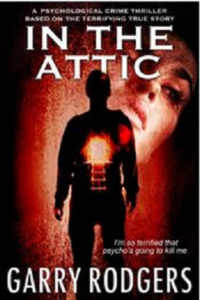
In The Attic – A Psychological Thriller Based on a True Crime Story – is available PERMAFREE on Amazon

My cell toned. It was a cop from one of the Gulf Islands which ringed our area like a fence. He said they had a death to report, but he didn’t know the cause. He was following protocol as all sudden and unexplained deaths, by law, had to be reported to the coroner.

“Any sign of foul play or accident?” I immediately asked this to qualify if I should attend the scene. This island was a half-hour ferry ride each way and attending unnecessarily would take a chunk of what was left in the day. I’d only go that distance if there could be trouble down the road like criminal charges, lawsuits or a public inquest.

“Nope,” he replied.

“What’s the circumstances?” That was always my nest question.

“Looks natural to me.” The officer had no concerns. “It’s an elderly lady discovered dead in bed. Found by her daughter who said they’d long expected it. Her prescriptions cover the usual for the aged.”

“Have you got the family doc’s name and number?” I knew this was shaping up to be a Coroners Act Section 15 case where I had no jurisdiction in a natural death—only in homicide, accident and suicide. Here, the family doctor was responsible for determining the medical cause of death (MCD) and sign the death certificate (DC).

I copied the info, then asked the officer to take some scene photos and email them to me. “If there’s nothing weird,” I said, “like a screwdriver in the back, then you’re okay to remove the body.” Legally, no one can touch a dead body without a coroner’s approval.

I called the doctor and had her sign off. There was nothing weird in that case, and there’s nothing weird in most cases. Except for this one.

I had an open file waiting for toxicology results. It wasn’t the cause of death I questioned. That was obvious. It was what drove someone to commit such a horrific act of suicide.

I never saw anything like it. Not in my detective days. And, not in my days as a coroner.

I attended a death scene like no other. A sixty-six-year-old grandmother with no known history of mental or other illness—certainly not suicidal tendencies—had phoned her daughter to come and pick her up to go shopping. The daughter arrived with the eight-year-old granddaughter and couldn’t immediately find the senior. They walked about the house and heard a buzzing sound coming from behind a closed bathroom door. So, they opened it to find the mother/grandmother had slit her own throat from ear-to-ear with an electric carving knife. The tool was still running and spattering blood.

There was no way this was a homicide set-up although we investigated it as a crime scene. We found the senior was self-diagnosing and medicating on the internet. She’d ordered and taken gabapentin which is a veterinary anti-seizure medication. Once the tox report came back with the blood concentration, I’d be in a better position to determine if the consumption amount caused a psychotic episode.

I spent the day’s remainder writing two Section 16 judgements. Those were in my jurisdictional wheelhouse. One was a motor vehicle accident death, and I knew the family wasn’t going to like my finding. The other report was for an in-house complications-of-surgery case which had malpractice lawsuit written all over it.

It was four-thirty. I finished the drafts and closed my laptop. I left my little office that I squatted in at the morgue and went home. My wife was there—our kids were grown and gone—and she played Words With Friends on her iPad.

I joined her in a pre-dinner glass of wine. White. Not red. Normally, I’d have a few fingers of Scotch over frozen rocks. But, I was on-call, after all, and no one wants their dead body examined by a half-cut coroner.

   *   *   *

Garry Rodgers has lived the life he writes about. Garry is a retired homicide detective and forensic coroner who also served as a sniper on British SAS-trained Emergency Response Teams. Today, he’s an investigative crime writer and successful author with a popular blog at DyingWords.net as well as the HuffPost.

Garry Rodgers lives on Vancouver Island in British Columbia at Canada’s west coast where he spends his off-time around the Pacific saltwater. Connect with Garry on Twitter and Facebook and sign up for his biweekly blog.

Establishing Priorities

By John Gilstrap

It’s a common lament among authors struggling to make time to pursue or complete their writing tasks: With kids and a full time job, I can’t carve out the time to sit down and create.

Before diving into the advice portion of this post, let me show my prejudice. I wrote twelve books while working a full time job with executive responsibilities that kept me on the road for over 100 nights per year. That’s well over a million published words, all as a sideline. Through it all, I never missed a kid’s soccer game or school event, and my wife and I kept up a robust social life.

In the early days, my inspiration was Tom Clancy, who managed to create the techno-thriller genre while working full time in insurance. Later, I realized that Stephen King, Jeffery Deaver, John Grisham, David Baldacci, Tess Gerritsen, and countless other successful authors were able to squeeze their same 24-hour days in a way that allowed them to create works of fiction that changed their lives.

I put my inner engineer to work and ran some calculations.

Everyone of us starts Sunday with the same 168 hours available for use in the coming week. Including commuting time (if you don’t live in New York, L.A. or D.C.) work will absorb 9 hours per day, Monday through Friday. That’s 45 hours stripped away from your control.

We have to eat, of course, and take care of chores and personal hygiene stuff. Shall we agree on 10 hours for each, for a total of 20? Throw in another three hours as a rounding error (and to keep the math manageable) we’re down to roughly 100 hours of unaccounted for free time.

Okay fine. You want to sleep. And you’re blessed with the ability to sleep eight hours per night. Subtract 56 hours from the weekly assignment schedule. That leaves you with 47 hours to work with. We’re approaching the amount of true discretionary time. That’s almost six standard work days’ worth of time.

Oh, yeah. The kids’ soccer tournament on Saturday. Will seven hours cover it? Give or take a couple, you’re now hovering around the 40-hour mark for free time. That’s a standard work week, folks.

The hours are there. Now it’s a question of priorities. That episode of “Say Yes to the Dress” costs you 2.5% of your writing time. Scorsese’s “The Irishman” will cost a whopping 10% of your creative hours. (And if you’ve seen it, I trust you’ll agree that it is worth no more than 5%–7.5%, tops.)

The time is there, folks. The question that all writers must confront is how important is it to them to finish what they’ve started? Not to bite the hand that is currently feeding me, but recognize that every second you’ve spent reading this post and whatever responses it garners is a second you’ve decided NOT to spend on writing.

It’s all about choices.


First Page Critique: A Hike
That Might Be A Journey?

The trail head at St. Bees Head on the Irish Sea

By PJ Parrish

I don’t know about you, but I am really ready for a good writer to take me away from it all. And I am always up for a bracing hike. So today, come along on our First Page Critique, as our submitting writer takes us to the wilds of northern England across the Coast to Coast Trail. I hope we’re in for some good mischief along the way.

A Lethal Walk in Lakeland 

Chapter One

I settled myself on a weathered oak bench and began securing the laces of my leather walking boots. This was the start of a long-anticipated week’s walk in England’s fabled Lake District, but I was apprehensive. Before me angry waves were hammering the shore, each shaking the ground as if a bomb had exploded. Strong gusts of wind from the north were slashing against us.

“We’re supposed to walk into that?” said the woman beside me, a small grey-haired wisp of a creature named Billie, as she surveyed the roiling waters of the Irish Sea. She should have been wearing a waterproof jacket, but instead had on one of her thick self-knitted sweaters displaying a pattern of squirrels and acorns. The outfit had been fine when we were in the town center–protected from the wind by cliffs to the north–but no longer. It was hard to believe that a few hundred yards could make such a difference.

“We just have to stick in our boots in the water,” I said. “If we do it quickly enough we should be all right.”

Around us our fellow walkers, eight of them, were also eyeing the sea with the trepidation. Yet this ‘christening of the boots’ was a time-honored ritual for anyone about to tackle England’s famed Coast to Coast path, which traverses the Lake District, Yorkshire Dales and North York Moors to Robin Hood’s Bay on the North Sea.

“Everyone ready?” asked Charlie Cross, our white-haired tour guide. Beaming a broad grin, he didn’t seem fazed by the heavy surf. The group followed him down to the water.

“Are you sure it’s safe?” asked Fiona, a beautiful brown-haired woman whom, I learned, was one of the six members of the Upton family from Texas in our group.

______________________

I wish I were going along. I’ve hiked in a couple foreign countries, and one of my dreams has been to hike the Appalachian Trail. I hadn’t heard of the Lake Country’s Coast to Coast path. Something new to put on my bucket list. So, as you can guess, I am predisposed to liking this submission on the location alone. But as much as setting is vital to a good story, it isn’t enough. Does the story itself hold up?

I think this is a pretty darn good start. The writer has chosen to put us literally at the beginning of the action. I love the tradition of dipping the boots into the sea before venturing out. I almost wish the writer had given us just a few more graphs so we could see if this ritual works as a foreshadowing of something dire to come. (I hope it is!)

I like that the writer didn’t start earlier, say with the group meeting in the village with a clearing-the-throat introduction of the whole party getting acquainted. (The writer chose instead to just reference the village in passing). We should learn about the hikers (possible suspects?) as we meander on, not in a group-grope info-dump.

I suspect we are working in a cozy genre here, but I could be wrong. The tone registers on the lighter side, which is fine. As I understand it, the hike takes about a week which is plenty of time for something nefarious to happen.

I don’t know if this was the writer’s intent, but we are almost in the classic Agatha Christie “closed parlor room” genre here: A group of strangers is about to be cloistered on an adventure and I would guess someone will die and whoever our protagonist is will be charged with solving the on-the-road crime. Perhaps the murder takes place in hostel out in the wilds.

Likewise, it is good that the writer mentions only a couple named characters. I trust the writer will find a graceful way to tell us the name (and a little background) of our first-person point-of-view narrator soon.

Notes on craft: The writer is on solid ground here, I think. The dialogue is handled correctly, the paragraphing and syntax fine. But with such an assured hand, I’d like to see the writer work a little harder. I’m always a little tougher on the better submissions,

For starters, I’d like to see the writer work harder at more original description. This is such a stunning setting; it deserves more eloquence than surf that “explodes like a bomb.”  That’s a cliche, dear writer, it doesn’t come from you.  Find something more bracing. Likewise, don’t rely on lazy words like “beautiful” for Fiona. Ditto for Charlie. “White-haired” isn’t vivid enough.

Description is hard. You have to dig deep into your own experience to find the right words or metaphors and then filter it through your protag’s consciousness. I like what you did, for example, with Billie — by telling me, in one line, that she chose to wear an acorn/squirrel sweater instead of something more practical, you sketched an immediately sharp portrait of her.

But in general, I enjoyed this. It is a measured, leisurely beginning and that is okay. Just be aware, writer, that we need some injection of tension in your first chapter, a hint of bad things to come.  Even with a soft opening like this you have to have a portent of ominous things on the path ahead — the literal one the hikers will travel, and the metaphoric one you take your reader on.

Let’s do some line editing:

I settled myself on a weathered oak bench and began securing the laces of my leather walking boots. This was the start of a long-anticipated week’s walk in England’s fabled Lake District, but I was apprehensive. Not a bad first graph but this is an example of telling instead of showing. Instead of telling us she is apprehensive, find a way to showing it via her thoughts or dialogue or actions. Just an example here:

I finished lacing my walking boots and looked up at the roiling green sea. With each crash of the waves, I could feel the wooden bench shake beneath me. I pulled in a deep breath and blew onto my cold hands. A sharp wind was surging in from the north, penetrating the nylon of my coat.

I should have worn gloves, I thought. I should have packed that extra sweater. I should have told someone where I was going. But I hadn’t wanted anyone to know. For once in my life, I wanted to be alone. And I wanted to be brave.

That is corny, but I am trying to make the point that you need to find ways to inject drama and something personal about your protag’s METAPHORIC JOURNEY as early in the story as you can. Make us care about her and attach to her (or is it a him?) as quickly as you can.  And never let a chance go by to layer in her personality.

Before me angry waves were hammering the shore, each shaking the ground as if a bomb had exploded. Strong gusts of wind from the north were slashing against us. Nice verb there. But you could be more active: The angry waves hammered; the wind slashed. 

“We’re supposed to walk into that?” said the woman beside me, a small grey-haired wisp of a creature I rather like that named Billie, as she surveyed the roiling waters of the Irish Sea. Good way to slip in the geography She should have been wearing a waterproof jacket, but instead had on one of her thick self-knitted sweaters displaying a pattern of squirrels and acorns. The outfit had been fine when we were in the town center–protected from the wind by cliffs to the north–but no longer. It was hard to believe that a few hundred yards could make such a difference.

“We just have to stick in our boots in the water,” I said. “If we do it quickly enough we should be all right.”

Around us our fellow walkers, eight of them, were also eyeing the sea with the trepidation. Yet this ‘christening of the boots’ was a time-honored ritual for anyone about to tackle England’s famed Coast to Coast path, which traverses the Lake District, Yorkshire Dales and North York Moors to Robin Hood’s Bay on the North Sea. This sounds a little dry. I know you need to convey this info, but find away to make it sound like it comes from your protag and not Fodors. You can also use it, again, to tell us something about your protag. Example:

I wasn’t from this area of northern England. I had been born and raised in London so a long hike for me was to the tube station. But I had always wanted to do this week-long trip that stretched from the the whatever, crossed the whaterever, and ended wherever.

See what that does? It makes the info personal and lets the reader get to know your protag.

“Everyone ready?” asked Charlie Cross, our white-haired tour guide. Beaming a broad grin, he didn’t seem fazed by the heavy surf. The group followed him down to the water.

“Are you sure it’s safe?” asked Fiona, a beautiful brown-haired woman whom, I learned, was one of the six members of the Upton family from Texas in our group. Would be a nice place to slip in a thought from your protag. How does she feel about the make-up of her group? I went on a hiking trip in Provence once, and the first day I met my motley group — the people I would live with for the next two weeks — I was intensely curious about where they had come from. This is important if someone in this group will be murdered AND if someone is the killer.  Start laying your bread-crumb trail of clues as early as possible.

As I said, I think we’re off to a grand start here, but I know this writer has the chops to dig deeper and do better. Oh, speaking of which, as you go on your writing journey, dear submitter, be on the lookout for a better title. (Good titles often don’t reveal themselves until you’re done with the book). I don’t think this one does your setting and set-up justice. For starters, Americans like me will think of Lakeland, Florida. And “A Lethal Walk” is a touch too spot-on.  Look for something more metaphoric that captures the wild scenery and says something about the journey. One of my favorite quotes about hiking is from the naturalist John Muir: “In every walk with nature, one receives more than he seeks.”  Maybe that’s what your protagonist is after? Find something that speaks to the soul of your story.

Thanks for the submission and letting us share it.


Knowing When to Be Quiet

Photo by designecologist on unspalsh.com

I am writing this on Thursday, May 28, after writing and rejecting two posts over the past week. You might or might not see them at some point in the future. One is about a couple of stories by Ray Bradbury that use climate in very different ways. The other is about the application to writing of the subject matter of what was once a regularly published newspaper cartoon whose author’s name has entered our lexicon.

You are not seeing either one of them now because I couldn’t hit the bullseye with either post. Both of them in my opinion had some great turns of phrase, were entertaining in places, and utilized multi-media presentations. They were ultimately, however, bowls of air that looked nice but were leaking badly, perhaps fatally so. If I wasn’t happy with them I didn’t think that you would be either.

The common denominator was me. I decided that at the core of each post I was being too clever and talking too much about things which really weren’t all that interesting to anyone outside of my own life at the moment. There wasn’t a fix, either. Pulling anything out caused the entire post in each case to collapse under its own weight. 

The major problem that a writer has — this writer anyway — is filling that white space with black letters. Resolving that problem isn’t enough.  Miles Davis used to say that in jazz knowing what not to play was as important as knowing what to play. The same is true in writing, whether it’s a post for your blog or your character’s interior dialog in your breakthrough novel or something in between. Sometimes it works. At other times you have to be quiet, walk away, and start somewhere else entirely. 

That’s what I am doing. Have a great weekend.

But wait, there’s more. Please permit me, in lieu of our regularly scheduled programming, to introduce to you a handy little tool called a “title case converter.” There are only a few rules to remember when properly capitalizing the words in a title but this is a quick and dirty way to check yourself to make sure that you have it right. Enjoy!

True Crime Thursday – Armed and Dangerous

by

Debbie Burke

@burke_writer

Photo credit – Pixabay

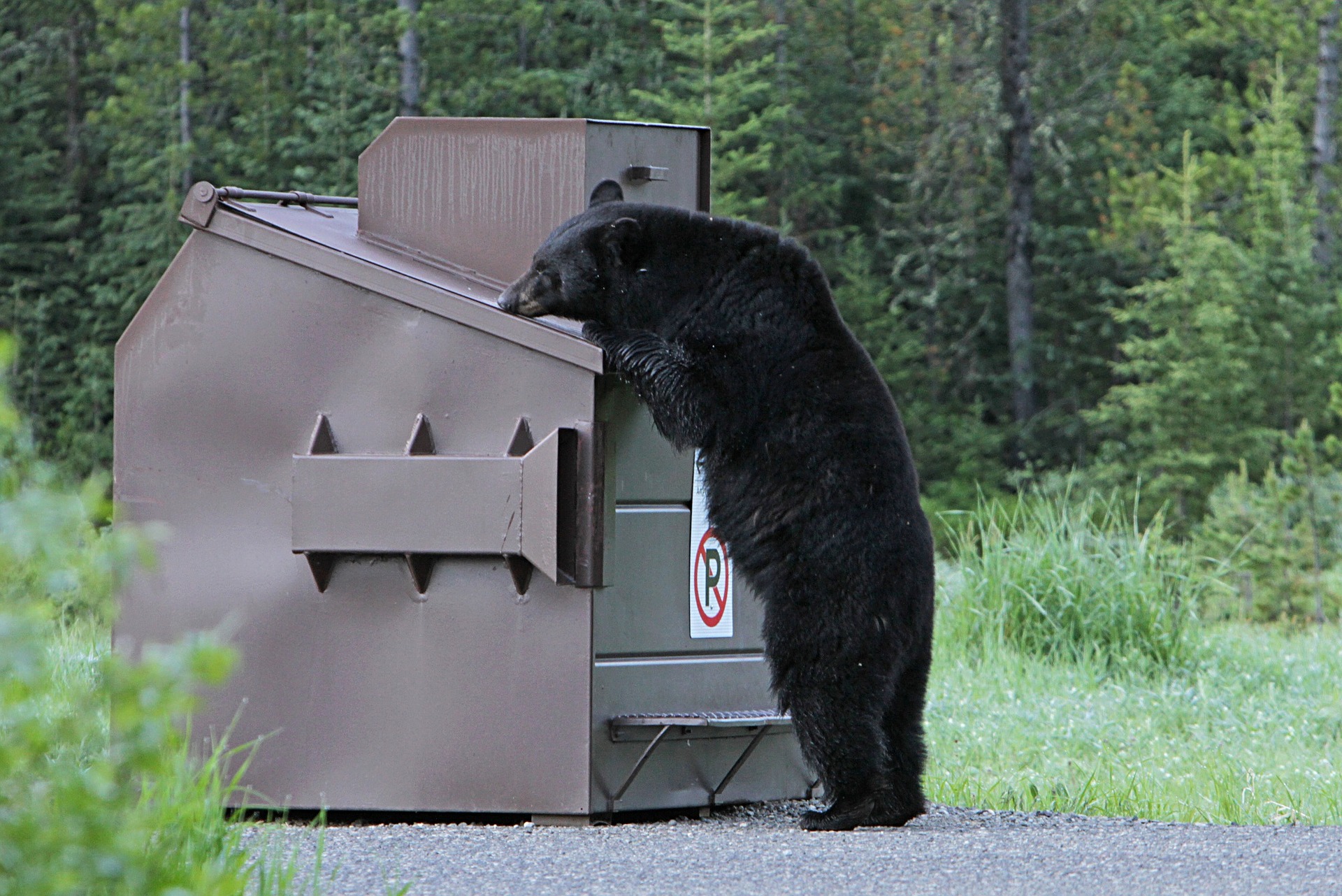
Montanans are no strangers to bear encounters. Most times, it’s hard to tell who’s running away faster—the bear or the human. But when bears are hungry, not much stands in their way. They push through fences to eat calves, bust into chicken coops, knock down bird feeders, and pillage unattended campgrounds.

If bears become aggressive, pepper spray is recommended. However, if that’s not handy, you might have to improvise.

In 2010, near Huson in Missoula County, a woman let her three dogs out around midnight, not realizing a bear was a short distance away, snacking in an apple orchard. Two dogs started out into the yard. A third dog, a 12-year-old collie, remained with the owner in the patio. The two dogs sensed the bear and ran back into the house.

Before the owner could react, the 200-pound bear was at the door, mauling the collie. The woman screamed and kicked the bear but it persisted, scratching her leg through her jeans.

When she tried to close the door, the bear shoved in, blocking the door open with its head and paw.

Fortunately, the woman had a ready weapon. While holding back the bear with the door, she grabbed a fourteen-inch-long zucchini she’d harvested earlier that day from her garden. She threw it at the bear, bouncing it off its head.

Wikimediaimages – Pixabay

The bear turned tail and fled.

The collie recovered from injuries and the brave woman only needed a tetanus shot.

The bear escaped and is still at large.

~~~

TKZers: Have you heard stories about someone who used an unusual weapon to ward off an attack?

~~~


Debbie Burke’s new thriller, Dead Man’s Bluff, is now available for pre-order at this link. If you order now, the special price is $.99. Dead Man’s Bluff will be delivered to your device on June 23.

Ask Yourself Why

Ask Yourself Why

Terry Odell

Ask yourself why

Image by Anand Kumar from Pixabay

Everyone, I’m sure, has heard of using the “What if?” question to start a story, and to help move things along throughout. But for me, there’s an even more helpful question for me while I’m writing. WHY?

Disclaimer. I’m not a Plotter. Not a true Pantser. More of a Planster.

In one of his workshops, James Scott Bell has an exercise designed to help you understand your characters. There, he sets up a scene of a gorgeous room with a huge picture window overlooking a pastoral view and your character picks up a chair and throws it, breaking the window. He asks Why he or she would do that.

While that can be helpful when it comes to characterization, my question relates to the story. Even though we write fiction, it has to come across as reality. One technique I use to make sure things seem “real” is to ask myself Why a character would do or say something.

If the answer is “Because I need it for tension/conflict/humor/plot advancement,” it’s probably wrong. When I was writing Danger in Deer Ridge, the first major ‘error’ I spotted in my opening draft was having the hero appear while the heroine was looking in her car’s trunk for her tool kit.

  • Why didn’t she hear him drive up?
  • Why did he park the truck there?
  • Why did he come down without a toolkit of his own?

All these Why questions require answers. Answering them drives the story forward for me. My thought processes might not end up on the page, (and this is most prevalent in the early chapters, while things are taking shape) but the results do.

So, where it ended up: She didn’t hear him drive up because he parked at the top of the drive. Why?

He parked the car there because his son is asleep in the truck. It’s a quiet rural area, one he knows well, and he’s not concerned that someone will come by and Do a Bad Thing.

That’s still weak, so I added a dog who would take the head off of anyone who tried anything. (Note to self: don’t forget you’ve now saddled yourself with yet another ‘character’ to keep track of.)

More Why questions.

Why not go all the way down the drive? It’s steep, curves, and riddled with potholes, and he doesn’t want to wake the kid.

Weak. What if he’s not an experienced father? Why not? Because his wife left him, took the kid and remarried, and he hasn’t seen the kid since he was an infant.

Why does he have the kid now? Because the ex-wife and the boy’s stepfather were killed in a Tragic Accident? Works for now. (Note to self: revisit this before Grinch has to tell anyone about it.) Also, having him a new and inexperienced father allows for more conflict between hero and the Very Caring Mother who is our heroine.

More notes: Why doesn’t the hero work for Blackthorne, Inc. when the book opens, since the other books in the series open with a scene of a Blackthorne op. Why does he live conveniently near the heroine’s new digs?

By the time I’d written the scene, answers to my Why questions gave me more insight into my characters. I realized that the hero’s friendly demeanor and magnetic grin weren’t consistent with a man who’s worried about leaving a young child asleep in his truck. I ended up tweaking that scene, which added to the tension, because the heroine sees someone who’s in a rush, who keeps looking over his shoulder. She extrapolates from her own secret-keeping life, and it seems logical for her to worry that this guy might be out to get her.

If you don’t want your story to seem contrived, try asking yourself “Why?”

What other questions help you move forward in your writing?


Terry Odell is an award-winning author of Mystery and Romantic Suspense, although she prefers to think of them all as “Mysteries with Relationships.” Follow her on Facebook and Twitter.

The Ballad of Prequels and Origin Stories

Hope you are all enjoying a safe and healthy Memorial Day Monday.

We actually got some snow in the mountains this long weekend which gave me a great excuse to read (yay!), and I am about halfway through Suzanne Collins’ The Ballad of Songbirds and Snakes which is both a prequel to the Hunger Games trilogy and an origin story of sorts for President Snow. Despite being a huge fan of hers (her middle grade Gregor of the Overland series is actually my favorite) I confess to being a bit underwhelmed and I wonder if it is due to what I call ‘prequel fatigue’. It seems like a bit of a thing at the moment where highly successful franchises look to origin stories or prequels as a kind of brand life extension. There’s Philip Pullman’s The Book of Dust (a prequel to His Dark Materials trilogy) which was then followed by The Secret Commonwealth (which is confusingly actually a sequel to the trilogy) – not to mention the Fantastic Beasts films that are essentially prequels to the Harry Potter saga. While in both these circumstances I enjoyed returning to the worlds that both Pullman and Rowling so masterfully created, I did find myself constantly looking for (and finding!) plot and character inconsistencies that diminished my overall enjoyment. With the Ballad of Songbirds and Snakes, I started wondering about the whole purpose of these sorts of prequels. Did I really need to read an origin story for President Snow? (not really…) Do I want to feel empathy for him as a future villain? (again…not really…)

The experience has got me wondering about the whole ‘origin story’ issue when it comes to villains. Maybe I just prefer a well-developed albeit enigmatic villain figure, but sometimes getting too much information about a character (particularly a powerful, evil one!) can actually diminish their impact – like peeking behind the Wizard of Oz curtain only to discover the criminal mastermind is actually just a sad-sack with a tragic family history…

In terms of the Hunger Games, I feel that this prequel doesn’t really add much to my understanding of the world Katniss came to inhabit, and I also feel a little cheated that the author didn’t come up with something more intriguing than a story about Coriolanus Snow. Is that mean spirited of me? (probably) but I wanted to be as blown away by this new novel as I did by the original first Hunger Games book (sigh).

So TKZers, what is your feeling about the whole ‘prequel’ thing? Have you read a series that successfully extended the brand by doing this in a way that didn’t feel merely derivative? Do you think origin stories like this for villains can be successful? If so, how??