Noir Words of Wisdom

Last Friday evening I hankered for a classic noir movie to watch, and decided on the 1949 film, Side Street, starring Farley Granger, Cathy O’Donnell, James Craig, and Paul Kelly.

A down on his luck army vet, working as a part time postal carrier, discovers the location of two hundred bucks in shady attorney’s office. Desperate to find more money because he and his young wife their first baby on the way, he steals the file the money is squirreled away in, only to discover it’s actually thirty grand, and there’s a murder charge attached.

It’s my personal favorite type of noir, featuring a flawed good guy who gets enmeshed in a web of deceit and crime and struggles to find a way out. The movie was filmed in New York City, which has an almost Gothic look to it, and featuring perhaps the first modern style car chase, Side Street is a fast-paced mystery as our hero tries to find out the secret of the thirty thousand dollars.

There’s much more to noir and today’s Words of Wisdom brings two posts from the TKZ archives to show some of its depth and breadth. First PJ Parrish looks at noir and the style and diction that goes into them. James Scott Bell follows with an examination of film noir and the lessons fiction writers can learn from it.

I am still trying to catch up on my noir reading. (I didn’t get to The Maltese Falcon until about ten years ago, I confess). Digesting noir, with its emphasis on oppressive mood and shadowed morality, with its lean mean style, has helped me find my own voice as a writer. I am not a true neo-noir practitioner, but I feel a deep connection to its dark heart. One of the best compliments I ever got was when Ed Gorman wrote of our book Thicker Than Water: “The quiet sadness that underpins it all really got to me, the way Ross Macdonald always does.”

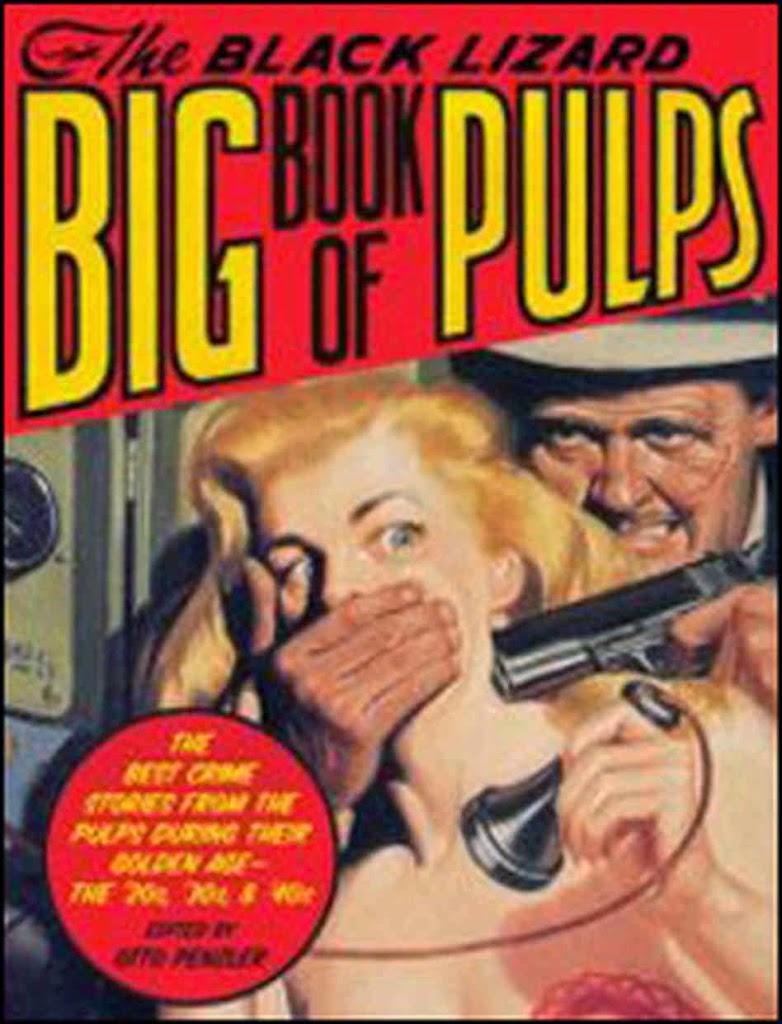
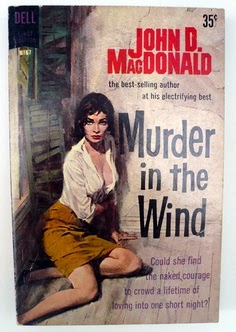
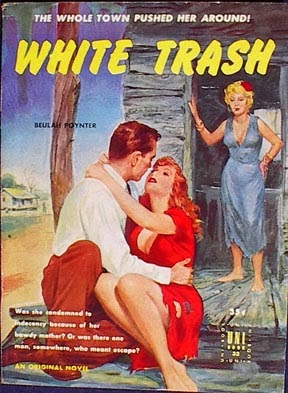
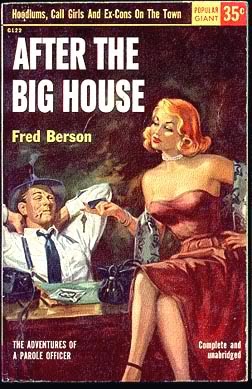
A couple Christmases ago, my husband gave me The Black Lizard Big Book of Pulps.It’s a compilation of the best crime stories from the “golden age” of pulp crime fiction — the ’20s through the ’40s. It’s about the size of an old Manhattan phone book. And to be really honest, parts of it read about as well.

Many of these guys were dismissed as the hacks of their day, churning out their stories for cheaply printed magazines like “Black Mask” and “Dime Detective.” Yeah, they were lurid, the syntax cringe-worthy, the plots thin or nonsensical. But they tapped into a popular need for a new kind of human hero. The most memorable of the heroes became the prototypes for much of what we are seeing in our crime fiction today — lone wolves fighting for justice against all odds but always on their own different-beat terms. Would we have Harry Bosch without the Continental Op? Jack Reacher without Simon Templar? No way…

And while we’re at it, let’s not get sucked into the notion that noir was only a guy thing. Valerie Taylor had a career churning out books like The Girls In 3B, a classic ’50s pulp tale showcasing predatory beatnik men, drug hallucinations, and secret lesbian trysts. (Her books, among others, have been reissued by Feminist Press.) And would we have Megan Abbott or Sarah Gran without Dorothy B. Hughes, who wrote the twisty indictment of misogyny In A Lonely Place (the source of the Bogart movie)? Doubtful…

To be sure, not all the old stories — like many of the movies — have aged well. The slang sounds vaguely silly now, the sexism and racism we can explain away as anachronistic attitudes. But the armature these writers created is still sturdy.

Especially in pure writing style. I think we can read these stories now mainly to appreciate the streamlined locomotive style that propels these stories along their tracks. When you read them, you can almost hear James M. Cain whispering: “I’m not going to dazzle you with my writing. I’m going to tell you a helluva story.”

These guys sure knew what to leave out. Here’s a passage from Paul Cain’s “One Two Three:”

I said: “Sure — we’ll both go.

Gard didn’t go for that very big, but I told him that my having been such a pal of Healy’s made it all right.

We went.

Not: And then we left the apartment and got in my roadster and set out. We took Mulholland Drive out of the canyon and arrived just before dusk. Just: We went.

How can you read that and not smile? I heartily recommend the Big Book of Pulps.And if you haven’t connected with Eddie on Noir Alley, you’re missing out on some of the best stuff television has to offer.

And now, in honor of our pulp forefathers, I am offering up this little quiz of pulp diction slang for your amusement. Answers at the end. And don’t chance the chisel for a cheap bulge, bo. We Jake?

DEFINITIONS.
1. Ameche
2. Kicking the gong around
3. Wooden kimono
4. cheaters
5. Gasper
6. Hammer and saws
7. Orphan papers
8. Wikiup
9. Bangtails
10. Can-opener

TRANSLATIONS
11. I had been ranking the Loogan for an hour and could see he was a right gee. It was all silk so far.

  1. I stared down at the stiff. The bim hadn’t been chilled off. Definitely a pro skirt who had pulled the Dutch act.
  2. I got a croaker ribbed up to get the wire.
  3. By the time we got to the drum the droppers had lammed off. Another trip for biscuits…

Answers:
1. telephone
2. taking opium
3. coffin
4. sunglasses
5. cigarette
6. Police
7. Bad checks
8. Home
9. Horses
10. Safecracker
11. I had been watching the man with the gun for an hour and could tell he was an okay guy. Everything was cool so far.
12. I stared at the body. The woman hadn’t been murdered. She was definitely a prostitute who had committed suicide.
13. I have arranged for a doctor to get the information.
14. By the time we got to the speakeasy, the hired killers had left. Just another trip for nothing…

PJ Parrish—June 16, 2020


Just what is film noir, and why does it have such a loyal following?

As the French name implies, this is “dark film.” It always revolves around crime, and who among us hasn’t had a passing thought of such ilk from time to time? Even if it is just to wonder “Could I get away with it?” Film noir allows us to indulge that fascination without getting too close.

Film noir has a distinctive look—rich black-and-white (as opposed to neo-noir, like Body Heat). Indeed, cinematographers, like the great John Alton, were just as important as the writer and director. (See Alton’s masterpiece He Walked by Nightsometime).

The noir world grinds out rough justice. No bad deed goes unpunished. A guy makes one bad move years ago, and has managed to find a new life…until that past catches up with him to exact retribution (Out of the Past).

Sometimes, the hammer falls on a decent guy who makes one bad choice.

In Side Street, Farley Granger plays Joe Norson, a mailman working like a dog to support himself and his pregnant wife. One day he delivers mail to a lawyer’s office and, alone there, finds $200 in cash. On impulse, he takes it. What he doesn’t know is the dough is part of the lawyer’s extortion racket.

And then there’s a murder.

Soon enough, the bad guy is after Joe, and so is the law, considering Joe a suspect in the murder. Hoo boy. Can he possibly get out of this? We watch to find out, pulling for the guy. Noir justice happens, but exacts a heavy price.

Not all noir leads are good guys who make a bad choice. Sometimes they’re bad guys through and through, and we watch to see if he gets away with it (Touch of Evil). Heist noir (Criss CrossThe Asphalt Jungle) is like that.

Thus, shades of black and white mix, which is just like life.

And makes for compelling fiction, too. The character with a “moral flaw” is more interesting—and more realistic—than a pure, immaculate hero. We relate to characters like that because deep down we know we have flaws, too, and that should our flaws get out of hand, it will lead to disaster.

In a way, noir is like classic Greek tragedy. The purpose of tragedy was to create “catharsis” and warn us of what happens when we follow the dark side.

Thus:

  • Give your Lead a moral flaw, and show it via inner conflict and the “mirror moment.”
  • Indeed, give all your characters, even minor ones, a moral flaw. Even if those are never revealed, it help you come up with more original actions and dialogue.
  • Consider exacting a price the Lead must pay for justice to prevail, a “wound.”

If you want to explore film noir more deeply, I recommend Dark City by Eddie Muller (affiliate link). There are also scores of B-movie noirs available for free on YouTube.

Here are ten of my favorites:

The Maltese Falcon (1941, Dir. John Huston)
Double Indemnity (1944, Dir. Billy Wilder)
Out of the Past (1947, Dir. Jacques Tourneur)
Too Late For Tears (1949, Dir. Byron Haskin)
Act of Violence (1949, Dir. Fred Zinemann)
The Asphalt Jungle (1950, Dir. John Huston)
99 River Street (1953, Dir. Phil Karlson)
The Hitch-Hiker (1953, Dir. Ida Lupino)
Pickup on South Street (1953, Dir. Sam Fuller)
Touch of Evil (1958, Dir. Orson Welles)

***

Do you enjoy noir? Do you have favorite novel or movie? If you write noir, do you have any lessons to share with other writers?
First Page Critique – Donny Malone

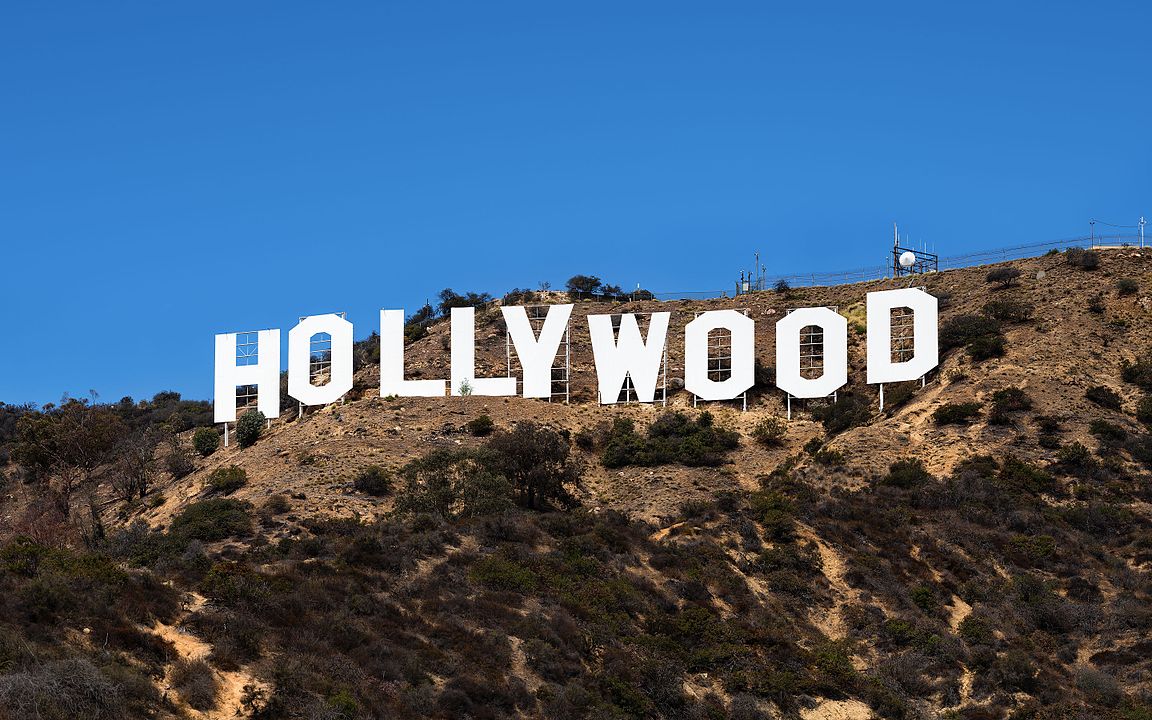
Photo credit: Thomas Wolf, Wikimedia CC

By Debbie Burke

@burke_writer


Please welcome today’s Brave Author who’s submitted the first page of a historical Crime Novel. Give it a read then we’ll discuss it.  

 ~~~

Donny Malone

Larry began eating at Vicenzo’s after his last picture went bust and his fourth wife fled with the remaining cash. It was a cheap breakfast joint off Santa Monica’s Broadway and Sixteenth.  A SWELL LITTLE JOINT, he wrote Howard Miller in a telegram arranging the meeting.

Miller was one of those full-time writers on the payroll at Paramount. Swell kid. Owed Larry too. Back in seventeen, Larry accepted Miller’s romance script titled: The Loving Call. Anyway, cut a long story short, the picture made money. Big money. Made Howard Miller a star. Or as much a star as its possible to be for a writer. Still, he had the manner of a kid from the Bronx, old Howie. He’d still roll up his sleeves when the L.A. sun hit noon. He’d still greet a guy with a firm, two-handed grip, and look any maître d’ in the eye without flinching. Howard weren’t into none of that small talk baloney neither. Soon as Vicenzo filled the coffees, he got down to talking shop.

“So Larry,” he asked. “How’s the kid?”

He was asking about Malone.

“Donny’s swell. Donny’s Donny.”

“Cos last I heard, Malone burnt his bridge back to vaudeville.”

“Donny’s done with that vaudeville hooey. Gets into L.A. tomorrow. Donny’s big time.”

“I hope you’re right.” Howard sighed, shaking his head. He dropped two sugar cubes into his coffee. Gave it a stir with his finger. “Since Malone gets his kicks making Mackenzie Campbell out like a chump.”

“Mack’s done. Donny’s contract was up.”

“I’m talking about Mack’s wife.”

“They were done.”

Done, Larry? You think Campbell – Campbell – is letting Malone cross the country with that broad?”

Larry didn’t know what Mack had planned. Never thought to wonder. All he knew was Donny Malone didn’t belong in no dying nineteenth-century circus act. This was a kid who could jump from a railway bridge onto a series of fast-moving carriages. Who would do it in a hot minute for a twenty-cent bet. A kid with the acrobatics of Buster Keaton. The dashing victory-smile of Fairbanks. And Larry wasted no time telling him. Put on his Hollywood voice and told the kid straight. Told him, ‘Donny. Baby. You ain’t signing with that bum another season.’

“So what he say?” Howard asked.

~~~

Let’s start with the title. On its own, Donny Malone isn’t intriguing. I immediately thought of the 1997 film Donnie Brasco with Johnny Depp and Al Pacino. Unless a person is famous or notorious, a name doesn’t generally make a good title because the reader doesn’t yet understand the reference. A better title could hint at the bygone era of Hollywood that might attract readers who enjoy the noir genre.

This first page does a nice job echoing conventions of pulp fiction and noir. A telegram  sets the time as early to mid-20th century in Santa Monica. The language is sharp, crisp, and slangy, further setting the period tone.

Brave Author introduces Larry who’s down on his luck, reduced to eating at a dive café after suffering professional and personal misfortunes in the Hollywood film industry.

Howard Miller’s character is established with backstory (more on that in a moment) as a successful Paramount screenwriter who is indebted to Larry. The inference is that Larry contacted Howard to call in a favor since Larry’s career is evidently languishing.

The subject of their conversation is an unseen third character, actor Donny Malone, followed quickly by the introduction of two more unseen characters: Mackenzie Campbell and Campbell’s wife with whom Donny has or had a relationship. Campbell is apparently not someone to mess with, raising a possible threat to Donny. The reference to an expired contract indicates Donny and Campbell once had legal obligations to each other but that’s now over.

The potential for conflict is present, although the reader isn’t sure yet what the conflict is. For the reader to fully engage with the story, s/he needs to understand the relationships among characters and what their opposing goals or agendas are. Suggest you fill in those aspects quickly in the pages that follow. 

The lead-off sounds promising but I see four issues that need work.

First problem: What is Larry’s profession? He’s in the Hollywood film business but in what capacity—producer, director, talent agent, actor, writer? The lack of that knowledge makes it difficult to pin down what he wants and what he hopes to accomplish by meeting Howard. It sounds as if Larry might represent Donny as his talent agent but that’s not clear.

The character sketch of Howard is well done. Describing him as a “swell kid” reinforces appropriate slang of the era. “Back in seventeen” narrows down the time closer to the 1920s.

However, it also highlights the second problem: most of that paragraph is an information dump about Howard. After the line “Still, he had the manner of a kid from the Bronx, old Howie” I suggest you cut the rest of the paragraph and save it for later in the story.

The following lines confused me:

Soon as Vicenzo filled the coffees, he [which he? Vincenzo or Howard] got down to talking shop. 

“So Larry,” he [again, which he? Vincenzo or Howard] asked. “How’s the kid?” 

Easy fix: Soon as Vicenzo filled the coffees, Howard got down to talking shop. 

“So, [need comma] Larry,” he asked.

The mention of sugar cubes and Howard stirring coffee with his finger were wonderful little details that again reinforce the era. Fun fact: restaurants replaced sugar cubes with packets after World War II.

The third problem is yet another info dump, this time about Donny Malone.

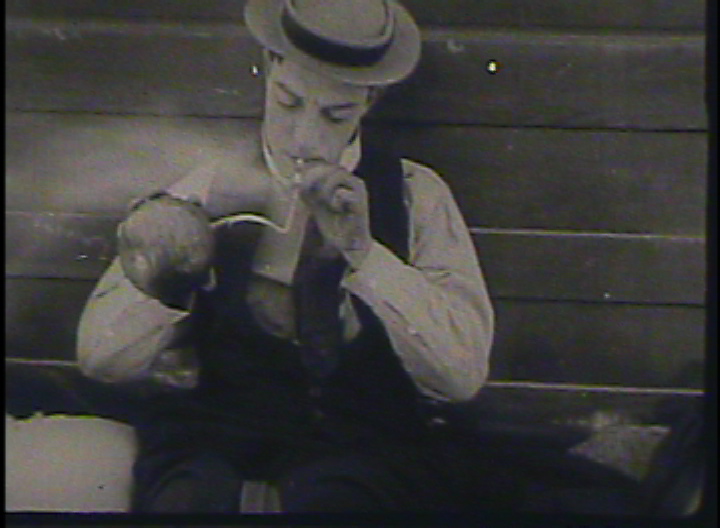
Buster Keaton, photo credit: Wikimedia Commons

“All he knew was Donny Malone didn’t belong in no dying nineteenth-century circus act. This was a kid who could jump from a railway bridge onto a series of fast-moving carriages. Who would do it in a hot minute for a twenty-cent bet. A kid with the acrobatics of Buster Keaton. The dashing victory-smile of Fairbanks. And Larry wasted no time telling him. Put on his Hollywood voice and told the kid straight. Told him, ‘Donny. Baby. You ain’t signing with that bum another season.’”

While the description of Donny is compelling and shows he has great star power, it’s still an info dump.

Don’t feel bad, Brave Author. We all struggle with finding the right balance between telling just enough background information to orient the reader and over-telling that halts the story’s forward movement.

Also, if this whole paragraph is Larry’s thoughts, the transition back to the conversation with Howard is a bit bumpy. ‘Donny. Baby. You ain’t signing with that bum another season’. Because of the single quotes around these sentences, I had to reread to determine if Larry is reviewing the conversation in his head or if he’s telling Howard about it.

In the passage below, Larry and Howard are already talking about Donny:

“Donny’s swell. Donny’s Donny.” 

“Cos last I heard, Malone burnt his bridge back to vaudeville.”

“Donny’s done with that vaudeville hooey. Gets into L.A. tomorrow. Donny’s big time.”

“I hope you’re right.” Howard sighed, shaking his head. He dropped two sugar cubes into his coffee. Gave it a stir with his finger. “Since Malone gets his kicks making Mackenzie Campbell out like a chump.”

“Mack’s done. Donny’s contract was up.”

“I’m talking about Mack’s wife.”

“They were done.”

Done, Larry? You think Campbell – Campbell – is letting Malone cross the country with that broad?”

Why not continue the conversation and incorporate Larry’s thoughts about Donny into dialogue?

Here’s a different way to convey the info:

Larry didn’t know what Mack had planned. Never thought to wonder.

One side of Howard’s mouth pulled down, unconvinced.

Larry leaned close and put on his Hollywood voice. “Listen, Howard, for a twenty-cent bet, this kid will jump from a railway bridge onto a fast-moving train. He’s every bit as good an acrobat as Buster Keaton. Plus, he’s got that Fairbanks smile. I didn’t waste no time telling him straight. ‘Donny. Baby,’ I says, ‘you ain’t signing with that Campbell bum another season.’”

The reader still doesn’t know exactly what’s happening or what conflicting agendas are in play among Larry, Howard, Donny, Campbell, and Campbell’s wife. But enough hints have been provided to promise the reader that fireworks are ahead.

The fourth problem is point of view. It feels off. Sometimes the voice sounds as if an unseen narrator is telling the reader about Larry rather than Larry thinking to himself.

Vintage films often used voice-over narration to explain context and introduce characters. A prime example is the 1944 classic Laura where Clifton Webb talks to the audience about her murder. If this is the effect Brave Author is striving for, it doesn’t quite succeed.

Currently, readers favor deep point of view, inside the main character’s skin, thinking his thoughts, experiencing his sensations and physical reactions. Yet that doesn’t feel quite right for this historical piece.

So I confess I’m stumped how to handle POV except to suggest that Brave Author study classics written during this time period to pinpoint how those authors treated POV to achieve their tone. If TKZers have other ideas, please chime in.

There are minor problems with word repetitions and typos:

“Or as much a star as it[‘]s possible to be for a writer.” I smiled at the humorous observation that the writer is definitely at the bottom of the movie industry food chain.

The word “swell” is used three times on the first page. If “swell” is a verbal tic Larry falls back on when he’s nervous, three times might be okay but more than that may wear thin with readers. Perhaps change one to a similar slang term for the era, e.g. Vincenzo’s is the bee’s knees. Same suggestion applies to “joint,” used twice in the first paragraph. And “still,” used three times in the second paragraph.

The last line So what he say? might be slang but could also be a typo. So what‘d he say? sounds more natural. 

Overall, this page is well written and captures the time, speech patterns, and period slang in a style that’s reminiscent of noir pulp fiction. The reader doesn’t yet understand the story problem or what’s at stake. However, the historic setting and the voice are intriguing enough that I’m willing to read on to discover if Larry is a sour-grapes loser, a hustler seeking a shortcut back into the big time, a determined guy who refuses to give up, or someone else. Knowledge of his profession would help frame his personality.

This promises to be an entertaining trip into the gilded age of Hollywood where treachery lurks beneath the glamorous veneer.

BTW, Jim Bell has discussed pulp fiction and noir here. On Patreon, he offers short stories set immediately after World War II about a studio fixer in the Hollywood film industry. You might check out how our resident expert handles his first pages.

Best of luck to you, Brave Author. You’re off to a good start.

~~~

TKZers: What do you think of Donny Malone? What suggestions can you offer our Brave Author? How would you handle POV? 

~~~


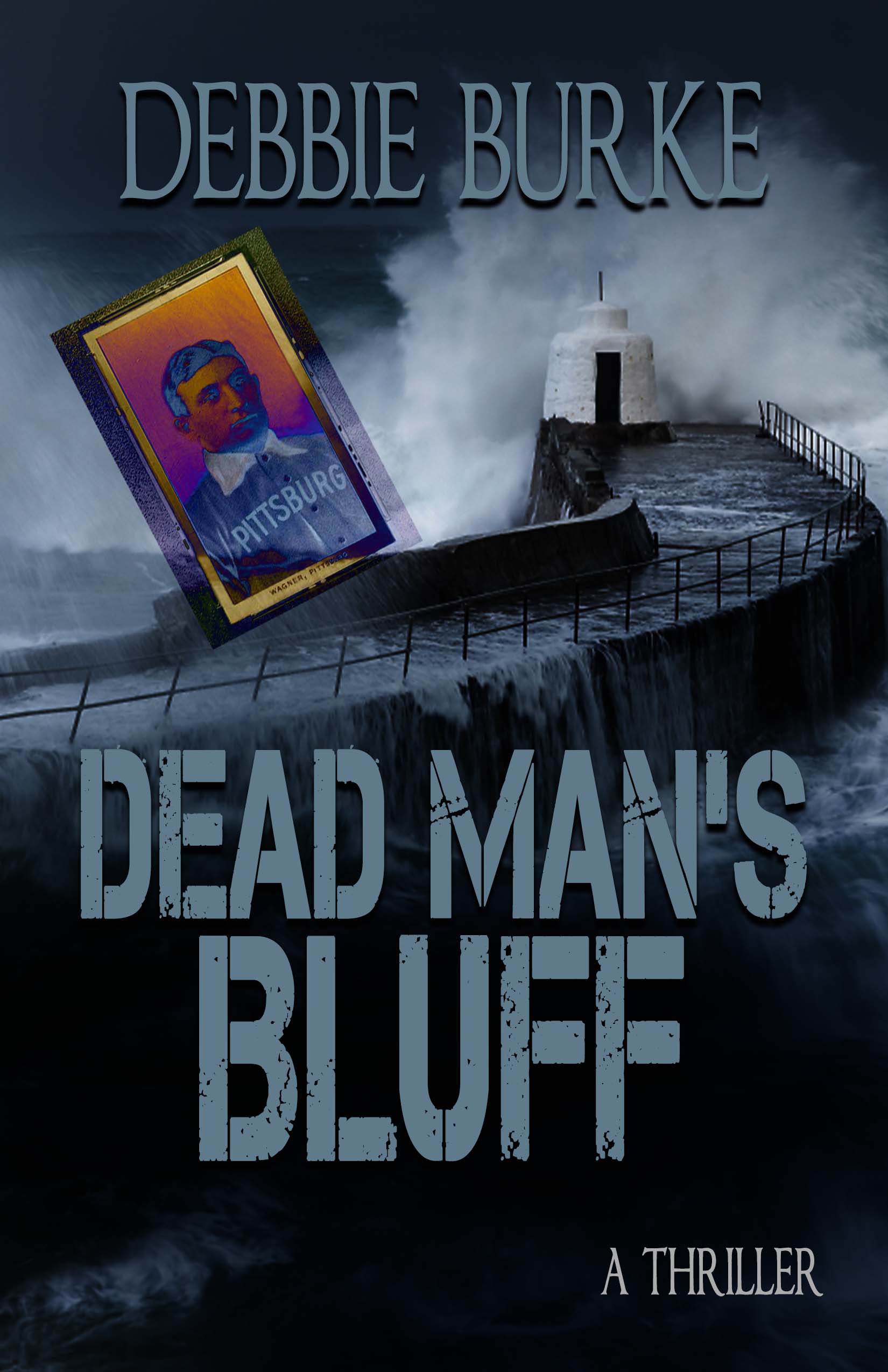
Debbie Burke’s new thriller, Dead Man’s Bluff, is on sale at the introductory price of only $.99. Please check out the link here.

What we can learn from pulp fiction

By P.J. Parrish

Now pay attention, kittens and bo’s, there’s a quiz at the end of this one.

I was an art major in college. This was before I figured out I couldn’t make a living at this. Unless I planned to teach, but I was scared of kids. (Not a good character trait in teachers). I was doing okay in art until I hit a class called Three Dimensional Design. I could draw and paint but I was terrible at this. Evidence of my ineptitude was my “final exam” sculpture, which I called Nude With A Paper Cup Head. So titled because I couldn’t get my figure’s face right so I just filled a Dixie cup with wet plaster and stuck it on top. I got a D.
I just didn’t get it. I couldn’t think outside the two-dimensional box. Finally, my instructor told me I had to stop seeing the world in POSITIVES and start seeing it in NEGATIVES. In other words, I was so hung up on adding things, I was missing the beauty of subtracting. “Learn how to leave things out,” he told me.
I ended up abandoning art for writing. But I think that little piece of advice must have lodged deep in my brain cells because it is something subconsciously I have always tried to apply to my fiction writing. Subconsciously I say because until recently, I hadn’t even thought about my art instructor and his advice. Maybe I am thinking about it now because of the book I am reading — “The Black Lizard Big Book of Pulps.” I got it for Christmas but I keep it handy by the bedside, digesting it in small doses.
It’s a handsome book…a compiliation of the best crime stories from the “golden age” of pulp crime fiction — the 20s through the 40s. It’s about the size of the Manhattan phone book. And to be really honest, parts of it read about as well.
Many of these guys were dismissed as the hacks of their day, churning out their stories for cheaply printed magazines like “Black Mask” and “Dime Detective.” Yeah, they were lurid, the syntax cringe-worthy, the plots thin or nonsensical. But they tapped into a popular need for a new kind of human hero. The most memorable of the heroes became the prototypes for much of what we are seeing in our crime fiction today — lone wolves fighting for justice against all odds but always on their own different-drummer terms. Would we have Harry Bosch without the Continental Op? Jack Reacher without Simon Templar? Doubtful…
Some of my favorite “classic” crime writers wrote pulp. Like John D. MacDonald who churned out stories for “Black Mask” and “Dime Detective,” and Donald Westlake writing as Richard Stark. Even my seminal hero Georges Simenon (creator of inspector Maigret who was a partial inspiration for my own protag Louis Kincaid) couldn’t resist the lure of the lurid and wrote two nasty little noirs call “Dirty Snow” and “Tropic Moon.” 
To be sure, not all the stories in “Lizard” have aged well. The slang sounds vaguely silly now, the sexism and racism we can explain away as anachronistic attitudes. But the armature these writers created is still sturdy.

Especially in pure writing style. That is the biggest thing I am getting out of these stories, an appreciation for that streamlined locomotive style that propels these stories along their tracks. I read these stories now — discovering most of these writers for the first time — with a smile on my face and a Highlighter in hand. There are lessons to be learned for us all, and you can almost hear James M. Cain whispering: “I’m not going to dazzle you with my writing. I’m going to tell you a helluva story.”

These guys sure knew what to leave out. Let me give you one little passage from Paul Cain’s “One Two Three”:

I said: “Sure — we’ll both go.”
Gard didn’t go for that very big, but I told him that my having been such a pal of Healy’s made it all right.
We went.

Not: And then we left the apartment and got in my roadster and set out. We took Mulholland Drive out of the canyon and arrived just before dusk.
Just: We went.
How can you read that and not smile?
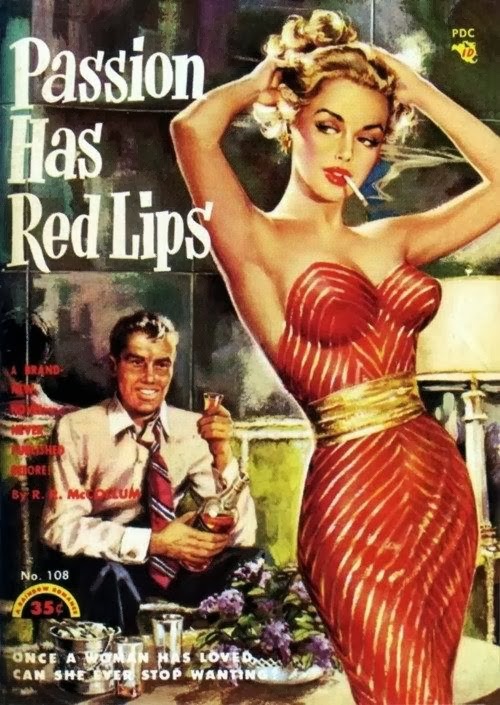
I heartily recommend the “Big Book of Pulps.” And speaking of art, check out some of the best pulp cover artists of the day at Rex Parker’s terrific vintage paperback blog Pop Sensation. 
And now, in honor of our pulp forefathers, I am offering up this little quiz of pulp slang for your amusement. Answers at the end. And don’t chance the chisel for a cheap bulge, bo. We Jake?
DEFINITIONS.
1. Ameche
2. Kicking the gong around
3. Wooden kimono
4. cheaters
5. Gasper
6. Hammer and saws
7. Orphan papers
8. Wikiup
9. Bangtails
10. Can-opener
TRANSLATIONS
11. I had been ranking the Loogan for an hour and could see he was a right gee. It was all silk so far.
12. I stared down at the stiff. The bim hadn’t been chilled off. Definitely a pro skirt who had pulled the Dutch act.
13. I got a croaker ribbed up to get the wire.
14. By the time we got to the drum the droppers had lammed off. Another trip for biscuits…

 Answers:
1. telephone
2. taking opium
3. coffin
4. sunglasses
5. cigarette
6. Police
7. Bad checks
8. Home
9. Horses
10. Safecracker
11. I had been watching the man with the gun for an hour and could tell he was an okay guy. Everything was cool so far.
12. I stared at the body. The woman hadn’t been murdered. She was definitely a prostitute who had committed suicide.
13. I have arranged for a doctor to get the information.

14. By the time we got to the speakeasy, the hired killers had left. Just another trip for nothing…