Before It’s Too Late – Six Tips to Speed Up the Pace

Image purchased from Shutterstock


By Debbie Burke

@burke_writer

Recently I read an excellent post about flash fiction written by Nancy Stohlman on Jane Friedman’s blog.

One line leaped off the screen:

“Flash fiction has an almost desperate need to tell a story before it’s too late.

Before it’s too late? What does that mean? Too late for what?

See what Nancy just did?

Something terrible could occur and you better keep reading to find out what it is.

Although Nancy was talking about flash fiction, the same principles apply to longer works.

Thrillers particularly are known for the breakneck pace that grabs readers by the throat and drags them along as the story unfolds.

But other genres can also achieve that compelling, can’t-put-it-down quality.

How does an author capture that sense of urgency?

Try these six tools:

1. Threats

In The Canterbury Tales, Chaucer wrote about the Sword of Damocles:

There was a sharpened sword above his head
That hung there by the thinnest simple thread.


Notice how just reading those lines makes you uneasy. That is the quality you want to provide for your readers.

Threats can start out minor but build to major.

Minor: being late to work.

Major: being late to work after the boss swore to fire you if you’re ever late again.

Minor: getting pulled over by a cop

Major: getting pulled over by a cop with a body in your trunk.

Threat level should increase as the story progresses. You might start with a petty annoyance. By the middle of the story, that annoyance has snowballed into a serious problem. At the climax, that problem has led to utter catastrophe for the character.

Threats need to maintain a consistent undertone of worry throughout the story. They may not always be front and center in the action but they should remain in the back of the reader’s mind, nagging and chafing like a popcorn kernel stuck between teeth.

Readers need to feel the thread is fraying and getting thinner with each chapter.

Is your pacing off or irregular? If so, the cause could be that a small threat occurs after a larger one. That causes a dip in the danger, a lessening of tension. Consider rewriting so each threat is progressively worse than the one before.

Exercise: Make a list of threats in your WIP. What is the overarching threat? What are the lesser threats?  Do they build one on top of another, escalating the danger?

2. What else can go wrong? 

Image purchased from Shutterstock

Each scene needs a purpose or goal for the character to work toward.

By the end of the scene, the character has either achieved the goal or failed.

Or, if s/he achieves the goal, that success leads to new unexpected complications.

At the end of each scene, ask yourself what else can go wrong?

Then make it happen.

Use failure or unexpected complications to propel them into the next scene.

Exercise: Analyze the ending of each scene. How did your protagonist fail? How can you make that failure even more devastating?

3. Juice up the action.

There’s a reason that chase scenes are a popular device in movies. Pursuits make watchers hold their breath at one moment and gasp at the next.

Just for fun, here’s the greatest car chase ever filmed. To skip the preliminaries, jump ahead to 3:30 for the screeching tires.

https://youtu.be/FJZ-BHBKyos

Unfortunately, car chases don’t translate well to novels. But the concept of “pursuit” can still be applied. Harking back to #2, the character is in pursuit of a goal.

Obstacles block his/her pursuit of the goal. They don’t have to be as dramatic as the near-misses, biker slide, or shotgun blasts in Bullitt. But they do have to thwart the character and prevent him/her from achieving the goal of the scene.

Exercise: What hurdles must your character leap over? Don’t have a hurdle? Invent one. When the character leaps, s/he can stumble and fall, physically or metaphorically.

A hint: The faster the action, the more the writer should slow down the description. This sounds counter-intuitive but check out a memorable slow-motion scene from The Untouchables.


Exercise: write this scene, using the same pacing and attention to detail that the camera did. In writing, can you include additional sensory details like smell, taste, and touch?

4. Employ the Hitchcock Factor

Photo credit: Andy Li, Unsplash

Alfred Hitchcock was famous for letting the audience in on secret knowledge that the character onscreen didn’t know.

Think of ways for the reader to know more than the character does. The character opens a door and descends the basement stairs, believing s/he is on the way to do laundry. But the reader knows the villain is lurking under the stairs.

To accomplish that, you might go into the antagonist’s viewpoint and reveal his/her plans to derail the protagonist. The reader knows but the protagonist doesn’t.

Exercise: In your WIP, do you let the reader in on a secret your protagonist doesn’t know? How?

5. Set the alarm

Photo credit: Elena Koycheva, Unsplash

The ticking clock is a standard device to ratchet up tension. But it doesn’t have to be a bomb planted under the baby’s crib, counting down to zero.

Set up a deadline the protagonist must meet. If s/he doesn’t, complications happen, leading to more grief that ultimately could cause him/her to lose everything.

Exercise: If your story doesn’t already have a ticking clock, can you insert one?

Before it’s too late!


6. Cliffhangers

Photo credit: Tobias Tullius, Unsplash

Cliffhangers don’t necessarily mean fingers slipping off the edge.

Unanswered questions are great ways to propel the reader into the next chapter. When you end a scene with a question, the reader must turn the page to learn the answer.

But finding the answer to one question isn’t enough. In the next chapter, the author poses more new questions. Again, the reader must turn the page to find answers that lead to…more questions. And so on and so on to the last chapter when the author finally answers all questions and resolves all problems…or not!

Exercise: Study your chapters. Do they end with questions? Can you think of more intriguing ways to tantalize the reader into the next chapter?


Try these six tools to grab your reader’s attention…before it’s too late! 

~~~

TKZers: Have you used any of these techniques? Do you have other tips to add? 

~~~

Debbie Burke uses the six tools in the Tawny Lindholm Thrillers with a Heart Series. Quotes from customer reviews: “Getting ready for bed? Don’t start this story!” “Kept me reading all night long.”  “Read it in one sitting.” “Impossible to put down.” 

Cover art by Brian Hoffman

Searching for Justice

Despite (or maybe because of) a rather distracting week, I managed to finish the latest mystery by one of my all time favorite writers (I’m not going to disclose the book or author or I’ll have to give spoiler alerts!). However, instead of the usual feeling of contentment that comes from finishing a well-written, masterly plotted mystery, I felt…let down…and it took me a few days to figure out that the major reason for my nagging sense of disappointment was that the novel never really gave me the ending I wanted. Sure there was resolution but there was no justice…and I was surprised at how much that altered the whole reading experience for me.

Don’t get me wrong, the novel had great characterization and a well-paced investigation, it was beautifully written and often poignant, but in the end the perpetrators of the crime never really faced any real consequences, and certainly no punishment. This got me thinking about reader expectations when it comes to the whole mystery/crime genre and also whether, given how much the genre has changed over the years, writers still need to end their novels with a sense that justice (whatever that might mean) has been served.

Like many other readers, part of the reason I read mysteries is to get the satisfaction that comes from seeing justice served (something that all too often does not occur in real life). There is something very affirming about ‘good’ winning out in the end – even if that ending is messy or morally compromising. Once I begin to read a mystery novel I place my trust in the writer that the crime/mystery will ultimately be solved and that the person(s) responsible will be brought to account – but how do I (as both a reader and writer) feel about a resolution that omits ‘justice’ and ‘punishment’? I’m still not sure.

When it comes to this particular book at least, it was about managing reader expectations. I was expecting a murder mystery and though I got one, I didn’t get the ending I was expecting, and as a result, I felt the whole book tainted by a lack of a satisfying resolution. I think this disappointment says a lot about how writers need to manage reader expectations and also, perhaps, the strengths and limitations of the genre itself (for instance if I had considered this literary fiction I might not have expected the same kind of ending as I would with a mystery).

So TKZers what do you think -do you still expect or demand to see justice served in a mystery novel? How much leverage do you give when it comes to endings/resolutions in a mystery/crime genre novel? Am I just being old fashioned or is justice and/or punishment even needed anymore?


Use Color to Test Your Story

It’s been months since I shared the saga of the injured raven vs. my beloved “pet” crows, but there’s a good reason for that. I didn’t have an ending till last Thursday. For a while I thought I did, but I needed to verify my suspicions. Ignore the colors as you read. I’ll show you cool writing trick at the end. 🙂

When the story left off, I was trying to figure out how to feed “Rave” without angering my beloved Poe and her murder. While I weighed my options, the crows scolded the raven from all directions.

I have a strict “no fighting” policy in my yard. When anyone breaks this rule, I reinforce my disappointment by withholding food till they smarten up. A wise crow doesn’t anger the human who controls a never-ending supply of tantalizing treats. Needless to say, the attacks stopped as long as Rave stayed within the property lines. If she crossed the dirt road to the woods, my rules were no longer in play, and they divebombed her.

Brilliant birds.

Two weeks later, Poe signaled for me to use her summer rock. I’d created two separate feeding areas so Dad (my husband) didn’t have to shovel the lower yard — affectionally named Animal Planet for its greenery, flowers, and throngs of wildlife who visit — and Mumma didn’t have to schlep through thigh-high snow all winter.

The change in feeding area reset Poe’s murderous hatred toward Rave. By feeding Poe and family on Animal Planet and Rave on the winter rock in the upper yard, I’d restored a modicum of peace.

Until about a week later when Rave thought Poe’s rock looked tastier than hers. Or perhaps, she remembered switching rocks in the warm weather with her dad, Odin. Hard to say for sure what prompted her to move to the woods near the summer rock when our new arrangement worked so beautifully.

Poe was NOT pleased about Rave’s decision.

For the umpteenth time I tried to capture Rave to bring her to a rehabber. And once again, she outmaneuvered me. Maybe she’d be okay on her own? The question replayed on an endless loop, followed by the grave reality of a fox, Great Horned Owl, Fischer cat, raccoon, or black bear crossing her path during the night.

Sleepless nights wore me down.

For two-plus-weeks I wrestled with what to do. Then one day I stopped looking at the situation through my eyes — human eyes — and viewed it from Poe and Rave’s perspective. Once I did, all the years of researching corvids flooded my mind with ideas.

One of crows’ amazing abilities is delayed gratification. Meaning, crows will wait for food if the food they’re waiting for is tastier than the scraps that await them now (Ravens can do this, too, but don’t when they’re injured).

With this theory in mind, I offered Poe a deal.  As the alpha, she’s the only crow I needed to convince. The others would fall in line behind her.

“Poe, if you let Rave eat, I’ll bring out your favorite treats after she’s safely out of sight.”

Now, I’d love to tell you Poe agreed right away, but the truth is, she wasn’t thrilled with the idea at first. Every time I served breakfast, lunch, or dinner, the crows emptied the rock within seconds. Just once I needed Rave to beat Poe to the rock.

It took about three days before Rave worked up enough courage to race Poe to the rock. Afterward, when Rave hopped back into her new wooded digs, I offered Poe raw chicken breast, her favorite kibble, and of course, I replenished the peanut pile.

Success!

Rave on her own special rock.

Day after day, Poe waited for Rave to eat and I made good on my promise. But then, Rave would climb up on this new rock at the tree-line to check out the menu before proceeding toward the summer rock.

The proverbial lightbulb blazed on. If I used both rocks — one for Poe and family and one for Rave — I could potentially decrease the animosity between them. And it worked. For the next few weeks, Poe never ventured near Rave’s rock at feeding time, and vice versa.

What happened next stunned me into submission.

Toward the end of nesting season, Poe sent the fledglings and elder siblings on patrol with Edgar. Shakespeare, known fondly as “Shaky” (Poe’s mini me), stayed with Mumma. Breath trapped in my lungs as Poe swaggered into the woods in search of Rave. Uh-oh. This can’t be good.

Moments later, “low-talking” indicated Poe and Rave were hashing out a few things. Shrubbery obscured my view. There’s nothing I could do but wait. Watch. Pray Poe wouldn’t morph into Hannibal Lecter or Buffalo Bill.

Seconds felt like years.

After several heart-stopping minutes, Poe sauntered out of the woods for a little worm-hunting while Shaky played lookout (since birds are most vulnerable on the ground, crows post a sentinel in the trees). To my surprise Rave lumbered right past Poe, so close the feathers on their wingtips almost touched. Rave climbed up the rock to the feast on chicken thighs, peanuts, sunflower seeds, and kibble. Poe even allowed Rave to eat the dead mouse!

That’s when it dawned on me — these two majestic animals had struck a deal.

Poe watching Rave’s six from the grass below.

With this new arrangement, Rave waited for the crows to tell her if it was safe to step into the open.

Many sharp-shinned hawks flooded our area, and an injured raven equaled easy prey.

In return for Poe’s service, Rave only ate half the food. She even tore off a piece of chicken and tossed it to Poe on the grass below. 

The good times didn’t last long.

Each year when the new fledglings leave the nest, Poe escorts the crowlettes to my yard to practice landing on branches and learn how to slalom through the maze of trees. Normally, it’s a special occasion filled with hilarity and awe.

Not this year.

When Poe brought the fledglings, trepidation surfed their wake. Rave still asked for permission to approach the rock, but Poe’s cutting glare indicated an emphatic, “Don’t you dare come near my babes.”

What could I do? I couldn’t scold Poe for protecting her young. I also couldn’t let Rave starve. A niggling sensation burrowed bone-deep for the next three weeks. Every time Poe, Edgar, and the elder siblings left to teach the fledglings crucial life lessons, I jogged down to the rock to feed Rave.

The situation wasn’t ideal for any of us, but we dealt with it. Until we couldn’t any longer.

Animal Planet turned menacing — dangerous — as a rebellious fledgling ventured past the rock into the woods, in line with Rave’s hiding spot, her home-away-from-home doubling as a hollowed bush.

Poe scolded the fledgling to back away, but he refused to obey. That tiny crow acted like he’d been sworn in as the new sheriff in town, a LEO hellbent on destroying the interloper in their midst.

The situation spiraled toward disaster.

One sultry July morning he’d had about enough of Poe’s “rules” and swooped down in full attack-mode. Ear-piercing caws tornadoed through the trees. I raced toward the woods to intervene before the others joined their brethren.

Whether this incident had anything to do with Rave’s future plan, I couldn’t tell, but she disappeared for three days. Upon her return, she stocked up on food and rested for two days. Vanished for another three days, returned for two. She seemed to have a set route to a precise location. Two days on, three days off. The routine never wavered. Two days on, three days off.

Could Rave be a mother? What if the scuffle with Poe’s fledgling convinced her to find her own? Crows and ravens have similar nesting patterns. If Rave had chicks in the nest when she got hurt, they’d be fledging, too.

More and more I became convinced that she was searching for her family during those three days away. Though this theory filled me with warmth, I still panicked every time she left. Until the day Rave soldiered into the yard with more confidence than she’d had in months, and her shiny black plumage had regained its luster.

For hours she perched on a rock near the house and exercised the injured wing. She even attempted short, low flights, about two feet off the ground for ten feet at a time. Day after day for a solid week, she waited for Poe to soar out of sight before practicing her flying, each day gaining more lift.

When I bustled down the hill to Animal Planet the following day, one flawless raven feather laid on the rock — a thank you from Rave — and I wept, keening over my loss. I’d prayed for Rave to heal, to thrive, but I never got the chance to say goodbye.

Would I ever see her again?

All summer I searched the sky for Rave. Every now and then my husband said he heard gronking in the woods, which brought me some solace. Still, I longed to see her one last time.

Two weeks ago, I had an early appointment that forced me out of the house early on a Friday morning. As I hustled up the walkway, gronk, gronk, gronk emanated from the woods across from the driveway.

I darted across the dirt road. “Rave?”

“Gronk, gronk, gronk.”

“Rave! I missed you so much!”

A black silhouette peeked out from behind a tree trunk. “Gronk, gronk.”

“I wish I could stay, but I can’t. Please come back, baby. I need to make sure you’re okay.”

A week rolled by with no word from Rave. Last Thursday, she strutted across Animal Planet with her bill held high, chest out, confidence and pride oozing off every feather. When she stepped on to Poe’s rock, disappointment crossed her face. The crows had devoured every morsel.

Rave stared up at the window. “Gronk, gronk?”

“Rave,” I called back. “One sec, honey. Be right out.”

That’s all the reassurance she needed. With her spectacular black wings spread wide, Rave leaped into the air and flew to the branch overlooking the rock. I bustled down to Animal Planet, my gaze locked with hers, my emotions rising over the rims of my eyes, joyous tears spilling down my cheeks. Rave’s healthy, happy, and loved.

Now, pull the screen away and look at the colors. It’s a rose garden. Brown = soil (exposition/narration). Red = roses (action/dialogue). Green = leaves (emotion, inner dialogue, and foreshadowing). Too much soil, you’ll have gaps in your garden, wasted space. Too many leaves will overshadow your roses. With too many roses, you can’t see the beauty of each blossom.

This technique is easy to do in Word. I wouldn’t recommend it for a blog, as it’s labor-intensive to manually input colored highlights via CSS. You’re worth it, though. 🙂

One last note: If you come across sentences that contain emotion, exposition, and/or action, it’s fine to highlight it with one color. No need to nitpick. You’re looking at the story as more than the sum of its parts.


In other news, Pretty Evil New England released yesterday!  Congratulations to Priscilla Bettis for winning the giveaway!


Getting What You Want

Photo by Fernanda Rodriguez from unsplash.com

Happy Halloween! You cannot get away from it. Websites like BloodyDisgusting and The Lineup, which are hardly sedate during the rest of the year, really kicked out the jams in October by letting everyone know about frightening books both new and old, as well what the streaming services are showing to commemorate All Hallow’s Eve (the answer: plenty). 

Out on the street, however, it’s been another story. Some folks have loathe to let their kids out for trick-or-treating for a variety of reasons. Others were concerned about passing out candy for a number of concerns.

I accordingly decided to go dark this Halloween for the first time since I became what I like to think of, probably self-deceptively, as a functioning adult. That raised another issue. What about the children on my street? They are each, to the smallest ankle-biter, uniformly kind, courteous, and in some cases sweet. A solution arrived in due course.

 I decided that I would distribute candy to the neighbor children at their homes before the official Halloween hours commenced. I was mindful that nothing will ruin a Halloween more for a child than finding a bunch of candy that they don’t like (or Apples. Or pretzels. Or anything made by Oral B) at the bottom of their bag at the end of the evening. 

The solution was simple: I did a little market research. I inquired as to the favorite candy of each child. I asked the parents, of course. The sight of an adult male who is elderly, stocky, and bald asking a child about their favorite candy does not make for a good look. Each kid, interestingly enough, had a different preference. I expected some consensus out of the fifteen little neighbors but none was to be had. I had never heard of some of the choices (Warheads? What the feck are Warheads?) but each of them was easily located, thanks to the local Dollar Tree. That, plus some baggies full of dog treats for the families with a Fido saved the day. It worked out fine. Everyone was happy, even (and maybe most of all) Grumpy Old Me. 

Market research. Remember that term.  Candy manufacturers (and manufacturers of just about everything else, really) sink all sorts of lucre into market research, focus groups, and the like before they roll out new products which then swim or sink in the ocean of commerce. Those that tread water and swim multiple laps get pride of place on the shelves of supermarkets. Those that go under three times (usually a product that I really like) don’t get so much as a lifejacket tossed to them. 

The publishing industry is really much more subjective. An author has to find an agent who likes the manuscript AND thinks that it can be sold to a publishing house. The agent finds an editor willing to stick their neck out, who takes it up the line and, well, sticks their neck out to get the book published. Again, it’s not enough for the editor to like the book. The ultimate determinant is whether they think that the book will sell. Editors don’t get in trouble because of the books or authors they miss. They get in trouble for the books they champion and usher to market that miss with the audience. The saying in such a case is, “We shipped twenty-five copies and got twenty-six back.” No one along the line, including the author in most cases, has any real research to back them up when they do this, other than that past performance will (hopefully) be the best indicator of future success. One major exception to this is Dr. Steve Hooley, an author who frequently comments on TKZ. Dr. Steve spends a lot of time at various stages in the writing process bouncing things off of his target audience, and to good effect. He is the exception rather than the rule on this. Authors want to write and finish. Publishers are looking for the successor to the last big hit, which has been at various points Harry Potter or The Da Vinci Code or girls with dragon tattoos or on trains. Older readers will recall when Stephen King first broke hugely, and the shelves and racks were full of horror novels. It looks as if that horror cycle is beginning again for a number of reasons. We’ll see. 

Photo by maounping at shutterstock

All of that sounds depressing. It might be. It might also actually be liberating if you are the writer slaving over their keyboard with high hopes of creating a bestseller, or any seller. While you do this, don’t aim to be next on the current trend line. You want to be first on the next trend. You want people to wonder who will be the next YOU. How do you get there? For starters, remember this bit of wisdom. An announcer who began his career on a low-watt radio station in western Pennsylvania eventually, through a lot of hard work and after experiencing years of failure, created a broadcast and merchandise empire by being himself. He did this in part by reminding himself each morning that “Someone is going to be successful today! Why can’t it be me?” Indeed. For seconds, don’t write like someone else. Someone has already done that. Tell yourself your story out loud until it sounds like something you would say. You’ve got a voice. Use it to sound like unique you, not someone else. And have fun while you’re doing it. If you’re not having fun you are probably doing the wrong thing or doing the right thing wrong.

Enjoy your day and evening. I hope you get exactly what you want in your candy bag. Be well, and thank you as always for being here. No you, no me. 

Photo by vishnuMK at unsplash.com

First Page Critique: Oh By The Way

It’s seems a while since I did a first page critique  (though it probably isn’t) but time this year has been running in very strange ways – but it feels good to get back down to the nitty gritty of what makes a first page work. Today’s submission, ‘Oh By The Way’ provides a great introduction to the role of humor and setting the tone for a POV right from the start. Enjoy – my comments follow.

Oh By The Way

I didn’t go out with a bang. It was more of a thud. When the car hit me, all I could think  was, “Oh, great.” My body lifted ridiculously out of my shoes on impact, then fell to the ground so quickly that the rest of me didn’t follow. Thud.

I watched my crumpled body from above and thought, “I’m going to be late for work.” I  floated higher into the London sky, past the smog and into the clouds before realizing the whole cartoonish scene had been my death. “Lovely,” I folded my arms across my chest and rose into the heavens a bit pissed off.

Without any transition at all, I found myself standing in front of a bland sort of train station. It sat under a hazy orange sky surrounded by nothing at all. I turned in all directions and noted not a tree or a bird. The only sound came from my shoes crunching tired-looking pebbles beneath my feet.

“Well, my shoes are back. That’s clever,” I thought. But, the rest of it was quite disappointing. I mean, there was no ceremony to it. I didn’t exactly expect trumpets, but a  kazoo perhaps could have been spared.

I let out a frustrated giggle and noticed a card hanging from my neck by a lanyard. It had a mortifying picture of me with an astonished look on my face and the words “DISTRACTED  DRIVER” bolded in red.

“Bloody hell,” I said out loud.

My ears perked at the sound of pebbles crunching to my right as a plump little woman came walking toward me out of seemingly nowhere. She reminded me of my middle school  English teacher, except with better shoes.

“Oh, my dear,” she reached her hand out to me and I awkwardly took it. “How are you?”  she asked.

“Incredulous,” I blurted out. I was still gripping the photo around my neck and lamely held it up to her. “I was a pedestrian, not a distracted driver,” I said. As if getting my name tag right was what really mattered.

“Oh, not to worry. That’s just a conversation starter,” the woman smiled.

The sound of footsteps suddenly surrounded us on all sides. Beings began taking shape out of the orange haze and we were no longer alone.

General Comments:

I enjoyed this first page for its breezy tone and humor, setting the scene (I assume) for a story set in some kind of afterlife. My favorite line – ‘I didn’t exactly expect trumpets, but a  kazoo perhaps could have been spared.’ – provides a great illustration for how a POV can really come to life in just one sentence. This first page was a little less successful in other ways – mainly because of some uneven writing and lack of real imagery (there seemed to be a lot of non-descriptions like ‘bland train station’ or ‘not a tree or a bird’ which didn’t really add much to the story). Given that most of my specific comments are more directed at these kind of issues, I’ve copied the first page below with my notes embedded, as this illustrates what I’m trying to say a bit better. Despite these issues, though, I do think that this first page has a lot of potential. Starting with an ‘out-of-body’ death experience has been done before, however, so I would urge the writer to really hone those humor skills and make every word, in every sentence count. I love the Douglas Adams style of humor, which is hard to pull off, so overall I think with some more revising, this could be a very successful, wryly funny, first page.

Here is the version of this first page with my specific comments embedded in bold:

Oh By The Way [odd title but could work]

I didn’t go out with a bang. It was more of a thud. When the car hit me, all I could think  was, “Oh, great.” My body lifted ridiculously out of my shoes on impact, then fell to the ground so quickly that the rest of me  [bit awkward as reader left wondering what is the ‘rest of me’ is if not the body…maybe say my consciousness or my brain or my thoughts?] didn’t follow. Thud.

I watched my crumpled body from above and thought, “I’m going to be late for work.” I  floated higher into the London sky, past the smog and into the clouds before realizing the whole cartoonish scene had been my death. “Lovely,” I folded my arms across my chest and rose into the heavens a bit pissed off. [this works well! Like the tone/POV]

Without any transition at all [clunky], I found myself standing in front of a bland sort of train station [?? bland feels like a non-description that doesn’t add anything] . It sat under a hazy orange sky surrounded by nothing at all [except a colored sky…so this seems again more of a non description]. I turned in all directions and noted not a tree or a bird [so why say this? Again doesn’t add anything]. The only sound came from my shoes crunching tired-looking pebbles beneath my feet [so there are pebbles – not nothing at all].

“Well, my shoes are back. That’s clever,” I thought. [I’m assuming the narrator is also dressed – maybe an observation about clothes would also help reader visualize the person] But, the rest of it was quite disappointing. I mean, there was no ceremony to it. I didn’t exactly expect trumpets, but a  kazoo perhaps could have been spared. [Love this line!]

I let out a frustrated giggle [I can’t visualize what that looks like…] and noticed a card hanging from my neck by a lanyard. It had a mortifying picture of me with an astonished look on my face and the words “DISTRACTED  DRIVER” bolded in red.

“Bloody hell,” I said out loud.

My ears perked at the sound of pebbles crunching to my right as a plump little woman came walking toward me out of seemingly [redundant] nowhere. She reminded me of my middle school  English teacher, except with better shoes. [nice line! Love the repetition of shoe issue]

“Oh, my dear,” she reached her hand out to me and I awkwardly took it. “How are you?”  she asked.

“Incredulous,” I blurted out. I was still gripping the photo around my neck and lamely held it up to her. “I was a pedestrian, not a distracted driver,” I said. As if getting my name tag right was what really mattered. [love this line too – clever way of giving insight into character]

“Oh, not to worry. That’s just a conversation starter,” the woman smiled. [love this!]

The sound of footsteps suddenly surrounded us on all sides [awkward]. Beings began taking shape out of the orange haze and we were no longer alone. [Again feels more like a non-description. I would like something to visualize as a reader]

Hope this feedback helps – TKZers, what do you think? What suggestions do you have to our brave submitter??

Kobo — A Truly International Indie Publishing Platform

Eight years ago, if I told you I was an internationally-published indie author with a global scale you’d go, “Right. You can’t find an agent or traditional publisher to peddle your pages so you’re forced to self-pub through a vanity press and you mailed five copies to your Scottish-bred mother.” I’d lower my eyes and mumble, “…. …” Today, that’s no longer my self-conscious indie state—thanks to Kobo.

Kobo (an anagram for Book) is a godsend for indie authors like me who operate a growing online publishing business. I avoid the word “self-publishing” because no one in this business truly publishes by themselves. It takes a team to produce a book, whether that’s in print, eBook, or audio form. That includes a cover designer, editor, proofreader, formatter, narrator, writer, and of course, the folks at Kobo who distribute the final product to a worldwide reading audience.

Before going into how Kobo operates and what Kobo has done for me, let me tell you a bit about this leading-edge publishing company. Kobo started in 2009. It was a Toronto, Canada-based online start-up promoting ShortCovers as a cloud e-reading service for Indigo/Chapters. In 2012, Kobo merged with the Japanese e-commerce conglomerate Rakuten, and the e-publishing company is now officially listed as Kobo-Rakuten Inc. Most call it Kobo for short.

Kobo has grown enormously in the past eight years. It’s absorbed brand-names like Waterstones, Borders, Sony Books, and W.H. Smith. In 2018, Kobo partnered with Walmart intending to make Amazon nervous. After all, Rakuten is the Asian version of the American ’Zon.

Today, Kobo-Rakuten has well over 5 million titles in their store. They’re available online in 190 countries and 97 different languages. If that isn’t a truly international indie-publishing platform, then I don’t know what is.

How Kobo is Structured

Kobo-Rakuten focuses on its core products. That’s electronic publication. Their business model, or structure, has three parts. One is digital printing or eBooks. Two is electronic audio books. Three is electronic reading devices like Kobo e-readers and Kobo tablets. At this time, Kobo does not do print-on-demand like Amazon and Ingram. That may happen through Walmart’s Espresso machines.

Kobo’s corporate statement says it’s a “company built by booklovers for booklovers through talented and passionate people taking the top of their game to the next level”. Kobo’s primary management team is in Toronto, and it has a prominent software development division in Dublin, Ireland. International sub-teams work in the US, UK, France, Germany, The Netherlands, Spain, Japan, Brazil, and Australia.

Besides corporate white-shirts and hipster geeks, Kobo has a down-to-earth bunch of ladies in their reader and writer service department. It’s these with-it women that an indie like me communicates with. And by communicate, I mean I can send them an email or arrange a phone call and I’ll get prompt human contact with someone whose accent I understand.

Publishing on Kobo

I have indie-publishing experience in three electronic platforms—Amazon, Barnes & Noble, and Kobo. I’m here to tell you that Kobo is far superior to the other two when it comes to diminished operator frustration. I think the Kobo techs must indie-publish themselves because they’ve built a dashboard that doesn’t suck.

Kobo’s user-friendly dashboard has five distinct parts laid-out in this easy-to-follow order:

Part 1  Describe Your Book — This is where you enter “metadata” into the boxes. It’s basic information like title, series number, author name, publisher, ISBN, etc. You’re allowed up to three placement categories to check off from a comprehensive drop-down list. You also copy & paste your synopsis (product description/blurb) into an html-friendly format. It’s far better than Amazon’s product description block that makes you write html by letter-code.

Part 2  Add Your eBook Content — Here is where you upload your manuscript e-file. Kobo is so easy to add content to. Unlike Amazon that dictates a proprietary e-file called Mobi or AZW, Kobo lets you upload a Microsoft document directly, and it uses its own e-Pub conversion program to convert your document into an e-Pub file. Kobo will convert .doc, .docX, .mobi, and .ode files automatically. They also have a pay-to-convert affiliate called Aptara.

Note: If there’s one secret to successful Word-to-e-file conversion, it’s making sure your Word.doc is properly formatted to start with. This is crucial! I covered the steps in a previous Kill Zone post titled Top Ten Tips on Formatting eBooks From MS Word. Once your file is uploaded to Kobo, they have a one-click preview feature.

Part 3  Determine Your Rights and Distribution — This is straightforward but necessary metadata. Leave your Digital Rights Management (DRM) slide off. Activate your slide for Geographic – Own All Territories. Allow Kobo Plus Subscription. (This is akin to Amazon’s Kindle Unlimited (KU). It’s only available in a few countries but will probably go worldwide.) Also, allow library purchases through Overdrive. Just make sure to increase your price from your regular retail listing. If libraries want your works, they’ll gladly pay $4.99 instead of $2.99. (It’s called a profit center.)

Part 4  Set Your Price — Setting your price point is entirely up to you. It depends on what you think you can charge to get the maximum return from sales. I’ve found my sweet spot is $2.99 per e-Book. If I bump up the price to $3.99 or $4.99, I find my sale numbers drop considerably so I actually make less net income by charging more.

I’ve refined my eBook prices to $2.99 everywhere. That includes all publications on Amazon (20 eBooks), Kobo (8 eBooks), and Barnes and Noble (7 eBooks). I have one perma-free on all platforms, and I could write another entire post on how beneficial perma-frees can be.

Kobo pays 70% royalty on $2.99 and over which is the same as Amazon. Drop below $2.99 and Kobo pays 45% where Amazon squeezes you to 30%. Them’s the rules… and so you must play.

A distinct advantage of publishing “Wide” with Kobo is they won’t penalize you if you’re not exclusive the way Amazon enslaves you under the Kindle Direct Publishing Select (KDPS) program. Trust me. The advantages you lose by moving off exclusive KDPS are far exceeded by publishing perks on Kobo. The only issue might be if you have a large KU page reading and you’ll stop this income stream if you go wide. I didn’t, and I have absolutely no regrets going Wide and hooking up with Kobo.

I’ve been told that using the “.99” trick is important when pricing eBooks, and I believe it. This is a tried & true marketing technique that’s been around forever. That’s because it works. Kobo is truly an international publishing platform that allows you to set individual prices per country and in its currency. Kobo also has an automatic currency converter built-in to the dashboard. However, don’t let Kobo automatically convert and post a $2.99 USD equivalent in a foreign currency or it’ll look like doggy-doo with ugly-weird figures, ie 2.31, 8.47, 28.01, etc.

To get the 70% royalty at $2.99 USD and keep with the “.99” strategy, here’s how I manually set pricing on my Kobo international dashboard:

United States Dollar – 2.99
Canadian Dollar – 2.99
United Kingdom Pound – 2.99
Australian Dollar – 2.99
New Zealand Dollar – 2.99
Brazilian Real – 9.99
European Euro – 2,99
Hong Kong Dollar – 19.99
Indian Rupee – 99.99
Japanese Yen – 299.00
Mexican Peso – 99.99
New Taiwan Dollar – 79.99
Philippine Peso – 99.99
South African Rand – 29.99
Swiss Franc – 2.99

By the way, Kobo pays in half the time Amazon does. You’ll receive your Kobo direct deposit 45 days after the last day of the month. This becomes a monthly cycle and is disbursed provided you make at least $50.00 in sales during that period. Otherwise, Kobo will defer payment until you have a $50.00 payable account. Don’t worry about not getting paid if you have a slow month. It’s like money in the bank, and it motivates you to promote sales and get regular checks.

Kobo Promotions

Kobo has a unique promotion program built into your dashboard. When you first open a Kobo account, the promo tab won’t appear. You have to send Kobo a quick email request and… presto! It’s there and really easy to understand, never mind use.

Kobo’s internal e-Book promotion system is entirely pay-to-play. You have to apply for a particular Kobo promotion feature and you get declined more times than accepted. Looking at my Kobo dashboard, I have 2 active promos running, 1 forthcoming, 7 completed, and I was declined 19 times. Don’t get hurt feelings over being declined for a Kobo promotion. You have to apply quite a bit in advance (2-4 weeks) and they’ll overlook you if they think you’re trying to game or monopolize the system by hogging spots. It didn’t take me long before I got that memo.

Kobo has two promotion packages. One is a flat rate where you pay a fixed-fee (up-front) for a particular exposure. Two is a shared percentage based on sales volume that’s deducted from your pay. Here’s a sample of Kobo promotions and costs:

Daily Deal Homepage – $100.00 flat rate
Free Page – Fiction and Non-fiction – $5.00 or $10.00 flat rate
Double Daily Deal – 10% share
First in Series – $10.00 or $30.00 flat rate
Editor’s Pick – $30.00 flat rate

Kobo has no restrictions about you running independent ads on the email list discount sites. You just have to make sure you adjust your Kobo price to match your privately-advertised promo price. If you don’t, they’ll cut your Kobo promo in a flash. The algorithm-powered bots have a way of knowing this… so be diligent here.

Be aware that “FREE” is the most-searched word in Kobo’s engine. Kobo readers love their free stuff, and it’s a wise move to offer a freebie from time to time… or a .99 cent discount. I only have one free book on Kobo. That’s the first in a multi-book series, and it’s a very profitable loss-leader. The read-through sales rate triggered by a free offering is significant.

Kobo Resources

Kobo-Rakuten is here to help indie authors and publishers. The Kobo dashboard has great links to all sorts of practical assistance. The “live voice” is also only a click or call away. Value-added author/publisher services on the dashboard include:

ISBN issuance
Review sources
Cover designs
Editor referrals
Language translation
Rights management
Audio book recording

Kobo has another excellent writer/publishing portal. It’s called Kobo Writing Life (KWL) which is a blog about writing and self-publishing. Besides the dozens and dozens of helpful posts, KWL has an excellent podcast series featuring their help-ladies, inspiring success stories, and featured events.

So, how is Garry Rodgers Doing on Kobo?

Very well, thank you. That’s considering the short time I’ve been indie-publishing there. I was told by other Kobo indies to be patient and promote. They said it takes a while to gain Kobo traction… give it six months before assessing Kobo’s worth, they said.

It’s been six months now. I put out my shingle at Kobo on April 24, 2020. The first bit… crickets… nuthin’… zilch. Then, I ran some strategic promotions and Kobo took right off for me. I originally started with 5 Kobo publications. I added 3 more eBooks in the summer and, by August 2020, it was all worthwhile.

In July and August, I ran “stacked promotions” on Kobo along with paid ads on sites like Booksy, EReader News Today, and Robin Reads. My Kobo sales jumped to an average of around 20 downloads per day or 600 for the month. Now, in mid-October, I’ve had 3,849 all-time Kobo downloads in 68 international markets. This is growing exponentially, and it’s key to eBook sales success. It’s the same principle as compound interest.

Here are stats on where Kobo sold books for me in the last 6 months. Note: These figures include all regular priced sales and discounted promotions.

Canada – 1817
United States – 510
United Kingdom – 466
Australia – 290
South Africa – 160
New Zealand – 106
India – 69
Netherlands – 45
Nigeria – 33
Ireland – 30

The remaining 58 countries range from 1 to 30 downloads each. In no particular order, they are:

Mexico, Jamaica, Dominican Republic, St. Vincent & Grenadines, Trinidad & Tobago, Colombia, Ecuador, Argentina, Brazil, Tonga, Belgium, Germany, Andorra, France, Denmark, Portugal, Spain, Switzerland, Greece, Romania, Italy, Croatia, Slovenia, Austria, Hungary, Turkey, Morocco, Algeria, Tunisia, Malta, Libya, Israel, Lebanon, Egypt, Saudi Arabia, Qatar, United Arab Emirates, Oman, Ghana, Uganda, Zambia, Namibia, Zimbabwe, Mauritius, Cocos Islands, Turkmenistan, Pakistan, Nepal, Bangladesh, Thailand, Vietnam, Hong Kong, Japan, Philippines, Malaysia, Singapore, and Indonesia.

Kobo is a Truly International Indie-Publishing Platform

A marvelous feature built into Kobo is their deep-analytics distribution map of the world. It shows your total sales volume per country represented in blue circles. The bigger the circle, the more books you’ve sold in that country. The more circles you have on the world map, the wider your global distribution is. You can custom-adjust your stats review by the day, the week, the month, or all-time.

Seeing my Kobo sales growth is encouraging and rewarding. I still have limited experience in Kobo publishing, but what I’ve found is consistent with what more experienced (and much more successful) indies have told me about working with Kobo. These are the factors that’ll make Kobo work for you on an international scale… not possible with any other publisher:

Multiple Products — This includes eBooks and audio books (which I haven’t tried yet). It’s unrealistic to expect decent and expanding sales figures from one stand-alone product. Indie writing and publishing is a “numbers game”. The more products you offer for sale, and the more platforms you offer them on, the more you stand to sell.

Series Production — Most of my Kobo downloads are in a series. I have 6 books in a Based-On-True Crime Series and 2 stand-alone products offered on Kobo. The series beats the stand-alones ten-fold. I see a read-through sales pattern, and it’s growing with more readers recognizing my brand and being confident enough to buy into it.

Pay-To-Play — You have to spend money to make money in the indie writing and publishing business. Paid promotions work. That includes Kobo’s in-house program (which isn’t expensive) and boosting the Kobo promos with “stacked” independent ads. Those include the discount email sites and click-through ads on BookBub. I haven’t tried FaceBook yet, and Amazon won’t allow you to say “Kobo” in their presence.

A Positive Indie Author/Publisher Mindset — This is the most important factor of all. Once I made the decision (February 17, 2020) to treat my indie writing and publishing as a business, things really changed. It takes time and persistence, but it’s worth it. It fits with this quote I have on my writing space wall:

Until one is committed, there is hesitancy, the chance to drawback. Concerning all acts of initiative (and creation), there is one elementary truth that ignorance of which kills countless ideas and splendid plans: that the moment one definitely commits oneself, then Providence moves, too. All sorts of things occur to help one that never otherwise have occurred. A whole stream of events issues from the decision, raising in ones favor all manner of unforeseen incidents and meetings and material assistance, which no one could have dreamed would have come their way. ~ Johan Wolfgang von Goethe

How about you Kill Zoners? Do you have any words to share about Kobo or writing and publishing in general? Let us know in the comments!

——

Garry Rodgers is a retired homicide detective with a second run as a forensic coroner investigating unexpected and unexplained human deaths. Now, Garry has reinvented himself in a third career as an indie author/publisher and admits at struggling to make sense of it all.

When not being indie, Garry Rodgers spends his of time putting around the Pacific saltwater near his home on Vancouver Island in British Columbia at Canada’s west coast. Follow Garry’s regular blog at DyingWords.net and connect with him on Twitter and Facebook.

Crafting Your Narrative

This year I’ve been exploring the world of art through painting as well as writing – partly as a result of the pandemic lockdown, partly as a culmination of years of ‘dabbling’ in acrylics. A few weekends ago I decided to take the first step to taking my art to the next level and enrolled in a class about turning your creativity into a business. I was pretty nervous as my painting still feels very new and fragile, but came away feeling inspired and, perhaps more importantly, with the realization that this new approach to painting could also inform my writing career as well. The first exercise in the class was entitled ‘crafting your narrative’ and it became such an important exercise (for me at least) that I wanted to blog about it!

So what is ‘crafting your narrative’? Well, basically it is an initial exercise designed to make you think about your own creative narrative – what makes you and what you craft unique. Honestly, I can’t say I’d ever thought of looking at myself this way. All my elevator pitches and synopses have been focused on a particular book I’ve written and what makes it ‘unique’, rather than focusing on myself as a writer. When it came to my painting, the class prompts examined not only the media and mode of expression I use, but also what inspired me and how I thought my work made other people feel. In the end the (rough draft) that I came up with for myself as a painter was “I create abstract acrylic paintings that explore color, symmetries, shapes, and the relationship between the natural world and our interior selves…” Not bad I thought for a first attempt, but then I immediately began to think about how I would craft a similar narrative about myself as a writer…and soon realized just how much harder that would be!

Crafting your own narrative is, I discovered, much more challenging than summarizing a book for an elevator pitch – yet it makes perfect sense. As we discussed in class, when you are trying to differentiate yourself as any kind of creative, it’s vital to know who you are and what makes your work unique. So I set about trying to craft a narrative the same way I had for myself as a painter…and so far I’ve really only come up with a very rough statement that I am a fiction writer ‘who writes about bold, intriguing women against a backdrop of real and re-imagined histories’. Of course this doesn’t sound like most of my books at all – or me – so crafting my own narrative is definitely still a work in progress:)

So TKZers, how would you craft your own narrative as a writer? How (in one sentence of two) would you describe yourself as a writer and what makes your work unique? Do you find this exercise as challenging as I do?

Quick note: It’s fall break this week and we’re embarking on a driving trip round our beautiful home state of Colorado, so my internet access will be a little bit more limited today than usual – but I will be checking in!


Inspiring Quotes From Inspiring Crime Thriller Writers

If you’re a writer—crime thriller or otherwise—sometimes you need a break… then a kick in the butt to get back in the chair and your fingers on the keys. I’m going through this after taking a two-week writing hiatus. Rita (my wife of 37 years) and I took a vacation, and Rita forbid (forbade?) me to write during our time away.

So, I’m back home and started to type a new manuscript that’s book 6 in my based-on-true-crime series. Although I know the story inside out, I confess I had a hard time getting in the chair and placing my fingers on the keyboard. Knowing I also had a Kill Zone post due this week, I decided to do a two-birds-with-one stone thing and get something stirring.

I spent an evening surfing the net and searching for motivation and creativity support. It worked. In the past three days, I’ve written 8991 words in my Between The Bikers manuscript. My renewed energy and creative juice is partly thanks to taking a writing break and finding inspiring quotes from inspiring crime thriller writers. I’d like to share some of them with you.

——

The way to write a thriller is to ask a question at the beginning, and answer it at the end. ~Lee Child

Place the body near the beginning of your book—preferably on the first page, perhaps the first sentence. ~Louise Penny

I’m interested in starting stories at the moment of some crisis to see how the character deals with it. ~Paul Auster

Figure out what exactly is at stake, and how to establish it quickly. That’s your conflict. ~Katia Lief

I’m always pretending that I’m sitting across from somebody. I’m telling a story, and I don’t want them to get up until I’m finished. ~James Patterson

Life is about working out who the bad guy is. ~Sophie Hannah

An initial crisis may produce a question, one that takes the form of a challenge to the reader: Can they solve the puzzle before the answer is revealed? In its simplest form the crisis is a murder and the question is whodunit? ~Unknown

I can’t start writing until I have a closing line. ~Joseph Heller

Often know how the book will end and have imagined a number of major scenes throughout, but not always how I will get there. When I’m about two-thirds done I re-outline the whole book so I know that I’m delivering on all I promised. ~Jeff Abbott

Crime stories are rarely about crime. They’re a study of its aftermath. ~Unknown

The only writers who survive the ages are those who understand the need for action in a novel. ~Dean Koontz

People don’t read books to get to the middle. They read to get to the end. ~Mickey Spillane

I do extensive outlines before I write a single word. ~Jeffrey Deaver

Plot develops from the initial setup of the characters, their conflicts and the location. This development is fueled by the characters’ decisions. These choices should be tough and compromising with high risks of failure. ~Unknown

I like to come up with a massive scale concept and throw in very ordinary characters because I think if you have a massive scale concept with massive scale characters they tend to cancel each other out. People have more fun if they can imagine how either themselves or the type of people they know would react in a bizarre situation. It’s a bit boring if you know how some highly trained soldier is going to react to a situation. It’s not very interesting compared to how someone who is an electrician or a schoolteacher might react to a situation. ~Christopher Brookmyre

The first chapter sells the book; the last chapter sells the next book. ~Mickey Spillane

Readers have to feel you know what you’re talking about. ~Margaret Murphy

Keep asking ‘Who wants something?’ ‘Why do they need it?’ and ‘What’ll happen if they don’t get it? ~Unknown

A man’s grammar, like Caesar’s wife, should not only be pure, but above suspicion of impurity. ~Edgar Allan Poe

Chapters are shorter than they used to be, and I have to be creative about ways to keep the pace moving: varying my sentence length, making sure each chapter ends on a note of suspense, keeping excess narration to a minimum. ~Joseph Finder

My ideas? Headlines. The human heart. My deepest fears. The inner voice that says: if it scares you, it’ll scare readers too. ~Meg Gardiner

Surprise is when a leader is unexpectedly shot whilst giving a speech. Suspense is when the leader is delivering a speech while an assassin waits in the audience. ~Unknown

I’d have to say that most of my ideas originate with everyday anxieties. What if I forgot to lock the door? What if a horrific crime happened next door? What if my daughter didn’t show up at work? What if I woke up one day and the house was empty? ~Linwood Barclay

Ideas are not the hard part of writing. I have ideas all the time. The challenge is understanding which ideas are the most interesting and powerful and dramatic, and then finding the best way to bring them to life. It’s all in the execution, because the idea is where the work begins, not where it ends. ~Jeff Abbott

If you don’t understand that story is character and not just idea, you will not be able to breathe life into even the most intriguing flash of inspiration. ~Elizabeth George

 The character that lasts is an ordinary guy with some extraordinary qualities. ~Raymond Chandler

You’re looking for your character who’s got the absolute most at stake, and that’s the person who you want your story to be about. ~Daniel Palmer

Keep a plate spinning until the final paragraph. Then let it fall. ~Unknown

Books aren’t written, they’re rewritten. Including your own. It is one of the hardest things to accept, especially after the seventh rewrite hasn’t quite done it… ~Michael Crichton 

You can always edit a bad page. You can’t edit a blank page. ~Jodi Picoult

When you’re editing write the following words onto a Post-it note in big red letters and stick it on your monitor: ‘Who Cares?’. If something has no bearing on the story, leave it out. ~Stuart MacBride

If I waited for perfection, I would never write a word. ~Margaret Atwood 

The best advice is the simplest. Write what you love. And do it everyday. There’s only one way to learn how to write, and that’s to write. ~Steve Berry

Don’t go into great detail describing places and things… You don’t want descriptions that bring the action, the flow of the story, to a standstill. ~Elmore Leonard

Read aloud. And not just your own work. Read good writing aloud.

Listen to the sound the words make. ~Unknown

A good novel tells us the truth about its hero; but a bad novel tells us the truth about its author. ~G K Chesterton

Write about what you never want to know. ~Michael Connelly 

I always refer to style as sound. The sound of the writing. ~Elmore Leonard

Before you can be a writer you have to experience some things, see some of the world, go through things – love, heartbreak, and so on -, because you need to have something to say. ~John  Grisham

Writing is work. It’s also gambling. You don’t get a pension plan. Other people can help you a bit, but ­essentially you’re on your own. ­Nobody is making you do this: you chose it, so don’t whine. ~Margaret Atwood

The words characters use and the gestures they make should be enough for the reader to know who is talking and how they’re feeling. ~Unknown

I try to leave out the parts that people skip. ~Elmore Leonard

Writing is the flip side of sex – it’s good only when it’s over. ~Hunter S Thompson

My task, which I am trying to achieve, is, by the power of the written word, to make you hear, to make you feel – it is, before all, to make you see. ~Joseph Conrad

Write every day even if it is just a paragraph. ~Michael Connelly

All the information you need can be given in dialogue. ~Elmore Leonard

Have something you want to say. ~Ian Rankin

Any author, like their protagonist, must endure sacrifice, or be willing to do so, ~Unknown

There are only two pieces of advice any would-be writer needs. The first is Give up. Those who heed that don’t need to hear the second, which is Don’t give up. ~Mick Herron

My purpose is to entertain myself first and other people secondly. ~John D MacDonald

I never read a review of my own work. Either it was going to depress me or puff me up in ways that are useless. ~Paul Auster

I owe my success to having listened respectfully to the best advice, and then going away and doing the exact opposite. ~G K Chesterton

I abhor crime novels in which the main character can behave however he or she pleases, or do things that normal people do not do, without those actions having social consequences. ~Steig Larsson

The best crime novels are all based on people keeping secrets. All lying – you may think a lie is harmless, but you put them all together and there’s a calamity. ~Alafair Burke

With the crime novels, it’s delightful to have protagonists I can revisit in book after book. It’s like having a fictitious family. ~John Banville

I think the “crime novel” has replaced the sociological novel of the 1930s. I think the progenitor of that tradition is James M. Cain, who in my view is the most neglected writer in American literature. ~James Lee Burke

The most difficult part of any crime novel is the plotting. It all begins simply enough, but soon you’re dealing with a multitude of linked characters, strands, themes and red herrings – and you need to try to control these unruly elements and weave them into a pattern. ~Ian Rankin

Crime fiction makes money. It may be harder for writers to get published, but crime is doing better than most of what we like to call CanLit. It’s elementary, plot-driven, character-rich story-telling at its best. ~Linwood Barclay

Crime fiction confirms our belief, despite some evidence to the contrary, that we live in a rational, comprehensible, and moral universe. ~P.D. James

Most crime fiction, no matter how ‘hard-boiled’ or bloodily forensic, is essentially sentimental, for most crime writers are disappointed romantics. ~John Banveiile

And there are rules for crime fiction. Or if not rules, at least expectations and you have to give the audience what it wants. ~Tod Goldberg

Crime fiction is the fiction of social history. Societies get the crimes they deserve. ~Denise Mina

One of the surprising things I hadn’t expected when I decided to write crime fiction is how much you are expected to be out in front of the public. Some writers aren’t comfortable with that. I don’t have a problem with that. ~Kathy Reichs

The mainstream has lost its way. Crime fiction is an objective, realistic genre because it’s about the real world, real bodies really being killed by somebody. And this involves the investigator in trying to understand the society that the person lived in. ~Michael Dibin

Anyone who says, ‘Books don’t change anything,’ or – more commonly – that crime fiction is the wrong genre for promoting social change – should take a closer look. ~Andrew Vachss

The danger that may really threaten (crime fiction) is that soon there will be more writers than readers. ~Jacques Barzun

I’ll bet you $10 right now that there are an awful lot of literary writers who started a long time ago and now they find themselves in this place where secretly they feel trapped. And you know what they really read for fun? They read crime fiction. ~Robert Crais

There is sometimes a feeling in crime fiction that good writing gets in the way of story. I have never felt that way. All you have is language. Why write beneath yourself? It’s an act of respect for the reader as much as yourself. ~John Connolly

It wasn’t a decision to become a writer. I wanted to become a writer of crime fiction. I was very specific. ~Michael Connelly

Crime fiction, especially noir and hardboiled, is the literature of the proletariat. ~Adrian McKinty

There are a number of writers who believe it is their duty to throw as many curve balls at the reader as possible. To twist and twist again. These are the Chubby Checkers of crime fiction and, while I admire the craft, I think that it can actually work against genuine suspense. ~Mark Billingham

I had done 12 little romance books, and I decided I wanted to move into crime fiction. ~Janet Evanovich

I respond very well to rules. If there are certain parameters it’s much easier to do something really good. Especially when readers know what those are. They know what to expect and then you have to wrong-foot them. That is the trick of crime fiction. And readers come to crime and graphic novels wanting to be entertained, or disgusted. ~Denise Mina

Most crime fiction plots are not ambitious enough for me. I want something really labyrinthine with clues and puzzles that will reward careful attention. ~Sophie Hannah

I’ve always been drawn to the extremes of human behavior, and crime fiction is a great way to explore the lives and stories of fascinating people. ~Nick Petrie

The best crime stories are not about how cops work on cases. It’s about how cases work on cops. ~Joseph Wambaugh

If you don’t have the time to read, you simply don’t have the tools to write. ~Stephen King

What about you, Kill Zoners? What great writing quotes do you have? What would you like to share?

——

Garry Rodgers is a retired homicide detective and forensic coroner, now a struggling crime writer and indie publisher. Garry has twenty pieces up on Amazon, Kobo, and Nook including his Based-On-True-Crime Series featuring investigations he was involved in while attached to the RCMP’s Serious Crimes Section.

Garry Rodgers also has a popular website and regular blog at www.DyingWords.net. When not writing, Garry spends time putting around the saltwater near his home on Vancouver Island in British Columbia at Canada’s southwest coast.

Concrete Tips for Adding Tension, Suspense, & Intrigue to Any Story

by Jodie Renner, fiction editor & author of writing guides

Are you in the process of writing a novel? Maybe a thriller or other popular fiction that you hope will grab readers and really sell? Besides a great character and a fascinating plot, you’ll also need some tried-and-true fiction-writing techniques to take your story up a level or three.

To keep readers engaged and eagerly turning the pages, all genres of fiction, not just thrillers, need tension and intrigue – and a certain amount of suspense. And of course, you’ll need to ratchet up the tension, intrigue, and suspense a lot more if you’re writing a fast-paced, nail-biting, page-turner.

Here are some techniques for engaging your readers and keeping them riveted: 

~ First, create a protagonist that readers will care about, and give him some worries and secrets. Make your hero or heroine intriguing and complex, clever and resourceful. But not perfect – make them vulnerable too, with an Achilles heel and some inner conflict, regrets, and secrets. In most cases, you want your protagonist to be likeable too, or at least have some endearing traits to make readers worry about her and root for her. If readers can’t identify with or bond with your character, it’s pretty hard to make them care what happens to her. Essential Characteristics of a Thriller Hero

~ Get up close and personal. Use deep point of view (first-person or close third person) to get us into the head and body of your main character right from the opening paragraph. Show his thoughts, fears, hopes, frustrations, worries, and physical and sensory reactions in every scene. Engage Your Readers with Deep Point of View.

~ Show your hero or heroine in action in the first paragraphs. Rather than opening with description, background info, or your character alone musing, it’s best to jumpstart your story with your lead interacting with someone else who matters to them, preferably with a bit of discord and tension. And show his/her inner thoughts and emotional reactions, maybe some frustration or anxiety.  Act First, Explain Later.

~ Give your character a problem to solve right from the get-go. It can be minor, but creating an early conflict that throws your lead off-balance will make your readers worry about him. A worried reader is an engaged reader.

~ Withhold information. Don’t tell your readers too much too soon. This is so important and a common weakness for new fiction writers. Hold off on critical information. Hint at a traumatic or life-changing event early on, then reveal fragments of info about it little by little, through dialogue, thoughts, and brief flashbacks, to tantalize readers and keep them wondering and worrying.

~ Keep the story momentum moving forward. Don’t get bogged down in lengthy descriptions, backstory, or exposition. Keep the action and interactions moving ahead, especially in the first chapter. Work in background details and other info little by little, on an “as-needed” basis, through dialogue or flashbacks – not as the author/narrator interrupting the scene to explain things to the readers. See my blog post Don’t Stop the Story to Introduce Each Character! 

~ Introduce a significant, meaningful story problem. Now that your readers care about your main character, insert a major challenge, dilemma, goal, or threat within the first ten chapters, a big one that won’t be resolved until the end. Create an overarching sentence about this to keep in mind as you’re writing your story:

“Will (name) survive/stop/find/overcome (ordeal/person/difficulty/threat) on time?”

~ Show, don’t tell. Show all your critical scenes in real time as they’re happening, with action, reaction, and dialogue. Show your main character’s inner feelings and physical and emotional reactions. Don’t explain as the author or narrator – stay in the character’s viewpoint. And don’t have one character tell another about an important event or scene after it happened. Instead, show that scene as it’s unfolding or as a flashback. Of course, briefly narrate or “tell” transition scenes. Tips for showing instead of telling.

~ Make use of compelling, vivid sensory imagery to take us right there, with the protagonist, vividly experiencing and reacting to whoever/whatever is challenging or threatening him. Show his reactions to his environment, including what he’s seeing, hearing, smelling, touching, even tasting, and also any discomfort – is he hot, cold, tired, stressed, hungry, thirsty, afraid? Is sweat pouring down his back? Are his feet sore? These details bring him to life for the readers, who feel that hunger, thirst, fatigue, or discomfort too. 

~ Use brief flashbacks at key moments to reveal your viewpoint character’s childhood traumas, unpleasant events, secrets, emotional baggage, hangups, dysfunctional family, etc. Show these in real time for greater impact.

~ Insert some conflict/tension and a change into every scene. There should be something unresolved in every scene. Your character enters the scene with an objective or goal (agenda), but she encounters obstacles in the scene, so she is thwarted in her efforts to reach her goal. By the end of the chapter or scene, she or circumstances have changed.

~ Put tension on every page. Every page needs some tension, even if it’s just doubt, questioning, disbelief, disagreement, suspicion, or resentment simmering below the surface.

~ Add in tough choices and moral dilemmas. Devise ongoing difficult decisions and inner conflict for your lead character. Besides making your plot more suspenseful, this will also make your protagonist more complex, vulnerable, and intriguing.

~ Delay answers to critical plot questions. Look for places in your story where you’ve answered readers’ questions too soon, so have missed a prime spot to increase tension and suspense. Draw out the time before answering that question. In the meantime, hint at it from time to time to remind readers of its importance.

~ Plan a few plot twists. Readers are surprised and delighted when the events take a turn they never expected. Don’t let your readers become complacent, thinking it’s easy to figure out the ending, or they may stop reading.

If you’re writing a thriller or other suspense fiction, ratchet up the tension and conflict even more with these techniques: 

~ Create a cunning antagonist. Your villain needs to be as clever, determined and resourceful as your protagonist – or even more so. Make him or her a serious force to be reckoned with! See my post here on TKZ, Create a Fascinating, Believable Antagonist.

~ Ratchet up the problem to a serious threat, and make it personal. Your hero or someone he cares about is personally threatened. It’s a life-or-death situation.

~ Establish a sense of urgency, a tense mood, and generally fast pacing. Do this by your choice of words and tight writing.

~ Use the setting to establish the mood and create suspense. This is the equivalent of ominous music, harsh lighting, strange camera angles, or nasty weather in a scary movie.

~ Create a mood of unease by showing the main character feeling apprehensive about something or someone or by showing some of the villain’s thoughts and intentions.

~ Keep hampering your hero or heroine throughout the novel to increase worry, tension, and suspense. Stir in some of these ingredients: a ticking clock, obstacles, chases, traps, restrictions, handicaps, injuries, bad luck, etc.

~ Keep raising the stakes. Keep asking yourself, “How can I make things worse for the protagonist?” As the challenges get more difficult and the obstacles more insurmountable, readers worry more and suspense grows.

~ Get us into the head of the villain too. For increased anxiety and suspense, show us the thoughts and intentions of your antagonist from time to time. This way the readers find out critical information the hero or heroine doesn’t know, things we desperately want to warn her about!

~ Use foreshadowing to incite curiosity. Tease the readers with innuendos. Drop subtle hints of troubles to come. Hint at the main character’s past secrets. What is the character worried about or afraid might happen? Capitalize on this. For more specific tips on this technique, see my TKZ article, Fire up Your Fiction with Foreshadowing.

~ Add in some revelations and epiphanies to put a twist on things and reward readers for their interest and involvement.

~ Use cliff-hangers. Put your hero or heroine in hot water at the end of some chapters to incite reader curiosity and questions and compel them to go to the next chapter. Then maybe use a jump cut to go to a different scene, so they have to read more to find out what happened in the previous chapter.

For a list of techniques to consider when writing suspense fiction, see my Checklist for Adding Suspense & Intrigue here on TKZ.

Then, in the Revision Stage: 

~ Amp up, condense, or delete any scenes that lag, and tighten up your writing.  Are some of your sentences and paragraphs too long? Are you inadvertently repeating words, ideas, actions, or imagery in close proximity? Go back and make sure every scene, paragraph, sentence, and word enhance the story and drive the plot forward. Critical Scenes Need Nail-Biting Details.

Use short paragraphs and mix it up with brief narration and snappy dialogue. Vary the sentence structure and length. Use shorter sentences at tense times. More tips: Pick up the Pace for a Real Page-Turner.

~ Word choice is critical too. Vary your words. Use specific, evocative nouns, and verbs that really capture the action and add tension, rather than overused ones like “walked” and “ran.” For examples and more, see Nail it with Just the Right Word.

Have some of these techniques worked for you? Which ones do you find the most helpful in your own writing? Do you have any other tips to help new suspense fiction writers create a novel that will captivate readers, sell lots of copies, and garner great reviews? Or examples from your own work or a bestselling novel you’ve read? Let us know in the comments below.

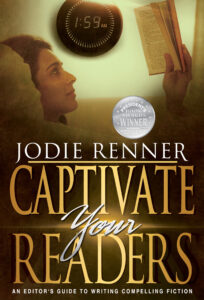
Jodie Renner is a freelance fiction editor and the author of three writing guides in her series An Editor’s Guide to Writing Compelling Fiction: Captivate Your Readers, Fire up Your Fiction, and Writing a Killer Thriller. You can find Jodie at www.JodieRenner.com, at her Amazon Author Page, her blog Resources for Writers, and on Facebook

Beta Readers

I’m back from a summer hiatus and would like to say that I used the opportunity to jet set around the world in glamorous style but…well, you know…I did get a chance to visit the mountains a few times but we’ve had so much smoke from the recent wildfires that even that experience felt very much on-brand for 2020…

In the meantime, I have been writing and painting – but I’ve also been broadening my beta-reader opportunities, which got me thinking about the whole notion and value of beta-readers. In the past my beta-reader pool has pretty much been confined to friends and family, and, if I’m lucky, co-bloggers here at TKZ:)

By now most of my friends and family have read (and re-read!) many of my manuscripts, but only recently have I begun to look further afield to see if I can get critical input from potential readers. This interest was sparked by a UK historical fiction editorial group who began offering a beta-reader service – which (serendipitously for me) came just after I finished revisions to an old manuscript of mine. What I liked was that these beta-readers will be complete strangers with a love for historical fiction (so they can be as blunt and honest as they like – something I’m never totally sure friends/family are!) and they also must answer a series of very specific questions to help a writer hone in on issues with the book. I haven’t got feedback as yet so the jury is still out on the benefits of the program but I’m excited to broaden my beta-reader reach nonetheless.

So TKZers how do you focus on the beta reader question…Who do you get to be a beta-reader (?) and at what stage in your process do you get them involved? I usually have much earlier input but I’m thinking fresh eyes in this final, just about to submit stage, will be very helpful. What’s your experience been with beta-readers? Mine’s been as mixed as my experience with writer’s groups, some input has been terrific, some not so much…

Glad to be back and looking forward to your feedback on what has worked/hasn’t worked for you all when it comes to beta-readers!