What’s one activity you’ve always wanted to try but haven’t?
This activity might include writing in a different genre, bungee jumping, paragliding, skydiving, public speaking, writing from a new perspective, or scaling the side of a mountain.
What prevented you from doing this activity?
Age should never be a deterrent, but let’s face it, older bones may be more brittle, eyesight may not be as sharp . . . blah, blah, blah. You know the drill.
With that in mind, if you were twenty years younger, would you try this activity? What is it about this activity that appeals to you?
Tiny Creatures is a new docuseries on Netflix that’s adorable, suspenseful, and masterfully plotted and paced. To check it out I skipped ahead to Episode 6, which features a raven and a rat. And the storytelling craft blew me away. This episode, along with all the others in the series, provide a detailed roadmap driven by obstacles, misdirection, and conflict. Let’s pull back the curtain and peek behind the scenes.
Even with the “Spoiler Alerts” I still recommend watching the episode. I’ve only concentrated on a few areas of craft, and I don’t point out every instance of where it occurs. The full post still landed at 4564 words. Hence why I’ve broken the post into two parts. See what can happen when you’re high on craft? 😉
Before we get to the deconstruction, check out the trailer.
Deconstruction Part I
“Florida, home to the Everglades. A wild expanse of almost two million acres of wetlands.” (We know where we are, but there’s also a hint of mystery and intrigue. What creatures lurk in the Everglades? And that, is the Central Dramatic Story Question—the cornerstone question at the heart of every story that directly relates to the hero’s conflict. Boom! The writer raised the most important question in the first two lines of the script. Notice s/he never outright poses the question. Rather, s/he implants it in the viewer’s mind.) “Isolated among the Everglades stands a fishing shack, the backdrop of two very different animals whose stories are destined to cross.” (There’s the hook. We need to continue to find out where this leads.)
In flies an impressive raven. (Is he our villain or hero? We’ll keep watching to find out.)
“A raven, a sleek bird with glossy black feathers. Behind this polished appearance, the raven possesses intellect as well as beauty.” The camera zooms in on his size and power (hints that he must be the bad guy). “Lately, the raven’s been keeping an eye on this fishing shack, tracking the movements of the human owner, their habits and routine. He knows when the coast will be clear.”
The raven struts into the fishing shack.
“Ravens are quirky characters and this one is keen to explore. (quirky = surface trait = 1st Dimension of Character) His eyesight, however, isn’t as sharp as his mind (character flaw). He can’t see well in the dark. (obstacle) But this bird is a problem-solver and he has the perfect solution.”
The raven tugs on the wooden knob of the shade, and the shade rolls up. Cascading sunlight bathes the fishing shack in brightness.
“As smart as a chimpanzee, ravens frequently use their brains to exploit the riches of others. Especially humans. (Notice the word choices; the harsh “exploit” and staccato “especially humans” indicates he’s the villain) And this person has many treasures hidden away, safely out of reach.”
The raven flies over to a tackle box.
“But for the raven this is a test of his wits.” (Tension builds) Raven struggles to break into the tackle box (conflict). “And he does what ravens do best—he improvises.” (problem-solver = psychological trait stemming from past experience, upbringing, emotional scars, memories, etc. = 2nd Dimension of Character. We’re beginning to better understand the raven.)
Using a hook-shaped tool, the raven breaks into the tackle box to get at some sort of bait scattered across the bottom of the middle drawer. Clearly, the raven is burglarizing this shack to suit he needs. (Burglar = antagonist. Or could he be an anti-hero? We’re still not sure, which forces us to keep watching.)
Camera pans out to the Everglades and the narrator offers more details about the area. “The water is also home to an assortment of wildlife. Unlike the raven, some animals strive for a simple existence.” (A sprinkle of backstory. More importantly, this is the setup to introduce our tiny hero).
Enter stage left: an adorable rat doggy paddles across the water. (cuteness = surface trait = 1st Dimension of Character)
(Side note: If you’re not a lover of rats, I get it. I wasn’t either. But by the end of this story, you will fall in love with this little rat.And that, ladies and gents, is what characterization is all about.)
“After a busy night exploring, this drowned rat is traveling home to rest (relatable + we empathize with our tiny hero). Each night she swims from bank to bank to see what she can forage. Just like humans, not all rats are natural swimmers (our hero has a superpower). Those rats who have mastered the art can swim over a mile in one go. With her small frame and streamlined body, she’s a natural, moving effortlessly through the water.” (What other superpowers might she possess? Curiosity and empathy keeps us watching.)
Our tiny hero reaches a drainpipe and climbs inside.
“This is a familiar and safe route. Not many predators can follow her through these narrow tunnels. It was her swimming agility which brought her to this hidden route to her home.” (backstory dribbled in to drive the plot) Our tiny hero crawls farther through the drainpipe. “A light at the end of the tunnel signifies her final hurdle.” <cue dramatic music> She plunges into a U-shaped drain (tension builds). “One that relies on her ability to hold her breath and stay submerged for up to three minutes.” (determination = psychological trait = 2nd Dimension of Character) “A rather unconventional way of entering her home in the fishing shack.” (setup of 2nd Pinch Point)
Up pops our tiny hero from the toilet.
“Now soaked to the bone, she carries an extra 5% of her body weight in water. If her fur stays wet for too long, she’s at risk for hyperthermia. (more conflict + character flaw) Using the equivalent of nature’s hairdryer to dry off, she adopts an alternative approach.”
<cue dramatic music and slow-motion camera> Our tiny hero twists and shakes her body 18 times per second, loose water spraying in all directions.
“It’s an efficient if not slightly messy approach. Within just four seconds, she’s removed 70% of the water droplets.” She climbs down off the toilet seat and into the main room of the fishing shack. “Unbeknown to the rat, however, there’s a trespasser inside her home.” (First hint of trouble.) <cue dangerous music as the camera narrows on the raven> “And the normal serenity of the shack is swiftly broken.” (Inciting Incident)
Wings outstretched, the raven squawks.
“The presence of the rat irritates the raven. He could easily kill this rodent. But he has other ideas.” (Because we’ve bonded with our hero — the under-rat, if you will — we fear for her safety. There’s no way we’ll stop watching.) Loud screeches from the raven combined with a penetrating glare startle our tiny hero. “Ravens are one of the few bird species that like to play. And the rat is the unfortunate victim of its game . . . and her tale is a tempting target.”
Raven swan-dives off a nearby table—straight at our hero. The chase is on! (1st Plot Point lands at 20-25% — perfect)
<dramatic music enhances the terror> “Fleeing this terrifying predator, the rat seeks sanctuary where she can.” Each time the raven misses our hero by mere millimeters. Camera closes in on the raven’s opened beak, massive black wings, and powerful physique. “This game is a little one-sided.” (And now, we’re certain Raven is the formidable villain.)
Our tiny hero scampers into a hole in the side of a cardboard box. “The raven uses its sharp beak to poke and probe.” (Notice the hard-sounding word choices “poke” & “probe” which only solidifies our theory about the raven) Raven leaps on top of the box, tears at the old packing tape. (Stakes are raised. If our hero doesn’t escape, she could die!)
“But the rat’s size and agility gives her the edge into some unusual terrain. She ceases her opportunity and makes a dash for it. She squeezes through a one-inch gap, leaving the raven still pecking.”
When our tiny hero races across the floor, Raven is right on her heels. But in the mad dash he knocks over a bottle. Liquid leaks out its spout (foreshadows danger + setup of climax).
“Distracted by the chase, the raven loses track of time.”
Outside the shack, a boat docks at the pier. “The fisherman arrives back at the shack, seeking shelter from the midday sun. But for some, the heat of the sun’s rays are welcome to warm, cold blood.” A menacing-looking iguana sunbathes atop a large rock on the porch, and we learn more about him, including his voracious appetite. (This spattering of backstory raises the stakes even higher while conjuring more story questions: Will our hero need to fight the iguana, too?)
Camera cuts back to the raven whose sharp talons pin down a burlap sack. Underneath, our tiny hero struggles to break free.
“The fisherman returns from a long but successful day on the water.” He unloads his gear and clomps toward the front door. “He is unaware of the raven’s game that is still taking place in the shack.”
Cameras cuts back to inside, where our hero whimpers as she tries to flee from the massive raven. (Conflict, tension, action, and rising stakes, combined with rotating motivation/reaction units, along with solid characterization and story questions—questions that must be answered—and the viewer’s breathless with anticipation. We cannot look away.)
“The noise of the fisherman alerts the raven. Realizing the human has returned, the game with the rat is no longer of interest to him”—he soars toward the window— “as the raven spots a more appealing opportunity outside.”
Camera zooms in on bait in a three-gallon bucket.
“Luckily, the pause in the chase allows the rat to escape to her bed.” Our tiny hero careens into an old boot (allowing viewers a moment to catch their breath = smart pacing).
“For the raven, it seems there are bigger fish to fry.”
Camera captures the raven lickin’ his chops as he stares out the window at the bucket (menacing appearance = surface trait = 1st Dimension of Character). Raven climbs out the window and stalks the ledge to the front corner of the fishing shack. When the fisherman enters the shack, he seizes the opportunity to raid the bait.
While we watch the raven feast, the narrator offers us a few more fascinating details. “With no teeth, the raven pecks at the food, swallowing whole the more manageable pieces.” (These tidbits allow us to better understand the raven, and to envision what he might do to our sweet hero.)
Little Miss Rat emerges from the boot. The camera flashes outside to the iguana, increasing the tension of the scene. Our tiny hero could be up against two villains! (raises the stakes even higher)
“Capable of smelling food from a mile away, the scent of fish entices the rat to leave her hiding place. Similar to ravens, rats are not choosy to what they eat (similar character flaws). There’s more than enough food here for both of them.”
Our innocent hero totters up to the bait bucket. Glowering, Raven towers the rat, his talons latched onto the rim.
“Though still leery of the raven, she hopes this distraction will allow her to break cover and grab a quick bite, unnoticed. But the beady-eyed raven hasn’t learned the art of sharing.”
Raven squawks (motivation), which wakes the sleeping iguana (reaction). Our tiny hero runs and hides, leaving the two bad guys to square off. (tension mounts)
“Woken by the commotion from the raven, this sensitive lizard doesn’t hesitate. Its instinctive reaction is to run.” But when the iguana charges (motivation), the raven leaps off the bucket (reaction) and the bait splatters across the porch. The iguana escapes into the surrounding landscape. “In a flash, it’s gone.”
But the fisherman hears the crash from inside and peers out the window. Raven makes a mad dash to gobble up as much bait as he can swallow.
The narrator hits us with this as a clever misdirect: “Ravens can learn to either like or dislike a person, depending on how they’re treated. And they never forget a face.”
Da, nah, nah. <cue dangerous music>
The fisherman storms outside with a broom. (Now it looks like the human might be the real antagonist of the story. Is the raven an anti-hero? But if that’s true, then why does he keep tormenting an innocent rat? Raising story questions forces us to keep watching.)
Broom in hand, the fisherman chases the raven across the porch, screaming and yelling, and we watch this play out in silhouette through the window (1st Pinch Point, perfectly placed at 37.5%).
With the raven gone, our tiny hero can finally rest. <cue sweet music>
“Both the rat and the raven are blissfully unaware of the danger being constructed outside (This line subtly signals that they are, in fact, dual protagonists). Humans also hold grudges. And the raven’s actions have consequences.” (The fisherman sure looks like the real villain now, doesn’t he? Just when one answer is revealed, the writer raises another story question. How will the human punish the raven?)
On the porch sits a wired trap baited with fish. Our tiny hero is sleeping soundly in her boot when she’s awakened by the raven screeching outside.
“Trapped and outsmarted by the fisherman, the raven calls for help.” Poor Raven is caught in the trap (gaining empathy for our anti-hero).
The camera pans over to our sweet rat emerging from the safety of her bed.
“A social animal, the rat can sense the raven’s distress. Unnerved by the calls for help, her instinct draws her to the raven. (instinct = inner trait = 2nd Dimension of Character) Arriving to see the trapped bird, a sense of empathy washes over the rat. (compassion = inner trait = 2nd Dimension of Character) She approaches cautiously. She has not forgotten the raven’s torment yesterday.”
The raven and the rat gaze into each other’s eyes (this Mirror Moment bonds the two heroes).
Camera closes in on our tiny hero’s sweet face. “Her sense of compassion overrides her concern.” In a bold move, she climbs up on the door of the trap and gnaws on the rope securing the top of the door to the metal bars (the act of facing her fears = 3rd Dimension of character, her true character). “Equipped with super strong teeth, rats are capable of chewing through concrete, glass, and even metal. Although not quite as a clever as the raven, rats are super smart. (yes, the repetition is a writing tic, but it’s invisible to the viewer due to the high tension & action. See what good plotting and three-dimensional characters can mask?) Unsure of when the fisherman will return, the rat works as quickly as she can to gnaw through the rope.”
The rope falls to the deck boards and our tiny hero drags open the door, freeing the raven. <cue dramatic music> (Midpoint Shift, perfectly placed at 50%.)
Raven cocks his head and stares at the rat. “The raven is puzzled by the rat’s action, but grateful nonetheless.” He leaps into the sky. (story question: will they meet again?)
The fisherman returns from an early morning outing, and the raven calls out to warn the rat to get out of sight (his actions/behavior = 3rd Dimension of Character, his true character). Our tiny hero scurries back into the shack as the fisherman examines his busted trap on the front porch.
As our tiny hero curls into her boot home, the camera pans out to the surrounding area. “The Everglades are home to many animals.” Camera closes in on an alligator. “The American alligator is a keystone species crucial to the health and wellbeing of the ecosystem.” (red herring to get our blood pumping—more tension builds + more story questions. Will our heroes soon face this beast?)
Of special note for Part I: Through characterization, did you notice how the writer periodically forced the viewer (reader) to change their perception of the hero, anti-hero, and almost every villain we’ve encountered so far? Storytelling at its finest, folks.
Success comes in many forms. No two writers view success in the same way. Sure, if we’ve had a film adaptation of our novel, then I think we can all agree that’s a success story.
That said, I’m a big believer in celebrating small victories along the road to success (whatever that means to YOU). Celebrating smaller victories helps to keep us focused, grounded, and moving forward in a positive way.
Please share one victory for 2020. I know it hasn’t been an easy year, but that’s why it’s more important than ever to celebrate each new hurdle you’ve jumped. A victory can be anything, from completing a manuscript to hiking a mountain for inspiration to a successful virtual book signing to Hollywood knocking at your door.
Picture this. You’re in the zone rockin’ the WIP, the words flowing from your fingertips faster than you can type. And then . . . splat. You’ve hit a brick wall. That special character or symbol isn’t on your keyboard.
Sound familiar?
So now, you need to stop, go to Insert, then to Advanced Symbols and scroll through the list to find that pain-in-the-butt character. You could leave yourself a note in the manuscript to deal with it later and continue on, but wouldn’t a keyboard shortcut make life easier?
With that in mind, I offer the following . . .
SYMBOLS & SPECIAL CHARACTERS
Please note: these shortcuts can be used on the web or in Word by using the numbers on the top row of your keyboard. If you use your numbers keypad, you may get different results.
ALT + ; = … (to create ellipsis you can also press CTRL + ALT + .)
ALT + SHFT + : = Ú
ALT + “ = Æ
ALT + ‘ = æ
ALT + z = Ω
ALT + SHFT + Z = ¸
ALT + x = ≈
ALT + SHFT + X = ˛
ALT + c = ç
ALT + SHFT + C = Ç
ALT + v = √ (square root)
ALT + SHFT + V = ◊
ALT + b = ∫
ALT + SHFT + B = ı
ALT + n = ˜
ALT + m = µ
ALT + SHFT + M = Â
ALT + , = ≤
ALT + SHFT + < = ¯
ALT + . = ≥
ALT + SHFT + > = ˘
ALT + / = ÷
ALT + SHFT + ? = ¿
COMMON SHORTCUTS
On my keyboard “Command” equals the “WIN” key—I use a Windows keyboard on a Mac—but yours might be CTRL or COMMAND (Mac users) depending on the keyboard type.
<Command> + C = Copy
<Command> + X = Cut
<Command> + V = Paste
<Command> + Q = Quit
<Command> + W = Close File or Window
<Command> + N = Open New file
<Command> + O = Open Existing file
<Command> + S = Save
<Command> + P = Print
<Command> + F = Find a word or phrase on web pages or in Word. If the word or phrase appears more than once, press ENTER to move to the next instance.
<Command> + Z = Undo Action (To redo the action, press <Command> + Y)
<Command> + A = Select All
<Command> + B = Bold (To stop bold, repeat command)
<Command> + I = Italics (To stop italics, repeat command)
<Command> + U = Underline (To stop underline, repeat command)
<Command> + T = Open New Browser
<Command> + D = Bookmark Page
<Command> + B = View Bookmarks
WORDPRESS SHORTCUTS
Most of the above commands also work on WordPress. Here’s a few extras exclusive to WordPress …
<Command> + 1 = Heading 1
<Command> + 2 = Heading 2
<Command> + 3 = Heading 3
<Command> + 4 = Heading 4
<Command> + 5 = Heading 5
<Command> + 6 = Heading 6
<Command> + 9 = Address
ALT + SHFT + n = Check Spelling
ALT + SHFT + j = Justify Text
ALT + SHFT + d = Strikethrough
ALT + SHFT + u = Bullet List
ALT + SHFT + o = Numbered List
ALT + SHFT + q = Quote
ALT + SHFT + w = Distraction Free Writing Mode
ALT + SHFT + p = Insert Page Break Tag
ALT + SHFT + l = Align Left
ALT + SHFT + c = Align Center
ALT + SHFT + r = Align Right
ALT + SHFT + a = Insert Link
ALT + SHFT + s = Remove Link
ALT + SHFT + m = Insert Image
ALT + SHFT + t = Insert More Tag
ALT + SHFT + h = Help
Most social media sites offer their own shortcuts in the help menu. YouTube, however, offers several cool hacks to save time.
YOUTUBE SHORTCUTS
Press 1 = jump ahead 10% through the video.
Press 3 = jump ahead 30%
Press 4 = jump ahead 40%
Press 5 = jump ahead 50%
And so on.
Press 0 = restarts the video
Spacebar = pause/un-pause video
← Go back 5 seconds
→ Go forward 5 seconds
↑ Raise volume
↓ Decrease volume
F = Fullscreen
ESC = Exit Fullscreen
MISC.
CTRL+ALT+DEL = Quit Frozen Application. This command opens the Task Manager. Select the application that stopped working and press END TASK.
Do you have a favorite shortcut that you use regularly? Please share!
Want to have a little fun? Include a special character in your comment. ♠♣♥♦ If it’s not listed above, be sure to tell us how you created it.
Another brave writer submitted their first page for critique. My comments will follow.
The Invisible
Bette always joked Marge’s baking would be their demise—but not like this. The Schuster sisters came out to their garden this morning in search of tomatoes for their weekly Girl’s-Club brunch, and though their basket was nearly full, Bette insisted they needed one or two more.
“What about those?” Marge said, pointing to a large cluster.
Bette tsked. “I’m sure we can do better. Do you want the girls eating green tomatoes? What if it was—?” She stopped mid-sentence, glanced down, and wiped her boot on a rock. “Oh, my,” she chuckled, shaking her head. “Well, if that’s the worse that happens today, I’m counting my blessings.” She continued her search. “What time did Paige get in last night?”
“Well, it was past 9:00—when we went to bed. She rents a room; she doesn’t answer to us.”
“I know that, Marge.” She moved down the row. “I just worry she’s not getting enough sleep.”
“She’s a student. They aren’t supposed to sleep.”
“Who’s not supposed to sleep?”
They looked up to see their boarder, backpack over shoulder, mug of coffee in hand, cut across the dewy lawn. “We were just saying,” Marge said, “that you don’t get enough sleep, dear.”
She laughed. “Can’t argue with that. But my paper’s due Monday, and I’m nervous about it. By the way, was that apple pie I smelled, or am I still dreaming?”
“Oh, my pies! I almost forgot.” Marge squeezed Paige’s arm. “If you wait a few minutes, you can have a piece.”
“It’s tempting, but I really need to get to the library.” She waved to the sisters as she hurried to her car. “Save me a slice.”
“We will, honey. Now don’t work too hard. Remember, life is short.” They watched her head to campus, after which Marge rushed off to check on the pies, promising to be right back.
Bette continued down the rows, her persistence eventually paying off. As she removed an almost perfect Brandywine tomato from its vine, a high-pitched scream split the air. She snapped her head around in time to spot a red-tailed hawk, something squirming in its beak, swoop below the treetops. Her heart was still pounding when a calloused hand grabbed her ankle, causing her to drop the basket. She jerked free, only to discover the hand was an out of control cucumber vine.
Though the sisters seem sweet, not much happens on this first page … unless you’re a research junkie like me and have studied this particular murder weapon. Which is genius, by the way. Kudos to you, Brave Writer. For those who didn’t catch it, I’ll explain in a minute.
Let’s look at your first line, which I liked.
Bette always joked Marge’s baking would be their demise—but not like this.
Your first line makes a promise to the reader, a promise that must be kept and alluded to early on. Just the suggestion of green tomatoes is not enough.
Now, let’s look at the first paragraph…
The Schuster sisters came out to their garden this morning in search of tomatoes for their weekly Girl’s-Club brunch, and though their basket was nearly full, Bette insisted they needed one or two more.
I assume Brave Writer discovered that tomatoes contain a few different toxins. One of which is called tomatine. Tomatine can cause gastrointestinal problems, liver and heart damage. Its highest concentration is in the leaves, stems, and unripened fruit. Red tomatoes only produce low doses of tomatine, but the levels aren’t high enough to kill.
Like other nightshade plants, tomatoes also produce atropine in extremely low doses. Though atropine is a nasty poison, tomatoes don’t produce enough of it to cause death. The most impressive toxin from green tomatoes is solanine. Which, as Brave Writer may have discovered, can be used as murder weapon. Solanine can be found in any part of the plant, including the leaves, tubers, and fruit, and acts as the plant’s natural defenses. People have died from solanine poisoning. It’s also found in potatoes and eggplant.
If Marge eats, say, potato pancakes along with green tomatoes during that brunch, it’ll increase the solanine and other glycoalkaloid levels coursing through her system. *evil cackle*
The nice part of solanine poisoning from a writer’s perspective is that it can take 8-10 hours before the victim is symptomatic, which gives Brave Writer plenty of time to let her stumble into more trouble to keep the reader guessing how or why she died.
If I were writing this story, I’d study the fatal solanine cases and put my own spin on it.
Hope I’m right about this. If not, my apologies. In any case, the weekly Girl’s Club (no hyphen and only capped if it’s the official title of the club) brunch seems important and so do the tomatoes. What I’d love to see on this first page is why. You don’t need to tell us, but you do need to hint at the reason to hold our interest.
What if Bette plucks the deadly fruit from the vine and notices how strange it looks? You’ll have to research to nail down the minute details of a toxic green tomato, if any differences are visible to the naked eye.
There’s one other problem with this first paragraph. Here it is again:
The Schuster sisters came out to their garden this morning in search of tomatoes for their weekly Girl’s-Club brunch, and though their basket was nearly full, Bette insisted they needed one or two more.
Who’s narrating this story? It isn’t Bette, as your first line indicates. And it isn’t Marge. An omniscient point-of-view is tricky to pull off. Newer writers should focus on one main character and show/tell the story through their eyes. If that character doesn’t hear, see, feel, taste, experience, smell, etc. something, then it must be excluded.
Yes, some writers (me included) use dueling protagonists, alternating scenes between the two, and even include an antagonist POV. But when we’re still honing our craft, especially when we’re learning the ins-and-outs of POV, it’s easiest to concentrate on one main character throughout the story. For more on mastering point-of-view, see this post or type in “point of view” in the search box. We’ve discussed this area of craft many times on TKZ.
As written, my advice is to keep the first line and either delete the rest and find a different starting point (sorry!) or better yet, saturate it in mystery regarding these tomatoes. That way, the reader will fear for your main character while the fruit lay on a bed of lettuce on a serving platter during the Girl’s Club meeting. If you choose this route, one of your goals is to make the reader squirm. “Don’t eat that tomato, Marge!”
What say you, TKZers? Please add your gentle and kind advice for this brave writer.
The sleepy town of Bad Kreuznach, Germany found itself at the center of one of the most bizarre, high-profile murder mysteries in the country’s history — the search for a serial killer the police called The Woman Without a Face.
The police found no fingerprints. No witnesses. No description. But they did have a trail of DNA that stretched back 15 years and across three countries. A case so bizarre that the mystery woman — aka The Phantom of Heilbronn — wasn’t only an elusive female serial killer but a cop-killer, as well.
On May 23, 1993 in the quite town of Idar-Oberstein, Germany, a neighbor knocked at the door of Lieselotte Schlenger. No one answered. She knocked again and again. Still no answer. Finally, she phoned the police. When they arrived, they found Lieselotte on the living room floor. Someone had strangled her to death using wire from the floral bouquet. Police interviewed dozens of potential witnesses, but no one heard or saw a thing. The only clue to the killer’s identity were trace amounts of DNA found on the lip of a teacup. Police couldn’t match the DNA to a suspect. They did, however, determine the sample came from a woman.
Fast forward eight years.
In March 2001, in Freiburg, a southwestern town in Germany miles away from Idar-Oberstein, a 61-year-old antique dealer, Jozef Walzenbach, was found strangled to death. Where they found his body isn’t clear. Residents feared The Woman Without a Face had struck again. Sure enough, authorities matched the DNA to the first crime scene. Germany, it seemed, had a budding serial killer in their midst.
Seven months later in October 2001, at a public playground in the quaint German town of Gerolstein, miles from the previous scene, a seven-year-old boy stepped on a discarded heroine needle. His frantic mother turned the syringe into police, which set off a chain of events that no one could foresee. Identical DNA from the first two murders was now found on the syringe.
A serial killer with a drug problem is even more unpredictable.
The BKA — German equivalent to the FBI — retested all the samples, which resulted in a bizarre turn of events. Not only was this mysterious woman a murderer, she was also a thief.
In 2004, The Phantom of Heilbronn traveled to Austria and broke into garden sheds along the main drag. She discarded the pants of a tracksuit, a hooded cardigan, and other items. The Woman Without a Facebroke into a caravan, stole items, and took a bite out of a biscuit. Authorities found her DNA in saliva on the bite impression. Next, she stopped in France and committed burglaries there, too.
A real menace to society!
The mysterious DNA didn’t turn up again for four years.
On May 6, 2005, a member of the local gypsy community was shot and nearly killed. Shortly after, someone from the same community turned in his brother’s 7.65 caliber pistol. Guess whose DNA they found on the handle? Yep. The Woman Without a Face.
Police remained baffled. The Phantom was running ramped. Nowhere in Europe seemed safe.
Then, in April, 2007, German officer, Michele Kiesewetter, 22 years old, presumably approached the mystery woman in a car park. At close range The Phantom shot her in the face, killing her instantly. She also shot Officer Kiesewette’s male partner, who slipped into a coma from his injuries. When he woke he had no memory of the killer.
Didn’t matter. The Phantom left her DNA in the patrol car.
In 2008, German police arrested a former informant, suspected of killing three Georgian car dealers who’d visited Germany to buy used vehicles, their bodies dumped in the river. The informant denied knowing The Woman Without a Face. He also denied committing the crimes. Instead, he said an Islamic radical from Somalia killed the car dealers. Because the Islamic radical was already in police custody, they questioned him. He also denied any wrongdoing.
Left with few options, police stripped the informant’s car, analyzed the upholstery, carpet, and lint. And guess whose DNA showed up? Yep. The Phantom had struck again. This triggered police to concoct a new theory of the case, a theory that pointed the finger of the law at The Woman Without a Face. Tirelessly they worked to track down the previous owners of the motor vehicle in the hopes that the car once belonged to the murderess, even though the police had loaned this car to the informant in exchange for his cooperation in numerous cases.
Police Chief Erwin Hetger couldn’t be more thrilled, calling the vehicle a “down payment” to solve the case of the mysterious and elusive Phantom of Heilbronn.
“We’re closing in on her,” he told reporters.
But was he?
Over the course of 15 years The Woman Without a Face joined the Most Wanted list for her connection to 30 crimes, including six murders and dozens of burglaries and robberies
Quick crime writing tip: Robberies and burglaries are not the same. Robberies involve victims; burglaries occur in empty residents or businesses. Be sure to use the proper term in your WIP!
In a stunning new twist, German police released a photo-fit picture of a man who was either the suspect or an accomplice. Could The Phantom be transgender?
Police released this photo.
Eyewitnesses reported to have seen this “man” at the scene of an attempted break-in at a flat in Saarbruecken (another German city) in 2006. At the crime scene, police found traces of The Phantom’s DNA on a stone.
A police spokesperson, Rainer Koeller, said:
We can’t rule out that our suspect is a man now, or that she looks like a man. We just don’t know. This is a unique case. We have 30 crime scenes where we have found traces of her DNA, but we have no face. It’s a huge mystery and it’s incredible that the suspect has managed to hide herself for so long.
Though forensics can be used as a strong backing for other circumstantial evidence, DNA evidence alone is not always a sure sign of guilt.
True stories like The Woman Without a Facemake my writer brain sizzle. Just think of the countless ways to siphon elements from this story to send the detective and/or amateur sleuth(s) down the wrong path.
For discussion: Writers, do you pull details from real cases to suit your fictional needs? How did you use those details? Readers, have you ever noticed similarities to a real case in a novel?
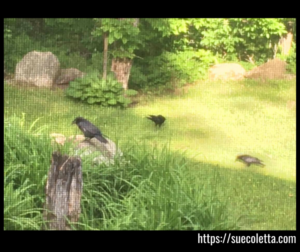
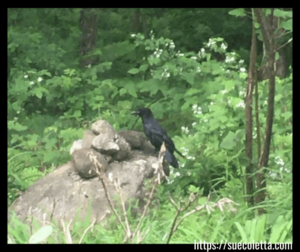
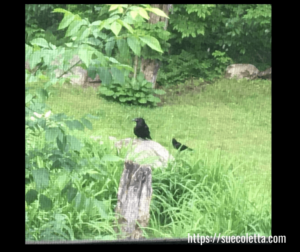
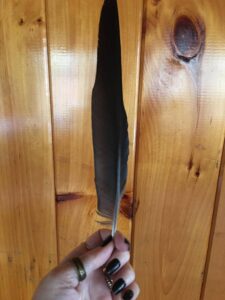
For my fellow birders who requested an update on the injured raven, I wrote a post about it for my blog since I didn’t include writing tips like I did in the original story. Enjoy!
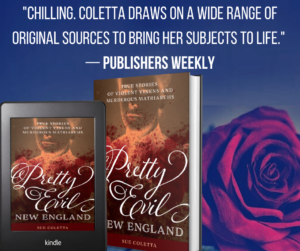
An interesting discussion arose while working on copy edits for Pretty Evil New England. The conversation dealt with using block quotes—when, where, why, and how I used them in the (nonfiction) manuscript.
If at all possible, I tend to use quoted material as dialogue to create scenes. But there were times where I chose to block quote the text instead. For example, if the quote was mainly backstory and not part of the actual scene but still important for the reader to understand, then I used block quotes. You’ll see what I mean in one of the examples below.
Block quotes can’t be avoided at times. They can even enhance the scene, thereby adding to the overall reading experience. In fiction, two examples of where to use block quotes would be a diary entry or a note/letter/message. Please excuse my using one of my thrillers; it’s easier than searching through a gazillion books on my Kindle.
In Silent Mayhem, the antagonist and hero communicate through an Onion site (untraceable) on the deep web. Because these messages are neither dialogue, nor narrative, using block quotes set them apart.
Example:
Dearest Cautious Cat,
If we shut our eyes to dangers beyond our comprehension, we become powerless to fight. My offer still stands. Should you choose not to accept it, remember this . . .
When it’s your time to die, be not like those whose hearts are filled with the fear of death, so that when their time comes, they weep and pray for a little more time to live their lives over again in a different way. Sing your death song and die like a hero going home.
Hugs & kisses,
Mr. M
Block quotes also break up the text and enhance white space. We’ve discussed white space many times on TKZ. For more on why white space is a good thing, check out this post or this one.
BLOCK QUOTES IN WORD
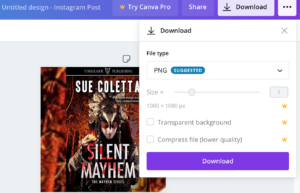
To include block quotes in Word, highlight the text and right click. This screen will pop up… Choose “paragraph” and this screen will pop up…
Reset your left margin to .5 and click OK. Leave the right margin alone.
Quick note about margins.
A good rule of thumb for block quotes is to not indent the first paragraph. If your passage contains more than one paragraph, check with the publisher. Most supply a style guide. For instance, my thriller publisher keeps all paragraphs justified. My true crime publisher prefers that the first paragraph be justified and subsequent paragraphs be indented.
To do that, the easiest thing is to click “Special” then “first line” (as indicated in pic below) and set it to .25. Then simply backspace to erase the indent on the first paragraph.
If you’re self-publishing, then obviously it’s your call on whether to indent or not to indent subsequent paragraphs.
BLOGGING BLOCK QUOTE
Bloggers who include passages from a resource, whether that be a book or wording from a reputable source, use block quotes to signal the reader that the passage is a direct quote (most commonly, all justified margins). You could style the post in Word, then copy/paste, but sometimes the style doesn’t paste over. Simple fix. Highlight the text and click this symbol… And that’s it. Easy peasy, right?
ELLIPSIS
An ellipsis consists of either three or four dots. A single dot is called an ellipsis point. Some writers may find using ellipses a little tricky, but once you know the definitions of where, why, and how to use them, determining the right ellipses is fairly straightforward.
According to the Chicago Manual of Style, never use ellipses at the beginning or end of a block quote. CMOS also recommends using equal spacing between dots. Some style guides say to use three equally spaced periods rather than creating an ellipsis in Word, which you can do by pressing CTRL + ALT + Period. Always go by the style guide furnished by the publisher (or editor, if self-publishing).
WHERE AND WHY TO USE ELLIPSES
There are many reasons why you might want to use an ellipsis. An ellipsis can indicate omitted words within the middle of a quote, or faltering dialogue, or an unfinished sentence or thought where the speaker’s words trail off.
For faltering dialogue, you have two choices, depending on your style guide.
Style #1: Equally spaced dots with one space before and after ellipsis.
Style #2: Unspaced dots with one space before and after ellipsis.
Example #1 (uses three periods): “I . . . I . . . would never break the law.”
Example #2 (uses ellipsis created with Word shortcut): “I … I … would never break the law.”
For words that trail off, insert punctuation at end of ellipses. If the dialogue continues to another sentence, leave a space.
Example #1: “Why would he . . .? I mean, I can’t believe he got caught with that bimbo.”
Alternate style (Word shortcut): “Why would he …? I mean, I can’t believe he got caught with that bimbo.”
Example #2: “My weight? I’m about one hundred and . . . So, how ’bout them Bears. Did you watch the game?”
Alternate style (Word shortcut): “My weight? I’m about one hundred and … So, how ’bout them Bears. Did you watch the game?”
THREE DOTS VERSE FOUR
Here’s where some writers may find ellipses a little tricky.
Sometimes we need to omit words from the end of one sentence but still continue the quoted passage. This type of ellipsis is called a terminal ellipsis. In this instance, the CMOS recommends using four dots, or periods. The fourth dot indicates the period at the end of the sentence that we haven’t quoted in its entirety. By including that fourth dot it lets the reader know that the quotation borrows from more than one sentence of the original text.
Then I made up my mind to kill Mrs. Gordon. Poor thing, she was grieving herself to death over her sickly child. So life wasn’t worth living anyway. I was sorry, though, for the poor, unfortunate child, Genevieve. I love the little one very much. . . . I thought with Mrs. Gordon out of the way I could be a mother to her child and get [her husband] Harry Gordon to marry me.
Notice how I didn’t omit any necessary words? That’s key. We have a responsibility to other writers—in this case, the female serial killer—to not mislead the reader by leaving out words that change the meaning of the quote.
Three most important takeaways for ellipses in dialogue.
Avoid ellipses overload—too many can diminish their impact.
Reserve ellipses for middle and end of dialogue. If the character fumbles around to spit out their first word, use a body cue or other description instead.
Maintain consistent ellipses spacing throughout the manuscript.
Now, like most things in writing, there are exceptions to these rules. Always follow the publisher or editor’s recommendations. If you don’t have any recommendations to follow, feel free to use this post as a guide.
For discussion: Do you use block quotes in your writing? If so, why did you choose to do that? Care to share one of the exceptions to any of these guidelines?
Our local TV station runs a short segment during WMUR’s Chronicle with Fritz Wetherbee, an old-timer who’s a brilliant historian. Every night Fritz shares fascinating stories about New Hampshire. I love learning about the statues, landmarks, buildings, rivers and lakes in my state.
The other night he shared a story about a Unitarian minister who founded the world’s first free public library supported by taxation.
Literary-minded Reverend Abiel Abbot (December 14, 1765 – January 31, 1859) moved from Wilton, NH to Peterborough, NH in 1827 and immediately set up a youth library in his home. He also founded the Peterborough Library Company, supported by membership dues. In proposing the creation of the town library, he described “a central collection of books that would be owned by the people and free to all of those that lived in the town.”
“Inspired by the result, the New Hampshire State Legislature passed a law authorizing towns across the state to raise money for libraries in 1849. Britain wouldn’t pass its Public Libraries Act until 1850, and America’s first large public library—the Boston Public Library—was founded in 1852.”
Photo credit: http://www.libraryhistorybuff.com/
During a town meeting at Peterborough in 1833, Abbot proposed that a portion of the State Literary Fund be used for the purchase of books to establish a library, free to all the citizens of the town. Books purchased by Reverend Abbot and a board of trustees were made available for public use.
Reverend Abbot housed the original Peterborough Town Library in a general store that doubled as the post office, with the postmaster acting as librarian until 1854. After a short stint at town hall, a permanent home was finally built in 1893 to house a book collection that had grown into the thousands.
In a thesis published in 1947, Sidney Ditzion commented on the Peterborough Public Library.
“The account of the establishment of a town library at Peterborough, New Hampshire, is unique in that here we have an instance of what appears to be the spontaneous generation of an entirely new form. Here, without the stimulus of private donation, without the permission of state legislation, without the semblance of a model in the mother country, a tax-supported town library was born.
The circumstances surrounding the creation of this institution raise an interesting historical question involving local circumstance and group motivation to which no answer has yet been offered. In January of 1833 a group of farmers and small manufacturers under the leadership of the Rev. Abiel Abbot formed a social library whose shares sold at two dollars and whose annual membership fee was fifty cents.
On April 9 of the same year the town, apparently under the inspiration of the same Rev. Abbot voted to set aside for the purchase of books a portion of the state bank tax which was distributed among New Hampshire towns for library purposes. This was the way the first American town library to be continuously supported over a period of years was begun.”
Reverend Abbot founded several other libraries, too, including the Juvenile Library and the Library Company of Peterborough. In 1965, on the bicentennial of Abbot’s birth, New Hampshire State Legislature passed a resolution to recognize Abbot’s role in founding the “first free public library in the world supported by taxation.” This resolution also requested that the President of the United States and the Postmaster General issue a postage stamp to commemorate the bicentennial of Abbot’s birth.
Today, Peterborough Public Library remains the oldest public library in the world. Pretty cool, eh?
For discussion, please share one historical fact about your town or state. Does your local news have a guy like Fritz Wetherbee? The name kills me. He looks exactly how you picture him.
Quick update to my previous post: I’m still keeping the raven alive — 19 long, emotional days, but it’ll be worth it if she flies again. One day I couldn’t find her, and I thought for sure a night predator found her. The next day, she strutted back into the yard for breakfast. What a will to live! Here’s a quick video of Rave chowing down. See the wing?
More later. I’m hoping this story has a happy ending.
What are your writing goals for 2020? Are you on track to achieve those goals?
We all know writing is a marathon, not a sprint. For many, the pandemic demolished their writing goals for the year, or at least set them back.
I don’t want to push you if you’re not ready — we all cope differently and on our own timeline — but setting goals can help steer your writing dreams back onto the track. 🙂
Name one writing goal you hope to achieve this year. What about in 5 years? 10 years?